Category: MARKETING

  • ‘Get certified, get ahead’ urges Simplilearn in new campaign

    By A Correspondent


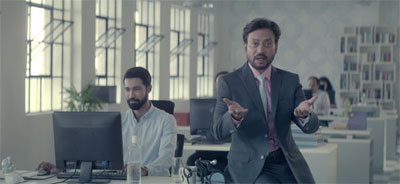
    Simplilearn, a certification training provider, launched its first television campaign titled ‘Get certified, get ahead’ with internationally acclaimed actor Irrfan Khan. The campaign aims to encourage working professionals to break their inertia and pro-actively shape their careers by acquiring new technology skills and certifications.



     

    Conceptualized by Bangalore-based agency, Propaganda, the TVC urges every working professional to take charge of his or her career in order to get ahead and not depend on luck. With Irrfan’s powerful message, the TVC compares the workplace to a game of chess where every professional’s goal is to make it to the next level. And how, the protagonist took matters of his career, like certification training from Simplilearn, and zoomed ahead of others to become the boss and occupy the cabin, which symbolizes success in corporate world.


    Simplilearn’s ‘Get Certified, Get Ahead’ campaign marks how ‘edu-tech’ has come of age in India, and is becoming mainstream. There is a greater need among professionals to re-skill themselves at a time when new technologies evolve in workplaces every few years. This national campaign highlights Simplilearn’s plans to increase the visibility of its online certification courses in trending categories such as Big Data & Analytics, Digital Marketing, Cloud Computing, Project Management, and IT Security to white-collared professionals spread across Tier-I and Tier-II cities.


    Expressing his views on the campaign, Kashyap Dalal, Chief Product & Marketing Officer at Simplilearn said, “Acquiring new in-demand skills through industry acclaimed certifications is a guaranteed way for professionals to get ahead in their careers. This is also one of the biggest requirements for industry to grow, as talent availability is regularly sighted as one of the biggest challenges by Fortune 500 CEOs. Through this national campaign on television and digital channels, I see Simplilearn playing a much more active role in the skill building needs of working professionals as well as enterprises in India.”


    On the idea behind the campaign, Priya Jayaraman, Co-Founder & Business Director, Propaganda added, “The Simplilearn campaign touches upon real corporate aspirations and a way to achieve them. Each of us dream of getting ahead in our corporate life, and do not know how to go about it. The reason to rope in Irrfan Khan was that the story needed to shake every working professional out of an inertia of not having done much about planning their career. People associate with Irrfan for his unassuming take on life, being the voice of reason and optimism. We intentionally kept it a simple narrative to let the power of the message echo with a working professional’s sentiments.


    The campaign is on air and will be live across digital and radio channels.


  • Chef Kunal Kapur lends expert advice for Saffola Masala Oats in new campaign

    By A Correspondent


    Saffola Masala Oats’ has launched a new campaign showcasing its Chefs Choice range. Leading the launch communication is the brand ambassador – Indian Celebrity Chef Kunal Kapur, who has played an integral role in creating the new Italian and Chinese flavors.


    The brand has kick started the launch through its new advertising campaign featuring Kunal Kapur. The campaign highlights the dilemma of consumers who crave for exciting and savory snacks but feel guilty giving into the temptation of unhealthy munching. Two, 30-second television commercials which recently went on air, showcase Kunal providing the perfect guilt-free solution to their problems by infusing the flavors they crave for- Chinese and Italian, in the goodness of Oats.


    Anuradha Aggarwal, Chief Marketing Officer, Marico Limited said, “We have launched the new Chinese & Italian variants keeping in mind that consumers crave for these exciting flavours during snacking occasions. Through our new campaign, we want to drive the message that one can satisfy craving for their favourite flavours through Saffola Masala Oats without the guilt of eating heavy snacks. We are delighted to have Kunal Kapur as the face of the brand. His culinary expertise and a healthy lifestyle approach reflects the core values of our brand. We are confident that this association will go a long way in offering consumers many more delightful taste options that they can choose from and stay healthy at the same time.”


    Pradyumna Chauhan, National Creative Director, McCann Erickson said, “Saffola Masala Oats is doing phenomenal in the market. And the task with the launch of these two flavours is to take that to the next level. So we have done two things with the campaign. One, keep the promise ‘don’t hold back but khao jee bhar ke’ again at the very centre. And two, really give distinct chinese and italian flavour to the two films in terms of cinematic treatment. Now all we want to say to our consumers is, bon appetit!”


    Saffola Masala Oats will continue its journey of creating delectable flavors and further strengthen the Saffola Fit Foodie platform with Chef Kunal. Saffola Fit Foodie is a one stop destination for healthy recipes, which also encourages consumers to adopt healthy eating habits. He will be leading the Saffola Fit Foodie expert’s panel to create some amazing and innovative recipes.


  • IndiaMART unveils ‘India ki Khoj’ campaign celebrating Indian entrepreneurship

    By A Correspondent


    IndiaMART is set to seal its position as the enabler of business growth with its new brand campaign – ‘India ki Khoj’. The new campaign featuring Irrfan Khan will establish its value proposition of a business facilitator of India, by being the platform that powers the ‘Khoj’ for growth, success, ambitions and legacy.


    “It feels great to be associated with this brand and its campaigns that have been inspirational to millions of entrepreneurs as well as the buyers in fulfilling their needs, be it business or personal. Through this campaign, I am sure that it will generate a strong impact and encourage enterprising people across the country to come forward and put their ideas into action,” said Irrfan Khan, India’s critically and globally acclaimed Cine Star.


    Speaking of the campaign, Sumit Bedi, Vice President, IndiaMART said, “India’s economic prosperity is fuelled by millions of small & medium sized entrepreneurs. We give them the platform to grow and act as an enabler that they can trust. Through this campaign, we will be celebrating the spirit of enterprises found across the length and breadth of India. Thus, we have summed it up as ‘Khoj’, for everything that they are looking for in life. We don’t just connect markets with opportunity; we connect individuals with their ambitions.”


    The campaign has been crafted by ‘Bang in the Middle’ and was shot in Mumbai. Prathap Suthan, CCO and Managing Partner, Bang in the Middle said “Every entrepreneur and every businessman starts his or her journey to follow a dream. The innate search and thirst to achieve a target, reach a landmark, and build an enterprise worthy of the dream in their minds. Our country is full of legends of people who have started small and made global successes, and those stories and surnames are driving forces for a country that’s now woken up.  They are inspiration to those searching for their own footprints to leave behind. This campaign is a tribute to that entrepreneurial spirit, as much as the earthiness of Irrfan adds realness to the grit of these people”


    The campaign kick-started with a tweet by Irrfan Khan and will also be amplified through his other digital platforms.


  • UrbanClap partners Publicis to launch inaugural brand campaign

    By A Correspondent


    UrbanClap has partnered with Publicis to launch their first ever brand campaign on television this year. UrbanClap has previously run a variety of outdoor and social media campaigns while working in tandem with different agencies.


    Founded in October 2014 by Abhiraj Bhal, Varun Khaitan, and Raghav Chandra, UrbanClap is India’s leading services marketplace. Currently, UrbanClap has operations in 7 cities, with over 36,000 professionals on the platform, and receives over 5000 customer requests each day for services across 60+ categories.


    Abhiraj Bhal, co-founder at UrbanClap, said, “We are confident that Publicis, with their innovative approach and creative solutions will enable us to drive impactful media presence and assist us in building a strong consumer brand. We look forward to working with them.”


    Paritosh Srivastava (COO, Publicis Ambience) & Jigar Fernandes (Executive Creative Director, Publicis Ambience) said, “UrbanClap has very strong fundamentals. It is helping bridge a real need gap for an emerging world with first world aspirations. It has taken the tougher path to build the business in a segment that has remained unorganized till now, and our job is to let the world know honestly and interestingly about their approach. We’re confident that with the trust and collaboration from the entire team at UrbanClap, we will succeed in achieving this task.”


  • Cafe Coffee Day’s ‘Beano’ seeks to build customer conversations online

    By A Correspondent


    Café Coffee Day has always been at the forefront when it comes to engaging its youth followers on its social media platforms. Over time, CCD has seen success in many of its digital media activations like for World Hug Day and for the Football World Cup which  led to trending hashtags of  #LetsHugOverCoffee and #CCDFootballquiz respectively, to name a few. However, CCD’s latest social media activity is creating buzz of a different nature. For the first time, the brand has come out with a video campaign in a five part series. The first part of the series which was released last month, has already received over 1.2 million views to date.


    CCD’s first video campaign ‘Beano and the Bean’ is a lapse stop motion video painted with coffee itself. It revolves around a fun and endearing character called Beano, the caveman. The first part, a 2 minute video, introduces Beano and shows how he discovers the coffee bean in a fun and entertaining way. The objective behind the video was to create a deeper engagement with the audience with something that was fun and subtly revolves around coffee.


    CCD realized that its previous social media activities around art and doodles always received high engagement and responses from followers. The brand thus decided to go ahead with creativity led idea for its first video campaign. The brand roped in an artist who created hand drawn art using different densities of coffee decoction to narrate a story. Hence, the highlight of the video which has not only excited the creative community, but the audience at large is firstly the use of hand created coffee art in a stop motion video and the other is  the storytelling aspect. Moreover, the content is fun and the character is someone that everyone finds lovable.


    CCD has just released the second part of the Beano series on eve of Valentine’s Day. It is a minute long video that shows how Beano goes about meeting that someone special. With Beano, the idea was not to promote the brand or prove a point, but to create a property that the audience will embrace.


  • Gionee plays up the shine factor in S6 via new campaign

    By A Correspondent


    Gionee has unveiled its latest campaign that pitches it as an aspirational phone for those with a discerning taste for good things in life. The tagline `Shine with metal’ sums up what the S6 has to offer.


    Arvind Vohra, Country CEO & MD, Gionee India said, “Gionee has been creating benchmarks for itself in various aspects and believes in giving the consumers better than the best. The Gionee S6 guarantees a whole new experience with its elegant design and outstanding technology. Gionee S6 is a perfect amalgamation of looks and specs and has been crafted for our judicious consumers. The device is one of the first from Gionee to come in with VoLTE and has an 89% metal body encompassing a strong core.”


    Crafted from metal, the S6 blends elegant design with power packed features. The S6, particularly, demonstrates the only one of its kind and exceptional beauty while also providing a symmetric design and cambered design which fits right into your hand. The device comes with 89 per cent metal body with a shine cutting of 1.5mm. The S6 comes with a surface of 13.97cm (5.5) HD Super AMOLED Display with Gorilla glass 3 and a screen to body ratio of 77.8 per cent.


    The campaign has been conceived by And And Brand Partner and will be supported on digital.


    Anand Suspi, Creative Director, And And Brand Partner, said, “The campaign revolves around an interesting human truth that, while we own multiples of most lifestyle products, we use just one phone and that better be the best.”


  • IDFC Mutual Fund unveils ‘Dil Ke Ameer’ campaign

    By A Correspondent

    IDFC Mutual Fund has launched a digital campaign titled “Dil Ke Ameer” that helps build relevance for mutual funds as a category by making vivid to people what they desire in life.

    The campaign,  co-created by TBWA\India and Bombay Design Centre, takes people through a series of dreams that they would like to fulfil in their lives. The experience of watching your most cherished dreams in the form of a personalised video which can be shared through social media is an energising and reflective moment for people engaging on the website. People showing commitment towards saving and investing in pursuit of their goals can seek IDFC Mutual Fund’s assistance in making their dreams a plan.

    “Our life narrative is shaped by the events that make our lives worth living. The ability of the IDFC brand to make people’s dreams into a plan make it a powerful force for good in shaping the story of their lives,” said Rishi Kakar, Director of Marketing, IDFC Mutual Fund. “‘Dil Ke Ameer’ are people who treat their dreams as plans. They plan their life – their time and finances towards making these joys real for themselves and their loved ones.”

    “We are one of India’s largest asset management companies, with a robust network of  financial advisors, said Kalpen Parekh, MD, Sales & Marketing, IDFC Mutual Fund, “Our expertise in asset management, combined with the financial planning acumen of our esteemed advisors, can now make it easy for you to save and invest towards things you most cherish!”

    .Commenting on the campaign, Parixit Bhattacharya, Chief Creative Officer, TBWA\ India said, “It is the heart that makes a person rich. And money is best spent when it serves our heart. The message seems to be resonating with people. Over 8500 videos have been created already. I hope more people use their money smartly to be able to do things that make them happy. After all, happy is the new rich.”

  • Rediffusion Y&R executes integrated campaign for ‘Make in India Week’

    By A Correspondent


    The ‘Make in India Week’ being held from 13th Feb to 18th Feb 2016 in Mumbaiis an event showcasing India’s potential in the manufacturing sector. It is a global platform offering unparalleled opportunities to connect and collaborate with Industry stakeholders, investors and think tanks. It is also a great forum for exchanging ideas with policy-makers and an opportunity to understand the latest government initiatives.


    Rediffusion Y&R, the agency tasked with the communication mandate,was briefed to welcome the world to the ‘Make in India Week’. With this brief, Rediffusion created a unique symbol – The Laman Diya, a representative of auspicious beginnings, peace, prosperity and growth.The idea behind this Diya design was to connect the elements of the ‘Make in India Lion’ with the Diya in the Government of Maharashtra and the MIDC logo. The concept has been extended to TVC, Outdoor as well as the life-size Installations.


    The second task was to build the Magnetic Maharashtra brand and promote Maharashtra as the leading investment destination for potential investors globally. For this Rediffusion Y&R conceived and created aunique campaign putting forward a 360 degree support; right from TVCs, print campaigns, AVs and outdoor.


    The brand film for Magnetic Maharashtra features Sachin Tendulkar, Madhuri Dixit and Shankar Mahadevan highlighting these aspects that Maharashtra offers to its investors and concludes with the line “Unnati ka Savera, Magnetic Maharashtra yeh Mera”.


    Pramod Sharma

    Having worked on this campaign, Pramod Sharma ECD West, Rediffusion Y & R said, “I have been born and brought up on this great land called Maharashtra. And working on something as big and diverse as Maharashtra was a privilege. Deadlines were mad. Work had to be created and presented in almost impossible time. What kept us going was the pride to work on Magnetic Maharashtra. My complete team is to be given the credit for pulling off this outstanding campaign. I hope this campaign does wonders for our state and ropes in enormous investment and business opportunities.”


    Dhunji Wadia

    Dhunji Wadia Group President, Rediffusion Y&R quotes “I thank the Government, CII and MIDC for giving Rediffusion-Y&R this opportunity for Maharashtra as the host state to welcome the world and through this effort showcasing Maharashtra as the ideal destination for investment before a global audience.”


  • VML to lead website transformation for The JSW Group

    By A Correspondent


    VML India has been appointed as the preferred partner to lead website transformation for The JSW Group following a multi-agency pitch which lasted over a period of few months. As a part of the mandate, VML will lead the digital transformation for the conglomerate, beginning with refreshed design, enhanced content and capabilities for the Group and individual business websites. As the partner agency, VML will define the strategy, enhance user experience and interface design and technology development overall.


    JSW Group, A $11 billion conglomerate, is a part of the O.P. Jindal Group that has strong footprints across sectors namely, steel, energy, Infrastructure  and cement in multiple locations across India, US, South America and Africa. It is one of the largest conglomerates in the country and the revamp of their websites is a key initiative for 2016, to showcase their stronghold in the core economic sectors and define the scale, size and diversity of the Group. The revamp of one of the digital properties is aimed to bring out the Group’s vision of being synonymous with the economic growth of the nation, and also speak of the belief in its people through their growth, sustenance and upliftment as part of the overall plan.


    A JSW Group spokesperson said, “We are glad to have VML on board as they they are the right partner to work with us as we embark on this journey of engaging our brand’s audiences. With their deep experience in digital corporate branding and a keen understanding of our vision, we hope to experience the work of global standards”


    Tripti Lochan

    Tripti Lochan (CEO VML, South East Asia & India) said “We are very happy to have the oportunity to work with a reputed brand like the JSW Group. We are looking forward to bringing our global expertise in user experience and technology to JSW, as start off on their digital transformation journey”


  • Ogilvy Kolkata unveils brand campaign for Mission Hospital

    By A Correspondent


    The Mission Hospital has unveiled new campaign that comprises a series of films. One of the finest healthcare facilities in Eastern India, its message in these films is simple – top-quality affordable and dependable healthcare is now close at hand.   Conceptualised by Ogilvy Kolkata, the films reflect the real life healthcare concerns of suburban residents, and how they are addressed by The Mission Hospital.


    The first film, ‘Emergency’, is set inside a humble Bengali household and documents the fears of a wheelchair-bound lady coping with her husband’s heart attack. As the film progresses, she reveals that had it not been for The Mission Hospital’s emergency ambulance services, she would have been utterly helpless.


    ‘Kite Runner’, the second film, follows the journey of a wistful child as he recalls how he could never keep up with the kids in his neighbourhood when they played outdoors. The film ends on a positive note, as the child demonstrates his new found vigour, thanks to the heart surgery performed on him at The Mission Hospital.


    In the third film, we are introduced to an anxious man traveling home in a taxi. Having just landed in India from the US, his intent is to take his father back to the US for treatment –where he believes there are better surgeons. Much to his surprise, he finds his elderly father en route, jogging and active after knee replacement surgery at The Mission Hospital.


    The fourth film, ‘Wedding’ opens on an elderly father. He is in a tizzy about how he will be able to organise his daughter’s wedding owing to his need for an angioplasty. He’s mulling over the extensive recovery period that will render him bed-ridden, but only until he was assured that the angioplasties performed at The Mission Hospital are minimally invasive with a rapid recovery time.


    Sujoy Roy, Creative Director Ogilvy, Kolkata states, “The result is a sense of gritty realism that instantly strikes a note with the audience.”


    Dr. Satyajit Bose, Chairman, The Mission Hospital Durgapur said, “Our mission is to decentralize super speciality healthcare, and deliver it to every doorstep in Eastern India, beyond the metropolis, and heal Patients with dedication, honesty and tender loving care. These films are an assurance of that.”


  • Bisleri to launch new soft drinks with Soho Square Mumbai as partner

    By A Correspondent


    In addition to the current portfolio comprising Bisleri, Vedica and Urzza, Soho Square, Mumbai will now also be guiding the fortunes of Bisleri’s new soft drinks, Spyci – the twisted cola, Limonata and two fruit flavored drinks – Fonzo and Pinacolada.


    Commenting on the new drinks, Ramesh Chauhan, Chairman, Bisleri International Pvt. Ltd. says, “The idea is to launch drinks in spaces familiar to but very different from existing taste palates. So while there is a cola and a lemony drink in the new portfolio, the effort has been to give them a lot of twists. Plus there are two new drinks altogether. The consumer is looking to experiment and we have given these options. Soho Square has been with us for around four years now; we feel they are best equipped for this launch.”


    Samrat Bedi

    On the partnership, Samrat Bedi, Head, Soho Square says, “This launch has been radically different from an agency point-of-view. As a strategy, there will be minimal ATL support at the beginning. Thus we are working doubly hard on other aspects like packaging, pricing and innovative means of communication.”


    Mohit Ahuja

    Mohit Ahuja, Senior Vice President, Soho Square added, “It is quite challenging to be in a space which is dominated by two big and numerous small players. These new drinks will benefit highly from the testimonial role of Brand Bisleri, as well as the mother brand’s reach. These are two big pillars of comfort for an agency to go about the launch.”


  • Diversity!


    By Delshad Irani


    In a world where the Oscars has been called out for being “too white” and Barbies are now available with bellies and in all ethnicities, Indian advertising can no longer hide behind its arguably shallow credentials of doing a good job at reflecting the diversity which exists in our society. Because in advertising, diversity — race, age, gender, ethnicity, caste, class, sexual orientation, colour, religion, etc — is reduced to cultural stereotypes like Mr Murthy of Voltas fame or the nagging mother and Missus or carefree millennials cruising in SUVs, guzzling cola and taking selfies with Dhoni. Just as bad are marketers who with ever increasing frequency, and variable degrees of slickness have begun to churn out ham-fisted attempts to seem inclusive and progressive by celebrating sisterhood, brotherhood and everything in between.


    Read the innumerable stories on cause-related marketing, femvertising and brovertising (a popular one in these intolerant times), some of which have run on these very pages. But how often are ads inclusive without making their communication about celebrating diversity? Have we moved beyond the Incredible India vignettes? Or the brand mandated ‘inclusiveness’ of montage films? What we are after in short is a casual inclusiveness: not the sort that’s there for the express purpose of becoming a headline in press releases or content for the CSR section on company websites.


    While there are exceptions, Dr Freda Swaminathan of FORE School of Management, who has a PhD on “the cultural dimensions of Indian Advertising”, sums up just how inclusive Indian advertising really is: “Advertising in India tends to project the same ‘north Indian’, fair, cosmopolitan image projected in Bollywood films. It tends to exclude regional target groups, assuming that all audiences aspire to have the imagery projected in films. Most Indian women are not represented. When rural images are projected, they tend to be very ‘bhola’ or simplistic. Caste and religion are reflected only in festive advertising by depicting subjects that are again north Indian, typically belonging to well-to-do classes. Fairness in the models is used in a manner that is unrealistic to most audiences. Culture is projected with high levels of power distance, where advertising assumes hierarchy and class differences. Male-female roles are role bound especially when the models are meant to be married. Men are projected as very male and women as feminine.”


    A Season of Selective Diversity

    Josy Paul, chairman of BBDO India, has been in the ad business a long time. Last year his agency created the campaign ‘Touch the Pickle’, for P&G’s Whisper, which won the Grand Prix in the inaugural Glass Lion (award for gender-equality in ads) at Cannes. Paul believes Indian advertising still doesn’t fully reflect the diversity in our society. That’s because advertising is a people business. And people have strident points of view. Furthermore, a highly competitive and volatile environment like India leaves little room for experimentation. Says Paul, “Set formulas are at play and diversity is just a spoken word. But we are seeing the first glimmer of change in areas like gender inclusivity. May be because it’s closer to our experience. We can do more though. Technology is probably far more inclusive and welcoming than advertising.” There’s a reason why we need more marketers to intuitively inject more diversity into the seemingly congenial homogeneity of Indian advertising. Neither pandering nor the culturally ambiguous variety, where all signs of individual identity are erased, will do.


    Actor Nandita Das has been actively campaigning against our culture’s reverence for fair skin for well over a decade. “It is tough to combat a mindset (the glorification of the fair skin) that finds many manifestations in our Indian songs, stories, myths and fables,” she says. Interestingly, advertising could be just the weapon needed to fight these mindsets. Paul believes advertising is even more powerful than cinema. It could be a revolutionary medium of cultural change. “Many nations of consumers talk and live like ads,” says brand consultant, Harish Bijoor.


    Advertising is not just a mirror but also “a perceptioncreator. It makes and moulds generations of attitudes.” That’s why we blame fairness cream ads for reinforcing a colour bias; that has helped perpetuate hatred and prejudice so deep-seated that you’d be better of wishing for the end of all wars than for exorcising us of that bias. But just like advertising creates negative bias, it can create positive bias. Like Fastrack’s 2013 ad featuring two women tumbling out of a closet. Advertising is “not only a market-maker but also mind-maker,” says Bijoor. According to Al Moseley of 180 Amsterdam, which created Benetton’s (positioned as a beacon of diversity) latest campaign, ‘Face of the City; “At mass global scale it can have the power to make those who have prejudicial perceptions feel like the outsiders to society’s moral compass.”


    Actor Nandita Das has been actively campaigning against our culture’s reverence for fair skin for well over a decade. “It is tough to combat a mindset (the glorification of the fair skin) that finds many manifestations in our Indian songs, stories, myths and fables,” she says. Interestingly, advertising could be just the weapon needed to fight these mindsets. Paul believes advertising is even more powerful than cinema. It could be a revolutionary medium of cultural change. “Many nations of consumers talk and live like ads,” says brand consultant, Harish Bijoor. Advertising is not just a mirror but also “a perceptioncreator. It makes and moulds generations of attitudes.” That’s why we blame fairness cream ads for reinforcing a colour bias; that has helped perpetuate hatred and prejudice so deep-seated that you’d be better of wishing for the end of all wars than for exorcising us of that bias. But just like advertising creates negative bias, it can create positive bias. Like Fastrack’s 2013 ad featuring two women tumbling out of a closet. Advertising is “not only a market-maker but also mind-maker,” says Bijoor. According to Al Moseley of 180 Amsterdam, which created Benetton’s (positioned as a beacon of diversity) latest campaign, ‘Face of the City; “At mass global scale it can have the power to make those who have prejudicial perceptions feel like the outsiders to society’s moral compass.”


    So, how does one become a truly multicultural marketer? The only way is inside out.


    Increased diversity in the workforce

    Practically every study on diversity in the workplace will point to its business benefits like improvement in quality of ideas, financial performance and reputation, and better innovation credentials. In 2014 a global study by McKinsey found that companies with racial and ethnic diversity in leadership are 35% more likely to have financial returns above their respective national industry medians. And businesses with gender diversity in leadership are 15% more likely to report better results. P&G found that diverse teams deliver 5% better sales results than homogeneous teams. That holds true even in cases of gender-specific and beauty products. Tampons are not just a female marketer or creative’s domain as assumed by most agency folk.


    Acts and ads

    Creating a new visual and aural language that shows inclusion as a standard mindset is critical. “Accept that diversity is not anecdotal, it’s the norm. Take colour. We need models of every colour from across the country,” says Bijoor. Who thinks that if they were to put together an Indian colour palette it would rival “an Asian Paints shadecard!” Every casting choice ever made has had significant, but subliminal, ramifications. That’s why initiatives like Mitr, India’s first transgender modelling agency, are immensely important. So are initiatives like dedicated consumer call centres for people with hearing disabilities and texts in braille on packaging like L’Oreal has in France for its brand La Roche-Posay.


    Not a party game

    Myopic marketers and agencies generally use diversity rhetoric in ads to break tedium and join the “conversation”. But any celebration of diversity by a brand has to be executed with authenticity and honesty. US-based women’s rights activist, Afrin Sopariwala believes brands that pretend to care about diversity do more harm because their analysis is never accurate and their vision is still short-sighted and selfish. She says, “To really be diverse will be uncomfortable for a lot of brands, a lot of creatives, and also the audience. But that’s where we will find our truest liberation.”


    If advertising and marketing must shed discriminatory practices, however unintentional, and stereotypes and clichés turned into gospel after decades of unrestrained use, then people in the business must start with asking some uncomfortable questions like, “Am I a bigot?”


    Source:The Economic Times

    Copyright © 2016, Bennett, Coleman & Co. Ltd. All Rights Reserved

    Licensed to republish