Category: SHAILESH KAPOOR

  • Free-to-stream: Will subscription models survive?


    By Shailesh Kapoor


    Shailesh KapoorThe much-anticipated India-Pakistan clash in the Asia Cup, scheduled tomorrow (Sep 2), marks the start of a busy cricketing scene. The action is equally hectic off the field too. The start of the Asia Cup also coincided with the news that Viacom 18 has bagged the rights for BCCI-organized bilateral series in India over the next five years.


    Viacom 18/ JioCinema’s entry into sports has disrupted the landscape in 2023. From being a driver of paid subscriptions, cricket is now playing the role of reach aggregator on OTT. The Asia Cup is available for free streaming on Disney+ Hotstar, and the ODI World Cup that follows will go the same way. Indeed, the era of paid sports content in India maybe over. It’s only a matter of time that sports channels on TV go free-to-air as well.


    With the no. 1 sport in the country (and by some margin) being available for free, the state of several other sports, including football, tennis, wrestling, etc. hangs in balance. Will they continue to be “premium” offerings that get smaller audiences who are willing to pay for them? Or will the networks hope to expand the reach of these sports by making them available free? The question, of course, extends to television too.


    Are we going back in time, by shunning subscription models in favor of those dependent on advertising? Far from it. For the last several years, almost all major players, in the streaming space in particular, but also in linear television, have over-rated an average Indian’s inclination to pay for content. They have priced their products at levels that are untenable, and then gone on to offer handsome discounts, to the extent of 50-75% at times.


    But the core question is not about the price alone. It is: “Why pay at all?” Changing a market’s mindset from free to pay is an arduous task. We have seen how niche channels lost out once the NTO effects kicked in a few years ago. Outside the top 10 cities in India, paying for data, however low the rates maybe, itself is a choice to make. Stand-alone subscriptions are not even serious considerations. Reluctantly but inevitably, platforms have consented to being a part of aggregator bundles, where the ARPUs are much lower. A Jio-Netflix deal was announced just last week.


    It may seem like an extreme position to take, but the days of pay content in India, especially when it comes to mainstream content that’s targeting a wider demographic, may be numbered. The major GECs going free-to-air in the next 2-3 years is not ruled out either. It would just take one of the top 4 to make the move and grab the top spot, and things may look very different overnight.


    All hail the advertising economy!

     

  • The Box-office Boom: Gadar 2 & Co


    By Shailesh Kapoor


    Shailesh KapoorThe Indian box-office is minting money. After an extended lull that stretched 3.5 years, punctuated by an odd film here and there, like RRR, K.G.F: Chapter and Pathaan, there is an unmistakable buzz at the ticket windows. The weekend of August 11-13 grossed nearly Rs 400 crore at the domestic box-office. To put this number in perspective, films releasing across the entire month of February 2023 grossed a similar amount (Rs 396 cr). August 2023 is in the reckoning to become the first-ever month ever to achieve the Rs 2,000 crore gross mark. It’s a long shot, but not out of bounds as of today.


    The boom has been ably supported by Rajinikanth’s Jailer, and the franchise social comedy OMG 2. But it’s Gadar 2, a sequel to the blockbuster 2001 film Gadar: Ek Prem Katha, that is headlining the windfall. The film is on its way to challenging Pathaan, released just earlier this year, to become the highest-grossing Hindi film of all time at the domestic box office.


    In September, Shah Rukh Khan will have a shot at breaking his own record, and Gadar 2’s, with Jawan. Later that month, Prabhas’ pan-India film Salaar – Part 1: The Ceasefire releases, and is expected to gross 100+ cr all India on its first day itself. 2023 is now well on course to become the highest-grossing year of all time, at the Indian box-office.


    It’s a narrative Indian cinema needed desperately. Knives have been out, targeting the cinema medium and its relevance in today’s streaming-centric entertainment ecosystem, since the pandemic set in, in the first half of 2020. Lack of solid films from the Hindi film industry, barring the odd one every 4-5 months, have not helped matters. But all that is a thing of the past, with Gadar 2, OMG 2, and Rocky Aur Rani Kii Prem Kahaani delivering within two weeks of each other, after the Hollywood-led boost in the Barbenheimer week.


    Outdoor entertainment options are scant in India, and movie-going remains the only inclusive one. It takes a film like Gadar 2 for the inclusivity to realise its true potential. The contrast between the urban, multiplex-centric audience profile of Oppenheimer and Rocky Aur Rani Kii Prem Kahaani, and the wide, all-in audience profile of Gadar 2 is a healthy sign for the medium, and its robust growth in the coming years.


    The success of Gadar 2 is also a validation that the star system has been re-imagined. In Pathaan or Jailer, we see conventional stardom at work, in its full glory. In Oppenheimer, it’s a director’s fan base at work. In Gadar 2, it’s the enormous equity of the original film and its characters, rather than that of its lead star, who hasn’t exactly been active or successful in recent years. This multiplicity of factors that can take audiences to the theatre allow for different types of content models to co-exist, and for the cinema medium to prosper.


    For all the naysayers of the cinema medium, who were eager to record its obituary in 2020/21, it’s time to wake up and smell the popcorn.


  • Shailesh Kapoor: News: Television’s Problem Child?

    By Shailesh Kapoor


    Shailesh KapoorThe successful landing of Chandrayaan 3 on the surface of the moon has given our news channels, at least for a couple of days, a much-needed break from the pointless primetime communal politics we have now come to expect every night, across channels. The coverage of Chandrayaan 3 landing was not free of politics, and certainly not rooted in science either. But mercifully, the Hindu-Muslim narrative was kept aside.


    The news genre has been under the scanner for the last five years, for various reasons. Reporting of news channel ratings has been a subject of perpetual debate, on topics as ranging from legitimacy of landing pages, to manipulation of ratings, to the evident political bias in favor of the ruling party at the Centre. A few key channels have withdrawn their audio watermark, in effect withdrawing from the ratings ecosystem. Demand to stop news ratings keeps gaining momentum every now and then. Despite BARC being an industry body, it has been difficult to drive consensus on these topics. And the Ministry of Information and Broadcasting always seems to be breathing down everyone’s necks in any case.


    We are entering the year of General Elections soon. News channels look forward to it, because there’s significant advertiser interest in this period, and political advertising (though it has reduced on television in recent years) adds to the topline too. Absence of ratings can lead to a disruption that the category can do well without.


    But at the root of a lot of issues plaguing the Indian television news genre is the larger question: Given its evident role in society and politics, can news be seen with the same lens as rest of the television? This debate is not India-specific. Globally too, including in the US, some of the biggest news channels have been under the scanner for their political dispositions, their tendency to peddle fake news to garner ratings, and for the absurdity of news reporting in general.


    One school of thought would suggest that the free market should be left to decide the fate of all content, including news. And by implication, if audiences watch news for entertainment, so be it. Instinctively, this seems like a fair argument. But in a country where censorship and moral policing is incessantly irritating in the entertainment domain itself, this argument can be hypocritical. A regime that can ask OTT platforms to put a disclaimer on screen every time a character lights a cigarette, surely cannot turn a blind eye to news platforms shunning their social responsibility.


    But we live in a confused and cluttered world, and it will be wishful to think that sanity is round the corner. As we get into the elections year, be prepared for more noise and vitriol than ever before. It’s par for the course, even if the course itself remains undefined.


  • India-Pakistan Cricket: Bigger than the Best


    By Shailesh Kapoor


    Shailesh KapoorA high-decibel cricket season is round the corner. The ICC Men’s World Cup kicks off two months from today, on October 5, in India. There’s also the Asia Cup from the end of this month, as the lead-in to the World Cup. BCCI has taken its time to release the World Cup schedule, and are still tinkering with it.


    In a cricket crazy nation like ours, a World Cup in the thick of the festive season is an irresistible proposition, and the delay in scheduling, or the dwindling fortunes of the 50-overs format for that matter, are unlikely to keep viewers or advertisers away from this mega event. The last time the 50-overs World Cup was held in India, the home team emerged victorious. A repeat this year is what many will be hoping for, including Star Sports and Disney+ Hotstar, who have a lot riding on this event.


    But the really big cricket story of the year is… India-Pakistan. There are at least two ODI contests lined up: Sep 2 at Pallekele (Sri Lanka) for the Asia Cup, and Oct 14 at Ahmedabad in the World Cup. A second Asia Cup encounter is almost a certainty, given the Super Fours format. And a clash in the final is not ruled out. That could mean potentially four India-Pakistan games in six weeks. When did that last happen? In 2012-13.


    India-Pakistan games transcend the sport, and can even make the World Cup setting look like mere scenery. Having closely followed the exciting Ashes series that concluded earlier this week in England, one would be tempted to compare the India-Pakistan cricket rivalry to that between England and Australia. But there’s a crucial difference. The Ashes rivalry is cricketing in nature. It largely plays out on the ground, in the stadia, or in press conferences leading up to a match. But India-Pakistan cricket matches come with their share of politics and diplomacy, and the aura around them is never quite limited to just the cricket itself.


    The Indian team is currently on a dreary tour in the West Indies, where even the T20s feature scant crowds, and not just because they must be held during the day to match broadcast timings in India. As we gear up for an intense cricket season after the West Indies humdrum, this article titled ‘Can Indian fans ever expect a pleasant stadium experience?’ by Sidharth Monga (ESPNcricinfo), resonated with me immensely. I have now traveled to watch cricket in England and Australia on three occasions, including the recent WTC Final at the Oval. And it’s fair to say that the in-stadia experience in India is not even in the same vicinity. For a board that’s got all the money, there just doesn’t seem enough will to fix this broken piece. Because in a country of 1.4 Billion, it’s easy to fill in the stands anyway.


    If one looks at this issue at a more macro level, in India, cricket matches are still seen as forms of video entertainment, whose real potential is realized on TV and streaming. The crowds at the stadia are merely seen as tools to create the atmospherics that make the telecast look good. This mindset is an outcome of the absence of a sporting culture in India, at large.


    So, as one prepares to watch the games at home, one hopes the commentary lives up to the standards a World Cup deserves. Of late, that’s been a growing concern for those who prefer English commentary. But that’s another grouse, for another day.


  • ‘Cinema is Dead’. Really?


    By Shailesh Kapoor


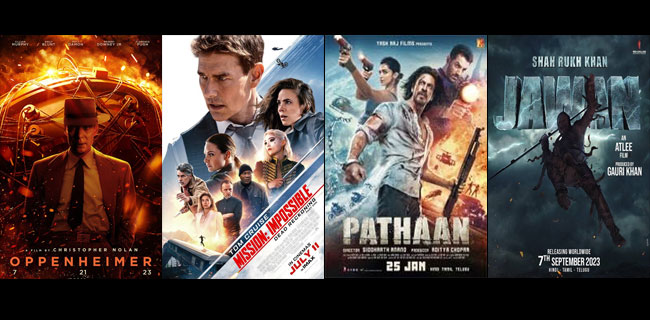
    Shailesh KapoorEven as I write this Friday morning, Christopher Nolan’s Oppenheimer, which released today, is running to packed houses in late night and early morning shows in India. Thus far, Hollywood box-office in India has with the action/ superhero genre. But here, we have a biographical period drama, which is likely to challenge the opening of last week’s Mission: Impossible film, singularly on the strength of its director’s equity among the urban youth in the big cities. The film, incidentally, releases along with Barbie, a ‘franchise’ film like no other. Unlike the West, Barbie will trail Oppenheimer at the India box-office, but is still expected to gross respectable numbers.


    And yet, there continues to be incessant talk about how the theatrical medium is in danger. This narrative, that started during the pandemic, when streaming took over as the only medium of premium video entertainment worldwide, continues to find traction in sections of the industry and the media, but is fast becoming facetious, with no facts supporting it.


    In May this year, I co-authored this report on the Ormax Media website, which explains how ‘big-ness’, whether it comes from the genre, or the franchise, or the director (as is the case with Oppenheimer), is the dominant expectation from the theatrical experience in India, which is why smaller films will struggle, even as the bigger ones continue to get bigger.


    The first half of 2023 grossed 15% less at the India box-office compared to the same period in 2022. But this is certain to be compensated to a large extent, if not entirely, by the second half, which has a stronger line-up of big-ticket releases. 2022 itself was the second-best year at the Indian box-office, being just a notch behind 2019. Yet, some people would like us to believe that cinema is in danger.


    I suspect this narrative is driven by Hindi cinema, or Bollywood as it’s called (and now pejoratively so), not being able to live up to the changing audience expectations from the medium. While Pathaan is by far the biggest Indian film of the year so far, and Jawan, another Shah Rukh Khan film, looks equally promising from a box-office perspective, the in-betweens are where the problem lies. Only five Hindi films have managed to cross the 100 Crore (nett box-office) mark this year in six-and-a-half months. 16 films managed that across the 12 months in 2019.


    That’s the real source of the faulty perception that cinema is struggling. The frequency of high-grossing films created a positive perception about Hindi cinema in the last decade. Post-pandemic, it’s been more about the tentpoles. The lull periods punctuating the tentpoles can make the theatres look woefully short of content.


    But as long as the tickets are being sold, there should be little cause of concern. One would even argue that a tentpole-driven category is less risk-prone, because even in the worst-case scenario, at least 50% of the tentpoles will emerge as blockbusters, something that cannot be said about mid-range cinema, where even 20% is a healthy hit rate.


    Tentpoles also go well with marketing-friendly concepts such as ‘event films’ and ‘theatrical experience’. They allow advertisers to plan a more concerted campaign, than spread themselves too thin across a long-list of films that are uncertain to deliver.


    As we approach the peak festive season in India, be prepared for a lot of buzz around the movies. But I’m not betting on the ‘cinema is dead’ debate dying down anytime soon. But it will begin to make even lesser sense with time.


  • Almost the End of the Road for Appointment Viewing


    By Shailesh Kapoor


    Shailesh KapoorIf you entered the Indian television industry about two-three decades ago, the two words that would be drilled into your sub-conscious within a week were: Appointment Viewing (or Appointment Viewership, in a later variant). Appointment was the Holy Grail of television. It was the ability of a TV show to get a certain guaranteed mass of audience every day or week, depending on its telecast frequency.


    Everyone wanted their channels to be watched by appointment. Even movie channels and niche channels, which had no intrinsic merit to demand appointment from their audience, chased the idea. What else explains an assembly line of “DDT” (Day-Date-Time) promos for movie re-reruns, at all the major movie channels?


    Even at a channel like Zoom, for which I headed the marketing function in its launch period, there was significant on-air inventory spent on getting viewers to watch by appointment. In hindsight, one was chasing the unattainable, but such was the buzz value of the term back then, that it even found a mention in KRAs (even though there is no evident way of measuring what proportion of a show’s viewership is by appointment).


    The term Appointment has lost some of that buzz value in the last decade. “Habit” is what is understood to drive non-GEC consumption in primetime, and all consumption in non-prime time. The habit of watching news at 10pm, for example. Or the habit of turning on a kids channel to watch a cartoon programme after coming back from school. Habit is a less ambitious variant of appointment, and does not have the brand loyalty aspect attached to it. Watching a movie on TV every evening for an hour (habit) is different from watching a particular movie channel every evening for an hour (appointment).


    With the advent of OTT platforms, appointment has become increasingly elusive, especially for men, and younger (unmarried) women. Being pinned down at a particular time for a particular show is no longer required, because catch-up television is available. That not too many TV shows are appointment-worthy to begin with doesn’t help matters.


    Except marquee sports events and a select few TV serials for married women, rest of Indian television viewing is now functioning on habit. Watching Star Plus from 8-10pm could be a daily habit for a family, but it doesn’t carry the same stakes as appointment. They would gladly trade it off for an IPL game, a new show like KBC, or some important news on a particular day. Stories of wars over the remote control in Indian families are things of the past, because Appointment Viewing is a thing of the past too.


    The habit of watching TV makes the medium secure, because this habit is linked to the grand Indian institution: Family. But in the absence of appointment, it makes channel brands and shows vulnerable, and their success more fickle, less enduring.


    Studying habit, instead of chasing appointment, should then be the new mantra for the many, many television executives who have viewership KRAs.


  • Shailesh Kapoor: News Channels or Storytellers?

    By Shailesh Kapoor


    Shailesh KapoorAs I write this Friday morning (June 23), PM Narendra Modi is at the State dinner at The White House. The coverage of Prime Minister’s US visit started last evening on the news channels, and has continued on the other side of the night, with an address to the US Congress punctuating the welcome address and the dinner.


    The time difference between the two countries is a bit of a bummer for our news channels, as it takes away the opportunity to gather ratings over a day-long live event. But then, live telecast is not the only form of ratings-generating news in this case, and the coverage will continue over the next two days, including sidelights, such as culinary analysis of the dinner menu.


    That’s the nature of our news today, moving from one topic to the other, and almost never really focusing on two at a time. Before the Prime Minister’s US trip, Adipurush was that one topic. On the first two days of the film’s release, most news channels celebrated it. Never the one to miss an opportunity to politicise anything that has the remotest potential, Arnab Goswami even ran the hashtag ‘Hindu Re-awakening’.


    But between Friday and Saturday, the social media backlash became increasingly evident, and the narrative shifted to accusing the makers of the film, in particular its rather-vocal dialogue writer who has been flouting his political connections ahead of the film’s release, of not respecting Hindu sentiments.


    Any topic like this has a shelf-life of about three days. That suits our news channels quite well too, as it means an average of two such topics a week. But it’s an all-or-nothing approach, and nothing else can find a foot in the door over those three days. Operational Sheesh Mahal, the story on Delhi CM Arvind Kejriwal’s expensive new house, was one such prominent story in recent times. From Thursday, the focus moved from Adipurush to PM Modi’s US visit, and shall continue to be so, till a new topic comes up for selection on Monday.


    It is only mildly surprising that most news channels end up picking the same topic, as if they are working in some kind of editorial unison, even as they engage in cut-throat TRP wars. Sometimes, it’s a result of the information fed to them by the political parties (invariably the ruling party). Sometimes, it’s just the knack of smelling a juicy story from half a day away.


    In this one-story-a-time, two-stories-a-week model, what doesn’t excite the peoplemeters doesn’t make the cut. Over the last two months, there has been negligible coverage from Manipur, which is by far the most pressing law and order matter in the nation today. It is hard to imagine an equivalent story being sidelined in most free-press democracies around the World, including the one the Prime Minister is currently visiting.


    This story selection model is elegant in its simplicity. It also makes journalism look a lot simpler than one always thought it to be. It’s almost like feature reporting of live news. Maybe one should do a year-end compile of the 100-odd stories covered in 2023. It will look like the annual special edition of a political tabloid: Seemingly purposeful on the outside, but largely junk on the inside.


  • The League of Extraordinary Gentlemen

    Courtesy: iplt20.com


    By Shailesh Kapoor


    Shailesh KapoorThe 16th edition of Indian Premier League is in its last leg now. The 2023 edition has been the most closely-fought of the 16, and by some margin. At the time of writing this, five games are left in the league stage, and yet, only one team (2022 winners Gujarat Titans) have qualified for the playoffs. Seven of the remaining nine are in the reckoning for the remaining three spots, though two of them have only an outside mathematical chance.


    How IPL manages to grow in stature year-on-year is quite extraordinary. And it’s not just growth in commercial stature (viewership, revenue, etc.). The impact of IPL in shaping Indian and international cricket is unmistakable. The meteoric rise of Yashasvi Jaiswal in the last six weeks is a topical example. Jaiswal’s humble background makes for a great underdog or rags-to-riches story. He’s almost certain to earn an India cap this year itself. But it’s difficult to imagine how that would have happened if there was no IPL.


    From a media perspective, IPL pretty much stands at the last marquee media event standing in India. The clutter of infinite options has fragmented audience consumption over the last decade, and it seems that days of a hit show that will unify the entire country (or even the Hindi markets) are long gone. But IPL bucks that trend. To borrow a term from the theatrical business, it’s the biggest ‘pan India’ property in business today.


    By offering IPL free to stream, JioCinema has managed to add to the property’s stature, by giving it recognition as a brand of the ‘masses’. Premium properties can be mass too, and IPL is a fine example of that. One hopes that JioCinema doesn’t relook at this proposition next year, now that the platform has entered the SVOD business.


    There’s another big-ticket cricket event later this year, the ODI World Cup in India. The ODI format is in a bit of a no-man’s-land, sandwiched between the popular entertainment offering of T20 and the connoisseur-backed Test cricket format. ICC is not the most nimble-footed organisation, which is why the ODI format continues to drag on. In the process, it’s damaging the global prospects of the sport of cricket irrevocably. Logically, this should be the last ODI World Cup. It’s only imminent that curtains are drawn on this format sooner than later.


    But nevertheless, the 2023 ODI World Cup will be a commercial success, especially because it’s being held in India, which opens up a wide array of advertising and association options for Indian brands, that are not available in an overseas tournament.


    But even as its best, a World Cup (ODI or T20) cannot match the brand power of IPL, an idea that continues to grow bigger with time.


    This column is taking a summer break, and restart from Friday, June 16, 2023


  • The Saffron Cinema Movement


    By Shailesh Kapoor


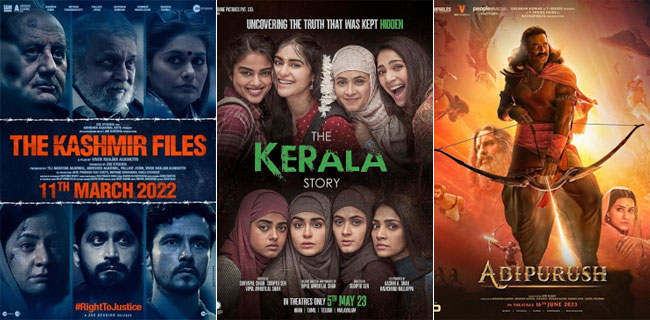
    Shailesh KapoorMarch 2022 saw the release of The Kashmir Files, a film whose box-office performance was unlike any other Hindi film before it. The film had no cast or credentials of note, but went on to gross almost Rs 300 crore at the Indian box-office, aided by inorganic methods, such as corporate bookings and political push. The film features in the list of Top 20 grossing Hindi films of all time. In this article, I wrote about how the film is an outlier, if there ever was one.


    In May this year, there was a sense of déjà vu with The Kerala Story, a similarly-titled film that relies on the same premise – religious polarisation to entice the Hindu majority to watch the film – to get audience attention. The political support to The Kerala Story was less overt, but the film has managed to do almost as well as The Kashmir Files, grossing about Rs 265 crore over its extended run at the cinemas in India.


    While the initial business of The Kashmir Files was inorganic, it is impossible to gross such huge numbers for films of this scale, unless they appeal to a wider audience base. Clearly, both The Kashmir Files and The Kerala Story managed to do that. Entertainment, which is often cited as the primary, if not the only, reason to watch movies, was not the driver though. The films were watched because they represent an ideology, which a large section of the audience, espouse. An ideology that is also reflective in their political choices: Both films have performed better in states where Hindutva is a core component of the political narrative.


    Today sees the release of the Ramayan-inspired pan-India film Adipurush. Unlike the other two films, this one is not communal in its content, as it does not have a community (read Muslims) being shown in a negative light. However, the resonance with the film’s theme is unmistakably religious and cultural. The film has songs titled Jai Shri Ram and Ram Siya Ram, both of which are trending on top of the music charts. Marketing of the film is relying on distinctly religious elements, such as a seat being left unoccupied in each cinema hall, for Lord Hanuman to watch the film!


    Headlined by Prabhas, who is the No 1 star in Telugu cinema, the film will be driven by his stardom in his core market (AP-Telangana), but by its thematic resonance in the Hindi markets. It is expected to gross Rs 90-100 cr across India on its first day alone, aided to the extent of 15-20% by corporate block bookings. Political support is certain to follow, and unless the content is too weak to sustain, Adipurush can be expected to be one of the Top 10 grossers of all time in Indian cinema.


    Last year’s major Hindi release Brahmastra also grossed big numbers, registered the best opening day for an original Hindi language film since the re-opening of theatres post the pandemic (Pathaan now holds that distinction). While Brahamstra has more ‘modern’ elements like a young lead starcast, superhero genre and visual effects, its core theme relies heavily on Hindu mythology too.


    Clearly, we are seeing a sort of trend emerging here. One could look at these films as being either ‘propaganda’-driven (The Kashmir Files or The Kerala Story), or propaganda-free content that relies on cultural and religious resonance (Adipurush). But together, they represent an emerging genre of cinema that digs into Hindu faith and mythology, and its political extension Hindutva, to appeal to its target audience.


    It’s almost certain that many such scripts are being penned even as you read this, and 2024-25 may see a lot more films of this nature being released. What started off as an outlier phenomenon has now gained mainstream significance. Whether it’s a good thing for our cinema, and for the society at large, is another topic for another day.


    The debate on whether cinema shapes society, or society influences cinema, is a complex one. But in the current times, Hindi cinema seems to be clearly witnessing the latter. The Saffron Cinema Movement is here. And it’s just a start!


    Shailesh Kapoor is Founder and CEO, Ormax Media. He writes on MxMIndia on Fridays. His views here are personal.


  • Content Innovation: AI and Beyond

    Content Innovation: AI and Beyond

    Shailesh KapoorIt’s hard to have a business discussion these days without a mention of AI very early into the conversation. Since the emergence of ChatGPT, artificial intelligence has been a buzzword that everyone wants to use. And not for the wrong reasons entirely. In the digital age, the role technology can play in businesses across the spectrum, including media and entertainment, is undeniable. And we have not seen it all. Not just as yet, anyway.

    Innovation is at the heart of many businesses, often featuring in core values of many companies, including some of the most traditional, brick-and-mortar ones. Technology is at the center of this innovation, and AI is expected to lead the way towards innovative creation and transformation of businesses.

    But there’s an irony in this idea too. I asked ChatGPT to define innovation in a business context. I got: “Innovation in the context of business refers to the process of creating new ideas, products, services, processes, or business models that add value to customers, improve efficiency, drive growth, or create competitive advantage. It involves transforming creative ideas into tangible outcomes that meet market needs or solve existing problems in new and better ways”.

    If we look at the keywords in this suitably verbose definition, the creative abilities of the human mind seem central to many of them. The deep linkage of innovation with technology can, hence, be a limiting thought. Especially because it can make those in “innovator” roles think only in one way. Yes, that’s the irony, right there.

    Tech-led innovation is great, but it will be heartbreaking if innovation begins to lose the human touch. In technology companies, this is a non-issue, because the innovators are also the technology guys. But if we look at something like entertainment, innovators are essentially writers, producers, directors, actors, marketers, salespersons, etc. The nature of the product relies on giving the audiences something compelling yet fresh. Self-learning technologies could simply be at cross-purposes with this idea.

    Suggestions that Generative AI can be used to write movie scripts is preposterous, for example. Think of the three most memorable movie dialogue lines of all time, across any language, and ask yourself: Can a “human-like” bot create the same human-like magic? We all know the answer.

    It is therefore crucial that entertainment businesses carefully craft the dos and don’ts of how to use technology for innovation. Technology, and AI within it, can be a content creator and distributor’s best friend. But like with all friendships, expectations must be set right. And the entertainment business worldwide runs the risk of erring on the wrong side here.

  • The Rise & Rise of the IPL

    The Rise & Rise of the IPL

    Source: www.iplt20.com


    Shailesh KapoorThe 17th edition of the Indian Premier League kicks off tonight. To say that it’s the biggest media event in India by some margin will be stating the obvious. The gap between IPL and other big-ticket properties has only grown wider over the last decade.

    The stature of IPL is reflected in our new report, titled The Ormax Sports Audience Report: 2024. The sampling of IPL in the 612 million audience base of cricket in India is higher than that of the ICC World Cup, by a good six percentage points. The list of most-recalled sporting franchises in India (across sports) sees a clean sweep, with the 10 IPL teams taking the top 10 positions, ahead of Manchester United and Patna Pirates, which are the most-recalled leagues in football and kabaddi respectively.

    In its first few years, IPL faced its share of controversies. But in its second phase, the league has been able to put cricket first, and that has helped it move away from the erstwhile imagery of a flippant brand, towards building credibility as a talent platform. This shift is fundamental in nature, and has held IPL in good stead.

    IPL is now a way of life for those in the media industry. Till not too many years ago, there was a lot of chatter about how GECs should dodge the IPL googly. Now, everyone has a playbook of sorts, and it’s not a topic to lose sleep over, anymore.

    This year’s IPL will be held amid the political fervor around the General Elections. News-wise, IPL will play second fiddle. But in terms of monetisation and viewership, it will continue to stay at the top. The stronger franchises are profitable now, and BCCI continues to get richer with each edition. Yet, there’s ample room for growth, as fan bases are continuing to build, especially for franchises that have made late entries, or taken their time to get going.

    This year’s IPL will also see younger captains across most teams. The average age of the 10 captains this year is 30 years, which is three years younger than the 33 years average age in IPL 2023. The old guard is passing the baton to the new, and that’s always a good thing, especially in a talent platform like IPL.

    Amid all the excitement, the biggest highlight of this IPL is going to be the return of Rishabh Pant. The actor survived a near-fatal road accident in December 2022, and his incredible recovery over the last 14 months has been a miraculous one. How National Cricket Academy has helped Pant get back to match readiness against all odds is perhaps the best example of BCCI money being put to great use.

    Pant is leading the Delhi Capitals side, and their first match is scheduled for tomorrow afternoon, at Mohali. We can expect a roaring reception to a special talent, who first got noticed via the IPL itself, before making it big at the international stage. I won’t be surprised if he makes this IPL his very own, to announce a comeback we have all been waiting for. Game on!

  • Bias by Exclusion: News in the Times of Elections

    Bias by Exclusion: News in the Times of Elections

    Shailesh KapoorWe are exactly three weeks away from the first phase of polls in the General Elections. Expectedly, elections are dominating news coverage, and the action is only going to heat up over the next two months, leading up to the results on June 4.

    Historically, pre-elections and elections coverage on television news has been about programming ideas and access to the top politicians. The psephology part stopped being a differentiator a while ago, with opinion polls and exit polls being commoditised over time. Channels that could create engaging formats, have more feet on ground, and connect their viewers to the biggest names on the ballot, performed better than their competitors.

    Early indicators suggest that programming formats may not be the differentiating factor this year. Channels have maintained their typical debating formats, focusing on election-related topics, but barely breaking the template in the process. Yes, there is ground coverage, and it will pick up as we get closer to actual polling, but a lot of that is restricted to specific timeslots, often outside the primetime.

    What is striking is that channels have well-defined narratives, and are engineering their programming around it. In an election where most experts believe the outcome is a foregone conclusion, the narrative is easier to script. Yet, it is difficult to miss the political agenda behind these set narratives.

    For example, the electoral bonds data released by SBI a few weeks ago was arguably the biggest political story of March, till the arrest of the Delhi CM. But it was hard to find a debate on the electoral bonds on mainline news channels. Even as YouTube news channels covered the story in considerable detail, TV channels chose to turn a blind eye, barring a token story or two.

    Story selection is the most potent instrument of bias with a news channel today. Because if you choose to not show something, that’s the end of that anyway. One could argue that certain stories, like Manipur riots in 2023, do not generate ratings, and hence, are not commercially viable on mass television. That is a contentious argument anyway, given that principles of sound journalism would demand a separation between editorial and business. But with electoral bonds coverage, or the lack of it, even that argument doesn’t hold.

    It will be a pleasant surprise to see one of the mainline TV news channels stand out in the election clutter with an original and thought-provoking programming approach. Thankfully, there’s online news to fall back on!