Category: SHAILESH KAPOOR

  • Looking consumer, talking trade


    By Shailesh Kapoor


    Shailesh KapoorWe are four months into 2022, and the year has not been short of action on the Indian M&E front. The month of April itself has been full of big announcements, of new companies being formed, of big companies getting new owners, and of new collaborations on the creative front. It’s also been a month where a film that has delivered some astonishing box office numbers, i.e., K.G.F: Chapter 2. Bollywood is facing an identity crisis, of its own making, as cinema from the South of India makes heavy inroads into the Hindi market. Some streaming platforms are finding it hard to grow subscribers in a post-pandemic scenario, but others continue to scale up their offering. News television ratings are back. All this while the IPL goes on, and we begin to build up to the suspense around the renewal of IPL’s broadcast rights.


    Can you spot a pattern in these key events? They are all trade developments. They are B2B events or announcements that the average consumer, who’s not invested in a media business, has no interest in. An IPL fan will watch IPL wherever it is available. Streamers will choose their content and subscriptions according to their taste. The viewing of news does not depend on whether it is being measured or not. The box office of a film does not make it any less or more likeable for someone who chooses to watch it. Most audience of television and streaming content do not care about who the owners or shareholders of the channel or the platform they are watching are.


    The B2C narrative has been marginalised. This has been a growing trend over the last few years. Why should this happen, I often wonder. In the older days too, there was always enough action on the B2B front. But the general narrative was always about content and marketing. There will be articles and interviews around shows, films, ad campaigns, the works. You would want to know more about a series you follow, or about the making of a movie that you loved. But these topics are not easy to find even on social media, forget the mainstream. Everyone wants to talk trade. Box office, ratings and subscriber bases have seeped into B2C terminology.


    My hypothesis is that this is an outcome of a paid media economy created over the years. The Times of India introduced its ‘advertorial’ service Medianet more two decades ago. Since then, the term ‘Medianet’ has become a generic for all paid plug-ins across publications, including those online, and those not owned by BCCL. For some curious reason, a large share of such ‘advertorials’ comes from M&E companies, who possibly see paid PR as a good way to reach their target audience. For some reason, such communication tends to be business-centric at times, talking box-office and viewership, to lure audience to watch a particular show or film.


    Over two decades of doing this, the lines have blurred. B2B PR is the new B2C PR. The consumer did not care initially, but now, it’s so mainstream that they have learnt to embrace it all… with the jargon and the half knowledge.


    I miss the old days, when you could read a meandering, long-form piece on a film you had liked. Today, one looks for blogs and vlogs that still try and keep that culture intact, with little or no funding backing them. But it’s never the same as reading or watching on linear television.


  • Dubbed & Delivered: K.G.F, Doctor Strange & more


    By Shailesh Kapoor


    Shailesh KapoorThe success of K.G.F: Chapter 2 has emerged as the big entertainment headline of 2022 so far. The film has gone on to do exceptional box-office in multiple markets, including overseas. In the Hindi language, the film is now the second biggest domestic grosser of all time, after Bahubali 2: The Conclusion.


    Both K.G.F: Chapter 2 and Bahubali 2 are films from southern parts of India, made originally in Kannada and Telugu respectively. RRR, another Telugu film, is also a big grosser of this year. By the time 2022 ends, we may have seen a few more of their ilk.


    Doctor Strange: In The Multiverse Of Madness released last week to opening collections in India that no Hindi film has been able to achieve since the pandemic started. A large share of the film’s collection has come from the language-dubbed versions, i.e., Hindi, Tamil and Telugu.


    Can one call this the breaking of the ‘language barrier’? Technically, that will be an inaccurate description, because the language of consumption is the local language of comfort, not the language in which the content has been originally been produced.


    In our yet-unreleased report titled ‘The Ormax OTT Audience Profiling Report: 2022’, a typical paid streaming audience (SVOD) is watching content in 2.3 languages. But if you include the languages in which dubbed or subtitled versions are being watched, this number doubles to 4.6. The equivalent numbers are 1.8 and 2.3 for AVOD audiences. The big difference is the D-word: Dubbing.


    Dubbed content has been around in India for two decades now, with Hindi movie channels thriving on Hindi-dubbed versions of South Indian action films. These films found a core audience (typically men in the smaller towns and the lower socio-economic strata) over time, and the ratings from this core group fueled more acquisition and programming of such content over the years. Licensing fees of South Indian dubs have seen upward revision to the degree of 10X, perhaps even more, over the last 15 years.


    But South dubs on Hindi movie channels were treated with a touch of condescension by the cosmopolitan audience, which includes the media fraternity, ranging from advertisers to Hindi-language content creators. “Set Max” (as Sony Max is popularly called) entered the pop culture for its love for such films, along with its love for Sooryavansham, a Hindi film that has its origins in the South of India too. There were ratings, but a perception of legitimacy, if one can call it that, was missing.


    Things started to change around 2015, for two parallel, unrelated reasons. The first reason was the Bahubali franchise. The first Bahubali film that year raised the bar on South Indian dubbed content overnight, and by several notches. Around the same time, the Marvel Cinematic Universe had started building a loyal teenage and youth fanbase in India, leading to dramatic growth in Hollywood box office in India, which has multiplied by a factor of 3 from 2014 to 2019.


    The next big boost came during the pandemic, when streaming consumption skyrocketed, and a large section of audience started sampling content (both films and series) in non-native languages, via dubbing or subtitling options. This included not just Indian languages and English, but also other foreign languages like Korean, Spanish, German, etc. The Spanish series Money Heist was the most-watched Netflix content in India in 2021, ahead of all Indian series and films. Money Heist was available to watch in English, Hindi, Tamil & Telugu in the India market.


    Dubbing has unlocked a world of content that was hitherto inaccessible to the wider Indian audience. The possibility that the next big content wave may come from an unexpected part of India, or the world, is now a real one.


    It doesn’t make the task of content creators any easier. The Hindi film industry has been facing an identity crisis of sorts, as it sees Hollywood and South Indian films outperform, while big-ticket Hindi films struggle to find audience in their native markets, let alone down South in the dubbed versions.


    But the audience is not complaining. And that’s why, you can expect a lot more action on this front in the coming times.


  • Genre by Genre… Tumbling of the Telly


    By Shailesh Kapoor


    Shailesh KapoorWhere is linear television headed, one is often asked these days. Television remains the biggest traditional media by far. While print has suffered irrevocable damage during the pandemic, television has managed to hold on much better. TV’s ability to bring families together every night as a ritual has meant that it continues to stay relevant in an evolving India that’s embracing technology faster than ever before.


    But that’s only half the story. While television, at an overall level, has managed to hold its place under the sun, not all television genres have managed this equally. One after the other, television genres have fallen by the wayside over the last few years. The New Tariff Order (NTO) sounded the death knell for English entertainment channels, where streaming offers far superior content, in both variety and quality. Music channels have struggled, with the rise of digital options, ranging from YouTube to music streaming apps. The infotainment genre is no longer what it used to be, having borne the combined brunt of NTO and the streaming surge.


    These are ‘niche’ genres, one could argue. But the more ‘mass’ genres have not done too well either. Movie channels have lost ratings. The Hindi Movies category is clocking almost 50% lower ratings when compared to the pre-NTO period. Kids channels have not grown. IPL’s TV ratings are down by more than 20% this year, with more sports viewership shifting to digital with each passing year.


    That leaves us with News and GEC. The former is a strange beast. The category operated without ratings for more than a year, and managed to stay afloat, but with content that’s highly questionable when seen through the lens of responsible journalism. The ratings are back, and news channels continue to be notorious, propping up communal stories while ignoring the more purposeful ones, like those related to economic matters. Watching TV news is a habit for older (30+) men in India. But this habit is no longer perceived as an ‘intellectual’ one.


    That leaves us with mass general entertainment, the only TV category that has remained unaffected, at least relative to others, by NTO and streaming. Despite no real content innovation, GECs continue to serve the lowest common denominator well, and the bigger channels have managed to hold on to their viewership levels, with drops in the range of 20-30%. In the rural market, free-to-air GECs have prospered over the last few years, running largely on content handed down by the pay channels in the network.


    Hence, slowly but surely, a category is losing its layers. Genre by genre, the pieces have been broken, and television is no longer the throbbing, multi-genre medium it once was proud to be. While the rise of digital entertainment has been an evident factor, excessive interference by an over-enthusiastic regulatory body has been a significant factor too.


    Where does Indian television go from here? It’s difficult to say. The grand institution called the Indian family will ensure it stays relevant. But not necessarily in a form that we would have liked it to take in a progressive India.


  • And the eyes have it…


    By Shailesh Kapoor


    Shailesh KapoorIn major research reports, amid all the crucial, perspective-changing insights, occasionally comes a finding that makes you chuckle at the silliness of it. This column is about one such finding.


    In our recently-released report on the Indian OTT audience, there’s a section where we quantify the various reasons because of which medium and light AVOD streamers (i.e., those not watching content on any paid platform) do not spend more time watching online videos. This ranking effectively helps OTT platforms understand why Indian AVOD audience have not engaged with digital videos enough to make them consider paying for subscriptions.


    Using qualitative research, we identified 11 reasons, and the report ranks them based a large sample quantitative study. The reason right at the top of the list is “can damage eyes”. A staggering 78% medium and light AVOD audience in India believe watching online videos (largely on their smartphones) damages their eyes, and hence, consumption time must be controlled. This reason is 18 percentage points higher in the list than all other reasons, including some compelling ones related to pricing of paid content, cost of mobile data, reservations about sexual and abusive content, etc.


    If you have grown up in an average Indian household like me, I’m sure you have been fed this bogey at some point of time in your early years. “Can damage eyes” has been the go-to explanation for Indian parents, to dissuade their kids from watching more television in the 1990s and the 2000s, and then from using the smartphone excessively, for the last decade or so. “You will have to wear glasses all your life”, for example, is a common scary consequence mentioned.


    As a heavy TV watcher, I had to hear this every other day, and it didn’t help that I already had glasses prescribed from a very early age to begin with. I believed in the reason for many years. Only in my 20s, I discovered that the consequence I was repeatedly reminded of was only a grand old myth.


    A simple internet search on “Does watching TV damage your eyes” or “Does using smartphone damage your eyes” will give you some easy answers. Excessive usage of devices can cause eye strain, but it does not “damage” eyes, or any other part of our physiology, in any way. I’m not endorsing excessive device usage, as there are indirect health consequences that one needs to keep an eye on, pun intended. But the “can damage eyes” reason is simply untrue.


    It’s fascinating, then, that such a myth is the top reason for a section of audience, leading to them controlling their consumption of digital video content. The belief that this is true is so deep-seated that you cannot say that parents lie to their kids when they use this argument. They actually believe in it!


    As puerile as this finding is, it tells us a thing or two about the Indian audience. We may have progressed rapidly in the digital space, but there are some uniquely Indian challenges that the Indian market continues to pose. It seems this myth existed in the Western markets too for a while, but has become a marginal one over time. But in India, this is a consumption barrier that has direct business impact, on both unpaid (AVOD) and paid (SVOD) streaming businesses.


    I almost wish one of the leading players did a tongue-in-cheek campaign to bust this myth. But busting myths created over decades is not easy.


  • PrimeTime Debates: Hate Story 2022


    By Shailesh Kapoor


    Shailesh KapoorIt had to happen someday. The vitriolic nature of prime-time debates on Indian TV channels has been there for everyone to see over the last decade. It was only a matter of time that this daily dose of toxicity snowballed into something serious and threatening. A comment by BJP spokesperson Nupur Sharma on one such debate has resulted in a major diplomatic crisis. In turn, it has resulted in BJP putting down some guidelines regarding the code of conduct for their spokespersons on TV channels. I’m afraid, it’s a case of too little, too late. The damage may have already been done.


    Nupur Sharma is not one of a kind. It could have been anyone else instead of her. Spewing venom on prime-time debates has been par for the course. It’s a format and style that was first championed by Arnab Goswami, whose own debates have degenerated with every passing year. Other channels followed suit, and on any given weekday, we now have more than 30 prime-time debates competing on decibel levels as well as on absurdity.


    How did we reach this nadir? A part of the answer lies in the mad rush for TV ratings. In a multi-channel scenario, where you are looking for a share of eyeballs in times of low attention spans, outshouting the next channel on the remote is a temptation that’s hard to resist. I don’t have much of an issue with the noise and the outshouting per se. Even if you believe such content is lowbrow, it is still harmless. You can simply switch channels, or watch news online or on social media.


    But over the last four years, the discourse has started peddling hate, which, unlike noise, is dangerous. The transition from distasteful but harmless noise to hateful and divisive communal witch-hunts started in the build-up to the 2019 general elections, and continued to get worse in the pandemic years. And here we are, in 2022, in a diplomatic tangle, because a hate-spewing spokesperson went too far one day.


    Will anyone learn anything from this at all? Will our politicians, who are generally over-enthusiastic in supporting censorship of entertainment content, self-censor their own people? Will news channel bosses have some tough talks with their offending anchors? Much as we wish the answers to these two questions is ‘yes’, the compulsions of electoral politics, coupled with the subservient nature of Indian media, especially television news, makes that ‘yes’ wishful, almost like a fantastical idea that can no longer exist. Not watching TV news is no longer a solution either. That’s like the ostrich-in-the-sand argument. The social ramifications won’t go away if a handful of people stop watching.


    The only community who can action a change are the advertisers. Brand safety has been a growing topic of conversation worldwide, and there cannot be a better time for some of the biggest spenders on television news to introspect if their message is being seen in the right context and environment. If the money dries up, TV channels will have no other option but to fix their domestic problems. While the Central Government does so too, in a crisis of its own making, one could argue.


  • 2022: Six Months & Counting


    By Shailesh Kapoor


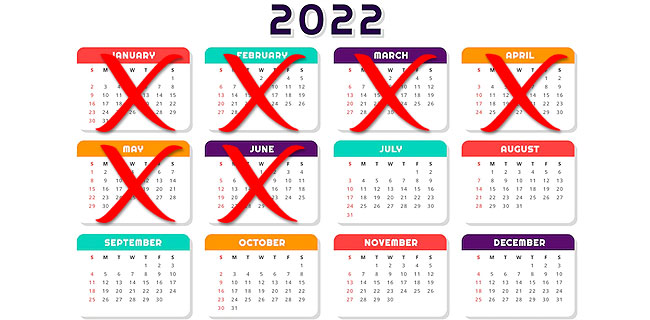
    Shailesh KapoorJust like that, we are already into the second half of 2022. It’s been a somewhat unusual year for the Indian entertainment business. The last two years have been heavily impacted by the pandemic, but 2022 has had a more ‘normal’ feel to it, and that itself has been refreshing.


    The maximum action was seen on the theatrical front, with a slew of new releases seeing audiences go back to the theatres in big numbers across India. K.G.F: Chapter 2 and RRR have been huge success stories, with the latter finding enhanced fan following in the US after its Netflix release in May. The Hindi theatrical market, which has struggled for two years now, saw sporadic success beyond the dubbed versions of the two blockbusters mentioned above. The Kashmir Files, Bhool Bhulaiyaa 2 and Gangubai Kathiawadi got the audience, while several other films, including big-ticket Akshay Kumar starrers Bachchhan Pandey and Samrat Prithviraj, struggled at the box office.


    In the first six months of the year, Hindi language’s share of the domestic gross box office stands at about 35%, down from 44% in the pre-pandemic year (2019), but up from 27% in the two pandemic years put together (2020-21). The twist in the tale is that a staggering 43% of Hindi box office in Jan-Jun 2022 has come from Hindi dubbed version of South Indian films.


    While theatrical films grabbed the headlines, this half-year period has been somewhat muted for the streaming category. There has been a spate of new launches across platforms, but very few have achieved unqualified success. Rudra (Disney+ Hotstar), Panchayat S2 (Prime Video) and Aashram S3 (MX Player) crossed an estimated viewership of 25 Million audience in India, while Rocket Boys and the recently-launched Suzhal: The Vortex have received widespread critical acclaim.


    News of Netflix struggling to grow its subscriber base, worldwide and in India, continued to surface every few weeks in this half year. Big brands can sometimes feel the burden of giant expectations they set for themselves, and Netflix currently faces this challenge on the global front.


    As usual, there wasn’t much in the television content space to write home about. A deftly-executed season of Shark Tank India was noticed and appreciated, but its success was largely streaming-centric, as the show failed to find a sizeable audience on linear television.


    While there was little action on the content side, the TV industry was not short of action on the industry side, with the return of the news ratings, and the subsequent mad rush we witnessed, in which almost every news channel staked a claim at the no. 1 position. February was the elections month that saw five states, including Uttar Pradesh and Punjab, go to the polls. News channels had enough on their plate to keep themselves busy, including controversies around several prominent anchors.


    But the big media story of the first half of 2022 is the astronomical price for which the IPL broadcast rights were sold. The auctions place IPL unquestionably at the top position on the list of the most powerful media brand in India, in a year that also saw two new teams make their IPL debut, one of which went on to win it.


    If the first half of the year is any indication, we can expect that the second half of 2022 will not be short of fireworks.


  • 2022 So Far: The Best of Indian Streaming


    By Shailesh Kapoor


    Shailesh Kapoor2022 is more than halfway through, and even as the pandemic lurks around, the year has a semblance of normalcy to it, something we have not felt since 2019. The entertainment narrative in the pandemic years was largely centered around streaming (direct-to-OTT) content. This year, the conversation has shifted significantly to theatrical films, with the release of some big blockbusters, especially in Telugu, Tamil and Kannada languages.


    But streaming content continues to build a wider audience base, and is now a flourishing parallel industry that’s hard to not take notice of. The first half of the year has seen its fair share of hits and misses on the streaming front. Here’s my choice of five Indian streaming originals that made a mark in Jan-Jun 2022:


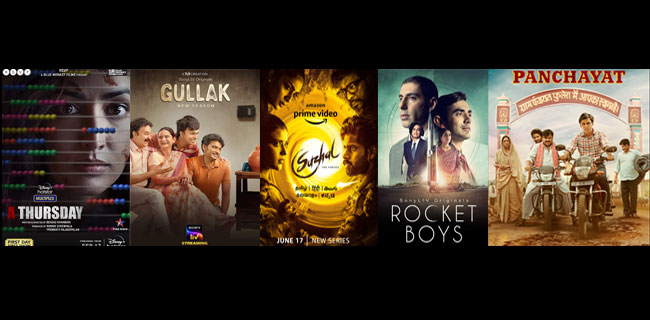
    5. A Thursday (Disney+ Hotstar)

    There haven’t been too many direct-to-OTT films that have made a mark this year, as the best content has been released theatrically first. But the Feb 2022 Hotstar thriller A Thursday, headlined by Yami Gautam Dhar, got the audience attention like no other film could. With an estimated viewership of 25.5 Mn, it is the most-watched streaming original film in India this year, ahead of the more-hyped Gehraiyaan. The thriller, with a very relevant message in the last act, may end up being the biggest direct-to-OTT film of the year too, given that streamers are now shifting their focus firmly to series than films.


    4. Gullak S3 (Sony LIV)

    Gullak is a partnership between a platform (Sony LIV) and a producer (TVF) who are both recognized for some excellent work in the streaming space over the last few years. The show revels in its simplicity and the ‘aam aadmi’ connect, making it stand out in a category that’s still driven by a predominantly cosmopolitan outlook. There has been amazing consistency across the three seasons of the show, in terms of character portrayal, the quality of humor, and the overall tonality of the show itself. One hopes the fourth season is round the corner, because the show’s growing fanbase is eagerly anticipating it.


    3. Suzhal: The Vortex (Amazon Prime Video)

    Created by Pushkar-Gayathri, of Vikram Vedha fame, crime thriller Suzhal has managed to find an audience outside its native (Tamil) market, despite the setting of the story setting being rooted in the local culture. The streaming category has made the language barrier a lesser factor over the last two years, and we can expect more shows like Suzhal to break through in the Hindi market in the coming months.


    2. Rocket Boys (Sony LIV)

    Rocket Boys, a biopic that traces the life of Homi Bhabha and Vikram Sarabhai, is a masterful recreation of an important chapter in modern Indian history. But it’s not the historical significance that makes the show so delightful to watch. Rocket Boys, created by Abhay Pannu, has an irresistible vibe, as it seamlessly blends humor with drama, romance with history, and irreverence with a sense of responsibility. Imaginative casting is one of the show’s strengths, and Jim Sarbh as Bhabha is particularly outstanding.


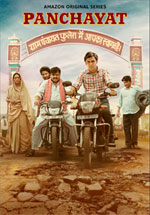
    1. Panchayat S2 (Amazon Prime Video)

    Panchayat is the second TVF show on this list. TVF’s strong presence on any Indian streaming list is a given, given the consistency of their offering over a few years now. Unlike Gullak, which has a more homely and next-door vibe, Panchayat has a certain cinematic quality to it, despite its simple, almost innocent, imagery. You can sense that this show is going to only get bigger and more ambitious with each season, because it’s uniquely wry style of giving social commentary is some sort of an acquired taste.


  • Politics on the Sleeve


    By Shailesh Kapoor


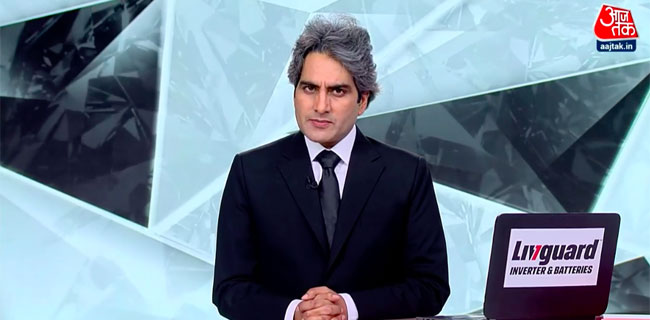
    Shailesh KapoorThe Hindi news television genre is buzzing this week. One of the biggest anchors in the category, Sudhir Chaudhary, has changed channels. His new weekdays 9pm show, Black & White, premiered on Aaj Tak this week. Chaudhary has spent over a decade at Zee News, which included a controversial extortion case back in 2012, for which he and a colleague had to face legal action, including judicial custody.


    I’m no fan of Chaudhary and his rabble-rousing style of anchoring, where Muslims are often the target. But over the last few years, Chaudhary has used this trademark style to become one of the most popular Hindi anchors in India, with a loyal fan following that’s only matched by a couple of other news anchors on television.


    In today’s polarised media environment, marquee anchors tend to define the political stance of the channels they are on. The role of the anchor, has, thus widened from only getting audiences to a particular time slot when they are anchoring. Anchors are now driving the brand narrative of news channels across languages. And this brand narrative is decisively political.


    That’s one of the reasons news that’s not political in nature hardly finds any presence on the primetime roster. And when it does, the story angle taken is primarily political. Most anchors feel under-leveraged if they do not use their political capital in their shows. They make it a point to wear their political disposition on their sleeves.


    But they also understand that the audience can’t be fed political news all the time. As a result, we have seen the emergence of news topics that are ‘pseudo-relevant’, i.e., the audience is made to believe the news being dished out is of high importance in their lives, while actually, it may have almost no relevance at all.


    One such sub-genre is ‘communal news’, where stories that are essentially ‘Hindus vs. Muslims’ in their construct are chosen, with an anchor position that’s invariably pre-decided. This trend started in 2014, and has since been on the rise. The Tablighi Jamaat coverage during the first Covid lockdown in 2020, and the Gyanvapi mosque controversy more recently, are evident examples.


    But you do not need a story to ignite communal sentiments among the audience. You could just do a random story, passing it off as research. Sudhir Chaudhary’s ‘Jihaad ka diagram’ story in 2020 is a notorious example.


    Not everyone watches television news anymore. But there is a strong correlation we observe in our work, between political awareness and consumption of TV news. To say it differently, those watching TV news are more likely to have defined political views, including whom they want to vote for in the next elections. In turn, they can shape the opinion of others (family and friends) around them who are often sitting on the fence till a week or two before an important election.


    Thus, to say that not watching TV news is a solution to fixing things that plague the genre is just being naïve. Sadly though, no strong alternative narrative has emerged, and not much may change anytime soon.


    But in hope, we live.


    Shailesh Kapoor is Founder and CEO of Ormax Media. He writes on MxMIndia every Friday. His views here are personal.


  • Time to Cancel the Cancel Culture?


    By Shailesh Kapoor


    Shailesh KapoorWhen I first heard the term ‘Cancel Culture’ a couple of years ago, it intrigued me. The idea that you can ‘cancel’ someone, typically a celebrity, for their unacceptable comments or conduct, especially on a topic of contemporary significance, seemed like an empowering one. It also seemed democratic in its intent, because a group of common people could hold a celebrity accountable for their actions or words, by ‘canceling’ them en masse.


    In India, however, the term did not come with the nuances, such as those around the free speech debate, it carries in Western cultures, where it originated. The semantics changed to “Boycott”, a word that has since been used to attempt cancelation of several celebrities, films and corporates, often for reasons that are more political than moral, social or cultural.


    As I write this, a search on #Boycott on Twitter throws up three prominent suggestions: #BoycottLaalSinghChaddha, #BoycottRakshaBandhan (the film, not the festival) and #BoycottAliaBhatt. All three are related to films releasing this week. Alia Bhatt’s Darlings has dropped on Netflix today, while the other two films, starring Aamir Khan and Akshay Kumar respectively, release on August 11.


    It may not always be easy to trace root causes of such boycotts, because those causes often tend to be more generic than specific. If a community of trolls decides to boycott a particular film or its lead actor, they will find more than a few reasons to do so. It could be a comment made by the celebrity in the past (sometimes a decade ago), something ‘inappropriate’ they wore, a ‘problematic’ character they played in a film in the not-so-recent past, or all of the above.


    The root causes may not always be linked to the bigger celebrities alone. Raksha Bandhan, a film headlined by an actor (Akshay Kumar) who generally has a right-of-centre political image, is being ‘boycotted’ because the film’s writer Kanika Dhillon has been outspoken about topics such as lynching, and has made ‘cow’ references in some of her tweets on this topic. These tweets are not from this year, but have been dug out in the week leading up to the film’s release.


    Then, there’s the generic evergreen trending topic: #BoycottBollywood. Since Sushant Singh Rajput’s suicide in June 2020, the call to boycott the Hindi film industry in its entirety has been a recurring one. It’s been fanned by some within the industry itself, most notably Kangana Ranaut. The industry has also been given the name ‘Urduwood’, a term that suggests how the industry has turned its back on Hindu culture and ethos.


    The underlying politics is apparent even to the most naïve. News channels play their part in furthering this narrative, using subtler variants of these hashtags, but never showing any subtlety of discourse thereafter.


    In times when the Hindi film industry is suffering from an identity crisis, with films from the Southern industries and Hollywood doing better, it becomes a soft target for hardline politics.


    The good news, if one can call it that, is that there is no evidence that such boycotts impact the fate of these films or stars, either in theatres or on streaming. Alia Bhatt, who has been on the ‘boycott list’ of the Right Wing for what seems like perpetuity now, is at the peak of her professional career currently, and has delivered one of the few hits that the Hindi film industry have seen this year: Gangubai Kathiawadi.


    Since the paying audience doesn’t care much, there isn’t much heft that these hashtags and social media trends carry. But they continue to exist, and are only getting more frequent and inane of late.


    It’s perhaps time to boycott the boycott hashtags, to cancel the cancel culture.


  • Pull, not Push: Film marketing is no longer the same


    By Shailesh Kapoor


    Shailesh KapoorA long weekend, like the one that spanned from Aug 11 to 15, is hot property for film producers. Big holidays boost box-office collections by upto 75-100%. In this regard, Aamir Khan’s Forrest Gump remake Laal Singh Chaddha got the perfect release date. It was also his first release in almost four years. But the audience just didn’t turn up. Khan, who was the first to breach the 100, 200 and 300 cr box-office levels, will have to settle for about Rs 60 crore this time.


    Not so long ago (through pre-pandemic years seem like a thing of the distant past), a saleable movie star was box-office insurance. You could make the worst film, but he would at least get bums on seats on the first weekend. Things have changed rapidly over the last two years. Laal Singh Chaddha, for example, could never recover from the tepid response to its trailer, and all the marketing that followed seemed like a futile catch-up. Khan has been a marketing trendsetter from the times of Ghajini. But he missed a trick this time, by not realising that the nature of marketing may have changed fundamentally.


    Films, like many other product categories, have extensively relied on push marketing for years. You essentially spend money to “buy” share of voice and mind, and build enough “buzz” to get people to watch the film when it releases. We have seen Shah Rukh Khan promote some of his weaker films with this intent, and with some very good results too.


    Push marketing worked well in simpler times, when media options were limited and more consolidated. In today’s digital-dominant ecosystem, you cannot push all the buttons at the same time. To begin with, it will be insanely expensive, given the growing fragmentation of media consumption over the last few years. And then, there are ‘media’ (like the SVOD apps) that are ad-free anyway. And then, there are other media, like social media, where marketing works best when it is organic and user-generated… when it is led by a consumer pull, than by a manufacturer’s push.


    This is a fundamental change, and one that many in the media or the marketing industry are currently not adapting very well to. How do you create consumer pull for a new product that has no prior brand or franchise value? So many things have to come together: The product has to service a real need, and come across as original in its intent. And the marketing must be imaginative and disruptive, to stand a chance of being embraced by the organic pop culture that accepts and cancels new things every day.


    In Tamil and Telugu cinema, the top stars still carry an aura that ensures a natural consumer pull by just their presence on the film’s poster or trailer. But we have seen many such films crumble from the second day onwards too. So even when an agent of pull is available, more works needs to be done.


    It’s not easy to create consumer pull. After all, if you could “create” something that’s meant to be “organic”, would it be “organic” anyway? And that’s where the conundrum that lures marketers towards the classical push marketing approach lies.


    But days of push marketing are numbered, at least for entertainment products. With the success of Pushpa to KGF to the Marvel films, and a dozen failures on the other side, the writing is on the wall. Can the film industry pull up its socks then, all pun intended?


  • Two views on the NDTV stake buy


    NDTV Stake Sale: What Next?


    By Shailesh Kapoor


    Shailesh KapoorThe news of the Adani group acquiring a sizeable stake in NDTV has been the significant media highlight this week. And for good reason. When it comes to questioning the ruling establishment at the Centre, NDTV remains the last news network standing. In particular, the Hindi channel NDTV India’s star anchor Ravish Kumar has built a sizeable cult following for himself in the Left & Liberal sections of the population, with his unique style of commentary on the state of the nation. He’s incisive, often scathingly sarcastic, but always backed with solid research. In a community of anchors who are more than happy to toe the establishment line, Kumar comes across as a lone warrior. None of his colleagues at the NDTV channels have managed to match his towering persona either.

    But the NDTV channels are not popular favorites. They have consistently rated poorly, which is not too surprising, given that the mood of the nation over the last decade is in sharp contrast to the NDTV approach. In our consumer work, we often find audiences describing NDTV channels as “Pakistani”, which sums up not just NDTV’s mass imagery in India, but also the state of Indian news media today, where anyone who’s not evidently pro-Right can be termed as ‘anti-national’.

    But the NDTV network has managed to command a good price in the ad marketplace despite its low ratings. It has a legacy (including its founder Dr. Prannoy Roy) that dates to its Doordarshan days (remember The World This Week?). And that a significant (even if minority) section of brand marketers is left-of-center helps too.

    Where does NDTV go from here is a premature question. The Adanis don’t have a majority stake in the network as of now, though they may push towards that in the future from what one understands. If that happens, one can expect the network to change sides, in terms of its ideological disposition. But it is difficult to see how any of the key faces of the channel’s current image, such as Dr. Roy or Kumar, will continue to be a part of the network in that case.

    Journalists like Kumar always seem to find a way of making their voices heard, even if they have to move from television to digital, from well-budgeted reports to bootstrapped ones. There’s a certain swashbuckling quality to this brand of journalism, which thrives on adversity.

    With the advent of social media and digital news brands, television news has lost its bearings over the last decade or so. While the eyeballs and hence the ad revenues continue to come, respect has been more elusive. Digital platforms, on the other hand, have experimented with more cutting-edge work, despite lower budgets and poor monetization models. While TV has become all about debates (Kumar is a rare anchor whose show is about reports than debates), online news platforms have filled in the space to fact-find, analyse and critique, important attributes that the media must have for a democracy to thrive.

    The core NDTV viewer, hence, will not miss their news, even if the network’s management changed hands. He may have to just find another destination for it. But TV news will be poorer, because it will lose whatever little heterogeneity it currently has. And that’s not a happy thought.


    Shailesh Kapoor is Founder and CEO, Ormax Media. He writes on MxMIndia on Fridays. His views here are personal


    What’s the future for NDTV?


    By Ranjona Banerji


    Ranjona Banerji“Journalists at NDTV have a unique opportunity to examine their own work and their stances. There is a small world outside TV and outside mainstream media which does still do real journalism. It is not too late for any of them to work on those,” writes Ranjona Banerji

    The Adani attempt to buy out the news channel NDTV is being presented as a hostile takeover by NDTV. And NDTV fans as well as media watchers see it as a general attempt by BJP and Modi government sympathisers to control the media and the general narrative.

    We know that point 2 has been the background music since the Modi government came to power.

    We also know that the Adani Group is very sensitive to criticism and has gone out of its was to use SLAPP tactics to harass journals and journalists who dare to discuss their problems with debt, and the favours it has got and so on.

    Once you get past the general background chatter of whether NDTV was liberal enough or critical enough of the Modi government, what are you left with?

    For one, the tragedy that of all the television channels in India, NDTV was the only one seen as being critical of the Modi regime and the BJP. This is in spite of the fact that NDTV is nowhere near as critical as some sections of the print media and definitely nowhere near various digital platforms. Several of its anchors present the BJP with more opportunity than other parties to present their “views” and some anchors have not yet understood that a journalist’s role is to question, regardless of your inclinations.

    There is also the sentimental background that NDTV was the first of India’s private TV channels and several older viewers have been attached to it since then.

    Several who watch NDTV’s Hindi news channel bemoan the potential loss of Ravish Kumar who has been the bravest of all NDTV journalists when it comes to questioning those in power.

    While the legal and financial battles continue at their own pace, and the owners and promoters of NDTV negotiate, the journalists at NDTV have a unique opportunity to examine their own work and their stances. There is a small world outside TV and outside the mainstream media which does still do real journalism. It is not too late for any of them to work on those. The internet and the world of streaming offers any number of opportunities. The problem is the money. In the current situation, it’s never going to be as much income as established TV.

    The other problem is reach. Where these big names and stars who have become household familiars can leverage their popularity to draw in viewers and therefore possibly money.

    Those of us on the outside of big game (fake) journalism know how tough it is. But it is not impossible.

    Cowardice and fear of losing influence is a folly (okay, bad pun, I know I know) because greatness beckons on the other side.

    Maybe Adani’s attempt to take over and potentially destroy NDTV can be a seminal point, a turning point for Indian journalism. Especially for TV. It tells you that no one is safe. It tells you that our business models are shot to pieces.

    It also tells you how little the general public understands. I see a lot of carping that the media is only after money. That is the rank stupidity of sections of our audience who somehow believe that newsgathering does not cost anything and that people who work in the media do not deserve to make a living. But all right, let’s ignore these riled up innocents.

    Instead, we wait and watch. Not for what the Adani Group may do to NDTV. Several such buyouts in the past have destroyed media organisations. From the Ambanis (via Raj Salgaoncar) and the Observer to Vijaypat Singhania and Indian Post to Subhas Chandra and DNA. And several media organisations have wilfully destroyed themselves like India Today.

    Will NDTV be one more tragic story of a good (by TV standards) media house biting the dust or will its employees wake up and put up a fight?

    I’m for the fight.

    Yeah, maybe there is an optimist somewhere left inside me.


    Ranjona Banerji is a senior journalist and commentator. She writes on MxMIndia on Tuesdays and Fridays. Her views here are personal.


  • Shailesh Kapoor: 11 years, 385 not out

    By Shailesh Kapoor


    Shailesh KapoorMxM India completes 11 years today. This column started in the eleventh month of this website, on Aug 9, 2012, with this piece. The one you are reading now in no. 385. Writing for MxM India has been a very satisfying decade-long journey for me. It’s a testimony to MxM India’s value of independent journalism that not once, across these 385 columns, have I been told to edit or qualify anything I have written.


    So much has changed over this decade. The initial columns were primarily around the linear television business, focusing on GEC, news or sports in most weeks. This column was even called TV Trail in its initial years! In 2015, I first wrote about a streaming shows (TVF Pitchers). Little did I know then that this will be a norm a few years later, and TV-centric columns will be less regular. Over the last 3-4 years, the television columns have been more about industry issues than about the progress it is making. The linear TV industry in India is stuck in a time warp of its own making, and that’s been a pet peeve for me, which finds an outlet here every now and then.


    But it’s the rise of streaming, and related aspects such as the growth of dubbed content (such as this piece), that has dominated my writing in the last couple of years. The Indian streaming story has been a fascinating one thus far. And we are, by no means, in a settled phase. Which means there will be a lot more to write about it in the coming year too.


    IPL, meanwhile, has been a constant fixture over this decade. I have written about 15 columns on it. The league has grown stronger by the year, emerging as the second-biggest sporting property in the world this year after NFL.


    The last five years have also seen the dramatic rise of Instagram in India, including that of Reels within it. I’m that rare breed who is not on the platform, and have often found myself trying to keep pace with the new socio-cultural trends that either emerge of Instagram or find magnification through it.


    While so much has changed over a decade, the unique, multi-layered entity called the Indian audience continues to remain fascinating. It’s difficult to second-guess their minds, and yet, one must learn ways to do it, given the nature of Ormax Media’s work. In 2022, the Indian audience is more demanding than ever before. Their rejection of content can be outright brutal (case in point: Laal Singh Chaddha), and their acceptance of content can be whole-hearted (IPL, Marvel films, K.G.F 2, Anupama, etc.).


    As this column nears the 400-mark, in MxM India’s twelfth year, it is my love for the Indian audience that will continue to power it.