Category: SHAILESH KAPOOR

  • Dilip Kumar: The Original ‘Thespian’

    Courtesy: SeniorsToday.in


    By Shailesh Kapoor


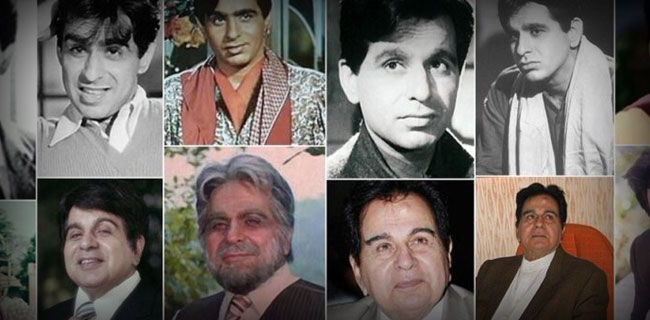
    Shailesh KapoorDilip Kumar, arguably Hindi cinema’s greatest actor of all time, passed away earlier this week. The legendary actor had been battling poor health for a while.


    If you are born in the 1970s (or later), like me, it is unlikely that you would fully understand Dilip Kumar’s legacy. My first memories of him were from his films in the ’80s, like Kranti, Mashaal, Shakti, Vidhaata and Karma, when he was playing the ‘second generation’. The screen presence was towering, and I couldn’t take my eyes off and actor who had a style so distinctive yet alluring that you wanted to see him more and more. By the time I had watched Saudagar (1990), I was already an ardent admirer.


    But it’s much later, in my late 20s, that I started watching Dilip Kumar’s films from the 1950s and the ’60s. Many of them are Black & White, and it took some time (and age) to get used to the idea of enjoying a film without colour. It was more like a ‘study’, because it is impossible to fathom how those films would have played out in the socio-political milieu of the times they came in. He is the original superstar, my dad would often tell me. I learnt the English language word ‘thespian’ because it was often used to describe Dilip Kumar.


    Such is the aura around him that even our press has been well-behaved (relatively anyway) over the last three days. Back in 2012, I wrote in this column about how the tributes paid by our electronic media to cinema legends who passed away at that time have been disappointingly trite. That was a period in which we lost Shammi Kapoor, Dev Anand, Rajesh Khanna and Yash Chopra in quick succession. If the electronic media’s handling of Dilip Kumar’s demise is more dignified, it is because of the respect and love he enjoyed across sections of the society.


    I was hoping someone would actually ‘celebrate’ his great work. When a legend passes away at the age of 98 after battling ill-health for years, grief almost seems like an inappropriate emotion. Dilip Kumar lived his life well, and acted for about 50 years. He has left an enduring legacy that all his fans will be proud of. Could a top news channel not have taken a project to do (at least) a one-hour show that explains the phenomenon called Dilip Kumar to the young audience (under-30) of today, who haven’t experienced it yet? There have been some very good articles online, but they don’t have the reach of mass television.


    I’m sure many young people will discover the works of Dilip Kumar now, like I did many years ago. What they will make of his films more than 60-70 years after their release is difficult to say. Some may have seen Mughal-e-Azam anyway. I always recommend Naya Daur as that ‘bridge’ film. It seems young enough even today (though the colour version is not the one I’d recommend).


    A legend has passed away, but his legacy will stay forever. Watching his work this weekend could be the best way to remember him.




  • The Age of False Binaries


    By Shailesh Kapoor


    Shailesh KapoorSimplification is always tempting, and generally a good thing too. But increasingly, the world around us is showing a tendency to over-simplify narratives. With attention spans reducing, nuance is becoming an elusive idea too. And a direct offshoot of this socio-political trend is the emergence of false binaries: a debate that’s framed as either-or, with no room in the middle.


    If you carefully notice, false binaries are all around us. And the discourse around the Indian media industry has not been spared either. Here are five false binaries that you are likely to encounter at some time or the other if you are associated with this industry.


    Progressive v/s Regressive
    This is perhaps the oldest false binary in the industry, dated back to a time when the term ‘false binary’ was not even in vogue. It’s a peculiar way in which the Indian media, especially the English press, has framed the debate around our mainstream GEC content for more than two decades now. If a show is not proactively progressive, it must be termed “regressive”. The lens applied is very urban and elitist, which makes this binary particularly flawed. Here’s a column I wrote on this topic back in 2014.


    TV v/s OTT
    This false binary mushroomed about three-four years ago, with the rise of streaming platforms in India. Health warning: Discussing this topic can be a yawn-including exercise in pointlessness. Pitching two media as different as chalk and cheese, against each other, and suggesting that only one will eventually survive, reflects poor understanding of the video content market in India. TV has not only survived through these last few years, it has grown stronger. Neither have the number of TV households come down, nor has the time spent watching TV reduced, since the emergence of OTT platforms. The reason is simple: Television viewing is the only daily family habit in India today, and its existence is secure till the institution of family remains relevant in India. Which is at least another 25 years, if not more.


    Nationalistic v/s Anti-National
    This is a news nuance that we must learn to live with in the current times. If you question anything that’s even remotely ‘patriotic’ in its framing, you must be an anti-national. This false binary plays out every night on news channel debates, and is now acquiring bizarre proportions and mutating into variants too, like pro-Hindutva versus anti-Hindi. In a recent debate on the Ayodhya Ram Mandir land ‘scam’ on a Hindi news channel, a political spokesperson from the Opposition was chided by the anchor: “How much did you donate for the construction of the temple? And if you have not, what right do you have to talk about it?” To come up with something as twisted as that extempore on a live debate takes some special talent!


    Data v/s Gut
    As someone who uses data to aid informed decision-making for media companies over the last 13 years, one has learnt to live with this rather tempting-to-believe false binary. Gut (or instinct or experience) is a powerful thing. A good instinct can often be key to how well one can contextualise and use data to one’s advantage. Data, when combined with a good gut, is a potent tool. Data, with poor gut, can be dangerous. Give three people the same data points at the same time, and meet them one month later to discuss it. The three discussions won’t have much in common. And this is a true story.


    Theatrical v/s OTT
    This variant of the TV versus OTT binary is the latest irritant on my list. Every other journalist covering the media sector wants to headline a story on films releasing directly on OTT during the pandemic through the lens of this false binary. OTT platforms are not designed to replicate the outdoor experience offered by cinema. And hence, both will find a place under the sun. The framing of a false binary such as TV vs. OTT or theatrical versus OTT assumes that the consumer has a finite, fixed time to spend on entertainment, and hence, there must be a trade-off. This seemingly-reasonable assumption is not true, but that’s a complex topic for another day.


  • Shailesh Kapoor: Games People Play

    Shailesh KapoorBy Shailesh Kapoor


    The Olympics are finally here. They have been a year late, and the pandemic, along with the controversy around the event being held despite the pandemic, has taken away some of the sheen from the games. But from today, the real action will start, and everything else will be reduced to a backdrop.


    The Olympic games have never been a big media event in India traditionally. In a one-sport country, the idea of a multi-sport event is not alluring as such, unless it’s packaged with patriotism. But that’s been hard to do, given India’s poor show at the games over the years. Since 2008, when Abhinav Bindra won the country’s first (and till date, the only) individual gold medal, we didn’t have much to show at all, except the hockey glory from many decades ago. Since 2008, we have at least been in medal reckoning. The total count of 11 (one gold, three silver and seven bronze) across 2008, 2012 & 2016 may not be much, but it’s far higher than those growing up in the 80s or the 90s would have bargained for.


    Lack of performance over the years has also meant low audience interest, leading to low viewership. And it doesn’t help that the peak action timings generally tend to be odd, often well into the night or very early in the morning.


    It’s difficult to say how the Indian performance will pan out at this year’s games. There hasn’t been much build-up in the media, with the focus largely being on the pandemic. What we know is that India has sent 125 athletes across 18 sports, the highest-ever on both counts. The sizeable Athletics squad, 26 in number, came as a pleasant surprise to me. But the most realistic medal chances will be in the sport of Shooting, where we have been at par with the best in the world.


    Sony has a good coverage plan, with 20 live streams on Sony LIV. That creates more choice for Olympics geeks like me, though watching sport via a streaming app is generally a dodgy experience. Even if you have moved all your content consumption to streaming, including watching linear television on the respective apps, live sports still looks and feels better on TV.


    The next 17 days, which includes three weekends, will be a treat for all sports lovers. Even though the entire action will unfold without any spectators in the various stadia in Tokyo, the indomitable spirit of the Olympics – Citius, Altius, Fortius – will take over, nevertheless.


    If you want to discover the true power of sport, there isn’t a better opportunity, than to sink your teeth into the Olympics.


  • Phir Dil Do Hockey Ko 2.0


    By Shailesh Kapoor


    Shailesh KapoorThe summer Olympics are in their last leg, and it has been one of the better editions for India, with the possibility of an all-time best haul of seven or eight medals at the time of writing this column. India won two silver and four bronze medals at London 2012, but the follow-up at Rio was filled with disappointment. Two medals came only at the fag end of the games, from PV Sindhu and Sakshi Malik.


    The stand-out India story from these Olympics has been the performance of both the hockey teams. The men’s team won the bronze in a creditable performance over two weeks. It’s the first hockey medal at the Olympics for India since Moscow 1980. And the Moscow games were heavily curtailed in terms of country participation on account of the Cold War.


    Since 1980, it has been frustrating to watch the Indian team, in what is the unofficial national sport of the country, fall by the wayside, not just because of rise of other teams like Australia and Germany, but equally because of the administrative mess that all Indian sports except cricket seem to find themselves in, more often than not.


    The last few years have been better, with some resurgence in performance, a younger team, and more intent from the federation. But hockey has slipped out of public attention, and there is absolutely no viewership or sponsor interest to speak of. It’s now well-known that both the men’s and women’s hockey teams were sponsored by the Naveen Patnaik-led Odisha Government, an unusual scenario in sports, to say the least.


    Ormax has been tracking India’s most popular sportstars for three years now, and not once has a hockey player featured in the monthly Top 20 list. There were two attempts by Hockey India to take the league format in hockey. Both leagues struggled to survive, and the last edition was held four years ago in 2017.


    Unlike some of the other sports in which India does well, like shooting (though the Indian shooting performance at Olympics at Rio and now Tokyo has been a letdown to say the least), hockey is a fairly watchable TV sport. But you need good, consistent performances by the national team to build media conversation and audience interest. And that has been missing all these years. Till this week, that is.


    The story of the women’s team, which finished fourth this morning in a tight bronze medal contest, has been even more incredible. Till this week, the Indian women’s hockey team has never been a force to reckon with, struggling to qualify for the major tournaments, or finishing at the bottom spots when they could. Even at these Olympics, the first few games followed the same trend. But once the team scraped through to the quarter-finals, they got their big chance to get noticed. The 1-0 quarter-final win against Australia, arguably the most-fancied team in women’s hockey, will always count as a defining moment in women’s hockey in India.


    In 2010, when the men’s hockey World Cup was held in New Delhi, the title sponsors Hero Honda crafted a memorable campaign that said ‘Phir Dil Do Hockey Ko’, using cricket stars to endorse the sport. But India only finished eighth in that World Cup. And that’s where that winning idea succumbed to the reality check of the team just not being good enough. The story is different now, and hence, the next 4-5 years can be very exciting for Indian hockey.


    So, what do we expect to change? A lot, actually. The most obvious change will be sponsor interest in the sport, which in turn would lead to the resurrection of the hockey league in India. Once that happens, the sport will have a well-packaged audience window to exploit, much like Kabaddi has managed over the last decade. That should set the ball rolling. It’s now for the federation and our ever-interfering-in-sports governments to back the sport and ensure that the potential is indeed realised.


  • Shailesh Kapoor: August Diaries: Cautiously Cheerful

    Shailesh KapoorBy Shailesh Kapoor


    In these times of the pandemic, there isn’t much to differentiate one month from another. But the month of August brought some cheer in its first week, with some laudable performances from Indian athletes at the Tokyo Olympics, none less than the incredible result from the men’s javelin event, where Neeraj Chopra achieved what was unthinkable till even a few months ago.


    The Indian Olympics performance sent brands into a tizzy. Moment marketing is the new buzzword, but it went a little too far this time, and PV Sindhu’s representatives rightly stepped in to question if brands are using moment marketing as a backdoor access to celebrity endorsers, without spending any endorsement fee at all. It’s an important positive development, and sportstars outside cricket will benefit from the initiative Sindhu has taken on their behalf.


    The seven Indian medals at the Olympics also helped the government, including the Prime Minister, deliver more cheerful messaging. I may be stretching the idea a bit, but how the PM engaged with the athletes this month may be one of the reasons why his Approval Ratings have shown a positive trend this month.


    It’s also been a month of some good action on the entertainment front. The Hindi GEC category has gone into a post-lockdown overdrive, with 18 new launches this month, including some high-profiles ones like Balika Vadhu 2 and a new season of Kaun Banega Crorepati. August 15, usually known for its predictable patriotism-led programming, saw a 12-hour grand finale that brought a long but noteworthy season of Indian Idol to an end.


    But all is not good on the television front, as the big TV networks continue to battle NTO 2.0 in the courts, hoping for some relief from TRAI’s arbitrary interventions that continue to distract and damage the television business.


    Meanwhile, the action on the streaming side continues, with the launch of Bigg Boss OTT on Voot earlier this month. A pre-TV season online is a great idea for a show like Bigg Boss. But what excited me the most here is the branding of the show itself. The word “OTT” has finally made it to the consumer lexicon officially. The category is called “streaming” across most markets in the world, but India often finds its unique nomenclature, and OTT is one such.


    The movie theatres are reopening, and the coming months should see new releases trickle in, starting with Akshay Kumar’s Bell Bottom this weekend. It may take another couple of months for some sense of momentum on the theatrical front, and Diwali may be a good tipping point to kick off the post-pandemic journey of the Indian (especially Hindi) theatrical business, which has been on pause mode for more than a year now.


    An Indian media diary for this month cannot be complete without a mention of the memorable Lord’s Test that concluded this Monday. The last day saw India pull off one of its most unlikely Test wins, and with some aggression and attitude to boot. Every event of this nature is now associated with the idea of a “Naya Bharat”, an evolving and youthful face of India, an articulation that finds its most definitive in the 2019 blockbuster Uri: The Surgical Strike. Which remind me that August also saw a channel launch with that proposition: Times Now Navbharat HD.


    Be it the Indian national team or the mega Indian league of franchises, cricket fans have a packed calendar ahead of them, with the IPL and the T20 World Cup after the remaining three Tests in England.


    Let’s hope that the sword hanging over our heads, called the Third Wave, does not spoil what looks like an exciting quarter ahead for the entertainment business in India.


  • Shailesh Kapoor: Why are fiction franchises on Hindi GECs misfiring?

    Shailesh KapoorBy Shailesh Kapoor


    In both films and streaming categories, it is now well-established that building strong franchises is a key to success. Over the last decade, it is nearly impossible to find a film in Hollywood’s top grossers’ list that’s not a sequel or a spin-off. For every hit show on Netflix that’s a new story, about two others are new seasons of a successful franchise show.


    Bollywood has been flirting with franchises for over a decade, with mixed success. The streaming category in India, however, has taken to the idea better. Shorter gap between two seasons allows for better continuity, and the story and the characters have been kept consistent across seasons too. Very soon, some of India’s top streaming shows will be entering their third seasons.


    The latest to be bitten by the franchise bug is the Hindi GEC fiction category. Though there was that odd show here and there (Na Aana Iss Des Laado 2, for example) in the past, it’s the last few months that have seen a lot of action on this front. New seasons of Saath Nibhaana Saathiya, Pratigya, Sasural Simar Ka, Kuch Rang Pyaar Ke Aise Bhi, Balika Vadhu and Bade Achhe Lagte Hain have all come in quick succession.


    But it’s not been a smooth ride. Most of these shows have performed poorly, and even the better ones have been more than a few notches lower than their respective originals in their ratings. In fact, there is no example at all where the new show has grown over the previous one, which is the essential premise of why franchises are built in the first place.


    There are a few reasons why this has happened. The idea of seasons and franchises is alien to GEC audiences. Theatrical audiences in India got introduced to franchises because of Hollywood. Franchises are easily the most intuitive option for streaming, where you can binge-watch seasons, not just episodes. But on television, where appointment remains the Holy Grail, viewers have no reference points. There is no overlap with onternational audience at all, and audiences for Indian streaming shows are still a fraction of the mass GEC base, at less than 20% at best. For the rest, it’s a new idea being dished out.


    Hence, for the idea to work, viewers would need to see its organic value. ‘Why is the show coming back after all these years?’ is the central question to answer. Unfortunately, most shows have not managed to answer this question, or even attempt to. Saath Nibhaana Saathiya did a good job of creating a promotional and content segue from the old show into the new in its launch month. But most others have left it to the viewers to figure out things for themselves, perhaps implicitly assuming that the franchise education of Hindi GEC audiences is already complete.


    It is not. It would have been if Bollywood would have had a better track record with franchises. But with films like Race 3, it has created an impression that doing new parts of a series is just a marketing gimmick. Which is probably true as well. So many franchise films, and now fiction shows on TV, in India are just branding ideas than story ideas. Many of them do not have the cast or the characters from the original, making the connect a tenuous (at best) thematic one. On a category where daily time-spent is the key, a branding idea can never replace a content idea. GECs may be learning this the hard way.


    In the first-ever column I wrote for this website (read here), way back in 2012, I strongly advocated seasons for fiction shows on Indian television. But the argument there was entirely different. It was about using the mid-season breaks to buy time for quality content development, and to prevent the show from looking progressively stale. Ironically, most shows that have launched new seasons this year ended way past their best-by dates in their first seasons, and had lost their peak equity much before they did.


    Building GEC fiction franchises is still a great idea. But GECs are currently missing this trick. Stories much be imagined and developed in seasons. But that would mean taking a seasonal break at a cliffhanger moment, when the story is perhaps peaking. In a largely risk-averse category, I won’t place my bets on that happening in a hurry.


  • See You at the Movies… in 2022


    By Shailesh Kapoor


    Shailesh KapoorEven as the pandemic lurks around, with its perpetual looming presence, we are more than two-thirds into 2021 now. It will soon be time to talk about 2022, a year that many will be hoping is the better than the last two. The story was not every different when 2020 was ending. 2021 was meant to bring in a change of fortunes. Hopefully, the change will be for real this time.


    The one category in the Indian media and entertainment industry that will be looking forward to this change of fortunes the most is the business of theatrical exhibition of movies. It’s been a virtual washout for the industry over the last 18 months. While studios and production houses have kept the ship running because of streaming platforms, the exhibition sector has been waiting, for what now seems like eternity. There was a brief period towards the end of last year when the ball was beginning to roll again, but the second wave changed that.


    There are several questions on the industry’s mind while they wait patiently for movie theatres to return to their fully glory again: Have the audience lost the habit of going to the movie theatres? How many theatres will shut down permanently because of the pandemic? How tough will the recovery be? Will there ever be a recovery at all?


    The year 2022 will give us most of these answers. Sporadic releases (like Bell Bottom two weeks ago) may give a sense of things on ground, but they are not enough to answer questions of the nature above. The next four months will see select films coming out with headwinds in the form of government restrictions and a skeptical audience. At some stage, towards the end of 2021, one can expect the sporadicity to give way to continuity. Conditions (read ‘no third wave’) apply, of course.


    So, what can we expect from 2022 from the box-office, assuming that theatres are open across India by then, to full capacity? A lot. We can expect one of the best-ever years, if not the best, in terms of gross collections at the box office. 2019 had set the record at `10,948 Cr, and while crossing that may be a tough ask, I don’t expect 2022 to be far behind. The audience is starving for the outdoor experience movie-going provides, and no amount of movie consumption on television or streaming can be a worthy substitute.


    The recovery is almost certain to be driven by films from the South, where a host of big films are lined up for a national release, with their Hindi dubbed versions set to give original Hindi films a run for their money. In 2019, the last full theatrical year that was pandemic-free, South dubs contributed only 5% of the Hindi theatrical business. This proportion may go up to as high as 20% in 2022.


    Many single screens may have permanently shut (and we will know the numbers only when continuity is restored), but that won’t impact the business in material terms, given that these are likely to be the low-collecting theatres. My bigger concern is a sense that the content ecosystem may have become too streaming-obsessed of late, and some of the top creators may no longer have sound judgment on how the two media (theatrical and streaming) must be handled differently, and yet work on some common principles of what Indian entertainment stands for. This could impact content innovation, and the nature of content coming out in the theatres in 2022, and even 2023.


    We will know how things pan out only in a few months. But one thing is certain: Movie theatres are not dead. They are ready to make a spectacular comeback, of a degree that will surprise many analysts.


  • Indian News Diaries: In 2022-23, Expect The Unexpected


    By Shailesh Kapoor


    Shailesh KapoorOver the last two months, there’s been considerable action on the television news front. We saw two high-profile and well-promoted channel launches, which itself is a rarity over the last few years. Times Now Navbharat launched early August, and earlier this month, the India Today group launched Good News Today, replacing Aaj Tak Tez. Like most years in India, 2022 is a big elections year too, with the Uttar Pradesh elections likely to be held in the first quarter itself, which serves as more than a sound reason to launch (or relaunch) Hindi news channels ahead of the festive season in 2021.


    Over the last few months, the state of our news television has been stagnant, to use a mild word. Known issues of credibility deficit and growing concerns around fake news have not been addressed actively, and a culture of ‘armchair journalism’, where most senior editors hardly ever step out of their studios at all, is only being strengthened with time.


    The other part of the news television story that has remained unchanged is the absence of news channel ratings. There’s very little we have heard on that front, except that the news broadcasters fraternity, if it can be called that, is lobbying to get the ratings back. But in a genre that’s highly political by its very nature, this will not be an easy ask.


    Despite no news ratings for a year now, there’s very little evidence that adspends on news television have been impacted. But that’s more to do with the size of the news genre. If this had happened to a genre like infotainment or music, it may have died an instant death. But news television has enough going for it, especially because it is popularly believed to deliver a core audience that’s complementary in gender to the core GEC audience.


    Many had expected digital news to take over the news ecosystem in India this decade, but that’s not been happening at a scale that was predicted a few years ago. There has been some ground-breaking work on digital news over the last two years, a lot more than what some top TV channels have to show. But the business model remains challenging, and getting Indian audience to pay for news, of all the things, is going to be a long-drawn educational process. In a vast and populous country like ours, even convincing the big metros that quality news does not come free can take several years.


    There are so many intricacies to the Indian news ecosystem that the next year or two can be highly exciting, even unpredictable. Will print be able to sail past the headwinds it has faced during the pandemic? Will television news find the respect that it lacks, even when it has the numbers? Will digital news find a business model that is realistic and sustainable?


    To borrow a popular slogan, expect the unexpected.


  • India’s Sports Story: Looking beyond IPL


    By Shailesh Kapoor


    Shailesh KapoorAn unusual season of the Indian Premier League, held over two parts separated by six months, is concluding next Friday. Despite being held overseas, and hence no home stadia and home fans coming into play, it has been a fairly successful season, with the primetime matches ratings consistently well, with those featuring Mumbai Indians, Chennai Super Kings or Royal Challengers Bangalore being a notch higher than those featuring the other teams. Add the streaming numbers to the TV viewership and IPL looks stronger than ever.


    But by now, that’s a known thing. The success of IPL, now in its 14th year, is not exactly breaking news. I remember how the 2011 season, coming on the heels of India’s Cricket World Cup victory, had performed below par. So much so that it created reasonable doubt in the minds of stakeholders if the IPL is losing its sheen.


    That’s unimaginable today. Even a choppy IPL season would be immune to that level of dip in viewership. It is now easy to predict what an IPL match will rate, if you know the teams involved and the time slot. The audience is not ‘testing’ IPL as an idea anymore. They have embraced it already. And some years ago.


    IPL is an annual fixture that has different kinds of importance for different people and businesses. It is a career opportunity for aspiring cricketers, a solid marketing platform for brands, and the ‘known devil’ for GECs, who no longer fret about what their content strategy during IPL should be. They simply replicate what they did the previous year, and for good reason too. There is no mystery left to unravel after all.


    And that brings me to a question that’s been bothering me for a while now: Are we satisfied with just one blockbuster sporting property in this huge country? A host of sporting leagues have been launched over the last decade, and none of them have achieved even a fraction of IPL’s success. Pro Kabaddi League (PKL) is the best of the lot, having resurrected a dying sport from a viewership perspective. But the numbers are not exactly ‘mass’, and it remains to be seen how the league performs when it is back later this year (or early next year) after a two-year hiatus.


    Indian Super League, an attempt at cashing in on the growth popularity of football among India’s urban teenage and youth population, has not grown stronger with time. And the other leagues have barely managed to survive. I suspect some of them may have died a silent death during the pandemic, and may never come back at all.


    Cricket itself, outside IPL, is not growing in viewership. The Olympics had great media visibility because of India’s best-ever performance, but very little numbers to show. I fear that we may have reached a point where except the IPL (and the Cricket World Cups, which are not annual fixtures anyway), we have a big hole in our sports viewership story.


    India does not have a strong sporting culture, and it is that much harder to build that in a one-sport nation. The broadcasters, especially Star, have done a fair bit, such as to bring up Kabaddi as a prominent option. But the road ahead remains a tough one even there.


    In 2025, will IPL still be the only sporting story India has to offer? Or is the next big idea round the corner, and we just don’t know it yet?


  • Shailesh Kapoor: Language No Bar?

    Shailesh KapoorBy Shailesh Kapoor


    Netflix’s Korean survival drama Squid Game is now the platform’s most-watched show ever, having found success across the world, including in India. In our tracking tool Ormax Stream Track this week (Oct 15-21, 2021), Squid Game scored higher on buzz among Indian streaming audience compared to Kota Factory S2, Sardam Udham, Shiddat & Little Things S4, recent Hindi language launches that had significant promotional spends backing them. Squid Game, in contrast, has grown through organic methods such as referrals and (unpaid) media coverage.


    For a show that has way too many people dying (and that’s not a spoiler), Squid Game is a surprisingly easy watch. The same can be said for Netflix’s other September launch Money Heist S5 (Vol. 1), a Spanish show that’s now an established franchise in India. Money Heist also trumped big Indian shows on buzz a month ago.


    Money Heist does not have the social sub-text of Squid Game, but there’s a lot in common otherwise between the two shows, especially when seen from an Indian audience lens. Both rely on elements that are, for most part, cultural-agnostic, and are more visual than language-led in their storytelling. These two features have helped content from different geographies, within and outside India, find audiences in languages not native to the content.


    Over the last few years, the success of the Bahubali franchise and the Marvel Cinematic Universe in India has highlighted that when dubbed in a language of choice, content can find a much larger audience in India. However, these were seen as exceptions than rules, and a lot else has not worked in dubbed formats, including some prominent Hindi films that got no audience when dubbed in Tamil and Telugu.


    The pandemic, however, has accelerated the breaking down of the language barrier. Streaming, by its very nature (choice of audio feed and subtitles) allows for multi-language consumption. Two languages that have made major gains in awareness and popularity in India in the pandemic period are Malayalam and Korean. But that could just be the start. With theatres now open across most of India, the breaking of the language barrier (though the phrase is a misnomer, as the consumption is often in a dubbed version in the native language) will be tested in a new medium. Some big films from the South are lined up for release, and carry aspirations of huge business from their Hindi dubbed versions. How these films, like KGF Chapter 2 and RRR, perform in Hindi will tell us if there truly has been a shift.


    But there are so many factors at play in this topic, which can lead to strategically-flawed decisions on the part of makers, marketers and distributors of content. There’s, of course, the culture-agnostic and visual-led filter mentioned earlier. Then there’s the entire nuance of subtitling vs. dubbing. And finally, the medium itself. What may work on streaming (Malayalam films with subtitles) may find no takers in theatres. What may work in the film format (South dubs on Hindi movie channels) may find no takers in the series format in the same medium (multiple attempts at dubbing foreign content in Hindi for mass television has failed miserably). The tendency to take a success story from one medium-context combination and apply it to another has been a known problem in the Indian entertainment industry. And that will be on test in the ‘language movement’ that we are witnessing.


    India was always a complex, multi-language culture, but with the introduction of content from other countries, India’s content-language ecosystem is poised to be most intricate and fascinating. The next two years will tell us where the Indian market stands on this subject. And some surprising, even shocking, success stories are not to be ruled out at all.


  • Woken up, and smelling the popcorn!


    By Shailesh Kapoor


    Shailesh KapoorAfter 20 long months of what seemed like a never-ending wait, Bollywood box-office sprung back to life last week. Rohit Shetty’s Sooryavanshi opened to very good numbers, and has since sustained its box-office run, becoming the first major Bollywood hit since Tanhaji in January 2020.


    There have been hit films in the South languages over the last year, but Bollywood has waited for its turn. And the floodgates have now opened. Of India’s 146 million (14.6 cr) theatre-going population (number of people who visited a movie theatre at least once in 2019, as per Ormax Media’s pre-pandemic report titled Sizing The Cinema), an estimated 47% (69 Million) have already visited a movie theatre at least once since theatres re-opened in October 2020. In the coming weeks, we can expect this number to rise further, and touch at least the 100 Million mark by the end of January, if not earlier.


    It just took one Diwali weekend to debunk the argument that OTT may have killed the movie-going habit. As I walked into a theatre earlier this week, for the first time in 2021, the smell of the popcorn was unmissable, even in a somewhat sparsely-occupied multiplex on a Tuesday evening. In that instant, I wondered if analysts who have been scripting the death of the big screen factored in the rich sensory experience the theatre environment provides.


    The road ahead is not free of challenges. A few states, including Maharashtra, are still on 50% occupancy cap. Multiplex owners and producers are sparring over revenue sharing. Films are going to clash despite release dates being available for both films to come on separate weekends. But none of that takes away from the huge positive endorsement the Hindi audience has given to the cinema halls since November 5.


    Ironically, streaming platforms, who were supposed to be responsible for the doomsday scenario for the theatres, will be one of the biggest beneficiaries of the return of the cinema culture. Big-screen friendly event films like Sooryavanshi will get more audience on streaming eight weeks after the theatrical release, than any direct-to-OTT film will ever hope to get. The stamp of scale that a theatrical film carries makes it reach wider. And these are the films that can pull in new subscribers for the platforms, while the originals are more suited to retaining these subscribers over time by offering them variety.


    2019 saw a gross business of INR 10,948 Cr (109 Billion) at the India box-office, across languages. Can that mark be breached in 2022? Even with headwinds like a weak first-quarter pipeline because of shooting disruptions over the last year and a half, I’d be tempted to put my money on a new record in 2022. In any case, even if it falls short, it will only be by a small margin.


    More power to the movie-going habit. And to the popcorn too!


  • Anupama: The Rare Hindi GEC Success Story


    By Shailesh Kapoor


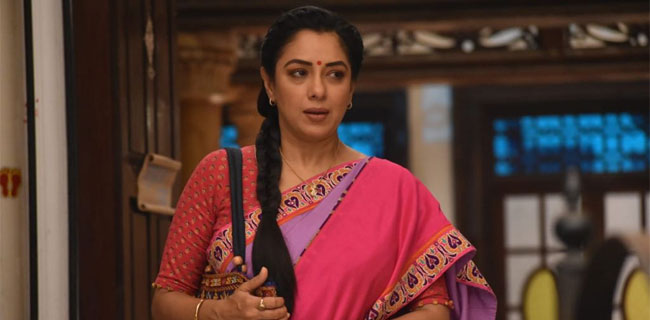
    Shailesh KapoorAmid all that’s wrong with the Hindi GEC category (and readers to this column will know that I have a long list), there is an occasional spark that brings some joy. After being the most-loved Hindi GEC character on Ormax Characters India Loves for 39 consecutive months (from July 2018), Jethalal from Sony Sab’s Taarak Mehta Ka Ooltah Chashmah passed on the top rank to Anupama, the titular character from Star Plus’ 2020 launch.


    Anupama, an adaptation of the Bangla show Sreemoyee on the same network, has been a runaway hit, achieving the unthinkable 4% rating mark in urban Hindi-speaking markets in recent months. In a category where a 2% rating is now considered an achievement (though Netflix’s Dhamaka tells you that you lose your job as a new anchor at 70% ratings, which is available live!), Anupama’s numbers have been exceptional. An average Anupama episode doesn’t rate much less than an IPL game, for example. And while IPL airs only 45 days a year, the show has managed to sustain this for several months, six days a week.


    With its multitude of well-etched characters, Anupama is one of the few well-written Hindi GEC shows currently on air. The storytelling is in broad strokes, but the characters and the conflicts are consistently engaging, and there’s enough entertainment on offer too in what is essentially a high-voltage drama of late.


    The casting and the performances are a notch above the operating level of the Hindi GEC category too. And the lead actress Rupali Ganguly has made the character very much her own, layering the portrayal with mannerisms that can possibly not be written on paper. It’s easy to guess that the show’s creative development process has managed to break away from the daily soap assembly line rut.


    If an OTT show would have even been half as good as Anupama, the press and the internet would have gone ballistic singing its praises. But GEC content earns no such respect in recent years. Not that the channels, including Star Plus, have anyone else to blame but themselves. They continue to diss their own category on air, an inexplicable thing to do. “Don’t act like a daily soap mother-in-law” and “There’s always a daily soap running in your house” are just two examples of dialogues (translated from Hindi) that you will hear in some of the top HGEC shows, including Anupama. When a category decides it can write a joke on itself, and the joke does not even come across as a joke but is taken in all seriousness by the audience, you know there’s a lot wrong at so many levels.


    Nevertheless, Anupama deserves even more love. It’s that rare sensible show that can potentially change some people’s perception about Hindi serials, only if it reached them. But the more important question is: Can there be more like it, or is Anupama a one-off? If there’s enough talent in the Hindi fiction television industry to pull off a show as interesting as Anupama, why are other shows so drab in comparison?