Category: SHAILESH KAPOOR

  • The Big-Motion-Picture Vibe


    By Shailesh Kapoor


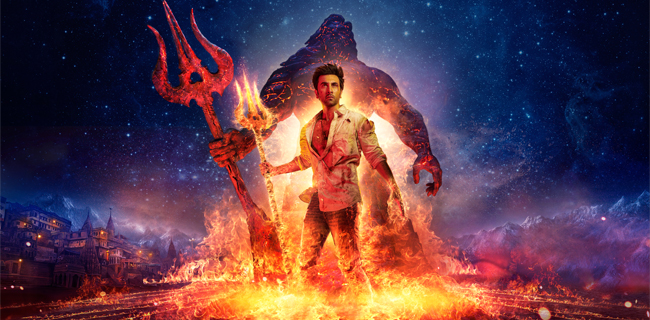
    Shailesh KapoorThe long-in-the-making Brahmastra: Part 1 released last Friday. The film opened to packed houses, clocking occupancies of 70%+ in major city multiplexes through the weekend. The big-budget fantasy adventure film may eventually have to rely on non-theatrical revenue sources to recover its costs. But its solid opening weekend performance has infused fresh energy into the Hindi film industry, which has been struggling in recent times to get any major audience attention at all.


    I watched the film at a suburban Mumbai multiplex, where the start of the show had to be delayed by about 15 minutes, because some patrons did not take their assigned seats. The theatre staff had to intervene, and people had to be moved through a 100% packed auditorium, to their correct seats. One could sense that even the staff was enjoying this thankless job. When did they last see a packed auditorium for an original Hindi language film, after all?


    We would have to go back to Oct 2, 2019, when the Hrithik-Tiger starrer War released to an overwhelming audience response. But that was a holiday, unlike September 9. Search for a non-holiday opening of this stature for an original Hindi language film took me back to June 29, 2018, when Rajkumar Hirani’s Sanju, also starring Ranbir Kapoor, released.


    There’s something magical about being at a theatre on a weekend such as that of Brahmastra’s release. There’s a communal bond between the hundreds of audiences, in the lobby, and then inside the auditorium. They are connected by their love for going to the movies, if not by their love for cinema itself. The atmosphere brims with excitement and anticipation. No home viewing, on the biggest TV screen and the best sound system, can match that.


    Brahmastra has its share of flaws. But lack of imagination is not one of them. The franchise charters into territories erstwhile reserved for Hollywood films, where visual effects and scale front-end a film, leading to a viewing experience that’s immersive and big-screen worthy. Brahmastra wears its ambition on its sleeve. And the audience could feel that vibe over the last three months of the film’s campaign, resulting in a whole-hearted endorsement on the opening weekend, despite boycott calls and mixed reviews.


    Less than a month before Brahmastra’s release, another film that one may have been tempted to call a major motion picture (Laal Singh Chadha) failed on open, despite releasing on a holiday. The contrast between the opening-weekend performance of the two films sums up what theatre-going audiences are trying to tell the film industry: Convince us that your film is worthy of my money, by justifying why it needs to be watched on the big screen.


    It’s now for the filmmakers to listen up and act.
     

  • Raju Srivastav: One of the Last Men Standing


    By Shailesh Kapoor


    Shailesh KapoorSeason 1 of The Great Indian Laughter Challenge, aired on the then-newly-launched Star One in 2005, will rank high in the list of landmark Indian television shows in the satellite TV era. The season was a rip-roaring success, touching ratings unheard of outside Star Plus at that time. More importantly, it ushered in an era of stand-up comedy on mass Indian television, in turn giving birth to shows like Comedy Circus, and eventually to the biggest comedian India has seen till date, Kapil Sharma.


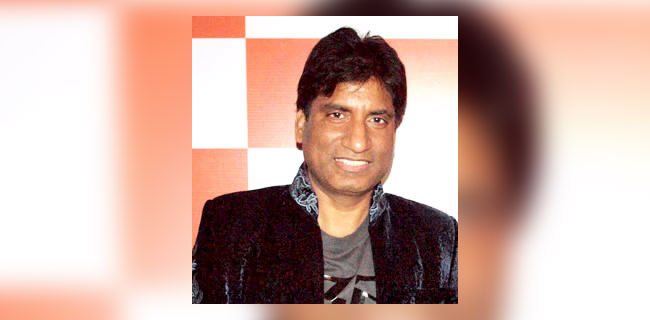
    Raju Srivastav, who passed away earlier this week, was the most popular face of that season. He eventually went on to finish third, behind Sunil Pal and Ahsaan Qureshi. But for almost 15 years since then, Srivastav has had a remarkable television and events career, and was the face of his genre till Sharma burst on the scene.


    Over the last few years, stand-up comedy in India has seen a marked shift, with the rise of streaming platforms. Targeting younger and more cosmopolitan audiences than mass TV, platforms like Netflix and Amazon Prime Video have relied on more urban humor, often using liberal sprinkling of the English language in their shows and specials. Oddly enough, some of the TV attempts at stand-up comedy in the last few years have been misdirected, trying to get the attention of the streaming audience. What else explains the choice of judges or mentors in some of them, such as Zakir Khan, Mallika Dua and Hussain Dalal in the 2017 season of The Great Indian Laughter Challenge? Not surprisingly, there hasn’t been another season since.


    Netflix, on the other hand, seems to have realized that even for their urban, sophisticated audience, a mass comedian like Kapil Sharma is a bigger draw. Their I’m Not Done Yet special with Sharma earlier this year found good traction, with an estimated viewership of 8.8 million audience in India as per Ormax Media estimates.


    But nevertheless, mass comedy faces some sort of an identity crisis in India. The rooted, local humor needs a certain breed of comedians, like Srivastav, which the stand-up comedy scene and the open mics, and now even GEC executives, tend to look down upon. We haven’t had a name of any significance breaking out in the last decade, since Sharma’s meteoric rise to fame.


    To that extent, Srivastav would be remembered as one of the last men standing, pun intended. His brand of humor was inclusive and accessible, words whose importance has been diminishing in a streaming-driven content ecosystem.


  • Two World Cups & A Mega Election


    By Shailesh Kapoor


    Shailesh KapoorWe are in the last quarter of 2022. It’s been a fairly ‘normal’ year, after the painfully-disruptive 2020 and 2021. It’s also a year that saw normalcy return to the entertainment business, despite pandemic-related challenges linked to changing audience habits and taste.


    The last two-and-a-half months of the year promise to pack a punch from a mass media perspective. Starting later this month, we have the much-awaited T20 Cricket World Cup in Australia. The tournament was originally scheduled for 2020, but was canceled because of the pandemic. The 2021 edition in India was eventually held in the UAE, with ICC moving the Australia edition to 2022.


    India’s campaign kicks off with the marquee India-Pakistan clash on Sunday, October 23. With a depleted and somewhat-inexperienced bowling attack, India has its task cut out. But irrespective of how the team performs, the tournament is bound to be a viewership magnet.


    Cricket in Australia always makes for good television. And while the match timings (afternoons) may not be primetime friendly in India, three key India matches are scheduled for Sundays. And being in the middle of Diwali holidays helps, both from viewership and ad revenue perspectives.


    Within days of the Cricket World Cup ending starts the FIFA World Cup, being held in Qatar from November 20. Usually a summer event, the World Cup is being held in winters, to avoid the high summer temperatures the host nation witnesses. While the audience is understandably smaller than cricket in India, it’s the first Football World Cup in a long time where the match timings are India-friendly.


    And then, there’s the anticipated big-ticket political event, elections to the Gujarat state legislature. While the dates are not out, December is touted to be month. Gujarat elections always hold special interest, because it’s the state from which Prime Minister Modi hails. While a BJP win in these elections will not surprise anyone, the build-up and the campaigning are likely to gets news media all charged up. The Aam Aadmi Party has also thrown its hat in the ring, and a struggling Congress will be hoping that these elections provide some face-saving value to them, after a spate of embarrassing defeats in recent times.


    Between sports and politics, we have a packed 12 weeks, leading up to the end of the year.


    This column will take a seasonal break and return on November 18, 2022.


  • Whistle Up The World Cup


    By Shailesh Kapoor


    Shailesh KapoorWe are moved from one World Cup into another. Within a week of the T20 Cricket World Cup final, the FIFA World Cup kicked off in Qatar. So far, it’s been a fairly engaging tournament, though punctuated by four goalless draws on the way. There have already been two big upsets in the first four days, with fancied Argentina and Germany losing to Saudi Arabia and Japan respectively.


    The popularity of the sport of football rose in India about 10-15 years ago, as international leagues started getting popular, and a loyal (though niche) fan base started building around specific teams and players. Over the last five years though, the sport seems to have hit some sort of stagnation. In Ormax’s ‘We, The Sports Fans of India’ report, released in April 2022, football has 23.4 million fans in India, and ranks no. 4, just behind kabaddi (28.5 mn) and WWE/ wrestling (26.5 Mn). Cricket, of course, is the dominant leader, at 124.2 Mn.


    The way the sport was growing about a decade ago, football should have been a clear No 2, with about 35-40 millions fans, at the very least. One of the impeding factors has been that Indian Super League (ISL), founded in 2013, has failed to fire. The league continues to exist and even get some viewership. But it has not generated fandom for the sport, beyond a handful of states like West Bengal, Goa and Kerala, where the sport has always been big anyway.


    In contrast, kabaddi has seen huge build-up of fanbase, starting from virtually nothing, on the back of a vibrant and thriving league. It’s not very difficult to understand why Pro Kabaddi League has been a bigger success than ISL. With exposure to the best of international football, the quality at display in ISL looks mediocre in comparison. And there is no room for mediocre content in a world where we are inundated with options.


    The sport one starts watching in one’s teens is often the main sport one watches through the rest of their lives. What one plays (the few who do!) may evolve over the years, but the first choice to watch invariably doesn’t. Football was making inroads on this front, till a few years ago. A new generation of kids in the metro cities would find cricket too slow, and international football became their go-to sport.


    Since then, these kids have grown up to be in their 20s, and IPL has grown stronger with each passing year. The gap between cricket and other sports may only be widening now, I suspect.


    But that’s a thing of the future. For now, we have another three weeks of what is arguably the biggest global sporting spectacle, and at very friendly India timings too. Relish!


  • Box-office 2022: Resurgence & Records


    By Shailesh Kapoor


    Shailesh KapoorIt’s still a month to go, and 2022 is already the third-best year of all time at the Indian box-office, across all films in all languages. The pre-pandemic year, 2019, holds the record, with total gross collections of ₹ 10,948 crore, while 2018 is No. 2 at ₹ 9,810 crore. As on Nov 27, 2022, the running year has clocked an estimated ₹ 9,532 crore.


    The December line-up looks very robust, with a huge Hollywood franchise film in Avatar 2, and the Rohit Shetty family comedy Cirkus. Drishyam 2, which released two weeks ago, is still going strong. There are some very worthy releases in other languages too, such as Hit 2 (Telugu) and Gold (Malayalam), which released today and yesterday respectively. Crossing the ₹ 10,000 crore mark is only a matter of formality. 2022 has a genuine shot at the all-time record, especially if Cirkus lives up to expectations. And this in a year when the month of January was negligible in its contribution (only ₹ 168 crore) because of the third Covid wave.


    A year ago, not too many saw this coming! If one were to compile all the media stories that spelt the death of the theatrical medium last year, it will be one fat book. The OTT category was predicted to the saviour of cinema. Today, subscriptions growth across the world has reached saturation, or is declining, even as theatrical business continues to make a strong comeback in most markets.


    This is probably a peril of the pandemic. It has made almost everyone an analyst. People have started doling out “insights” on social media by the hour, with no consistency in their own internal logic over a few weeks.


    The complexity of the impact of the pandemic can only be ignored at your own risk. Everything that we knew and understood till 2019 can now fall anywhere on the long continuum ranging from “it remains exactly the way it was before” to “2019 is no reference at all”. It’s often said that one must unlearn to keep adapting to changing situations. But the trick here is to choose what to unlearn.


    The theatrical business has needed the maximum unlearning to do. For example, we, at Ormax Media, had to discard a large pool of data collected over almost a decade, and build our box-office forecast models afresh, when theatres re-opened last year. The rules have changed, after all. Films are opening and sustaining differently now. You cannot play by a 2019 playbook if the audience have written an entirely new one on their own.


    With the passage of time, the real, long-lasting impact of pandemic in different walks of life will emerge. But one thing is certain. The movie theatres are here to stay, even though why and for what audiences visit them may have changed forever.


  • Survival to Growth: The Long Road for Indian Television


    By Shailesh Kapoor


    Shailesh KapoorAssembly elections in Gujarat and Himachal Pradesh concluded this week, with results being announced this Thursday. News channels always comes into the focus during elections. The build-up to elections is often more than a month, and the results day is what all channels gear up for. It’s their final equivalent in the World Cup on news ratings.


    While the results yesterday, especially in Gujarat, were on predictable lines, I scanned through the coverage looking for signs of freshness and innovation in how news channels have approached the results day this time. After all, they will get only a couple of more shots at it before the big one in the summer of 2024.


    I’m disappointed, and entirely unsurprised, to report that there is nothing remarkable to mention about the coverage. The graphics, the discussion format, the ‘massification’ (“Can you show us your best dance move?”, asked one anchor of a BJP worker celebrating outside the party office) … everything evoked déjà vu.


    The more I thought of this yesterday, I’m fast realizing that the inability, often coupled with the lack of intent, to innovate has now become a defining characteristic of the television industry in India. Be it GECs, movie channels or news channels, the malaise runs across. There is, from what I’m aware, good innovation on the distribution and advertising sales fronts, which are the B2B arms of the Indian television business. Perhaps the former has been necessitated by TRAI’s incessant interventions, and the latter is an outcome of ad sales being the strategic cornerstone of the television industry in India.


    But on the content, branding and marketing front, looking for innovations that can be built as case studies is like the proverbial search for a needle in a haystack. A few language channels in some of the states are doing some interesting stuff. But, by and large, at a national level, there’s really nothing to mention.


    Can a medium survive without innovation? Perhaps yes. The story of Indian television today is defined by the context in which the medium operates (wide reach and family viewing), not by what the medium dishes out. Till this context is relevant, which will be the case for at least another decade, the television medium shall continue to be safe, from the growth of digital media, for example.


    But surviving is not the same as growing and thriving. Absence of innovation can lead to television growing at a mere inflationary rate over time. The perception a stagnant category creates can be damaging. We saw how IPL’s TV and digital rights went for almost the same amount this year. Brands often seek psychographic target groups who are opinion leaders and influencers, in their respective social spheres. And the more they speak to this TG, the more digital-oriented their marketing will continue to become, given this TG’s disposition to new ideas and innovation.


    Much as death of television is a dubious narrative, the medium needs to cover the distance from survival to growth. And signs are that there is not enough gas in the tank.


  • The Year of Moving On… from the Pandemic


    By Shailesh Kapoor


    Shailesh KapoorWe are nearing the end of 2022. It was a year when a lot seemed to be going on, in the Indian entertainment business, but not always towards any lasting impact. Mostly then, it was the year of recovery, which saw a semblance of normalcy for the first time since 2019, in audience behaviour and sales figures across domains. It was also a year of mergers and acquisitions, with some big-ticket agreements (Zee-Sony, PVR-INOX, Adani-NDTV, ShareChat-MX Takatak) making the headlines. Such deals can be seen as an indirect outcome of the pandemic, which has fundamentally altered business models of all shapes and forms.


    On the content front, there was less to speak about. Theatres reopened and 2022 will end up being the second-highest grossing year ever at the Indian box-office. But except the highly imaginative RRR and Kantara, the box-office came from the usual franchise-led cinema that’s driving theatrical footfalls globally now.


    The linear television industry has been devoid of surprises on the content front for a while, and 2022 was no different. Some of the better content, then, came in the streaming space, which entered a settled phase post the windfall gains from the pandemic. To begin with, there was more genre variety on offer, with many stories going beyond the staple action-suspense-thriller box. A list of some of the defining shows and direct-to-OTT films of 2022 deserves a piece of its own, in the coming week or two.


    But the streaming industry has its task cut out. Our recently-released OTT audience sizing report reveals that the bigger markets have reached saturation levels on OTT penetration and SVOD subscriptions. The average OTT penetration in the top 20 cities in India stands at a high 72%. While more than half of these are still watching only ‘free’ content, the finding that should set alarm bells ringing is: Among SVOD subscribers, the average number of subscriptions taken has remained exactly the same as last year (2.4 subscriptions per paying subscriber).


    Expecting the (relatively) early adopters to keep subscribing to more apps is, hence, a wishful proposition. The next level of growth for pay platforms can, therefore, come from converting free (AVOD) audiences into SVOD, especially outside the top 6 metros. And this is easier said than done, because neither the content being churned out, nor the audience’s willingness to pay for their entertainment, are aligned to this growth path.


    Streaming platforms have managed to bail out the Hindi film industry for much of 2020-22. As they face growth pressure themselves in 2023, ripples will be felt in the theatrical business too. Early signs of this could be felt this year, when we saw several small films release theatrically, only to legitimize their OTT licensing deals.


    With so much going on (and I haven’t even mentioned sports and news in this round-up), 2023 is unlikely to be short of excitement. Hope the quality of content measures up to all the action on the business front.


  • From RRR to TRAI… Five Wishes From 2023


    By Shailesh Kapoor


    Shailesh KapoorIt’s a new year, and that’s a legit reason to be excited about what one can expect in the year ahead. Here are five things, in no particular order, related to the Indian M&E industry that I’m hoping to see, some of them only wishfully so, in the new year.


    1. RRR at the Oscars

    An Indian film being nominated in the main Best Picture category at the Academy Awards is an exciting thought. It’s never happened before, and there’s more than a decent chance that RRR may be the first. The film also hopes to be nominated in some other categories, especially Best Original Song (Naatu Naatu). I’m eagerly looking forward to January 24, when the nominations will be announced.


    2. Box-office revival of Hindi cinema

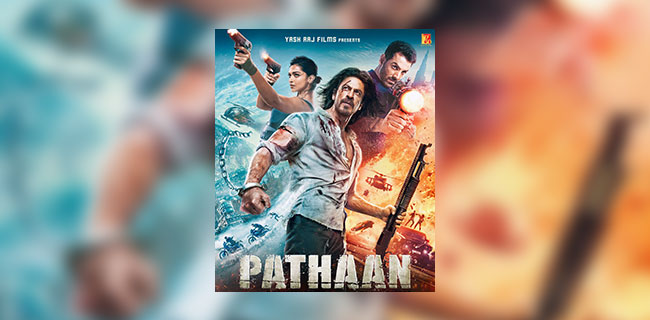
    2022 has been a tumultuous year for Hindi cinema at the box-office, with collections dropping by almost 30% compared to the pre-pandemic year 2019. Other major Indian languages, especially the South ones, have grown or stayed stable, and the overall India box-office has done quite well in 2022, which is only the second year after 2019 to have grossed more than ₹10,000 crore across languages put together. If Hindi cinema is back on its feet in 2023, starting with Pathaan in January, it is almost certain that 2023 will be the biggest-ever year for the Indian box-office.


    3. Better non-scripted content

    After all the exciting developments in the decade of 2000-2009, which saw the import of several international formats and creation of a few homegrown ones, non-scripted content on Indian television, and now streaming, has lost its innovative streak. Even the true crime genre, that saw Crime Patrol, and later Savdhaan India, create a category of their own, is languishing. Shark Tank India (Sony) and Indian Predator (Netflix) have come as beacons of hope. But they stand out more as aberrations, because the streamers are obsessed with fiction, and television is happy launching new seasons of their long-running international formats. It won’t be an over-statement to say that along with comedy, non-scripted content is currently the most under-served category in mainstream entertainment in India. Hope 2023 changes that, at least to some extent.


    4. Reboot of Indian television news

    I’m now entering wishful territory, by hoping that 2023 can see rejuvenation of Indian TV news. It’s not a realistic wish given the timing of the recent change-of-ownership at NDTV. Indian television news has slowly but surely acquired a spoof-ish imagery, and even though mass audiences continue to watch it, that’s more a testimony to the reach of television in India, than the quality of the content our news channels are dishing out. One would have used the phrase ‘trash television’ for it, but Indian TV news content is often purposefully idiotic or divisive. The good old days of UFOs lifting cows up from the fields suddenly seem quite acceptable, when you compare it to the communal ideas being spread through the news on primetime every night. While digital news platforms attempt to make a difference, they currently don’t have the reach and the budgets to make the larger national impact.


    5. TRAI exits the television business

    This is that joke wish, the kind that a media website can run as a Fool’s Day headline. It’s not going to happen (at least not in 2023), but nothing will make me, and the entire television industry, happier than seeing TRAI’s incessant meddling, which has damaged the business in more ways than one can imagine, stop in 2023.


  • SRK: The Last Superstar Standing


    By Shailesh Kapoor


    Shailesh KapoorFive days hence, Shah Rukh Khan’s Pathaan will release worldwide. The film marks the return of SRK to the cinemas after an unusually long gap of more than four years since his last release Zero in December 2018. During this period, the actor has featured in some cameos, most recently in Laal Singh Chaddha and Brahamstra. But it’s been quite some wait to see him in a lead role again.


    The wait seems even longer because his last few releases have ranged from being unremarkable to disappointing. The search for an SRK film that did well at the box-office and found audience appreciation too would take us back to 2013, when Chennai Express released, and then further back to 2008 and 2007, when Rab Na Bana Di Jodi and Om Shanti Om released, respectively.


    It’s been a decade, then, since we saw SRK deliver a film worthy of his superstar status. But 2023 is the year where he seems to be in a hurry to correct that. Pathaan will be followed by Atlee’s Jawan and Rajkumar Hirani’s Dunki. All three films have an anticipatory vibe to them. Pathaan is set to open huge, on the right side of Rs 40 crore, and its second day is likely to cross the 50 cr mark, with the Republic Day national holiday push.


    How SRK has managed to maintain his stardom, despite no box-office presence of note for almost a decade can be a mystery to many. But it’s also a case study in what true superstardom is, and how it manifests itself.


    The tag ‘superstar’ is used so loosely by the media today, that it has lost its real meaning. When I was growing up in the 80s, Amitabh Bachchan was the only reigning superstar. None of the other stars of the time, such as Mithun Chakraborty, Rishi Kapoor and Anil Kapoor, carried that tag. Only in the early 90s did Shah Rukh Khan get associated with that word. Sunny Deol, who had some huge box-office successes in the 90s, was not called a superstar either. In fact, Madhuri Dixit was the only other star in the first half of the 90s to enjoy that status.


    Somewhere from the mid-90s, the media started using the word more liberally. Today, it is used almost interchangeably with the lesser version “star”, which itself is used to describe almost every other actor, including those who do not carry any box office pull at all.


    SRK’s stardom was built in the 90s, through a spate of successful love stories, some conventional and others experimental for their time. His romantic persona continues to be his dominant pop culture imagery, a tribute to which is the one of the brighter spots in Laal Singh Chaddha. But the actor has been keener on exploring the action genre in recent years, because of his age and also his personal preference for it. But he’s still looking for a big action blockbuster that gets the box office going beyond just the opening weekend. Pathaan hopes to be that film.


    In an era of excessive content and media options, including OTT, short videos and social media, building a superstar persona seems next to impossible. The aura of superstardom came with an idea of inaccessibility and scarcity, which today’s media ecosystem does not support. It’s safe to say that we have already seen the last of our true-blue superstars. And Shah Rukh Khan could be the last man standing from that list, if 2023 is any indication.


  • Women’s IPL: Better Late Than Never


    By Shailesh Kapoor


    Shailesh KapoorThis has been a significant week in the India’s modern sporting history. The bidding process of WPL (Women’s Premier League, i.e., the women version of the IPL) concluded Wednesday, with five team owners shelling out a cumulative INR 4,670. WPL will be played between five teams during this year.


    It’s taken BCCI a few more years than expected, to action this evident spin-off that combines the success of IPL with the growing popularity of women’s cricket. Perhaps the Covid years pushed their plans back. But better late than ever, as it’s said.


    Women’s cricket has found traction in the recent years, because of more consistent performances by the Indian team, as well as better television coverage and marketing for women’s cricket events by Star Sports in particular. WPL can take the awareness and interest in women’s cricket to a whole new level, not just in India but worldwide. Given how good the standard of women’s cricket at the highest level now is, it’s only appropriate that the richest cricket body in the world has invested in it. Australia has had the Women’s Big Bash League for several years now. But WPL will be several times bigger, in its viewership, revenues, and hence, the impact.


    India, as a country, can do well with stronger female presence in mainstream sports. In our monthly tracker Ormax Sports Stars, as many as 94% sports viewers pick a male sportsperson as their favourite, marginalising the female representation to badminton stars PV Sindhu and Saina Nehwal, and tennis star Sania Mirza. There are no other names, including cricketers, of note on the women’s list. Even female sports audience (a high 91%), pick sportsmen as their favorite.


    While sport, in general, tends to be male-skewed across the world, the extremity of this skew in India is a worrying indicator, from a socio-cultural perspective. In the recent years, Indian women have matched the men at the Olympics, accounting for seven out of India’s 14 individual medals at the games since 2012. However, the media and government attention these winners have received has been short-lived. While there continues to the improvement in facilities available for aspiring women sportspersons at the ground level, the audiences, who eventually drive revenue into sports, have been untouched by it.


    WPL can be that big-ticket idea that unleashes the true power of women in sport, for the wider audience. One could argue that anything that works with cricket is not replicable to other sports. But here, gender, and not sport alone, is the operative word. And if one needs cricket to start the process of building awareness, then so be it.


    I can’t wait for WPL 2023. Hope BCCI treats the event with great respect, and gives it the attention and the stature it deserves. The degree of WPL’s success will surprise many, is my little prediction.


  • Pathaan: Cinema over Politics


    By Shailesh Kapoor


    Shailesh KapoorTill about three weeks ago, there seemed imminent danger that Yash Raj Films’ Shah Rukh Khan starrer Pathaan, which released on Jan 25 this year, will have to face headwinds from several right wing affiliated groups. There were threats to disrupt the film’s release, over ‘issues’ that can best be described as manufactured. Our news channels did their job in blowing up these trivial issues (the orange dress objection is outrageously amusing), and it seemed that the film may struggle to get a proper release in some of the states.


    Today, on the 10th day of the film’s release, it has gone on to break every possible box-office record in India, ad remains in contention to be the highest Hindi film grosser of all time. It has revived the overseas box-office of Hindi films, and ushered in the SRK 2.0 era. The protests have disappeared, as have the pro-right news channel debates. A comment from the Prime Minister, urging his party workers to stay away from talking about films, was a command too direct to ignore.


    There’s a lot to learn from the unfolding of events over the last two weeks. Boycott campaigns targeting Hindi films had been normalised in 2022, and when a film failed, a large part of the failure was attributed to these campaigns. In many cases, those involved with the film (actor, director, producer, etc.) fueled this narrative themselves, as if to exonerate themselves of the responsibility of having failed to make an audience-friendly film.


    With Pathaan, the theory that politically-motivated campaigns can impact the fate of a film at the box-office have been laid to rest. As long as a film can release, in a way that it’s safe to visit a theatre, the audience will embrace it on merit. Which is not to say that the audience’s political leanings will not impact their movie choices. In an analysis published on the Ormax Media website in 2021, films that propagate nationalist ideas, such as Uri: The Surgical Strike and Tanhaji: The Unsung Warrior, showed stronger audience traction among those supporting the ruling party (BJP).


    But these films wore their politics on their sleeve. In Pathaan’s case, there is little in the content that’s overtly political. Taking a simplistic and safe approach, the film packages its ideas of secularism and ‘nation over religion’ in a way that’s largely apolitical, and never sermonic or ideological. The origin story of the protagonist, Pathaan, has a distinctly secular ring to it. But it’s never used as a messaging device. The film, primarily a crowd-pleasing entertainer, makes its political points, but leaves it to the audience to interpret them, through their own political lens.


    The audiences are smart enough to tell a real controversy from a fake one. That Shah Rukh Khan is a Muslim is not an argument this country will buy, to not watch a film. Ironically, this may have propelled some of his fans, who belong to all religions and political ideologies, to support the film even more. As if to make the point that even though cinema can tell political stories, it is not a medium for politicians to play their murky games.


    SRK’s Amar Akbar Anthony comment at a recent press conference, held to celebrate the film’s success, is the only authentic political message in or around Pathaan. In a way, that comment sums up why the inane controversy around the film fizzled out. Because unlike the film, it did not appeal to its target audience.


  • Shailesh Kapoor: A Tale of Two Documentaries

    By Shailesh Kapoor


    Shailesh KapoorThe last four weeks have been marked by political furore over the two-part BBC documentary, India: The Modi Question. The documentary looks at Narendra Modi’s ‘relationship’ with the Muslims of India, covering events ranging from the 2002 Gujarat riots to the striking down of Article 370 in 2019.


    The BJP was quick to take objection, when the first part released mid-January. The documentary was quickly banned in India, but BBC stood its ground. The controversy was moving out of public memory, but this week, BBC’s India offices were ‘surveyed’ (a euphemism for ‘raided’) by the Income Tax department, bringing the BBC vs. BJP headlines back on news platforms.


    To begin with, banning anything in the age of the Internet is a lost cause. Both parts of the documentary continue to be easily accessible, despite various crackdowns by the government. Student screenings have been held in many colleges, some of which have been disrupted too by BJP supporters.


    Indeed, it’s safe to say that BJP’s over-reach on the issue has only made more people watch a piece of content it would want no one to watch. Collateral damage has also come in the form of international media questioning India’s commitment to the idea of press freedom. It’s a self-goal, of sorts. Not that it matters in the larger political or electoral context, where this is a trivial matter to begin with.


    Speaking of documentaries, the four-part YRF documentary series, The Romantics, dropped on Netflix this week, on Valentine’s Day. The delightful series looks at the six-decade journey of Yash Chopra and his company Yash Raj Films, now helmed by his son Aditya Chopra.


    There’s so much to like in this Smriti Mundhra series. To begin with, it’s a trip down memory lane for those like me, who are old enough to have grown up on Yash Chopra’s films. Through a wide array of talking heads, film footage, archival footage (including one from Yash Chopra’s wedding!) and interviews with the family members, The Romantics forces us to re-imagine the YRF aura.


    In a coup of sorts, Aditya Chopra, who has not given an interview in ages, and never appeared at a public function since the mid-1990s, speaks extensively about his father, and the transition of YRF from the father to the son. He’s immensely articulate, and very real. So real that you almost root for him by the end of the fourth part, wanting him to achieve all that he still has to.


    I also enjoyed the warmth that Uday Chopra brought to the series. As the less-successful son, he spoke candidly about his elusive shot at stardom, and his emotional relationship with his father.


    Despite being produced by YRF itself, there is no attempt in the series to eulogise Yash Chopra or the family. In fact, frailties and failures are a recurring topic across the four parts. And yet, the aftertaste of having watched The Romantic is uplifting and wholesome.


    The Romantics is one of the finest new-age attempts at chronicling Indian cinema’s history. Hopefully, it’s the first of many such ideas the streamers will bring to the Indian market.


    Shailesh Kapoor is Founder and CEO of Ormax Media. He writes on MxMIndia on Fridays. His views here are personal