Category: SHAILESH KAPOOR

  • General Elections 2019: The Media Battle Within The Political Battle


    We are about 18 months away from the next General Elections, which are likely to happen in the summer of 2019. With the Gujarat elections in December this year, the atmospherics have started to build up. 2018, then, is set to be the most politically-charged year in India’s history, especially from a media perspective.


    2014 were the first General Elections where the true impact of the social media was prominently felt, and since then, there has been a further surge in how digital media – not just social but digital news platforms too – have begun to impact the political sochof the nation.


    Till about a year ago, it seemed that 2019 will be a no-contest, with a non-existent opposition to challenge the might of the Modi government. However, things turned interesting on November 8 last year, when demonetisation was announced. That move, followed by the implementation of GST this July, has led to considerable debate about the government’s economic adventurism, and its pros and cons.


    The Opposition is also slowly putting its house in order. Though it’s nowhere close to being a serious challenger for now, 1.5 years gives them some more time to set things in place. Rahul Gandhi is probably in the best phase of his otherwise-unflattering political career so far, and state-level opposition, such as Mamata Banerjee is Bengal, is vocal too.


    This sets up things nicely for 2019. Irrespective of how close or one-sided 2019 is, we are sure to have a pitched battle in which the media, both traditional and digital, will be used in a way even 2014 didn’t witness.


    Most television and print media houses have evident political alignments now. This has put the credibility of traditional media to test over the last year or two. And it’s in this backdrop that digital media has emerged as the stronger force in shaping up the political opinion of the voting public at large.


    It’s not as if digital media platforms do not have political leanings. But unlike traditional news, digital news is a matter of discovery, with Whatsapp, Facebook and Twitter being the platforms for organic dissemination. And that’s where diversity of exposure comes in. You could be reading a highly government-skewed take on the state of the economy in the morning, and then one that squashes all government claims on the same subject in the evening, both via your Facebook newsfeed. This could be confusing at times, but in general, the diversity of views available in the digital media has empowered the voter to make more informed choices.


    2018, then, is ready to be the watershed year for news media, where traditional media will have to be on the top of its game to match up to digital media. It’s a contest within a contest. Will traditional media stand up to digital, even as the country’s top politicians fights the bigger battle? 2018-19 will tell us.


  • Too Much Trend-Following, Too Little Trendspotting


    By Shailesh Kapoor


    Last week, Ittefaq, a mid-scale Bollywood film, released at the theatres. The film has been the talk of the film trade for the last four weeks for its unconventional marketing strategy. Karan Johar, at the helm of the project as its producer, decided to execute a campaign that relied more on the film’s trailers and posters, with a specific focus on the digital media. Importantly, the campaign stayed away from the usual routine of stars giving multiple interviews and appearing on countless reality shows.


    It’s a considerably less-taxing marketing plan for everyone involved. It costs less, and does not take a toll on the stars, who otherwise have to be perpetually on the go for 3-4 weeks. There’s a lot of common sense in it too. You want to maintain the intrigue around a murder mystery, than over-explain its concept. And in any case, there is, by now, sufficient data to suggest that reality shows and city visits may prop up a star’s brand, but do very little for the film itself.


    The film opened to an average response at the box-office. Given its niche genre and its modest starcast, the film’s 4crore opening was a notch above par. But that’s not how everyone would see it. Over the last week, both schools of thoughts have been doing the rounds. One that suggests that the film didn’t open well, which means its marketing strategy was flawed. And the other that suggests that this marketing strategy could alter the set template, being followed ad nauseam by Bollywood for at least half a decade


    In either case, the mindset is one of trend-following. You could follow the trend set by Ittefaq, or reject it and continue to follow the trend set over years. But the mindset is the same – follow what has worked.


    This is not a mindset unique to Bollywood. The television industry is equally oriented this way. Whenever a show becomes a hit, disproportionate time is spent on discussing what worked for it. Much as that understanding has value of its own, the problem begins when this understanding is used as a base template to create more programming in the same direction.


    That’s a trend-following approach that has a major flaw, one that marketing strategists would call a me-too strategy. The original may have worked for various other reasons, but it is almost certain that an element of freshness would be at the center of those, i.e., the program could offer something that was not being offered by other content existing around it. The moment you make replicas, that freshness is compromised.


    We have had countless me-toos of hit TV shows like Diya Aur Baati Hum and Saathiya, many of which have not even taken off, forget hitting the bull’s eye. Similar examples exist in Bollywood. When Bhaag Milkha Bhaag and Mary Kom did well, sports biopics became the next big thing. Now that Judwaa 2 and Golmaal Again have worked, everyone is talking about reviving the slapstick comedy genre, which was sliding over the last few years.


    A lot of this analysis is over-simplistic and reactive in nature. The true skill of a good marketer would lie in spotting a trend, than in following one. If you look at the world of consumer products, most big successes over the years have been created around insights that were not obvious, and needs that were not being fulfilled.


    One of the villains here could be an obsession with data, whereby ratings and box-office numbers can make you follow the curve, instead of charting your own. But that’s true for any industry in today’s data-loaded world. In fact, a sound argument would be that more data should actually enable sharper trendspotting, because trendspotting is about joining the dots, and more data provides for more dots, or better dots, to join.


    So, in reality, it’s a mindset trap more than anything else. There are many sharp executives in the media business who would question a trend-following approach. But they are probably outnumbered, and hence outshouted, by the followers brigade.


    With the arrival of the digital piece, the media landscape has become more dynamic than ever before. In such a scenario, trend-following can only be described as hara-kiri. Trendspotting may not be easy, but for enduring success, it’s the only option for content creators and marketers today.

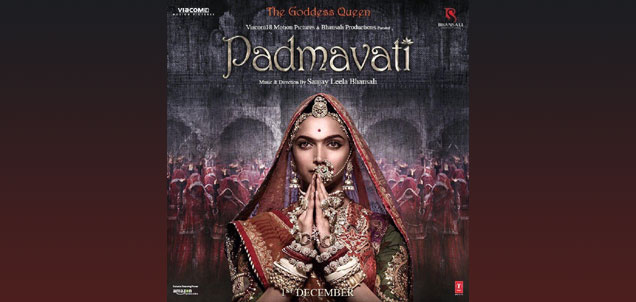
  • Padmavati: The Politics Of Art


    By Shailesh Kapoor


    It started off a meaningless fringe protest. But over the last two weeks, opposition to Padmavati’s release has acquired the status of a full-blown controversy. The protests, led by an organisation by the name of Shri Rajput KarniSena, have acquired political overtones, with support, ranging from tacit to explicit, from governments of several BJP-ruled states, as well as some senior members of the Central Government.


    I visited the Wikipedia page of KarniSena to understand their purpose of existence. The organisation was formed in 2006. There are only five specific activities that define their “work” over the last 11 years. In 2008, they protested against the release of the film JodhaaAkbar. In 2009, they were involved in a Jat-Rajput issue that erupted in the University of Rajasthan. In 2010, their plans to disrupt a Sonia Gandhi event were thwarted by the police. In 2013, they opposed the TV serial Jodhaa Akbar. And now, in 2017, it’s Padmavati.


    Vandalism is at the heart ofall these instances. The organisation does not have any other social or cultural reason for its existence, it seems. They have a website, but it’s hosted on a server that cannot be found.


    Protests within the constitutional framework are a legitimate form of expression in democracy. In fact, one would argue that if a nation loses its spirit to protest, its democratic health must be examined. However, when executed through unconstitutional means, such as violence, vandalism and threats, protests become legally untenable. And it becomes the responsibility of the State Governments involved, to address it as a law & order issue.


    In Padmavati’s case, the Rajasthan government’s non-interferenceis tantamount to an endorsement of unconstitutional means of protests. It is now almost certain that these protests will travel to other BJP-led states, including Gujarat, which have elections scheduled in December. Unless the Supreme Court intervenes and forces the state governments to ensure a smooth release of the film, we may be in for progressively higher chaos leading up to December 1.


    While the trend of protesting against a film’s release is an old one, the frequency at which such protests are happening in recent years is alarming. Filmmakers are often accused, and sometimes rightly so, of commercial exploitation of subjects of social importance, e.g. the portrayal of women in films. But here, we have a growing trend where politicians are exploiting cinema for their gains.


    There have been demands that the makers show the film to KarniSena, and engage with them in talks. When death threats are being casually given for TV cameras, that makes no sense whatsoever.


    The much-maligned CBFC is the constitutional saviour here, being the official authority to certify the film’s release. It’s a rare occasion when the film industry would rather have CBFC’s word being the last word.


    The next two weeks can bring with them a lot of drama, as we get closer to the release of the film. And then, it will happen again with some other film, a few months from now, when another Sena or Dal will emerge out of nowhere, and the political class will opportunistically reap the benefits.


    Shailesh Kapoor is CEO, Ormax Media and a senior and seasoned mediawatcher. The views here are personal


  • Bollywood’s Week of Nightmares… And Silence!

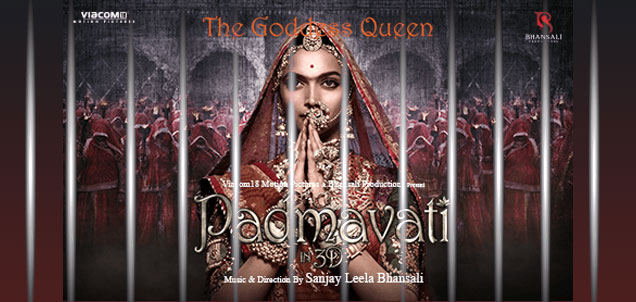
    Photo imaging by Rafiq Barak. Original picture: Viacom18 Motion Pictures website


    By Shailesh Kapoor


    It’s been a terrible week for Bollywood, one whose long-term implications that can be terrible for the industry. On Sunday, 12 days before the film’s slated December 1 release, Padmavati’s producers announced an indefinite postponement. They didn’t have a choice. Central Board of Film Certification (CBFC) rejected the film’s application on technical grounds, because the film was submitted without a due disclaimer.


    In normal circumstances, this should not have been an issue. The film was apparently submitted to CBFC three weeks before its release, much before many films are submitted. Usually, CBFC is known to prioritise films that are due for release, and finish the process, especially if there are no major cuts suggested, within a week. Here, they took almost a week to even reject the application.


    This slowdown, evidently influenced by political interests, was justified through a CBFC “rule” that no one in the industry or the media even knew of till then. Curiously enough, details of the said 68-day rule are now firmly placed on the CBFC website homepage (here).


    For years, films have been certified in the lead up to their release, often a week or two in advance. This archaic rule was never even in the consideration, till it was dug up conveniently for Padmavati. But it would look a bit odd if you apply the rule only to Padmavati. Hence, a go-slow approach has been taken for some other films as well.


    Two films originally scheduled to release today (Nov 24) – Firangi and Tera Intezaar – have shifted to next week because they couldn’t be certified in time for their schedule release. The difference is that unlike Padmavati’s case, they have announced a release date (Dec 1), with the confidence that the process will be complete within this week. That’s a much shorter time than 68 days.


    This newly-discovered rule is set to become a convenient defence when CBFC wants to act tough on a film. In hindsight, they could have used this rule on films they had issues with, in the recent past, such as Udta Punjab. But Pahlaj Nihalani probably didn’t know of the rule himself. It would be insightful to know who dug up this rule, and whether it was a person from the CBFC or the government.


    Faced with an indefinite certification delay, which could last till early-2018, Padmavati’s producers had to delay the film’s release. Meanwhile, during the last five days, four state governments have “banned” the film, citing law and order concerns arising out of cultural sensitivities. This ban should be easily challenge-able in the Supreme Court, which is the only neutral party remaining in this entire fiasco. But to even approach the Supreme Court, Padmavati needs a CBFC certificate, which is still away by the best part of 68 days!


    As an interesting way of countering the protests against the film, Sanjay Leela Bhansali organised a special press screening for select news editors. Arnab Goswami and Rajat Sharma covered the film extensively on their channels, highlighting how it has none of the concerns expressed by the protestors. Bhansali’s choice of personalities was a bold one. Both are known to lean towards the right wing, and will take a liberal stance only when all logic leads in that direction. The endorsement from Goswami and Sharma, hence, should have been definitive even for the political powers in various states. Instead, it was ignored, and the film “banned”, without any of those banning having actually seen it.


    CBFC Chairman Prasoon Joshi reacted to the controversy in a manner that was surprisingly immature for a man of his stature. He seemed to be upset about the makers showing the film to editors before the CBFC clearance. This makes little sense for anyone who knows how the industry, of which Joshi is a part too, functions. Private screenings of films are a well-established form of gathering feedback from various constituents, ranging from family and friends to cast and crew to regular audiences. We have conducted more than 800 test screenings of various films over the last seven years as a part of our work. All such screenings are legal, because they are not ticketed and hence not an “exhibition”. But Joshi was not quoting the law. He was making just another attempt to attack a film, which is the victim of a major political operation currently.


    All these years, in Pahlaj Nihalani’s domain, CBFC was this villain out there to curb creativity. It was repeatedly debated that their role should be limited to certification, with no power to censor, except in extreme cases, such as threat to national security. In Padmavati’s case, CBFC has acquired powers that will make Nihalani look like a paper tiger. CBFC can now delay any film by almost a quarter, throwing the entire release calendar in a tizzy.


    The entire happenings of the last two weeks can spell big trouble for the industry. Kangana Ranaut’s Jhansi Ki Rani biopic is scheduled for a 2018 release. I’m predicting we will see this cycle being repeated again, though maybe at a smaller scale. Making political films was a no-no all these years. Now, even making historical films could enter that taboo list. More generically, the political control over the business of cinema is now out in the open. And that’s the problem that should affect every maker, writer, actor, distributor and exhibitor in the business.


    But the industry is largely silent, even as they see the drama unfold around them, with threats to behead one of their own, and an impact on their business which is not of their own making. Will they pay the price for this silence over the long-term? That’s another topic for another day.


  • News or Outrage?


    By Shailesh Kapoor


    It’s elections time, yet again. This is when politicians go into overdrive mode. But the pre-elections period used to be more engaging till a few years ago. Over the last decade, media coverage leading up important elections has become increasingly vitriolic, and arguably less interesting and enriching as a result.


    Over the last month, for instance, the entire coverage of Gujarat elections has been about name-calling and personal attacks. It does not help matters when the Prime Minister of the country campaigns like a Chief Ministerial candidate or a Party President would. By him doing so consistently, state elections have now acquired ‘national’ status by default.


    But even if state elections become ‘national’ in their status, they can still be about real issues. But no such luck as far as the media coverage goes. After all, who’s interested in facts, figures and objective analysis? Headlines day after day pick issues that may have very little to do with the real influencers on ground, which decide which way the common man votes.


    But the real influencers do not make for good copy. They do not provide the context for “outrage”, which is now the default mode in which most television and digital news operates.


    If you travel across the country and ask aamvoters about their views on the politics and governance in the country, both at the Centre and in their own state, the lack of depth in perspective can sadden you. It’s not as if people do not want to have an informed opinion. They just don’t have access to good information anymore.


    Yes, you could hardwork your way through good information, by identifying a handful of independent media platforms that remain. But that’s now how television works, at least. People sit in front of the TV and expect the TV to do things to them. No one wants to “figure things out”. So, if you hear outrage on irrelevant issues, you will play back outrage on irrelevant issues.


    Take some of the spokespersons of the top parties, for instance. The way they project themselves, and hence the politicians community, on the prim time is nothing short of embarrassing. Forget class or grace, even their basic education and upbringing can come under the scanner. And more often than not, seasoned anchors who know their stuff sit back quietly and enjoy insults being exchanged. It makes for good “entertainment”, after all.


    The role of media in nurturing a throbbing democracy like ours is well-known and appreciated. However, we are currently in a situation when this role has been relinquished by most mainstream media houses, either in pursuit of “entertainment”, or because of their political alignments, or both.


    When there were a series of scams during UPA 2, the outrage in the media seemed fair and justified. But today, it’s a default setting that’s damaging news media at a root level. Because the human pursuit of knowledge and intellectual development is the original premise on which the idea of “news” had thrived. If we lose that, we may as well as find another word for “news”.


  • Shailesh Kapoor: TV & OTT In 2018: From Polarisation To Unification

    By Shailesh Kapoor


    While digital content has been making its presence felt in India for at least five years now, 2017 was an important year on this front. With the launch of Amazon Prime Video in December 2016 and ALT Balaji in April 2017, following up on the launch of Netflix in early 2016, a new content ecosystem was created. By the end of the year, the OTT original content industry had acquired a life of its own, with an estimated 200+ shows produced in the year.


    Evidently, a lot more is still come. India’s smartphone penetration is a story of global interest. But unlike most western markets, where TV and OTT content are clubbed as one genre (even their award shows don’t make the distinction anymore), India is different. OTT is essentially a solo viewing experience, while TV has traditionally been a medium of family-level consumption, and shall remain so in a country with 95% single-TV households.


    This contextual difference has created a polarisation of content. At one end is the traditional TV content, with soaps like Yeh Rishta Kya Kehlata Hai (weekday) and Naagin (weekend) being its flagbearers. At the other end is ‘edgy’ content created for solo consumption(often) by the cosmopolitan youth, on a mobile phone app. There aren’t enough true success stories in this area yet, but TVF’s 2015 show Pitchers was one of the early breakthroughs, and the recent Bose: Dead/ Alive on ALT Balaji has viewer advocacy going for it.


    This polarization, however, is deeply flawed. Are TV audiences satisfied with their diet of daily soaps today? Not even remotely. The current satisfaction levels of core Hindi GEC viewers with the quality of content being dished out stands at an all-time low of 30-35%. There is a next level of fiction content waiting for be discovered in that medium.


    Are digital audiences over the moon with the offering in that medium? Not for now, at least. Hindi movies still remains the most-preferred content on OTT platforms, and “web-series”, as they are called, still have quality benchmarks that are set by International shows than Indian ones, in the niche segment that understands and watches both.


    Of course, TV audiences and digital audiences, as mentioned above, are not different people. There is a huge overlap of the universe, with the digital universe primarily being a subset of the TV universe today. The context (family vs. solo) may change, but the person is still the same. OTT campaigns that celebrate the death of television are creating the illusion of a reality which is largely non-existent, with less than 1% of urban India’s population having shunned TV to move to digital content exclusively.


    The truth of the day is that both media need better content to fuel their respective business agendas in the coming year. The hit ratio of television shows (fiction) launched over 2016 and 2017 has been abysmal, at less than 15%, while the hit ratio of web-series won’t be much higher, once a viewership metric is established, hopefully in 2018 itself.


    I hope 2018 sees the next logical step in the evolution of digital content, where the artificial separation between TV and OTT content is forgotten for good, and the TV+OTT industry is treated as one, with just a difference in screens and viewing context. In this new mindset, content creation will take priority, and the decision on the screen best suited to a piece of content will follow. Currently, we are thinking ‘for the screen’, than ‘for the idea’. And that’s not a long-term proposition at all!


  • Five Wishes for the M&E Business in 2018


    By Shailesh Kapoor


    On most accounts, 2017 was a lame year for the Media & Entertainment (M&E) business in India. Television struggled to rise from a state of inertia, theatrical business slumped further into a deep hole of its own making, and quality of news across traditional media hit an all-time low.


    It was left to the “digital” side of the business to salvage things to some extent, providing both content variety and a revenue stream that came as a lifesaver, especially for the film industry. Bahubali 2 stood out an exception this year, emerging as this gigantic hit, setting a new benchmark that will be a tough act to follow.


    Evidently, there’s enough and more to hope for, at the start of 2018. Here’s my list of five things (in no particular order) I’d wish for the M&E business in the coming year. Many of these may sound miraculous, but then, what’s a wish without an element of optimism in it!


    1. A news channel without debates

    From being a primetime format on one channel, debates have now become the default format across channels over an extended period of time. The other day, one of the English channels was conducting a live debate at 6pm. Surely, this has to end somewhere. We cannot possibly be okay with a whole new generation, in its teens today, growing up thinking that “news” means a screaming anchor and eight windows.

    2. Bollywood’s first 500cr film

    Bahubali 2 managed to achieve the Rs 500 crore mark with its Hindi-dubbed version alone. But no “Hindi” film has crossed even the 400 cr mark at the domestic box-office yet. There are several big films lined up in 2018,but nothing that is a clear candidate for this record. It will perhaps take technology, and not stars, to set new benchmarks, like Bahubali 2 did. Could it be, then, that a Hollywood film could be achieving the 500-mark in India before a Hindi film? That will be a wish gone horribly wrong.

    3. Kapil Sharma’s return to the small screen

    This may certainly happen in 2018. But one also wishes he closes the lid on his film ambitions for good and builds on his massive equity among the TV audiences through great on-screen content and no off-screen shenanigans.

    4. The best-marketed IPL ever

    In its 11th edition, and with a new broadcaster in place, IPL needs to find its next level. It’s become a hugely successful and influential sporting event, not just in India but in all cricket nations of the world. What it needs now is what the top sports league around the world can boast of – teams with diehard fan bases. Not just supporters, but fiercely loyal fans. Can BCCI and Star achieve this together, starting 2018?

    5. A daily soap where characters don’t talk to themselves

    Daily soaps, across languages in India, are infected with this problem that is symptomatic of mediocre, and progressively declining, quality of writing on display. Characters move the story forward by talking to themselves, thinking aloud in unsuspecting locations like the kitchen or an office or a living room. At times, the first real “conversation” in a daily soap episode could come well into its second segment. It’s so ingrained in the daily soap culture that Hina Khan talks to herself aloud even in Bigg Boss. If anything has to change about the quality of our soaps, this is a good starting point!


    Shailesh Kapoor is Founder and CEO, Ormax Media. He writes weekly for MxMIndia. The views here are his own


  • Two views on Republic TV’s Mevani outrage


    Ranjona Banerji: You hate BJP? Republic TV will hate you!

    If it was not clear already, it should be now that Republic TV works only as a BJP or anti-anyone who is not BJP channel​, writes Ranjona Banerji​


    ​By Ranjona Banerji​

     

    How to play victim when something goes wrong is a singular talent of the government in power at the Centre. And the government’s most passionate admirers are no different. So with Republic TV when it decided that the youth rally organised by Gujarat MLA Jignesh Mevani and others in Delhi on January 9 was bound to be a failure.

    A series of tweets from the Republic TV handle hashtagged “Jignesh Flop Show” were sent out before the rally began. Other hashtags included “Congress sponsors violence” to go with a story on how Mevani turned “violent” with a Republic TV reporter. This clip was run on air and on social media in which Mevani pushes away a mike from his face. Other Republic TV outrage included why Mevani did not answer Republic TV’s questions.

    This anger was bolstered by another hashtag which claimed that the Congress Party had sponsored Mevani’s Press Club meeting. AltNews did some research into this: https://www.altnews.in/was-jignesh-mevanis-press-conference-congress-sponsored-as-alleged-by-republic-tv/

    Exactly why Mevani upsets Republic TV so much is not hard to understand. Mevani is not deferential to Prime Minister Narendra Modi, which Republic TV has deemed is mandatory for everyone. An earlier interview between Mevani and a Republic TV reporter, available on Youtube, on this subject is quite funny. Mevani is a Dalit leader from Gujarat. And he – among others – is putting up a resistance to the BJP and Modi. Obviously, this is not permitted in Republic TV’s idea of a fascist state.

    Sadly for Republic TV, its brand of whatever it calls itself, does not get many takers within the journalistic fraternity. So there was not much sympathy for Mevani’s action of pushing away a microphone. In TV-land that is perhaps a crime punishable by law although in the days that I worked actively as a correspondent – print – people often refused to be interviewed. The world did not end as I recall nor did my sense of self get a huge drubbing by this rejection. Skins are a little thinner today or more likely if you can make a giant show of being victimised then you can create a sensation and get people to watch your channel. Is it worth adding that one wishes Republic TV was quite so diligent and militant with the various transgressions of the government in power, not just opposition politicians?

    So a “senior” editor of Republic TV, earlier with Times Now, also claimed that Mevani had refused to talk to him. He argued on Twitter that he had “12 years” of experience. 12 years! Now don’t laugh, in today’s terms he should have been editor-in-chief of the news channel by now, with due respect to the current editor-in-chief who has a few more years of experience and therefore should know better.

    But when this “senior” editor was asked questions himself by people at the Press Club in Delhi, he ran away as fast as he could. Sometimes experience does teach you that discretion is the better part of valour or perhaps he remembered that saying from being more recently out of school than some of us old codgers.

    Media website Newslaundry.com on the other hand found that Mevani was manhandled by Republic TV and its main competitor Times Now! https://www.newslaundry.com/2018/01/06/press-club-mevani-mobbed-tv-media-republic-times-now

    Meanwhile, while Republic TV was fulminating about the “anti-national” behaviour of the elected MLA from Gujarat and of people at the rally, here are two other versions of what happened. In the first, Prathistha Singh says that Republic TV defamed her husband, a bystander at the rally in Delhi, by encircling his face on TV and calling him a “goon”. Republic TV claims that the crowd turned on its reporter. This is what Singh has to say: http://www.jantakareporter.com/india/despicable-man-arnab-goswami-defamed-husband-channel/168210/ In the same programme, where “goons” were being called out, Arnab Goswami also focused on a reporter from ABP News who was there covering the event and called him a “goon”. ABP News asked for an on-air apology from Goswami. http://www.jantakareporter.com/india/abp-news-demands-air-apology-arnab-goswami-portraying-reporter-goon/168273/

    Which ABP News then got:

    If it was not clear already, it should be now that Republic TV works only as a BJP or anti-anyone who is not BJP channel. All this moaning about ill-treatment by various non-BJP politicians and lack of support from other journalists is nothing but a publicity stunt and sympathy-garnering device for its echo chamber.

    It is true that many people watch Republic TV for entertainment or for Goswami’s nightly dramas but sadly, many people also followed tabloids with headlines like “Woman gives birth to two-headed goat”.

    Popularity does not make whatever Republic TV does journalism.


    ​Ranjona Banerji is a senior journalist and commentator. She is also Consulting Editor, MxMIndia. The views here are personal​


    Shailesh Kapoor: The Republic That Doesn’t Know

    The larger point here is on the brazen violation of basic journalistic norms. , writes Shailesh Kapoor
     

    By Shailesh Kapoor


    Progressive degeneration of the quality of primetime news being served on television has been a source of frustration for many like me who follow the genre closely. Till about a decade ago, Hindi news channels were associated with this degeneration theme. The famous cow-UFO story on India TV became the poster image of how Hindi news channels have made a mockery of what news should stand for.

    Over the last few years, this degenerative mindset has seeped into the English news genre. No, there are no stories of UFO pulling in cows. It’s within the mainstream news that we are seeing deterioration of the quality of coverage. And that makes it even more dangerous. Because you are evidently not supposed to take a cow-UFO story seriously. But how do we ensure that the balderdash being currently served in the name of news is not taken seriously by millions of unsuspecting viewers, who may just choose to believe what they see?

    Yet another symptom of this ever-growing concern was evident earlier this week in Republic TV’s coverage of Dalit leader JigneshMevani’s rally in Delhi. The coverage through the day, and then in Arnab Goswami’s debate show, was unequivocal in its extreme position on the rally, calling it a super flop, and calling those present there “goons” and “thugs”. The rally’s coverage was carried under the channel’s latest “initiative” – To call out the bluff of what they call the ‘TukdeTukde Gang’. But that’s even not the real issue of the day.

    A female reporter from the channel (Shivani) tried to get bytes from Mevani’s supporters, and some of them apparently “misbehaved” with her, which means telling her and her male colleague that they will not allow Republic TV to cover the rally, and making some “lewd gestures”, like a man seeming to stick out his tongue in mockery. There was no physical contact or sexual comments passed.

    But that didn’t stop Goswami from almost making this out to be a case of sexual assault, repeatedly playing on the gender of his reporter. But wait, even that’s not the real issue here.


    To dramatise the story, Goswami decide to mark out the goons, by putting a red circle around their face, calling them names and asking for their arrest. 3-4 in the crowd were thus marked out as Mevani’s goons. Goswami proclaimed: “Tonight, I will put out videos circling the pictures of the vulgar thugs who tried to intimidate Shivani and failed.”

    Next morning, it emerged that one of these “vulgar thugs” was, in fact, an ABP News supporter Jainendra Kumar, who was there covering the same story, and had, in fact, come to that part of the gathering to help his friend and fellow journalist Shivani out.

    ABP News demanded an apology, and even took the demand for apology on air, and rightly so too. An apology came the next day at primetime. But it was not a spoken apology by Goswami. It was a “written” apology on TV! A text-and-VO piece that ran between the two debates, which is just the time when most viewers switch channels. And the apology was in two parts. The first part mentioned the error and apologised, and the second part lauded the Republic TV journalist for her bravery.

    In this particular case, Republic TV just got unlucky, that one of the randomly marked-out people turned out to be a scribe. One can’t rule out the “marking out” of unsuspecting and innocent common men and women in many stories of this tone and tenor in the past. In fact, one of the other people marked out in this Republic story was a man who had nothing to do with Mevani. His wife, a columnist for a news website, called out Goswami in an article the next morning.

    Thelarger point here is on the brazen violation of basic journalistic norms. It’s a style that Goswami has championed, and continues to practice, more aggressively now than ever before.

    But to call out him alone will not be fair. His style of journalism has been apedby almost every English news channels, and quite a few in other languages too. And by choosing to do that, they become party to this process of degeneration of journalistic standards.

    Many argue that not watching news, or certain channels at least, is the way out. But that would be like putting your head in the sand like an ostrich. Unless there’s a mass boycott movement, which is as improbable as a humble spoken apology from Goswami, a few individual boycotts don’t serve any real purpose.

    So, watch we must, and express we must. Even if it is with a deep sense of anguish. Because we live in the times of the Internet and the social media, where sometimes, just one tweet or one blogpost can open up possibilities of a larger change.


    Shailesh Kapoor is Founder and CEO, Ormax Media. He writes weekly for MxMIndia. The views here are personal


  • Shailesh Kapoor: Padmaavat: The Week Ahead

    By Shailesh Kapoor


    Film censorship was the hot topic of debate in the media for an extended period over 2015-17, when PahlajNihalani was at the helm of affairs at CBFC. The ad hoc, almost anarchic, ways of CBFC during his tenure got much bad press. It has been a subject of some of my columns here too, including this one at the time of Udta Punjab.

    A committee headed by veteran filmmaker ShyamBenegal was formed in early 2016. By mid-2016, the committee had submitted its recommendations on structural changes in the certification process in India. Eighteen months hence, the report is gathering dust in the corridors of I&B ministry at ShastriBhawan in New Delhi. Meanwhile, in 2017, Nihalani was replaced by a more known and celebrated personality, Prasoon Joshi. So far, he hasn’t pushed the reforms agenda either.

    But even as the film industry waits in hope of a more liberal certification policy, CBFC has turned out to be the least of its worries of late. The release of Padmaavat (earlier Padmavati), scheduled for January 25, has been under threat in large parts of India. After the film’s December release was postponed, the film got its due certification from CBFC, with bizarre changes recommended, such as the change in the title, and digital work to cover DeepikaPadukone’s midriff in the Ghoomar song.

    Not left with much choice, and choosing to give up the smaller battles for the bigger war, makers of the film conceded to these changes, paving the way for the film’s release.

    But the alacrity with which several state governments jumped in, banning the film one after the other, was fascinating. The banning spree started with Rajasthan but travelled across North and West like a raging forest fire. Yesterday, the Supreme Court put an end to this farce, suspending the proposed ban, basing their judgment entirely on constitutional premises.

    But it’s not the end of the woes for the makers of Padmaavat. The will to enforce the Supreme Court decision will evidently be missing, and ‘soft instructions’ can be sent to exhibitors to avoid releasing the film. One hopes that the bigger national chains, such as PVR and INOX, do not buckle under pressure. But when you run the risk of property damage with tacit support to the goons from the local police and administration, it may seem a bit too brave, even foolhardy, to not buckle under pressure.

    News channels have remained silent on the issue in recent weeks, even after the Supreme Court judgment, with token coverage on select channels. One cannot rule out another ‘soft instruction’ playing a role here.

    The next six days will bring in their share of twists in this matter. In an ideal scenario, the states that banned the film should now officially welcome the film, and reiterate that it’s their “duty” (as described by the Supreme Court) to ensure a safe release of the release.

    But we don’t live in an ideal world. And no such announcements will happen. The only thing we have heard from the states since yesterday is a vague. we-are-studying-the-judgment response. I predict no action over the next 3-4 days, leading to a free-for-all situation on Jan 24-25, which the states will then “step in” to control. If private or public property is damaged in the process, or human lives are lost, you can expect a ‘that’s why we banned it in the first place’ type of response.

    After messing up with sports in the country, politicians have now taken to films in full force.They have six days to surprise many like me, and handle this differently from what we think they will do.


  • Can Cricket Ratings Grow in the Kohli Era?


    By Shailesh Kapoor


    After a disappointing start, India’s cricket campaign in South Africa has found wings. Buoyed by the sharp win in the third Test, India has annihilated South Africa in the three ODIs thus far, in results that make the contest look hopelessly one-sided.


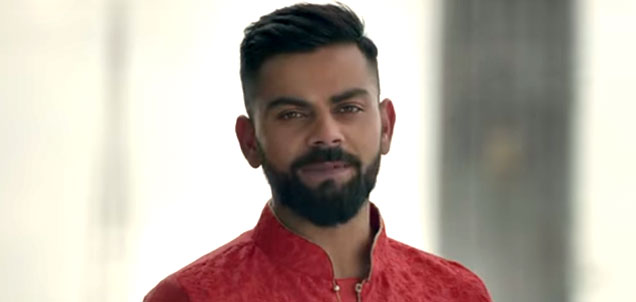
    There is already talk about how India will be the clear favorites leading up to the 2019 World Cup in England, with a bowling attack that has the best variety (and available options as backups) the team may have seen in ages. But at the center of all this talk is one man, and deservedly so. ViratKohli.


    Kohli’s journey from a brat, chubby, foul-mouthed but talented young cricketer to a suave, fit and sharp captain-batsman is an interesting case study in personality evolution. The aggression, his calling card, remains intact, but he uses it with a lot more purpose now than before.


    But it is his batting prowess that has created this air of invincibility around him, and around the Indian ODI team. The records are staggering, and continue to become even more so with each passing series. For the last two years, I’ve been wondering if this is his peak, only to realise the next effort was one notch higher. Kohli is only 29 and his peak may come as late as the 2023 World Cup. At least that’s what Indian cricket fans will be hoping – a five-year period of ODI dominance led by a batting legend.


    Kohli is by far the most popular sportsperson in India today. He’s ranked No 1 in the latest Ormax Sports Stars rankings, much ahead of MS Dhoni and Sachin Tendulkar (yes, he still features) at No 2 and No 3. Kohli isNo 1 across all markets except three clusters, where Dhoni leads: UP-Bihar-Jharkhand, Tamil Nadu and AP-Telangana.


    What does Kohli’s rising popularity and the resulting dominance of India do the fortunes of cricket in India? Cricket needs a boost, especially as the audience ages and a new generation comes in. Test cricket is virtually ruled out as an option for this new generation, whose first exposure to cricket has been T20, especially the IPL. ODIs are somewhere in between, and except for the big-ticket games, like those in the World Cup, have struggled to build viewership in general.


    Younger audiences often accuse cricket, especially Tests and ODIs, of being a slow sport, often devoid of entertainment value because of long duration of games and one-sided contests. But Kohli is an entertainment factor in himself. While his rising popularity will be expected to increase ODI ratings season-on-season, ironically, the first impact should be on IPL itself. IPL has a new broadcaster this year, and Star Sports will do well to make Kohli the central face of their campaign, almost like a mascot.


    Cricket needs this ratings boost. Football is the other sport young Indians are gravitating towards. At No 4 on the Ormax Sports Stars list is Lionel Messi and at No5 is Cristiano Ronaldo. They are ahead of other Indian cricketers like Rohit Sharma and champions from other sports, ranging from SainaNehwal to Roger Federer.


    Importantly, football’s popularity is extremely youth-skewed. Of course, there’s a mass vs. niche difference here, and with patriotism not being a factor in football, cricket is safe for at least one more decade, if not longer.


    But cricket’s competition has always been with itself.Ratings mustgrow and beat the previously-set cricket benchmarks, be it IPL, World Cup or bilateral series. With the Kohli era having arrived, and the national team performing at peak level, the situation cannot be more conducive. Now, it needs a smart marketing injection that rekindles the interest in cricket among the small but significant football generation, especially in the 13-19 yrs. age group.


    And that’s a challenge BCCI and Star Sports should be taking up together as a five-year plan.


  • Shailesh Kapoor: The Padmaavat Controversy: Four Weeks Later

    By Shailesh Kapoor


    Four weeks ago, Sanjay LeelaBhansali’sPadmaavat (earlier Padmavati) released after a long-drawn and much-publicised controversy stemming out of politically-supported protests against it. Within days of the release, the entire controversy died down, with the film getting lapped up by audiences around the country and the world. Three BJP-ruled states defied Supreme Court orders and refused to release the film. One of them (Madhya Pradesh) finally released it in the third week.

    The film has gone on to do excellent business, touching Rs 275 crore net revenue in India, despite Gujarat and Rajasthan being missing from its distribution plan. And as expected, the media has moved on. There have been no follow-up stories on Padmaavat, analysing the real reasons behind the controversy. It’s just not topical anymore.

    But the Padmaavat controversy was never about one film alone. It was about the larger menace that it symptomised. That of political interference in art, to the extent of using art to create narratives to pander to specific vote banks. All political parties have done it in the past. But this time, it was more brazen than ever before.

    Dangerously, the example set during Padmaavat will now become the accepted template. Padmaavat has become a proof-of-concept, that you can pick a film to drive a political agenda, and the filmmakers will be mere soft targets, helpless as they are, with only one thought governing their minds: to get their product out to the public.

    So, we can expect to see more films being targeted in the days to come. The next certain target is the KanganaRanaut starrer, Manikarnika: Queen Of Jhansi. The first protests have already started, and as we get closer to the release, we may see Padmaavat Part 2 unfolding. Only the perpetrators will change.

    The film industry remained largely silent through the period of the Padmaavat controversy, treading the fine line between supporting one of their own and staying in the good books of the powers-that-matter. But the Padmaavat experience will impact the industry in no uncertain terms. Historical and political subjects are being handled with kid-gloves now, with many studios simply refusing to even read scripts in these genres. In times when the industry needs big-screen spectacle films, crossing out a highly-lucrative genre is a big setback.

    But the worry is larger. Disruptive tendencies have not been limited to a specific genre in the past. Films like My Name Is Khan, Wake Up Sid and Ae Dil Hai Mushkil faced their share of trouble before their release for reasons that didn’t emerge from their content.Buoyed by the Padmaavat precedent, political forces may pick and target films at will now, citing reasons that get become progressively bizarre, and protests that can become progressively unabashed.

    This is where the media should have come in, by driving a public discourse post Padmaavat. But that would be asking for too much in today’s times, where adjusting microphone volumes of their debate panelists has become one of the more important skills for many TV journalists.

    So, wait for a while. The next Padmaavat is arriving soon.


  • Shailesh Kapoor: The Sridevi Coverage: Where Does The Media Go From Here?

    By Shailesh Kapoor


    Less than two weeks ago, Bollywood heroine Sridevi passed away, leaving the film industry and her innumerable admirers in shock. Over the last decade or so, several film legends have passed away in India. But Sridevi’s death was different, in that she was only in her early 50s, and keeping perfectly good health too.


    If how the media handled Bollywood deaths over the last decade was any indication, expecting any sensitivity in Sridevi’s case would have been out of question. Callous headlines, poorly-researched obituaries and loose analysis are par for the course. We saw that during the passing away of Rajesh Khanna, Shammi Kapoor, Yash Chopra, Vinod Khanna and Shashi Kapoor. The deaths were treated as some sort of concoction of breaking news and film gossip. They were “news events”, not just news. But this treatment was restricted largely to Hindi news


    In Sridevi’s case, the media had a field day, once it was revealed that the death is not natural but accidental. Voyeuristic journalism came into the fore, with theories related to murder mystery and debauched celebrity lifestyles being covered with irresponsible ease. The English media, especially television, joined in with full gusto. Many channels likened the case to SunandaPushkar’s death. Theories and conjectures were floatedwithout any sense of proportions, and the flight of fantasy that some journalists took would make them worthy candidates to write a Bollywood script.


    This period of two days ran in parallel with the Dubai authorities doing their regular procedures before handing over the actress’s body to her family. When that process was completed, the media quickly realized they had gone on a chase that led to nowhere. So, the “case was closed”, and the focus quickly shifted to “breaking news” from the airport, her residence and then the funeral venue. In all this, the big financial scam of the preceding week, involving Nirav Modi, became non-news in an instant.


    Media frenzy was seen recently at the time of Jayalalithaa’s death too, as covered in an earlier column here. But Sridevi’s death took the callousness to another level altogether. Imagery associated with the coverage has done rounds of the social media, and most readers here would have seen the MautKa Bathtub graphic, the reporter in the tub moment, the ‘send white flowers to Sridevi’ viewer invitation, the collage of “drinking” images fromSridevi films, the sizing of the bathtub and more.


    Much as social media came together to criticize the tone and tenor of electronic media’s coverage of Sridevi’s death, it doesn’t count for much. The truth is that there is a wide set of audience which finds all of this watchable. And till news media will continue to be judged and bought for its viewership, not much will change. If at all, the coverage of Sridevi’s death has set a new benchmark, which is now ready to be beaten.


    Attempts have been made in the past to set editorial guidelines at an industry body level. But guidelines, by definition, are subjective in nature, and in a real-time, live scenario, they are hardly a factor. The only way out, if one was keen on finding one, has to come from the advertiser side. Most Indian news channels still rely primarily on advertising revenue, vis-à-vis subscription. And if the advertisers’ community comes together and decides to “approve” channels it will invest in, things can change overnight.


    But would they be really doing that? Eyeballs are bought like commodities. And it’s as much a business as the business of “TRPs” is. So, while the media is directly callous, the buyer is implicitly so as well.


    But if advertisers can take a wider, more responsible approach, they can fix things soon enough. Just a one-day token boycott of a news channel will send shivers down the entire industry’s spine. It can be done. But it needs the top 10 spenders to come together, which almost sounds like a flight of fantasy in itself.