Category: COLUMNS

  • Ranjona Banerji: When senior journos get on to the field…

    By Ranjona Banerji


    It’s been a month and the national discourse of the shortage of cash in India and the effect it is having on people continues. Except of course for the two days where the media focused on the death of Tamil Nadu chief minister J Jayalalithaa. So let’s start with that. In newspapers and magazines, it is usually editors who stay in the newsroom and reporters who cover events on the ground. Although many editors have worked as reporters, they would prefer that younger people who have eyes and years on the ground, be given the chance to practice and hone their skills and shine. Sometimes, print editors will venture out into the field but not to replace their reporters so much as to complement them, find another angle, concentrate on the human story, use the contacts they have who many not speak to anyone else.


    There are some other reasons for this. When seniors who have moved away from active reporting jump in to take the limelight, it creates resentment all over the newsroom. It does not all talent to flourish. And it shows the publication up. Because when you do not cover the beat every day, you lose touch. You have to depend on reporters to get information from sources which you no longer have. Therefore, your reports are incomplete and self-indulgent.


    In TV news, that practice is shunned. Instead, any big event and all the big guns are on the street, regardless of whether they understand the language or the internal workings of the situation or anything else. It intrigues me if only because I wonder whether it really brings quality to newsgathering or if it is merely an ego exercise.


    **


    Newsgathering is of course another story altogether, especially for television news in India. Not surprisingly, it is tedious to keep showing long queues at banks and cash points. However, travelling all over this massive country is expensive and also requires logistical expertise, inside knowledge and of course, interest.


    And yet, surely there is some effort that can be made to find out what is happening across sectors and present that to your viewers? Once again I salute the local newspapers here in Dehradun for covering this demonetisation disaster from a variety of angles – the underprivileged, the urban, the rural, businesses, trade, banks, crime, black money, counterfeit notes, terrorism and so on.


    It provides a wide perspective for the reader to judge and decide and agree or disagree.


    **


    Yet, “debates” are so much easier to organise The triple talaq issue is back on the agenda after the Allahabad High Court said the practice was constitutional.  This was up for discussion on India Today TV on Thursday night. And that resulted in the anchor and two men screaming at each for the duration of the show. I have a suggestion. Why not go back again and again and speak to the women who suffer as a result of this archaic and unfair practice? Let the human story make its point rather than a “debate” no one can hear, much less understand? And why not leave the men out of it? Ya, I know, that’s hard work so…

     

  • Ranjona Banerji: Damn and get your Twitter id hacked?

    By Ranjona Banerji


    What has the hack into the Twitter accounts of TV journalists Barkha Dutt and Ravish Kumar, both of NDTV, proved? That hackers are clever? We knew that. That hackers can break through codes? We knew that. That these particular hackers had achieved some Great Reveal to prove that Dutt and Kumar were evil media conspirators against the Might Modi Government and thus deserved to be hacked? Ha ha ha ha ha!


    These attempts by “Legion”, including the hack into the Twitter accounts of Congress leaders and followers and into that of absconding industrialist Vijay Mallya, have proved nothing more than the fact that accounts are hackable.


    They have also proved that within the “legion” of BJP supporters (I am being kind to the BJP itself for now), there is apparent fear of people who raise a voice against the Modi government. These methods though are not earth-shattering and if anything, display the same sort of hit and run cowardly mentality displayed by trolls.


    Both Dutt and Kumar have responded appropriately. To the supposed reveal of some of her emails, Dutt has pointed out that all the hack proves is that India’s cyber-security laws are abysmal and linked that to the Modi government’s disastrous (my word, not hers) demonetisation scheme. Ravish Kumar, being a very eloquent speaker, sounds a bit like Sansa Stark talking to Ramsay Bolton in his final moments (Game of Thrones reference, please forgive me): “My words will keep haunting you”.


    There are some several ironies here. Not least that Kumar, as he has said in his blog, has not used his Twitter account for over a year. So attacking his account is pointless and possibly therefore a direct fallout of his evocative and innovative coverage of the news of our times. Kumar has been especially scathing about attempts to scotch criticism and most recently about the terrible effects of the ill-conceived demonetisation scheme (“ill-conceived” is my phrase, and one of my kinder ones).


    Dutt of course is a long-time red flag for BJP supporters. Some of it springs from the Radia Tapes, some from her general demeanour, some because she is female, some because she covered the Kargil war, some because she is perceived to be close to some Congress leaders, some because she has advocated talking to Pakistan, some because she has interviewed Union Finance Minister Arun Jaitley who is not a favourite with the RSS-faction of BJP supporters.


    Many of these BJP supporters forget that she likened their Beloved Leader to a “rock star” during his Madison Square Garden appearance soon after becoming PM and that since the BJP was sworn in to the Centre in May 2014, she has not been very critical of the government.


    Of course, the fact and consequences of hacking itself are important and not to be taken lightly. Cyber-security is a custom more honoured in the breach in this country and we have seen enough instances of this as India as tried to go “digital” with its money. What action this government is going to take when it cannot even ensure enough currency notes in the market almost 6 weeks after removing 86 per cent of India’s money from the market is an arguable point. Besides, these hackers, legion or otherwise, have not gone after the BJP and its affiliates yet, so…


    Further, given the way Russian hackers went after US presidential candidate Hillary Clinton in the recent election proves that hacking can be influential as well as criminal. However, when it comes to the hacks done in India so far, there is something “me too” about all this, not to mention childish.


    Now I better go and change my passwords. Ha ha ha ha ha!

    Joking!

    **

    Very worth reading for journalists who are bothered about journalism is this excellent piece by senior journalist and thewire.in’s Public Editor Pamela Philipose, on this government’s attitude towards the media. May explain the ever-loving loyalty of these “Legion” hackers so far:
    http://indianexpress.com/article/opinion/columns/journalists-press-freedom-kiren-rijiju-bhopal-jailbreak-fourth-estate-questions-4422348/


  • The Science of Design


    By Alpana Parida


    Our non-verbal minds, which are our older brain – as opposed to the evolutionarily later emerging neo-frontal cortex is responsible for decision-making. While the frontal lobes can analyse spreadsheets and quantitative data, the non-verbal limbic brain handles the inference of that data to create trust, affinity and preference.


    For design to work, it needs to understand the workings of the non-verbal brain. This brain interprets by association. So whatever the conscious brain sees is interpreted by delving into its subconscious and unconscious selves. In the subconscious resides the metaphor defined through a cultural context. For example, a lady wearing red in the East and West mean different things. In the East, red signifies auspiciousness and abundance; in the West, it stands for danger. Thus the woman in red could be interpreted as the wife or the mistress – depending on who is seeing her.


    Design identifies the associations that a brain makes and creates solutions that can then shape perception. Because this is not a visible process to the conscious mind, a lot of us see it as fluff. I come across a lot of people who evaluate design using their linear linguistic brain who evaluate design literally. A chemical company needs to show the molecular structure in the logo. Or a dairy needs to have the name Gokul and show a Bal Krishna.


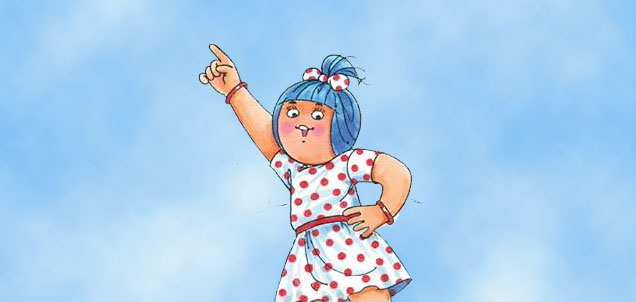
    Our conscious brains see things – and if it can directly understand the non-verbal communication, it does not go deeper. On the other hand, if it needs to interpret the Amul girl – the naughty child who loves butter – and subconsciously sees Bal Krishna, the brand goes deeper into the brain.


    Thus, literal design builds brands in the conscious mind and metaphoric design builds brands in the deeper sub-conscious mind. It takes a lot more effort, time and resources to make a brand in the superficial mind stick, the deeper it penetrates – the deeper it sticks and becomes harder to dislodge.


    Design and designers often appear to be illogical and intuitive, and thus not scientific; but the shaping of perception would not and could not occur if such a science did not exist. How we walk changes depending on the environment we are in. Observe people entering the lobby of an opulent 5-star hotel. They stand taller and walk more erect than they would in a crowded railway station. Design can shape behaviour – but only if it touches the place from where our behavior emanates and thus reaches the deeper subconscious mind where cultural metaphors reside or the deeper unconscious mind where ourbelief system resides.


    For the non-verbal mind users, this process directly occurs in the sub-conscious mind and there is no need to engage the neo-frontal cortex to argue and reason. They can evoke a specific feeling – which directly reaches the deeper self which no amount of listing of features on packaging can rival. The minimalist Apple packaging and the feature packed Microsoft bullet points on packaging work differently. One reaches deeper and evokes a feeling of affinity and desire, the other remains functional but not joyful.


    Recent successes in our eco-system are metaphoric brands such as Pepperfry and Paperboat that needed to do a lot less than others in their category to establish themselves. The literal brain sees a clear co-relation between input and output. Thus, if you want effective design, you need to ask consumers if they like it or not. Research it to death, create an iterative set of additions that keep detracting from the simplicity of design and eventually not end up working well enough.


    A dear friend and a senior professor of marketing at Stern, NYU recommended a novel research idea for packaging design. Rather than ask consumers what they like or don’t like (we are asking them to interpret their deeper limbic brain reactions in words – and then basing our solutions on that) she recommended we put the same product in different packs to be researched. We then ask consumers which product was better, tastier, and moreeffective? This would help us isolate the impact of packaging, as the product is the same.


    To create competitive brands locally and globally – we need to penetrate our consumers’ brains and reach their hearts. Design will go a long way in doing that without requiring high decibel and wasteful advertising. As a nation, we do not value design as a business driver. Hopefully, a newer generation of entrepreneurs will change that.


  • Sanjeev Kotnala: Five memories test for ‘BRAND-i’

    By Sanjeev Kotnala


    Take a piece of paper and keep your pen ready. When I ask you, just go ahead with the first few thoughts that hit you. Do not think, compare and evaluate. The sheet of paper is your confidential note. No one is going to read it, unless you share. So, it is possible for you to be brutally transparent and naked.

    Here we go. I am asking you to capture your whole life in five incidents. Just five incidents.

    These incidents can be from any part of your life. Go ahead, pick them from childhood, teenage years, education, love, marriage, parenthood, professional life. Capture the emotions; love, hate, success, failure, indifference, anger, joy, togetherness, dependency…. The choice is yours. However, remember, just Five Incidents.

    You are not to list many and then try to select the five you want to highlight. The game is to pick the five that come to your mind instantaneously.

    Chances are that these incidents are captured from recent times, a block of time, or they are equally spread across your life span. There is nothing wrong in what timeline these memories refer to and what they refer to. This is a synopsis of life impressions concerning you.

    There may be certain patches of life that your conscious mind may have even blocked your access. Maybe, a recent flare-up of brilliance has superseded other episodes from the past. On the other hand, an over emotional episode could have over-written everything else.

    The events you pick up, depend on how your mind reacted to the trigger. How with its own unknown algorithm it interpreted the instruction and decided to visit your distorted, deleted, generalised archive of memories.

    Additionally, jot down few of the incidents that were hovering in your mind as you captured the five on paper.

    Now take that sheet of paper and revisit the incidents. Think about these incidents.

    This is the important part.

    Who do they involve? What was happening? What were the dominant actions? What was the superimposing belief and emotion? Did they involve your family and spouse / partner/ lover? How did you play your role in these situations? What was expected of you? Why did only these selective incidents flashed through your mind? What makes them so relevant and deep rooted? What was your dominant emotion and experience in these incidents? They may point to a deep hurt or failure that you have not been able to completely burry?

    These incidents and dominant memories captures and reflects your ‘BRAND-i- I’. Your internal image of yourself an impression of your ‘BRAND-i’. An image you may be proud and happy with. An image you may want to change.

    The decision is always yours. Do not worry, ‘BRAND-i’ is after all a work-in-progress product.

    Now comes the difficult part. And again I ask you to be brutally honest with yourself.

    Think about these incidents, however, do not evaluate. Again, I expect you to pen down what comes to mind first.

    Think of five people among your friends, colleagues, family, stakeholders and your target group; people from professional or personal life.

    If these important stakeholders in your life were to do the above exercise sincerely and honestly, in how many memories of theirs will you feature? Do not piggy ride on the expected memories of your spouse and family members to include yourself?

    That’s why, I asked you to do the exercise first.

    There is no benchmark of the number of memories you should find yourself being featured. Nevertheless, the more memories you are part of, better it is.

    Congratulate yourself, if you are one of the fortunate ones, who features in the memories of these identified stakeholders. It shows that you have not been a passive passenger in life.

    So far, so good. Now dive deep into each of such incidents. Be the ‘fly-on-the-wall’ approach to the whole memories where you do feature, being re-enacted. Try visualizing yourself as a part of those episodes.

    Check, why are the memories important to them? What is your role in those memories?

    Are you the instigator in the episodes in their lives? Are you the hero of the situation? Are you active or a passive mute spectator to be remembered? Why do you think these memories are important to them?

    This is an interpretation of ‘BRAND-i-E’, the external presence and strength of BRAND-i.

    Check, if there commonalities in ‘BRAND-i-I’ and ‘BRAND-i-E’.

    Do you really like, appreciate and want any of the two images as your BRAND-i .

    Most of you will find gaps you want to bridge? There will be things you want to work on.

    You will have to design your own strategies to help create the desired ‘BRAND-I’.
    However, it is better to be part of other people five salient memories, irrespective of the emotions you evoke in them. Hopefully, you do have memories you are part of.

    Go ahead, work on improving the quotient of memories and create new impressions and experience. Create experiences that are relevant to the stakeholders. Be part of the episodes that the stakeholders, your redefined target group have as their top five memories.

    It may be tough for you to redefine the memories. The past is just a story. You cannot change the character, the reaction or the net impressions. All you can do is write fresh chapters. Give a consistent honest relevant experience.

    Remember, you can only control the message and episodes and not really the decoded message or the final impression. However, you can make attempts towards leaving experiences that will be better interpreted.

    Take that step and work towards, recreating the brand experience and in process your ‘BRAND-i’ is re-crafted. Take charge of the situation.


    BRAND-I, is a specialised workshop conducted by Sanjeev Kotnala the founder of Intradia World; a Brand, Marketing & Management Advisory. Email –  sanjeev@intradia.in tweet – @s_kotnala web: www.intradia.in  Blog – www.sanjeevkotnala.com  and www.fireurambition.wordpress.com 


  • 2016: Television’s Tough Year


    By Shailesh Kapoor


    We are nearing the end of 2016. It’s been one of the more, if not the most, lacklustre years for the television business since the start of satellite television more than 25 years ago.


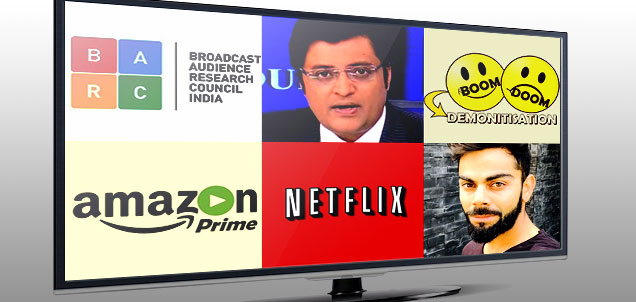
    The defining television highlight of the year would be that it was the year when the transition from the old ratings method run by TAM, to the new one run by BARC India, was completed. BARC India launched in mid-2015, but it took some time for the dust to settle and the new numbers to acquire normative status. That has happened, despite stray voices that still compare the old system to the new.


    Leave aside this big industry-level change, and some others on the regulatory front, 2016 did not have anything substantive to offer on the content side. There were no big channel launches headlining the year. And by and large, the hit shows from 2008-2014 continued to rule the roost in most GEC genres, Hindi or regional.


    Earlier this year, I wrote about us being in the Dark Age of Indian Television. Six months later, the argument only gets stronger. In an era when media proliferation is so high that it has acquired nuisance value in many ways, not moving forward with the times can be a catastrophe of no small proportion. Because if you won’t, the world around will anyway.


    The year marked good activity on the digital content front. Netflix and Amazon Prime launches bookended the year, and brought more scale and corporatisation to the digital content universe, which so far had seen only flashes of creative brilliance in the middle of a lot of mediocrity. Can SVOD be the next big thing in a market like India, where you get 200+ channels at a total price of less than Rs 10 a day? The jury is out on that one.


    In the absence of entertainment content breaking new grounds, it ended up being a year where two heavily male-dominated genres found traction, namely Sports and News.


    It’s been a very good year for the Indian cricket team, and a particularly good year for Virat Kohli, and that helped cricket viewership. The Rio Olympics got good coverage, especially with two medals for India in the last week, after a frustrating first two weeks.


    The news front had many stories to tell, right from Arnab Goswami’s exit from Times Now to the demonetisation saga that started on November 8. The latter is still a story in development. It may not move out of the headlines in a hurry, especially because it will drive the election agenda in key states in early 2017.


    Even as news prospered, the two biggest entertainment businesses in India – Hindi television and Hindi films – are in a tough phase they would love to get out of. The stagnation that started in 2014-15 is now clear and apparent for even the ostrich to see.


    All eyes on 2017 to fix what’s definitely broken.


  • Ranjona Banerji: Unbalanced coverage of demonetisation continues on TV… and here’s Arnab!

    By Ranjona Banerji


    What is balanced coverage? In spite of all the problems around the Central government’s demonetisation exercise, for some TV editors or executive producers or whatever they call themselves, “balance” means ignoring the 50 people complaining about their currency problems and looking for the one person in a queue outside a bank who sings the prime minister’s praises.


    This way, with one for and one against, they apparently think – I am extrapolating here because I have no way how they think if they think at all – that they have achieved “balance”. In fact, what they have achieved is skewed coverage and they have also completely misrepresented to their viewers what objective coverage means. If 50 people in a queue are unhappy and one is happy, then that is what you need to present to your viewership.


    We remain, since November 8 2016, stuck in this same impossible, awful situation placed upon the nation by demonetisation. I use these words which sound not balanced and definitely biased because when 100 people at least have died as a result of a government action, when thousands have been rendered jobless, when industries have shut down, when there is anxiety and apprehension everywhere, when corruption and scams continue, then it is the media’s job to represent all that.


    And yet, we see for ourselves day after day the continuation of the insistent disconnect between the print/digital and the electronic media. There is for instance, what TV news reports through the day, which is more or less what newspapers report – people unhappy, industries collapsing and new and innovative ways to circumvent the system and what happens at night.


    By the time we reach the evening, reality is turned on its head. Suddenly reporting becomes about projection and that same rigmarole of one ruling party one opposition. The guests switch around a bit and those who were popular for one month on every single channel, often at the same time, are now replaced by another lot. They almost all say the same things. And instead of examining the very serious issue of demonetisation and the role of the government and of government agencies in concept and implementation, there is an attempt to shift the onus on to the opposition.


    It is a neat trick and it may even fool all of the people most of the time, but it is not journalism. If you are not questioning the government in power then you are a submissive not a subversive. And any journalist worth his or her salt needs to have a bit of a subversive in them.


    You might think this is a bit rich coming from a columnist but in any newspaper or website, opinion is carefully separated from reporting and investigations. In news television, this separation apparently goes against the grain. But nor do we have anchors coming clean about their own opinions when on air. They remain stuck in a sort of “I must pretend to be objective and that means supporting the government” mode. Whether they do this for the current government or the last or any other, vital aspects of being a journalist are lost.


    **


    Meanwhile, those of the nation who want to know where star anchor without a channel Arnab Goswami will land next, the answer is The Republic. This is a channel of his own making and promises to be part of the “independent media” (his words, not mine). Rumours say this news channel will be partly funded by Mohandas Pai and Rajeev Chandrashekhar. Those with illusions about what “independent media” means need only look up both Pai and Chandraskehar on the internet.


  • Sanjeev Kotnala: Why I fail to understand ASCI’s proposed guidelines on celebrities

    By Sanjeev Kotnala


    The ‘Celebrity in Advertising’ is something I fail to understand.  As per tradition, certain highly influential people, business leaders, religious leaders, politicians, government functionaries, Bureaucrats and people like doctors, authors, activists and educationists have been treated with kid gloves.

    To me, any guideline must cut across all segments and not necessarily the so-called, identified celebrities, the one in fields of entertainment and sports.  The guidelines are discriminatory in nature. They are restrictive in treating ‘celebrity’ strong influence as a negative. A barrier. A constraint. A block.

    So, I have few innocent questions:

    ::  Who will certify, if a person is a celebrity or not?
    :: What is the level of success and following that defines a celebrity?
    :: Will playing just one Ranji match, being an Olympic probable, having done a 5-minute role in a film or even having spent a week at BiggBoss house qualifies you to a celebrity status?
    :: Will the hero of a flop regional picture be treated at par with Dabang and Mr Perfectionist?
    :: Will certain number of followers on tweet qualify you as a celebrity?
    :: Will ASCI routinely publish the list of current people qualifying as a celebrity?
    :: As the fortunes change,, so does the status. After how many years of leaving a field will the status be reversed?
    :: Oh, why should the ads featuring celebrity should not be ‘misleading, false or unsubstantiated’?
    :: Do we in our wisdom believe that the degree of individual consumer harm is different from a misleading advertisement that features or does not feature a celebrity? Alternatively, as a large nation, we only get sensitised when a large number of people get affected.
    :: Why do we always take these silly escapist routes?
    :: Are we endorsing as a fact that a celebrity featured or endorsement advertisements gets more publicised and has a higher influence, then maybe an emotional or logical or even satire based advertisement?
    :: Or we are just doing it, as celebrities are a soft target?
    :: Will this discretionary treatment stand in the courts of law?


    Remember this stance in case of bar dancers and 5-star events have been negated in the court. The only part that is right in this approach is that the guidelines are developed in order that Advertisers are guided to produce and release appropriate advertisements.

    Oh, by the way, celebrities are expected to have adequate knowledge of these Codes.

    Does every person in advertising industry know how to make good ads?

    The onus should stop with the agency and the client.

    It is the duty of the advertiser and the agency to make sure the communication developed for the brand is not misleading. Their duty does not start or finish with need to make a celebrity aware of the guidelines.

    You want action? You want results?
    Here is what you can do. Ban the advertising agency and the client from advertising. Hit them where it hurts the most. Nevertheless, that is sacrilege to think in that direction. The industry may come to a standstill.
    HENCE, WE WOULD WANT TO BLAME THE CELEBRITY.

    The guideline says vaguely that when a person signs a testimonial or used phrases, like ‘I use’, ‘I advise’ or ‘In my opinion’ or such interpreted words than it should reflect a genuine, reasonably current opinion of the individual(s). Perfect, what if the opinion is wrong, but that is the personal opinion. Should celebrity not have an equal right to broadcast their genuine opinion?  NO, WE WOULD WANT TO BLAME THE CELEBRITY.

    Then there is this layer of the celebrities GENUINE opinion must be based upon adequate information about or experience with the product or service being advertised.

    In my view, the blame should rest only with the advertiser and the agency. They, in spite of being part of the industry and having access to the best of the information and possible questioning, argument, soul and insight searching end up making misleading claim.  WE WOULD WANT TO BLAME THE CELEBRITY.

    If the agency cannot grill the client on the communication stance and statements.  If the agency is unable to do due diligence to ensure that all descriptions, claims and comparisons made in the advertisements are capable of being objectively ascertained, substantiated and not misleading or appear deceptive.

    If they could not get the information or take a conscious open eyed decision, and end up making a misleading communication.  Just like the couple blaming the pandit for unwanted pregnancy.  WE WOULD LIKE TO BLAME THE CELEBRITY.

    On the other side, the appeal to celebrities not to participate in any advertisement of (I) a product or treatment or remedy that is prohibited for advertising under The Drugs & Magic Remedies (Objectionable Advertisements) Act 1954 or (ii) The Drugs & Cosmetic Act 1940 and Rules 1945: (Schedule J) or (iii) a product which by law requires a health warning “……is injurious to health” on its packaging or advertisement is nice.

    It can only be an appeal to senses and sensibilities. If it is a product that is LEGALLY allowed to be produced, consumed and advertised, then celebrity should have equal opportunity to be part of it. Alternatively, just stop advertising it. Hell, we have a better option. WE WOULD WANT TO BLAME THE CELEBRITY.

    Yes, leave the option to the celebrity. Put the blame square on the advertiser and agencies.

    ASCI can make an appeal to the celebrities. And these are few overused, overexposed group of people, who can even be contacted on one-to-one basis.

    HOWEVER, FOR THE BLAME, IT MUST LOOK AT THE ADVERTISERS AND THE AGENCIES.


  • Alpana Parida: Christmas: The Festival of Opportunity

    By Alpana Parida


    Suddenly, TV, print and outdoor media is full of Christmas cheer in India. Families wearing Santa hats, visuals of snow flakes, candy canes and mistletoe motifs are ubiquitous – particularly in malls; and Christmas deals invite the Indian consumer to buy.


    Christmas has long been celebrated in India – via the British and the small Christian population, it became a tradition in elitist India. The celebration was typically a Christmas Eve dance night and special dinner in clubs and hotels in India. It has grown since and has captured the fancy of many Indians particularly in malls across India.  Kids are growing up seeing Santa’s and singing Rudolph the Red-Nosed Reindeer, and offices are holding Secret Santa gift swapping.


    But like all adopted behaviours, this is a superficial adoption of some rituals. The festival has no real significance for Indians (non-Christian that is). In the US, the spirit of Christmas that stands for the spreading of goodwill and cheer has been reinterpreted commercially to create a massive gifting tradition – a tradition that has become an economic engine for the economy. Christmas sales account for almost 20% of total retail sales and marketers and retailers have made the most of this gifting tradition through a well-defined set of rituals.


    Decoding Christmas we can see the encoded rituals of the festival. Catchy Christmas carols play in every store and street corner. The stores are warm and cozy havens in the cold and dark winter months; with the smell of pine and cinnamon, adorned in colour coded Christmas festivities. They become places of celebration the very act of shopping is an important ritual of the festival. Christmas has distinctive colours, sounds, smells and tastes. There is a strong sensorial cohesion in how it is branded across the world.


    The spirit of Christmas is encapsulated in phrases such as “spreading goodwill and cheer” or it” being the season to be jolly “. These are all uplifting manifestations of Christmas. The Christmas tree, the chimney and stockings and the plate of cookies and a glass of milk for the weary Santa are myths and rituals perpetuated by conspiring parents and happy kids.  The many motifs of Christmas such as the mistletoe, the snowflakes, the tree, the candy canes and the stars – result in a clear delineation of the codes and rituals of Christmas. Hollywood complies, with at least one Christmas film every year, keeping the codes of Christmas alive continually across generations.


    Apart from the design codes of Christmas that create a wealth of Christmas specific merchandise, the gifting ritual creates a huge market as well. The idea of gifting at Christmas is strengthened in popular culture – cinema and TV, and supported by retailers through a host of initiatives. The art of gifting is cracked to a science.Christmas works as an enormous economic engine and the already existing tradition of spreading goodwill was tapped to create the gifting tradition with Hollywood and popular culture abetting the same idea.


    In India, no such belief exists. Christmas is simply a foreign festival with distinct visual motifs. If at all the Indian consumer is buying during Christmas, it is not because they are emulating the gifting tradition – but because they are making the most of sales and discounts. (Secret Santa is an emerging ritual – but typically the gifts are under Rs. 200 in most offices). Christmas celebrations in India are non-contextual and can never become the economic engine they are in the US or elsewhere in the world.


    Similarly, Halloween and Black Friday are becoming sale days. There is no meaning imbued in them – they are simply western imports and the only impetus to buy is a deal. It is only when the festival has a cultural context and the meaning behind the festival is reinterpreted with a modern consumption ritual can it shape new behaviours.


    There are many cultural triggers that can be unlocked to create a market force. A good example of this, in recent times, is  Akshay Trittiya – a day celebrated in a handful of states as an auspicious day to start new things such that it that heralds luck. Gold buying was a small Akshay Trittiya traditionin a few parts of these communities,in a few states. The World Gold Council and some jewelers made this festival pan Indian, by simply tapping into this latent belief about the auspiciousness of the day and how good luck is best found upon buying gold on this day. In less than a decade, this day has become the second highest day for gold sales. This has happened as a pre-existing belief has been layered with a shopping ritual that is in sync with the tradition.


    Christmas, Halloween and Thanksgiving have no pre-existing belief in India, and thus remain just a superficial set of visual motifs that have no real significance to be able to create new behaviours.


    If Indian marketers and retailers tapped into existing beliefs and created new rituals of shopping around those, they will see the Akshay Trittiya phenomenon recur time and again. For example, Karva Chauth – the north Indian festival when married women fast for their husbands has been romanticised by Bollywood and evangelised it to other communities and even to unmarried women. This could be the ultimate Indian Valentine’s day and gifting to the significant other could become a new tradition rapidly.


    Days like Dassera or Vishwakarma Pooja has Indians worshipping their vehicles/ tools. Appliance / vehicle shopping on that day could be a natural corollary. Holi, the harbinger of spring could become the biggest fashion day and Navaratri/Durga Puja could become the equivalent of Mother’s Day – with gifting to women becoming a tradition.


    Each festival can become a brand – but for this to happen, the story behind the festival and creation of a tradition and its rituals must be related. It must have its own myths and visual motifs – rather like the ones for Halloween, Christmas and Valentine’s Day.


    Only when India creates its own calendar of traditional festivals reimagined for a modern India, will these become true economic engines.


    Till then, Merry Christmas.


  • Top 5 “Gamechangers” on Hindi GECs in 2016


    By Shailesh Kapoor


    This Top 5 yearender piece has been a regular feature on this column since 2013. (Links to previous articles: 2015, 2014, 2013). However, there has been one important change since 2015. The word “gamechanger” seemed too liberal to use for the 2015 list, and needed the quotation marks around it to qualify the liberal usage. I had secretly hoped at that time that this qualifier won’t be required at the end of 2016. But no such luck.


    It has been a fairly uninspiring year on the content front, and hence game-changers continues to be a liberal word to use. That being qualified, here’s the list of the five Hindi GEC shows that stood out this year, for the impact they managed to have on the category:

    5.  Diya Aur Baati Hum

    The Star Plus show features in this list for one specific reason – Star Plus’ bold move to end the show this year. Diya Aur Baati Hum wrapped up on September 10, after a five-year run that saw a glorious period of at least three years. Like many other shows, the channel could have dragged this one for another 2-3 years, even more. It would have understandably been a tough call to take. But wisdom prevailed. Colors’ Balika Vadhu also ended this year, after an eight-year run. Hope there’s a trend being set here, slowly but surely.


    4.  Kumkum Bhagya

    Kumkum Bhagya finished two years in April (though it seems like it has been on-air for ages). Through the year, the show single-handedly kept Zee TV afloat, even as the channel struggled to retain its No. 3 spot in the second half of the year. There’s a certain storytelling style that Balaji Telefilms has mastered, and Kumkum Bhagya’s consistent performance is yet another outcome of that.


    3. Naagin & Naagin 2

    Naagin had topped this list at the end of 2015. The first season ended on a high in June, and the second season has worked equally well since its October launch. Treated like a true sequel, with characters and story being taken forward 25 years from where the first season ended, Naagin 2 continued to rely upon the tropes that worked for the first season – dramatic storytelling, glamorous cast, deft special effects (at least by Indian television standards) and most importantly, a sense of urgency and pace that’s unmatched in the category by far.


    2. Shakti

    This post-IPL launch on Colors had one of the more intriguing campaigns in recent times, playing on a “sach” that would eventually be revealed several weeks later. With a eunuch (kinnar) as its lead protagonist, Shakti managed to create differentiation with social relevance. That, combined with smart storytelling that made the most of every dramatic moment, ensured that Shakti quickly rose to the top of the GEC fiction charts, in turn helping Colors usurp Star Plus at the No. 1 position, especially with Naagin also on-air.


    Will Shakti have an extended run over 2017-18? Only time will tell. But in a year of lacklustre weekday fiction launches, Shakti stood out as a genuine exception.

    1. The Kapil Sharma Show

    He had ruled the weekends for more than two years before parting ways with Colors. Yet, when he made a comeback with The Kapil Sharma Show on Sony in April this year, there was much scepticism about how the show would fare. There would be format fatigue after all, and Comedy Nights With Kapil didn’t exactly end on a high on Colors.


    But those fears, as it turned out, were unfounded. The Kapil Sharma Show grew from strength to strength during the year, acquiring the same cult status, if not even higher, that the predecessor show on Colors enjoyed. That Kapil Sharma did not have a feature film distraction during this year helped. As did the superbly conceived and performed character of Dr Mashoor Gulati.


    The Kapil Sharma Show took Sony to the No. 3 spot by the last quarter of the year. And unless Sharma messes it up with another feature film roadblock, 2017 is set to be a big year for this show.


  • Lookback 2016: Donald Trump or Demonetisation…


    By Ranjona Banerji


    Donald Trump or Demonetisation: Those are your choices for the news events of the year. As far as Donald Trump for US President is concerned, almost no one took his bid seriously, perhaps least of all Donald Trump himself. Even though he vanquished fellow Republicans one by one to win the nomination, not the Republicans, not the media, not Hillary Clinton, the Democrats, not the pollsters, not anyone it seems except the Alt Right and Breitbart News believed in him.


    And, as conspiracy theorists and the CIA now states, Russian President Vladmir Putin as well. It is nothing short of horrifying for the media when they get something so large and important so very wrong. It means that instead of  keeping their ears to the ground or at least identifying which part of the ground was significant, most media outlets let their personal feelings affect their judgment. This is where we reach a tricky area of “right and wrong” and letting that as a lever to steer the news.


    However, how does one avoid that lever? Is it possible for anyone to be that objective? Trump in many ways appeared to be so “wrong”, in everything he said, in the hatred that his followers spread around, in the bigotry and ignorance that he unleashed across society and made them both seem like virtues.


    An iconic TIME Magazine cover from the year, before the results, was, on a black background, a caricature of Trump’s face in characteristic shades of orange and yellow collapsing like a slab of butter on a hot summer’s day. “Meltdown” said the headline. The articles within were about Trump’s outrageous statements, his lack of preparation, his supposed lack of understanding of the gravitas of the job – everything in fact that made the world horrified when he won the election. TIME later made him “Person of the Year”.


    But that is one side of this fascinating story. The other side was the underlying assaults on Hillary Clinton, by social and digital media. Just when her poll numbers were high and running ahead, her campaign reeled under various leaks from her email accounts when she was secretary of state in the first Obama administration. Some leaks were from Wikileaks, others were by Russian hackers.


    If Trump faced the sceptical disdain of mainstream media, Clinton faced the growing powers of the other media – digital, social, Alt-Right. In Trump’s case, the mainstream media can be accused of many things.


    But breaking accepted social bounds was not one of them. Despite repeated assurances of Clinton’s lack of culpability by the FBI, despite the CIA finding evidence of Russia’s role in Clinton’s loss, Clinton did lose. And Clinton’s case underlines once again why the internet is dismissed only at your own peril, especially by the media.


    And that perhaps is why America got the president it deserved, even if almost no one wanted him!


    **


    In India, I can offer you two changes in the media, one of which can be described as seismic.


    The Narendra Modi government’s demonetisation gambit slightly shifted the narrative for television news. From November 8 to December 27, we have seen quite a few sections of the media wake up and smell the stench of bogus excuses and justifications by the government and its minions after this catastrophic imposition on the Indian public.


    This column has written extensively on this so I feel I don’t need to go much further as far as the disconnect between print/web and television journalism on demonetisation and even more within television itself with primetime debate shows completely contradicting daytime coverage on their own channels.


    It shows a remarkable lack of cohesion and indeed an almost wilful reluctance on the part of senior TV journalists to accept what their own ground reporting tells them. CNN News 18 ran a series of the effects of demonetisation in industries across Punjab, for instance. Note however how most TV debates will be on Rahul Gandhi/Arvind Kejriwal’s statements and not on putting the government on the spot for the chaos it has caused. How many head honchos of India’s many banks, public and private, have you seen on prime time debates discussing the effects of monetisation?


    Social media has also done a turn, post-demonetisation. For the first time, since his coronation in 2014, Prime Minister Narendra Modi has become the butt of jokes, from India’s comics to anonymous meme and GIF creators, to Whatsapp forwarders and innumerable tweets and Facebook posts. In some sense, reality and balance are trying to make their presence felt in the digital space.


    **


    Yet, without being facetious, the most cataclysmic media event of the year has undoubtedly been the departure of Arnab Goswami from Times Now. For many years now, he set the tone for his fellow TV anchors and for some susceptible print and web journalists. I cannot remember any journalist who has been so talked about. The Silence Fell in mid-November. Although various panel regulars still call every other anchor “Orno”, Goswami’s stentorian tones and his masterly hectoring have gone for now.


    His brand of Not Journalism As we Understand It will return it is said on his new channel “The Republic”. The Republic however continues much as his former channel seems forlorn and headless.


    Are you holding your breath into the New Year?


  • Sanjeev Kotnala: 10 Books to read from 2016


    By Sanjeev Kotnala


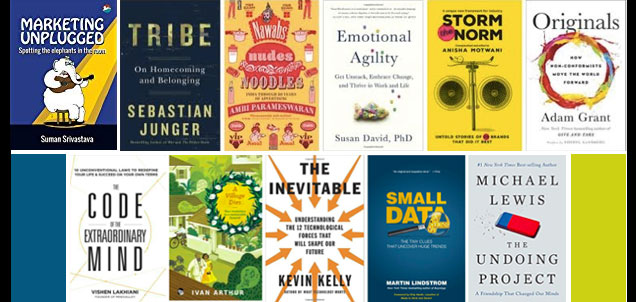
    As 2016 comes to an end, here I am with the round-up of books I recommend reading. And right at the top comes the disclaimer: I have read most of them, but not all of them. A few of the books get featured here are recommendations of people I would blindly trust on the subject. Go ahead read them and share your feedback. Let me know what you feel about it.


    Tribe: On Homecoming And Belonging

    By SEBASTIAN JUNGER

    Tribe is a strong group deeply bonded with known values and defined aims. A concept that is no longer alive in a fragmented world, where individuality supersedes everything. Could there be an answer in TRIBES for the new world? Maybe it is all about closeness that makes the bonds become stronger. It’s time for us to learn from Tribes. Rework on loyalties and meanings associated with togetherness of purpose.


    Nawabs, Nudes, Noodles: India Through 50 Years Of Advertising

    By AMBI PARAMESWARAN

    A real compact narrative on Indian advertising. 50 years delivered through eyes of brands and campaigns. Read how the advertising approaches evolved, how brands and consumer morphed into new forms. The relationship between culture, politics and economy – all in this book.


    Emotional Agility: Get Unstuck, Embrace Change, And Thrive In Work And Life

    By SUSAN DAVID

    You need to be high on Emotional Agility to achieve your goals. This book will help you to adapt and synchronise your actions. It will take you towards a more fulfilling life. Success and achievement have that effect.


    Marketing Unplugged

    By SUMAN SRIVASTAVA

    A smart well-organised book that aims to unplug your thinking. It tries to make you  see and hunt the 10 elephants in every marketer mind, if not the room.  You need to read just to check how big is your herd of elephants. By the way, even the elephants have an expiry date, as consumer get smarter and read every trick of marketers.


    Storm The Norm

    By ANISHA MOTWANI & RANJAN MALIK

    Initially, I was not impressed by this book. The second reading and discussion with other readers made me re-look at it. Did I miss out something? Maybe the case studies were too open-ended and the framework was not too complex. However, I must respect the review and feedback of many of my friends I trust. So, here is my recommendation: read the case studies and get some motivation to storm the norm.


    Originals: How Non-Conformists Move The World
    By ADAM GRANT

    Go ahead bring alive your individuality. Get your courage working. Challenge the status quo and work toward changing your defined world. This is some of the advice you get here with highly insightful observations from Adam Grant.


    The Code Of The Extraordinary Mind: 10 Unconventional Laws To Redefine Your Life And Succeed On Your Own Terms
    By VISHEN LAKHIANI

    Let’s take down the age-old wisdoms that define love, education, spirituality or work. Break free of old ideas and rules that limit your thinking. Maybe that will help you redefine success.


    The Inevitable: Understanding The 12 Technological Forces That Will Shape Our Future

    By KEVIN KELLY

    Want to remain ahead of the curve? Then this is the book for you. Get exposed to the twelve technological imperatives that Kevin believes will be shaping the next 30 years. It is bound to happen… The levers are all in the right places, and the chain reaction is already in operation. .He shows you how these trends will redefine the way we buy, work, learn, and communicate.


    Small Data: The Tiny Clues That Uncover Huge Trends

    By MARTIN LINDSTROM
    I am a big fan of Martin Lindstrom. Here is he again going against the grain and presents how small data may have all the clues to our future. In his words, he connects the dots. And unravels for you the deep hidden meaning, enhances your curiosity quotient and shows the vignette of human emotions and behavior.


    The Undoing Project: A Friendship That Changed Our Minds

    by MICHAEL LEWIS

    This one is fresh from the press types. I have not read it, but this comes very highly recommended. And I have nothing else but the extract to build on. ‘How a Nobel Prize–winning theory of the mind altered our perception of reality’. A story of Israeli psychologists Daniel Kahneman and Amos Tversky who are also blamed for the powerful trend to mistrust human intuition and defer to algorithms. The Undoing Project is a compelling collaboration between them. It is one of the greatest partnerships in the history of science. It is a story of the human mind and is explored through the personalities of two fascinating individuals so fundamentally different from each other that they seem unlikely friends or colleagues. In the process they may well have changed, for good, mankind’s view of its own mind.


    And here’s a bonus recommendation. A work of fiction by a veteran adperson which I would rate as one of my top reads of the year:


    A Village Dies

    By IVAN ARTHUR
    After a long time, I read a book that is an example of brilliant storytelling. ‘A Village Dies – your invitation to a memorable funeral’, a story in convenient flashbacks. It is a story of two villages Kevni and Amboli, in erstwhile Bombay. A mixed community of East Indian, Anglo-Indian, Goan and Mangalorean live there. Through ages, the genes naturally get mixed. The attitude and approach to life changed just that bit. However, the village slowly dies.


    Sanjeev Kotnala, with 28 years of corporate experience, is founder of Intradia World; a Brand, Marketing & Management Advisory. His focus area includes Ideation and Innovation; he also conducts specialised workshops like IDEAHarvest, Liberate and InNoWait. For soft skill training, he follows SHIFT (Specific High-Intensity Frequent training), a process of continuous training with frequent shorter sessions. Email sanjeev@intradia.in tweet @s_kotnala web: www.intradia.in www.sanjeevkotnala.com. Kotmartial, Sanjeev Kotnala’s column on MxMIndia.com, appears every Wednesday. The views expressed here are his own.


  • A Media Wishlist for 2017!


    By Ranjona Banerji


    ​Calendars change but time keeps flowing. Pop psychology is full of such self-evident and annoying maxims. And here we are, in the first week of 2017 and does it really feel all that different from the last week of 2016 except that some of you are still nursing mega hangovers?


    But sometimes, time and calendars demand that you deal in clichés, so here we are with our wish list for the New Year, all of which are absurd and none of which will ever be followed. Wis​h​lists, like Resolutions, are for the making, not the keeping (talk about dealing in clichés!).


    1. No more jackets, boleros, waistcoats, trousers, petticoats and other such apparel to mask the front pages of newspapers.
    2. No more “Sun rose in the East as usual” to be presented as “Breaking News” by TV.
    3. No more newspapers imagining that vast numbers of online readers are dying to cough up through their website “pay walls” to read the soulful meanderings of their columnists. In addition, no more newspapers (usually the same as the “pay wall” newspapers) asking journalists to write gratis for their websites, pretending that they cannot afford to pay them.
    4. No more star TV anchors picking up the most absurd and least significant news event of the day to manufacture a pointless “debate”.
    5. No more party spokespersons speaking “exclusively” to 59 news channels simultaneously in different outfits. TV channel producers could at least demand that each party sends out 59 of its most shouty spokies to do the studio rounds every evening so that viewers get a change of decibel and pitch levels to make their electoral choices.
    6. No more star TV anchors wearing army gear to present the news. No one is fooled or even interested in the unfulfilled juvenile fantasies of journalists and wannabe journalists.
    7. No more fans of political parties running websites that pretend to be news sites but are nothing but websites which bash those parts of the media which are not wholehearted supporters of their political party.
    8. No more pretend high-brow websites and magazines which are nothing but loudspeakers for their favourite political parties claiming that they are not loyal soldiers and mouthpieces. Why not just honestly and proudly fly the party flag?
    9. No more articles starting “10 things that the ​Prime ​Minister should could do,” “Seven of my brilliant ideas that the Prime Minister will start doing tomorrow”, “11 things the Prime ​Minister would do if he was not the ​Prime ​Minister”, “14 things the Prime ​Minister might have been able to achieve if there were no bureaucrats in the world”, “27 things that make the Prime ​Minister the greatest Prime ​Minister providing he listens to my advice because I love him so much,” “210 things that the Prime ​Minister is doing but no one can see he is doing them except me”, and so on. No more using so many numbers in headlines, please.

    10. No more eggheads and pictures of deities for trolls on Twitter. A special Troll DP must be created for them so that their delightful presence can be received with the proper joy and laughter.
    11. No more “citizen journalist” TV programmes, blogs and newspaper space for the general public to stop every member of the general public becoming an irritating expert on the media.
    12. No more lists like this at least until next year.


    Happy 2017!