Category: COLUMNS

  • Sanjeev Kotnala: Goafest is too democratised, says Sonal Dabral

    By Sanjeev Kotnala


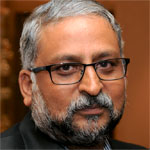
    Sonal Dabral

    I met Sonal Dabral, Chairman and Chief Creative Officer, DDB Mudra at the Adfest at Pattaya where he was Jury President for the Direct Lotus and at Goafest earlier this month. In a freewheeling chat, he gave him me his sharp and straight-from-the-heart views. Read on…


    JURY PROCESS AND ETHICS.

    Adfest Pattaya is regional-focused but the criteria of judging remain same. There must be a big/great idea.  It must be relevant to the audience it is talking.  Each place with its own setup comes with its own character. Cannes has a much larger jury. Which has its own pros and cons. At Adfest, there is a smaller jury. It has its own advantages, and challenges. There are more things common across festivals than there are differences.


    Sonal believes that the jury has to be dispassionately ruthless. They do not have to award just because there is a need to promote or awards needs to be given. Awards are after all an encouragement. Juries must not have a hidden agenda and must be able to clearly speak their mind. Jury must not be worried how their comments will be interpreted.


    In Adfest Pattaya, the jury was Badly Ruthless.


    INDIAN DELEGATION OR THE LACK OF IT

    When I spoke with him about the abysmally low count of delegates from India, which has been propped up by their promotional activity by Dainik Bhaskar group, Sonal was equally shocked. But he recovered fast.


    All of us are guilty of it, he said. “I do believe that this being a regional festival and an important one, we all should have been sending delegates. Give the young professionals a chance to be exposed to such a spectrum of work.   Even I should be sending some from Mudra.”


    I just did a simple math and told him that a senior abstaining from Cannes can send eight juniors to Pattaya. He did not bite and side-stepped. But he was absolutely clear that the participation must be enhanced. In his view, Adfest needs to be marketed in India. May be some roadshows need to happen.


    ON INDIA’S LOW AWARDS AND FINALIST STATUS.

    This was a loose ball for Sonal and he gave it the treatment it deserved. He pounced on the subject and like a saint in an unbiased observation added words of wisdom.  My grouse has been that we don’t push ourselves. As people we are not diligent enough. Our thinking is good. We do world-class work and that is not even from award point of view. But when it comes to execution we do not reach the level it should.


    It is not that there is a lack of talent. We are one of the best, if not the best. There is lot happening in India and maybe ‘Lot’ is a problem. We are not diligent enough to take the idea to its logical end, exploit it and amplify it. We somewhere get trapped in doing too many things


    On my comment that we adapt easily and have a ‘chalta hai’ attitude, he objected to my trying to put words in his mouth. But he shared the sentiment by saying ‘we lose interest and we shift focus too early. We are not BAD ENOUGH as we do not take it to the next level’.


    We in India always work under pressure and deadlines that seem want things yesterday. Remember a good idea needs time, time to think, time to create, time to incubate and time to implement. Till we don’t give it the time it needs, we will never be able to take ideas to next stage. For a certain piece of work be it the print, website, TVC, event or anything else, the tussle between marketers agencies continues as to how much time will it take. And then there is always the budget issue. As a fraternity, we are equally to blame along with clients for not taking ideas to the level we should.


    ON DIRECT.

    I used the bait of Direct as a medium not getting its due and Sonal took me on. He said “I do not agree that Direct is decreasing.  Direct used to be a mailer that went to a specific identified audience to evoke a response. Now you can get that audience from targeted TV, Web, installation etc. There are many many more channels to reach the audience directly. It is a function of the technology, time and budget. Its up to you how well you use it.”


    Sonal suggested that it might really be a good idea for the agencies and the clients to see what has won across categories. It will help us identify and visualize many opportunities and mediums available for us to reach a targeted audience to evoke the desired response.


    Direct is bubbling with possibilities. Gone are constraints of envelope and mail. There is a wide canvas outside to play with. It is about addressing an identified specific audience directly to get a predefined response. It can happen by events, web, outdoors, activation, connect, melas, augmented reality or what you have. This is field that has opened new opportunities and has a new set of challenges. Exciting times are ahead.


    GOAFEST

    Sonal believes Goafest is the original festival and award show for Indian advertising industry, so it’s a part of a whole generation of Indian advertising professionals. It has heritage and history is one of its big pluses.


    I could not hold myself asking his comments on Goafest and he said the timing of Goafest has always bothered him. In its bid to make it affordable it is held in the summer. If it has become India’s premier advertising show, it has to behave like one., he says. This year at least the quality of speakers was very high, so that’s definitely a step in right direction.


    “Any festival still have a sense of gravitas around it. If I am sending people or a company sends someone, it is an incentive. It is a reward for something you did. It should not be so democratized that anyone can go. Then everything gets affected. To democratise, you need to meet certain budget and hence it needs happen in certain months and scale. Thankfully it is now held indoors. Adfest also happens at a beach resort and can be a good learning.”


    ON TOO MANY AWARDS AT GOAFEST.

    “Right, there are too many awards and too many categories. But, let’s not complain. No one is forcing anyone to enter all the award shows and all the categories. We all need to decide what is right for us and what we can afford and chill. I would rather have more awards than have none!”


    That was Sonal Dabral, speaking straight from heart.


    Sanjeev Kotnala is Founder and Head Catalyst at Intradia. He believes the best way forward for an organisation is to enhance its interanal team’s potential and capabilities instead of depending on external resources. He is a Management, Marketing and Brand consultant and conducts specialised workshops in the area of IDEATION (Harvest and Liberate) and Innovation (InNoWait). To contact email sanjeev@intradia.in  or tweet at s_kotnala visit www.intradia.in  www.sanjeevkotnala.com.

     

  • Ranjona Banerji: Bad coverage of a suicide and more on cowardly journalists

    By Ranjona Banerji


    The public suicide by a young farmer from Rajasthan at an AAP rally in Delhi this week exposed not just our political establishment but also members of the media. Watching events unfold on television it seemed inconceivable that this could happen with so many people present.


    After the fact as well, TV attention shifted to a political blame game because no news is legitimate in India unless it has a political angle – barring Bollywood and cricket of course. So instead of the death of this one farmer, which capitulated the problems of all farmers to centre-stage, we were fed a constant loop of he-said-she-said finger-pointing by all India’s political parties.


    Contrast this to the way the migrant crisis is being covered in Europe and you can an idea of how stories can be developed without competing quotes from political spokespersons.


    Yes, I know. I’m talking to the wind.


    **


    I can understand members of the public being angry with newspapers and TV channels and websites for not being admirers of the current government. I for instance rarely read journalists who I feel are going to be needlessly critical of the tennis great Roger Federer. It is a choice I make as a fan, not as a thinking journalist.


    But journalists who get upset when the current government at the Centre and the prime minister are criticised? What is one supposed to make of them? I’m not even talking about those who are open card holders and well-known admirers of the BJP or its attendant organisations. Or even the journalists who joined AAP. I am talking about working journalists in various news organisations.


    Of course, it could be the dangers of too much blabbing on social media that I see before me. Many journalists, especially young ones, feel that they deserve a voice. The blog-as-diary is no longer as popular as it once was. So enter Facebook and Twitter. Perhaps their frustrations are better expressed on other fora as well that I am unaware of. Sufficeth to say, they sound off enough on the social media platforms I visit.


    I’m even willing to forgive the young, the rookies, those at the bottom of the newsroom food chain. But not journalists who have had a good 10 years of work experience or more. They should at least know how a newsroom if not a news organisation functions. And they ought to know that the primary function of the media is to in opposition. So if they felt full of indignant self-righteousness when they called out fellow journalists and senior columnists for being pro-Congress or pro the Nehru-Gandhi family, then surely those same high principles apply to those who are pro-BJP or pro-Narendra Modi?


    Incidentally, these are the same sort of people who happily point fingers at mistakes and transgressions by other news organisations but are silent when it comes to similar problems by their own. And no one is error-free – if I really even have to point that out. As I have mentioned in earlier columns, this sort of behaviour is cowardice and unprofessionalism.


    There is also some irony in such journalists calling whoever disagrees with their political views “paid agents” of the other party. I mean, if that shoe fits…


  • Ranjona Banerji: News TV’s ‘how did you feel when the world ended’ question

    By Ranjona Banerji


    The terrible earthquake that ravaged Nepal on Saturday brought out the worst and the best of Indian news television. On Saturday, since it happened in the morning and most channels get into weekend programming, it took time for the enormity of the event to sink in. We will never, it now seems clear, escape from the tyranny of the breathless ingénue TV reporter who gets into “Wow Awesome” mode. Can there be a sentence more offensive than “The breaking news we are now covering is an earthquake in Nepal”?


    As is the norm these days, the internet and Twitter got the news first, so if there has to be one-upmanship in human tragedy, the credit goes to the Net and not to television. And of the channels on offer in India, CNN won hands down on Saturday. The coverage was sober and informative. And the best of all is their met section which explained as much as was known about the earthquake and the weather in the area as the day unfolded.


    Soon after the earthquake struck, CNN-IBN had the chance to broadcast the met update for Nepal but chose instead to switch to a press conference given by a minister. In India, when a politician speaks, all attention has to go to him or her, regardless. The minister made some anodyne remarks about a fast unfolding situation that added nothing substantial to the news. How I long for the days when the junior most or most incompetent reporters were sent to press conferences…


    While on CNN-IBN, it was painful to watch an anchor pointing to a map of Northern India on Monday evening and saying, “This area has had many many earthquakes” many many times. We got it the first time. We would have been better informed if the many many had been replaced by numbers. We would have been even happier if the Indian plate pushing under the Asian plate had been discussed many many times with many many details.


    However, it was not CNN-IBN alone which faltered. NewsX, Headlines Today and Times Now launched into their usual competition of nationalistic triumphalism. Oh India is the greatest, India set the most aid, India sent the best aid and so on. One should get used to this but it remains disgraceful and distasteful.


    By Monday, most Indian channels had sent reporters to Nepal and coverage had improved. Sadly, though, whether it is CNN or the BBC or any Indian channel, the “how did you feel when the world ended” question just cannot be replaced or rephrased. They have to ask it, no matter how stupid and senseless they sound. One BBC anchor even asked an eyewitness to describe how people around him reacted after the earthquake. You really desperately want them to reply, “Oh, the people looked around at their broken homes and lives and injured and dead family and friends and went off and ate cucumber sandwiches.”


    Surely, surely, there is a better way of doing it?


    **


    Incidentally, dear TV-wallahs, “PM chairs expert panel on aid for Nepal” qualifies as a news headline. It provides information. “PM tweets about Nepal earthquake” is not “breaking news”. It is not anything but your own desire to become a PR person being made public for the world to see.


  • Sanjeev Kotnala: More For Less Only Works At Fashion Street

    By Sanjeev Kotnala


    In today’s world, the client-agency relationship is perpetually in flux. Agencies have been trying to extend the life of their last formula ‘More for Less’ as a tool to protect business. There is a constant fight to grow and be the biggest, not necessarily the best. The agencies failed to realise creation of this Bhasmasur as is self-defeating proposition.


    Size was a considered a necessity to insulate agencies from threat of disintegrating. It is now the cause of making them too slow an elephant to own. The organisation and the individual remain spectators while business gets realigned or shifts due to under quoted retainer ship. They can do nothing when idea from a lost pitch gets executed. The wait for the next avatar of Vishnu to fight this system is a wasted dream.


    The first mover advantages, the creative awards, the IPR on processes disguised, as differentiators are not even discussed now. On the other side, all parameters like understanding client business, speed of operation, level of innovation, being in sync with global trend and technology and an innate desire to experiment and innovate, the agencies and advertising business seem to score low.  This makes the client seek out willing partners, anyone who will take them to the next level, much beyond the traditional decreasing marginal growth. The orgasmic pleasure of creatively well delivering campaign been replaced by the new high one gets from a well delivering campaign that is involving, engaging and use the technology of today.


    The client is shouting ‘more’ and the agency willingly keeps delivering more. Unfortunately, the client is not saying more quantitatively but more qualitatively. They want to reinforce trust and the agencies been giving no reason to reinforce it. The agency has stopped treating the client as a girlfriend. They have stopped experimenting and surprising the client. They have stopped investing in the relationship and trying to keep it on a high.


    May be it is the time not to say ‘No More No less’. It is understandingly a tough decision. But there are other ways the agency-client relationships need to explore. They need to retry enhancing ‘Trust’ that has slowly but surely been eroding. The Brand Custodian instead of investing in the brand was busy keeping business safe from rival agencies.


    Agencies have forgotten that the basis of the relationship was the expectation of being   surprised, differentiation and unexpected moves that were always based on new insight or trigger. The impotency of insights driven from similarly defined TG and uniquely mirroring research techniques is not unexpected. More so the industry talent pool is genetically corrupted. These are the forgotten promises and IOUs that are due. Life on borrowed and half-baked analyses is over. Half-knowledge and faked passion may still win pitches but they definitely kills brands and relationships.


    Today, information and technology is parity, the advantage may come by marrying Neurosciences or Semiotics and cultural understanding. Unfortunately, in a hurry to be one-up, agencies have been serving half-baked tools and fully fried concepts, topped with nice looking charts and cool sounding research that are more post rationalisation of the concept. A sure recipe for brand disaster


    Clients are clients. It is in their DNA to drive home the bargain. They have to get that extra shot at no cost. They want to extend the pleasure from every encounter. Throw in dreams of future possibilities and pretend appreciating agencies point of view. If you still believe that the trust level between you and the client is high, wake up and act. You are no longer protected by keep giving More for Less, that is definitely not the next high your clients are looking for.


    Sanjeev Kotnala is Founder and Head Catalyst at Intradia. He believes the best way forward for an organisation is to enhance its interanal team’s potential and capabilities instead of depending on external resources. He is a Management, Marketing and Brand consultant and conducts specialised workshops in the area of IDEATION (Harvest and Liberate) and Innovation (InNoWait). To contact email sanjeev@intradia.in  or tweet at s_kotnala visit www.intradia.in  www.sanjeevkotnala.com.


  • Shailesh Kapoor: BARC Is Here: New Ratings, A New Era!

    By Shailesh Kapoor


    Finally, the first BARC ratings were released yesterday. Ongoing debate, both reasonable and fallacious, around the credibility of the ratings system, that lasted over a decade can be set aside. We finally have a “solution” in sight. Just that BARC will have to earn its way into becoming that solution.


    Evidently, what was released yesterday was the first stage of reporting that BARC would eventually deliver. To begin with, it is household data, not individual data. I don’t remember seeing any peoplemeters-based household data in India over the last 15 years. So we definitely have a new measure to keep us statistically occupied, till BARC shifts to individual data. If they continue to report both individual and household data in the long run, we can be in the most interesting viewership analysis that you could potentially have.


    The coverage of urban LC1 and rural markets will be the next stage, which should hopefully be not too far away. And then, of course, is the big promise of increasing the sample to 50,000 over the next three years, a task of monumental proportions, the operational complexity of which is ill-understood by many, including many in the television industry and certainly many in the I&B ministry.


    Comparisons to TAM are bound to happen, though they are highly inappropriate, given that so much has changed, right from the market composition to the change from SEC to NCCS to the change from individual to household reporting in this first round. Yet, the big GEC headline that was doing the rounds in the industry last evening was ‘Life OK beats Zee TV to take the no. 3 spot’. Sometimes, the diagnostics are lost in the pursuit of headlines.


    I also saw BARC “on-air” last night. Never to skip an opportunity, Arnab Goswami had a promotional video airing in prime time, where he quoted the first BARC ratings freely, stressing on the wide gap between Times Now and “other small English news channels.” The promo ends with “Times Now Welcomes BARC”.


    Though a standalone, single-channel promo, it says a lot about how the data could be received by broadcasters in general. You can expect to see a flurry of e-mailers and one-on-one client communication by channels that have done well in these first ratings. And there are bound to voices of dissent from those who haven’t, though I suspect those voices will be more like murmurs, given the whole-hearted IBF backing to BARC.


    TAM, meanwhile, has been portraying the image of a battered soldier who refuses to surrender. It should be worthwhile seeing what they come up with. Clearly, we are not in for a two-currency system. So, it would have to an offering that’s distinctive from the BARC repertoire. We shall know, with time.


    From before-BARC to after-BARC, an era may have changed yesterday. Be prepared for an eventful 2015, where talk about ratings will dominate all talks about content and brands in the television space (so what’s new, some may say). After a two-year long trailer, the film has been released, but it will reveal itself reel by reel, scene by scene. Grab your popcorn!


  • Ranjona Banerji: Insensitive and ultra-nationalistic sections taint Indian media

    By Ranjona Banerji


    The jingoistic tone of some of the Indian media’s coverage of the Nepal earthquake which we had discussed last week backfired very badly on both the media and the country. Over the weekend, the hashtag #GoHomeIndianMedia started trending on Twitter. Conspiracy theorists and especially the involvement of Roswell aliens aside, it appeared to be the people of Nepal who had started this trend. The insensitivity of some Indian reporters and their ultra-nationalist tone was seen as objectionable and Twitter was used as a form of revenge.


    This was perhaps the worst manifestation of the media habit of seeing everything only through Indian eyes. Although I often blame TV news for many transgressions, this India-centric obsession can be fairly and squarely laid at the feet of the Times of India. And where TOI leads, most Indian newspapers scramble to copy and follow— no matter how much posturing they do to the contrary. Thus we have national celebrations when a person of Indian origin, albeit with different citizenship, wins a nursery school finger-painting competition in an obscure American town. The people of Nepal can then hardly blame India for what has now become a default position for the Indian media. We are programmed this way.


    We now know, 10 days after the quake, teams from 34 nations were working at search, rescue and relief efforts. So far, the Indian media informed us only about India. Although there are journalists who do good work, this sort of overall attitude taints all of us.


    **


    It is intriguing, at the very least, to watch Headlines Today in action. Rahul Kanwal and Gaurav Sawant remain the biggest cheerleaders for the Government of India and the ruling political party. Their super-patriotic prancing during India’s rescue efforts in Nepal was largely responsible for much of the anger.


    Then you have Karan Thapar and his show on the channel. His interview with author, former journalist and former minister in the AB Vajpayee government Arun Shourie was a coup of sorts. Shourie, who is part of the BJP, was critical, in very careful language and measured tones, of the Narendra Modi government and the way the party is being run by Amit Shah. He included Union finance minister Arun Jaitley in his list of the triumvirate running the party.


    Thapar, as ever, was sharp and to the point with Shourie. On a panel discussion on Monday, he had journalists, columnists and a BJP spokesperson discuss the response to his interview with Shourie and its possible aftermath. Such a contrast to the earnest jingoism of the channels prize anchors as well as the general yelling matches that pass for debate in our country.


    **


    The Aam Aadmi Party has, unfortunately, since it came to power in the state of Delhi spent almost as much time dealing with internal conflagrations and upheavals than it has with governing. The latest controversy over allegations of the love life of prominent AAP leader Kumar Vishwas has only added salt to an already injured party. Just after the dust of the departure of founder members Yogendra Yadav and Prashant Bhushan settled, there were stories that Kejriwal’s law minister Jitender Singh Tomar had a fake law degree. Like all of today’s politicians, Kejriwal decided the media was to blame and announced that the media had “accepted a supari” to finish off AAP.


    In Mumbai gangster parlance, a supari means hiring a hitman. It is undoubtedly true that AAP gets more media coverage than its due. Compare Kejriwal to, say, Mayawati for instance of whom you hardly hear a squeak in the English language media. Or K Chandrashekhar Rao, CM of Telengana, who rarely makes it to the national media. Kejriwal on the other hand is everywhere, even when he’s away on a retreat. For the AAP therefore the media has been both friend and foe. One trick to get the media off your back, which AAP might follow, is stop calling press conferences every 10 minutes. And definitely stop conducting sting operations on yourselves…


    On the subject, Nidhi Razdan’s Left Right and Centre on NDTV had a balanced discussion on the media’s role in AAP’s rise and in general, including Nepal. For some odd reason though, an hour later, NDTV then had Barkha Dutt discussing the same subject with another set of people. Strange.


  • Sanjeev Kotnala: Kyoorius: Awarding the Work, not the Organisation or the Individual

    By Sanjeev Kotnala


    I like the way Kyoorius Awards has been shaping up. The team behind it is doing everything possible to build it as a more relevant and engaging platform for the Industry. Rajesh Kejriwal definitely has a good team and counsel of  friends surrounding him.


    I am impressed the way the entries have increased and with the Jury process. Last Saturday, I made a small detour to Nehru Centre where I caught up with Rajesh and saw the Jury in action. I liked what I saw. I thank Chaitanya for taking me through the iPad-based jury app that is making the process easier and smoother.  There is a helluva lot of backend work done that now allows the team control process control. I do hope we will see a much wider cross-section of the fraternity at the award show towards the end of the month.


    Communication solutions, campaigns are a result of teamwork and this thought finds echo in the awards. At Kyoorius, it’s work that is awarded and not the agency, client or the production involved in it. Let me clarify.  It recognises and awards every one listed in the credits for an awarded entry. And any and all of them can be on the stage to collect the Elephant. Later, if desired, every one of them can order their own Elephants. In addition to being part of the reception or the conference room ego wall, many replicas find their way to cabins and cubicles. Having your personal Elephant is such a pleasure.


    Behind the scene, the team has been working to enhance the industry interaction. I am told that there were instances when the jury has changed the category of the entry, where Team Kyoorius called to suggest entering a work in more categories. Much before the jury meet work been scanned and doubtful case rechecked.


    This year the awards have expanded in their approach. On May 21-22, Kyoorius Melt will be held at Nehru Centre. It is a highly relevant format affordable to all organisations and self-driven professionals. A space where the sponsoring brand will be interacting with the advertising- marketing professionals in tailor-made seminars. I personally am a firm believe that if the organising body can take care of the sponsor need by creating such relevant opportunities, they will in some time will have no need to ran annual marathons chasing sponsors.


    The award on May 22 will be held at NSCI stadium. Last year, it pleasantly surprised us with scale and style and it promises to be much bigger this year.


    Sanjeev Kotnala is Founder and Head Catalyst at Intradia. He believes the best way forward for an organisation is to enhance its interanal team’s potential and capabilities instead of depending on external resources. He is a Management, Marketing and Brand consultant and conducts specialised workshops in the area of IDEATION (Harvest and Liberate) and Innovation (InNoWait). To contact email sanjeev@intradia.in  or tweet at s_kotnala visit www.intradia.in  www.sanjeevkotnala.com.


  • Shailesh Kapoor: Salman Verdict: If GECs won’t entertain you, News Channels will

    By Shailesh Kapoor


    Wednesday was a day of high drama for news television. It was the day of verdict in the Salman Khan hit-and-run case. Thirteen long years after the incident in question happened, it was finally the Judgement Day.


    No news channel worth its weight in the business was going to squander this delicious opportunity. Most promoted their plans of a day-long, non-stop coverage. It was much like Election Results Day – those rare occasions when a news channel actually knows well in advance that a particular day is going to be a day of big news.


    As the day unfolded, channels realised they were getting even more than what they bargained for. First the conviction, then the sentence and then the bail, it all happened within six activity-packed hours. As I write this on Friday morning, another chapter in this dramatic book could be written later today.


    Our news channels have mastered the art of ‘non-stop’ coverage even when there is no content to speak of, in real terms. Cameras are not allowed inside the courtroom, so all reporting was based on accounts of those inside. There were sizeable time gaps during the day, when nothing much happened, but news channels kept themselves busy by showing the ‘excitement’ outside Galaxy Apartments, trailing Salman’s car and speaking to anyone who cared to come on record. And then of course, there were tweets to fill in the time that was still left.


    By the nature of it, this story has essentially no inherent longevity. It could be forgotten in less than a week. Its importance lies in the moment in which the story is unfolding, and news channels are savvy enough to know that. Not to say that print and online media is too far behind. I have received almost a dozen calls over the last two days requesting for a quote on the impact of the verdict on the film business. Most such calls start with roughly the same sentence (no pun intended): Everything that could be written has already been written, but I still have to do a story on it.


    In a fortnight in which it came under attack for its conduct in Nepal, the Indian media proved (yet again) that it does not care much about its reputation. And certainly not when it is out to further its business interests (read viewership or readership).


    And why blame the media for it? After all, there is no such entity as “the Indian media”. It is a mere collection of individual businesses, engaged in cut-throat competition, often taking jibes at each other, through promos and readership claims and counter-claim ads.


    I, for one, am not complaining. We are in an era where weekdays entertainment television is increasingly failing to offer any real entertainment value at all. If news channels have to pitch in to fill the gap, so be it.


    PS: I’d doubt if Salman Khan would host this year’s Bigg Boss, even if he’s out on bail, in the event of the hearing on his appeal dragging over the next couple of years. That, to me, will be the most significant impact of this verdict on mass entertainment.


  • Ranjona Banerji: Non-stop Salman, as if everything else came to a standstill

    By Ranjona Banerji


    For the Indian media, the shame of Nepal tweeting: Go Home after our shamelessly insensitive and jingoistic coverage of April’s earthquake was quickly put behind us. Salman Khan’s seemingly shameless behaviour was far more appealing and come on, this is a big Bollywood star how can we not cover him?


    And that is undoubtedly true. Everything about the Salman Khan case was important and we got everything there was: the judgment, the sentence, the star, the fans, the tweets, the victims, the affected people… The question that remained however was: did we have to get quite so much of it? It was as if, on television at least, everything else came to a standstill. The only news was Salman Khan and his sentencing and then bail in a 2002 hit-and-run case.


    However, some good did come of it. We realised (at least those who had been kidding themselves) how stupid Bollywood can sound when it speaks in one voice. We realised (those who pretended they did not know it) how much poor people are hated by the privileged in India. We saw how miserably accident victims and people who do not have access to lawyers are treated by the system.


    We also saw that it is not correct to talk about cases no one wants to talk about. Like that Aston Martin accident on Peddar Road one dark night in Mumbai. Even when it happened, only a handful of newspapers carried it. The car belonged to the Ambani family you see. Nuff said, eh?


    **


    We’re coming up to one year of the Narendra Modi government at the Centre and media organisations are gearing up with their surveys and report cards. Some pro-Modi columnists have hit the ground running and decided that Modi’s first year would have been perfect if it wasn’t for people like Jawaharlal Nehru (died 1964), bureaucrats, Arun Jaitley, farmers and so on. There will be others more critical. The Economic Times I hear from the grapevine has planned some 20-odd pages. Talk about overkill…


    **


    The coverage of results day of the UK general elections was a fascinating lesson in how we in India have developed our own unique Indian way of covering results. Of course, there is no question that an Indian general election is bigger in size and scale even if the number of seats to the Lok Sabha is less than those to the House of Commons.


    But we have also managed to instil a wonderful dose of tamasha and gymnastic to our results coverage. There was something soothing I’ll admit about the BBC or CNN screens, with party seats scrolling at the bottom and informed discussions happening above. But what about our predilection for colourful graphics that burst all over the screen and our prancing anchors and our breathless reporters? Not to mention the countless studio guests all yelling at each other?


    The closest to such drama one supposes comes during the US presidential elections when CNN has Princess Leia and R2D2 holograms all over the place.


    **


    Meanwhile, and this is nothing to do with the media, the media has decided that British politicians give the best resignation speeches. And the media is right.


  • Sanjeev Kotnala: Mass Exodus: Are you the next victim?

    By Sanjeev Kotnala


    It is neither the first nor is the last time that the news of collective exodus of employees from an advertising agency is being reported. Just like an earthquake, it is unpredictable but bound to happen if the built-up pressure fails to find a release. The signs of stress building need an HR and or a management seismologist to read them right. I am not referring to an exodus of employees when the ship is sinking or when a company/category is collapsing.


    Mass exodus of employees availing a unique and newly developing opportunity is never an overnight phenomenon. There is always pressure building with time. Be it the senior taking loyal dependable foot-soldiers to new organisation, a new brand/ product being launched in a category and employees being poached. Whatever may be the timing or reason, it is tough to negate that the main cause is the organisation turning blind eye to the emerging signals and stress building in the employees. Such an event reflects a long continued negligence in nurturing and managing desires and ambition of the talent.


    Ultimately, a set of employees are willing to gamble with the new opportunity and mostly it has not much to do with money.


    It is not a new environment where there is lack of emotional connect with the organisation. The average age of employment within an organisation is ever-decreasing. It’s a time that organisations need to have an employee exodus strategy.


    But, before that  organisations must attempt to emotionally connect with the employees. That requires the organisation to ensure interesting work profile, being transparent in its management evauations, develop a  leadership that employees look up to and  believe in, keep the top-management politics restrained, stop rumours and provide autonomy to the employees in their role.  A restructuring and slimming workforce lead to extra pressure for foot-soliders without commensurative freedom, life balance and monetary insecurities. The employees  seeing a new opportunity emerging with an erstwhile respected leader within the organisation is a sure case of exodus possibility.


    The mass exodus can be a boon or a curse, but in the short run the organisation pays the price in terms of over-stressed workforce, lower productivity, low moral and corridor rumours that pull it further down. Still the biggest cause is not reading the potential exodus signals like enhanced rumours of people planning to leave, aggressive competition moving in, fake performance reviews, low performance-benefit linkages, lack of internal promotion and changes of executive leadership.


    As an employee, if you are always hiring externally, lacking charismatic leadership, enforcing rigid working hours, neglecting training, not helping employees becoming future proof, lacking transparency in communicating future possibilities, ignoring recognition, not nurturing loyalty, have hostile and demanaing work envirounment,  over micro managed work processes, not leading with example, blowing bloom news or saying no to merit compensation, you are laying the foundation for an eventual mass exodus.


    Time you stop and evaluate your organisation and see what the situation is and at the same time try evolving a strategy to mitigate the risk as well as to firm up your post-exodus strategy.


    Sanjeev Kotnala is Founder and Head Catalyst at Intradia. A Management, Marketing and Brand consultant. He conducts specialised workshops in the area of IDEATION (Harvest and Liberate) and Innovation (InNoWait). His focus remains enhancing client’s interanal team’s potential and capabilities and decreasing their dependence  on external resources. To contact email sanjeev@intradia.in  or tweet at s_kotnala visit www.intradia.in  www.sanjeevkotnala.com.


  • Ranjona Banerji: Breaking news culture leads to baseless journalism

    By Ranjona Banerji


    Delhi chief minister Arvind Kejriwal’s attempt to intimidate the media with the threat of defamation cases has been foiled for now by the Supreme Court. The Delhi government decided it would take all criticism of itself by the media very seriously indeed and file defamation cases in case the criticism was unfair, uncalled for, prejudiced, biased, not nice and most importantly, “spoilt the government’s reputation. The apex court has however taken note of a PIL against this Delhi government order and stayed implementation until its next hearing.


    Most of India’s politicians were probably hoping that Kejriwal would get away with this which might give them all one more stick with which to whack the pesky media. Still, as I understand it, anyone can accuse anyone else of libel, defamation and slander in India already so what was the purpose of this order anyway?


    And with so many journalists in the Aam Aadmi Party, surely Kejriwal could have got better advice? The best way to put anyone’s back up is to threaten them and why do that to a media which has served you so well in the past? Many journalists measure their success by the number of legal notices they receive. So your threats might even seem like compliments.


    Some gratuitous advice here: instead of a government order of this absurd sort, why not pass an order forcing media houses to issue gigantic apologies instead of teeny-weeny invisible ones after they lose cases?


    Okay, I’m laughing.


    **


    Congratulations to Sidharth Bhatia, Siddharth Varadarajan, founding editors, and Raghu Karnad, contributing editor, on the launch of thewire.in


    This promises to be a high quality news site with both reports and opinions. The intention is to remain independent of those influences which lately have so corrupted journalism and where editors have become management lackeys or political stooges.


    All power to thewire.in and here’s hoping for a grand future!


    **


    TV was in an uproar about a policeman in Delhi who threw a brick at a woman driving a scooter. He asked for a bribe, she refused, he attacked her. Someone recorded the fight on their phone. There was outrage all around. How dare and so on. Policeman suspended. However, later another story unfolded. The woman was not wearing a helmet. She had two children on the scooter with her. She threw a stone at the policeman.


    As happens all too often, this means that the story was aired without verification. This is precisely the reason why some of us in the media are sceptical of “citizen journalists”, bloggers masquerading as or being taken for journalists and “sting” operations. There is a certain rigour to journalism as it should be practised – and most often is – which amateurs are not aware of. There are also tiers in a newsroom to sift through stories and check on facts. I see on social media so many people who think that journalists do nothing, precisely because of such shoddy journalism.


    The rush to be first on TV with “breaking news” has destroyed too many of those basics. The result is this kind of baseless, asinine, manufactured “outrage”. Take a bow, you guys.


  • Shailesh Kapoor: Priyanka Chopra: India’s Breakthrough Girl

    By Shailesh Kapoor


    It’s been a breakthrough that we have waited many long years for. ABC network commissioned Quantico, the new drama series starring Priyanka Chopra in the lead, last week. Our mainstream media, including the entertainment media, largely ignored the ‘news’. It was perhaps understood as another Indian actor taking up another bit role in a US production, in her desperation to go global.


    But when the trailer and the poster were released mid-week, the degree of Priyanka Chopra’s achievement was visible in full measure. Playing the half Indian-half Caucasian Alex Parrish, Chopra was at the centerstage of the promotional material, which unambiguously pitches her as the lead protagonist of the show.


    Though the news story got momentum after the trailer, I’m not sure if its true significance has been understood. For the last four decades, perhaps more, we have craved for representation in the Hollywood market. Every little ‘achievement’ has been celebrated, be it Amrish Puri’s Molaram in the Indiana Jones film, or Vijay Amritraj’s two-bit role in Octopussy.


    We pretend to own Slumdog Millionaire as if we produced it. We can make a big deal out of our leading ladies visiting Cannes. The Indian media would pick up any story that pitches an Indian celebrity on the global stage. Even Ali Fazal’s blink-and-miss in Furious 7 got its share of coverage.


    But in all these years, there have been very few real achievements. Indian actors have been cast in films like Gandhi or Slumdog Millionnaire because the nature of those roles demanded that Indian actors be cast in them. (Even there, Bin Kingsley was preferred over Naseeruddin Shah!). There have been some individual accomplishments such as those by Anil Kapoor, Irrfan and Nimrat Kaur, but nothing as significant as Priyanka Chopra’s latest victory. After a singing debut that can, at best, be described as a semi-successful experiment, she’s bagged something any Indian actor would be willing to give up the 200 crore blockbuster for.


    If Quantico succeeds, it would be an added bonus. But even if it doesn’t, the floodgates may have opened in no uncertain way. Bagging prominent parts in Hollywood is as much about talent as it is about having the right agency representation. Chopra’s breakthrough may encourage many others to aggressively look at how they represented and positioned globally.


    The media response over the last three days has been on expected lines. There has been basic news coverage headlined around Chopra, some troll pieces on her accent in the trailer, and then, the focus moved to her white Zac Posen dress at the Quantico event two days ago.


    When the series goes on-air, you can be sure that Chopra will have to face her share of brickbats from the social media and the Indian press. But none of that will take anything away from her spectacular achievement at the global stage. An achievement we must celebrate whole-heartedly.


    PS: On a related note, Quantico can be a massive boost for the English Entertainment category on the Indian television, which so far continues to languish as a super niche cousin of the English Movies category.