Category: COLUMNS

  • Ranjona Banerji: Twitter hysterics get twisted in political faultines

    By Ranjona Banerji


    Social media, especially Twitter and Facebook, engage and enrage people but I have no way of knowing how significant the impact is. The reach is small in terms of internet usage, education, economic status and so on. But it does appear that the impact is disproportionate. Is this because many journalists, commentators and politicians are on Twitter and Facebook and they feel that they have more power over people’s minds than they actually do? Or is it true – as in the Arab Spring – that social media is the most effective tool currently available for people to spread their thoughts and ideas and get a movement going?


    On Monday night, there was a lot of anger on Twitter and Facebook. But it was a very odd kind of anger. A story emerged on Monday about a young teacher of English and Hindi at a madarsa near the UP town of Meerut, who had been kidnapped, she said by madarsa officials, who assaulted and forcibly converted her to Islam and then she was gangraped by at least four men. UP has suffered several incidents of communal violence recently – Muslims and Jats, Muslims and Hindus and just last week, Muslims and Sikhs. This incident has put a dangerous situation on a cliff’s edge. The woman also claimed that others like her had been similarly abducted and confined. People gathered on the streets to protest. The UP government has been singularly lax with law and order.


    Now this incident is horrific enough: kidnap, assault, forcible religious conversion and the worst of all, gangrape.


    But this by itself is not what angered several worthies on social media. The rage started when leftist-feminist-activist Kavita Krishnan tweeted this: “Ugly communal sentiment by RSS visible on twitter over Meerut rape. If this is also true on the ground, another Muzaffarnagar awaits.”


    This angered all fans of the RSS so much that Krishnan was issued all kinds of insults and abuses, including this by Rati Parker, a prominent and popular proponent of rightwing politics on Twitter, “Will pray tht she à (krishnan’s twitter handle) gets raped by the Madarsa walas n is forced to don the hijab permanently. All of us will be “polite”.


    Some found Krishnan’s mention of the RSS and her attributing communal colour to them unconscionable. She did not it was pointed out say anything about Muslims being involved in the committed atrocities and instead appeared to blame the RSS. This crime in today’s world is unpardonable apparently. Also some demanded that Krishnan also be at the forefront of the protests in support of the girl as she had been in December 2012 after the Delhi gangrape.


    Krishnan followed her first tweet with this, “What communalists don’t get it (is?), that in any rape/crime collective punishment – ie punishing the community is wrong. Punish rapists.”


    I am unsure whether this made matters better or worse. Krishnan anyway was lynched all over Twitter and Facebook for her double standards. Apart from the suggestion that she be raped, she also had the worst insult heaped on her by “patriots” in these times: “Naxal”. Inevitably, all “secular liberals” were condemned for being, well, secular and liberal. These insults are just a bit less, er, terrible than “Naxal” apparently.


    Parker some pointed out was just a “troll” because that is the ultimate excuse for anything offensive anyone says. Although Parker is not a troll in the customary sense. She uses her own name and her own picture. Those who attacked Krishnan conceded that maybe Parker (when the troll defence did not work) has just gone a bit overboard. Because praying that women get raped is acceptable but saying that the RSS is communalising an issue is not.


    All that happened actually was that people thought along the usual faultlines. Those who find the RSS’s communalism intolerable defended Krishnan. Those who felt that the RSS was being unfairly attacked felt Krishnan herself should be raped.


    In all this, the victim of the gangrape, the implications of the crime and the social fallout was conveniently forgotten and ignored.


    Oh yes, did I forget to mention that the media was also blamed for the whole thing somewhere down the line? Of course. Who else?

     

  • Shailesh Kapoor: Informed Gut: The Evolution We Need

    By Shailesh Kapoor


    In channels with original content (which accounts for 70% of all channels on-air), launch periods of new shows can be full of nervous energy. You can sense the vibe around the office. You see busy people all around you. Episodes have to be delivered, marketing campaigns are being planned and executed, media plans are being firmed up, cast members are on city tours and the PR team is in high-action mode, episodic promos are being planned for the post-launch week, etc. Urgency is the operating word.


    An average launch would witness this cycle for about three weeks. With about 10-12 launches a year, a channel is in “launch mode” for about 35 weeks every year. That’s more than two-thirds of calendar time, and about 80% of actual working hours time, given that the other 17 weeks would tend to be slightly relaxed.


    At the root of deciding whether this 80% share of annual effort delivers or not is, of course, the choice of content itself. Production, branding and communication are important, but marketing axioms tell us that no marketing or execution, however brilliant, can save a bad or an irrelevant product. Hence, spending time, effort and money on trying to make poorly selected content work is like hiring the best pilot to fly a faulty plane and hoping it won’t crash.


    Content selection, then, is the all-important starting point around which the 80% effort (and indeed 80% results) pivots. Prudent selection of themes and ideas, when backed by good execution, can deliver magic. But reckless and thoughtless selection of content is bound to create failures.


    Having observed various channel cultures closely over the last six years, my estimate of the proportion of total time and effort that actually goes into content selection would be a generous 15%. Money-wise, it would be less than 3% (Here, I talk about money spent on content selection decision process, not on the content itself).


    A rational mind would struggle to justify this dysfunctional scenario. It’s like the 80:20 rule with a twist, whereby what has 80% impact of your business gets less than 20% of your resources, while what has only 20% impact on your business gets 80% resources. Why should this be happening?


    The umbrella reason comes down to the much-misunderstood notion of “gut-feel”. There is a general sense (and even broad agreement) in the industry that gut-feel should prevail while selecting content. And applying gut feel takes neither time, nor effort or money. Gut-feel is about key people having the ability to take the right decisions, based on their experience and understanding of the category and its consumers.


    There is an evident problem with this argument. It is well known that 70% of all new content fails to deliver. So that’s the report card on gut-feel at an industry level. Some of the biggest blunders in our television history have been commissioned by the same creative directors and channel heads who were responsible for some of the biggest success stories. That says a thing or two about the ability of gut-feel to consistently deliver.


    That’s where the notion of “informed gut” comes in. Discounting gut, especially in a creative business, is neither recommended nor realistic. But gut, when combined with good evidence, can create an environment where content selection thrives on solid principles that combine creative instincts and business (consumer insights and financial) truths.


    Channels tend to sometimes take one of the two extremes – either go only by gut, or when failure rates peak, set a process where gut is given no credence and the entire selection process is driven by business truths alone.


    Ideally, gut itself should be seen a part of the business truth. Creative heads with an open mind and a penchant for business deliverables should be able to espouse the idea of informed gut, given its inclusive nature and its essential win-win premise.


    Informed gut can be spoken about, even understood. But to make it a principle of running a channel business in India is a tough challenge today. Hope the times to come show us some evolution in this direction.


    TV Trails is a weekly column written by Shailesh Kapoor, founder and CEO of media insights firm Ormax Media. He spent nine years in the television industry before turning entrepreneur. The views expressed here are his own. He can be reached at his Twitter handle @shaileshkapoor


  • Ranjona Banerji: Long way to go for ToI’s Doon edition

    By Ranjona Banerji


    Dehradun, the capital of Uttarakhand, where I now live, has been privileged to receive a Times of India edition all of its own – or so we were informed in a series of advertisements and announcements in the paper and in the local compact daily, Garwhal Post.


    But in the week or so since this has happened, what has The Times of India told us about the city in which we live? There is no edition office in Dehradun and the resident editor sits in Delhi. The edition carries no imprint line at all (or I should amend that to any more) so the reader – even one inspired to decipher 2 point print – does not know who owns, prints or edits the paper. The newspaper is not printed in Dehradun either. I understand from sources within the paper that the resident editor is Anand Soondas.


    Usually, at least one Page 1 story carries a Doon dateline. This provides the “local flavour”. Most of the rest is either the previous day’s news or of the day before, as befits a mofussil or dak edition.


    On Tuesday, August 12, 2014, TOI’s front page led with former judge Markandey Katju’s allegations about corruption in the judiciary, with Nitish and Lalu’s new friendship, TRS MP and Telangana CM’s daughter booked for a remark on Kashmir and Mohan Bhagwat’s remarks on all Indians being Hindus above the fold.


    Below the fold, a body has been found at Congress leader Kumari Selja’s residence in Delhi, former PM AB Vajpayee’s relatives excited about a Bharat Ratna and tweets by a teenager in Gaza.


    The Garhwal Post (edited by Satish Sharma) led with a picture of mountaineering twins posing with the Uttarakhand (the short form is UK, hopeful migrants please check before you hitch a ride on the wrong plane) governor.  Next, the TRS MP, scrapping the collegium system to appoint judges and the DMK warning of action against Katju.


    What about local news? TOI’s first city page’s lead story was about students protesting against merit-based admissions at DAV college. The other stories on the city pages were about a decision over whether revenue officials (patwaris) should also be allowed to continue as policemen, an ancient ritual of stone-pelting and government doctors refusing to take remote postings.


    On their first city page, Garhwal Post took their story on the mountaineering twins further with the government funding a trip to Antartica. Plus, a strike by collectorate employees and the agitation at DAV college. Garhwal Post however is peppered with local stories, based on their pagination system with features and sport both getting good coverage.


    I would give TOI’s effort a 5 on 10. The first rule for a local edition is local coverage and a look through most newspapers will tell you that municipal issues and crime top the list. After that, local politics, local trends and people follow. Garhwal Post answers some – though not all – of those questions. But the TOI seems hard-pressed to get a grip on any. Of course, the first rule of starting a publication is to do it as badly as possible so that the only way forward is upwards. Most publications which broke that rule – and started too well – only collapsed under the weight of expectation.


    TOI right now seems to have stretched itself too thin over the entire state – Garhwal, Kumaon and the plains. A little more focus to start with might make for meatier stories. Scandal and corruption are the other obvious choices. Glamour is the other but it is amply covered by both papers being compared.


    Interestingly, landslides in the Himalayas – affecting the Char Dham yatra – have got very little coverage – especially after the disasters of 2013. The only guess is that access is difficult and the Rambo-like PM is no longer interested in a magical rescue.


    As of now, the Garhwal Post stands on firm ground because it is better rooted in the community. For the TOI to make gains, it has a long way to go.


  • Ranjona Banerji: Why should the media bend when it can crawl?

    By Ranjona Banerji


    Arguably, the most historic and memorable speech made in India on Independence Day was by Jawaharlal Nehru in 1947. Can you imagine if 24 hour news television had been invented then? The breathless dissection of every “and” and “but”, the mad scramble to get to the true meaning of “tryst” and the inescapable feeling that our lives from now on would be ruled by a nightly meeting with the banal.


    I cannot remember any other speech by any prime minister being followed so closely as that of the new messiah. Frankly, Independence Day speeches have so far been treated as routine events, no matter who made them. But there’s a new sheriff in town and he demands constant genuflection from a media which is all too happy to comply.
    Or is it? The media seems to have divided itself into a few camps. The young guns on TV are all gungho and nationalistic and they are all for the new prime minister. Worship first, questions later seems to be the credo they live by. The older lot have decided that their earlier enthusiasm was a little misplaced and many of those in print have returned to a bit of scepticism.


    The overriding feeling however is still veering towards “Give the new government a chance”… This is a remarkable line for journalists to take. The very essence of our job is to be a pain in the nether regions, ask uncomfortable questions and make people’s lives a misery. The one group which does not adhere to this policy is the business journalist of course (should I qualify that damning indictment by adding an “any more” to it? I wish in all conscience I could… The fact that most business papers and pages and channels are PR vehicles or stock market trend-trackers is taken for granted. No one expects more). I know the glamour journalist usually gets slammed for being PR bunnies but almost all the glamour journalists I know are a treasure trove of salacious stories that their editors/publishers will not let them reveal.


    Newspaper editorials, columns and occasionally Karan Thapar on Headlines Today remain somewhat critical of the new government. The rest are struggling to find some topics to discuss night after night because without controversy and/or outrage there can be no debate. And if you are a self-appointed cheerleader of the government, then there is not enough matter to create excitement out of.


    The same journalists who had hissy fits because no one in the last government spoke when it was spoken to has decided to give a long leash to the new government where no one speaks either. And that is why an Independence Day speech full of tall promises and pedestrian platitudes has got India’s media in a tizzy. What else have the genuflectors got to go on?


    **


    India’s ignominious loss to England in cricket has caused much excoriating pain and demands for evisceration of the Indian cricket team, the captain and the cricket board. Sadly, no one can demand similar action against the brainless Indian cricket fan and the sadly sometimes equally grey-cells-deprived sports journalist…


  • Ranjona Banerji: Sensitivity in dealing with closure is not in their DNA

    By Ranjona Banerji


    It is very sad to hear about the closing of DNA’s Pune edition. From all accounts, this was done the way most media managements go about it: as insensitively as possible. That is, employees had no clue, got no notice period and were given either nothing or a very insufficient severance package.


    One more newspaper or journal or edition or TV channel or bureau gone and one more set of media professionals jobless. In the case of DNA Pune there must have been additional shock because the newspaper had apparently run an ad campaign the month before targeting both Sakal and The Times of India.


    DNA is apparently still distributed in Pune but with Mumbai-based stories.


    And yet, little that happens in DNA was not foreseen when it was launched in 2005. I worked with the newspaper from 2006 to 2010. It was still run by the Agarwals of Dainik Bhaskar then with Subhash Chandra of Zee as a partner. The rush to open new editions was almost frightening. Huge investments were made even before the Mumbai edition had time to establish itself. And yet it was the Mumbai edition’s initial success that created all that ambition.


    By the end of 2010 however, the flagship edition started slipping and soon lost out completely to Hindustan Times (launched just before DNA) which had until then been kept at number 3 behind TOI at 1 and DNA at 2. I am not including Mumbai Mirror in this, although it was also launched around then, since it is distributed free with the Times of India.


    DNA as an organisation under the Agarwals worked with some measure of professionalism. It was far from perfect but it was a darn sight better than what it became. However, even then it was evident that ambition far over-reached ability or even possibilities.


    With the management and ownership switch to Zee, multiple changes in senior editorial staff and in profile, DNA ceased to be a contender. It is always distressing to see an idea you once worked for suffer and DNA with all its shortcomings had plenty of potential.


    Even worse, once more you see a media organisation getting away with sacking staff at short notice with no severance package and no fight from senior staff. Perhaps it is time to initiate a discussion on trying to get some sort of security for journalists in such circumstances. I balk at the idea of a union but we need to have some solidarity. The tragedy seems to be that many editors simply do not care. As long as they are safe, the rest can go hang. As one editor mentioned to me in conversation, the same people who wept about the plight of Kingfisher employees are absolutely silent about people at DNA.


    Rumours going around suggest that DNA is planning to launch its Delhi edition, a dream which Chandra of Zee has talked about ever since he took over the paper. If true, the employees of DNA Pune will know that it was not financial instability but expediency which cost them their livelihood.


    **


    The gangrape of a young journalist at the Shakti Mills compound in Mumbai shook the city. This terrible account of what happened after the event, by a senior colleague, lays bare the horror of dealing with the media when you are on the other side.

    https://in.news.yahoo.com/that-hashtag-was-my-colleague-060844991.html


    **


    Fareed Zakaria has been accused of plagiarism again. But the examples given this time are less convincing. Looks like he has used figures and numbers which others have used. That is hardly a crime.

    http://talkingpointsmemo.com/livewire/fareed-zakaria-plagiarism-blippoblappo-crushingbort


    Ranjona Banerji is a senior editor and columnist based in Dehradun. She is Consulting Editor, MxMIndia. The views expressed here are her own


  • Shailesh Kapoor: Same Day. Same Slot. Three Launches. It Happens Only In India!

    By Shailesh Kapoor


    It has been an action-packed week for Hindi GECs. Three shows launched in the same slot on the same day, earlier this week. Monday, August 18, 2014 saw the action unfolding at 8.30pm, with the simultaneous launch of KBC on Sony, Nisha Aur Uske Cousins on Star Plus and Udaan on Colors. Zee TV had launched a new show in the same slot (Jamai Raja) two weeks ago.


    We have had instances of a channel launching upto six new shows on the same day. But three big channels launching new properties on the same day in the same slot has to be a first in the nearly 25 years history of Hindi GECs. In a category where new launches have increasingly struggled to open well, this has to be counted as a very odd happening.


    The equivalent of this would be three big movies releasing on the same Friday. Or three cola brands launching a new campaign in the same week. Can you remember either of that happening ever? Probably not. Which brings me to the point of this piece: Are we an under-coordinated industry?


    Anyone who knows the way information flows in the Indian television industry would tell you that it needs no spy work to find out launch dates of new shows. The information is available everywhere, at the junior-most levels in channels and production houses. In any case, coming-soon promos for these shows have been running for weeks. That would be enough time to find things out.


    Yet, when I see channels taking each other head-on, it indicates a certain insular approach towards the business environment. As it is, getting sampling on new shows is a tough task. If three new launches happen at the same time the same night, all are bound to feel the pinch, though some more than others. Building from a low base of viewership is possible, but lower the base, the more challenging is the build-up task.


    There’s a lot of FPC planning that’s going on in GECs all the time. But it’s taking a more tactical form in recent years. Launching head-on against another well-promoted show is a strategic blunder, especially when an extra week would not make any discernable difference whatsoever.


    But one can imagine why it’s happening. To understand this, let’s look at the probable outcome next Thursday, when the ratings are out. At least two, if not all three, shows may open below expectations, because of the fragmentation of new viewers in a highly unpredictable slot. However, show openings are marketing and communication KRAs, I understand. And that’s a department that’s likely to have the least say in the decision to launch head-on. In the end, all you can do to resolve this anomaly is a corridor discussion that borders on pontification.


    52 weeks a year, six channels and at least eight daily fiction slots in a day gives us total of 2,496 possible launch day-slot options. The number of fiction launches in a year are only about 50. What are the chances even two, let alone three, fall on the same day-slot combination? It’s a version of the classical ‘Birthday Problem’ (visit the Wiki to know more). The answer would be very low, less than 1% for two shows and close to 0% for three shows.


    Yet, it happened. Only in India!


    TV Trails is a weekly column written by Shailesh Kapoor, founder and CEO of media insights firm Ormax Media. He spent nine years in the television industry before turning entrepreneur. The views expressed here are his own. He can be reached at his Twitter handle @shaileshkapoor


  • Ranjona Banerji: When Cyrus Broacha excelled at playing Arnab

    By Ranjona Banerji


    I had stopped watching The Week That Wasn’t on CNN-IBN some months ago because I felt they had got too one-sided in their satires and spoofs. The Congress deserved and deserves every joke directed at it but what made the BJP exempt was either intriguing or nefarious. A welcome contrast was So Sorry on Headlines Today/Aaj Tak which attacked everyone equally and to excellent effect. I had written about this in these columns when we were tracking how the media was turning rightwing as Narendra Modi’s election campaign became more strident.


    I have heard since then that some weak and weedy jokes had been made about the BJP and some even weaker jokes about Prime Minister Narendra Modi. However, since I stumbled  upon the programme while channel-surfing this week I was treated to a brilliant deconstruction of The News Hour by Arnab Goswami. Cyrus Broacha played Goswami with consummate ease, Kunal Vijaykar played a couple of Pakistanis and Gopal Dutt played a highly moustachioed Indian retired army general as well as a saffron politician.


    Broacha of course hogged the segment because, well, Goswami hogs his show. The “never ever never ever ever” line that Goswami used when Meenakshi Lekhi of the BJP accused him of taking money from LGBT groups was repeated several times as expected, as well as his constant assertions of his own popularity.


    And lo and behold, one teeny-tiny cough-and-you-would-have-missed-it joke was made about Modi. Broacha-as-Goswami said, ha ha ha, that they were frightened of Modi so could not ask him a question. Indeed. Self-awareness masquerading as humour? Since I’ve set myself up as the judge-jury-executioner on this one, I need to see a little more attacks on this prime minister like there were on the last one.


    **


    Meanwhile, the news channels somewhat straightened themselves from their big tilt to the right. The bypoll results were a bit, er, unsatisfactory for the BJP – the party and its allies gained nothing and lost much. TV debates whipped up hysteria but 18 bypoll results cannot unseat a majority government at the Centre sworn into power only three months ago.


    Newspapers provided the nitty-gritty which makes the difference. The Times of India tells us that in Bihar, the saffron alliance (which won four out of 10 seats) lost eight percentage points of the vote share. This is worrying for the ruling coalition and good news for the Opposition. The Congress of course was written off by many since the media only sees life in black and white (and no longer alas as the old joke went, read all over!).


    **


    While on the Times of India, BCCL has instituted an odd social media policy for its employees according to a story in quartz.com where personal Facebook and Twitter accounts can be used by the company. Passwords and logins have to be handed over so that posts can be monitored and matter can be posted in their names.


    Does this not seem worse than the Hindu turning its offices into vegetarian fortresses? It does to me. Here are the details: http://qz.com/253025/the-times-of-india-just-instituted-a-bizarre-twitter-and-facebook-policy/


  • 100 Episodes Young!


    Happy 100!

    So why did Show X do well on Television Channel A and Show Y flop on Channel B despite a huge marketing blitz?  As mediawatchers, we have always asked this question and often relied on our own personal views or that of people around us.

    However, there had got to be a scientific way of figuring why certain television works, and why some doesn’t. We needed to pick the trends and dig for the insights.

    A few months after we launched MxMIndia, we felt we weren’t servicing the needs of our readers well enough if we didn’t provide these insights. It wasn’t enough to carry plugs of what the channels want to say. It wasn’t enough to interview business/programming heads/CxOs and ask the predictable questions.  Or quiz a cross-section of media planners and marketers on what show worked

    We didn’t have to look around too much to know how we could bridge this gap. The answer was to get Shailesh Kapoor, Founder and CEO, Ormax Media to write for us. We had read his tweets and some very interesting posts on his blog.

    It took me longer to meet him than to convince him to write. The rest, as they say, is history.

    Today, Shailesh Kapoor’s weekly column hits a century of appearances. Yes, what you see here is the 100th edition of TV Trail and at MxMIndia we are proud to publish his column and have him associated with us.

    We are also delighted that all our readers have embraced his column right from Week #1 and the views he has expressed.

    For those of you have come in late, do dig into our archives. TV Trail by Shailesh Kapoor is Essential Reading for ALL stakeholders in the business and craft of the Indian media.

    Congratulations, Shailesh!

    – Pradyuman Maheshwari
    Editor-in-Chief, MxMIndia


    By Shailesh Kapoor


    TV Trail completes 100 episodes today! A century is always special, be it on the cricket field or here on the Internet. It’s easy to indulge myself in this hundredth edition of this weekly column and write about the experience of writing it. But that would be ironic, given that I have spent at least ten of these 100 columns criticizing some of the common indulgences in our TV industry.


    Instead then, here’s my pick of the seven pieces I enjoyed writing the most, in chronological order, with excerpts from each in italics. Click if you want to read any of them in full. To use TV language, I’m hoping this piece can convert some of the irregular readers into regulars. And for those who have been regulars already, thank you for reading.


    Films Stars on TV – Free For All (August 2012)

    Channels allowing filmmakers free access to their medium has always baffled me. Two years hence, not much has changed!


    Why should a producer, who pays upto Rs 3 million for a print ad, not pay a rupee for getting a wider, more contextual (audio-video and entertainment) medium to meet the same objectives better? Because TV has never asked for it! Because the pecking order is twisted enough for old-school film producers and stars to still believe that they, and not the channel, are the ones extending a favor by making an “appearance”.


    Trite Tributes To Film Legends (November 2012)

    How news channels cover the passing away of cinema legends embarrasses me. 2011-12 was a period when we lost a few stalwarts. This piece was written a few days after Yash Chopra passed away.


    The ‘programme’ names often border on being ludicrous. A channel covered Rajesh Khanna’s death live, under a program called ‘Oopar Aaka, Neeche Kaka’. Looking for alliterations and puns in tragedy is not exactly the most sensitive thing to do, but if you choose to do it, choose words that at least make some sense. The commentary is frantic, almost as if it’s a race against time. After-death is anything but that, both literally and metaphorically.


    It’s All About Hindi Vindi (December 2012)

    Why Hindi channels use English in their on-air and off-air communication that even Newton would have struggled to answer. Things have got a wee bit better since 2012. But only a wee bit.


    This obsession with English extends to channel packaging and taglines. There are two strong stereotypes at play here. One says: In the metros, English is now widely used, and hence, can be the main language of communication. This is classic mother-in-law research (or my-friends-circle research) at play. In cities where slow-paced songs are called ‘silent songs’ and horror movies are routinely referred to as ‘horrible movies’ (by the youth, no less), using English for brand communication of a Hindi channel is pure futility on display.


    Why Imam Siddiqui had to ‘lose’ Bigg Boss 6 (January 2013)

    I rarely write about specific programs, but Bigg Boss has been the subject of about four pieces. I enjoyed exploring India’s moral compass in this piece.


    Over years, the ambitious Air Hostess (Kitu Gidwani) and the beer-guzzling Tara were replaced by Tulsi, Akshara and Priya. These are strong characters in their own right, but outright positive ones, with no shades of grey at all. During this period, the villains became even more menacing and unidimensional, scheming and plotting all the time. Television, over the last 15 years, has separated the black from the white, the way our cinema did in the 70s and the 80s. This slotting today cuts across all television. Imam Siddiqui is “good to watch”, but that doesn’t make him the positive-type good. He was clearly the villain of Bigg Boss. A villain, who may display his soft side once in a while, but remained a villain nevertheless. Imam Siddiqui was “bad”. Probably 200% bad.


    Five Tips For Young TV Executives (May 2013)

    Easily the piece closest to my heart. There’s nothing more satisfying than nurturing talent, and how little nurture is happening in our TV industry always pains me.


    Be Curious: There is a world at work, beyond your assigned work, i.e., the show or the client or the campaign you are working on. Seek learning from that world. Talk to people in other departments, ask them questions, find your “intrigues” and then find answers to them. Learning never stops, but there is no real, sustained learning unless the mind is curious. And curiosity can be a deceptively under-rated concept. Make it your big idea.


    Are We A Noise-Loving TV Nation? (November 2013)

    I have written a few pieces around Arnab Goswami, but this one used him, Gauhar Khan (Bigg Boss) and Taarak Mehta Ka Ooltah Chashmah as examples to make a larger point about the desirability of ‘noise’ on Indian television.


    You would normally not associate positive emotions with the word ‘noise’. It’s generally assumed and accepted that noise is bad. In context of television too, the media has propagated this notion for a while now. But there is very little real evidence to accept this belief. In fact, there is telling evidence to the contrary.


    Reality Shows: Trendy No More? (May 2014)

    The decline of reality television (barring Bigg Boss) in the last two years has not been understood well or discussed enough. This was one of the two pieces I’ve written on this subject.


    Today, the reality shows genre is facing imminent decline. The audiences who grew up watching these formats would have recently got married or are likely to get married soon. The impact of marriage on TV content preferences can never be overstated. And no young generation likes to inherit what the “oldies” liked. They want to create their own trends, their own hits.


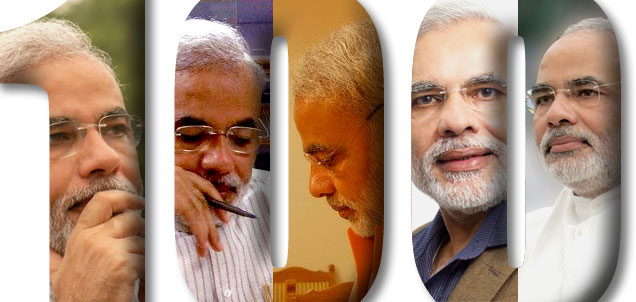
  • Modi in the Media


    By Ranjona Banerji


    100 days is now a media mantra when it comes to anything at all. Should one go as far to say that this has something to do with the title of a book written by Gabriel Garcia Marquez? Probably not. So we have to assess 100 days of the Narendra Modi government at the Centre. Not three months (which would be around 90 days) and not 200 days but perhaps we’ll re-assess the government at 365 days and call it one year?

    I put “100 days Modi government” into Google and got stories headlined around that theme, in order, from IBNLive, DNA, Indian Express, LiveMint, India Today, Hindustan Times, NDTV, Zee News, Times of India and Economic Times. So much for originality…

    Having decided to play “follow the leader” on the 100 days theme however it has to be admitted that all media outlets did not take the same line. Some gushed, some focused on the misses, some talked about hits and misses both, some spoke to the Opposition.

    The biggest takeaway from all this seems to be that Modi has made his ministers accountable. According to a fascinating story carried in Niticentral, a rightwing website, this has been achieved by spying on his own ministers.  http://www.niticentral.com/2014/08/25/narendra-modi-enforces-tough-discipline-among-ministers-236467.html.

    So the100 days theme runs like this: Modi has cut through plenty of slack, he has improved systems by making sure his own ministers work, he has travelled to many countries, he has not spoken enough, he has not made good on several other promises, some of the benefits accrued to his government come from UPA policies, he has renamed certain existing schemes, he has made an Independence Day speech, he has fed fish in Japan, he has stopped his party people from talking too much, he has stopped his ministers from speaking almost completely, he has got rid of several governors, he has sidelined the old-timers in the BJP, he has made his right-hand man Amit Shah party president…

    How much of this is remarkable and how much is pedestrian perhaps lies in the eyes of the believer. As TV news tries to jump from issue to manufactured outrage and print sprints to keep pace, we see a fractured image. There is a larger-than-life Modi in carefully posed pictures in foreign lands, we have a Modi who promises security for women and toilets for all, we have a Modi who says everyone must have a bank account.

    We have a BJP which launches a campaign in Uttar Pradesh claiming that hordes of Muslim men are conspiring to make Hindu women fall in love with them to convert them to Islam and thus increase the number of Muslims in the nation. We have BJP-run state governments and the Union HRD ministry trying to manipulate history. We have local BJP units and BJP allies pushing for India as a “Hindu” state. We have the RSS jumping in and claiming credit for Modi’s victory.

    And we have a media which is unable to put all these refracted elements together. So Gaurav Sawant of Headlines Today and a reporter from CNN-IBN got to Japan and behaved like no one has ever been to Japan before. They make ridiculously banal comments about Japanese trains, they comment on cleanliness. They say: “Look at these Japanese people sitting silently on a train.” “When will India ever have such clean stations?”

    What is this? A delegation of idiots goes to Japan? Where is Mark Twain when you need him? The tenuous connection is the promise of a bullet train in India made by Modi. The obsequious brainlessness of some TV journalists and presumably their editors will be part of an ignominious chapter in the history of Indian journalism.

    P S:

    Meanwhile, scroll.in tells us that Shekhar Gupta is no longer vice-chairman of the India Today group. He is now an “advisor”. This is a mere two months after he took over, having ended a long stint at The Indian Express.

    What gives at India Today? Is it family matters or recalcitrant employees? MJ Akbar didn’t last too long, Siddharth Vardarajan didn’t get further than signing a contract and Gupta is out in two months…

    http://scroll.in/article/shekhar-guptas-return-to-india-today-group-ends-in-two-months-to-take-advisory-position/?id=677005


  • Shailesh Kapoor: Bollywood embraces the Sports Drama Genre. Will TV follow?

    By Shailesh Kapoor


    MC Mary Kom’s biopic releases today. After the success of Bhaag Milkha Bhaag last year, the film, succinctly titled Mary Kom, is hot property in Bollywood trade. After all, Bhaag Milkha Bhaag was the first 100cr film that did not feature a big star in the lead. It was also the most-appreciated Hindi film in terms of audience word-of-mouth since 3 Idiots.


    In a different and yet not-so-different world, Sachin Tendulkar will be releasing his autobiography, in November. Co-authored by Boria Majumdar, the book, titled Playing It My Way, is sure to make at least some young Indians read beyond Chetan Bhagat.


    Evidently, the impact of sport on other media has increased in the last year or two. Traditionally, “sports” meant restricted live telecasts and news coverage of the same. Everything else around it was strictly ancillary. The only other place where sportspeople featured was the gossip column, when they dated a film star (at times, starlet).


    While Bollywood has found sports in its attempt to find new stories, Indian television seems to have ignored this recent development. We are not a sporting country by any means, but that does not mean that we don’t have sporting heroes. Yet, no stories on television have covered them, their lives or the drama associated with sport in general. The last attempt of any sorts was back in 2009, when Sony aired a daily called Palampur Express. The show was based on a fictional character, not a real story, and had severe story-telling concerns, none of which were about “sports” as such. It went off-air within weeks.


    In my growing up years, I remember watching the Bodyline miniseries with awe. The idea of recreating real sporting action with such authenticity was fascinating. Hollywood has also captured sporting drama in dozens of films, including the behind-the-scenes action in films like Jerry Maguire and Moneyball.


    I understand that the economics of sports channels may not allow them to invest in fiction series around sports. But isn’t sports drama a part of the wider umbrella called “general entertainment”? We dish out talent shows by the day, but there haven’t been any that search for the next potential Indian cricket team member or the next potential Saina Nehwal or Sushil Kumar.


    Sports drama can be excellent viewing for weekend audiences. It ticks most weekend boxes – it is male-skewed, it is kids-inclusive, it has a rush of adrenaline, and certainly a big scoop of inspiration.


    A big network like Star, with equal interest in both sports and general entertainment, is best aligned today to bridge this need gap. A crackling sports drama or sports reality show can open up a new area of television programming in India. Otherwise, like it took a Richard Attenborough to tell Gandhi’s story, it would take another Brit or American to tell Dhyanchand’s story on TV or celluloid.


    Bollywood has taken the first step. It’s time for television to follow and embrace the world of sport outside of live action. Anyone listening?


  • Ranjona Banerji: Of Shekhar Gupta’s switch to an advisor at India Today

    By Ranjona Banerji


    Movements in the media are hardly surprising. There was a time when if you spent three years in a job you were an old-timer – barring those who stayed put in the more venerable organisations, no matter what biding their time and their pension. But when three big names move out of the same media house from more or less the same job after more or less the same big noises made when they were taken on, well, there’s something to think about.


    MJ Akbar had a short stint at the India Today group after Prabhu Chawla’s departure but left before all the big ticket changes he was going to make transpired. Siddharth Varadarajan was supposed to join after he quit The Hindu but that appointment turned out to be a non-starter. And then there was Shekhar Gupta who quit The Indian Express after 19 years to return to the media house where he had made his name. And two months later, he goes from vice-chairman of the India Today group to some sort of advisor which is a one-size-fits-all designation, akin to “Editor, special projects” in its all-purpose meaninglessness.


    So is the problem with India Today itself and the Purie family or is it because the three names did not fit the bill. The thing is, none are unknown entities. Akbar is perhaps the best known of all, Varadarajan a younger force and Gupta between two but perhaps someone that Aroon Purie knew best…


    In the old days though, people would think a few times before considering the next such offer from India Today, if there is one. But in today’s times, I see a young, ambitious 30-year stepping up to the plate with great fanfare and then rolling over to play possum. As so many journalists seem to do these days when they meet the might of the management. Ah well…


    **


    Prime minister Narendra Modi presented Emperor Akihito of Japan with a Gita during his visit to Japan. A fine gesture indeed. However, he ruined it a bit by making a little jibe about how his “secular friends” would respond to the gift. If you listen to some TV media you would have heard some idiotic questions about why not a Bible or a Koran or some such, trying to create controversy out of nothing. But if you want to read about the pointlessness of Modi’s comment about “secular friends”, here’s a link to a fine piece by Siddharth Varadarajan (he who is mentioned above): http://www.ndtv.com/article/opinion/modi-s-gita-comment-was-dangerously-loaded-586159?site=classic


    **


    And here’s a little controversy from Huffington Post: was managing editor Jimmy Soni, sent to New Delhi to work on starting an India edition, made to step down after he was investigated on sexual harassment charges? Some lesson here to Indian media companies to take such charges more seriously?

    http://gawker.com/top-huffington-post-editor-was-investigated-for-sexual-1626614104


    **


    Since today is Teacher’s Day, can only comment on the media hysteria (or not, do you think? Naaah!) over the PM’s speech to students in the next update…


  • Shailesh Kapoor: What’s in a Name? The Art of Choosing a Show Title

    By Shailesh Kapoor


    SAB TV launched a show called Chandrakant Chiplunkar Seedi Bambawala last month. The long, tongue-twister of a name is now the longest show title for an Indian TV programme in my memory (I have discounted inconsequential taglines while considering titles). Star Plus broke its mould by titling their new show Nisha Aur Uske Cousins. At the box-office two weeks ago, a film released with a title that made it virtually impossible for the film to be taken seriously – Raja Natwarlal.


    As the environment gets more distractive and options increase, the impact of content titling on its success has started to increase too. A title may not be the most important determinant of a show’s success. That comes from characters, plot and treatment, of course. But a title can be an entry ticket or an entry barrier, depending on how it is perceived.


    Very little understanding of what’s a good title is available. It’s one of the least-researched areas in content. Which is odd, given that it’s the first introduction of the content to its target audience. Titling is still seen as a vague creative exercise. It is nothing but that. It is a marketing variable, but one that marketing departments in channels have very little say in.


    It’s easy to justify a ‘bad’ title, because there will always be enough examples of shows that worked with a certain kind of title and vice versa. That they worked despite the title and not because of it is a point that’s rarely understood.


    There may not be any tenets cast in stone, but there certainly are guidelines for good show titles, that we sense over many years of content and communication research in the Indian market. Here are five of them. Unfortunately, work ethic demands that I stay away from giving examples for them. But you should get the drift.


    1. The marriage of simple and catchy: Keep it simple and stupid? In the entertainment business, that won’t necessarily be a recommendation. There needs to be a sense of attractiveness (commonly can “catchy”). But, the catchiness should not come at the cost of simplicity.


    2. Avoid homilies and random musings: It’s amazing how some titles can be so “creative” that they communicate nothing. Innumerable TV and film titles fit this category.


    3. Enough of song names, please: It may have worked for some shows, more memorably for Bade Achhe Lagte Hain. But the excuse to use a song name for a TV show title is now simply an excuse of being lazy. Songs that were never even popular in their own time are now being used as titles. And in some cases, this “own time” happens to be the 50s and the 60s!


    4. Communicate the genre: The biggest marketing task a title can do is to communicate its show’s genre effectively. Choice of words in a title can be critical to communicate the heaviness or light-heartedness of treatment, the emotional tenor and the content bucket the show broadly falls in. I’ve often seen misleading titles being justified by that very standard and very lame explanation: It will be taken care in the treatment of the promos.


    5. When in doubt, use character names: In fact, you can make that: Unless in doubt, use character names. Over five years of show tracking (Ormax Showbuzz), we’ve seen that shows with character names (lead or the lead pair) generate 35% higher unaided recall in their pre-launch week on an average, compared to those without one. Importantly, such titles force the promo writer to write character-building promos. For fiction content, that’s pure gold.