Category: COLUMNS

  • Ranjona Banerji: Nothing’s changed in a no news week!

    By Ranjona Banerji


    The last week has been spent on holiday in Munnar, surrounded by tea estates and no internet connectivity. And given the enormous natural beauty around, there has been no time or inclination to watch television. News has been gleaned from a cursory glance at a newspaper at breakfast before rushing off somewhere or the other.


    And what have I found? That when you come back to it, nothing has changed. There’s Anna Hazare smiling his gummy smile in support of Mamata Banerjee. There’s Andhra Pradesh in an uproar over its imminent separation into two states. There’sNarendra Modi thundering along in some mock martial pose. And there’s the Aam Aadmi Party ready with its plan to take over the country. And there’s India, losing another cricket series away from home.


    Of course, the news cycle is what it is. When you work in a newsroom you do not always realise how little you have to work with. The latest scandal or some new revelation in an ongoing case consumes you. But as a “consumer”, you are faced with a wall of homogenous mediocrity from which you try and find something that might interest you. The short lesson is this: journalists need to spend a little time as consumers of their own products to understand how boring or predictable they can become.


    **


    The upside of being in a new place of course is the local news: the auto drivers’ striking in Coimbatore over set rates, the bird-sighting successes in the Ooty-Coonoor area, the latest freebie from the Jayalalitha government in Tamil Nadu or the side-stepping between the Communists and the Congress in Kerala are far more informative than the tedium of national news. The fact that the film stars are all different in South India also helps – the grasp of Bollywood reaches only so far.


    **


    The biggest loss of bad connectivity, at least on my part, came from the sudden divorce from social media. You do not realise, until you do not have it, how much those of us who use it depend on social media for the latest news and views. Twitter for the news and Facebook for the links which your friends find useful, instructive or annoying. You get glimpses into worlds you are not always familiar with and those can be used for topics of discussion in Twitter. Mainstream media needs to do a bit of thinking here, even while it still reaches where the dongle does not work!


    **


    Television news in India is still struggling with whether it is a news provider or an opinion aggregator, which is odd. It is clearly, the first place for “breaking news” as it never ceases to tell us (until the internet wins that war, which it will). But in India, it is still obsessed with picking up millions of opinions and presenting those, without establishing what is being discussed. Our host tried desperately on Wednesday morning to find out from television news just what had happened to the last Test match India played in New Zealand. But all he got from TV was a discussion on MS Dhoni’s captaincy from the anchors, from Rahul Dravid and from Sunil Gavaskar. From reading between the lines, we gathered that the Test was drawn. Who knows what the truth is. What is it, by the way?


    Ranjona Banerji is a senior journalist and commentator based in Mumbai. She is also Contributing Editor, MxMIndia. She can be reached via Twitter at @ranjona. The views here are her own


  • Shailesh Kapoor: Fact Check: Daily Soaps – Regressive or Progressive?

    By Shailesh Kapoor


    For the last 15 years, a word has been used ad nauseam to describe weekday fiction programming on Hindi GECs: regressive. I’m not sure who started this usage. Perhaps it was the English print media. But over time, it’s become a part of popular lingo, not just in the media but within the industry too.


    A condescending description of GEC programming, with a casual use of the word “regressive”, is a common occurrence in a niche channel or a media agency interaction. Implicit in this description is the assumption that the women who watch daily shows on Hindi GECs are regressive in their thinking and actions.


    Nothing can be more away from the truth. There are some shows (about 30%) that may portray a regressive mindset, but they are the low-performing ones. The majority, and the top success stories, have worked on the opposite premise – that of progress and change. And that also describes the need they fulfill for their target audience – to evolve and progress with the changing times.


    Let’s take the top two shows of the current times, for example. Diya Aur Baati Hum is the story of a fairly conservative family in a Rajasthan village. Watch the show passingly for five minutes (which is how non-GEC industry folks watch GEC fiction) and you may end up ascribing the words “rural”, “regressive” and “old-fashioned” to the show. But you are reacting only to the setting, not the story.


    The story of Sandhya’s journey to fulfill her dream of becoming an IPS officer, and her almost-illiterate husband supporting her in this journey, oozes of progress and change. After two years of struggle, Sandhya is now undergoing IPS training. The out-of-home episodes, playing out currently, are touching new viewership highs.


    Jodha Akbar is a romance set in a period era. But it is essentially a Taming Of The Shrew story, where Jodha, the most popular character on Indian television for the last two months, is playing a fearless heroine who stands for the truth. Her ‘historical’ character is loaded with 21st century aspirations. Confidence and self-respect are strong values her character drives amongst viewers who are seeking both these values in their personal lives too, more than ever before.


    Even in the past, from Tulsi to Anandi, strong and progressive women have been the backbone of blockbuster shows. How is the idea of “regressive” justified, then? Evidently, those who use that word use it because it is fashionable. For me, any usage of “regressive” is a cue that the person on the other side does not have enough knowledge of GEC fiction content in the first place.


    I’m certainly not suggesting that all is hunky dory with GEC fiction. There are several issues. Stories dragging and slowing down in pace is an issue of epidemic proportions. The look-feel has not progressed much over the last six years, barring Mahabharat, which is in another production league altogether. And I agree with what Anurag Kashyap said in a panel discussion about a year ago: “My problem with TV serials is that everything looks so scripted.” Essentially, he points out bad direction and unimaginative execution, in terms of acting and treatment. I have to agree at least 50% serials suffer from this issue.


    There may be enough and more issues, but the “regressive” tag is a big scam our elite media managed to pull off. India is a country of 1.2 billion people. TV has played a proven role in the progress and evolution of Indian women at large, over the last two decades. Undermining this achievement is nothing short of misrepresentation of facts.


    TV Trails is a weekly column written by Shailesh Kapoor, founder and CEO of media insights firm Ormax Media. He spent nine years in the television industry before turning entrepreneur. The views expressed here are his own. He can be reached at his Twitter handle @shaileshkapoor


  • Ranjona Banerji: How the media is everyone’s whipping boy

    By Ranjona Banerji


    The media is now everyone’s whipping boy and there is no need for the media to get defensive about this. As long as everyone thinks you’re doing everything wrong, it is clear that you are doing everything right. The expression “paid media” is now indiscriminately used to describe journalists who do not subscribe to your political point of view, when the term within the media is used to describe managements who sell editorial space to political parties or politicians without informing readers or viewers.


    Arvind Kejriwal of the Aam Aadmi Party has accused the media of being pro-Bharatiya Janata Party and pro-Congress and also said that some of the media is dancing to the diktats of Mukesh Ambani and Reliance. More specifically, the media he says is either pro-Narendra Modi or pro-Rahul Gandhi; the unspoken implication being that the media is anti-him. However, through 2011 the media was extremely pro-Kejriwal and the India Against Corruption movement headed by Anna Hazare. One might wager that without media support, the IAC movement would have gone nowhere. Non-stop coverage of every IAC event, gross exaggeration of public participation figures all ensured that IAC, Hazare, Kejriwal, Manish Sisodia, Kumar Vishwas, Kiran  Bedi, Prashant Bhushan and others became household names.


    India’s controversial former chief of army staff VK Singh has also jumped into the fray, calling journalists “presstitutes”. This is how urbandictionary.com describes “presstitute”: “A term coined by Gerald Celente and often used by independent journalists and writers in the alternative media in reference to journalists and talking heads in the mainstream media who give biased and predetermined views in favour of the government and corporations, thus neglecting their fundamental duty of reporting news impartially. It is a portmanteau of press and prostitute.”


    In fact, I would question Celente’s (an American “trend forecaster) wisdom and political correctness in damning commercial sex workers (the now accepted term for prostitutes) by associating them with the media and with journalists.


    Jokes aside, Singh has been angry for a number of reasons – his various dates of birth did not sit well with either the Indian Army, the GOI or the Supreme Court, his various PR efforts sometimes backfired and Indian Express published a story last year about how some troop movements during his tenure were looked at suspiciously by the Government.


    The Editors Guild has taken exception to all this media-bashing and issued a strong statement: “Ironically, leaders who built up reputations and support by engaging the public through the media are now turning on the very media when they come under critical scrutiny…


    “The media that question and criticise political leaders and indeed every section of society should of course be open to criticism, even if it is harsh, of its functioning and to its flaws being exposed. The problem arises, however, when abuse and vague, unsubstantiated accusations of corrupt motives take the place of reasoned refutation and debate. An additional danger is that some of the followers could take their cue from the statements of leaders and may not stop with verbal attacks. Both print and television journalists have been subject to physical violence as well by political party workers.”


    Physical attacks on journalists are reprehensible and have to be tackled strongly by law and order. But general criticism of the media and of journalists has to be accepted as par for the course. As we have pointed out in these columns, there are clear instances of media bias on display at times and criticism of political parties, politicians and big business is sometimes a carefully calibrated exercise.


    The spread of the tentacles of lobbyists and PR people is well-known when it comes to film and business journalism for instance. And the Niira Radia tapes exposed the susceptibility of some of India’s biggest names. These are problems which the media must discuss more stringently, or criticism from those we criticise will only get stronger.


    If we don’t guard ourselves, someone else is going to try and do it for us. And that would be the real disaster.


  • Shailesh Kapoor:Getting ready for Satyamev Jayate 2.0

    By Shailesh Kapoor


    Aamir Khan’s labour of love (but one that comes with a hefty paycheck too), Satyamev Jayate, makes a comeback this Sunday. In its first season in 2012, the show made a sizeable impact on the socio-political environment. In the process, it managed to become perhaps the only television property in the last twenty years whose success of not measured entirely or primarily through its viewership ratings.


    We are in the election year, and coming with short, monthly seasons of 4-5 episodes each, starting with one in March, seems to be a good move. In the last season of 14 episodes, there was a sense that the show had become a blind spot in its second leg. There’s only so much awakening and inspiration one can take at a time, after all.


    I have to admit I’m a tad disappointed with Sunday 11 AM continuing to be original slot for the show. While there may be a valid ‘feel’ argument, a property of this nature needs a wider available audience. 8 or 9 PM would achieve that better. Even at a feel level, noon will deliver a higher reach without compromising on the feel. I’m sure Aamir and Star Plus had their reasons.


    Satyamev Jayate continues its tradition of not using show footage in the launch campaign. This season’s campaign, built around ‘Jinhein Desh Ki Fikr Hai’, stands out for its exceptional clarity of message and its consistent tone across ads. Rarely do we see TV show launches executed as ‘ad campaigns’. In fact, even in channel parlance, they are called ‘launch promos’ and not ‘launch ads’. Just nomenclature, or a deep-seated issue?


    When I see a good campaign based on atypical viewer segmentation, my eyes light up. The researcher in me has been wondering: What percentage of our TV audiences are the ones who have a sense of ‘fikr’ about the ‘desh’? And how does one measure this accurately, without relying on claims? For example, do most viewers of Arnab’s show (in whose breaks the Satyamev Jayate campaign is running on very high visibility) care for the country? But we digress.


    Despite the good campaign, the show is set to have a modest start from a viewership perspective. There are bound to be format tweaks that create a sense of freshness and build on learnings of the first season. For example, there is a definite hint of higher viewer interaction this season in one of the ads.


    In the pre-satellite television and pre-measurement days, there was certain diversity in television content. TV ratings are needed for transaction. But the biggest collateral damage they have caused in India is homogenization of content.


    Thank you Star and Aamir Khan, then, for challenging that status quo in 2012, and now coming back with a new season well knowing that blockbuster ratings are out of reach here.


    TV Trails is a weekly column written by Shailesh Kapoor, founder and CEO of media insights firm Ormax Media. He spent nine years in the television industry before turning entrepreneur. The views expressed here are his own. He can be reached at his Twitter handle @shaileshkapoor


  • Ranjona Banerji: Survey results are not gospel

    By Ranjona Banerji


    The TV channel News Express did a sting operation on market research companies to discuss poll surveys. They posed as members of political parties and asked if polls could be tweaked to favour them. The channel approached several agencies, of which some refused to take on any jobs on the grounds that they were too busy while others agreed to varying degrees.


    There is a serious need for market research companies and opinion poll companies to relook at their methodology and strategy. The fact that the last quarter results of the Indian Readership survey have been suspended points to some dire flaws in the system. It was apparent from the IRS results that either the surveys were faulty or that they were manipulated to favour some companies. Political surveys especially for election results have been so wrong for so long, that it is surprising that anyone pays attention to them at all.


    Many have pointed fingers at the media over poll surveys saying since it is the media which commissions these surveys, the onus is on them to ensure that the results are clean and correct. But that is an impossible burden on the person paying the bill. The media in that case would be better off sending its own journalists to track popular moods – which many newsrooms do anyway.


    The problem is – and this is especially true of television news – when the survey results are presented, they are done as gospel. Critical analysis is in short supply and empirical evidence, experience and sometimes common sense are abandoned in breathless declarations of these miraculous results. And when the surveys go wrong – as they most often do – no one takes responsibility.


    However, saying all that, banning such surveys infringes on the idea of freedom expression. People have the right to be foolish and believe foolish things. All one can hope for is for newsrooms to look at survey results with a more stringent eye before broadcasting them.


    Shivam Vij has done an analysis for scroll.in on this issue and it is well worth reading: http://scroll.in/article/the-case-for-banning-pre-election-opinion-polls?id=657211


    **


    While on the subject, many congratulations are due to Naresh Fernandes, Sumana Ramanan and the team at Scroll.in for their research-filled journalism which covers a number of issues that mainstream publications, television news and other websites ignore or forget about. Scroll.in needs to become a must-read for media professionals especially.


    **


    Pradyuman Maheshwari, editor-in-chief of mxmindia.com has started a column on primetime news for Mid-Day. I wish him all the best in this endeavour and welcome him to the horrendous task of watching the Yellers and Screamers on Indian news television, which some of us are forced to suffer. I keep an extra supply of blood pressure tablets, just in case, which I am willing to share.


    **


    I almost felt sorry for the Karnataka MLA who went on a junket to Australia, New Zealand and the Fiji Islands and came back to file a report on how cows and sheep grazed on grass there which should be followed in India and how more public toilets were necessary. He was grilled incessantly by Shiv Aroor of Headlines Today, who could barely contain his own laughter at the inanity of the report.


    The hapless MLA was seemingly unable to understand what he had done wrong. Sometimes Indian TV news can beat a comedy show.


  • Ranjona Banerji: Endless political coverage on TV can be tedious

    By Ranjona Banerji


    Rather than reporting on the news and commenting on outcomes, our TV news channels have opted for a paparazzi predatory mode. They’re all out to get someone – anyone – and then turn the screws on them. Headlines Today is watching every sneeze and wheeze made by Arvind Kejriwal in case they signify that he is making tall promises he cannot possibly keep. Times Now is looking under every pebble for a new UPA scam: don’t be surprised if you hear Arnab Goswami thundering about whether Sonia Gandhi knew that the gardener at 10 Janpath had requisitioned for 10 rose bushes and planted only eight.


    CNN-IBN continues to waffle between supporting Narendra Modi and the Bharatiya Janata Party, attacking the Congress and other parties as well as keeping up the pretence of objectivity. And NDTV, although it is often seen as a Congress voice, is attempting to sidestep this game completely.


    It was foolish of me to have expected more TV play on the sting operation on opinion poll companies by the Hindi channel News Express. But how could they, since most new channels pump up excitement by commissioning endless opinion polls on electoral results? You could find out, said one channel breathlessly, how Maharashtra would vote if the elections were held this minute. Needless to say, if Maharashtra voted in another minute, another result would be possible.


    **


    While political rallies are important, endless coverage can be tedious and lead to viewer fatigue. News television might think about having special two hour shows dedicated to political rallies and leave the rest of the time to real news like whether Koffee with Karan should have pushed itself back to 11 pm last Sunday because of its “steamy” content. Or whatever else they see fit.


    **


    Twitter just saw another ridiculous battle between Madhu Kishwar, still Narendra Modi’s most tireless cheerleader and Sagarika Ghose of CNN-IBN. Kishwar tweeted to Ghose: “CNN\IBN coverage of Gujarat & hype ard AAP likely 2b be used in journalism schools as example of devious,unethical journalism”


    I am not sure what “ard AAP” means but Ghose responded about “differing brands of journalism”. Upon which Kishwar said that she was fond of Ghose personally but they were far apart. Amusing as these little insights into people you don’t know are, there is also the fact that as Caravan reported and observers (including me) have pointed out TV18 which owns CNN-IBN has gone very clearly rightwing and pro-Modi. But obviously that is not enough for Kishwar. Perhaps total obeisance is the correct response.


    **


    Narendra Modi, who wants to be prime minister of India, was scheduled to appear on a live show organised by Facebook, Newslaundry and NDTV. Modi cancelled at the last minute – promos were running for days on FB and NDTV – and according to a Hindustan Times story, he did not want to share the platform with Arvind Kejriwal and others. Hindustan Times quotes NitiCentral, the pro-BJP website on this. I am unaware if Modi’s other unofficial mouthpiece, firstpost.com, had any explanation on this withdrawal. Madhu Trehan of Newslaundry’s tweets suggested that anyone has the right to change their mind. Indeed.


    However, as far as one can tell, Kejriwal, Mamata Banerjee and Lalu Yadav were not appearing at the same time as Modi but on other days. Whatever the reasons, speculation that Modi is unwilling to answer questions that may show him in a bad light continues. Propaganda is easier to manage when you are the one in control.


  • Oh Womaniya: From Salma Sultan to Rakhi Sawant


    By Shailesh Kapoor


    It’s Women’s Day this Saturday. The importance of women characters on Indian television is well understood, especially over the last two decades. Last month, I wrote about our daily soaps being unfairly branded as “regressive” (Read here), especially because the lead women characters in these serials are, in fact, strong and progressive.


    But there’s a world of Indian television beyond the daily soaps and their characters. Here’s my list of five women who created a strong impact on Indian television. The list, presented in chronological order, does not include women whose impact largely came via specific characters they played. Also, it does not include women behind the scenes, which is perhaps a much easier list to generate, and a longer one too, albeit with Ekta Kapoor firmly on top.


    Salma Sultan: If you are old enough to have watched Indian television in the pre-satellite era, the image of Salma Sultan reading news on Doordarshan is likely to be still fresh in your mind. Doordarshan had many newsreaders, but Salma Sultan brought with her a combination of grace and glamour like no other. Her sense of style, marked by the rose and the saree drape, inspired fashion choices till at least the mid 90s. More importantly, she encouraged several young women to take up newsroom jobs in a conservative Indian back in the 80s.


    Neena Gupta: All other female actors, ranging from Smriti Irani to Sakshi Tanwar, are known for only one or two iconic characters. Neena Gupta, the only soap star in this list, broke that ceiling. Her identity today goes beyond any one or two serials she acted in. Ketaki in Khandaan or Priya in Saans or the reluctant host of Kamzor Kadi Kaun may eventually be forgotten, but the stamp of Neena Gupta on Indian television is indelible.


    Simi Garewal: The ‘Lady In White’ hosted a show that was loved and hated in equal measure. Celebrities sharing their deepest secrets and crying on Rendezvous With Simi Garewal was not an uncommon occurrence. Speak, so I can see your soul, the show’s theme song aptly said. With time, Garewal lost relevance, with the new generation audience looking for more spice than aspiration in celeb chats (a la Koffee With Karan). But till about a decade ago, her stature and her success were unmistakable, as apparent in the exclusive party she threw to celebrate 100 episodes of her show back in 2004 (Watch here).


    Rakhi Sawant: If there were a ranking on ‘class’, Simi Garewal and Rakhi Sawant would fall at the two ends. But with her inimitable style and a carefully cultivated art of sounding stupid, Rakhi Sawant managed to enthrall audience show after show. An episode in the first season of Bigg Boss, where she cried to the point of fainting because her ‘favorite mug’ was broken accidentally by another housemate, remains one of most dramatic Bigg Boss episodes till date. She could do crazy things like walk out of a reality show finale (Nach Baliye) if she did not win. Rakhi Ka Swayamwar remains the high point of her eventful TV career.


    Gauhar Khan: Gauhar Khan’s true impact on Indian television will be known in a few years’ time. But she makes it to this list for being topical. She exuded immense confidence and personal character in the recently concluded Bigg Boss season. She could take on Salman Khan and even come out as the more reasonable person in the argument. The shrill voice and non-stop chatter may have put off some viewers, but Gauhar Khan made an impact because she emerged as the face of the modern urban Indian woman in this digital generation. She remains the only Bigg Boss contestant across seasons to have crossed Salman Khan’s popularity (Source: Ormax Characters India Loves).


    TV Trails is a weekly column written by Shailesh Kapoor, founder and CEO of media insights firm Ormax Media. He spent nine years in the television industry before turning entrepreneur. The views expressed here are his own. He can be reached at his Twitter handle @shaileshkapoor


  • Ranjona Banerji: Vicious anger against the media

    By Ranjona Banerji


    The media is now well and truly in the middle of the general elections in India. And it is the Aam Aadmi Party which has stirred up the pot. For one, the fact that journalists are joining the party has riled both politicians and other journalists. There are questions being raised of fair play and objectivity – how far should one trust a journalist’s work just prior to his or her joining a political party? And it is the Bharatiya Janata Party and its supporters which are most upset. Yet this is not the first time journalists have jumped into politics in India and it won’t be the last. And as for the BJP, from the top of the head let’s count Arun Shourie, Chandan Mitra and Swapan Dasgupta who all are or were journalists but are still part of the BJP.


    There are enough other names and being part of the PMO or the Prime Minister’s press office – Sanjaya Baru, Suman Dubey, MJ Akbar (who even stood for elections for the Congress before he fell out with Rajiv Gandhi and turned against the party), Sudheendra Kulkarni who was part of LK Advani’s office, Rajeev Shukla of the Congress was once a journalist apparently, thus stretching the meaning of the word. Madhu Kishwar, once the flagbearer of feminism in India and editor of Manushi now appears to have become Narendra Modi’s main cheer leader, whether self-appointed or not it is still unclear.


    Therefore, this phenomenon is not new and it is not unusual. The anger against AAP of course is that this new party has threatened the status quo. And also, perhaps as significantly, is that television has now made the media accessible to everyone and the internet has given everyone a voice. As has been observed many times before, anyone with a weblog or a twitter account and a camera phone considers himself or herself no different from a reporter or even a columnist. It is another matter that very few outside the media can comprehend that a print newsroom is not populated only with reporters. And very few of those who watch news on television can envisage that there is anyone in the Times Now newsroom except Arnab Goswami.


    The anger against the media is vicious and it appears that the situation is only going to get worse in what is one of our most polarising elections in recent times. Of course lay allegations about media biases are usually unsubstantiated and sometimes even amusing in how gigantically they get it wrong. It is a bit sad that a lot of the anger against the news media on social media comes from former journalists, especially those who have joined PR. I am not sure that our sisters and brothers in public relations are following a wise course here. After these elections are over, life might a little difficult for those in PR who need the “mainstream media” to further their clients’ interests.


    **


    The general elections in India are of course big news. And the mammoth personalities of Narendra Modi and Arvind Kejriwal make for compelling stories. But the biggest story of the week has been the missing Malaysian Airlines plane. Has the Indian media done it justice? Perhaps to the extent of being suitably insular and informing the Indian public about how many Indians were on the passenger manifest. But there is more to this story and we have missed the boat on this one. And the plane.


  • Shailesh Kapoor: Elections, Cricket& More: The Year of Male Viewership?

    By Shailesh Kapoor


    A little television trend has been developing over the last two years, of which (I suspect) the current TV ratings system has no solid evidence. It is about the increasing power male viewers are wielding while controlling the remote.


    Multiple factors have contributed to this slow but definitive shift over time. The socio-economic aspect is perhaps the most intriguing, but also the most arguable. As gender inequality becomes less stark in urban India, because of higher literacy rates in the new generation of women and growth in the still-miniscule population of working women, female viewers are beginning to access more avenues of engagement and entertainment. As their dependence on television, currently too high to be termed healthy, reduces, so will their desire to control the remote at all times.


    It must be mentioned that there is currently no quantification available for the trend above, and hence, the speed of this change is difficult to ascertain. But signs of change are evident, especially in post 9pm consumption behaviour. That the daily serials (barring a couple) have not managed to reinvent at the desired pace has contributed significantly to bringing in this change as well.


    2014-15 may just end up being a year where we will see acceleration on this aspect like never before. The T20 World Cup starts this weekend. An IPL is round the corner. There is a busy cricket season round the year, ending with the Cricket World Cup in Feb-March 2015, which India will play to defend.


    But the big event of this year comes in the form of the General Elections. Chaos and theatrics are par for the course in what are set to the messiest elections ever in India. News channels have been capitalizing the goings-on well. And we know it’s only the start. If we have a hung verdict, the drama may last well into June, even July.


    Cricket and elections, coming together, are going to create unprecedented disruption in viewership patterns. Over three months, this can impact habits enough to create an impact over a long run. New daily soaps of the staple variety have anyway been opening low and struggling to find loyal audiences. The GECs will find it progressively difficult to change that this year. I suspect they are left with little choice but to innovate, on stories as well as story-telling.


    Is a gender-balanced viewership a good thing? Definitely. Gender equality is good in everything. Period. And television viewership should be no exception. We are still a few years away from this “equality” in India, but this year can be the watershed in many ways.


    So, all you men, hold on to your remotes this season and be a part of the change!


    TV Trails is a weekly column written by Shailesh Kapoor, founder and CEO of media insights firm Ormax Media. He spent nine years in the television industry before turning entrepreneur. The views expressed here are his own. He can be reached at his Twitter handle @shaileshkapoor


  • Kejriwal and the Media: Ranjona Banerji & Pradyuman Maheshwari


    Ranjona Banerji: Kejriwal’s threat to democracy?

     

    By Ranjona Banerji


    The media, willy-nilly, has become part of these elections. Not as the “fourth estate” of democracy but more like a “fifth column” which is out to destroy institutions – that is, if you listen to our politicians of all colours and persuasions and try to assess the anger on social media. But why blame politicians or Twitter and trolls alone? The media itself – and here most fingers will have to point to television – has behaved in extremely irrational and even unprofessional ways when it comes to bread and butter journalism.


    Starting from the extraordinary coverage of the India Against Corruption movement in 2011, television decided to become a player rather than an observer. Even I got taken in by the exhortations of TV anchors in 2011 when they talked about millions of people taking to the streets in support of the Anna Hazare-led movement to clean up public life. Alas, when I arrived at Azad Maidan, there were less than 500 people present. Not the hundreds of thousands promised by well-positioned TV cameras.


    But once India Against Corruption transformed itself into a political party – the Aam Aadmi Party – and Anna Hazare was replaced as the movement’s leader by Arvind Kejriwal, TV started to change its tune. The tide was now against the movement. None of the surveys running up to the Delhi state elections could predict what AAP would do. The Congress would be struck down and the BJP would win is what we were told. Instead, we had the AAP forming a very close second. So much for election surveys, psephology and astrology.


    Once the AAP formed the government, the wrath of television knew no bounds. Of the English channels, Headlines Today and Times Now were the angriest. Every hand gesture of AAP members was dissected and denigrated. This is not to suggest that the AAP had a perfect month in power – far from it. Indeed, their law minister Somnath Bharti’s unconscionable midnight raid looking for sex workers in Khirki Extension deserved the strong condemnation it received. But the poor AAP did not even have the short “honeymoon” period accorded to everyone else by the media.


    Since then, some TV news channels of all languages have abandoned all objectivity and decided that the AAP has to be their primary target. The fact that some journalists have joined this party has enraged them even further. The AAP has reacted with matching bile and Kejriwal has decided that he will arrest mediapersons if he comes to power. What a wonderful circus of democracy. Enter the clowns, exit all good sense.


    Some mediapersons have now had additional tantrums about the threat to democracy promised by Kejriwal. All this is sans irony, especially of the threat to journalism as practised by them. Never mind.


    Here are some other media views:

    Senior journalists question the overreaction to Kejriwal: http://www.thehindu.com/news/ national/why-overreact-to-kejriwals-criticism-ask-journalists/article5789153.ece


    And Shekhar Gupta speaks as an “aam patrakar” in The Indian Express: http://indianexpress.com/article /opinion /columns/national-interest- main-hoon-aam-patrakar/


    **


    The upshot is that the AAP has to be treated as one more political party. Neither angel nor devil. And that ought to hold true for all of them.


    Ranjona Banerji, senior journalist and columnist, is Contributing Editor, MxMIndia. The views expressed here are her own. Twitter: @ranjona


    Mediaah!: Time media shows Kejriwal his place
     

    By Pradyuman Maheshwari


    Not many moons ago, Arnab Goswami could be seen screaming at anyone who didn’t agree with him that there was an Arvind Kejriwal wave sweeping the country.


    Arnab isn’t too kind with anyone who disagrees with him. His body language changes and his head shakes in denial the moment the guest with an opposing view opens his or her mouth.


    In fact, even before a guest finishes his first two or three words, Arnab opens his mouth and the two can be seen to be talking together. But that’s his style, and people love the Times Now editor-in-chief for that.


    The problem for Kejriwal is that soon after his party’s great showing at the Delhi elections, he started negating the highfalutin statements he made before the polls and after them.


    Many in the media – and this writer included – had then regarded Kejriwal as the messiah who God had sent to cleanse the country’s political system. And as it often happens, it propelled him to dizzying heights.


    Some of my friends and colleagues in the profession didn’t think too much of Anna Hazare and Arvind Kejriwal. I thought they would come around the man and his ways soon enough. After all, weren’t there many who thought a certain Mohandas Karamchand Gandhi was nuts with his satyagraha and non-violence movement?


    I was proved wrong and to my dismay – quite like the disillusionment I had with the BJP post L K Advani’s Rath Yatra and the Babri Masjid desecration in 1992 – Kejriwal made a mockery of himself and all that he stood for.


    In fact things have gotten so bad now that even though the AAP leader could well be speaking the truth, no one really trusts him.  The media at least doesn’t.


    We know the media isn’t above board. There is corruption in many newsrooms.  Paid news is rampant, and despite all of the Election Commission’s efforts, the smart ones still get away. There is paid news even for non-political content, but I don’t think Kejriwal will be too bothered about the other kind of parties.


    But is it right for him to question the integrity of news channels just because they are now treating him the way they treat all others? Just because they are questioning every act of his, which they wouldn’t just six months back?


    I have found Arnab Goswami unduly harsh on Kejriwal (see: Is Arnab being too harsh on Kejriwal, mid-day, March 13:  http://www.mid-day.com/articles/is-arnab- being-too-harsh-on-kejriwal/15156104), but that’s no reason for anyone to rubbish him (Arnab) and suggest that he and other newsroom bosses are on the take from Narendra Modi or Rahul Gandhi.


    The News Broadcasters Association acted on it a few days after the utterance and his issued a warning to the AAP leader. The message from the NBA: stop the trash, Mr Kejriwal, or our members will stop covering you.


    While Arnab Goswami was pretty scathing on his News Hour, the real blow came from Rajat Sharma on his show ‘Aaj Ki Baat’ on Times Now. Coming on air when he was down with fever and a bad throat, Mr Sharma was scathing in his criticism of Kejriwal and exposed his doublespeak in a one-hour show.


    Meanwhile, Arvind Kejriwal and AAP would’ve been taught a lesson not to subject the media to their loose talk.  Damn the media, and be ready to get damned.


    Although Pradyuman Maheshwari is Editor-in-Chief and co-founder of MxMIndia.com, the views expressed here are his own. Twitter: @pmahesh


  • What young journos can learn from Khushwant Singh


    By Ranjona Banerji


    Khushwant Singh personified that one thing that all journalists ought to have: irreverence. Add to that a refusal to take oneself too seriously and you have a winning combination. And like the contradictions in journalism, these are lessons from a man who did not start life as a journalist. He was already a renowned author when he took over editorship of The Illustrated Weekly in 1969.


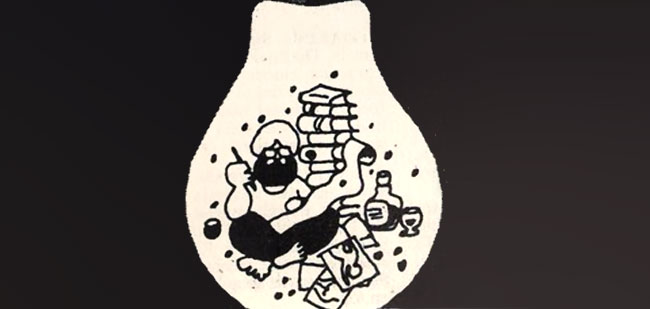
    Is it an exaggeration to say he defined or redefined what journalism and editorship has meant to us ever since? People may not always realise this, but the Khushwant Singh effect is still with us. He took a fuddy-duddy publication and gave it lightness and life and humour, which should not be mistaken for fluff. He encased himself in a light bulb – or was sentenced to it by cartoonist Mario Miranda – but by doing so he freed journalists from boring strangleholds of dead habit.


    Certainly, Singh increased sexy content in the Weekly and his witty but risqué jokes were looked forward to. He understood the influence of cricket and films on the Indian psyche – so I guess we can blame him for so much of the bilge that passes for journalism today? Kidding! But such was his hold over the reader that for decades after he left the Weekly his columns had to be carried in newspapers because of public demand. All those editors who dreamed of themselves captured for perpetuity in a light bulb had to bow down to the allure of Kushwant Singh and his wit. I know several people for whom he was still India’s foremost columnist long after his prime.


    Many of today’s young journalists (ah yes, here comes the old person’s lecture) would do well to emulate Singh. He was not afraid of taking on the high and mighty, he was not afraid of admitting his mistakes and he was not afraid of being contemptuous of hypocrisy. Indeed, he thrived on the last! His admiration of Sanjay Gandhi and the Emergency he would deeply regret but he did not hide it. One might argue that those who acknowledge their errors and transgressions are far more admirable than those who refuse to accept they ever made them. He objected to Operation Bluestar and made his objections public but he was no fan of Sikh extremism either.


    Singh was also a serious historian especially when it came to Sikh history and India’s Partition. His Train to Pakistan remains a seminal work on that painful subject. Singh was always intensely secular as well – regardless of how insulting that term is to rightwing India. He spared no punches when it came to communal elements either. His many novels are varying in excellence and his sex writing was somewhat tedious. But his autobiography and his books about himself and his writings though are must-reads for every young journalist and excellent examples of honest, scathing and witty writing. I would also suggest them for all our older journalists as well – especially those dripping with self-importance.


    Singh’s life in journalism leaves behind a rich legacy. We can immediately pick up that if you get too close to any political dispensation, you will pay the price for it or regret it or both – as happened with Singh and the Gandhis. And you cannot under any circumstances take yourself and any passing pomposities too seriously. What a lot of balloons to puncture when you look at all the fat-headed pundits around.


    I suppose the third lesson is that journalists who make plenty of jokes and drink a little single malt everyday live long and fulfilling lives? Khushwant Singh lived a life to be celebrated and we need to raise a glass to that!


    **


    Understandably, today’s newspapers have devoted pages to the Grand Old Man. Bachi Karkaria’s piece in The Times of India speaks from the heart and personal experience – she and Singh joined The Illustrated Weekly the same year; indeed she is one of Singh’s many protégés.  TOI also had Rahul Singh, son and journalist himself, writing on his father. TOI’s institutional memory remains dominant, whatever other criticisms can be chucked its way. Vikram Seth’s poem in Hindustan Times – written some years ago – is apt. Though one wishes Hindustan Times had collected all the Singh recollections on one page rather than scattering them around. Indian Express got LK Advani to talk about him – a change from all the seat woes for the political veteran. Mid-Day pulled out relevant extracts from Singh’s writings about Mumbai people like Dom Moraes and Protima Bedi. DNA had photographs and recollections. Economic Times went with Shobhaa De.


    Fitting tributes all. But none more so than Singh’s own epitaph for himself:

    “Here lies one who spared neither man nor God

    Waste not your tears on him, he was a sod

    Writing nasty things he regarded as great fun

    Thank the lord he is dead, this son of a gun.”

    Unlikely though that too many will agree with that last line.

    We need to raise a glass to that!


  • Shailesh Kapoor: Adult Television: A Matter of Time?

    Shailesh Kapoor’s ‘TV Trail’ column appears every Friday. Since he was travelling, the column due to feature last Friday (March 21) appears today. The next ‘TV Trail’ column will appear on Friday, March 28 – Ed


    By Shailesh Kapoor


    This week, Sunny Leone starrer Ragini MMS 2 opened to thundering audience response, especially in smaller towns across the country. Mastram, an adult-themed film based on the cult porn publication till about two decades ago, is set to release on May 1. Last year, an under-promoted BA Pass managed to find its audience and even critical appreciation. Sex is thriving in our cinema. Sunny Leone is a bigger star than the likesof Shahid Kapoor and John Abraham.


    But even as the censor board gets liberal with cinema, allowing fairly explicit content, albeit with an A-certificate, our television struggles. Star World chose to telecast the Koffee With Karan episode featuring Nargis Fakhri and Frieda Pinto at 11pm instead of the usual 9pm, because of explicit (verbal only) sexual references.


    About a decade ago, Zoom had launched Dangerous, a sex chat show at 11pm (again!), anchored by Kamal Sidhu and Sameer Kochhar. I was working with the channel at that time. Legal notices and complaint letters used to come in by the dozen. And then one day, we had to pull the content off air.


    In today’s age of the internet, where kids have access to the most explicit porn at the click on a button, adult content is a part of our lives. What could be so unnerving, then, about an adult channel, that stays away from any explicit nudity but covers erotica and sex awareness in equal measure, finding an audience that is currently seeking adult content elsewhere?


    The cinema argument is that when an audience goes to watch a film like Ragini MMS 2, they have made a choice by buying a ticket, while on television, you may just end up watching a channel involuntarily. But in today’s day of a la carte packaging, that argument does not hold true. An adult channel can be offered a la carte in the digital environment and cautious parents can exercise control features available with most digital service providers.


    But what are the chances that such a channel will happen soon? Bleak, on the face of it. For one, we are a country of protestors and it is easy for moral police to play spoilsport. More importantly, I can’t imagine a government challenging the status quo and belling the cat. It will take a really progressive Government to do that. And a party that supports Article 377 isn’t going to provide that.


    So, the idea may remain an idea for a while. But in an age when technology is challenging norms by the day, it’s only a matter of time. If not on the telly, then on the internet, we are sure to see India’s first 24-hour adult channel see the light of the day in the next few years. My bet is: Before 2020.