
Category: SANJEEV KOTNALA

  • Bharat versus India. Names are choices you make


    By Sanjeev Kotnala


    Sanjeev KotnalaIf only life was so simple. Name change used to be just a personal choice, a simple affidavit supported by a 5×1 ad in classified. It was never meant to be a gamechanger! How much has life really changed?


    The media starts fuelling rumours while undertaking fact-checks on social media. Bharat or India, it’s the same thing for most of the population, other than people in marketing, media, branding, politics and associated ecosystem. Ask the masses at the grassroots, they will tell you, Hindi mein Bharat hai toh English mein India. And the simplicity is lost when invitations and plaques give more emphasis to one than the other. The people never raised their voices when Bharat was neglected and India was dominant.


    The consultants have already calculated the cost of the changeover. The political wheels must have been initiated for the possible project and the enormous responsibility that may fall on some bureaucrats and departments. Pitch documents started getting decked up with the latest research insight in the few agencies willing to take the chance.


    Rajiv Gandhi Chowk, other than on metro rails, is still Connaught Place. VT may be CSMT, but is still called VT, but Allahabad, for all official purposes, is now Prayagraj.


    The India to Bharat change, if actualised, is a mammoth task.


    We may, in fact, end up with a very fluid hybrid situation. Visitors to India soaking in a Bharat Adhyatam Tour. Or residents of Bharat travelling to discover India.


    Yes, jokes apart, the name change has multiple implications. If we complicate the picture, it is about not merely remaining. It is challenging to continue and strengthen identity, imagery and branding. If implemented, it will have to be a democratically dictatorial process. There is no possibility or need for a Brexit kind of referendum on the subject, which really could be a non-issue. But democracy allows for debates and arguments- which are already heated up.


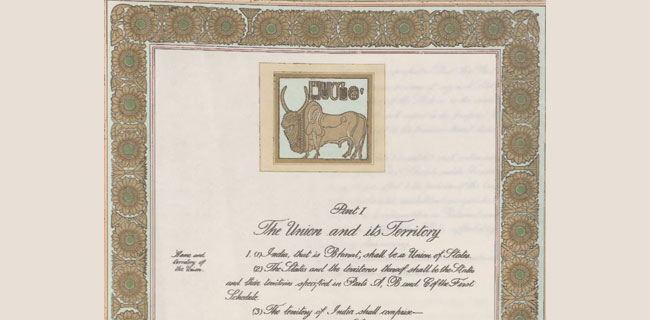
    ‘India, that is Bharat’, is so true, and the two can coexist. Thus, there is no real friction when there is no real change. It could even be Bharat subscript India. And if the nation really wants to make the change, we have a classical window to do so. The country is in a position of strength to ensure a smooth transition, though not without hurdles and complaints.


    The Bharat that was India may associate and further strengthen the singularity of the back to the roots feeling. Yes, it may also enhance the Indian-ness!. It may signal that India is aligned with the broader majority of the nation. It may, but that is when ‘India’ is killed, and only Bharat exists. Maybe it will finally draw the strength it should draw from its rich history and culture, which was getting opaqued under India. However, India is Bharat is Hindustan.


    Whatever the name, it will still be the largest democracy, the heritage of Yoga, Ayurveda, and Veda, the land of Ramayana and Mahabharat, the source of Gita and the definitive trinity, the country of talented people in the past and present, the country that landed on the darker side of the moon.


    Undoubtedly, the mere thought of change raises more questions and increases uncertainty about the future.


    Because we all have to assume more than what has been official stated.


    Net-net

    Change of name, a renaming exercise, always excites the marketing people. There are so many layers to it. Nations do not regularly get the window to rename, and it could be hugely costly in many ways. So, discussions and debates are expected and welcome till they do not become absurd. And yes, people need to look at the most possible situation of the hybrid existence- ‘Bharat that was India’.


    Post Script

    Meanwhile, I am happy the residents of Lansdowne (my native town) have said no to it being named after ‘CDS Rawat’ or changed to ‘Jaswantgarh’, after the 1962 war hero as desired by the cantonment board. I have huge respect for both soldiers. In the last few decades, Lansdowne has been discovered as a beautiful hill station. It can ill afford a name change at this stage. Check it out and, if possible, visit it in the coming summers.


     

  • ASCI Academy: Knowledge is not enough for Compliance


    By Sanjeev Kotnala


    Sanjeev KotnalaI welcome the news. The Advertising Standard Council of India has announced the launch of ASCI Academy. It aims to make marketers, brand custodians, agencies, and other people in the ecosystem more responsible and progressive. It talks of a greater understanding of the guidelines. Working with greater consciousness. And a higher degree of compliance. It will offer a consumer education programme. This will hopefully make consumers better aware of the guidelines, and, may be, it will push for better reporting and complaints – leading to higher compliance! As per reports and notes, it will undertake research in current and new areas that impact consumer interest!

    And I think there is a short certification course for interested people.

    The guidelines have been there on site. The site has always remained updated. The consumer and marketers are engaged in evolving guidelines. There is absolute transparency in working. However, one would like access to what are the advertisers really saying to the objections raised. There is a focus on enhanced speedy resolution of complaints. Still, some limitations prevent further tightening of the process.

    The idea of being more preventive than corrective is a welcome stance.

    The theory and wish to impact at the point of ad creation is a good thought!

    The target to train 100,000 current and future marketing professionals, advertising agency personnel, people in the field of communication and consumers is an absolute pleasure to hear.

    There is a wishful thinking of all this leading to a shift towards a deep culture of responsibility. And expecting that to be the norm is oversimplifying things.

    This is a reaction to what NS Rajan (Chairman ASCI) and Manisha Kapoor (CEO and Secretary ASCI) said in the press note.

    I love the initiative and know that the intent is right. But it is wishful thinking.

    We would have seen the difference long ago if only KNOWLEDGE was enough for the compliance.

    It is hard to believe, and I am absolutely sure that the brands that currently do not follow the guidelines or err on their judgment, behave not responsibly and progressively do not do so for the lack of understanding.

    They do this despite the knowledge.

    In fact, they work around the guidelines and knowingly flout the norms.

    Do I have a solution to offer? NOT REALLY.

    One is confident that unless flouting of the guidelines leads to some penalty affecting the revenue and brand image, the guidelines’ adherence will remain a dream.

    Unless the brands know their image is at stake if they fail in their responsibility. Nothing will happen.

    Nothing will change unless the people at the top don’t drive the change and be accountable. The surprising part is that the top knows about the guidelines, knows the expectation, and turns a blind eye – look to the other side when their department and teams knowingly test the guidelines. This the academy cannot change, so my belief in change is shaky. Offering ASCI Academy programmes online, in person, and hybrid may help numbers. But I fail to see it helping compliance.

    I am sure the industry partners will ensure compliance at their end. Their teams are well-educated and aware of the guidelines. They are big advertisers, and one can expect responsible behaviour from them.

    A lot may depend upon supporting partners like the I&B Ministry and the Department of Consumer Affairs. Maybe they could help with compliance.


    However, if knowledge and awareness could solve such problems, we won’t have crime. And knowledge is not enough for guidelines compliance or responsible and accountable behaviour.


  • The Non-secular nature of Indian Advertising


    By Sanjeev Kotnala


    Sanjeev KotnalaWe know India is a secular nation. Its regional, linguistic, cultural and religious diversity is well-acknowledged. However, if an outsider was to watch Indian advertising, s/he would not be at fault for thinking India is a non-secular Hindu nation lacking diversity and inclusivity.


    It is a flaw and the failure of Indian advertising, the brand custodian, the marketers, and the agencies. They have failed in inadequately reflecting the diversity of the nation.


    Yes, in certain AVs, brand interviews and films like ‘Mile Sur Mere Tumahara’ or the National Anthem-based films, they are forced to showcase diversity. However, these make a minuscule part of the Indian advertising universe.


    Indian advertisements tend to focus on a narrow representation, not fully capturing the essence of the diverse religious communities. If that was not enough, the advertisements continue to represent or portray the narrow religion bioscope, repeatedly showcasing the Hindu religion as backward and full of questionable and must-change rituals and practices.


    It further worries me about the underrepresentation of certain religious communities in advertisements. The minority should not be maltreated.


    Why neglect religious minorities? 

    This unintentional exclusion adds to marginalisation and alienation among the minority religions.

    The question is shouldn’t Indian advertising should not be more responsible.

    Religious diversity, whenever depicted, is superficially stereotyped.


    All this adds to misinterpretation and reinforces biases rather than promoting understanding and acceptance.


    It’s time the advertising world stood up to its responsibility and be accountable to the minority religions in helping them progress as much as it has helped the majority religion.


    Indian advertising needs a more inclusive approach that authentically represents the nation’s religious diversity. Advertising agencies and brands should prioritise diversity and inclusivity and look beyond the majority religion for progressive suggestions. Otherwise, the blame for India being seen as a non-secular nation is on its head.


    Overall, Indian advertising (and Indian cinema) has a long way to go in accurately reflecting the nation’s religious diversity. And in non-stereotypical correct ways. By actively embracing inclusivity and promoting minority religious representations, the advertising industry may create a greater understanding, and acceptance of a secular nation. But will they ever have the courage to do so…


  • Stereotyping Yamraj in Indian Advertising


    By Sanjeev Kotnala


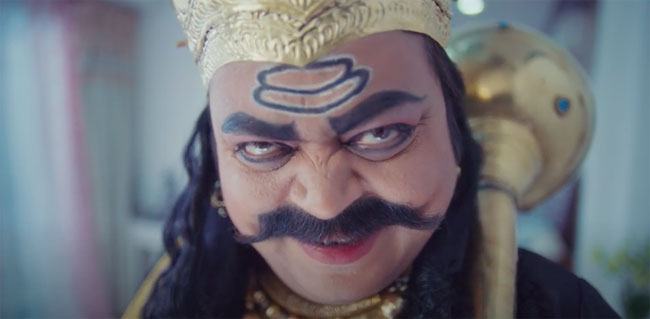
    Sanjeev KotnalaThere are only two truths in life. Birth and death. Death creates maximum insecurity, Thus, Yamraj, the lord of death. In Hindu mythology, Yamraj presides over the cycle of death and rebirth, ensuring the proper record of karma and deciding on the soul’s destination and journey after death. Death is a sensitive subject in oyr culture and spirituality. Hence one would think that the representation of Yamraj in advertising requires a thoughtful and respectful approach. However, Indian advertising has stereotyped Yamraj, presenting him as trivial and comical. There seems to be no risk when using and depicting Yamraj in advertising. It is mostly Insurance and Public Service Advertising (PSA) which has used and abused Yamraj.

    One understands that the depiction of Yamraj needs innovative, creative representation that is contemporary and relates to the generation while respecting traditional understanding and symbolism. In fact, a few brands like Fevicol M-Seal and Max Life Insurance have used death in their communication. It is a subject I have earlier written in ‘Slice of death – advertising’.


    Yamraj and Insurance

    Life insurance and death are interlinked. The life insurance brands are forced to hint and touch on the subject of death and they do it wisely with sensitivity smoothening the fear of death. However, Yamraj, the lord of death, is not often used, and when used is a stereotypical character.

    Policy Bazar, in the past has, humorously connected death and insurance. This time Policybazar.com has used Yamraj to answer the simple truth about not delaying buying an Insurance policy to protect the family against life’s uncertainties like death and disease. It used a market and Hospital situation to make sense of the suddenness and uncertainty of death. The message is simple ‘Taalo Nahi, Le Daalo’ (Don’t delay, just buy it’ addressing the issue of procrastination in purchasing a policy.


    Edelweiss Tokio Life Insurance has used activation with the Yamraj character to drive home the road safety message in their campaign ‘Yamraj to Rescue’. It focussed on reminding the people about following traffic rules, crossing only at the Zebra crossing, driving only when the light turns green, and using helmets and seatbelts.


    Yamraj And Food

    Yamraj is comical in Namaste Desi Ghee advertising.

    In the advertisement, Yamraj comes in to take Dadima’s soul. Dadima asks him to wait, serves food, and shares that the tasty food uses Namaste Desi Ghee. However, she also informs him that she won’t be able to cook such delicious food in heaven as the brand will not be available. Yamraj takes some food for the way and extracts the promise that he will come and Dadima will serve him food made in Namaste Ghee.

    The concept of death is used playfully, making one smile even though Yamraj is more of a joker in the advertisement.


    Yamraj And Deals.

    Snapdeal.com campaign highlighted ‘irresistibility’ with deals on the site. They are good enough to entice Yamraj, the God of Death, who grants life to the person who offers him a deal. The ads about the man parachuting,  delivering the packageHospital and Runner, are simple and straight, demonstrating how Yamraj uses the deals on Snapdeal. Delivery person edits, and both are simple- straight.


    PSA Helmet And Yamraj.

    Honda has a simple Helmet On Life On campaign. Here, Yamraj monitors who is wearing a helmet and who is not. It humorously brings alive the silly excuses for not wearing the helmet and the possibilities.

    Western Indian Railways used Yamraj as an activation device to deter people from crossing or trespassing railway tracks. Chennai Traffic Police has also used Yamraj in the ‘Drink and be driven’ campaign. And the local government in Andhra Pradesh, Uttar Pradesh, Uttarakhand, Bengal and Bihar used Yamraj to drive home the caution message during Covid.


    Net-Net

    I am not sure if the comical depiction of Yamraj is acceptable, right or wrong, as I understand and appreciate creative freedom and its boundaries. The character has limitations and has been used mainly by Insurance brands and in PSA. However, brands like Everest sheets and even IPL had a Yamraj ad. Then there is the BJP ad using Yamraj against Kejriwal. Effectively, it has to be a real humorous or the direct association between the brand and message to effectively leverage Yamraj or  one ends up with an ad like Jaquar. Using death can be more straightforward.


  • Beyond Infinity: Cinematic Multi-Universe Fatigue

    Beyond Infinity: Cinematic Multi-Universe Fatigue

    Sanjeev KotnalaIn the cinematic world with superhero sagas, a recent newspaper article flagged a potential concern: audience fatigue with Marvel’s ever-expanding superhero multiverses. These movies now ask viewers to have extensive background knowledge to enjoy them thoroughly. It may alienate viewers and highlight the importance of closure each time for a sustained engagement. Closure is something movies need for the continued association and hunger to engage.

    Marvel’s success story is not without challenges. And it is true for its challenge to fight fatigue and keep the viewer’s interest alive. Indian cinema, though more familiar with remakes, has been late to such sequential exploits and franchise build-up.

    The current Indian cinema is attempting to create multi-universe and demi superheroes like the Spy drama of SRK and Salman, War of Hrithik, Brahmastra and Animal of Ranbir Kapoor and top of the charts – the police universe of Rohit Shetty and Gang.

    They work best as a standalone movie with a teasing twist and reminder of something to come in future or very little of what happened in the past. When it does refer to the past, there is a well-managed short flashback; they do not allow the coordinates of the past to catch up and become a constraint to enjoyment.

    Shetty knows it best; not only does he have cinematic experience, but he also hosts one of the popular running reality shows on Indian television, Khatron ke Khiladi. The soft intrusion of the next chapter with a tinge of the past keeps his set of franchises alive. We need not add that their being successful is a definite advantage.


    Bridging the Gap: The Art of Timing in Cinematic Universes

    More than the question of when to kill the franchise, the multiverse grapples with the desirable and manageable gap between the two releases. Rohit Shetty has managed to understand and explore it the best in the Police and the out-of-mind, senseless laugh-a-minute Golmaal. Other films like Hera Pheri, Bhool Bhulaiyaa and Hungama have just managed to keep the interest alive and create a partial world of followers. However, it cannot be said about Brahmastra for two reasons- one, the franchise is yet to take shape, and two, the indicative gap suggests that the makers may be overestimating the viewer interest- taste and memory.


    Balancing Act for Enduring Appeal

    We heard of a possible sequel to Munnabhai, but the lack of feasible content and subject has closed the chapter. It is like Dhoom, which cried for continuity but failed to live the promise. On OTT, only a few have managed it right. The criminal justice series and the Delhi Crime have worked well. However, the constraints and the need to explore new areas and subjects have become daunting for creative teams.


    Rohit Shetty – A Lesson in Universe Fatigue Management

    Rohit Shetty has understood the model, and he keeps it simple- there are no surprises. He works and serves on the franchise’s promise and exploits the audience’s faith in jumping, blasting, twisting cars and a no-nonsense bold police character.

    The director keeps the imagery alive whenever he has a presence in a reality show. He has been so well associated with his brand of films and audience expectations that similar dialogue and imagery get used in product advertisements featuring him.

    Enjoy his films as standalone of a sequel: they work. The minor twists to the plot and introduction of new characters keep the frames rejuvenated while keeping the old ones under a support system to be revived if needed.


    Net-net

    There is no set pattern. And like in mutual funds, the past performance is not a guarantee for future performance- the filmmakers must understand the complete script and possible audience reaction before making the film. However, a few solutions have worked selectively in the past. No one can be sure of their aftereffects. Look no further than the franchise of Star Wars, James Bond, Pink Panther, Fast and Furious, Mission Impossible, Jumanji and Indiana Jones. Each has used and exploited the canvas in different ways. Here, Star Wars and 007 are outstanding in managing the audience’s interest, engagement and expectations. However, there is no one-size-fits-all solution.


    Adrift or Afloat: Brands that Endured and Those that Faltered.

    Finding a true purpose and a long-serving brand proposition is tough. Advertising and marketing also face this problem. The brands continue to remain in the same framework without rejuvenating and recrafting the proposition- risk fatigue at multiple levels. It is a delicate balance that needs exposure control and newness to the plot- in terms of execution to keep interest and relevance alive and make sense to the audience.

    Ariel share the load, Surf- Daag Acche hai, Happydent, Santoor, Tata Tea, Santoor, Policy Bazar, CREDand the Make My Trip are examples of handling them right. Surf and Make My Trip are my favourites with respect to keeping the thought alive.

    What examples come to your mind? Brands that have brilliantly extended the brand proposition and which have failed in the process?

  • A Family’s DIY Experience

    A Family’s DIY Experience

    Sanjeev KotnalaThe Ikea experience is more than just assembling furniture; it is a fascinating, engaging experience reshaping how we perceive DIY craftsmanship. No doubt IKEA is changing the furniture space one piece at a time.

    DIY, short for Do It Yourself in furniture assembly is new to Indian customers. For us, fully assembled, no-nonsense furniture is the norm. And if they are to be made at the site, the seller must better send the carpenter to do it. Our apprehension and discomfort associated with assembling furniture stem from unfamiliarity, perceived complexity, and concerns about potential damage.

    However, it is not so tough for a well-informed and slightly more confident – mainly from the new generation. Ikea had given wings to it.

    So here is what happened when our family tried it out with a simple three-drawer cabinet during the weekend.

    My daughter identified it (the three-drawer cabinet) on the Ikea site, saw it at the Ikea shop and then ordered it for delivery at home. We all thought that it should not be complicated.

    The assembly was in a slim, minimalistic, safe, and robust packaging. Something that one did not associate with e-commerce. The unboxing ceremony was eventless, but soon all the elements were on the floor.

    There was an immediate urge to start assembling it. How tough it could be?!

    The initial optimism soon gave way to a realisation – the task was more intricate than anticipated. Different-sized panels with varied holes, grooves suggesting interlocking parts, and an assortment of screws confronted us. A 3D puzzle with eight different types of screws, locks, and holders was before us. The initial thought was to call professional help, and UrbanClap sounded the best option- till someone discovered the assembling booklet.

    And the family decided that we would try it out and make the whole thing.

    This booklet was the saviour of the situation. However, there were no words but pages after pages demonstrating some 38 steps to follow. Simple sign language of pointers and crosses and tick-marks. Instruction to match the dots on the board with the screw number that would go in there. I would call it idiot-proofed, ensuring that even beginners could navigate the assembly process effortlessly.

    There was no way things could go wrong.

    The challenge arose when our tools at home were far from Ikea’s specific requirements. There was no star-headed screws and even a hammer. So, the juggad tendency took over, and the innovative solutions of using a knife and spoon and such items from the kitchen took over. And as for the hammer, the back of the screwdriver and belan took over.

    So, we started the family activity- the best part of the whole process.

    Everyone joined in. What followed was a delightful family activity lasting about three-and-a-half hours, punctuated by a well-deserved 30-minute tea break. Each family member played a unique role. The daughter took the lead in understanding and reading the manual. I took the role of macro directing, and my wife, who is not so mechanically inclined, took charge of putting the pieces together. The process was not just about building furniture; it was a lesson in understanding structural connections, channels, and lock-ins.

    The family members learned how things are held together, about channels and lock-ins. They truly admired the thought that has gone into designing every piece of DIY structure. More, so at the end, get up to say- not that harsh- not so bad- brilliant.

    It was joyful and playful working together. The family had its first DIY Ikea three-chest drawer that worked, and there were wild cheers when the drawers actually worked. The smiles and satisfaction that accompanied the completion of our first DIY Ikea three-chest drawer were invaluable.

    I believe such events help strengthen the family bond. And I suggest some offices take it as a bonding exercise.

    I may use a somewhat complex DIY structure in my workshops. Ensure that teams get different pages of the manual so that, in the end, they can derive new learning of coordinated, cooperative teamwork. The client would also get a fresh piece of furniture in the process.

    Our family thoroughly enjoyed the Ikea DIY adventure, and we’re eager to explore more projects in the future. So, try it out whether you’re a seasoned DIY enthusiast or a novice contemplating furniture purchases.

    Maine Ikea Kiya – Kya Tumney Kiya? Take the plunge into the DIY world, and you might discover not just furniture but a new way to bond and create memories with your loved ones.

  • Sanjeev Kotnala: Poonam Pandey for India Ratna… why not?

    Sanjeev KotnalaHere is the breaking news: Poonam Pandey- the epitome of subtlety and grace, is in the running for the coveted India Ratna award. This is not serious and is in sync with today’s time and needs.

    I have been fuming with disgust at the latest Poonam Pandey stunt. I want the law to take up and define what should – could- and would be acceptable.

    In an era where everything goes in love, war and advertising, Poonam Pandey is that shining example of intense path-breaking, raw, out-of-box thinking and strategic pushing of the boundaries. Who would die for a cause- what if it was just a 24-hour stunt, and not the full 72 hours- when we could have granted her resurrection status.

    Back in 2011, she vowed to streak through the streets of Mumbai. All in the name of patriotism, all to motivate the cricket team. The BCCI spoiled the party by denying her permission. And yet, in 2012, she kept her commitment by baring it all when KKR won the IPL trophy. Learning from the past, she did not seek BCCI permission. That’s commitment, passion, love and a sharp learning curve.

    She turned down Bigg Boss Season 7 because the promised paycheck did not meet her level of self-importance. A girl must have self-esteem and know what her value is. Then YouTube banned her channel ‘Bathroom Secrets’ because it did not want the young audience to learn many things they found interesting.

    A typical female can’t even fathom such rebellious acts and barriers to success. Oh, she knows how to amplify it. She was among the most searched on Google in 2012 and part of the Kingfisher calendar in 2011.

    But let’s give credit where it is due. Poonam Pandey has been tirelessly working relentlessly to spice up the mundane lives of many people. She was in Khatron Ke Khiladi-4 and did Total Nadaniyaan and Pyaar Mohabbat Sssshhh. She has been a beacon of hope and tidbit news for many journalists carrying scoops that made their editors and audience smile.

    Now, her recent death-defying act has been called a stunt. It may have raised many eyebrows, but she has been selflessly selfish throughout her life. She has stayed well within the boundaries of what can be expected from Poonam Pandey.

    And she, in fact, has schooled ASCI on exploiting loopholes in the influencer guidelines by not officially participating in the stunt; she smartly avoided the mandatory disclaimer she would have needed to carry- because all her work was done by the gullible journalist and fastest finger first media working for breaking news.

    When the news of her death spread, the nation collectively gasped- so young- merely 32- and then it turned out to be a bigger deal than we imagined. Maybe the media was in on the secret, or it started with a casual chat at a coffee shop.

    There has been a call ( on social media and a few WhatsApp groups) that it would be better for the National honours to be conferred while people are still breathing, Poonam Pandey, the ever-patriotic icon, has risen from the dead to claim her National Ratna and thus make a mark.

    Running naked, defying death, being a model, a Reality TV participant, an erotic actress (Google search), and gracing us with provocative Instagram pictures – Poonam Pandey truly deserves recognition.

    Let’s focus on the positive. Here is a lady who, by her recent stunt has worked on vaccine awareness, who believes in Mera Viskas- Sabke Sath, and ‘Made in India.’ She is an ideal candidate for National Awards in multiple categories.

  • Sanjeev Kotnala: Untangling Unbiblical Cords in Life & Brand-Building

    Sanjeev KotnalaDuring birth, the physical umbilical cord is ceremoniously cut. Still, the bond between mother and child remains metaphorically tethered by what we might call an “unbiblical cord” throughout life. This intangible connection, though unseen, can be remarkably strong. It is often joked in India that, culturally, this unbiblical cord is seemingly unbreakable in nature.

    However, beyond this primal connection, we weave new unbiblical cords throughout our lives, some consciously and many unknowingly. These cords are not physical but are deeply felt, influencing our thoughts and actions.

    Our unbiblical cords form within families, among school and college friends, first love, and even with former bosses and organisations. They tether us to past experiences, shaping our perceptions and reactions to new challenges and opportunities. However, clinging too tightly to these cords can hinder personal and professional growth as we measure current situations against past experiences, often overlooking new possibilities.

    We must recognise that a few of these unbiblical cords, such as those connecting us to family and close friends, are essential. However, we must cut off many others for our own advancement. These include cords binding us to past organisations beyond mere networking relationships or in situations demanding crisis intervention. While breaking such cords can be emotionally challenging, it is essential for personal development.

    In Personal Professional World

    We must reflect on the web of unbiblical cords in our lives. We should strengthen the selected few, cut off the rest, or stop feeding them. However, these decisions must be more than just emotionally driven but also logical and rational. By doing so, we can free ourselves from the constraints of the past and embrace new opportunities with clarity and purpose. 

    In The World Of Brand-Building

    In the dynamic world of brand creation and marketing, we often find ourselves entangled in unbiblical cords with brand purpose, communication strategies, and messaging formats. But brands cannot afford to be bound by these outdated ties. They must break free and evaluate every opportunity and concept on merit.

    Today, brands cannot rely on past successes to guarantee future success. Today’s landscape is defined by shifting audience preferences, fickle loyalties, intense competition, and ever-dwindling attention spans. Holding onto outdated, unbiblical cords only keeps brands from reaching their full potential.

    It’s time brands take a bold stance and, at times, unpopular decisions to shed the burdens of the past. Keep the unbiblical cords that strengthen the brand’s identity and values, but ruthlessly cut loose those that hinder progress and innovation. 

    Recognising Brand’s Unbiblical  Cords

    There is a need to  understand the importance of staying agile and adaptable in a constantly evolving marketplace, and dedicate efforts to helping brands break free from the shackles of tradition to embrace a future filled with endless possibilities.

    However, the process of identifying the unbiblical cord that individuals, organisations, and teams carry is something that takes work and effort. There is a lot of understanding, research and cross-pollination of ideas, along with open debate that must operate in an environment of complete trust. The thought is not new, but the process is. These cords come from motherhood- the origin- the creators, and the leadership more than from the instinct and intellect the ground forces operate with.

  • Sanjeev Kotnala: Love be dammed… Anything for business

    Sanjeev KotnalaValentine’s Day is when love purportedly descends upon the earth, transforming it into a world where genuine or dubious couples eagerly await the annual opportunity to demonstrate affection through materialistic displays of attachment. Meanwhile, singles retreat into the shadows, nursing their unrequited desires and cringing at the thought of their solitary status being laid bare.

    Some resort to sending flowers and cakes to themselves, while others simply shrug it off.

    Enter the company that has turned love into a lucrative enterprise, peddling notions of sharing, caring, and love as a consumer commodity. But amidst this commercial frenzy, a voice advocates for inclusivity, arguing that Valentine’s Day shouldn’t be cruel to those without romantic entanglements.

    So, armed with the power bestowed upon them by clueless consumers and the boundless creativity of the advertising industry, one brand of the same Love Company decides a daring plan: to effectively make Valentine’s Day disappear and live-stream the magically Houdini moment.

    A technically impeccable, scientifically endorsed feat for a ship with three selected stupids to cross the dateline on February 14th, 2024, effectively leapfrogging over Valentine’s Day altogether. The livestream is scheduled for 4 PM, strategically chosen for maximum social media engagement – it is different that it is the very day the magic is supposed to help vanish.

    Their communication is flawlessly smooth. The spectacle of a massive monitoring system, jubilant high-fives, and perhaps a tear or two accompanied by suspenseful music. And woven into this is the name ‘Nambi Narayan’. Every visual element is etched in the minds of Indians with the well-acclaimed ISRO Chandrayaan’s success.

    The brand believes that all this will make people turn a blind eye to the overt commodification of love and the lengths to which brands like this one will go in pursuit of profit. While this event may ultimately win multiple awards with impressive viewership metrics, many among us will question the jury’s intelligence that sees merit in such a frivolous venture, exploiting the public’s naivety and innocence under the guise of advertising.

    It’s the epitome of ‘Saala Business ke liye kuch bhi karega’ (will do anything for business) – a sentiment that leaves a bitter taste in the mouths of those who value authenticity over commercial gimmickry.

    It is worth debating if love needs a designated day or auspicious moment. Love either exists or doesn’t, irrespective of calendar dates and marketing ploys, gift or no gift. Perhaps, instead of lavish displays and extravagant gestures, a more straightforward, more genuine expression of affection would suffice – like sharing a humble Chikki or offering a heartfelt “hawla“- and thus following what a sister brand of the company has been promoting last few Diwali- be Indian buy Indian- support small business.

    It reflects sorely on an advertising agency that has always spoken about Indian ethos and culture to have overlooked other significant dates, such as Basant Panchami, Saraswathi Puja, or even the anniversary of the Pulwama attack. They may not make business sense.

    The main company must decide where the priorities lie, and what, if any, purpose they have- Do nothing- support Indian entrepreneurs- buy Indian- share chocolates for love, or it is blatantly- Anything for Business.

    And as I write this much before the live stream, I think of two possibilities. One, the brand will have a ship crossing the dateline on February 13 at midnight (4PM in India) – with the audience for whom they want Valentine’s Day to vanish would have already suffered 16 hours of it. Or they will deliver on the brand promise- with a static in-studio livestream of the three stupid people doing nothing and just having the bar. At least they will be faithful to the message, if not to the consumers.

    Sanjeev Kotnala is a Mumbai-based business strategist and educator. He writes on MxMIndia on Wednesdays, and often on other days as well. His views here are personal.

  • Sanjeev Kotnala: My journey- from Pexel user to contributor

    Sanjeev KotnalaA new chapter of my digital journey unfolded as the clock struck midnight on January 1, 2024. Little did I know, I was about to embark on an unexpected adventure with Pexel.com, a haven for free imagery seekers like me. It has been my go-to platform for stunning images for my blogs and articles. I use 25-30 images a year from Pexel and Unsplash and often forget to give credit to the contributor. I never thought I would graduate from a grateful user to a contributor.


    The Email Belled the Cat

    It all began with a simple, innocuous email from Pexel. It asked a seemingly routine question: “How did you use these downloads?” Not much of a surprise there, but it did nudge me to click to find my recent downloads highlighted. I am a person who loves sharing feedback, a selfish way to contribute to helping the provider give better service. S0, with a sense of obligation, like a disciplined student, I diligently shared details, unknowingly setting off a chain reaction that would redefine my relationship with the platform.


    The Gateway to Contribution

    The click of a button led me to an area I hadn’t explored before. My contributor profile. Amidst statistics and rankings, the neon glow of the “UPLOAD” button almost sucked me in. I uploaded the initial batch of images with a newfound purpose and a desire to give back to the community that has given me and supported me over the years.


    Challenging Self

    As per the process, while my images underwent quality checks, I voluntarily set a goal of uploading at least 100 photos by the end of 2024. What started as an email exchange has evolved into a personal challenge, a commitment to contribute meaningfully to the Pexel community. In the back of my head, I knew many pictures would come from my upcoming Chennai visit and the batch reunion in Jaipur in March.


    Navigating the Contributor Terrain

    I took time to carefully evaluate and choose the tag and title for every image, remembering my experience as a user and constantly thinking about how people would search and how my images could be helpful to other users. The game is on, and I am now waiting for at least one of my images to find a home beyond my projects. I know someday, I will see someone credit me for the picture, making me feel more valuable and happier.


    Net-net: A Reflection on my Journey

    In retrospect, my journey from user to contributor was a testament to the power of a simple nudge. Pexel’s subtle encouragement and transparent process seamlessly guided me through the transition, opening my eyes to new possibilities and responsibilities. I now live a dual role- a user of the resources and a minor contributor- but then many minor contributors like me collectively make Pexel what it is. I am unsure if this experience will make me further contribute to other platforms- surveys- and feedback.

    I learned how gentle nudges and transparent processes can lead users down desired paths. My journey with Pexel is a testament to the power of engagement and community-driven initiatives in shaping digital landscapes. It tells me that I must contribute ( wherever I can) for the free services I avail- and now I understand why people sign in and answer or give feedback on various apps and platforms.

  • Sanjeev Kotnala: Lessons Learned: Experience with the Cooking Gas Interruption

    Sanjeev KotnalaIt was not a crisis. However, often, the responses from people on such days can reflect a lot about their attitude and approach to life. It can demonstrate their approach to life, self-confidence, understanding of the situation and decision-making capabilities. Disruption of cooking gas supply on Monday for a lakh-plus in Mumbai was one such incident.

    We first learned of it overhearing the conversation between two neighbours on our floor. Our reaction was: there goes my morning tea. The call to the Mahanagar Gas helpline welcomed us with a pre-recorded message. It updated us that the fault was because of some construction activity and that we can expect the service reinstated by 6pm.


    Initial Reaction

    We first thanked Mahanagar Gas for the message. Two, we realised it was a major fault covering a large area. Three, we had no alternate energy source. So, the possibility of buying an induction plate was discussed and discarded. You don’t plan for such disruption, like you don’t purchase an investor in Mumbai. One will re-evaluate options if such a disruption of service happens frequently. Someone wise suggested why don’t we get on a fruit diet for a day. The suggestion was shot down.


    Indian Entrepreneur

    The tea stall run by a Bihari near the society realised the opportunity early. Anticipating enhanced demand, he arranged for extra milk, glasses, plastic pouches (for carrying milk), paper cups and thermos. By 8:30am, he had taken permission and was delivering tea door-to-door. He was even taking orders for delivering later in the day, collecting thermos to deliver again and readily sharing his number for later orders. Additionally, he collected Upma and idli orders- which were to be served by his neighbouring stall. An exemplary demonstration of the Indian business mind.


    The Office Worker

    Many officegoers were planning a lunch outing or what to order from – as there was no tiffin. Students carried dry snacks or money to eat at the school canteen.

    In the evening, a few happy students reported on how the school canteen had made arrangements for packed snacks, and a few were unhappy as the canteen had run out of stuff.


    Different Perspective

    The area under supply cut still is dominated by families where women are homemakers. They were now looking forward to dinner outings in the evening. Husbands sounded less committed to the idea and promised to go if the supply was not reinstated by 6pm. A calculated move.

    I overheard ladies rescheduling their vegetable and fruit purchases to the evening for better rates. The vegetable vendor confirmed their thinking was correct.

    My daughter, who works with an MNC, was sure Mahanagar Gas had buffered delays and that the supply would start by 4-4.30pm. Her logic is that giving the bad news and surprise with early recovery is better than extending the timeline. She was proved right.


    Failed Kitchen Setup

    Few kitchens failed to encash the opportunity. They ran out of ingredients, gas, or both early in the afternoon and thus stopped taking orders. Many anticipating demand made arrangements and restricted menus for quick delivery.


    Disappointing Big Brand

    A leading brand of pizza disappointed us. Their service went from bad to worse. Soon, they were taking way longer to deliver than promised. They were taking orders directly through Zomato and Swiggy. The result was massive chaos and delays. Every delivery boy had to listen to irritated customer complaints. Remember, whatever the value of the order may be, we Indians are demanding customers.

    They could have closed one of the streams or started showing a longer delivery time. Maybe the store in charge was not empowered. Perhaps the SOP required an early indent for ingredients and was in short supply. However, it all ended with a bad customer experience- a far worse situation than not taking orders or closing the shop.


    Net-net

    How you react to a situation defines what kind of a person or leader you are. These opportunities, like moment marketing, need a quick decision by empowered employees or entrepreneur owners.


    PostScript

    In many families, the evening ended with a movie and/or dining out. One could see the Monday evening shows doing better business on BookMyShow. The restaurants in the mall and in the market had people waiting on a Monday. In fact, streetfood stalls were doing great business. In fact, the home delivery of food spiked… families would not leave an opportunity like this.

  • Breaking stereotypes, the Urban Company way

    Breaking stereotypes, the Urban Company way

    Sanjeev KotnalaWe cannot deny the fact that gender disparity exists, and we have a long way to go for equality to even become realistically possible. What has taken centuries of creation will take a few generations to be wiped out. What is heartening is that we are moving there, and the new generation is seeing an accelerated pace of change. The respect and recognition for women’s contribution and place in the workplace and family life are slowly being recognised. However, the change is at a different pace in different spaces and spheres of operation.

    The work of a woman, the choices she makes, the place or the kind of work she does, the timings she keeps are all still under scrutiny. It is not that the mindset has not changed or the efforts are not being made. The efforts need to be directed not only to empower the women and to ensure a safe working space but also at the individual and family grassroots level. The respect and sensitivity need to start at the smallest unit of the society- the family and its constituents.

    Hence, this communication on massage service by Urban Company is a welcome sign of tackling a sensitive issue and the stereotyped thoughts associated with a particular job.

    Happy Ending was all about Lived Happily Ever After – a story-ending where everything turns out for the best of the protagonists. At the same time, the villains are defeated. Then, the meaning changed to something different.

    There was no real need for the brand to communicate this. If there was something the brand could have said, no cross-gender service allowed, it could have been the end. But one must complement the brand that operates the on-site (mostly home) services, which has opened the discussion by leveraging one of their services. They have used the boundaries of the sensitive relationship of a brother and a sister and then turned it around the Happy Ending is worth appreciating.

    This is a small but sensitive step. The fight will continue. Women will have to fight the stereotypes and keep answering the stupid questions. We shall break it one chip, one person at a time. Most of the change must happen at the family level. Otherwise, such communications will have a limited ( read negligible ) effect. We must demonstrate through our behaviour, expectations, experience, and interaction a general sense of righteousness and respect for every gender and empower them to lead their life with dignity. Then only a tsunami of change can be expected; otherwise, the small waves of such beautiful communication will crash on the shoes of hardened choices through generations, and someone would still have to defend a Happy Ending.