Category: SANJEEV KOTNALA

  • Sanjeev Kotnala: Bigg Boss Season 10: What worked & What didn’t

    By Sanjeev Kotnal


    Okay, now that I have done my annual pilgrimage to the Bigg Boss house at Lonavala for the third year, and we are in the final leg, it is time for me to reflect on the season. I have been an ardent and compulsive viewer of the show. I still harbour the dream of hitting the show as a contestant or a house visitor. May be, some day I will.


    Last year, when at the Bigg Boss 9 finale, the channel promised Aam Aadmi a chance to participate in Bigg Boss10, it raised many questions. Has the channel taken an undue risk for rejuvenating the show? Will the audience that loved the format for its voyeuristic peep into discomfort of celebrities, now lap it with the same fervour? How will they be selected? It also gave rise to many hopes and doubts…


    By now, some of these have been answered. To start with, in its restricted blinkered sense, it was a mixed bag of semi-celebrities and ‘Aam Aadmi’. They were branded in a very ‘racist’ way. The Aam Aadmi was christened ‘Indiawaale’. The divide was apparent. Bigg Boss had sown the first seeds of dissonance, which will pay the dividend throughout the season.


    The channel played safe. Real safe. The Aam Aadmi was really not the awam ka saksh, but people with idiosyncracies and past histories. They were clearly the one who could and would create the desired drama in the show. You cannot fault the channel for it. Moreover, the channel and the Bigg Boss always held the trump cards like wild card, eviction and tasks allowing it to control the participant mix as the show progresses.


    It is true that you need a mix of divergent, polarised, extroverted, expressive, explicit, scheming and smart set of contestants when creating a show like Bigg Boss. Raj Nayak of Colors said so in his interview with Indian Express. He said: ‘We take the contestant basis, their personalities and the contribution they can make to the show. BiggBoss is a show on human psychology. Whatever happens in real life, happens in BiggBoss. The only difference is that unless you have different kinds of people, it won’t be reality.”


    The early evictions of Aam Aadmi representatives like Priyanka, Navin, Swami Om, Akansha and Lokesh must have put doubts in the mind of channel controllers and viewers. The sudden injection of four non-aam aadmi into the show was a kneejerk reaction. The audience sensed and assumed for their valid reasons that the show has a possible bias and unstated support for the so-called minor celebrities.


    Something inevitable happened, the unceremonious exit of Elena, Shail and Jason. Yeh audience hai, yeh saab kuch jaanti hai, show banaati hai toh barbaad bhi kar sakti hai. This is the audience. It knows everything, if it can create a show, it can also break the show.


    The performance of Aam Aadmi and more so the non-performance of the mini-celebrities was apparent in every episode. The tide had to turn. The sequential eviction of Rahul and Gaurav showed audience was an answer to  real Aam Adami wishes.


    It was at this stage. Aadm Aadmi graduated to be a full Bigg Boss participant, but the divide had been inked hard. The camps and the lines were drawn. No efforts by the BiggBoss and the star host of the weekend, could change it.


    This season was no different than the rest. It was a bit higher on the decibel level and some record creating silly stupid acts of participants.


    Love and strong friendship have been a constant factor at the Bigg Boss House. Season 10 was no different but remained a bit low in it. Nitibha exited the show without getting her answer from Manveer. Bani and Gaurav friendship was headed nowhere. Manu Punjabi and Monalisa are very tenuous as they walk into the last phase. Poor Rohan does not know what to make of the makeup Queen Lopamudra. If you have been watching the show, you will realise how interesting the evolution of relationships is.


    No Indian drama can be without villains. Swami Onjee and Priyanka Jagga rewrote the definition. Swami Om would have made a record for the show of having been evicted or stepped out with regularity on Day 21, 48, 78 and 81. Priyanka Jagga first stay ended on Day 7 and the next which started on Day 42 just lasted until Day 69. Both were evicted without being nominated on ground of excessive bad behavior and attitude. Having them on the show was both, a source of fun and disgust.


    People may see it as a failure of the channel show in selecting the participants. I doubt it. Such polarised, vocal, drama queen and kings have been in every season. They are needed. Meethey ka swaad janney keay liyeh khatta khana zaroori hai (To taste and appreciate sweetness you need to taste the sour). This time, they just crossed the undefined line. In reality, If you remove Priyanaka Jagga and Swami Om, Bigg Boss 10 has been very low in its drama quotient too. And may not get the same following. They were the surprise packet. You never know to what level could they go.


    New meteorites took birth in the show. Manu and Manveer. Audience favourites are now celebrities in their own rights. One who could benefit a lot would be the Bhojpuri star, Monalisa ( Antara Biswas ) who found herself a miscast among the Mumbai mini-celebrities and has been riding the friendship wave to remain alive in the show. Lopamudra came across as a very sensible person though with her own quirks. Bani decided to be the pulsating stars. Nitibha was warming up to the game too late in the show, and her exit closed the chapter.

    Truth is rarely has someone gained long-term from the show. However, the show does give a new boost and wide familiarity to the engaging participants. This year is anyway the first with aam aadmi.

    The audience strongly sees Manu Punjabi and Manveer as the potential winner. Bani, audiences feel has an external support of channel and star host, as someone who could spoil Manu Manveer party. Lopamudra has been as deserving. Monalisa and Rohan are the two aberration, that the loyalist uses to demonstrate channel fair and just voting system. Whatever may be the doubts, the final five strongly reflect national choice.

    Bani has been a let-down to her fans. A section of audience still doubts that the channel manipulates the vote count. They believe Bani has some kind of understanding and support. The rumours will be fueled if she becomes the final winner.

    There is a huge time lag between what happens inside the house and when it is telecast. Today, with the news leaks in social media, it has taken away the mystery and charm of watching the daily telecast. The time lag is irritating. Ten years is too long a time for a reality show version to remain paralysed with its constraining format. It is something that channel, and the format owners need to rethink.

    When, I started writing this column, Color’s app was launched. It was primarily positioned and promoted as the live voting device for another singing reality show. Today, audience is unsatisfied without instant gratification. They demand not only greater participation and control but also greater transparency in vote counting which anyway remained a state secret. I was thinking, what if the channel used it in Bigg Boss.

    I was pleasantly surprised on that on Jan 14, when in an effort to extra boost the app downloads, Bigg Boss decided to go live on voting. A sensational moment in Indian reality show history was lost. The experience was bad. The live was just a question about ‘How many see a contestant to be in the final’.

    The app did not work well. I have many loyalists sharing their disappointment. If the picture wall in the show was any indication, it showed a poor response, someone from the channel could have better managed it.

    With such an experience, there is nothing wrong if the audience sincerely believe that LIVE was a farce, the in-show audience (like Jhalak) voted. Live to them in Bigg Boss would mean the changing bars as the votes come in. Possible!

    If at all the channel was doing a large-scale test run for ‘Rising Star’ which is dependent on this disruption, then it did not go well. This is purely based on the experience of my friends, family and me. Large enough sample size for me.

    As I write this column, it is 10 am on Sunday morning, and the app still shows Nitibha as a contestant nominated, where as she was evicted around 10 pm last night, which the show shot on Friday. The channel cannot afford to take such liberties. App = tool that is instant and updated.

    The host holds the show. The host has a very Counsellor – teacher – friend and parent kind of relationship with the participants. BiggBoss has a history of good hosts. I found, Arshad Warsi and Amitab Bachchan to be a great host. Shilpa Shetty managed to keep the tempo. Only Sanju Baba and Farah were minor aberration at the edge of being classified failures.

    Salman Khan is someone audiences love as the show host. There are moments where they do questions some of his antics and apparent bias in his addressing and supporting delegates. They even see it as channel interference. Salman finds appreciation for his more-than-vocal support for women dignity and his love for mother. He, in his own special way, continues to charm the audience over weekends.

    Brand association and sponsor’s interface is a business reality. This time at Bigg Boss it crossed the line. Are we just milking the star cow before it becomes non-performing asset?

    Tasks are an integral part of the show. They are interesting to watch. They are the fuel and the catalyst for the discussion and imbalance in the otherwise peaceful house. The show is being unimaginative and lacks innovation. Tasks have been repeated. Other than for the Iggolo and the Planet task, there was an utter lack of originality and newness. They need to InNoWait for the next season.

    The tasks seemed repetitive and mismanaged. They became interesting and if I can use the word entertaining only because of the sad influence and highly irritating TRP garnering influence of the ‘Entertainment Ke Liye Kuch Bhi Karunga’ Swamiji.

    Bigg Boss seems to be losing the command of the show. Or is it planned? The omnipresent Bigg Boss was impotent with participants challenging his authority. The discipline in the house found its own low. Participants did not think twice before taking a nap, found escape routes for every possibly conceived agenda and some of them used English as a dominant language. The participants gave no respect to Captain and hardly listened to the BiggBoss. This is a huge erosion to the concept and viewer expectation.

    These issues cited may seem trivial, but to an ardent fan, they are upsetting and alienating. They want newness. They want real people and a real representation of life. They want right entertainment.

    I hope and feel that Bigg Boss has few more seasons left in it to entertain us. And I am sure that the team at channel is aware that the TRP success is not the only yardstick of a reality show’s success and is deeply concerned about the real entertainment quotient.

    Long live, Bigg Boss! Note, I am taking no calls between 9 and 11 pm on January 28, 2016. All said and done, one cannot miss the finale of Bigg Boss Season 10.

    Sanjeev Kotnala is a senior marketing and media practitioner and consultant. The views expressed here are his own and do not necessarily represent those of MxMIndia.com
     

  • Sanjeev Kotnala: How Coke InNoWait’s and Amplifies

    By Sanjeev Kotnala


    The world is fragmented more in its media space than in its like and dislikes. The consumer touchpoints have been multiplying exponentially. The attention span is decreasing at an alarming rate. However, the global village allows you to pace your activity. A delta movement (not momentum) can be amplified across the globe to the brand’s advantage. Scaling-up is not really a necessity and the business viability not a deterrent. The brand is more at ease with experimentation than ever before.

    Innovation opportunities not only exist in the manufacturing and delivery space but also in the experience, excitement and influencing.

    Beverage giant Coca-Cola has been one such company that has been playing with a range innovation from small to large canvas. It is evident in the way they are interacting with the consumers, the design and communication. The basic module of Accessibility, Availability and Affordability is now expanded to Experience, Innovation and amplification.

    At first, the timeless contoured bottle created in 1915, seems more of a barrier than an opportunity to innovate. However, when innovation becomes a habit and a culture or business philosophy, then the brand starts seeing opportunities everywhere. It is the ‘InNoWait’ zone.

    The brand has been doing great exciting work. There has been numerous innovative outreach programmes, simple modifications, a different perspective in and around delivery and consumption process. In process, every unit has been broken to its last possible managing unit and then explored for opening happiness in its holistic understanding.

    Coke has been one company that seems to believe in ‘InNoWait’. That is no waiting for innovation. They have used  team work and challenging deadline projects to  forces innovative solutions. The best part is that such solutions  have neither remained on paper, nor have they found their way to the dustbin. The brand seems to be a compulsive experimenter, a necessity for following ‘InNoWait’ as a philosophy.

    The trick is to ‘Do it because you want to, not because you think you must. And most important, do it right and go crazy. You will do such experiments, when you truly believe that the world today is a chaotic always in flux place. Here the past success is no guarantee for future success’. (Coco-Cola Company)

    The consumer is more demanding and there is a more intangible than tangible association that make the brand gain the growth momentum.


    The Innovation thought is not only about thinking differently.

    It is also about being able to see the idea in its full-grown version and then supporting it with detailed defined execution.

    And the journey really starts by defining what you stand for and how o you see the brand-consumer relationship.

    Here are some of the NOT-SO-ADVERTISING innovations by Coke that speak about its intent. They reiterate the need to be innovative as a philosophy, ‘InNoWait’- not waiting, taking the idea, experimenting and scaling or amplifying in the global arena.


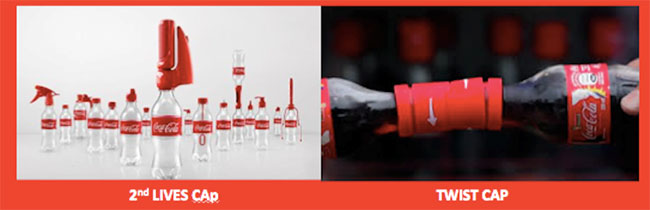
    TWIST CAP To open this cap, you must find another bottle. The specially designed cap does not open, unless it is rightly paired with another identical cap. So, to open your bottle and take that deserving sip, you must interact with other coke drinkers. The experience is shared on social media. Now this twist could have happened with any bottle with a screwed cap. A brilliant example of experiential consumer marketing that most likely would have been laughed at and shot down in many brand ideation sessions.


    2ND LIVES CAPS. Everyone laughs at this somewhat silly solution toward reducing the environmental challenge. However, Coke took this consumer inclusive idea forward. It asked the consumer to lend a helping hand in delaying the bottle journey to the landfill. Give the bottle a new 2nd life.

    In Vietnam, 40,000 caps were distributed free. These 16 special red screw-on-caps gave the used bottle a fresh utility. They converted it into the spray-bottle, Baby-rattle, dumbbell squirt gun, lamp, paintbrush, sharpener, etc. The campaign was rightly titled “What if empty Coke bottles were never thrown away?”


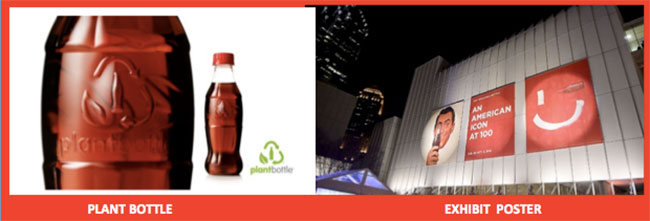
    PLANT BOTTLE. In 2009, Coke introduced the Plant Bottle. 100% recycleable. And it aims that by 2020 it will start making all its pet bottles with plant derivatives; simple crazy innovative thinking. It is touted to be the first-ever fully recyclable PET plastic beverage bottle made partially from plants, but has a lighter footprint on the planet and its limited dwindling resources. Being committed to the thought, coke has been sharing the technology with non-competing companies and products.


    PUSH THE THOUGHT. The 100th anniversary of the famed bottle was celebrated in 2015. Every brand looks forward to maximising such opportunities. Coke went a step further. The Coca-Cola Bottle: An American Icon at 100, an exhibit at the High Museum in Atlanta is an example of such leveraging.


    IDEA EXPANSION. Coke seems to be entirely a source neutral company for ideation, as far as time, process and ownership are concerned. As the story goes, Cannes Lion ad from Germany took birth as an idea with the Tom Farrell, global design director brushing his teeth and using his finger to trace on his bathroom mirror.

    It may be post-rationalisation, but as per Coke: “The connecting of hands from different people various socio-economic levels, races, religions and nationalities is a reflection inclusion and optimism, core brand values – all connected by Coca-Cola”. The simple, authentic and a somewhat unique idea grabbed attention is referred as the film titled “TOGETHER”


    JOURNEYXJOURNEY, OPPORTUNITY WITH CONSUMERS. Coke mobile publishing storytelling mission ‘JourneyXJourney’ is a three-week 20-plus stop 40-ft motor home with capabilities to create, and curate consumer generated content that should lead to high reader engagement.

    Since 2012 it has become a global platform social media channels with more than 3 million followers combined. The Coca-Cola Journey is one of the initial innovators in the area of brand content publishing and amplification.
    Doug Busk, global group director, social media and digital communications at coke reflect; JXJ allows us to get into the real world where the best stories – and the people and communities behind them – live. The stories aren’t coming to us… we’re going to the stories.


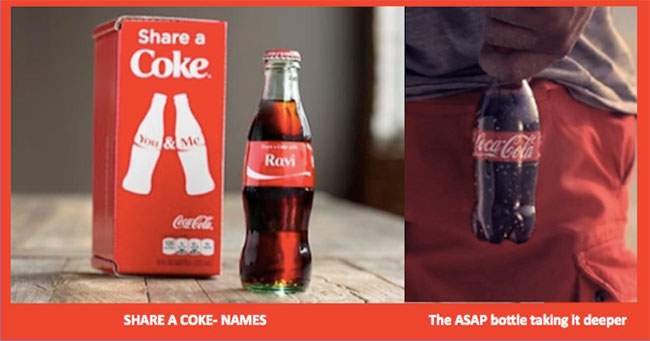
    ASAP: ‘Affordable Small Sparkling Package’, the 250 ml bottle addressing the issue of affordability and availability is driving growth in India. This bottle was designed with an aim to minimise gas loss. It took two years to develop. It not only maintains the original pleasing look but ensures that it remains fresh and the ‘biting taste’ is not lost due to loss of carbonation during transit.


    SHARE A COKE. In the United States, when the campaign broke with Coca-Cola, Diet Coke or Coke Zero carrying names, people rushed to find their names. Off course, all names could not be accommodated. Many fans were dejected. However, in its next edition, more names were featured. A site allowed you to search if your name was on a coke bottle. Additionally, you could customise and order with your name from the e-commerce site. To top it all, ‘Share a Coke’ went across the nation on a 600 stop tour allowing customisation of mini cans. Taking it further, the new edition also had more generic names and occasions specific association like “Mom”, “Dad”, “Grad”, “Soulmate” “Hero” “Class of 2015,” “Team” and “Family”.


    NO LABEL: On the one hand, you have customisation of the labels, and on the other hand, no label. In Middle East, Coke promoting is promoting the anti-prejudice, pro-tolerance message: “Labels are for cans, not people” during the holy month of Ramadan. Here, the limited-edition red cans had the white dynamic ribbon, but no logo. The brand believes that by urging everyone to remove stereotypes, happiness will be spread to a larger and wider community.


    NO TWO SAME CANS. No two packs are exactly the same: just like those who enjoy Diet Coke. Working with HP Indigo digital printing technology and 36 base designs, coke experimented in Canada with Millions of unique and colorful Diet Coke package designs. It gives the consumer a choice and an opportunity to find the one Diet Coke bottle that truly reflects him/her ‘One of a Kind’.


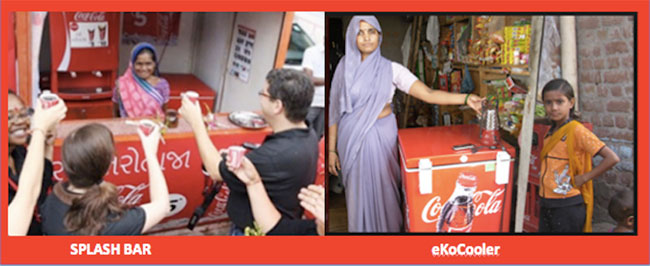
    SOLAR COOLER. Coca-Cola India developed “eKOCool” cooler, specifically for retailers in rural areas lacking regular electricity. The rooftop solar panels are linked to the chest-style coolers inside the shop, and as the sun goes up, the bottles start chilling. In addition, the “eKOCool” coolers are equipped with charging points fir lanterns and mobile phones, thus increasing traffic and allowing the shop to remain open after dark.


    SPLASH BAR. It is the new hotspot in some Indian villages. Here, from a simple kiosk vendor dispenses ice cold Coca-Cola into small cups at an affordable price. The women in the rural area get employment opportunity, and the brand expands soft drink culture to untouched markets giving an affordable authentic experience. From a 31 Splash Bars start in 2013, now there are more than 30,000 such units. Additionally, it opens new avenues for future choices for the women. The earning can help feed family and provide education.


    CHRISTMAS WRAPPING PAPER. So getting involved with the consumer. This time no catbonated drinks, But the paper to wrap the presents in. Not the best of innovation but yes true to its thought of open happiness.


    CALL HOME. Experiment at Middle East: spreading that happiness, where the workers could use the coke caps as token for calling home! What those smile are worth. And how simple and relevant  the innovation is.


    MUSIC FOR DEAF. This time the innovation was implemented in Pakistan after it was successfully tested at Bangkok. Coke studio helps hearing-impaired people to enjoy coke studio experience from a sofa embedded with tiny vibration engines and mood synchronised LED lights elevating the experience visibly. And the front screen displays the video. The ambience is completed with on-set guitars, keyboards and other musical instruments. Here is a connect by a deaf person who experienced it. “Whatever my body felt, whatever my brain thought, even though we can’t hear the music, we can feel it,”


    Innovation is breaking down the elements. Rearranging. Reconfiguring and seeing things a bit differently.

    Reiterating the thought that triggered it. InNoWait. ‘Do it because you want to, not because you think you must. And most important, do it right and go crazy. You will do such experiments, when you truly believe that the world today is a chaotic always in flux place. Here the past success is no guarantee for future success’.

    Details and pictures from the Coca-Cola Company website


    Sanjeev Kotnala with 28 years of corporate experience is the founder of Intradia World; a Brand, Marketing & Management Advisory. His focus area includes Ideation and Innovation; he also conducts specialised workshops like IDEAHarvest, Liberate and InNoWait. For soft skill training, he follows SHIFT (Specific High-Intensity Frequent training), a process of continuous training with frequent shorter sessions. Email sanjeev@intradia.in tweet @s_kotnala web: www.intradia.in www.sanjeevkotnala.com.


  • Sanjeev Kotnala: Have your SOPs lived their life?

    By Sanjeev Kotnala


    Every self-respecting department in a growing organisation has defined standard operating processes (SOP). The problem is simple. Most of the process were created when the organisation was of a different size, operating in a zone with market dynamics that may not be now relevant. However, like religious rituals and family traditions, they remain unchallenged. In fact, quite a few are really the new bottlenecks or barriers to streamlined efficiencies thus increasing the possibilities of error and delays.

    If you start scrutinising processes, it will not be surprising to find that many do need recalibrating.

    It could be the steps to be followed in generating a report, reminders built in for updating, the way to access and resolve consumer complaint or even manufacturing or indenting a product. Trust me, inefficient old traditional processes may actually be the cause and high contributor to business disadvantage, stress, missed deadlines and increased cost.

    It is recommended that businesses must evaluated and re-calibrate their processes at a regular frequency.

    Every team and department work with set documented procedures that are well-established and passed down the order. Advertising and marketing is no different. These are fondly called Standard Operating Procedures. They tell you what to do under which situation. They promise that if you did what they suggest, you can be absolved of any irresponsible behavior. You may, in fact, be branded an organisational man.

    Don’t take me otherwise, SOP are important and hugely critical when they deal with safety-related, legal or financial objectives.

    SOPs are designed to streamline the way people work. When everyone follows a well-tested set of steps, there are fewer errors and delays and there is less duplicated effort. With time, new set of SOPs get accumulated within the system. Naturally with time, redundancy does creeps-in unannounced. If you have been updating everything and techniques in life, why not the SOP’s.

    If and whenever you experience a problem of relevance with a SOP, it is review time. It is time to update or upgrade to something that  keeps the process relevant and result oriented. Or in some cases, you could be best adviced to drop the process.

    The process revival and re-engineering are an art in itself. Maybe, you could do with some preliminary steps.

    MAP THE PROCESS. Identify the process needing intervention. Document each step and sub processes. Use flow charts to capture every step. Detail out the phases and sub-steps with the help of regular users.

    ANALYSE THE PROCESS. Investigate the observed and felt problems in the processes. Check for redundancy duplication and technology intervention.

    One of the ways is to get answers to some simple questions. What makes the user frustrated in the process? Which steps are bottlenecks? Where is the delay happening? Is there a need to decrease interdependency? Which steps are no longer required and can be replaced? What are the areas which are impacting negatively the cost and quality?

    Check how other organisations handle a similar requirement. Remind yourself, you need to fix the problem and not just the symptoms.

    RE-ENGINEER THE PROCESS. Tweak or redesign to take care of identified issues and challenges. While doing so, you will be better served to speak and interact, include real SOP users in your re-engineering approach. They are the one who will know best and also be able to suggest new approaches. Explore multiple possible solutions to the issues. Choose the one which is best in the real-life context. Check – recheck time-effort-cost-risk -end customer experience and impact before taking it for final discussion.

    Once you are through with re-engineering the SOP with your team and there is a collective buy-in, formalise it with proper documentation and authority. Don’t wait for the processes to get irrelevant and users to raise their voice. Plan review of the new process and mark that date on the process document.

    IMPLEMENT. Implementing a process is a mini project in itself. Before pressing pedal, you must communicate the new process to every stakeholder and resources groups ( like UT/ HR/ Finance/ Documentation) that may need to intervene for its perfect implementation.

    Present the benefits to the users. Bring everyone to the same page. It is important for all stakeholders to understand the reason for change and how it impacts them and the organization. There may be a need to educate and involve external business associates for perfect implementation. Their systems may need to be re-calibrated to accept the new process.

    SUPPORT. Even after you have run a successful pilot, trust, the new processes will have its own bugs. You must have an FAQ designed to take care of minor issues and an empowered service team to take up major issues.

    Unfortunately, you only realise the issues post the process has been implemented. The first review is a pre-determined time for ironing out unexpected challenges. And it must be done ASAP. Allow an empowered user  team to retweak if necessary and finalise the new porcess. Cap this with a built-in review / expirey date. You will find that a small change like this expiry / review dates will suddenly make changes more acceptable.

    Don’t forget – PERFECTION is always WORK-IN-PROGRESS


  • Sanjeev Kotnala: Will you send a Valentine Gift to your agency?

    By Sanjeev Kotnala


    You haven’t heard a more stupid question than this.

    And then you would ask me, Do you really think I should be doing this? What gave you that idea?
    I know the first reactions the question would elicit.

    Ok, let’s look at the other side.
    Do you think your agency will send you a valentine gift?

    I know it sounds a lot worse than the first question. It is something you do not expect.
    After all, you are the man in this volatile relationship.
    And Valentine is still all red roses for you.

    However, if you were to pause for a moment and think. I am not asking anything impossible from your side. You do it every moment. So, look back at the dedicated, loyal, committed relationship that you and your agency are in. The love-hate experience will anyway put a couple to shame.

    If there was one relationship in the world, where the extension of love from romance to everyday situation and relationships be most apt, easily acceptable and hugely liked, it will be this complex, misguided and misunderstood relationship. Yes, the relationship between client and agency. Let me be politically correct, should I say agencies.

    Nevertheless, first the people in this relationship and the people with this not-so-innovative thought must themselves appreciate Valentine as a festival of caring, sharing and love. I know they are trying to de-romanticise the day and expand the market. Valentine’s Day has been coloured red and symbolised with pink teddy for ages, that thinking otherwise needs repeat reminders.

    Then they should seek whatever traces of love, care and share in the client-agency relationship. A bit of self-esteem and loads of mutual respect would not really hurt the case.

    Maybe at this stage, the eye may get wet. And the thought could strike you as novel, interesting and entertaining.

    Let me help you. Here is sharing a thought by CARAT LINE on Valentine’s gift for a thoughtful colleague. Oh, that could have been the client too.


    COMMERCIAL I

    And here is a wider subset, Valentine gift for a roommate. That could be your art partner or better the brand planner.


    COMMERCIAL II

    Though both the communication takes a Woman-2-Woman gifting storyline; it is easily palatable and understood. There is nothing to suggest that it could not have been a Man-2-Man storyline. What say, creatively it would not fire !.

    I agree completely with Azazul Haque, executive director, Ogilvy Bangalore, creative head, Ogilvy South, who in afaqs says: “encouraging people to recognise love in everyday relationships is expecting a bit much … . However, the stories (in Caratline) do clearly convey that in a simple and charming way”.

    I am confident if many clients were to see it this way and create the communication to spread the world, the de-red-alienation of Valentine’s Day can happen sooner than later. And gift solution, suggestions at a lower cost ( in case of Caratlane INR 3000) may do the trick.

    Dear Tanishq, Caratline, Famous Innovations and QED Films, are you giving Valentine gift to each other. Maybe the teams were working so hard to make things happen in the market, that such pious thought’s, to mirror the concept nearer home, easily escaped them.

    Meanwhile, think, think hard. There is a time. Does your canteen boy, your boss, your sister or even your parents deserve a valentine day gift? Just asking. Who all will you give a Valentine’s Da gift this year?


  • Sanjeev Kotnala: ‘One less decision to make….towards designed Customer Intimacy

    By Sanjeev Kotnala


    Oh, I know. I caught you there with the headline. As a brand/ product/ service, you and the customer are not married. On top of that there is no hint of an affair. Intimacy is a desire and dream but then that is where you stand.

    If I hear you right, you are committed to enhance the level of customer service and satisfaction. You have been readying to provide the wholesome experience and delight.

    Your boardroom silent monologues have their own sprinkling of fancy bars and pie charts, survey reports and awards that line the ego wall. You fabulously hide behind them. I never said it was wrong. However, if you are still busy doing that, maybe you are out-dated.

    Unfortunately, most of the brand are unsure of their customer relationship. Not clear if the experience ever went beyond the hygiene of building of trust.

    This sets me off on a different direction.

    You must have been minutely mining your understanding of customer expectations. Yeah, you always wanted to go beyond satisfaction and redefine it. You have been searching for an experience beyond delight and all the Aha’s. You wanted to go that extra mile.

    I will credit the brands to have invested in the experience, however, will it  help you differentiate in the era of customer infidelity? Really knowing the consumer up-close, creating the customer intimacy may be the solution.

    Having an affair and marriage is old-fashioned and complex enough, but customer intimacy is fought with same perils.


    Customer Intimacy, requires commitment of time, money and efforts.

    It requires every vertical, department, system and process to be aligned and synchronised to the need of making the intimacy a reality. You are anyway as strong as the weakest link.

    To be a customer-intimate organisation is very simple. All you need to do is to provide the customer, product and services that meet and exceed expectation.

    You have to be obsessed customer centric organisation, willing to invest in understanding the overt and covert needs and desires of the customer. Use your market intelligence and consumer insight into remaining a step ahead of the curve.

    Customer intimacy is not necessarily about product leadership, sustainable growth and profits or market share. They are the by-product not the foundation of it.


    Customer intimacy is not a master key.

    If the organisation is not performing at the basic level of service and is not taking care of all the hygiene issues, trying to be intimate will not only be a failure, it will lead to deeper frustration.

    It is like going too fast in a date.

    However, you may still want to consider it in certain situations. Once you know that the incremental gains from focusing on operational or product leadership have dwindled, and it is no longer enough, it may be time to shift your focus in becoming a customer intimate organisation.


    Customer Intimacy is not about higher customer satisfaction, though it is the foundation for it.

    Empowered teams with resources to give the customer what they want and when they want is the basic premises of customer intimacy. They must be charged enough to be passionate to deliver an exponentially superior experience. Maybe here hiring people who share the vision and the reason  is more important than hiring talent with skill set. Skill set can easily be enhanced.


    Decentralised empowered team having authority to act is an essential part of customer intimate organisation.

    Learn about your customers. Don’t get trapped in the width and the depth jargon. Sieve and filter your data. Talk with as many as you can. Visit them. Observe then as they buy or consume. Listen on social media about the effect and impact. Track their behaviour not only with the product and service, but go ahead and understand their lives and the role the brand / service plays in it. Regularly interpret, create the hypothesis, check to connect the dots. Create the capability of quickly sensing and understanding these shifting patterns. It is always work-in-progress.

    Do not get trapped in what the customer voices in the focus groups and in-depth interviews. Do not take for granted what you observe and note while deleting, distorting and generalising the experience. You should move and embrace the implicit research methods that will help you understand things that the customer may not be voicing or even be unaware of.

    Re-look at your segmentation. Understand the prosumers and the influencers. Determine the subsets that are happy with being satisfied and who are pushing you to a higher level of performance. Once, you are clear, focus on these segments. You will be better rewarded in skewing your budgets towards understanding them.


    Once you build an understanding, you need the organisation to be absolutely agile in its response to the shifting customer needs and desires.

    The new customer has no time to waste or invest. It is all about voicing and needing instant attention and gratification.

    It is not essential for you to develop solutions in-house. Put the customer interest and ease in the front. You then must analyse it and if need to outsource and link-up with other organisations that can help you deliver.

    While chasing the external customers, forgetting the internal customers can be suicidal. Co-working and co-creation are something you will have to learn and use.

    Knowing that the consumers have shifted their interaction on to a digital world, use it to your advantage. It is again not about having feedback surveys or having an all-encompassing app. You have eased their lives. Make their task easier.


    Customer Intimacy needs to be a philosophy and guiding force, then only it will be realised.

    You will know that you have arrived, when choosing your brand and service has a positive easing impact in the customer’s life. And, there is ‘one less decision for them to make’. This should drive the organisation across verticals, from product- service design- to manufacturing, from sales to service and marketing.

    Customer Intimacy is tough discipline to follow. Hence, the brand / service needs to choose the customer segment they would want to get intimate with. It could be prosumers, influencers, adapters or just plain simple one with the maximum life time revenue.

    Customer Intimacy leads to a long-term stable and strong customer loyalty. After all, you have stopped them from raising that one vital question, where your brand/ service was just one of the options.


  • 8 Filters to Evaluate Cause-Driven Brand Initiatives


    By Sanjeev Kotnala


    I woke up recently to a tweet that introduced me to the latest ad in the ‘Jaago Re’ series. I loved it. Here was a brand that has found relevant cause and could rejuvenate it frequently. On the same day, I read the probing blog by Lakshmipathy Bhat, ‘Cause – driven advertising: does it help in brand building?’ At the same time, there was another blog by Deepali Nair, with an alternate point of view at ‘Advertising that creates new paradigms’.

    However, let’s look at what is happening and why is suddenly a there a spurt of cause-related communication for brands.

    Advertising is a tool that the brands use to create a positive preference and alignment in the consumer mind. It is expected to reflect in sales impact and market shares.

    Earlier, a brand used gets into this track of thinking when it is forced to take the stance or wanted to influence certain powers to be or has already moved up the ladder of directly related logical/ regional/functional differentiation. Then it did not matter what was the format used how it was expressed.

    Today, a mega-trend has been identified. In the era of information parity and heightened social activism, brands have identified that the consumer still remains gullible to this weapon armed with long format digital amplification… the cause-based advertising.

    They strongly believe that the so-called over-researched, and the least understood millennial consumer is inclined towards brands that stand for the cause/ movement or activism.

    Hence when Bhat gets irritated with the Mirinda ‘release the pressure’ TVC, one understands. As a part of this article, you can view many such cause-driven communications of the brands like Miranda, CaratLane, P&G, Anouk , NIKE, Dainik Bhaskar, Times Of India, Tata Tea and Dove, and make your own reading of the subject.

    All such communications have a commercial role. They have above all a role for creating brand preference. Few of them have even moved beyond the simple task of brand salience and preference to becoming a real movement where the brands are just a support.

    In the process, the brands have overlooked and failed to take care of Eight filters. Scanning your brand proposition, cause or initiative through these can help you rightly leverage and create the brand impact you want.


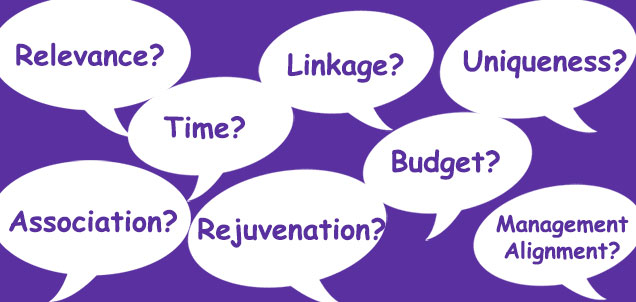
    RELEVANCE. LINKAGE. UNIQUENESS. ASSOCIATION. TIME. REJUVENATION. BUDGET. And MANAGEMENT ALIGNMENT


    A case in point is Tata Tea – Alarm Bajne Se Pehle Jaago Re! You give it credit and listen in rapt attention.

    EMBED TATA TEA

    This communication by Tata Tea pass all the eight filters listed below.

    RELEVANCE. Is it relevant to the primary target audience and the wider segment? Is it something that bothers them? Do they think about it? Is that latent or it is subtle? Will a small push overtake the inertia holding it back?

    BRAND LINKAGE. What is the level of association that brand can have to create with the cause? How is the cause relevant to the brand functionality and emotional linkages with the audience it is trying to influence?

    UNIQUENESS. Is it something that is widely accepted as a category cause? Is t something that is obvious and anyway expected? Can the brand can take it up and own it?

    DEEP ASSOCIATION. Is it going to be just a lip-service? Are you getting deep and working across formats and across its tentacles? Have other media been integrated to amplify the proposition? Are you really willing to start a mission? Are you supporting it at the ground level?

    LONG TERM. Is this a cause that you have taken for this sales season? Will you come for the three to six months and then start to search for a cause that can give you the new high? Do you see this remaining relevant and strong pillar for the brand for years to come? How long does the brand plans to remain married and committed to the cause?

    REPEATED REJUVENATION. And here is why I believe that the Tata Tea thought of Jagatey Raho simply outscores all. Anouk does not commit to anything specific, and the audience knows about it. They are transparently willing to take up multiple causes and move on.

    BUDGET AVAILABILITY. Are there enough funds allotted to the programme to reach its ultimate goal?

    MANAGEMENT ALIGNMENT. Is the management completely in sync with the cause? Can it be a reflection of the philosophy rather than remaining at the level of brand initiative?

    Once again, while the cause-related advertising and communication seem tempting for a brand to take on, it will be critical to evaluate against RELEVANCE, LINKAGE, UNIQUENESS, ASSOCIATION, TIME, REJUVENATION, BUDGET And MANAGEMENT ALIGNMENT.

    …………………….


    The Mirinda ad lacks the synergy or association.

    MIRINDA


    CaratLane communication that walks the tight rope and talks of spreading love and care beyond romance at Valentine, one challenges the thought.

    CARATLANE


    Look at the P&G ad for its sanitary napkin brand that won the Cannes Glass Lion. It remained a communication that was appreciated but to general public, it never got amplified to a level of a real fight against the taboo. Though it may be doing a lot in the area and taking the thought forward, but when the audience which has been exposed to this insightful communication is not kept in the loop with the development, they are bound to see it as tactical.

    P&G


    Or Anouk which takes up various subjects for its communication. I am not sure, how the consumer sees it. And if it makes sense?

    AUNOK 1
    or


    ANOUK 2


    There is the powerful thought ZID KARO DUNIYA BADLO by Dainik Bhaskar that has seen different avatar at various points of time. It is something that fits the brand and the category, and the brand can maximise the leverage. Unfortunately, it is tactical and lacks consistency.

    ZKDB


    Sports brand Nike music video raised its voice and went silent. I am not sure, if it is a utilized or missed opportunity for the brand. The consumer does not appreciate opportunist leveraging of a cause.

    NIKE


    And on the other side, a powerful ‘Teach India’ ad is going from strength to strength. It is a movement in itself but somewhere the amplification within the readers is missing at present. Maybe it is a way in which the brand wants to operate in.

    TEACH INDIA


    The Dove campaigns for Real Beauty challenges the trend.

    DOVE

  • Sanjeev Kotnala: Is Scarecrow consciously trying to be different?

    By Sanjeev Kotnala


    I personally loved the new Rasna film Pyarelal Ka Bachpan Ka Pyar by Scarecrow. It was a bit of pleasant surprise. It is a classic case of the brand willing to refocus its lenses and to experiment. It is about a long journey and not necessarily just a drink that children love. Yes, there are people who raise their eyebrow and voice their dislike for the film.

    If you look through their portfolio of work, it does lead to an important question: Is Scarecrow trying too hard to redefine communication? Is it right for the brand and the audiences they want to engage? There are no straight answers.

    Rasna, is the world’s largest manufacturer of instant fruit based concentrate. It’s the leader within a very narrowly defined powdered drink segment with more than 85% share. It is still maintaining its costs per glass at just Rs 2 per glass!

    It is not only Rasna, where this young Scarecrow has been creating ripples with its approach. I don’t think their work ever goes unnoticed within the fraternity and the consumer.

    The Rasna new film was launched with a trailer in the digital world, and it raised curiosity.


    Manish Bhatt of Scarecrow defends his work stating: “Every Summer Season, Rasna does product attribute-led campaign. This year we have gone ahead with emotional over-arching campaign with the message ‘Spreading Love For Generations “. Like Coke occupies happiness, Honda occupies dreams and Volvo occupies safety, Rasna has always occupied the emotional space of spreading love in the consumers’ lives. With this year’s Campaign  ‘Pyarelal Ke Bachpan Ka Pyar’. We wish to summarise what Rasna stands for over the years.”

    RASNA TRAILER.


    They have won most of their metal in the Radio category. Manish Bhat empathises that it was a strategic call by the agency. They have been the radio kings. On the other side, they have been doing some fairly interesting work in the digital engagement and traditional media space. Viral experts, is the other tag that they have earned with their approach to digital exposure and engagement.

    It seems they hate being in the safe territory. It’s heartening to note that their clients share their conviction and show their confidence in them. I presume that their internal discussion starts with a simple question. So, what can we do differently?

    Fortunately, they have more hits than misses. It is worth complementing and appreciating this eagerness to do differentiating work.

    Rasna was a hyper-craze in late 1980s and early ’90s. The cute loved model Ankita Jhaveri ruled everyone’s heart. The category was booming. The tastes and formats have evolved. It made the task of engaging and remaining rejuvenated that more difficult. At this stage, this slow burner, lovely ‘Bachpan Ka Pyar’ tries to rekindle the charm and celebrate 120 billions of Rasna glasses consumed through the decades. Thanks, Rasna and Scarecrow, for not creating a chest-thumping 120 billion glasses numeric shouting irrelevant communication.

    Manish Bhatt further says: “Only 30% of Rasna demands comes from children. For the people who has been brought up consuming and loving this brand since childhood – it refreshes the memory, puts them into nostalgia, and gives them a reason to love the brand all over again. It is that ecstatic emotion of celebrating 40th wedding anniversary with the brand you always loved since childhood and married happily”.

    If that is the case, would you agree that the strategic direction seems right? I need not to add that Ram Seth ( Pyarelal) and Daisy Irani have not left any efforts to make the brand celebrate.

    RASNA FILM


    The new TVC is retro in its feel. However, it completes the loop with a quirky twist, it just about avoids becoming out-dated for the new generation. Rasna as a brand is planning a double-digit growth and further expansion of the product portfolio. For which, they will have to punch over their media weights.

    Now let me present some of the work, which demonstrates Scarecrow’s approach to work.

    No, I have not seen this one earlier. The TVC titled Mrs. Pinto for the Video Door Phone with Visitor recording by Panasonic. It does seem to be working over hard.

    PANASONIC ANCHOR FILM


    Public Service has been raised to new level of interest intrigue and communication with the famed work ‘11 Minutes’, an anti-smoking film with a twist.


    11 Minutes film

    But it is not just the public service. Watch the Wagh Bakri film: ‘Rishto Ki Garmahat.’


    WAGH BAKRI FILM


    Yes; they also end up doing over stretch of a thought and trying to wrap around a very forced emotional tag to it. View the Ksheer milk product’s film by Scarecrow.


    KSHEER FILM


    Then they build it up for the water pumps with an almost parallel cinema treatment of the concept.


    PUMP FILM


  • Sanjeev Kotnala: Are you working enough to kill yourself?

    By Sanjeev Kotnala


    ‘If you don’t have hypertension, kidney problem, sleeping disorder or heart problem, even after working five years in advertising, you have not been working hard enough’.

    Don’t know who said it first, but have heard it repeated many times in the advertising and marketing. industry. Many of us laughed as we shared it with the new trainees. We never saw the irony in the statement. It is time you sincerely evaluate the lifestyle and think about the stress that is getting absorbed.

    Indian advertising and marketing firms seem immune to the work stress-related problems. It exists, but the excessive working is a tradition, a norm that remains unquestioned. No one is really bothered about the work stress. Moreover, it is not yet a legal issue in India.

    Everyone looks the other way. It is like ragging. The seniors must make the juniors go through it to earn their spurs.

    Employees themselves take pride and boast of the hours they put at work.

    We haven’t moved away from the old concept of face time and visible hard working. The art of smart working remains a subject of symposiums, conclaves and training hours.

    Medical research has proven, there exist a strong correlation between workplace stress and diseases like heart, hypertension, respiratory infections, ulcers, migraines, depression, and suicidal tendencies. Such continued stress can even lead to emotional distress and major psychological impact. Still, we don’t take the cause or the symptoms seriously.

    Unfortunately, unlike some of the countries, India is far from imposing compensation for injuries resulting from continued stress on the job.


    THE WORLD WE WORK IN.

    We work in a surreal hypersensitive challenging cut-throat work culture and expectation. It is the world of KRA, KPI and inflamed ambitions. Stress is considered a natural by-product. Employees are aware of it and willingly subject themselves to the torture.

    They suffer from the big Indian psychological disorder that makes them believe. They are immune to dangerous situation. A firm belief, it will not happen to them.

    The culture of adjusting and a case of helplessness with the ‘It’s like that only’ does not help. We defend the reality with a new set of question. Is the ideal stress-free workplace not just a thought?


    You are dealing with your life. The results will be for you to suffer. Even so, I don’t expect you to take the precautionary step and even check to realign your work style and hours.

    In May 2014, 24-year-old ad Li Yuan at Ogilvy & Mather Beijing, died of a sudden heart attack at the office. The organisation refutes that it was due to overwork. However, it is known that Li Yuvan worked overtime the whole month and was not leaving the office before 11p.m.

    Check and if you have any of the symptoms, please take immediate action. Like difficulty in concentrating, frequent tearfulness and mood swings, disorientation, difficulty in making simple decisions, sudden changes in behavior, drop in patience level and quickly getting irritated, avoiding work, not feeling like going to work, frequent temper flare-ups, feeling or decreased libido not related to aging. Even chronic back pain, neck pain, chest pain, rashes, breathing problems, constipation and diarrhea is classic symptoms of work-related stress.

    In 2014, Joey Tocnang, the hard stressed work schedule of the 27-year-old trainee at a casting company in central Japan died resulted in his heart failure at the firm’s dormitory.

    Stress leads to sleep deprivation. This prevents the body and mind to have the desired time for everyday recovery, resulting into further stress and the cycle continues. At some stage, it gets out of control. It’s important to get the right amount of sleep.

    Some time back, Matsuri Takahashi, a 24-year-old employee of the advertising giant Dentsu, was driven to commit suicide due to stress brought on by long working hours. She regularly worked more than 100 hours of overtime a month, including at weekends, in the firm’s Internet advertising division.


    HOW MANY HOURS ARE ENOUGH TO KILL?

    It is believed that in China, some 6,00,000 people die from causes linked to work-related stress. Japan believes 20% of the entire workforce is at risk of death from overwork. They even have a name for it ‘karoshi’. The figure for India is unknown, but the problem is very visible before the eyes.

    The people in advertising and marketing know the reality.

    Japan is worried that its 21.3% employees work 49 plus hours a week.

    It is believed that 80 hours of overtime a month is a real trap; it is like a suicide mission; it is walking towards serious stress related issues, problems and maybe death.


    Most in advertising and marketing in India would be happily punching above this level.

    Let me simplify the equation. Working 3 hours extra for 5 days during the week and putting another 7 working hours during the weekend is equivalent to 88-hour overtime. ! This is without buffering for the traffic led anxiety and additional stress that is affecting your life.


    YOU CAN ACT.

    Give yourself some time. Analyze your work pattern. Learn and implement time management. Check if you are biting more than you can chew. Address the causes and maybe speak with the HR and seniors at work. Invest into a hobby and even take some time out with friends and family that is not necessarily about partying and drinking.

    Realise that your work style is a lot dependent on computer and mobiles. You are almost married to these screens. You log on to Facebook, whatsapp or whatever is your solution, and you browse for long stretch. It can affect your mental and emotional health?

    I hope you do not suffer from the phobia of missing a message or notification.

    You do not suffer from anxiety attacks about not replying to another update.

    There is no fear of missing out, and you are yet not an emotional loner. All your life answers are not on the screen. You are not addicted to it. You do not hear unending silent notifications that never were.

    Truth is that these repeated innocent interruptions eat into the time available for other things. The result; enhanced time pressure.

    Stop constant staring at the screen. Stop keeping your phone and notification switched on, all the time. Maybe you could start with defining your own mobile-visiting hours. Do not keep the email open all the time. Yes, answer the call, if you have to. Or plan to answer them when you take a break from your work.


    ORGANISATIONS CAN ALSO ACT.

    Organisations that promote the culture of extra time in their attempt to increase productivity and efficiency are living a false dream. Excessive long hours do not increase productivity or efficiency. In fact, they cause more issues, problems, lead to more error, flared-up relationship, insubordination, lack of creativity and damage the organizational fabric.

    It is your role to check the processes and culture. What are you promoting? Are there sections and people who can be a potential victim of work stress? How can your policies, Manpower management, expectations, reviews and systems bring it under control?


    Remember It Is Your Life. Your Loved Ones Takes The Brunt Of Work-Related Stress. Organisation is immune to Such Issues. Think Again. What Are You Doing? Is The Cost Or The Outcome Justified?

    ………………………………………

    Sanjeev Kotnala with 28 years of corporate experience is the founder of Intradia World; a Brand, Marketing & Management Advisory. His focus area includes Ideation and Innovation; he also conducts specialized workshops like IDEAHarvest, Liberate and InNoWait. Email sanjeev@intradia.in tweet @s_kotnala web: www.intradia.in www.sanjeevkotnala.com.

    ……………………………………….

    REFERENCE: (1) Who is liable for stress on job : https://goo.gl/0AAKma (2) The alarming long term consequences of workplace stress : https://goo.gl/xmjBM3 (3) Seven ways stress harm your body: https://goo.gl/pJtPX7 (4) Can’t tear yourself away from the computer? Too much time online can lead to stress, sleeping disorders and depression: https://goo.gl/pU2V2 (5) Death from overwork Japan’s ‘karoshi’ culture blamed for young man’s heart failure: https://goo.gl/gDlPMx (6) Yet another reason to avoid stress- sudden death https://goo.gl/fH980x


  • Dealing with Death, the Life Insurance Way


    By Sanjeev Kotnala


    Death is the eternal truth. It is the only certainty in life. However, it is never a pleasant thought to engage in. No one really wants to discuss it. Insurance advertising has to balance the unpleasantness of this life event. In the process, insurance brands have used Saam (logic), Daam (price and not necessarily the cost of premium), Dand (penalty) and Bhed (Differentiation and doubt). They have used polarisation of Emotions and Expressions, Sad to not-so-sad (Happy), Fear to Hope, Guilt to Assurance, Love and Care, Unprepared to Certainties, Accidental to Pre-planned to varied level of Success.

    EMBED HDFC HIDE AND SEEK

    In the last few years, we have seen some remarkable positive shift in insurance brands connecting with the audience. Long-format storytelling in the digital world is the new flavour. Though keeping the audience with a lower attention span engaged is still a barrier that few have scaled successfully.

    Brands have tried moving away from the format of fear of unwarranted situation and tax savings to an emotional high of caring sensibilities. They have entered this area treading softly thus diluting the resistance of reference to death. However, the category cannot do away with the emotion of fear to jump-start the engines from time to time. A good example of it is the Max Life Insurance life ad (Sanju). My mom hated it and would change the channel because the protagonist shared my name.

    EMBED MAX LIFE INSURANCE AD SANJU.

    Rationality and logical sensibilities have been exploited to death. Brands know their limitation. They understand that consumer is not logical or rational but more of an emotional construct. Raising anxiety, dramatization of unpleasant scenario and Arousing tension before presenting the solution is no longer the code.

    There is another barrier. When it comes to the complex conditions and policy statement ( and unstated statements) few consumers can decipher the features and future on their own. Insurance agents are known to over sell features and non-relevant policies. Brands like Max Life Insurance (Aapke Sachche Advisor), SBI ( 10 questions) have tried addressing this issue.

    EMBED SBI 10 QUESTIONS

    To defuse the alienating effect of fear, it has been replaced with long-term benefits of insurance. It looked like someone watched the episode of ‘Mad Men’ in which Dan Draper outlines the appeal of fear as a tool for selling with chilling clarity. “Advertising is based on one thing: happiness,” he calmly tells his clients. “And do you know what happiness is? … It’s freedom from fear.” See the engaging SBI AD – Great Dad tackling this imagery.

    EMBED SBI LIFE

    I share with you the international ad by AVIVA. You see a family rushing for their vacation. You realise that the father is long dead, but all this is possible because of the insurance. The brand claims this helped encouraging families to think about taking out life insurance.

    EMBED AD PAUL WHITEHOUSE

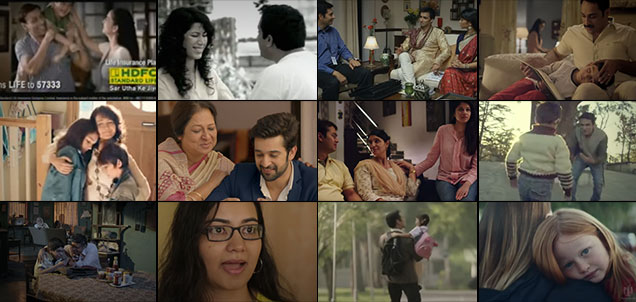
    Insurance brands have moved to the new level of understanding of their consumers. They have replaced the fear of ‘What If’ to a beautiful story of ‘That’s Why’, a far more positive statement connecting with the audience. One of the ads that did it well is the ‘Memories for life’ by HDFC.

    EMBED MEMORIES FOR LIFE

  • Sanjeev Kotnala: Why single lane swimming is not good for your career?

    By Sanjeev Kotnala


    Organisations are complex entities. They thrive on templates and constrained experimentation. There is a discipline defined by department, position and work responsibilities. Each of them has their own agenda, objectives and SOPs. They are supposed to magically merge for the organisation to attain its goal.


    You are one of the units there. You have been given a lane to swim in. You keep focusing on it. And you are excellent in what you do. However, the results are not as per expectations. It takes time to realise that in this weird game, success is not defined solely by how fast you swim in your lane but a lot depend upon the other swimmers in their lanes to reach the end point in a synchronized beat. It is a different kind of synchronised swimming.


    Your lane is smooth for you. You know these waters. What you forget is the way it is interconnected with other lanes / departments. Each one of them, have their processes and policies. You are so much busy in your arena that you have no idea of what the life is in other lanes.


    The bigger the organisation, the higher is the number of lanes and their inter-connectivity, higher the chances of a swimmer completely unaware of what is happening in the next lane.


    Nevertheless, you were hired to swim in one lane. A solo race. You were told so, and you had no reason to doubt. Now, organisations are designed for a complex multi-lane race. You and your progress is dependent on many variables that you cannot control. You have to encourage other lane swimmers to keep pace with you.


    In spite of empowered horizontal flat structures, In most organisations, the vertical processes are largely interdependent. The topline and the bottomline move only when the middle line moves. For it, the participants must depend upon communication process and tools cutting through the hierarchical power structure. This leads to informal communication, which only ensure connection and is no guarantee of action.


    However, in the best intended and defined structure too, the inefficiencies creeps in and the cost of growth exponentially gets amplified. And we have not even discussed the turf war, that is ever simmering under the conference room carpet.


    If you’re happy swimming in your lane, you may find your efforts not generating the right results. I know you can point fingers to the pocket of resistance and inefficiencies. You know the lane and the swimmer dragging the organisation. The potential inefficiencies are quite evident to you.


    The only options are, to chill in your lane or wait for time to take its own course.

    Why should you react? You are not responsible for events outside your lane.

    This is precisely the defeatist attitude that creates the turf wars and insecurities.


    In today’s world, you need to work transparently with an attitude of co-creation. The organizations need each swimmer to align with the stated and unstated objective and culture. We all are aware of it.


    The organisation management hopes for every person to working towards the same objective. They bank too much on the systems and processes that were designed by consultants. They expect to work like a synchronised machine.


    Surprised, they don’t know that an idealistic situation like this does not exist. Swimmer in one lane helping the swimmer in other lanes. The one in front, productively using the resources and time to help others. A swimmer willingly without expectations reaching out and helping to solve problem, issues in the other lanes.


    I expect; you are much more than the narrowly defined expertise in your area of operation. At higher level in organisations, you need to have a diving board view and a willingness to change the style of swimming as per requirement.


    To succeed, forget the core area competencies. You should determine business areas beyond it and demonstrate some degree of expertise and involvement in it. Decide and chose between the strategic, functional or operational lane. A lane, where you will be able to visibly contribute.


    The best is to scan the lanes within the organisation and working with a swimmer not afraid of your intervention. One who does not see your attempt as undermining his or her clout. There is nothing official about swimming in more than one lane. And there is no penalty for helping others without neglecting your lane. You must be visibly noticed and appreciated for your presence and contribution in multiple lanes.


    Trust me, such swimmers don’t go un-noticed. They may get ignored once or twice. They may not get credit where it is due, but sooner or later, a point comes where they cannot but be acknowledged. They expand the scope of their Brand-i.


    There is a secret to all this. Do it because you want to and not because you want to be credited for it. Trust me, that acknowledgement and returns are bonuses; they will happen.


    Ok, to start, work with the swimmers in the lanes of maximum interdependence. Where even your performance gets enhanced, and a fair degree of mutual trust is needed. Where you and the other swimmer will together fail or succeed.


    Now, if someone else is helping you in your arena, don’t get protective about your turf. Be equally open to such inputs. And don’t forget to acknowledge their contribution. Remember, change starts at the basic unit, and that is you.


    If you do this, you will be contributing towards building a transparent, health, co-creation based work environment. Maybe at some stage, you will swim in a pool with no lanes.


  • Sanjeev Kotnala: Smiley Bricks, anyone?

    By Sanjeev Kotnala


    Symbols communicate concepts. They are a certifying proof. Implicit in them is an understanding and trust. The Green Dot says it is or vegetarian origin. The Red Cross with arms of equal size denotes protection and care. The sign says medical. Good Weave symbolises Child Labour-Free Weaving.


    What about the Smiley?

    We are all conversant with originally digital symbols. We use them with high frequency. Depending upon the smile or the frown, they communicate our emotions. These are SMILies, a creation attributed to Harvey Ross Ball, an American graphic artist. It is ‘a symbol that represents a smiling face, typically used to indicate the emotion’.


    So what is a smiley doing on a brick?
    It is smiling and telling a far bigger story. Engage with me for next few minutes to know all about it.

    Brick-making is a semi-regularised business. It mostly employs migrant labours at very low wages. A team of three working through the day make approximately 1,500 bricks and are paid at the rate of Rs 350 per 1000 bricks

    In Tamil Nadu, in the adjoining districts of Chennai, brick-making is big business. As you step out, you can brick kilns dotting the skyline. However, it is a seasonal business. Here job contractors sources migrant labour them villages and align them with specific brick kilns. The area that I visited near Chennai in Tamil Nadu had migrant labourers from Orissa.

    In this case, it is the complete family that migrates. Women and children are also productive working and earning unit. The brick-owner is not worried or concerned about it.

    The Aid-et-Action (AEA) project with migrant laborers in Brick Kiln chambers in Tamil Nadu is aimed at identifying all eligible children in the intervention zone and creates accessibility for education. To inculcate schoolgoing habit among children below five years, develops leadership qualities among children and encourages girl child education. Such projects educate and involve the community in the process of children’s education and ensure mainstreaming of eligible children in the formal education system once they return to their native places.

    Aid-et-Action with its motto of ‘Changing The World Through Education’ has been working with the brick owners and migrant labourers. There were multiple problems to be solved.

    • Orienting migrant parents and brick kiln owners on child labour and education.
    • Setting up seasonal education centres at the work site.
    • Ensuring that children were taught in their mother tongue. So in Tamil Nadu, the migrant children from Orissa are taught in Oriya.
    • Coordination with the adjoining states’ governments for continueance of child education. For example, in this case- Migrant laborer state of origin state; Orissa and work site state;Tamil Nadu. Ensuring, education is recorded and accredited, so that the child can continue their education on returning to the native village / state.

    AEA has been working with the brick owners and migrant labourers since many years. In 2016, it joined hands with S.V.R, V.B.C, R.V.K and S.E.B.I brick kiln chambers and introduced the SMILEY BRICK.

    This brick is a normal brick that in addition to the brick kiln, branding also carries a smiley. The smiley here represents the smiling face of the young migrants. It connotes caring and safe environment. More importantly symbolises a ‘FREE FROM CHILD LABOUR’ status for the brick.


    EVERY IDEA IS A SMALL BEGINNING. IT NEEDS TO BE NURTURED AND SUPPORTED AT MULTIPLE STAGE. IT NEEDS DEDICATION AND PASSION TO MAKE IT GROW. SMILEY BRICKS IS ONE SUCH IDEA.

    This is just a small beginning. AEA runs child education centres in about 12-15 brick kilns. As of now, only 5-7 chambers have adopted the SMILEY symbol. We want more and more owners to adapt the smiley brick concept. The concept has been introduced to Government officials.

    The real success will come when house builders and owners start insisting on SMILEY BRICKS. When the symbol use is completely regularised and enforced. When at least to start with the nearby government bodies insist on Smiley Brick for their work. And finally when Brick Kilns are completely child labour free.

    It is a beginning. And AEA depends upon contributions from like-minded people and organisations for their projects. Any and every help is appreciated.

    I am sure you appreciate the efforts of AEA. If you want to know about Aide-et-Action operations in India here. Through the projects, AEA seek to create a nurturing environment to ensure that these groups of children get access to schooling. You can directly donate for AEA projects and work in South Asia. There is please donate here.

    You can support it even by associating with it by providing Media coverage, Brick moulds, funding reading and play material for kids or just providing the much needed funds. Donations to Aide-et-Action (India) are eligible for 50% tax exemption under section 80G of Income Tax Act 1961. (Applicable in India only). A request: avoid contributing less than INR 150, as the associated processing cost makes it unviable for the organisation.


    MEANWHILE THINK WHERE IN YOUR LIFE YOU CAN ADD A SMILEY.


    Disclosure: Sanjeev Kotnala is associated with AIDE – ET-ACTION (AEA) as Director, India Board.


  • The Sanjeev Kotnala Pre-Goafest Survey


    By Sanjeev Kotnala


    Tomorrow, the 12th annual Advertising Marketing Media and Technology Kumbh Mela of India —  Goafest, a joint initiative of the Adverstising Agencies Association of India (AAAI) and The Advertising Club starts at Grand Hyatt hotel in Goa.


    In the first year, delegates checking into their rooms found an emergency kit strategically placed next to the pillow. If I am right, it was a promotion by MTV. Inside it were three basic items of utmost importance. Aspirin to take care of headaches and mouth freshener to take care of smelsl after too much drinking and smoking. And a pack of condom, in case you needed it.


    Since then, Goafest has evolved to be a complex balance of knowledge, motivation, award, networking and drinks.


    A committee of dedicated professionals, selflessly working together creates this magic every year. In case you like the experience, please find one of them (Ashish Bhasin, Raj Nayak, Ramesh Narayan, Nakul Chopra, Sudesh Kapoor, Bipin Pandit) and congratulate them for their efforts, planning and execution.


    On the other side, if you do not like something or want to suggest something, you can also share it. Nevertheless, if you do not want to share it directly with them or you do not want to spoil the festival fever! Don’t worry, write in to me at netkot@yahoo.com or tweet at @s_ kotnala, and I will do the needful. Oh yes, it will be done post the festival.


    Industry members mostly nominated and sponsored by their companies collect at this mela. For few of them, it is almost an annual ritual. I have not missed a single year. I can vouch for the fact that GoaFest has been moving in the right direction.


    This year’s format is something I love. Thank you for a late morning start. We do have sessions that are longer than constraining 30-minute slots. Creative and media master classes. To top it up, there is intoxicating entertainment for the evening and a dose of spirituality for the balance.


    There are few things I am not sure of. Like, will the beer be available through the day or will they keep shutting and opening the bar. Can they put a board for bar working hours? Can I start dinner early if I am not attending awards? Will this clubbing of sessions allow or promote timely starts and ends?


    Here is the secret to get the max out of Goafest. Mix work with pleasure. Handpick the session to attend and then forget the rest. Define networking targets and keep the count. Find time to go through the exhibits, there is a wealth of information and ideas in them. If interested and winning some metals, you could attend the awards function or just get recharged at the after-award parties. And positively find sometime to get out to visit nearby attractions.


    This year, it is not easy to select the sessions to attend. Here is my list in order of priority and the strong likelihood of me attending them: Hemant Malik (ITC), Acharya Balkrishna ( Patanjali), Ishita Katyal (Youngest Ted speaker), Gaur Gopal Das (Spiritual Guru), Miss Malini Agarwal (The blogger), Geeta and Babita Pogat (Going to be crowd favourites), Eric Cruz (ECD AKQA), Claus Stangl (IG Creative Shop), Vivian Richards (Cricket), Juhi Kalia (Facebook), Laura Ries and Sanjay Dutt. How many I will end up attending is a matter of circumstances and impact of after-parties. Even so, the first six are almost certain. And then there are creative and media workshops which I have not considered in my list.


    Ok, now the last interesting part. This year, I floated a simple survey on the digital platform to get some clarity on what people think of Gafest. I had 55 people who have attended it in the past and 55 who have never attended a Goafest, replying to the survey. I think that is a decent size.


    Here are some highlights of what I picked up:

    Please promote the shortlisted entry display area with enough directional signage. Its importance has always been underplayed.

    On a scale of 5 stars, with 5 being the best, the people who have attended Goafest gave it a 3.45 rating and people who never attended gave it a 3-star rating. None of these are really encouraging.

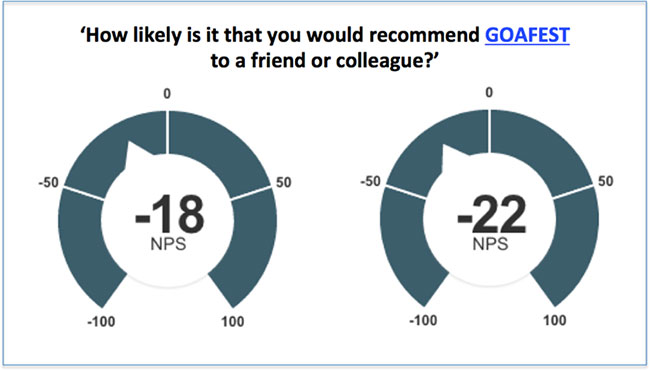
    This is reflected in the negative Net Promoter Score – 18 (Delegates) and -22 (Non-delegates) for Goafest. This is in response to the simple statement ‘How likely is it that you would recommend Goafest to a friend or colleague?’  with the standard 10-point scale. This is worrying, and I hope this year GoaFest will overall improve the score.


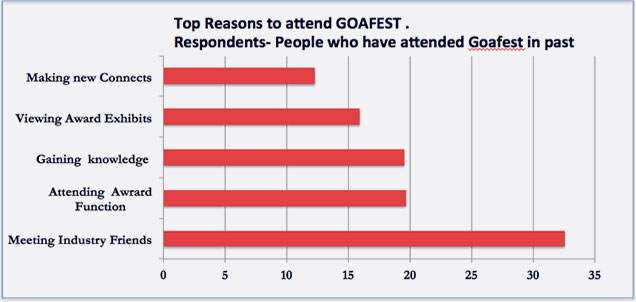
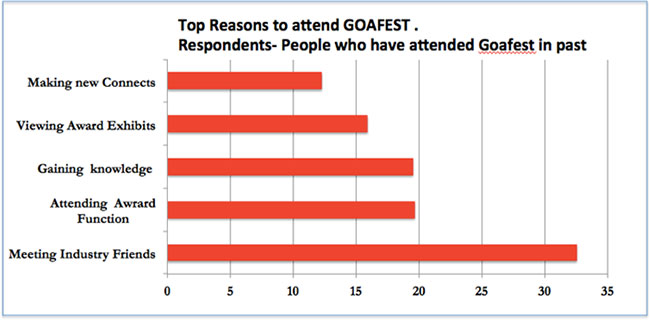
    Just concentration on delegates, the Top 5 motivations/ reason to attend Goafest seemed puzzling. Whereas non-delegates seem to be motivated on the thought of gaining knowledge! Making new business prospects and meeting industry friends among a host of other fragmented reasons.


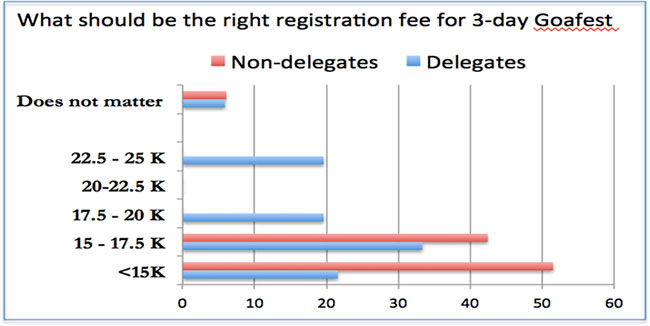
    Another interesting point to note is the spiraling cost of registration. Though it is much lower than the fee charged by international festivals, we cannot use that as a reference point. So, Rs 15,000 to Rs 17,500 seem to be a much-preferred band of the registration fee. Most do believe that the under-30 subsidised fee is un-necessarily inflating the fee they have to pay and the festival team should re-look at it.


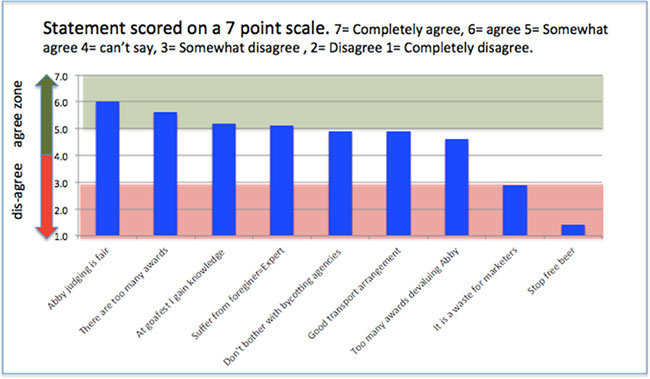
    Now, more importantly, the respondent believed that Abby judging is fair. However, they also say that there are too many awards, which devalue it.


    The delegates do gain knowledge at Goafest and they do believe that the festival suffers from ‘foreigner = expert’ complex. The data did capture a minority wanting to consider stopping free beer! Thankfully, they did not share their identity.


    Before I close, let me share that there is a strong demand for complete package that includes registration, stay, local transport, meals and travel. Before we deny it, we must realise that such packages are designed for events abroad. Maybe something like this will benefit a lot more individuals and small agencies. In my view, it is worth considering.


    So, here I close, wishing Goafest and the delegates all the best.


    PS: Before I say goodbye, let me plug something interesting. Last year, the last after-hours party was in full swing and by 2 am. I was a bit tipsy too. Right near outside the party area, I met a lady. What started with a cool borrowing of a smoke, extended long into highly engrossing conversation on nothing, in particular, here is the rider: I don’t know who she was, and it is equally likely that she may not remember me. I was the person who shared the last few cigarettes at a time when there was no place to get fresh stocks from. So, the young lady in question, if you are attending Goafest this year too, do connect with me. And yes, you can always find me around 1130, you know where!