Category: BLOGS

  • The Anchor: 5 ways clients can get the best out of their agency

    By Anirudha Mukhedkar


    #1 Intellectual stimulation

    Keeping the agency intellectually stimulated works like a magnet. The best people in the agency will want to be on your business. Because great people love great challenges.


    #2 Creative Sensitivity

    This is not about creative freedom or degree of interference. This is plain, simple human sensitivity about a critical function that the agency performs. Great creativity is all about risk-taking. Which is why creative people can demonstrate belief and passion in their work. This can often get interpreted as pig-headedness. And it takes experience and sensitivity to be able to separate the two. Importantly, this does not mean that creative people or their work needs mollycoddling or tactful handling. Quite the contrary.


    Inspire them with the brief. Show respect for their work. And be honest and consistent with your feedback.


    #3 Financial Security

    Fundamentally, your agency must believe that you want them to make a healthy profit. Clients who negotiate with an agency on every job might get the best deal, but are not likely to get the best out of their agency over the long term.


    #4 Recognition

    The agency business does not pay as well as it used to some years ago. The smart people working on your business could earn as much as double their current salaries if they were in a different industry. They are here because they love the work they do. They love the communication business. Their relationship with their work is more emotional than contractual. Words of praise, letters of recognition and public acknowledgement of the agencies and individuals work way better than any other incentive.


    They will love you. They will always give their best for you.


    #5 Expectation and Accountability

    Apart from all the nice things that you can do for your agency, sometimes to get the best out of them you need to give the agency a well-defined framework to operate in. It is critical that you spell out your expectations from the agency and the individuals working on your business. This will help not only set benchmarks and define standards, in some cases will inspire your agency to exceed expectations.


    Anirudha Mukhedkar is the founder and CEO of Plan B


  • Ranjona Banerji: When Arnab congratulated Rajat Sharma…

    By Ranjona Banerji


    The business dealings of Robert Vadra and the DLF group remained top of the news. Discussions were held on the major English news channels but of the lot, Karan Thapar’s Last Word and Sagorika Ghose’s Face the Nation, both on CNN-IBN, stood out. That is mainly because unlike Arnab Goswami on Times Now and Nidhi Razdab on NDTV (I did not check Headlines Today last night), neither Ghose nor Thapar invited the spokespersons of political parties to take part. Every time I skipped past Times Now, there was either the BJP’s Meenakshi Lekhi screeching at dangerous decibel levels or the Congress’s Manish Tiwari trying to answer her with big words which only prove that he did well in vocabulary in school. I don’t know if the other guests got a chance to speak.


    On The Last Word, Shalini Singh of the Hindu was clear that there was some hanky-panky in the Vadra-DLF deal, tax expert Subhash Lakhotia was equally sure there was not and so Thapar had to play referee, Gurcharan Das said he needed more information and lawyer Dushyant Dave said it was common for the relatives of all politicians to behave extraordinarily rich. It seemed clear though that based on the revelations made so far, no laws had been broken by Vadra or DLF. The link between Vadra getting unsecured loans/property from DLF and DLF getting land or other benefits from the Haryana government has not been established. Until then, further action is not likely.


    On Face The Nation, all the participants – Madhu Kishwar of Manushi, Siddharth Vardarajan of The Hindu and Jonathan Shanin of Caravan magazine – agreed that the Indian media usually pussyfoots around political figures and does not subject them to intense scrutiny.


    The only problem with the show was Ghose’s unfortunate habit of speaking over her guests or speaking on their behalf. She asked Vardarajan a question about the different ways that the Congress and the BJP handled the media and then hijacked the answer when he had barely begun his explanation. Perhaps all Indian TV editors should give themselves a 10-minute window where they speak and the rest of the world listens. After that, they should allow their guests to have their say.


    It is not news of course that the Indian media is usually respectful of important people and it is also true that important people in India will not tolerate it any other way. The tough interview is rare. Personal lives are also usually still sacrosanct in India. Some will prefer it this way. But while we don’t have to go as far as stalking Kate Middleton sunbathing on holiday, a little extra scrutiny of powerful people would not go amiss.


    **


    India TV’s sting operation on cricket umpires involved in match-fixing – in this instance to do with the Sri Lanka league – was the other news of the day. Rajat Sharma of India TV found himself on Times Now, thanks to the largesse of Goswami who most graciously congratulated Sharma, who looked a bit bemused: should he crow over his journalistic coup or should he be mindful of the tremendous honour bestowed on him by Times Now by acknowledging him?


    **


    The suicide of singer Asha Bhosle’s daughter Varsha Bhosle is a blow for the family and for the journalistic community. Varsha had been a very popular columnist for rediff.com for many years and was known for her scathing style and her support for the Hindu right wing. Her column stopped some years ago. She had been suffering from depression and attempted suicide a couple of times before.


  • Anil Thakraney: Bigg Boss: Same chhe!

    By Anil Thakraney


    Readers will recall I was not very approving of the idea of making the Bigg Boss house clean and healthy. Media reports had suggested that the channel, the producer and Shri Salman Khan had decided that the sixth edition would be controversy-free and would cater to family viewing.  Well, it’s been only two episodes (at the time of writing this) and I can already tell you that all the cleanliness talk was a lot of hot air. The stage is all set for ugly face-offs.


    This is clearly indicated in the casting itself. Same old struggling television actors who would look for cheap publicity to revive their fading careers. A recently divorced couple… naturally there will be angst between them. A controversy-seeking cartoonist. A mad hatter hair stylist. The motor-mouth Sidhu. A raunchy item girl desperate for instant exposure (pun intended). And therefore what you can expect very, very soon is some really ugly exchanges, a lot of dirty dancing, blazing fireworks and many beeps. Exactly what Bigg Boss has been famous for in all the previous editions. So then where’s the promised hygiene?


    Well, either the channel chickened out at the last minute, or the pre-publicity promise was a ploy to quietly slip the show into the prime time slot. Whatever be the reason, Bigg Boss 6 is the same old, same old fare. And that, if you ask me, is a wise decision, and I said so in my earlier post as well. Without the garam masala, this particular format just won’t work. Bigg Boss is targeted at the low-brow audiences, who look for machhi-market fights. And the current lot appears very keen and able to deliver on that front.


    One thing the channel, Colors, will struggle with is this: Having moved the show to the 9pm slot, they will have to walk the ugliness line very carefully, and be ready to censor out a whole lot of goodies. Else, they will come under the scanner of the morality brigade very quickly, and risk being booted out of prime time. That indeed is the problem with Bigg Boss; Karo toh maro, nahin karo toh bhi maro!


    ***


    PS: Haha. Wicked and edgy commercial from Virgin Mobile. Love their attitude. Because it helps an ordinary promise becomes super fun. This is the way to encash an irreverent brand personality.


    [vimeo width=”400″ height=”220″]http://vimeo.com/48355303[/vimeo]

  • The Anchor: 5 trends to watch out for in the online travel portal space

    By Arun Athiappan


    #1 Socialisation of travel portals

    Travel portals will start integrating their offerings with social media sites like Facebook and offer users ability to discuss their travel plans, options and choices with their social media buddies. Leveraging social media as a customer engagement and grievance redressal forum will give online portals immense access to next generation customers.


    #2 Ubiquitous travel shopping

    Travel shopping will become ubiquitous, available anywhere and everywhere. Shopping for travel tickets has moved from offline agents to online web based portals. The next move is to mobile devices. Most of the next generation internet users will experience the internet through mobile devices long before they do it through fixed computing devices. Such users will prefer the mobile over other devices for all their shopping needs including travel. For those who are only comfortable booking offline, there will be an explosion of options as any commercial establishment having access to the internet has the ability to become a travel boutique.


    #3 User experience as a differentiator

    Price as a driving factor for sales has reached saturation point and portals today find it hard to survive by competing on price. Most portals today offer a similar user experience, but a few have started to break the mould and differentiate themselves by providing a better user experience. Better organization of information presented, user ratings, speeding up the transaction cycles, more information on travels, destinations, weather etc. are a few options to better the user experience. Sites like Hipmunk are betting on user experience to be their only differentiator.


    #4 Rise of bus ticket booking portals

    The travel portal space has long been dominated by airline ticketing portals and the lone train ticket portal. The last couple of years have seen the raise of bus ticketing portals in the south and west of India. The bus travel industry accounts for most of the travel and only around 5 to 6 percent of it is online today. We can see rapid growth in this segment as more operators come online. The bus industry itself is seeing multi-fold growth and is poised to treble in the next five years.


    #5 Info, info and more info!!!

    Travel sites can be classified into travel inspiration sites and travel shopping sites. Travel inspiration sites are sites that do not do the actual booking, but provide all information required that inspire the traveller to make the right shopping decision. Such decisions may be based on price comparison, consumer ratings, amenities provided, services offered etc.. Customers can look forward to many such sites that will provide them comprehensive info to make their shopping decision.


    Arun Athiappan is Co-Founder and CEO, TicketGoose.com


  • Young Track by Samyak Chakrabarty | Why SEC data doesn’t reflect youth behaviour effectively

    Samyak Chakrabarty

    What’s a 23-year-old writing a column on a site where the average age of columnists is… ? Ok, ok, we won’t reveal that number, but like it or not the youth constitute a majority of India’s population. Since the last few years, young Samyak Chakrabarty has been in and around media events and offices with his vision of how the youth can be targeted.


    In this period, he has organized a few conferences, participated in several of them in India and abroad, and works as Chief Youth Marketer with the DDB Mudra group. He’s organized a TedX youth conference in Mumbai, was invited to meet Hillary Clinton when she visited India and has co-authored a book ‘Generation Einstein 3.0 – India version’.


    Samyak’s column will appear on Wednesdays and as the title suggests, it will track the young – specifically keeping in mind the advertising, media and marketing fraternity. The column started last week, and we are happy to present the second in the series  – Ed


    Very recently I read the latest India SEC report which really made me think: does any of this make sense when I look at youth consumption and purchase behaviour? After critically observing patterns of youngsters from varied backgrounds, I realized that at many points the standard classifications fail to justify much of the spending in this age group (16 to 28, urban, male and female) since the larger money outflow is coming from the most unexpected lot. Thinking aloud, here are three reasons why I think so:


    1. Parents’ income does not always necessarily trickle to the kids

    I compared the lifestyle and backgrounds of two 17-year-old males studying in the same college in South Mumbai. Paras’s father, a wealthy businessman had an annual income of Rs 75 lakh and lived in a plush apartment on Marine Drive. Whereas Amit lived in Bandra and his father earned about Rs 18 lakh a year working as a senior accountant in an MNC. Obviously, it would seem that Paras would fall under SEC A+ and Amit in SEC B. But, when I compared both their possessions (gadgets, variety of clothes and smartphone apps) and expenditures (nightclubs, restaurants and outings with the GF) – Amit’s life seemed more interesting since he had the latest iPhone, went to the best of bars and all that. Paras on the other hand only got a pocket allowance of Rs 1000 a week and travelled by local trains all that time, even though he had two luxury sedans in the garage. Typically, brands would target him vs Amit since Paras’s background made him a potential spender on premium products. The truth is otherwise, only because Amit’s dad wanted to give his son all that he could never have in his youth as compared to Paras’ dad who wanted his son to get everything the hard way. This is an everyday occurrence in many homes, but realities like these which don’t reflect in algorithms and statistical formulae can prove some very expensive brand targeting decisions wrong.


    2. Income levels fluctuate until 24

    A number of college students, in metro towns especially, are doing a number of entrepreneurial activities as one-offs (such as events, paid blogging, part-time internships etc) which for a certain period of time give them access to a lot of money. So let’s assume, in the summer break some students occupy themselves with a lucrative activity. During that period, the profit could enable them to buy pretty much any gadget, meal, excursion or extravagance that the twins in Antilla could (apart from the private jets and Maybachs ofcourse). But then due to zero knowledge about the virtues of saving up at this age, the money is over as quick as it came and there is no scope for continuing their buying spree. Hence marketing to this set could prove to be a loss-making investment. Through this example, which of course is not an everyday one, I am trying to indicate that the personal income of college students is never sustainable, hence a lot of their buying decisions are more on impulse than well thought out.


    3. Even with a lower income of first jobbers, there is more willingness to spend

    Blame the credit card for this, but many first jobbers tend to spend more than what they actually earn. This is very often seen when it comes to call centre employees or in our own advertising industry, where based on income levels the ability to buy certain products seems bleak but they always end up having it all – like a car, smartphone, Europe trips to name a few. Hence in such a case, brands while marketing should analyze their potential client base at the convergence of mindset and the income level to be able to (as much as possible) accurately identify them.


    In my opinion, the most practical method would be to classify youngsters based on “Mindsets” rather than SEC alone, since that way one could get more of an insight into factors which will trigger purchase and a better understanding of the type/brand of products they would be most likely to buy. It is also important to consider that the time difference between wanting something and acquiring it has reduced drastically for the enterprising young born post-1990, and this has nothing to do with present income since they find many innovative ways of working smart to make that quick buck.

     

  • Anil Thakraney: Brand Big B: Over-used and over-abused

    By Anil Thakraney


    At the outset, let me make it clear that I am dead against the use of celebs in advertising. It is more often than not the last refuge of brand managers who either aren’t confident of their product, or are doubtful of their marketing skills. Celebs are usually a crutch used by idea-less marketers.


    Having said that, it is equally true that celebrities, especially movie stars and cricketers, are a rage in Indian advertising, so it’s a marketing reality we have to live with. And amongst these worthies, Amitabh Bachchan has been a hot ad favourite since the year 2000, when KBC totally changed his fortunes. The number of contracts he signs may have gone down a bit in more recent years, but according to some reports, he still pockets Rs 30 to 40 crores per annum on endorsement deals, and that’s no laughing matter. It’s a lot more than he earns in them movies, and he bags the deals even if his flicks tank at the box office, which they often do.


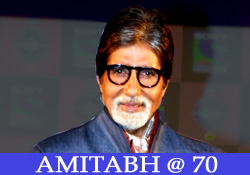
    The reason why Bachchan continues to delight brand managers, despite turning 70 today (happy birthday!), is his perceived persona. His appeal cuts across age, social, economic and geographical barriers. Few Indian celebrities can boast of this. Big B is perceived by the masses as a credible, loyal, lively, kind, good-hearted, gentle old man. (This image, in large part, is courtesy KBC.) And brand managers dearly hope that a part of this imagery rubs off on their own brands. What they forget, of course, is that if the man endorses too many brands (which he does), his association with a particular brand gets vastly diminished.
     

    One other thing: Certain brand managers use Bachchan after some deal of thought has been given to the brand connect. Others use him thoughtlessly, leading to hilarious and senseless advertising. I’ll give you a few examples. Big B works for Binani Cement because of the association of longevity and strength. Parker Pens, because you expect a refined man of his age to use a pen, and be selective about the brand. Dabur, because their products usually talk good health, and Bachchan, even at 70, seems to be going strong.


    However, his endorsement of many other brands makes you cringe or giggle. Gujarat Tourism. What connection does Bachchan have with that state? Was Narendra Modi thinking when he hired his services? Navratna Hair Oil. The world and his grandfather believe we are dealing with a lovely wig out here. Maruti Versa. The Bachchans won’t even gift such a low-end, down market vehicle to the Pratiksha gardener. And the way Bachchan is made to belt out telephone numbers for Just Dial, you want to bury yourself in the ground.


    People, go ahead and use Bachchan in your ads if you must. But please use him well. This man is a living legend. Let’s not kill that hard-earned title.


  • Ranjona Banerji: Claiming credit for the exposes

    By Ranjona Banerji


    Arnab Goswami was in fine form on Wednesday night and I’m being sincere here, not snarky. He took on two subjects and did not allow any waffling or humbug from his contestants, sorry, studio guests. The first subject was the planned martyrs memorial in the Golden Temple in Amritsar and the honours given to the families of killers of former army chief General AS Vaidya. The revival of the Khalistani movement in Punjab – or at least the apparently tacit support given to Khalistani terrorists by the current SAD-BJP government is back in focus especially after the attack on former Lt General KS Brar in London.


    Goswami went to the heart of the issue: was SAD reluctant to take on terrorist-sympathisers and did it find nothing reprehensible in honouring killers? Kiranjot Kaur, of the SGPC tried every trick the book to deflect the issue of sympathy for the Khalistani movement in spite of sufficient evidence to the contrary from hurt sentiments after Operation Blue Star to “you don’t understand the history” and presenting a garbled version of her own. Manjit Singh of the Akali Dal would not answer questions about how weapons landed up within the Golden Temple. The army representatives were furious about Vaidya’s killers being honoured and the proposed memorial for Khalistani terrorists – retired brigadier V Mahalingam was particularly scathing.


    This debate was not just vital because it gave space to the Khalistani problem but also because Goswami did not allow his guests to run away from the topic towards their own agendas. I would have liked however someone to take on Harsimrat Kaur Badal, daughter in law of Punjab chief minister Parkash Singh Badal and MP from Bathinda, for her comment that the Congress should concentrate on “their government and their country”. I personally find this a deeply offensive remark and think it needs further exploration; at the very least what Badal considers to be her country.


    This attitude continued in the next debate on the growing incidence of rape in Haryana, especially in the light of former chief minister Om Prakash Chauthala’s endorsement of the khap panchayat suggestion that girls get married early to prevent rapes. Goswami, who has always taken a strong feminist stance, did not allow any obfuscation of this issue either from the men on the panel and the politicians of Haryana. All credit.


    **


    Rahul Kanwal of Headlines Today claimed that the channel had done a long investigation into the Zakir Husain Trust run by Union law minister Salman Khurshid and his wife Louise Fernandes and found many discrepancies. However, Arvind Kejriwal also claimed credit for exposing the trust. Am confused.


    For instance, so far with the irrigation scam in Maharashtra, the Times of India, CNN-IBN, Anjali Damania, Kirit Somaiya and now Sreenivasan Jain of NDTV have all claimed that they exposed it. Whodunit?


    **


    Thursday morning’s newspapers were a great disappointment, after all the excitement on TV the night before. They were bland and boring and paid lip service to the big issues. The prime minister’s anodyne plan to fix corruption got the most play.


    The Times of India was most disappointing of all, as it played into the hands of an advertiser and not only restricted the size of its newspaper but also printed the entire paper except the opening double spread in single sheets. This was so it could have 16 pages with the notes from the musical scale on each page (Sa re ga ma and so on). Exactly what this had to do with a new Nissan car I have no clue. Perhaps the car does something really annoying like sing to you?


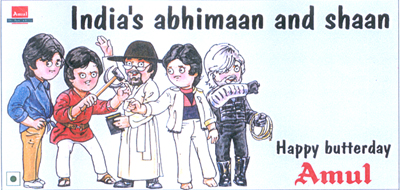
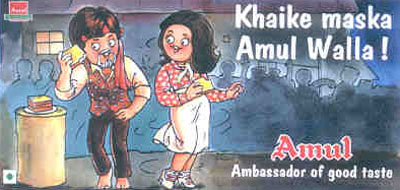
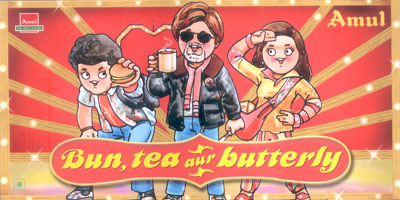
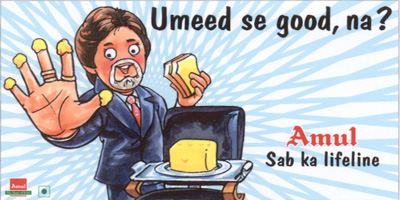
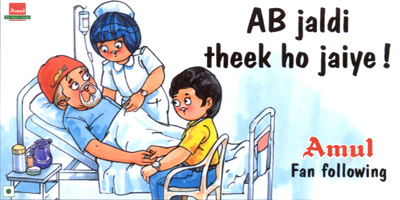
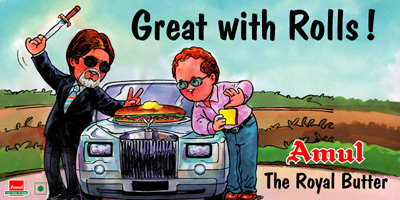
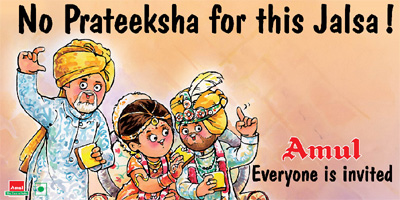
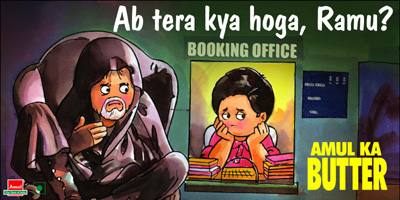
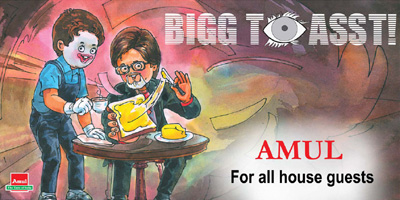
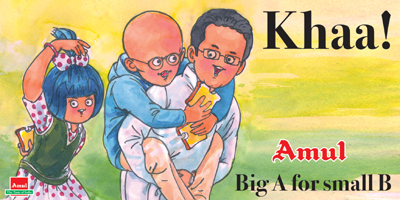
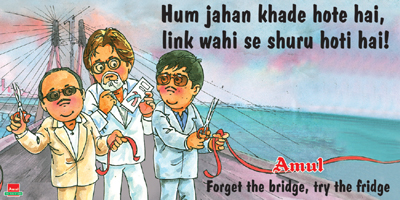
  • The Anchor: The Amitabh Bachchan story via Amul ads

    By now you know that we love doing these. We of course love Amul ads and are also fans of Amitabh Bachchan. We find Amul ads – mostly on billboards and now also in the papers, a great chronicler of what’s been top-of-mind in the world. And when Big B Amitabh Bachchan does anything, the world watches!


    Here are 18 ads that we found handy. If we’ve missed out on any, please inbox them to us at edior@mxmindia.com.


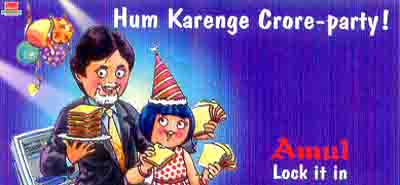
    The euphoria over the hugely popular game show ‘Kaun Banega Crorepati’ continues. – July 2000


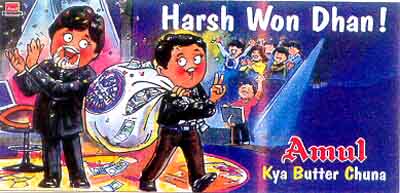
    On a contestant winning the jackpot on the TV game show – October – 2000


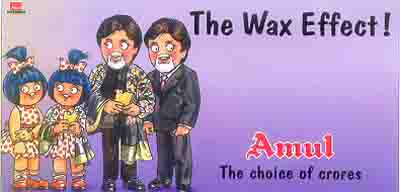
    On the unveiling of Amitabh Bachchan’s wax statue at Madame Tussauds – December 2000


    On Amitabh Bachchan’s 60th Birthday. – October 2002


    Bollywood star Amitabh Bachchan brand ambassador of Uttar Pradesh – October 2003


    Take off on the film Bunty aur Babli – June 2005


    On KBC 2 – August 2005


    Wishing him a speedy recovery of intestinal ailment – December 2005


    On receiving a Rolls Royce Phantom as a gift for his performance in Eklavya from producer-director Vidhu Vinod Chopra – March 2007


    On son Abhishek’s wedding with Aishwarya at their residence Prateeksha in Mumbai – April 2007.


    Box-office debacle of Ram Gopal Verma’s Bollywood movie Aag – Arrival of evil, a remake of yesteryear classic Sholay – September 2007.


    Playing a pop psychologist to inmates of the Bigg Boss house – Sept 2009.


    On the success of Paa – December 2009


    Controversy surrounding his presence at the inauguration of the second carriageway on the Worli-Bandra Sea Link – March 2010


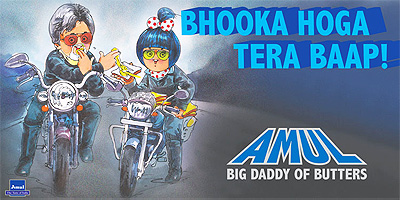
    On release of’Bbuddah Hoga Tera Baap’- July 2011


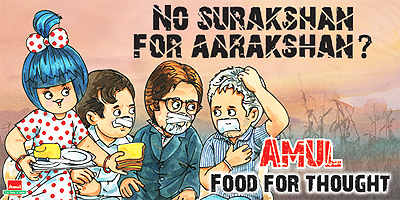
    Controversy surrounding ‘Aarakshan’ – August 2011


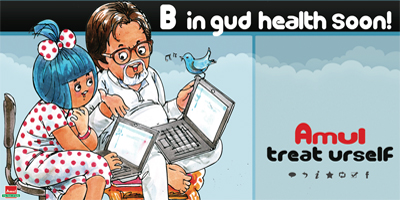
    Wishing the superstar a speedy recovery – February 2012


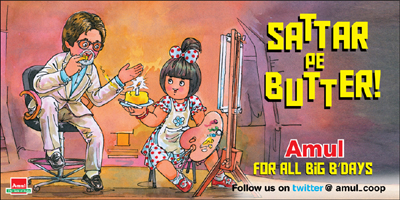
    Birthday Greetings on his 70th Birthday – October 2012


    Compiled by Meghna Sharma


  • The Anchor: 10 News TV faces one would like to see in the Bigg Boss house (and why)

    By A N Chorrea


    We now know the 15 people holed up in the Bigg Boss house. Of course only two or three of them will last all the days, as we will see an elimination almost every week.


    But what if there was one with just news television anchors, here’s a quick list of those we would like to see on the show (in alphabetical order of first names):


    1. Abhigyan Prakash

    Ever since I attended a star-studded birthday party of his in Mumbai a few years back, I have been majorly impressed by the man. His channel is not the #1 and he is not projected as the face of the channel, but he’s one who could well last out the 80-odd days.


    2. Arnab Goswami

    Arnab Goswami is a must-see face of Indian news television. Though we think he’ll either be quiet all the time (and not want to make a fool of himself). He will also want to be evicted early so that he can be back on the tube soonest. After all, India wants to know!


    3. Ashutosh

    The man who knows most about the Anna Hazare movement is sure to engage everyone into some heated discussions on Bigg Boss… on politics and his views on what should be done for the country.


    4. Barkha Dutt

    News television’s first lady may have escaped the Radia controversy, but has been lying low ever since. The Bigg Boss role could well see her get back her lost equity.


    5. Deepak Chaurasia

    The most colourful editor on news television is also one of its most connected. He’s a necessary force to have around to keep the house in check.


    6. Mini Menon

    Okay, she’s not here because we needed one more lady to keep Barkha company. La Dutt is enough match for all the men. But she can possibly give the Bigg Boss house and show a slightly different, classy flavour.


    7. Rahul Kanwal

    As the TV Today network’s most visible face, he is a natural choice for the house, but we doubt if he’s going to want to miss on the news TV lights for too long.


    8. Rajdeep Sardesai

    As the seniormost member of the house, he’s going to ensure that everyone feels at home, but given all that’s happening in the political world, one doubts whether you want to see him holed up in for too long.


    9. Shrivardhan Trivedi

    The man who scares us all with Sansani on ABP News, but also the man who will add the necessary colour to the house given that he’s one of the more popular faces on news TV, so what if it’s essentially a group of editors around.


    10. Udayan Mukherjee

    There’s much too much happening in the market for business news TV’s Amitabh Bachchan to be out in Bigg Boss, but this is just a hypothetical list after all. Would be interesting though to see how well Udayan mingles with the rest of the gang.


     A N Chorrea is a senior industryperson who prefers to write under a pseudonym


  • Ranjona Banerji: Don’t take readers for granted

    By Ranjona Banerji


    Amitabh Bachchan’s 70th birthday was brought in with great excitement but I really don’t know what happened to it after that. TV greats did interviews with the super-great or maybe he’s now meta-great? And there was a party, I was told, with breathless excitement. And this Friday morning, I see a photograph of the meta-great man touching Kokilaben Ambani’s feet in the Economic Times.


    Make of that what you will.


    Next to that telling photograph is a charming piece on the “Kejriwal” by Vikram Doctor. This egg-cheese-chillies-bread combo is a Bombay special breakfast treat or any time snack. Doctor tells us how it came about, who makes it best and why it isn’t related to the RTI activist turned politician.


    **


    I could not make head or tail of visit of the UK high commissioner to Gujarat. I lived in Gujarat for some years, with The Times of India, in the Modi era itself and met both the UK and US envoys, based in Delhi and Mumbai. This was after the riots. Modi also visited the UK in that time. The impression I got from reading the Times of India and Hindustan Times was that Modi was off to the UK again and the supposed ban on his entry and all had been forgiven for the riots. I read in the Indian Express that the UK government was keen to bolster business ties with India – which includes Gujarat of course – and also get justice for the three British nationals killed in the riots.


    When newspapers decided that everyone has watched television all day and therefore does not need to read the news but only the reaction to the news – as TOI and HT did with this story – they do the reader a great disservice. When I started out in journalism eight million years ago we were repeatedly told what we cannot take our readers for granted and therefore had to be lucid and informative. It was a good lesson especially for youthful exuberance which can be too clever by half.


    **


    This is a mere observation. But doesn’t it look like cricketer Virat Kohli is the latest victim of the media’s “amplify and then crucify” policy? He is being built up for greatness – which he may well be on his way to achieving – but a burden of expectation is also being dumped on him. The next slip – inevitable in all humans – and the nails will be sharpened and the cross will be hammered together. I am not sure that this is necessarily the best trend to ape from the west. How about objective appreciation and criticism? Naah, I’m clearly knocking on the doors of idealism.


    **


    The truth is that I haven’t watched even a tiny smidgeon of TV news all Thursday. It was an enlivening experience: My blood pressure is low and my tolerance quotient is high!


  • Debrief: Cinthol: Not awesome, it’s tiresome

    By Anil Thakraney


    After dude, rock star, chillax, etc, the next big cliché in the urban world is ‘awesome’. Everyone flings the word around for all sorts of things, and feels cool (another cliché!) about it. Which is why I knew it was a matter of time before an advertiser latched on to it.


    ‘Alive is Awesome’ is the new tagline for Cinthol. And the brand hopes to net Young India with it. The TVC is basically lads and ladettes having a blast holidaying on beautiful foreign locales. They play around with different forms of water bodies (not Mumbai gutters), as the jingle belts out awesomeness in the background.


    [youtube width=”400″ height=”220″]http://www.youtube.com/watch?v=qzpcIvJ77g0[/youtube]

    Doesn’t work, to put it simply. People being made to frolic in water to cue freshness has been done to death ever since Ms Karen Lunel went under a waterfall for Liril centuries ago. So there’s literally no freshness out here. Also, the word ‘awesome’ is likely to be understood only in the urban areas, so this limits Cinthol’s appeal. Doesn’t make sense to me, I thought this is a mass soap brand. Unless Godrej has decided to make Cinthol super premium, but the same old boring packaging doesn’t suggest so.


    However, I do envy the models, the production crew and the ad agency personnel who got a free ride to such exotic destinations. Awesome! This is what makes advertising life fun, fun, fun. Now if only all this merriment had happened over a half-decent TV commercial.


    Rating: (On a scale of 1-5): 0. Zero freshness.


  • The Anchor: 7 reasons print will never die (despite declining readership figures)

    By Pankaj Arora


    #1 Akhbar mein likha hai toh kuchh toh sahi hoga:

    People believe in the written/printed word over television. Huge debates happen around what is read. Depending on the news and its impact as well as the personal points of view, layered by the individuals’ leanings, great discussions at the ground level take place on any event. However, the final word on the subject is based on what is reported.


    #2 Bijli kahaan hai bhai:

    Power is a major issue in most parts of India. Even within the top 10 cities, not all have 24-hour of electricity. And it is not necessary that they will have electricity in the few precious minutes one has before setting out for the day. Mainline newspapers are read by the working people mostly in the morning. Most often, over the cup of morning tea.


    #3 Pura maamla hai kya?

    A basic desire to understand the issues in detail requires one to spend time and dwell on the reportage in depth. Different points of views of the different affected parties as well as the implications will help print stay relevant and around.


    #4 Ghar mein TV hai. Ek!

    Most families are a single-TV household. Unless there is a major event that has taken place, the content that is watched is what the whole family can see together. So crime and horror shows probably blank out the real issues. While news is watched, it is not preferred by the whole family. As a result, the first thing that most people do is wait for the paper to get a complete perspective.


    #5Special Discount! Sab se Sasta! Diwali Ka bumper offer! Sirf Lalaji Ki Dukaan mein.

    The boom in retail will continue to percolate down through India. With more and more malls coming up even in small towns the growth in Tier 2/3 towns will require local advertising. The housewife too, laps up the newspapers or its supplement to keep herself abreast of the great deals that are made available to her.


    #6 Bade Chowk mein aaj Morcha. Dehant ki khabar. Tuition Classes. Dance Masterji.

    Local news and issues are best covered through print and will encourage proliferation of local editions as is evident for the last five years.


    #7 Train/ Bus mein:

    During travel most of the time is used constructively to catch up on the news. As travel times keep increasing, the need will only increase.


    Pankaj Arora is National Planning Director at Triton Communications