Category: BLOGS

  • Anil Thakraney: Lucky De

    By Anil Thakraney


    Fifteen years ago, I was a huge fan of Shobhaa De (hope that’s the spelling she uses these days), in fact, she used to write for the magazine I edited. That’s because De was both, brutally honest and relevant in her columns. Along the way, she misplaced her mojo for unknown reasons, her writing lost the punch, De started openly pandering to the rich and famous, and the only place she has been making a mark is at the Page 3 parties. I lost all interest in her.


    Well, she’s hit the headlines again and boy, De must be lurving it. Suddenly, politicians of Maharashtra have joined forces to get after her, even the CM (no less!) has found it necessary to react to her tweet. A tweet, which our busy lady might have written more out of boredom than a desire for change, a tweet which is not even a fresh thought, Mumbai as a separate territory is an idea that’s been floating around for decades. But De got lucky, her tweet got picked up. And the Maha netas would want to get involved with emotive stuff like this because most of them are incapable of doing any real work for the city and the state. Guess Ms De will soon throw a big party to celebrate her return to relevance.


    Speaking for myself, I felt happy that the writer had found the long lost attitude, but that feeling was quickly demolished when I watched the lady defend her tweet on television. Ma’am has chickened out, you see. De claims she stands by the thought, but then throws in defeated words like ‘satire’, ‘I didn’t mean it’, etc. What a shame! She ought to have walked the talk, and demanded that Mumbai must get separate statehood. That’s what many Mumbaikars would want because everyone knows that the Maharashtra netas have collectively milked Mumbai of its cash but have done nothing in return for the once great city. Here was a chance for De to stand up for the right thing, to be a leader for change, a feisty leader we badly need. But she got cold feet and ducked out. Nope, the mojo isn’t back, but the phokat publicity is. Good for the lady, she can get cracking on her next salacious book. And the next happening party. Cheers!


    PS: Giffgaff is a UK mobile phone operator. They are different, and they don’t want consumers to shy away because they are different. And to make that point, the funky advertiser has used zombies in the commercial. It’s a novel idea but risky too, I found the ad quite scary!


    Anil Thakraney is a senior journalist and commentator. He is also Editor-at-Large, MxMIndia. The views expressed here are his own. He can be reached via Twitter at @anilthakraney


  • Anil Thakraney: An open letter to Katrina Kaif

    By Anil Thakraney


    Katrinaji is quite pissed off these days. No, not because Salman Khan pooped another one of her parties, but because a filmy mag carried pictures of her in a bikini, as she holidayed with boyfriend Ranbir in Ibiza. The actress has shot off an open letter to the media, and it’s printed below. Within the letter, in brackets, is my open letter to Ms Kaif.


    I am writing this to say that I feel most upset, distressed and invaded at my pictures published in a film magazine and which were carried by other media. (Er, Kats, you should feel thrilled. You look hot, happening and desirable in the bikini, the only thing the pictures do is sex up your already sexy image. Enjoy them, in fact, thank the photographer and the magazine. Careers of female stars in Bollywood are short-lived, so make the most while the Ibiza sun shines on your sexy bod.)


    The pictures were taken while I was on holiday by someone who, in an act of cowardice, has shot without permission and then used the pictures for commercial gain. (Er, Kats, the photographer would be a fool AND a coward if he failed to click. Had he been working for me, I would have sacked him without notice. The chap’s done a super job and deserves a huge pat on the back. Permission? Would you and lover boy Kapoor have granted your happy consent? Confession: I would have shot even more ‘revealing’ pictures.)


    There is a breed of journalism that preys on celebrities in the worst possible manner crossing all lines of privacy and decency. Running these pictures shows support for this school of journalism. (Er, Kats, the breed of journalism that raises my blood pressure is the one that prints/broadcasts puff pieces on you and your films. And that, sadly, is happening in plenty. As for privacy, the pictures were shot in a public place, so you guys asked for it. Instead of canoodling with RK on a beach, you should have chosen one of the unused studio rooms inside RK Studios in Chembur. Lots of privacy there.)


    I request that all media running these pictures please refrain from doing so. I have a wonderful relationship with the media and have been accessible to the media at all times. There is no reason for this furtive and invasive behaviour. (Er, Kats, you make yourself ‘accessible’ to the media only when a movie release is coming up, otherwise the poor reporters have to run around in circles to get that piddly sound byte. And yes, if you have chosen to be a movie star, furtive and invasive journalism becomes par for course. Don’t like it? You can return to your quiet life back in London. As a bonus, Sallubhai won’t be able to poop your party there, poor guy can’t get himself a UK visa.)


    PS: Hehehe. So this is how creative agencies actually function. Must-read for all clients before they sign up one.


    Link: http://www.mcsweeneys.net/articles/we-are-a-creative-agency-specializing-in-all-your-branding-needs


    Anil Thakraney is a senior journalist and commentator. He is also Editor-at-Large, MxMIndia. The views expressed here are his own. He can be reached via Twitter at @anilthakraney


  • Ranjona Banerji: Childish, hysterical, inane News TV

    By Ranjona Banerji


    The sheer childishness of Indian television news hits you like a gale force wind when you switch on after a break. This phenomenon is compounded by the fact that my newspaper vendor appears to be sulking with me! I have been surfing through all the news channels at our disposal and am hard-pressed to find one that I can stick with.


    The most amusing I could find was – nothing new here – Times Now. The little headlines for their poll on the next general elections (Jayalalitha juggernaut, Jagan blockbuster debut and so on) are reminiscent of the work of newspaper subs from the 1980s who have had to come up with a barrage of headlines while working on a special issue close to deadline. Anything goes. Of course, what was fun in the 1980s is just some fuddy-duddy stuff in 2013.


    The time warp that Indian TV is lost in however just relates to the written matter. No Wren and Martin or any other grammar books may be in evidence but the writing is arcane. But when it comes to the representation of news, then the sheer inanity of what is on offer is pure 21st century India. Skims the surface, minus depth and just careens from one hysterical breathless breaking bit of nothing to another.


    How about a comparison with the British TV coverage of the birth of the royal baby? They took a fairly trivial if engaging event and attempted to give it gravitas, sometimes with hilarious consequences. We take grave events and then try to make them as trivial as possible. It is an art which is quite commendable, if you look at it minus bias.


    The very strange personal squabble between two (great?) economists Amartya Sen and Jagdish Bhagwati is a good example. Usually, such worthies would have quarrelled in some inaccessible scholarly journal in suitably erudite jargon (one hopes…). Instead, they took each other on in the mainstream media and even more incredibly in the broadcast media. So you had Bhagwati saying that he had done everything first long before Sen, then you had Sen saying he was hurt by the personal attacks people made on him. This spilled over in their newspaper writings and interviews. The result was that their scholarly stars dimmed and their economic theories remained opaque. It is a worthy knack of the media to take intelligent academics and make them sound like gibbering fools.


    **


    Trying to understand the news through the social media is even funnier than television, it has to be admitted. Social media operates between derision and outrage which means that all events get skewed and it is impossible to make sense of anything. Yet, for all that, social media is an excellent aggregator of news and you can browse through a vast variety of articles and opinions from across the world which may not have otherwise come your way.


    **


    The fight in the media as far as the next Indian general elections are concerned has been between Narendra Modi and Rahul Gandhi. But one might suggest that the Indian electorate is given to complexity in its reactions and this simple two-horse race might just be a chimera that entertains but amounts to little more than a distraction from more substantial issues. (If I was a 21st century person, I would have used the erroneous substantive here and got away with it! Alas…)


    **


    Is it just me or do other people reach for the remote when news channels try to give us “positive” news? I knew it. Just me.


    Ranjona Banerji is a senior journalist and commentator based in Mumbai. She is also Contributing Editor, MxMIndia. She can be reached via Twitter at @ranjona. The views here are her own


  • Ranjona Banerji: Trashy Times & how media houses fail in human relations

    By Ranjona Banerji


    The Outlook Group has had to shut down three magazines, all of which were foreign franchises – People, Marie Claire and Geo. Any profit-making organisation is well within its rights to close down a business which is doing badly. But media houses seem to be severely short of any kind of human relations with their employees. Inevitably, employees are told at the last minute and shunted out immediately. We have seen it recently with Mid-Day closing down centres in Delhi and Bangalore and with NDTV Profit in Mumbai. The callousness can usually be attributed to managements or the corporate side of the journalism business.


    In the case of the three Outlook Group magazines, most editorial employees apparently found through a tweet by a writer not connected to the group. It also appears that the management sections of the magazines had been given prior warning. There is something disquieting – apart from distressing for those concerned – in the cavalier way in which media managements treat editorial staff. This trend has remained unchanged even though Admin and Personnel departments now have fancy names like “Human resources”. As anyone who has interacted with them will vouch for, there is little that is human about them.


    A labour court in Bandra has stayed the termination of services of 17 editorial staff of People magazine. The writer who revealed the closures on Twitter has written an article for newslaundry.com explaining her case and the attitude of the management. http://www.newslaundry.com/2013/07/a-bleak-outlook/ In this, Rajyasree Sen raises some pertinent points. One which stands out is the silence on the matter by Krishna Prasad, editor of the group’s flagship magazine, Outlook. Prasad has a very successful blog called churumuri, which often comments on media matters. It has been harsh – and rightly so – on the sacking of senior editorial staff of Forbes magazine. Sen questions churumuri’s silence when it comes to Outlook’s treatment of its staff in his blog: http://churumuri.wordpress.com/. I could not find any references to this issue on churumuri either.


    The problem however is obvious and it is also why journalists rarely come together in unity for causes any more. There are innumerable clichés I could use but they all boil down to one thing: money. No one is going a rock a boat that they’re perched on. As long as the salary lands in your bank account every month, it is better to remain silent about management behaviour and transgressions. I do not know how much clout editors have with their owners and senior managers any more. Earlier, there were some signs of support, of editors fighting for their staff or showing solidarity. Now solidarity within the profession seems to be in short supply. More than three years outside a newspaper organisation has taught me this much: journalism is now a cut-throat dog-eat-dog business. Perhaps if any of us were the editor of Outlook (!), we would also be silent on this matter no matter how much venom we poured on other media groups for their misbehaviour! But the corollary is that if you cannot bite the hand that feeds you, can you be considered fair when you criticise other media groups?


    **


    The Times of India sometimes manages to surprise even hardened cynics. Because of a little storm on Twitter, India’s largest read English newspaper has been exposed for carrying the most unprintable bilge on its website. Under its lifestyle section, masquerading as gender relations, the website has been carrying a series of articles about how to have sex, positions women like and so on.


    They appeared to have been written by the same person and are not only badly written and in bad taste but also have little journalistic reason for being there. It is like a monkey trying to imitate the Cosmopolitan style of 57 ways to suck your man’s toes and so on. If you found the Cosmo articles silly, you cannot imagine how the TOI website versions would upset you. I have to use the past tense because the articles have been removed from the website after the criticism. It makes you wonder if there had been no editorial control so far on what this young person had been writing. I am loath to name him or her but the name is doing the rounds on the social media. It is also evident that whoever wrote these appeared not just to be misogynistic (women do not bathe often and are smelly are two popular themes) but also not very experienced in sexual matters.


    This comment on the TOI website by Huffington Post encapsulates the disgust and scorn that has been apparent on social media for the last couple of days: http://www.huffingtonpost.ca/2013/07/30/times-of-india-women-facts_n_3677378.html? utm_hp_ref=fb&src=sp&comm_ref=false&utm_content=buffer266a7&utm_source= buffer&utm_medium=twitter&utm_campaign=Buffer


    Without being moralistic about it, why should a reputed newspaper’s website have to resort this kind of bordering-on-bad-porn writing? The articles had no corroborations or quotes or access to surveys. They were not funny or even sexy. The writer appeared to have no qualifications to hold forth on the ‘5 sex positions that women die for’. It was like someone senior said, “Let’s have some writing on sex” and someone junior was put on the job.


    I have been told that most newspapers have similar kinds of “stories” on their websites. True?


    Ranjona Banerji is a senior journalist and commentator based in Mumbai. She is also Contributing Editor, MxMIndia. She can be reached via Twitter at @ranjona. The views here are her own


  • Debrief: Perk Double: Mobile wedding

    By Anil Thakraney


    Surprising solution from Perk Double, and it’s fun too. They’ve taken that often used filmi line, ‘Bhaag kar shaadi karte hain’ literally, resulting in lots of masti and madness.


    The brand promise is full-on energy. A young couple is not sure their folks would agree to the marriage, and so they decide to run away. But instead of fleeing to a desolate temple on a hilly terrain (as it happens in them movies), the two get married jogging on the highway. With all the shor sharaba and the rituals of a traditional shaadi, provided by fellow travellers. All because the couple gobbled down Perk Double, and is loaded with the energy for a marriage on the run.


    Well, it’s crazy stuff, but a choc brand needs some of it to smash the clutter. Therefore there’s no question of logically analysing this one, you just sit back and enjoy. One thing’s for sure: Young viewers, the target market for Perk, will have a blast with this one. I’ll only add my own little concern: After all that road running, the couple’s suhaag raat ain’t gonna happen, not even if they devour a whole carton of Perk Double. A Viagra equivalent can consider a sequel to this ad.


    Rating: (On a scale of 1-5): 3.5 Wacko ad, right for this category


    Anil Thakraney is a senior journalist and commentator. He is also Editor-at-Large, MxMIndia. The views of the writer are his own. He can be reached via Twitter at @anilthakraney


  • Ranjona Banerji: More questions, less answers on Durga Nagpal

    By Ranjona Banerji


    I wouldn’t want to be in Durga Shakti Nagpal’s shoes right now. The IAS officer from Uttar Pradesh is being held up as a beacon of bravery and honesty by the media and by political parties trying to get mileage out of just about anything. Television seeks to sensationalize because it feels that’s what it needs to stay relevant. And print gasps along behind, trying to catch up.


    The more the media calls Nagpal “the brave officer” and “an honest officer”, the more frightened the brave and honest officer should feel. Whenever you are set up too high, those that set you up will ensure that your fall is as dramatic and certainly more painful.


    The curious thing is, that the reason why Nagpal is being projected as brave and honest is somewhat obscured. Was it because she took on illegal sand miners? Was it because she demolished a wall of a mosque? Or was the mosque an excuse to prevent her interference in sand minding? Did the villagers object to her demolishing the wall of the mosque to did they ask her to wait until after Ramzan? Was there an intelligence report about the tensions in the village and the chance of a communal flare-up or not? Was she brave and honest or just arrogant?


    There are no clear answers to any of these questions. There are conflicting reports in different media. And there is nothing from the IAS officer herself. There is speculation about how her parents named her most aptly after a goddess in warrior form and strength particularly female strength in the Hindu context. There are campaigns to protect brave and honest officers from evil politicians. There are opinion pieces on how the bureaucracy is stymied by political interference.


    The turnaround when it comes will reverse all these questions. We will find out how the bureaucracy is an evil money-grubbing enterprise, Machiavellian in its spirit as it hoodwinks the people and politicians. Brave and honest will cease to mean anything (if they mean anything now) and become jokey references about dishonest people. TV will quickly move on to something else because this story will have lost its traction.


    The media is what the media is. But there are some notable points. The first is that this campaign seems to have started without sufficient background work. How are we to form a reasonable opinion on what happened without adequate facts? And secondly, why start a campaign that is so open-ended and ridiculous. Tweets and online polls – let’s push the issue – might get the charge sheets against Nagpal dropped. But how will all this make any substantial difference to the way bureaucrats and politicians run this country?


    The attention around the India Against Corruption movement and the ignoring thereafter and the rise and fall of Anna Hazare must send shivers down Nagpal’s spine. Perhaps that is why she has been silent. And no intrepid (brave and honest?) reporter has managed so far to convey her take on the matter so far.


    If I was her, I would run as far and as fast as I could!


    Ranjona Banerji is a senior journalist and commentator based in Mumbai. She is also Contributing Editor, MxMIndia. She can be reached via Twitter at @ranjona. The views here are her own


  • Anil Thakraney: Media needs to go beyond Durga

    By Anil Thakraney


    Must say in the beginning, the media ODing on this lady called Durga Shakti was getting on my nerves. An IAS officer from Uttar Pradesh has a run-in with the state CM, toh bhaiyya main kya karoon? What has it got to do with me, and indeed, the rest of India? I assumed this was yet another case of the politics-obsessed Delhi-based journos going berserk over a localized story, unmindful of its irrelevance to the nation. Truth is, I am more worried about the huge pothole that’s sprouted near my building, one that almost demolished my car the other day.


    However, after I decided to (reluctantly) pay some attention to the story, I realized this is a bigger game, it’s about the clash of politics and bureaucracy. The media has decided to stand up for Ms Durga, and in principle, I support it. From what one gathers from the media reports, here’s an honest officer being victimized by her bosses. And a campaign for Durga will motivate the rest of the IAS officers in the nation, or so one hopes, though I am afraid nothing really will come from this. Because the hard reality is this: just as the netas, a majority of the babu class in India is corrupt, and the rot has sunk deep into the system. In fact, the two often collaborate to screw the nation. And to be fair, often the babus have no choice in the matter because the netas decide their destiny; if an upright babu fights against the system, he/she gets promptly suspended. In such a pathetic scenario, a media campaign for one officer doesn’t appear to be a game-changing idea.


    Therefore the media effort must instead focus on a structural change, one that will have a long-term impact on the nation. The idea should be to achieve greater autonomy and more power for the bureaucrats, so that they are armed with enough teeth to put checks and balances on chor netas, to stand up to them. I have no idea how that can be done, that’s for the experts to figure out. Perhaps one of the large media companies can set up a forum with these experts to arrive at possible solutions. And then put pressure on the political class to make it happen.


    And that shall be the real deal. If the media’s focus is only to get Ms Durga re-instated in her job, then the whole exercise is a waste of time. I’d rather the media worked harder on how to make the lethal pothole down my road go away. For good.


    PS: Really cool resignation letter. Hope creative people in the desi ad world write such witty letters when they quit. They should, after all there’s no client or client servicing exec around to punch holes. 🙂


    http://www.brainpickings.org/index.php/2013/07/25/sherwood-anderson-resignation-letter/?utm_source=buffer&utm_campaign=Buffer&utm_content=bufferf015e&utm_medium=twitter


    Anil Thakraney is a senior journalist and commentator. He is also Editor-at-Large, MxMIndia. The views expressed here are his own. He can be reached via Twitter at @anilthakraney


  • Debrief: Tata Nano: Awesomely poor

    By Anil Thakraney


    The Tata Nano guys just can’t seem to get it right. I have repeatedly pointed out in my posts that positioning the brand as the ‘poor man’s car’ was a terrible idea because even for the ‘poor man’ a car has to deliver status value. I have always believed it is this positioning which has cost Nano its sales. They finally seem to have corrected that, and are now targeting the urban youth. But they have badly screwed it up in the execution.


    ‘Celebrate Awesomeness’ is the message in the new commercial. It’s a nonsense ad, and contains the same stuff we have watched umpteenth number of times. Youngsters moving, shaking, jumping around, etc. The car is forced into this clichéd imagery. And at the end of the ad, you are left scratching your head on what just happened. After many exposures I spotted a magician, have no bloody idea what the chap is doing in the TVC.


    What a sorry mess! If the muddled Tata Nano suits are reading this, let me simplify life for them: All that Tata Nano has to do is play to its strength, which is its ‘cute and small’ shape. The communication’s entire focus should be on: Small is beautiful, small is smart, small is happening. It must make users of big cars feel like idiots. That’s the kind of power attitude that will make Nano desirable, not just to the youth, to old fogeys like myself.


    Shoving the word ‘Kickassness’ in the ad doesn’t make you kickass. You have to kick the ass of other cars to deserve that title.


    Rating: (On a scale of 1-5): Big Zero. Complete waste of ad spend.


    Anil Thakraney is a senior journalist and commentator. He is also Editor-at-Large, MxMIndia. The views of the writer are his own. He can be reached via Twitter at @anilthakraney


  • Ranjona Banerji: Hysteria and hypocrisy rule news media

    By Ranjona Banerji


    Was the news that the Supreme Court refused to stay the Bombay High Court order that the BCCI constitute another panel to probe into spot-fixing and betting in the IPL not important enough to make Page 1? The Hindustan Times obviously thought it did but strangely The Times of India directed the news to the sports pages.


    The imminent war with Pakistan as desired by our news channels and the fight over the wording of the statement about the killing of five Indian soldiers got Page 1 prominence. That is understandable, except that the infiltration into Indian territory by Pakistanis – terrorists or soldiers or both – has practically been forgotten in the shouting matches on TV and in print. The words used by the Indian defence minister and how and why he used those words and where he got them from is now of paramount importance.


    Given media’s poor understanding of geopolitics and its predilection to outright sentimental hysteria whenever soldiers are mentioned, it may be wiser for the future of the neighbourhood if the media’s focus remains on cricket rather than war. We can still blame Pakistan – Dawood Ibrahim the lynchpin of all crime in India still lives there happily – but we can perhaps avoid imminent destruction.


    Sarcasm apart, the lack of distinction between yellow and sensationalist journalism and more serious or at any rate thoughtful journalism in India is beginning to hurt us now. The race to reach the lowest common denominator cannot be healthy in the long run.


    **


    The Supreme Court has commented that the contents of the Radia tapes are more dangerous than the 2G scam. This is a remark which has to be taken very seriously. There can be little doubt that the amount of money lost to the exchequer in the sale of bandwidth to telecom companies, as estimated by the Comptroller and Auditor General, was terrifying. But there was much more that the taped conversations of Niira Radia, boss of a public relations company revealed. There was the nexus between journalists, business houses and politicians. There was the influence that corporates wielded in all spheres of official decision-making. There were the journalists who agreed to act as brokers or spokespersons for political parties and corporate houses.


    The tapes in fact showed the world the shady wheeling-dealing that runs India. The impact on the media at the time was substantial but fleeting. Barkha Dutt continued with NDTV in spite of fairly damning phone calls and Vir Sanghvi lost his much-looked-forward to political column in Hindustan Times but retained his food column for the same group. He suffered more and even tendered an apology. Dutt did not appear to suffer – at least not publicly – and also refused to apologise.


    The dent to Indian journalism however has not gone away. Even if members of the public did not necessarily understand what had happened and even if the media has not been affected in terms of revenue or reader or viewership loss, we know that our credibility has taken a beating. Even worse, we know that we do not trust each other. If the Supreme Court reopens discussion into the Radia tapes, can we afford to brush them under the carpet a second time?


    Ranjona Banerji is a senior journalist and commentator based in Mumbai. She is also Contributing Editor, MxMIndia. She can be reached via Twitter at @ranjona. The views here are her own


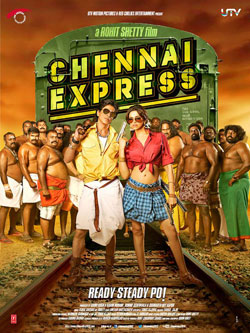
  • Reviewing the Reviews: Chennai Express gets 2-2.5 stars

    By Deepa Gahlot


    Chennai Express

    Director: Rohit Shetty

    Starring: Shah Rukh Khan, Deepika Padukone, Satyaraj and others:


    This is the kind of film that even the media agrees is critic-proof. No matter how awful a Rohit Shetty film may be, his success rate and Shah Rukh Khan’s stardom is enough to guarantee a massive opening. Add to the aggressive marketing and huge number of prints released, and it would take a miracle of another kind to lose on a gamble this big.


    Still, reviews were scathing, 2 and 2.5 star ratings, except for a couple of regulars prone to flattery. Deepika Padukone was the one who came out smelling of roses, and she was universally appreciated– faux accent and all.


    Anupama Chopra of Hindustan Times wrote, “Chennai Express plays neither to Rohit’s strengths nor to Shah Rukh’s. It’s a strangely sloppy mishmash of cheesy humour, half-hearted romance, half-baked emotion and head-banging action. The film is filled with gigantic men whose size functions as a punch line. Yes, some of it is funny. The locations are beautiful. And I enjoyed watching Deepika Padukone as Meena, the don’s daughter with the thick accent, who meets Rahul on Chennai Express and turns his life upside down. Padukone’s spirited performance – she even makes that accent attractive – helps to lift the film.


    But, mostly, Chennai Express is a slog. Rohit’s movies have never been about plot or character or performances. His films have only one function: to entertain you by whatever means necessary. But sadly a film specifically designed not to bore does exactly that.”


    Rajeev Masand of CNN-IBN rightly called it a bloated vanity project. “Some films are hard to make sense of. Others are just nonsense. Chennai Express, directed by Rohit Shetty, ticks both boxes. More than a quarter of the film is in Tamil, and hence incomprehensible if you’re unfamiliar with the language. The rest is a stew of puerile humor, lazy stereotypes, and way-over-the-top acting from a star who appears to be trying too hard.Shah Rukh Khan, who’s provided enough evidence to convince us that he can do comedy effortlessly (remember Kabhi Haan Kabhi Naa, DDLJ, and Main Hoon Na?), spends a chunk of this film referencing his earlier hits, and bouncing off the walls like the Energizer bunny. Could he possibly be overworking himself to compensate for the film’s tired writing? Because it’s clear from Chennai Express that Shetty has launched an elaborate expedition with a plot so thin, it could give a paper dosa a run for its money.”


    Sukanya Verma of rediff.com tried to be kind to SRK. “What stays put through and through is SRK’s incredible charisma and gusto as he lightens the screen with his unabashed buffoonery, visibly enjoying his role as entertainer while lampooning it just the same.  His effervescence is met with dazzling reciprocation in Deepika Padukone’s ‘Meena Washing Powder Meena’ who gets top billing in the opening credits. There’s so much control in the stunner’s performances since the last couple of films. And her dynamic comic timing even against faulty sensibilities is part of that evolution. Finally, did I get my ten laughs? Well, I came *this* close. By the time the count had reached seven, Chennai Express decided to shift tracks from droll comedy to dreadful drama.”


    Shubhra Gupta of Indian Express commented, “This could have been a good caper, in which madcap characters race around the countryside with other madcap characters in hot pursuit. Especially when Shah Rukh Khan is so willingly sending himself up as only he can, with such a knowing nudge-and-wink that you smile despite yourself. “Rahul”, he introduces himself to Meenamaa (Padukone): “naam toh nahin suna hoga”. You know you are being set up, and yet you can’t help being amused. The amusement lasts only momentarily, and you are left feeling sorry at the waste.”


    Nandini Ramnath of Mint gave it more thought that it deserved. “Social observation isn’t Shetty’s forte, to be sure, and is nigh impossible in a movie whose dialogue writers are the impoverished punsters Sajid-Farhad. Shetty does work hard to be true to the story setting. He packs the movie with a largely Tamilian cast, drawn from a pool of extras and television talent, although he squanders the potential of a seasoned actor like Sathyaraj. Tamil folk and film music influences can be heard on the soundtrack, while the choreography attempts to replicate the energy of song-and-dance sequences in Tamil movies. There’s even a “lungi dance” at the end to name-check Bollywood’s tribute to the reigning god of Tamil cinema, Rajinikanth, but the entire endeavour proves to be as ersatz as Padukone’s Tamil accent.”


    Karan Anshuman of Mumbai Mirror wrote, “3500 local prints. 700 overseas prints. The widest Indian release ever. Production budget a shade under 100 crores. 6.75 crore paid preview collections on a Thursday, the highest ever. 100 crore over the weekend? 200+ crore lifetime? 2nd place for 3 Idiots? It’s troubling that, forget the producers, even the audience is interested in attending a math class rather than watch a movie for what it is.  An individual opinion in such critic-proof films is like a smashed up secondary car in a Rohit Shetty convoy: it amuses momentarily. Still, when you watch Chennai Express (and you will – because you like SRK, or liked Golmaal and Singham, or simply think it’ll make for a clever Facebook update), no harm in being prepared.”


    Saibal Chatterjee of NDTV.com gave it a surprising 3 stars. “It’s a somewhat long ride that occasionally teeters on the edge of tedium, but it certainly isn’t all wrong. Parts of Chennai Express, propelled by a spirit of inspired lunacy that holds the no-holds-barred action comedy in good stead, is markedly better than the sum total of the film. If only it had enough steam to sustain its momentum all the way to the very end, it would probably have been far more fun to watch. But do hop aboard. This Express is designed for quite a crazy carousel. If you hang in there and do not allow the many distractions and diversions along the way throw you off track, you might actually find yourself getting into the swing of things, especially in the first half. Some of the stops en route might seem rather unnecessary and overstretched. In fact, not all the platforms that Chennai Express chugs into are uniformly inviting. But the thunderous rhythm of the voyage does generate some genuinely funny gags.  Chennai Express warms up pretty quickly and delivers exactly what you would expect from a Rohit Shetty film: runaway entertainment.”

     

  • Debrief: Matrix: Shoddy job

    By Anil Thakraney


    An okayish commercial, but one that leaves you sniggering. Not at the situation, at the careless direction and post-prod.


    So there’s this nervous international traveller at the immigration desk. The clerk begins by talking tough with him but later goes all lovey-dovey when he discovers the chap originates from the same gaon, rather has a family connection out there. He prescribes regular calls to family back home, the clerk even guides the traveller to the Matrix phone card counter.


    It’s not a bad idea though they could have had so much fun with it. The conversation might interest you on the first exposure, after that it becomes a drag. The Youtube version has scored a decent number of hits, so perhaps a section of the junta likes this stuff. However, there are two howlers, and the director of this commercial should be given a rap on the knuckles. One, the chroma key job is spectacularly sloppy, the background looks like a joke. Perhaps there were budget issues, but this is unforgivable, ask any post production exec. Two, notice the direction in which the immigration clerk points to indicate the location of the Matrix counter, and then check the direction in which our traveller stares in response. They are exact opposite of each other! Funny that no one, not even the ad agency personnel, noticed this glaring goof up.


    Poor Matrix. Guess they operate on very low profit margins. Which explains why they had to hire amateurs to produce their ad.


    Rating: (On a scale of 1-5): 1. Mediocre script, clumsy treatment.


  • Anil Thakraney: Prison Break Diary

    By Anil Thakraney


    Okay, so I have finished four seasons of the American TV serial, Prison Break. It cost me a huge number of man hours, but I was intensely mesmerized and could not stop. Stuff like filing of tax returns and a routine heart check-up had to take a backseat. In a previous post, I have discussed in detail why Hindi GECs find it very difficult to match the standards of a Prison Break and yet, there are key learnings, and these can be useful for desi soap makers. So here goes:


    More than anything else, what got me hooked is a sense of bonding with the characters. Not only do you identify with their predicament, you want them to win and be happy. (This despite the fact that some of these guys are hardened criminals.) And, even more significantly, these are blokes you want to hang out with, to be pals with. Now this doesn’t cost a lot of money to achieve, what you need is a superlative casting director. Producers of Indian serials often don’t pay attention to this issue which is critical for television (more than movies) because serials run for a long period.


    The super fast pace is another thing, and again, it’s not costly to do, it has to do with the fertile imagination of the writers. Prison Break’s various plots and sub-plots move at a frenetic pace, things change suddenly and shockingly, so much so that you can’t afford to take your eyes off the screen even for a few seconds. This is what makes Prison Break addictive, the unpredictability factor. Haven’t seen much of this in desi soaps, you can not only predict what will happen in the next episode, you can correctly guess the story twenty episodes down the line. That really sucks.


    Attention to detail in terms of clothes, props and sets. Again, because US serial makers have access to more funds, life becomes easier. But not all of it needs big bucks, it’s simply a matter of someone keeping an eye. For example, I have seen bahus in our weepy serials wearing lipstick, and in the very next shot, it’s gone! This means there is a great deal of carelessness in production, and as a viewer, these sorts of bloopers put you off.


    Lastly, the background score. Captivating and brilliantly produced to embellish the situations and the pace. Prison Break’s music has its own fan following, key in ‘Prison Break Background Music’ on Google and you’ll land a staggering 1,670,000 results. Again, this isn’t about mega funds, Indian serial makers don’t necessarily need to sign up AR Rahman. It’s a question of briefing the music composers correctly, and then inspiring them to come up with their best.


    By the way, there is one deadly lesson they have learnt from us: Dead characters suddenly come alive! Ektaji should be proud. 🙂


    Anil Thakraney is a senior journalist and commentator. He is also Editor-at-Large, MxMIndia. The views expressed here are his own. He can be reached via Twitter at @anilthakraney