Category: ADVERTISING

  • Full Circle to Full-Service?


    By Ashoke Agarrwal


    Ashoke AgarrwalTime was when advertising agencies were both right-brained and left-brained. One would walk through an agency office and encounter both the joie de vivre of the creative impulse and the commercial nous of the media buyer.

    And then, about two decades ago, agencies got lobotomised.

    Now we have creative agencies who primarily work on a retainer and media agencies who earn their keep the old-fashioned way – through media commissions.

    The reason behind this split was chiefly commercial. As competitive pressures in the consumer marketing world increased, the business model of fifteen per cent agency commission on ad spending that sustained the ancient glamorous advertising world collapsed. As a result, agency honchos needed to invent a new business model, and in their wisdom, they chose lobotomy.

    They created sweatshops called media agencies that could sustain themselves on ever-falling media commissions. At the same time, they hoped that the creative-only agencies they fashioned would retain the mystique and the fat profits.

    Two decades down the road, another upheaval is on the horizon.

    The increasing dominance of digital and performance advertising is shifting the advertising landscape.

    The 24×7 A-B testing world of digital and performance advertising blurs the lines between creative and media. The lightning-fast feedback loop calls for an agile, creative response. That is why most large media agencies have digital advertising divisions armed with creative people. Furthermore, many consumer marketers also need brand management to be part of the agile response loop. They, therefore, are opting to house the digital advertising wing in-house.

    The dynamics of mass media advertising are also changing. In the heydays of mass media, advertising campaigns used to be seasonal. In India, we used to have two advertising seasons – summer and winter. So every year, ad agencies would roll out a campaign at the beginning of a season and sit back and collect commissions. A key factor driving the longevity of advertising campaigns was sky-high production budgets for television commercials. Shooting a TV commercial involved prima donna directors with inflated egos and budgets.

    Today, advertising on what remains of mass media, is fast adapting to the fast-paced rhythms of digital advertising, with tactical considerations driving frequent shifts in mass-media advertising. Another factor driving the creative challenge is that brands are more proactive in launching new products, packaging and price variants. In addition, the emergence of CGI and changes in videography and post-production technology have crashed video production costs, further encouraging a more dynamic creative scenario in digital and mass media.

    Changes afoot in media research are likely to bring the tight performance feedback loop that digital currently offers to mass media. As of now, the measurement of mass media exists only in silos. However, fully-integrated platforms will likely emerge over the next few years. These platforms will integrate the measurement of all kinds of media – TV, press, connected TV, social media, digital, e-commerce, OOH, radio and cinema – and brand lift – awareness, consideration and purchase.

    Once the performance feedback loop of all media is tight, it will become natural for clients to seek an equally agile response loop necessitating a re-integration of the media and creative functions. The full-service agency would have come full circle.

    Over the medium term, we will also see the emergence of a new kind of full-service agency. Over the next decade, AI will result in a paradigm shift in marketing communication.

    I have written about this coming shift in two recent MxMIndia columns:

    :: The Way Forward, dated Dec 22, 2022

    :: AI, B2I, CI and Advertising, dated Nov 24, 2022

    The full-service advertising agency of the coming decades will house, besides creative and media, a cutting-edge AI technology function. And this new-age full-service advertising agency will bring advertising back full circle where it will, once again, sit at the client’s high table of marketing and business strategists.


     

  • IAA Olive Crown jury announced

    By Our Staff


    The India Chapter of the International Advertising Association (IAA) announced its jury to judge entries received for the Olive Crown Awards this year.


    Avinash Pandey
    Avinash Pandey

    Said Avinash Pandey, President, IAA India: “The Olive Crown Awards are in their 14th year now and have been widely acclaimed. It is befitting that these meaningful awards are judged by a stellar jury including Bobby Pawar, Chairman, Chief Creative Officer, Havas Group India; K V Sridhar, Global Chief Creative Officer Nihilent Hypercollective, Nihilent Ltd; Garima Khandelwal, Chief Creative Officer , Mullen Lintas; Raj Nair, CEO & Chief Creative Officer, Madison BMB & Carlton D’Silva, Co-Founder, Musemakers & House of Awe.”


    Janak Sarda

    Added Olive Crown Awards Chairperson Janak Sarda: “The fact that most of the distinguished jury members have judged these awards multiple times is a testimony to the value of the Olive Crowns. I am also very happy that we have received entries from all over India, as well as from Bangladesh, Nepal, Romania and Indonesia.”


    The awards presentation ceremony will be held in Mumbai on 5th.April 2023.


  • Havas gets Tarun Jha as CEO, Havas Creative India

    By Our Staff


    Havas Group India has announced the appointment of Tarun Jha as Chief Executive Officer of Havas Creative India, which includes agencies Havas Worldwide India (Mumbai/Gurgaon/Bangalore), Havas CX (Customer Experience), Conran Design Group Mumbai (Branding & Design) and Havas QED (Kolkata). Jha, in his most recent position, was Head of Marketing at Škoda Auto India, where he spent 15 years. He was leading the Marketing and Product Planning function for the Indian market, setting marketing and communications strategy. He will report to Rana Barua, Group CEO, Havas Group India.


    Commenting on the appointment, Barua said: “Over the last four years, Havas Creative Group India has evolved from a one-client agency into an integrated network of 7 agencies, including Havas Worldwide India, Havas CX, Think Havas, Conran Design Group Mumbai, Shobiz Havas, Cake India and Havas QED. Today, these agencies handle an enviable roster of marquee clients including Reckitt, Dabur, Tata, Citroën, P&G, Nestle, IKEA and several others. Our momentum is unparalleled, as evidenced by the consistent #1 ranking on the creative agency list in R3 New Business League in 2022. As Havas Creative Group India gears up for a new phase of growth, it was imperative to have someone such as Tarun, with an insider’s perspective, helming the new direction the network takes, truly pushing the envelope of what Havas Creative India can achieve in terms of client-first approaches and meaningful, innovative business solutions.”


  • The Montreux Advertising Festival entries open till March 31

    By Our Staff


    The 34th edition of Golden Award of Montreux Advertising Festival is scheduled this year at Montreux Switzerland in April, 2023. Montreux Festival has been a precursor to Cannes for 30 years now and is one of Europe’s premier Advertising, Media, Digital & Design Festivals.


    At last year’s Montreux Festival, Indian entries were successful and they won 4 Golds and 9 Finalist Certificates. BC Webwise, Blink Digital, Cog Culture and Tree Design won a Gold each. HT Labs, Blink Digital and BC Webwise won 2 Finalists each while Cog Culture won 3 Finalists. The Grand Prix of the Golden Award of Montreux was presented to Energy BBDO Chicago.


  • Emvie Awards lined up for tomorrow (Mar 10)

    By Our Staff


    The Advertising Club is getting set for the 2022  edition of the Emvies with over 1469 entries received, which is the highest ever in the history of the event. The Emvies are scheduled to be held in Mumbai on March 10.


    Said Partha Sinha, President Times of India group and President of The Advertising Club: “I have always called Emvie ‘the Oscar of media award’ and over the years it has been doing justice to that reputation. The quality of work, the presentations, and the energy around the whole event are improving every year. It is a world-class platform today and is owned equally by the media, marketing, and advertising fraternities. It is a burning example of our overall theme of excellence.”


    Added Aditya Swamy, Chairperson, Emvie Committee: “This year we have a record number of entries and that is a reflection of the high quality of work our industry produces and it’s our privilege at the Ad Club to celebrate the best of the best at our favourite awards show – The Emvies.”


  • Dentsu finally gets a CEO from outside. Harsha Razdan is CEO, South Asia

    By Our Staff


    If you remember, Dentsu, the advertising and marketing services network, had a series of exits. Topping it all was the exit of big boss Ashish Bhasin. And then started a massive hunt for a CEO. Almost every biggie in the business was met with.


    When they couldn’t find anyone, they called in old warhorse Sunil Lulla to stand in.  Lulla had just moved out of BARC and was busy growing his own consulting gigs. But that was till December.


    And yesterday (Thursday), Dentsu Asia Pacific announced the appointment of Harsha Razdan as CEO, South Asia. This is effective May 1, 2023. So we will see him at Goafest 2023.


    Said Rob Gilby, CEO APAC, Dentsu: “India has been through the most profound and impressive digital transformation and the future of the digital economy is bright; with new opportunities being generated by the advent of 5G, proliferation of affordable devices, and the development of a new economy accessible to all,” adding: “Harsha is an exceptional leader with a deep strategic understanding of the competitive landscape. His background in brand building, overlayed with deep knowledge of tech-driven transformation brings formidable cross-capability expertise and will drive growth opportunities in creating a new value ecosystem for clients with consumers at the centre.”


    Added Razdan on his appointment: “It is a very exciting time to be leading an agency network in India, especially with the significant progress we are seeing in the digital development of our market and what that means for brands. India is leap-frogging other markets in its adoption and development of new technologies, and it’s critical that agencies are capitalising on new opportunities for brands to speak to new consumers. I can’t wait to get started.”


    Razdan has worked with PepsiCo and Unilever, and consulting practices including Accenture where he spent four years in the UK. He joins Dentsu from KPMG where he is a Senior Partner, responsible for overseeing both Clients & Markets and Consumer Markets, Life Sciences & Internet Business. He also sits on the Advisory Leadership team as well as the Global Consumer & Retail leadership team.  He will be based in Mumbai reporting to Rob Gilby, CEO APAC, dentsu.


  • Wavemaker is Agency #1 at the Emvies


    By Our Staff


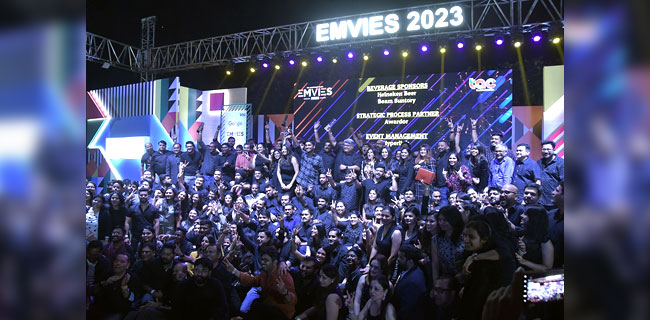
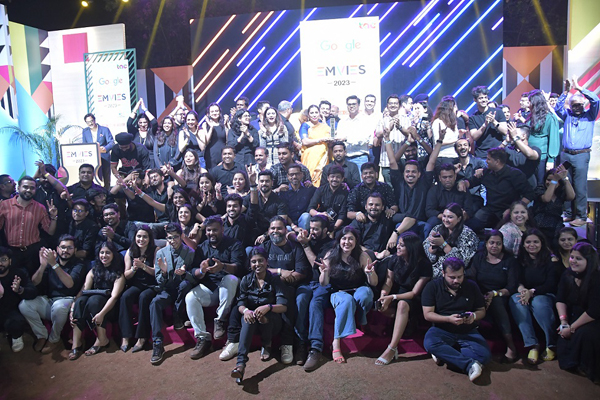
    The Advertising Club hosted the 23rd edition of the Emvies, celebrating high-impact media campaigns on Friday, March 10 in Mumbai. As many as 1469 entries from 26 agencies participated in the competition where 29 Gold and 53 Silver trophies were presented in addition to 55 Bronze winners receiving recognition.


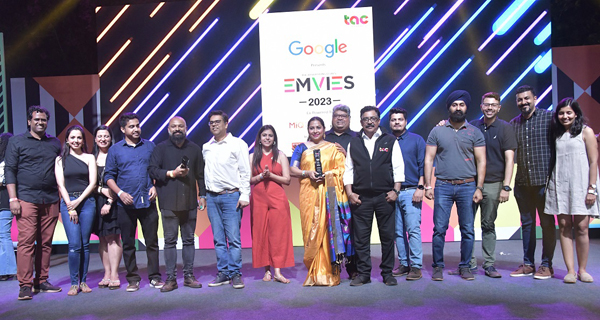
    Wavemaker with 630 points was recognised as ‘The Best Media Agency of the Year’ and Mondelez India Foods Pvt Ltd was declared as ‘The Best Media Client of the Year’. Wavemaker bagged the coveted Grand Emview for Mondelez India Foods Pvt. Ltd.’s Cadbury Celebrations’ Not Just a Cadbury Ad – 2.


    Mondelez India Foods Pvt Ltd – The Best Media Client Of The Year


    It was a GroupM show with the second and third ranks occupied with Mindshare at 340 points and EssenceMediacom at 100 points.


    The Diversity Equality & Inclusion (DE&I) award presented by Google was awarded to Kinnect for Bausch & Lomb’s How Bausch + Lomb’s – #LookOfLove advocated for unbiased and unprejudiced love.


    Partha Sinha
    Partha Sinha

    Said Partha Sinha, President Times of India group and President of The Advertising Club: “It is great to see this kind of energy at the Emvies. Each entry received was deserving and we encourage our industry folks to keep up this quality, which is par excellence. Many of the entries are of global standards and worthy of international acclaim. Many congratulations to all the winners for creating a mark at the Oscars’ of media awards once again.”


    Aditya Swamy

    Added Aditya Swamy, Chairperson of EMVIE’s Committee: “It is very exciting and encouraging to know that each year, the quality of entries received only surpasses the previous editions of the Emvies. Big congratulations to all the winners. We urge them to continue to put their best work forward and keep raising the bar.”


    EMVIE 2023 CLIENT OF THE YEAR

    EMVIE 2023 AGENCY OF THE YEAR

    EMVIE 2023 RESULTS


    Grand EMVIE 2023
  • ASCI updates advertising guidelines for education sector

    By Our Staff


    The Advertising Standards Council of India (ASCI) has recommended an amendment to its “Guidelines for Advertising of Educational Institutions, Programmes and Platforms”. For this purpose, it has invited public consultation so that all stakeholders can participate and frame a set of just and equitable guidelines for a critical industry of the country.


    All educational institutions, from universities, colleges and schools to coaching classes, EdTech platforms and others that offer education and training programmes play a vital role in in the development of the country’s intellectual capacity and will be subject to these guidelines. Since parents not only place great value on their children’s education, but also make significant sacrifices to get it, it is critical that marketing communication in this sector is honest and does not harm consumers through its portrayals or content.


    In this year, the education sector has contributed to 27% of objectionable ads that ASCI processed (Traditional education 22% and EdTech 5%). The recent EdNext study conducted by ASCI also revealed that 49% of parents chose EdTech platforms based on advertising, demonstrating the importance of advertising regulation in maintaining the robustness of the educational framework. The report also brought out some concerns that stakeholders and experts had when it came to the manner in which learning seemed to be solely linked to exams and high scores. It is to address some of these concerns that ASCI has proposed a comprehensive update of the existing advertising guidelines for the sector.


    The guidelines ensure that advertisements by the sector do not undermine the well-being of students. The guidelines continue to require educational entities to substantiate any claims they make with relevant evidence.


    The revised guidelines seek to ensure that students are neither stereotyped based on their gender or appearance nor are those who score low, portrayed as unsuccessful or failures. Advertisements must also not portray average or poor-scoring students as demotivated, depressed, unhappy or receiving less appreciation from parents, teachers, or peers. Together with considering students’ mental health, the updated guidelines will factor in their physical health; advertisements are required not to feature students sacrificing sleep or meals in order to study as this normalises unhealthy habits. Creating a false sense of urgency or fear of missing out which could accentuate parental or student anxieties regarding education, too, will be considered a violation of the ASCI code.


    Manisha Kapoor, CEO and Secretary General, ASCI, said: “The education sector impacts millions of students and parents who make immense sacrifices to ensure the best education for their wards. Unlike most other products, education cannot be tangibly measured. The value of a programme is determined by means such as degrees, diplomas and other qualification nomenclatures, recognition, affiliations, testimonials, accreditations, admissions/jobs/compensation promises. Hence, it is critical that, in addition to being truthful and compliant with Chapter I of the ASCI Code, advertisers must consider any harm that can be caused through depictions or messages to young, impressionable minds. These updated guidelines will go a long way in ensuring that emerging fields such as EdTech can be harnessed as forces of good. We request that the public come forth in large numbers and share their views for a cause that is vital for the well-being and the future of our country.”


    Read the proposed update of the guidelines: https://ascionline.in/education-guidelines.pdf


  • Can lessons from tobacco ads ban also help curb gambling ads?


    By Carolyn Holbrook & Thomas Kehoe


    If you think you are seeing a lot more gambling ads on television and online platforms, you are not imagining it. They are so common that high-profile AFL players have refused to participate in sponsored gambling.


    Online gambling companies are ploughing huge amounts of money into advertising, and for good reason. The ads work. While fewer people are gambling overall, online gambling is a booming industry.


    There are uncanny parallels between the public health challenges posed by gambling advertising today and tobacco advertising 50 years ago. In 1970, a tobacco ad ran on Australian television every eight to 14 minutes. These ads portrayed smoking as cool and adult, and often relied on celebrity endorsements. They worked, driving a new generation of youth into smoking amid predictions of a dramatic increase in the future cancer burden.


    Like the tobacco industry in earlier decades, online gambling advertising targets young people. Advertisements that use laconic, blokey humour and carefully selected celebrities like former American basketball superstar Shaquille O’Neal and American actor Mark Wahlberg are skilfully designed to appeal to 18-to-24-year-old men. Young women also represent a growing customer base.


    Worryingly, research has shown children as young as 11 are susceptible to the marketing and sales tactics of betting agencies, and that 75% of 8-to-16-year-olds think gambling is just a normal or common part of sport.


    As with Commonwealth governments in the 1960s when faced with tobacco advertising, today’s politicians have tinkered around the edges of gambling advertising reform, but shied away from decisive action.


    In 2018, the Turnbull government banned gambling ads before 8.30pm on live sports events. But gambling companies easily circumvent these laws. They simply flood the half-time break and post-match coverage with ads. They have even breached the law.


    Streaming services remain completely unregulated, and ads are ubiquitous on platforms like YouTube, TikTok and Instagram.


    Gambling companies, like tobacco companies before them, proclaim their own efforts at self-regulation by providing embedded warnings that champion “responsible gambling”.


    Yet phrases used in their ads, such as “bet responsibly, no matter who you bet with”, have no demonstrable effect on dangerous gambling behaviours. Punters simply ignore warnings against excessive or problem gambling. They buy into the responsible gambling trope and believe they have control.


    As with the link between smoking and lung cancer, the harms associated with gambling are well established. Apart from the massive financial losses – an estimated $25 billion in 2018-19 – there are cascading physical and mental health impacts. These include suicide, incapacity to work or study, damage to close relationships and, in some cases, a resort to criminal behaviour.


    In 1970, a large majority of the Australian public (74%) disliked cigarette ads and wanted them banned. The figure is similar for gambling advertising today. In a 2022 survey, 71% agreed these ads should be banned.


    In the face of such a compelling case for action, why won’t governments act? Back in the 1970s, the tobacco industry and the television and radio stations on which they advertised (to the tune of $125 million a year in today’s money) were powerful lobby groups that reached into the heart of government.


    While health experts and organisations like the Anti-Cancer Council of Victoria (now Cancer Council of Victoria) advocated for reform, tobacco growers, cigarette companies, the media and those politicians beholden to these interests pushed back.


    In a familiar pattern, the online gambling industry exerts its influence increasingly in the political arena. Sportsbet, for example, donated $313,424 to political parties in 2022, spreading its contributions between the Coalition and the ALP.


    It donated $19,000 in 2022 to the election campaign of the now Communications Minister Michelle Rowland, whose portfolio includes advertising regulation. Given that gambling companies provide a significant and expanding source of revenue for both conventional and new media companies, they form a powerful coalition of self-interest.


    So, how did the anti-tobacco lobby burst through a similar impasse 50 years ago? And can we transfer these lessons to the present?


    The Victorian Anti-Cancer Council, then led by Dr Nigel Gray, and other cancer control bodies led a sustained program of non-partisan, evidence-based advocacy to government about the health effects of smoking, and the links between advertising and youth smoking uptake.


    But the act that finally embarrassed the government into action was a series of 26 anti-tobacco ads starring celebrity actors Warren Mitchell and Miriam Karlin from the UK and Australian Fred Parslow. Conceived by Gray, his director of public education, David Hill, and advertising creative John Bevins, the ads lampooned tobacco advertising with satire.


    For instance, they contrasted the illusion of the international jet-setting lifestyle portrayed in the adverts with the realities of lung cancer and repulsive coughing. An important feature of the campaign was the inclusion of one “straight” educational advertisement on the dangers of smoking and the effect of tobacco ads on youth by the first Australian of the Year, esteemed Nobel Prize-winning scientist Sir Frank McFarlane Burnet.


    The television channels played into Gray’s plan by refusing to air the Anti-Cancer Council ads. The print media picked up the story of Burnet being denied a chance to speak to the public. The Coalition government was criticised for failing to intervene despite public support for limiting or banning tobacco advertising, and the evidence from Denmark, the US and the UK, presented by Gray, showing that banning tobacco advertising reduced youth smoking.


    Embarrassed, the government forced the TV stations to air the anti-tobacco ads in July 1971, creating even more media scrutiny. The public attention brought by this debacle finally pressured the McMahon government into introducing some limits on tobacco advertising.


    When Gough Whitlam won the 1972 election, Labor legislated a phased ban on tobacco advertising. Despite internal debate within the Liberal Party, the subsequent Fraser government maintained it and implemented a total ban on tobacco advertising on television and radio by 1977 — a major win for tobacco control and public health.


    The media environment has clearly changed markedly since the 1970s. But the success of the highly creative 1971 anti-tobacco campaign offers some inspiration for taking on gambling, which is among the major public health issues of our time.


    Gray recognised that merely providing honest information about smoking was not enough. The tobacco control effort had to galvanise public dissatisfaction and motivate media action through evidence-driven, high-profile advocacy. A similar approach could be a way of forcing government to take action against the powerful interest groups supporting pervasive gambling advertising today.


    Carolyn Holbrook is Senior Lecturer in History, Deakin University and Thomas Kehoe is Historian, Cancer Council Victoria. This article is republished from The Conversation under a Creative Commons license. Read the original article.


  • What’s common to advertising & cricket


    By Ashoke Agarrwal


    Ashoke AgarrwalI am a student of both cricket and advertising.


    The cricketing season in India starts in the post-monsoon months and nears its end in the dog days of April with the IPL. As the different hues of cricket play out this year, the parallels between cricket and advertising strike me.


    Cricket is the only sport with three widely played versions – Tests, One-dayers (ODIs) and the T20s. The shorter versions – the ODIs and the T20s – are later versions of the game whose oldest form is the five-day Tests.


    Let’s think of advertising agencies as the players, their client brands as the team they play for, and the advertising campaigns the agency and the brand management create as the type of cricket match.


    Test matches are games of deep strategy akin to a game of chess—the results of a Test take days to unfold. A Test match might end without a winner, but with every Test, a player’s reputation is either enhanced or diminished.


    An advertising campaign akin to a Test match focuses on creating a long-term positioning and equity for the brand. Therefore, the campaign’s planning horizon is over the long term, measured in years. Like in cricket, in the “Mad Men” era of advertising – stretching from the 50s to the 80s – Test-type campaigns were the norm. In the Test match era of advertising, the client’s management considered their advertising agencies as brand custodians and partners and paid them as such. As a result, advertising agencies could afford to hire intellectual and creative talent that could deliver long-term results, setting up a virtuous cycle.


    In the late eighties, Wall Street replaced Madison Avenue as the valued partner of companies in the US. The phenomenon soon spread across the world. As a result, the planning horizon shrunk from years to the next quarter. And the era of the ODI began in advertising.


    Client management tasked agencies with creating ODI-type campaigns to deliver sales and results reflected in the next quarter’s financials. As a result, agencies took on the role of a vendor who supplied services to specifications set by the clients. As a result, agency compensation changed to reflect the new realities, and agency talent pools shallowed.


    With the digital age coming, the era of T20 in advertising dawned. Performance marketing became the new mantra, and the planning horizon shrank further from the quarter to the click of a like, share or buy button. Agencies became clickbait suppliers, and desk jockeys’ armies paid like wage earners while the platform behemoths like Facebook and Google ate everybody else’s lunch.


    Like in cricket, all three forms of advertising – Tests, ODI and T20 – continue to co-exist with Test and, lately, ODIs yielding market share to T20s.


    Like top-rung cricket players like Virat Kohli and Ben Stokes, who are superb at all three forms of cricket, a few super agencies play, and the brands they handle continue to create all three types of campaigns. But the preponderance of agencies and brands, driven by market realities, are becoming predominantly T20 players.


    The super agencies cross-pollinate the skills and capabilities practising all three forms of advertising. Test teams, like the current English team, win Tests playing “Baz Ball”, bringing the aggression of T20 to the Test arena. Super agencies can bring speed and accountability to long-term brand-building campaigns—or strategic nous to the daily toil of performance marketing.


    Over the next decade, AI is going to change many businesses. How will it change advertising? Will AI engines take over the quotidian tasks of the ODI and T20 kind of advertising? Will the business of advertising go back to being the fine art of positioning, building and nurturing brands over periods of years and decades? Will such agencies attract, once again, a new generation of brilliant strategic and creative minds?


    While we ponder advertising in the age of AI, let me give you a taste of why the much-ballyhooed generative AI technology is unlikely to replace true creativity in advertising in the near future. I asked Chat GPT to provide me with a 50-word mini-essay on “Why Advertising is like Cricket”. Here is the response.


    Advertising and Cricket both require strategy, patience, and a keen eye for opportunities. In cricket, a team must carefully plan their moves, adjust to changing conditions, and seize moments of weakness in their opponents. Similarly, in advertising, a brand must develop a clear strategy, adapt to changing consumer behaviors, and capitalize on emerging trends. Both cricket and advertising also rely on effective communication and teamwork to achieve their objectives. Finally, just as cricket has its own set of rules and regulations, advertising also operates within a set of guidelines and best practices to ensure fair play and positive outcomes for all involved.”


    Isn’t it as bland as can be? I suspect it would be the same answer if I replaced “Cricket” with any other team sport or “Advertising” with any other business service. Try it for yourselves. This proforma response is because the core of the current state-of-the-art generative AI bases its response on probability curves trained on static data without any actual capability to explore the context and synthesize creativity.


  • Havas Creative India appoints Anirban Mozumdar as CSO

    By Our Staff


    Havas Creative India has announced the appointment of Anirban Mozumdar as Chief Strategy Officer (CSO), close on the heels of appointment of Tarun Jha as the Chief Executive Officer (CEO). Anirban will lead the strategy function of Havas Creative India. Based out of the Gurgaon village, he will work closely with Tarun and Anupama Ramaswamy, CCO, Havas Worldwide India.


    Said Bobby Pawar, Chairman, Chief Creative Officer at Havas Group: “At Havas, we believe that the future belongs to brands that make a meaningful difference to people and the societies, and our conviction is supported by the results of our annual global Meaningful Brands study. Anirban has extensive advertising and marketing consulting expertise and a passion for high-impact solutions, which is why we are thrilled to have him lead Havas Creative India’s strategic function.”


    Tarun Jha, CEO, Havas Creative India, added: “Havas Creative India has been scripting an incredible growth story over the last few years. From a single-client agency, Havas Creative India has grown to a network of 6 agencies. Our diversified portfolio of offerings are exactly what marketers are looking for in this constantly evolving industry, and we will be bringing in more specialist divisions soon. Anirban’s induction will further strengthen the team, alongside Bobby and Anupama, our two strong creative pillars, to propel us into a new era of growth.”


  • Dentsu revitalises leadership bench in India

    By Our Staff


    Dentsu India today announces the promotion of Anita Kotwani to CEO Media, South Asia, Dentsu. In her expanded role Kotwani will lead all Dentsu’s Media businesses across South Asia including Carat, iProspect, dentsu X, Posterscope and media investment arm Amplifi.


    This announcement closely follows the appointment of Harsha Razdan, Dentsu South Asia’s new CEO, as the business continues to strengthen its leadership team in the region.


    Rob Gilby, CEO APAC, Dentsu, and Interim CEO, India until newly appointed CEO, Harsha Razdan, starts, said: “Anita is a well-loved leader who firmly looks to the future, bringing her people with her on the journey and is fearless in her approach to driving new solutions for clients. The Media opportunity in India is growing exponentially. Anita’s background, coupled with Harsha’s complimentary experience is building a powerful force in our business to drive growth for our clients in this exciting market.”