Category: ADVERTISING

  • Refreshing role reversal. Ogilvy redoes iconic Cadbury Dairy Milk TVC


    By Our Staff


    It needed a brave client in 1993 for the original film, it needed an even braver client now, says Piyush Pandey, Chairman of Global Creative & Executive Chairman, India. Indeed.


    In its 10 years, MxM hasn’t done a ‘big story’ based on a communique of a new TVC. But this one deserved it.


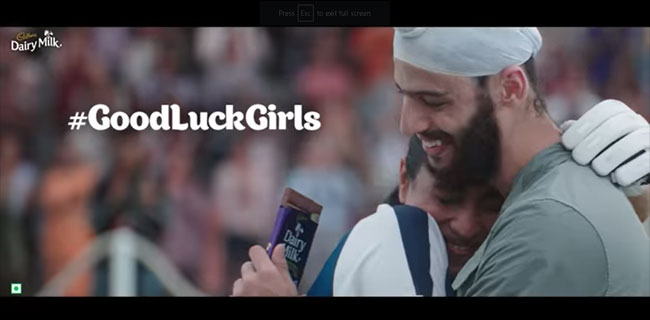
    Reason: Cadbury Dairy Milk has released a refreshed version of its iconic 1990s campaign. The film conceptualised by Ogilvy India, for Mondelez India, shows a young woman cricketer scoring a winning run and her male friend running towards the field dancing with an unabashed glee, celebrating her smashing performance, as the crowd cheers on. The film ends with the powerful message of #GoodLuckGirls in recognition of today’s equal world where women are breaking barriers and pursuing all their dreams.

     

    Piyush Pandey
    Piyush Pandey

    Said Piyush Pandey, Chairman of Global Creative & Executive Chairman, India, said, “It needed a brave client back in 1993 to go ahead with the original Cadbury cricket film that became so popular. It needed an even braver client to attempt something with an iconic film and make magic out of it. I am delighted that the team at Mondelez India and at Ogilvy India has done this magic, made it relevant, exciting, and so Cadbury, in its bold and front foot fashion.”

     

    Anil Viswanathan
    Anil Viswanathan

    Commenting on the ad, Anil Viswanathan, Senior Director –  Marketing, Mondelez India, said: “From acing in the corporate world to winning Olympic medals, women are at the forefront of creating new milestones, every single day and our film is an ode to each one of them. As a brand that has always promoted gender inclusivity, contemporising an iconic campaign is our way of recognising the changing times and extending support to all the women trailblazers. An extension of our ongoing generosity narrative, the film also lands the message of how taking small yet significant steps to acknowledge the achievements of women would make the world a better place to live in. We hope this film brings back a gush of nostalgia and are confident that this refreshed version will find as much love as the original one”.
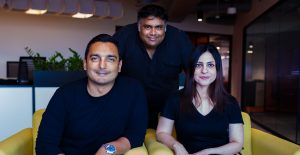
     

    Sukesh Nayak, Harshad Rajadhyaksha, Kainaz Karmakar, Chief Creative Officers, Ogilvy India
    Sukesh Nayak, Harshad Rajadhyaksha, Kainaz Karmakar, Chief Creative Officers, Ogilvy India

    Added Sukesh Nayak, Harshad Rajadhyaksha and Kainaz Karmakar, Chief Creative Officers, Ogilvy India: “The excitement and the stress in our heads were competing with each other. To recreate such a big hit is like setting yourself up for a million opinions. The only reason we went ahead was it felt right, and it felt awesome. We loved the idea from our gut. Luckily, so did the client. Hats off to the all girls’ team who thought of it and hats off to Bob from Good Morning Films for making it so well.”

     

    A L Sharada
    A L Sharada

    Here’s what Dr AL Sharada, Director, Population First said on the ad: “There are some ads which are iconic. The Cadbury ad was one such. The gay abandon of the young woman rushing on to the pitch dancing, the embarrassed shy smile of the man, the helpless police man and the response of the audience- one could never forget the ad. Such beautiful execution. Even today the ad does not fail to bring a smile on our faces when we remember it. What happens if the roles are reversed? A roar of appreciation and celebration. The ad touches on nostalgia and yet is so contemporary. With women cricketers doing so well and changing gender norms, the ad looks so plausible and is absolutely mind blowing.” Dr Sharada puts advertisements under the scanner for their gender sensitivity for Campaign India.


    And here’s the original ad.


    CREDITS for the current ad:

    Ogilvy Senior Lead & Creative Team: 

    Piyush Pandey – Chairman Global Creative & Executive Chairman India, Ogilvy

    Hephzibah Pathak – Vice Chairperson & Chief Client Officer, India

    Sukesh Nayak – Chief Creative Officer, India

    Harshad Rajadhyaksha – Chief Creative Officer, India

    Kainaz Karmakar – Chief Creative Officer, India

    Creative: 

    Tanuja Bhat – Executive Creative Director

    Siddhesh Telang – Group Creative Director

    Swagata Banerjee – Creative Director

    Samyu Murali- Art Director

    Ogilvy Account Management:  

    Prakash Nair – Associate President & Integrated Brand Team Leader

    Antara Suri – Senior Vice President

    Parshuram Mendekar – Client Services Director

    Manseerat Sethi – Account Supervisor

    Ogilvy Planning: 

    Ganapathy Balagopalan – Head of Strategic Planning, Ogilvy Mumbai

    Bhakti Malik – Vice President, Planning || Prasidh Dalvi – Planning Director

    Production House: Good Morning Films

    Director: Shashanka Chaturvedi  || Producer: Robin D’Cruz:

     

  • Webchutney wins Uni Cards mandate

    By Our Staff


    Dentsu Webchutney, Dentsu India’s digital creative agency, has won the digital mandate for the new age fintech brand, Uni Cards.


    Gautam Reghunath
    Gautam Reghunath

    Commenting on the win, Gautam Reghunath, CEO, Dentsu Webchutney said: “We are in the era of fintech, which has proven to be the great equalizer in a short time. India has millions and millions of credit-eligible consumers waiting for unique, tailored financial solutions. Uni Cards is leading innovation here, and along with them, we are on a quest to redefine how credit is consumed in India.”


    Nitin Gupta
    Nitin Gupta

    Added Nitin Gupta, Founder & CEO, Uni Cards: “Uni is set to disrupt the credit industry by innovating and making extremely customer-centric products.  As a creative agency is known to successfully mold brands with iconic ideas, it was a no-brainer to partner with the best in business. It is the beginning of a long and exciting road for us at Uni Cards, and we are glad to partner with a team that has a nuanced understanding of the category that can lead us into long-term success.”


    Sidharth Rao
    Sidharth Rao

    Said Sidharth Rao, CEO, DentsuMB Group India commented, “This is an exciting win for all of DentsuMB Group. We want to bring the best creative minds from across Dentsu and Webchutney to create memorable work in this very interesting category. Our teams have only just begun working together with Uni Cards and we can already feel their incredible passion for innovating for India and building products that will boost the country’s credit industry.”


  • Influencer marketing will be INR 900cr: GroupM Study

    By Our Staff


    INCA, GroupM’s brand-safe influencer and content marketing solution unit, announced the release of The India Influencer Marketing Report last weekend. The report looks at all aspects of the industry including trends and the impact of regulation.


    Prasanth Kumar

    Commenting on the report, Prasanth Kumar, CEO – GroupM South Asia said: “Over the last few years, brands have shown significant interest in influencer marketing. The pandemic has accelerated the adoption of influencer marketing by brands making it an integral part of the brand marketing strategy and is now an important part of our media mix recommendation to brands. The key factor that has got brands interested is the bond of trust and authenticity that influencers share with their audiences, thus helping brands associate with an influencer to leverage the same. This report is our effort to help marketers understand various aspects of influencer marketing in the country. Consumer behaviour is changing at a fast pace, and we want to empower marketers with the knowledge that can help them.”


    Ashwin Padmanabhan
    Ashwin Padmanabhan

    Added Ashwin Padmanabhan, President – Partnerships and Trading of GroupM India: “Influencer marketing industry is at a point of inflexion and can take off, subject to the industry initiating to measure, quantify and make investments in influencer marketing accountable. The ‘India Influencer Marketing Report’ is GroupM and INCA’s attempt to do the same. Not only have we tried to quantify the industry, but we have also attempted to define and standardize the various formats and industry terms. We hope this report will catalyse the industry and ensure the power of influencers is harnessed effectively!”


  • Dentsu promotes Rahul Vengalil to Managing Partner, Isobar

    By Our Staff


    Isobar, the creative experience agency from Dentsu India, has promoted Rahul Vengalil to the role of Managing Partner. Vengalil will report into Heeru Dingra, CEO, Isobar India group and will be responsible for building the business with creative and experience as the key focus for future growth.


    Heeru Dingra
    Heeru Dingra

    Speaking on the appointment, Dingra said: “The solutions we offer are led by talents who possess extraordinary skillsets. Rahul is one of our finest resources with key domain expertise and with the thrill to set up new standards each time. His strategic-led, client-centric approach is in sync with our offerings. We are certain that he will accelerate Isobar’s growth trajectory for India.”


    Rahul Vengalil
    Rahul Vengalil

    Commenting on his elevation, Vengalil added: “I am extremely excited to begin this fresh chapter at Isobar India. My experience with Isobar has transformed my journey; and now is the time to set up new benchmarks. We have an awesome team of innovative and creative folks who are aligned with Isobar’s global vision of transforming into the most creative experience agency, worldwide. With our ‘Invent Make Change’ agenda, we are committed to being instrumental in creating an experience economy within India.”


  • ASCI launches ‘Advertising Advice’ service to help brands determine if ads violate ASCI code

    By Our Staff


    The Advertising Standards Council of India (ASCI) has launched a paid ‘Advertising Advice’ service. This service is open to all members and non-members of ASCI and will point out to advertisers and marketers, at the campaign planning stage, if their claims could potentially violate any ASCI code or guideline. This will help them to take corrective action at the pre-production phase and will guide them to substantiate the claim and align the creative basis the ASCI code.


    While the service existed in a smaller form earlier, now the Advertising Advice panel also includes technical experts in different specialties who can examine the claim and evidence for technical claim support.


    ASCI has clarified that it will process any complaints they receive against such ads as per its normal process. The advisory panel for Advertising Advice service is completely different from the complaints process to avoid any potential conflicts.


    Said Subhash Kamath, Chairman, ASCI: “As ASCI steps into its next phase, the Advertising Advice service will be a crucial element in the cause of self-regulation. The service gives brands a chance to better prepare their campaigns and mitigate reputational risks. While there is no guarantee that consumers will not raise a claim against a brand, the advisory does help brands take steps to ensure that their campaigns don’t violate any norms formulated to protect consumer interest. We believe that this advisory service will provide the necessary support to the advertising ecosystem to create more responsible ads without affecting creativity.”


    Added Manisha Kapoor, Secretary-General, ASCI: “The advisory can be used by brands to great effect while planning their campaigns. Brands wish to be competitive and push the boundaries of claims. With this service, we can support advertisers to make strong claims while not crossing the all-important lines of honesty, decency, fairness and safety. An external scrutiny by experts at the pre-production stage can add tremendous value to campaign development. Post release of the campaign, any stoppage can cause significant disruption and cost for an organisation. But by making this a part of the way advertisers think of campaigns at an early stage, such risks can be mitigated. We see this as a win-win for advertisers and consumers, who then get exposed to fewer problematic ads.”


  • Carat wins mandate for Sugar Cosmetics

    By Our Staff


    Media agency network Carat has won the media mandate for Sugar Cosmetics beauty brands. The account was won following a comprehensive competitive pitch process. As per the mandate, the agency will oversee media strategy, planning and buying for the total portfolio.


    Anita Kotwani
    Anita Kotwani

    Said Anita Kotwani, CEO, Carat India said: “We are pleased to win the media business for Sugar Cosmetics. Carat is committed to creating meaningful end-to-end media solutions through data-driven marketing, and to further accelerate the brand’s growth journey. As a team, we are excited to get this opportunity to work with a brand that is loved by the women of today!”


    Vineeta Singh

    Commenting on the win, Vineeta Singh, CEO and Co-Founder, Sugar Cosmetics added: “Carat came highly recommended to us. Their strategic thinking, experience, and efficiencies stood out. Partnering with them on our media strategy is reassuring, given their data-driven approach in meeting our brand goals. The beauty industry is ever-changing and we at SUGAR Cosmetics always like to stay ahead of the curve. As a brand leader, it is my topmost priority to ensure that we keep evolving our strategies to meet consumer requirements. I hope our new association with Carat will help us in this journey of keeping up with consumer trends and stay relevant in the industry.”


  • Havas Creative hires Amish Sabharwal

    By Our Staff


    Amish Sabharwal
    Amish Sabharwal

    Havas Creative Group India has announced the appointment of Amish Sabharwal as Senior Executive Creative Director and Creative Head of Digital Experience. He will be based in Gurugram and will report to Ravinder Siwach, National Creative Director, Havas Creative Group India.


    Bobby Pawar
    Bobby Pawar

    Commenting on the appointment, Bobby Pawar, Chairman & Chief Creative Officer, Havas Group India, said: “Amish brings with him a vast experience of some of the most well-known brands and categories. I believe his unique approach will bring in a breath of fresh air to the creative landscape and fuel our promise of Meaningful storytelling further. I welcome Amish to the Havas family and look forward to him scaling up Havas’ rich legacy to a new level.”


    Ravinder Siwach
    Ravinder Siwach

    Added Siwach: “It’s been our constant endeavour to offer differentiated and engaging storytelling for our clients. Marrying creativity and digital is at the core of what we do, and integrating it with the global offerings like CX, design, analytics, AI and so on is at the heart of our strategy for growth at Havas Creative. Amish will add more muscle to this vision with his varied background.”


  • Wavemaker bolsters global top deck

    By Our Staff


    Wavemaker has named Shipra Roy as its new Global Chief People, Inclusion and Culture Officer alongside Helen Price as Global Chief Investment Officer. Both will be based in London and join CEO Toby Jenner’s global leadership team.


    Roy, who comes to Wavemaker from a position as Chief People Officer for McCann UK and Europe, will oversee all aspects of the people function to ensure that Wavemaker continues to attract the best talent and creates great careers regardless of level, role or geography. Price joins Wavemaker from IPG Mediabrands where she was Head of Global Accountability and Investment. At Wavemaker her focus will be on creating value for clients and commercial opportunities for the agency.


    Said Jenner: “Even in the face of a global pandemic, Wavemaker has had an incredibly strong year and, as our growth journey continues, I’m pleased to welcome Helen and Shipra to the team. They are both tremendous resources in their fields, and I look forward to working closely with them to help us deliver positively provoking, innovative and commercially sound solutions for both our clients and our people.”


  • So which ads would you like refreshed & rehashed?


    By Sanjeev Kotnala


    Sanjeev KotnalaThe Cadbury ‘Kuch Khaas hai hum sabhi’ ad is not the first remake case, but it is the first one with an apparent role reversal that has led to a huge buzz. Now, many brands would be asking a question, if their archives hold such opportunities?

     

    REMAKES ARE NOT NEW

    Remakes are not new. Social media is full of remakes. How it started, how it’s going. Whether it’s the same set of people re-enacting a scene. Films have been remade and recrafted to the new context and geographies, so have advertisements. In the case of ads, logically, the iconic/epic ads get remade. However, most of them use the same cast or effect and are not fresh enough.


    BUDWEISER REMAKE

    Budweiser remade its ads from the 50s with #SeeHer for International Women’s Day. In this case, the women portrayed in the original ads now had more balanced and empowered roles under the themes of independence, equality, and fulfilment.


    MONSTER.COM SPOOF – A REMAKE

    Sometimes creative teams and external audiences spoof an ad for a topical tactical gain. This was the case when the iconic 1999 ad of Monster.com was used to create an ad aiming to stop Trump from getting the second term. Watch the spoof ad here.


    PARTIAL REMAKES.

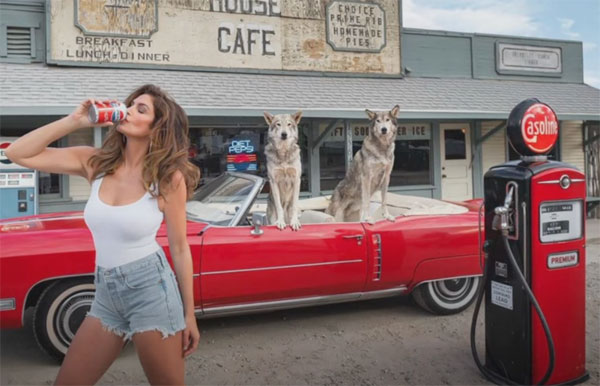
    Like above, sometimes the cause is a noble one. And we all watched and admired Cindy Crawford recreate the iconic Pepsi ad of 1992 for cancer research and in 2018 came in as a cameo in the Pepsi ad.


    REPURPOSED REMAKE

    Or you don’t really remake but repurpose the communication. Like TD Bank (ad titled Dancer )  from service went to ask people bank from home. Watch the repurposed ad.


    REMAKES A CONTINUITY

    In the Indian context, Nirma, Ambuja Cement and Liril have been remade so many times. And there has been not much of a tremor. They just went into a long-running campaign.


    GENDER REVERSAL REMAKE.

    Then Cadbury happened. It took the iconic ad  Kuch Khaas Hai hum sabhi  with role/gender change of the main cast (I am trying not to use role reversed). The batter was now a girl and the friendly spectator appreciating the game – a male, a Sardar to be precise. By now, the new ad has been compared to the old in multiple forums. There are blogs, news, and clubhouse discussion where the recent remake of the Cadbury ad has been analysed for the story, purpose, context, and hidden message.


    OPPORTUNITY IN ARCHIVES.

    The social media jokes and memes started discussing which brand ads would one want to see remade and which one would want no one to try remaking. It is a tough one. A question that is subjective and full of false interpretation. And the more you think about it, you’re your choices vacillate. Here are some that I think would/ could do with a refresh, not necessarily with just the role reversal – but just recontextualising and repurposing. While trying to do so, I realised how the recency of communication impacts you.

    So, I agree with many who think that the current remake of the Cadbury ad is relevant to people who remember the original. The young crowd just see it as one of the millions of ads- good- feel good- nothing excellent.


    BLACK COFFEE, PLEASE.

    First on the list – Ericcson One Black Coffee. This was a brilliant one. A lot has changed in consumer behaviour on how they use the mobile. Now the screen size matters. The privacy of a small phone is not sought. What messages can this be infused with? And what happens with the gender role reversal.


    LALITAJI RELEVANT TODAY

    An ad that is relevant today.  The Lalitaji Surf ad would work in the new price-value conscious consumer. With a WFH lifestyle, even a gender change would be appreciated.


    ROLE & GENDER REVERSAL IS NEEDED

    The Cadbury Dairy Milk  Silk ad of the boy holding an umbrella for the girl – and that could do with a gender role reversal. An area that should be changing.


    GENDER REVERSAL IS NOT POSSIBLE FOR THE BRAND

    Anouk had a series of Bold & Beautiful ads in a series. The brand may not be an apt place for the role reversal. Can some brand do the Anouk with a role reversal?


    TOO EARLY FOR GENDER REVERSAL

    For another brilliant ad –  maybe we are not yet there –  but it could definitely do with a younger version with rile reversal: The SBI insurance ad.


    RELIGION REVERSAL.

    When you look for the remake, it is possible to go wild with imagination and possibilities. What if gender or religion was reversed in the Tanishq ad, trolled for all its worth.


    GENDER SENSITIVITY FROM YOUNG AGE.

    Maybe the ad – DAG AACHE HAI is perfect for a role reversal. The elder sister protecting the younger brother or even, the elder brother.


    NO TO REMAKE

    There are a host of brand ads where one would hate any remake or remake with gender reversal. One will hate to see a remake of Liril original 1985 ad but may welcome one with a fresh model without much tinkering to the original. Ads like  SRK Lux adAkshay Kumar HarpicAxeFogg are not a candidate for remake in any way and format.


    And then the Airtel Boss film cannot be role reversed – as the ad is role-reversed already. If I was to say – let the old original remain untouched, be inspired, don’t remake, rehash the whole thing.

    When the context has changed, and the world has moved on from the earlier communication problem, think afresh and think different. In the case of Cadbury, it had the first-mover advantage. The rest will be followers. And no one looks up to followers.

    ………………………

    In case you have yet not seen the  original Cadbury ad, here it is:


    ………….

    Do let me know, if there is an ad from past that is interesting enough for a relevant  remake with gender/role reversal.


  • Taproot Dentsu films for Bosch

    By Our Staff


    Bosch Home Appliances (BSH), in association with Taproot Dentsu, has launched a  campaign that highlights the drying features of ‘Bosch Dryer’. Conceptualised and executed by Taproot Dentsu, the film showcases the day-to-day ordeal of an urban couple who do not own an automated drying appliance.


    Commenting on the campaign, Neeraj Bahl, CEO & MD, BSH India said:  “We are thrilled to launch our first ever dryer campaign in India, showcasing the Bosch range of dryers which requires minimal efforts and provides better drying. Our objective is to focus on the lifestyle and convenience benefits that the category can deliver and closely analyze the mind shift. The demand for premium products in India is increasing and we are confident that this will drive the adoption of newer categories and technologies when people are looking to create better comforts within the confined space of their home. We are looking forward to the vast possibilities for dryers in India and hope to replicate global success of the category in the country.”


    Added Yogesh Rijhwani, Executive Creative Director, Taproot Dentsu: “We wanted to find an endearing narrative for Indian couples that helps them realise a bitter truth – till the time you don’t get a dryer, you are the dryer. To make a case for automated drying, we tapped into our collective memories to find the most relatable experiences we could, including the recent experiences from two lockdowns and many Mumbai monsoons.”


  • Dentsu International launches first global ‘Rise Up’ Challenge

    By Our Staff


    Dentsu International has announced the launch of its first global ‘Rise Up’ Challenge to upskill 10,000 young people in digital media and creative communications and showcase its best campaign ideas to inspire consumers to drastically reduce their food waste.


    Said Anna Lungley, Chief Sustainability Officer, Dentsu international: “Food waste is not just a matter of what gets left on plates – the world is squandering natural resources, harming biodiversity and increasing emissions simply by throwing away too much of the food we produce. The Rise Up Challenge is a rallying cry to a generation of young people who want to make a difference in this world. Through The Code we can give them the tools and techniques to not only campaign for sustainable behaviour change but also build the work ready skills they need for the future.”


    Added Phil Adrien, CEO, Creative, Dentsu Asia Pacific and Co-chair of Dentsu diversity board APAC,: “I am incredibly proud that the module for Rise Up – produced in Singapore by our creative team, is now rolled out worldwide. This is our first unifying global theme on building a sustainable world, by looking at how brands can reduce consumer food waste. Riding on our commitment to using ‘digital for good’ and furthering a fair and open society, The Code also opens the doors of our industry to future talent. It empowers young people from underprivileged backgrounds with creative communications experience and offers the opportunity to work with some of our biggest clients.”


  • The Advertising Police

    Image : pexels.com


    By Prabhakar Mundkur


    Prabhakar MundkurNever has marketing communication been under the scrutiny of so many, ever before in its history.
     

    First, there are the regulatory bodies who look over your shoulder. While working in China in the late 1990s, and when censorship was much stricter perhaps than it is today, I remember having a tough time. In a commercial of mine, a student acts cheeky with his teacher. It was intended to be tongue-in-cheek, but the humour of the situation was lost on the powers that be. We were told that it went against the norms of the teacher-student relationship which went back to none other than Confucius who had articulated with great lucidity on the subject. I even remember, Close-up toothpaste, which was then running the ‘Kisses’ campaign in the US my version of the campaign for China, had two toothpaste tubes of Close-up coming together to suggest they were kissing. At the time, it was a big hit in countries like Indonesia, which again had strict censorship rules in place.


    Coming back to the present moment, with the addition of the Department of Consumer Affairs being added in the last few years, means there are two watchdogs, a government watchdog and the Advertising Standards Council of India (ASCI) which is the self-regulatory industry watchdog. One is not quite sure what the government watchdog has been up to since they don’t publish their achievements, but the ASCI publishes every quarter the cases disposed of by them which run into a few thousand. In addition to the regular cases which come under the Advertising Code, we now have a third entity that is policing advertising and that is the consumer.


    The Culture Police


    The Tanishq ad that got shot down by social media last year would have had no objections from either the ASCI or the Department of Consumer Affairs. But the social media police is quite another story. These are typically the cultural watchdogs if one may call them that. They scan the environment for cultural misdoings like the Tanishq ad which was innocently launched during Diwali last year to promote its Ekvatam collection. The YouTube description for the ad said: “She is married into a family that loves her like their own child. Only for her, they go out of their way to celebrate an occasion that they usually don’t. A beautiful confluence of two different religions, traditions, cultures.”


    It was story of a Muslim family, with a Hindu daughter-in-law which was helping her to celebrate her own festivals. But the social media immediately jumped on to a conspiracy theory called ‘love-jihad’ which which accuses Muslims of converting Hindu girls to increase their own population.


    A lot of people were shocked with the objections but nothing doing, Tanishq was forced to take the ad off the air to appease the social media groups especially when the danger manifested itself in crowds wanting to damage their Tanishq showrooms.


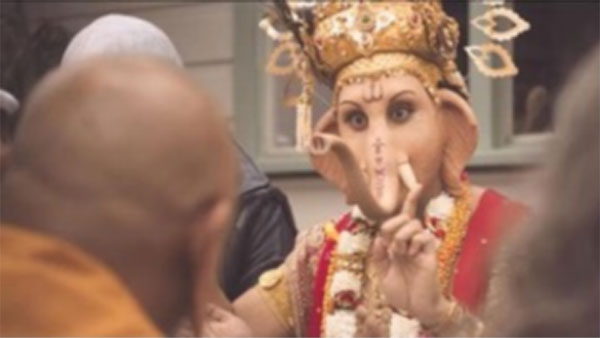
    This is not just an Indian phenomenon but the culture police also exist in other countries. This is very familiar to the Ganesha ad that got shot down in Australia. Meat and Livestock Australia put our favourite Lord Ganesha in an ad which showed meat-eating.


    This enraged the local Hindu groups who of course besides staging protests to Ad Standards, in Australia


    The ad showed Lord Ganesha sitting and enjoying the meat with Jesus Christ, Moses, Aphrodite, lord Buddha, Zeus, Obi Wan Kenobi from Star Wars franchise along with Ron Hubbard, the founder of Scientology. Ad Standards Australia upheld the complaint from local Hindu organisations and the ad went off air.


    The latest ad questioned by the Culture Police is Manyavar Mohey ad (Mohey is the brand for women) featuring Alia Bhatt which was received with mixed feelings. While the ad was trying to break away from the age-old practice associated with marriage, where the daughter like a commodity, ( kanyadaan), the ad proposed greater respect for women (kanyamaan ). Unfortunately, when celebrities like Kangana Ranaut join the culture police, the attack on ads become stronger. She is known to have said: “Don’t use religion to sell products.”


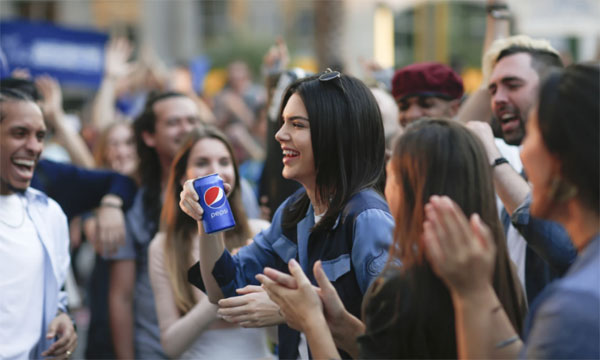
    Again, not very different from the Pepsi ad which showed supermodel Kendall Jenner leading a Black Lives Matter movement with a fizzy can of Pepsi.


    It provoked Martin Luther King’s daughter to make a blistering remark on Twitter, that read: “If only Daddy would have known about the power of #Pepsi.” Bernice King’s tweet was accompanied alongside a photo of her father being pushed back by police.


    Another ad that was forced to bite the dust. 


    The Human Rights Police


    Here the human rights police objected to the extreme conditions that Zomato delivery men are put through when they don’t even get a moment to themselves between orders. In the commercial, Hrithik Roshan goes in to get his mobile to get a selfie with the Zomato delivery man. But the delivery man is so busy that he forgoes the opportunity of a pic with Hrithik because he is getting late for his next order. Zomato was quick to appease the trollers with their tweet which read, “We have been listening intently to the chatter about gig workers and the problems associated with this part of the economy. We understand you expect more and better from us”.


    Advertising uses Figures of Speech

    A few advertising regulators coupled with public groups on social media who keep a watch, means that advertising will have to be more careful than before. Diversity and inclusion is no longer an option, it is an imperative. In 2021, it will need to become a habit for most advertisers.


    For the last 100 years or so, advertising has used figures of speech to communicate. So parody (humour), hyperbole (exaggeration ) to make a point, and metaphor (where a word or phrase is applied to an object or action to which it is not literally applicable ) are some of the main figures of speech that advertising uses to make an impact.  Advertising can continue to use them but now will have to keep away from sensitive subjects.


    A long time ago, Jerry Della Femina said: “I honestly believe that advertising is the most fun you can have with your clothes on”.


    I am not so sure it is any longer for more than one reason. The times they are a changing!


    Prabhakar Mundkur is a former advertising agency captain and has spent over four decades in marketing services across geographies. He is a prolific writer and was a few years back rated as among the top voices by LinkedIn. Other than advertising and writing, Prabs, as he is known to friends, is a very active musician and a self-taught producer of music. In the pandemic, he has performed and produced nearly 50 songs, including one with the very accomplished Usha Uthup. Mundkur’s views here are personal.