The name’s Gowthaman Ragothaman. Better known to the world as G-Man. With or without the hyphenation. The GroupM veteran is said to be moving on, with a blockchain start-up.
For over two decades, Ragothaman has been crunching numbers – at HTA, Mindshare, Fulcrum and then the entire agency which he led for some years until he moved to Singapore for a role specially created for him – Chief Client Officer. A few elevations later, he was tasked with leading the global mandate for FAST, converging deliveries for client performance. He was also Global Client Lead of Team PepsiCo before taking on the additional charge of Global Blockchain Solutions Lead at GroupM.
A message to G-Man got us no reply, but he has messaged a few friends in the business informing them of his decision. At 50, he clearly believes the time is right to do something of his and blockchain clearly excites him.
Yehi hai right choice, we would say, recalling the popular adline of yore of Pepsi in India, a client he served for eons.
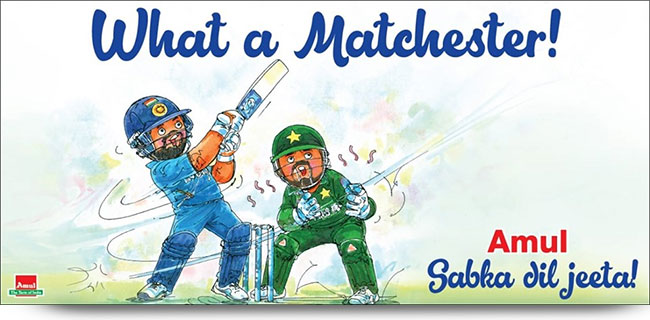
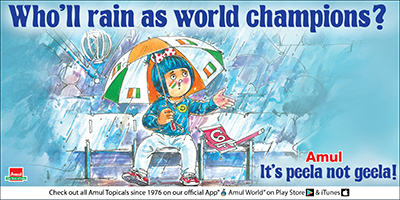
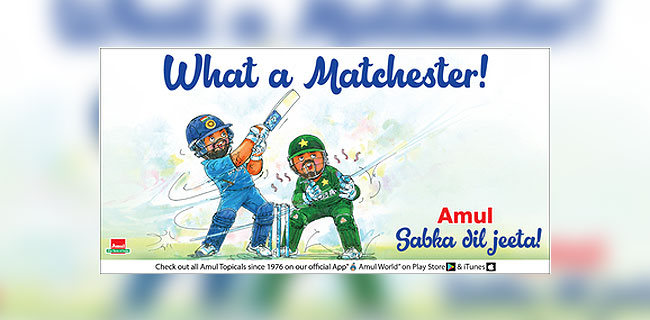
The ratings for the India-Pakistan World Cup cricket match on June 16 are out. The hopelessly-one-sided game scored a whopping 18+ TVR (Urban All India). Ratings nearing 20 can only evoke nostalgia for those following the Indian TV market over the years. It’s in the first half of the decade of 2000s that one would see such numbers for daily shows, with Kyunkii… and Kahaani… leading the way for a while. Thereafter, the numbers progressively dropped, a trend that’s generally believed to be an outcome of the launch of more channels and the resultant fragmentation of content choices available.
The top Hindi GEC show moved from the 20-mark in early 2000s to the 10-mark late in that decade. In the first half of the decade starting 2010, the 5-6 level was aspiring enough. Today, even a 3-level is gold.
Movie ratings have also shown a downward trend, but nowhere close to soaps. The top movie could do 15+ rating about 15 years ago, the equivalent of which is a 7-8 rating today. That’s a 50-60% drop, vis-à-vis an 80%+ more drop when you compare the top Hindi GEC shows across the same two periods.
The popular belief has been that with the expansion of the measurement universe over the years, the true heterogeneity of the Indian market has a more and more significant impact on the TV ratings. That, combined with a multiplication in the number of channel options, would mean that fragmentation, and the resultant creation of a long tail, is inevitable.
The India-Pakistan match ratings challenge this notion head on. The message from the audience is clear: If there’s content that carries a certain level of appeal and viewer pull, India can be fairly homogenous after all. Yes, there are more options and more diversity in the universe today. But there’s always content that cuts through, because it enjoys that broad-based appeal. And hence, justifying sub-3 numbers as the best-case scenario is only a self-fulfilling prophecy, whereby content creators and broadcasters are justifying low ratings as a market behaviour, than questioning them as symptoms of a loss in the collective ability of the industry to make truly mass, pan-India shows.
One may argue that big-ticket sporting events have the ability that genres like drama, comedy and non-scripted content lack. That’s a fair argument too. But one is not expecting the top show to deliver 18-rating. Even the inert and one-sided India-South Africa match touched the 6-mark (averaged over more than seven hours, no less!). That’s surely a level a top Hindi GEC show should aspire to achieve. But today, even half of that is being celebrated as an outright success.
If these signs continue, we may soon be a television market where sports, news and movies become the staple, and drama the alternative. It has already started happening during events like the IPL, the elections and now the World Cup. It could be a matter of time when more routine days begin to exhibit this trend too.
If all the content creators can take a week’s break from their OTT pre-occupation and think about this, I’m sure they have the collective ability to come up with something worthy. The real question is: Do they have the will? Or has television already been reduced to a fuddy-duddy medium that’s not even cool to ideate about?
We normally do not report on events held in India that we are not invited to. But we are making an exception for this award winner because it’s from our friendly neighbor Nepal. So Kathmandu-based activations agency Lemon bagged 4 Golds, 3 Silvers and 3 Bronze awards across various categories at the Rural Marketing Association of India’s Flame Awards held in Mumbai earlier this week.
Said Ujjwal Shakya, MD of Lemon: “This is a great win for not just Lemon but for Nepalese advertising. It’s a great team effort by us and the client together.”
Dineout has launched its integrated digital video campaign #FearNoBill to promote its in-app payments feature – Dineout Pay. The video stars actor Jim Sarbh.
Commenting at the launch, Ankit Mehrotra, Co-founder and CEO, Dineout said: “At Dineout, we have always ensured that our services cater to the evolving needs of our customers. We are very excited and optimistic to embark this partnership with Jim Sarbh for our campaign #FearNoBill, which is built on sharp consumer insights and their relationship with the product. The film breaks the clutter and meaningfully engages with the audience highlighting our philosophy. Jim’s on-screen presence, quirky charm and acting skills mean that he’s perfect for the role of Bill and adds spark to the character who we’re supposed to empathize with and yet fear at the same time. We are confident that our audience will love this advertisement and we will see a tremendous organic boost by this campaign.”
Conceptualised by Animal, the campaign aims to create awareness around the brand’s strong connect with the customers who are looking for great deals and offers on their bill. Commenting on the same Sayantan Choudhury, Senior Partner – Animal said, “The #FearNoBill concept is a call-to-arms—and the brand’s mission statement—to existing and potential customers about Dineout’s greatest promise: every time you go out to eat, we take care of the bill. So we thought of this character of ‘bill’ – a devilish, slightly psychotic person who is ranting at what Dineout has done to him. Thankfully, the folks over at Dineout loved the idea and gave us all the creative freedom to work on it. And then, of course, Jim Sabh did the rest.”
IAA’s Retrospect and Prospects last week dealt with the CMO curiosity and desire to know. The need to know what next? To know of the next trend going to hit the market and communication. It is very human.
So instead of going to soothsayers, crystal ballgazers, experts, pundits and predictors to help read and connect the current and past dots, the India chapter of the International Advertising Association (IAA) went to Neil George, MD, Nivea (India and South Asia). On June 27, 2019, to a packed hall at Mumbai’s ITC Grand Central, Neil presented the ‘revenge of the client’. Retrospect and Prospects from a CMO point of view. Not surprising, to help clear the fog, Neil banked on the last 18-month trends and the interpretation of his expert group from five continents.
Neil George’s Five Important Observations.
1. Loss of Trust.
2. Pessimistic optimism. The pessimists are as many as optimist are there in the ecosystem.
3. The emergence of female superstars.
4. Growth of voice search (mainly pushed by Amazon Echo)
5. The new emerging platforms like Instagram and Netflix are dominating the content space.
Retrospect And Prospects In A Different Way.
All of us would agree that today, the technology crossover is fast. However, this was a session in India with an audience that was not necessarily in sync with global needs. Still, the truth remains that few brands in India have the budget empowered CMOs and active management to operate and support the level of technology infusion and creativity used as reference points in Neil’s presentation.
I personally would have appreciated if the presentation remained India-centric.
It is not about this session. It is true for every presentation in such forums. The speakers have a love for expressing the numbers in dollars, billion and millions. Keep them, but why not also state them in the Indian way of counting. Why speakers can’t take that extra pain in converting numbers and statistics.
Neil to make a point had to stress 2.4 billion with a “B not an M”. Well it takes Indian mind a few seconds, but the connection is lost. What is wrong in saying 240 crores. Or that someone charges 5.25 crore instead of saying USD 750,000.
Anyway, everything is not lost. The presentation synthesised the trends and Neil’s point-of-view beautifully. We may not agree with all of them and find fault with few. But this was his POV, and we should appreciate the speaker taking time in putting it all together.
Personally, just using few picked up examples of film clips and TVCs to support a point is a weak format. I would have loved to have Neil explaining and getting into details with arguments and counterarguments to make the point.
It is tough to get into each of the trends in detail in this article. This is for the lack of space, decreasing attention span and the author’s inability to presents someone else’s synthesised understanding. Trust me, such sessions are best absorbed first hand.
The Eight Trends by Neil George. Retrospect
Hope – Restored? The question mark reflects the doubt Neil has. There is an attempt by various brands and audience that shows there is HOPE- everything is not lost. Watch the ‘GULLY BOY’ example used by Neil to make his point.
Trust – Regained? Due to information democratisation, ease of message sharing and the fake vs real issue, the industry has lost trust. Not enough has been done in the area of regaining trust. Neil used the New York Times ‘The Truth is worth it’ and FCK ( KFC ) examples. But I share the brilliant Indian example he used to make the point; Samsonite- Kerala- we are open.
Real Stories. Romanticised. There is a trend for real stories being romanticised in movies and art. I would ask you to see Gully Boys and URI. Neil used a reference of Bruce Springsteen Broadway show.
Celebrities – They Have Become Brands And Stronger. Oh, they are the same people topping the chart on Instagram and Tweeter! Oh, “Cristiano Ronaldo has 2.5 billion likes from 700 posts in 2018, and he charges US$ 7,50,000 (i.e. INR 5.25 crore per Instagram post). Oh ‘Girls Like You’ featuring many female celebrities topped YouTube charts and has 2.2 billion views. It is the 25th most viewed and liked video ever on youtube. The argument may be valid, but the explanation and support were weak. Take the top of the pyramid representatives in any category, and you will get similar biased results.
Male Superheroes – RIP? Only two movies in 2018 which featured real male superheroes topped the charts in 2018. Does that make ‘real male superheroes’ dead? Certainly not. And the question mark cleverly used by Neil comes to his rescue. He has said it and not said it. It’s the famous Journalistic trick used by newspapers.
Creativity Twist- Revitalised. The examples used of Taco Bell fries launch, every ad is a tide ad, and the Hidden flag are not sufficient to say, creativity is now more powerfully used.
Production Values – Revival? I liked his representation and comment on smaller production houses. I agree smaller production houses can produce great content. But is that a trend! I request the Industry to test the success-hungry craft passionate smaller production houses for content creation. Give in to Giving is an example and so is the famed Viva la Vulva, but again isolated famed cases cannot be used to generalised and taken as a trend. And really, there was no need for Neil in his presentation to introduce the Viva La Vulva communication- with some prelude- including ‘Fastion your seat belt’. It spoke of some bias.
Machines – Are They Coming?. Oh, we all know they are coming. Voice search (Amazon), IOT and Big data all are pointing towards machine facilitation if not dominance. I thought the question mark was not required in this case. Maybe it is there to question the positive use as demonstrated in the Pizza delivery in a jam and Revoice or the possible harmful use.
The Future. The Prospect.
Oh, here are somewhat apparent suspects and no surprise
Brands That Have Purpose-Driven Communication Will Succeed. I don’t think so. I would just tweak it a bit to make it real. Brands That had Relevant True Purpose Driven Communication integrated with real consumer experience will succeed. That also means that many brands who are trying to connect the dots and trying to find a purpose that they can ride to purpose wave will fail. And If I were to bet, there would be more of failures on purpose led than successes.
A Rapid Increase In Data And Technology. All thanks to the rise in voice search. My take. Absolutely expected. True. And more lethargy will be built in. More conflict it will create.
Personalisation At Scale. My Take. I agree it will happen until there comes a time when the audience will rise to fiercely fight against deep customisation. When it will become snooping and a distraction. The mass appeal and addressing may not rise again, but communication, tribe creation and grouping – in other terms – Niche Segmentation – will once again make its mark.
Great storytelling will emerge to be stronger than before. I perfectly agree. Expected. With all the ease of execution with technology and platform, this will further become stringer. Emotions stirring will again be the forefront of triggering the audience reaction.
More On Future.
I like his quick but profound summation ‘The future is about sinless consumption’. Neil shared the example of successful Meatless’ Impossible Whopper’, zero per cent beer does point to it. And maybe we are working toward a frame of reference where obesity, carbon positive and water wastage will be a real sin.
At the same time, I believe he missed touching on the fact that brands in their own wisdom will purposefully exploit the big data with hyper-personalisation. It will be the SINFUL BRAND CONNECTION AND COMMUNICATION, misusing of personal data and fragile permission marketing. This may give rise to an upsurge for privacy and data sharing. Newer protection models to be debated. And create a new battleground for the marketers to defend.
The Battles Of Future.
Neil mentioned two crucial battles that are important from the Advertising, Marketing and communication prospects. These are big battles where lines have already been drawn. Where the industry has started taking sides and has their favourite potential winners.
:: Entertainment battle. Netflix Vs Disney
:: Technology Battle. Amazon Vs Google
Overall I enjoyed the presentation. It was engrossing and engaging.
Sanjeev Kotnala is a senior strategy consultant and educator. He writes every Wednesday for MxMIndia, and sometimes – like this comment – when there’s something topical. His views here are personal.
Harish Shriyan has decided to step down from his role as CEO of Omnicom Media Group India by the end of 2019. Over the next six months, Shriyan will work closely with the agencies’ senior leadership team to ensure a smooth transition for the business while the Group searches for a new CEO. Although the communique doesn’t state the reasons for Shriyan quitting, according to information we’ve received, he has been keen on doing it for a while and among the various things he is contemplating is get into start-up mode.
Shriyan was promoted to the chief executive role in December 2017, having been with the Group since its establishment in 2007 and served as its Chief Operating Officer from 2013 to 2017.
Speaking on his 12-year journey with the Group, Shriyan said in a statement: “I am incredibly honoured to have had the opportunity to work with so many talented individuals over the years and been part of the Group’s establishment and growth in India. Given its strength in the form of its unique brand positioning, talent pool, infrastructure and exemplary leadership, I am confident that this is the right time for me to pass the baton on. I also have every confidence that the Group and its agencies will continue to excel in India and will follow their journey with pride and admiration.”
Added Tony Harradine, Omnicom Media Group APAC CEO: “Since its launch, Omnicom Media Group India has continued to go from strength to strength, becoming a key part of our Global business; Harish has been an integral part of that journey as a founding member and custodian of our brands. We thank Harish for all of his contributions to our business over the past 12 years and wish him all the best for the future.”
Xaxis announced the results of a recent campaign for retail brand Manyavar, that tracked individuals from digital outdoor exposure to retail store visits. Implemented on mobile and digital out of home (DOOH) advertising, the campaign was tracked attribution from individual OOH exposure against subsequent consumer behaviour.
The campaign attribution study was designed to help Manyavar evaluate cross-media frequency management between DOOH and mobile. Xaxis used geo-fencing technology to measure DOOH exposure among individuals, then against mobile ads delivered to the same locations. Results revealed that store footfall increased by 198 per cent among groups exposed to both outdoor and mobile ads, meaning those who had been engaged by outdoor and mobile sequentially visited Manyavar stores three times as often as those who had not. In addition, users who had seen the OOH ads interacted more with the mobile ad compared to users who had not.
Said Abhijeet Dhar, Marketing Gead, Manyavar: “The Xaxis and Kinetic team deserves high praise. Not only did their innovation and out-of-the-box thinking help us identify a new approach to measuring attribution, but the unique consumer insights we gained from this campaign were a game-changer. They truly understood our business goals and tailor-made a strategy that delivered results beyond our expectations.”
Added Rachana Lokhande, Co-CEO, Kinetic India: “OOH has always been under the lens for not having measured results, but not anymore. Our client Manyavar was open to the idea of measuring the outcome of the campaign and analysing the audience using OOH + Mobile. Xaxis and Kinetic worked in collaboration to showcase the potential of driving incremental reach using mobile as an extension of OOH and then measuring audience behaviour. The data and insights are a clear indication of great synergies between both these medium.”
Dentsu India has appointed Krishna Mani as Executive Creative Director- South. He will be based out of the agency’s Bengaluru office and will report to Malvika Mehra, Chief Creative Officer, Dentsu India.
Previously, Mani worked with Ogilvy Delhi as Group Creative Director, where he handled some of the biggest brands in the country including Sprite, KFC, Voltas, Honda, Philips, Pizza Hut and Dabur.
Talking about the appointment, Mehra said: “Good work is mostly the outcome of happy accidents – good clients colliding with good talent. Add a new location to the mix and one usually lands a winning combo. I’m glad to have managed to lure Krishna from saddi Dilli to namma Bengaluru. Krishna has done some amazing work in the past and with the exciting roster of clients in our offices across South – Bangalore, Chennai and Cochin, I am really looking forward to us creating some magical, new-age work together. With my time divided between the Mumbai and South offices, I can see many delightful evenings spent on the lawns of the Bangalore Club with our teams, cracking ideas that make our clients and Dentsu India famous.”
Malvika Mehra
Commenting on his joining, Mani added: “When you have been in one place for 16 odd years, it’s not easy to leave. A nudge just doesn’t do, you need something way more exciting, more magnetic. That was what Malvika’s call for Dentsu India was for me. When she said there was a great opportunity to create something new, build something special, I was tempted. When she said it’s about leading the agency in the south markets, I was very interested. (Especially now when regional insights are becoming more and more important). When she said the clients are a mix of strong brands and bubbling start-ups, I was finally hooked. Add to this the support of the huge Dentsu Aegis Network; and yes, the weather of Bangalore. I was totally onboard. I have always had a vision of creating media agnostic communication, and today there’s no better place to begin doing that than Dentsu India Bangalore.”
Lay’s has introduced a ‘Wavez4India’ challenge on TikTok, which was brought to life by cricketer Yuvraj Singh. Singh is seen shaking a leg on social media urging his fans to join in the fun while creating a ‘Wavez4India’ step.
Said Dilen Gandhi, Sr Director – Marketing, Foods Category, PepsiCo India: “Lay’s has always captured the pulse of the youth and resonated with the trends of the season. Lay’s Wavez is our latest offering which intends to create playful moments with friends with its unique shape and appetising flavour. The idea behind associating with TikTok for ‘Wavez4India’ challenge is to give the Indian youth an opportunity to participate in innovative experiences and simultaneously have fun while they enjoy their favourite snack. It’s wonderful to have celebrities like Yuvraj Singh and Shakti Mohan participate in this challenge and we are confident that their followers will have as much fun executing the challenge, as we had conceptualising it.”
In its effort to mine consumer insights and deliver sharp intelligence, Dentsu Aegis Network has launched the third round of its proprietary consumer based system, widely known as CCS (Consumer Connection System).
This edition, CCS 2019, will attempt to provide unique actionable insight into communication usage and engagement across 60+ bought, owned and earned digital, experiential and media channels.
Kartik Iyer
Speaking on the launch of CCS 2019, Kartik Iyer, President- Media Brands, Dentsu Aegis Network said: “It’s amazing what CCS has thrown up over the years. It has enabled us to understand consumers and predict trends well before the Industry. In fact, the results of the last round a couple of years ago already showed that we needed to plan across video screens which is why we set up the Video Stack practice for multiscreen planning for our clients in 2016. This round has already started throwing up surprises like the increasing Social media and newspaper readership for women which if looked closer definitely have a relationship. We are most excited with CCS’ latest round and I am sure that all of the DAN agencies and their clients will benefit hugely in keeping ahead of trends and connecting with their most valuable consumers.”
Overall, CCS has a global sample size of over 400,000 across 52 markets, making it the world’s largest research of this nature. CCS is offered exclusively to DAN clients and is applied both internationally and locally to deliver enhanced communications strategy and planning, benefiting brands with improved targeting, precision and efficiencies.
Gayatri Yadav, the high profile President & Head-Consumer Strategy and Innovation, Star India has quit. According to information we have received, Yadav will continue at Star till end-September 2019 after which, as per sources, she is mulling turning independent and starting her own business
An MBA from IIM Calcutta, Yadav started out with a four-year stint at Procter & Gamble and then worked for a little over 14 years at General Mills where she was Marketing Director. She joined Star India in April 2011 as Exec President – Marketing and Communications until she assumed the new role in 2016.

 We normally do not report on events held in India that we are not invited to. But we are making an exception for this award winner because it’s from our friendly neighbor Nepal. So Kathmandu-based activations agency Lemon bagged 4 Golds, 3 Silvers and 3 Bronze awards across various categories at the Rural Marketing Association of India’s Flame Awards held in Mumbai earlier this week.
 IAA’s Retrospect and Prospects last week dealt with the CMO curiosity and desire to know. The need to know what next? To know of the next trend going to hit the market and communication. It is very human.
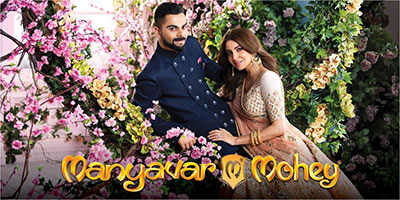 Xaxis announced the results of a recent campaign for retail brand Manyavar, that tracked individuals from digital outdoor exposure to retail store visits. Implemented on mobile and digital out of home (DOOH) advertising, the campaign was tracked attribution from individual OOH exposure against subsequent consumer behaviour.

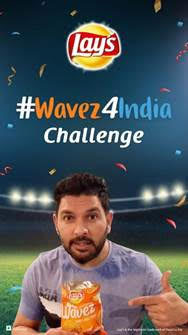 Lay’s has introduced a ‘Wavez4India’ challenge on TikTok, which was brought to life by cricketer Yuvraj Singh. Singh is seen shaking a leg on social media urging his fans to join in the fun while creating a ‘Wavez4India’ step.