Category: ADVERTISING

  • Bobby Pawar exits Publicis. To join Havas as Chairman & CCO

    By A Correspondent


    Had it been another day, it would have made way for the Big Story. But, then, Bobby Pawar would agree, the merger of J Walter Thompson with Wunderman calls for the top slot in our newsdeck.

     

    But the move is a clear indicator that the Havas group intends to boost its play in India. In early October, Havas appointed Rana Barua as Group CEO. Now Pawar has been appointed Chairman and Chief Creative Officer. Notes a communique: “The appointment is in sync with an aggressive growth strategy that will further integrate the management structure of Havas Group’s India operations to create a simple, unified and client-centric organization in line with the Group’s “Together” strategy.” Also, in October, Havas announced the elevation of Anita Nayyar as CEO of Havas Media Southeast in addition to her role as CEO of Havas Media India.


    Pawar will report to Vishnu Mohan, Chairman & CEO of Havas Group, India & Southeast Asia, and work closely with existing leadership teams, including recently-appointed Havas Group India CEO – Rana Barua. The appointment is effective in January 2019. Nayyar, as per the October 23 communique, will also report to Mohan.


    Pawar joins Havas Group from Publicis Worldwide where he is Managing Director and Chief Creative Officer for South Asia. Publicis has confirmed the development and informed the media that Pawar, will be moving on from the agency after a five-year stint, and will leaved after serving his notice period which ends in January 2019.


    Said Saurabh Varma, CEO, Publicis Communications, India & South Asia: “Over the last five years, Bobby has played a key role in transforming the creative output of Publicis Worldwide India. Under Bobby’s leadership we’ve created some truly fabulous work for our clients. We’ve enjoyed working with Bobby and will miss his sense of humour and the raw energy he brings with him. We wish him the best of luck for his future.”


    Commenting on the appointment, Mohan said: “Collectively, as a network, we are focused on providing clients with great work by investing in the best talent. We hire for the future, not the past and we believe that Bobby is a timely and critical hire for Havas Group. Bobby’s work has made him one of the most awarded Indian creatives in the industry and he is known for transforming agency culture and reputation on the strength and quality of the creative product.  Additionally, his experience across traditional, digital, experiential, and media agencies will bolster our overall integrated product. Bobby’s appointment will fuel our ambition for India and herald a new chapter of success and I am delighted to welcome him to the team.”


    “It’s a great time to be in the advertising industry as data and technology has added depth and breadth to the creative product. Havas Group provides the perfect platform to reinvent our industry by blending the best of both worlds: relentless creativity and smart media accountability. Additionally, by being a part of Vivendi, Havas Group has a huge opportunity to make tangible in-roads into the entertainment industry. The prospect of leveraging the assets of Universal Music, Dailymotion, Gameloft (Vivendi companies) to solve a business problem is extremely exciting and I am delighted at the opportunity and looking forward to my new role,” added Pawar.  On his exit from Publicis Worldwide, Pawar added: ““I’ve had a blast working with Saurabh, Srija and the incredible creative talent as Publicis Worldwide India. But as they say, all good things do come to an end. I’m the kind of person who has always been excited about trying new things and broadening my horizons, and that’s exactly what I’ll be doing. I am fully confident that Publicis will continue to rise and make stellar work for its clients. I would like to thank the Groupe for the great memories and work we’ve created over the years.”


  • Finally, J Walter put to rest!


    By Prabhakar Mundkur


    J Walter Thompson the agency which was first established in 1864, and celebrated its 150th anniversary with aplomb in 2014 is finally putting James Walter Thompson the founder to rest. In 2005, the agency tried to rid itself of any connection with its founder by rechristening the agency to its initials JWT, which involved a logo change from the earlier famous signature of its founder.  That seemed like an effort to tear away from its past.  In the process it might have lost some of its charm.  But on its 150th anniversary good sense prevailed and Sir Martin Sorrell decided to rechristen the agency as J Walter Thompson because he thought the name was immensely powerful.

     

    Now finally with the merger announced yesterday by WPP with Wunderman to make it Wunderman Thompson, the ad agency finally puts the first two names of its founder to rest.  In some ways, the merger and the double-barreled name reflect changing times for the ad agency business.  It is no coincidence that the merged entity has been named Wunderman Thompson rather than Thompson Wunderman.  Neither is it a surprise that Mel Edwards earlier CEO of Wunderman is the global CEO of the merged entity and will have operational control of the merged entity. And Tamara Ingram the global CEO of JWT has been relegated to the position of Chairman of the combined entity, always a less active and more ceremonial role.   It is a clear signal to the marketing industry that the ad agency is now playing second fiddle in the communication business.


    WPP earlier did the same with Y & R when it merged it with VML a digital marketing agency in the WPP group.  By calling the new entity VMLY&R it reiterated that the ad agency was probably no longer as important as it earlier was.


    But with this new merger and name change, we lose over 150 years of the J Walter Thompson heritage.  Its culture, its many innovative firsts in the advertising business, its prominent place as the University of Advertising and last but not least its status as the inventor of strategic planning thanks to the famous Stephen King.


    So, what does the future hold?


    Certainly, it does seem that Wunderman will lead the merger.  Wunderman was founded in 1958 by the Wunderman brothers and has over the years transformed itself from a direct marketing shop to a modern digital agency. Mike Reed now CEO of WPP, is known to have steered Wunderman to its current position of ‘creative driven, data inspired’ in his earlier stint as CEO of Wunderman.  His affection for Wunderman is therefore quite natural given his earlier acquaintance.   He once defended the onslaught of the consulting businesses into the communication arena by differentiating Wunderman as, “We are different from Accenture. We are creative”.


    In many ways, the new merger in theory at least would be a very powerful entity with both digital and traditional marketing skills.  But the advertising business has yet to prove beyond doubt that integrating balance sheets necessarily lead to integration of diversity in communication skills. Sir Martin’s famous coinage of “horizontality “has remained more or less an admirable mission rather than transformed into regular practice.


    One can’t therefore help but wonder if JWT and Wunderman continue to operate as two different silos under one merged name.  It would certainly be a pity if it did.  What is intriguing is that if this is the model of the future for communication businesses, will the other large groups like Publicis, Denstu Aegis, Omnicom and Interpublic follow?  That’s a million-dollar question.


    We will need to wait and see!


  • The Hindu announces first edition of Photojournalism Awards

    By A Correspondent


    The Hindu has announced the Photojournalism Awards that aim to recognise the contributions and efforts of individuals who bring to the fore the power of images in the news. The Awards will celebrate and honour those who make history through their lenses.


    Said Mukund Padmanabhan, Editor of The Hindu: “Photojournalism is an integral part of journalism, but often doesn’t get the recognition it deserves. We felt it was important to organise an award to acknowledge this and celebrate photojournalism.”


    A two-step judging process has been put in place to shortlist and finalise the winners by an independent jury of senior photographers and academicians.


  • Digital will rule UK adspends


    By A Correspondent


    It’s a still a few days before the Zenith, IPG Mediabrands and GroupM forecasts for global adspends is released, but we thought it would be good to carry GroupM’s forecast for 2019 for the United Kingdom (UK), as it could offer some indicators for the shape of things to come for India. Only the Zenith and Mediabrands reports carry detailed numbers for India. The GroupM report for India as well as the Madison forecasts are typically released in early February.


    According to GroupM,  UK advertising is expected to increase to £20.8 billion in 2019, surpassing the £20 billion mark for the first time, up from £19.9 billion in 2018.


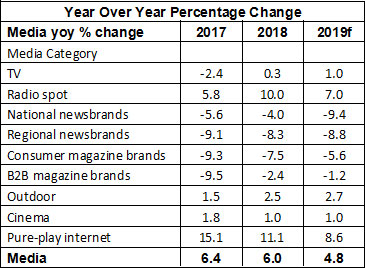
    GroupM’s forecasted distribution of advertising investment is below:


    GroupM forecasts 6.0% growth for 2018, down from 6.4% in 2017. Its 2019 growth prediction from earlier this year is shaved to 4.8% from 5.1%. A significant contributor to global advertising growth, the UK still looks to remain stable due to the high levels of digital advertising growth. Digital is around 60% of all advertising investment and accounts for all net UK advertising growth. The medium continues to grow organically, predominately from SME investment, with signs that larger advertisers are becoming more circumspect about incremental digital investment.


    Pure-play internet increased 11% in 2018 and is expected to continue growing by 9% in 2019. Slower than IAB’s estimated run-rate of 15% for 1H 2018, GroupM sees an inevitable slowdown, although digital is still likely to account for all new net advertising growth.


    Said Tom George, CEO, GroupM UK: “Collaboration and measurement remain key topics for the UK alongside Brexit and GDPR in our advertising forecast for 2019, but in a sea-of-change advertising investment stays buoyant reaching unprecedented levels. It’s encouraging to see the industry pulling together to create new and improved investment propositions. GroupM is highly engaged with all of these efforts to ensure our clients continue to effectively engage consumers.”


    GroupM forecasts television advertising investment to remain flat in 2018, with 1% growth expected in 2019. According to Nielsen, key TV categories soft this year include Food, Household FMCG, Retail, Entertainment & Leisure. Finance (TV’s largest category) and Motors (fifth) are growing high-single-digit in the year to September. ‘Share deals’ remain the principal trading mode in UK TV, which advertisers value for its tolerance of short-run budget revisions, but mixed modes of airtime are becoming more routine as trading embraces more audience falling outside Barb’s ‘gold standard’. Facebook in particular, is still winning share of audio-visual advertising and is heavily video-biased for large advertisers. The main reason is convenience and the lust for ‘performance media’.


    Print media continue to shrink, with newspapers (national and regional) plus magazines collectively shedding about 1.5 share points a year. In 2017, news brands included 12.5% of all ad investment and in 2018 11.1%, with 2019 estimated to drop to 9.8%. Even with mitigation from digital sales (now a large minority of ad sales), this reveals an investment trend of -6% in 2018 and -7% in 2019, as the ‘walled gardens’ capture more share. Armed with research, owners are putting up a united front with reassurance and stable media pricing; this has renewed advertiser enthusiasm for the medium.


    Radio is holding its audience and enjoying rising demand. GroupM forecasts radio spot advertising revenue to rise 10% in 2018 and 7% in 2019. Radio owners will book about £500 million in spot revenue in 2018. This does not include digital and streaming revenues, which are an unmeasured mix of static and dynamic activity, and thus hard to estimate. The annual run-rate is probably above £100 million.


    “Future Brexit fall-out remains a complete unknown, but for now the economy is doing OK. Ad revenue forecasts remain perhaps surprisingly positive, supported by digital commanding a rising share of overall marketing effort from a wider base of marketers large and small. The UK’s fluid media market favours optimism too. Advertisers know they can change spending plans almost at will, with low or no friction,” said Adam Smith, Futures Director, GroupM.


  • Achche Din…! Zenith forecasts 15% AdEx growth in 2019


    By A Correspondent [to be updated by 9.30am]

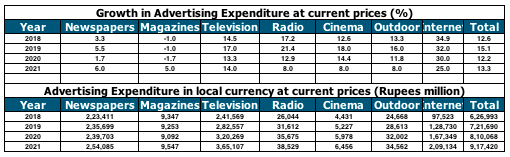
    Media agency network Zenith forecasts that adspends for India in year 2018 will close at Rs 62,699 crore. And the total AdEx for India will see an increase of 15% and climb up to Rs 72,169 crore in 2019.

    India remains one of the fastest growing economies, with strong GDP growth of over 7%, led by reforms in sectors such as retail, infrastructure, manufacturing and services, notes a Zenith communique, adding: “Given that a significant part of the population is below 30 years of age, there is likely to be continued consumption-led growth with less reliance on export-led momentum.  This should give a boost to businesses across the board, ad investments and government initiatives.”


    Furthermore, the release adds: “However, 2018 has also seen the depreciation of the rupee and oil price volatility. The overall expectation is that oil prices will stabilise, giving Indian consumers more disposable income. Indian consumer confidence continues to remain relatively high. “

    According to Tanmay Mohanty, Group CEO at Zenith, many parts of India were experiencing digital transformation, led by mobile. This will accelerate categories such as banking, financial services, healthcare, entertainment and sports, travel and lifestyle. “2019 is the year of the Indian General Elections. These and the State Elections will boost marketing spends.  Additionally, the Cricket World Cup and the Indian Premier League will drive growth.” Mohanty said.

    “Digital will continue to accelerate both in reach and consumption.  Television – linear and catch-up will be on an upward curve. The expectation for radio is that it will digitise aggressively in response to streaming services while both cinema and out of home (OOH) will innovate and increase reach-led investments. Print will thrive on regionalisation.” Mohanty added.

    According to a similar report released last year (Dec 4, 2017), total AdEx for India was estimated to climb up to Rs 58,422 crore, growing  at 8.4% in 2018, led by television. This estimated has been bettered by the figure of Rs 62,699 crore as quoted earlier for adspends in 2018.

    Meanwhile, online video and paid search are driving the growth in global adspend, as advertisers focus on personalised and targeted communications, according to Zenith’s Advertising Expenditure Forecasts, published today (December 3).

    This is what the rest of the summary, as provided to the media, notes:

    With advertisers now able to use these channels to target with pinpoint accuracy and serve personalised messages, they are increasing both the efficiency and effectiveness of campaigns. Between 2018 and 2021, online video advertising will grow at an average of 18% a year, twice as fast as other forms of internet display advertising and well ahead of any other channel.

    Paid search is not growing as quickly in percentage terms – it will grow at an average of 7% a year over this period – but in dollar terms will contribute even more to global growth than online video. The application of AI techniques, better location targeting, integration with commerce and the rise of ‘in the moment’ search are all making search more effective for advertisers. We forecast that between 2018 and 2021, online video advertising will grow by US$20bn, while paid search will grow by US$22bn. Between them these two channels will account for 60% of the extra ad dollars added to the market over this time.

    Online video and television are more important to brand-building than ever

    Advertisers commonly use online video together with traditional television, combining television’s broad reach and immersive experience with online video’s ability to target and optimise frequency. Taken together, these two media are becoming more important to advertisers’ brand-building campaigns. Their combined share of adspend in ‘display’ media (i.e. all media except paid search and classified advertising) has risen from 46.2% in 2012 to 48.4% this year. By 2021 we expect television and video to have a combined 48.8% share of global ‘display’ – a higher share than television ever achieved on its own. Taken together, television and online video are working harder for advertisers than ever before.

    Global e-commerce advertising starts to accelerate

    E-commerce advertising – advertising that sits alongside and within search results and product listings on e-commerce sites – is well established in China, but is only just starting to get going globally. Zenith believes it has the potential to transform the way brands convert customers online, and add about US$100bn of new money into the global advertising market.

    E-commerce advertising has risen from 0.8% of all adspend in China in 2009 to an estimated 18.2% this year, driven by investment by companies like Alibaba in turning e-commerce into advertising revenue. Until recently, e-commerce platforms outside China have largely focused on direct sales to consumers at the expense of advertising, but that is now changing. Amazon generated nearly US$5bn in advertising revenue in 2017 as a whole, and in Q3 2018 its ad revenues grew by 122% year on year. Other shopping platforms are following suit by investing in their own advertising activities.

    Globally, e-commerce advertising is about as advanced as it was in China at the end of the last decade. Amazon accounted for 0.8% of global adspend in 2017, the same proportion that Chinese e-commerce occupied in 2009. If e-commerce follows a similar path globally to the one it followed in China, it could account for 18% of global adspend by 2027. That’s equivalent to over US$100bn in today’s ad market, representing a huge revenue opportunity for the platforms, and a whole new way for brands to reach customers at the point of purchase. This money typically comes from brands’ commercial teams rather than their marketing teams, from budgets set aside for negotiating with retailers. It is therefore new money to advertising, and should expand the market without cannibalising money spent elsewhere.

    Steady growth in global adspend to continue

    We estimate that global advertising expenditure will grow 4.5% by the end of this year, boosted by the Winter Olympics, FIFA World Cup and US mid-term elections. Growth will then remain steady and positive for the rest of our forecast period to 2021, at 4.0% in 2019, 4.2% in 2020 and 4.1% in 2021.

    Central & Eastern Europe will be the fastest-growing region, with average growth of 6.3% a year between 2018 and 2021, driven by continued strength in Russia, which is growing at 6.8% a year and accounts for 39% of the regional total. Asia Pacific is next, growing at an average of 4.9% a year, or 5.7% a year excluding Japan. India is the stand-out growth market here, growing at 13.5% a year from US$9.7bn in 2018 to US$14.2bn in 2021, when it will become the world’s eighth largest advertising market, entering the top ten for the first time. India has huge potential for further growth, with advertising taking up just 0.3% of GDP, less than half the Asia Pacific average of 0.7%

    Young advertising markets like India are playing an ever-more-important role in driving global growth in adspend. ‘Mature’ markets – by which we mean North America, Western Europe and Japan – account for 62% of global adspend this year, down from 75% ten years ago. ‘Rising’ markets – by which we mean all markets apart from the ‘Mature’ ones – will contribute 54% of the growth in global adspend between 2018 and 2021, increasing their share of global expenditure from 38% to 40%.

    “E-commerce advertising is poised to transform the advertising market in much the same way that paid search did in the last decade,” said Jonathan Barnard, Zenith’s Head of Forecasting and Director of Global Intelligence. “It could bring US$100bn in new money into the market over the next ten years.”

    “Brands are transforming their businesses to take advantages of the new digital opportunities available to them,” said Vittorio Bonori, Zenith’s Global Brand President. “Better segmentation and targeting, personalised creative and direct transactional relationship with consumers are combining to drive brand growth.”


  • 14.3% adspend growth forecast for 2019: GroupM


    By A Correspondent


    Okay, we’ve cheated. We know GroupM publishes a propah India-specific report in Februrary, but we’ve noticed over the years that the global This Year Next Year report released in Decemeber is also fairly detailed.


    So while we carry the report now, please do note that there may well be a full-blown one in the coming months. So here’s the report:


    “The IMF expects real GDP to grow 7.4% in 2019 (12.1% nominal), driven mainly by services and private consumption; manufacturing and agriculture are likely to see moderate and low growth, respectively. Bank balance sheet repair and GST reform is likely to start yielding results sometime in 2019, accelerating a reviving investment cycle, but downside risks remain: continued global trade conflicts and high oil prices are likely to impact the exchange rate, trade deficit, liquidity and inflation.


    Auto advertising growth is expected to be high, as car, scooter, luxury bike and commercial vehicle segments will see good sales growth in 2019, driven by urban demand and infrastructure spending. Rural-led motorcycle sales will be monsoon-dependent.


    BFSI adspends will be moderate to high, as bank adspends remain subdued but insurance and financial services spend robustly to expand penetration, with the government-led health insurance scheme also providing a boost to growth. Digital payments are expected to touch $500 billion by 2020, and insurance to be a $280 billion sector by 2020.


    Consumer durables ad monies will see moderate-to-high growth: low penetration in consumer appliances, shorter replacement cycles in consumer electronics, robust replacement demand overall and unexpected/extreme weather – hotter summers, hazier winters – will all contribute to spends.


    E-commerce adspends will grow fast: a report cites the sector to touch $100 billion GMV by 2020, while Morgan Stanley predicts it to touch $200 billion by 2026 and expects ~50% of India’s internet users to have matured by 2019/20 (five years or more of internet use). Online shoppers are expected to increase from the current 14% of internet users to 50% by 2026. Strong consumer expenditure growth should lift Retail advertising in the order of 12-14% year over year between 2017 and 2020, and the explosion of modern retail, expected to nearly double in size between 2016 and 2019, will drive ad monies.


    FMCG adspends will grow fast, as key drivers remain strong: expanding rural penetration, strong rural demand supported by increased welfare spending in a busy election year in 2019, and steady urban sales and growing interest in luxury and health-wellness products.


    Services ad growth should be strong, as the major segments of travel and hospitality, health care and logistics are all expected to perform well in 2019. The travel market is tipped to reach $40 billion by 2020; logistics are expected to hugely benefit from GST.


    Telecom ad growth will be driven by mobile handsets. 2017 saw 288 million shipments (124 million of which were smartphones). The IDC predicts mid-teen growth in 2019-2020, led by low-priced handsets. Telco spends will be conservative, as incumbents face continued pressure on margins due to intense competition – likely to continue till ~2020.


    TV: sports and elections will drive advertising. Print to grow at a slower rate, losing share to digital; election spending will provide some relief. Radio is expected to do well from auto, mobile handsets and a revival in FMCG, real estate and government spends. Cinema & outdoor will continue to grow, as technology adoption improves ad visibility and from the growth of organised retail. Digital: will see high double-digit growth backed by video (with OTT players/AVOD gaining traction) and other premium inventory.”


    And here’s the final analysis:


    “It will be a toss-up with China for 2018, but this year and next India could remain the world’s fastest-growing large economy, with only the Philippines on its heels. Despite two successive quarter-point repo rate rises in 2018 (to 6.5%), the rupee has depreciated 10% versus the US dollar in the year since our December 2017 forecast, in line with the average of the currencies in our country set. The rate rises were a response to CPI creeping up, and there may be more to come. This reflects the health of India’s domestic demand: like the USA, it is a relatively self-sufficient, low-trade economy, which is a strength when global trade is contracting. HSBC predicts India’s consumer demand growth will peak at an impressive 9.1% (real terms) in 2018 before moderating to around 7%, which only China is likely to beat. However, no country is immune from the demand-sapping effect of pricey oil and a runaway dollar, which would only encourage capital flight from the developing world back to the rising-rate USA.”


    And here’s how India fares in the global perspective:


    India’s prospective 2019 growth this year is the same order as Australia, Russia and Brazil combined, even though India’s ad economy is only a quarter of the others’ combined heft. Such is the arithmetic of 14% ad investment growth with its roots in 7% real growth in India consumer spending (after 9% in 2018).


  • Vishnu Mohan to head jury at APAC Effie 2019

    By A Correspondent


    Emma Sheller & Vishnu Mohan

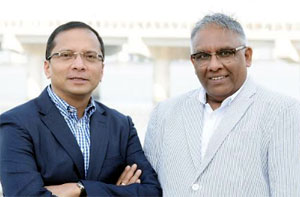
    Emma Sheller, Global Head of Brand and Marketing of Standard Chartered and Vishnu Mohan, Chairman and Chief Executive Officer of Southeast Asia and India at Havas Group have been appointed as Heads of Jury for the 2019 APAC Effie Awards. They are the first two of eight Heads of Juries to join the Judging Committee, and will lead the jurors to review the most effective work from the region.


    On his appointment, Mohan said: Effectiveness is arguably one of the most important factors to consider when it comes to judging the success of a campaign and something we always strive to achieve in our industry.  The Effie Awards stand for inspiring, effective work that drive results and I am both honoured and humbled to take on the role of Head of Jury for the 2019 APAC Effie awards. I look forward to working with my peers to reward great ideas that drive positive business outcomes as we review the best work the region has to offer”.


  • Posterscope launches digital outdoor ad exchange, ROOH

    By A Correspondent


    Posterscope India has announced the launch of ROOH (Real Time Out Of Home), a unique planning-buying platform (including programmatic) for digital OOH inventories.


    Based on the use of APIs (application programming interface), Posterscope’s ROOH uses a wide variety of data feeds to create customised and targeted advertising. This, in turn, allows advertisers to exercise direct control over the content that is being played on screens without the the need to access the media owner systems, individually.


    Said Haresh Nayak, the Group MD, Posterscope Group South Asia: “The ability to deliver dynamic content in real time, driven by highly relevant data and optimised to audience type and audience mindset, represents an enormous leap in the power of the OOH medium. I am certain that it will attract new advertisers to the medium, particularly those that need highly flexible and agile brand communication.”


    Added Deepak Kumar, Senior Vice President, ROOH: “Over the last two years, we have worked across 2500 towns, dealing with over 50 key media owners, to develop this tool. This has helped us in understanding and curating ROOH. The flexibility of ROOH will enable some interesting campaigns and will make OOH truly a dynamic medium. The Posterscope Group predicts that the year 2020 will be a defining year for Real Time Out Of Home.”


  • Beehive to handle integrated comms for Storia Foods

    By A Correspondent


    Storia Foods & Beverages, a budding entrepreneurial venture in the natural foods space, has roped in Publicis Beehive to manage its entire communications mandate.


    The agency was shortlisted after a multi-agency pitch and will manage the entire communication mandate including advertising, brand activation, digital and media.


    Sharing his viewpoint on his plans for the Indian market and also on appointing Publicis Beehive as its communications partner, Vishal Shah – Founder & Managing Partner, Storia Foods & Beverages said: “It is important that we have a deep understanding of our consumers, how we want our consumers to perceive us and what feeling we want to leave them with. Today’s society is moving rapidly and brands have a small window to interact with their consumers and create an impact through their products and communication. It was thus important for Storia to invest in a partner who could communicate these brand values and create a feeling of belonging for our consumers and Publicis Beehive fit the bill seamlessly. They understand our brand vision and culture and there is immense trust that they will nurture our brand as well as we do.”


    Added Paritosh Srivastava, COO – Publicis Beehive: “Partnering an upcoming and entrepreneurial brand like Storia Foods & Beverages presents both an opportunity as well as a challenge. Opportunity lies in leveraging our integrated strength to put our best foot forward in terms of creative, media, digital and activation. The challenge is the trust and responsibility entrusted by Vishal and team upon us to make Storia a success in a tough environment. It’s a great product and we hope that together we will create memorable communication that will result in disproportionate trials and awareness.”


    The agency is currently working on the first communication message which will be rolled out shortly.


  • Mera Bharat Mahaan. Mera Piyush Mahaan!


    By A Correspondent


    Who would you think is the boss of the Indian cricket team? Ravi Shastri, the chief coach and hence the off-the-field boss or Virat Kohli, the onground captain?

    Okay, the analogy isn’t possibly correct, but still it wouldn’t be inappropriate to say that the real Big Boss of a Creative Agency is the Chief Creative Officer. Just as it’s the on-the-field cricket-playing captain who is the real boss of the unit.

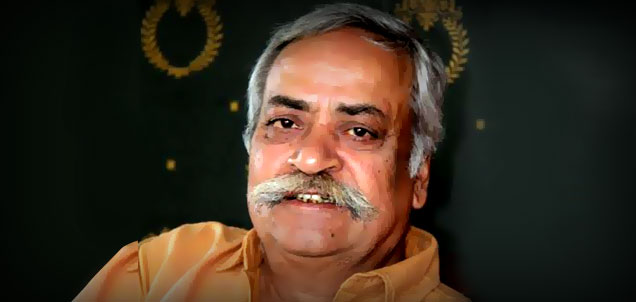
    Now there is enough reason for every Indian to be proud of this development. Piyush Pandey, Chairman of Ogilvy India, is the agency’s next Chief Creative Officer, Worldwide effective January 1, 2019. There aren’t too many Resident Indian global bosses.

    In advertising, we’ve had Vikram Sakhuja turning Global CEO of Maxus (now part of Wavemaker). We’ve had Indian assume the office of the International Cricket Council, but then cricket doesn’t have a truly global footprint.

    In the case of Ogilvy, which is located across 131 offices in 83 countries and a company it creates experiences, design and communications that shape every aspect of a brand’s needs through six core capabilities: Brand Strategy, Advertising, Customer Engagement and Commerce, PR and Influence, Digital Transformation, and Partnerships.

    To be the CCO for Ogilvy Worldwide is huuuuuuuuuuuuuuuuuuuuuge. It is a matter of great pride for India and Indians, and not just in advertising and marketing, but also across all sectors and strata of society.

    And given the kind of advertising and marketing orientation that Pandey stands for, it’s a global realisation of the rise of India and Indianness.

    Meanwhile, Ogilvy has also announced that it will expand its Worldwide Creative Council from 12 members to 20; the 20 members—of which half will comprise female creative leaders—will be announced in January of 2019.

    Said John Seifert, Chief Executive, Worldwide on the Pandey appointment: “We could not be more thrilled that Piyush will be serving as our Chief Creative Officer, Worldwide and my creative partner. Piyush is a true industry icon who is uniquely suited to lead our global creative efforts. Creativity has and will always be at the heart of the Ogilvy brand and culture. Piyush is the perfect leader to shepherd that legacy as we continue to focus on making brands matter as the leading creative network in the world.”

    Meanwile, Joe Sciarrotta will be the new Deputy Chief Creative Officer, Worldwide, reporting to Pandey and Seifert. Sciarrott will continue to lead creative work assignments for several of the agency’s top 50 clients while taking on new duties at the worldwide creative level. Leslie Sims also will join Ogilvy as Chief Creative Officer of Ogilvy USA, reporting to Lou Aversano, Chief Executive, USA.

    PS: Are we gushing a wee bit much about this news? Yes, we are. But – as a publication catering to the advertising, media and marketing services fraternity, indulge us this luxury. There’s enough reason to gush. As the message we sent out with our newsletter today: Garv Se Kaho Ki Hum Indian Media Se Hain! (Say it with pride that we belong to the Indian media!)


  • Ashish Chakravarty joins McCann as ED & Head of Creative, India

    By A Correspondent


    Ashish Chakravarty has moved on from Contract and to join McCann as Executive Director and Head of Creative, India. He was till recently Chief Creative Officer of the WPP agency, overseeing creative output of Contract Advertising, iContract, Designsutra, and Core Consulting.


    Chakravarty will report to Prasoon Joshi, Chairman McCann Asia Pacific and CEO & CCO McCann Worldgroup India. Said Joshi on the appointment: “Ashish is a rare breed of creative talent who is backed by solid strategic thinking. He’s constantly rediscovering himself and genuinely interested in creating work with depth and effervescence at the same time. Moreover, he is a great team builder , am really looking forward to Ashish joining McCann back.” In his earlier stint at McCann, Chakravarty worked with Prasoon Joshi and helped build McCann Delhi as one of the top leading operations in Delhi market, notes a communique.


    Said Chakravarty on his joining McCann: “There is a certain degree of familiarity, and fondness that I have for McCann, having spent over a decade there. I enjoyed a fabulous run in my last stint, and it always felt good to see it continue from strength to strength. On a personal note, I have a huge regard for Prasoon, both as a creative leader, and for the person that he is. Our bond runs deep, and we have a quirky chemistry of sorts; one that is maddening, and magical at the same time. And almost always results in some very good work. So, when the opportunity came to get back into the thick of it, and also in a more substantial way than before, I found it hard to resist.”


  • Magna Global too forecasts Achche Din: 15.4% adspend growth in 2019


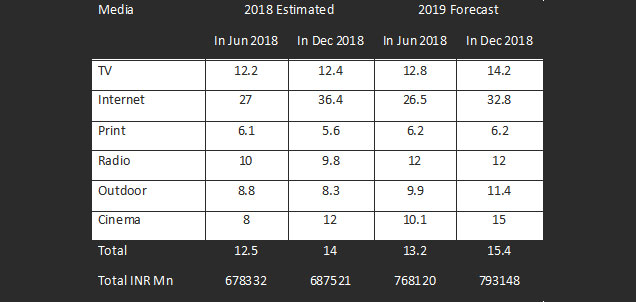
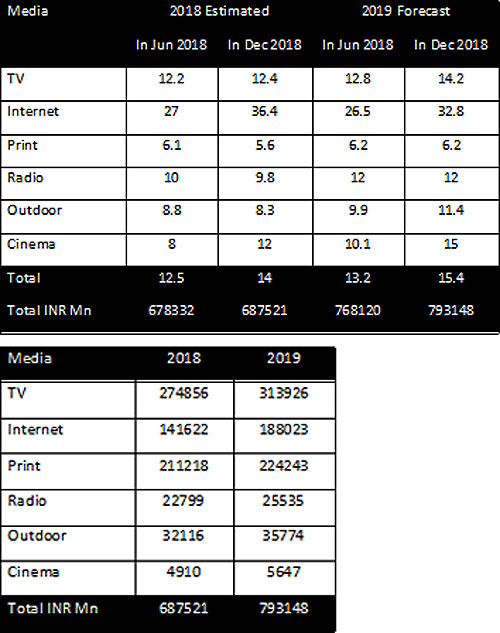
    India faced headwinds from two successive regulatory distractions in the form of de-monetization (Nov 2016) and Goods & Service Tax (July 2017). This held back the economic growth to 6.7% in 2017 (8.2% in 2015 and 7.1% in 2016) and its lingering effects continued in the early parts of 2018. With the negative impact fading, the economy is on the recovery mode and IMF has forecast a growth of 7.3% in 2018 and a consistent 7+% growth till 2023 in its October 2018 report. Advertising expenditure per capita continues to grow from ₹ 515.3 in 2018 to ₹ 586.7 in 2019.


    Said Shashi Sinha, CEO, IPG Mediabrands: “India is the only market in the world where Print continues to be dominant and is growing in all aspects – circulation, readership and geography. The medium is growing strongly on the back of language which has led to the growth in the number of language newspapers. Secondly, print is growing because of the credibility it offers in this era of fake news. There is no denying that there are platforms causing strain on Print but the attributes of well researched, in-depth content and authenticity can only be endorsed by Print and that makes the medium more credible and hence relevant for advertisers. In 2019 print will further emerge as a dominant force because of all the state elections and the general election and we expect the growth rate to be higher than 2018.


    2018:+14%

    Good monsoon backed by minimum support price for crops boosted consumption in rural markets. Consumers got the benefit of lower tax incidence post GST. Digital access got easier and device penetration made a significant positive impact on sectors like e-commerce, auto etc. This growing consumption is attracting the attention of the marketers. Measurement of rural media consumption by BARC and IRS is encouraging advertisers to invest. With economic activity resuming full throttle, overall industry is brimming with positivity and all sectors including Media and Entertainment has shown buoyancy and growth.


    Marquee events like IPL was a major revenue spinner despite aggressive acquisition cost. Extended festive period helped advertisers justify higher marketing investments. Magna estimates the ad market in 2018 to accelerate further compared to previous estimates and exit with a +14% growth (+1.5% higher than June 2018) notwithstanding the restraint caused by the natural calamity in southern part of India


    2019:+15.4%

    Digital is stimulating overall growth.  High-speed broadband and online video is driving elementary changes.  Though it is still a duopoly of Google and Facebook attracting >70% of the revenue, this will change the balance as OTT and E-commerce ad platforms are gaining scale and are increasingly attracting advertising monies. Advertiser’s confidence in the medium is very strong despite Face Book’s strategy to declutter ads on news feed followed by a rate increase and YouTube doubling rates for their premium assets. The market share of Digital will go up from 21% to 24% of total advertising spends with revenues touching ₹188 Bn in 2019.


    Added S Venkatesh, SVP, Magna India: “Digital is leading with +32.8% growth in 2019. Massive expansion in smartphone usage is shifting the consumption from collective to discrete. Streaming video will be the biggest gainer in terms of format and is estimated to double its revenue in 2019. Total revenues will grow from INR 687.75 Bn to INR 793.1 Bn.


    Television has immense headroom to grow with 34% of the homes still being Non-TV as per BARC. While organic growth is absolute, cyclical events like ICC World Cup and National elections will generate strong advertising demand. Healthy distribution realisation with digitization gaining momentum will reduce dependence on advertising and aid broadcasters demand better yield. Despite digital growth, TV continues to be dominant as it enjoys unmatched tor of audiences. With 40% allocation of advertising spends, TV will expand+15.4% in 2019 and will continue to grow CAGR +12.5% till 2023


    Print: Physical news delivery compared to global trend of negative growth has grown CAGR +1.9% in the last 5 years till 2017 as per ABC. Also the fact that readership has grown across age groups establishes print’s dominance, relevance and growth. English newspapers are facing stiff competition from Digital platforms and this drop in readers is offset by the growth in languages. Publishers are also gearing up to move beyond pure-play print revenue stream.  Print will attract a larger pie of the political campaigning and Government spends because of elections. Real Estate and Education advertising reaching its earlier peak will help achieve growth of +6.2% in 2019.


    “Lot of investment is going on Print digital properties including Google’s product Navlekha. The digital edition measurement from IRS when reaches scale will help publishers monetize both forms of readership”, added Venkatesh.


    Radio segment is facing surplus inventory because new station launches, in addition, music streaming apps have become easy to access because of fall in data prices. Fearing drop in listenership base, radio stations have cut down advertising load to increase engagement.  While some of the networks have been able to increase rates, this approach is affecting topline growth with advertising revenue witnessing a jump of +12% in 2019. Automobile, finance, real-estate and E-commerce are primary contributors to growth with Government and political spends increasing during the election window


    For OOH it will be a promising year with major contributions from OTT and Mobile Apps along with Telecom and E-commerce. Government’s promotion of welfare schemes and Election spending will sustain this momentum. Estimated to recover with a +11.4% growth the category continues to be data scarce and shall hold 4-5% share of total spending.


    Key Figures: