Category: ADVERTISING

  • Maxus successfully executes Blenders Pride fashion Tour

    By A Correspondent


    The Blenders Pride Fashion Tour has been synonymous with Indian fashion and style circuit for close to a decade now, this year particularly, the premium on ground property not just saw a massive on-ground swell but was also highly successful in increasing its fan base. Maxus through its award winning creative team came up with a post-event content strategy which managed to devise a premiere show format out of the established on ground event and transform it into interesting content.  Maxus successfully developed a four-part TV series that was aired on Star World capturing the brand message, ideas and glimpses into the on-ground event. The comprehensive campaign was able to victoriously integrate the brand’s positioning via the juicy content of the tours and took it from just a few cities and limited audience to people’s home now. The show had reached 36 million viewers through long and short format.


    Titled ‘Taste Life in Style’, the show became a platform where people with stylish personas decoded their individual sense of styles and professional lives, set against the backdrop of the Blender Pride Fashion Tour events. Each of the four stylish personalities brought to the show a unique flavour of a world which reflected their head strong attitude to life, their sense of style, the spaces they occupy and designs they create.


    Some of the many guests who got featured include big designer names such as Neeta Lulla, Rocky S, Namrata Joshipura, and Gaurav Gupta. Noted musicians like Midival Punditz, Karsh Kale, Ashvin & Ash, Anushka Manchanda too were featured at the tour. A varied mix of speakers like Boman Irani, Chetan Bhagat, Wasim Akram and Irrfan Khan were part of the same.  The star line up also included guests such as Gautam Singhania, Adhuna Akhtar, Nagesh Kukunoor and Vikas Khanna.


    Raja Banerji, Assistant Vice President at Pernod Ricard India, said India’s most future ready media company elevated the renowned and stylish Blenders Pride Fashion Tour to newer heights. “In our commitment towards our fans we have always strived to evolve and provide them the best that we have to offer. Our belief in Maxus to devise the most compelling content plan for the Blenders Pride Fashion Tour this year definitely helped, as through their efforts we reached an astonishing 36 million people, through long and short formats. We would definitely like to congratulate the team at Maxus and look forward to future associations.”


    Through the shows a large number of people would be able to get a glimpse of the renowned celebrities into their personal spaces and lives, and witness how style gets blended into their world. The Blenders Pride Fashion Tour thus is set in this context, decoding the true meaning of style through a myriad of varied perceptions.


    Speaking on the favourable outcome of the campaign Maxus ESP national director Shailja Vohra said, “The Blenders Pride Fashion Tour is one the most focal points in the Indian Fashion sphere and are our esteemed clients. Blenders Pride wanted to be associated with style as a positioning and with celebrities that represented its core values. Our content strategy helped them achieve just that and the essence of our role was in helping Blender’s take an established on ground event and turn it into riveting content that was sustainable, interactive and most important integrated!”


  • VML India wins StreetWear’s digital mandate

    By A Correspondent


    VML India has been awarded the Digital AoR responsibilities by StreetWear India, after a multi-agency pitch in December.


    StreetWear is a cosmetics brand in India since 2004. In October 2014, the brand re-launched itself with new packaging, reinvented formulation and a new brand story. In 2015, StreetWear aspires to become India’s most stylish cosmetic brand for millennials. To do this, the brand needs to appeal to the TG in ways beyond a favorable price point.


    This is the digital mandate which VML India is expected to fulfil, using digital to create a strong emotional connect with the audience translating into increased usage and consumption.


    StreetWear Color Rich by Revlon leads its communications with a philosophy #whynot. It strives to inspire young women to experiment with color to express themselves. It re0-launched the brand with a #whynot blog, where 4 StreetWear brand ambassadors share their #whynot stories. Supported by branded content across social channels and in-campus activations, StreetWear spread the #whynot message with color. In a latest extension of this campaign, it is on a journey with fashion blogger Rhea Gupte as she explores street fashion across India.


    A Revlon Spokesperson said, “StreetWear as a brand is aimed primarily at the 18-25 year old woman in India. Digital therefore becomes our lead channel to build relevance and affinity with this audience. We have worked with VML for Revlon and are confident they will turn around digital for StreetWear as they did for Revlon.”


    Tripti Lochan

    Tripti Lochan, CEO VML said “We have had an exciting and fulfilling journey with Revlon since 2012 and are extremely happy to be able to extend that relationship to include the StreetWear brand. StreetWear is a fresh, dynamic brand in the cosmetic space and we are keen to partner with them on this digital foray.”


  • Razorfish India brings on board Arnab Majumdar as Director, Biz Devpt

    By A Correspondent


    Arnab Majumdar

    Razorfish India is further strengthening its core team and has brought in Arnab Majumdar to Head Business Development. He will be based in Mumbai but is mandated to lead business acquisitions and establish new business operations models across its offices in India.


    Arnab, with his experience of over 12+ years in the media industry has experience across Print, Television & Online channels. He has worked with multinational media houses like CNBC TV 18 & MTV. With his sharp sense of business acumen, he has delivered transformational business models for clients from various industries like BFSI, Auto, Lifestyle & Entertainment, Media Houses, etc. to name a few.


    Charulata Ravi Kumar

    Charulata Ravi Kumar, CEO Razorfish India said, “We are constantly seeking highly curious people who have the energy and a razorsharp mind to persistently look for lateral solutions for the clients we partner. When I met Arnab, that’s just what I saw in him. He is able to cut through the many layers and get to the core of a business need. He will be a key member of our Business Transformation Advisory team that partners new clients to set them off on the digital path.”


  • Ajay Chandwani: 6 reasons on what one can expect at Goafest 2015 (and why it’s a must-attend)

    By Ajay Chandwani


    Goafest has in the last decade become one of the world’s significant ad festivals in numbers and has weathered many ups and downs to retain its premier position of Asia’s most happening learning and awards platform. What can we expect from Goafest in its tenth year of operation?


    1.Some exciting presentations from high quality international speakers like Ted Lim of Dentsu, Alan Moseley of 180 Amsterdam, Niel Stewart of Facebook and also speakers from domains other than advertising like mythologist Devdutt Pattanik. Knowledge and learning is an equal partner with celebration of creativity and innovation. This will be amply displayed.


    2. For the first time, Youth Labs in Creative and Media will be introduced as a lively interactive platform aimed at keeping the young delegates engaged with more than just beer and sand. Industry stalwarts who are not easily accessible to the young delegates will conduct these sessions.


    3. Apart from an inclusive Conclave which has already been enlarged in audience reach and scope, there is a Leadership Summit on the last day which will address some critical issues in Marketing, Advertising and Communication by thought leaders from these domains.


    4. A smooth transparent judging process for Abbys which has already been appreciated by the juries and chairpersons involved last year in the annual feedback session. All the rigor introduced in sifting through any controversial or proactive “only for awards” entries will go through the auditors scanners before and during the jury sessions. The organisers have promised to honour all decisions of Jury after Awards have been decided.


    5. New companies participating in Abbs from diverse fields like Public Relations, Branded Content, Brand Activation, Publishers, Broadcasters, apart from Design and the fast growing vertical of Digital and Mobile advertising.


    More than anything else, Goafest is a young ad person’s dream platform as it offers more than just a heavily subsidised festival that lays out competition, learning from the gurus, fun on the beach and the ultimate social lubrication that takes networking to a new high.


    It’s not surprising to meet people you have worked with years ago in different companies and often different cities after many years of disconnect.


    CXOs find themselves aged and surrounded by young turks who are the new generation of a profession that refuses to get old, often discussing the new rules of engagement and making the digital communities of today come alive.


    Last year, a record 275 companies participated which is expected to increase further this year as E-commerce, M-commerce and Mobile has already ushered in a whole new breed of players and participants.


    6. A slicker, exciting, entertaining and professional show as we have partnered with experts in the event business.


    All in all , expect more than just paragliding, volleyball on the beach and the very Goan twist in the rain dance that has become a festival property.


    The writer is Director, Percept Ltd and Member,  Award Governing Council, Goafest Abbys and Joint Secretary, Adclub Management Committee


  • Sanjeev Kotnala@Adfest: 20 Learnings from the Jury on How to Be Bad Enough

    By Sanjeev Kotnala


    Here is a summary of what the Jury at ADFEST 2015 PATTAYA said they were looking, wishing and at times missing. In simple terms in addition to being the bravest, smartest pieces of communication here are the 19 pointers for you to work on.

    1. The ultimate winners come from answering some simple questions. Which one had the biggest impact? What’s the contribution these ideas have to society? What is pushing the industry forward?

    2. Stop seeing mobile (or any emerging media) as a last-minute add-on.

    3. Designs not only needs to be pleasing to the eye but also must stimulate the mind by making you think, look twice or imagine.

    4. The best design idea might not be the loudest or the coolest, but it should be the most memorable, and it should be built to last.

    5. You will fail as a designer if you don’t build to last.

    6. Direct marketing has moved into new spheres, with a lot of new platforms and technologies. Develop ideas that are targeted, contextual and that evoke a direct response, rather than simply trying to use the latest tool.

    7. Do not simply follow tried and tested formulas.

    8. Work stands out when it is very different in thinking and is well executed. The most insightful pieces not only connect well with the audience but also are lauded by the jury.

    9. To succeed and be appreciated, always start with a strong, unique insight.

    10. The era of advertising as an awareness-building industry is over. The role is now much bigger. Question- what solutions are we providing? What actions are we encouraging people to take?

    11. Jury tries to look a work that is making a contribution to brands, to customers and to society at large.

    12. Do not force the use of technology. The best pieces are simple. There the technology is a tool that seamlessly supports an idea, rather than being the idea.

    13. Now, in the digital age, scam ads are about going to charities and promising them a wonderful idea with no long-term interest in the charity. If you’re going to do charity work for awards, make it meaningful. Otherwise it’s morally corrupt. Jury tries to award a work that is genuinely effective and created for genuine clients.

    14. Everything can be a medium now. But what it takes to succeed is the ability to use the medium to connect the brand to the consumer in a relevant way in bold new ways.

    15. Good branded content and entertainment pieces have to be entertaining and engaging in their own right, even if the brand is not prominently featured.

    16. The best pieces of work are not just immensely entertaining to watch, but also brings the audience closer to the brand.

    17. The more media channels diversify, the more overlap we will see the art is to ensure that every utilized media channels in innovative, targeted ways.

    18. Demonstrate an unexpected solution to an expected problem.

    19. The winning work is always distinctively inspired in and by the cultures in which they originate and address.

    20. The Jury must kick itself into asking: why the hell I have not done this.

    Various jury members contributed learning in this list. They comprise Bechara Mouzannar, Chief Creative Officer for Leo Burnett MENA, Beruit. Charles Cadell, Asia Pacific President of McCann Worldgroup Asia Pacific, Singapore. Mitsuyuki Nakayama, President of Dentsu Media Southeast Asia and CEO of Dentsu Media (Thailand). Norman Tan, North Asia Chief Creative Officer & China Chairman for JWT, Shanghai. Pum Lefebure, Co-Founder & Chief Creative Officer of Design Army, Washington DC. Rei Inamoto, Worldwide Chief Creative Officer of AKQA, New York & Global. Sonal Dabral, Chairman & Chief Creative Officer of DDB Mudra Group


    Sanjeev Kotnala is Head Catalyst at Intradia and believes the best way forward for an organisation is to enhance its interanal team’s potential and capabilities instead of depending on external resources. He is a Management, Marketing and Braand consultant and conducts specialised workshops in the area of IDEATION (Harvest and Liberate) and Innovation (InNoWait). To contact email sanjeev@intradia.in  or tweet at s_kotnala visit www.intradia.in  www.sanjeevkotnala.com.


  • Sanjeev Kotnala@Adfest: Well-choreographed storytelling


    By Sanjeev Kotnala


    ‘Seamless Storytelling’, ‘You Are The Hero’ and ‘Jury Crossfire’ were the central thought pieces theme that ran through Day 2 and 3 at ADFEST 2015 Pattaya. Amply demonstrated with engaging presentations that ran like clockwork. Hats off to the team behind the scene.


    The thoughts that kept echoing long after the presentations were over and were too loud to be ignored, I share a few of them with you…

    ‘INVOLVING’

    If you tell someone – he will soon forget it, if you show someone he may remember it but if you are able to involve him – he will understand it. First coined by Confucius remains as relevant as ever. As communication heroes we need to be doing that.

    ‘STORYTELLING’

    To do that, we need to be able to use the art of storytelling. A smart beginning, introduce character, middle where things get complicated, a turning point and a satisfying end. Sound even though art of storytelling is a natural art not everyone is good in it. Get a good storyteller in your team.

    ‘MAKE IT MEMORABLE’

    You have your own world and if you look in your life, you will have few distinctly memorable points of reference. That is your world. And we should operate in our world.  Our job is to make things memorable. As in life you get more in return for surprises and unexpected than for doing the expected. It is true for the communication, event, trigger you press with the audiences. And while you are at it- try thinking how will you create personally unforgettable experiences for your own life to expand the world you live in. Go ahead and in the next 180 days – do what has never been done before.

    ‘THE NEW REALITY’

    ‘Virtual Reality’ and ‘Augmented Reality’ seems to be a medium that is set for explosions in terms of advertisers to adapt and the consumers to be delighted with. They truly engage the customer. In a way they have the capability of creating captive audience by drawing complete attention, focus and engagement. The way forward with software that is becoming of superior quality day by day and the ease of delivering it like- Google box- is giving that force needed to take it to another level.

    SELLING AN IDEA

    Clients live and die by how well their brands are ding in the marketplace. Empathize with them. Use logic and reasoning to back up your sell. Clients are really wanting to be assured that they are doing the right thing. Show them the case studies and trends to convince them how other brands have succeeded doing something similar and how we could lose out if the competition beats us to the idea. But reassure them with a contingency plan. At the same time, you must demonstrate how passionately you believe in your idea. If even you are not 100% convinced wit your work, why should the client believe in it.

    ‘YOU ARE NOT AN ADMAN’

    This was a title devised a long time back, when all you did was Advertising. Now you are hardly doing that. You are doing a lot more, lot more defined, at times niche but hugely more practical, relevant, engaging, involving and strategic. So, first change yourself in your approach to work. Try doing unexpected; bring in the most unexpected solution to an expected problem.

    ‘WORK LIFE BALANCE’ Pum Lefebure Idea

    May not work till you see them as two compartments. Pum shared that at the start of the year she takes a cube and places the most important thing for her life (this year she shared it was health). On two sides she places two things that make her happy. Like Family and Creativity. Then on the other two sides she places the two things that make her professionally happy. Like Travel and something. And at the base she places her goal. Because it should be the foundation and not something you are trying to jump and access. And the most important thing should be at the top, without which nothing would really matter. She says she plays with that Cube a lot and it helps her keep her focus.

    Adfest lived up to its promise of providing a creative forum and stimulus for learning. By showcasing every entry (not just the shortlist), the great cultural diversity of work was available to be absorbed. Some of it was stunning and one believes will continue to get more applauded as the year goes by.

    Learnings from: Andrew Petch, Executive Creative Director of Ace Satchi & Satchi Manila, Gosling of Happy Finish- Augmented reality, Jonathan Samway, Executive Producer at Moth Projects, Sydney, Katsuaki Hashida (Hakuhodo Kettle, Tokyo) & Takahiro Hosoda (TBWA Hakuhodo, Tokyo, Lotus News, Oz Dean, Creative Director- We Are Social Australia. Pun Lefebure, Co founder of Design Army and Sa’ad Hussein, Chief Creative officer & executive Director of TBWA\Kuala Lumper


    Sanjeev Kotnala is Head Catalyst at Intradia and believes the best way forward for an organisation is to enhance its interanal team’s potential and capabilities instead of depending on external resources. He is a Management, Marketing and Braand consultant and conducts specialised workshops in the area of IDEATION (Harvest and Liberate) and Innovation (InNoWait). To contact email sanjeev@intradia.in  or tweet at s_kotnala visit www.intradia.in  www.sanjeevkotnala.com.


  • Telling the truth in ads always works


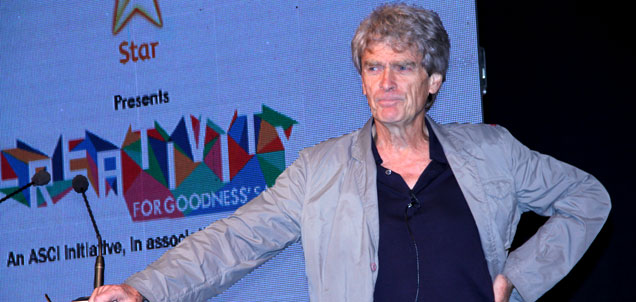
    A little exaggeration is ok to make a point. But agencies must stand up to their clients if they are being forced to make tall claims, ad guru and BBH founder Sir John Hegarty tells Labonita Ghosh. And in such instances, self-regulation by an industry body is always better than guidelines being imposed from the outside


    Can creativity happen without some exaggeration and tall claims?

    Creativity always involves some exaggeration because you exaggerate to make some point. Since the beginning of time, mankind has done that. But in advertising it must be done in a way to engage people and not just try to shock them. That’s the real creative skill


    So where does one draw the line, given that the exaggeration and tall claims may be subjective?

    There’s the idea that the truth is a moving feast. Your truth isn’t necessarily my truth. The Japanese film Rashomon deals with some of this – what is the truth and what did you see. People genuinely think they saw one thing or another. I like to use the word integrity, because it imposes upon you a responsibility. Did you do something because you believed it to be true, as opposed to someone seeing a different truth? And once you’re doing what you believe to be true – and I don’t mean being dishonest with yourself – then I think that’s all you can be expected to do. I don’t think you can do more than that. So we try and build our strategies around some truth because that’s what will resonate more with people. And [such advertising] is much more effective.


    One could argue that that’s a bit cynical. But actually, the truth really does work, as an advertising and commercial strategy. Trouble is, a huge number of brands don’t believe that they can tell the truth. In hair care ads, why is that they always show someone with lovely, long hair? It’s such a cliché. But a brand that finds a way of talking about hair and what the product does for it in a way that is more unique, and more relevant, is the brand that will walk away with the prize. The point is to make that truth relevant at that particular moment in time. After all, circumstances change. I may have different requirements at different times from the product I buy. So it needs to be relevant at that point in time for me. It isn’t just enough to sit up and say ‘I tell the truth”.


    For instance, we always tall about the famous ad campaign done by DDB for Volkswagen in the early ’60s. It’s famous because it created more than advertising. What it said was that the Volkswagen is ugly, but it works. This, at a time when American cars were selling luxury, size and volume and such. The ad worked against the current point of view, and there were enough people with whom this idea resonated, for the campaign to have become a huge success. The point is that it has always got to be relevant.


    You mentioned integrity earlier. But isn’t that different for different people? Whose integrity do we trust?

    [As a brand] you have to do it. Because you’re the one communicating the message which will then make people decide whether or not they want to buy your product. That’s the choice you make. I don’t think we should be afraid of making choices – after all, that’s what brands are about. Great brands stand out because they stand for what they believe in. They don’t try to be all things to all people. All brands define themselves in some way or another, so you shouldn’t be afraid of doing that.


    What happens when, as an agency, you have the client twisting your arm about projecting something?

    That happens all the time. Agencies are handed the information and they can only trust that their client will stand by it. But if they think it’s incorrect or not working, they should also tell the client so. We were working for a large, rather famous cola company many years ago, and the reason they said their product was failing slightly was because their competitor had more sugar in their drink. We found that hard to believe so we tested it ourselves and discovered that [our client’s] product actually had more sugar, and their product failing had nothing to do with this at all. We shared this information with them and they had to back down on their claim. So agencies can’t just be the messenger. They have to be a responsible messenger too.


    Given that there will always be a bit of a gap between the broadcast/ printing of an ad, and action being taken on a claim, can self-regulation work effectively?

    Self-regulation has certainly been effective in the UK. There, the Advertising Standards Authority, which is financed by the advertising industry, regulates, brings out reports and issues condemnations if there are any. I think it’s better if there’s self-regulation rather than outside regulation. Advertising campaigns now are very expensive. So a client won’t be happy if it has to pull a campaign [because of some irresponsible advertising]. But one of the things I find amazing is somehow companies manage to distance themselves from the advertising when they’re in trouble. As a company you are employing the advertising agency and you are making these claims. So you should be taking responsibility. One way to make companies toes the line is by constantly naming and shaming them as offenders. If you keep have your ads withdrawn, it’s not going to be good for your mage, it won’t go down well with your shareholders and all sorts of things will begin to impact them, which will make a company think twice before making tall claims.


  • Soon Consumers will be Regulators…


    By Labonita Ghosh


    A few years ago, global consumer goods giant Unilever found itself in a sticky situation. A new advertisement for its margarine Flora, had sparked a huge row. The ad showed a bullet going straight for a human heart made of china. The bullet, fashioned by the words “Uhh dad, I’m gay”, was followed by Flora’s tagline, “You need a strong heart today”. Amid largescale protests against the clearly homophobic nature of the ad, Unilever first distanced itself from the campaign, saying it had been produced by an agency in South Africa and had not been approved by the company. Then, as the protests refused to die down, the company pulled the campaign altogether. “The ad seemed to indicate that finding out your son was homosexual, was like taking a bullet to the heart. It was a very uncomfortable situation for us,” said Marc Mathieu, global SVP marketing for Unilever, who was in Mumbai last week, speaking at an event organised by the Advertising Standards Council of India (ASCI), on responsible advertising.


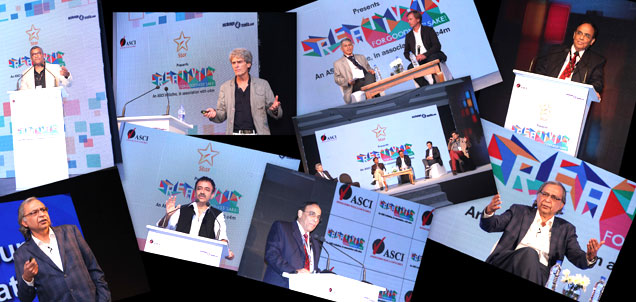
    ASCI has been pushing for self-regulation in the advertising world to ensure ethical and responsible handling of campaigns, and also for punitive measures against companies and agencies that put out misleading ads. Earlier in the week, the Department of Consumer Affairs announced it had set up a website called GAMA (Grievances Against Misleading Advertisements) and was partnering with ASCI to take action on the complaints filed online and penalise offenders. The prevalent idea, however, is that there may be no need for action if the industry decides for itself to toe the line.


    One oft-repeated grouse by the industry is that too many guidelines curb creativity. “The assumption often is that rules are a barrier to creativity,” said Shantanu Khosla. Managing director, P&G India at the event. “But we should not think of regulation as a constraint. It comes from the same source as my fundamental consumer insight, ie society. The people we serve, write the rules, and no one else.” Indeed, it is from these rules, added Khosla, that companies can also build leverage and trust for their brands with consumers.


    In fact, sometimes thinking out of the box can lead to some great advertising, felt John Hegarty, founder of BBH. He cited the example of how, since the socio-cultural conditions of various markets differ, there are some regulations that – literally — come with the territory. And trying to find (legitimate) ways around this, can often lead to innovative solutions. Like a hair care commercial that was prepared for the Malaysian market. “How do you advertise for women’s hair care product in a country where women wear headscarves and are not allowed to leave their head exposed?” Hegarty said. “The agency found a way around it.” The ad focuses on a comb instead, first with strands of hair on it, and later without, to show how the product could stop hair fall.


    Unilever’s Mathieu felt that understanding people is what unites the marketing and advertising agencies. “Insights into certain human truths are the most important thing,” he said. “So companies need to ask themselves what is the human truth that I can use for my campaign that will resonate with people?” Making campaigns more people-centric and creating more purposeful brands, will automatically yield ads that are less offensive and more acceptable to consumers.


    Experts, however, feel consumers themselves are the best regulators. “Self-regulation is our job, yours and mine, and not ASCI’s,” said Paritosh Joshi, head of media and communications consultancy unit Provocateur Advisory. “The more everyone believes they are a part of this, the more they will believe that enforcing truthfulness and honesty is a collective responsibility. Self-regulation is not about curtailing creativity, but about establishing a framework of rules that one might have for, say, golf or cricket or boxing. If you’re not allowed to punch below the belt, you’re not allowed to punch below the belt. There are good reasons for this, and we should all be aware of them.” When that awareness comes, there may not be a need for a watchdog at all.


    Sanjeeb Chaudhuri, CMO and global head of brand at Standard Chartered agreed. “Increasingly, the response of the consumer, will be driven by the consumer,” he says. “This consumer’s choice will, in turn, drive the choices that advertisers and agencies will have to make. They will find that they can’t go against the grain [of the consumer].”


    Santosh Desai, MD and CEO of Future Brands, saw things a tad differently. “I think the issue of self-regulation will only become more contentious till such time that business can see itself as an intrinsic part of society,” he said. “Considerations [about regulation] should not stem from things like the consumer becoming more empowered and taking to Twitter to complain. These will always be half-solutions. It will happen only when corporations begin to believe that they don’t have immunity from society.” Indeed, it should be impossible to separate the consumer from the business. “The business of business is people,” said Bobby Pawar, director and chief creative officer at Publicis Worldwide. “Just as products have consumer benefits, companies should too. They must also benefit society in some way. The thing to keep in mind is that if you are a person with a conscience, you should also try to develop one for your brand, and stay true to it at all times.” A tough ask, perhaps, but certainly doable.


  • Vishal Ahluwalia to head Bangalore office at GREY

    By A Correspondent


    Vishal Ahluwalia

    GREY group India has announced the appointment of Vishal Ahluwalia to head its Bangalore office. He will be reporting to Sunil Lulla, Chairman and Managing Director GREY group India.


    Vishal joins Grey with two decades of marketing communications experience, across various geographies and disciplines. In his various avatars, Vishal has headed businesses and has been an entrepreneur. Until recently, he has worked as a Member of the Board of IRIS Worldwide, in which he spearheaded the Digital and Retail verticals. Prior to which he was the Head for TBWA- South India; Head of the Unilever business for JWT -Taipei and a Senior Member of both Contract and JWT.


    Sunil Lulla

    “Vishal brings a great blend of advertising savviness and digital smarts to GREY. His experience across geographies and diverse categories, will strengthen the leadership team at GREY. He will take further our integrated offerings to various clients and enable their brands to be famous and effective,” said Sunil Lulla welcoming Vishal on board.


    Vishal holds a post graduate degree in Sales and Marketing. He has worked across the brands of Nestle, SONY, Reckitt, Pernod Ricard, Unilever, Dabur, Coca Cola, Maruti, Tata Gold Plus, Kimberly Clark and many others.


  • Viscomm wins RMAI Award

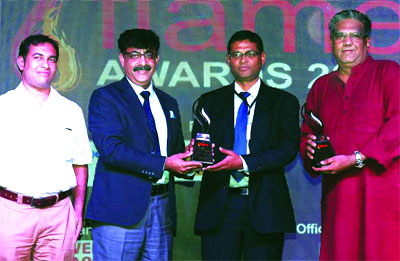
    RMAI FLAME Award being collected by Puneet Vidyarthi, GM & Head of Rural,JCB India Ltd (2nd from Right), Rajesh Grover, MD, VISCOMM (extreme right)

    By A Correspondent


    VISCOMM, a leading full-service BTL agency has bagged top honours at the Rural Marketing Association of India (RMAI) Awards held recently. At an event held amidst the big names in rural marketing, the marcom firm collected the award along with its client JCB India Limited for the initiative ‘Sunehra Kal’.


    The event was held at Hotel Taj Vivanta in New Delhi on March 20, 2015. The Flame Awards is recognised as the Oscars for the Indian Rural Marketing business.


    Rajesh Grover, Managing Director of VISCOMM, said, “We’ve been doing some interesting work over the last decade for JCB India Ltd. JCB allows us to experiment with innovative marketing solutions in the rural space. Sunehra Kal engages progressive farmers using the Krishi Vigyan Kendra (KVK) platform. It is delivered through a unique experiential learning game, with simulations of various real life situations, wherein the audience themselves analyse the outcomes of their decisions taken during the game.”


    Rajesh Grover
    Amit Gossain

    Said Amit Gossain, Executive Vice President – Sales, Marketing and Business Development, JCB India Ltd: “We are truly delighted that our partners VISCOMM who co-developed the ‘JCB Sunehra Kal’ programme with us have won the award for this one-of-a-kind initiative. This customer engagement initiative aims at instilling the idea of ‘Entrepreneurship for Livelihood’ among farmers. The overwhelming success of this programme and this award is a testament of the tireless efforts and hard work put in by both the teams to deliver this world-class experience to customers.”


  • GroupM India rules at the eMMies 2015

    By A Correspondent


    GroupM India has won the ‘Country of the Year’ award at the eMMies 2015, the regional awards for GroupM Asia Pacific. The ‘Country of the Year’ is the grandest award at the eMMies and is given to the country that delivers the best business performance while upholding the highest standards of GroupM values. This is the second time GroupM India has won this prestigious award. This year India shares ‘Country of the Year’ with GroupM Philippines.


    Commenting on GroupM India’s strong showing, Mark Patterson, CEO GroupM Asia Pacific said, “India continues to set a gold standard in the region through continuous refreshment, reinvigoration, expansion of services and unique influence in the market whilst maintaining a close, collaborative and entrepreneurial spirit throughout GroupM. India does this year on year which make their performance all the more special and worthy of recognition. If there was a country of the decade award it would be India’s.”


    CVL Srinivas

    CVL Srinivas, CEO, GroupM South Asia said, “India is extremely proud to receive the ‘Country of the Year’ award at the eMMies this year. 2014 has been one of our best years. We are especially proud of our talent who have embraced challenges in a very dynamic market and delivered true value to our clients. However what is most heartening is that we live up to the highest standards of quality among our peers in the larger GroupM family.”


  • Liqvd Asia wins digital mandate for Indiabulls Housing Finance Limited

    By A Correspondent


    LIQVD Asia has won the digital media mandate for Indiabulls Housing Finance Ltd. [IBHFL] in a multi-agency pitch. LIQVD Asia will be re-launching their digital marketing initiatives immediately. The campaign for the IBHFL products will start from India and will be gradually penetrating into other markets such as UK & UAE.


    Indiabulls Group has presence in Housing Finance, Real Estate, Asset Management and Securities businesses. All the group companies are listed on the Bombay Stock Exchange and the National Stock Exchange.  Indiabulls Housing Finance Ltd (IBHFL) was incorporated in May 2005, registered as a Housing Finance Company and is regulated by National Housing Bank.


    Commenting on the newly signed partners, Rahat Ahmed, Marketing Head – IBHFL said, “There has been a marked shift in consumer and brand behavior in the recent years. Digital has disrupted the way brands communicate with their customers; it allows us to engage with customers in a space where they spend most of their time. This helps us to have targeted conversations with specific audience. Digital allows us to go beyond the corporate website and humanize the brand.  We are happy to have found concurrence in our thought process with Team LA. Innovation is an attribute that echoes in every team member of the agency for relevant and worthy solutions.”


    Arnab Mitra

    Arnab Mitra, Managing Director, LIQVD Asia said, “We are overwhelmed and extremely excited to work with Indiabulls. The team will work with 100 per cent commitment to live up to the confidence that the brand has showed in us. We would like to deliver innovative ideas ensuring maximum reach and value for IBHFL through our “Digital. On Road” strategies.”