Category: ADVERTISING

  • Very Premium. Very Alok Nanda


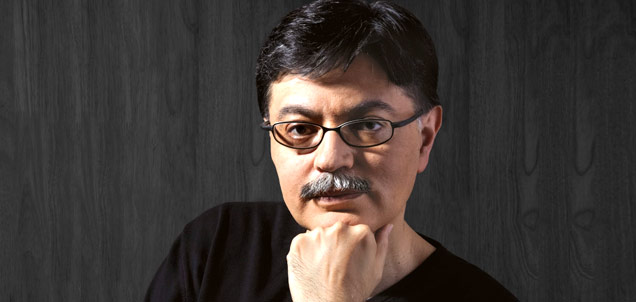
    There are creative professionals and creative professionals and then there’s Alok Nanda. Founder and CEO of Alok Nanda & Company (ANC), billed as India’s only brand and communications consultancy focused on the lifestyle and luxury space. Nanda started his career with the legendary creative agency Trikaya Advertising, where he rose to become  National Creative Director and then member of the Grey Asia-Pacific Creative Board. He left Trikaya (now Grey) to set up ANC in 1999 to bring together the worlds of advertising, design, experience design and branding under one roof. ANC has helped build brands like the Taj Hotels, Arrow, Wrangler, Sula wines, Lodha, Barista, Ambuja and Marico, to name a few.


    But, then creative design for Nanda extends beyond the advertising work. He sells art, runs a design lab as well as a brand engagement firm. Pradyuman Maheshwari had a freewheeling chat with Alok Nanda essentially on advertising, and a little more. Read on…


    You’ve been through the hyperactive days of Trikaya and are now part of the frenzied adworld of today. What according to you are the key differentiators between then and now? 

    It’s a huge sweep of time. At the time when I was just joining, clients were dictated by the advertising industry. Over the years, equations changed when agencies became suppliers to clients and there were these huge global manuals on following this and doing that. In the last couple of years, we have seen enough agencies and clients a communication partner can go to. From our perspective, the big change is you can choose to work for clients you love to work for and clients can choose agencies they love to work with.


    To an extent, it’s a bit of the old, right? There are people who have seen your work would want to come only to you. Or they would also want a Piyush Pandey or an R Balki…

    Very much. People know the kind of work they want and would come to you. Talking from a business relationship perspective, today we really only work with clients we want to work with. Ten or 15 years ago, you’d be driven by business imperatives. 25 years ago, it would’ve been the client chasing the agency. I’m seeing how the shifts have balanced out.


    How has the journey been for you over the last 15-odd years?

    It’s been pretty good. I wish I’d started earlier. Trikaya was where I learnt everything, I chose not to and I didn’t want to take any business from Trikaya when I left. Not sure, I could’ve easily taken business. There was the Grey part too, the global clients, they obviously wouldn’t consider me even if I wanted to consider them. Even though I had a good relationship with many clients, I was clear I was starting afresh. The drive was my fresh journey…


    What were your sentiments when the Trikaya brand name faded away from the agency?

     I’ve honestly lost touch with Grey, have no alignment with the rest of the industry. I don’t even have a clue what’s happening at Ogilvy. I don’t track it.


    Huh?

    It’s not out of arrogance. Our business lines are vastly different. Advertising is actually a fairly small portion of what we do. We’ve carved our own space and we’re very happy with it. What I did and learnt at Trikaya was all premium brands. I was never a part of FMCG, big mass brands, rural India. I’ve only done what I know the best. The market has come full circle. India has grown rich, there’s premiumisation happening.


    Did you intend ANC to be what it is today in terms of being a premium communication firm?

    In the broader sense, yes. When I set up ANC, I was clear India doesn’t need one more advertising agency.  I said we’ll be multi-disciplinary but without walls. We have multi-disciplinary people here, designers, retail designers, corporate communications people and advertising people. We all sit together, there is no centre. When a client comes, the answer is not advertising. Advertising may follow or may not even happen.


    Everyone in the advertising world talks about rural India, about being able to connect with the masses and making a difference and here you want to stick to the elite urban stuff? 

    We’ve no such ambitions. We’re very focused on the lifestyle, luxury and also because of my personal passion, the corporate brand business, all of this are very focused on the premium urban India.


    The advertising you said you want to do is has a different, premium feel. But your campaign for Lodha with the claim Wadala is the new Cuffe Parade, is typical of advertising. It’s hardsell? Isn’t calling Wadala the new Cuffe Parade outlandish? 

    Actually, there’s nothing new in it. If you study what happens worldwide, real estate is about creating destinations. If you go to New York, there’s a place called SoHo, created by the real estate industry. It didn’t actually exist. The city of London is about the size of a postage stamp. Every year they gobble up more villages and then they call it Greater London. Why? Why not give it the name of the village? When the government said they’re creating a new city the other side of the creek, didn’t they call it New Bombay? When the residents of York settled in America, they called it New York. There’s nothing new. I studied a lot of history of real estate when I entered the market. This emanates from there.


    So was the new Cuffe Parade your idea or that of your client?

     My idea and I’m extremely happy about it.


    While real estate is all about selling dreams, it’s finally about selling property.

    It’s about delivery at the end of the day.


    The delivery has to happen instantly. If an ad appears in today’s dna, they need to have the phones ringing from 7 or 8am onwards. Are you happy doing this kind of results-oriented advertising?

    Yes and No. Each client has its own requirement and needs. You need to balance out building a brand and business calls. What you’re referring to is the amount of direct response that has to be built into a campaign. Working with Lodha, we’ve arrived at a manner that works for them. To what degree do you build a brand and at what stage do you start ensuring the calls come? You can’t start getting calls if you don’t build a desirable brand.


    So, typically, after how many insertions do you expect the ad to make an impact to have the consumer to make a call?

    It varies from project to project. It also varies from the scarcity of demand. If you were going to launch a tower in South Bombay, given the scarcity of land, chances are, even before you release your first ad, they would have sold a large number. It really varies from what is your location, your play.


    Abhishek Lodha says you’re more than just an ad agency. You’ve partnered his projects. What is the degree of you involvement? Has this been out of the ordinary or is that the same with all your clients?

    It’s the same with all and I’ll come to Lodha specifically too. We don’t call ourselves an ad agency because of the nature of the multiple offerings we have. We call ourselves, for want of anything better; a communications consultancy. We deep dive into what a client wants. When we work with a Taj, we did their ads, we also designed the identities of all their famous restaurants. We’ve worked in immense detail, bringing design in to Taj, bringing advertising to launches of their properties worldwide…


    You have Lodhas, hardcore businessmen, and the folks at the Taj, who’ve earned their stripes in the hotel industry and understand their craft very well. Are they receptive to your kind of evolved communication practice?

    The Lodhas were in the real estate business for many years before they came to us.Their vision, pre-ANC was to be in the middle class department  in Thane and the suburbs. Abhishek came to us and we worked with him on re-envisioning the brand. I sat and worked with him and we were clear that Lodha is going to be playing a premium game, I said you can’t be seen as a builder. You need to become a lifestyle brand. That’s how my relationship started. One of the most powerful things we created for them is a brand architecture and brand identity. That’s how we grew and I go back to saying, life is too short to work with clients you don’t want to. One of the greatest joys of Lodha is to work with Abhishek!


    You have a mixed bag of clients.

    Real estate is visible because it’s visible in Mumbai. We do all corporate work for Gujarat Ambuja. We’ve managed their financial brand, we’re now managing their CSR brand. That’s my corporate financial side of work, not visible to the audience but to the investor audience.


    If a BJP were to come to you for branding, would you accept it as a client?

    I’d see if I were able to add value to the client, first. We’re in a situation where we don’t need to go back to business for business sake. I’d ask myself if I take them on, which is the other client I wouldn’t have to? At the end of the day, would I be successful for them and therefore would I have a case study for myself? That’s the only way I can grow. I can only grow by creating one case study after the other. Our vision is not to make 30 employees to 300. Our vision is actually margin driven, to put it from a different perspective. I’d seek higher margin business tan higher volume business. My clients know me that I’m expensive and they get value. If I was able to offer that to a political party, I have absolutely no problem. I prefer it that way. It’s not about ideology. That’s the other question you asked.


    It’s the flavour of the season to do something for the government, Swaccha Bharat… aren’t you looking at doing some?

    We devote almost 10 percent of our time on public service and charity. We work with hospitals, charities, do identities free for them. We’ve just finished doing one for a doctor who has pioneered free heart service for babies. He’s doing such wonderful work. We said we’ll support you in whatever communication we need. We’ll do our bit in that way.


    What are the other categories that interest you as a communicator?

    I’m really excited by education. The big thing about ANC and the joy is that we don’t just build brands, we build categories. We’ve transformed real estate, not just Lodha, in many ways. To me, the next big thing is education.


    You seem to have a likeness for businesses with many shades of grey?

    Education is getting corporatised. You’ll have chains with 500 schools. For the first time, they need branding. You need competitive positioning, schools competing for customers.


    I’ve never seen an ANC ad which is less than a half page in size and in education you have very small 10×2-sized ads.

    I think it will change when you see some of the things that hopefully will come out from us.


    How much of TVC work do you do?

    Very limited, lifestyle luxury is very limited on TV. Luxury certainly is the antithesis of television. Corporates also tends to not be on TV. We make films. For Lodha, for every project we make films that run on sites. We make corporate films…


    Advertising agencies typically make their money on TVCs, right?

    I’m sure, they do,  we don’t. Most of our business is fee-driven and we demand a premium fee, upfront.


    You say you don’t do much television and most of your advertising is done in English.

    99.9%.


    What about other languages? Has that come to you…

    We do a miniscule amount.


    You’ve never thought of creating a fair amount of advertising in languages. That’s where premium is going to extend to.

    You’re right, premium will extend in that space. That’s not where the immediate growth is going to be.


    You’re not aligned to any big network

    Yes, we aren’t.


    Don’t you intend doing that? There were some murmurs sometime back that you are looking to align

    I wouldn’t say we have no intention to. We’d want to find the right partner. That wouldn’t necessarily be an advertising network. It could be a more interesting entity that deals with design and graphics.


    WPP, for instance, has a Landor…

    Not that Landor is talking to us or we are talking to them. But, if we did, that would only fit in as far as our brand architecture business would go. What will then happen to my advertising business? We’ll need a free thinking organisation that fits for who we are. People who design their own products. We’ve ventured into arts, for instance in a very interesting way with a JV. It’s a different space.


    Is it a definite No to alignments or acquisitions in the near or distant future?

    Well, we are also interested in acquisitions. You never know what comes your way. Our focus, if it has been driven on higher margins, by definition, we have to go from specialization to super-specialization. Art is a direction. If we were to get into interiors, I’d get a quicker way to learn the business, to acquire an interiors business. Things like that is where I would look at acquisitions. Packaging, in a far deeper sense, where you get into material plays, morals etc. We’ve done a fabulous packaging for milk from Sarda Farms. That’s where we started getting into, it’s not just graphics, it’s weight, performance of glass etc. If you want to learn that at a more rapid space, a quicker way is to do an acquisition.


    Don’t you think this is the right time to align and grow?

    We are looking for people to partner with, but we’re in no hurry if we don’t find the right person. We’re unique from a pure physical construct of the work we do.


    Are you happy with the way advertising is going?

    Yes and No. It’s developed pretty well in certain areas. The craft and film is phenomenal. It’s really improved. If you ask me the rest of it, it really sucks. Our digital design sense is abysmal.


    A shorter version of this interview appeared in dna of brands dated February 2, 2015. And, btw, if you thought this 2500-word interview was long, the original transcript ran into some 6500 words.

     

  • IAA ready with next debate featuring industry captains

    By A Correspondent


    The India Chapter of the International Advertising Association has announced the theme and speakers for its next debate. The topic of the discussion at the second of the new season of IAA Debates, presented by the Dainik Bhaskar group is: Agencies are not rapidly reinventing themselves to stay relevant to changing Advertiser needs.


    It will be held on Monday, February 16, 2015 at Blue Frog, Lower Parel, Mumbai, 6.30pm onwards, which will followed by cocktails and dinner.


    Speaking for the motion (that is Agencies are not reinventing themselves”) are Ashish Bhasin (of Dentsu Aegis) and Sameer Satpathy (of Marico)

    Speaking against the motion (that is “Agencies are reinventing themselves”) are Sam Balsara (of Madison) and Shireesh Joshi (of Godrej)

    The debate will be moderated by Anant Rangaswami, ‎Editor (CNBC – Storyboard).


    Srinivasan K Swamy

    Said Srinivasan K Swamy, President, IAA India Chapter & Vice President – Development, IAA Asia Pacific: “I am delighted to see some of the leading lights of Indian industry raise the stature of the IAA Debates even higher. The topic chosen has been in the minds of industry professionals and IAA decided to debate this in the open. I am sure many in the industry will be there to witness this”.


    Pradeep Dwivedi, Chief – Marketing & Corporate Sales Officer, D B Corp Ltd. added, “At Dainik Bhaskar Group, we are delighted to partner with IAA in furthering the spirit of discovery and engagement with-in all the stakeholders in our industry. The Indian economy is on the cusp of a significant growth curve and the innovation in our ideas will determine our success as marketing & advertising thought leaders, and hence the need to have serious introspection on our need to reinvent at a rapid pace. We are hopeful that our earnest attempt at being a harbinger of this change will be received very well.”


    The IAA Debates hosted so far have been in Mumbai, Goa, Delhi, Bengaluru, Hyderabad and Chennai.


  • IAA Webinar Series to discuss ‘World Goes Digital’

    By A Correspondent


    The International Advertising Association (IAA) India Chapter has invited Sanjay Mehta and Hareesh Tibrewala, veteran digital media specialists and Founders and Joint CEO of Social Wavelength for their next webinar that will be held on Thursday, February 12, 2015 at 3pm.


    Srinivasan K Swamy

    “Our objective at the IAA Webinar series is to provide an interface with leading digital media practitioners and we are delighted to have two leading entrepreneurs and pioneering digital professionals Sanjay Mehta and Hareesh Tibrewala to address the next IAA webinar. I am sure young professionals and others wanting to make a career in the social media or use it in their own companies would gain much from this interaction,” said Srinivasan K Swamy, President IAA India Chapter & Vice President, Development Asia Pacific, IAA.


    “We are very happy to have with us Sanjay Mehta and Hareesh Tibrewala, extremely successful digital marketers, who will enlighten us with the future of digital and help us embrace digital for taking our brands to the next level,” said Abhishek Karnani, Director, Free Press Journal, who along with Manish Advani, Head – Marketing and Public Relations, Mahindra Special Services Group, is co-chair of the IAA Webinar series.


    Abhishek Karnani

    The Webinar will be aired live on the IAA YouTube channel - www.youtube.com/iaaindiachapter on February 12, 2015 from 3 to 4pm live from the Google Hangout Room at the Google India office in Mumbai.


    As part of the Webinar series, the International Advertising Association (IAA) India Chapter has hosted speakers like Sanjeev Kapoor, CMO, Citi (India); Ashish Hemrajani, Founder and CEO, Bookmyshow.com; Rajan Anandan, MD, Google (India); Nishant Rao MD, Linkedin (India); Ajit Balakrishnan, Founder, Rediff.com; JulieRoehm, Chief Story Teller, SAP, Neeraj Roy, MD and CEO of Hungama Digital Media Entertainment Pvt. Ltd, PaulBerney, Co-Founder & Managing Partner EMEA of mCordis and adfilm-maker Ram Subramanian. Recently Rajjat Barjatya and Tushar Vyas were guests on ‘World Goes Digital’ webinar series.


  • Triton bags the creative mandate for Carysil and EasyPay

    By A Correspondent


    Triton Communications’ Ahmedabad office has added two new businesses to its fold. Carysil is a pioneer in Composite Quartz Technology and one of the largest producers of quartz and granite sinks in the world. The mandate for the agency is to augment the brand’s presence in the high-end kitchen appliances market. The agency has already initiated a strategic blueprint which will be subsequently translated into creative.


    EasyPay offers interoperable and accessible bill payment services to customers through a network of outlets. This enables multiple payment modes and moreover, provides instant confirmation of payment. The task at hand is to launch the brand across Gujarat with the objective to make it the consumer’s preferred mode of payment.


    Commenting on the recent developments Ali Merchant, Director Triton Communications quoted, “We have a successful track record in partnering our clients for launching, building and nurturing some of the leading brands in the country across diverse categories. Carysil and EasyPay will provide us opportunities to further enhance our growth story for our clients.


  • Is the form of Dhoni & Co keeping advertisers at bay?


    By A Correspondent


    Is the Indian team’s cricketing form a worry for advertisers? We spoke to a few sports marketing specialists and this is their analysis: While the likelihood of India entering the quarter-finals is very high,    let’s take a close at look at the India fixtures and the time at which each of them is going to be aired (all timings in Indian Standard Time).


    Sun, Feb 15 v/s Pakistan, 9am

    Sun, Feb 22 v/s South Africa, 9am

    Sat, Feb 28, v/s UAE, 12 noon

    Fri, Mar 06  v/s West Indies, 12 noon

    Tue, Mar 10  v/s Ireland, 6.30am

    Sat, Mar 14  v/s Zimbabwe, 6.30am


    The first two matches will have much bearing on how India fares in the Cup. While the UAE and Ireland matches are India’s unless there is a major upset, the West Indies and Zimbabwe could not be taken too lightly. The last two matches start at 6.30am on Tuesday and Saturday so could see a beating in viewership and Feb 28 is Budget Day and will clash with Finance Arun Jaitley’s speech.


    And this is how the last seven fixtures are scheduled:

    Quarter-finals 1-3 March 18-20, 9am

    Quarter-final 4 March 21, 6.30am

    Semi-final 1 March 24, 6.30am

    Semi-final 2 March 26, 9am

    Final: March 29, 9am


    The likelihood of India reaching the quarter-finals is a near-certainty unless there are some major upsets, the likes of which we have seen in the group. But India has to play really badly to make way for the UAE, Ireland and Zimbabwe in the final four.


    Is India in really bad form? Could the performance of Dhoni & Co in the recent past have been caused due to some experimenting with the mix of the team?


    So what explains the lukewarm interest in the Cup? That’s more because every advertiser and media agency wants to beat the broadcaster on ad rates, which some advertisers told us was on the higher side. The later you sign up, the better the negotiations.


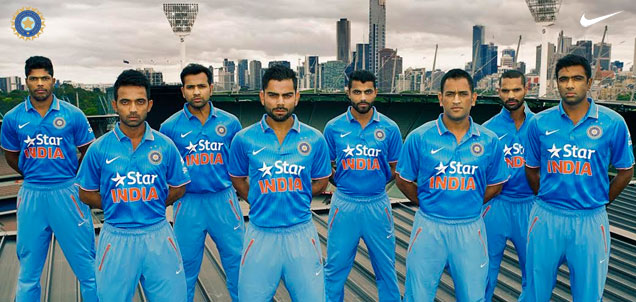
    Image: Nike publicity material of the unveiling of tge One Day International kit that the Indian Cricket team was to starting January 18 in Australia


    Rs 25 lakh for 10 seconds?!
     

    Ads get expensive as Star India seeks Rs 25 lakh for 10-sec slots during India-Pak ICC World Cup tie


    By Ravi Teja Sharma & Pritha Mitra Dasgupta


    Diehard cricket fans will remember the memorable India-Pakistan battles of the past World Cups. The tense standoff in Bangalore in 1996 when Ajay Jadeja went on a rampage and Venkatesh Prasad showed Aamir Sohail the way to the pavilion after sending his stumps clattering; that glorious Saturday seven years later in Centurion Park when fiery Shoaib Akhtar’s missiles were smacked by Sachin Tendulkar to all parts of the stadium, in the process delivering a huge win for India and a big confidence boost after a demoralising loss to Australia early in the tournament.


    This World Cup, the old enemies meet again. Not in the final as many fans would hope for or in the semi-finals like in 2011, but in the opening league match on February 15.


    Well ahead of that epic India-Pakistan encounter, a different kind of a battle is being fought behind the scenes. On one side are the advertisers who want to exploit the big viewership numbers that this match promises to deliver, and sitting tight on the other is Star India, the official broadcaster, who wants to milk the match by jacking up the advertising rates.


    More than 70 brands, including some regional brands and first-time advertisers, have booked slots for the game, which is 50% more than the count for 2011 World Cup final, said a spokesperson for Star India. At Rs 25 lakh per 10 seconds, this is going to be the most expensive advertising opportunity ever in cricket, but one that not many advertisers would want to miss. The match will see Amitabh Bachchan making his debut as commentator.


    Star India had sold the match between the two nations in the 2011 edition – the semi-finals – at Rs 20 lakh per 10 seconds but the final between India and Sri Lanka had come close to Rs 25 lakh per 10 seconds. “From a business and brand perspective, very few events can match the potential of an India-Pakistan match. I can understand paying a premium for this match, but Rs 25 lakh is too steep,” said Basabdatta Chowdhuri, chief executive at Platinum Media, which is part of the Madison Media Group.


    Media planners and agencies contest that number. According to them, Star has sold around 75% of its inventory for the India-Pakistan match and about 70% for the entire World Cup so far.


    Clearly, Star India is going for the kill, seeking Rs 25 lakh per 10 seconds from those who want to advertise across all its feeds during this match, according to people in the know. But top advertisers and media planners say they would rather wait and watch, as they feel prices will dip closer to the game


    Speaking on the condition of anonymity, a senior executive at a large advertiser said there is enough inventory available at the moment and they are waiting for rates, even for the India-Pakistan match, to correct closer to the tournament beginning


    A spokesperson for Star India said the ad slots for the match have been sold out much in advance.


    “No other game of cricket draws as much passion, emotion and following as an India versus Pakistan World Cup game,” he said.


    The channel has packaged the India-Pakistan match in several ways. There are advertisers who have bought combined airtimes across several matches, including the most talked-about match. For them, though, the average airtime rate is working out to between Rs  4.5 lakh and Rs 5 lakh per 10 seconds. Floating inventory for the match, however, have been categorised and priced according to the feeds.


    An advertiser that wants all the feeds including English, Hindi, South Indian feeds and high definition will have to pay Rs 25 lakh per 10 seconds. This means an advertising spot of 30-40 seconds would cost anywhere between Rs 75 lakh and Rs 1 crore. If an advertiser wants only English and HD feed, then it will have to pay Rs16-18 lakh per 10 seconds.


    “This is by far the highest rate that has ever been charged for a cricket match by a channel and I think it is a huge risk for advertisers,” said a top GroupM official, who didn’t wished to be named.


    Another media planner from the Dentsu Aegis Network said it doesn’t make sense for an advertiser to pay this kind of money when there is enough cricket happening in the country with both ICC and IPL matches.


    According to Indranil Das Blah, chief operating officer of sports management firm Kwan, this is undoubtedly the most high-profile match of this World Cup. “I don’t know if the ad rates are justified or not, but it can’t get bigger than this and no advertisers would risk missing it,” said Blah.


    For the larger World Cup, though, Star has signed up the likes of Sony, Airtel, Gaana.com, Hero and Karbonn as sponsors, alongside Maruti, Nestle, Raymonds, Marico, Pidilite, Yepme-.com and Paytm. To cater to a wider audience, it is broadcasting the tournament in Tamil, Malayalam, Kannada and Bengali alongside Hindi and English that it hopes will bring in a large number of new advertisers to the World Cup as it will become more affordable for smaller advertisers.


    But media planners say there is some level of concern around the Indian team’s performance as well and also the timing of the matches, but these concerns will not matter if India begin the World Cup journey with a big win over Pakistan.


  • IAA extends entry deadline for Corporate Social Crusader Award

    By A Correspondent


    The last date for receiving entries for the International Advertising Association (IAA) Corporate Social Crusader Award has been extended to February 28th 2015.


    The Corporate Social Crusader award is conferred on a Corporate which has excelled in any form of CSR activity in the last calendar year. The CSR could be in any area of the Corporate’s choice and is judged on the basis of its scale, relevance, and impact.


    Srinivasan Swamy, President, IAA India Chapter & Vice President – Development, IAA Asia Pacific said, “We introduced the IAA Corporate Social Crusader Award as a part of our prestigious Olive Crown Awards last year. The response was amazing. Over 53 large corporates sent in their entries. The award was ultimately shared by Hindustan Unilever and Mathrubhumi Group of newspapers.”


    Neeraj Roy, Chairman, Olive Crown Awards Committee, IAA India Chapter, added, “Last’s years award ceremony was special. We had Amitabh Bachchan and Maneka Gandhi with us along with the entire communications industry. This award is for a company that takes a justifiable pride in its CSR activity over the last year. It includes any CSR activity from improving life skills to recycling to healthcare and education and of course the environment.”


    The Olive Crown Awards are run as a cause and there is no entry fee.


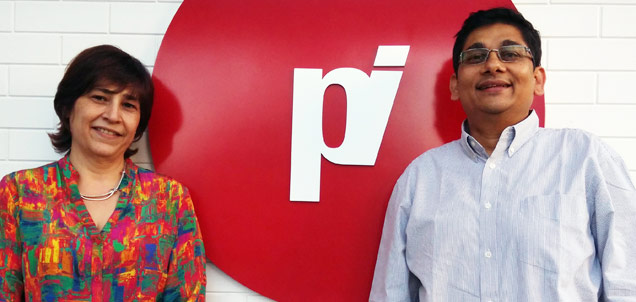
  • Rakhshin Patel & Sumantra Sengupta turn majority shareholders of M&C Saatchi Direct & Digital. Agency now called Pi Communications

    By A Correspondent


    The Indian arm of M&C Saatchi Direct & Digital has changed its name to pi communications. This move follows a change in ownership of the company’s operations based out of Mumbai. Rakhshin Patel and Sumantra Sengupta, erstwhile minority shareholders in the company have now increased their stake in the company as a step towards full ownership of the business.


    M&C Saatchi Direct & Digital has always been an independent operation, with just the prefix being common to this firm and the advertising agency. Hence the acquisition of Delhi-based February, the subsequent rechristening of the agency and the takeover of the parent firm by the Feb team didn’t have a consequence on the M&C Saatchi Direct & Digital team (and ownership).


    While the name and the ownership changes, the operations of the company will continue as before, with pi communications carrying forward the communication duties of a roster of clients such as Aditya Birla Financial Services Group, Future Group, IL&FS, Kotak, Mahindra Holidays and One Assist amongst others.


    Commenting on this development, Chris Jaques, CEO Asia, M&C Saatchi said, “We encourage entrepreneurs and are happy to partner in their success. Given Rakhshin and Sumantra’s efforts in building a formidable and reputable company we offered them a controlling stake in their own company. Over the years, they have built a solid foundation for the agency with long-term client relationships and over 25 awards in just the last three years. The company is now theirs to own, manage and steer to even greater success, leaving us to focus on our advertising business based out of Delhi.”


    Said Rakhshin Patel, Managing Director, pi communications: “Despite the change, what remains constant is our commitment, our passion and our ambition. Whether minority or majority shareholding, we always managed the company like it was our very own. Now is the time for us to reap the rewards of our hard work.”


    Sumantra Sengupta, CEO, pi communications explains the philosophy behind the name: “Pi stands for Profitable Interactions. Pi is also a constant. Pi communications is the constant when applied to client objectives, ignites a complete circle of solutions that delivers profitable interactions.”


  • Deepika gives a master-class in oral care for Orbit

    By A Correspondent


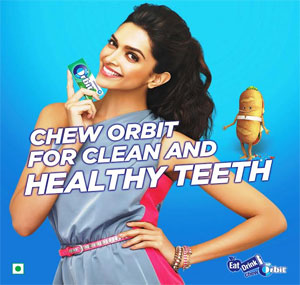
    Wrigley’s Orbit has launched its new TV commercial, ‘Eat Drink Chew’ featuring Bollywood A-lister and brand ambassador, Deepika Padukone.

     

    The new campaign reinforces the message of oral care where Deepika gives a master-class in healthy oral care habits as she breaks up with her favourite food – Sandwich.


    Emphasizing on oral-care benefits of the brand, the new TVC is the latest version of Wrigley’s Oral Care message which encourages people to incorporate sugar-free gum into their everyday oral care routine as it helps to keep teeth clean and healthy by neutralizing plaque acids and enhancing remineralisation. Further, chewing sugar free gum helps clean as much as 90 per cent of food debris from the mouth and provides a good oral care solution on the go.


    Speaking on the new brand campaign, Deepak Iyer, Managing Director, Wrigley India Pvt. Ltd. said, “The new OrbitÒTVC featuring our brand ambassador, Deepika Padukone, has a great message and is designed to create an instant connect with our consumers. We all know that it is difficult to brush our teeth after every meal and snack,  However, it’s easy to chew OrbitÒ, sugar free gum to get rid of the food that lingers a little too long around the teeth. While it’s fun to watch the conversation between Deepika and the animated food character, the TVC reiterates Wrigley’s Oral Care message of Eat, Drink and Chew and how OrbitÒ provides you with an oral care on the go solution.”


    According to Sambit Mohanty, Creative Head, DDB Mudra North, “In the new Orbit TVC, the relationship between the brand ambassador, Deepika Padukone and the animated food character (Sandwich) and their conversation about “breaking up” lends a fresh approach to the brand message of oral health care and makes you smile. The tone is quirky and engaging, keeping in line with the globally successful campaign of Orbit. All of us enjoyed working on the commercial and we sincerely hope that the ‘Eat Drink Chew’ campaign strikes a chord with everyone and takes Oral Care to an even wider audience.”


  • AdStrat: Do it Rght, urges Tata Capital

    Campaign:The Journey of Doing Right


    Brief:

    Tata Capital wanted to connect with the digital audience in an engaging manner, getting them to participate in its brand philosophy: “We only do what’s right for you”. Through the ‘Do Right’ initiative, they aimed at inspiring people to ‘Do Right’ & wanted to provide them with a platform to do so. The same was achieved with a successful first season of the ‘Half Stories’ initiative and are now in the midst of the next season with a larger objective.


    The TG:

    TG is people between the age group of 25-45, who believe in doing whatever they can for society and love helping those in need. They are either associated with an NGO or doing some on-ground work towards a social cause. There are many who often don’t know where to begin and Tata Capital wanted to give these individuals a platform to do so.


    The Insight:

    India is a land of a million challenges. Challenges like illiteracy, pollution and women empowerment that need greater attention. But while our country may face a million challenges, in us, it has 1.2 billion solutions.


    About the campaign:

    At every turn in this country, there is an issue staring at us. In fact, there are millions of micro stories in India that stem from macro challenges that are facing the nation. So an issue faced by one family could actually be a challenge faced by the entire nation. How can these issues be highlighted? A movement to get the support of the people of India towards these issues was needed – via a contribution or providing physical support.


    This season, Tata Capital started by asking India to identify the biggest challenges that face the country. We are now highlighting these challenges on a journey where we will discover real stories of obstacles, sacrifices and challenges that will take us across this vast nation. We will not only complete these stories, but also highlight the macro issues behind them facing India.


    It has successfully completed the first story in its Journey of Doing Right in the Little Rann of Kutch, Gujarat where, through an ingenious solution called a Wicking Bed, where we would be providing a permanent solution to the challenge of food scarcity.


    Anil Nair

    Anil S. Nair, CEO & Managing Partner, Digital L&K Saatchi & Saatchi said: “How can we get ordinary consumers to participate in a brands philosophy and campaign? How do we convert the social media into a force for the good? ‘The Journey of Doing Right’ is a powerful campaign that is ‘live creativity’ as its best. A campaign that engages, inspires and involves people at the same time to participate in the philosophy of doing right.”


    Veetik Deoras – Head – Brand Marketing, Corporate Communication and Digital Vertical at Tata Capital commented: “The Do Right initiative reflects the proposition of the Tata Capital brand – “We Only Do What’s Right for You”. The initiative aims to help spread the philosophy of Doing Right and provide platforms to ‘Do Right’. The Journey of Doing Right is one such key platform. As the first phase of this Journey, we identified the five biggest challenges that India today faces via an online survey (Tata Capital India4India Survey). Having identified these five challenges, we began the Journey of highlighting each of these using the powerful medium of story-telling. Our first story emanated in the Kharaghoda district of Little Rann of Kutch where the harsh terrain doesn’t allow food to grow. We and other ‘do righters’ came forward together to help alleviate Food Scarcity by providing an ingenious solution (‘wicking bed’) which reduces water requirement for growing vegetables by over 90%. The Do Right initiative, based on the insight that – doing right is inherent to all of us – has connected with thousands of individuals, using the power of digital medium, and helped them Do what is Right.”


  • Sudipto Roy to drive WPP’s ‘tenthavenue’ as CEO, Emerging Markets

    By A Correspondent


    Sudipto Roy

    The WPP-owned global communications company Tenthavenue has announced the appointment of Sudipto Roy as CEO Emerging Markets, covering Asia, Africa, Middle East and Turkey.


    Established in 2011, Tenthavenue (spelt by the company with the t lowercased) helps build products and services that enable advertisers to create connected brand experiences. As parent to WPP’s ‘Connected Consumer’ agencies, the Tenthavenue agency family consists of market leaders and rising stars in their respective fields, including Kinetic, Aviator, Joule, Spafax, Candyspace, Forward and TMARC.


    Mr Roy will lead Tenthavenue across China, South East Asia, Hong Kong, South Africa and drive the network’s expansion into new markets, including Turkey, Middle East and Japan.


    Mr Roy has held leadership roles within Mindshare across India, APAC and Africa.  Said Rupert Day, founder and CEO of Tenthavenue: “This appointment comes at a time when we are refocusing our vision for the future. We have had a fantastic start over the last four years, and we want to remain nimble, agile and focused for the next five. In recruiting Roy, we are continuing the energy and direction Tenthavenue requires to keep growing, and to keep building winning propositions.”


    Said Mr Roy: “Tenthavenue is poised to create a highly differentiated marketing services model for the future. The company has an inherent strength in out of home experiences, on-the-go experiences and mobility. That’s the perfect combination for a new age services model as consumers spend less time in front of the TV and desktop and become mobile.”


    Mr Roy will be based out of Singapore and will begin his new tenure in mid-April.


  • Lowe Lintas unveils new campaign for OneTouch

    By A Correspondent


    Lowe Lintas Mumbai has unveiled a new campaign for OneTouch titled “Khud Ki Care”, which propagates the habit of self-monitoring among diabetics in a friendly way. The campaign aims to touch the hearts of consumers with a smile and not fear. It has been developed based on the perception that diabetes is a disease that instills fear among diabetics and that this experience shouldn’t be pushed any further.


    “Sugar monitoring in day-to-day life is extremely important to keep diabetes in check and the film communicates this in a very nice, warm and a friendly manner,” said Sarosh Bharucha, Group Product Manager of OneTouch.


    The campaign talks about how diabetics are under a 24X7 check of their loved ones. The commercial, very light-heartedly captures the slice of life moments of a couple, played by Boman Irani and Simone Singh. Boman plays the doting and fun-loving husband while Simone justifies her role of being a loving yet strict wife who won’t take it easy when it comes to her husband’s health.


    On the creative approach taken for the campaign, Vasudha Narayanan, Executive Creative Director, Lowe Lintas said, “Diabetes is a serious subject so we thought that the communication should be light-hearted.”


    The campaign comprises a master film which conveys to diabetics on why ‘Khud ki Care’ is vital. This main film is supported by 3 short films which promote the habit of regular exercise and following a controlled diet along with getting blood sugar tested regularly.


  • The Birth of Pi


    As M&C Saatchi Direct & Digital becomes Pi Communications, following a change in ownership in its Mumbai operations, Rakhshin Patel and Sumantra Sengupta, managing director and CEO of the new company, give Pradyuman Maheshwari a lowdown on the changed set-up and their plans ahead.


    We’ve heard about big multinational media superpowers gobbling up homegrown enterprises. But now, two seasoned ad professionals have bought out the media superpowers. How come?

    You are turning this into a David and Goliath story, which it isn’t really. M&C Saatchi has always been steeped in entrepreneurial spirit, and supportive of entrepreneurs. In 2008, when we started out, they supported our fledgling ambitions, and partnered us as we grew. In fact, they have been supportive in such a way that their changed priorities didn’t ever limit our ambitions.


    M&C Saatchi is not a small agency. It’s a well-known, trans-national advertising powerhouse. And they are not known to invest in ventures quite so easily…

    As we mentioned earlier, M&C Saatchi is entrepreneur-centered. They have partnered with local professionals in many countries. It was the same here. We started with very little investment and managed to break even in the first year itself. Thereafter, our operations paid for themselves.


    We also started out with a much smaller stake in the company, and part of our terms with M&C Saatchi was a gradual increase in our stake over time. Our first increase was in 2012. The next one has taken place now, and we are extremely happy we could fast-track that.


    You’ve always had a stake, of course. But this is more than single-digit, loose change, isn’t it?

    Thank god for friends and family!We believe in what we’ve built, and we’ll certainly recover it over time. Cycling to work is an option perhaps.


    Digital agencies these days come with some fantastic valuations. And you are not doing just digital things, but also some big-data work. So can we assume that your stake runs into few hundred million dollars, ie in three-digit-figure crores?

    We had a 40 per cent stake in the company. Yes we’re digital and we do analytical consultancy, but we haven’t yet invested in data analytics. So a three-digit valuation is way off the mark.


    Didn’t M&C Saatchi also buy out February last year and ask them to control the company? Are they okay with this new situation? Also, another agency with Saatchi in its name, did a similar thing, not so long ago

    M&C Saatchi bought a minority stake in February; it did not buy them out. This followed a strategy similar to what they’ve adopted in China. Their focus and operations in India and China are a bit different from each other, probably given that the markets are different. I think the ability to think differently in different markets really means that all is, indeed, right with them. And globally, the brand in many countries is co-operated, if not co-owned.


    So how did it happen for you?

    As we mentioned earlier, our terms of agreement with M&C Saatchi allowed us to increase our stake over time. We just grabbed the opportunity when it presented itself


    Are your clients on-board with it?

    Our clients have not only been supportive, they have been actively encouraging and enthusiastic about this development. Many of them have said that since they know our work well, it doesn’t really matter what we choose to call ourselves.


    What about all the goodwill and global clients that the M&C Saatchi name would have attracted?

    M&C Saatchi did not really have globally-aligned clients here. Since there was no opportunity, in the past seven years, to work on globally-aligned businesses, it’s not something that we would miss. When for goodwill, it is garnered by both the name of the company as well as the people who build it. In this market, we have made a substantial contribution to the goodwill that M&C Saatchi enjoys. And while the name has changed we, the people, and our passion for the work, haven’t. So a part of that goodwill will continue to be with us.


    Digital and Direct shops in India are getting acquired. Will you take that route?

    Now you’ve got us thinking! Give us a few months and maybe we will look around to see whom to acquire…


    Ufff! One is obviously suggesting whether you would like to sell your equity to some large M&C Saatchi-like player in the future?

    Yes, of course, we understood it, so was a joke. But seriously we are just savouring this moment of being majority owners and our focus would only be to grow the business exponentially. That’s our goal.


    Does your buy out contract prevent you from doing that?

    The company has been taken over by us. We are free to pursue any path that is in our best interest. But right now, we are not planning to either acquire or be acquired.


    What’s next, in terms of growth?

    A lot of the distance we cover, will be through collaborations. Analytics is currently a gap in our offerings. We are in talks with people with whom we can collaborate on that. We need to take quick strides in that direction.  Besides, our business need not be limited by geography. We do have clients in Delhi whom we manage from Mumbai. But it would be great if we could create a presence in other cities as well.


    This interview first appeared in the dna of brands issue dated February 16, 2015