Category: ADVERTISING

  • Major change in portrayal of women in ads: IAA-Hansa study


    By A Correspondent


    While 57 per cent of professionals in three metros still believe that advertisements have not been able to portray the actually status of women in the country, there is a strong sentiment that education, financial independence and decision-making power have helped bring about a change in the portrayal of women in advertising in the country.


    This has been determined by a special study conducted by the India chapter of the International Advertising Association (IAA India) and Hansa Research. The study was conducted amongst 94 top A&M professionals from three cities.


    Senior industryfolk speak at IAA Seminar


    The IAA Hansa research study has predicted India’s victory over the war on gender equality. It notes that about 91 per cent men and women say that ‘Women are shouldering equal responsibilities with men in the family’. The research was done across three metros of Mumbai, Delhi and Chennai amongst senior Marketing Managers and Creative Directors of advertising agencies, the people involved in the final outcome of much of the advertising we see in media today


    The research further suggests that this is the outcome of women’s education, financial independence, becoming a bread earner, self-realisation of her rights and emergence of women as many role models.


    The IAA India Chapter had commissioned this research study and Hansa Research came forward to do this study at cost. The study was unveiled at the IAA Seminar on Changing Trends in Portrayal of Women in Indian Advertising released at a seminar on Wednesday, December 10 in Mumbai.


    The Seminar was conducted in association with the United Nations Population Fund (UNFPA), well-known NGO Laadli and the Advertising Council of India (ACI).
     

    Srinivasan K Swamy

    Said Srinivasan K. Swamy, President, IAA India Chapter & Vice President – Development, Asia Pacific, IAA and Chairman & Managing Director, R K SWAMY HANSA Group: “IAA has been conducting a host of activities for the benefit of the industry and society. This was yet another initiative which clearly underlines our commitment to the philosophy that what is good, is good for business.”


    Added Monica Tata, Managing Director HBO India Pvt Ltd and Chairperson of “Changing Gender Frames” “I am delighted with the findings of the study. While the sentiment around the messaging a few years ago was that it was reinforcing the stereotypes, India is clearly showing signs of moving towards a more progressive society where women are perceived as equals.”


    The seminar was addressed by senior marketers, advertising leaders and amongst others. These being: Colvyn Harris (JWT, ACI), Dr AL Sharada (Laadli), Dr Sonya Mehta (Psychologist), Sanjay Tripathy (HDFC Life), Sam Balsara (MadisonWorld, ASCI), Sonal Dabral (DDB Mudra), Geetu Verma (Unilever), K V Sridhar (Sapient Nitro) and Rajat Ray (UNFPA).  The last session saw an engaging discussion with actors Dia Mirza, Richa Chadda along with Anuja Gulati and Monica Tata.


    The following are the highlights of the study:

    :: Women today have come out of their closet and are proving their worth. Almost all professionals are of the view that the women of today are ambitious and are shouldering equal responsibilities with men (91%)

    :: But as we delve deeper, things are not that rosy. High association scores on statements like  Marriage is more a  social necessity for women as compared to men (53%), women empowerment is restricted to upmarket households (44%), men normally judge a woman on the basis of beauty and sex appeal (56%) suggest that there exists a difference in the intended versus actual status of women in the society

    :: Though women (especially educated women) have come a long way in proving their mettle at the workplace (96%), objectification of women is still prevalent. The views expressed by the professionals about the statement – Men normally judge a woman on the basis of beauty and sex appeal (56%) substantiates this.

    :: But the winds of change have started blowing. 80% professionals believe that there has been a steady awareness towards giving women their due and not mistreating them, which is reassuring

    :: The refreshing change in the attitude is that people are challenging the age old beliefs and believe in giving women due respect they deserve in the society. With more and more women joining the workforce and not being restricted to the four walls of their home, it’s important for other family members to be supportive of her. Almost all professionals disapprove of the statement that Housekeeping is women’s work (85% disagreeing), Men who do household chores are effeminate (90% disagreeing) and women should give up their jobs if family needs are more (84% disagreeing). This is indeed encouraging.

    :: One of the other gender stereotypes is that for a women being independent and doing things on her own is sometimes perceived as way too modern and not respecting the cultural values. With only 18% agreeing with the statement that Women today are losing a sense of their culture and becoming too modern suggest that there has been a change in the mindset of people towards providing women their own space.

    :: The portrayal of women is no more synonymous with merely homely (69%), individualistic (64%) or just being provocative (49%). Today’s women are being portrayed much more than these. They are shown as multi taskers (93%),  energetic (94%), self confident (86%) and modern (87%) in advertising.

    :: Considerable proportion of professionals (52%) feel that advertisements have not been able to portray the actual status of women in society; particularly those in advertising (57%)

    :: However, half of the professionals are of the opinion that there has been a significant change in the way women are being portrayed in advertising

    :: Education (90%),  Financial independence(82%) and decision-making power (76%) are the key factors which have brought about a change in the portrayal of women

    :: While most professionals feel that the trend is sustainable, it rests on the fact that marketers now look at women as a potential segment which will facilitate growth; thereby making it important to tap the potential of this segment which is now experiencing independence on the financial as well as decision making front.

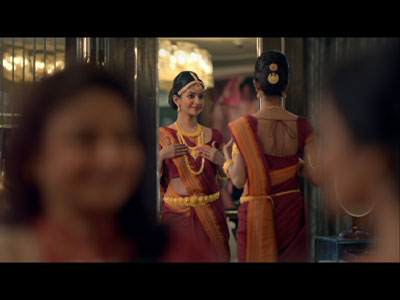
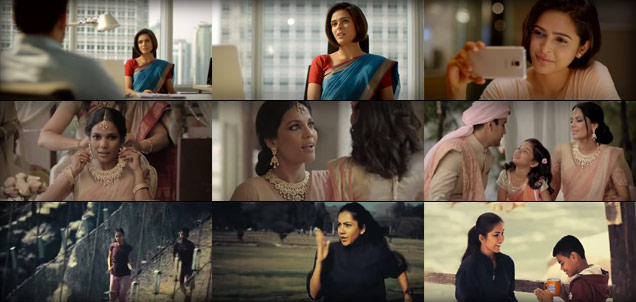
    :: Some of the advertisements cited as the flag bearer of this change are Airtel (Wife as a Boss ad), Tanishq (remarriage ad) and Bournvita (Mother training her kid). These advertisements are able to challenge the gender stereotypes and confront head-on issues, which were hitherto considered taboo. The key tak-away is that advertising, where the gender stereotypes are challenged, are received well and people are noticing the change.

    :: While there seems to be a change in the portrayal of women in advertising due to her newer roles, there still seems to be a lot of opportunity to explore various facets of women and showcase them in advertising



  • Dhunji Wadia to take charge of Rediff, will continue to be on top of Everest too

    Rediffusion Y&R has announced that Dhunji Wadia will be President of the agency. He will continue in his role as President of Everest Brand Solutions.

     

    Diwan Arun Nanda, chairman, Rediffusion Y&R, said, “Dhunji has strong business acumen, great entrepreneurial instincts and affinity for our clients’ businesses. What makes it all work is his ability to motivate and inspire people on all sides of the business. He’s an ideas guy who gets that great creative work and strategic insights are inextricably connected.”


    Added Mr Wadia: “The group has given me the opportunity to use my experience and skills towards making a positive difference to our clients.  I am looking forward to writing an exciting new chapter in the history of Rediffusion Y&R,”


    An MBA from the Jamnalal Bajaj Institute of Management Studies, Mumbai, Mr Wadia joined the Rediffusion Y&R Group in 2010. Prior to that he was working with JWT.


    With over 25 years of experience in the business Dhunji has been associated with major national and international brands (Parle, TATA, Unilever, Nike, Levi Strauss, Diamond Trading Co, Kellogg, Aditya Birla Group, Sony Entertainment Television – Max and SAB, Kotak to name just a few.


  • Effies 2014 receives highest number of entries ever

    By A Correspondent


    It’s been 60 years since its inception and the Advertising Club is still going strong. Of the various properties that it celebrates every year, Effies is one of the most sought after event in the industry.


    The Advertising Club instituted Effies way back in 2001, and is in fact the first Asian Partner chosen by Effies New York to run the event in this part of the world.


    The event made a modest beginning with 53 entries in the year 2001 and now in its 14th year it has received the highest number of entries at 465.


    The Effies is an international award that recognizes effectiveness in Marketing. It has built a reputation for acknowledging work that has proved itself in the marketplace. To win, participants must not only demonstrate a high order of competence in the processes that lead to the creative work, but also a proven, documented, verifiable roster of results.


    With a view to engage the marketing fraternity from Delhi in its scheme of things the Ad Club has been conducting Effies judging sessions for Round I & II in Delhi since the last two years.


    The grand gala ceremony is scheduled on Friday, 16th January 2015, at the Seaside Lawns, Hotel Taj Lands End, Bandra, Mumbai at 6.45 p.m.


  • Two better than One?


    By Ishani Duttagupta


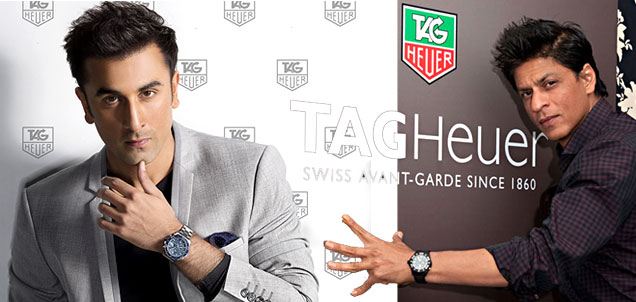
    Recently, Swiss luxury watch brand TAG Heuer roped in Bollywood heartthrob Ranbir Kapoor as its brand ambassador. Nothing unusual about that, considering Ranbir endorses major brands such as Panasonic and Nissan; and TAG is known for opting for the best of Hollywood and Bollywood to back its label. To be sure, the brand has had stars from Steve McQueen and Uma Thurman to Leonardo DiCaprio and Brad Pitt.


    Except that never has more than one film celebrity endorsed TAG at the same time. Currently, Cameron Diaz is the only actor on the brand’s endorsement list – the rest are largely sportspersons, including Cristiano Ronaldo and Maria Sharapova. TAG annually changes its ambassadors, replacing older ones with fresher faces. For example, before Diaz came on board in 2012, Leonardo DiCaprio was the Hollywood face of TAG.


    In Different Zone

    India, though, may be an aberration – at least as things stand now – with two Bollywood superstars promoting the Swiss luxury label. Along with the 32-year-old Ranbir, there’s also Shah Rukh Khan (SRK), now 49, who has been TAG’s ambassador since 2003. The obvious question then: is the brand ambassadors’ version of succession planning playing out at TAG in India? After all, it has happened in other categories; around five years back, Pepsi ended its decade-long associations with the likes of SRK and Sachin Tendulkar to bring on younger ambassadors. And, guess who led that youth brigade? Ranbir Kapoor!


    TAG Heuer, for its part, denies that it is going down the same road. “Bringing the two biggest stars of Bollywood together is not just the first for our segment, it’s also a first for us globally. As a company, it’s in our DNA to break the rules and we wanted to bring together both the biggest names in Bollywood today – SRK and Ranbir Kapoor – to communicate our leadership,” explains Puneet Sewra, marketing director, TAG Heuer.


    Mr Sewra adds that there are no plans to replace SRK, who has been a TAG brand ambassador for over a decade, with Ranbir, currently the hottest young gun of Bollywood. “Ranbir is not replacing SRK, and there’s no clash between the two. Through Ranbir Kapoor, we are reaching out to young consumers in the 18-25 age bracket; in many ways both our brand ambassadors represent the same kind of values in their Bollywood career, of doing things differently and both have played anti-hero roles. It’s about what differentiates the two of them and not about their age.”


    He also points out that the fact that India is the only country with two brand ambassadors from the film world points to the confidence TAG has in the Indian market. Brand gurus, however, are not as convinced, and find it difficult to concede that age has nothing to do with the brand appeal of a celebrity – even if the person in question is SRK.


    “There are indeed very subliminal but robust ways of putting succession planning into place in the brand-endorsement space and it’s a great thing to do really. In cases where the current brand ambassador was losing sheen in his/her space of work, be it cinema or cricket or whatever, a second and third face become a way of gradual succession planning,” brand consultant Harish Bijoor said.


    Happy Coexisting

    And how does the new ambassador on the block himself see the situation? “I have grown up watching Mr Shah Rukh Khan’s movies and his work has always inspired me. He was part of the TAG campaign for many years and it was so cool for me to wear a watch that he wears; and now to wear it with him is a dream come true,” Ranbir Kapoor told ET Magazine in an exclusive interview while launching the brand’s new campaign ‘Don’t Crack Under Pressure’.


    Ranbir adds that he is careful when choosing brands to associate with and has often rejected offers. “Like my movies, my brands are my identity and people start identifying me with them. I will only become the face of those products that I use and love in my own life. It’s important because the companies are talking to their target audience through me and I have to be sensitive to them.”


    Though TAG Heuer currently doesn’t have any plans of featuring both its brand ambassadors together in any of its promos, Ranbir says he would love to be in the same frame with SRK. “It would be a dream come true – to do something with both TAG Heuer and Mr Khan. In fact, to work together in any capacity with him would be a dream come true.” What’s clear is that today SRK and Ranbir are pretty much at the top of the heap in terms of star value. US consultancy American Appraisal, which recently conducted India’s first celebrity brand valuation study, found that amongst Bollywood stars only SRK and Ranbir have valuations north of $100 million.


    “While our analysis has not assessed the impact of celebrity endorsements on the brands they endorse, there is no doubt that a significant amount of associative credibility can be derived from having a top ranked celebrity brand ambassador. Both SRK and Ranbir Kapoor emerged as the two largest celebrity brands in our study and having them both as endorsers can only be a huge positive,” said Kapil Bellubi, vice-president, American Appraisal.


    American Appraisal’s assessment, which is based on the current rankings of celebrities (from a standpoint of popularity, credibility and endorsability, average endorsement fee rates, current number of annual endorsements and an applicable brand multiple), ranked SRK at No. 1 with a brand value of $164.9 million or Rs 1,011 crore; Ranbir Kapoor followed at $129.4 million or Rs 793 crore.


    Brand Appeal

    The study also found that the age of a celebrity plays a part in their potential to continue to endorse brands in future. “The exception though is SRK whose appeal across several age groups remains reasonably strong. Based on our study and research, the top two celebrities in India currently generate average annual endorsement fees ranging from `12 crore to Rs 17 crore per endorsement,” adds Mr Bellubi.


    Two ambassadors work as an effective hedge against risks of many hues, ageing being just one of them. “Gone will be the halcyon days of the solus brand ambassador. Brands will progressively use more than one face. Your brand ambassador is human after all,” Mr Bijoor explains.


    TAG Heuer, of course, is not the only brand using more than one celebrity as brand ambassador in India. French cosmetics group L’Oréal Paris has four celeb brand ambassadors in India: Aishwarya Rai Bachchan, Sonam Kapoor, Freida Pinto and most recently Katrina Kaif.


    “Our ambassadors in India are distinguished personalities in their own right and are well known across the country. Aishwarya is synonymous with L’Oréal Paris, and this is because she has been with us for more than 10 years,” says Manashi Guha, general manager, L’Oréal Paris, India.


    Garnier India, a cosmetics brand from the L’Oreal stable, too follows the policy of multiple Bollywood celebrities with different age profiles as brand endorsers and has Deepika Padukone, Alia Bhatt, John Abraham and Sushant Singh Rajput on board. The difference, though, is that each star endorses a different sub-brand. So if Deepika is the face for BB Cream and Fair Miracle, Alia Bhatt promotes Pure Active Neem Facewash and Fructis Triple Nutrition.


    Similarly, John Abraham endorses the Men Powerlight range and Sushant Singh Men Acnofight range. “Each of the sub-brands within the Garnier portfolio delivers a unique proposition to its consumers, and therefore is associated with a brand ambassador who best espouses the benefits associated with each product,” explains Rupika Raman, general manager, Garnier India.


    Regional Focus

    Emami, a Kolkata-based marketer of cosmetics and health products, too follows a policy of having multiple celebrity actors as brand endorsers. But that is probably more to do with cutting across geographies and demographics rather than succession planning. “By leveraging a celebrity’s regional appeal, we have more than one brand ambassador for some of our products where communication remains the same but only the celeb changes, explains says Harsha V Agarwal, director, Emami.


    For instance, southern superstar Jr NTR endorses Navratna Cool Oil in Andhra Pradesh, even as Amitabh Bachchan and SRK promote it nationally. Clearly, for some superstars, as long as they keep effectively planning their success, there’s little need to plan their successor.


    Source:The Economic Times

    Copyright © 2014, Bennett, Coleman & Co. Ltd. All Rights Reserved

    Licensed to republish


  • Sanjeev Kotnala: Why Advertsiers Have Not Kissed the Digital Frog

    By Sanjeev Kotnala


    The call for advertisers to keep 20 percent investment in the digital medium is not new. And trust me they have the reason to do so. The world over, the Digital Religion is gathering pace. That leads us to question: Why is DIGITAL, the media child prodigy, not growing fast enough in India? It has the best growth-propelling advertiser-delight vitamins like low-cost, viral, clear measurability, likes, followers, awards, glamour and even a publicly positively inclined industry. Print and TV conspiracy theories fail when one sees them promoting them in industry forums. Will Digital in India remain the Crown Prince that was never crowned?


    Digital hasn’t had it so good in this nation. The current government swears by the social medium. The new smart generation is pushing for a digital shift. But the resistance comes from the powerful digital illiterates, the 40-plus sitting in the seat of decision-making. They hide behind the unfulfilled unmeasured tangible ROI and laugh loudly. There is no other media with a better measurement possible. So why is digital not growing?


    As a nation, we are sensitive and overtly caring for the minorities. Digital for long has been under focused care, with differentiated laws and uncontrolled supportive aggression coupled with intensified overtones to strength its productivity and understanding. Why have the results remained unchanged?


    Is digital a victim of over-expectation and unmeasured under-delivery. May be for the country’s media planners and advertisers….


    It is the least understood of mediums.


    As a community, we are way behind. We do not crib if the AC rakes for Mumbai local delivered more than a year back are yet to go for trial. We do not crib about the lack of infrastructure. 2014 Mumbai is ready for 2000… and we do not crib. So, dear digital, wait for your turn! What is this with issues of bandwidth, content, screens, cost of access, last mile connectivity etc!? Who asked you to land an A380 loaded with goody bags to land in an airport meant for Cessna aircrafts?!


    We are at our best when it comes to doing lip-service and a** licking. Too many day-time gurus who are digital students by night are chasing the market with Internet-based knowledge. The industry leaders and decision-makers openly confess their confusion and unwillingness to experiment with a dynamic technology. They fear the shifting goalpost and the quicksand of technology shift. Even the pseudo-practitioners acknowledge the tireless assault of tsunami of technology and innovation. They no longer are trying to keep pace with it. Instead of just talking, by now the digital Industry should have been creating converts with free education. Maybe there is something to learn from e-retailers. Digital is expecting an orgasmic euphoria without diligent foreplay!


    Reservation or minority quota is never an answer. Our country has seen it and yet we never learn. A call for quota in advertising spends is the most stupid call. The clients having burnt their fingers in befriending every new girl who walked in their pub are now far understandingly more serious. Anyone can call for explanations and it can ruin their reputation. Why place 20 percent in Digital, remains an unanswered question. Moreover, there cannot be a worse explanation than ‘Globally brand have shifted’. It does not work with us. See Print and TV. See Multinationals and the global strategy and approaches fail. We are smarter. We need ‘glocal’ approaches or we are willing to create new rules and learn from our own mistakes. Why be nasty to deny us this pleasure of learning?


    Seriously, there is something majorly wrong. Digital reminds me of often-repeated unsuccessful matrimonial ads in regional markets ‘Young, smart, fair, well-educated, very beautiful virgin girl’ and she is not finding a match. The reasons may not be what we all think. We do not wish to risk going to unchartered territories. We do not risk taking risks. ‘BE BAD’ we need to be encouraging the industry to be more provocative. In an era of enormous change, we need to remain focussed when getting distraced is so easy. New technology and constant upheaval. Are there to distract. Distraction is the enemy of great work. What’s really needed is to ‘Be Bad’ with Digital more often.


    Sorry, Ad Fest Pattaya, for picking up and using your thought ‘BE BAD’


    ………………………………

    Sanjeev Kotnala is Head Catalyst at INTRADIA (www.intradia.in). He believes, the best way forward for an organization is to enhance the potential of  internal teams instead of depending on external resources. He is a management consultant and  conducts  specialised workshops in the area of  Liberating Ideas and  Team bonding.  To contact email him at netkot@yahoo.com or tweet at s_kotnala


  • BARC-ing up the right tree!


    MxMIndia columnists and industry experts Shailesh Kapoor and Sanjeev Kotnala were at the BARC roadshow in Mumbai on Thursday (*See Disclosure). Presenting their views


    BARC-ing up the right tree!


    By Shailesh Kapoor

    This week, BARC (Broadcast Audience Research Council) conducted roadshows across four cities, sharing important details of the new audience measurement system, to be implemented soon. While we did not get a specific date when the first ratings will be rolled out, there was a lot of new information shared in the roadshow, especially on the universe and the sample design.


    The details of what was shared should shortly be available in the media, including the BARC website. Hence, I can stay away from writing about them. It is suffice to say that there are sea changes, not incremental ones, over the current measurement system, not just in terms of the panel size and the market coverage (inclusion of rural being the mega addition), but in terms of the sheer approach to how the new system has being envisaged, both in terms of technology and data credibility.


    But what impressed me even more was the candor and warmth with which the roadshows were conducted. In the Mumbai roadshow that I attended, BARC CEO Partho Dasgupta and Technical Committee head Shashi Sinha made the main presentation. They were later joined by technical committee member Paritosh Joshi, and together, the three answer more than 20 questions from a packed audience.


    Throughout the presentation and the question-answer session, there was an air of approachability on display. Even for questions for which BARC did not want to share too much information, they could say so with reasons upfront, than give an uptight, no-comments type of response.


    Importantly, one could sense great chemistry between the team members. With constant pressure on timelines and an all-eyes-are-on-us awareness, one won’t blame if the BARC team were to be tense and on the knife’s edge. Instead, they were unbelievably relaxed (in a very good way, lest I should be misunderstood) and there was smart sprinkling of humor through the session too.


    Clearly, we are looking at a more inclusive audience measurement company; one that’s open to new ideas and suggestions, from all constituents of the industry. That has been one of the known problems with the incumbent, where the approach has been more on the lines of: This is what our product is, and you have little choice but to take it. I suspect, we are going to see a huge attitudinal shift in the year to come.


    No specific dates were committed, as I mentioned before. There has been some media talk about the delays. To me, this is largely a non-issue. The roadshow gave a clear sense of progress. If the first ratings don’t roll out in early 2015, they surely will by mid 2015. If we have stayed with the current system for more than 15 years, in various forms, we can surely wait a few more months, can’t we?


    Shailesh Kapoor, founder and CEO of media insights firm Ormax Media. He spent nine years in the television industry before turning entrepreneur. The views expressed here are his own. He can be reached at his Twitter handle @shaileshkapoor.


    Pregnant BARC. Delivery date unknown


    By Sanjeev Kotnala

    Yesterday, the weather in Mumbai was cloudy with some areas reporting scattered rains. Inside the Nehru auditorium BARC’s promising session remained uneventful. The mystery hardly got resolved. What one heard were futuristic promises. With the IRS episode fresh in mind and BARC many months away from data release, this status update seemed more aimed at leaving no square vacant for a later date checkmate.

    The update by the BARC team was like an election manifesto; full of good intent.  Hopefully technology will ensure smooth and quality execution. The BARC team wants to start basic reporting before tackling never ending value enhancement demands from industry.

    The presenters understandably  were unwilling to share much information. Most good question returned unanswered. Presenters cited BARC Board directive as something that held them back! No harm in being cautious  and not to over-promise and under-deliver.

    BARC is  definitely on the right track, promising what industry needs; a robust data with minimal error percentage.  That this is the need is no rocket science. But the most important question – when and how – remained unanswered.

    The team at BARC must be applauded getting the best technology for Indian situation. They are sensitive to the industry need and well aware of possible mal-practices. Their roadshow itself was inspiring confidence on BARC’s future delivery.

    A lot rides on the data BARC will project and its natural for anxiety to build up as a new technology (watermark) and new NCCS reference points will be used.  So here is the gist.

    BARC TV viewership draws on Watermark technology embedding  signals during transmission at the broadcaster end. This is picked by the recorder/ meter/ devise when people watch TV. The signal through integrated SIM card in the device sends back information to Data analytics team. This is cross-matched with the logs maintained at two centres (Mumbai-Bengaluru). Net data is projected basis 20,000 HH (expected to go up to 50,000 in 3 years). Reporting uses IRS, Census data references to finally report  TV Viewership on NCCS Grid, mainly in U and U+R basis.

    BARC data will be primed to report ‘What India is watching’ and will cover almost all states. Data devices placement reflect 153 MN TV sets geographical dispersion on state level. It will give report basis ‘telecast + 7day’ accounting for repeat / delayed viewing too. But rural standalone will not be reported.

    The BARC team seems to be moving with the demand imposed by current technology.  A lot of promises are being made: Robustness of reported data. Reduced margin of error. Holding back non-stabilized data. Adhering to government guidelines. Transparency and external audit. Reporting on multi screen basis. Attempt to map viewership on digital devices, TV Viewership on same day basis. 25% annual churn in panel. Internally and across business associates information shared on need-to-know basis. Strong filters to prevent infiltration. Etc. etc.

    The openness of the BARC team for suggestions sends out positive signals. Add to it BARC’s confidence in creating rules to prevent stakeholders disputing unfavorable results. Just a reminder on this one: the IRS had such conditions as part of their member agreement but we all know the situation. Surely only Time has the answer on this one.

    Meanwhile Industry waits for BARC to deliver the final bite.


    Sanjeev Kotnala is Head Catalyst at P1P2SOLUTIONS and can be reached at netkot@yahoo.com. The views expressed here are his own.


     * MxMIndia had partnered BARC to announce the roadshows


  • Sanjeev Kotnala: Self-regulate or Be Regulated

    By Sanjeev Kotnala


    F.N0. N-4407/10/2014-BC-1 dated 21st August 2014. Govt of India, I&B Ministry. Shastri Bhavan. Government intervenes to help ASCI (Advertising Standards Council of India) ensure channels do not telecast banned ads. A reason to rejoice for consumers. But a clear signal to the industry. REGULATE OR BE READY TO BE REGULATED. It is for us to decide if we wish to go back to the era of prior approvals and submitting storyboards.


    Maybe our insensitiveness is defined by our previous experiences. For example, no concrete steps have been taken on an earlier advisory. N0. 3105/74/2012- BC-III dated 7th June 2013 in reference to earlier directive on 23.05.2010 and 29.11.2011. It warns channels not to telecast programmes and sponsored slots (looking like programmes), which promote superstitions, highly debatable impact solutions and blind belief.


    I would suppose that the new consumer centric and media savvy government is willing to act. The signals should not be misunderstood. Regulation is a serious threat to the industry


    ASCI has primarily been acting on unsubstantiated claims made by advertisers. Not just the small advertiser but include large advertiser, which engage best of advertising agencies for their campaigns. This clearly indicates that the problem of unsubstantiated and misleading claims needs to be treated at the creation level.


    Rules or no rules. ASCI or NO ASCI. The gang  of Advertisers, Creative and media  agencies and the Media need to move in sync. Walk the talk of being reader-/viewer- and in turn consumer-centric.


    Few Simple Steps may Help Strengthen Self Regulation And Remove The Threat Of External Regulation:

    1- Creative agencies to seek  claim substaintiation from clients.

    2- In case of doubt; Client and agencies to use ASCI pre-check system

    3- Creative not to over exxaggerate claims or be based on unsubstaintiated clains.

    4- Media to insist on Advertiser guarantee  for  claims in their ads. Media should be held responsible only for following the process. Media should only be penalised if they release the advertismenet before getting a claim guarantee from advertisers. (The media agencies could be the carrier for it).

    5- If a communication banned by ASCI is still released, the client/ brand/ product/ service should be banned for a given time. Here media agencies may be penalised for releasing a banned ad as it is easy to keep track of banned ads of one’s client.

    6- Other than the classified ads, all ads must be released through an accrediated / licensed agencies. These agencies if found releasing unsubstaintiated claim ads should also be penalised. Just like every trade, a creative / media agency must be licensed registered with the governing body. Accrediation is a higher level of acceptance that provides for certain facilities including credit.


    Is it really tough to adhere to the simple ASCI CODEadvertisements should be truthful and fair to consumers and competitors within the bounds of generally accepted standards of public decency and propriety. Not used indiscriminately for the promotion of products, hazardous or harmful to society or to individuals particularly minors, to a degree unacceptable to society at large’.


    ASCI meanwhile has been doing exemplary work. Guidelines with industry involvement have been created for categories including magical remedies and education. The long-awaited fairness products guidelines impacting big advertisers is ready. Enforcing it  will be a real test for ASCI. I will wait and watch, how the fraternity abides by the guidelines or find ways to sidestep.


    ASCI, as a Self-Regulatory Body, has unfortunately been treated as a toothless lion. Its recommendations remained recommendations and suggestions. Brands, agencies and media have been busy exploiting loopholes. Industry too was not helping out by banning erring advertisments. Are We  Waiting For Consumer Courts To Take Suo Moto Action Against Offending Ads? Our behaviour definitely  lays the foundation for such an action.


    ASCI is purely guided by the prevalent societal norms, values and consumer protection. It is far more contemporary than the rules that govern the Indian advertising industry. ASCI has been the real internal censor/guardian. It has been shouting hoarse but no one listenned.


    Let’s accept this: earlier ASCI processes had multiple holes. These were routinely and knowingly exploited. The process itself was translucent and slow. The offending party was expected to withdraw the campaign. By the time even this verdict/ recommendation used to come, the damaged was already done.


    ASCI now has frequent meetings and is committed to faster decisions. You can also request fast-tracking of complaint on payment of a fee. You could send an appeal or a complaint digitally. Ads with serious breach of ASCI’s code come under SPI; ‘Suspension Pending Investigation’ (SPI). It mean they will be withdrawn immediately pending decision of Consumer Complaint Council (CCC).


    ADDITIONALLY it is essential that few other steps are taken at an industry level:

    1- To be really relevant in current scenario, ASCI need to fast track its Radio and Internet projects. May be even cover outdoor.

    2- People engaged in the process of campaign creation are educated on the laws governing it. Industry definitely needs to bridge this gap.

    3- Government must contemporarize outdated laws. Many of them are really old. Like the Drugs and Cosmetics Act, (1940), Emblems and Names Act, (1950) Drugs and Magic Remedies Act (1954), Copyright Act, (1957), Monopolistic andrestrictive trade practices act (1969), Consumer protection act (1986), Indecent Representation of Women Act, (1986) and Trademarks Act, (1999)


    It’s time that we took our business and its impact on the society a lot more seriously. And if we believe in the power of persuasion, our work can deliver, we must ensure that the message is not misleading. We owe that much to ourself.


    Read more about ASCI at http://www.ascionline.org/.


  • Somewhat Seriously: Martin beats Arnab 7-4 in Shadow Boxing


    By Sanjeev Kotnala


    Thank you IAA for making it possible. One can see why the IAA India Chapter won the most active IAA Chapter award recently.


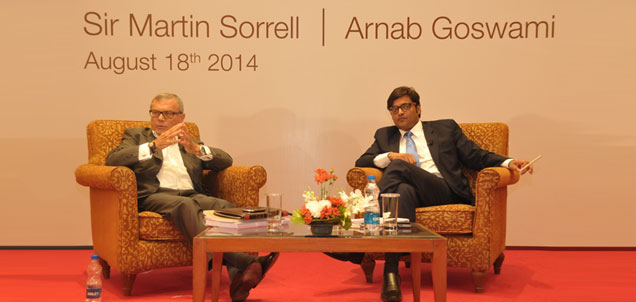
    Sir Martin Sorrell (SMS) gave a basic course in TACKLING Arnab Goswami (AG). From the world GO, SMS opened with Cricket stating that it seems MSD seems to be a captain with fixed thinking. Then he fired His question. How have the elections been for you? An open-ended conversation that followed with: why was there a gap between the Rahul and Modi interviews?  It forced AG to go in a detailed explanation. It was half-way through his comment that AG realized it was he who was supposed to be asking the questions.


    The election discussion closed with SMS probing. When the Congress says the media is to blame for their debacle, were they referring to media as media or you? AG in self-congratulating mode pointed out the Rahul English media exposure was limited to Times Now.


    I wish that Indian politicians should not watch this show when it’s telecast or is on Youtube. They may learn how a tactfully well-prepared person, with smile and humour can enjoy the discussion. How to be precise in your answer, not allow AG to corner you or allow him to put words in your mouth. SMS seem to have taken the advice in yesterday’s post.


    AG started with -‘I am honoured to be interviewing you and I have great regards… ‘ Was turned by SMS into a class for politely being rude. SMS said ‘you can be sure it’s going to be tough one and dam sure if the guy says ‘Personally I have nothing against you’.


    AG – there is respect in your well-preparedness and being very focused in your approach and questions. You as always were well-prepared with your data, quote and historical references. But today, you did meet someone who betters in it.


    SMS ON MEDIA: There is a mismatch between, the amount of time the consumer devotes or by the way the consumer consumes media and the investment (read advertising revenues) by agencies and client in it. Pointed out that this will find its balance. Fragmented media is a challenge and it will get more challenging with time.


    SMS ON TAM:  AG half-volley  ‘Your comment on TAM’ was met with a nice cover drive ‘Nice Company’.  Keeping the Indian scenario out of discussion, SMS pointed out that in most  (I did hear him say all) of the companies there is only one TV audience measurement currency. Can there be 1-2 or 3 measurement currencies is something that the market will decide.  AG doosara on does TAM (read SMS) need to wait for government directive for enhancing TV Meter numbers was hit hard. SMS pointed out that additional meters means additional cost and it must be shared by the agencies, client and the channels must share the burden.  Reiterating that WPP is committed to provide the most accurate measurement, he made a point that it’s not meters alone but a willingness to shift measurement process with change in consumer habits is required. Giving an example he cited the use of C+3 and C+7 meters that track not only on-air but deferred viewing.


    SMS ON INDIA AND CHANGES: The Independence Week made AG continuously probe SMS outside the off-stump. Is India at the Vortex of change? Can India- made media be global?  SMS showed a straight bat. He was optimistic that the new strong leadership in government is coupled with strong commercial leadership, then India which has been in the wrong side of the history for so long would definitely see a change.  And that it is advisable for the businesses to first exhaust the local opportunities before looking out.


    SMS ON FURTHER INVESTMENT BUYOUTS IN INDIA: He rattled off that WWP business in India is about 499 Million. And growing @ 10%. Talking to Sam (Balsara), he said: ‘If there is a business opportunity that is 50 million worth, he would consider it and is willing to write a blank cheque.” SMS thinks that his competitors in recent past have made some ill-advised low-leveraged investments and that is starting to reflect in their figures.


    SAM AND SMS: Sam raised a probing question that in the Indian situation where TV and Print (the legacy media) dominants. The foreigners (like you) come and talk just digital-digital. Are you not missing the bus?  In SMS’s view: “This is true as of now but all businesses have to look future-ready. I am not sure when the tipping point will come and change the dynamics. But it will come surely, with the speed of change speeding up’.


    SMS ON THREAT.  The biggest threat is not competition but Complacency, Arrogance, Satisfaction and lack of energy. He said he is a disruption freak. All his life the growth has come from disruption.


    SMS ON BALANCE. He referred to his divorce as an example. His lawyers had two possible solution and they asked: what was more important – business or family.  Not surprising, the answer is both.  This was when AG tried creating a 2×2 matrix between King and God on one side and Data and Analysis on another. SMS went to the extent of drilling the point home in more ways then one. As per him, creative and data, science and art, gut feel and analysis are such a pair where balance is more important.  Balance is not something that’s 50-50, but the right mix. Whenever the pendulum would swing to one side creating a biased skew: correction will be needed.


    MY SPECIAL:  (1) SAM, can we raise the same question on legacy v/s new media for all the discussion that happens in Indian forums? And many such places you are one of the guiding force? (2) I am surprised at the limited attendance to the event. At any stage, there were not more than 120 people in hall set for 150-plus. IAA could start planned invitation push (even paid) public beyond their members for such an event.  (3) Liked SMS referring to AG as a fly buzzing. (2) Liked AG comparing SMS to a Smart Politician and we would know where that feeling was coming from.


    Disclaimer: The above personal interpretation of the discussion.


    Aside: In a fraternity meet like this, with most being media or IAA invitees or senior people- this long introduction of SMS and AG- was that required?  I personally felt it went too long.


    Sanjeev Kotnala is Head Catalyst, P1P2Solutions. The views expressed here are his own


  • Titan Raga celebrates confidence of today’s woman in new TVC

    By A Correspondent


    Over the years, Titan Raga has carved out a special place for itself by celebrating feminine beauty and sensuality. The brand has showcased exquisite collections along with charming stories of the Raga woman. And these stories have served as markers in the journey of the Indian Woman from home and hearth to the outside world.

     

    The latest Raga film tells the story of one such woman and her chance meeting with a past love at an international airport lounge while both are travelling on business trips. They are genuinely happy to see each other. As they talk and catch up, the fissures of the earlier relationship are revealed. He had wanted her to stop working. She had refused. He still wanted her. After all these years, would she bend to his wishes?


    It is a film that is at once timely and timeless, celebrating her new self-assuredness and confidence as well as her enduring elegance and grace.


    Sharing his views on the commercial, Rajan Amba, GM, Titan Watches and Accessories, said “Raga is a reflection of the modern woman – progressive, confident and passionate. Over the years we have seen this woman evolve. She has unravelled different facets of her personality. And at every step of the way, Raga has evolved with her. Today, we are seeing a new side to this woman, where she is independent and free-spirited. And through this new film we are happy to reflect this new dimension that defines the woman of today. I’m sure this film will appeal to every modern woman because it captures their essence beautifully.”


    Joono Simon, Executive Creative Director, Ogilvy South, India, said that, “There was a time, not long ago, when Indian brands made a habit of perpetuating gender stereotypes from the past. Raga broke this stereotype with its consistent portrayal of a spirited woman with an air of sensual power.”


    In the new commercial, the brand steps up to portray a self-assured, assertive woman who reminds us that, as far as her life is concerned, she is firmly in charge and that she alone has the ability to decide what’s good for her. I’m sure the commercial would inspire many modern women to go out and grab her rightful place under the sun.”


  • Grasshoppers India to handle creative biz of Aquionics International

    By A Correspondent


    Kuala Lumpur based Aquionics International, which is an expert in the area of designing, developing and manufacturing water cleansing systems, has given the creative mandate for its India operations to Grasshoppers India Pvt. Ltd. Though Aquionics entered India three years ago, it was so far focusing on the water treatment segment in the B2B markets. The brand is now looking at strengthening its position in the retail space as well and is embarking on an aggressive marketing campaign to create awareness among the end consumers about its various product offerings.


    Grasshoppers will be working on a 360 degree advertising campaign which will initially focus on North India and gradually extend to other key markets across the country.


    Aquionics International, which was incepted in Australia in 1973 by Garry Adams, has designed some of the largest aquariums in the world including the famous Dubai Mall Aquarium & Siam Paragon Aquarium, Bangkok. In the retail segment, the brand not only offers contemporary range of RO systems but also complete water treatment solutions such as wholehouse water softeners, wholehouse filters, sand & carbon filters and iron removers which have become the need of the hour in the urban areas in India with the highly polluted and untreated water that the households consume.


    Sandesh Srivastava, Vice President (Strategy, B.D. & Operations), Aquionics International said, “A lot of health, skin and hair problems that the urban population constantly struggles with are due to the hard and impure water in the households. Our innovative products and solutions go a long way in combating those issues as well as in reducing the home energy consumption and also save home appliances such as geysers & washing machines from scaling considerably. Nobody understands water better than we do and the campaign that we are currently developing in partnership with Grasshoppers is aimed at making Indian consumers aware of our expertise in the water purification segment.”


    Grasshoppers has been awarded the creative duties following a multi-agency pitch. Over the past few years, the agency has been associated with various initiatives that have been in the larger interest of the society. “By associating with Aquionics, we are not aiming only to promote water filters. Rather, we are looking at addressing the water problem that a lot of people are suffering from. It delights us to get associated with a company that has some innovative solutions in this space,” said Megha Jain, Chief Brand Strategist, Grasshoppers India.


  • Tushar Vyas to discuss digital at IAA Webinar on Dec 19

    By A Correspondent


    Tushar Vyas

    The International Advertising Association (IAA) India Chapter, has organised its next webinar on ‘World Goes Digital’ which will be addressed by Tushar Vyas, veteran digital media specialist and Managing Partner, GroupM South Asia, on Friday, December 19, 2014 at 4pm.


    Tushar Vyas is part of the GroupM South Asia ExCo and leads the digital media practice for GroupM South Asia. He is also responsible for investment and corporate business development.


    He had launched Digital Media business unit (Interaction) for GroupM India and built up a 300+ member team and expanded services in areas like content, search and programmatic buying, mobile, digital activation, social, insight and digital analytics. The GroupM Digital Media practice is today the largest digital media solution provider with more than 200 active clients.


    Srinivasan K Swamy

    “We are delighted to have Tushar Vyas to address the IAA Webinar. I am sure brand managers and digital media practitioners would use this opportunity to interact with him,” said Srinivasan K Swamy, IAA India Chapter & Vice President, Development Asia/ Pacific Region of IAA.


    Abhishek Karnani, Director, Free Press Journal and Manish Advani, Head – Marketing and Public Relations, Mahindra Special Services Group, are co-chairing the IAA Webinar series.


    The Webinar will be aired live on the IAA YouTube channel –www.youtube.com/iaaindiachapter on December 19, 2014 from 4pm onwards.


  • Ogilvy unveils new campaign for IndiaProperty.com

    By A Correspondent


    Ogilvy India has unveiled a new campaign for IndiaProperty.com. With property search being a high involvement and complex task, the aim was to make the communication capture the psyche of a first-time home buyer, the fears, anxiety and the struggle he/she goes through while entering the home search maze and the role IndiaPropety.com plays in simplifyingthe experience.


    Ganesh Vasudevan, CEO IndiaProperty.com said, “We are very excited to announce our new brand identity, reflecting our promise of hand holding the user end to end in the home buying journey. For the campaign, we wanted to reflect the emotional state of a first time home buyer when he is making one of the biggest decisions of his lifetime. The creative team at O&M Mumbai got the brief perfectly and have moulded the idea that on one hand epitomises the first time home buyers hesitation and emotional state, while on the other hand addresses how our brand adds value to overcome a buyers fears through a combination of technology solutions and human touch.”


    Piyush Pandey

    Piyush Pandey, Executive Chairman & Creative Director O&M, South Asia said: “Buying a property is life’s biggest and toughest decision. Fear, anxiety, lack of clarity and trust are the emotions a property buyer goes through. They desperately seek assurance. The challenge was to think of a story, an idea that encapsulates this feeling best and is unique. The metaphor of a kid who is jumping into the pool as he doesn’t know swimming portrayed the emotions of the first time property buyer beautifully.”