Category: ADVERTISING

  • Hrithik Roshan will no longer be the face of Joyalukkas

    By Sutanuka Ghosal


    Kochi-based jewellery retailer Joyalukkas has decided to discontinue Bollywood actor Hrithik Roshan as its brand ambassador as it looks to turn to a “mature and established actress”, toeing the strategy followed by its peers Kalyan Jewellers and Malabar Gold & Diamonds which have roped in Aishwarya Rai Bachchan and Kareena Kapoor Khan, respectively, to endorse their brands.


    The company’s chairman Joy Alukkas said there are no plans to renew Roshan’s oneyear contract, which expires this month. “We will now bring in a Bollywood actress who is established and mature and can add value to our brands in India as well as in the global markets. She will be appointed in March so that we can launch her in the next financial year,” he said.


    Although Alukkas said the company’s marketing team is still working on finding a replacement for Roshan, speculation is rife that Deepika Padukone could well be the next face of the group which has operations spread across the Gulf countries, Singapore, US, UK and Malaysia.


    The retailer has not renewed the contract of its regional brand ambassadors Suresh Gopi (Kerala), R Madhavan (Tamil Nadu), Allu Arjun (Andhra Pradesh) and Kiccha Sudeep (Karnataka), who have been promoting the company’s clear price tag policy. “We will have only one brand ambassador,” said Alukkas.


    The company retails gold jewellery under brands such as Veda, Mayuri, Li’l Joy, Bakiamore and Florentina while its diamond jewellery brands include Eleganza, Bouquet, Perfekt and Magnus.


    The choice of the new brand ambassador is likely to be aimed at facilitating the firm’s global expansion. It plans to invest Rs 1,500 crore next fiscal to set up 30 new stores — 20 in India and 10 in countries including the US, Sri Lanka and Europe to expand its retail footprint. After this expansion, Joyalukkas will have a total of 125 stores in India and abroad.


    Malabar Gold & Diamonds has already felt an impact on its sales after it appointed Kareena Kapoor Khan as its brand ambassador.


    Source:The Economic Times

    Copyright © 2014, Bennett, Coleman & Co. Ltd. All Rights Reserved

    Licensed to republish


  • Bra ads out in the open


    By Mukta Lad


    R​emember Asha Parekh crooning ‘O mera sona re, sona re’ to a visibly upset Shammi Kapoor in Teesri Manzil? Or Rekha playing a courtesan in Umrao Jaan? In fact, think of any movie from the 60s to the 80s particularly, with a special glance at the female leads’ costumes.


    Ranging from the modest salwar kameez to a sari and the occasional dress, there are aspects of the actresses’ figures that would have lingerie brands in a tizzy, today. With unnaturally conical breasts and largerthan-life behinds, today’s actresses would be laughed right back into their vanity vans if they dared appear on camera like their counterparts of yesteryears.


    Although we are nowhere close to buying the $2 million bra that Victoria’s Secret’s Angels unveiled in their recently concluded fashion show, Indian women are now open to experimenting with their lingerie.


    The approximately Rs 10000-15000 crore lingerie category in India (about two-thirds of which is unorganised) has seen much upheaval over the last few years. But blame that on the urban Indian woman, who has rapidly evolved, forcing brands to keep pace. She earns more than she ever did, is independent, outgoing, loves to dress up, and most importantly, doesn’t treat lingerie as something to be spoken about in whispers.


    Of course she is going to spend Rs 2500 on that mauve lacy bra if she wants to, and we’d like to see you stop her. “A few years ago, the Indian woman wasn’t even comfortable wearing western wear. But she is now fashionable and confidently carries off all kinds of looks with panache. With such evolving fashion needs, she needs lingerie that can support her multi-facetedness,” says Smita Murarka, head – marketing and e-commerce, MAS Brands, the company retailing Amanté.


    Rama Bijapurkar, independent market strategy consultant adds, “Indian sexuality has come out of the home closet as various sexual behaviour surveys tell us. Media discussion, too, on this subject is far more open than ever before. Add to this, women are now coming into their own and breaking prescribed taboos on how they are supposed to behave and dress.”


    Even the humble saree blouse has transformed, with tailors and designers educating women about fashion and the latest trends forcing w o m e n t o upgrade their lingerie. Obviously, the advertising has evolved by miles, too.


    Run a YouTube search for older Indian lingerie brands and watch TVCs for the likes of Sona Lingerie, which tries capturing the important moments of a woman’s life (don’t miss how the model dons the North Indian married women’s chooda the minute the script moves to ‘Intimate Moments’).


    Or the VIP Feelings bra ad featuring a classy, saree-clad Kitu Gidwani, and a much younger lad who wants to ask her out to lunch. But while sensuality may have been an attribute staring at a woman from the sidelines of the commercial, lingerie was always portrayed to have a more functional role in a woman’s life. And guess what? Even with all the changes, Indian lingerie brands are still giving in-your-face sexuality a wide berth.


    Let’s just say you are unlikely to see campaigns like Calvin Klein’s ‘X Marks the Spot’, Penelope Cruz’s directorial debut for Agent Provocateur’s Autumn Winter campaign, Triumph’s ‘Zero to Sexy’ TV commercial or Marks & Spencers outdoor campaign for the ‘Autograph’ range that was banned in the UK. It is time to ask the difficult question. Does sex really sell?


    Enamor’s positioning ‘Fabulous As I Am’ is derived from how women look forward to everything that life has to offer — from jobs, occasions to family time. “We believe women find it demeaning to look at the typical lingerie ads one sees in magazines. We wanted to show them having a good time, being themselves and celebrating their fabulousness while staying in the fashion space,” says Sandra Daniels, VP – marketing, Enamor India.


    Amante’s latest campaign, positioning itself on ‘Dare To Be’, urges women to embrace different personalities whether a serious executive by day or an enchantress by night. Online player Zivame.com’s ‘Explore Yourself ‘ ad shows women from various walks of life expressing what they want from their lingerie, steadily breaking stereotypes while at it.


    And then there’s the fit: something that most western campaigns seem to take for granted. With women spending so much time on their toes at work, a great fitting, comfortable bra is a primary need. “80 per cent of women wear the wrong bra and do not get fitted by professionals,” Murarka says. Amanté even went as far as releasing a print campaign for fit awareness in 2012 – Break Up With The Wrong Bra.


    Kartik Iyer, CEO and co-founder, Happy, the agency behind the campaign, is completely against over-sexualising the category. He argues — why must it always be presented as a sensual, candy box packaging for sex with perfect bodies showing a titillating amount of cleavage?


    “We didn’t show any lingerie in the ads at all. The fact that most women wear ill-fitted bras jumped out at us, and we decided to address this important problem first,” he says. “Whether you’re at home or at work or at a party, women need to wear the lingerie and forget about it without being uncomfortable,” adds MC Cariappa, vice president, sales and marketing, Jockey India, ascertaining that comfort and fit are the priorities for all brands.


    But mainline advertising only goes so far in solving problems like fit and size education. Enter experiential marketing, an area brands are investing in heavily. Brands like Jockey have five exclusive outlets for the Jockey Women range, while Amanté, too, is all set to launch their own stores next year.


    For now, brands have trained staff to guide and fit women shoppers. It is evident that brands take the multi-pronged approach — with brand messaging and core propositions entrusted to mainline advertising and relying heavily on experiential marketing to educate customers. Even brands with no offline presence are working hard to crack this.


    Richa Kar, co-founder and CEO at Zivame says that the size and fit factor has never really been a problem. “We have a simple, effective calculator on our website, an all-woman call centre and a direct IVR facility, a fit specialist and a new physical fitting salon with specialists in our office,” she enumerates.


    Bijapurkar sums up the traditional advertising versus experiential marketing effectiveness argument best. “It’s never an ‘either or’ situation. One creates awareness of what is available or even the ‘why buy me’, the products walk that talk, while the trials and privacy close purchases and the sales expertise in the shop builds brand trust and cements its relationship with customers.


    Amanté and Enamor are bullish. They only see the dynamic market as an opportunity, not a challenge, what with the constantly changing wardrobe a woman has today, the rise of consumerism and the fact that the urban Indian woman is beginning to look forward to dressing better under her clothes.


    Maybe sooner, rather than later, owning Victoria’s Secret’s $2 million bra might become a bucket list item, rather than just be a shocking piece of news. Who’s to say, really?


    Source:The Economic Times

    Copyright © 2014, Bennett, Coleman & Co. Ltd. All Rights Reserved

    Licensed to republish


  • Embracing the New Consumer


    By Shruti Pushkarna


    The Advertising Club’s popular annual event, Media Review 2014 was held at the DLF City Club, Gurgaon on Thursday (Dec 18) evening. In its 60th year, the Advertising Club decided to tweak the format of the media review in its latest edition. Unlike the previous editions, there were three eminent speakers speaking on varied topics. CVL Srinivas, CEO South Asia, GroupM spoke on ‘Redefining the role of media agencies in a borderless world’. HT Media CEO, Rajiv Verma also spoke on similar lines, differing only in restricting his topic to redefining the role of ‘print’ media. The third speaker, Shashi Sinha, CEO, IPG Mediabrands spoke on, ‘Separate and Together: The future is about being specialist and holistic’.


    There was a lot of talk of redefining and reinventing the roles of media agencies in the new digital era and what to expect of the future trends but Mr Sinha, summed it up in a most appropriate way when he said, “We have to manage our present in order to reinvent our future”. He emphasised on the need to tell stories in a way that they evolve and reinvent the future automatically.


    As in any other forum that takes place today, there was talk of integration, the need to align different cultures and different mediums to effectively send out a message. There was also anxiety expressed on whether older mediums like Print will hold value in the growing digital world. But the concluding remarks hit the notes of optimism that rode on the back of realigning and in assimilation of various models present today, to arrive at that ‘magic model’ of communication.


    Redefining the role of media agencies in a borderless world

    CVL Srinivas, CEO South Asia, GroupM opened his session speaking about the evolution of the media agency and trying to define a ‘borderless world’.


    He compared the evolution of man with the evolution of media agency, which he said was presently in its fifth stage. The first stage of media evolution, according to Mr Srinivas, happened in the mid 1990s when media buying shops were being set up in India. The next stage came when media planning business moved out of the creative agencies. After which most media agencies started to diversify, setting up allied businesses, beit outdoor or digital, in order toprovide what they called, 360-degree solutions.


    He said, “We started off as a little chimp who is standing right in the back, as being the backroom office and I was one of the chimps when I’d joined the industry in the early 90s, following the client servicing guys wherever they went, hoping to get my five minutes to present my 80-odd slides. From then to now, it’s been quite a journey. But where we are today is at a very interesting stage. Whatever changes have happened in the last four to five years have forced media agencies to take on an entirely new avatar.”


    Trying to define a borderless world, Mr Srinivas cited the example of a Facebook map which stands for a connected world. Since the world we live in has all the customers connected and well informed, there is an urgent need for brands to not just stay relevant but also remain meaningful. Mr Srinivas said he sees an opportunity for agencies in this newly connected world, He said, “Today it’s not enough to be a trusted adviser of clients. Agencies can move up the value chain by moving from advising clients to leading clients.”


    In the digital era, added Mr Srinivas, a lot of disruption is taking place because of exceedingly available data and technology. He also mentioned some disruptive trends that agencies can take advantage of by designing content strategies around them. One of them was multi-screen viewing, which as a study by Milward Brown on ‘ad reaction in India’ states, is a growing trend in the Indian market. More and more Indian consumers are involved in multi-screen viewing. Milward Brown notes that by 2020, it’s estimated that about 50 to 60% of mobile owning population of India will have smartphones. Mr Srinivas added, “If you put that alongside with the kind of decreasing involvement in TV viewership, the whole ball game completely changes.”


    Another disrupter is e-commerce or m-commerce as some would like to call it. Mr Srinivas observed that because now consumers are using a digital gadget to close the loop, agencies have an opportunity to interact with the consumer up to the last mile.


    Brands are also getting into publishing and that is turning out to be a disrupter too. They are standing for functional benefits. The more content a brand can keep sending out, the more they can interact with the consumers. “Brands realize that it’s important to become a franchise of content because then a consumer interacts with the brand in so many more ways”, said Mr Srinivas.


    Talking of new trends in audience planning, CVL Srinivas said, “We have to move from contextual planning to audience planning with the help of data and the digital. Manual processes will give way to automated processes. We also need to build different communities within the organization.”


    CVL Srinivas concluded his session by once again emphasising the importance of reinventing and redefining the role of media agencies and the need to take advantage of every new point where you can touch the consumer directly.


    Redefining the role of print media in a borderless world

    HT Media CEO Rajiv Verma started his session on a similar note as Mr Srinivas. He also started by talking oh the history of media and how it has shaped up through the centuries. He divided it into three eras, Pre Media, Mass Media and Infinite media. He confessed that all this talk of the ‘cool digital world’ has had him worried about the future of print but since the infinite media we live in is younger than our kids, he still had some hope. He said, “Infinite media is younger than our kids so it’s not even a blink of an eye in the entire chronologue of media evolution. Therefore it’s just the beginning.  And there’s scope for all mediums to coexist.”


    He talked about how reporting has changed over the years and yet the essence remains the same, finding out accurate information and putting it out there. “From one half-hour news bulletin in a day to the days of embedded journalism that began with the Iraq war to today’s day and age where the model of reporting has shifted from ‘one to many’ to ‘many to many’, we have come a long way,” he said.


    In a borderless world, media is no longer acting as a filter. It has become more ubiquitous.  He reiterated Mr Srinivas’ point of massive amount of disruption that is taking place today, which presents huge opportunities for business.


    But Mr Verma wasn’t all that optimistic as Mr Srinivas as he stated that the digital has its own problems. He said, “In the age of digital reporting, before the truth gets known, the virality takes over. The lines between blogs, tweets, photos are blurring; becoming a mish mash of data and information. The war for ad $s is leading more to noise rather than to news. And the pressure of ad $s is leading to trivialization of news.”


    He emphasized on the unique characteristics of print media, like, the written word is still the most trusted word. He said print can go beyond straight facts, presenting a range of views and building a sense of community among its readers.


    He concluded on an optimistic note stating that print will coexist along with other media given its unique characteristics. He said, “While all these disruptive forces are at play, the real question that comes to mind is that print media will have to go back to basics in figuring out its comparative advantages, what is exactly is the audience it’s trying to serve and try to go more hyper local in serving that audience because that’s the only unique characteristic of print media which differentiates it from others.”


    Separate and Together: The future is about being specialist and holistic

    The last session saw Shashi Sinha, CEO, IPG Mediabrands, reiterating the points made in the previous two sessions, adding a few new ones.


    Shashi Sinha, CEO, IPG Mediabrands, started the session with the word ‘Integration’. He talked of his own career where he started off with advertising and what integration meant in those days, and then talked of the need to integrate not just ideas and processes, but to integrate, mindsets, culture and philosophies, in order to remain relevant.


    He also emphasized on the need to embrace the new consumer. He said: “Consumer wants to be the protagonist, he/she wants to be at the center of communication. He/she doesn’t want to be bored with information. Just tell them how it impacts them and how can they participate.So there’s a need for consumers to be constantly engaged and constantly touched.”


    He added that what’s important in today’s ever-changing media environment is the need to tell a powerful story. He said, “The success of any model depends on the story and its storyteller. You have to play it together to tell a story. We have to manage the present and as we manage the present, the stories will evolve for us to reinvent the future. And keep your stories simple.”


    He concluded by saying that while we live in an increasingly specialist world, without integration we will not be able to remain relevant to the new age consumer. He said, “In this specialist world, where you have Starbucks, Café Coffee Day and Barista, I still have my coffee from the baker.”

     

  • Ogilvy & Mather powers government initiative to save 25,000 mw of electricity

    By Pritha Mitra Dasgupta


    The power ministry has launched a mega advertising campaign saying the country can save 25,000 MW of electricity every year by just being prudent. The first TV commercial of the campaign, with ‘Bijli Bachao, Desh Banao’ tagline, was unveiled on December 14 to mark the national energy conservation day.


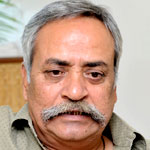
    Piyush Pandey

    “This is part of a huge campaign which the ministry has planned and will be launched in phases,” said Piyush Pandey, executive chairman at Ogilvy & Mather India, which designed the campaign. The first leg of the campaign showcases school children as torchbearers of this initiative. The ministry has launched an on-ground school contact programme. The Bureau of Energy Efficiency hopes to register 1,000 schools on its portal in the next one year to will help spread the message.


    The power ministry recently roped in Pandey, Sam Balsara, CMD at Madison World, and Sunil Alagh, a marketing consultant, as part of its publicity committee. While the first leg of the ad campaign talks about saving domestic energy, the ministry has planned a separate campaign on how industries can save energy too.


    “The ministry will involve people from all walks of life to advocate the message as change of behaviour towards energy consumption and usage is the need of the day. I believe this campaign should go on even when we have saved enough power and energy,” said Pandey.


    Source:The Economic Times

    Copyright © 2014, Bennett, Coleman & Co. Ltd. All Rights Reserved

    Licensed to republish


  • Sonal Dabral to lead Direct Lotus Jury at Adfest 2015

    By A Correspondent


    Sonal Dabral
    Sonal Dabral

    Adfest has announced that acclaimed creative leader Sonal Dabral will be Jury President of the Direct Lotus category at Adfest 2015, which runs from 19th – 21st March in Pattaya, Thailand.


    As Chairman and Chief Creative Officer at DDB Mudra Group in Mumbai, Dabral was thrown into a career in advertising after studying Visual Communications at India’s foremost design school, the National Institute of Design.


    He has led three agencies to the No.1 creative position in three different markets across Asia. First, he joined Ogilvy Mumbai in 1991 and, in partnership with Piyush Pandey, drove the agency from creative anonymity to India’s top creative agency. He moved to Ogilvy Kuala Lumpur in 1999, which soon became the most awarded agency in Malaysia. At Ogilvy Singapore, Dabral led the team to become the No.1 creative office in Asia, and the third highest awarded office in the world at Cannes 2007.


    “I am looking forward to an intense round of judging with my fellow jury members and in keeping with the ‘Be Bad’ theme of Adfest 2015, I promise that we’ll be totally ruthless in sifting the best from the rest,” says Dabral.


    “With consumers having the power to respond like never before, across an unprecedented number of platforms, technology has made direct response advertising more exciting and challenging than it ever was. In a prestigious show like Adfest it’s sure to play out in some big path-breaking ideas.”


    “Sonal has a phenomenal track record in leading agencies from obscurity to the top of the creative ladder, so it is an honor to welcome him to Adfest again to lead next year’s Direct Lotus jury,” said Jimmy Lam, President of Adfest.


    Adfest 2015 takes place at the Royal Cliff Hotels Group in Pattaya, Thailand.


  • Get set for the Mediaah! Dubious Achievement Awards 2014


    There are awards and awards and awards. We don’t yet have an awards for awards shows, but the way we are headed in the Media & Entertainment industry, don’t be surprised if you receive a mailer one of these announcing an awards for awards with a 12-member jury named.


    The Mediaah! Dubious Achievement awards are, as the name suggests, for achievements that are dubious.


    It’s a fun feature that we’ve been carrying on MxMIndia since we started and the objective is to have some fun at the expense of others and ourselves.


    Let’s take a few possibilities:

    The Congress under Rahul Gandhi Award for Loyalists Dumping the Party Award

    To CNN-IBN business executives and editors for exiting from the channel the moment the full acquisition by Mukesh Ambani’s Reliance Industries


    The Lagaan Award for Extra-Long Ad Films Award

    To Pepsi-Kurkure Gharwali Diwali Ad which went on and on and on even as it was fun watching


    The Ajay Devgn Award for ‘Aata Maazi Satakli’

    To Rajdeep Sardesai for giving one ‘kaan ke neechey’ to the NRI audience  at Madison Square Garden in New York City


    The Hum Aapke Hain Koun Award

    To Delhi journalists who were the shown the finger by the new NDA government as we now have a PM who doesn’t taken then on overseas visits and prefers to bypass the very journos who propelled the BJP to winning position


    Get the drift? If you want to send in your entries for these, inbox them to pradyumanm@mxmindia.com. Confidentiality assured. We will protect your identity if you don’t want it disclosed.


  • Advertisers move to tweets & FB posts in regional languages

    By Ratna Bhushan & Varuni Khosla


    Coca-Cola posted its first tweet in Hindi last fortnight when the International Premier Tennis League was being held in New Delhi, and it got it 350 retweets compared to just 10-15 retweets of most of its English tweets. Nobody’s surprised.


    There’s a substantial increase in use of Indian languages on social media platforms such as Facebook, Twitter and Pinterest, and several large and small advertisers including Pepsi-Co, Bharti Airtel, suiting brand OCM and winery Sula Vineyards say use of regional languages in social media campaigns give them much higher resonance than the same thing in English.


    According to social media agencies, brands’ Facebook posts using Indian languages such as Hindi, Tamil and Marathi get almost 150 per cent more response than similar English posts, thanks to increasing penetration of Internet into smaller towns and cities. “Language is surely helping a better engagement,” said Anusha Shetty, CEO at Autumn Worldwide, a Bengaluru-based advertising agency specialising in social media.


    “This approach will start playing an important role in the next two years as Internet penetration increases and more people from tier-III and -IV (cities) join the social space,” she said. “We are seeing the birth of this approach now.” Ms Shetty said sprinkling languages such as Hindi, Malayalam or Tamil boosts engagement from consumers by 160 per cent to 220 per cent.


    For a recent Luminous ad, the video content on Facebook was in Hindi, which got replies in ‘Hinglish’, leading to ‘massive engagement’. PepsiCo’s Mountain Dew recently had a campaign in the south with one Tamil word in it, while Orient Electric had a campaign with Chennai Super Kings with Hindi words. All these campaigns received good response on the social media.


    Aneesh Madani, head of sports partnerships at Twitter India, said there has been 300 per cent increase in tweets in Hindi in 2014 alone. “Given that Twitter now renders in all Indian languages… we will see an upward trend in vernacular conversations,” he said. “Brands and partners are starting to explore the vernacular and the opportunity to stand out while connecting to users is ripe,” Mr Madani said.


    “Expect more during the ICC Cricket World Cup as well as the Indian Premier League.” Coca-Cola’s recent experiment on a refreshment-based post in Hindi, Punjabi, Tamil and Kannada got over 150 per cent response compared to the same post published in English.


    Source:The Economic Times

    Copyright © 2014, Bennett, Coleman & Co. Ltd. All Rights Reserved

    Licensed to republish


  • Sonakshi Sinha stars for Relaxo Flite chappals

    By A Correspondent


    Relaxo has signed on Bollywood diva Sonakshi Sinha to endorse its Flite collection in a TVC-led campaign.


    The concept behind the new TVC is to creatively showcase the young, upbeat and fashionable quotient of Flite through a burst of peppy punchlines, music and visuals, notes a communiqué. Dancing with a group of young college yuppies in her favourite Flite footwear, Sonakshi says: “Flite- Isme hai style.”


    Agency:  ARMS Communications Pvt. Ltd., New Delhi, India

    Creative Team:  Deepa Kirodian, Sanjeet Ahluwalia

    Client servicing team: Mukesh Gulati (VP – Client Servicing, Arms Communications)

    Production House:  Nirvana Films

    Directed by:  Adarsh Gupta


  • Seven Mantras for Change: Saurabh Varma


    By Saurabh Varma


    Advertising agencies have been fantastic at creating daring destinations for their brands. Agencies are the harbingers of change for their brands. They seek unexplored territories for brands to differentiate from the over-crowded marketplace. They investigate the latest cultural trends for brands to ride on or oppose. Yet, a closer inspection of the agency model clearly indicates that agencies themselves have changed little.


    Fifteen years back, we saw meaning in a print ad. Print ads were shared and celebrated. Beautiful, well-crafted copy was the benchmark of great communication. This changed with the emergence of television. A new kind of narrative emerged, which celebrated and connectedwith the Hindi heartland. Unfortunately, for the last 15 years, even though human beings have changed, our approach to communication has remained the same. We still have the same copy-art partnership to drive our creative product. Frankly, the level of innovation or change we have thrust on ourselves is close to zero.


    Why is change needed? Change is needed because people have changed. We don’t have consumers anymore. The word consumer implies that there are people waiting at the end of a message waiting for a transaction. Messages today are likely to be received with cynicism rather than automatic receptiveness. Loyalty is over, opt-in is in. Obviously communication needs to change to connect with the new consumer. Also, a close reflection of the communication model indicates that we now have new unprecedented opportunities. In the past, we created the stimulus, and the response was the marketshare. Today, we can use response to create the new stimulus which itself can lead to a completely new response. We can create branded content. We can create branded utility. We can create new products and platforms. ‘Always on’ communication is a possibility. And yet, we refuse to change.


    Why do we resist change? One, because, change comes with risk. And the larger agencies like us do not want to disrupt what works for us. Two, because, we don’t know better. Almost everyone is playing by the rules created, and curated by the leader. The benchmark is not global but Indian. Three, we have created too many silos. Today, we are the victims of our own greed. The challenge is our ability to get many specializations to work together to create a new symphony. And finally, we refuse to change because of our fascination with Bollywood. Almost everyone in advertising at some point in his or her life wants to create a Bollywood film. No wonder the natural evolution of the 30-second TVC is now the 3-minuter.


    Personally, I think the agency world is ready for a disruption. And disrupt we must.


    One, we need to re-define new benchmarks. I am personally happier with my agency creating an app for a food brand than creating a 30-second TVC which just creates awareness for the food brand. Once the benchmark is clear, we will then need to figure out the teams needed to deliver and solve client problems.


    Two, we need to understand the difference between an idea and solving a client problem. The difference between the two, although subtle, is infinite. Clients want us to solve their problems not present them with ideas. We need to move from being solution providers, to actually problem hunters. We spend too much time thinking solutions, than defining the problem in the first place. Our belief is that the bigger the problem the bigger the solution.


    Three, we need to understand the difference between the integration and 360-degree advertising. They are not the same. Making an idea travel across mediums is an outdated model, yet it is shocking to see so many portfolios pretend an idea is integrated when clearly it is not. We will also need to understand and appreciate that integration does not mean generalisation. Integration, sans specialisation is meaningless. We will need integration managers who understand specialisation. For example, how are the worlds of shopper and e-commerce collapsing into a continuum?  Understanding specialisation will be the key to build a robust integrated solution.


    Four, we will have to find a way to dissolve the silos. Individual P&Ls cannot come in the way of holistic storytelling. At the same time, specialisation thrives in a specialist atmosphere. Overcoming this complex paradox will be a key to true integration.


    Five, we will need to re-define the people needed for the new kind of storytelling. It might not be copy-art partnerships. It could be a creative-technology partnership. We will need project managers who understand the creative idea and the technology needed to enable it. We might have T-shirt Designers and sound engineers being part of team if the problem deserves this kind of team.


    Six, we will need to explore new revenue models to create the new kind of teams. Ultimately, integration of the true kind has to be monetised. If we don’t know the teams needed to solve the problem, how do you ask the client to pay for it in the first place?


    Seven, we will need to be brave. Chances are anything new will be questioned. Change will be resisted by people who know better and believe in the current paradigm. It will be questioned by the existing status quo. We will need to experiment and explore new models. Chances are we will fail as much as we succeed. At least we would have tried.


    Like Oliver Wendell Holmes said, I would not give a fig for simplicity this side of complexity but I would give my life for simplicity the other side of complexity. In 2015, we want to explore simplicity the other side of complexity.


    Saurabh Varma is CEO, The Leo Group, India.

    First appeared in ‘dna of brands’ issue dated December 29, 2014


  • Retirement not to affect popularity, Brand Mahendra Singh Dhoni is not over, say experts

    By Pritha Mitra Dasgupta, Ratna Bhushan & Ravi Teja Sharma


    Indian cricket captain Mahendra Singh Dhoni on Tuesday announced his retirement from Test cricket bang in the middle of the Australia tour, catching many by surprise and fuelling speculation whether this is the beginning of the end of brand Dhoni.


    “It’s clearly a succession plan in the making, so it will definitely impact the brand value of Dhoni in the short term,” says Indranil Das Blah, chief operating officer of sports management company, Kwan.


    But he was quick to attach a caveat. “If India wins the World Cup next year, Dhoni will be bigger than ever. If not, we will begin to see the end of brand Dhoni, as we are certain that others like Kohli will rise.”


    Santosh Desai, CEO of Future Brands, termed the Indian captain’s decision as the “evening of his career and his brand endorsements”, but certainly not the end. “Is this step one of his game plans?” asks Madhukar Kamath, group CEO and MD of Mudra. “It was becoming evident that Dhoni will pull out of Tests and from other formats after the World Cup. Hence brand Dhoni will not get affected till after the WC.”


    Nandini Dias, chief executive officer of Lodestar Media, says that Dhoni has been the most successful captain for India and is currently the costliest sports endorser. “But sports icons quickly lose sheen when they stop playing. Since Dhoni will continue to play in the other two forms of cricket, which are more popular than Test cricket, it will not affect his endorsement or popularity yet.”


    Dhoni has been one of the top brands in India over the past few years, endorsing close to 20 brands such as Pepsi, Reebok, Aircel, Gulf Oil, Star Sports, Reebok Amrapali Developers and many more. He reportedly charges between Rs 10 and Rs 12 crore for a brand, which is way more than the next best Virat Kohli who charges around Rs 6-7 crore for a brand. Dhoni is also known to have done a few revenue share deals.


    Anupam Vasudev, chief marketing officer at Aircel, says their brand endorsement deal with Dhoni ended in October-November 2014 and they are still talking to him on renewing it. A PepsiCo India spokesperson said the company will continue its association with Dhoni. “We wish him all the best for his continuing leadership in the T20 and one-day formats.”


    Dhoni’s decision to focus on the shorter versions of the game will extend the longevity of his brand, says Abraham Koshy, professor of marketing at IIM-A. The dilemma for advertisers in India is that there are only two big names left in cricket at the moment – Dhoni and Kohli. There was a time – and not too long ago – when marketers were spoilt for choice with Sachin Tendulkar, Sourav Ganguly, Rahul Dravid, Anil Kumble, Virender Sehwag, and even Harbhajan Singh, Gautam Gambhir and Yuvraj Singh to pick from.


    Source:The Economic Times

    Copyright © 2014, Bennett, Coleman & Co. Ltd. All Rights Reserved

    Licensed to republish


  • It’s People, Product & Profit for Saurabh Varma, Leo Burnett Group CEO

    Sometime yesterday (Jan 5), our inboxes received this mail from a reasonably reliable source. It was written by Saurabh Varma, CEO of The Leo Group in India.


    We reproduce this as is:


    Dear Team,


    Welcome back. I wish you all a brilliant 2015.


    I wanted to start the year by reminding everyone of our Ambition – to be among the top 5 creative agencies in the world by 2017. Raj has set us this worthy target and we are all united in our pursuit of this single minded goal. Everything we do will be to reach this singular goal together. Overall the building blocks of our approach are guided by the 3 Ps. People, Product & Profit. In that order.


    You would have noticed that in 2014 we have moved massively on the People front. We are hiring what we call ‘the +A types’. People who want to reach the stars and they want to do that in the most positive and optimistic way possible. These are people who focus on the task at hand and do not let their egos get in the way. Their focus is the quality of our product and the need to solve our client’s problems. They know that to win we need to collaborate. They understand that to create symphony you need many different specialisations working seamlessly. The hiring of leaders like Neha, Kaizad, Sachin & Prajato, Harshad, Antony, Oindrilia & Rakesh in 2014 reflects our resolve to get the right kind of people who are future ready. You will see a lot of fresh talent getting infused in our Group in 2015. Many of these changes will start getting reflected in the next few days. A closer look at these leaders will also reveal that we are hiring a different breed of talent. Talent who can think beyond the 30 second TVC. We are really serious about winning with integration and these leadership changes will help us move rapidly in the new direction.


    I request you all to focus on the 4 Cs as you look at levels in the organisation. The first C is Curiosity. We want to be child-like in the way we live our lives. We want you to leave your tables and explore the world around you. Nothing will give us more pleasure than people taking all their leave. Sacrifice is in, but the right kind. Hard work is appreciated but not if it comes in the way of us experiencing life. You have our commitment of continuing with this new year break again, next year. Our hope is that next year we are even better organised to take this opportunity to slow down, relax and refresh. So please be curious in 2015. The next C is Champion. Great work stirs resistance. We need champions to help us sell great work. We need people who will not let the incredible idea just die. We all need more champions across the organisation who will challenge the work, shape the work and sell the work. The third C is Craftsman. Leo talked about that restless feeling that nothing you do is ever good enough. We want to live that spirit in our everyday life. We want to reach for the stars, everyday. No matter what you do in the Group, we want you to chase perfection. Average is out. Greatness is all that matters. Finally the 4th and the most important C. Citizens. We live in a world where an idea is shared and created by many. The spirit of knowing that we are all in it together is the fundamental to the organisation we are trying to build. Please populate the agency with people who embody these 4 traits. 2015, will also be a year where we will move forward and create a more performance driven organisation. We need to understand that Growth is everyones job. Growth gives us freedom. Freedom to reward our people. Freedom to train our people. Freedom to create a better destiny for our people. We will reward people who drive growth. Every senior leader will have clear KPIs. Creative leaders will have to deliver on 7+ work. We will need to use our understanding of clients to create and sell them work they need rather than the work they want.


    On the Product front, Raj and I are both excited about the momentum we have created. Work on KBC, HE (man’s day), Kindle, Imagica & Anchor shows that we are moving steadily in the right direction. With our marquee portfolio of brands, we hope to create incredible momentum in the next few months. Our People changes will help us create this new kind of work. We need to challenge the status quo in the industry and I urge you to be bold in the way you approach communication. Raj and I both think that our clients are ready for this change. They are asking for it. This is our moment and we have to seize this opportunity. Please use the specialisations at your disposal to create new work. Overall we need work which is true to ‘imaginative populism’. Work which is shared. Work which becomes part of peoples everyday lives. Work which our families are proud of. Work which delivers on the Purpose of our brands. Please create content. Please create branded utility. Please use the power of technology to create platforms which are always-on. Please try different things. We urge you to take the risks. We will support risk and failures. We are ready for change.


    On the Profit front, I promise you a brilliant 2015. Last year we as a group won 37 clients. Many of these wins came in the last quarter. These wins will come into play through the year. Our leaders are committed to zero complacency. We will not slow down. We will build on the incredible momentum we have created. We plan on both organic growth and new business wins. In 2015 we hope to pitch less and win a lot more. Prospecting will play a critical role in the way we approach our pitches. Please be ready for a lot of action.


    My ask for you is to be brave. Challenge status quo. Be positively paranoid. Win as a team and celebrate your wins. Let 2015 be a year of some outrageous parties.


    I remember a beautiful quote, ‘The secret of our future is hidden is our daily routine’. Please get your best to the office everyday. Let us together create and shape a new destiny for the Leo Group in India.


  • Gaurav Jeet Singh to head media services at Unilever South Asia

    By Pritha Mitra Dasgupta


    Gaurav Jeet Singh, marketing manager, Hindustan Unilever (HUL), has replaced Atit Mehta as the head of media services, Unilever South Asia. Mehta, who was promoted to a regional media role for one of the international markets, has quit the company. Mr Mehta may be joining Sequoia Capital as vice-president, media, from January 6, sources said.


    HUL’s spokesperson said, “Gaurav Jeet Singh has been appointed as head, media services, for HUL. Gaurav Jeet Singh succeeds Atit Mehta who has left Unilever to pursue an external opportunity.”


    As head of media services, Singh will be responsible for driving effectiveness and impact of HUL’s media investments through a combination of strategic planning, media innovations and partnerships, said the spokesperson. He will also lead the digital and mobile agenda of the company. He will also oversee media services for Unilever in Pakistan, Bangladesh and Sri Lanka.


    Mr Singh started his career with L’Oreal in 1997, then launched his own venture called Unique Transport in Hyderabad in 1998. He joined HUL as regional sales and customer manager in Kolkata in 2008 and was promoted to branch sales manager in 2010.


    Source:The Economic Times

    Copyright © 2015, Bennett, Coleman & Co. Ltd. All Rights Reserved

    Licensed to republish