Category: ADVERTISING

  • Miami Ad School cadets bag Silver Pencil nomination at D&AD New Blood 2014

    By A Correspondent


    Rebecca Daniels & Rohan Mathew, students from Miami Ad School, Mumbai have been nominated in D&AD for their work ‘Chatty Charger’. They are the first students from India to be nominated in D&AD. The initiative received support from eminent industry personalities like Josy Paul, Rajiv Rao, Raj Deepak Das among others who took the time out to come and teach at the school.


    Miami Ad School is the only international ad school in India with courses in Copy Writing, Art Direction and Digital Design. 50 per cent of the course time allows the student to study and intern in agencies globally.


  • Rebuilding Leo Burnett India


    By Ravi Balakrishnan


    The only reason I am here is to disrupt the market and change the game,” is quite literally the first thing that Saurabh Varma, the recently appointed CEO of Leo Burnett India tells us. Over the last year and a half, several global operations struck by similar epiphanies have disrupted their agencies, “trying to change the game” as seen in the management makeovers at Saatchi & Saatchi and TBWA.


    The exit of Leo Burnett’s former chairman and CEO, Arvind Sharma and his chief creative officer, KV Sridhar six months later is believed to be the same phenomenon playing out. Mr Varma quickly points out: “Leo Burnett is in great shape blessed with incredible talent and clients. And it’s still had the courage to make this bold move. We?ve done this at our best rather than at a time when we are coerced to do it.”


    Indian advertising is apparently a business that needs fixing even if it’s not visibly broken. Mr Varma represents a discontinuity and not just in terms of age and his background in strategic planning. Through seven years in India and eight overseas, he’s examined the desi ad business from up close and afar. And unlike the perfunctory noises made by many of his corner office contemporaries, he’s clear that he doesn’t like it one bit.


    He sees an industry stuck in a time warp where the 30-second TV spot is still lionised. An industry that relies on copy-art partnerships. A market at least five years behind comparable countries in its approach to problems and solutions. Asked if there’s any Indian agency that’s been able to navigate the change better than others, he replies “None.”


    Mention industry growth figures and he says, “Size cannot be equal to performance. For me, it is whether people engage with or share the content we create. And whether it ultimately leads to brands winning in the marketplace.” He has a clear idea on how he’s going to take Leo Burnett (and maybe even Indian advertising kicking and screaming) into the future.


    Instead of film, marketing content could be an act or an experience. He argues, “When there are opportunities to connect through mobile and Bollywood or create content which works on the shop floor, why limit ourselves to 30 seconds? Why not launch a TV channel for a brand? You have to create something that touches lives.”


    It starts with a change in team composition and roles. Ad shops typically boast about acquiring digital agencies. Instead, Mr Varma would like a digital producer, technology lead or user experience specialist working as part of the team as opposed to being brought in as last-minute window dressing. Singapore solved this eight years ago. “If you walk in, you can’t figure who the digital guy is since it is everyone,” he says, speaking excitedly of a near future where integration specialists are part of traditional account management.


    And if these people can’t be found here, the agency will get them from Australia, South East Asia, Scandinavia or America. The other fatal flaw in India is too much focus on solutions and too little on the problem. He explains, “The client brief carries the marketing problem but not the behavioural issue which needs to be defined in a clear and succinct manner.” It would sound like typical planner rhetoric that creatives in India roll their eyes at, if Mr Varma didn’t have examples he’s personally been involved with.


    For instance, ‘Beautifully Imperfect’ from Leo Burnett Singapore. The client defined the problem as young people not getting married. Mr Varma says, “The first instinct would be to create a dating website.” However the real problem was young men and women looking for perfection. This was found not via consumer research but after speaking to dating agencies and local love gurus.


    He says, “They were waiting for Angelina Jolie or Brad Pitt to come along and make the first move.” Instead, Yasmin Ahmad of Leo Burnett Malaysia came up with ‘Beautifully Imperfect’ which celebrated imperfections and a platform on Facebook where people discussed real stories.


    He’s taking this approach to Indian advertising too: trying to crack a problem where clients pass over “new age” solutions for the comfort of working with a creative legend. Says Mr Varma, “Marketers need someone to trust since they are trying to mitigate risk. When a personality says “this is the right thing?” because of his experience and wisdom, they go ahead.”


    He hopes marketers will realise risk can be mitigated in other ways: teams creating experiential content with a direct link to ROI for instance. Which sounds suspiciously similar to something we heard recently; except it was from KV Sridhar shortly after taking over as chief creative officer, Sapient Nitro.


    This apparent ideological alignment could not translate into a working relationship. Mr Sridhar claims it’s because the pace of change at agencies is glacial. For his part, Mr Varma smiles and recommends we meet his new chief creative officer Rajdeepak Das (executive creative director at BBDO), who is scheduled to join the agency this month. Mr Das was not available for comment at the time of going to print. But Mr Varma says, “His work on Gillette is remarkable and refreshing.


    It’s on a large brand and not for a small irrelevant client who buys things easily. Speaking of his close associate, Josy Paul, chief creative officer, BBDO says, “He has an unhinged sort of mind and is like a blotting paper for the new world.”


    He agrees that the time for change is long overdue in Indian advertising: “If you look at Cannes, only 20% to 30% of the show is talking to ad agencies. The rest speaks to media houses, designers, inventors, hobbyists, branded content creators? Advertising is shrinking not just in Cannes but in the total budget map.”


    Industry opinion is however sharply divided on Leo Burnett: its past and future. A former associate of Mr Varma argues, “It was never a good creative agency but the award rank was high since they won a lot of scams and managed the media very well. Where we came from, we’d look at them and say “but where is the real work?”  before using some strong language to describe its flagship campaigns for Thums Up and Maaza.


    A gentler evaluation comes from Anil Nair, CEO and managing partner, L&K Saatchi & Saatchi, “With minimum noise and only one or two recognisable faces, they consistently did good work. They had some controversies in the last few years but if you came up against them, they’d pack an awesome punch.”


    As for the future, while swelling numbers on the digital end are impressive, Mr Nair believes, “We are still a country where digital is important but it’s a supplement and not the absolute. Activation is something you have to fight the client for since they can do it cheaper and more effectively. That would be the twin task that Saurabh will have.”


    And since we are thick in the middle of award season, it’s only natural the sword raises its head often in every conversation. Some of his associates are glad that it seems Mr Varma has a strict no-scam policy.


    Says his former associate, “They have to rebuild the agency with real work which will take them time: two or three years. My fear is in the quest of being different it shouldn’t become another avatar of scam. You have to do a few good films in India. How else will you sell a Rs 3 product available in 500,000 outlets?”


    So the only question that remains is will the cooks at Leo Burnett India make an apple pie or crumble?


    Source:The Economic Times

    Copyright © 2014, Bennett, Coleman & Co. Ltd. All Rights Reserved

    Licensed to republish


  • Metal wins mandate of Medimix Soap

    By A Correspondent


    Metal Communication has been appointed as the creative AoR for India’s largest selling ayurvedic soap and personal care brand Medimix, the flagship brand of Cholayil Pvt. Ltd. The account will be handled by the agency’s Mumbai branch.


    Metal Communication will provide brand positioning and advertising support for the brand. The scope of the assignment will cover TV, print, digital, video and out-of-home. Medimix has a range of products under its umbrella including soap in four variants, face wash, talc, with a slew of new launches being planned in the year ahead.


    Commenting on this development, VS Pradeep, Managing Director, Cholayil Pvt. Ltd. said, “Given our aggressive plans for the future, we had called for a pitch and ultimately chose to go with Metal Communications. We liked their breakthrough approach, the quick understanding of the category and our brand that they demonstrated. Metal offers a younger, fresher perspective. And we believe they can partner us very well in our effort to reach our intended audience in the most effective and integrated way.”


    Kurien Mathews, Chairman & MD, Metal shared, “Medimix is one of India’s heritage brands with a long legacy. Naturally, we are delighted with this new win. Given the ambitious plans Cholayil has going forward not just building the brand in India but also extending its franchise in global markets, makes it even more exciting and challenging. We are confident of building on solid foundations of the Medimix brand and taking it to greater heights.”


    Cholayil has very aggressive plans in the personal care market and is looking at building on its already strong equity in the Indian market besides the four southern states. Further, the Medimix brand has been very well received in markets like Taiwan, South Korea and the Middle East. The company is now looking at foraying into the North American market.


  • Grey pockets Fenesta; Mark Flory appointed as Art Head and Senior CD

    By A Correspondent


    Grey India has won the advertising duties for Fenesta, a leading windows and doors company. The account will be handled from the agency’s Delhi office.


    Samir Datar, Vice President & Branch Head – Grey Delhi said, “We are delighted to partner Fenesta in building an all new category. Alex and his team have already done fabulous work in building a strong platform for the brand in terms of product and national reach. The strategy discussions leading up to being the partner were extremely interesting and have helped in creating a communication blue print. We are sure that we will achieve the ambitious objectives set by team Fenesta & team Grey for the brand.”


    Alex Murphy, President and Business Head at Fenesta Building Systems said, “After months of searching for a new creative partner, we are delighted to have Grey as our partner going forward. The team at Grey showed great flair and innovation during our discussions along with a clear understanding of our market and our growth desire. They have a most refreshing approach to business.”


    In another development at the agency, Grey Bangalore has brought on board Mark Flory as the new Art Head and Senior Creative Director. Mark has about 13 years of experience in the industry. He started his career with McCann Erickson in Bangalore as Art Trainee. His last stint was with Dentsu Communications where he was Creative Director. The other agencies he has worked with includes Orchard, JWT and Happy Creative Services.


    Speaking on Mark’s appointment, Malvika said, “Mark has an innate sense of design and I absolutely loved some of the work he has done for brands like Diesel and Lee in his earlier agencies. With him coming on board, the last jigsaw of the Bangalore Creative structure is in place and the picture is looking very good. Am sure he will be a great asset to our Bangalore team and a very strong support to Ram who he will be reporting to”


    Mark has worked on a wide range of brands that include Levis, Diesel, Lee, Nike, Van Heusen, Toyota, TVS, Wipro, Air Deccan, Nissin, MRF, Black Dog & Kingfisher. He has won awards at Cannes and Asia AdFest including winning the Young Creative Awards at both these forums in the earlier years.


  • Saugata Bagchi joins Quasar as Reg Head, West & South

    By A Correspondent


    Digital agency Quasar has announced the appointment of Saugata Bagchi as the new Regional Head, West & South. Saugata will report into Gaurav Nabh, Business Head, Quasar and will be based out of Mumbai.


    Prior to joining Quasar, Saugata was head of Mumbai and Bangalore offices at Tribal Worldwide, India. He was responsible for driving business for the two regional offices and also manage the agency’s national mandate. He was instrumental in establishing the agency as the digital agency of record for prestigious clients including Hindustan Unilever, Emirates, McDonalds and developing the agency’s technology, social media & digital analytics skill sets.


    Gaurav Nabh, Business Head, Quasar said, “Saugata is a born leader, taking on challenges head on, something that he has demonstrated repeatedly across all his assignments. He brings with him a lot of experience and knowledge of consumers, and the ability to engage and delight them online, something that our clients will benefit from immensely.  I am looking forward to working with Saugata in bringing great new ideas for our customers and growing our client base in Mumbai and Bangalore.”


  • ASCI upholds complaints against 68 erring ads

    By A Correspondent


    In March 2014, ASCI’s Consumer Complaints Council (CCC) upheld Complaints against 68 out of 108 advertisements. Advertisements in Personal and Healthcare sector category again emerged as the category which accounted for a majority of Advertisements (44 out of 68) against which complaints were upheld.


    The CCC found the following claims in health and personal care product or service ads of 44 advertisers, released in the press to be either misleading or false or not adequately / scientifically substantiated and hence violating ASCI’s Code. Some of the health care products or services ads also contravened provisions of the Drug & Magic Remedies Act. Some of the ads that were upheld include: Hindustan Unilever Ltd: Vaseline Healthy White Lotion showing exaggerated claims of ‘instant whitening’ on skin; Wipro Ltd. (Glucovita Bolts): claims that ‘Glucovita has iron &glucose which gives energy to the body & brain in 10 seconds; Zydus Wellness Limited: claims that Everyuth Fairness Peel off to be India’s first intelligent delivering whitening technology that targets melanocytes to give unmatched fairness; Hamdard Laboratories India (Hamdogen Herbal Revitaliser for Men): the product claims to be a Herbal Vitalizer for men; Deemark Health Care Private Limited – Deemark Quit Addiction claims that ‘Now addiction towards intoxication won’t remain because Deemark has brought an Ayurvedic medicine, ‘Quit Addiction’, etc.


    In the education sector, the CCC found following claims in print ads by 14 different advertisers were not substantiated and thus, violated ASCI Guidelines for Advertising of Educational Institutions and hence the complaints against these ads were upheld. Some of them include Infinity Educare: claims that it is ‘No. 1 in India’; Institute of Fire Engineering & Safety: claims to be ‘India’s No. 1 Fire & Safety Institute’; Shyam Institute: claims that ‘10,000 people got jobs from our coaching classes’; ECC Academy: ‘within 45 days Bank/Government job’; etc.


  • Cannes sees record number of entries from across the globe

    By A Correspondent


    Cannes Lions entries have reached an all-time high with a total of 37,427 entries submitted from a record 97 countries across 17 awards categories – Branded Content & Entertainment (1,178 entries), Creative Effectiveness (80), Cyber (3,660), Design (2,624) Direct (2,676), Film (2,838), Film Craft (2,073), Innovation (206), Media (3,127), Mobile (1,187), Outdoor (5,660), PR (1,850), Press (5,007), Product Design (194), Promo & Activation (3,241), Radio (1,448) and Titanium & Integrated Lions (378).


    The top ten entrant countries include USA (6,213), Brazil (3,321), United Kingdom (2,757), Germany (2,376), France (1,838), Australia (1,543), Japan (1,146), Canada (995), India (976) and China (952). Countries that have entered for the very first time include Albania, Ghana and San Marino.


    The work will be judged by 17 international juries made up of 327 top-level industry peers from 44 countries who will vote, deliberate and finally award the coveted Lions to the entries worthy of the honour which will go on to inspire and shape the industry in the future.


    “Overall entries are up close to 5 per cent on last year, and we’re delighted with the response to the inaugural Product Design Lions category as we bring into the Cannes Lions mix a whole new sector,” observed Philip Thomas, CEO of Lions Festivals.


    “Some interesting analysis from these entries figures include: the astonishing leap in Cyber Lions, now the third largest category at the festival (+39 per cent) which we attribute to the restructure of the category to bring it in line with current digital trends to embrace Social, Branded Technology and Branded Games. PR Lions has also increased dramatically (+43 per cent) as the category is embraced by agencies around the world as the definitive and much acclaimed honour for the PR industry. Other awards categories that have equally seen a significant growth are Branded Content & Entertainment now in its third year (+22 per cent), Design (+11 per cent), Mobile (+12 per cent) and Promo & Activation (+9 per cent).


    Interestingly entries into some of the traditional categories have dropped as the industry yet again changes shape; Film (-9 per cent), Press (-12 per cent) and Radio (-7 per cent). And for the first time ever, Outdoor entries have overtaken the number of Press submissions.


    Cannes Lions will take place from 15-21 June 2014 in Cannes, France.


  • Milestone Media bags OOH mandate for Reliance Communications

    By A Correspondent


    Milestone Media, a division of Milestone Brandcom has won the OOH media mandate for Reliance Communication following a multi-agency pitch attended by seven large OOH agencies, that lasted over three rounds. Milestone Media will handle pan-India OOH media duties for the business. The agency triumphed over others on account of their comprehensive and inventive approach on creative thinking, category understanding strength, micro planning and efficient buying strength.


    Speaking on the alliance, Gurdeep Singh, CEO, Consumer Business, Reliance Communications Ltd, said, “Milestone Brandcom had a sound understanding of our business issues that we face in a dynamic category. Their pursuit for perfection, and professional attitude were appealing to RCOM while making the decision.”


    Nabendu Bhatacharyya, Founder & MD Milestone Brandcom Group said, “This is a noteworthy achievement for us at Milestone Media. Reliance is one of the biggest players in the Communications industry with a unparalleled legacy, offer us challenge to partner them in renewed strategy for future time. We look forward to working with the team and help them push boundaries by creating cutting edge work & contribute to R Com’s growth story”


  • Marching Ants bags two new clients

    By A Correspondent


    Creative agency Marching Ants Advt. Pvt. Ltd has expanded its portfolio of clients recently by winning the account for India’s first homegrown youth entertainment brand ‘bindass’ and the summer campaign  for edutainment theme park, “KidZania.


    Speaking on the inclusion of new clients in their roster, Co-Founder, Director – Creative Solutions at Marching Ants Advt. Pvt. Ltd Joy Ghoshal said, “We have been doing excellent work for our clients from the past 14 years. It is our pleasure to handle the creative duties for bindass, which is bringing about a revolution in entertainment for Young adults in the country and KidZania, who are globally acclaimed for their unique concept in edutainment category for kids. At Marching Ants, we constantly strive to creative impactful and memorable visual stories and we will continue to ensure high standards of work for all our clients.”


    Marching Ants has also been entrusted with the creative marketing duties of this year’s biggest Bollywood releases including Kick, Bombay Velvet, Bang Bang and Shuddhi, to name a few.


  • Lowe Lintas + Partners wins Platinum award on Effectiveness at AMES

    By a correspondent


    Lowe Lintas + Partners India had a great run at the Asian Marketing Effectiveness & Strategy Awards, held in Singapore recently. The agency’s work on ‘Lifebuoy – Help a Child Reach 5’for its client Hindustan Unilever Limited bagged the enviable Platinum award (Effectiveness category) at AMES.


    Apart from the coveted award, Lowe Lintas + Partners India also won the Gold in Effectiveness – Food Products for their work on Kissan ‘100% Natural Seeded’ for HUL. The same entry also won a Bronze in Effective – Innovative Use of Media category. The agency also bagged a Silver under the Effective – Integrated Marketing Campaign category for its work on ‘Lifebuoy Help A Child Reach 5.


    Commenting on the wins, Joseph George, CEO of Lowe Lintas + Partners said: “This performance of Lowe Lintas + Partners and Unilever is our best ever at AMEs. For either of us. This reflects our shared belief in what makes for effective communication.”


    The performance at AMES follows Lowe Lintas + Partners’ fine achievement in April 2014 where it was named the most Effective Indian Agency at the APAC EFFIEs Awards 2014. The agency had bagged 4 metals including 2 Golds, a Sliver and a Bronze out of total 6 metals for India. Lowe Lintas + Partners was also bestowed the ‘Agency of the Year’ title at Indian Effies 2013.


    Vikas Mehta, CMO – Lowe Lintas + Partners said, “We had entered a small number of campaigns this year at the AMEs. Four wins including the all-important platinum is remarkable. I’m told it’s the country’s first AME platinum on effectiveness. That sure feels nice.”


    The Asian Marketing Effectiveness & Strategy Awards are Asia Pacific’s foremost awards honoring clients and their agencies for marketing strategies that deliver solid results to transform businesses and brands. The annual awards are judged by a panel of top client and agency professionals who review the submissions against stringent criteria to determine the winners of the prestigious Asian Marketing Effectiveness & Strategy awards.


  • RedInk Awards felicitates journos; discusses future roadmap

    By a correspondent


    Information & Broadcasting minister Prakash Javadekar told journalists that the new government had no agenda for regulating media. “I would say the media should have a mechanism of “self restraint”; I don’t even like the word ‘self regulation’, the minister said when speaking at a the Press Club Mumbai’s National RedInk Awards held on June 7, 2014.


    The I&B minister said the increasing attacks on journalists was a matter of concern and indicated that the Union Government is considering bringing in a Central Act to punish attacks on media professionals. He said the government is studying the impact of state laws against media attacks. “We will then look at the possibility of a central law,” he said.


    The NDA government, he said, was fully committed to ensure full freedom of the Press. But there is nothing like absolute freedom and the society expects the media to be accurate, balanced and fair in its approach. In this context, he said he favoured self restraint by the media, rather than the much talked about self regulation.


    He allayed apprehensions that the print medium will dwindle as the electronic medium grows. “Print medium will also grow with the rising literacy in the country.” he added.


    Maharashtra Governor K Sankaranarayanan, chief guest at the awards function, abandoned his prepared speech and had the audience in splits with his wit and sarcasm. Coming down heavily on NOTA (None of the Above) as a vote option, he said: “In a democracy, NOTA has no place. It is nonsense. The person who does not go to vote expresses his feeling of NOTA anyway,” he said and pointed out that “It is a sheer waste of time for him (to go to the polling booth) and vote for NOTA.”


    “It is only four years since the RedInk Awards were instituted. The awards have already got national recognition. I congratulate the Press Club of Mumbai for setting very high standards of selection of the recipients of this award,” the Governor said.


    Veteran Hindi journalist Mrinal Pande was felicitated with the “Lifetime Achievement Award” that honoured excellence in Indian Journalism.


    The evening began with a sizzling and hard fought debate on: ‘Elections 2014: Were We Fair, Or Did We Stoke the NaMo Wave?’, moderated by Star India CEO Uday Shankar, and with veteran journalist Kumar Ketkar, Times Now Editor-In-Chief Arnab Goswami and CNN-IBN Editor-in-Chief Rajdeep Sardesai and Piyush Pandey, Executive Chairman & National Creative Director Ogilvy & Mather India on the panel.


    Rajdeep regretted that a section of the media promoted “Supari Journalism” and some journalists acted as Cheer Leaders during the election campaign by refusing to see beyond Modi. “We have lost the capability to look beyond (sensational) headlines,” he said. He said the media by making it a contest between Modi, a gifted organizer and natural orator, and Rahul Gandhi, who had no capabilities as a politician, made the elections a ‘no-contest’ game.


    Arnab Goswami, while concurring that Modi had no competition, said: “But a section of the Delhi media tends to get too close to politicians thus affecting their reporting,” he said. For instance, it was like a sin to criticize Manmohan Singh in Delhi even during the height of various scams.


    Kumar Ketkar said media pampered Modi and they stoked the NaMo wave by not reporting other important events and happenings.


    Piyush Pandey

    Adman Piyush Pandey said media “didn’t create a wave, it just rode a wave”. “When the Indian cricket team wins, everyone talks about Dhoni.”


    Mrinal Pande, acknowledging award, felt that Hindi Media continues to play second fiddle to English Media. Hindi journalists should stop behaving like “outhouse boys”, shed inhibitions and develop self confidence.


    In other sections of the RedInk Awards, 10 panels of juries were constituted from among distinguished citizens, senior journalists and industry experts to judge over 800 entries in print, online and television entries. From this intense competition have emerged nearly 31 winners and runners-up who will receive cash prizes of Rs one lakh in each of the 14 competitive categories.


    Fountain Ink was awarded the Best RedInk Start-Up award. The best start-up award has been instituted this year to recognize media initiatives that have performed well soon after launch. Fountain Ink – launched relatively recently in 2011 – has made a mark this year with your journalists winning a record four awards in the line-up today.


    Star India was the Presenting Partner for The Press Club’s Redink Awards for Excellence in Journalism 2014. The awards partners were Yes Bank, Glenmark Pharmaceuticals, Aditya Birla Group, Zee Entertainment, BSE, Eros International and Adani Group.


  • Curious about Kyoorius? Meet Rajesh Kejriwal


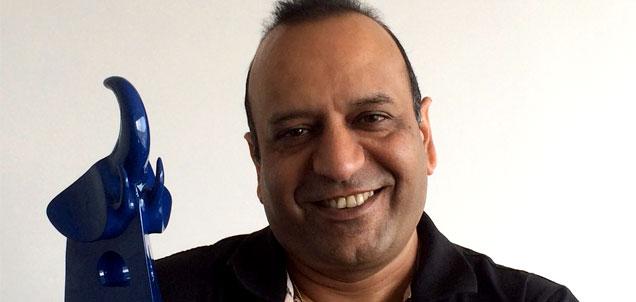
    Alert: this is a looooong, loooooong interview. But after reading what Rajesh Kejriwal,  founder and CEO, Kyoorius says about his advertising awards show scheduled to happen on Thursday, June 12, you’ll be convinced that there is much method to his passion for communication. A disclosure: MxMIndia is a media partner of the Kyoorius Awards,but that didn’t prevent us from asking some ticklish questions 🙂


    This should’ve possibly been our last question. But, tell me, if I am from the advertising business, why should I come for the Kyoorius Awards night on June 12?

    We’re aiming it to be the biggest celebration of creativity in India ever. It’s an area where you’ll see a lot of interaction between industry people, meet-and-greet and with clients also. What we’re curating is a very entertaining fun-filled evening. Not entertainment, but entertaining.


    I wouldn’t have asked you to compare yourself with any other award function but the fact that you said “biggest ever celebration of creativity” implies you saying that your awards night will be better than the others…

    I’m not saying that I’m going to be better than the others. My aim is to make sure that I’m good. How others project themselves is a different story but you’ve to understand the difference. Kyoorius is one single awards night. The others have a much bigger conference plus multiple awards nights. There are different logistics that come into play in both. Both have their own space. For me, the focus is only the awards.


    Over the last few months, there have been many comparisons between Kyoorius and the Abby. People have been talking about the judging procedure, who’s participating in Abby and at your event, etc etc. What’s your view? How would you compare the two? Since you were there at Goafest and witnessed the Abby awards and you know what you’re going be offering, tell us how Kyoorius will be different.

    First, I don’t think we should compare the two. In India I think there’s ample scope for two awards to co-exist as long as they are positioned differently. And my own personal perspective is that the Abby is a popular awards show and we’re more in the mould of a critic’s awards.


    The judging criteria, the trophy criteria are all very different. At Abby, there’s a Gold, Bronze, Silver. For every entry, you typically aim to get one Gold, one Silver, One Bronze. Three awards. In our case it’s different. We’re celebrating the Best of the Best work which means we give a trophy to everybody who’s done justice to a particular piece of work. This is the criteria that we’ve set at very high threshold levels. There are categories in which there are about 8 to 9 winners in our awards which you’ll see on June 12t. There are categories in which there are no winners. So there’s no demarcation that you have to award a maximum of three. And that I think is critical because at some point in time if you have 9 or 10 great pieces of work, how do you judge which one should get a gold, which one silver and which one a bronze? The jury decides. It’s an experienced jury. Every great piece of work should be rewarded, not just three great pieces of work within the list of great works.


    Tell us more about your judging process. You have some people in your jury who were also there at the Abby jury. And there were international jury members who had the Indian jury helping them out with context.

    Personally, having an Indian jury isn’t enough because you must celebrate work from India that is of global standards. Which is not to say that an Indian jury can’t really think of global standards, but what I mean to say it must touch a chord with international folks too.


    You’re talking about creative work. If you see a work, especially in print and outdoor, there’s no cultural difference. The piece of work is either really good, it catches the attention of everybody, internationally and locally and we’d like to award those who strike a chord internationally as well. It must be for all audiences. Any piece of advertising must be made for all audiences.


    I was speaking to a digital jury member and he mentioned that the focus at Kyoorius wasn’t as much on digital techniques but more on the idea behind the ad.

    One of the criterion which we feel very strongly about is that it must be an original idea and that it must have relevance to context. That forms a crucial part of our criterion. And juries were asked to debate on that and then vote. This also means that we must have an Indian jury to explain the concept to an international jury.


    So before the award happens in Thursday, do the jury members know who’s won?

    No. Other than three people in the world, nobody knows.


    And who are these 3?

    Two from D&AD, one from Kyoorius. Officially. As we go along and we make the films for announcement, obviously the production house gets to know.


    So leaks possible?

    There are NDAs. No leaks possible.


    Given the process of the judging, is there reason to be happier winning a Kyoorius award than any other?

    I’m not sure whether you should feel happy about winning at Kyoorius against something else because it’s not one against the other. I think the key factor of winning at Kyoorius means our judging standards are very high…


    …so how many Elephants?

    I know the figure; I won’t reveal it to you (laughs). We received 988 entries, I don’t think more than 4 or 5% will turn out to be eventual winners of the Blue Elephant or the Black Elephant trophy, put together. To answer your earlier question, our standards are very high. You really must’ve done a great piece of work to won an award. That I think is rewarding enough to understand that you’re one amongst those that have done a really great piece of work.


    That’s easy math. So 50-odd Elephants?

    Roughly.


    And how many Black elephants?

    Ah! Not answering that. I’ve personally signed an NDA with D&AD so I’m not allowed to do that.


    One of the jury members said that approximately 20% of the entries of the winners here could be winners at international forums..

    We actually spoke to the international jury members on this fact and some of them have been at juries at D&AD, Cannes, One Show etc and most of them said that it’s sad India doesn’t put in so many entries at D&AD. There were a lot of entries here which could’ve won a D&AD award.


    A thousand-odd entries were sent for the Cannes Lions. Do you think you should’ve got more entries?

    I think so too but then you’ve got to realize that Cannes has been there for such a long time and this is the first year for us. A thousand-odd entries is a very respectable figure we’ve got and a very encouraging figure. That means the industry did believe in us. Now the second and more important part is to justify that belief to make it bigger next year.


    I don’t won’t try to draw you into a controversy on this, but did you ever feel that there were agencies divided between you and Abby? Especially since Abby was less than a month before yours?

    I do know some agencies which were not divided with us, they were with us. A lot of the other agencies were divided because of the budget constraints. I don’t think it was whether we should go here or there. It was primarily because of the budget. The timing was bad because both ended up happening at the same time and even Cannes is at the same time. So there was this two-week period when the agencies had to plan for all three awards. That became a little bit of a constraint for Goafest and for us too.


    Do you think next year you’ll sit across the table with the Goafest committee and possibly decide when each one will be?

    Well, we factored in the Goafest schedule this year too. I purposely kept my awards two months after Goafest. I planned our Call for Entry on the day the Abby judging starts usually. But were delayed and everything went haywire. Clearly, it makes no sense for two national award shows to be happening at the same time. We’re not in competition with each other. Both of us should aim for the betterment of the industry.


    Assuming Goafest happens next year in March-end or early April, when will you schedule the Kyoorius Ad Awards?

    I’m not sure but we’ll have a gap of at least a month between the two. I definitely don’t want to clash our Call for Entries or our jury sessions or our awards night. All of them should happen at least with a minimum one-month gap.


    Do you feel you were at a disadvantage given that the Abby is organized by the industry and there are many heads at work as against yours which you’re doing individually?

    I think the fact that many heads has both advantages and disadvantages. Sometimes being the sole deciding person is much more helpful. As an organization, they can’t have one person deciding everything. It’s a committee that decides. But having a lot of people who’re busy in their own businesses also has constraints. They are busy people. They have their own businesses to run, they’re doing honorary jobs. While it’s great that they take out time, there’s also a constraint. I think what works best for us is that while I could call on you for advice, I could call on somebody else to say hey, what do you think about this? I have a similar number of people as advisors but I’m the only decision-maker. So I can move more quickly, I can execute more quickly. They may have 10 people. All 10 of them must agree on something. Otherwise it’s a battle internally. I also may have 10 people. But I don’t have to battle against anyone. I just casually ask people, get their opinion, formulate a plan and execute it.


    I was speaking to a senior industryperson at Goafest who had a comment on the D&AD process. He wondered 6 or 8 jury members can do justice to 600 or 700 entries? In terms of time spent, will they be able to do justice to all entries and categories?

    It depends on the time. They were there for 3 full days and we were working from 8 in the morning to almost 8 in the evening. So when you look at that, there was plenty of time for them to do justice to all of them. I don’t think it makes sense to have 70 or 80 jury members for 1000 entries. There are 7 jury members, 9 different categories. When you cut across all of them, each jury member is judging 70 to 80 members in each category. That’s not relatively a large number. You’re not talking about 1000 films which could be very tiring to watch 1000 films and judge  for 7 people. We’re talking about 7 different categories and 34 sub-categories. If you divide the total number of categories, you have 30 or 40 or maximum 50 per category. So every jury member is just concentrating at one time on anywhere between 20 to 50 entries. That’s not difficult. The point here is if you curate it properly, you never have a problem.


    Are you happy with the way your relationship with D&AD has moved?

    Very happy. They’ve been great partners. They’ve supported us totally. Both of us are non-profit so we have no ulterior or commercial motive to do things differently or be non-credible. Whether we get 1000 or 5000 entries it doesn’t matter. The revenue matters because the surplus goes back into the industry. We’ll never lower our standards. We’re not commercial. We have no political or commercial agenda.


    Then why are you doing it? You aren’t an industry body. You’re not any advertising or creative association…

    Neither is D&AD.


    So why is Kyoorious doing the awards? If you’re not for profit, why do it?

    We’re not doing awards for the sake of awards itself. We’re doing it because we think there’s a genuine need to have a different, very credible, transparent show of very high standards. I don’t think there’s any association or any body or any individual company doing anything to stimulate the young people in the Indian industry. And that’s our goal: stimulating the entire creative industry? How can we get youngsters to be more inspired, more innovative, think differently? To do that we’ll be doing a lot of master classes, workshops etcetera..


    I appreciate your commitment to the quality and standards. Am just trying to figure what’s motivating you to be involved in a not-for-profit venture?

    All of Kyoorius is born out of a passion of a not-for-profit venture for the industry. We did design because design had nothing going for them and it just branched out into advertising because there’s a gap there that can also help us help the advertising professionals.


    That’s one helluva effort for passion!

    All the hair on my head is lost because of the passion. Not because of that business (laughs).


    But if you’d spent the same amount of passion on your business, you’ve possibly made a lot more money.

    If my brother was present here, he’d tell me, this is what I keep telling you. It’s a constant struggle. When we started off Kyoorious as a not-for-profit division, the whole idea was we’ll do a few meaningful initiatives to fuel a design movement in India, to fuel a creative movement in India to stimulate the industry. I didn’t anticipate this will become so big. But you could see the hunger in the audience for such type of content. And then it would’ve been very mean not to make it bigger for the people who are benefitting from it.


    But beyond a point, an award show like this is not really fuelling your bread-and-butter business of paper, right?

    Beyond a point, no.


    Is there a positive rub-off?

    There’s a positive rub-off because you’ve changed your impression from being a paper vendor to being a friend of the industry. You know people more intimately. There’s a certain amount of loyalty that comes across. But at the end of the day, it’s still a commercial business. So beyond a point as you said, it doesn’t make sense. But we’ve crossed that point now and there’s no looking back.


    I’d asked you this question last year around the time of the design awards and I want to ask it again. Why is it called Kyoorious Awards and why not the D&AD awards?

    One reason is that it’s an Indian initiative. It can’t be called D&AD awards. D&AD already has global awards. D&AD is now looking at partnerships like the one with  Kyoorious in Brazil and a few other countries. You can’t really have five D&AD awards happening everywhere. So, obviously the local name must be attached to it. The second point you could make is why isn’t it called Kyoorious D&AD awards? The reason is that there is a memorandum, an articles of association at D&AD which was formed a long time back. This didn’t allow D&AD to do certain things. They may change in future..


    We do have an EFFIE-India as well.

    All of those are American organizations which are more commercially-led. So they don’t mind. D&AD is actually an educational charity formed for the betterment of the UK creative industry. While they became global awards but it was meant for the betterment of the UK. Now they’re branching out to be a global institution. Ours is the first partnership they’ve had in 50 years. They do say it’s very difficult to find a partner like Kyoorious. They may not have similar partners everywhere.


    You mentioned earlier that it will be an entertaining evening but not an entertainment evening. Tell us more about the event. Will you have a stand-up comedian?!

    Well, everything that you do in life as an awards company or as a conference company has to be curated keeping in mind as to what serves the best interests of the audience there. Now there are different reasons why people come here. One of the most important reasons why people should come to such awards or conferences is networking. You meet industry people, you talk to them, you enjoy, you feel proud that you’re part of this industry. That’s necessary. You have to leave time for that. If I have to watch a singer or if I watch a stand-up act, I can go and watch that separately. That’s not the reason I’m there. I’m there to meet my people, to be a part of the industry. I need to know who’s winning or what I’m winning, cheer and celebrate the winners and have a good time and leave.


    I thought people in advertising want a good drink. That was the essential part.

    That’s essential but that’s part of the curation of the whole thing. It’s attention to detail. What kind of food they like? Do they like drinks through the evening or do you stop the drinks when the show starts? It’s paying attention to these small details.


    The all-important question:  Are drinks going to be served when the awards are on?

    Yes, in a very unique way. Different from the other award shows.


    Tell us more… who’s performing? Who’s the Chief Guest? Emcee?

    Well, we researched a fair bit on what people like and don’t like in award shows. I think one of the key factors is that once you start the awards, you need to just start and finish asap. People are anxious to know who’s won. There’s the anticipation. You shouldn’t break it by having anything in the middle. So we don’t have any break. We start and finish the award show in one go. The second is the small things I spoke about. You can’t stop the drinks and expect the people to be locked up in a room cheering for three hours.


    One last question: Now that the Kyoorious Awards are set to happen on on Thursday, do you have more enemies than friends in the advertising industry?

    I don’t I have made enemies. I’m very grateful and happy that the industry has embraced the fact that there’s space for two awards and there’s no reason one should exist and another shouldn’t. Budgetary constraints may mean both of us won’t get as many entries as we’d wished for. Goafest might still get more because it’s an industry body and it’s a body that the industry should support. But I think there’s ample scope for both and we haven’t had made any enemies so far. I haven’t made any enemies. We’re all all great friends…