Category: ADVERTISING

  • Anil Thakraney: AirAsia: Will shake up Indian skies

    By Anil Thakraney


    AirAsia’s decision to fly into Indian skies is great news, both, for the newly formed venture that will run the desi operations, and for the Indian flyers. AirAsia is purely a low-cost carrier, that’s the market they understand, that’s their expertise. And the Indian market has been crying out for another low-cost airline so that the ticket pricing gets more realistic. So that train travellers can start taking air travel a little more seriously. For example, if last-minute travel from Mumbai to Bangalore costs me Rs 8,000, we certainly aren’t talking low cost out here. In any case, competition is always good, and with Kingfisher as good as dead, there is an opportunity for a new player.


    AirAsia has tied up with the Tatas, which is also good news. This means the Tata Group will return to the airline business after decades, after their exit from what is now called Air India. The group will want to ensure the project shines, their name is on the line. And Tony Fernandes of AirAsia is a kickass airline man. He inherited a bleeding airline in the year 2001, and turned it around within a year. This isn’t a liquor baron who’s decided to suddenly fly, Fernandes is a hardcore airline man. Which is why this team gives me huge hope. And you do need a power team like this to deal with all the problems that operating in India comes with, mainly high fuel costs and crazy taxes.


    I believe they will initially fly in the smaller cities and towns, but am guessing that strategy is to test the Indian waters (or skies, in this case), and am sure within a year AirAsia will connect the metro towns, that’s where the traffic lies. If I wish to fly Mumbai to Delhi, and have taken that decision three days earlier, and if the ticket price is about three thousand rupees, we have a sure winner here.


    Net net: A great team, perfect timing, correct product offering and a desperate need in the marketplace. This is one venture that can’t possibly go wrong. And sadly, Dr Mallya will have to grab a Kingfisher beer and watch AirAsia’s aircraft take to the skies. And ponder over what might have been. Alas!


    ***


    PS: Meanwhile, here’s what’s happening with the Indian carriers. With too much free time on hand, and being stuck with ‘aunty’ air hostesses, Air India pilots are looking for fun elsewhere. This dude decided to write an obscene rap song and also star in it. Of course, the video’s gone viral, of course, the pilot’s in trouble, but who cares? We, the janata, are funding all this nonsense. One more reason why an AirAsia is badly needed here. We want pilots, not rappers. Anyway, it’s a fun video, enjoy!


  • Anil Thakraney: Role Model Premji

    By Anil Thakraney


    I have always harboured a major grouse about our tagda industrialists: Which is that our kanjoos sethjis abhor the idea of sharing money. Hoarding wealth seems to be a part of the great Indian culture, and that habit really stinks in a third world nation like India where millions of people crave for a roti, where many have no torn blanket to cover themselves with in bitter cold. Whatever little charity is done is actually naam ke vaaste effort, aimed at gaining quick brownie points on Page 3.


    Which is why I was shell shocked when I read the news about Azim Premji’s decision to transfer millions of Wipro’s equity shares, worth Rs. 12,300 crore (wow!), to a trust. A trust that will do philanthropy, focusing mainly on primary education. In fact, Premji has already donated a percentage of his personal stock in Wipro for social work. So the latest donation is over and above that! This is simply sensational news, because, as I said, richie rich Indian people don’t like sharing, in fact they don’t seem to even care what the have-nots think. A good example is that extremely distasteful monstrosity called Antilla in South Bombay. As someone said, that’s the owner’s way of showing the finger to India’s starving masses.


    Anyway, all we can do is puff up our chests with pride knowing that we have a Premji in our midst. And the rest of the tycoons can hang their heads in shame. Apparently the government is working on a proposal to slap higher taxes on the super rich. I am quite doubtful if this will ever happen, the super rich enjoy too much clout in the corridors of power, they will be able to quickly demolish such a plan. But am hoping it happens. If our bada seths aren’t going to loosen their purse strings for charity work, then we have to find a way to force them to do it. It’s only fair.


    So, a big salaam to Azim Premji. One thing’s for sure: He must definitely sleep well at night, certainly better than a whole lot of other Indian industrialists. Sharing happiness can do that to one, others should try it out.


    ***


    PS: Ah! A kindly clock that gives us second chances, and freezes important moments in our lives. What would we not give to get our hands on such a marvel? I would freeze the moment when Shri Advani started out his Rath Yatra, and took the nation down the tube. I won’t allow the Rath to move an inch. Cool ad from Guinness. And wonderfully shot too.

    [youtube width=”400″ height=”220″]https://www.youtube.com/watch?v=ZAaNbzydxiA[/youtube]


  • Debrief: Greenply: The magic is back!

    By Anil Thakraney


    Another good ad from the makers of Greenply, those folks who usually back solid creative work. Yup, they did put out a really horrendous TVC in 2011, which featured a really crappy New Year party, but things are back on track. And the promise is still the same: Durability.


    The new ad features actor Arjun Rampal playing a magician. The trick is simple: He inserts old objects into a wooden box, and they come out looking brand new. The commercial traverses his journey from a village jaadugar to an internationally acclaimed magician. And covers his entire lifespan. As Rampal becomes old, there are aspersions cast on his credibility. So in his last show, he puts himself inside the box, and emerges as a young Rampal. Timeless, always new, just like Greenply.


    Nice. This ad will appeal to a wide spectrum of audiences, from a memsaab looking to renovate her fancy house to a village carpenter. Indeed, that seems to be objective… they want to make Greenply a mass brand. Also, signing up a Bollywood actor seems to be an effort in that direction, though I didn’t see the need for a celeb. It’s a strong idea, and would have worked regardless. Anyway, at least they roped in an unusual actor, Bachchan or SRK would have totally killed this ad.


    All said, good to see Greenply back in form. Hope to see even more sizzling work in the future, but minus a celeb.


    [youtube width=”400″ height=”220″]http://www.youtube.com/watch?v=4qhyysDxzko[/youtube]

    Rating: (On a scale of 1-5): 3.5 Entertaining and single-minded


  • Travel, good for people and business

    By A Correspondent


    Growing inspiration and increasing disposable income have given rise to outbound tourism of India. An estimated 50 million Indians are set to travel overseas by 2020. The widespread market of discerning Indian travellers has caught the attention of several international tourism boards, cruises, airlines and allied services. Therefore, to grab the interest of Indian travellers this summer, tourism companies are aggressively promoting their destination and services in India via outdoor advertising.


    Global Advertisers recently provided hoardings across Mumbai for the OOH campaigns of Australia.com, Star Cruises and Maldives Airlines. With the aim of creating awareness about their destinations, activities and itinerary, the team at Global Advertisers have pinned down large size billboards at specific locations in Mumbai. Heavy traffic junctions, corporate areas, western express highway (Mumbai), populated residential areas are some of the hot spots for these campaigns.


    Sanjeev Gupta, MD, Global Advertisers, said, “We are delighted to see the response from these campaigns for our clients. Promoting international destination in Indian requires deep understanding of Indian travellers and their mindset. Therefore, we painstakingly researched on the locations, size of the hoardings, angles and their positioning for our clients.”


  • Draftfcb Ulka creates new temptation for Jabong

    By A Correspondent


    Jabong.com, the fashion and lifestyle portal has unveiled their new multi-media campaign on 22nd February. Draftfcb Ulka, the communication and strategy partner conceptualized and executed the campaign. With the new campaign “Fashion Nikla Mann Fisla”, Jabong.com hopes to capture the attention of the fashion conscious shopper looking for a one-stop shop and an unparalleled shopping experience. The behavioral insight behind the campaign is that the shopaholic youth of today prioritize their shopping needs over all else.


    [youtube width=”400″ height=”220″]https://www.youtube.com/watch?v=l7y00QXefFs[/youtube]

    Research indicates that consumers generally shop on a whim and do not plan out their purchases. While in the act, they happily submit to the enchanting world of shopping, not letting after-effects play spoil sport. This insightful take on human behaviour will resonate with consumers and help in transforming Jabong.com from a cold and functional area of fashion into a human area.


    The campaign created by Draftfcb Ulka, shows situations where the protagonists prioritize their shopping needs over other important situations. This brilliantly elucidates the allegory of Jabong.com being a ‘temptation island’ of latest trends and styles, where the consumer will be selfish for his shopping needs and prioritize them over all else.


    Sanjay Sharma, Group Creative Director, Draftfcb Ulka, said, “The main objective of the new campaign is to differentiate Jabong.com in the crowded online shopping business while at the same time establishing its supremacy in the space of trends, styles and all things fashion. When it comes to the youth, there is a certain selfishness associated with shopping and we wanted to bring out this prioritization of shopping over all else in our campaign in a tongue-in-cheek manner which will resonate with our target audience.”


    Explaining how the campaign will differentiate Jabong.com from its competitors, Sridhar Iyer, Senior Vice President, Draftfcb Ulka, said, “I believe that this campaign will help develop a definitive identity to the brand. Jabong.com has taken a different path than its competition by focusing on the shopper and his shopaholic attitude towards shopping; while the competition communication remains around making the online shopping process easier.”


    Ranging from popular television channels, to print, outdoor and online, the 360-degree campaign endeavors to maximize this objective at various touch points.


    Credits:

    Client: Jabong.com

    Agency: Draftfcb Ulka

    National Creative Director: KS Chakravarthy (Chax)

    Group Creative Director: Sanjay Sharma

    Creative Team: Abhijeet Ray, Thupten Londhen, Indrani Vohra, Somil Bhatia

    Client Servicing: Sanjay Tandon, Sridhar Iyer, Akshatha Bhat, Varun Tanwar, Vidushi Goyal

    Planning: Sidharth Grover

    Films: Alpa Jobalia, Mazhar Khan

    Production house: Storytellers

    Director: Arun Gopalan


  • Grasshoppers tees off with Supertech project

    By A Correspondent


    Real estate developer Supertech Limited has appointed Delhi-based Grasshoppers India as the creative agency for its Golf Country Project. The agency bagged the account following a multi-agency pitch.


    Supertech Golf Country is an integrated township located along the Yamuna Expressway. Grasshoppers will be initially promoting Golf Village which comprises of the 1/2/3 BHK apartments of Golf Country.


    Supertech’s Brand Manager, Arun Tewari, said, “In partnership with Grasshoppers, we will be developing a strategic ATL & BTL route focusing heavily on print and outdoor with quality support from online promotions.” Grasshoppers’ Director Arjun Banerjee said, “This is an important account for us on two fronts. Firstly, we have partnered with a real estate brand like Supertech. Secondly, this account has come to us merely a couple of days after our Agency got the Pvt. Ltd. status, making it an extra special moment.”


  • Anil Thakraney: Oscar Disaster

    By Anil Thakraney


    First, let me vent my frustration with Star Movies. Their Oscar capsule, which was telecast from 8pm on Monday, ran for five long hours. The over-the-top Filmfare guys haven’t sunk this low. And that was mainly because of the zillion ad breaks. Now, I know the channel would want to maximize revenues on a blue chip show, and yet, surely there has to be a healthy balance between content and commerce. Surely there’s no gain in pissing people off. There has been talk of limiting advertising time on television programming, Star Movies has made me hope that becomes a reality.


    Having got that off my chest, let’s discuss the show itself. I have been faithfully watching the Oscars for donkey’s years, and I have to say this: This year’s event was most definitely the worst show put up by the Academy Awards organizers. It was intolerably dreary, very, very wannabe, they tried too hard to please, and ended up with a mighty egg on the face.


    Host Seth McFarlane’s ‘jokes’ (who the hell is this dude? Did they pick him up from an NYC street theatre group?) were sick and desperate. It was almost like he was begging, pleading with us to laugh. What I badly wanted was to swat his silly face. Hope never to meet this guy ever again on television.


    Most of the live performances were insipid (aside from Adele, who’s always good). I have often dissed item numbers at desi award fests, but after watching the Oscar sham, I am having second thoughts. Perhaps they should have invited Angelina Jolie to shake with ‘Sheila Ki Jawaani’. Yes, it was THAT boring.


    Lastly, and this isn’t the organisers’ fault… it’s in keeping with their poor run this year… even the award acceptance speeches were utterly disgusting. Only Daniel Day Lewis was witty, all others should have said ‘thanks’, and then vamoosed.


    Here’s the key problem, as I see it: The Oscar suits are trying too hard to connect with the younger audiences, and that’s why all those sick sexist jokes and the ‘We Saw Your Boobs’ sort of trash. This is exactly like the 58 year old Chairman of a large company, an otherwise prim and propah gentleman, arriving at an office party dressed in Bermuda shorts and floral shirt. So that younger colleagues can treat him as a friend, as one of them. Doesn’t work Sirji, it never has! Stay serious, dear Mr Oscar, keep the suit on. We like you thataways.


    ***


    PS: Haha. Very, very cute ad for Volkswagen Jetta, I love the idea. Which is that when you are facing death, your entire life flashes by you. Except that in this case the protagonist is a newly born baby, and this makes the TVC hilarious.

    [youtube width=”400″ height=”220″]http://www.youtube.com/watch?v=LcF5Y7WIRVM[/youtube]


  • Business with a mission for Unilever’s Keith Weed

    By Ravi Balakrishnan

     

    Keith Weed

    Chances are that even the better travelled among us haven’t put in a stop at Gunga, a village in the Berasia taluka, near Bhopal, Madhya Pradesh. It however figured in the itinerary of Keith Weed, chief marketing officer at Unilever on a recent trip to India. It’s a visit that has left Weed with a new appreciation for the resilience of the Indian consumers and the primacy of mobile phones in their lives.


    He says, “In the village I visited, there were incredibly low income consumers – eight people living on less than a dollar a day. But they had a mobile. As we went to the backroom to look at the stove, they used the mobile as a torch to show me the way. We have always been talking about how TV is mass coverage. But as you know, in rural India there are media dark areas that are not mobile dark.”


    Unilever’s new marketing strategy
     

    Brands For Life is being rolled out across the world. The pilot happened in India before Christmas last year and its subsequently travelled to Brazil and South Africa.


    The strategy stands on three pillars:

    1. Put People First: Looking at people through the lens of their lives, needs and challenges and not just as Weed puts it “a sort of head for a bottle of shampoo.”


    2. Building Brand Love: Making sure Unilever brands are not just about a product but an idea that people can buy into.


    3. Unlock The Magic: Getting the balance right between magic and logic, the art and science of marketing.


    However, a mobile phone doubling up as a torch is more footnote than main event in Weed’s visit. Among the principal reasons is a status check on one of his pet projects, launched with considerable fanfare at the Cannes Lions Festival in 2012. In a meeting a few hours before the launch at Cannes, Weed spoke excitedly of his intention to toss back a glass of water from Mumbai’s Powai lake on stage. The water would of course have been treated by one of Unilever’s Pureit purifiers. While those plans got scuppered, Waterworks, a collaboration between Unilever, non profit organisation PSI and Facebook, generated a fair amount of excitement on launch. It was seen as one of the first attempts by a large multinational to harness the power of social networking for societal good.


    Waterworks is a Facebook timeline application that allows users to make a daily contribution towards communities in dire need of potable water. Their donations will enable PSI’s onground staff, the Waterworkers to educate the most deprived people in rural India about the importance of clean water and distribute Unilever’s Pureit units. The payoff for the people who choose to help? The satisfaction of doing good. And perhaps an equally important motivation in an increasingly narcissistic and self obsessed age – photos of the families they helped will be posted to their Facebook profiles.


    Eight months down the line, Waterworks does not boast the impressive million plus numbers of other ‘brand’ pages on Facebook, with a modest 9,285 likes so far. Asked if this is as per his expectation, Mr Weed explains, “It’s still in beta testing. There are two ends we are working on. The Facebook engagement and making sure we deliver water into the hands of people who need it the most, in a cost effective way.”


    He admits there are lessons to be learned before the project scales up and that even its promotion on Facebook has been kept deliberately low key. With the initial target of 15,000 met, the tweaks are specifically in the area of getting the units to the most needy. A contemplative Mr Weed says, “It was incredibly moving. You see people in rural India, struggling with some of the basic things. It makes me more determined to sort out a scalable model.” However, his visit also fills him with confidence. Of the 600 houses, 220 have Pureit units.


    Mr Weed says, “Watching the Waterworker take a photo of the person who received the unit and uploading it on Facebook and to have that appear on the page of someone in Europe or the US: this is the future of the world. The use of mobile is going to transform our lives and marketing.” The Waterworks project ties in with one of Weed’s obsessions. Unilever has been working to a stated objective of doubling its business while halving its environmental footprint and increasing its social impact. The first of these Weed admits is a fairly basic ambition, one that’s probably shared by any good company. The second has a profound impact on marketing. Mr Weed says, “We could have put together a plan with targets we knew how to achieve. But I don’t think that would transform the business to the degree we are aspiring to.”


    An early success has been sourcing 100% of palm oil sustainably. Significant considering Unilever purchases 3% of the world’s total palm oil. It was a target that the company arrived at eight years ahead of schedule; now the goal has shifted to 100% traceable sustainable palm oil by 2020. Similarly 60% of the tomatoes used by Kissan in India and all the tea bags in Europe are now sourced sustainably. Unilever hopes this will be the case with all tea bags by 2015 and loose tea by 2020. Weed considers these the low hanging fruit and acknowledges there’s lot more to do.


    Given that these goals are likely to outlast the current management team, he is making sure it’s not tied down to “one manager in a seat at one time.” He says, “We have engaged across the breadth of our employee base. It’s virtually unstoppable and has ignited the imagination of our people.” In the first year, the plan was unveiled to 97,000 employees globally. And it’s part of the reason why Unilever is a draw for future recruits. Weed says enthusiastically, “For the generation that’s coming through, our declaration resonates in a different way than it does to anyone in this room. Let’s face it: my generation have stolen from the future of our children financially and environmentally. We now want to build a model where sustainability is not something that happens by chance but is built into the design.”


    Of course a couple of things help Weed meet his objectives. The first being the massive scale of Unilever’s operations and the budgets that power the machine. Even in these recessionary times, its advertising and promotions budget have seen an upswing. Last year it spent 6.5 billion up from 6.1 billion for 2011. The other is that the number of Unilever’s consumers who care about the environment – the company claims to serve 2 billion people a day – is on the rise.


    Individuals often feel overwhelmed and insignificant, considering the sheer scale of problems facing the world. But small actions from many people can make a change. Weed says, “One person drinking sustainably sourced tea makes no difference. But if you talk about a marketer who buys 15% of the world’s tea, we can have a profound impact on the planet. It certainly gets me out of bed in the morning.”


    A less exalted but no less important part of Mr Weed’s job is to ensure the sales and marketing machinery at Unilever hums along smoothly. A commercial for Axe created last year ran unchanged in 100 different markets, the sort of phenomenon that global marketing heads dream of, saving the costs of originating fresh ad content. However, according to Mr Weed, deliberately engineering commercials like that is not a priority: “When it happens, it is fantastic and a very efficient benefit. But a bigger priority is large global brands. 14 of our global brands are already over a billion euros. I will be even happier when we have more!”


    Interestingly enough, one of the pieces of communication he is happiest about is a new campaign for Axe that’s rolling out across the globe – India soon to be included. Built around Axe’s Apollo variant, is a TV commercial and more interesting a contest to put 22 people from across different countries in space. They will be chosen by a reality TV-esque competition that will play out online. “Leave a man, come back a hero,” Mr Weed says, “It’s got tremendous buzz around the world. We actually used Buzz himself to engage people,” referring to Edwin “Buzz” Aldrin, the second man on the moon. The big question is will they take the Geo-Cruiser? You know, the solar-powered flying machine used by the Captain’s Planeteers.


    Source:The Economic Times

    Copyright © 2013, Bennett, Coleman & Co. Ltd. All Rights Reserved

     

  • Debrief: Havells Fans: Stupid pun

    By Anil Thakraney


    Havells Fans’ advertising usually shines, but their new ad makes you squirm. No, they haven’t done anything safe, the ad still tries to stand on the legs of an offbeat idea, but on this occasion the idea sucks.


    The TVC is set inside a marriage registrar’s office. A just married couple has arrived to ‘regularize’ their shaadi. The clerk is noting down their details, and she assumes that the bride will now adopt her in-law’s family name. But the ‘forward thinking’ groom corrects the lady. He declares, quite proudly, that it is he who shall change the family name, and not his newly minted missus. As you begin to wonder where this is going, we are introduced to Havells Fans. The connect? It’s in the punch line: Hawa Badlegi.


    Now that’s a really desperate pun if there ever was one. It’s forced, it’s juvenile. I can imagine a trainee copywriter being put under pressure to come up with something funky, and he/she pulls a stunt with ‘winds of change’. The fact that this nonsense turns into an ad is a compliment to the ad agency’s selling abilities.


    Don’t get me wrong, I am all for crazy stuff. But the crazy must fit into the brand promise smoothly, else it’s a waste of time. And punning, to my mind, is usually the work of a lazy creative person. People, break the clutter by all means, but break it with an intelligent method.


    By the way, it’s an excellent ad for a marriage counsellor.

    Rating: (On a scale of 1-5): 0. Forced pun. Doesn’t work.


  • PTC Film Awards to see much fan fare, many sponsors

    By A Correspondent


    Rajiee M Shinde

    Friday, March 1, will see the PTC Punjabi Film Awards happening in front of packed crowds at the Multipurpose Sports Stadium at Sector 78 in Mohali, near capital Chandigarh.


    The contribution of Punjab and Punjabis to the film industry is well-known, but until a few years back, the number of Punjabi films reduced was less than a dozen a year, rues Rajiee M Shinde, Director & CEO of leading Punjabi entertainment and news broadcaster, PTC.  “That number grew to 24 in 2012,” she says hinting at the contribution of the awards to evangelize Punjabi-language films.


    The event, with Coca-Cola as lead sponsor, Samsung as co-presenter and a slew of around a dozen national and regional brands, will be deferred live. But the deferment, Ms Shinde, informs will be of just 30 minutes.


    The 2013 Awards show will see feature some top names from Hindi and Punjabi cinema.  Said Rabindra Narayan, President, PTC Punjabi, PTC News and PTC Chak De, said, “The PTC Network, with the largest reach in Punjab, will not only take the awards across India, but also across the world to USA, Canada and Australia. In UK, the awards will be recorded and telecast. Viewers will be able to watch the show, making this the single largest Punjabi commercial movies’ extravaganza worldwide.” And will PTC take these awards abroad, Ms Shinde said: “We would ultimately take this abroad, but I wouldn’t like to miss out on the ground connect that we have here.”

  • The soap that saves lives, and other marketing stories


    By Meghna Sharma


    The latest campaign by Lifebuoy shows a man walking on his hands from his house to the village temple as people follow him because his son turned five. ‘What’s so special about it?’ is the first thought which comes to mind, and this is echoed by the tourist who witnesses it at the end of the advertisement. The answer is the fact that two million children the world over still die before the age of five due to preventable infections like diarrhoea and pneumonia.


    The advertisement is nothing but taking forward the commitment of Unilever’s health soap, Lifebuoy, of teaching children healthy hand washing habits. The three-minute film seeks to inspire action from viewers to pledge support for Lifebuoy’s handwashing programmes on the ground.


    Saving Lives

    Samir Singh, Global Brand VP, Lifebuoy says, “Our goal is to change the handwashing behaviours of a billion people by 2015. We wanted to tell the world the Lifebuoy story in a deeply emotional way. Our brief was to translate the statistics into something real, personal and powerful. And through this film, that’s just what’s been done.”


    The campaign is created by Lowe Lintas. On the film, R Balki, Chairman and Chief Creative Officer of Lowe Lintas, comments, “A small act like washing hands with Lifebuoy can save a child’s life. This message needs to reach far and wide. So, we created this campaign that can open one’s mind to this amazing message. A campaign that moves people to the extent that they care to share it with others”.


    The campaign aims to share the brand’s purpose. And since, social media and technology play an important role in connecting like-minded people who are eager to do something to make this world a better place. The brand wants to tap into this new community of people to inspire them to spread this message of saving lives.


    “This is not just about an ad, but about creating an act. It’s an act that will make a real difference. An act that allows individuals, professionals and organizations to come together and collaborate around the common goal of eliminating child deaths due to diarrhoea and pneumonia. This film is the beginning of that journey and a clarion call to all to join this purpose,” adds HUL’s spokesperson.


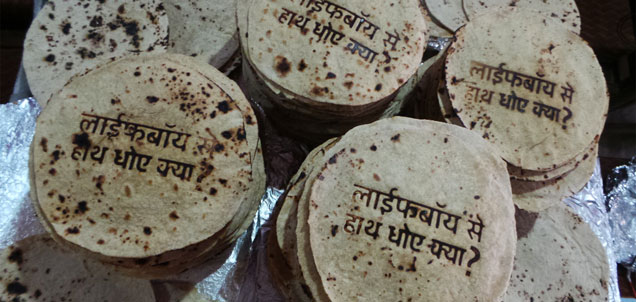
    Roti Alert!

    At the beginning of this year, the brand launched another unique campaign – Roti Reminder.


    The Maha Kumbh Mela which sees almost 100 million people descending upon the city of Allahabad turns into a temporary city in itself. And since the infrastructure available is often unable to service the sanitation and health needs of all attendees, infections tend to occur and spread far more easily through transmission of germs, which happens most commonly through infected hands. Hence, Lifebuoy hoped to aid the patrons and attendees by reminding them about the importance of washing hands and protecting oneself from germs. Lifebuoy not only spread the message at key junctures throughout the city through street hoardings and banners. But reminded people to wash their hands before having food through the food itself!


    Lifebuoy created a special heat stamp with the message, ‘Did you wash your hands with Lifebuoy?’ and then hired 100 promoters to stand in 100 kitchens spread across the Maha Kumbh Mela and imprint fresh rotis with the Lifebuoy message.


    Speaking about the genesis of the idea, Sudhir Sitapati, General Manager – Skin Cleansing, HUL says,” The idea came from the insight that hand washing with soap before eating can prevent transmission of many disease causing germs, but people often ignore or forget to do this simple act. A reminder at the right time can go a long way to ensure this habit is followed. This was the starting thought from which we developed a unique intervention – the Roti Reminder.”


    The activation was for a period of one month and started from February 1, 2013. Lifebuoy also provided free soap to attendees at the Kumbh Mela.


    The idea helped Lifebuoy reach out to a massive audience, at a fraction of the cost.


    The on-going commitment

    Over the years Hindustan Unilever has targeted its memorable campaigns towards achieving its aim, and Lifebuoy’s social mission has been to bring safety, security and health to people through the active promotion of hand washing with soap.


    In 2002, Lifebuoy started a campaign known as Lifebuoy Swasthya Chetna, to promote good health practices by actively encouraging people to inculcate good hygiene practices, such as washing hands with soap at least five times a day. From 2002 to 2010, the project touched more than 120 million Indians.


    Lifebuoy reached out to nearly 30 million people in rural India over 2010 and 2011 through a multi-brand rural outreach programme called Khushiyon Ki Doli (KKD) or “Caravan of happiness”.


    Over the past 10 years, Lifebuoy has taken its hand washing behaviour change programmes to millions of people across the world, and now through its latest campaign it is aiming to change the hand washing behaviour of a whole village in central India – Thesgora, a village with one of the highest rates of diarrhoea. The initiative supports Unilever’s goal to deliver on one of its commitment under its Sustainable Living Plan – to help more than one billion people take action to improve their health and well-being.


    By 2015, Lifebuoy aims to change the hygiene behaviour of 1 billion people across Asia, Africa and Latin America by promoting the benefits of hand washing with soap at key times.


  • Sonal Dabral to speak at Dubai Lynx

    By A Correspondent


    Sonal Dabral
    Sonal Dabral

    Sonal Dabral, Chairman & CCO, DDB Mudra Group, has been invited to speak at the Dubai Lynx 2013 – International Festival of Creativity. Mr Dabral will be taking the audience through the rich artistic heritage of India and how it has the power to influence brands and communications, not just in India, but also on the international stage.


    Terry Savage, Chairman, Cannes Lions International Festival of Creativity, said, “At the heart of Lions Festivals, is creativity and Dubai Lynx as one of our events has the same ethos. We have speaking at the event each year great creative leaders who show the way forward in terms of thought leadership and providing inspiration to our delegates. Sonal Dabral fits that role perfectly and we are delighted to have him speaking at Dubai Lynx 2013.”


    The Dubai Lynx International Festival of Creativity is the Middle East and North Africa region’s (MENA) annual must-attend event for the advertising and communications industry to learn, be inspired, network and celebrate. The Dubai Lynx Awards honour the region’s best work in advertising. The 2013 Festival takes place from 10 to 13 March at the Madinat Jumeirah, Dubai.


    The Dubai Lynx is part of the Lions Festivals stable, which includes Cannes Lions, Spikes Asia, Eurobest and the Asia Effectiveness Awards. The Festival and Awards are produced in partnership with Motivate Publishing, with the support of Dubai Media City (DMC) and in association with the UAE Chapter of the International Advertising Association (IAA).