Category: Ad Agencies

  • He came, he met, he made no announcements


    By A Correspondent


    I have had no meetings with Sam Balsara,” said Maurice Levy, Chairman and Chief Executive Officer, Publicis Groupe, quashing all speculation of his media services conglomerate acquiring Madison World, Balsara’s homegrown and successful advertising behemoth. “I have a lot of regard for the work he has done,” Mr Levy said on Mr Balsara.


    Mr Levy is in India after a gap of two years, a period in which various entities of his group have made many acquisitions. While confirming that he is looking at more investments in the market by way of buying existing entities, he did not reveal any specifics. “India is a strategic market for us. We want to invest here and investing,” he said.


    In India, the Publicis group has varied interests in creative and media buying and planning agencies, public relations and a variety of marketing services interests.


    The France-based transnational group had announced its merger with the US-based conglomerate Omnicom. The merger has been cleared by the Competition Commission of India and is now awaiting similar clearances from the European Union, China and Columbia, Mr Levy said. He indicated that the merger should happen around the second quarter of 2014 and made light of the comments of arch rival and WPP CEO Sir Martin Sorrell on the merger as “part of his job”.


    When asked whether the Publicis group was on course of its target of doubling revenues by end-2014, Mr Levy said that post the merger with Omnicom, it will be more than a doubling.


    Mr Lévy joined Publicis in 1971 in charge of IT and In 1975 was appointed President of Publicis Conseil and took responsibility for the international development of the group from the early 1980s, piloting a series of important acquisitions as well as the Groupe’s pioneering strategic focus on digital. Mr Lévy has been Chairman and CEO of the Publicis Groupe since 1987.


    Amazed by the time Sir Sorrell is spending discussing the Publicis-Omnicom merger: Maurice Levy

    The Pubicis Groupe Chairman and CEO on how his group is doing in India, its investments in digital, the merger with Omnicom and WPP chief Sir Martin Sorrell


    By Amit Bapna & Pritha Mitra Dasgupta


    French advertising major Publicis Groupe plans to make some major investments in India, including acquisitions, right after its merger with Omnicom to create the world’s largest communication conglomerate is complete mid next year, its chief executive Maurice Levy said. Currently in India to review the operations of Publicis entities, Levy said that India is not growing fast enough due to a host of reasons, including political and infrastructural. Edited excerpts of an interview:


    Publicis Groups started investing heavily in digital much before many others. Yet in India it has had a relatively slow growth story.

    The Indian market is not a digital market. If we look at the Publicis Groupe as a whole, our journey so far has been excellent. I am not saying we cannot do better. Our position in this market is hampered by the fact that we have not yet offered the full range of services and we still need to make more investments. We need to strengthen some of our agencies. We have to develop some integrated services and we need to continue to invest in digital and mobility. And we are doing this irrespective of the merger. So I think the merger and the fusion will be complete by the second quarter (of 2014) and right after that we will make some investments in India – both organic and some acquisitions – to complete the frame.


    You have said in an interview that “the other emerging markets, with the exception of India, seem to be in very good health. India has a specific problem”. What is that problem?

    It has a specific problem due to the fact that it is not growing fast enough. This has to do with some political issues. It has also to do with the fact that India does not have the infrastructure that this market deserves. India also needs to open the market to some of the sectors like banking and insurance. And we expect that India will take some measures, which will be extremely positive for the growth of India.


    When can we see the benefits accruing out of POG (Publicis Omnicom Groupe)?

    We have got most of the authorisation and the ones that are still awaited are for Columbia, China and European Union, which should be coming soon. Then there are the stockmarket regulators in the Netherlands and France. We believe we will be done with all the authorisations on the merger by the second quarter. Then we will call the AGM, the stockholders vote and we will come to a final agreement and complete it by latest June 2014, that is my estimate. Only after the merger happens will we be able to sit down and decide what we are going to do in specific markets, how we can have better presence, how we can help clients better, etc. The merger is seen from two standpoints: one at the corporate level, for which we have almost clear idea of what we are going to do, and the second at what we call the work streams: we today have 70 work streams working on specific issues.


    Sir Martin Sorrell (WPP CEO) has gone on record saying the POG structure is “clunky” and that “strategically and structurally it does not make any sense at all” because both companies have been going in opposite directions. How do you react to these critiques?

    I am amazed by the time Sir Sorrell is spending discussing the Publicis-Omnicom merger. If it is so clunky and terrible and does not make sense, he should rejoice because we are going to make a big mistake, which will be good for him. I don’t understand his spending 2-3 hours a day just speaking about Publicis, and during that time we take care of his clients.


    There have been rumours that you are visiting the Law & Kenneth office while in Mumbai and that Saatchi India and Law & Kenneth might come together.

    I can neither confirm nor deny anything. I cannot say anything about acquisitions. Praveen Kenneth is somebody I know since many years; he is an ex-colleague at Publicis and I’m very pleased to see the success he has enjoyed. He had asked me to invest in Law & Kenneth even in the early days.


    What are your plans for the recently announced Project Blue? Do you plan to bring it to India as well?

    Yes, we have plans for it. But we expect to make it work first in Europe and in the US also, to make sure it’s working well, see the results in two years’ time and then decide (how we’ll take it to other markets). It just shows that besides the merger and acquisitions, we are also investing in start-ups. And besides the media business, Project Blue will also have other services.


    Can we specifically talk about the performance of Starcom MediaVest and ZenithOptimedia in India?

    There are some aspects that went extremely well and on some we had some issues. We lost some accounts and it is part of life. There is a bump and it is important to acknowledge that. What is interesting in our life and in advertising is that you can never rest. Simply because we are in people’s business, client relationship can be shaky, people can leave, which can disturb the course of action of an agency. In the media business, in a market where size matters, we don’t have the size that we should have. That’s clear and we have to build the size. We are building it and it will take time.


    Source:The Economic Times

    Copyright © 2013, Bennett, Coleman & Co. Ltd. All Rights Reserved

    Licensed to republish


  • DDB Mudra revitalises Livon Hair Gain’s hair promise

    By A Correspondent


    A new campaign from Livon Hair Gain Tonic created by DDB Mudra attempts to work at an emotional level with men. The endeavour of the campaign is to help men overcome the cynicism and establish Livon Hair Gain as a credible solution to address the problem. The TVC “Kyun yeh zindagi” shows a young man facing hair loss holding back from enjoying and participating in everyday situations.


    According to a Marico spokesperson, the TVC “engages the audience with a realistic portrayal of moments in their life. Combined with activations in the digital space and on-ground in the chemist channel, we are looking at growing this recently acquired brand with the new campaign”.


    Sonal Dabral
    Sonal Dabral

    Commenting on the campaign, Sonal Dabral, Chairman & Chief Creative Officer, DDB Mudra Group, said, “Hair loss is an extremely sensitive issue. It was crucial therefore to communicate our offering with honesty and a high degree of empathy. We are happy that we have been able to create a campaign that is insightful, authentic and most importantly speaks straight to the heart of our target audience.”


  • Why our brands do not connect…


    By Graham Jones

    As the design community of India emerges from its restrained incubation into the next hothouse of creativity, the designers of brands are unprepared for the pace of change with a lack of depth, originality and imagination. Designers panic and borrow from traditional Indian elements. Colours. Patterns. Whatever. Paying scant regard to the cultures that created them. Doomed to fail as the culture of the past runs counter to the new aspirations of a dynamic young India. Leaving their audience just as confused. An audience that is mostly young, who speak 50 different languages, who are from the most ethnically diverse cultures and religions on the planet and who inhabit some of the most poorest areas to the most opulent surroundings, living on top of each other.


    In this crazy country, why does everything look the same? We’ve grown up with the same faces. Adorning our TV screens and billboards. The singular image of celebrity endorsement. Only in India can you get away with the same star selling everything from toothpaste to food to furniture. Reinforcing their status of being the world’s biggest stars without denting their reputation. Yet with all this unquestionable talent available to Bollywood maybe their marketing promiscuity is causing them to fail to inform and lead a new culture, instead leaving a creative vacuum. It is Jay Z you hear on the mobiles of slum kids. The simple truth is he has more in common with them.


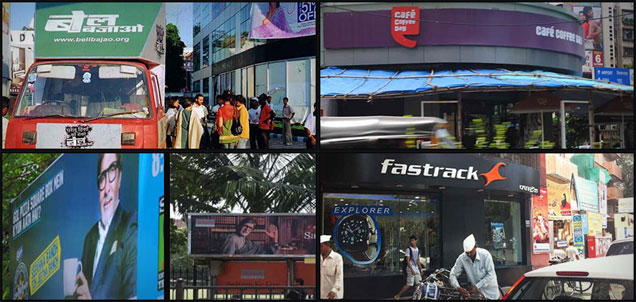
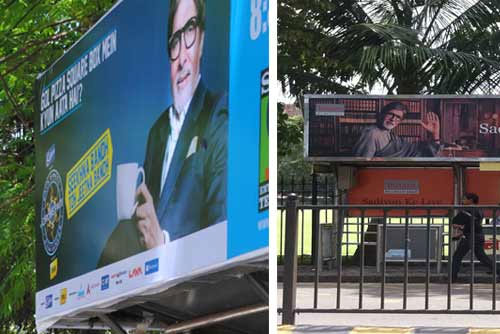
    Is "Big B" promoting his latest TV series or the bag of cement named after him? Every bus stop, same everything, different product. Celebrity dominated advertising has stalled the natural evolution of the design movement in the country. This is lazy advertising


    We ask ourselves how else can we create an image that appeals to everyone, everywhere? A single idea that will appeal to 1.1 billion people. Global brands are created with a single belief or idea at their core. Indian brands and their marketeers, being heavily influenced by their western counterparts, have become obsessed with this singular philosophy. We believe in this because that’s what global brands and branding dictates. It should be expected. The younger generations have grown up with the singular creative direction of brands influenced by western cultures. And these western brands were influenced by the iconic decades of fashion and pop culture. Black and white imagery simply misunderstood by an Indian audience by the lack of knowledge of 60s cool. But these brands sell lifestyles. And although unobtainable to most, young India is very seduced by these ideas of freedom and expression. So we continue to talk with a single voice to everyone, sometimes marrying Hindi and English, worrying that our headlines don’t translate when we should be focusing on the very idea translating. The Indian creative industry continues to pay homage to the west, while a rich and textural culture lies on it’s very doorstep. With an audience that’s crying out for new. All for the fame of being world class.


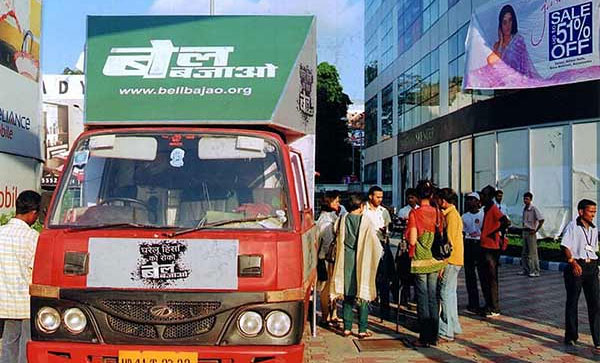
    Successful campaigns such as Breakthrough's Bell Bajao show the power of coupling local creativity with local context


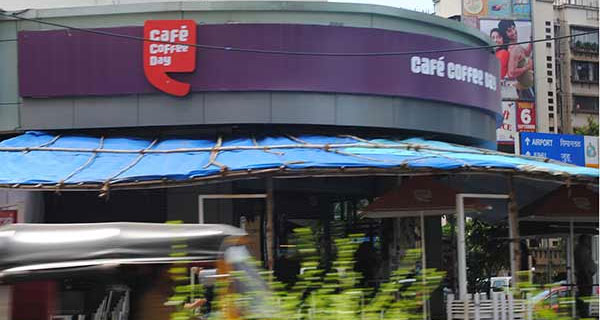
    While Café Coffee Day has brought humour as well as coffee to India, it also stands proud on the world stage. But there is a new world class about to be born. And it will be remixed by the Indian people. McDonald’s has abandoned it’s singular pursuit and has creatively remixed it’s business model to suit it’s audiences’ taste. Flipkart has remixed a successful global business idea to suit the Indian market. While Micromax the idea of branding by crowd sourcing it’s identity.


    The smiling icons at Café Coffee Day break the old rules. Made for young India, it's ready to take on Starbucks


    Recently brands have shown they’re ready to change. But they’re only doing what India has always done. India has developed by remixing it cultures and traditions. India has taken the ideas of the west and remixed them to be relevant to the masses. Successful brands will be the ones that constantly remix to India’s people’s needs.


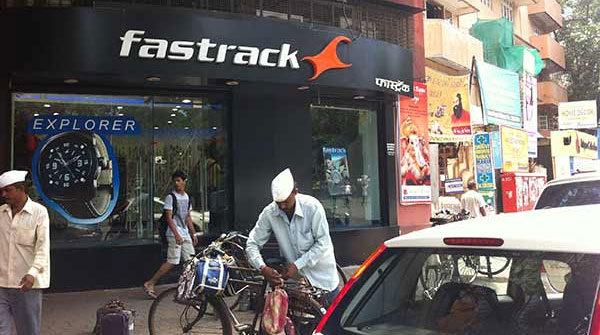
    Homegrown brands such as fastrack are symbols of the process of remixing in action


    With 4G about to role out across the country, we will not only see entrepreneurs of start ups, engineers, bloggers and coders remixing ideas to create new categories of businesses and ultimately brands, but we will also see our audiences turning from consumers to producers. Creating a culture of everything. A culture of chaos. We need to embrace this chaos, be prepared to make mistakes and be relentlessly optimistic. But above all else, we need to abandon the philosophy of a single idea.


    Graham Jones is a creative director at venturethree. He is currently leading the 4G brand project for Reliance. Republished with permission from Kyoorius magazine, where this article was first published.  Kyoorius is a bi-monthly print magazine on visual communications.  For buying a single copy (or any of the previous issues), write to sales@kyoorius.com. You can order the issue from Tadpole, get the digital copy from Magzter and also buy it from bookstores.


  • iRetain. No call drop as Motivator keeps iPhone mandate, adds iPad and Mac to kitty

    By A Correspondent


    GroupM agency Motivator has retained the coveted Apple account after a month-long pitch. The other contenders are said to be ZenithOptimedia and Madison. The Apple account is with Ingram Micro and Redington, Apple’s exclusive distributors in India.


    Apple India is rumoured to spend Rs 150 crore on spends on print, digital, radio, activation and OOH with iPhone leading the contribution with more than 70% of the spends. This year, the emphasis is going to be on powering iPhone sales through innovative use of digital solutions. Print’s tactical use will be balanced by creative use of media to keep the brand in the desirable space, we were told.


  • Independent or align with a global network?


    While the advertising industry has been abuzz with rumours on Law & Kenneth selling a majority stake to Publicis Groupe since last year, there are mixed sentiments on yet another independent agency (that is not a part of an global media services network) succumbing to the pressures. We asked two agency heads – Sajan Raj Kurup who continues to be an independent and says he will never sell stake to a international superpower and Santosh Padhi whose Taproot aligned with Dentsu two years back for their views.


    Sajan Raj Kurup, Founder & Creative Chairman, Creativeland Asia


    While each agency will have its own reasons, how do you react to one more independent agency getting aligned with a big network?
    Every agency has its reasons to sell. To each his own. As long as they are happy who are we to judge.


    Is this something that you at Creativeland are also looking at now or eventually?

    If I wanted to start a place to one day sell it as an advertising agency and cash out, I would called it adland. Fortunately or unfortunately, I am not adland. I am Creativeland. And I have a plan 🙂


    In fact with each passing day I am lesser and lesser of an advertising agency. And I still enjoy what I am doing. There is a good chance I may fail and what an epic failure it would be. There is also a good chance I may succeed. But I am not thinking about it.


    Some of the reasons why L&K decided to sell stake was to increase scale, get better funded and increase its set of clients. Is that something that’s a huge pull as the agency size grows?

    Obviously scaling up and investments are a part of any business. Mine is no exception. I am not averse to conversation for strategic investments. But I am reluctant to talk with advertising networks. They are myopic. They don’t invest. They buy to kill and devour. Not to grow. That is not my game.


    Santosh Padhi, Co-founder and Chief Creative Officer, Taproot India


    Santosh Padhi

    While each agency will have its own reasons, how do you react to one more independent agency getting aligned with a big network?

    Different people have different needs and priorities, but in most cases coming together means strengthening your strength. Since I ran the recent Standard Chartered Mumbai Marathon, let me put the same analogy here :). On a long run you can decide to maintain a speed and decide to run the same speed throughout or you decide to speed up but run out of energy and momentum when you are pushing beyond your limit, where you need the right energy drink to add to your momentum and achieve the goals faster, without getting tired. It’s completely up to an individual or the agency to decide how fast one wants to finish the game.


    Some of the reasons why L&K decided to sell stake was to increase scale, get better funded and increase its set of clients. Is that something that’s a huge pull as the agency size grows? Were these the reasons why Taproot sold stake to Dentsu?

    While someone from L&K can address the issue of why they sold stake, we at Taproot joined hands with Dentsu for 2-3 reasons:

    a.Management control, a creative agency should always have this as that reflects in your output. Other department support as we were only focusing on creative product and limited to just Mumbai, but at times clients do look for many necessary support and we did not want to lose business just because of the lack of it. Dentsu’s multiple offices and departments have been very handy for us.


    b.Globally, Dentsu is an innovator when it comes to digital and sooner or later we all will be in this sea, and they will be of great help when India gets into such action.


    And, most importantly, c. We felt comfortable at a human level and that’s very important in a people’s business


    If there’s one advantage that you think Taproot has derived post Dentsu, what would it be?

    It has been a wonderful two-year journey. We have worked together on many projects like Nurishco, Dulux, Himalaya etc. We complement each other very well.


  • Flying high! 22feet sells out to DDB Mudra [updated today]

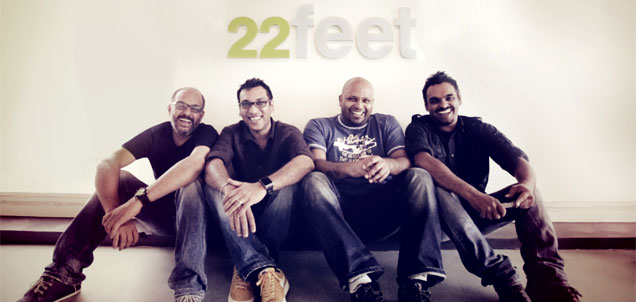
    L-R 22feet co-founders Deepak Nair, Vineet Gupta, Brijesh Jacob and Vinod Moolacherry


    By A Correspondent


    One more Indian digital major gets gobbled up. Bangalore-headquartered 22feet has been acquired by media and marketing services conglomerate Omnicom Group.


    On Monday, Omnicom’s DDB Group announced the acquisition of 22feet. The five-year-old digital marketing firms in India will merge with nine-year-old Tribal Worldwide India creating a new entity known as 22feet Tribal Worldwide which will be a part of the DDB Mudra Group.  22feet has in its roster brands such as Café Coffee Day, Fastrack, Lenovo, Heineken, Kingfisher, Red Bull and Axe.


    Madhukar Kamath

    The new entity – 22feet Tribal Worldwide – will be spearheaded by the core team of 22feet and not that of Tribal. Vineet Gupta will be Managing Director, Brijesh Jacob is Joint Managing Director and Deepak Nair will be Chief Operating Officer. The three will report directly to Madhukar Kamath, Group CEO and Managing Director, DDB Mudra Group. They will also work closely with Tribal Worldwide network in APAC and across 42 countries.


    The fourth 22feet co-founder Vinod Moolacherry will take charge of White Canvas, the Bengaluru-based full-service agency set up by the foursome. White Canvas has not been acquired by Omnicom as part of the deal on 22feet. Meanwhile, Venkat Mallik, president of Tribal India and RAPP, the marketing and CRM agency, will now move to look after RAPP, with what a spokesperson told us is an expanded and new global vision for that business.


    Said Mr Kamath on the acquisition: “With digital at the heart of DDB Mudra Group’s agenda, we are extremely happy about joining forces with 22feet. In just five years, 22feet has grown leaps and bounds. With this energy and Tribal Worldwide’s global reputation and reach, I’m excited to see what this magic of mergers can create.”


    John Zeigler

    Added John Zeigler, Chairman and CEO, DDB Group Asia Pacific, India and Japan: “We see this as a strategic move to continue evolving our capabilities in the fast-moving Indian market. DDB Group has accelerated its capabilities to offer clients the best-in-class local digital expertise at 22feet, coupled with best-in-class global knowledge of the Tribal Worldwide network. I believe this is a game-changing event for the DDB Mudra Group in India.”


    According to a financial advisor to many media M&A deals who requested anonymity, the acquisition is a win-win for DDB and 22feet. For digital media entrepreneurs who have sold out to advertising majors, the scale of a large network and international clients is a huge pull. And for ad firms, who have not been very strong on digital, acquiring smaller firms and thereby talent, legacy and clients is a sureshot way of getting digital prowess that clients seek. The added advantage, said the M&A specialist, is that networks could also look at converting a part of these digital shops to delivery hubs for offices elsewhere in the world.


    According to Prasanth Mohanachandran, CEO of AgencyDigi, who sold his agency eDeltaC Communications to Ogilvy in 2001, the 22feet buy will do a world of good for Tribal in India. “It’s an excellent agency worldwide, and the acquisition will help leapfrog the operations here,” Mohanachandran said


    Meanwhile, there is excitement amongst the 22feet co-founders who will now steer 22feet Tribal. Said Vineet Gupta on the announcement: “We are extremely excited to be a part of the DDB Group family. At 22feet, we share DDB’s passion for innovation and technology and look forward to delivering best in class digital solutions to our clients across markets as 22feet Tribal Worldwide.”


    Brijesh Jacob and Deepak Nair echo similar sentiments. “We are extremely happy with this opportunity to operate on a global canvas,” said Nair.


  • Maxus is RECMA’s ‘Most Dominant Agency’ for fourth consecutive year

    By A Correspondent


    Maxus India has retained the title of the most “dominant” agency profile for the fourth year in a row as per the RECMA 2013 report. Maxus was the only agency to be rated as “dominant” as per the ratings. The RECMA report is the Qualitative Assessment for 2013 for all leading media agencies in India, basis two parameters – Vitality & Structure. This is the highest level of ratings awarded by RECMA, for the agency that demonstrates a balance between the two parameters.


    Kartik Sharma

    Speaking on the new RECMA Ratings, Kartik Sharma, Managing Director, Maxus India said, “2013 has been an exciting year for us. We won 17 new businesses, worth over Rs 600 crores. We made substantial investments to strengthen our offering across core media, digital, branded content and activation. This is also reflected in the number of industry awards the agency won during the year.” He added, “From a people point of view, the new RECMA ratings are an indicator of the 10/10 vision that drives us to delight our clients and customers. We are governed by Passion, Agility, Collaboration and an Entrepreneurial spirit (PACE), a mission statement that drives us to deliver the very best and meet challenges head on.”


    2013 has been an exciting year for Maxus in India. New business wins include Tata Global Beverages, Unitech, Nestle India, Kotak Mahindra, Redbus.in, Ruchi Soya and Musafir.com to name a few. They also retained the media duties for L’Oreal in India.


  • Media Lounge acquires Origin Beanstalk

    By A Correspondent


    The newly set up full-service media company, Media Lounge has announced the acquisition of Mumbai based creative consultancy Origin Beanstalk Creative Consultants. With this new merger, Origin Beanstalk becomes one of the key brands to join the rooster of Media Lounge, which is in process to acquiring other specialist agencies across various verticals in a span of three months.


    Origin Beanstalk creative agency was set up 10 years ago by Shom Mazumdar and Upendra Singh Thakur. The agency currently has a 55 member team, which handles some high profile clients such as BASF, Edelweiss, RadioCity, Jupiter Hospital, Mid-day, Manchester United Café Bar and The United Sports Bar, China Gate Group of Restaurants, Rajesh Lifespaces, Sunteck Realty, VKL Seasoning, Ace Agro, Myitreturn.com, Princeware, Gulshan Polyols, Pepe India, Nannies Goat Milk, Welbound, Warmee, Four Points by Shereton, Swamp Soccer India, High Ground Entertainment, amongst others.


    Commenting on the merger, Shom Mazumdar, Co-founder, Origin Beanstalk, said that, “We have organically grown from strength to strength in the last 10 years by creating a very strong foundation and investing in our processes, people and product offerings. We have created a profitable and sustainable environment for growth and have been literally growing with our clients, most of who have been working with us for more than seven years now. These strong relationships and learnings with our nimble-footedness have helped us grow even during slowdown.”


    Commenting on the merger, Manajit Ghoshal, Co-founder at Media Lounge said, “I have closely interacted with Shom and Upendra in my former stint with a publication house and I quite liked their sound strategic approach, infectious energy and out-of-the-box thinking. While forming Media Lounge, I instantaneously thought about Origin Beanstalk and keenly approached them for the opportunity. With Media Lounge, the timing is right, the fit is right. And I see them play a key role in helping Media Lounge complete the full-services circle, thus making Media Lounge one of the most buzzing and sought after full service media group in this part of the world.”


  • Katrina endorses campaign for new HR Johnson vertical

    By A Correspondent


    HR Johnson has released a new campaign for its bathroom vertical that features brand ambassador Katrina Kaif. The television commercial went on air last week.


    Mr. Sushil Matey, Chief Operating Officer, H&R Johnson said, “H&R Johnson has been largely known as a tiles company, given our rich heritage and leadership in the same. However, over the years, we have diversified into bathroom fittings, kitchens and engineered marble & quartz. The communication objective was to tell the consumer of the stunning options we have beyond tiles – and we have made a start with bathrooms. To enhance salience, we had signed on Katrina Kaif to endorse the Johnson brand; the first set of communication on tiles was executed last year. This is the second TVC that we have done with her.”


    Anuraag Khandelwal
    Satish Desa

    Soho Square is the agency on board the H&R Johnson account and they were given the mandate to launch bathrooms in the consumer space. “The agency endeavoured to go beyond mere ‘looks’ and we wanted to come from a relevant consumer space. The entire insight that ‘bath time’ provides that much needed personal space to clear the mind and let it freewheel, gave us this thought of ‘Find Clarity”, explained Anuraag Khandelwal and Satish Desa, Executive Creative Directors and Creative Heads. “Clarity that refreshes and inspires one to think ahead. We also shot the film in black & white to enhance its visual appeal.”


  • Rebuilding Leo Burnett India


    By Ravi Balakrishnan


    The only reason I am here is to disrupt the market and change the game,” is quite literally the first thing that Saurabh Varma, the recently appointed CEO of Leo Burnett India tells us. Over the last year and a half, several global operations struck by similar epiphanies have disrupted their agencies, “trying to change the game” as seen in the management makeovers at Saatchi & Saatchi and TBWA.


    The exit of Leo Burnett’s former chairman and CEO, Arvind Sharma and his chief creative officer, KV Sridhar six months later is believed to be the same phenomenon playing out. Mr Varma quickly points out: “Leo Burnett is in great shape blessed with incredible talent and clients. And it’s still had the courage to make this bold move. We?ve done this at our best rather than at a time when we are coerced to do it.”


    Indian advertising is apparently a business that needs fixing even if it’s not visibly broken. Mr Varma represents a discontinuity and not just in terms of age and his background in strategic planning. Through seven years in India and eight overseas, he’s examined the desi ad business from up close and afar. And unlike the perfunctory noises made by many of his corner office contemporaries, he’s clear that he doesn’t like it one bit.


    He sees an industry stuck in a time warp where the 30-second TV spot is still lionised. An industry that relies on copy-art partnerships. A market at least five years behind comparable countries in its approach to problems and solutions. Asked if there’s any Indian agency that’s been able to navigate the change better than others, he replies “None.”


    Mention industry growth figures and he says, “Size cannot be equal to performance. For me, it is whether people engage with or share the content we create. And whether it ultimately leads to brands winning in the marketplace.” He has a clear idea on how he’s going to take Leo Burnett (and maybe even Indian advertising kicking and screaming) into the future.


    Instead of film, marketing content could be an act or an experience. He argues, “When there are opportunities to connect through mobile and Bollywood or create content which works on the shop floor, why limit ourselves to 30 seconds? Why not launch a TV channel for a brand? You have to create something that touches lives.”


    It starts with a change in team composition and roles. Ad shops typically boast about acquiring digital agencies. Instead, Mr Varma would like a digital producer, technology lead or user experience specialist working as part of the team as opposed to being brought in as last-minute window dressing. Singapore solved this eight years ago. “If you walk in, you can’t figure who the digital guy is since it is everyone,” he says, speaking excitedly of a near future where integration specialists are part of traditional account management.


    And if these people can’t be found here, the agency will get them from Australia, South East Asia, Scandinavia or America. The other fatal flaw in India is too much focus on solutions and too little on the problem. He explains, “The client brief carries the marketing problem but not the behavioural issue which needs to be defined in a clear and succinct manner.” It would sound like typical planner rhetoric that creatives in India roll their eyes at, if Mr Varma didn’t have examples he’s personally been involved with.


    For instance, ‘Beautifully Imperfect’ from Leo Burnett Singapore. The client defined the problem as young people not getting married. Mr Varma says, “The first instinct would be to create a dating website.” However the real problem was young men and women looking for perfection. This was found not via consumer research but after speaking to dating agencies and local love gurus.


    He says, “They were waiting for Angelina Jolie or Brad Pitt to come along and make the first move.” Instead, Yasmin Ahmad of Leo Burnett Malaysia came up with ‘Beautifully Imperfect’ which celebrated imperfections and a platform on Facebook where people discussed real stories.


    He’s taking this approach to Indian advertising too: trying to crack a problem where clients pass over “new age” solutions for the comfort of working with a creative legend. Says Mr Varma, “Marketers need someone to trust since they are trying to mitigate risk. When a personality says “this is the right thing?” because of his experience and wisdom, they go ahead.”


    He hopes marketers will realise risk can be mitigated in other ways: teams creating experiential content with a direct link to ROI for instance. Which sounds suspiciously similar to something we heard recently; except it was from KV Sridhar shortly after taking over as chief creative officer, Sapient Nitro.


    This apparent ideological alignment could not translate into a working relationship. Mr Sridhar claims it’s because the pace of change at agencies is glacial. For his part, Mr Varma smiles and recommends we meet his new chief creative officer Rajdeepak Das (executive creative director at BBDO), who is scheduled to join the agency this month. Mr Das was not available for comment at the time of going to print. But Mr Varma says, “His work on Gillette is remarkable and refreshing.


    It’s on a large brand and not for a small irrelevant client who buys things easily. Speaking of his close associate, Josy Paul, chief creative officer, BBDO says, “He has an unhinged sort of mind and is like a blotting paper for the new world.”


    He agrees that the time for change is long overdue in Indian advertising: “If you look at Cannes, only 20% to 30% of the show is talking to ad agencies. The rest speaks to media houses, designers, inventors, hobbyists, branded content creators? Advertising is shrinking not just in Cannes but in the total budget map.”


    Industry opinion is however sharply divided on Leo Burnett: its past and future. A former associate of Mr Varma argues, “It was never a good creative agency but the award rank was high since they won a lot of scams and managed the media very well. Where we came from, we’d look at them and say “but where is the real work?”  before using some strong language to describe its flagship campaigns for Thums Up and Maaza.


    A gentler evaluation comes from Anil Nair, CEO and managing partner, L&K Saatchi & Saatchi, “With minimum noise and only one or two recognisable faces, they consistently did good work. They had some controversies in the last few years but if you came up against them, they’d pack an awesome punch.”


    As for the future, while swelling numbers on the digital end are impressive, Mr Nair believes, “We are still a country where digital is important but it’s a supplement and not the absolute. Activation is something you have to fight the client for since they can do it cheaper and more effectively. That would be the twin task that Saurabh will have.”


    And since we are thick in the middle of award season, it’s only natural the sword raises its head often in every conversation. Some of his associates are glad that it seems Mr Varma has a strict no-scam policy.


    Says his former associate, “They have to rebuild the agency with real work which will take them time: two or three years. My fear is in the quest of being different it shouldn’t become another avatar of scam. You have to do a few good films in India. How else will you sell a Rs 3 product available in 500,000 outlets?”


    So the only question that remains is will the cooks at Leo Burnett India make an apple pie or crumble?


    Source:The Economic Times

    Copyright © 2014, Bennett, Coleman & Co. Ltd. All Rights Reserved

    Licensed to republish


  • Saugata Bagchi joins Quasar as Reg Head, West & South

    By A Correspondent


    Digital agency Quasar has announced the appointment of Saugata Bagchi as the new Regional Head, West & South. Saugata will report into Gaurav Nabh, Business Head, Quasar and will be based out of Mumbai.


    Prior to joining Quasar, Saugata was head of Mumbai and Bangalore offices at Tribal Worldwide, India. He was responsible for driving business for the two regional offices and also manage the agency’s national mandate. He was instrumental in establishing the agency as the digital agency of record for prestigious clients including Hindustan Unilever, Emirates, McDonalds and developing the agency’s technology, social media & digital analytics skill sets.


    Gaurav Nabh, Business Head, Quasar said, “Saugata is a born leader, taking on challenges head on, something that he has demonstrated repeatedly across all his assignments. He brings with him a lot of experience and knowledge of consumers, and the ability to engage and delight them online, something that our clients will benefit from immensely.  I am looking forward to working with Saugata in bringing great new ideas for our customers and growing our client base in Mumbai and Bangalore.”


  • Lowe Mumbai is Agency Office #1


    They are here. The 2014 Effie Effectiveness Index is derived from almost 3,000 finalists and winning entries to Effie Award competitions worldwide between June 14, 2013 and June 13, 2014. The Index is constructed by converting every Effie award and finalist into points – 12 for a Grand Effie, eight for Gold, six for Silver, four for Bronze and two for a finalist (with contributing agencies receiving half these points). Throughout the Index, ‘Country’ and ‘Region’ refer to where a campaign ran, not the location of the agency or advertiser responsible for it.


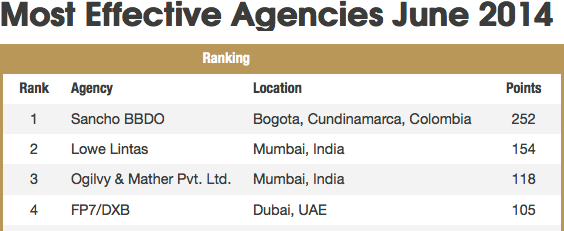
    The 2014 Effie Effectiveness Index, which is into its fourth year, has declared Lowe Lintas Mumbai as the most Effective Agency in Asia Pacific for 2014 and the 2nd most in the world after Sancho BBDO from Bogota, Colombia.


    This recognition follows a series of accolades on Lowe Lintas + Partners over the past year beginning with the win of the “Agency of the Year” title at Effies 2013, in India. This was followed by Lowe Lintas + Partners being awarded the Effectiveness Creative “Agency of the Year” across Asia Pacific at Tambuli Awards, Manila in June 2014.


    Regional Rankings

    The Index can also be analyzed by region and the companies that ranked highest in each region in 2014 are:


    Asia Pacific

    Unilever (advertiser), McDonald’s (brand), Omnicom (agency holding group) BBDO (agency network), Lowe Lintas – Mumbai (agency) and Barnes, Catmur & Friends – Auckland (independent agency).


    Europe

    Unilever (advertiser), Vodafone (brand), WPP Group (agency holding group), BBDO Worldwide (agency network), TBWA\Istanbul (agency) and ACG Advertising Agency in Budapest (independent agency).


    Latin America

    PepsiCo (advertiser), Movistar (brand), Omnicom (agency holding group), BBDO Worldwide (agency network), Sancho BBDO – Bogotá (agency) and Madre Buenos Aires (independent agency).


    Middle East & Africa

    Unilever (advertiser), Coca-Cola (brand), WPP Group (agency holding group), McCann Worldgroup (agency network), FP7/DXB – Dubai (agency) and Iris MENA – Dubai (independent agency)


    North America

    Procter & Gamble (advertiser), Dove (brand), Publicis Groupe (agency holding group), Starcom MediaVest Group (agency network), Starcom MediaVest Group, Chicago (agency) and Cramer-Krasselt, Chicago (independent agency).


    About the Effie Awards:

    Since 1968, the Effie Awards have been honoring Ideas that Work Globally.


    Introduced in 2011, the Effie Effectiveness Index (www.effieindex.com) recognizes the importance of marketing effectiveness by revealing which companies were the most successful at creating ideas that delivered results.


    From a small-budget retail campaign that achieved marketplace success in Brazil to a global bank that doubled business in the Middle East, Effie continues to reward Ideas that Worked across the globe.


    Now in its fourth year, the Effie Index provides an insightful glimpse into those who are delivering Ideas that Work across the globe.


    The Index features the most effective Marketers, Brands, Agency Holding Groups, Agency Networks, Agency Offices, and Independent Agencies. These rankings can be filtered by region, country and product category.


    Which companies, either independent or part of larger networks, produced the most effective work in each country and region over the past year? Which agencies, brands and marketers have achieved effectiveness on a global scale in 2014? Explore this year’s rankings to find out.


    Most Effective Marketers

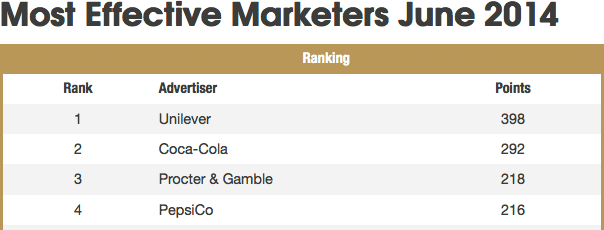
    For the third year in a row, Unilever tops the global Marketer ranking. Coca-Cola jumps to second place, with Procter & Gamble slipping to third. Consumer packaged goods again dominate the top 20, but they are joined by auto giants Ford Motor Co. and General Motors and mobile leaders Vodafone and Samsung, with regional food chain Hungry Jack making a surprise debut.

    Source: www.effieindex.com. © Effie Worldwide


    Most Effective Brands

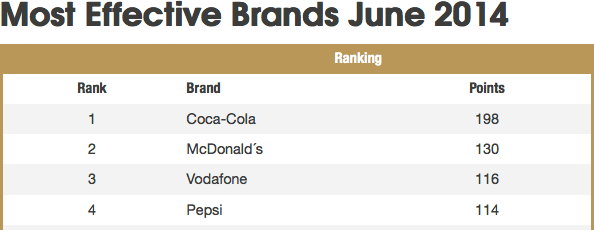
    Coca-Cola takes the title of the world’s most effective brand for the third year in a row. McDonald’s retains second place, while mobile giant Vodafone jumps one spot to third. Pepsi drops a spot, with Dove rounding out the top five. APAC regional brands NRMA Insurance and Hungry Jack’s, along with Latin American powerhouse brand Movistar crack the top ten this year.

    Source: www.effieindex.com. © Effie Worldwide


    Most Effective Agency Holding Groups

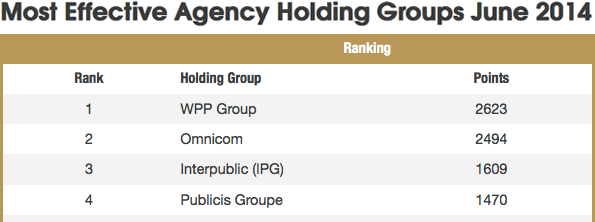
    WPP Group remains the most effective global Holding Group for the third consecutive year, with Omnicom staying in second place. IPG rises to third, while Publicis and Havas round out the top five.

    Source: www.effieindex.com. © Effie Worldwide


    Most Effective Agency Networks

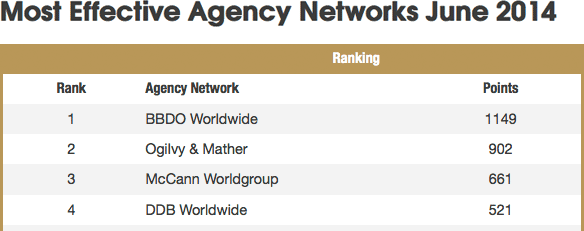
    BBDO tops the world’s most effective agency network with 1149 points this year. Ogilvy & Mather drops to second, while McCann Worldgroup, DDB Worldwide and Leo Burnett round out the top 5 for the second year in a row.

    Source: www.effieindex.com. © Effie Worldwide


    Most Effective Agency Offices

    Sancho BBDO from Bogota, Colombia moves up one spot to lead the Global Individual Agency Office rankings in 2014. Lowe Lintas Mumbai climbs to second, with Ogilvy & Mather Mumbai, Dubai -based FP7/DXB and Starcom MediaVest Group’s Chicago office rounding out the top five. The top 20 includes agencies from New Zealand, Hungary, Turkey, and Australia, among others.

    Source: www.effieindex.com. © Effie Worldwide


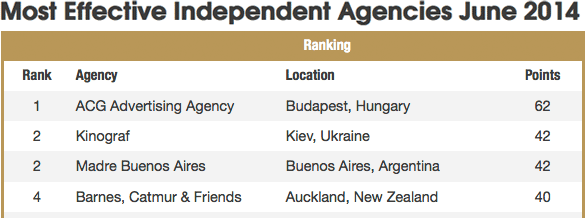
    Most Effective Independent Agencies

    Budapest-based ACG Advertising Agency is the Most Effective Independent Agency in 2014. Kinograf (Kiev, Ukraine) and Madre Buenos Aires tied for second, while New Zealand agency Barnes, Catmur & Friends and Banda Agency (Kiev, Ukraine), complete the top five. All of the top ten most effective independent agencies stem from Europe, Latin America or Asia Pacific this year.

    Source: www.effieindex.com. © Effie Worldwide