Author: mxmadmin

  • Why IPLs are no fun without this man


    By Biswadeep Ghosh


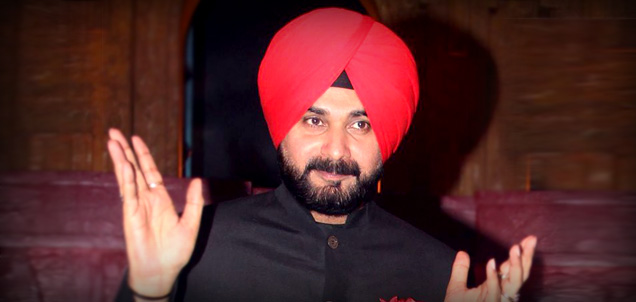
    Think of the Indian Premier League. Forget your favourite cricketers for a while. One, two, three, four… now that you have managed to push the players into the backyard of your mind, who is that one person whose association with the tournament is a fact you just cannot ignore? Rest assured, they aren’t Shibani Dandekar and Archana Vijaya, the two young ladies who do the rounds within the venues, asking unintelligent questions to intelligent cricketers when not busy matching their knowledge of the game with equally informed (or uninformed) celebrities. Despite the presence of so much glamour – which includes one Shah Rukh Khan – the man who is managing to colonise the maximum amount of attention is Navjot Singh Sidhu.


    After having been a successful international cricketer for sixteen long years in which he metamorphosed from being a maha-boring batsman to watch – particularly in today’s T20 terms – to someone who could step out and send the ball flying for miles while dealing with the spinners in particular, Sidhu’s second innings as a commentator has been comparably notice-worthy. He has irritated purists with his style of commentating, which is based on a unique formula. He talks very little cricket, and talks too much. As if that is not enough, he showers similes, metaphors, shayaris and proverbs on the viewers, hijacking the time of his colleagues who can do nothing apart from watching him with a partly amused, partly stunned look.


    When Sidhu joined the IPL5 commentary team as part of the Sony Max show Extraaa Innings, he had reportedly said that the show beats ‘Vidya Balan in terms of entertainment quotient’, the reference being to the actress’s affirmation that a film is about ‘entertainment’ in The Dirty Picture. Balan’s character Silk had used the word ‘entertainment’ three times, and Sidhu had promised five times more than that.


    Somewhat confusing, no doubt about that, since exactly how much entertainment did Silk promise by uttering the word three times? Sidhu may not know that, but he will have an answer to this query for sure. He has an answer for everything.


    What kind of rubbish does he talk? How much can he talk? How can he remember so many shayaris, proverbs and god knows what else? How does he misinterpret half the things he knows with so much confidence? As time has flown since the day he became a commentator many turbans ago – he started his career when India toured Sri Lanka in 2001 – what is amply obvious is that he has added a lot of new material to his arsenal, stuff he uses the way only he can.


    In the studio of Extraaa Innings, Sidhu, who says ‘gurrru’ whenever presented with an opportunity, came up with an outstanding statement the other day: outstanding since not even George Bush could have given rise to so much unintentional humour. Sachin Tendulkar, he said, is a genius, just as Adolf Hitler and Benito Mussolini were. Hence, the Master Blaster is meant to be admired. Sourav Ganguly, on the contrary, is a man of character. So, he is meant to be trusted.


    Presenting, some possible conclusions drawn from what Sidhu said:

    *Tendulkar is characterless, and hence, not supposed to be trusted.

    *Ganguly is not a genius and, therefore, should not be admired.

    *Tendulkar’s genius has parallels in Hitler and Mussolini.

    *A man of character cannot be a genius, and vice-versa.

    *Hitler and Mussolini are meant to be admired.


    Poor Harsha Bhogle, who sits right next to the man. Having been reminded of his hair transplant by Sidhu – for the consumption of the entire world, by the garrulous Sardar, who else? – he keeps staring at our protagonist, doing hee-hee-hee, distinctly clumsy and uneasy, acutely aware, one is sure, that he has been condemned to become one part of the ‘Jai and Veeru’ pair in the present edition of Extraaa Innings.


    That Harsha and Sidhu have become Jai and Veeru – the legendary characters played by Dharmendra and Amitabh Bachchan in the curry Western Sholay – tells us two things. Firstly, Extraaa Innings is not meant for the cricket connoisseur: which is fine, since neither is T20. Secondly, a character like Sidhu can only make its TRPs shoot heavenward, many watching the show seek the sort of humour that he has come to epitomize.


    That Sidhu’s prattle is not a 24-hour-reality in our lives is what works for the man. In a serious moment, when a batsman has failed to negotiate delivery after delivery, he has been known to irritate the hell out of a listener by comparing the batsman to a ‘one-legged man in a bum-kicking competition’. (He is not doing that in this edition of IPL, having been confined to the studios, but he has made many such comparisons in the past). But the thing is, the ‘idea’ of Sidhu has become an addiction with the passage of time. As his loyal fans will tell you, it is not an addiction which is subversive, like heroin, but a habit which makes one smile even when one gets completely exasperated.


    As a person talking cricket, Sidhu, having been a top-level cricketer himself, makes a lot more sense than, say, Mandira Bedi, who possibly believed that the leg stump was tied to a batsman’s leg when she had started out. Unlike serious commentators, however, nobody hears him for his reflections on the game. Sidhu’s USP is the ‘out-of-placeness’ of his thoughts, a carefully manicured image he has developed by insisting that the Indian team ‘without Sachin is like giving a kiss without a squeeze.’


    As someone who seesaws between being a purist and a lover of baseball cricket’s entertainment – the former, when I watch test matches and the latter, when T20 hits the mart – I am among many who lose it when he starts burying voices around him, and cracking meandering jokes in the middle of a serious discussion. But, my anger subsides when Sidhu says what he thinks is funny and introspective by combining humour with deep thought. He is at his best when devotedly absurd: an entertainer who puts up a whole-hearted performance. He is what every T20 player on the cricket field ought to be. Now, is that a Sidhuism?


    Born in Patna but based in Pune, independent writer-journalist Biswadeep Ghosh enjoys writing on films, literature and music. But, yes, cricket is his passion, and he (even) follows matches featuring Canada and Namibia whenever he can.


    Photograph: Fotocorp

     

  • [MJR] A tsunami of hot air and hysteria on Indian TV

    By Ranjona Banerji


    Yes, it is true that there were fears of a tsunami in countries along the Indian Ocean on Wednesday. It is also true that there was terrible damage in the tsunami of December 26, 2004. But there was no need for Indian TV anchors and reporters to start behaving like ambulance chasers as they geared up with excitement to cover this momentous event.


    This high-pitched hysteria for every single event, newsworthy or otherwise, gets exceedingly tedious, especially when there is little modulation in tone or pitch. Most Indian TV news channels didn’t even have adequate information nor do they have credible weather anchors, geologists or meteorologists on call. All they can do therefore is to keep repeating the same thing over and over again.


    On Wednesday, although a tsunami warning was issued, no tsunami had happened yet. There was no call therefore to behave like the end of the world was upon us. This only engenders panic, made worse by the fact that reporters and anchors say one thing and the texts that run across TV screens imply quite something else.


    International channels were a study in contrast. Al Jazeera and the BBC stuck to other world news – Korea, Syria, economic crisis – while CNN concentrated on the earthquake in Indonesia and possible after-effects. There was no breathless reporting; rather the effort was to explain what was happening in a sober and matter-of-fact manner. No attempts were made to audition for a travelling ‘jatra’ party, which appears to be the Indian model. And CNN’s weather expert Mari Ramos was as always excellent in her information and analysis.


  • Kamal Haasan finally says ‘yes’ to endorsing brands

    By A Correspondent


    One of India’s most loved and popular superstars from South Indian and Hindi cinema, Padma Shri actor-writer-director Kamal Haasan will soon take up something he has never done in his 50-plus-years’ career. The superstar will take up brand endorsements, and has signed up exclusively with India’s leading celebrity and talent sourcing and management firm, Alliance Media & Entertainment Pvt Ltd.


    Sunil Doshi, Founder & MD, Alliance Media & Entertainment Pvt Ltd, said: “We are delighted that Kamal Haasan has signed up with us exclusively for our talent sourcing and Management services. He is a truly global Indian icon – a great actor, writer and film maker who is immensely respected, not only for his strong contribution to cinema, but also for his significant initiatives to help the underprivileged. We are honoured that a man of his stature has chosen us to represent his interests, and we look forward to working closely with him.”


    It is well known that that Kamal Haasan has converted his legions of fans and fan clubs into a social service organization. This has set a precedent that has percolated through the audiences and has resulted in a social service and awareness movement. All the activities are also self-funded by the fans themselves as a personal initiative, which is strongly supported by Mr. Kamal Haasan.


    Revealing why Kamal Haasan has decided to go in for brand endorsement, Mr Doshi said: “Mr Kamal Haasan has certain plans for his work in social service, but is also unwilling to rely on external sources of funding those plans. Therefore, he feels that endorsements with leading companies and brands that have a strong commitment to society and causes would be an appropriate and independent means of fulfilling his vision.”


    On why he has signed up exclusively with Alliance Media to represent him, Kamal Haasan said: “I have signed up with Sunil Doshi’s Alliance Media because I believe it is India’s most respected talent management firm and is known to provide excellent strategic counsel to several top celebrities and personalities. I look forward to yet another first – that of brand endorsement – in my creative life, and to keep being able to do my bit for society.”


    Mr Doshi said: “We shall soon announce which brand Mr Kamal Haasan will be endorsing. Mr Kamal Haasan is known for his ideals and principles, and needless to say, we shall advise him to pick a brand that fits with his values and stature, and will have a campaign to match.”


    Alliance Media & Entertainment Pvt Ltd has exclusively managed and been associated with some of the biggest celebrities and personalities of India, along with some of the most respected corporates. Amitabh Bachchan, Abhishek Bachchan, Aishwarya Rai Bachchan and Jaya Bachchan are other superstars who have signed up exclusively with Alliance Media.


    Sunil Doshi, who has been advising superstar Amitabh Bachchan for close to two decades now, has also been associated with superstars like Shahrukh Khan, Saif Ali Khan, Kareena Kapoor, Priyanka Chopra, Preity Zinta, Rani Mukherji, Govinda, Fardeen Khan and Sonali Bendre, among others.


    Mr Doshi was instrumental in Amitabh Bachchan signing the historical Kaun Banega Crorepati deal, which completely changed fortunes in the Indian Cable & Satellite Television Industry. He has also been associated with ace writer-director-producer Karan Johar and was instrumental in suggesting his name for the popular multiple-series chat show Koffee with Karan.


    Alliance Media & Entertainment Pvt. Ltd. is a Mumbai based media & entertainment company which, through the past 12 years has earned premium expertise and market stature in celebrity & talent sourcing & management, film production, acquisition and distribution; ad film and TV program production and home video distribution.


    It has also been associated with several top corporates, including Idea Cellular, Pepsi Co, ICICI Bank, ICICI Prudential Life Insurance,  Omega and Max New York Life Insurance, among others. The company has also been instrumental in the formation of the world cinema channel Lumiere Movies, which is part of Turner International (earlier known as NDTV Lumiere).


  • IPL5 Week 1 TVRs touch new low, media planners say it’s still early days

    By A Correspondent


    Indian Premier League (IPL) season five kick started on April 4 amid speculations and fear that the season would fail to deliver high viewership. The recent TVR figures released by TAM Sports may have just proved the naysayers right.


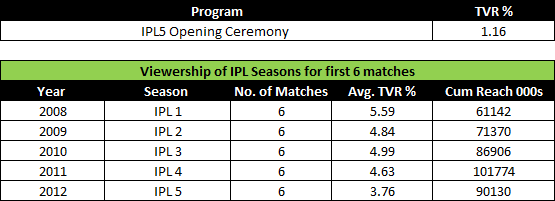
    According to TAM Sports, All India Market, CS 4+ years, IPL5 witnessed an average TVR of 3.76 per cent in the first six matches, which is far lower than the previous IPL seasons. The opening ceremony itself received a mere 1.16 per cent of the average TVR.


    While the IPL season five ratings for the first six matches is the lowest in comparison to previous seasons, the inaugural season (IPL1) continues to remain the highest viewed with a TVR of 5.59 per cent.


    Interestingly, the cumulative reach for the first six matches too have shown a slight decline in season five as compared to season four. The cumulative reach which has been on a rise since the inaugural season of IPL reached its peak in season four and thereafter in season five witnessed a slight decline.


    Mr Venkata Subramanian, Senior Director-Investments, MPG India is of the opinion that not only are the numbers positive but, also that the numbers will increase as the matches become more interesting. “These are initial ratings so the numbers are looking positive. As the matches continue to become more interesting, we can expect the ratings to also go up. Even if the TVR reaches 4.5 or 4.6 per cent, the delivery will be good not only because it is the fifth season but, also because of more number of matches.”


    According to Mr Janardhan Pandey, Associate Vice President, DDB Mudra, some drop in the reach numbers were expected owing to the poor Indian team performance during the last one year and the fatigue of cricket overdose amongst the viewers. However there is no cause for major worry. “I am of view that, as the game seems to be picking up well and with the onset of vacations, the numbers will improve. Also if the games progresses well, the reach numbers towards the second half of the series may be far better than anticipated. So over all it will deliver value, obviously there will always be standard deviation, after all it’s a huge sporting extravaganza.”


    The media planners are of the view that although IPL 5 may not come close to the season one ratings or even cross the season three ratings, nevertheless as the tournament progress the viewership will also increase. What remains to be seen is whether the ratings do improve or will it remain lower than the previous season?


    Source : TAM Sports, Period : Wk 14, 2012, TG : CS 4+ yrs, Market : All India, Channel : MAX

    This data is for First 6 matches of all IPL Seasons

    * In IPL 1 one match (47th) was abandoned due to rain

    * In IPL 2 two matches (7th & 13th)were abandoned due to rain

    * In IPL 4 one match (20th) was abandoned due to rain

  • DY Works appoints Ashita Sarin as Senior GM-Marketing

    By A Correspondent


    DY Works (erstwhile dma branding and yellow design), a brand strategy and brand design firm has further strengthened its senior leadership team with the appointment of Ashita Sarin as senior General Manager – Marketing. Based in Mumbai, Ms Sarin will work closely with the client servicing and creative teams to manage key clients in India, Singapore, Africa and the Middle East.


    A graduate of Parson’s School of Design, New York, Ms Sarin has over seven years of client management experience, including a stint at Landor Associates, New York and India. A dynamic professional with extensive experience in brand building & client relationship, Ms Sarin has worked on brands like Procter & Gamble, American Express, Tata Group, Mahindra & Mahindra, Taj, Cafe Coffee Day, Tata Realty and Infrastructure Limited, and Hindustan Construction Company among others.


    Alpana Parida, President, DY Works, said: “DY Works has always endeavoured to tread new paths in the world of brand building. Ashita brings to the table vast  experience across industries in Indian and international markets. We are confident that with her leadership DY Works will actively grow new client base and expand our existing relationships inIndiaand abroad.”


    On her move to DY Works, Ms Sarin said: “At DY Works, I was struck by the passion to make a difference to customers’ brands. The people and the team that I will work with are extremely enthusiastic. To work with HUL as a customer and to be able to deliver value to them consistently is a challenge as well as a huge opportunity. I look forward to partnering with the clients in understanding Indian consumer behaviour and bring my experience to make the brand building exercise more successful.”


  • Radio One is a station with a difference: Anil Machado

    Beginning March 28, Radio One Kolkata made a transition from a station that played a mix of Hindi and Bengali songs to a full-fledged Hindi retro station. The Kolkata station is now a 100 per cent Hindi retro station, playing the biggest hits from the sixties through the nineties. By going completely retro, the FM station aims to create some differentiation in the Kolkata market which has nearly nine FM stations. The decision to go retro was taken after extensive research was conducted, which found that no FM station in Kolkata dwelled into the retro music space and that there is huge potential for a 100 per cent retro music station in the market. In conversation with MxMIndia’s Robin Thomas, Mr Anil Machado, National Programming Head, Radio One shared his view on the reasons for going retro in Kolkata, how the station is different in other markets and the response received. Radio One, a joint venture between Next Mediaworks Ltd and BBC Worldwide is operational in seven metros – Mumbai, Delhi, Kolkata, Chennai, Bangalore, Pune and Ahmedabad.
     

    Please throw some light on the decision to go retro in Kolkata?

    Radio One is a differentiated station in every market we are currently present in and there is no market better than Kolkata to go 100 per cent retro.  The biggest retro singers are from this market… Kolkata is a market that swears on retro music, that’s grown up to retro music. Our motive is being different in every market and we noticed huge space in retro music that no one was catering to and if they did, then they were catering in time slots. We did our research and found that people of Kolkata are crazy over retro music and that the market is huge. In fact, no other player has dwelled into this space and hence we took the step and went 100 per cent retro in Kolkata.


    What genre of retro music will the Kolkata station play?

    We would be playing the biggest hits from 60s and 70s all the way through the 90s. You can listen to over forty years of the best music ever churned out in the country. The best of retro music will be played on Radio One Kolkata station. Tune in any part of the day and you will listen to songs you have grown up listening to, and therefore you will end up enjoying the station.


    And before going retro, Radio One Kolkata played….?

    Before going retro we were playing mainly a mix of Hindi and Bengali wherein Bengali music occupied nearly 25 per cent of the music mix.


    You have tried to create a differentiated station across markets…?

    We have differentiated content in all our markets. In Mumbai andDelhi, we are the only radio station playing international music. In Kolkata we are a 100 per cent Hindi retro station. In Chennai we are the only 100 per cent request station. In Pune we are a hardcore Bollywood music station whereas others play a mix of Hindi and Marathi. InBangaloretoo we are truly a Bollywood music station whereas others play Kannada music and in Ahmedabad we stand to a maximum music, maximum choice wherein we air only two shows and the rest is back to back music. The others in Ahmedabad market, on the other hand, air approximate six to seven shows whereas we air only two shows.


    What’s the kind of response the Kolkata station is generating, particularly from the advertisers?

    The response, from both listeners and advertisers, has been overwhelming. Advertisers mainly look at audience profiling and the differentiating factors of the station, and Radio One provides that differentiating factor and the audience profile. Kolkata has nine radio stations and advertisers realize that Radio One is the only FM station that plays 100 per cent retro music, our TG continues to remain the same i.e. 30 years plus listeners. What we have noticed in the Kolkata market is that they breed music from the sixties, seventies, eighties, nineties, and the people of Kolkata know their music, the singers and lyricist and so on.


    Radio One Kolkata went retro towards the last week of March, 2012, yet you didn’t make much noise about it…?

    We went retro from the March 28, 2012. I believe that the moment your product is differentiated, it works on the principle of network marketing but, if you are similar to other stations in the same market that is when you would invest heavily in marketing. Therefore, the moment you are a differentiated product, you would automatically stand out from the herd.


  • Why Cag has stopped awarding seniors


    By A Correspondent


    (with generous inputs from a speech by Gangadharan Menon)


    Those who’ve been part of the ad and media fraternity for less than a decade may be wondering why the Big Story today is on the Cag Awards. In fact the only CAG in their lives is perhaps the Comptroller and Auditor General, better known for unearthing scams and irregularities so very frequently.


    The reason why most of our youth is unaware of what Cag is has perhaps got to do with the decay that has set into the way ad awards were being conducted. Communication Arts Guild, or Cag (written in upper-lower as against all caps) as is popularly known as in advertising circles, was founded in 1950. The sole purpose then, and now, is to spot, nurture and reward talent in the field of creative communications. Initially it started off specifically for commercial artists, but over the years it expanded to include all forms of creative communications. And in fact, the name too changed from Commercial Artists Guild to Communication Arts Guild to reflect this change.


    The highlight every year was the Annual Cag Awards in various communication categories, culminating in the Art Director of the Year and the Cag Hall of Fame. The following year would see the release of the Cag Annual that would feature the previous year’s awardwinning work.


    Somewhere in the mid-90s, the much-coveted Cag Awards were discontinued. Reason: the unchecked and uncontrolled proliferation of what came to be known as scam advertising. Meaning, advertising that was never released in mass media, but was created only for the purpose of winning awards. The client was fictitious (or perhaps that cobbler or panwallah down the road who never needed any advertising), the brief was non-existent and the media was unaware of their existence. When 90 per cent of the entries started belonging to this obnoxious category, Cag called it quits. And with it stopped the highly sought-after Cag Awards, and thereby dried up Cag’s only source of funding. But the very next year, Cag started the Young Cag Awards, to spot, nurture and reward the young creative talents in the various art colleges across the city. And for a dozen years, it has been feeding the advertising and allied applied arts industries with a steady stream of young talent.


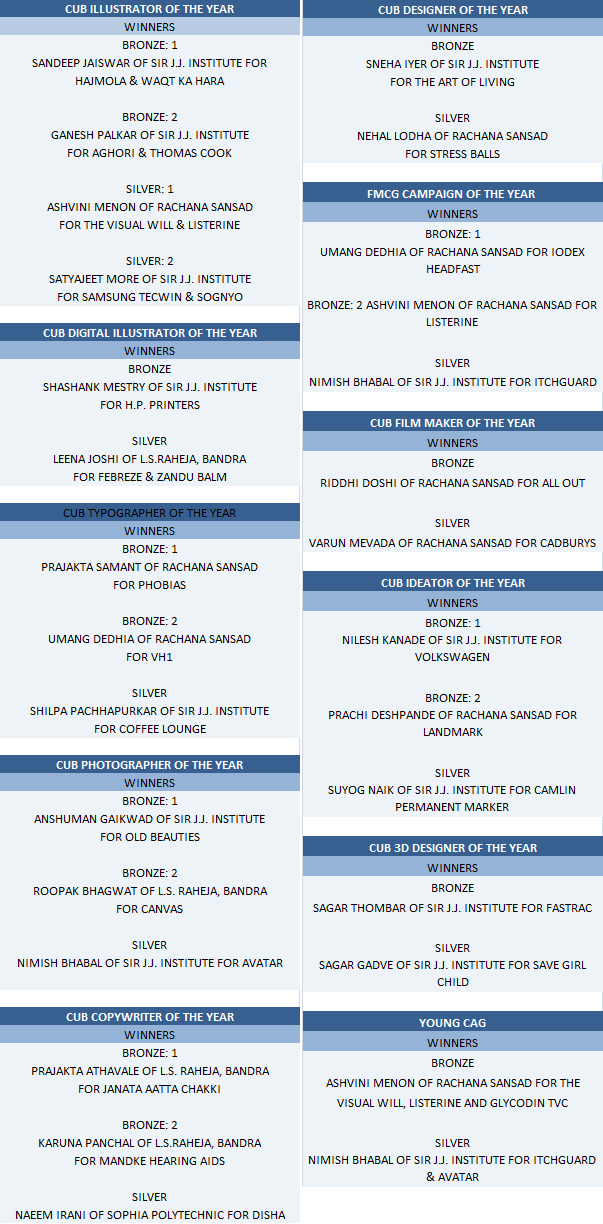
    Over the academic year, Cag holds various workshops by practising professionals, and at the end of the year conducts a meticulous talent hunt across all art colleges. Starting this year, the hunt has been extended to art colleges across the country. This culminates in various awards given across categories: Cub Illustrator, Cub Photographer, Cub Copywriter, Cub Typographer, Cub Designer, Cub Ideator and Cub Art Director of the Year. An exhibition of this awardwinning work is held every year after the awards function to inspire younger students to excel in the creative communications field.


    These awards are purely funded by the interest earned from the earlier kitty generated by the Cag Awards for Professionals. There is no fresh source of funding as Cag doesn’t believe in charging award entry fees to students. The people who work for Cag do it pro bono, merely giving back to an industry that gave them fame and fortune.


    In the year 2010, Cag took a decision to go digital. And it digitised around 36 Cag Annuals and put them on its website. This is a treasure-trove of advertisements that appeared between 1950 and 1995; and is the only source for students, academicians and professionals who want to understand the creative evolution of Indian Advertising.


    One of the recognitions that continued uninterrupted is the prestigious Cag Hall of Fame. A citation and award that recognises and acknowledges an individual’s seminal contribution in the field of creative communications, spanning a few decades. This illustrious Hall has already inducted various luminaries into its hallowed precincts: Kersy Katrak, Panna Jain, Ravi Gupta, Frank Simoes, Gerson da Cunha, Avinash Godbole, Arun Kale and Arun Kolhatkar.


    This year, Kiran Nagarkar was inducted into the Cag Hall of Fame. For his outstanding contribution in pioneering some of the finest campaigns in Indian advertising and for his versatile talent in other fields of creative writing: as a playwright, screenplay writer and an award-winning novelist.


    Nagarkar made a plea to the audience to not let Cag to die and made a clarion call to young creative professionals to shun scam advertising.

    # #


    What would you expect creative boys and girls to be doing on a Saturday morning? Majorly hung over, getting off their beds a little before noon? Guess we’ve got it all wrong. On Saturday, April 7, right in the middle of the looong Good Friday weekend, Cag held its 63rd annual awards function. At the Ravindra Natya Mandir at Prabhadevi. Since most of the award-winners were students, it was a packed house. Except for the front rows since the ad fraternity and some of the other leading lights among ‘communication artists’ don’t appear to quite care about being present. “It’s perhaps because Cag is now essentially a students’ show with just one veteran being awarded,” said one senior art director.


    The Cag committee comprises veteran professionals like Samir Khanzode, Gangadharan Menon, Sunil Mahadik, Gopi Kukde, Brendan Pereira, Ranjan Joshi and Sachin Puthran. Cag, according to vice president Gangadhar Menon is clear it doesn’t want to revive the awards for seniors. Unfortunate, because surely there ought to be a way in which one should be able to eliminate scam ads. Or at least minimise them. Cag comprises and celebrates creativity. It must now find a creative (and effective) solution to the problem.


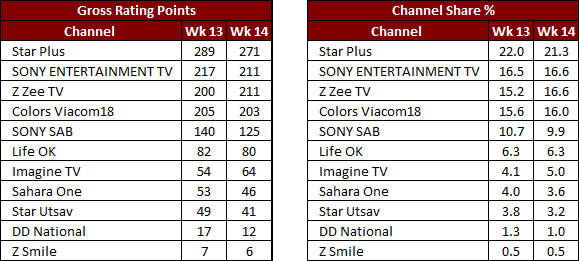
  • TAM Data (GRPs Channel shares of HGECs)- Wk 14 ’12


    Source: TAM Peoplemeter System
    TG: CS 4+ yrs
    Market: HSM
    Period: Wk 13: Mar 25 to Mar 31, 2012
    Period: Wk 14: Apr 1 to Apr 7, 2012


    About TAM Media Research

    TAM is a joint venture between Nielsen Company & Kantar Media Research. Besides measuring TV Viewership, TAM also monitors Advertising Expenditure of Television, Print & Radio through its division AdEx India. Since 2004, it extended its presence in the PR Measurement & Analysis space for Corporate/Marketing Clients by setting up a separate division Eikona PR Measurement.


    In 2007, the joint venture introduced RAM (Radio Audio Measurement) service to track Radio Listenership for the Indian Radio Broadcast Industry. In year 2009, TAM launched a division, called TAM Sports that specializes in monitoring Sports Sponsorship ROI.


    TAM Media Research’s objective is to fuel media insights that will drive the growth of the Indian Media Industry.

  • The Anchor: Sanjeev Singhai on 6 reasons how brands benefit by specific ad solutions

    By Sanjeev Singhai


    1) Advertising informs and educates

    Advertising delivers news around the brand to consumer. explains how brand is the best fit around taste, value for money or lifestyle that the consumer is looking at, thus making it easy for consumer to make the purchase decision. It can also be used to explain complex product feature or clarify consumer doubts around the brand or raise awareness among consumers about the new variety or categories of products and services that the brand has to offer.


    2) Advertising differentiates

    With advertising, brands can rationally differentiate themselves by highlighting their unique selling points which makes it stand different from other brands, making it easier for a consumer to make a purchase decision.  It also stimulates competition in the marketplace and allows space for the category to grow.


    3) Advertising persuades to purchase

    Advertising aims at persuading the potential customers, impacting their intention to purchase the product. Advertising attracts attention towards a product, and by sharing its unique features, advantage and benefits, creates desire to have the same and finally induces consumers to visit the market and purchase the same. Advertising has psychological impact on consumers. It influences the buying decisions of consumers.


    4) Advertising drives sales

    Advertising not only creates an emotional connect between consumer and the brand but can also be used to support the sales promotion efforts of the brand, allowing it to make positive contribution in sales promotion. Thus advertising help brand contribute to company’s growth and profitability.


    5) Advertising creates demand (drives trial)

    Advertising spreads information and encourages consumers to ‘try’ new products. Such advertising leads to product trials, thereby leading to creation of new demand. Various promotions are offered to consumers in the initial period giving them an inertia to try the new product and generate positive response which helps in creating new demand from non-users and build a relationship with brands.


    6) Advertising helps brand reinforcement

    Advertising helps in reinforcing brand’s name and image to the public, which can be part of a long-term marketing strategy. For example, when Nestle produces an ad for Aata Maggie, it is not only telling the benefits of that product but is also keeping the Maggie brand live in the minds of consumers, which can also help the sales of its other products. Advertising help build brand image with distinct personality of the product. Advertising builds brand image and this develops consumer loyalty towards a specific brand.


    Sanjeev Singhai is Business Director – Indian Sub Continent, Buchanan GroupIndia


  • Mediaah! Sad that one more small giant got gobbled up

    By Pradyuman Maheshwari


    Yes, it’s great to hear of deals happening in the Indian media. It’s nice to know that the Chhajlani and Sethia families of Nai Dunia are getting significant value for their newspaper (and all in cash, I learn). It’s also good to see the Dainik Jagran group turn into a ‘huger’ force to reckon with.


    But it’s indeed sad to see one more regional superpower sell out.


    Others have done so in the recent past. Vijaya Karnataka, a very successful newspaper group in Kanataka sold to The Times of India group. Mid-Day sold to Jagran two years back and now Nai Dunia’s gone.


    Jagran has made its plans known on acquisitions. In fact it is mandated by its investor benefactors that it must grow inorganically. So rather than set up operations afresh, it’s buying smaller superpowers. In fact soon after the Mid-Day deal, director Shailesh Gupta had indicated to me that there will be more announcements coming soon.


    Rumours of buys in Orissa, Assam and Nai Dunia have been doing the rounds for over a year. There have also been a couple of papers in the Hindi belt that could be up for grabs if the price is right.


    It’s indeed unfortunate to see the owners of smaller players like Mid-Day and Nai Dunia having to sell out. In fact after the Jagran deal, Tariq Ansari told me three things in an interview in Impact magazine:

    • I am a big believer in the newspaper business but there are significant challenges: delivery is a challenge, younger people not reading newspapers is a challenge, volume share of the advertising pie is a challenge and I think that any small newspaper company needs to look at these challenges and think how it’s going to get around them…
    • I hate to admit it but I must say that this is the conclusion that I’ve reached, in the last two years when there was a slight drop in the economy, the small newspapers got clobbered. If you don’t have the resources to weather that kind of storm, to invest in things you need to, I think it’s rough going
    • The problem with raising money is that your investor wants to know where am I going to put this money when I get a hundred per cent returns. The way the newspapers are going to be in the next five years, to my mind, you are not going to be able to guarantee those returns. You need to have somebody who believes in newspapers, understands newspapers…


    Tariq Ansari admitted that his spends on the outdoor business were possibly a mistake. Chhajlani may also find that in retrospect his investments (in monies and mindspace) on NewsX wasn’t the right thing to do.


    But my own sense is that to be able to fight a big player requires a rigour that both groups didn’t have when required. (for Mid-Day: the competition from Hindustan Times, DNA and Mumbai Mirror and for Nai Dunia: Dainik Bhaskar and Rajasthan Patrika)


    I haven’t been able to speak with Vinay Chhajlani since yesterday’s announcement. But will do so, as I did after he acquired NewsX along with Jehangir Pocha. NewsX has been on the block for a bit, and although Web Dunia is a successful enterprise, I won’t be surprised if that also goes out to an international giant. Vinay Chhajlani will reinvent himself and possibly do what he’s best at: running a software enterprise with systems and processes.


  • Bindass goes Rest Less, for good

    By A correspondent


    It’s perhaps a brand that’s far ahead of its time and is known for taking generational leaps to adapt to new market dynamics. It was thus natural on its part to undergo a makeover exercise once again what with the youth of today having undergone a radical transformation in their habits.


    Being the third such makeover for the company, youth brand Bindass has announced yet another repositioning exercise that’ll see them don a new garb in everything that they do. Effective April 16, Bindass will present itself in a new and refined avatar to the world with a focus that’ll be even more skewed towards the youth of today. The new change would read: Bindass – Rest Less.


    Elaborating on the proposed switchover, Keith Alphonso, Business Head, Bindass said: “April 16 is the switch-on date where you’ll see Bindass in a new packaging, new promos, new music, new logos & graphics, new shows and every other touchpoint as well.”


    Delving into the specifics of the makeover exercise, Mr Alphonso said that the entire exercise kicked off in October 2011 where a few important points were taken up for analysis. “The first was we took a long hard look at our business and committed to our stated business intent that we wanted to broadbase Bindass into a youth brand and not just exist as a television channel. The idea was to get Bindass to a position where it was relevant to young people and fulfil a very visible need-gap. We thus went back to the market and for three months did a fair amount of research with Ormax and MarketGate and we zeroed in on a position which we are going to craft Bindass as a brand to occupy.”

     

    Explaining the positioning that the brand sought to occupy, Mr Alphonso said: “The position is something that celebrates success and was based on two trends that we observed over a period of time. One trend was the super-confidence that the Indian youth of today boast about where they see opportunity in everything that they do. But if you scratch a little below the surface, you will notice a certain amount of fragility as well. That’s because of the kind of competition that has been created in the marketplace. As we put it, it’s called ‘fragile invincibility’ – as confident and invincible as they seem they are also plagued with problems and they look for a brand as a touchstone. So what we are doing now is to craft Bindass as the brand that gets you there. The brand that holds your hand on that journey and not to be confused with a career and competition brand, so to speak. That’s because for the young person, success has many connotations. This was the value proposition that we latched on to.”


    Having shortlisted on the value proposition, the next move was to get help on the communications front and search for options on how to sell the concept to the desirable TG. That’s where they approached Taproot co-founder Agnello Dias, who has been associated with the brand in its previous makeover exercise as well. Mr Alphonso affirmed: “We got Agnello Dias of Taproot onboard who suggested the tagline Bindass -Rest Less. The idea was that it celebrates constant perpetual energy of the youth of today. So the brand value is about celebrating the people who rest less and succeed. As for the communication, it will happen across multiple mediums, including mass media, print, and so on, but importantly, however we are perceived we will ensure that the spirit of Bindass – Rest less will be embedded there.”


    Mr Agnello Dias, Chairman and Co-founder, Taproot India, added: “A key trait that marks youth behaviour today is a sense of constant motion; everyone is either going somewhere or doing something all the time. This non-stop motion, well-channelized is the new objective ideal. Settling down is fast going down the priority list. The bubbling undercurrents of discovery, exploration, invention, challenge, action seem to top that list. The new brand campaign for Bindass captures precisely this, that the youth today are ‘Rest Less’ and actually rest even lesser. We had earlier worked on Bindass’ immensely successful ‘What I am’ campaign as well which really caught on with the youth and this time around with Rest Less we hope to continue connecting with them yet again.”


    On how these changes would be reflected on the channel and other properties,  Mr Alphonso stated: “We will be launching two new shows – Live out Loud and Fear Less – in April and July, which will reflect the new change that we are talking about. LOL will let individuals say the one thing they always wanted to say with 250 people from Bindass supporting them in their stance. Fear Less is a gang of friends coming together to help one of their own overcome a debilitating fear. With these shows and more we are moving to a stage where we want to aid in transformation.”


    In fact that’s not all, as part of its efforts to be seen as an integrated brand Bindass would be tapping the medium of YouTube in a big way. “We would be launching a new channel on YouTube where we will be releasing short-form programmes only for that space. That medium has its own unique consumption patterns and parameters. We will be creating exclusive content for users on YouTube and not rehash content from somewhere else. Even our Facebook page will go under a radical new layout where you’ll have newsletters giving you information on movie deals, contests, tickets for matches, and so on. The idea is everything that we do is going to be about helping young kids get to their goal faster,” assured Mr Alphonso.


    When asked on the need for undertaking continuous makeover exercises, Alphonso reverted: “It has been a deliberate move to undergo repositioning again. When we launched in 2007 we were about Bindass – TV, Web,Mobile- that was a time when other channels were yet to discover multiple content. From there to 2010, we came out with a very attitude-based positioning which was Bindass – What I Am. There was a prevalent thought among young people at that point in time that they just wanted to be themselves. We reflected this non-judgmental spirit of theirs by saying it is an attitude. That was successful for us because it pushed us into a branded play. As of today, because we wanted to broad base our brand, because we wanted to be seen as more than a television channel, to become a new touchstone so that new business opportunities can be explored – for that to happen, brand Bindass had to have a call to action. And, therefore, the new positioning of Rest Less.”


    While the first two repositioning exercises did wonders for Bindass in terms of acceptability and attracting GRPs, the idea going forward would be to move beyond being just a channel and move into a space where it could become a huge brand by itself. Affirmed Mr Alphonso: “Probably in a year or two, I could launch Bindass range of jeans and get into doing other such activities; that is what our focus would be going forward. At the end of 18-odd months, you will see the emergence of umbrella youth brand Bindass that will also have a television channel, an events division, branded services, digital, and so on.”


  • Simmi Karna appointed as Business Head for BIG Productions

    By A Correspondent


    Reliance Broadcast Network Ltd. (RBNL) has announced a key appointment with Simmi Karna coming on board as the Business Head for BIG Productions, its television content production arm.


    As part of her new portfolio, Ms Karna will be responsible for creation and marketing of shows designed for regional and Hindi GECs. She will also be responsible for the P&L of BIG Productions and will report to the CEO of Reliance Broadcast Network, Mr. Tarun Katial.


    A molecular biologist by education, Ms Karna was drawn to the television industry as she began researching and writing for television in 1997. Over the last 15 years, she has worked across leading brands in the television industry ranging from Zee, Channel V and IMG, as a writer and creative director across genres of fiction, non-fiction, sports, fashion, among others. Her last assignment, prior to joining BIG Productions, was with Balaji Tele Films as the Chief Revenue Officer.


    Commenting on her appointment, Mr Katial, CEO, Reliance Broadcast Network Ltd, said: “Simmi’s vast experience across a variety of genres with her erudite stamp on programming makes her an asset to the organization. Her ability to ideate and conceptualize on the basis of audience preferences, while ensuring in line with clients’ briefs is her strength which will work excellently when coupled with her people management skills to lead the business into its next level of growth.”


    On her appointment at BIG Productions, Ms Karna said: “I look forward to working with the young and dynamic team at BIG Productions. The television industry is geared for exploratory programs and these are really exciting times for TV inIndia. RBNL has some great properties for television and I look forward to a challenging and exciting career in television production.”


    Reliance Broadcast Network Limited is a multi-media entertainment conglomerate with play across radio, television, intellectual properties and out of home. It is part of the Reliance Group and specializes in creating and executing integrated media solutions for brands.