Author: mxmadmin

  • 2012? Is it a repeat of 2009-10?

    Predicting Adspends has become more complex now than ever was. The economic outlook is something that one can never get the handle right, with most studies not agreeing on one number. But this is what makes it exciting to look and estimate the Adex growth in India. GroupM does a yeoman’s service of providing some startling numbers based on science than the gut, even though India tends to buck the trend away from global predictions.


    Every client I speak to talks of prudent spending behind potential cuts, at least the intent is a tight squeeze. Cautious optimism mixed with nervous pessimism! The growth highs of 26% in 2006 and 22.5% in 2010 looks so recent yet the thinking is a bit soft now for 2012. Since October, the moment the Eurozone market failure triggered a downslide the thoughts are very much on these lines. But let’s also look at the growth drivers – every media is expected to grow in double digits with the exception of print and out of home. Every broadcaster and publisher is trying ways and means to cut down input costs while trying to extract the maximum. The first 4 months of this year will show the trend for the year and the challenges are aplenty for media, agencies and advertisers.


    The world is expected to reach $522 billion, a 6.4% growth in Adspends – four regions will continue to grow in double digits: APAC (10.2%), LATAM (14.2%), Central & Eastern Europe (11.2%) based on GroupM forecasts. Digital will contribute to 22% of all measured ad investment in mature western markets and 12% in the faster-growing world. Compare this to a 30% growth predicted in India. Search and Social continue to grow in India, but in my opinion the digital growth will be fuelled by mobile and digital content. Performance Marketing is the need of the hour. The challenge in our country will be primarily on TV, which has overtaken Newspaper spends for the first time since 2011, what with increased content costs. Network channels will capitalize by using the same content on several channels to defray costs, but not everyone can attract eyeballs consistently. Accountability on short-term commitments will be the need of the hour.


    Ravi Rao, Leader – South Asia, Mindshare

  • Up, up and ahead – Media in 2012

    Jai Lala & Amin Lakhani


    As indicated by the report ‘This Year, Next Year: Indian Media Forecast’ by Mindshare, it was a mixed year for Media in terms of the growth story in 2011. The industry per se grew at a rate of 13 percent. In terms of AdEx, and in the first half of the Calendar Year (CY) 2011, the medium of television grew as high as 26 percent, which then slowed down to a rate of 16 percent in the second half. So it would be safe to say here that television grew at an average rate of 20 percent in 2011. Taking off from there, we anticipate 2012 to throw up similar growth numbers. So a 15-16 percent growth is what is being estimated for the medium of television in 2012. But unlike last year, we expect the first half of CY 2012 to show a slow growth while the second half will manage to show a sudden spurt in growth numbers.


    SECTOR WISE PERFORMANCE:
    TELEVISION
    If we analyse the properties that will drive the medium of television to deliver such a healthy growth in 2012, the marquee property that takes the cake yet again would be cricket (Sports). Like last year, this year would also witness an equal number of cricket-playing days involving team India. So while we had the World Cup last year, this year we have the T20 World Cup and also the Asia Cup that will balance out for the number of cricket-playing days. IPL will continue to add to the cricket-playing days with 76 matches being forecasted as against 74 last year.


    The other element that will drive growth for television from a supply point of view is reality shows. Each and every channel has slated a quarter-by-quarter plan around reality shows. Accordingly, the programming content around reality shows will be very high. For example, if a channel in yesteryears used to have around 10-12 percent content around reality, that is changing now to around the 15-18 percent mark. Also, given the high production costs involved with reality shows, they come at a higher price. They thus cannot be pegged at the same value as the other regular shows. While they may not command high ratings, owing to the production costs the expense for the show is definitely higher. The key point here is that all key broadcasters have a dedicated programming budget. Now given the volatility in the economic scenario, none of the top broadcasters are bringing down investments around non-fiction shows. If you look at the factors driving this trend the first thing that comes to the fore is the change in pecking order of GECs. It has moved from a 3-channel scenario to a 5-channel scenario. Till until last year you had Star, Zee and Colors vying for the No 1 slot and now it is Star, Sony, Zee, Colors and another new channel from the Star stable – Life Ok – that is also fighting for the top slot. Given the highly competitive scenario, none of these players are slicing their budgets; they are actually increasing their spends around non-fiction programmes. Even a player like Zee – it may do fewer number of reality shows but it will do them on a grand scale. In fact it is investing heavily behind acquiring big movie titles in the market. So these players won’t cut down on their expenses as they want to sample new audiences and they want to create stickiness. A recent example is Maa Group, which is said to be launching a channel that’ll be dedicated completely towards non-fiction shows. There are several such examples that can be cited here that shows non-fiction is here to stay. Even if seen from an advertiser’s standpoint, most big launches that have taken place in 2011 have been good launches. Nobody has compromised on costs for launching their product. Marketers are not shying away from need-based advertising; they are probably trying to shy away from unwarranted advertising.


    The other important factor that will drive television growth in 2012 would be regionalisation – thrust around this area will continue to see a rise. While we witnessed the advent of this phenomenon in the last 2-3 years, 2012 would see regionalisation completely taking off. So while the Southern markets will continue making an impact, the markets of Maharashtra, Kolkata, etc will also kick off in a big way. Also, many channels have come up in the Hindi heartland, catering to niche audiences. Another important trend that will drive the growth for television is specialisation, more so in the area of niche channels. To put this in perspective, what is being observed currently is that the long tail has been growing spontaneously. Which means that every genre is witnessing further sub-categorisation. For example, first we had the infotainment genre which has now been sliced further into food, travel, adventure, wild life etc. In fact there is further slicing that is being witnessed within these channels as well. This has led to specific channels being launched for specific audiences, indirectly leading to a long tail. So it results in media budgets being sliced further so as to enable marketers to reach out to niche audience sets. So specialisation would be another key avenue for players to tap niche markets and audiences.


    Another trend that will foster the growth of the medium of television is DTH. As is known, DTH has crossed in excess of 30 million homes and will continue to report healthy numbers going forward. While DTH provides the option of a more personalised mode of advertising, it also caters to a certain kind of audience. There are two sets of audiences that DTH caters to: one is where somebody prefers better quality in terms of viewing pleasure and the other is where cable is not reachable. So DTH is catering to two ends of the spectrum, thereby fuelling the growth of the medium. Another phenomenon that’ll blast full-throttle in 2012 is HD. A lot of channels have already launched their feeds on HD. It’s for the advertisers to cash in on the benefits of advertising on HD. The current estimate of people with HD-enabled boxes stands at 1 million plus. In fact, this number will swell up by a huge margin in the next 2-3 years.


    As for the sector-wise contributions for 2012, we expect the auto sector to bounce back. This is on the back of multiple car launches that have been slated for 2012. Even FMCG will witness a strong bounce-back. Other categories like finance, IT & ITES, retail, etc will continue to perform in a similar fashion as witnessed in 2011.


    PRINT
    The year 2012 is expected to be a big one for players from the print medium. The primary reason being elections – be it state level elections, municipal level, or any other. For example, in a city like Mumbai political parties themselves have realised the value of associating with print players to further their popularity amongst the masses. Even a political party like Shiv Sena is spending a good amount of money in coming up with supplements to distribute among the people. So the little lacuna support that print as a medium desperately required will come in from elections. Another sector that used print brilliantly in 2011 was auto. Thus innovations will continue to happen on a large scale. If not as a rival medium, print will continue to play a big role as a complementary medium to television.


    When analysed separately, magazines as a medium had witnessed a drastic fall in the last three years. But the recent past has seen the advent of speciality magazines which are boosting the fortunes of the medium. These are subscription-based and cater to niche audiences, thereby managing to attract the attention of the advertiser as well. So while the mainline titles are seeing a dip the niche magazines are witnessing an upward swing. Growth-wise, the medium of magazines will remain stagnant but the shift from general to niche will be the order of the day.


    As for newspapers, we anticipate a growth of 8-9 percent this year. This is due to the fact that there is going to be a certain amount of demand through elections, bounce-back of certain sectors like auto, etc. Real estate is another sector that has suddenly jumped on to the newspaper bandwagon and is spending hugely on supplements/editorial booklets. A phenomenon that is being witnessed where print is concerned is the geographical venturing that players are getting into. Every publication house of today is trying to become a national player. Players like Times of India, HT, DNA etc have expanded their base across other cities and towns today. Even regional players like Rajasthan Patrika are gaining ground in other regional markets as well.


    The other rage that is fast picking up where print is concerned is the e-paper. Most newspapers are providing content that is conducive to the mobile and online world. A large number of advertisers have also hopped on to that medium and the numbers will grow only further. This is a trend that is being spotted on a large scale in the global markets as well.


    RADIO
    The biggest event that will change the fortunes of the radio industry in 2012 is Phase 3. It will obviously help radio owners to drive some incremental revenues. Also the new revenue-sharing rule in favour of radio has helped the players to reduce costs and make better money. It has helped them reduce their bleeding numbers significantly. The entire activity around phase 3 will depend upon how much revenue these players can create from local markets. Sector wise, the biggest spender on the medium will continue to be the retail advertiser in these new local markets. That’s because they will have an alternative medium to advertise on apart from the local newspaper that they advertise on more regularly. As for the metros, the larger players have managed to do well. The challenge is for players with just 4-5 stations to perform and compete with the bigger players. But there are corrections that are being carried out and we could possibly look at a revival in 2012.


    As for the challenges for radio, one of the things that will continue to hurt radio is measurement. While radio has managed to penetrate into smaller cities and towns, the measurement is still restricted to the 4 metros by RAM. This issue needs to be sorted on an immediate basis given that there is going to be wide scale penetration across India. Where growth is concerned, 2011 was a stable year for radio and we expect a similar environment in 2012 as well. Overall, we anticipate a 10-11 percent growth for the medium in 2012.


    Sector wise, retail will continue playing a big role. They will be backed by education, media and even auto. But being a highly localised medium, it will largely be retail driven.

    CINEMA
    Could be categorised as a medium that has been witnessing a golden run where growth is concerned. The only factor that will drive growth for the medium is content. If there is good content available, people will come to watch it on the screens, and not vice-versa. In fact 2011 was a year that witnessed big-ticket blockbuster movies that managed to set the cash registers ringing. This has forced even the single screen owners to realign themselves. The other factor that will propel the popularity of this medium is the increased penetration of malls and multiplexes across metros, cities and small towns. Digitisation is another factor that is helping the medium find acceptance with the masses. For example, to do a reverse telecine was a nightmare earlier. It was a task that was tedious and took an invariably long time to execute, but with digitisation, the entire process has been simplified. Also, what is fuelling the growth of cinema is that if people want to be a part of cinema which is niche in nature they can do that or if they want to be a part of mass cinema, they can do that. And given the ease in digitisation, it is now possible for advertisers to go only in Punjab and do your advertising or go only to Pune and do your advertising. So if an advertiser wants to give an impetus to a certain market or if he wants to do a pressure test in a certain market digitisation enables him achieve that rather easily. This is another factor that is leading advertisers to head back to the theatre as a favoured advertising option.
    The growth projections for this medium would be in the range of 14-15 percent for 2012. Sector wise, the trends are quite similar to that observed on TV. So categories from across would continue to pursue cinema as an advertising option.


    OUTDOOR
    The biggest thing that has happened to the industry is the formation of an official body for Outdoor. The biggest threat for Outdoor was the transparency of the medium itself. Today the reality around the medium is such that the moment you engage a client in a conversation around outdoor they prefer to stay away from investing in the medium. The formation of the IOA would lead to standardisation of rates and other operational modalities that will help push for more research into the medium. This effort by the industry would be recognised by clients who will go all out and invest in the medium. Marketers want to use outdoor as they provide a good imagery and high visibility. It has even allowed for newer and better innovations to help advance the sector. Also, outdoor panels, screens, LEDs are now shaping up a new revenue stream which is now getting separately classified as retail. So the medium has come into its own and will continue to grow at a healthy rate.


    If we club outdoor and retail activity, they both are interdependent on the other. Retail activations allow advertisers the chance to mingle and talk to the customer in a more personalised manner. Even in the case of Outdoor, earlier it was just the vinyl formats but today you have large and static LCD screens that allow you to do more. If you look at the phenomenon outside urban markets and into smaller cities and towns, Outdoor has always played a superior role. These are centres where the opportunities are far more, cost per consumer is very less and archaic modes of display like wall paintings still command a high presence there.


    We are predicting a double digit rate for both the mediums in 2012.


    -Jai Lala and Amin Lakhani are Principal Partners,

    The Exchange, Mindshare

    (As told to Johnson Napier)


  • 2012: The year Digital will drive brand marketing & not just support it

    Ashok Lalla,
    Leader – Digital, South Asia, Mindshare


    Digital as a constituent of brand marketing has certainly come a long way. From being a mere means of communication (via websites), to enabling two-way interactions with consumers and amongst consumers (via social media) and following consumers where they are (via mobile, and online-offline integrations), Digital is clearly today a must-do activity for marketers, and no longer the after thought after the rest of the Marketing programme was determined.


    The numbers themselves tell a story. Over 100 million internet users in India, 900 million mobile connections, 500+ million mobile subscribers, over 100 million mobile internet users, 10+million 3G users. 35+ million Facebook users. Wide spread and fast growing eCommerce usage, encouraging early adoption of location-based services like Foursquare,, enthusiastic uptake by consumers of tablets, dropping prices of smart phones….


    That said, spends on Digital in 2011 stayed largely in single digits for most brands, and Digital continues to be seen as a means of Marketing support by marketers, rather than a key means of Marketing impetus that it can well be. Categories like Travel, Financial services and eCommerce of course continued to be the exception to this, with Digital playing a more central role in Marketing for these categories, with spend levels bearing this out.


    The key themes that according to me will together help underline the importance of Digital for brands, and will put Digital at the centre of Marketing planning will be:

    1.Big picture, holistic Media management
    Digital to truly come into its own, requires to be integrated into the overall Media mix, rather than addressed in a silo. Smart marketers will look upon their Media and digital partners to be able to provide this view. Wherein, the roles of various media are well defined, and Digital is deployed in a manner that amplifies the impact of not just the Digital spends, but energizes the rest of the Marketing plan and media outlays.


    2.Web on Demand
    The days of broadcast communications are over. And smart brands will recognize that it’s important to build a connect with consumers wherever they are. Whenever they want. And in the manner they choose to have that connection. The ‘app-site’ will be the new website for brands. But not just an app developed by an agency and marketer. But an app that allows the consumer to choose and customize their brand experience. And change it as their needs from the brand change. A million ‘websites’ for a million consumers. Well, done right, the app-site can well deliver that.


    3. Divergence of web experiences
    At a time when smart mobile and web devices allow one to converge interactive experiences (voice, web, social, commerce), the marketer ahead of the curve will prepare to provide consumers a suite of optimized web experiences. Built around the reality of new devices, new screens, new reasons to adopt various devices. It will be challenging to go beyond the one experience fits all attitude, but the dividends of doing this right will justify the efforts.


    4. Mobility strategies will make mobile marketing work harder
    Mobile marketing usually sees a check-box approach, where marketers tick-off the elements of outreach that mobile offers. 2012 will see smart marketers pulling back to plot a larger Mobility strategy first, and then using the various elements of Mobile as a means to a larger end, rather than an end in themselves. It may seem a subtle semantic shift, but in reality it’s something that can help brands get ahead in a consumer world that’s literally on-the-go all the time., and therefore ripe for Mobility thinking and planning.


    5. Brand-curated content hubs
    The fact of the matter is that people look out for content and programming that interests them, and not for brands. While some brands have tried to create content that’s interesting for their consumers, and at the same time relevant to the brand, they have discovered it’s a losing battle. As content streams keep growing, brands will find it impossible to keep up, unless they get into the content generation space themselves. A simpler and more meaningful method will be for brands to curate content streams, but with a cut that’s at the sweet spot of their consumers and brand world. And thereby enmesh their brands better with their audiences.


    6. Socialness to drive Media
    All media (and not just Digital) to be truly effective will need to be social at its core. Social in a way that builds interconnectedness between brands and their audience. And enables consumers to not just interact with the brand, but with each other. The reason is not hard to find: there’s a clear shift in power from brands to influence consumers to consumers themselves to influence their peers. This new reality calls for brands to integrate ‘Socialness’ into all their communications and brand activation activities – TV, print, retail, promotions, and of course Digital.


    7. People as Media

    Conventional media plans have a channel strategy, and reach and influence objectives. In 2012, the most important media channel that smart marketers will increasingly focus on will not be specific Social websites, TV channels, print publications or radio stations. But it will be People. And all the rest of the media mix will be oriented around activating a brand’s audience (People) to be the key driver and proponent of a brand’s communications. While all media plans are created to reach people, a People as Media approach makes one’s audience the starting point rather than the end point of brand marketing. An exciting shift in orientation that can help shape the future of brands.
    To me, 2012 will be Digital’s most exciting year for brands in India yet. An inflection point for the way it’s seen and deployed by Marketers. I am waiting for the day when Marketing = Digital. And believe me, that day is closer than most people would like to believe. Stay tuned…


  • Media’s incredible tryst with growth rages on

    By a Correspondent


    The good thing about the Indian economy and its consistent growth story, especially when the economic conditions are favourable, is the stellar numbers it manages to throw up with aplomb. From sectors that have a minimum hold on the market to some of the biggest contributors like Energy, Retail, Services, FMCG, Real Estate, etc most categories go all out in propelling the economy achieve the desired GDP growth when the conditions are favourable. But the true test of a nation said to be making steady progress is when it withstands pressures, especially when the economic conditions are frail and beats the other developed economies in the game of survival.


    In its annual study titled, ‘This Year, Next Year: Indian Media Forecasts’ released by Mindshare India, the report highlights the tremendous growth story witnessed by the Indian media industry in 2011, safely beating the downfall odds that 2011 was supposed to have cast on the sector. With an AdEx growth of 13 per cent the industry managed to accumulate net revenue of INR 33,388 crore for CY 2011 as against INR 29,609 crore that was reported in 2010. (This year, GroupM has switched to reporting calendar year numbers and not fiscal numbers as has been done in the past to be in line with global reporting. Also, while the numbers have been calibrated keeping in mind the actual performance of the media market, they are net advertising revenues not inclusive of agency commissions and thus reflect what media owners have earned and not what advertisers have spent.)


    What makes the report a must-read is the prediction for 2012 that boasts of a recovery and increased AdEx spends by advertisers. With net revenue projected at INR 37,397 crore, the media industry is slated to grow at 12 per cent in 2012 driven largely by the mediums of television, newspapers and digital. Topping the AdEx charts for 2012 would be television that is estimated to net INR 16,083 crore revenue at a growth rate of 15 per cent. Adding up to the growth numbers would be the contribution from Print that is estimated to bring in revenues totalling INR 15,250 crore (newspapers + magazines) at a growth rate of 8 per cent. This would be followed by the contribution from Digital that is estimated to fetch INR 1,968 crore in revenue and a modest growth of 30 per cent. At INR 2,277 crore, the study estimates Out-of-home to be the next big contributor clocking a growth rate of 10 per cent. At INR 199 crore and growth rate of 15 per cent, Cinema would continue raking in big bucks and casting its positive influence on the audience in 2012, the report states.


    Winter

    Media                    2008        2009        2010        2011Actuals       2012f

    INR mn, net

    TV                         89,796       94,133       118,535     140,263                  160,839

    Radio                 10,094       10,878       13,250       14,575                    16,178

    Newspapers  101,775      102,229     123,790     133,029                144,260

    Magazines       8,424         8,151          8,200         8,200                      8,241

    Cinema             1,108         1,303          1,508         1,734                      1,994

    Outdoor           12,103       13,314       15,710       16,967                    18,409

    Retail                 3,000         3,000          3,450         3,968                      4,364

    Total                  15,103       16,314       19,160       20,934                    22,773

    Out-of-home*               

    Digital               7,256         8,768          11,650       15,145                    19,689

    Media total    233,555 | 241,774 | 296,093 | 333,881 | 373,975

    (* Total Out-of-home = Outdoor + Retail)


                                                      YOY % Change

                                   2008        2009        2010        2011Actuals   2012f

    TV                         11%           5%              26%           18%                        15%

    Radio                 25%           8%              22%           10%                        11%

    Newspapers 3%              0%              21%           7%                           8%

    Magazines     2%              -3%            1%              0%                           0%

    Cinema            10%           10%           16%           15%                        15%            

    Outdoor           -10.2%      0%              18%           8%                           9%

    Retail                0%              0%              15%           15%                        10%

    Digital               33%           21%           33%           30%                        30%

    Media total   8.1%        3.5%        22.5%     12.8%                  12.0%


    Where growth numbers for 2011 are concerned, yet again, the domains of television, print and digital were the most sought-after by advertisers in terms of net revenue and percentage share of media. With a growth rate of 18 per cent television eclipses the other mediums managing to attract revenues worth INR 14,026 crore and a percentage share of 42 per cent. This was modestly better than what it managed to attract in 2010 which was INR 11,853 crore and a media share of 40 per cent. Following close is Print (newspapers and magazines) that have reported a combined share of 42 per cent and revenue of INR 14,122 crore. This is somewhat better than what it managed to garner in 2010 – INR 13,199 crore. When dissected further, newspapers have managed to grow at 7 per cent while magazines have managed to stay unchanged for 2011.


    Following print is the domain of digital that has reported a percentage share of 5 per cent and net revenue of INR 1,514 crore for 2011. This too is healthy from what the medium managed to attain in 2010: INR 1,165 crore at a growth rate of 33 per cent. With a percentage share of 4 per cent and revenue of INR 1,457 crore, radio is next on the charts recording a growth of 10 per cent for 2011. This is comparatively better than its 2010 estimates that stood at INR 1,325 crore though the growth was far healthy at 22 per cent. Outdoor has managed to attract revenues to the tune of INR 1,696 crore registering a growth of 8 per cent. Under Out-of-Home, retail outdoor advertising managed to attract revenues to the tune of INR 396 crore against a growth rate of 15 per cent. Whereas Outdoor attracted net revenue of INR 1,696 crore at a growth rate of 8 per cent. When combined, outdoor and retail together account a percentage share of 6 per cent. The combined Out-of-home number for 2010 stood at INR 1,916 crore that grew at a rate of 15-16 per cent. Cinema follows next with INR 173 crore registering a growth rate of 15 per cent in 2011. This was better than what it managed to record in 2010: INR 150 crore and a growth rate of 16 per cent.


    According to the report, the key top categories that have fuelled growth in CY 2011 include auto (owing to various new launches across categories in both 2 wheelers and 4 wheelers), consumer durables and telecom (due to the launch of mobile number portability and 3G services). The study also notes that FMCG advertising has grown at a healthy rate, despite slowdown in spends from a few of the large players. However, growth in FMCG spends has been slower than the market average and has to an extent slowed down a potential more robust AdEx given that the category contributes to approximately 50 per cent of total television AdEx.


    Television:

                                              2008        2009        2010        2011Actuals        2012f

    Net Revenue (mn)     89,796       94,133       118,535    140,263               160,839

    YOY % change                        11%           5%             26%          18%                     15%

    % shares of media              38%           39%           40%          42%                     43%


    With a growth of 18 per cent and 42 per cent share in 2011, the report notes that television will continue to post high growth numbers as its cost-effectiveness and high reach make it the default choice of advertisers in difficult economic conditions. In fact, the first six months of CY 2011 have shown an even greater growth vs. the same period last year for the medium.


    The factors that have led to the superb growth of the medium include Sports (owing to Cricket World Cup, IPL moving from 60 matches to 74 matches etc.) and Niche channels owing to new channel launches and advertisers’ increasing concentration on high margin categories. Hindi GECs, too, have managed to grow at a fair pace, given the increase in ratings of some of the players and a change in the hierarchy. The regional markets, especially the South, have grown slower than industry average owing to a high base effect and drop in ratings of some of the key players. Similar is the tale with the genre of News (English, Hindi and business) which has been growing at a very slow pace, owing to the slowdown in spends from BFSI players who dominate the genre and a drop in ratings of some of the leading channels of the genre.


    For 2012, the study notes that the sector will be able to register a growth rate of 15 per cent with net revenue standing at INR 16,083 crore.


    Print:
    – Newspapers

                                              2008        2009        2010        2011Actuals        2012f

    Net Revenue (mn)     101,775     102,229     123,790    133,029       144,260

    YOY % change             3%             0%             21%          7%                                8%

    % shares of media    44%           42%           42%          40%                             39%


    – Magazines

                                                2008        2009        2010        2011Actuals        2012f

    Net Revenue (mn)     8424          8151          8200         8200                    8241

    YOY % change             2%                  -3%           1%            0%                              0%

    % shares of media     4%                    3%          3%          2%                                 2%


    While print did see a comeback in 2011, the first six months of this fiscal have not grown as well at all. While newspapers reported an overall CY growth of 7 per cent magazines were unchanged as they recorded a zero per cent growth. Further, the recent economic situation again impacted the categories that favour print such as education, real estate, retail and to a lesser extent financial services and the automotive categories.


    In print, while overall volumes of English dailies have increased marginally, key positions such as front page, back page have seen a drop in volumes for most leading publications. Hindi print and regional print on the other hand has been growing owing to, amongst other reasons, new launches by existing players. The overall 5 per cent increase seen is made of very different numbers for different players. Key regional language players will have double digit growths, while smaller players in their markets decline and feel the brunt of the move away from print. The large English dailies will fight hard to stay in the same place.


    For 2012, a similar sentiment is expected from the medium with newspapers estimated to report a growth of 8 per cent and magazines a bland zero per cent.


    Radio:

                                                   2008        2009        2010        2011Actuals        2012f

    Net Revenue (mn)     10,094       10,878       13,250      14,575                 16,178

    YOY % change                           25%           8%             22%          10%                     11%

    % shares of media                             4%          4%          4%          4%                          4%


    A mixed CY 2011 for radio. With a growth rate of 10 per cent, radio earned revenues to the tune of INR 1,457 crore. But this rate is less than the 22 per cent it managed to attract in 2010. According to the study, while previous six month periods showed growths of the order of 20-30 per cent versus the same period the previous year, the last six months have seen only a 1 per cent growth versus the same period last year. The same situation is reflected in the advertising volumes. The larger players seem to have chosen to hold on to their rates while the smaller ones have discounted to get more volumes.


    Going forward, the report states that in the short term radio will not have much growth. At 11 per cent, the medium is expected to attract a stagnant AdEx share of 4 per cent in CY 2012. And while new frequencies will be allocated in April 2012, it will take at least six months for these to be up and running; the subsequent revenue impact will be really felt only in 2013.


    Digital:

                                              2008        2009        2010        2011Actuals        2012f

    Net Revenue (mn)     7,256         8,768         11,650      15,145                 19,689

    YOY % change                         33%           21%           33%          30%                     30%

    % shares of media                  3%               4%             4%          5%                          5%


    Perhaps the only medium to be blazing ahead with high growth numbers in 2011 reporting net revenue figures of INR 1,514 crore and a growth rate of 30 per cent. Growth in this medium continues as expected due to several factors. The online populace now stands at 100Mn. New advertisers are coming online and existing ones are said to be increasing their spends. In display advertising, video advertising content is expected to drive growth. Search is the major part and also growing strongly. This is a result of increased consumer activity online as well as the clear response measurability it offers. These 2 components are very “visible” to consumers and advertisers and follow the increase in the audience involvement with the medium.


    As for Mobile, it is witnessing high growth with 5-600 mn connections. With legislation restricting SMS advertising, mobile internet is what is driving it forward. Some of the factors include…


    • Superior quality handsets i.e. smartphones which are getting more affordable making it possible for more consumers to view superior quality brand messages. There are estimated 5-7.5 lakh tablets today which are expected to grow very significantly. Costs are also falling down significantly. 3G is as yet expensive for the average consumer so it has not yet become a significant driver. Rich media ads can be served only on smart phones.

    • Apps – Since screens are small, people are going through the apps route which makes it easier for consumers to download and consume content like news. Hence print players have developed apps that allow their “readers” to consume their content anywhere. Digital teams are building destination advertising. All players are seeing significant 200% growths in downloads. This also allows more engaging, innovative advertising too vs. the print version.

    • Superior Content – From the brands’ point of view, interest increases with superior quality content. Content such as movies/ cricket attract plain display advertising as well as sponsorships. The content providers are themselves making efforts to drive usage because of the revenue sharing arrangements they have with providers.

    Growth is driven through visibility in forums and advertiser education. Hence usage of the medium is more a function of advertiser evolution and the ability to use the medium well rather than being linked to specific categories. For 2012, the study envisages a growth of 30 per cent with AdEx share of 5 per cent.


    Out-of-Home:

    Outdoor:

                                                  2008        2009        2010        2011Actuals        2012f

    Net Revenue (mn)     12,103       13,314       15,710      16,967                 18,409

    YOY % change                              -10.2%   0%          18%        8%                          9%


    Retail:

                                               2008        2009        2010        2011Actuals        2012f

    Net Revenue (mn)     3000          3000          3450         3968                    4364

    YOY % change                       0%          0%              15%        15%                          10%

    Outdoor + Retail:

                                              2008        2009        2010        2011Actuals        2012f

    % shares of media   6%               7%             6%                 6%                          6%


    The year has been a mixed bag for the medium of Out-of-home too. Outdoor as a medium managed to record revenue to the tune of INR 1,696 crore and a 8 per cent growth rate. What can be said of the outdoor industry is that it is going through changes of inventory formats, move to smaller towns and players getting more organized. All this is expected to result in growth albeit at lower levels. It is however better than the uncertain future it would have faced in its original form.


    2010 saw an 18 per cent increase in spends as compared to 2009 OOH investments. This year was a year of recovery in OOH, with spends pacing up in the 2nd half of the year. Interestingly, Real estate emerged as the biggest category investing in OOH for the first time toppling mobile services to a 2nd position.  Media (T.V, Newspapers, magazines and radio) feature among the top ten spenders in OOH. Another interesting aspect which emerged in 2010 was heavy spending by local jewellery and local showroom brands reinforcing the fact that the disposable incomes are actually rising even beyond metros and mini-metros.


    Another noticeable trend was that spends also increased significantly in malls (facades) and airports. As air passenger traffic grew in India by an approximate 19 per cent, there was a 15 per cent increase in Airport spends as compared to 2009. As more and more Indians are spending more time out of home in tune with their Asian counterparts, increased footfalls at these spaces have led the advertisers investing more in malls and airports. All new car launches had actual car displays at the airports and few key malls.


    Prior to 2010, an average OOH plan had 5-8 cities and 2010 saw a  paradigm shift with most of the national OOH campaigns across categories rolling out in tier I and tier II cities as well.


    A trend that was observed in Delhi was that the OOH inventory there changed significantly with the Commonwealth Games. The city now has international OOH formats such as seniors, columns, information kiosks, Pole MUPI’s etc. Municipal Corporations seem to have woken up to street furniture and its role in public convenience, too.


    Industry operating practices: Till early 2010, there was no formal national OOH Association in the country. Recession, decline in OOH spends in 2009 and few industry malpractices forced the different regional OOH associations to align themselves with IOAA (Indian Outdoor Advertising Association). Some much required norms were laid down in 2010 around:


    – Credit period

    – Timelines for release orders, Campaign confirmation forms (CCF)

    – Introduction of formal media agreements


    Also, the much awaited 2nd phase of MRUC OOH research was not initiated in 2010. In the first phase, Mumbai and Pune were covered and the findings were shared in 2009. It is hoped that the 2nd phase will be initiated soon.


    With the increase in the number of digital/LED screens at various consumption spaces, the share of Digital OOH increased in 2010. With the inauguration of T3 terminal at Delhi airport and several other big format LED panels coming up, digital OOH spends witnessed an upward trend in 2011.


    Retail Media

    With net revenues at INR 396 crore and a growth rate of 15 per cent, Retail continues to grow steadily providing active platform not only to reach the consumer at the right place but also leave him with a Maximum Impact with innovative form of communication possible at the said destinations. Malls and Multiplex still hold a large share of this space and spends observed for Activation VS Static Branding range approximately in the ratio of 30:70.


    Apart from Top 6 Metro’s and Tier II cities, Malls and Multiplexes are also emerging rapidly in Tier III cities thereby validating their growth numbers year on year. Eating & Dining as a category also continues to attract advertisers for carrying on tactical campaigns in a controlled manner and register high ITP for their brands.


    Digital OOH screens as a medium is still stagnant at the growth rate with majority of the spends still with key players like OOH Media, Live Media, etc. Other Retail mediums like Supermarkets & MBO’s continue to grow steadily at around 10–12 per cent with advertisers supporting on ground activation at these destinations for sampling, product demonstration and eventually aid sales.


    The active categories in this medium have been FMCG, Telecom, Banking & Insurance, Automobile and Entertainment.


    Cinema

                                              2008        2009        2010        2011Actuals        2012f

    Net Revenue (mn)     1108          1303          1508         1734                    1994

    YOY % change             10%               10%           16%          15%                      15%

    % shares of media      0%                  1%             1%          1%                           1%


    A medium that is being heavily pursued by advertisers and audiences alike, Cinema recorded revenue of INR 173 crore in CY 2011 registering a growth of 15 per cent. Over time, the medium has been seeing a lot of activity on ground which has significantly impacted the number of active advertiser screens in the country; over a third of the total screens are seeing sustained advertiser interest. National multiplex chains and digital cinemas operating in the single screen space are the key drivers of the industry.


    National Multiplex chains: The reorganization of the multiplexes sales model is likely to see rate revisions being collectively enforced by the large chains. Further, the expansion of cinema chains into class I towns is helping to drive advertiser interest in the medium at both local retail and with regional / national players. However given the uncertainty on the available content, the study foresees a situation where rates will swing reasonably this year. Digital cinema is catching on considerably and is already contributing to a third of the cinema AdEx now. As a result, the study expects to see a 15 per cent growth in this medium.


    2012: a year of revival?

    As for CY 2012, the study predicts a growth rate of 12 per cent. Trends suggest that while in the near term the industry is likely to see some slowdown in advertising, ad spend levels are likely to increase in the medium term. IT/ITES, BFSI are the sectors most likely to see a negative impact on ad spends while FMCG, auto, pharma etc are likely to revive/ remain strong. The study further notes that big advertisers who have been maintaining margins by cutting ad spends owing high commodity prices, are likely to get back to higher ad spends with commodity prices reducing as margin pressure eases off.


  • Gautam Kiyawat to replace Punitha Arumugam as Group CEO @ Madison Media

    By A Correspondent


    Madison Media has announced the appointment of Gautam Kiyawat as Chief Executive Officer of Madison Media Group. Mr Kiyawat takes charge as Ms Punitha Arumugam, who held the same position, has moved on to Google. She served her notice period till last week.


    Mr Kiyawat, a senior marketing, communications and media professional with experience over various markets including India, South East Asia and US has over 17 years of experience. A engineering graduate, he did an MBA from IIM Bangalore and started his career with Procter & Gamble in India. Apart from P&G, he has worked with Philips, Star TV, AdVerb (a company he co-founded), and Research in Motion, (Blackberry) Asia Pacific which he joined earlier this year. He will be based in Mumbai and join Madison on May 1.


    Says Mr Sam Balsara, Chairman & Managing Director, Madison World, “I am delighted to have Gautam join us. His cross market experience of managing brands, media companies and a digital startup are all very relevant to the exciting future we see for Madison. I am sure he will add a lot of value to Madison Media clients and bring a fresh new holistic business perspective”.


    Says Mr Kiyawat, on his joining Madison, “It is fantastic to be joining an organization that I have respected immensely as a client for its expertise, its values and for always being guided by doing the right thing. Along with Sam, Sriram and the Madison team I look forward to an exciting time in building on the momentum and taking Madison to greater heights.”


    In addition, as has been reported, Madison alumnus Mr D Sriram is to join Madison Media as a Consulting Director and will spend approximately one week every month advising on agency operations, and will also be available for key clients.


  • [MJR] A man chasing his date of birth

    By Ranjona Banerji


    First they told us he was a victim of an evil government, working overtime to throw him out of his job a year too early. Then he said that it wasn’t the government really but the army which was doing that – even though he was chief of army staff. Then he took the government, not the army, to court, saying he was younger than he said he was (Note to young people whose eyes glaze over when they come across anyone born before 1979: he is very old on both dates).


    Half the media then decided that VK Singh had gone too far while the other half decided that a decided patriot was being used as target practice by an evil government. This could be because many of the daddies and uncles of mediapersons under the age of 40 and holding bog jobs in television are in the armed forces. Those of us over the age of 40, most of whom have been put out to pasture, no one ever cared about our mummies, daddies, uncles, aunties and so on.


    Gosh, I sound just like the army chief, sorry.


    On and on Singh whined about when he was born and on, and on went the media about great patriots and martyrs (I’m not going there) being ill-treated, until the Supreme Court turned down the general’s plea and said he had to now be older than he wanted to be (don’t we all!).


    And so the tide turned. Half the media (maybe I exaggerated a tiny bit about so many uncles and daddies in the army having given birth to journalists, although even the army chief has a journalist for a daughter I hear) turned against the general and now he did a bad thing by fighting for his “honour”. Now we hear that whole date of birth fight was not a good thing, brought embarrassment to the army and so on.


    The general wasn’t done though. He licked his wounds inflicted by the Supreme Court, not some usual cross-border enemy and as he did that, he got quite cross. So, with a couple of months left till retirement, he started a tandav nritya, flinging accusations of bribery left and right.


    This means gloves off time for the media and a free-for-all amongst higher-ups is the best journalistic cannon fodder ever. Patriots, martyrs, cynics, sceptics, haters and baiters, yellers and screamers all joined in and everyone’s now bashing everyone else all day. The army chief remains at the middle of it all, putting his left in and his right leg out, doing the boogie-woogie, ‘cos that’s what it’s all about.


    Disclosure: My daddy and uncles are not and never have been in the army and I am well over 40 (closer to the other figure actually) though I am not as old as the general who is not sure how old he is.


  • Zee Cine Awards beats all other Bollywood award shows in the US

    By A Correspondent


    Zee TV, the number 1 South Asian entertainment network, announced recently that the 2012 Zee Cine Awards (ZCA) achieved record-breaking ratings this year. According to Rentrak TV Essentials, Zee Cine Awards delivered the highest rating for any South Asian program in over a year’s time (since Feb 11). ZCA received a viewership share of almost 75 per cent during its broadcast.


    On the monetizing front, the network saw a 40 per cent increase in revenues from last year’s awards show as announced by Zee TV America’s Business Head, Sameer Targe. He said: “Despite cut-throat competition we always find ways to reinvent, than to discount. As a market leader we have no one to follow, hence the challenge is to always focus on expanding the pie. This year we were able to bring well known mainstream brands like Omega, Verizon and MetLife as sponsors of the show. The idea was to sell the inventory at a premium value, keep the breaks short which eventually resulted in highest viewership.”


    Zee TV – the name that has become synonymous with unparalleled quality in entertainment – has been a dominant player in broadcasting content for more than 17 years in the national and international space.  As an Indian channel, Zee TV is committed to supporting the values and traditions that appeal to South Asians across the globe.
    In July 1998, Zee TV expanded its presence in the international space by establishing itself as a mainstay in American households, reaching more than 2 million viewers.  Zee reaches over 600 million viewers in about 168 countries.

  • High five in DNA T20 season V @ New Delhi

    By A Correspondent


    With four successful seasons in the past, DNA gears up for its fifth season of what is popularly known as ‘DNA T20’ amongst top media agencies, at the Jamia Hamdard
    University grounds, New Delhi from March 31.


    DNA T20 has always positioned itself as a non-professional cricket carnival that brings with it a month-long dose of entertainment for the participating teams as well as their families, who come to cheer them up.


    The tournament offers to be a platform for DNA’s business associates, to know each other better beyond the boundaries of their offices, indulge in friendly banters over food and beverages, share spaces in pictures together and display their passion for the game on-field. It is that time of the year when ‘celebrating together’ is top priority on everyone’s mind and not trade, which is generally a routine throughout the year.


    With 12 participating teams facing against each other at an entirely different echelon, one need not be as talented as Tendulkar or as dedicated as Dravid. The DNA T20 raises the spirit of Cricket.


    Furthermore, lofty passions and the excitement of experiencing something ‘live and unrehearsed’ during the T20 matches spices up the game to a whole new level.


    Supported by Citibank and Frito Lays, with Carlsberg as the beverage partner, Crystal Mirage as the trophy partner, DNA T20 – Season V promises to be one fascinating event.


  • Ad Strat: The friendship pug

    Rajiv Rao, NCD, Ogilvy &Mather


    1. Name of the Campaign: Vodafone Network


    2. The Brief: In the initial phase of market development Vodafone had communicated ‘Where ever you go, our network follows’ using the Pug. The campaign made our brand synonymous to an omnipresent network and gave it the stature of a constant companion.


    As the market evolved, in the next phase, we needed to build a strong consumer perception on not only the network presence, but also of Vodafone’s network quality.


    [youtube width=”400″ height=”200″]http://www.youtube.com/watch?v=jNU1yCpIGGU[/youtube]

    3. Researchinsights:  Research helped us identify that the key parameters in the perception of a good quality network are – connectivity, voice clarity and call continuity( no call drops).


    4. The thought process behind the creative: The network qualifiers being slightly technical in nature, we needed a story to bring them to life. The stories we chose used metaphors of friendship in all 3 ads. Each TVC showed our Pug, who signifies our network, being the enabler in forming and growing this friendship.


    5. Media vehicles chosen: TV, Outdoor, Print, Radio, Digital


    6. Does the treatment do justice to the brief? Yes, we made sweet stories, the Vodafone way, to tell a very tangible network promise. Our metaphors were simple to understand, distinct and left an impact yet emotional to touch hearts.


    7. What is the differentiating factor about the ad? In a market where the network promise has mostly been a show what you mean exercise, we have taken the lesser travelled emotional route to communicate the same promise. We have precious moments of interactions between 2 friends coming closer with our Pug (network) as the enabler.


    8. Market and client feedback:

    200,000 plus views on YouTube in 1 month

    Early indicators, from a business perspective, look positive. Results are still expected.


  • Divya Marathi launches fifth edition from Solapur

    By A Correspondent


    The Dainik Bhaskar group announced the launch of the fifth edition of its Marathi newspaper, Divya Marathi, from Solapur.


    Solapur with an urban population of more than14.7 lac and a high per-capita income of Rs61,700 is one of the major cities of South-western Maharashtra. The first edition of Divya Marathi from Aurangabad started in May 2011 and soon other editions from Nashik, Jalgaon and Ahmednagar were launched. With 5 editions of Divya Marathi, it now covers complete central Maharashtra. Divya Marathi, Solapur is also the 65th Edition of the Group.


    “Through the Solapur launch of Divya Marathi, we continue to steadily enhance our footprint in Maharashtra and we now have 5 strong Marathi editions along withAurangabad, Nashik, Jalgaon and Ahmednagar, said Sudhir Agarwal, Managing Director, DB Corp Limited, commenting on the successful launch.


    The key proposition of Divya Marathi  Solapur launch campaign continued to be based on presenting an unbiased and fearless newspaper – “Na Ravanchi, Na Sahebanchi, Aata Chalel Tumchi Marji” (Neither influential class, nor Politicians, now public opinions will matter! ) – a theme that was central to the launches of the other 4 editions of Divya Marathi.


    Commenting on the success Nishit Jain, State Head; Maharashtra said: “The success is a reflection of the critical role brand building can play for a new entrant. It reflects across our processes. Our planning has been meticulous, including our strategically classifying city to understand its demographic nuances. This sharp focus on planning, management, marketing and branding has resulted in a successful launch of Solapur edition.”


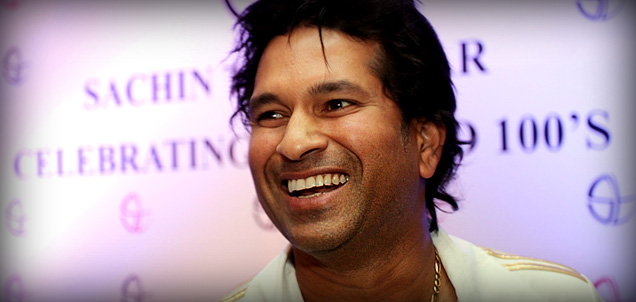
  • Is Sachin’s brand aura on the wane?


    By Binoy Prabhakar


    Even if you are cricket’s greatest overachiever, there is no escaping pressure. When Sachin Tendulkar recently collected his latest superlative – a century of centuries – the deed helped banish the pressure of ‘when’ that had been building up for a year. No sooner did he say “phew!” than a new pressure took the earlier one’s place: his retirement.


    The answer from the man himself, though “in a not Tendulkar-like way”, according to Mr Suresh Menon, editor, Wisden India Almanack, was: “When I retire is something I will decide…” Mr Menon broached the subject in a rather unflattering article earlier this week. “… the pressure on Tendulkar now is to keep playing so his minders can squeeze the last drop out of his huge commercial value,” he wrote.


    Mr Menon called this the “flip side of the millions”. “High earning sportsmen make a Faustian deal with the money devil; they are paid sums beyond the dreams of avarice for a decade or two… the devil demands his part of the bargain. Keep playing. Keep bringing in the money,” he wrote.


    Brands Tendulkar Endorses…All the deals are pre-existing, no new deals since the ‘Century of Centuries’Aviva, Adidas, Amit Enterprises, Audemars Piguet, Boost, Coca-Cola, Canon, Castrol, Sach (private label Kishore Biyani’s Future Consumer Products Ltd has created with Tendulkar), ITC Sunfeast, Jaypee Cement, Kaspersky, Luminous, RBS, Reynolds, S Kumars, Tohsiba

    Moot Question

    It still does not the answer the critical question: when will Tendulkar call it a day? But if endorsements were the deciding factor, as Mr Menon suggests, the answer would be 2014. All the 17 endorsement contracts in Tendulkar’s kitty run until then, according to his managers, World Sport Group (India) Pvt Ltd. Tendulkar remains among the highest-earning sportsmen in the country, second only to India captain MS Dhoni. But at least for now, there is no prospect of brands prolonging his career beyond 2014. No company has signed him up since his last milestone, belying the widely held expectation in the advertising fraternity.


    The only marketing event commemorating his achievement has come from beverages major Coca-Cola, which announced a rollout of 7.2 lakh cans featuring the cricketer. Sportswear major Adidas is preparing to launch a new marketing campaign featuring him in the first week of April. But both are existing sponsors of Tendulkar.


    Is it still early to rule out new sponsors, given that Tendulkar’s feat came about only on March 16? Advertising executives don’t think so. The buzz in the industry is that many companies were in talks with Tendulkar’s managers to make the most of his 100th century. Mr Harish Krishnamachar, senior vice-president and country head of World Sport Group (India) had said the feat will not have any impact on Tendulkar’s valuation. But no name has arrived on the scene.


    That’s because Tendulkar has always been selective about his endorsements, according to Mr Krishnamachar. “And we have never seen a milestone as a short-term opportunity given that our focus has been on creating a sustained long-term value for him,” he says.


    Tendulkar, says Mr Krishnamachar, has been very categorical about what categories he will be associated with and what he will not. “We have a very good assessment of what he is comfortable with and we have stayed true to that.” The brands that Tendulkar has said he will not endorse are tobacco and alcohol, says Krishnamachar. Tendulkar is said to have turned down a multi-crore deal with liquor baron Mr Vijay Mallya’s UB Group two years ago.


    …And Those That Haven’t RenewedContractsPepsi, Action Shoes, MRF, Britannia, Fiat, TVS, Airtel, G-Hanz, Colgate-Palmolive, Philips, VIsa, Ujala Techno Bright

    No New Deals

    Mr Krishnamachar says as far as any other category is concerned, it is something they “will consider as the opportunities present themselves”. But for now at least, there are few on the horizon.


    And all the existing contracts are many years old, even as much as 20 years in the case of Boost. The ‘newest’, if one can call that, is a deal with Coca-Cola signed in early 2011. Tendulkar’s last deals of note too were signed around then – a Rs 9-crore contract with Pune developer Amit Enterprises and another with apparel maker S Kumars for Rs 13 crore.


    Mr Prashant Singh, director of Octagon India, a sports and entertainment marketing company, says it is true that there has been no frenzy over Tendulkar’s latest feat. “There won’t be any until companies realise what his [retirement] plans are,” he says. Mr Singh says in one sense, Tendulkar, who turns 39 next month, is restricted by his own persona. “He has become the grand old man of Indian cricket… a la elder statesman than a player. That restricts more brands coming.”


    Mr Singh says what is keeping new brands away could also be the sheer number of endorsements. “He is endorsing 17; where is the scope for more?”


    Yet, many brands have not renewed contracts (see adjoining chart) with Tendulkar. He also now has few brands that cater to the young, except Coca-Cola and Adidas, an important segment for marketers. This is the upshot, says Mr Krishnamachar, of changing his portfolio of brands to reflect maturity and high-value categories.


    What about his brand value? Mr Santosh Desai, MD and CEO of Futurebrands India, says it isn’t what it was a few years ago. “Clearly, Tendulkar is in the evening of his career.” Mr Desai says the cricketer’s performance of late has been below par and because his century took a long time coming, there was fatigue associated with his feat. Taken together, it explains why Sachin hasn’t received new deals, he says.


    Whether Tendulkar wins new deals depends on how he evolves as a brand ambassador, says Mr Desai. “We have to wait and see… there is no clue from his current endorsements.”


    Source:The Economic Times

    Copyright © 2012, Bennett, Coleman & Co. Ltd. All Rights Reserved


    Photograph: Fotocorp


  • Every man’s new ‘Mandate’

    By Archita Wagle


    Saturday saw the launch of Magna Publications’ latest offering Mandate. The launch was held at the yet-to-be-opened F Bar and Lounge (The F Mumbai). The event was attended by well known personalities from the corporate and entertainment world.


    The magazine’s tagline ‘The Ultimate Bible for Men’, tells all about Mandate – the team is not promoting it as just a magazine, but as a way of life, commitment to understand what the new age man wants.


    The magazine will carry detailed profiles of famous male personalities, spinets about upcoming gadgets, fashion labels and automobiles. The magazine also promises ‘break through features, international personalities, exotic holiday destinations and hard-talks with legends across fields. Mandate will also feature columns on issues related to business, sports and sex columns, all penned by well-known celebrities.


    Speaking to MxMIndia at the launch party, Yuvraj Juneja, editor, Mandate brushed aside any concerns over other similar lifestyle magazines which are already present in the market: “Our magazine covers what a man desires, but more importantly it tells him what he should desire, we are giving him options. That’s where Mandate stands differently from other magazines. In the market there are magazines which are content heavy, some are picture-oriented and some are very layout-oriented. But Mandate has a correct balance. We cover everything from fashion to gadgets to holidays in-depth. Our magazine is targeted at the men belonging to the age group of 20-30.”


    The launch issue of the magazine seems to living up to its promises. The cover features Virat Kohli, Ranbir Kapoor and Yash Birla and the inside pages carry in-depth interviews with the three, the magazine also features styling tips, a picture heavy feature on the “Man’s most desired” cars and some other interesting features.