Author: mxmadmin

  • iBall comes up with its new TVC

    By A Correspondent


    Tablet PCs provide platter of possibilities to do different things related with work, play, information and entertainment. The iBall Slide TVC highlights the same wherein, Hrithik Roshan, the brand ambassador, talks about things he can do on iBall Slide and the performance of the product.


    The ad is already seen across all leading television channels. In the time to come one can witness an array of initiatives which will span television, radio, outdoor, below the line and digital media.


    Commenting on his association with iball slide, Mr Roshan said: “I was very impressed to know the growth of iBall in a span of less than 10 years and passion of its team which has brought it to this level. It feels nice to be associated with iBall Slide. This is an exciting product category and hopes to see India Go Slide on iBall Slide.”


    Launched in 2001 with a single product category, iBall today has a gigantic range of over 300 products in its 24 product categories. It has also launched over 35 products with new technologies for the first time in India. iBall’s last major category launch was iBall Mobile Phones.  iBall has already sold over 21 million products. The company has a strong pan-India presence with 24 branch offices across the country, with its products available in over 400 cities and towns.


    iBall products are serviced at its over 125 service centres across India. iBall is a well-accepted brand in the corporate world and is fast becoming a household name throughout the country.

  • Why MxMIndia isn’t bringing you detailed IRS data

    The answer to this question is simple: because the MRUC doesn’t want us to. When we posed a few questions based on the toplines we received, the director-general responded: “The Council is of the view that no further data / analysis to be shared with non-subscribers”.


    The MRUC wants the media tracking the IRS to pay up and subscribe. Hansa Research has been asked to not give us the dump (as it would a few quarters back). The reason: apparently there are publications who don’t want to subscribe because they’ll find them on MxMIndia or elsewhere.


    We don’t quite agree with this standpoint, but since these are the rules, we will abide by them. The MxMIndia Code of Ethics prevents us from publishing any content that’s illegally procured. And even though a few other websites have indeed carried detailed data, since our discussions with MRUC haven’t concluded, we will not carry.


    We believe that by sharing some of the broad numbers with the trade/niche media, the MRUC will only build an appetite for what lies within its data. Quite like the way TAM does for its television rating figures.


    In Q2 (2011), like some other trade sites, MxMIndia relied on certain media agencies/professionals for the data. We weren’t aware of MRUC’s diktat on the issue. But now that we are, we’ve stayed away.


    We haven’t even carried press releases from media companies. While we trust them, since there is no way to verify the data, we decided to pass these, explaining our predicament.


    So, dear reader. Your site is still on the ball with news that’s relevant, but our Code of Ethics determine the way we conduct ourselves. We will, hopefully, have stitched up a way in which we can bring you the real thing in the right way.


    -Pradyuman Maheshwari

    Editor-in-Chief and CEO

    MxMIndia

  • UTV Action gets set for growth


    By Rishi Vora


    This January will see UTV group’s Hindi movie action channel UTV Action’s second anniversary. The channel was launched in January 2010 with an aggressive marketing and distribution push. The TG was predominantly male in the age group of 15 years and above.


    The channel’s plan was to cash in on the increasing popularity of action films, primarily Hollywood films for an audience that preferred Hindi viewing as against English. The company had conducted a preliminary research prior to the launch of the channel which stated that out of 10 movies watched, seven to eight are action films.


    So UTV Action offered English films dubbed in Hindi. As a result, the trend picked up and many other players, including other entertainment channels, started doing the same.


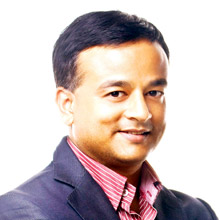
    Sameer Ganapathy

    The channel has grown in the last two years and is currently clocking between 40-50 GRPs in the male set. This viewership, as claimed by Business Head Mr Sameer Ganapathy, is scattered across markets in India. “In the initial phases, we expected more viewership from a select few markets. But, quite surprising we noticed that the viewership was coming from all the Hindi speaking markets in India. The channel surpassed our expectation as far as ratings were concerned. Apart from the metros, we saw a lot of traction from markets like Gujarat, UP, MP etc. And that’s how we started to build our viewership,” he said.


    On their major rivals in the TV space, he said, “We mostly look at the Hindi movie belt as competition. But if you take the male audience, there are multiple genres that come to mind. If you look at the market, and it is fairly large, we’re bigger than the infotainment set, we’re bigger than any Hindi news channel.”


    For the past one year, the channel has tied up with international studios; the biggest of the lot is the tie up with Warner Brothers. These international tie-ups helped the channel to significantly reduce the window gap between the telecast of a movie on an English movie channel and its dubbed version on UTV Action.


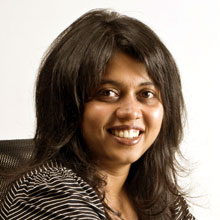
    Manasi Sapre

    Programming head Manasi Sapre explained the viewership pattern: “Though we see a fair degree of viewership on the weekends, if you look at the overall numbers, they’re quite evenly spread.”


    Recently, the channel underwent a revamp, with a new tagline: “Home of the Warriors”. Ms Sapre believes the new look is on the lines of the titles acquired by the channel: “It is a more modern, high-tech and a sci-fi kind of a look which goes well with our TG.”


    It may be recalled that a Telugu version of the channel was launched in July this year. This is a clear indication that regional is the way to go in the future. UGBL CEO MK Anand has been quoted stating that the channel will look to expand its offering in Malayalam and Bengali.


    However, Mr Ganapathy said, “Our immediate task at hand is to build our viewership. We have seen the channel make good progress, and now is the time to further expand our base in the existing markets before launching or expanding our offering to other languages.”


    The channel, in the next three quarters, will look to increase its market share by 25 per cent. If that does happen, UTV Action will leap forward into the 60 GRPs bracket (CS 15 + Hindi Speaking Markets). The strategy, as Mr Ganapathy explained, is to justify investments made on content acquisition and marketing activities in the next three quarters. “In the next three quarters, our aim is to consolidate and build our position.” He added, “UTV Action will become the single largest non-sport male viewership destination in the country.”


    After two years in the business, new look, more titles, the plan to expand to regional markets (the channel’s conscious call to start with the southern belt with Telugu), what’s in store next year? It’s a wait and watch affair.


  • Debrief: Mumbai Mirror TVC connects with Mumbaikars

    By Anil Thakraney


    Mumbai Mirror has positioned itself as the voice of the city. And the new TVC uses a simple but powerful creative device to communicate the positioning: a hand held microphone.


    In the ad, angry Mumbaikars express their respective grievances on the streets using this device. An author protests about his books being burnt. A mom complains about adulterated milk. Another dude stops a neta motorcade to vent his anger against the ugly political hoardings and banners that keep sprouting up. Quite obviously, the microphone represents the newspaper.


    I like this approach, and in particular, the use of a microphone. The device can become a powerful visual metaphor for the brand in the long term. The idea rides the public anger on the streets of Mumbai, and the script does not shy away from taking up provocative issues. Also, the stories are real, these have been published in the newspaper, so empathy and credibility would be strong. The people featured are aam aadmis and aurats of the city, and that’s the way it should be for a mass brand.


    All in all, a commendable effort. Should strike a chord with frustrated Mumbaikars.


    Rating: (On a scale of 1 to 5): 4. Powerful and very relevant advertising.

  • Cheil WW SW Asia pockets Delhi Daredevils

    By A Correspondent


    Following a multi-agency pitch, Cheil WW SW Asia has won the creative mandate for the GMR Sports-owned IPL team Delhi Daredevils. The pitch was for both creative and digital communication.


    Confirming the development, Alok Agrawal, COO Cheil WW SW Asia, said, “This is extremely exciting and passions are running high. Taking into account the rigorous pitch process and the competition, we are truly delighted. This win is also testimony to Cheil’s integrated expertise and its global sports marketing capabilities. The challenge is to build unique brand loyalty for Delhi Daredevils and make it a powerful fan motivator. Our approach centered around engaging the fan online and on ground. We truly understand that a brand like Delhi Daredevils is built with engagement and not advertising.”


    Speaking on the appointment of Cheil WW SW Asia as Delhi Daredevils’ creative communication partner, Amrit Mathur, Vice President – Head Operations, GMR Sports said: “Cheil’s understanding, strategy, ideas and passion for Delhi Daredevils clearly resonated the next-level thinking required for brand engagement and fan loyalty. We are looking forward to our partnership with Cheil and building our engagement with our fans in keeping with our overall strategy.”

  • Newswatch: Vidyadhar Date on the Thackerays and the English media

    By Vidyadhar Date


    There are several dimensions to the way the Shiv Sena looks at the media. I was present at the launch of the party’s mouthpiece Saamna in 1989. Bal Thackeray, the Sena chief, declared quite clearly that the Congress had made money in the municipal corporation in Mumbai for all these years and now they are going to do that.


    That was the ideological framework in which their mouthpiece was launched. Uddhav Thackeray had not arrived on the scene then. But now the Sena has launched his son, Aditya as well. The Sena now gets respectability from various quarters.


    The recent full page write-up, in what can be termed as ‘paid news format’, praised the Shiv Sena’s performance in the civic body in a ‘Response Connect initiative’ in Maharashtra Times on December 21. The feature can be seen as virtually the launch of the campaign for the civic elections in February 2012.


    What takes the cake is the projection of Aditya Thackeray as a youth leader whose efforts gave a roof to poor municipal students to study for their examinations. Night-time study centres were started in 16 municipal schools because of his alleged efforts. The credit is also been given to the Yuva Sena which he heads.


    Now a team from the civic body will also inspect sanitary facilities in civic schools, again thanks to the young man’s virtual directive to the municipal standing committee.


    A good section of the English language media has often gone out of its way to prop up the Shiv Sena. I have seen this from close quarters in The Times of India where I worked for over 30 years.


    A senior executive of the paper claimed that it was because of the Shiv Sena that Hindus in Mumbai were saved, post Babri Masjid demolition riots. Maharashtra Times, headed for many years by Govind Talwalkar, an erstwhile follower of MN Roy, has changed considerably in the last few years. Its editor, Bharatkumar Raut, went on to become a Shiv Sena MP. After this, he ceased to be the editor but remained as editorial adviser to the TOI group.


    A Hindustan Times Media Marketing Initiative of December 22 gave full page coverage to the Shiv Sena for providing allegedly ultra-modern health facilities. The page is full of pictures of Uddhav Thackeray, Shiv Sainiks and medical equipment. All credit is given to Mr Thackeray.


    Ironically, Uddhav Thackeray released CDs of the historic daily Maratha earlier this month at a function organised by his family. Maratha, now defunct, was a roaring voice for ordinary, poor people during the Samyukta Maharashtra agitation in the 1950s. It was fairly left-wing and its famous editor, litterateur Acharya Atre, was often accused by the Sena in the past of being a Communist sympathiser. Atre and Uddhav’s grandfather, Prabodhankar Thackeray, were at loggerheads and indulged in much mud-slinging in the media in the late 1950s. It is said that the term Shiv Sena was actually coined by Atre though he had quite a different kind of Sena in mind.


    The Atre family deserves credit for preserving the paper for posterity in digital form. Even large media groups with huge resources have failed to preserve their history in this way. The TOI, which claims to be the world’s largest selling daily, has not democratised its content, and one has to pay high fees to see a single page of the microfilm content of the paper.


    Curiously, the Atre family was approached by the Congress party, the Sena and the Raj Thackeray’s Maharashtra Navnirman Sena, for preservation of Maratha’s old files, according to Meena Deshpande, daughter of Acharya Atre and author of a Marathi novel on the Samyukta Maharashtra agitation.


    Interestingly, Narayan Rane, a former Shiv Sena chief minister, and now Congress minister, used his Marathi daily Prahar (assault) to attack the media calling it “dirty media”. “Dirty picture, dirty media” is the headline of the front page signed article by Narayan Rane on December 22. He was incensed by the electronic media’s coverage of legislators when they went to see Dirty Picture at a theatre inNagpurduring the legislature session there. The media had no right to intrude on the privacy of the legislators, he claimed.


    The writer is a veteran journalist.


  • Anna’s RSS links and TV’s outrage

    By Ranjona Banerji


    As was expected, the India-Australia Boxing Day Test match has started dominating TV news bulletins. This is not to suggest that Anna Hazare and the anti-corruption movement will be replaced by cricket – shame on me for even hinting at that – but it does mean that TV producers will have to do some juggling.


    However there is a chance that if anything controversial happens on the field, well… This is after all an India-Australia series and judging from a quick peek that I had this morning, the crowds are in…


    Newspapers, of course, do not have the same problems. They have the space and the wisdom gained through reflection and time to pick and choose. Cricket will find its place, as will Hazare and a whole lot of other stuff.


    * * *


    I was fascinated to see that NewsX chose to broadcast Midnight Mass on Christmas Eve live, from various services across India. Equally, to watch the Queen of England’s Christmas message on Al-Jazeera. This could be addressing niche audiences or a refusal to patronise viewers by segmenting them into tight demographic categories as determined by a marketing department.


    * * *


    Nai Duniya carried a story this weekend about Anna Hazare’s links to the RSS with proof of his association with Nanaji Deshmukh and a joint collaboration they did on village affairs. This, naturally enough, outraged TV anchors. Even the NewsX anchor – the channel is affiliated to the newspaper – found that he had to practically interrogate the editor of Nai Duniya on this ‘sacrilegious’ story. Like so many print journalists, the editor was unrepentant and unfazed. His story was not based on allegation but on fact.


    Very oddly, after that – and including in Monday’s papers – the story was presented as a Congress allegation on Hazare and was sourced to a tweet by Hazare-baiter Digvijay Singh.


    Is this journalistic laziness or a reluctance to credit Nai Duniya? After all, whoever looked for Singh’s tweet could just have easily have Googled Nai Duniya!


  • Online artifacts store makes good money

    By Amit Kumar


    Pallavi Singh Keshri believes that people should give wing to their dreams. Little wonder then that she has named her labour of love Eyass, which translates to falconry, wherein the young ones of a falcon are taken from the nest for training. There is another reason she chose the name – falconry is a near extinct art form in the Middle East, and art is what Eyass is all about.


    A two-year-old online store, Eyass showcases craftwork from all over the world. All the pieces are either hand-crafted, unique or endangered, and eco-friendly. This effort has enabled the creation of a platform, which connects artisans directly with the consumers, bypassing middlemen and margins.


    The road to entrepreneurship has been a circuitous one, but Ms Keshri was sure she would have her own business some day. After graduating from Delhi University in 1996, she picked up a post graduate diploma in marketing and joined a media house. Subsequently, she worked for Naukri.com for about two-and-a-half years. Then, in 2006, Ms Keshri quit her job as marketing manager at Dale Carnegie Training in Mumbai to pursue a one-year MBA degree in general management and international business. She worked in Dubai for a year and it was on her return to India in December 2008 that Keshri felt ready to start her own venture. “The time was right. I had gained enough experience in the field, had made the right contacts, and shored up adequate savings to start on my own,” says the 36-year-old.


    Over the next year, she worked on the idea, got the legal documents needed for the venture (export-import licence) and developed the website design. Finally, in December 2009, the company was launched with a seed capital of Rs 4.5 lakh, which mainly covered the expense for the website and inventory. In the initial months, Ms Keshri hired people on a freelance/part-time basis, her residence in Delhi serving as office to save on expenses.


    Around this time, Ms Keshri also realised that she had to narrow down her business focus if she wanted to succeed in the sector, while remaining true to the concept of direct marketing. “The point of starting Eyaas was to ensure that we get to work directly with artistes and craftsmen. I realised that if we tried expanding too soon, I would have had to compromise on that aspect, which I wasn’t comfortable with,” says Ms Keshri. Today, Eyaas works with many partners, including All India Artisans and Craftworkers Welfare Association, an African associate and a Cambodian one. The repertoire includes toys, home accessories, pottery, stationery and jewellery.


    Eyaas has raked in revenue of about Rs 3.5 lakh in the past year and is expected to breakeven in the next six months. The venture currently employs four people, including Ms Keshri. Although she hasn’t been able to pay herself a salary yet, she hopes that this will be rectified in the coming year. Meanwhile, she has managed to keep herself going financially by helping aspiring candidates prepare for GMAT exams in various institutes. However, she is sure that Eyaas is destined to soar.Future plans? “We need to work on reaching out a little more to the artistes in south India,” she says.

  • Micromax strengthens its core team in India

    By A Correspondent


    Micromax, the leading Indian mobile brand, in its endeavour to further firm up its leadership position in the market, on Tuesday announced the appointment of key positions in its management team in India.

    Deepak Mehrotra, joining as the new Micromax CEO, will now be at the helm of affairs. His last assignment was in Bharti Airtel as the operations directors- mobility business.

    The brand is already a key player in the feature phone segment and is now looking to capture the smartphone market share as well. The focus will now be on two separate divisions: the ‘feature phone division’ to be led by Khaja Muzaffarullah and the ‘smartphone division’ to be headed by Ajay Sharma.

    Commenting on the development, Rahul Sharma, Executive Director, Micromax said: “We are a brand that’s admired for challenging the conventional. The new team brings with them a wealth of experience by virtue of their long-standing association and in-depth understanding of the overall mobility market globally.”

    Considering the leap Micromax has taken in the mobile ecosystem in India and globally, the appointments are a testimony to a great future in coming times as well. Deepak Mehrotra, CEO, Micromax Informatics Ltd said, “These are exciting times, not only for the brand, but for the industry as a whole. We are witnessing technology advancements every day and that further excites us at Micromax. The Indian mobile industry is growing at a rate of 12 percent and we would like to capture this opportunity and drive the next phase of growth for the brand. We would further leverage brand’s success in this high potential Indian market and build new capabilities.”

    In the next two years, as India gears up become the largest mobile market, Micromax aims to double its reach as well and strengthen its distribution network. Leading this vision will be Khaja Muzaffarullah as the Head of sales for feature phone division. Mr Muzaffarullah, was earlier with Sony Ericsson.

    Commenting on his new role, Mr Muzaffarullah said, “The channels partners are a key to our business model and form the backbone of our strong presence in the country. We would be strengthening our distribution across the country and work towards creating a robust network that brings us closer to the customer.

    Micromax, having already established its leadership in the feature phone market in India, now aims to build a strong portfolio of smartphones for the discerning Indian consumers.


    Commenting about the potential of smartphones, Ajay Sharma, who will be leading the smartphones division, said, “Micromax would aspire to a 10 percent of the market share at the earliest.”

    Micromax, is the largest Indian mobile handset company, in terms of units shipped during the quarter ended March 31, 2010 and the third largest mobile handset seller as at March 31, 2010 (according to IDC’s India Quarterly Mobile Handsets Tracker, 1Q 2010, June 2010 release).


  • Homeshop18.com and Microsoft join hands

    By A Correspondent


    This holiday season, HomeShop18.com, Network18 group’s online and television retail marketing and distribution venture, is teaming up with Microsoft to bring its best selling offers closer to its customers. HomeShop18.com users can now browse the website faster through a one-click access system, using Windows 7 and Internet Explorer 9.

    All customers who upgrade to Internet Explorer 9 and pin HomeShop18.com to their IE9 browser will get a free gift voucher and easy access to the shopping portal from their desktop taskbar. Windows Internet Explorer 9 can be downloaded free from www.homeshop18.com or from www.beautyoftheweb.in.

    Commenting on the association, Sundeep Malhotra, Founder and CEO, HomeShop18 said, “We feel proud to partner with Microsoft to offer easy access to our e-commerce portal, HomeShop18.com. With this association, we wish to introduce unique technological benefits in order to strengthen our customer interface. Keeping all the consumer needs in mind, we have announced the association with Microsoft.”

    “We are very excited about our partnership with HomeShop18.com, one of India’s fastest growing web destinations. Through this association, we have made it simple and fun for Homeshop18.com subscribers to get one-click access with Internet Explorer 9. We are confident that Indians will love this all new immersive browsing experience”, said Senthilkumar Sundaram, Director – Product Marketing, MicrosoftIndia.

    This association will help Homeshop18.com users to easily ‘pin’ the website to their Windows 7 taskbar and get one-click access to the shopping site. Additionally, users can simply right click the taskbar icon for quick access lists, also called jumplists.


  • Gouri Dange: Where’s the Indian guy?

    By Gouri Dange


    I have a question. The Indian diaspora in the US amounts to some… wait, let me Wiki it… ok, here it is: “According to the 2010 US Census, the Asian Indian population in the United States was 1,678,765 in 2000 and grew to 2,843,391 in 2010, a growth rate of 69.37 percent, the highest for any Asian American community, and among the fastest growing ethnic groups in the United States.” (Now ‘fastest growing’ meaning the existing ones are having babies all over the place, or more of our compatriots are joining the hordes there? My statistics-challenged mind is not able to figure that one out. But I digress.)

    The point that is noteworthy is that in spite of this sizable presence, Indians are rarely seen as part of the script in most sitcoms, romcoms, detective serials, and courtroom or hospital dramas. Now why is that?

    Before Indian readers instantly start getting all grumpy about this fact and talk about poor representation and discrimination and all of that, I think we Indians have a hand in this invisibility too. It’s because of the way most Indians are seen to live in the US. Indians by and large (and getting larger) stick to their own kind, work hard, and are not seen as people who hang around coffee shops named Central Perk or shoot baskets with colleagues or sit at the bar after a long day in the courtroom.

    The overall impression (partly right, partly wrong) is that they work long hours (take a look at ‘Asok’ from the Dilbert comic strip), scurry home or to an Indian restaurant or to a theatre showing a Bollywood movie or to an Indian wedding (synonymous with a Bollywood movie most times). This is why Indians perhaps simply do not form part of the script or landscape of American TV shows. And I rarely or never see an Indian name in the crew credits either.

    The only famous Indian who appeared once on Oprah pouted and neighed her way through the whole show in a hilariously wannabe accent, in a forgettable appearance some years ago. And of course she showed Oprah how to wear a sari. Now if that isn’t typecasting ourselves…

    As for fiction characters, there is Apu on The Simpsons. He is predictably the owner of a grocery store and has eight children. (Again, I’m not COMPLAINING here, I am just pointing out how we are perceived.) Hilariously, one scene particularly sticks in my mind: When everyone is making sand castles or other fun stuff on the beach, Apu is industriously making a replica of – what else – The Taj Mahal. And when someone knocks it down inadvertently, he takes great umbrage and cries out in bitter outrage: “You have desecrated our National Monument, you fat American!”

    Only recently has an Indian girl called Priya been worked into the Big Bang Theory (Z Café). But already we know that her mother would kill her if she knew she was seeing this boy.

    In the hospital comedy Scrubs (FX, Star World, Z Café) too, very few Indians are visible, though we know for sure that in real life, US hospitals are stacked high with Indian doctors. All you see in Scrubs, at the most, is a frightened looking sort of Indian-sub-continent intern as part of the backdrop. I also recently spotted what was supposed to be a Sikh doctor sitting with senior doctors Kelso and Perry on an episode of Scrubs, but he was wearing something like a maroon lacquer box with a thin border of tinsel on his head, which they were trying to pass off as a turban. Strange.

    The series Becker had the Ted Danson character in New York refer to an Indian only once – when he returns home and hears – what else – a blaring radio with a Hindi song, and shouts out down the stairwell: “hey Asian guy, turn it down, or I’ll call Immigration.”

    Friends has never had an Indian in it (someone correct me if I am wrong) in spite of the fact that it is set in New York, and none of the six friends could possibly live in that city without tripping over one of us Indians.

    Knowing the American propensity to be oh-so-fair-and-inclusive (the latest is the so very PC thing of saying Happy Holidays and not Merry Christmas, because in a racially mixed society someone may burst into tears for being included in a Christian greeting, apparently), I’m surprised that there aren’t more Indians on American TV and films, even as incidental characters. However, perhaps they steer clear of it all, given that they don’t really know the Indian in their midst at all.

    Naming no Names is the mid-week column where novelist, columnist and counsellor Gouri Dange presents her tongue-in-cheek view of our world.


  • 5 reasons why Indian ad talent is doing so well in Asia

    By Prashant Kumar


    #1 We can talk: It’s only when you work outside India, especially in the East, that the benefits of having been born in a by and large free democracy stands out more starkly. The culture of debate, rooted in our ancient dialectical tradition and honed by our democratic upbringing, means we communicate well, and have the analytical ability to deconstruct complex problem scenarios into rational components, solve and put them back together into one cohesive, integrated whole and strike a good balance between macro and the micro.


    #2 We are hungry: Coming from a nation of a billion-plus people, and having fought hard every step of the way to belong to the privileged few millions, Indians have an innate drive to stand out and stay at the top of the line. This results in relentless passion, a craving for new learning, hardworking attitude and the courage to persevere, which for many a comfortable people of relatively affluent countries is less common. In the backdrop of a rising India, increasingly confident of its place in the larger world, there is a manifest destiny many subconsciously believe in.


    #3 We can count: Even our qualitative researchers can do a few good numbers, thanks to our indomitable dads and their fanatic fascination with mathematics. This faculty inculcates in us a more objective view of life, problem scenarios and decision making. To an average Indian talent, getting under the skin of the data to reveal the underlying story and seek the conceptual bridge with the intuitive insight into reality is the crux of good management. That doesn’t come so naturally to others.


    #4 We plug into the big picture: While Indians are not well known for operational efficiency and reliability, their diligence and attention to details, and a perfect alignment between the promise and the delivery, they sure get the big picture much better. Their ability to think beyond their narrow job briefs and their strong urge to figure out how the world around them works helps them develop a more holistic perspective earlier, helping them transition to leadership roles easier.


    #5 We can survive: The versatile challenges of growing up in India, encountering personalities and assumptions from a dozen parallel worlds in a regular day, and holding our faith into the perfect despite living with deep imperfections all around us, makes us highly adaptive, at least in our work set-up, if not in terms of food habits. At some level, our ability to go back to zero base and reframe our approach is probably better, sometimes out of need and necessity, but often out of sheer instinct.


    Prashant Kumar is the CEO at IPG Mediabrands in Malaysia.