Author: mxmadmin

  • Asterii seeks to create new wave in the world of analytics

    By Johnson Napier


    How often do we come across marketers, media agencies and surprisingly, even research bodies who say the inevitable: ‘due to lack of data… we couldn’t project the right numbers’ or ‘our projections fell short of expectations due to the variation in numbers’ and so on? In fact most marketers are wary of pumping in huge monies behind a project or activity given the lack of availability of accurate data that goes a long way in simplifying trends and analysing customer behaviour across markets – ingredients that play a critical role in the marketing plan of most brands.


    While research agencies are the most sought after for mapping such trends, they often fall short in providing a plan that is wholesome; something that could alter the way marketers look at the future. Such shortcomings are turning out to be easy pickings for agencies, which are on an overdrive launching divisions dedicated solely to analytics and data. And the latest to join the bandwagon is ad agency DraftFCB+Ulka that has announced the launch of specialty division, Asterii Analytics in India.


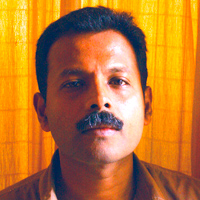
    Niteen Bhagwat

    In India, the team will be led by Niteen Bhagwat, who has been assigned the post of Executive Director and CEO. Sharing his views on the new launch, Mr Bhagwat admitted that while agencies were waking up to the phenomenon in a heightened manner, there was still a lot that is needed to be done in the space. “The mantra at DraftFCB+Ulka has always been about creating brand wealth and making our clients richer. At one point in time, it was having right strategies and good creatives, which will continue but the marketplace is becoming increasingly competitive for our clients. The same set of tools or decision-making may not be as optimum or efficient as it was earlier. We believe that if our clients have to compete, they have to take decisions that are completely rooted in data. So, if we have to continue delivering on our promise of creating brand wealth with the underpinning of analytics, it is absolutely critical. It also compliments beautifully with our overall approach of being a strategy strong agency group.”


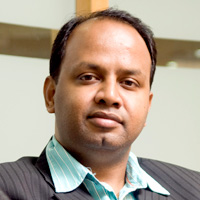
    An analytics person with more than two decades of experience in the field, Paula Fedoris, EVP, Chief Analytics Officer – DraftFCB pitched in by giving a global overview on the origins of analytics and the need for the discipline to make it big in India. “In certain markets, the marketing and media analytics trend has been taking place for the past 15 years or so. There are certain agencies, particularly in theUnited StatesandEurope, which have gravitated towards making sure that marketing strategies and media investments are as smart as possible. So we have been applying analytics to these challenges for quite a few years now. This is more so for agencies which are more focussed on one-to-one marketing or database marketing or direct marketing, they have always been very quantitative-oriented.”


    Paula Fedoris

    According to Ms Fedoris, with some organisations, when the internet came in a big way in 1999-2000, it was then that some of these tools and techniques went on the online space. “Over the years, we have been able to generate a lot of data by our marketing activity. The companies are trying to data-mine insights from this information to draw new insights and conclusion and make better decisions, not only about their current business but also on where they need to go in the future and how this information can help in identifying new and important trends that they need to be mindful of, as they develop a strategic direction and maintain competitiveness in the marketplace.”


    Citing statistics, Ms Fedoris said that overall businesses are generating about 40 per cent new data every year and how companies are being able to harness this information and in the marketing arena this has been accelerating even more.


    As for the USP that Asterii would bring to the table, Mr Bhagwat stated categorically: “Asterii will bring a far sharper focus on analytics than other offerings from marketing communication companies. That’s majorly because it is a standalone agency, so much of the resources and people in the team will be focussed on Asterii; they won’t get lost in handling other functions within the organisation. As for the other groups that offer analytics, what we understand far better than most is the concept of insights. So we would be far better than the others based on our insights and ideas in the marketplace.”


    In fact, Mr Bhagwat was certain that it was the most opportune time to launch in the country as marketers would take a liking to the service given the hostility that’s being faced by them amidst a hostile economic scenario. “When businesses are under pressure, analytics is proven to be able to give you a lift in terms of sales or profitability and by a huge margin, if done properly. If the market conditions are tough, analytics would probably be the answer to find new segments to increase growth or market share or figure out ways to optimise your marketing communication by doing market mix modelling. So, if at all there are budget pressures, analytics will help clients spend their money more effectively. In a sense, now is the best time for us to launch our division.”
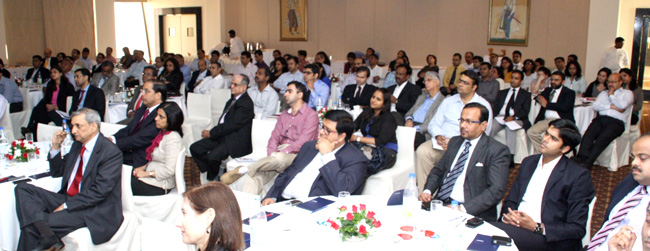


    Chancing upon the opportunity, Mr Bhagwat admits that the agency has approached at least ten marketers to offer their services. These include clients who are aligned to the advertising agency as well. “We have started speaking to a whole host of people we are associated with and the response has been encouraging. Close to ten marketers have evinced interest and we would be meeting up with them to decide future course of action. What actually materialises, I think only time will tell.”


    On the sectors that the solutions would be centred around, Mr Bhagwat said that it would be automotive, packaged goods, financial services and retail. When asked on how they went about shortlisting these sectors, Mr Bhagwat said: “There are certain sectors that are rich in data, so the comfort level in doing analytics in those areas will obviously be very high. Also, at the same time, companies in sectors such as retail, automotive, packaged goods and financial services would be analytics-aware sectors and so the kind of solutions that they would want would be of a different kind versus companies in, say, fashion or food where analytics is not used as much.”


    A much more historical and detailed perspective was provided by Ms Fedoris: “Historically, analytics started with the financial sector because they are very quantitatively-focused and this got further momentum with the advent of credit card transactions and the ability to find out what the people were purchasing. In theUnited States, we were able to marry our purchase decision behaviour with the demographic information and so that was always a robust area that people focused on. It seemed to then migrate to the travel industry, as people began to book their airline tickets and have loyalty programmes, both the airline and the hotel industry understood the importance of relationship marketing and began developing databases of their customers. Ultimately it moved on to retail as people used their credit card in the retail establishment and then finally it moved on to the packaged goods area.” According to Ms Fedoris, a lot of people are going on to the internet to find information on how to go about buying packaged goods product and are able to find solutions online. “So these are the core sectors that emit a lot of data on patterns and trends,” she said.


    So focussed is the group on the new division that it won’t stop short in going all out as far as investment is concerned. Asserts Mr Bhagwat: “Analytics, for us, is an absolutely critical offering that the agency group is going to have. So investments won’t come in the way of growth as such. We are not looking at this only as a revenue model but more as a capable solutions provider. We have invested in new office space in Mumbai that can seat up to 50 people; we are also investing in fairly expensive software and hardware that goes with it. Also, Paula would be coming toIndiaon an ongoing basis to be able to bring along global best practice tools that are in use around the world. This will enable us to have global scale and capability in our Indian operations.”


    As for the growth, Mr Bhagwat feels it is too early to foretell, but that is not of concern as yet. On a stronger note, he feels that the analytics market is still in its infancy and has a lot of potential that’s yet to be explored. “Analytics market inIndiais still in a nascent stage; they do not pay as much money as they do in international markets. So it is an under-served and under-priced market,” quipped Mr Bhagwat. According to him, all this will change once people start understanding the true value of analytics and how one can take advantage over competitors by employing analytics. In his opinion, the tipping point is next couple of years. But what is important is that the availability of good quality data is going to improve dramatically in the future, he concluded.

     

  • Day 2 @ad:tech: Nothing’s too small in new digi world

    By Shruti Pushkarna


    [youtube width=”400″ height=”200″]http://www.youtube.com/watch?v=p2FRhKna0k8[/youtube]

    The final day of ad:tech witnessed engaging keynotes and panels on topics like social commerce and mobile marketing. Here’s a wrap up of the second day at the conference.


    Small is the new big: Rethinking digital in a world of smaller, smarter screens

    Day 2 of ad:tech 2012 opened with a keynote by Pete Blackshaw, Global Head of Digital Marketing and Social Media for Nestle. Mr Blackshaw opened his session, ‘Small is the new big: Rethinking digital in a world of smaller, smarter screens’ by introducing two broad themes. First, ‘the boring basics still really matter’ and the second, ‘small is the new big’. Elaborating on the first theme, Mr Blackshaw emphasized that the essentials of marketing are the very principles that a company should build its digital strategy upon. He said, “The essentials of marketing in the traditional sense that include: Searching out and identifying big ideas that are contact neutral and have a potential of sustainable communication; engaging with consumers when they are most ready to receive; and creating an attractive and rewarding brand, find unique life on the digital platform.”


    Talking about his role in both the areas of corporate communication and consumer communication, he said that a big convergence is happening between the two. “There is convergence between corporate and consumer communications; marketing and research – asking questions has been an integral part of consumer research and now involves a large part of digital too; product quality and sales and; supply chain and digital – as consumers can now look behind the brand,” explained Mr Blackshaw.


    He also talked about the three operating pillars of Nestle, listening, engaging and transforming. He said that these three are part of the many winning actions that Nestle has uniquely defined for each function. And one basic that still applies is the power of storytelling. Blackshaw cited the example of Nescafe Know Your Neighbour campaign in India to emphasize his point that good narratives work well with the consumers. One has to device a good narrative, tie it to a big idea to engage consumers.


    Speaking of the other theme, ‘small is the new big’, Mr Blackshaw said, “We need to think harder about simplifying our messaging and serving the consumer. We need to shrink, simplify and serve. Our screens are shrinking and so we need to simplify to serve better.”


    “This is a great time in marketing…organizations are in transformation, digital is creating lots of new opportunities to connect and bond and add value for consumers. The number of consumers going online, using social media is unbelievable, I think that creates both challenges and opportunities,” concluded Mr Blackshaw.


    The evolution of content, commerce and entertainment in the digital world

    Satyan Gajwani, Director-New Media, BCCL delivered the second keynote address on Day 2. His presentation was divided into three basic areas, content, commerce and entertainment.


    In entertainment, said Mr Gajwani, “…the focus has been on two or three major initiatives. One is gaana which is a digital music platform that’s really oriented around discovering new content. Second is the way we have looked at sports and IPL specifically, that’s going to be a big focus for us in a month from now when IPL launches in April. And last is a new project we are going to launch in a couple of weeks, called Box TV. Box TV is going to be a premium video destination for India where we’ll get full length movies and TV shows and eventually sports, a lot of high end content oriented around a different type of video experience.” Mr Gajwani also emphasized that it’s important to be ‘social by design’ in today’s digital world.


    Talking about commerce, Mr Gajwani said it is time to understand the supply chain better. He also said, “Eventually there has to be some sort of molding between content and commerce as a model where the user can engage with content that’s engaging and quickly use that as a means to transact as well.”


    Behind all content, entertainment and commerce, Mr Gajwani said, “…we are trying to build a KYC behind it all, which is Knowing Your Customer, both in terms of what is it that he likes and eventually developing some sort of profile of who he is. And behind that we want to launch a loyalty programme where we know what kind of a user you are and then encourage you to be a more active user by giving you badges that validate you for your activity.”


    Mr Gajwani concluded by saying that the hottest thing in 2011 was e-commerce and that 2012 will be all about consolidation and a deeper focus on supply chain management.


    Mobile Marketing

    This session designed to look at insights on how marketers are evaluating the power of mobile as a medium to drive their business objectives, was moderated by Rajesh Jain, Founder Chairman & Managing Director, Netcore Solutions. Other panelists included, Dippak Khurana, Co-Founder & CEO, Vserv Mobile; Dr Nickhil Jakatdar, CEO & Co-Founder, Vuclip; Abdul Khan, Senior Vice President & National Head of Business Marketing, Tata Teleservices and Kiran Gopinath, Founder & CEO, Ozone Media Solutions.

    Rajesh Jain opened the debate with a fundamental question to every panelist, ‘what are the barriers that are holding mobile marketing back?’

    Abdul Khan of Tata Teleservices said, “Mobile marketing has got a terrible press. Creativity is abysmal in this area. It is because of the pricing structure that it is viewed as a commodity.”

    Mr Gopinath said, “One of the key barriers holding it back is that a lot of our customers are slow in mobilizing their sites, the lack of mobile sites is holding it back. And secondly, it will take a lot more education of people in the agencies for mobile marketing to fully take off.”

    Mr Khan also added, “It is probably just a lazy mindset that is holding back mobile marketing, it cannot be money as people are frivolously allocating money tp programmes like IPL.”

    Mr Jakatdar echoed Mr Gopinath’s point of educating people, saying, “We need to communicate in the same language with brands, agencies and publishers.”

    Dippak Khurana made an interesting point that the ecosystem today is quite complex and for mobile marketing to kick off, dedicated resources have to be allocated. He said, “Currently organizations are busy with digital and social, leadership needs to take a call and put dedicated people for mobile.”

    Rajesh Jain concluded the session by drawing out the main points from all panelists. He said, “There is a need for dedicated people in organizations to look at mobile. The lack of mobile sites needs to be addressed and finally someone needs to look at the ability to convert clicks into cash. Clicks are not getting converted into cash because of lack of payment options on mobile.


    Social Commerce

    The session was moderated by Rajan Srinivasan, Senior VP Marketing, Web18 Software Services Ltd and the panelists included- Narasimha Jayakumar, COO, E-commerce, Homeshop18; Kirthiga Reddy, Director Online Operations, Facebook India; Ramesh Chembath, Asst Vice President, Head- Marketing and Modern Trade, Godrej and Ishita Swarup, CEO, 99labels.

    The session centred on how brands can make the most of social technologies to transform shopping experience.

    Ms Reddy making her initial comments on the subject said, “E-commerce sites need to rethink the whole e-commerce experience and think of how to put people at the centre.” She also added that online behaviour is nothing but a reflection of offline behaviour.

    Mr Jayakumar emphasized that before we get into engaging the consumers we need to get the basics of the e-commerce in place. He said, ‘First ee have to make sure that the consumer is happy with the experience and then we start engaging.”

    Answering a point on whether there is any difference in the digital social and the traditional social, Mr Chembath of Godrej said, “When it comes to appliances, it is really a social activity. Buying an appliance is when a whole family goes out to make the purchase. But there has beena huge shift in consumer buying behaviour off late. In traditional social, one would ask members of the family, neighbours or even friends before making the purchase. But now with nuclear families, people are willing to experiment with brands. Instead of asking their peers, they want to go online and check the reviews posted by users on products and brands. That’s the new digital social.”

    From the debate it also emerged that brands need to see the value of social in fundamental areas like connecting with people, sharing experiences etc. The power of social really comes from the personal connection brands can provide on the web with the help of social.


    Exploring the future of storytelling

    Richard Dunmall, Vice President, Global Accounts & Agencies, Microsoft Advertising made his keynote presentation on ‘Exploring the Future of Storytelling’. Mr Dunmall shared a glimpse of futuristic technologies being adopted by advertisers and publishers in connecting with their audiences and telling their brand stories. He started off by talking about how to master the new digital storytelling world. He said, “What consumers want, technology delivers through self-expression, enjoyment, connection and discovery.”

    The four trends according to Mr Dunmall that marketers are making big bets on, are


    i) Everyone’s a storyteller

    ii) The new face of fun – the ability for people to play, share experiences

    iii) Increasingly contextual world

    iv) More human experiences


    Mr Dunmall said, “Everyone is becoming a storyteller in the new digital world, becoming a relevant owner of content. Every brand has a story to tell and digital is enabling new ways of storytelling.”

    Talking about the new face of fun, Mr Dunmall said, “Technology allows human to play in a much more enhanced way, the ability to compete with each other and have fun is what leads to engagement.”

    Talking about the third trend of the world becoming increasingly contextual, Mr Dunmall said, “Every surface can become a digital source of content in the future.”

    And of all this leads to a more ‘you’ centric experience that allows brands to customize and build a brand narrative around it. Mr Dunmall concluded his presentation by reemphasizing, “Possibilities of technology are endless.”


    The DigiMarketing Imperative

    The last keynote of Day 2 was a presentation on ‘The DigiMarketing Imperative’ by Kent Wertime, Chief Operating Officer, Ogilvy & Mather, Asia Pacific. Mr Wertime started off his presentation with a question on how ready are marketers to make the shift to DigiMarketing and everything it entails.

    Mr Wertime said, “Market despite the enormous opportunity is dramatically under-spent around the world. Agencies need to be much quicker in moving and they need to add a lot more capability than they have. There is definitely a continued lag in digital and as an industry, marketers need to fill the gap increasingly.”

    Mr Wertime also said that the shift to DigiMarketing needs to be a tectonic shift. He said, “It’s really not about the fast movers but about the slow movers. If one looks at the shaping of the future, it has actually followed a very logical course. Similarly the shift to DigiMarketing needs to be a tectonic shift. Marketing money is going to go increasingly to the digital and within a global context, markets like India have enormous room to grow.”

    Mr Wertime also added that the number of people armed with digital devices is increasing and so as an industry we have to take opportunity of this shift in a way that will please customers.

    Talking about whether the shift to digital will be that of a replacement kind, Mr Wertime said, “The digital is an additive story and not replacement, it is a relational story with traditional media.”

    Concluding his presentation, Mr Wertime said “There has to be a shift from POE to PUC, that is, Paid Owned and Earned to Participation Utilty and Contribution.”


    ***


    Delhi will play 3rd time host to ad:tech in 2013. Rammohan Sundaram, Event Chairman and Founder, CEO & Managing Director, Networkplay Media Pvt Ltd announced that ad:tech will be back in New Delhi in 2013 between Feb 20 and 23. He also announced that the launch of ad:tech Bangalore will take place sometime towards the end of September.


  • [PR Channel] We are producing pathetic people for almost every kind of task: Dilip Cherian

    Text and Videos by Shruti Pushkarna


    He is one of the first names that crosses anyone’s mind when speaking of public affairs management or image management. Addressed by many as an ‘influencer’, he is known for his roles as an image manager and a policy advisor. Dilip Cherian, Consulting Partner at Perfect Relations started the company in the early nineties and now the firm is South Asia’s largest communications consultancy with 14 offices and 550 professionals on the team. Mr Cherian has also been the editor of the business magazine, Business India and the Observer before he entered the communications business. His work goes well beyond public relations and media. Mr Cherian is the member of the Board of Advertising Standards Council of India and on the Governing Council of the National Institute of Design. He has also been a member of the Censor Board.


    In this conversation with MxM India’s Shruti Pushkarna, Mr Cherian confesses to being an ‘image guru’ and shares his views on various subjects like managing public affairs in the PR space, lobbying, policy making, PR in a social/digital world and the biggest challenge he thinks the PR industry is facing today. While many in the communications business have admitted to the challenge of attracting talent into the business in the past, Mr Cherian goes a step further when he says, “I think talent is going to be India’s huge pitfall in the coming years. We are producing pathetic people for almost every kind of task.”


    Dilip Cherian Interview Part 1
    [youtube width=”400″ height=”200″]http://www.youtube.com/watch?v=4Z4b_10_GWk[/youtube]

    Q: You are often referred to as the ‘image guru of India’. And a lot of people address you as an ‘influencer who opens the right doors for his clients’. How do you react to that?

    A: The image guru part I confess to, the opening doors part… I don’t do that. What I do however is, as an image guru, I try and help my clients to focus on what are the issues they should be communicating about. I also help them understand what are the implications of what they are doing and whom they are communicating to. So what I am good at is, pointing in a direction and also very often enhancing their skills in being able to project themselves correctly. This kind of situation requires knowledge of who they are communicating to, so it’s not that I open a door, it’s just that I tell them when they walk through the door, what should they say and how would that impact their image.


    Q: So you do confess to being an ‘image guru’?

    A: It’s both the kind of appellation which works in a positive sense for the company because I only work through Perfect Relations and through the five group companies that we have. I think that the designation, as it were, helped me focus on what my real work is. My real work is more in the nature of someone who provides coaching to my own people, or to the people we work with, to enhance their skill sets in being able to better manage their image. So the ‘guru’ part is about the teaching part and that really is about helping others enhance whatever skills they may have, or to reduce sometimes, and this is equally important in my view, to reduce the aberrations which prevent them from having the image which they desire.


    Q: You have done an extensive amount of work in public affairs management. Tell us a bit about your experience of work in this area of PR. Also, how critical do you think is public affairs management to the communications business?

    A: Public affairs management is a relatively new science as far as India is concerned, and that’s because of the fact that public affairs used to be, the way it was practiced, largely a dirty word because it had nuances of ‘off-the-balance sheet’ activity. Where we have come in and over the last ten years what Perfect Relations has done is that in the public affairs space, we have created space for a new kind of activity. And that is, helping to communicate with policy makers to influence the direction of policy; policy when it’s wrong or policy when it is being created or policy as it’s being created. In the public affairs area, the relationship with the client is that of the guru kind but also of a confidential advisor, telling them what are the aspects of decision-making they need to focus on rather than the people. Because what’s happened over the past is that too much enthusiasm has been expended on people. It’s not about people, policy making is about a process, and that’s the first skill set we have managed to bring into this area of public affairs. The second thing that we do in public affairs is we help global companies understand that decision-making in India is not uniquely different from anywhere else. So Perfect Relations is the only company which has had experience and skills set in working at a panchayat level, at a district level, at a state level and at the central level. The decision-making vectors and the parameters in each of these spaces is different. Global companies don’t necessarily have somebody who can lead them through this; this is not about market entry strategy, this is about understanding the policy landscape of the country.


    Dilip Cherian Interview Part 2

    [youtube width=”400″ height=”200″]http://www.youtube.com/watch?v=LDi643AWsD4[/youtube]

    Q: How critical is the function of crisis management in PR?

    A: Over the last 25 years of existence if there were one function for which we’ve been called in at the highest level, whether it’s in the public sector when for example there was a fire on an oil rig, or whether it’s in the case of a global company when there was a firing in faraway Goa, or whether it’s in the case of an Indian company whose licence got cancelled, Perfect Relations has always been the first port of call for somebody who is in really deep trouble. So crisis management is something that happens as a plug-on rather than as part of a process. Largely we have come in when the agency that was currently handling a client was seen as not geared to have the bandwidth, the experience, the specialized people and the local teams available on the ground; and that’s the reason why we get called in. Over the last 25 years of doing this in India we also realized some years ago that crisis preparedness as a module needs to be put into companies. So for some of the clients who have the budgets to be able to do this because this is expensive, today we have teams that go in and train top management in the five life-saving skills, life-saving in terms of corporate life of a company, that are needed to ensure that crisis preparedness is at a higher level than it ever was before.


    Q: What are your views on lobbying? Do you think past controversy has tainted the image of PR as an industry?

    A: Lobbying is a dirty word in terms of the kind of nuances and practices that a large number of players have indulged in. Is this a result of the way our democracy functions? I don’t quite know. But is it possible to function differently? The answer is, absolutely yes. It takes more patience, it takes much deeper skills and it takes a lot more of focused attention of top management. The problem with ‘bad lobbying’ as I call it, is because sometimes CEOs or owners want to outsource it, saying, we are not doing this. Let somebody else take care of the dirty work. And then it becomes a dirty job. So where we are concerned, what we advise our clients and owners of companies who work with us is, that this is something that you need to integrate yourself into because when the mud starts getting splattered it’s bound to hit you; so rather than outsource it, be part of the process and ensure that you take liability and responsibility for what goes into it. We find that kind of lobbying does not have a bad name, whether it’s a government department, whether it’s a minister, whether it’s a panchayat, everybody is willing to talk to the person who is actually the ownership person in terms of what he or she is planning to do on the ground. Very often they get heard and very often the problems get sorted out. So lobbying of the kind that we call ‘ethical lobbying’ is something we are quite happy to say that we do, and we’ve had no problem dealing with multiple organizations using these techniques.


    Q: How do you think PR can be more than just mere press relations?

    A: I think PR is already more than press relations. What is happening is that, like any industry, you follow the 80-20 rule – 80 percent of agencies in the business do what is easiest to do, which is, merely handing some pretty pathetic material to journalists who are absolutely uninformed. There’s a market there and so 80 percent of the companies like to do it. The 80-20 rule when flipped on its head, today we get 80 percent of our revenue not from our press relations work but from the advisory work where we talk to the brand managers and we talk to marketing directors, we talk to the people looking after the digital space. For example, digital – it’s a huge new way for corporations and companies to reach out to customers, it’s a one-to-one designed sort of communication. It’s difficult, it requires the same set of skills which PR people thought they used to have, which is communication. But it’s a whole new technology landscape and it’s a whole new idiom. So what we do now is to try and ensure that 80 percent of our revenue comes from the activities which are no longer those that 80 percent of the players in the industry try and do.


    Q: How do you think social media has impacted PR and its functioning?

    A: I think it’s important to distinguish two things. Social media is changing the way humans communicate with each other, that’s one. But digital media goes far beyond that. It’s also about ensuring that your reputation is intact in the vast new internet space. So the way we look at digital PR is probably along the same lines that we look at press relations. It’s not about putting one-to-one communications in a mass market, it’s about actually changing the platform from which you communicate so that you don’t need to say too much and you already are in a sense transmitting those values to everybody who reaches out to you. So you need to communicate less but you need to have much higher quality. So it’s strategic, it requires a vast volume of monitoring which our teams now have tech tools to help them do, and it’s about training – because like in the case of lobbying, in the digital PR space, we recognize it is the voice of the CEO, it is the voice of the brand, it is the voice of the marketing specialist that needs to be communicating directly to the customers who reach out to them.


    Q: Tell us a bit about your role as a policy advisor?

    A: I took a decision about ten years ago, which is about 15 years after running the company full time, that you need to put a certain part of your skills back into society. So whether it is working with the Censor Board, which is taking calls on which films could cause communal disharmony or relate in sexually inappropriate kind of behaviour being encouraged, I spend a certain part of my time in ensuring that I am available with my skills to organizations that in a sense implement policy. At the other end of the spectrum is the Advertising Standards Council, which helps corporations to figure out in a pure industry-based platform what is appropriate behaviour for advertising agencies and what is not. I am a great votary of self-regulation for some of these industries. If you want to prevent strangleholds of government, you’ve got to have powerful industry bodies that do self-regulation. So at the ASCI, my contribution is to ensure that as a PR person, I am able to look at advertising from a slightly different standpoint and provide guidance to the other advertising people about the way it would be looked at in government, by the media etc. So in the contribution to the debate, to the framing and the implementation of public policy, I hope that in the last ten years that I have spent, I am putting this contribution back in terms of the life skills I have built up.


    Q: How was the transition from a senior journalist to that of a PR practioneer, especially since, at the time when you moved to communications, PR was not taken very seriously?

    A: Whether it was working with an editorial position at Business India, or whether it was running a newspaper for the Ambanis called The Observer, or whether it was setting up a journal for parliamentarians, all the journalism that I used to do actually impinged on some of the areas which I today work on. So in Business India it was the element of business strategy, in the Observer it was the ability to understand how the government at the bureaucratic level functioned, and at the paper we were launching for parliamentarians, it was looking at policy-making inside the rotunda. So I thought with the skills I had, over a period of time, I was beginning to repeat myself and I felt that rather than repeat myself ad infinitum, I need to move to the other side, flip it over and become an advisor to corporations. So it was in a sense a random decision which was sprung up on by circumstances but also it was something I had prepared myself for. Was it for this, the answer is no; but was it for something else, the answer is yes. It just happened that this was the something else.


    Q: It is believed by some that PR professionals influence journalists and content is published in lieu of money. Do you think it’s a correct allegation?

    A: My read on paid content is that for a variety of reasons and not a small element to do with social media, I think it was an idea which came and it is an idea that’s not going to last because the piercing of that kind of pretended journalism veil is over. So today when there is paid content, it gets pilloried in a manner that social media alone can do. On the other hand, there is at a social level the whole issue of right to information. So between the right to information and social media, I think the days of conventional paid media is reaching its end already very fast.


    Q: What are the challenges that face the PR industry today? Do you think attracting talent to PR is one of them?

    A: I think talent is going to be India’s huge pitfall in the coming years. We are producing pathetic people for almost every kind of task. Also with this new urbanization that’s happened over the years, people have created a new generation of people with expectations that simply cannot be fulfilled in the workplace. So people are hopping around hoping that they can find someone who will recognize their talent. That’s not going to happen. The world over, today Spain has somewhere like 40 percent of the youth unemployed, the UK has 30 percent youth unemployed, I think unemployment is a result of not preparing a new generation for what a work field actually is. It’s not about jobs, it’s about talent and it’s about recognizing that talent needs to do it every day to become talent, it’s not talent because they think they have it. I think the PR industry has a huge talent problem. What are we doing to address our problem of talent as an industry? Eighteen years ago we set up an institute to work on training PR professionals. It didn’t work. But we have started one again because I think the time was too early then. I think now, seeing the demand there is for PR, the time has come, the industry is recognizing, also students are recognizing they don’t have the skills. So we are now beginning again the process of creating talent. And the first batch should be out in a few months.


    Q: Where do you think is the PR industry headed in the next five years?

    A: I think the industry is headed to greater growth without a doubt because industry will grow at at least twice the pace at which industrial growth happens, so that’s almost a given. The direction to go in the future is going to be specialization and specialization at all levels, press relations, strategic advice, digital advice. Another big change that’s going to happen is that you are going to probably have to bring back people from retirement to find jobs because I think you are not going to get the talent you are going to need for many of the things that the PR industry will need to do. So I see the age profile in the industry actually going up instead of going down as is the case with most service industries.


    Q: Who do you think does the best PR for himself or herself in the country today?

    A: I think the people who do PR for themselves perhaps do it unwittingly because they have natural skills at it. So I would say that if one looks at individuals who are doing a great job at portraying who they are, the one who is kind of a runaway success is Abdul Kalam. He has done a fabulous job as a President and he’s actually found an afterlife. In terms of stars, Amitabh is a shining example of PR and he is also one of those who have managed the transition to social media quite cleverly.


  • Anil Thakraney: Dual ad play during cricket matches?

    By Anil Thakraney


    I have always wondered what goes through the minds of viewers when they are subjected to commercials that feature cricketers during a live match coverage, when those boys are doing miserably on the field. For instance, ads featuring Sachin Tendulkar are constantly on air, even as there’s hectic talk of his immediate retirement from one day cricket.


    I don’t have research material to prove this, and maybe the time has come for a study on this subject, but I strongly suspect television viewers get mighty irritated, even repulsed, more so in the Indian context, where the average cricket fan is likely to be deliriously passionate about the game. As he gets busy swearing at the player, one can imagine the vocabulary when the commercial featuring the same player projecting him as a hero comes on the air. Clearly, this isn’t healthy for the brand in question, as the player negativity is sure to rub off on the former. And even if that sounds a bit extreme, annoyed viewers are highly likely to zap or mute such adverts. Which means not just money down the tube for the advertiser, there’s also danger of damage to brand imagery.


    And this is a risk advertisers knowing take when they hire sportspersons. As against movie stars, where the only risk is if the actor gets involved in an adverse publicity situation, like Saif Ali Khan did very recently. But that’s a rare occurrence, with cricketers it’s a constant gamble.


    Which then makes me think: Should marketers have a dual ad campaign on the ready during cricket tournaments? One campaign featuring the cricketer and the other based on a different creative route. So that during a cricket match if the player is found performing really badly, or is woefully out of form, the advertiser can switch to the commercial that doesn’t feature him.


    [youtube width=”400″ height=”200″]http://www.youtube.com/watch?v=9Xa7cYMD-Dc[/youtube]

    I wonder if broadcasters can technically make this happen without too many logistical issues. I actually think it shouldn’t be a problem.


    The only question which then remains is this: Does this justify additional spend on creative work? I think it does. Better to spend a bit more on cost of production than have the brand being sweared at during each commercial break.


    * * *


    PS: Fallon has re-created Queen’s ‘Bohemian Rhapsody’ for Cosmopolitan, a Las Vegas luxury resort and casino. Mostly in spoken words. Simple idea and very cool!


  • Ad Strat: Mahindra XUV500

    Robby Mathew, NCD, Interface


    Name of the Campaign/Ad: Mahindra XUV500 Stories


    The Brief:

    Here is a vehicle that doesn’t look like any other SUV in the country. It is truly a global vehicle. Its design and technology rivals the very best in its category, anywhere in the world. Hence the edgy idea, the British humour. The ad, with its over-the-top plot, different narrative style, and lastly the action and setting tries to reflect this.


    Research insights:

    Actively seeking out new experiences is a global trend. People today aren’t just happy with accumulating riches and assets. Living a rich life is as important, if not more.


    [youtube width=”400″ height=”200″]http://www.youtube.com/watch?v=CJue4VKbWUk[/youtube]

    The thought process behind the creative:

    People who have travelled a lot, seen different places, done different things are interesting people. They have interesting stories to tell. They are the life of any party or get together. Everyone wants to listen to them. They take us out of our mundane existence and promise us a life that we could live if we only we had the courage and desire to.


    Hence the creative idea of stories. The tag line of the brand is not just a tagline but a wish/blessing: may your life be full of stories.


    It is a wish that you live a very rich, very fulfilling life. A life so full and interesting that it is worthy of a story. And that is the life the brand wishes for you.


    Media vehicles chosen: TV, press, digital, outdoor


    Key issues kept in mind while executing the ad:

    International production values, exotic location, never seen before car shots (unlike other car ads where the car shots are smooth and romance the car slowly – here the shots resemble the action scene in a Hollywood film – ‘edge of the seat’ treatment is how I will describe it.


    Does the treatment do justice to the brief?

    Yes, it does


    What is the differentiating factor about the ad?

    The plot, the treatment and the action.


  • OOH brand awareness for Om Logistics by JCDecaux

    By a Correspondent


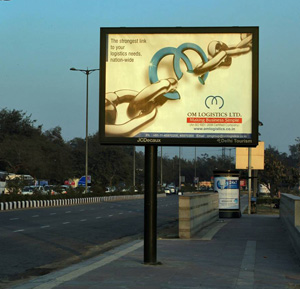
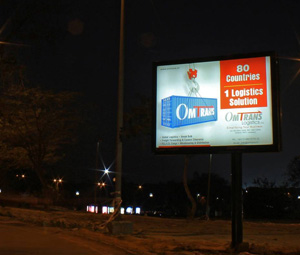
    The client brief to JCDecaux was to create awareness about brand Om Logistics and its services. Om Logistics is the flagship company of Om Group, an Indian multi-modal logistics company. The outdoor campaign has been executed by JCDecaux in the city of Delhi.


    The idea behind the campaign was to give Om Group a higher visibility and appeal. The duration of the campaign, from January 2012 to February 2012, was selected to coincide with the various exhibitions held at Pragati Maidan in these months. JCDecaux displayed the creatives of the different business verticals of Om Group. The creatives were displayed on seniors and pole-mounted MUPIs in some of the prime locations in Delhi to draw attention of the commuters. The area around Pragati Maidan was used for the campaign to gain mileage during the exhibition season.


    The TG for Om Logistics are individuals or companies involved in the logistics of supply chain management. The objective of the campaign was to create a lasting impact and to increase brand awareness through outdoor campaigns.
     

    Lalit Kumar, Assistant Manager, Marketing, Om Logistics said, “This campaign has created impact on the arterial routes and vantage locations with its large formats and creatives. The campaign gripped people’s attention and succeeded in attracting our TGs.”


    Alok Duggal, General Manager, Sales, JCDecaux India said, “We are glad that we have been able to build brand awareness for Om Logistics. We always look forward to partner with niche brands and support them in reaching their objectives.”


  • The Anchor: 5 must-haves for youngsters entering adland

    By BR Swarup


    Roundedness: Someone who knows what is happening around him and the world in which he lives. Someone who understands people – understandably, at a young age, most of this is acquired through books, music, cinema and a hundred other forms of expression. The more ’rounded’ you are, the more you understand, the more you connect, the better your ability to intuitively arrive at solutions.


    Curiosity: The insane need to know why things happen the way they do; why people think what they think and do what they do. Creative


    Thinking: The ability to see and explore things from a hundred different perspectives. In advertising, no matter which area you are working in, problem-solving skills are a prerequisite – and this does not happen without the ability to think creatively.


    Communication Skills: What you say matters as much as how you say and write it. The ability to talk the hind legs off a donkey might stand you in good stead in times of crisis.


    Team Spirit: If you are not a team player, chances are that you won’t make it – unless of course, you are God’s gift to advertising, that too from day one.


    BR Swarup is the Founding Director, Stark Group.


  • We’re a one-stop shop for broadcasters: Santosh Nair, UTV

    UTV Television, known to be a pioneer in the TV content business in India, was started by Ronnie Screwvala in the early nineties. Though the group has expanded its wings to being a broadcast major, its television business, which has now, in a way, been overshadowed by the international companies’ foray into India, is slowly but surely taking bigger strides in becoming a significant player in the business.


    as put by Chief Operating Officer Santosh Nair, the content house’s biggest USP is the fact that it offers fiction and non-fiction shows, plus the company’s wide experience in the regional space. In a freewheeling interview with MxM India’s Rishi Vora, Nair speaks about the content business in India, UTV’s role in that, company’s plans and much more. Excerpts:


    Q: So how was 2011 for UTV Television?

    The year 2011 was very good for us. Saubhagyavati Bhava, which was launched at the end of the year, is doing well. Dor, which aired on Star Plus, was launched early in 2011 too performed fairly well. The non-fiction shows, especially on UTV Bindass, such as Big Switch and Emotional atyachar too have delivered.


    Q: Is it tough competing with the likes of Endemol, Freemantle, Balaji and a host of other content houses?

    all businesses are tough in that sense. My sense is that there is space for everybody. Yes, there are international format companies, but we’ve been successful in doing home-grown formats. The first season of Dance India Dance was done by us. and that’s the first and the best example of a successful home-grown format. Ek Khiladi Ek Hasina -India’s first cricket format show too is a great example of a great home-grown format. and not to forget Emotional atyachar – that too is a home-grown reality show.


    Q: But not all home-grown formats have been successful.

    Most of them have done fairly well. Dance India Dance is doing well season after season. The show is now in its fourth season. These are tried and tested formulas. and that’s one reason I feel there is space for everyone in the industry.


    Q: While there are home-grown formats done by Zee and various other channels, international formats like KBC, KKK, Bigg Boss and others are more popular. Why is that so?

    International formats are formats which have worked internationally – they have worked well in many countries and hence are successful formats. There is a big market for international formats in India and that’s one of the main reasons why international production houses like Endemol, Freemantle and others have entered India.

    Look at KBC for example. That’s a show that has seen a lot of success. Some have worked, some have not. But broadcasters will always look to do international formats more as these are the shows that have seen some success in overseas markets.


    Q: are you also doing an international format show?

    Yes, there is one in the pipeline.


    Q: For a content house like yours, are non-fiction shows profitable?

    Non-fiction shows are seasonal and each season lasts for about 13 to 26 weeks. So often they turn out to be more profitable because fiction shows usually takes about 200-250 episodes to break even. It takes that much time to understand how your fiction is doing on the ratings front, whether it is a good call to continue or not.


    Q: UTV Bindass is a sister company, so if I may ask: How do reality shows like Emotional atyachar and Big Switch benefit you and the channel from a cost perspective?

    These shows target the youth. So from a cost perspective, it is working out well for the channel and for us, too. That’s the reason why we’re doing them every year. So I’m pretty certain that the channel makes a fair amount of profit on these shows.

    To be very clear about how we deal with Bindass: We treat the channel as any other broadcaster, the way we work with Star or Sony or Imagine, it’s the same way we work with Bindass. We pitch to them – and if in case they don’t like it – we take the project to someone else.


    Q: So Bindass also works with an Endemol for example?

    Yes, Bindass works with Endemol.


    Q: Which means UTV Television is not much inclined with Bindass.

    No-no, it’s not that way. What I’m saying is we are one of the content houses for Bindass.


    Q: There is a buzz that some of the non-scripted shows are not really non-scripted in the true sense.

    No-no. The kind of shows we have done, we have never done any doctoring, purely in terms of making a non-scripted show a scripted one. I can’t comment about other shows, but my fair sense is that nothing is scripted in non-scripted shows, apart from anchor lines.


    Q: What is it that makes UTV Television stand out in the clutter?

    Look at any content house right now in the Hindi space vis-a-vis UTV, which is the only content house that delivers both scripted and non-scripted content. That for us is our USP. We are doing some work in the southern market. We are doing shows languages such as Tamil, Kannada, Malayalam or Telugu. apart from being present in the Southern market, we’re also doing shows in Marathi. We recently did two fiction shows in Marathi, so the kind of programming we do – we are into six or seven languages.


    Q: So where do you focus more: fiction or non-fiction?

    We’re strong on both – fiction and non-fiction so we focus on both the formats. We’re a one-stop-shop for any broadcaster to look at fiction as well as non-fiction.


    Q: a lot of content is being produced in regional languages, so is it a beginning of a trend in the content space?

    apart from UTV, I don’t think many players have made a foray into the regional space. The reason why I’m saying this is because we have a decade old relationship with the network and we have been doing quite a bit of work down south. apart from the local players, I don’t see many of the Hindi players getting into the regional space.


    Q: What is your view on the issue of IPR, where the broadcaster owns it when it is the content house that is producing the show…?

    The broadcaster owns the IPR because he commissions the content house to produce the show. There is a budget which is rolled out, the content house keeps its margins and that price is fixed. That’s the model which is operational in the industry now minus Sun Network. With Sun Network, we spend the money on producing a show, we pay them slot fees and the IPR lies with us. So that’s a slot model.


    We are doing Shubh Vivaah on Sony, a remake of a Tamil show; Saubhagyavati Bhava too is a remake of a Telugu show…


    Q: So for all these shows, the IPRs lie with you?

    Yes. In fact, there are two other shows in the pipeline which are remakes of south shows (we are currently in talks with broadcasters) and we own the IPRs.


    Q: What is your view on broadcasters’ interference in terms of storylines or tweaks?

    It’s team work. Broadcasters respect our expertise in terms of creative formats that we bring to the table. While we respect them in terms of their understanding about the business, so it’s a mutual thing.


    Q: What are we going to see from UTV television this year?

    We’re doing Shubh Vivaah on Sony, an international format show with one of the GECs. Two more fiction shows are lined up with top broadcasters and we will be launching a few fiction shows in the south. So a lot happening this year.


  • Pulp Strategy wins Digital Media mandate for Lavazza

    By A Correspondent


    Pulp Strategy Communications has won the mandate for the Digital Media and Activation for Italian coffee major Lavazza after a multi-agency pitch.


    Barista Lavazza had called for a pitch a few weeks back and several agencies took part in the process. Pulp Strategy’sDelhioffice will handle the account. The agency’s mandate includes overseeing the brand’s digital and social media strategy, media buying, and planning across all digital and interactive channels. In addition to this, strategic planning for activation at retail is also a part of their area of responsibility (AOR).


    Barista Lavazza traces its roots back to the old coffee houses inItaly– the hotbeds of poetry, love, music, writing, revolution and of course, fine coffee. Offering alternative options and pleasures of coffee to millions, the chain is also revolutionizing the coffee drinking experience in most Indian cities.


    Barista Lavazza has managed to capture the loyalties of many, elevating the experience of coffee to a lifestyle. Its leadership position can be attributed to a remarkable expertise in specialty coffee coupled with a sound technical competence, an ever-evolving delightful retail experience.


    Ambika Sharma, Managing Director & CEO Pulp Strategy Communications said: “Being chosen as the Digital AOR by LavazzaIndiais a matter of honour and pride for us at Pulp Strategy. LavazzaIndiahas big plans towards quality and leadership position in the café business inIndiaand we are excited to partner them in fulfilling that goal. Our biggest strength is a talented team and a holistic integrated approach, which understands the sensibilities of the brand as well as the nuances of retail and social media”


  • Flipkart launches Flyte for music

    By A Correspondent


    Flipkart.com has launched Flyte, its digital music store which marks the e-commerce player’s foray into the emerging digital content market. This store will allow users to download music in the form of individual songs or entire albums from a collection that is backed by leading Indian and international music companies.


    Flyte promises the Indian consumers:

    • Country’s most comprehensive online music collection of over a million tracks from 150,000 unique albums.


    • Mp3-format music downloads that can be played back on any digital media device (mobile phones, PCs, tablets, car stereos and others).


    • CD-quality music (320 kbps) available for 99 per cent of the music catalog – a first inIndia.


    • “DRM-free” music which means that users can freely transfer their music from one device to another very easily


    • Downloading the same file 3 more times after the initial download – at no extra cost, to make it even more convenient for users to sync their entire Flyte music library across their multiple digital devices


    • Single songs prices starting at Rs6 and albums start at as little as Rs25.


    • All standard payment options such as credit / debit card, internet banking, gift vouchers and the Flipkart Wallet will be available for purchases made on Flyte.


    Speaking about the launch of Flyte, co-founder and CEO, Flipkart, Sachin Bansal said: “We had maintained that making digital content available was one of our focus areas and this launch marks our first step in that direction. An online music store made sense, given the wide appeal this category enjoys in the country. Needless to say, all the features that delight Flipkart customers – selection, convenience and customer service will also be intrinsic to Flyte.”


    Sameer Nigam, VP, Digital at Flipkart added: “With Flyte, consumers inIndiawill now be able to download a wide range of music legally, and at an extremely reasonable price. We hope that such a move will help curb piracy and go a long way in supporting original music and its creators. With music available across 55 languages and 700 genres and sub-genres – this is a service that should appeal to all age groups and music lovers”.


    Till date there have been few, if any, platforms available in the country for legal music downloads and this has contributed to rampant piracy. With Flyte, legal music will become available and affordable to everyone inIndiawith Internet access – at the click of a button.


    Flipkart.com,India’s largest e-commerce player for physical goods, started with books in 2007 and entered the consumer electronics category with the launch of mobiles in Sep 2010. Since then it has grown rapidly with the introduction of innovative features like COD, 30 day replacement guarantee and its own delivery network. Today the portfolio ranges across 11 categories. The site ranks among top 30 in the country (as per Alexa rankings) and gets 12 million+ visits every month.


  • Debrief: Vodafone’s pug returns. And shines.

    By Anil Thakraney


    Ah, the cute pug makes a comeback for Vodafone. This time it’s being used to communicate instant connectivity. I had been wondering where the animal had disappeared to; there’s little doubt it makes Vodafone commercials that much more charming to watch.


    In the new TVC, a young lad (is he old enough to be flirting?) eyes a young gal in a park, and she seems to be giving him the glad eye as well (is she old enough to be flirting?). But because the gal is very shy and the guy a phattu, his puggie plays Cupid and brings them together. Instant connectivity achieved. Cool!


    [youtube width=”400″ height=”200″]http://www.youtube.com/watch?v=mRO8mV3BdGE[/youtube]

    Yup, the ad works as nicely as all of the previous Vodafone pug commercials. The animal brings in a great deal of freshness and simplicity into the communication. The only thing one wonders about is this: Is the pug losing just a little bit of its appeal?


    Has it been overdone? I suppose the advertiser must have commissioned a survey to suss that, and perhaps their findings were encouraging.


    However, it’s critical that the dog be used very, very sparingly. Else, just like it happened to Uncle SRK, excessive exposure will kill its appeal. Then the doggie will have to dress in drag to draw attention to itself.


    Rating: (On a scale of 1 to 5): 3.5. The pug works its magic. Once again.

  • Two months to telecast for Aamir Khan show?

    By A Correspondent


    With the news out that shooting is soon to begin on Aamir Khan’s talk show, the name of which has not yet been disclosed, it is learnt that the Star TV network is likely to begin telecast of the episodes from early May 2012. An accidental fire on the earlier set led to the venue of the show being shifted to Yash Raj Films’ YRF Studios in Andheri, where preparations for the shoot are in full swing.


    A source from the channel said that Mr Khan’s charismatic personality is the key pivot for the show, which deals with real-life situations that Indians from all strata of society face. Asked whether it would be an Oprah-style show, the source said that in this case the subject is more important, but in addition, Mr Khan has been chosen as the host because of his personal commitment to social causes.


    Also read:

    Aamir-Star reveal mega-show plans

    http://www.mxmindia.com/2011/10/aamir-khan-uday-shankar-star-plus-reality-aamir-khan-productions/