Hisense, the Chinese multinational major appliance and electronics manufacturer, has appointed cricketer Ravindra Jadeja as its brand ambassador for the television, AC and refrigerator categories.
Commenting on the collaboration, Pranab Mohanty, CEO of Hisense India, said: “We are thrilled to welcome Ravindra Jadeja into the Hisense family as our brand ambassador for the Television, AC, and Refrigerator categories. This announcement is strategically timed with the cricket world cup starting in India soon and his exceptional skills, both on and off the cricket field, make him the perfect embodiment of our brand’s values. We believe that his association with Hisense will resonate with our young and aspirational consumers. Our deep understanding of the market underscores our commitment to reaching the very heart of Indian consumers, where their passion points lie, and we are determined to create a profound impact in their minds.”
New research from LinkedIn reveals marketers in India are ready to embrace AI with 78% feeling confident about using AI tools.
The study reveals that the majority (83%) of marketers in India believe AI will significantly change the way they work in the next year, and nearly half (47%) hope it will help them to be more productive. The research also found that 93% believe AI will support their work and help create space for teams to think innovatively.
AI will free up considerable time for marketers to build impactful creative campaigns
As companies look to stay top of mind and leverage creativity to build memorability among audiences, AI will enable marketers to spend less time trying to find potential buyers, and more time on higher value work such as engaging with customers. Marketers plan to use AI for day-to-day tasks, such as summarising lengthy articles and videos (88%), creating first drafts of written content and presentations (82%), and helping them problem solve (83%).
In India, 68% of marketers are using the technology today, with nearly half (45%) experimenting with tools such as ChatGPT. LinkedIn’s latest ‘B2B Marketing Benchmark’ report also finds that 87% of B2B marketing leaders in India plan to increase their use of generative AI in the next year.
Said Ashutosh Gupta, Country Manager at LinkedIn India: “AI tools can work as great supporters for B2B CMOs by taking on operational tasks and creating room for marketers to focus on building strong customer relationships. Amid competing priorities and limited resources, AI empowers marketers to excel in strategic work, deepen customer connections, and create memorable campaigns that drive immediate action and fuel long-term business growth.”
Suhana Masala launches a new TVC to promote and launch its new category of spices range, specially curated for consumers in the Gujarat market.
The brand has roped in Sarita Joshi and Gujarati celebrity Anjali Barot for the multi-media marketing campaign. The campaign is guided by Altivyst Advisors, designed by Sideways Consulting, and produced by Corcoise films.
Commenting on the campaign, Vishal Chordia, Director – Strategy, Marketing and Finance, Pravin Masalewale (Suhana), said: “We debuted in the Gujarat market back in 2009 and are now elated to further expand our product range. The renewed marketing initiative in Gujarat with special product range and a multimedia marketing campaign will reinforce our existing legacy, broaden our customer base, and contribute towards our business expansion plans. We are delighted to have partnered up with Sideways Consulting, Altivyst Advisors, and Corcoise Films to bring this vision to life.”
Speaking on this campaign, Abhijit Avasthi, Founder, Sideways Consulting, added: “We have always done humorous films for Suhana, rooted in real-life insights. So when it came to launching the special Gujarat chilli powder with a distinct aroma, we thought who better to use than someone who can sniff out everything that goes on in a house … the Baa.”
Wieden+Kennedy has announced the hiring of senior strategists, Tania Dey and Snigdha Bose.
Over the past year, since Santosh Padhi took over as CCO and Ayesha Ghosh joined as President W+K India, the agency has opened up a Mumbai office and has made hires at the top level. Anirban Roy came on board as Strategy Head, Kapil Batra as NCD and Shreekant Srinivasan as Head of Delhi. The agency has been selective in signing up clients like Jio 5G, Clove Dental, Casio G Shock; campaigns for all of whom are in the making. Bose and Dey have joined the Delhi and Mumbai offices respectively.
Said Anirban Roy, Head of Strategy commented: “For the past year, we have been working towards onboarding the right kind of people and an eclectic mix of brands that we want to work with – so I am happy to have found Tania Dey and Snigdha Bose. They bring very different skills to the table which will add different colours to the strategic function. I am confident that they will influence both the creative output and the business outcome for our clients.”
Added Ayesha Ghosh, President: “W+K’s creative prowess is what it is because it is guided by depth. Talented people like Tania and Snigdha are the ones who dig deep while not being afraid to take intuitive leaps. With them on board, we feel further inspired and strengthened.”
There’s no doubt generative AI’s ability to rapidly produce new texts, images and audio is shaking up creative jobs.
In the long-running Writers Guild of America strike, a central sticking point has been the guild’s demand that AI be used only as a research tool and not a replacement for its members. For many creative types, it seems harder to earn a living with AI around.
At the same time, however, AI tools are often seen as a springboard to next-level human creativity. Technologies such as Anthropic’s chatbot Claude and OpenAI’s ChatGPT and Dall-E 3 offer a seductive creative experience.
Will these tools help us survive and thrive as a creative species? Or are they the death knell of creativity as we know it?
What is creativity?
In her book The Creative Mind, cognitive science expert Margaret Boden distinguishes between two types of human creativity.
Psychological or personal (p-type) creativity happens when an individual thinks something for the first time – even if others have thought it separately before. One example is a child realising water can take any shape.
Essentially, p-type creativity is learning something useful and, in the process, synchronising our thoughts with others.
Historical creativity (h-type), on the other hand, happens when an individual thinks something that has never been thought before. One example would be Archimedes’s “eureka” moment in the bath, which supposedly led to him discovering the law of buoyancy.
The more someone’s creativity subsequently affects other people’s thinking, the more momentous and enduring we consider their legacy.
This is why Wandjina rock art in the Kimberley, Homer’s Iliad, Pablo Picasso’s Guernica, Frank Lloyd Wright’s Fallingwater house and Albert Einstein’s Annus Mirabilis papers are all considered exceptional works left behind by exceptional humans. They are important because they continue to shape our thinking.
Generative AI doesn’t belong in either category
AI obviously has the potential to promote both p-type and h-type creativity. It can lead us to insights about biology, history and mathematics, and help us create texts and images that may be useful or thought-provoking.
But there is one key difference between human creativity and AI-driven creativity: the latter doesn’t stem from the evolutionary clash of mind and world.
AI models don’t contain reality. They rely on the complex statistical abstraction of digital data. This limits their real-world creative significance and their capacity to produce “eureka” moments.
To differentiate AI-driven creativity from old-fashioned creativity, I have proposed a new term: generic, or g-type, creativity. It formalises the fact that while AI models are capable of provoking new thought, they are limited by the underlying data they have been trained on.
The big risk: a generic spiral
We can expect an explosion in g-type creativity in our future. The danger here is that our increasing use of AI could make us think too much alike, leading to a decrease in cognitive diversity and an increase in cultural tightness.
In this scenario, societies would become more rigid in the norms they enforce, and less tolerant of deviations from the status quo. At a population level this would be a creativity killer.
The threat isn’t just AI-generated movies, TV, books and art. In the future, the homes we live in, the cars we drive (or won’t have to drive) and our shared public spaces will all be shaped by AI. We may see our thinking become homogenised under the pressure of increasingly similar environments and experiences.
This sameness further put us at risk of a generic spiral. AI models are trained on content we create. So the more we use AI for g-type creativity, the more generic our content will become – and since this will be used to further train AI, the more generic AI outputs will become.
While this might be useful for certain specialist tasks – such as consistently interpreting law – it’s worrying to contemplate the kind of Orwellian political economy a generic spiral might give rise to.
Can we enjoy AI and also preserve creativity?
Balancing and reconciling human creativity with AI isn’t as simple as going for regular walks in nature – although that will probably help.
Generative AI may well be a transformative technology to rival the printing press or steam engine. Such juggernauts are difficult to resist; we collectively get swept up in the change, uncertainty and alienation they foment.
Some of the best minds of our generation are already abandoning other pursuits to try their luck at building and using advanced AI models.
Our best chance to remain truly creative is to protect and privilege the human over the artificial. Intellectual property law is key. Any further moves towards legal personhood for AI – such as allowing AI a “fair use” right to train itself on copyrighted material, or have copyright applied to AI outputs – will erode our creative system and risk a generic spiral in human creativity.
Cameron Shackell is Sessional Academic and Visitor, School of Information Systems, Queensland University of Technology. This article is republished from The Conversation under a Creative Commons license. Read the original article.
Senior advertising professional and entrepreneur Kurien Mathews passed away in Mumbai on Thursday. The news came as a shocker to family and friends given its suddenness.
With over three-and-a-half decades building brands, Kurien has had a deep interest in digital marketing, brand strategy, creative, content and, more recently, organic food. At the time of his passing, Kurien was Chairman and Managing Director at Metal Communications, Director, Rage Communications and Director, Conscious Food.
According to a profile on LinkedIn, he has helped build (and in some cases ushered in their India entry) brands like Sony, Nivea, Limca, Amul, Frooti, Samsonite, Platinum Guild, Bajaj Allianz, Electrolux, BPL Mobile, CNBC, Malayala Manorama, Yamaha, IndianOil Servo, Medimix, Dainik Bhaskar, Fortis, among many others.
Kurien’s book Brands Under Fire (co-authored with Ivan Arthur of JWT) was published by Penguin in 2008. He has served on the Managing Committee of the Advertising Agencies Association of India, AAAI Awards Jury, Trustee, Citizens for Peace and as Trustee of The Subhas Ghosal Foundation.
Kurien co-founded Anthem Communications in 1988, which became part of one of the world’s biggest and best agency brands, TBWA WW as TBWA\ Anthem in India. Kurien and his partners exited the Omnicom JV in 2008 handing over 100% ownership of one of India’s largest communications services groups with 350 people across 7 offices in India.
Whilst at TBWA\ Kurien also helped facilitate the entry of several Omnicom brands into India like Tequila and OMD.
In 2021, Kurien initiated and saw to fruition a JV between Rage Communication and ADK of Japan, leading to a 100% acquisition by 2023.
He also successfully led a mid-pandemic initiative to bring investment into Conscious Food in 2020, which helped grow the company four-fold in less than 30 months, laying the ground for a Series A fund raise in mid 2024.
Goodknight, from the house of Godrej Consumer Products Limited (GCPL), rolls out a new TVC campaign. Through this film, Goodknight aims to encourage young fathers and mothers to protect their baby’s slumber time from dangerous mosquitoes.
Speaking about the campaign, Shekhar Saurabh, AVP & Category Head – Home Care, Godrej Consumer Products Ltd (GCPL) said: “Goodnight is India’s leading household insecticide brand trusted by families across the country. We are part of many Indian households ensuring safe and effective protection against mosquitoes. The TVC campaign emphasizes the critical role of uninterrupted sleep in an infant’s overall health and well-being, underscoring how even a lone mosquito can disrupt it. We are further committed to raising awareness among parents and equipping them with effective solutions to safeguard their child’s sleep.”
Added Chirag Aga, AVP – Brand Equity, Godrej Consumer Products Limited (GCPL): “Light Box, which is GCPL’s in-house creative studio, brings this unique campaign of Goodknight as parenting becomes a dual role. It’s time we acknowledge the shift where both mothers and fathers are contributing to the well-being of their child. Today, fathers enthusiastically embrace this new phase of life, demonstrating greater involvement than ever in nurturing their little ones. The campaign has the right messaging and interesting real-life insights, curated together through seamless partnership between Goodknight and Light Box.”
Disney+ Hotstar’s latest ad campaign featuring Kapil Dev captures the fervour of cricket fans for the approaching ICC Men’s Cricket World Cup 2023. The matches can be watched free on mobile only on Disney+ Hotstar.
The campaign is conceptualised by Manja Brand Works LLP and directed by Nitesh Tiwari.
Talking about the collaboration, Sidharth Shakdher, Head – Marketing, Disney+ Hotstar India said, “Cricket serves as a unifying force that brings our nation together. By offering free mobile streaming of the ICC Men’s Cricket World Cup 2023 on Disney+ Hotstar, our goal is to make cricket more accessible to all, and who better to collaborate with for this endeavor than the iconic Kapil Dev. Through this campaign, our aim is to harness the deep-rooted passion for cricket that resonates across the nation, reaching every nook and corner.”
As the excitement surrounding the upcoming ICC Men’s Cricket World Cup 2023 begins, Cadbury Dairy Milk has unveiled a campaign titled #SitTogether.
Said Nitin Saini, Vice President of Marketing at Mondelez India said: “We are excited to launch our campaign #SitTogether ahead of the World Cup, inspiring people to experience the joy of cricket together and foster a sense of togetherness and shared happiness. We truly believe that the excitement of big match days is universal, regardless of people’s backgrounds or jobs. With this campaign, we urge consumers to join us and make this year’s match viewing moments truly inclusive and meetha (sweet) for all.”
Added Sukesh Nayak, Chief Creative Officer, Ogilvy India: “The love for cricket unites us all, when we are down, we pray together, when we win, we celebrate together. So then, why not watch it together too? Building on our generosity platform, we are very excited to have created #SitTogether, a digital platform to enable people to watch the match from the stadium with a member of their staff. This is a human idea that will help foster a true sense of togetherness and happiness this Cricket World Cup.”
Zee TV’s Sa Re Ga Ma Pa returns with new season, and sponors. The show has brought on board a line-up of 18 sponsors for its upcoming season. Some of the sponsors include Maruti Suzuki India Limited: Co-Title, Dabur India Limited: Co-Presenting & Associate Sponsor, Mondelez India Foods Limited: Co-Powered By, Hindustan Unilever Limited: Co-Title & Special Partner, Rajdhani Flour Mills: Special Partner, Procter & Gamble: Special Partner.
Said Ashish Sehgal, Chief Growth Officer, Advertisement Revenue, Zee: “As the pioneer of music reality shows in India, Zee’s Sa Re Ga Ma Pa has become an iconic brand in itself and has been among the most-watched shows across India in its run of more than two decades. In the new season of Zee TV’s Sa Re Ga Ma Pa, we have added extra layers of uniqueness which stems from our profound expertise in creating content that resonates deeply with our audiences across India. With our hyper-local approach of scouting talents, the show has created a strong connection with our viewers as the top contestants face tough musical challenges to release their own original song on Zee Music Company. This provides the perfect opportunity to seamlessly integrate the brand communications of our sponsors led by our anchor, judges and the contestants. We are extremely delighted with the response from the brands and I whole-heartedly welcome all the 18 sponsors on board – who have continued the trust in our platform, as we embark into the festive season together. With our curated multimedia promotion plan, each sponsor will get phenomenal 360-degree exposure and innovative brand engagement opportunities in every phase of the show to bring out the brand’s core propositions effortlessly and leave a long-lasting impression among our viewers in this vibrant festive season. I am certain that this new season of Sa Re Ga Ma Pa will re-ignite the musical spark among millions of our viewers and generate immense value for our esteemed partners.”
Added Aparna Bhosle, Business Head, Zee TV: “We are delighted to see an exceptional response from advertisers for our new season of Sa Re Ga Ma Pa. A combination of some remarkable fresh talent coupled with a revamped format has elevated our appeal with both the audience and brands alike. Our team is poised to bring you the OG voices of India who, basis their performance in the season, are already getting opportunities to record their original singles to be released by Zee Music Company. With so much excitement in store every episode, Sa Re Ga Ma Pa remains an unparalleled platform for brands to leave a lasting impact with audiences, given our extensive reach and dedicated viewership.”
Said Shashank Srivastava , Senior Executive Officer, Marketing & Sales, Maruti Suzuki India Ltd: “This marks the beginning of an interesting partnership between Maruti Suzuki Arena, India’s largest automotive channel and the iconic television show – Sa Re Ga Ma Pa. We believe in bringing the joy of mobility to all and creating exciting new experiences. Maruti Suzuki Arena brings this vision to reality with a modern, tech-enabled and youthful experience. Now, “Find Your Match” with our wide array of cars and network. Sa Re Ga Ma Pa shares a similar journey where talent meets opportunity. This collaboration elevates our brand positioning amongst the relevant audience. Hoping, together, we deliver a great season.”
Photograph source: Official X account of the International Cricket Council (@ICC)
By Shruti Pushkarna
Almost eight years ago, I quit journalism (and the media) to work towards raising awareness and advocating for the equal rights of persons with disabilities. Having acquired experience and knowledge in this domain, a column on ‘Media and Disability’ seemed like a much-needed and a natural outcome of my passion for both these subjects, mainstream news and inclusion of persons with disabilities into the mainstream of things.
But it was much earlier when my two interests converged for the first time. As a budding journalist, I curated a video story around the Blind Cricket World Cup. This was also the first time, I viewed disability from an equal and empowering lens. When I met with the Founder of the World Blind Cricket Council, George Abraham, and the players as well as their coach, disability didn’t feature in our conversations at all. The only reference pertained to the technique used by this set of players with varying degrees of vision impairment. The modified version is played with a larger than standard cricket ball, filled with ball bearings to make sound that is audible to the players. Bowling is underarm and the team is divided into totally blind, partially sighted and partially sighted with slightly better vision players.
Other than that, there is similar enthusiasm and energy in the stadium, and the same passion for the religion called cricket. While producing this report on Blind Cricket, I experienced sports as an equaliser. Disability, and in this case, blindness took a backseat. As I witnessed the visually impaired players run between the wickets, the stereotype of a man in dark glasses begging on the street vanished into thin air. The focus shifted to the sporting skill, the game, team spirit and the zest of the players.
I also discovered that blind and visually impaired people, like most Indians, not only followed cricket on the radio and television, but also pursued sporting interests in football, chess, tennis, athletics and more. In fact, that’s true for persons with other disabilities too, something I have realised in more recent interactions, during the course of my work.
Haven’t you ever encountered someone in the bar or on the plane, who displays similar fandom for Novak Djokovic or M S Dhoni? Haven’t you ever hit off with a stranger in a party who analyses and critiques a game with calculated precision?
We all have. And this person could well be a person with disability. Physical and/or mental limitation to perform certain activities doesn’t take away the desire to follow a sport. But it does limit the way in which one consumes or accesses the sporting event.
Most of us have been following the Asian Games being held in Hangzhou, China. At the time of writing, the Indian contingent has bagged more than 80 medals, taking the country ranking to number four. And the biggest of all sporting delights, the ICC Men’s Cricket World Cup starts today in Ahmedabad.
Just like you and me, there are millions of disabled fans, cheering for their favourite players, hoping to see Rohit Sharma’s boys bring home the trophy after a decade. Are you still wondering if people who are blind, deaf, or on the autism spectrum, or any other disability follow these tournaments?
The answer is yes. The real question however is whether they can experience the game, process the information being relayed and check the updated score and tally, seamlessly. Unfortunately, not.
Television broadcast as well as online streaming of matches is heavy on visual production. Our screens are loaded with visuals, graphics, ticker, lower thirds et cetera giving out different pieces of information. A blind viewer experiences the game through audio commentary, which many a times omits voicing the information displayed on screen. Very often, when a new player enters the field, the name is announced through a graphic overlay on the match visual. Another example of inaccessibility of the gaming coverage is the analysis graphs or the field markings that appear on screen, again as an overlay. As for checking the latest score online, most websites open a pop-up with an update which is inaccessible to persons with vision impairment who use screen reading software to decipher details on digital platforms.
Similarly, deaf viewers miss out on the content consumption experience due to the absence of closed captioning or sign language interpretation. And this after the Ministry of Information and Broadcasting came up with accessibility standards for hearing impaired on TV channels in 2021.
While there is a whole visual effects industry that thrives on the graphic content of live events, like sports and music, we remain ignorant of the needs and challenges of diverse communities. For instance, a person on the autism spectrum or someone with dyslexia, or any other learning disability may find it disconcerting to consume jarring, colourful, and dynamic infographics and text on screen.
With the onset of OTT platforms in addition to the numerous private channels, outreach to a wider audience seems obvious. But clearly channels of mass media fail to communicate to a sizeable majority of the Indian population.
This is a problem facing not just the 2.68 crore disabled population but also an increasingly large percentage of seniors who acquire age-related disabilities that hamper their normal ways of functioning (read consumption). As per a recent report in The Hindu, senior citizens (above 60) will constitute around 12.5% of the total population by 2030.
So, what do we do? Who do we hold accountable? And more importantly, who bears the cost of ensuring accessibility for all? Is it the channel partner or the streaming partner, or the event organiser, or the production company? And is inclusion reliant on a government mandate, which doesn’t really extend to private entities in effect?
There aren’t any simple answers here. What is needed is perhaps a debate and discussion to work out a solution that minimises exclusive coverage. And a solution that makes business sense to reach an untapped audience which has quantified market worth.
Sporting events are also a perfect opportunity for brands and advertisers to promote their products/ services. Here’s an inclusive ad of Tide detergent that featured in the Super Bowl in 2021. It has descriptive audio and closed captioning for the visually and hearing impaired audience. With 385 million blind and visually impaired people in the world, and around 466 million people with hearing loss, can brands really afford to overlook such a large target group?
Streaming platforms like Netflix, Apple TV and Amazon Prime Video have consciously added accessibility features like audio descriptions, subtitles, and closed captions for their disabled audience. For the elderly, Netflix also has the option to increase the size of the subtitles, so they can read despite failing vision. These OTT websites and mobile applications are also designed keeping accessibility for screen reader users in mind. Of course, platforms like Sony LIV and Disney Hotstar remain inaccessible but with easy technological innovations available, one hopes that soon all streaming services will offer equal viewing experience to diverse audiences.
Wondering why MxMIndia publishes a disability advocacy column? Well, we strongly feel that the media can dramatically transform the world for persons with disabilities. This series attempts to help bring forth issues that the media must champion to create a truly inclusive and accessible India. Writing this column is Shruti Pushkarna, a former journalist and now a disability inclusion advocate based in New Delhi. Her views here are personal. To access the archives of her 80-odd columns, please visit: https://www.mxmindia.com/category/ columns/shruti-pushkarna/
If you have a view on the issues raise or would like to align with MxMIndia on this cause, write to us at editor [at] mxmindia.com.
Axis Bank has joined forces with Publicis Worldwide India to unveil its largest-ever and fully integrated campaign, Sirf Aapke Liye.
Said Oindrila Roy, Managing Director, Publicis Worldwide India: “This campaign marks an important juncture in the journey of Axis Bank. The brand is making a pivot to being a digital-first bank and the campaign is designed to communicate the same. When entrusted with this campaign, the strategy was to help Axis Bank make this transition while remaining true to its DNA and the legacy that it has created over the years. The campaign positions ‘open by Axis Bank’ app as a liberator that seeks to free customers from the everyday banking inefficiencies and transform banking into an effortless and enjoyable experience.”
Added Anoop Manohar, Chief Marketing Officer, Axis Bank: “This is a significant milestone in Axis Bank’s journey. As we continue to grow and adapt to the digital future, our core value of being ‘Dil Se Open’ will remain our guiding light, ensuring our offerings are both cutting-edge and rooted in the trust and familiarity our customers have come to expect.”

 Senior advertising professional and entrepreneur Kurien Mathews passed away in Mumbai on Thursday. The news came as a shocker to family and friends given its suddenness.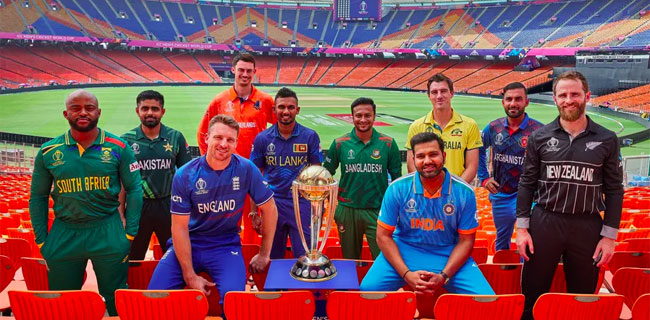
 Almost eight years ago, I quit journalism (and the media) to work towards raising awareness and advocating for the equal rights of persons with disabilities. Having acquired experience and knowledge in this domain, a column on ‘Media and Disability’ seemed like a much-needed and a natural outcome of my passion for both these subjects, mainstream news and inclusion of persons with disabilities into the mainstream of things.