BBC Media Action ropes in Shraddha Jain (Aiyyo Shraddha) to spread awareness on proper waste disposal among Bengalureans.
Shraddha Jain, AKA Aiyyo Shraddha one of the most versatile social media influencers in the country known for her humorous takes across themes and issues, has perhaps just delivered her best yet, with a 90 second video on Insta, titled “Eh Whattya!”. In the video, Shraddha introduces viewers to Savithri, an informal waste picker in the city of Bengaluru, and takes them through the city’s acts of crime which lead to poor work conditions of Savithri and thousands like her. With humour laced with satire, Shraddha educates people about proper waste disposal, that could make picking and recycling waste a lot simpler and safer for people like Savithri. Created in collaboration with the #Invaluables initiative of BBC Media Action, the video was an instant hit, transcending boundaries within hours and becoming viral across the country within the first few days.
The #Invaluables initiative has been designed by BBC Media Action as part of Saamuhika Shakti, a first-of-its-kind collective in India, where nine implementing organisations have joined forces to enable informal waste pickers to have greater agency to lead secure and dignified lives. Recognition and respect for waste pickers and the value of waste picking were identified as the key factors for waste pickers to experience greater social acceptance. By sharing stories like Savithri’s, the #Invaluables initiative aims to shift perceptions about waste picking and informal waste pickers in the city of Bengaluru by bringing their crucial contributions to the forefront.
Commenting on leveraging the power of social media influencers, Ankur Garg, Country Director of BBC Media Action, India said: “With Shraddha’s video gaining significant traction, it is evident that this issue deserves the attention it is now receiving. BBC Media Action is eager to collaborate and work with more influencers in the future, as such partnerships have the potential to spark positive change around many more invisible social issues. Influencers have the ability to initiate conversations about critical topics that often go unaddressed, such as the challenges faced by Informal waste pickers, and the interconnectedness between them and the lives of city dwellers.”
Vi, earlier Vodafone Idea, mobile network operator, has partnered with Mumbai’s best human network, the Dabbawalas, to test and improve the network for offering a superior network experience to its users. The Dabbawalas, visited nooks and crannies of Mumbai city to experience & test Vi GIGAnet
Partnering with Dabbawalas, Vi got them to test Vi GIGAnet to understand where the network was seamless and where it needed strengthening on parameters such as data, voice calling, video streaming, gaming etc. The team traversed the length and breadth of Mumbai city, testing the network strength of Vi GIGAnet across 22 wards and over 550 locations. With the help of videos and voice notes, data & responses along with live location sharing, Dabbawalas reported their experience in different parts of the city.
Commenting on the network campaign, Avneesh Khosla, CMO, Vi said: “Mumbai is a key market for us and ensuring a seamless network is paramount. The human network of Dabbawalas gave us a better perspective on Mumbai & a more holistic feedback on the experience as they torture tested the network. Today, we are confident that Vi offers superior network connectivity in the nooks & corners of the city & the dabbawalas are testimony to it. We thank the dabbawalas for this & strive to continuously improve our network in the city.”
Speaking about the work, Kainaz Karmakar & Harshad Rajadhyaksha, CCOs, Ogilvy India, added: “What could possibly be the connection between a modern, cutting-edge network service provider like Vi, and the 134-year-old iconic Dabbawalas service! It is exactly this clash of contrasts that became the creative backbone of this disruptive idea. In a category saturated with technical data and jargon, we set up an unexpected, charming and much trusted human network, as our benchmark to live up to when it comes to covering the megapolis of Mumbai. The Dabbawalas have been such an integral part of the ethos and culture of Mumbai, and we are proud to make the efficiency of their network an inspiration for our Vi network.”
Commenting on the association Ulhas Muke, President, Mumbai Dabbawala Association said: “We are delighted to be chosen by Vi to play a role in improving their network experience for Mumbaikars. Today, we take great pride in the fact that our dabbawala network knows and understands Mumbai and its nuances like no other. Our association with Vi for the torture test was to verify the network strength in Mumbai through the experience of video calls, streaming videos, online gaming, download experience, voice connectivity, and speed tests. We are glad to have been a testimony to Vi’s strong network experience across Mumbai. This unique partnership with Vi has been a validating, satisfying, and an enjoyable experience.”
Jagran New Media’s health & wellness website, Onlymyhealth.com, announced the launch of its Tamil arm. Onlymyhealth.com aims to empower individuals with its diverse range of health & wellness content in the form of articles and videos which are backed by experts.
Onlymyhealth.com in Tamil will provide health information, tips & tricks, simple home remedies, and other resources which are doctor-verified specifically to target Tamil speaking readers. The website will offer a wide array of content covering fitness, nutrition, mental health, lifestyle, preventive care, IVF, etc. providing Tamil readers with valuable insights and actionable tips to lead a healthy and fulfilling life.
Bharat Gupta, CEO, Jagran New Media, said: “The rise of localization is an important theme in the current digital landscape. Keeping up with the trend, we’re doubling our efforts to diversify and expand our offerings in different regional languages while addressing the specific preferences and requirements of our audiences. The recent launch of Onlymyhealth.com in Tamil is a significant step in our mission to provide credible & expert-verified health & wellness resources to Tamil readers while catering to their distinctive sensibilities. This expansion aligns with our commitment to Indic language expansion strategy that ensures our overall mission to improve accessibility, inclusivity, and the well-being of the readers.”
Added Megha Mamgain, AVP, Content & Strategy, Health and Lifestyle, Jagran New Media: “We are thrilled to launch the Tamil arm of onlymyhealth.com and serve the Tamil-speaking community. We acknowledge the role of languages being personal to communities, and we aim to serve content in ways our consumers prefer. At Onlymyhealth.com, we stand steadfast in our commitment to providing credible health resources in a language that resonates deeply with the audiences. With an array of meticulously curated health-related content, we also have stringent editorial policies in place ensuring the accuracy and reliability of content that is validated by doctors, nutritionists, healthcare professionals, and experts. Through this launch, we hope to empower Tamil readers and contribute to their overall well-being.”
How low do we have to sink as a democracy before the media demands that Governments act?
Apparently, here in August 2023, in the second reign of our great democratically elected monarchy, that time will never come. We have been through several horrors since 2014 without any cogent, powerful demands for accountability from the media.
You may or may not be able to recall a time when the media was at the forefront of demanding that a government take responsibility. Whether at the gravitas-enriched pulpit of the newspaper edit or the shrill shrieks of a TV studio.
Those days are gone. We watch the tattered remains of our democracy hanging in shreds from electric wires while our monarch does a series of pujas and will not attend Parliament. The media will blame opposition parties for disrupting Parliament but will not question the Prime Minister of India for his inaction and lack of any cogent policy. We’re quietly being led to the slaughterhouse by the government and its pet media.
Manipur is now in the third month of anarchy. The violence has not stopped. Twice now, government armouries have been looted and arms and ammunition stolen. The most recent incident was two days ago. That is, after all the anger over the video of the women being molested. There is no semblance of law and order in Manipur. Or of anyone trying to establish peace. It has been left to itself. The Prime Minister? At some puja or the other.
The Indian TV media: on its favourite subject of “Hindu-Muslim”.
Riots, arson looting and mob violence have swept through various parts of Haryana, including the capital Gurugram. Schools and offices have been closed. The riots followed the pattern now sent in stone for religious riots in India. A belligerent religious rally is taken through an area where people of other religions live. There are slogans and provocations. Which leads to violence. What starts as one “side” against the “other” soon becomes a majoritarian mob taking control and wreaking havoc. Haryana has followed the same pattern: A Hindu rally, a Muslim area, a stone thrown, violence, death. And then large-scale looting, arson, murder.
Gurugram is a business hub, close to the National Capital Region.
Both Manipur and Haryana are BJP-run states. Or I should clarify: they are not being run.
The Indian media however still remains in its hate-filled excitement. All those years of brainwashing the minds of their viewers with hatred have come to fruition. These vicious anchors have no qualms about calling for a Hindu state. They were overjoyed, you may remember, when the UP government started bulldozing the homes of people – Muslim – accused of unrelated crimes. Other states soon picked up this extra-judicial form of punishment as helpless courts did nothing and the bloodthirsty media cheered them on.
Do not however fool yourself into thinking that the destruction of India is not going on in other ways, while we are distracted between this bout of violence and the next. The amendments to the Forest Conservation Act passed by Parliament this week will now ensure that more of India’s precious forests and their eco-systems will be destroyed. Private companies will get almost unlimited access. Tribals and indigenous rights have been snatched away. And future generations will suffer. Not a single bombastic promise made by the Prime Minister of India at international fora holds any weight against the wilful damage being done to our environment. The media coverage for this will be limited to legacy newspaper comments.
An academic at a prestigious private liberal arts university researched on how the 2019 Indian general elections were won by manipulation. This research is made public. The university bends over backwards to discredit its own work and prostrate itself before the Government. This is an expression of how freedom of speech and expression work in India.
This is the best that the Times of India managed yesterday on Haryana: “But every riot that overnight grinds business to a halt or worse, daunts new investment.”
You can see now why Manipur is ignored, majoritarian religious violence across India is ignored. It doesn’t affect business.
Sadly, the Modi Government hasn’t done much for business either. Except…
But shhhh. We can’t really mention that.
Ranjona Banerji is a senior journalist and commentator. She writes on MxMIndia on Tuesdays and Fridays. Her views here are personal.
There’s a wonderful cartoon pictured here, from twisteddoodles, which reads:
Person 1: “Next up we will discuss the topic with someone whose job is to be a well researched and respected expert in the area”.
Person 2: “And in the interest of balance we will also talk to an idiot.”
In short, this is the media. Mainly but not only television.
As of now, the idiots have the run of the house.
But together with the idiots we have the too-clever-by-half people who invite the idiots. It is not an act of idiocy to invite the idiots. It is a carefully thought-out strategy to denigrate experts and appeal to all the idiots in the world.
This is, if you will, a sophisticated method of reducing intelligence levels of our target audience. The other is to “dogwhistle” if you like. To use terms, words and insinuations which appeal to your core audience to send them subliminal messages.
I have had great admiration for the Indian Express as a newspaper in the past and sometimes even now. But it has not only often forgotten, in recent times, its prime responsibility to show truth to power, it has also pandered to the demands of the regime.
A curious “explainer” article appeared in the newspaper after Rahul Gandhi the Supreme Court put a stay on the sentence which led to his disqualification as a Lok Sabha MP.
The article appears to make it clear to its readers what happens to Rahul Gandhi now. But the presentation of information – minus clarification – implies that the money and perks due to Rahul Gandhi are somehow exclusive to him. And not to all MPs. In that sense, the article says nothing. It does, for instance, inform readers if there is retrospective payment. Or if the house which he vacated would be returned. In effect, it says nothing that is exclusive to Rahul Gandhi’s particular case. As a matter of interest, all MPs get these perks.
To my mind, in the current circumstance, this is a dogwhistle. It’s informing pro-BJP readers, at sonic levels not evident to all, that Rahul Gandhi is going to get special treatment, money and so on.
Then we have the open intimidation of the media by a party in power and the reaction of the rest of the media. There are few websites which try to do good journalism. I don’t fall in that category of people who worship individual journalists, TV anchors, editors, columnists and media houses. Some consistently do better than others and those are to be admired and watched. Newsclick.in is one of those. The ruling regime has gunned for it before but found new evidence to try and hang it with.
The “evidence” comes from a New York Times expose into a US tech tycoon of Sri Lankan descent who has strong far-left leanings, Neville Roy Singham. In this long investigation into Singham’s various strategies to support China and push China’s agenda, there is a throwaway line about Singham once funding Newsclick.in.
Obviously, the BJP went ballistic because Newsclick.in has been a constant critic. It also, curiously blamed Rahul Gandhi for this funding or his connections to China, or Singham or Newsclick.in. All unsubstantiated. For some reason BJP ministers also named journalist Swati Chaturvedi, who is often critical of the regime, again with no evidence.
As for Newsclick.in itself, this is its own defence:
However, if you check the internet, it is full of Indian media articles either publicizing the BJP response or citing the New York Times investigation, or explaining who Singham is. But none of them provide any disclaimers or any further information. Except The New Indian Express article linked above.
This is the other media way of staying safe by omitting information or shooting from the shoulders of politicians.
Thus half the coverage of Manipur, once the media started covering it, was headlines like “The Congress blamed the government”. Rather than any actual reporting. This pattern has been seen over and over again.
So we know that the media likes pandering to idiots.
The question is how long the general public enjoys being treated like idiots.
**
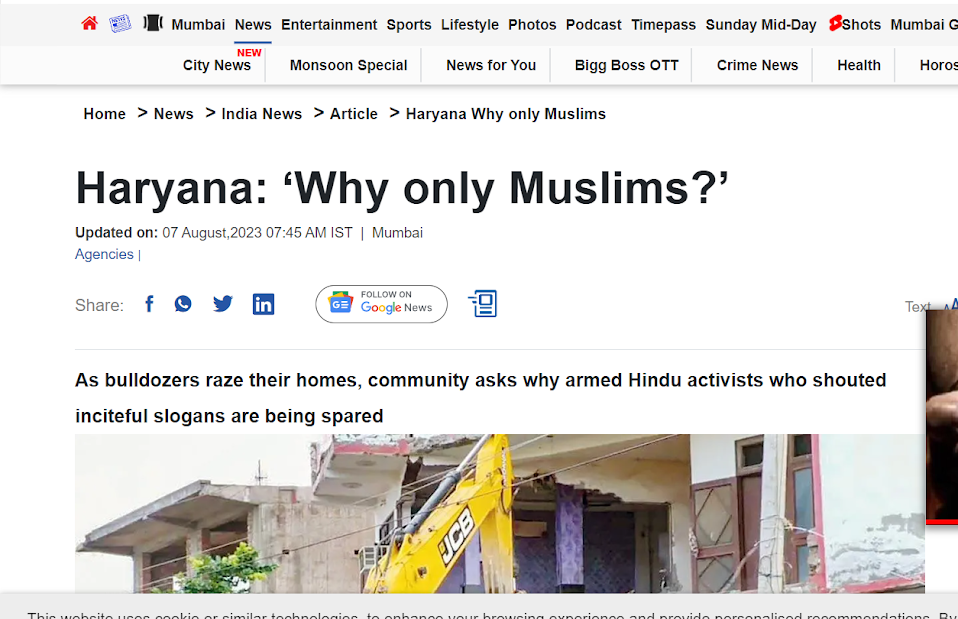
One commendation to Mid-Day for its front page headline “Why Only Muslims”, on the Haryana bulldozer action against homes and establishments after the violence led largely by Bajrang Dal and VHP “activists. Although it is a question asked by the Muslim community itself.
And then this column from Swati Chaturvedi on Rahul Gandhi’s return to Parliament:
Not an easy question to answer, but as we’ve said before, we never promised to ask easy questions. Hehe. Here goes Dr Bhaskar Das in the August 8 edition of Das ka Dum. Read on…
If you wish to access the archives, please go to the Das Ka Dum tab on the website’s top navigation bar or click here: https://www.mxmindia.com/category/columns/das-ka-dum/
Q. P&G and some other big marketers are reported to have increased their marketing spending as per quarterly reports released month. Do you sense similar winds blowing in India as well?
A. One can’t generalise on the basis of one company’s decision to increase spends on marketing. That optimal communication (including other marketing spends) are a ‘given’ for any business in a marketspace of cacophony of parity claims. They are important for developing brand affinity and usage amongst ones’s served market. That one has to constantly evaluate the ROI of all promotional investments is stating the obvious.
Even today most of the consumer-facing businesses (or communications directed for other corporate objectives or for statutory reasons) are engaged in regular communication with their stakeholders, albeit at different intensity (depending on the PLC of their brands or for their corporate/ business imperatives). This is evident from the rising ATL investments in India. I am not taking into account BTL investments as there is no authentic public domain database on the same. So, no new winds of change are required in the conviction of the marketers in india.
Having said that, there is much headroom for growth if we compare advertising spend as a percentage of India’s GDP vis-a-vis other developed countries.
Ipsos India has appoints Neha Munshi as Country Lead, Ipsos Digital with immediate effect.Her remit is to take Ipsos Digital offerings to current and prospective accounts for their repertoire of consumer surveys and provide a glitch free experience to clients in exécution of projects. She will be guided by Anthony Dsouza, Country Service Line Leader, Innovation, Ipsos India, and has been provided with a 6-member team of a young bunch of enthusiastic market researchers, in her crusade to achieve the company’s ambitious vision.
Commenting on the appointment, Anthony Dsouza, Country Service Line Leader, Innovation, Ipsos India said: “Ipsos Digital boasts an exceptional array of flagship products, including FastFacts, Creative Spark, Duel, InnoTest, and more. These offerings stand out for their innovation and speed, coupled with the convenience of user-friendly options like DIY and DIY+Researcher Assistance. This empowers clients to seamlessly launch projects in India around the clock, 24X7, ensuring swift and efficient results. Munshi’s remarkable leadership has been evident in her adept management of key accounts, driving increased adoption of our digital platform. Her unique position makes her the ideal candidate to capitalize on opportunities across diverse sectors.”
Amit Adarkar, CEO, Ipsos India added: “Over 80% of our client work continues to be via offline data collection methodologies and face-to-face interviews. We launched Ipsos Digital during the pandemic, when we were thrown into lockdowns and restrictions, and we wanted client work to continue without any disruption. Post re-opening, clients continue to leverage the digital opportunity over and above all the specialized custom work we do for them, across our service lines. This is akin to omnichannel – brick and mortar and online – enabling clients to flit across and not being stopped by office hours and take the online route via DIY, pay online and get the results in real time.”
The one constant the internet offers us is a continual rotation of trends. Months ago, the trend was people exhibiting “main character energy”. People were imagining themselves as main characters in their own life show: they were the ones who knew everyone’s name in the coffee shop, they were having the whirlwind romance, they were only accepting the best.
Now, the trends have moved on, and people are NPCs.
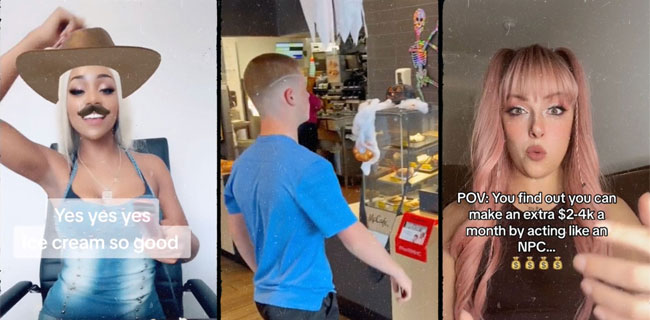
Non-playable characters, or NPCs, are taking TikTok by storm. NPCs originate in video games. They are the background characters, the ones with repetitive movements and sayings, and no storylines. The main, playable, character can interact with them but only in limited ways. They are tools in someone else’s story.
People pretending to be NPCs on TikTok are not new. Creator @loczniki, Nicki Loczek, has been acting like a video game character on her TikTok page for two years. Her videos regularly get millions of views.
NPC content rapidly gained popularity in recent months when creators like @pinkydollreal have been live streaming as NPCs. NPC creators perform scripted lines and reactions to purchased “gifts” from their fans that then appear on screen as emojis.
Giving diamonds, coins and other gifts to creators has a very low cost to fans. However, when creators accumulate large audiences, the profits can add up significantly, especially when the streams can go for hours. Creator @glam_with_dee tried out the trend and shared that she made $99 in a two-and-a-half-hour stream.
Some people are calling the NPC trend a fetish – more often that not it is beautiful women performing actions and sounds on command for an audience. Others, however, disavow this sentiment, stating that people always claim women making money from the absurd is a fetish, when it is often far from the truth.
People watch NPCs on TikTok for a variety of reasons. Nicki Loczek’s popularity came from her funny videos pretending to be a video game character in public. Many streamers also dress up in elaborate cosplay costumes, feeding into the gaming and fantasy aesthetic.
Others, myself included, watch for the absurdity. It is uncanny watching people be NPCs.
Commodifying the self
People online have been commodifying themselves since social media platforms introduced creator fund programs and brands recognised the income potential of content creators. For years, creators have been participating in brand deals for anything from health products to home decor, with some going as far as deals for free cosmetic surgery.
One of the key principles of being successful online is a consistent personal brand. Traditionally, when we think about people becoming successful online, we attribute this to authenticity.
Audiences want consistent posts, a clear authorial voice, and a person and brand where they know what they’re getting. While NPCs cannot technically be “authentic” as they are characters rather than people, they still fulfil these attributes on TikTok. They do what we think they will do. Their reactions are expected, if not delivered at the specific times we ask for them.
NPC live streamers have planned reactions to the “gifts” they receive while they stream. Bigger gifts usually have bigger reactions. Christine Tran, a PhD candidate from the University of Toronto, states: “NPC streamers are just the latest genre of creators who divide their bodies into marketplaces of intimacy.”
The NPC trend fits in with other forms of online commodification. Pretending to be an NPC on TikTok live is not too far removed from popular YouTubers maintaining an “online persona” for the purposes of creating a marketable, brand-friendly channel.
Monetisation online
TikTok is one of many social media platforms where users create and sell a personal brand for money. Tobias Raun, an assistant professor in communications, states: “YouTube as a platform plays a crucial role by persistently encouraging users to compete for attention and status and rewarding them economically for promoting themselves.”
TikTok pays its users far less than YouTube does. While the real numbers differ depending on video length and the creator themselves, TikTok is known to pay $0.03 per 1,000 views, compared to multiple dollars on YouTube. The most money to be made on TikTok, outside of brand deals, is through live streams.
The creator fund on TikTok is limited to creators with over 10,000 followers who have amassed a minimum of 100,000 views in the last month. It is also available in limited countries. Australia is not included.
Alternatively, any creator with over 1,000 followers can live stream and can cash out in-app “gifts” for real money. This system is available to far more people.
The NPC trend has shown us how the self-branding online we are more familiar with, people being so authentically themselves, can be surpassed by people playing a character. The rise in live videos on TikTok is linked to the platform’s monetisation policies. If content creators want to make money from their content, they either need an incredibly large following or must find brand deals or do live streams.
I couldn’t call myself an autoethnographic researcher without trying to go live myself. I did.
TikTok is a strange, strange place. I went live for 15 minutes while writing some of this article, and 320 people watched me. I talked to some of them. Someone said I typed too hard. Someone else asked me to sing Black Sabbath.
I closed my TikTok app with a new-found appreciation (and a little bit of fear) of how hard it must be to maintain a character for hours during a live stream.
Someone did say they liked the sound of my typing. If I found a way to do my marking on an ASMR live stream, you would find me on TikTok tomorrow.
Edith Jennifer Hill is Associate Lecturer with Flinders University. This article is republished from The Conversation under a Creative Commons license. Read the original article.
This is a Bawaal note. Just like the movie, well-meaning but ends up being a chaotic commotion of interpretations and questions while raising many questionable answers in mind. It is as good on intent as much as the director of Bawaal aspired the movie currently streaming on Amazon Prime to be, but it meanders and seems contrived to push a point of view. I like such movies where the director is concerned more about the movie and the message than the final output and liking of the audience. It is a farfetched mess which wants but rarely harnesses your complete attention. However, I would like everyone and especially couples, to see the movie. Maybe it would make sense for the client-agency teams to see it together and use it as a platform to raise a few questions that could be debated till the cows come home or the bars close.
It’s a complete Bawaal
This is director Nitesh Tiwari’s way of making Bawaal in the audience’s mind. And don’t be guided by his performance as a Dangal or Chiller Party director.
There is a failing marriage based on false premises. The image-conscious groom is a history teacher wanting to further control and strengthen his image in society. A far-fetched diversion of the hero to take a tour to repair his folly and again to further structure his image. And then, completely out of the blue, juxtaposition of World War II horrors in a movie that the viewer started watching as a romantic story with a predictable narrative.
The film storyline is unexpected and too far-fetched and maybe always remains a suspension of episodes and never become a smooth solution you could call a story.
Some spoiler alert: half-baked Bawaal story ahead.
It is different that the movie has Varun Kapoor, Ajay Dixit (Ajju Bhaiya) as the image-conscious history teacher in Lucknow and Janavi Kapoor as Nisha, the intelligent and beautiful girl who has a history of epileptic fits delivering one of their best performances. Manoj Pahwa and Anjuman Saxena as Ajju’s parents, Mukesh Tiwari as the local MLA and Prateek Pachori as the best friend, repowers the frames they are in.
Nisha tells Ajju Bhaiya about her problem, but he still marries her as it would further add to his image. However, Nisha has an epileptic fit during the marriage. Now Ajju Bhaiya sees her differently. A liability that could affect his image. So the marriage is in shambles. He won’t even take her anywhere because he is haunted by the question, ‘What if she has a fit’. People may object and point out that Ajju’s reaction to Nisha’s epileptic fit is shameless and too insensitive; they must realise that real life and the truth are reflected in reel life, and the movie cannot be creatively challenged for being socially correct.
An episode in school leads Ajju Bhaiya on a trip to Europe centred around the sites of World War II – which is what he was teaching to his class! That’s the twist.
I have no grudge against the story not exploring the horrors of the war. It was not meant to do so. Many may hate how the world-war-II horror plots have been forced to narrowcast about life and marriage.
However, the movie often uses the platform and the war scenarios to make the hero turn a leaf. Wow, that was expected and is nothing new, just like the Amitabh Bachchan movie Bagbhan which had no new subject but raised a few questions.
Bawaal is chaotic, and you can’t say that the cast, director or movie name did not warn you beforehand. Don’t look at the context and the related emotions director wants to raise. Just concentrate on the questions.
Questions Raised
The movie raises many questions. If each of us starts looking inwardly, we may have multiple answers or justifications for our lives. We would individually know what the reality is and what are mere excuses and explanations. And that is where Bawaal scores. These silly micro-moments of delta recognition of the naked truth in our lives. Not that they are new, but they are presented and placed differently.
Questions at an individual level. Brand-I
What would you do if you had only a day more to live?
What would you pack from your life and belongings in your small (say 5-7 kg) suitcase if you were forced to do so within an hour, knowing that it is all you will ever have?
Why are we never satisfied with what we have? Why are we never happy and make the best use of what we have? Why do we keep looking for more or rather envy what others have?
Reverse Engineering the Questions In Brand Terms
And once you have done answering these questions on your personal life, try answering these collectively as for the brand.
What would you do if you had total freedom to recreate the brand?
What would you continue to take from the brand’s history and current state if you were forced to do, knowing that it is all the brand will ever have to work with?
What would be the result if you really tried really hard to define the brand purpose and intent in the shortest possible array of words?
Are you using the brand resources and characteristics to their best possible impact, or are you busy looking at the competition’s advantages and using them as an excuse?
Is the agency and the client more of an Ajju Bhaiya before the trip?
What is the ‘Epileptic fit’ of the client-agency relationship?
Is the brand team at the agency and the client more image-conscious ( awards and PR coverage) than really working on the fundamental purpose ( the marriage)?
Could Have Done Better
The director, Nitesh Tiwari, could have done better. And that is always the case. It is well justified in the case of Bawaal the movie, and I can bet a comment suited to your first attempts at answering the questions.
I love questions and have recently released my first book of poems titled ‘Always Questioning life’ with Leapfrog publications. (It’s available on Amazon, and we’ve just ordered a copy – Ed).
Net-Net
Watch this out-of-a-box movie. Think of the most oversized box you can imagine. It seems to address a niche audience and could not be a commercial success in theatres, but on OTT, it may do a slow burn, raise some questions, and be part of a few debates.
Don’t get too emotional about context and rationality. Just flow with the director Nitesh Tiwari’s intent and try answering the questions instead of thinking of the classic cheese, caramel popcorn, or what to eat. It may be a good self-cleansing or brand realisation if and only if you watched for the questions and answered them honestly enough.
The International News Media Association (INMA, in short) is hosting its annual INMA South Asia News Media Summit this week. The two-day Summit will be held virtually, and, as of August 8, and over 650 professionals (and some students) from across 25 countries have registered.
The central theme of the event is: ‘How South Asian news media are embracing cutting-edge strategies to shape the future of news publishing amidst disruption and transformation’.
Speakers from across countries will share insights on: Generative AI in news media companies, Subscription journeys and what’s next, The future of news delivery formats, Developing technology and data capabilities, Digital advertising optimisation and Engaging experiences via innovation in print.
An issue that has been discussed much in marcom circles. Here goes Dr Bhaskar Das in the August 9 edition of Das ka Dum. Read on…
If you wish to access the archives, please go to the Das Ka Dum tab on the website’s top navigation bar or click here: https://www.mxmindia.com/category/columns/das-ka-dum/
Q. Another question on P&G: Its CFO has said the FMCG major will be “100% ROI-driven” in terms of marketing budgets. But the problem is what if the choice of media where monies are spent is wrong?
A. This is an absurd and contradictory statement, if read in isolation. ROI, ipso facto, presupposes that it’s left brain, algorithm-based and can’t be generally wrong in statistical terms. But ROI’s efficacy is predicated on many other factors of business and marketing decisions eg product, pricing, distribution etc. So, when ROI calculation goes awry, some heads would get chopped or the Boss has to go back to the drawing board to check which assumption have queered the pitch and take corrective action.
Leo Burnett and AqVerium, a ‘digital water bank’ by AquaKraft Group Ventures, has created a first-of-its-kind Water Sustainability Score.
Much like compliance logos such as the Cruelty-free, Certified Vegan, Fairtrade, Energy Rating Label and the Recyclable symbol, this score can be displayed on the product, packaging and other corporate material through a unique symbol.
The first brand to partner with Leo Burnett and AqVerium on this venture is the Bangalore International Airport Limited which is all set to be recognised as a pioneer in its commitment towards water sustainability and stewardship.
Speaking about this initiative Rajdeepak Das, CEO & CCO Leo Burnett South Asia and Chairman, Creative Council – Publicis Groupe India said: “At Burnett, we believe that creativity’s true power is in solving real problems of the world. The water crisis is already upon us and adopting the Water Sustainability Score – a first-of-its-kind report card on how water positive a brand really is can bring transparency and accountability in the indiscriminate use of water. This is not just an initiative but a true Humankind idea which has the potential to impact a billion by helping save one of the most important resources for the earth – ‘water’ and take us forward to a water-positive future.”
Added Dr Subramanya Kusnur, Chairman & CEO of AquaKraft Group Ventures: “The water crisis is real and needs immediate action. A lot has been spoken about Climate with water clearly missing the narrative. We are thrilled to have partnered with Leo Burnett – an agency that is known for its impactful work on sustainability to not only amplify this message but take timely action towards this crisis. We already have mapped out water-positive practices and getting brands to pledge towards the ‘Water Sustainability Score’ can be a game changer in water preservation. To this effect, we have onboarded Bangalore International Airport Limited on AqVerium and verified & validated the Water Audit report provided to us. We are happy to present the first ‘Water Sustainability Score’, recognising and incentivising the water positivity of organisations, along with their commitment to sustainability.”
 How low do we have to sink as a democracy before the media demands that Governments act?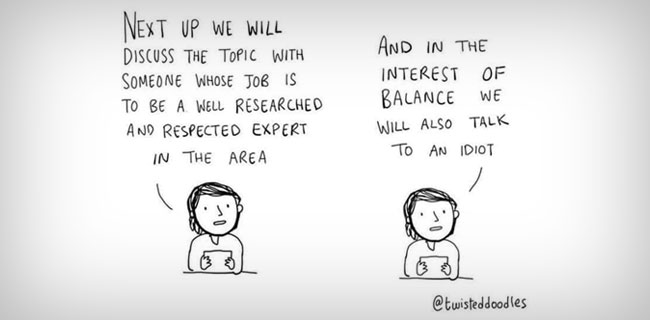
 One commendation to Mid-Day for its front page headline “Why Only Muslims”, on the Haryana bulldozer action against homes and establishments after the violence led largely by Bajrang Dal and VHP “activists. Although it is a question asked by the Muslim community itself.
 Not an easy question to answer, but as we’ve said before, we never promised to ask easy questions. Hehe. Here goes Dr Bhaskar Das in the August 8 edition of Das ka Dum. Read on…

 This is a Bawaal note. Just like the movie, well-meaning but ends up being a chaotic commotion of interpretations and questions while raising many questionable answers in mind. It is as good on intent as much as the director of Bawaal aspired the movie currently streaming on Amazon Prime to be, but it meanders and seems contrived to push a point of view. I like such movies where the director is concerned more about the movie and the message than the final output and liking of the audience. It is a farfetched mess which wants but rarely harnesses your complete attention. However, I would like everyone and especially couples, to see the movie. Maybe it would make sense for the client-agency teams to see it together and use it as a platform to raise a few questions that could be debated till the cows come home or the bars close.