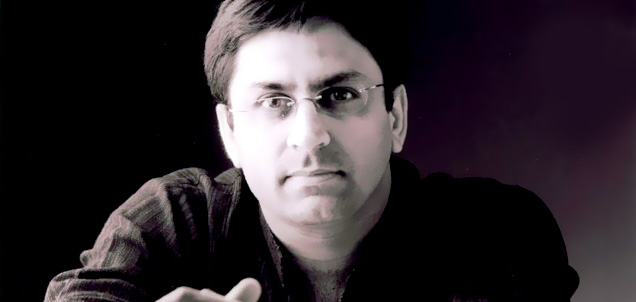
Author: mxmadmin

  • Landmark launches e-books section on website

    By A Correspondent


    Retail bookstore chain Landmark has launched an e-books section on its website www.Landmarkonthenet.com.


    “In the last two years we have been focusing on increasing our footprint in the digital space and with a surge in demand for smartphones and tablets, we saw great potential in the e-books space and have decided to increase our product offering to provide a new reading experience to Indian consumers” said Ashutosh Pandey, COO at Landmark about this announcement.


    Landmark’s website will offer a varied range of international and local e-books for which Indian consumers can pay in rupees. The collection on www.Landmarkonthenet.com will host books from various genres such as romance, science fiction and literature. E-books will be priced at an affordable price starting Rs 52/- and select e-books will be available for free. Landmark soon plans to add classic literature titles to its collection of e-books which will be available free of cost for avid readers.


  • i next launches Indore edition

    By A Correspondent


    Adding yet another city to its kitty, i next is launching its 14th edition (13th being inextlive.com) in the ‘sweet’ city of Indore on 2nd September. This edition allows the leading compact daily from Jagran group, which already has big presence in four states (UP, Uttarakhand, Bihar and Jharkhand), to spread its wings across Madhya Pradesh, a key Hindi speaking territory. To the readers, i next Indore edition would reach in combo with Nai Duniya, which is already an established name in newspaper industry in MP.


    Set to complement Nai Duniya, i next as a relatively new and youthful daily offers a right balance to the mix; the former being a part of Indore’s famous journalistic traditions and its socio-cultural journey for more than six decades now.  The development is likely to slake the rich and diversified tastes of Indorians.


    Commenting on the launch, Shri Mahendra Mohan Gupta, CMD Jagran group held, “In the past six years, i next has moved from strength to strength. Its presence will also consolidate the already strong position of Nai Dunia.”


    Recently in news for winning World Young Reader ‘Newspaper of the Year, 2012’ award at WAN-IFRA summit, i next eyes for market expansion through an aggressive integrated campaign completing the loop between the readers, advertisers and the agencies. The development is set to alter the industry equations. Revealing the strategy behind the move, Salil Tandon, VP marketing, Nai Duniya said, “Indore is an education hub and a well read city. There is a huge variety in tastes and preferences of the readers here. We would try to leverage on this by giving our readers the combined advantage of a regular newspaper and an exciting compact daily.”


    He further emphasized the relevance of a tabloid like i next in the young city like Indore. “There are a lot of well off and progressive youngsters out here which have always been a core Target Group for i next. With its unique style of presentation and storytelling, I am sure, i next would be able to win their hearts.”


    Shailesh Gupta, Director, Marketing, JPL provided a perspective, “Indore is a very active market. A vibrant mix of traditional and modern attributes; be it entertainment, fashion, food, education or real estate. The infrastructure development has triggered a spate of growth in almost every industry here. From marketing point of view, Indore presents a huge retail market to benefit from.”


    The launch is being actively promoted through the campaign ‘Indore is my next’, supported by outdoor, radio, digital promotions, print Ads, banners and road shows. The targeted communication is being undertaken to introduce i next to the young audience of Indore.


  • Debrief: Rajasthan Tourism: Bahut ghuma diya!

    By Anil Thakraney


    The Rajasthan Tourism folks have come up with a cool idea for their new ad. And it’s the traditional ‘Ghoomo’ dance. This is a good thought. Always best to dig deep into your local culture for tourism ads. So that’s fine.


    The TV commercial features a whole lot of locals doing the ‘ghoomo’ number. The camera focuses on a single spinning dancer, as the images and people change. Quite naturally, the background track is Rajasthani folk music. In the backdrop of the dancer are shots of fast moving locales and symbols of Rajasthan… the desert, the colours, the elephants, the rustic settings, etc. And all this ties in very well with the slogan: Ghoom ghoom ke dekho maaro pyaaro Rajasthan.


    [youtube width=”400″ height=”220″]http://www.youtube.com/watch?v=UfSluToqMWg[/youtube]

    So, yes, it’s all working correctly here. There is the local flavour and there are the festivities. However, there’s a fundamental problem with the treatment, and this directly hurts the communication. What they seem to have overlooked is actually a basic lesson in television advertising: When you have close up shots of human beings against a backdrop, the eye naturally stays focused on the human being. Especially when it comes to fast moving imagery. That’s the way our mind and eye function, it’s a basic human trait.


    As a result, the scenery in the backdrop, the stuff that would attract us to Rajasthan in the first place, gets lost. And that, obviously, is not a desirable thingy for any tourism ad.


    Rating: (On a scale of 1 to 5): 2.5 Good idea, let down a bit by the treatment.


  • The Anchor: Six Smart Screen marketing challenges in India

    By Anuj Kumar


    #1 Fragmentation across smart screens. There are too many devices. Varied screen sizes, running multiple operating systems, form factors and soon. Only the very top publishers and premium publishers have their content optimized for access across all smart screen – tablets, mobiles, PCs and Smart TVs. It requires awareness and investments to ensure smooth presence across all. Publishers, app developers will have to invest in smart screen presence, which comes with its share of increase in expenses. Solution can be the use of standard formats like html5, tools and products to enable publishing & curating content experiences across smart screens.


    #2 Monetization options on smart screens are limited. Smart screen ad spends is a small part of the total ad spends but this is one of the fastest growing segments. Monetization of contents thru ads on smart screens would enable more publishers to invest in smart screen contents and apps in India. Specialist advice is needed for smart screens; specialized smart screen ad networks for publishers and smart screen ad solutions for brands.


    #3 Lack of seamless & integrated experience across smart screens. Acceptability among consumers and greater off-take will drive pervasiveness of mobile content innovations. This does not exist now. Users want content they can share and access their apps, profiles and contents seamlessly across smart screens. This takes time for the industry to establish. This can be fixed by the use of cloud computing, user identities and use of standard OS platforms.


    #4 Mass adoption and affordability. Costs of buying devices with smart screens and the cost of connectivity is a very important factor. Consumer numbers have to reach high levels for marketers to start targeting consumers with smart screens. Rate of adoption is typically driven by telco plans for data connections, price of smart devices going down, plans for buying devices and so on. All these are going down but can certainly be made more affordable. At another level availability and awareness of apps drives mass adoption. Apps can entice consumer from productivity, engagement, entertainment and other perspective to drive adoption. Solutions come from the lowering cost of devices, consumer schemes and building awareness on the benefits of smart screens and their corresponding value.


    #5 Ad challenges. Most ad agencies are not ramped up or fully equipped to advice on smart screen media & creative plans. They are used to working on the conventional media. Large agencies running large businesses on conventional media treat mobile marketing as a poor secondary marketing platform. Primarily because of the volume of spends and lack of expertise. Specialized agencies will change that. They will create innovative engagement solutions to attract consumers, in turn attracting brands and growing the ‘smart media’ marketing and time spent pie.


    #6 Complex ecosystem and ad formats without independent media monitoring & performance metrics, which restricts ad spends.


    Anuj Kumar is Co-Founder and CEO of Affle.


  • We need an Indian voice in our ads: Ram Madhvani


    By Anil Thakraney


    I did a few ad films with Ram Madhvani nearly 18 years ago. Both of us were very young at the time, quite fresh into the ad business. But there was one difference: While I was floundering around, trying to find my way, Ram was already on top of his game. He was confident, committed and meticulous in his work.


    As the years rolled by, Ram has cultivated a powerful name for himself in the Indian ad world. He is, for many ad agencies, the go-to filmmaker. But it’s not been a linear journey. The director has had to keep re-inventing himself to stay relevant in a market that has seen many rapid changes. And this is the key reason behind his continuing success; Ram has thrived even as many big names in the ad filmmaking business fell by the wayside. The director’s dazzling portfolio contains many memorable commercials. Happydent (which won two Cannes Lions), LMN, Hippo, Airtel, Coke, Bisleri and Adidas, to name just a few.


    Over a long session, we discuss his craft, his sensibility and his views on advertising and filmmaking. This is not an interview; it is a solid training session for all those associated with the ad world. Not just on filmmaking… on life itself.


    Director Ram’s Mantra
    1. The director’s job is to have a vision, and then to pass it on to the team. To the art department, the camera department, the actors, etc2. Intellectual rigour without intellectual rigour mortis.3. Have an opinion and not a judgment.4. Don’t organize shoots, host them.

    5. Meditate daily to connect with your own self.

    6. Try to see how cinema or advertising can be the vehicle to self knowledge.

    7. Have a conscience. Can you face yourself, look yourself in the eye, on the work you do?

    8. ‘If you don’t know where you are going, all roads will take you there.’ (From the Wizard of Oz.)

    Q: How did a nice Gujju boy become an ad filmmaker? Didn’t want to pursue the family business?

    I was very clear from the age of 16 that I wanted to be a filmmaker. Actually, there’s an interesting story. My school friend tells me it happened because of the smell of burning film. We used to watch all kinds of movies when I was at school in Panchgani, this used to be on Saturdays in the assembly hall. There was this old projector, and the film would tear and burn. Maybe that’s how it started! Films, of course, happened much later, after college and theatre. My father expired early, and I had to earn a living. I sold carpets, I sold diamonds, I sold milk, in fact, I even worked as a peon for a while. (Laughs.) But in the evenings I would either do theatre or catch up with international cinema. Later on I did a course at NYU, when I worked for a while with my elder brother who was in America. I came back and joined Equinox. And two years later, Sumantra (Ghosal) offered me a partnership.


    Q: But why ad films?

    Because the family felt that rather than getting into the big bad world of feature films, it’s better to get into the big ad world.


    Q: Which was your first ad film as director?

    Baygon Spray – ‘No entry for pests’. I still have a copy of the cheque with me. (Smiles.)


    Q: Is Sumantra still active? Or are you the sole owner of Equinox?

    No, he’s retired, I am now the sole owner. Sumantra is of course the Chairman and he’s on the board of directors. He’s my guru; I consult him on many things. He is more than an elder brother… in fact, Sumantra gave away my wife.

     

    “I have to re-invent, I have to be on top of the game. I would hate it if people said, ‘Ram used to make great films at one time’”

    Q: It’s been over two decades. What keeps you going?

    Fear. That I will become a has-been. I have to re-invent, I have to be on top of the game. I would hate it if people said, ‘Ram used to make great films at one time’.


    Q: Which ad film turned things around for you? You did a number of mediocre ads when you started out, and I recall I was one of those guilty of palming off rubbish storyboards onto you.

    (Laughs.) You know, sometimes you take on work in order to convert it. In the hope that because people saw the hard work you put in the film, tomorrow you will be considered for a better film. At the same time, when you are doing that work, you do think it will be of some import.


    Q: I always thought you made such films only for money.

    To be honest, I haven’t been a profitable director for this company till as recently as a few years ago. I would not be living today in a 2BHK house in Prabhadevi if I had made lots of money. In fact, if I had made a lot of money, perhaps I wouldn’t be in the game today. People know if you are out there to do your work, or to make money. Also, very often a friend calls up and says, ‘This is how much I have, will you do it?’ There is no option but to say yes, and then try and figure how to make it work. Because if I say no, they’ll go to the next person and forget me! (Laughs.) I was reading somewhere that the Sistine Chapel was the world’s biggest hoarding for Christianity. Who commissioned Michelangelo? The Pope did it. And when you look at it, it was meant to advertise a certain thing. So if Michelangelo can be commissioned, why can’t I be? (Laughs.)


    “From last year I have started doing theatre workshops for every film, I bring all the actors together, I do familiarization and touchy-feely exercises.”

    Q: Still, which was the first film that made you proud?

    I had done a lot of good work for a long time. Tata Steel, Thums Up, Dunlop Spectrawide, etc. But I wasn’t considered an A-Lister. And I was very upset about this. I thought maybe I am not a pedigree top dog. So I went for a week to my friend’s farm in Kodaikanal, and I sat down and wrote what I needed to do to at least become a footnote in the history of advertising film producers and directors. I decided the first thing to do is to acknowledge that you are a mongrel. Two, look at what’s your voice, and what is everyone else’s voice. And having done that, see where you want to go. Then I decided I will only do films with a visual language. Because, at that time, I wasn’t too respectful of the Indian tradition of acting. Which was about ‘to show’ and not ‘to be’. A number of my friends suffered because I took their scripts and converted them into visual language films, and I screwed up a lot. But three or four films got talked about. One of them was Adidas with Sachin Tendulkar. And then for five years I followed the visual language route, and it culminated with Happydent. And then I realized that people are now expecting me to do a certain kind of work. So last year I decided to become a humanist, I re-invented again! You must have seen that with Airtel’s ‘Har Ek Friend’. My mission now is to try and get truth into acting. On how do I make the audiences believe that these actors existed before ‘Action’ and after ‘Cut’. For e.g., in the Airtel ‘Classroom’ ad, those kids in the classroom have a life before and after the ad. From last year I have started doing theatre workshops for every film, I bring all the actors together, I do familiarization and touchy-feely exercises.


    Q: Is there one aspect of filmmaking you enjoy the most?

    I don’t like shootings. I have been trying very hard to make the shooting space like my home. So I am figuring out how to do housekeeping. When I go to a studio floor, my production team has to show me a map on where things will be kept. I also do human traffic policing. When I walk from my video assist to my actor, sometimes I feel I have to wear a rugby helmet just to push people out of the way. I have a very polite person stationed at the shoot, whose job is to ensure people stand where they are supposed to stand. I think I am 25% there in terms of making it my home environment. I don’t want to organize a shoot, I want to host it.


    Q: What is the sensibility you bring to your ad films?

    What I like to be is an experimental filmmaker, one who’s precocious and is looking upon, with curious wonder, at this art and this craft. And practicing it in a non-judgmental manner. I am here to play with clay. Currently, as I told you, I like to do human work. Now when you look at a film, you won’t be able to say, ‘That’s definitely Ram.’ Right now, I don’t know what my voice is, but I know what I have lost. I think I have lost a bit of the experimental nature, I have become too popular. (Laughs.) I actually want the surprise factor. I want people to say, “Haila, he did that?”


    Q: You made the Tata Docomo ‘maid’ film, where the bai was seen stealing a mobile phone. It was criticized for promoting a stereotype. Regret the film?

    No, I don’t. These things shouldn’t be taken so seriously, there was no such intention. It was not a judgment on all maids, it was about this one character in the film. It did not even occur to any of in the team that we are stereotyping someone. But I must tell you I don’t do fairness creams. There no logical reason for this, it’s just a stupid hang-up. I don’t want to tell people that if you are white, you will become this or that.


    Q: How do you keep yourself refreshed and relevant in the changing milieu?

    I have the greatest collection of books on films. I have also been a voracious reader. But in the last few years, I have stopped reading. Every book I read entertained and enriched me in that moment, but it hasn’t enriched me in the long term. Apart from a few books, like the Bhagwad Gita and Patanjali’s Yoga Sutras. And these are the kind of books I am now reading. I have become very sceptical about Western philosophy, because the epitome of that philosophy is: ‘I think therefore I am’. The epitome of Eastern philosophy is: ‘Don’t think’. The whole purpose of life is to find peace rather than the buzz in our heads. Western society wants us to have more buzz. Eastern philosophy told us 5,000 years ago that the mind is not where you reside, you reside in your heart. The greatest distance I have traveled in the last twenty years is between the mind and the heart. From the intellectual side, I have moved to the emotional side.


    Q: Do awards meaning anything to you?

    Yes, they do. Because I am living in a world where they do, people do judge you for that. I have won two Cannes awards, and it has helped. At the same time, I have no creative envy, and that’s happened because of Sumantra. There was an indoctrination of creative generosity that happened at a young age. Whenever I see a great ad film done by anybody, I send out a congratulatory SMS. And that generosity gives me greater joy that what envy would have given me.


    Q: Creative directors you most enjoy working with.

    Prasoon Joshi. He’s got a poet’s mind, and he’s also a true intellectual. And Aggie (Agnello Dias). He’s very rooted. I would also include Raj Kurup and Ravi Deshpande.

     

    “I am finding that nobody in Indian advertising is doing pure emotional work. Kal Bhi Aaj Bhi Kal Bhi and Hamara Bajaj had soul, they made you cry, and that is something we have lost.”

    Q: Is there something that disappoints you about ad agencies in India?

    I think we need more of the Indian voice in the ads. Right now what’s happening is the universal joke. If there is one nation that can teach the world about heart and emotion, it’s us. The reason Bollywood works is because they are purely in the emotional territory. I am finding that nobody in Indian advertising is doing pure emotional work. Make me cry, I am sick and tired of being made to laugh. Thailand has a voice, so do South America and England. Kal Bhi Aaj Bhi Kal Bhi and Hamara Bajaj had soul, they made you cry, and that is something we have lost.


    Q: Anything else?

    There is too much internecine warfare amongst the ad agencies. Everybody is out to get each other. I don’t know why that is, it’s perhaps the very nature of competition. Maybe it was different when Mr Subhas Ghosal and Mr Gerson Da Cunha were around, maybe there was a certain camaraderie then. Also, there isn’t enough of passing on of knowledge. So if I want to learn, there is no trade journal. A lot of it is I-Me-Myself.


    “There is too much internecine warfare amongst the ad agencies. Everybody is out to get each other.”

    Q: I watched your feature film, Let’s Talk. It was very well received and yet you didn’t make another film.

    I was supposed to direct a big budget film with Vidhu Vinod Chopra producing it. It was a fantasy film called Talisman. But I wasn’t happy with the script. I have been approached by many people, but I think they are approaching me for my craft. And I believe cinema should have something to say. Now, the things I want to say, I am not getting the money to say them. And what they want me to say, I don’t feel like saying it. Right now I am in a situation where the universe has not conspired and grace has not descended. (Laughs.)


    Q: Which genre of cinema excites you?

    Three of them. Love and infidelity. Food. And spirituality.


    Q: Er, why does infidelity excite? Worried about it?

    As a warning! (Laughs loudly.) In this business, you do get close to people. And you have to tell yourself, ‘Hey, hang on!’. I am extremely happily married for 24 years, and I have no such desires. But I get completely amazed with other people when they go through it, because it’s so much heartache and suffering. Why don’t they just do their work yaar? (Laughs.)

     

  • Mindshare, Cadbury bag top honours at Emvies 2012. Madison Infinity bags Grand Emvie

    By A Correspondent


    It was raining awards at the Taj Lands End last evening. Literally. As the city braved torrential rains, flooding of even arterial roads and the consequent traffic jams, the country’s top talent from amongst media agencies and a variety of others congregated at the hotel for the Emvies 2012 organized by the Advertising Club Bombay.


    Leading media agency Mindshare grabbed the ‘Media Agency of the Year’ title for the fifth consecutive time amidst celebrations. Mindshare scored 160 points for its winnings of four gold, seven silver and six bronze awards. Cadbury was ‘Media Client of the Year’


    Madison Media Pinnacle was a not-too-distant second with 135, though it won two more golds than Mindshare. The agency took home six gold, four silver and one bronze metal.


    Maxus was third with 85 points, getting three gold, two silver and four bronze awards. Madison Media Infinity won the Grand Emvie for the Saffolalife-Saving Private Heart campaign.


    There were three new categories introduced this year: Media Client of the Year, Best Ongoing Media Campaign and Young Emvie of the Year. Cadbury, which also won Madison Media Pinnacle the Best Ongoing Media Campaign metal, was Client of the Year. Vineet Nair of Mindshare was the Young Emvie of the Year.


    In its twelfth year, the Emvies is a celebration of media talent from amongst media agencies and advertisers.


  • How Krishnan Chatterjee is shaping a unique identity for brand HCL

    By Rahul Sachitanand


    Even as 65-year-old Bruce Springsteen was kicking off yet another soldout tour in his four-decade-long music career, one Indian marketer could only marvel about his longevity from afar. Seventeen studio albums and countless shows later, The Boss was showing few signs of dimming fan interest as successive generations of fans lapped up his latest tunes.

     

    This timeless appeal left Krishnan Chatterjee, Strategic Head of Marketing, HCL Technologies, enthralled, as both a diehard fan and a marketer looking for solutions to build a strong and ever-lasting brand. A vocalist and rhythm guitarist for HCL’s band named Contraband, he wonders at the musician’s ability to build a strong personal brand and keep fans asking for more.


    Mr Chatterjee is hoping to use some lessons from music at HCL Technologies. As technology has evolved, the delivery of remote software services has become a commoditised offering, leaving vendors, his employer included, hunting for new growth drivers. Rather than chase the same opportunity, Mr Chatterjee has been pushing new business opportunities, growing units such as remote infrastructure management from $60 million when he joined in 2004 (after a decade-long stint at ITC), to a billion-dollar unit today.


    His ability to find a winning proposition for a brand began before HCL Technologies, when be moved from the Tobacco business to lifestyle retailing under the Wills Lifestyle brand. “He was able to quickly build a competitive proposition and identify a need gap in a cluttered market,” says Sabyasachi Mishra, CEO, Vietnam and Indo-China for advertising agency JWT. According to people who know him well, Mr Chatterjee sets tough goals for himself and isn’t afraid of going after slackers for failing to meet these targets. If CEO Vineet Nayyar is the face of HCL Technologies, Mr Chatterjee is happy to play the understated counterfoil, keeping the marketing machine humming.


    History is now repeating for Mr Chatterjee at HCL. He has transformed marketing from a 3-4 man team, providing support services to teams pitching for new business, to a 300-person team at the forefront of HCL Technologies’ brand transformation. “We even started Team 360, which has 72 people today, to provide marketing services to teams at competitive rates.”


    Part of the challenge for HCL Technologies and other large Indian IT firms is to be noticed when grouped with globally-recognised brands such as IBM and Accenture. “Indian companies are recognized by a tiny fraction of our target customers,” he reckons.


    Also, he helped build Employee First (CEO Vineet Nayyar’s book on the subject has sold thousands of copies globally), to try to stand out in the clutter. A YouTube video on the subject has got over 2.5 million views, he adds, pointing to its success.


    According to Anand Narayanan, VP of Marketing for Beroe, a provider of procurement intelligence and market research, Mr Chatterjee’s biggest accomplishment has been to grow HCL’s brand recognition, despite being a relatively small player based out of India.


    Creating this sort of brand is important at this time because HCL plans to hire some 10,000 people in the US, at a politically sensitive time, with Presidential polls around the corner. “Never lose sense of your people … they are your biggest source of strength, credibility and voice,” he says.


    Mr Chatterjee, an IIM-A alumnus, is taking a tough stance on getting Brand HCL noticed, While the “Mr HCL” series of advertisements did the rounds recently, he thinks the company will look beyond these confines. “The age of advertising has gone past us,” he declares. Instead, building brand HCL will be a much more targeted campaign, tilted towards digital, especially targeted at the firm’s customers. “You’re building a brand for the next century,” he claims loftily.


    Mr Narayanan agrees. “What Krishnan has demonstrated is a pilot of HCL’s capabilities,” he says. “It has the potential to become the bellwether of marketing.” Steering HCL to these lofty heights will be Mr Chatterjee’s toughest mission yet.


    Source:The Economic Times

    Copyright © 2012, Bennett, Coleman & Co. Ltd. All Rights Reserved


  • Ranjona Banerji: Slanging matches over coal continue

    By Ranjona Banerji


    The talking heads on TV went on with their slanging matches over coal. So far, the understanding of the general public about coal allocations has not been helped by television. Newspapers tell us that people are battling viruses but these have not affected the voice boxes of participants in panel discussions. Many senior journalists are worried about the bad manners of “trolls” on the internet. They should also be worried about the bad manners of VIP guests on TV debates. Noted columnist Swaminathan S Anklesaria Aiyar looked quite puzzled on Times Now last night as Renuka Chaudhury, Swapan Dasgupta and a handsome young BJD man and a not-so-handsome BJP man battled away. I have no idea what they were saying, mainly because I confess I was also watching Masterchef Australia and the US Open but I do know that the decibel levels were so high that you could not distinguish between the sense and the screams.


    I did catch Chaudhury getting irritated at Arnab Goswami’s signature “India wants to know” line and she acidly pointed out that those on the panel were Indians as well. I only saw Aiyar looking bemused.


    After that, even Goswami had enough of coal and switched to his pet subject: the fun-loving MLAs of Karnataka and their South American holiday. He even called the study tour “macabre” which is quite a stretch of imagination, even if there is drought in Karnataka.


    On CNN-IBN, Sagorika Ghose tried to battle with Raj Thackeray and his verbal attacks on Bihar. Novelist Kiran Nagakar said that the biggest threat to Maharashtrian culture came from Marathis and not outsiders and Rahul Navrekar of the Shiv Sena tied himself in knots trying to say that Maharashtrians included not just Marathis but also people who live in the state but it was about ethnic origins but it was not and so on.


    In Saamna meanwhile – the mouthpiece of the Shiv Sena – Bal Thackeray came out on the side of his estranged nephew over the Bihar issue. The final result was nothing at all, as usual.


    **


    Ghose meanwhile has written an impassioned piece in Outlook about the need for net etiquette rather than censorship because of the rude behaviour of “trolls”. It is true that the anonymity of the Net makes people behave quite wickedly and Ghose has quite candidly listed the terms used against women journalists by trolls: rape is a common threat, as are words like bitch, cunt, whore and so on. I am specifically not using asterisks and dollar signs to blank out the words – why hide the ugly truth?
    But I would recommend that senior journalists should take all this in their stride. Even before the internet was invented, there was a certain kind of person who wrote letters to the editor full of hate and sexual taunts and threats. The first time it was a shock, after that it was just crass and idiotic.) http://www.outlookindia.com/article.aspx?282107)


    **


    Mumbai’s massive rainfall on Wednesday caused the usual problems and TV gave it some coverage. It was left to the newspapers on Thursday morning to give us the complete picture, without the hysterics. This is the first time in many years that I did not see Sreenivasan Jain of NDTV stand at Milan Subway in Santa Cruz under an umbrella talking about Mumbai being flooded. As everyone in Mumbai knows, Milan Subway is below the road level and therefore, if someone pours a bucket of water into it, the water will collect. Maybe no one went there because Jain is no longer in that part of NDTV. What a relief.


    Most disappointingly, the morning TV shows did not come back to the rain although, happily, there was lots of US Open news. Even more, dare I say it, than cricket!


    **


    Since we have 800,000 news channels in India, I’m now hoping that someone starts a weather channel. Without the format of panel discussions. The idea of Chandan Mitra and Manish Tiwari fighting over low pressure weather systems fills me with horror!


  • Centuryply looks at growth from unorganized sector

    By Tuhina Anand


    Centuryply has gone aggressive to get a larger share in the branded plywood and related business. In fact, recently we have seen a spurt in the activity by the players in the segment and this has to do with the fact that the branded players are eyeing the unorganized sector.


    Abhra Banerjee

    Explaining this fact, Abhra Banerjee, Executive Business Head, Centuryply, said, “Our industry is under transition as there is higher knowledge about the category among the consumers. This could be attributed to the digital and social media which has led to consumers finding more about products before making a purchase decision. This had led to a move where the branded category is growing and the players are looking at growth as the unorganized sector here is shrinking. So, as we are all fighting for a share of the unorganized sector, one sees more activity from branded players like Centuryply.”


    Further Mr Banerjee explained that Centuryply in its bid to get a greater share and also revamp its brand perception has entered the readymade home furniture business with its retail store Nesta. Putting things in perspective he said, “Four years ago when we did a survey post our campaign, we realized that while people saw Centuryply as a trustworthy market leader with superior quality products, there was also a perception that the brand was lacking youthful appeal and was not modern and contemporary.”


    The company then took measured steps to revamp its perception, among other things becoming more aggressive, and one way was to get into readymade lifestyle products. The furniture business emerged as a natural brand extension, thus also creating something that is lifestyle oriented and aspirational. This was one way to grab a contemporary avatar for the brand Centuryply.


    There was also a shift in its media strategy and the company got into branded entertainment and partnered with big budget movies. It also partnered with designers from National Institute of Design to make kids range of furniture and leading Indian architects for contemporary product designs. The effort yielded result and Centuryply as another study revealed was being perceived as a trendy brand.


    In fact all these efforts have led Centuryply to have a CAGR of 28 percent for the last five years. While it has been impacted with the slowdown as other fields like real estate have been hit but Centuryply is still clocking double digits growth albeit a bit slower than previous years’ growth numbers.


    It has recently launched its new campaign with the tagline ‘Sab Sahe Mast Rahe’. The campaign was preceded with a high decibel teaser. The new campaign highlights the brand’s strengths as a modern, contemporary, youthful and a trustworthy market leader while highlighting Centuryply’s patented technology which makes it 100 percent borer- and termite-proof and gives it the strength to withstand all abuse.


    The new campaign of Centuryply aims at redefining the brand image and increasing consumer involvement with the plywood category through Bates’s proprietary ‘Changengage’ tool. The campaign is targeted at upwardly mobile urban male in the age group of 35-45 years who is a homeowner and digital savvy.


    Bates Kolkata has ideated and conceptualised the campaign titled “Sab Sahe Mast Rahe Part 2”. The campaign is based on a basic human insight. When people get angry, they lose control over themselves behave like a monster, and unleash their anger on objects around. Mostly, it’s doors, windows, wardrobes, tables and other pieces of wooden furniture that bear the brunt. The furniture stands in silent testimony to this human emotion, takes all the battering in its’ stride and gives peace and tranquility in return. The campaign kicked off with a high decibel teaser campaign across different media platforms and the TVC was launched on World Anger Day to leverage the communication relevance.


    Besides TV, Centuryply has drawn a multi-media campaign plan to reach its TG by using effective media vehicles like OOH, Radio, Multiplex & Digital platforms. The campaign will go on till March 2013. To ensure consumer engagement, some interesting BTL activities like multiplex, mall and trade activations have been planned. The TVC has been shot in Poland by Vinod P Vijay of Lemon Yellow Sun Films.


  • Divya Marathi now a case study at IIM Bangalore

    By A Correspondent


    The fast paced growth and unique new market launch strategy of Dainik Bhaskar Group, an Orbit-shifting innovative process featured as a case in IIM Ahmedabad, and the successful launch of Divya Marathi, the group’s Marathi newspaper, this time has attracted IIM Bangalore to study and create a classroom case on group’s success through the years.


    Seema Gupta

    Prof. Seema Gupta of IIM Bangalore did a detailed analysis of Dainik Bhaskar group processes in her attempt to understand what makes this group succeed. She met with the senior management across verticals; Editorial, Production, circulation and marketing to deep dive into their independent and cross-functional working. Result; ‘Dainik Bhaskar group: Aspiring Growth’ a case study by IIM Bangalore.


    The case delves into the history of the group, the aggressive launch strategy, accelerated business growth and robust marketing plan. It strongly points out that launching of a newspaper and venturing into a monopolistic market space is definitely a decision that is governed by the faith in the brand. Considering the nature of the category, where reading habits are relatively strong and the market leaders create high entry barriers including the competition-intensive cut-throat ground zero strategies, it makes for an interesting study in management strategies, processes and execution. Success in such situations cannot just be attributed to the business acumen, understanding of market dynamics and identification of the need-gap within the market. There are other elements like agility, empowerment, passion and high ambition across the employee set that is a real differentiator and helps convert strategies into reality.


    Elaborating on selecting Dainik Bhaskar Group for the case, Prof. Seema Gupta said, ‘Dainik Bhaskar with its ambitious growth plans exemplifies gutsy business strategy and marketing. It changed the contours of the marketplace by entering into markets with strong and entrenched incumbents. This task was even more arduous considering the nature of the category as it is difficult to change the habit of readers. Newspapers touch the life of every consumer and hence the case would drive strong emotional connect and animated discussion in the classroom. The focus of the company on tier II towns makes it an apt material for case study as small towns would be the drivers of future growth of Indian economy.’


    The case in detail traces the sustained leadership strategy adapted by Dainik Bhaskar Group over the years. It places importance on the way the group evaluates and  identifies the gap between supply and demand. And the process of creation of a product that truly answers the overt and latent needs in the ever evolving market. It identifies that the core business philosophy of the group remains a singular focus on close in-depth understanding of the consumers’ pulse and being consumer-centric in its product creation.


    Girish Agarwaal

    Speaking about this development, Girish Agarwaal, Director, Dainik Bhaskar Group said, “It is always a moment of pride when an institute of repute like ‘Indian institute of Management Bangalore’ seeks to study the organisation and creates a case study. We do believe that in the process of the case creation and discussion, the group also benefits in getting some raw, unbiased and unfiltered views. We attended the first classroom sessions held on July 20 at IIM-B, where second year students discussed the case. It has been a healthy experience and we respect the level of analysis that the students presented in their understanding of the challenges faced by the group.”


  • Ketan Desai is Integer Group MD in India

    By A Correspondent


    The Integer Group, a leading promotional, retail and shopper marketing agency in India, has further boosted expertise with the appointment of Ketan Desai as Managing Director of The Integer Group India. Mr Desai assumes his new role immediately.


    He will work alongside Shiv Sethuraman, Chief Executive Officer of TBWA\Group India and Dan Paris, Regional Managing Director of The Integer Group Asia Pacific. Mr Desai will not only manage existing network client shopper marketing programmes, but also continue to develop The Integer Group India as one of the leading promotional, retail and shopper marketing agencies across the Indian sub-continent.


    Mr Desai joins The Integer Group after completing a 14-year tenure with Grey Global Group, where he led major client relationships in both India and Sri Lanka. He has worked with both global and local clients such as Procter & Gamble, Marico, Hindustan Times, Audi and GSK, and has significant retail and shopper marketing experience after leading the ITC and GSK shopper business for Grey Group.


    Commenting on his appointment, Mr Desai said, “I am extremely excited to join the team. The Integer Group is a top promotional, retail and shopper marketing agency, and for me, it is the opportunity to develop winning solutions for world class brands at the point of purchase.” He added, “Retail and shopper marketing is my passion and there is no question for me that it represents the future of the industry.”


    “Ketan has considerable experience in many retail categories across our industry, demonstrating the leadership essential to drive growth for some of the biggest brand owners in the world,” commented Mr Sethuraman. “His addition to the senior team here in Mumbai is a huge asset as our business grows and continues to diversify into the fast-growing space of shopper marketing.”


    Mr Paris added, “Ketan has rare expertise in our industry, combining a wide brand portfolio with experience in the growing Indian market and sub-continent region, whilst demonstrating the granular insight critical to driving powerful and effective creative work for the brands under his stewardship.”


    The Integer Group is one of the world’s largest promotional, retail, and shopper marketing agencies, and a key member of the Omnicom Group Inc.


  • Investment Watch from moneycontrol.com

    By A Correspondent


    Moneycontrol.com has recently launched Investment Watch, a real-time alert service that will keep subscribers updated about the markets and will also let them stay updated with their portfolio.


    With this service, users can get stock quotes, commodity prices, currency rates, Indian and global market indices as well keep up with the ups and downs in their portfolio.


    Subscribers can get the alerts through SMS, Emails and desktop notifications, which they can customize according to their preferences.


    Commenting on the launch, Joyson Thomas, COO, Web18 said, “Investment Watch keeps its subscribers constantly updated about the markets and their portfolio. This is an extremely comprehensive product that covers all major financial instruments and also manages to reach users through all devices viz desktops, laptops, tablets and mobile phones.”


    Investment Watch can be accessed at http://investmentwatch.moneycontrol.com/.