Author: mxmadmin

  • Zee TV partners with Sneha Foundation

    By Our Staff


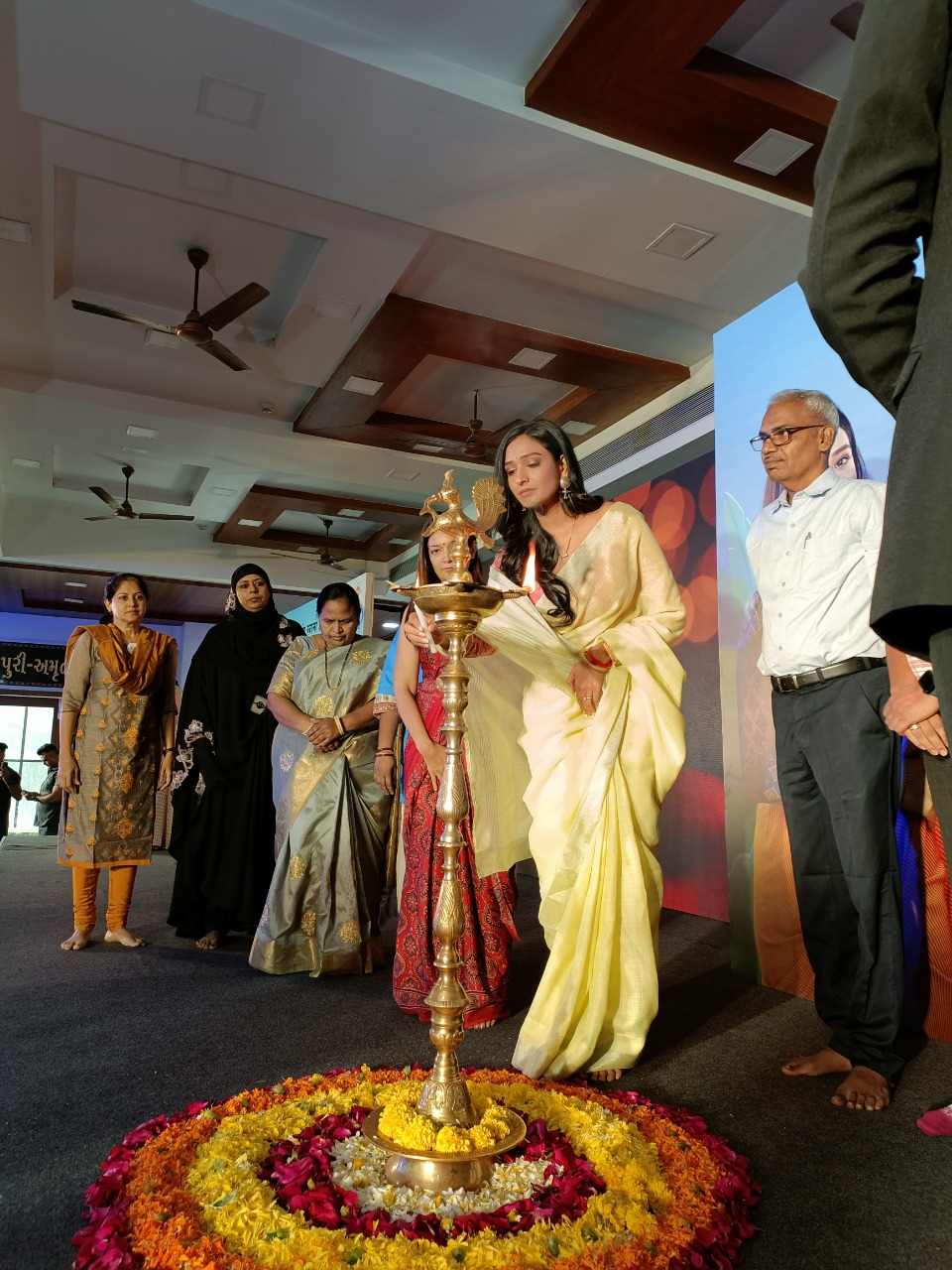
    Zee TV has partnered with the Society for Nutrition, Education & Health Action (SNEHA) to launch the ‘Nutrition Campaign in Bhiwandi, Thane.  The campaign is supported by TV actress Aishwarya Khare popularly known by lead role ‘Bhagya Lakshmi’.


    This initiative aims to create awareness about the importance of nutrition and with an aim to improve the nutritional status of women and children in Bhiwandi.


    Aishwarya Khare said, “I am extremely happy and proud that I got this opportunity from Zee TV and SNEHA to be a part of this noble initiative. I have always wanted to be a part of a cause that helps children and women, and I am glad it has all come together so beautifully via this endeavour. I believe that nutrition is very important in everyone’s life; unless and until you are fit from the inside, you will not be able to live a healthy lifestyle. Eating healthy is one of the most important things one should follow.  Zee TV has always been getting me to be a part of such campaigns which enable me to help others, much in sync with my character Lakshmi’s mantra in life of doing good deeds that bring a smile to peoples’ faces and I can never thank the channel enough for that.”


  • Koo R-Day with new campaign

    By Our Staff


    Koo, the Made-in-India Twitter-like microblogging platform has launched a campaign around Republic Day. Called #TogetherWeKoo, it started on January 21.


    “India is a land of diversity, with 1000s of languages, and true expression lies in being able to speak from the heart, in one’s own language,” said Aprameya Radhakrishna, CEO and Co-Founder of Koo. “True democracy lies in giving a platform to everyone, and we invite you to join us on Koo and support this campaign of equal opportunity of expression.”


  • ASCI tightens disclaimer guidelines

    By Our Staff


    The Advertising Standards Council of India (ASCI), has updated its “Guidelines for Disclaimers made in supporting, limiting or explaining claims made in advertisements”. The ASCI code requires that suitable disclaimers be used to properly explain and support claims made in advertisements to ensure that consumers can read all the information presented. In the past three years, ASCI has processed over 800 advertisements which were found to be in violation of the disclaimer guidelines.


    In a recent survey carried out by ASCI with 130 consumers, it was observed that

    1. 80% of respondents did not notice the disclaimer

    2. 33% could not understand the disclaimers clearly even after adequate exposure  time had been provided

    3. 62% of respondents felt that the disclaimer was excessively long.


    The Consumer Complaints Council (CCC), during their meetings, have also observed that sometimes, the frame of the advertisement that contains the disclaimer was very crowded, and distracted the viewer’s focus.


    To address these issues, the Guidelines for Disclaimers made in supporting, limiting or explaining claims made in advertisements have been amended by ASCI after consultation with stakeholders. The key additions to the existing disclaimer guidelines are as follows:

    :: The use of disclaimer should be kept to a minimum. Long or otherwise complex disclaimers with large blocks of text and difficult words are a deterrent to viewers attempting to read the contents of the disclaimer. In such cases advertisers should modify the headline claim to reduce the need for further qualification through disclaimers.

    :: Hold duration and readability of disclaimer – In television commercials or any other video advertisement on digital media, all disclaimers should be clearly readable to consumers. In a single frame in an advertisement:

    >> There should not be more than one disclaimer

    >> The disclaimer should be restricted to two full length lines and remain on  screen for more than four seconds for every line

    :: For regulatory requirements where the disclaimer exceeds two lines additional hold duration should be accounted for. For the purposes of calculating the duration of hold of disclaimers, all forms of text appearing on screen at any one  point in time should be counted. This includes both disclaimer text and any text  content in the main ad creative regardless of where on screen it appears and  whether or not it is repeated in audio.


    Other key facets of the disclaimer guidelines which remain unchanged are:

    :: A disclaimer can expand or clarify a claim, make qualifications, or resolve  ambiguities, to explain the claim in further detail, but should not contradict/modify  the material claim made nor contradict the main message conveyed by the  advertiser or change the dictionary meaning of the words used in the claim as  received or perceived by a consumer.

    :: A disclaimer should not attempt to suppress material information with respect to  the claim, the omission / absence of which is likely to make the advertisement  deceptive or conceal its commercial intent.

    :: A disclaimer should not attempt to correct a misleading claim made in an  advertisement.

    :: A disclaimer shall be in the same language as that of the claim/s of the Advertisement. In case of bilingual advertisements, the disclaimer should be in the dominant language of the advertisement.


    Commenting on the changes, Manisha Kapoor, CEO and Secretary-General ASCI said: “While ASCI has had disclaimer guidelines since 2016, it was observed that over-use of disclaimers made it difficult for consumers to understand all the information presented in the ad. This is evident from our survey where 80% of consumers did not even notice the disclaimers. Hence, it is important that claims are crafted in a way that minimizes the need for qualificatory disclaimers. Where disclaimers are needed, they should be  presented in a manner that someone who is interested in reading them has the  opportunity to do so.” For the full disclaimer guidelines: https://ascionline.in/disclaimer-guidelines.pdf


  • Indian media on its downward spiral


    By Ranjona Banerji


    Ranjona BanerjiThe Government of India invoked emergency powers under Information Technology Rules 2021 to order YouTube and Twitter to take down links and certain comments on the BBC’s documentary on Prime Minister Narendra Modi, his role in the 2002 riots in Gujarat when he was chief minister and his relationship with Muslims then and now.

    The Government had already instructed the BBC to take down links to the documentary in India.

    Part 2 of the series is due to be released today, Tuesday January 24, 2023.

    The Indian media has largely gone along with this diktat. Obviously, the Indian media feels very strongly about the Emergency provisions of 1975 imposed on the press by the then prime minister Indira Gandhi. What a travesty of democratic norms. Shocking! It is another matter that then as now media owners were quite happy that their powers were curtailed. Trains, as we were often told, ran on time.

    Now in these days of an undeclared Emergency, trains do not run on time, media owners are happy when their journalists don’t perform and the journalists themselves are happiest that they no longer have to function as journalists. Being publicity mouthpieces for the Modi administration is fulfilling enough.

    So a documentary which largely reiterates what the media had said in 2002 and onwards is now verboten.

    Many media and public affairs commentators in their 30s have expressed dissatisfaction with older journalists who have stated on social media that the BBC documentary shows “nothing new”. I fear there is something lost in translation here.

    What journalists who were old enough to be around in 2002 saw is that the riots were covered extensively and allegations made against Modi and the state administration in the documentary were also made at the time. This does not imply that the documentary is pointless or unimportant.

    Rather, the BBC documentary reiterates what was said then and provides an additional input: the findings of the British government of the time. It also puts into perspective the changes in Modi from 2002 to today.


    The question however is why the Modi Government is so angry. From 2014 until today, attacks on Muslims and other religious minorities, and on Dalits, has only increased. Several BJP politicians, including the prime minister, have added to the hatred against Muslims in election and other speeches. Hindutva has been paraded as an answer to India’s problems and democracy has been upbraided for not allowing superstition and arcane customs a free run.

    One would have thought that the BJP and Modi would have been happy with the documentary. It underlines Modi’s role in the riots. It shows how Muslims were made to suffer. It explains 20 years later how these riots laid the ground for Modi’s later ascension to power. What’s not to like? And yet…

    The media has happily gone along with all this. It has amplified the hatred and not questioned Modi or the BJP on its actions. Of course, it is not possible to question Modi in person since he does not allow it. We understand that. But the questions put to Modi by a mainstream media house are few and far between. Already, all those who questioned the Modi administration on the Covid19 deaths and the handling of the pandemic have silenced themselves.

    The Indian media thus continues on its downward spiral. Gag orders on Joshimath, the invocation of emergency powers of the draconian IR Rules of 2021, the banning of a documentary about the Gujarat riots of 2002 have all washed off the media’s back like this is par for the course.

    And it is. How many in the mainstream media were bothered about journalists being spied on via Pegasus? Or spyware being used to manufacture evidence against human rights activists?

    The answer though is in the implied criticism in the BBC documentary. That more could and should have been done.

    And thus, the response from the Modi administration, largely unquestioned by the Indian media, has been to ban and blame. Some absurdity about a “colonial mindset” from politicians who belong to a “cultural” organisation which was very subservient to our erstwhile colonial masters and did not play any role in a freedom movement, is really quite funny.

    Unquestioned by the mainstream media obviously.

    Radio silence from several mainstream TV anchors who brought the riots into living rooms and bedrooms.

    Unfortunately, the world has noticed, even if Modi’s fans have not. I mean the newer fans, who believe he is the messiah of hope and fulfilment. The older fans after all voted for him because of the riots.

    https://edition.cnn.com/2023/01/23/business-india/india-modi-bbc-documentary-twitter-youtube-censorship-intl-hnk/index.html

    https://news.sky.com/story/india-uses-emergency-powers-to-block-bbc-documentary-on-prime-minister-narendra-modi-from-being-seen-in-the-country-12792586

    https://gulfnews.com/world/asia/india/india-blocks-youtube-videos-tweets-sharing-bbc-documentary-on-pm-modi-1.93367325

    I was tempted to repeat my old story about how the state government under Modi in 2002 tried to stop The Times of India in Gujarat, where I worked at the time, from being critical of Modi’s role in the riots. The owners told us to ignore the pressure and carry on with what we were doing. In spite of immense pressure on them.

    Yeah, sounds like a fairy tale today.

    Like Modi’s idea of himself as a messiah.

    Which as we approach Republic Day seems ironic…


    Ranjona Banerji is a senior journalist and commentator. She writes on MxMIndia on Tuesdays and Fridays. Her views here are personal


  • Das ka Dum with Dr Bhaskar Das | Will ChatGPT see the end of journalists? We asked ChatGPT the question, and got an interesting response. What’s your view?

    Bhaskar DasLet’s get right into the answer by Dr Bhaskar Das in the January 24 edition of Das ka Dum. Read on…


    If you wish to access the archives, please go to the Das Ka Dum tab on the website’s top navigation bar or click here: https://www.mxmindia.com/category/columns/das-ka-dum/


    Q. Will ChatGPT see the end of journalists? Before you answer, here’s what ChatGPT responded when we asked this question?


    A. Here’s ChatGPT’s answer to our question:

    It is unlikely that ChatGPT or any other technology will completely replace journalists. While language models like ChatGPT can generate human-like text, the role of journalists goes beyond just writing. Journalists are responsible for researching, fact-checking, and providing context and analysis for the news. Additionally, many aspects of journalism, such as interviewing sources and covering live events, require human judgement and intuition. However, it is possible that the use of language models in journalism may lead to changes in the way news is produced and consumed.


    What’s your view?


    I loved your question. There are multiple aspects of my thoughts on the subject. Though I am a digital immigrant, I understand digital natives have not yet got the hang of it exhaustively. So, I took the help of a tech savvy guy to request ChatGPT to write my obituary. I was disappointed. It doesn’t read like the obit The Economist. It is quite possible that there is not much content to write in my obit , but I thought of trying a few more articles but they gave rise to a few thoughts on the subject.


    But before that I must mention as two caveats that

    a) I am not fully aware of the tech development on the subject, and

    b) my unrepresentative experience of ChatGPT isn’t exhaustive to arrive at any conclusion in respect of your question. Hence my answer would only be pertinent as of today.


    Now I can share my soliloquy on the subject: your question is very pertinent given the smartness of the new technology. AI Open’s ChatGPT is taking the world by storm. AI can upend every business in some form and can impact our behaviour in unimaginable ways. ChatGPT has many features that can impact many professions for sure. It has many advantages and its growing popularity has made Goggle anxious. But these are early days and it is difficult to exhaustively predict how it can influence many professions.


    But would journalist community/ freelancers consider the new tech as competitors/ adversaries (ChatGPT vs journalists) or as a new way to collaborate? Some pessimists might aver that the algorithm would defeat human intelligence and that’s bad news for the consuming audience.


    At this juncture, I would like to state that (as is my wont) usually one can find truth in the middle and not necessarily at the extremes. For instance, even a ChatGPT copy/ visual/ design might require post-creation touch up for a hyper-personalised experience audience which has already been an imperative for organisations as to how to interact with their stakeholders.


    Also, will ChatGPT be able to converse to develop a bond between the reader and the writer or would “The Reality“ get reflected in the ChatGPT output as it follows an algorithm (dependent on pattern recognition from large database)? The demagogues or those who are prolific in rhetorics might have a field day as truth can easily manipulated , and facts can be sacrificed at the altar of reality.


    Am I responding like the so-called Old School of thought who loves to hate new technological progress? Possible, or am I thinking that we shall all be sophists in an age of post- ChatGPT?


    Too long a soliloquy that creates more opaqueness than light to your question.


    So here is my candid answer: I strongly feel that journalists would always required even after ChatGPT storm takes over the world, as they shall improve the copy for better interactivity with their audience and give a realistic version of the world around them (audience) to enable them to decode meaning out of from a plethora of manufactured reality by algorithms. And this would be true for other professions too. In fact the efficiency might go up, provided the originality of human mind continues to go into a higher plane. So instead of competing with ChatGPT, it might be a better idea to complement it through an imaginative mind.


  • Avi Kumar joins Tarun Katial at Coto

    By Our Staff


    Avi Kumar
    Avi Kumar

    Coto, the social community app exclusively for women, brings on board Avi Kumar as Chief Business Officer. He will report to former boss Tarun Katial, Founder and CEO, Coto.


    Commenting on the appointment, Katial said: “Avi has an earned reputation as a game changer, brand innovator, agile marketer, and proficient leader. He has the desired skill set mix that allows him to expertly comprehend consumer needs and requirements and build lasting brand relevance while driving business outcomes. His entrepreneurial outlook will go a long way in fortifying coto’s commitment to delivering a safe online space for women.”


    Added Kumar on his new remit: “I am excited at the opportunity of joining the senior executive team at coto and working collectively towards building a responsible virtual environment for women. coto brings together leaders of today and tomorrow and enables and empowers them to be the changemakers. I will focus on driving business growth, consumer engagement, and relationship management as part of the larger strategy. It would be an incredible opportunity to unlock incremental value for our customers and partners by curating richer and more immersive experiences.”


  • Das ka Dum with Dr Bhaskar Das | Your views on how we should celebrate Republic Day tomorrow?

    Bhaskar DasStupid question. A bit of a forced one, as we look back. Doesn’t really merit any explanation. Here’s Dr Bhaskar Das in the January 25 edition of Das ka Dum. Read on…


    If you wish to access the archives, please go to the Das Ka Dum tab on the website’s top navigation bar or click here: https://www.mxmindia.com/category/columns/das-ka-dum/


    Q. We know by now that you hate reacting to our questions around festivals and special days, But, still, handhold us on we should celebrate Republic Day tomorrow?


    A. For advertisers, agencies or media houses there is nothing special to learn and enact. They are doing dynamically and don’t need a special day to rise and act. A special discounted tactical sales initiative on a special day can’t be called a strategy.


    So, my recommendation is just take a break, spend time with the family and friends and get recharged to fact the workplace challenges with new vigour, next day. Let’s keep it simple.


  • Liqvd Asia collaborates with Vega Personal Care for campaign

    By Our Staff


    Liqvd Asia, digital marketing agency, has collaborated with beauty and personal care brand Vega, for a campaign. The new campaign #BeGenFree cuts across generations to celebrate the spirit of individualism and freedom.


    Said Anish Varghese, Chief Creative Officer, Liqvd Asia:  “We did not want to pigeonhole Vega’s audience with labels that already exist. This led to the creation of #BeGenFree, a term that creates a wider appeal for Vega. It is a diverse community that unites all such social groups under one roof.”


    Added Eiti Singhal, Chief Marketing Officer, Vega: “After the success of our last award-winning campaign ‘Flaunt your befikar’ we thought we’d step it up by introducing a digital campaign that encourages self-assurance, celebrates individuality, and fosters a sense of community within a free society. We are adopting a “self-focus” position as a brand, which gave rise to the hashtag #BeGenFree. It gives both men and women the freedom to express themselves. Our target audience will connect with our elevated line of communication, thanks to Team Liqvd Asia.”


  • Time to Smell the Joshimath Salt


    By Sanjeev Kotnala


    Sanjeev KotnalaThe news of cracks in the Joshimath (Uttarakhand) houses has slowly disappeared from print and television screens. It again demonstrates the media’s susceptibility to sensational news and playing to a voyeuristic audience. Just like the lack of follow-up administration, follow-up journalism is dead. I react as the news is about Uttarakhand, my native state. So, I selfishly take this space and your precious time to keep it alive in your mindspace. I know not much will happen, but I will feel less guilty of inactivity. And maybe the media would wake up again to its responsibility without waiting for man-made natural disasters, which can happen today- tomorrow or in the next few years.

    What you watched on screens and read about the Joshimath, Uttarakhand cracking under natural man-made disasters is just the tip of the iceberg. The foundation for it has been laid many decades back. Voices of protest by vigilant civic groups and protestors have been ignored by indifferent governments focussed on rapid development projects.

    Joshimath became the focus when hiding the brutal realities was no longer possible. It is, after all, a strategic town for tourism and from the national security point of view. This fact, instead of being a boon for the residents, has been a curse for unscientific, unsustainable, hazardous development.

    Most of us are aware of various reports with uncanny consistency, red-flagging the disaster in the making. It is different that the government found ways to read between the lines and point out shortcomings of the reports to ignore them. There is no point revisiting this ignorant apathy of state administration.

    It is clearly a case of fragile young mountains with low weight-bearing capacity. Joshimath cracks have made headlines, but many other places have reports of sinking land. Heavy tourism and other ill-conceived projects are slowly pushing them into a potential disaster.

    I am from Lansdowne, Pauri Garwhal. Whenever I have driven inwards or have heard people visiting from upper zones, the story is the same. The towns are rapidly being sacrificed to tourist and religious tourism trails. The massive road and hydel projects threaten the fragile ecosystem. The rampant construction of hotels, no planning and blatant flouting of the rules is exposing these places to a future of natural disasters – that will be entirely man-made.

    This is the time to pause, and while we may continue to probe about what and why of the past reports, action and inaction, greed, and development, we must invest in reflection and define the future course of action.

    Uttarakhand faces multiple problems. Migration, emptying villages and towns, lack of opportunities, unemployment, women and child health, potential ecological disasters, and dying traditional farming. Everything is concentrated in a few towns- further enhancing the problems.

    I am no expert, but as a layman can see Uttarakhand’s problem. The answers must be found collectively in a time-bound process. It may help other hilly states learn and avoid such a situation.

    The people of Uttarakhand are willing to be part of corrective measures even if they initially have to go through some hardship. Remember, the problems are not just of Joshimath and surrounding areas. The problems in many other places, including Nanital, Lansdowne, Mansuiri, Almora, Bagehwar, Chamoli, Pauri, Tehri, the valleys and towns like Dehradun, Haldwani, Kotdwar too.


    NET-NET: THE ACTIONLINES

    Here is something that is expected from the government:

    1. Formulate and implement a strict tourism policy. Using technology control bookings, number and movement of tourists.

    2. Restrict stay options. Only licensed hotels with strict guidelines. Stop any new hotel projects, cap and license homestay.

    3. Impose a development and ecosystem tax to enter the state and a higher tax for the places in fragile zones. Think again – is there a need to speed up and over-amenities religious tourism.

    4. Initiate a complete geological study under the competent authority and experts, leaving no scope for later fault finding or pointing out the shortcoming. Do all the test that is required. And when it is completed, please read, understand and act. The government has initiated some 6-7 studies specific to Joshimath. Still, the time given to them is short, and it seems that is someone just ticking the box.

    5. Stop all Hydel power projects and re-evaluate their short and long-term impact.

    6. Define and strictly follow construction structure and material guidelines for houses and commercial properties.

    7. Do not create new settlements without proper evaluation and sub-infrastructure development. At the same time, finding new locations is needed to decongest the existing infrastructure.

    8. Bring the BHO-KANOON into operation and expand its scope. Do not delimit new areas.


    More than anything, start listening to local bodies. Because when the primary beneficiary of a project protests, there is a question of survival. It is time that local and civic bodies are taken into confidence before the project’s approval.

    The Joshimath problem should not be restricted to the continuity of Yatra in 2023 or the bypass for national security. It should be seen as a red flag for all that affects the state.

    I hope Joshimath acts as the wake-up call Uttarakhand needs. We all must become cautious in our actions and seriously consider the impact of our projects and any further development in the area. I hope we are not too late. And the media plays a constructive role in keeping the issues alive and questioning the government policies, actions and inaction. That follow-up journalism delivers the goods.


    FINAL WORD
    The recent disaster in Joshimath has highlighted the need for better disaster management and relief efforts in Uttarakhand. The government must take steps to improve preparedness and pre-emptive measures, ensure swift and efficient relief and rehabilitation efforts, prevent future disasters, and be transparent and accountable in its actions. The people of Uttarakhand expect the government to take these measures in order to ensure their safety and well-being in case of a disaster.

    …………………………………………

    Here is some thing you can read about Sinking Joshimath and watch these videos on the Joshimath problem.

    Joshimath Sinking- a talk with ATUL SATI.


    Ground report- Why is Joshimath in Danger?


    Expert talk- Joshimath Sinking


    ………………………………….

    And as an experiment one paragraph of the above article is written by ChatGPT.
     

  • We’re closed tomorrow, Jan 26. Happy Republic Day!

    By Our Staff


    Our offices are closed tomorrow, January 26, as it’s Republic Day. There will hence be no scheduled update or newsletter. We’ll be back on Friday, January 27. See you then and Happy Republic Day!


  • Scarecrow M&C Saaatchi elevates Mustafa Kapasi to ECD

    By Our Staff


    Mustafa Kapasi
    Mustafa Kapasi

    Scarecrow M&C Saatchi has announced the elevation of Mustafa Kapasi to the role of Executive Creative Director (ECD). He has spent 7 years in Scarecrow and has handled an eclectic mix of brands including Future Generali, Adani Gas, Mahindra Trakstar, Wagh Bakri, Business Standard, Vimal, Spykar and many more.


    Said Raghu Bhat, Co-founder of Scarecrow M&C Saatchi: “Mustafa is an exceptional human being who thoroughly deserves this promotion. He has a unique combination of creativity, resilience and a hunger for learning that sets him apart. What I’m most impressed about is his ability to adapt and re-invent himself in the ever-changing digital landscape, which is a testament to his commitment to always get better, at whatever he does.”


    Added Manish Bhat, Co-founder of Scarecrow M&C Saatchi: “Mustafa is a true leader who can inspire, motivate and improve his team members. He is a great listener and his life experience allows him to come up with great insights in our conversations. One of his best qualities is that he inspires trust and has a fantastic work ethic, which is very rare to find. I wish and hope that Mustafa will continue to blossom in Scarecrow and create some more great campaigns.”


  • Havas gets Debanjan Basak as Group Creative Director

    By Our Staff


    Debanjan Basak
    Debanjan Basak

    Havas Worldwide India, the creative arm of Havas Group India, has further strengthened its creative team with the appointment of Debanjan Basak as Group Creative Director.


    Havas Worldwide India has been on a creative transformation journey in recent years, with notable additions to the team’s creative steam. Basak’s appointment follows the appointment of Anupama Ramaswamy as Chief Creative Officer last year followed by Jaibeer Ahmad as Managing Partner – North. Basak will report to Ramaswamy and will oversee the expansion of the agency’s digital and social portfolio. He’ll be based in Gurugram.


    Bobby Pawar
    Bobby Pawar

    Speaking about the appointment, Bobby Pawar, Chairman & Chief Creative Officer, Havas Group India said: “For the last four years, Rana [Barua] and I have gone about shaping Havas Worldwide India into a brand-led, digital-first creative solutions company. This has helped us grow the agency multi-fold. The creative output, too, has gotten steadily better. Anupama is here on a mission to raise it several notches and I believe, with the addition of Debanjan, the creative leadership team will accelerate that. He is a man of many talents – he’s non-territorial, a great team player, and he can write. As you can imagine, I am kinda partial to that.”


    Anupama Ramaswamy
    Anupama Ramaswamy

    Added Ramaswamy: “With a superb body of work, Debanjan brings with him a wealth of experience across formats. He will play a key role in driving our agenda of creativity beyond silos. Debanjan is not only a good creative leader, but he is also an extraordinarily warm and generous person. That’s exactly what Havas Group believes the new bunch of leaders should be. Debanjan will be responsible for driving creative excellence for clients and it really is such a pleasure to have him as a part of the Havas Worldwide India team.”