
Author: mxmadmin

  • Tata Salt launches Republic Day campaign

    By Our Staff


    Tata Salt has launched a nationwide Republic Day campaign called Desh Ke Liye #HarSawaalUthega. With its 360-degree approach, the campaign aims to empower children by providing them with a one-of-a-kind platform to raise questions that could spark relevant conversations and nudge a societal change.


    Commenting on the launch of the campaign, Deepika Bhan, President, Packaged Foods- India, Tata Consumer Products, said: “Children can really reframe our thinking! They question what we are willing to accept as the status quo and that challenge forces change. Desh Ke Liye #HarSawalUthega is a platform that endeavours to surface these real questions. We’ve received such insightful, provocative questions already and are enthused with the awareness and change the next generation is willing to imagine. Tata Salt is one of India’s most trusted brands, and we definitely want to partner this journey of fuelling an entire generation of kids to raise their questions and contribute to a better tomorrow.”


    Speaking on the idea, Sukesh Nayak, Chief Creative Officer, Ogilvy India added: “This is a very powerful platform that empowers the Children, the future of our country to ask relevant questions that will truly define the future of our country. This is an idea that not only interacts but gives voice to the children by hoisting their questions on the front page of leading national newspapers, so the whole country can see it. We believe that this idea will help children from across India voice their questions, hoist their questions and help shape a better tomorrow.”


  • SOTC Travel unveils new digital campaign

    By Our Staff


    SOTC Travel launches its new brand campaign to roll out special offers and deals every week. Focusing on the preferences of the new age traveler, the Company has created an extensive range of experiential holidays across various themes and destinations starting at affordable prices. The brand film will be promoted in 8 languages.


    Daniel D’souza President & Country Head – Holidays, SOTC Travel said: “At SOTC Travel, we take pride in our legacy of over 74 years with 5 million happy customers. Our new campaign reiterates our that ‘we are for holidays’, and so to cater to our new age customers we have created a short/crisp film that encapsulates how holidays leave a positive impact on a customer’s mind making them relive their favourite moments. The newer generation seeks experience led holidays at a great value proposition, thus to cater to our young customer segment we have created a dedicated page that offers thematic holidays with exceptional itineraries coupled with unique deals making them a great value proposition. We invite all our customers to book their much-awaited summer holidays with us.”


  • Wavemaker India releases Spotlight 23 Report

    By Our Staff


    Wavemaker India, global media agency, launches Spotlight 23, a report that puts spotlight on top 23 strategic focus areas in digital and emerging technology for the year 2023. These focus areas include big tech, e-commerce, AI, cloud computing, Web3, digital payments, and some potential disruptive technologies which may impact the industry and business, at large.


    In this inaugural edition, the report shares concise point of views and observations for the coming year backed by intense knowledge and years of experience in the digital arena. Spotlight 23 is curated by the team of digital experts at Wavemaker India.


    Speaking on the launch of this report, Ajay Gupte, CEO – South Asia, Wavemaker said: “We’ve always had a strong focus on innovation and creativity, and this report proves that we’re leading the way when it comes to helping our clients navigate the changes. We’re so excited to present the inaugural edition of this enriching report and I hope you find it useful as you steer through this new era of digital transformation!”


    Added Vishal Jacob, Chief Transformation & Digital Officer, Wavemaker India: “The world around us is evolving at a much faster pace than anyone of us imagined. It is, therefore, imperative for us to adapt to these changes. Spotlight 23 is an attempt by our team to chart out potential disruptive technologies that may show some advancement in 2023 and how they will have an implication on the businesses.”


  • OMD retains Nivea India Account

    By Our Staff


    OMD, media agency – part of the Omnicom Media Group, retains its position as the Agency on Record for global skincare giant – Nivea. The agency will continue to handle the integrated media duties for the skincare conglomerate, serviced from its Mumbai office.


    Said Anisha Iyer, CEO of OMD India: “OMD has been producing great results over the last 8.5 years that have helped Nivea grow. Our dedicated efforts towards the talent transformation agenda have reenergized the relationship with Beiersdorf, which makes us immensely proud. We look forward to building further on the strong foundations of our relationship and helping the business scale to new heights in India with the Omni product suite and data-led expertise.”


    Neil George, Managing Director of NIVEA India, added: “With today’s rapidly evolving consumer journeys and shifting sentiments driving the intersection of creativity, media, data and innovation – it is vital for us to resume our journey with a partner who understands our growth ambitions and supports the length and breadth of our goals. OMD’s capability of driving strategic conversations upstream, refreshed team of media mavens and best-in-class data-led thinking and tools, aligned with what our need of the hour is. We’re pleased to be continuing this journey with them and look forward to seeing their data-driven expertise at play as we work to achieve sustainable growth over the coming years.”


  • Should dominant archetype and persona gap across stakeholders worry you?


    By Sanjeev Kotnala


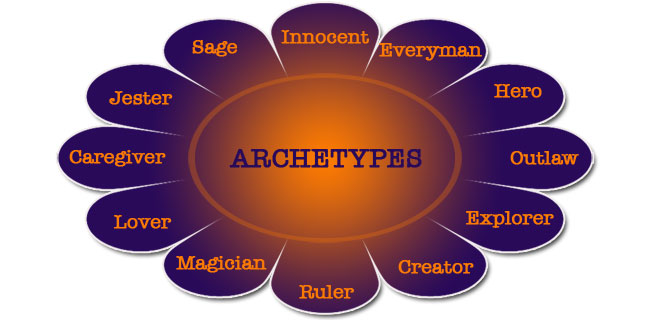
    Sanjeev KotnalaArchetype, Brand Persona, Brand Association and masks are not new concepts. In 1919, more than a century back, Carl Jung suggested that “There are forms or images of a collective nature which occur practically all over the earth as constituents of myths and at the same time, as individual products of unconscious and that these [archetypes] are imprinted and hardwired into our psyches.” He took this understanding further to create brand archetypes aligning with predominant Customer profiles. Carl Jung identified 12 archetypes: Innocent, Everyman, Hero, Outlaw, Explorer, Creator, Ruler, Magician, Lover, Caregiver, Jester, and Sage.

    Now consider the possibility that the consumers and people at different positions hardwired with a particular archetype may be putting up a mask that may or may not be in sync with their dominant archetype, as it may help them with better relationships, image perception, enhanced efficiency and effectiveness.

    The truth is that people do wear a mask all the time and life’s varied roles and responsibilities require them to act differently and wear different masks. Sometimes, people use multiple masks to interact with various stakeholders and audiences, and such a situation creates confusion because of the difference between expectation and experience.

    Moreover, masks are not true to the identity and may slip, compromising all the efforts.

    Masking is tricky but is a done thing.


    THE IDEAL SOLUTION

    The solution is to unmask and synchronise the archetype and brand persona for the desired consistency in reaction and impression. After all, what counts more than reality is perception.

    Exploratory work suggests that it is natural for the demonstrated archetype (Persona), real archetype and perceptual archetype to differ. The person may retain dominant traits of the real archetype, as they are hardwired. However, variations and tweaks, subclasses and subgroups of archetype and persona get reflected in their behaviour, actions and reactions, thus altering and influencing the resultant image and perception.


    BUSINESS ENVIRONMENT

    In a business environment, various stakeholders and audiences may perceive the archetype differently based on their experiences. To simplify the situation, we look at the dominant archetype and the perception created across five prime audiences; senior management, peer group, juniors, self-perception and perception outside the organisation.

    The person is more at ease with self and surrounding when there is an alignment across all the above perceived personal brand persona (archetype). And there is chaos, turmoil, and frustration if they conflict. There could be a problem of mismatch between self-perception and stakeholders’ perceptions.

    Many brand marketing consultants have focussed on streamlining the brand archetype and the company desired Vs demonstrated archetype through culture intervention and programmes. However, they have understandably missed looking at the archetype (persona) alignment of the prime assets of an organisation – the workforce.


    EXPLORING THE AREA

    I have worked with a few organisations open to exploring and addressing this subject.

    We used various net-based questionnaires to identify the personal archetype and persona. We used animal and celebrity association for perceptual archetype identification and cross-checked using net-based tools.

    For stakeholders outside the company, like retailers, business associates, and the workforce at the plant, we again used associations to understand the persona perception as it seemed more focused and easy to administer with a lower margin of error.

    We used a series of animal and celebrity pictures with important pre-identified characteristics to ensure everyone was on the same page. This characteristics list grew with time as audiences helped expand it with more generic interpretations.

    In some places, in-depth discussions were done for a better perception and understanding. We observed people were more open and better placed when the references were in their native language. Moreover, language allowed for highlighting finer nuances. The respondent would differentiate between a Shahukar and a banker, an adventurous sportsperson Vs a hobbyist, a Lieutenant vs King Vs subedar Vs Wazir, A government servant Vs a Government department head and a bureaucrat and, off-course, between a python and a cobra. We dropped political figures from the list as they had a highly individualistic and confusing interpretation.


    FINDINGS

    The findings fell in line and expectations.

    In one such case, the CFO was seen as a Sherlock Holmes by the franchise, a Sahukar by the retailers and a dictator by the sales force. And the CFO saw himself as a Sage and a comedian in sync with the company brand archetype. Even the MD and the directors saw him differently.

    In fact, in senior management, there was a considerable difference between self-perception and archetype discovery in how they saw each other.  And we tested these during the recruitment process to hire the right fit through net based tools. However the perceptual images reflected by the interview panel normally had wide variations.

    In another case the Sales head was seen as a true leader by the juniors, an opportunist by the peer and a wasted resource by the management.


    ACTION

    Multiple levels of counselling was done. The challenging phase was sharing the findings with the individual and explaining to them valid perceptions, and more difficult was determining the possible tweaks and corrections and monitoring them.


    NET-NET

    The final impact of such an exercise and counselling is yet to be seen. The management believes we are moving in the right direction to streamline archetype perceptions with the company/brand desired archetype. However, it has been interesting, exciting and somewhat of an eye-opener. One looks forward to working with another open organisation to understand and explore it further.
     

  • Das ka Dum with Dr Bhaskar Das | Choice Factory author Richard Shotten writes that research indicates consumers make changes when landmark birthdays approach. Like 29, 39, 49 etc. Good idea to target the nine-enders?

    Bhaskar DasWhen you talk on data-based insights, you can surely expect an interesting take from our Wizard with Words. Like today. Here’s Dr Bhaskar Das in the January 19 edition of Das ka Dum. Read on…

     

    If you wish to access the archives, please go to the Das Ka Dum tab on the website’s top navigation bar or click here: https://www.mxmindia.com/category/columns/das-ka-dum/


    Q. Choice Factory author Richard Shotten writes that research indicates consumers make changes when landmark birthdays approach. Like 29, 39, 49 etc. Good idea to target the nine-enders?


    A. Who am I too question or doubt Choice Factory author Richard Shotten’s postulations that are based on large set of cross-cultural datasets. Having said that, I wonder whether in today’s day and age, where consumer behaviour has come down to N=1, is it possible to generalise on only 9-enders? Imagine the post Covid market dynamics, where suddenly the market has moved to an employers’ market and I wonder if employees are always in a position to plan a number-based pivoting decision for their career, let alone being a victim of rightsizing by corporations. Besides, predicting behaviour on a set of past data, whatever be the size of the data lake, might not lead to a future-backwards behaviour where many environmental imponderables might make a definitive theorisation an exercise in futility. My humble observation isn’t purported to belittle the gravitas of Choice Factory’s research-based conclusions.


  • Chimp&z Inc bags PR mandate for Cossouq beauty e-services

    By Our Staff


    Cossouq, online cosmetics and beauty marketplace, hands over its PR mandate to Merge Infinity’s full-service independent agency, Chimp&z Inc. As part of the mandate, the agency will focus on providing end-to-end PR solutions to help the brand get increased visibility.


    Said  Meet Jatakia, Director of Branding & Marketing at Cossouq: “At Cossouq, we place a high value on building an equal and inclusive environment. We’re working towards creating a world void of all those gendered, age-restrictive, and regressive shackles around self-expression. And, when you have common core values & ideals, the collaboration becomes a lot more rewarding. With sustainability & inclusivity at the forefront of our business, we knew hiring Chimp&z Inc as our PR agency would be a no-brainer.”


    Added Sumitro Sircar, Associate Business Director- PR, Chimp&z Inc: “It’s honestly a privilege to be associated with a brand that is so in tune with what it stands for. With its strong values and ideologies, Cossouq I believe is well on its way to becoming a groundbreaking e-com platform and will surely bring disruptions in the beauty industry. We will ensure Chimp&z Inc’s PR expertise will help Cossouq get the right spotlight it deserves so it can reach the right audiences through the right media.”


  • Crosshairs Communication wins mandate for Cipla’s Rivela DermaScience

    By Our Staff


    Crosshairs Communication added a new name to its clientele, Rivela DermaScience – a skincare brand by Cipla. Crosshairs will now be responsible for managing the brand’s key messaging across the Indian markets.


    Stuti Jalan, Founder & managing Director of Crosshairs Communication said: “Crosshairs Communication persistently strives to meet the expectations of the brands on board. We are experts at addressing the brand’s communication objectives and image-building requirements. We are ecstatic to expand our expertise in the beauty segment with a revolutionary brand from a trusted Indian MNC like Cipla.”


  • Tata Salt launches Republic Day campaign

    By Our Staff


    Tata Salt has launched a nationwide Republic Day campaign called Desh Ke Liye #HarSawaalUthega. With its 360-degree approach, the campaign aims to empower children by providing them with a one-of-a-kind platform to raise questions that could spark relevant conversations and nudge a societal change.


    Commenting on the launch of the campaign, Deepika Bhan, President, Packaged Foods- India, Tata Consumer Products, said: “Children can really reframe our thinking! They question what we are willing to accept as the status quo and that challenge forces change. Desh Ke Liye #HarSawalUthega is a platform that endeavours to surface these real questions. We’ve received such insightful, provocative questions already and are enthused with the awareness and change the next generation is willing to imagine. Tata Salt is one of India’s most trusted brands, and we definitely want to partner this journey of fuelling an entire generation of kids to raise their questions and contribute to a better tomorrow.”


    Speaking on the idea, Sukesh Nayak, Chief Creative Officer, Ogilvy India added: “This is a very powerful platform that empowers the Children, the future of our country to ask relevant questions that will truly define the future of our country. This is an idea that not only interacts but gives voice to the children by hoisting their questions on the front page of leading national newspapers, so the whole country can see it. We believe that this idea will help children from across India voice their questions, hoist their questions and help shape a better tomorrow.”


  • Altigreen EV manufacturer releases new brand campaign

    By Our Staff


    Altigreen, Bengaluru-based electric vehicle (EV) company, has released a new brand campaign. Executed by digital-first marketing firm Pinstorm, the brand campaign titled, ‘Bijli Hoon Main’ introduces Altigreen’s mascot – an electric superhero who personifies the efficiency and power of electric mobility over vehicles powered by diesel, petrol and CNG. The campaign that has already launched two films was released during the ICC Men’s T20 World Cup on HotStar – the official streaming partner for the tournament.


    Speaking about the brand campaign, Debashis Mitra Director Sales Service & Marketing, said: “With this campaign, we have tried to communicate to our customers in the 3W cargo industry the potential of electric mobility. Our focus is to show that EVs are as good as, if not better than, their ICE counterparts in price, and performance. We have explored creating our own brand ambassador as a personification of electricity (bijli) – one that says, “Bijli Hoon Main” with confidence. Of course, it’s a path that will take time and consistency to build but the larger idea was to have our own character that becomes synonymous with “electric-only” brand identity of Altigreen over time.”


    Added Mahesh Murthy CEO & Founder of Pinstorm: “As a standard practice, we aim to work with marketers on a different philosophy, to start with trying to improve their digital product offering so that it can have a positive digital word of mouth, before moving to help grow it using a suite of other tactics. With Altigreen, the brief was clear: The core message and communication had to be distinctive and consistent. It had to be something that stands out in the crowd, and needs to be more memorable than the T20 match before and after the commercial. I am happy that we have succeeded in that endeavour to a large extent.”


  • Wunderman Thompson South Asia appoints Harsh Shah

    By Our Staff


    Harsh Shah
    Harsh Shah

    Harsh Shah has been appointed as Chief Digital Officer at Wunderman Thompson South Asia. In his new role, he will be responsible for accelerating the digital transformation of the Wunderman Thompson Group, and working with all of its agencies across Creative, Communication, Tech, Health and Commerce to deliver an integrated solution to all clients across the Group.


    Based out of Mumbai, Shah will report directly to Shams Jasani, Chief Executive Officer, Wunderman Thompson South Asia.


    Commenting on Shah’s appointment, Shams Jasani said: “We are Delighted to welcome Harsh to the Wunderman Thompson Family. He brings in a wealth of experience across Digital, Technology and Commerce. Our work at Wunderman Thompson harnesses the power of creative, technology, and Commerce to drive unprecedented growth for some of the world’s biggest brands. We are glad to have Harsh onboard at a critical juncture when we are keenly looking at offering end-to-end capabilities to our clients at scale.”


  • Generational Marketing & the Post-Post-Modern World


    By Ashoke Agarrwal


    Ashoke AgarrwalThe concept of generations as a social class began as most social ideas do in literature. Gertrude Stein coined the phrase “The Lost Generation” as a signifier of the age cohort that, in early adulthood, experienced World War I and their “directionless, disoriented, wandering” spirit after the war.


    In 1928, Karl Mannheim posited a theory of generations in his German essay – “Das Problem der Generationen”, translated into English only in 1952.


    The theory of generation entered advertising in the 1960s and 70s with the practice of market and consumer segmentation and entered product development and marketing communication. Over the subsequent decades, generational marketing became a foundational marketing practice in the US.


    In time, the practice of marketing defined a generation as “a cohort of people born within a similar span of time (15 years at the upper end) who share a comparable age and life stage and who are shaped by a particular span of time (events, trends and developments).


    With advances in travel and communications, a global culture began to develop among the affluent and educated classes. Over the past few decades, as the globalisation of consumer culture has strengthened, marketers across the globe have been using a global generational segmentation framework:

    • Baby Boomers born between 1946 – 1964

    • Generation X 1965-1976

    • Millennial 1977-1998

    • Generation Z 1996 -2010


    Generations as a market segment become relevant as the cohort ages to become decision-makers in the consumer market.


    The generational segmentation framework, as stated above, is most relevant among the developed Western countries because of a commonality in the dominant culture and a common social, political and economic history. In other countries, there have been attempts to define a more relevant framework. However, these attempts have been sporadic in India. Indian brands and advertising planning set-ups have, by and large, stuck to the global framework.


    Arun Jagannathan sets out an example of a generational framework custom-designed for India in his LinkedIn blog post:

    • Die-hards (born before 1960)

    • Conventionalists (1961-1980)

    • Progressives (1980 -2000)

    • After Google (after 2000)


    Is generational segmentation relevant among emerging trends in media and lifestyles in the post-post-modern age?


    The last few decades of the twentieth century witnessed the emergence of Big Culture and its handmaiden Big Media. As a result, the same cultural artefacts – the same pop music, the same mainstream films, the same celebrities, and the same fashion trends – influenced entire age cohorts. And it made imminent marketing sense to treat these age cohorts as a viable market and create and market products, brand positionings and advertising to target these segments. Beyond culture, in the last decades of the twentieth century, the impact of major political and economic events was governed by the individual’s stage of life and, therefore, relatively homogenous across age cohorts.


    Come the twenty-first century, Big Culture and Big Media have dissolved into myriad streams that allow an individual to live in ever smaller echo chambers. Further, the impact of these echo chambers, in most cases, outweighs the effect of demographic variables. For example, in the eighties and the nineties, an individual’s political affiliation was very weakly, if at all, predictive of his lifestyle. Today political affiliation in most democracies worldwide is strongly predictive of cultural and attitudinal values.


    It is, therefore, important for marketers to use generational segmentation in combination with other segmentation frameworks.


    One such framework would be Psychographics. Psychographic segmentation is a much-debated tool among marketers but less intensely used for various reasons. However, with the arrival of the second digital marketing revolution powered by AI, psychographic segmentation will finally come into its own. And well-researched frameworks like Myers-Briggs Type Indicator (MBTI) and VALS types will be among the most used in marketing. Psychographic segmentation and emerging directions of its use in marketing is a deep and interesting topic that I hope to explore in future columns.


    Besides using Generational Segmentation in combination with Psychographics, I would also recommend using these frameworks in conjunction with the increasingly important social construct – Tribes.


    Tribes are segments based on beliefs, affinities and interests. In today’s politically charged atmosphere, it perhaps is the most effective we start with tribal segmentation before overlaying Psychographic and Generational segmentation.


    A “whine-and-cheese” liberal, extroverted Millennial and a “bhakt” conservative, extroverted Millennial are like chalk-to-cheese.


    The post-post-modern world offers an ever-increasing ability to target multi-dimensional segmentation. Therefore, marketers must fine-tune mass-media era Demographics-based segmentation with modern-day Psychographics and Tribal affinities.


    After all, segmentation, like politics, is the art of the possible.