
Author: mxmadmin

  • Dentsu launches brand film for iQOO smartphone

    By Our Staff


    Dentsu Creative India has launched a brand film for iQOO smartphones. The film stars Vijay Devarakonda and Janhvi Kapoor and was created in response to a contest run by iQOO on their social media platforms where they asked users to tell how they pronounce the brand name. Most of them mispronounced it as ikku, eye kyun, IQ, IQ-double-O, ICOOOH and more.


    Speaking about the film, Nipun Marya, CEO, iQOO India, said: “We are excited to launch this brand pronunciation awareness film with the hope that we will build a stronger relationship and instill confidence in our consumers who are at the heart of our business.Through this, we intend to create a sense of community and cheerfulness around this common conundrum and hope that our customers will be able to proudly speak about our products and services with their family and friends.”


    Speaking about the film, Ashit Chakravarty, Managing Partner, Dentsu Creative added: “It is rare for a brand to be honest and bold about how its name is frequently mispronounced. Kudos to the entire IQOO team for being bold and turning what is a unique problem into an opportunity. The idea for us was to always stay true to the story that we are India’s no. 1 smartphone brand in terms of user satisfaction, but people just don’t seem to get our name right.”


  • Agony & Ecstasy…


    With apologies to none at all

    By Vikas Mehta


    Vikas MehtaThe Fifa World Cup is now reaching its crescendo. My social media feed is full of comments on football and I can see lot of angst as the traditional superpowers like Germany, Spain, Netherlands and Brazil have been eliminated. Teams like Morocco or Croatia do not have the same universal appeal and at best are seen as outsiders. But football fans in India have one more angst. The patchy and glitchy coverage of the event in India on the Jio Cinema OTT channel.


    I am surprised at the criticism as I was watching the matches on the Sports18 TV channel and the coverage seemed pretty good. But what really got me puzzled was why were most of the people I know, watching the matches on the OTT channel and why not on the traditional DTH channel?


    Subscribing for a month or even a quarter was very cheap and no connectivity or downloading speed issues to tackle. Turns out from my limited friend circle that not many knew about the TV option and the addiction to OTT is so great that many have actually given up on DTH TV. The reality had hit home.


    Now that I am travelling, I too have started watching the matches on OTT, mobile screen. And to me all seems fine. The glitches about buffering etc have not affected me even though I am in the interiors of Tamil Nadu with some Mandous-related weather issues.


    My biggest disappointment with the Football World Cup, as indeed it was with the T20 World Cup is the lack of interesting World Cup-related commercials. On a global scale, Nike, Coke, Pepsi have launched some interesting commercials. Pepsi has brilliantly used its global stars like Messi Ronaldinho, Pogba etc and weaved in the lingo and feel of the Gen Z with slang like nutmugged etc. It also has a flashes of irreverence, chutzpah and of course football. Living upto the expectations of what Pepsi calls “Generation Thirsty”, the ad is about being thirsty for more. The commercial has got a strong backlash too as it seems to have adopted a lot of Moroccan locales and cultural icons which could be interpreted as Qatari. But I guess with the Moroccans having knocked out Spain and now Portugal and having advanced to the semi finals, this anomaly will be overlooked. Watch the Pepsi World cup ad.


    Expectedly, Coke, which is the official sponsor of World Cup, has come out with a simple yet strong film which stays true to Coke’s global sign-off of ‘Believing is Magic’. Depicting a young girl swept away in a carnivalesque celebration of football, the film stays true to the brand personality of Coke. Watch it here: Coke World Cup


    But Coke has been breaking new grounds of late and it tries to go beyond just advertising. I was therefore not surprised to come across a whole digital campaign which captures a wide range of fans’ devotion for their beloved teams. The ads show the outlandish promises many fans would make if their team could win the World Cup; from getting a tattoo, to shaving their head, to running to work every day—while inviting viewers to share their own promises for possible inclusion in Coca-Cola packaging, digital content or outdoor creative. And Coke is also issuing NFT’s associated with this world cup. Digital Memories that will be for the buyers to own. Watch this: Coke World Cup promise


    The piece de resistance for me was definitely the Nike Multiverse campaign. It has a simple global insight of fans’, in this case two scientists in a lab, debating the greatness of their favourite player, across different eras. And then the whole campaign turns into a science induced multiverse universe where players Mbappe and Ronalidinho (he seems to be getting into an advertising renaissance), are zapped into a multiverse universe to have them play against each other. Soon other employees at the lab weigh in with their favourites, present and past, like the Brazilian Ronaldo, Ronaldo CR7, Alex Morgan, Kevin De Bryun, Virgil Van Dijik etc and the film gets into some crazy football shots with a nice touch of technology. Nike has again outdone itself. Watch the ad. World Cup Nike


    All this makes me wonder why brands like Coke or Pepsi who have a strong presence in India and who splurge a lot on advertising, not show any world cup related ad. Coke is a global sponsor of the World Cup and yet it has no presence in either the TV or the OTT telecast. I understand the winter months low soft drink consumption issue but seriously, the world cup is a brand building exercise, not just an increase in sales time. The winters in Europe are much more severe. I also believe that initiatives like the outlandish promises, will work very well in India. Just yesterday I saw a post from a Bengali friend, who, while moaning the exit of Brazil was also depressed that he will have to go non vegetarian till the end of the world cup. Some outlandish promise or wager, is my guess. So why total silence by the brand during world cup football is beyond my comprehension.


    I did see a Pepsi ad on TV during the matches but it was a rerun of an old “more fizz” ad featuring the more older Salman Khan. Nothing to do with football.


    Byju’s has hired Messi as a brand ambassador for its social cause of education for all. Hyundai is one of the official sponsor of the world cup. Visa is another global sponsor. And Amul is the regional sponsor (whatever that means) of Argentina and Portugal teams. So, let’s look what these brands, who have a strong presence in India, are doing around the world cup in India.


    Byju’s had an ad which I saw a month or so ago which announced the partnership with Messi along with Byju’s being an official sponsor of the world cup. A very forgettable and predictable piece of ad which featured some stock footage of Messi and a few supers announcing from India to the world (whatever that means, again) and Byju’s sponsorship. Shoddy, poor quality and unimaginative. There is a separate long video which uses Messi to talk about the importance of choosing the right coach not just in football but in education too. Interestingly done but it’s a long video which is expected to go viral and not being telecast during the matches. Byju’s Messi Ad


    Amul has gone the same tacky route. Some stock shots of players of each team with a milk splash effect added on. Mind you, these are still shots, not even video footage. There is a bit of a generic milk benefit lyrics added on which rhyme with the name of the team. Sample this. Go go Portugal. Doodh se mile bal. Tasty har pal. Daud aur uchal. Or this one. Amul Khana peena tasty aur proteina. Cheer Argentina. Some really corny stuff with absolutely no production values. It has an interesting thought in its tagline of being the original energy drink. But it has been relegated to just a tagline. Amul had a budget for sponsoring the teams. Amul has a budget for buying media time. But Amul kept hardly any production budget. Go figure. Amul Argentina Regional sponsor


    The auto brand, Hyundai, has followed a global diktat. They are using a global film which is very high on tech with a message of “Beyond Mobility”. The ad is more manufacturer speak rather than consumer benefit or language. Leaves one cold. Watch here. Hyundai beyond mobility


    And Visa is re-unning some old ads which showcase the advantage over paying cash by using Visa cards. Tap to pay with Visa. A network that’s fast, secure and convenient. Seriously? In a world dominated by UPI payment that’s Visa’s competitive advantage? Watch here. Visa India


    Definitely the World Cup ads in India are a huge disappointment. Rather, these are a case of missed opportunity. The brands have missed out on a chance to use the world cup in a creative and engaging way. The plethora of similar looking automobile ads or RBI ads or Mutual Funds sahi hai ads featuring cricketers and film stars are just using world cup as another event where the brands are throwing good money but not creating any impact. It’s just an item ticked off. And that’s really a pity.


    P.S: Ok, I now understand the furore about the Jio Cinema glitches during live telecast. While writing this, I am watching the Morocco vs Portugal match and at half-time for two-three minutes there was nothing happening. Just some shots of the stadiums and some graphics. No commentary, no explanation. And then after 2-3 minutes the match centre came on with a half time report. Very shoddy and unprofessional indeed.


     

  • VMLY&R India appoints Saurabh Saksena as CEO

    By Our Staff


    Saurabh Saksena
    Saurabh Saksena

    Global brand and customer experience agency, VMLY&R, appoints Saurabh Saksena as Chief Executive Officer (CEO) of VMLY&R India. He will be based out of Mumbai and will report to Hari Ramanathan, CEO- VMLY&R, South and South-East Asia and Japan.


    In his new role, Saksena will drive the integration of VMLY&R’s capabilities across India – from creative excellence to transformational solutions at the intersection of brand and customer experience (BX & CX), data, platforms and commerce.


    Hari Ramanathan, CEO, VMLY&R South, and South-East Asia and Japan said: “India is an anchor market for us in Asia and with a breadth and depth of offerings that are unmatched in the industry, VMLY&R India, under Saurabh’s leadership, is all set to help clients get their ‘unfair’ share of growth in a vibrant market. Saurabh represents our continued investment in India, as we believe it’s a market with boundless opportunity and a growth story that is waiting to be unlocked.”


  • Das ka Dum with Dr Bhaskar Das | It’s been a few weeks since Elon Musk took charge at Twitter. Your view on his style of management?

    Bhaskar DasHow do you describe a corporate leader like Elon Musk? His actions and utterances often leave us speechless. So we ask Dr Bhaskar Das for his view on the man and his doings. Here’s the December 13 edition of Das ka Dum. Read on…


     

    If you wish to access the archives, please go to the Das Ka Dum tab on the website’s top navigation bar or click here: https://www.mxmindia.com/category/columns/das-ka-dum/


    Q. It’s been a few weeks since Elon Musk took charge at Twitter. Your view on his style of management?


    A. Mr Elon Mask has a very unique and interesting style of management that is apparently contradictory. There is no denying the fact Musk is a visionary, dreamer, transformational, ahead of time, path-breaker, audaciously ambitious, aggressive target-setter, maverick, iconoclastic, antagonist to bureaucratic systems and all that represent anything typical of corporate cobwebs.


    Actually one may get exhausted of finding possible adjectives to describe Musk. At the same time, if one goes by his operating management style, as is known from various public domain descriptions, he could be a huge micromanager, much against any bureaucratic corporate ladders, a great advocate of Theory X, a no-nonsense, hard taskmaster and someone who can set highly ambitious targets for mediocre employees to survive.


    Hence, I find it difficult to pigeonhole Mr Mask’s style of management to a specific adjective: Brilliant, idiosyncratic, maverick or whatever. But one fact is clear: his style is not taught in Harvard Business School. And if he is successful in transforming Twitter, as he wants to with his unique style, present and future MBAs might have to add a new chapter in their management pedagogy. And why not? Nothing succeeds like success.


  • Britannia unveils campaign for NutriChoice Herbs & Seeds Cookies

    By Our Staff


    Britannia unveils film to launch its new NutriChoice Herbs & Seeds Cookies. The campaign is conceptualised by Talented agency and produced by Lucifer Circus, a Mumbai-based production house.


    Said Amit Doshi, Chief Marketing Officer at Britannia Industries Limited:  “The NutriChoice portfolio has grown over the years by actively responding to changing consumer expectations around healthy snacking. The effort is to identify good-for-you ingredients through the convenience and taste of a cookie. It’s the reason we launched NutriChoice Diabetic Friendly Essentials Oats and Ragi cookies, and more recently cookies with 20% Protein. Our latest cookie launches are NutriChoice Seeds & NutriChoice Herbs – with the power of 5 Seeds & 5 Herbs. Playing up the ingredient story was essential – and I’m glad we found a truly entertaining way.”


    Added says PG Aditiya – Co Founder & CCO, Talented: “These seeds & herbs haven’t belonged together in a cookie – they’ve been in shampoos, cough drinks and sambar, all independently. It’s for the benefit of you, the consumer that they’ve come together – leaving the baggage of their ‘old jobs’. For your immunity. For your convenience. Shout out to our director – Shayak Roy – whose vision brought this film (and each of its ingredients) to life. I have never relied purely on a director’s instinct as much as I did for this launch,”


    Shayak Roy, Director, Lucifer Circus said: “I love the way PG and the team at Talented drafted the script. Casting was key. Each element of the film from inside the biscuit, to each seed and herb was curated with a lot of effort put in by PG and I. We needed to make sure each cast member resonates the bizarre reality we were attempting. Grateful for the freedom team talented allowed me to execute this vision. Rarely does one come across films with so many layers; looking forward to collaborating with master craftsman, PG and the team at talented again.”


  • International Esports Federation partners with Big Bang Media Ventures

    By Our Staff


    In what could be a game-changing development for Esports in India and the region, the International Esports Federation (IESF) has joined hands with India’s Big Bang Media Ventures (BBMVPL) to launch the inaugural Asia Open Esports Championship (Asia Open) from January 30 to March 15 next year.


    One of the biggest Esports tournaments ever held, the Asia Open shall see participation of close to 40 countries across Asia & the Middle East, providing gamers an unprecedented platform to compete and build communities internationally.


    Big Bang Media Venture is owned by Bollywood producer Madhu Mantena and banker and entrepreneur, Ravneet Gill.


    President of the IESF Vlad Marinescu said: “We are delighted to partner with Big Bang Media Ventures (BBMVPL) for ‘The IESF Asia Open Esports Games’. This unique championship reaffirms our collective commitment to making Esports truly immersive and inclusive and provides every gamer the opportunity to compete with the best. IESF is very excited at the possibilities this event could create even beyond the vibrant regions of Asia and the Middle East.”


    Madhu Mantena & Ravneet Gill added: “Gaming is one of the biggest social and cultural mega trends of all times and we are delighted to have been chosen by the IESF as their partners to host the IESF Asia Open. Asia and the Middle East are two of the most dynamic and passionate Esports regions in the world and we want to create a championship environment that is competitive, collaborative, and fun. The intention is as much to build the champions of tomorrow as it is to build an engaged borderless community by making Esports mainstream. Given BBMVPL’s peerless credentials in entertainment content production and sports and Esports education, we see this as an opportunity to redefine gaming content and turbocharge the creator economy.”


  • Vicco rolls out new ad campaign for Turmeric Aloe vera cream

    By Our Staff


    Vicco Ayurveda has rolled out its new ad campaign for its Turmeric Aloe vera skin cream. Created by Yellow Windows Communications, the latest ad for Vicco Turmeric Aloe vera skin cream is the first in the series of three ads. It reassures teens that they no longer have to fret over their skincare routines. One cream can solve most of their skin problems.


    Speaking about the product and communication, Devesh Pendharkar, Director – Vicco Laboratories said: “Over the past 7 decades Vicco has come up with some great quality ayurvedic products. This Turmeric Aloe vera cream is yet another innovation in our skincare range. Turmeric is very good at healing problems like acne and pimples while aloe vera is good at cooling sunburn and rashes. The two ingredients make a great combination and this one cream can do the job of many others. It’s every girl’s ‘go-to’ product for almost all skin problems.”


    Added Virendra Saini, Managing Partner of Yellow Windows Communications: “When we spoke to teens about their skin problems we realised that majority of them were very frustrated with the sheer number of products they had to apply to keep their face clear and very often, one solution led to another problem. This insight is what led to the idea of ‘keeping skincare simple. And this ayurvedic product delivers on its promise as it has the goodness of both turmeric and aloe vera, which together can give relief to most skin problems that one may have.”


  • BCCI & Mastercard promote women’s cricket

    By Our Staff


    Mastercard and the Board of Control for Cricket in India (BCCI) have jointly launched the #HalkeMeinMattLo (don’t take it casually) campaign as part of their ongoing endeavor to support gender equality on and off the field. The films developed under the campaign depict the journey of top Indian women cricketers Shafali Verma, Harleen Kaur Deol and Renuka Singh, highlighting their struggle, hard work and determination to do well.


    Speaking about the campaign, Jay Shah, Honorary Secretary, BCCI said: “India and Australia are among the top teams in world cricket and the contests between these teams have been quite thrilling. Each of their last few games has gone down to the wire and I am sure we will get to witness some top-quality cricketing action in Mumbai as the two teams meet again. We are happy to partner with Mastercard for the campaign, which will bring out the stories of hard work, sacrifices and dedication. We want to encourage young girls to pursue cricket as a passion and a career option.”


    Added Julie Nestor, Senior Vice President and Head of Marketing & Communications, Asia Pacific, Mastercard: “Mastercard has been striving to make sports more inclusive globally. Cricket is the most celebrated sport in India. We commend the BCCI for its inclusive pay policy and are delighted to actively support women’s cricket as part of the overall sponsorship of the BCCI home series matches. Collaborating with the BCCI to promote women’s cricket is an extension of Mastercard’s larger commitment to address gender biases and encourage women’s participation in sports.”


  • Tracking the Metaverse


    By Our Staff


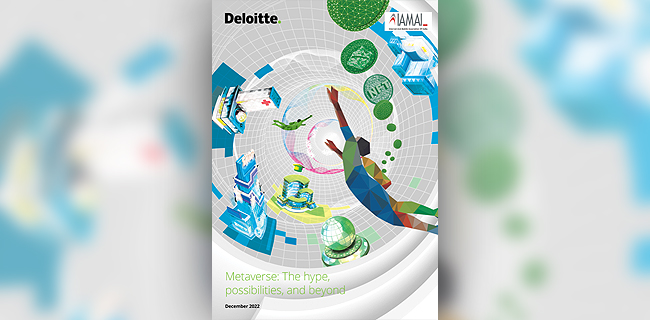
    The Internet and Mobile Association of India (IAMAI) in association with Deloitte launched a report titled ‘Metaverse – The Hype, Possibilities, and Beyond’ at Digital Marketing Conference, ‘Marcon 2022’ in Mumbai on Monday (Dec 12).


    The report was launched by Sreeram Ananthasayanam, Partner, Deloitte. The event also saw a panel discussion after the launch.


    Here is the Executive Summary of the report:

    Technology is getting affordable, scalable, and trustable, and transforming business models and consumer expectations. Robust and scalable digital infrastructure and applications are enabling personalisation for a generation that prefers differentiated experiences. In addition, alternative technologies (Decentralized Autonomous Organizations [DAO], Decentralized finance [DeFi], Nonfungible token [NFTs]) are disrupting digital ecosystems by disintermediating intermediaries and decentralising ownership. Technology is building decentralised trust to make processes and transactions efficient, transparent, and seamless.


    One such technology is Metaverse, which refers to an immersive, interactive, and live virtual environment, distinguished by its ability to transport the real-world experience into a virtual world. In this world, people across locations can interact live and work in real time. This is supported by a digital economic infrastructure powered by virtual digital assets. Metaverse is a confluence of technologies that aims to integrate businesses in innovative ways, enhances operational efficiencies and transactions, and provides an experience par excellence. It creates new market avenues, which are futuristic, yet revolutionary. The exponential nature of technology growth is only going to make it more feasible and affordable. Several enterprises and customers are foraying into this space that is redefining business models and customer expectations.


    In this report, we aim to understand how businesses engage and interact with each other in a Business-to-Business (B2B) and Businessto-Consumer (B2C) ecosystem. We believe that adopting Metaverse is possible through the merging together of the physical and digital worlds (phygital). It will help businesses reduce costs, collaborate in real time, overcome logistics issues, provide enhanced opportunities and productivity, improve feedback processes, and offer possibilities for product and service augmentations. All these will not only generate revenue but may tilt the competitive advantages in favour of those ahead in the adoption curve. It will enable businesses to take a step towards introducing environment friendly policies and sustainability.


    Metaverse is a ‘virtual world’ with real people in digital avatars, who come together to interact and transact. Hence, the boundaries for work and play are blurred. Such a concept is hard to understand, monitor, and regulate because of the undefined rules and unimaginable complexities that may exist. In the following chapters, we begin with our understanding of Metaverse as the world is still exploring its confluence in the Phygital space. We also debate on the possibilities of different types of Metaverse architectures and their potential across enterprises. Subsequently, we discuss the challenges that will likely arise while implementing the Metaverse ecosystem and the possible measures to sustain business in a dynamic marketplace.


    There is also a section that provides an overview of the applications of Metaverse and its potential across sectors. We will discuss the art of possibilities for enterprise Metaverse and how it will help enterprises scale and diversify their businesses and opportunities by using the myriad elements of the Metaverse economy. While most of the current use cases on Metaverse primarily relate to the B2C segment, this report also explains the potential enterprise-grade use cases that address the B2B segment.


    Conclusion of the report:

    The Metaverse technology is likely to see exponential growth in the coming years with rising awareness about its applications and rapid advancements in the digital infrastructure and digital natives gaining purchasing power.


    On one hand, as the supply side of the Metaverse ecosystem develops, more organisations are likely to reorient their business to take advantage of this evolving technology. Several organisations have already announced their Metaverse offerings, which may help achieve the required scale and demand to improve cost-effectiveness and adoption rate. On the other hand, the demand side of this ecosystem. has been driven by demography, along with phygital worlds, virtual work/play facilitated due to the pandemic, and Moore’s law playing its role in making the infrastructure affordable.


    The success of Metaverse penetration will depend on the time organisations take to understand its relevance to their business and the pace of this ecosystem’s development. The ability to ramp up the technical skills and readiness, and deal with rising cyber threats will be critical to its adoption. Governments can play an important role through the right regulatory policies and incentives for new-gen tech adoption.


  • Vital Strategies tables report on hidden tobacco marketing on social media

    By Our Staff


    Vital Strategies, a global public health organization, released its latest report “Hidden in Plain Sight: Surrogate Marketing of Tobacco Products on Social Media in India,” which offers a first look at surrogate marketing on social media platforms. The report captured and analysed more than 2,000 posts collected between January and May 2022 that indirectly promote tobacco-12% of which was surrogate marketing. These findings highlight how social media users are being exposed to misleading marketing associated with tobacco companies and brands.


    Despite gains in reducing tobacco use in India, approximately 29% of the adult (15+) population still uses tobacco. India has strong policies restricting tobacco advertising promotion and sponsorship, yet ‘surrogate marketing’ has been known to be used on traditional media channels to indirectly promote tobacco products. This form of advertising promotes unregulated products, such as pan masala, using the same or a similar brand identity as the tobacco product so that the consumer associates them.


    Dr Nandita Murukutla, Vice President, Global Policy and Research at Vital Strategies said, “There is definitive evidence that exposure to tobacco marketing increases use, especially for kids and youth. Our latest TERM report finds that tobacco products are being advertised surreptitiously online via popular social media channels. Hidden forms of tobacco marketing undercut the effectiveness of existing tobacco control measures and put consumers, particularly youth, most at risk. It is crucial that public health-led efforts to curb online tobacco marketing be prioritized.”


    Dr Rana J. Singh, Deputy Regional Director – Tobacco Control at The International Union Against Tuberculosis and Lung Disease (The Union) added: “The Union commends Vital Strategies for this first-of-its-kind report that that helps us to better understand this landscape and identify these emerging challenges to meeting our tobacco control goals. We must address online surrogate marketing so that offline enforcement is more effective. Marketing is one of the key ways by which tobacco consumption is promoted and sustained. While we have strong bans on tobacco advertising promotion and sponsorship, surreptitious forms of tobacco marketing, including surrogate tobacco marketing, are known to still reach consumers. This data continues to support our efforts, many of our partners, and state governments in strengthening and enforcing tobacco control measures in India, while simultaneously providing policy makers and implementers with evidence-based proof of tobacco advertising and marketing. Such evidence will lend credibility to tobacco control programs, which can subsequently enable policy action.”


    From January to May 2022, the following key findings were observed:

    :: The study states that out of 2,111 instances of online tobacco marketing, more than 90% were for tobacco companies’ allied products including surrogate products and brand-extended products (non-tobacco products that use the established brand name or trademark of a tobacco company, but do not have the same visual identity as the company’s tobacco products.)


    :: Of the 2,111 instance of online tobacco marketing, there were 243 instances of online surrogate marketing (12%) and 1,691 instances of company brand extension marketing (80%). The other 8% was direct marketing of tobacco products, where products were clearly pictured and not disguised.


    :: All surrogate marketing promoted mouth fresheners and pan masala products with the same visual brand identity as smokeless tobacco products (100%).


    :: Most surrogate products (98%) were marketed directly, with clear product pictures and the tobacco company’s logo.


    :: Nearly half of the observed online surrogate marketing leveraged cultural festivities and celebrations such as Republic Day and Chaitra Navratri; and featured famous Bollywood actors including Hrithik Roshan, Tiger Shroff and Mahesh Babu.


    :: Three-fourths (75%) of the online surrogate marketing was observed on Meta platforms (Facebook and Instagram).


    In June 2022, the Central Consumer Protection Authority released the “Guidelines for Prevention of Misleading Advertisements and Endorsements for Misleading Advertisements, 2022,” which prohibit surrogate advertising and other advertising that makes unsubstantiated claims, exaggerated promises, offers misinformation or false claims. These findings call attention to the extent and nature of this type of marketing on social media.


    Vaishakhi Mallik, Associate Director, South Asia, Policy Advocacy and Communication division at Vital Strategies India said, “With the rise of social media and digital marketing, India’s youth have worryingly become a more easily reachable market for the tobacco industry. Tobacco kills up to half of those who use it regularly, which makes it an urgent public health issue to keep any type of tobacco marketing, indirect or direct, away from the public eye. These findings highlight the need to strongly enforce the Central Consumer Protection Authority’s recently released guidelines to prevent misleading advertisements, including surrogate advertising.”


    TERM is a low-cost, systematic and sustainable model for monitoring online marketing by the tobacco industry. It provides actionable evidence to government partners and civil society stakeholders to help curb online marketing of dangerous products and can be used to counter efforts by the industry to hook new generations to tobacco and nicotine addiction. TERM will continue to produce reports providing evidence of online tobacco marketing in several nations, including India, Indonesia and Mexico, with a high burden of tobacco consumption. These technical resources will support efforts to strengthen advertising bans to align with Article 13 of the World Health Organization’s Framework Convention on Tobacco Control and to respond to the emerging challenges to implementation posed by digital media.


    The report data is based on publicly available posts shared to social media, which were identified using keyword-based queries and through the regular monitoring of social media accounts identified purposively via input from tobacco control experts, market research data.


  • Das ka Dum with Dr Bhaskar Das | A recent ad by Dream11 has been found to be disrespectful to musicians. Would you say that Indians have lost their sense of humour?

    Bhaskar DasWe were surprised with the remark by a well-known film-maker, but when made on social media, it was sure to go viral. Here’s the December 14 edition of Das ka Dum where we asked Dr Bhaskar Das a question on the comment. Read on…


    If you wish to access the archives, please go to the Das Ka Dum tab on the website’s top navigation bar or click here: https://www.mxmindia.com/category/columns/das-ka-dum/


    Q. A recent ad by Dream11 has been found to be disrespectful to musicians. Would you say that Indians have lost their sense of humour?


    A. What to say? In the age of ubiquitous digital and social media presence, one can discern an erosion of funny bone density and intolerance to creative liberty. I have no view on that as an opinion of ONE is also important and has to be taken into account. Societal emotions need to be accepted, whether one likes it or not, and follow a middle path that abjures any possibility of polarisation.


    Am I suggesting a bland approach to communication or anything that goes in public domain? I don’t know but I am certainly suggesting the path of least controversy. Why waste energy on combating something on which one has no control? Bland diet is good for health. In an environment of a majority of 1, how will I comment generically about 140 million people and their sense of humour. I love humouring myself in my cocooned domain where no media can enter.


  • How about not making a Resolution this New Year?


    By Sanjeev Kotnala


    Sanjeev KotnalaThe new year is around the corner. Every media will soon start covering the year gone by. You will again read top headlines across different genres: Politics, Celebrities, Bollywood, Sports, Natural Disasters, Scams, etc. While this outward view is a good exercise for general knowledge, there is another perspective that most of you will indulge in. The inward looks will help you evaluate how the year has been for you.


    What was that you wanted to achieve? What have you achieved? Where did you not succeed? What have been the learnings? And that you will get when you try analysing the reasons for the success and the failure. This is the simple PaRAM ( pause, reflect, absorb and move-on) mode of working, which should be practised throughout the year. But it’s okay; at least you do that.


    The outcome of this exercise is the new set of New Year resolutions you will make. Knowing that, like every other year, most of them will not survive more than two weeks into the new year. But it is the new year, and the tradition and rituals demand you make a resolution.


    MAKE A RESOLUTION, NOT TO MAKE A RESOLUTION THIS YEAR.

    I know the above is a silly statement, but it is to catch your attention. Read on.

    The moment you make a resolution based on your past experience with yourself, you give yourself a chance to break the resolution without any guilt. As everyone breaks a resolution, what’s the big deal? So, this year I want you to make a small change. Maybe it works. Don’t make resolutions; decide with clear timelines and milestones. Rewards and penalties in case you fail to live up to your decisions. Because every day and specially maybe the new year is an opportunity for you to reflect and decide how the story of your life will now unfold, what the new chapters will be, past is anyway unchangeable. And you only decide what you become.


    DECIDE- PLAN MILESTONES.

    So first, stops using words like ‘TRY’ and ‘ATTEMPT’. These give you a small width to cheat to fail. Because you said you would try, two possibilities immodestly become possible. Resolutions are maybe, and if, decisions are final. And make them SMART decisions; Simple, Measurable, Achievable, Realistic and Time-bound.

    For example, I will read 26 non-fiction books this year. Then break it down into quarters. So, you say, by the first quarter, I will read eight books, by Quarter 2: 16 books, by Quarter 3: 20 books (as Quarter 3 will be sales work – pressure and many festivals) and by Quarter 4- 26 books. I can tell you it works as at peak I was reading more than 70 books a year and uncaging them.

    Another example could be, I will finish writing the book by September 15. Now finishing and writing are still vague. You could say I will finish my final self-edited draft of the manuscript by September 15. Better still, by September 15, I will hand over my final manuscript to a professional editor. This too works- as have been able to get five books published by now.


    It could be as simple as, this year, I will

    (1) not miss the birthdays of my family members.

    (2) Take off on my spouse’s and my birthdays and anniversary.

    (3) Attend all PTA

    (4) Take the family on at least two one-week holidays.


    MAKE YOUR DECISIONS PUBLIC.

    Then take the biggest plunge: make the decisions public to the people who matter to you in life. The stakeholders of your lively ecosystem. Find a confidant who will help monitor your progress on the decisions taken. Make it relevant for the confidant to monitor. The confidant must also gain or lose something if there is success or failure.


    NET-NET: EXECUTION IS THE KEY.

    No one has been appreciated for the intent; it is always the visible results that matter. This is true for professional and personal life. And most of my readers would know this truth; in fact, they would have most likely read many books like ‘Execution: The Discipline of Getting Things Done’ by Charles Burck, Larry Bossidy, suggesting the power of execution but have failed to take it into practice.

    This is the time to flip, change yourself from a resolution –  intent – thought – plan person to the decisive action-oriented person- full of demonstrated intent. Maybe this is the slight nudge you need in your life, or this is the atomic habit change that may change your life perspective.

    At worst, nothing will happen. Despite the plan, rewards, penalties and the confidant, your decisions will go the resolution way. So what? It is only a case of status quo, with no change. Then you can always read this next year and be better prepared for the decision-making and implementation.