Author: mxmadmin

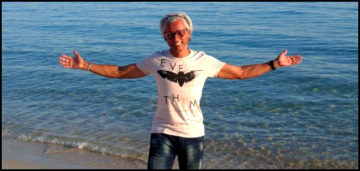
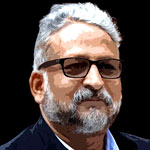
  • Kaushik Datta joins Cheil as ECD

    By Our Staff


    Cheil India has appointed Kaushik Datta as Executive Creative Director (ECD). Datta’s last stint was at Leo Burnett. He was helming their New Delhi office while also managing the pan-India duties of Art & Design. In his current role, he will report to Cheil India’s CCO-Vikash Chemjong.


    Said Vikash Chemjong, CCO, Cheil India: “It’s exciting times for us at Cheil. Not only in terms of the type of work we are trying to do but also in terms of the type of talent we are attracting. And now with Kaushik coming in with his talent and experience and rigour and enthusiasm, it’s another shot in the arm for us!”


    Added Sanjeev Jasani, COO, Cheil India: “We are pleased to welcome Kaushik Datta to the Cheil family. He is a well-known name in the industry and brings with him a wealth of experience that will help Cheil deliver the best transformational work to our clients.”


  • Oktobuzz wins Westside mandate

    By Our Staff


    Mumbai-based digital communications agency Oktobuzz has won the digital marketing mandate of Westside store. The agency will be responsible for managing the social media handles and campaigns of the fashion brand from the house of the Tata Group.


    Regarding the partnership with Oktobuzz, Umashan Naidoo, Head-Customer and Beauty, Trent Limited, said: “Westside has already established itself as one of the leading fashion retail brands in the country. As we grow our presence across the country, we also want to leverage Digital in the most constructive way and thereby make Westside the brand of choice for consumers aspiring for efficient and accessible fashion. Oktobuzz’s robust understanding of the market and digital ecosystem made the mark for us.”


    Added Hemal Majithia, CEO and Founder, Oktobuzz: “We are extremely delighted to partner with Westside in this phase of hyper-growth, especially harnessing the power of digital. We are aligned with the brand’s ambitious vision of being at the forefront of fashion and intend to convert data-led insights into clutter-breaking creative solutions that not only pushes creative boundaries but also impacts business positively.”


  • Doomsday Calling for Twitter?


    By Ranjona Banerji


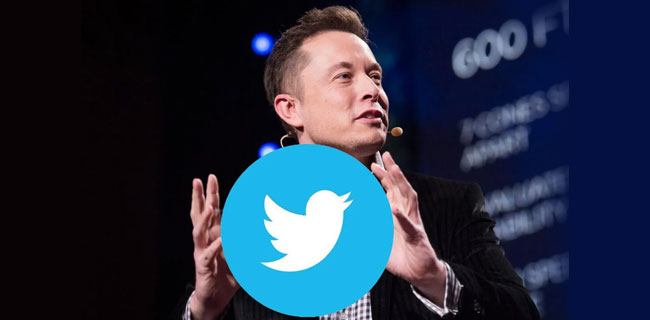
    Ranjona BanerjiHow has this week under Elon Musk been for Twitterati?

    The new billionaire owner has been on a rampage.

    Large numbers have lost their jobs.

    Protection services have been dismantled.

    Blue tick verification owners are outraged that they will now be charged for ticks.

    Comedy accounts which made fun of Musk have been suspended.

    Musk recommended people vote Republican in the just concluded Senate elections.

    Musk appears to be reading every other tweet.

    Musk is everywhere.

    Twitter users have rediscovered Mastodon as an alternative.

    The importance of Twitter is hard to describe. It is not, after all, a money-making venture. Nor is it as large as other social media platforms. But it is influential. And therein lies its success and its tragedy.

    Twitter is used by politicians, academics, public figures, governments, journalists, media houses, various organisations from political, judicial, social, scientific, cultural, activist, environmental… the list can be endless. It is also, most importantly, used by members of the public. Who can interact with each other, with people and subjects they are interested in from sport to science.

    No other platform offers such easy access and flow of information.

    And that is what attracted the world’s richest man to Twitter. Although he tried his best to wriggle out of buying it, until he was left with no legal way out.

    The result is a direct threat to the way Twitter functions. Musk declared that he bought Twitter to allow free speech. But by taking away all inhouse restrictions on hate speech – by sacking all those employees who tracked and controlled hate – Musk’s idea of free speech appears to be at odds with all but the most ultra-right-wing definitions. He has tweeted Nazi memes which would not even have been allowed by algorithms 10 days ago.

    His brutal management style is matched by his ego, which cannot take jokes, parodies or anything that attempts to apply humour to the situation. Twitter was one place where people critical of their governments found a certain amount of freedom. It now appears that the criticism might have to meet Musk’s own personal standards.

    I can hear the mutterings of rage now.

    O, Twitter was never perfect.

    O, remember when the earlier owners did this or that.

    O, give him a chance.

    And all the rest of the usual grumbles and grimbles. My simple advice here is: do not be an idiot. (A word which Twitter disapproves of, by the way, although it is all right with several other abuses including rape and murder threats, sexual abuses and various other Anglo-Saxon and other familiar cusswords.)

    No one ever suggested that Twitter was perfect. And many people have taken it on for transgressions in the past.

    The issue now appears to be that Twitter is heading further downhill.

    The billionaire is desperate to make money to justify this massive bill to his shareholders, who have been publicly unhappy by his new toy.

    By making his political choices clear, the billionaire has directly informed us where he wants Twitter to head.

    If he doesn’t get bored or better sense does not prevail or he doesn’t take off to Mars sooner than planned, this site is in danger.

    We will find an alternative. We have in the past and we will again.

    And it’s too early to start composing epitaphs.

    But it’s still sad.

    That so little is idiot-proof.


    Ranjona Banerji is a senior journalist and commentator. She writes on MxMIndia on Tuesdays and Fridays. Her views here are personal


  • Das ka Dum with Dr Bhaskar Das | Elon Musk is quite a character. Paid more to buy Twitter, sacked 50% staff and then called back some people as well. Now, after all this, would you find it safe to drive a Tesla?

    Bhaskar DasIncorrigible. Those 12 characters are best to describe the man. Or perhaps worse. We asked Dr Bhaskar Das a questions for the November 8 edition of Das ka Dum. Read on…


    If you wish to access the archives, please go to the Das Ka Dum tab on the website’s top navigation bar or click here: https://www.mxmindia.com/category/columns/das-ka-dum/


    Q. Elon Musk is quite a character. Paid more to buy Twitter, sacked 50% staff and then called back some people as well. Now, after all this, would you find it safe to drive a Tesla?


    A. Yes, I admit I am also confused. Twitter, as a global brand might face some setback, unless Mr Musk has a unique plan to prove all critics wrong. He has another trouble of fighting some legal case where he has to defend his mindboggling compensation package (56 billion) at Tesla Inc against claims that it unjustly enriches him without his full-time presence in the company. So Mr Musk’s plate is full. But it appears to me that Twitter might sully his supra-idiosyncratic talent (as created through his various unusual investments in various companies), unless he has something up his sleeve and it would unravel in the near future. As of now, his stated vision of widespread verification leading to democratisation of journalism (you should feel happy!) and empower the voice of people might not salvage Twitter of its business challenges or delete the emotional scar amongst its workforce ( present or sacked).


    Having said that, I would reiterate that Mr Musk must have some method in his seemingly aggressive style— we may not have any idea of connecting the right dots. After all, he is the richest man of the world for nothing. It may be too early to write the final verdict. We need to wait and watch.


    I take this opportunity to express my astonishment about your linking of volatility at Twitter and the risk of driving Tesla. My imagination has not yet been expert in grappling with such asymmetric correlation-ship.


  • Vaani Kapoor to promote Lotus Makeup

    By Our Staff


    Lotus Herbals MakeUp, the vegan makeup brand, has appointed actress Vaani Kapoor as Brand Ambassador. As the face of the brand, Kapoor will appear in a multimedia campaign. During her two-year association with the brand, Vaani will endorse the Lotus Makeup Proedit and Ecostay range of daily usable vegan make-up.


    Commenting on the association, Nitin Passi, Chairman and Managing Director, Lotus Herbals, said: “We are delighted to have Vaani Kapoor endorse the Lotus makeup brand since she resonates with our brand’s commitment towards clean & non-toxic beauty. We launched Lotus Makeup in 2011 and were the first Indian vegan makeup brand to hit the market. Today’s discerning consumers are eco-conscious and are on the lookout for makeup products that provide safety, efficacy and ethical practices. The high-performance product offerings from Lotus makeup tick all the boxes and appeal to a wide spectrum of consumers who wish to use only natural products for their makeup regime.”


  • Das ka Dum with Dr Bhaskar Das | If a cricketer is more inconsistent than consistent as a batter, how can he inspire an entire team as leader?

    Bhaskar DasNo marks for guessing the context for asking this question. Here’s Dr Bhaskar Das in the November 9 edition of Das ka Dum. Read on…


    If you wish to access the archives, please go to the Das Ka Dum tab on the website’s top navigation bar or click here: https://www.mxmindia.com/category/columns/das-ka-dum/


    Q. If a cricketer is more inconsistent than consistent as a batter, how can he inspire an entire team as leader?


    A. You have a valid point as the leader has to lead by example. But a leader also knows the way (judgment, strategic decision-making etc) and shows the way. So it’s not about scoring runs only. A batsman can go through a lean patch, but the craftsmanship is there and because of that, the sportsman is chosen. In fact, in this year’s T20 World Cup matches, the track record of most captains of various teams are not much to write home about. There was no consistent performance. Hence one can’t replace a leader on the basis of a lean patch of a few match. One has to see his contribution in mobilising his resources and motivate the team to play as a unit and combat the challenges in each game.


  • Enter10 gets Johnson Jain as CRO

    By Our Staff


    Enter10 TV Network, which owns and operates five broadcast channels, Dangal TV, Dangal 2, Bhojpuri Cinema, Enter10 GEC and Enter10 Bangla, has roped in Johnson Jain as Chief Revenue Officer (CRO).


    Jain has worked across organisations like Zee Entertainment, Sony Entertainment, 9X Media, Goldmine Telefilms and Beginnen Media. Most recently, he was Chief Revenue Officer at Goldmine Telefilms.


    Commenting on Johnson’s appointment, Manish Singhal, MD of Enter10 TV network said: “I am glad to welcome Johnson Jain to our Enter10 family as the Chief Revenue Officer. His charming personality, a go-getter attitude and cordial relationships are admired across the industry. I wish him all the best.”


  • Fruitbowl Digital wins communications mandate for IndiGG

    By Our Staff


    Mumbai-based Fruitbowl Digital, a digital marketing agency, has won the creative communications mandate for IndiGG, a gaming community with a mission to onboard 500M+ gamers from the Indian subcontinent and provide them with an opportunity to earn monies while playing video games daily, completely free of cost.


    Said Ishank Gupta, Advisor, IndiGG: “Wherever technology has evolved to, gaming has followed closely behind. The country has now been thoroughly engaged in virtual gaming and we are glad to partner with Fruitbowl to highlight the existing and potential impact of the decentralized platform that IndiGG is all set to provide for gamers and to build the future of gaming together.”


    Commenting on the win, Dedeepya Reddy, Co-Founder, Fruitbowl Digital, added: “The future of the gaming industry and web3 is upon us and people have questions; through this partnership we aim to answer them. The goal is to nurture a decentralised community of IndiGG Gamers to be advocates of this unique opportunity that we believe will continue to evolve and grow.”


  • CommsCredible buys cricket league franchise

    By Our Staff


    CommsCredible, PR tech startup, announced its involvement in the newly declared India Super League (ISL), by acquiring the Gurgaon franchise. The company has named its franchise as ‘Gurgaon InCredibles’. Note Gurgaon, not Gurugram.


    Set to commence in March next year, ISL is a franchise style cricket tournament launched in India by Last Man Stands (LMS), the amateur T20 cricket league, with cricketer AB de Villiers as global ambassador.


    Unveiling the new team, CommsCredible founder Aman Dhall said: “We are delighted to announce CommsCredible’s new team, ‘Gurgaon InCredibles’, as part of our association with Last Man Stands. Cricket is a religion in India and to have LMS India Super League 2023 as partners is a landmark moment for us. As owners of an amateur T20 cricket league, they will bring in immense value to our brand’s genesis story which has always batted for an active lifestyle and endorsed sports and wellness initiatives since its inception.”


  • Kriti Sanon roped in as brand ambassador for Skechers

    By Our Staff


    Skechers India lifestyle footwear brand has roped in actress Kriti Sanon as brand ambassador. Sanon will be the face of the fashion and lifestyle categories for the brand and appear in the upcoming Skechers Street campaign-the brand’s trendy line of streetwear sneakers.


    Commenting on this association, Rahul Vira, CEO of Skechers South Asia said: “Skechers began operating in India sighting a huge potential in the footwear market ten years ago. Kriti is a fashion icon for young consumers, and her influence paired with Skechers’ aim to increase awareness about fashion without compromising on comfort, makes this association organic and effortless. With Kriti being the face of Skechers for the fashion and lifestyle category, we aim to widen our brand appeal and increase our reach throughout India.”


  • The Six Types of Employees


    By Sanjeev Kotnala


    Sanjeev KotnalaThe uncertainties associated with jobs are at an all-time high. The controlled unlocking, unpredictable economy, Hybrid and WFH priorities have cast further doubts on stability and continuity in employment. Currently, even the best of the performing employees feel threatened, knowing that past performance is no assurance of continued employment.

    Usually, one expects the decision to issue a pink slip to rational. That the managers would naturally retain employees best placed to help achieve their KRA. However, many examples have demonstrated that these decisions are quick and not fully logical or rational.

    Many times, the decision is based on the perceived employees brand image and its value for the manager and the organisation. The employee’s internal branding and alignment to the organisation’s and immediate senior’s dreams and aspirations critically influences the final decision. Ultimately, what matters is perception. The employee’s personal branding; Brand-I. Because perception is always stronger than reality.

    Irrespective of the industry and its ecosystem, there are six types of employees.


    THE INVISIBLE EMPLOYEE. 

    The unknown face. The stakeholders neither know nor do they care if the employee exists. The employee is a count and number on the register and does what the employee is told to do. The employee never exceeds the brief; think of alternative solutions. The employee suffers from low self-esteem due to the inability to hold the position. Hence, the employee shies away from additional responsibilities hiding in the crowd under the pretext of teamwork. As a result, organisations avoid giving higher responsibility or tasks to the employee who is anyway an unknown entity.


    REPLACEABLE KNOWN UNKNOWN. 

    The employee is known to the stakeholders and maybe the line manager. Perhaps they recognise the face and sometimes the name too. There is a degree of investment of the organisation into the employee. However, the employee is reasonably replaceable.

    The stakeholders do not have a clear perception of employee capabilities. The employee surprises the organisation with thinking, implementation and delivery even in sinking causes. The sporadic performance and frequent lie-low attitude work against the employee. There is not much the organisation expects from the employee.


    WISH THE EMPLOYEE WORKED FOR THE COMPETITION. 

    It is a surprise that the employee is still in the organisation. There are no hidden agendas or motivators to keep the employee. However, when the time comes, this employee will be one of the first to be given the pink slip. They are considered the reason for the team’s inefficiencies and deliveries.


    GOOD FOR THE ORGANISATION.

    The top-of-the-order employee. The reason behind the excellent performance. They are motivated and consistently deliver results. The employee is hungry for more and wants to expand their horizons. A career employee who chases position and power.

    The employee engine demands constant up-gradation of responsibility, talent, expertise, salary, and perks. One of the last to be sacrificed. Typically, there exists a level gap between them and the senior, to safeguard the insecurities of not-so-competent seniors.


    EMPLOYEES SHOULD WORK FOR US.

    This employee is a reasonably good performer and delivers most of the time. The employee Is disciplined and values organisation culture, and the only things that restrict him are expectations and SOPs. They are loyal to the organisation and good team workers. They survive by keeping a low profile and hate questioning. They take time to grow and, with time, specialise in routine tasks. Usually, in the changing scenario where headcount is to be decreased, they are retained as a performing known devil. And there is a higher version where this employee upgrades to ‘MUST WORK FOR US’.


    MUST NEVER WORK FOR THE COMPETITION.

    This is an upgraded version of ‘Must work for us’. The best employee. There are two-level. On the first level, the employer will hate if the employee was to work for the competition. On the second level, the employer will not want the employee to work for the competition; AT ANY COST.

    If there is no suitable role within the organisation, the organisation will create a position just to deny the competition an opportunity to hire. Many times, they are carefully contracted and outpriced from the market.


    WHICH TYPE OF EMPLOYEE ARE YOU?  

    If you are an employed with  an organisation, it is time to evaluate your position. Where do you stand? Which type of employee are you? What is your internal personal branding? How aligned you are with the Boss’s ambition. Dreams and KRAs? If you want to upgrade, what must you do? What will help strengthen the desired perception?

    The natural logical aim is to be at least ‘Good for the organisation’ category and if possible upgrade to ‘Must work for us’ and ‘Must not work for the competition’. It is where the strength and power begins and ends.  These build resistance against changing socio-economic scenarios and pink slips and command the premium.

    Be honest and answer to yourself: what type of employee are you?
     

  • Das ka Dum with Dr Bhaskar Das | Despite no third-party readership data for a while, the newspaper industry has been getting ads. If advertisers and media agencies are cool with it, why do an IRS at all?

    Bhaskar DasNo context or reason for asking this question. Here’s Dr Bhaskar Das in the November 10 edition of Das ka Dum. Read on…


    If you wish to access the archives, please go to the Das Ka Dum tab on the website’s top navigation bar or click here: https://www.mxmindia.com/category/columns/das-ka-dum/


    Q. Despite no third-party readership data for a while, the newspaper industry has been getting ads. If advertisers and media agencies are cool with it (or not very uncool with it), why do an IRS at all


    A. There is no denying the fact that audience data is important in deciding on the media investment. But post Covid, manual field data collection was a challenge. Now that the threat of Covid infection has reduced considerably, the concerned body must be evaluating various options.


    Having said that, newspapers have an advantage as their business survives on response delivered to the advertisers. Though ROI calculation, before the media selection might be a challenge, but empirical evidence confirms the investment. Advertisers have their internal metric to evaluate every outlay. Secondly, (again an Indian context), in most of the newspaper markets, there are one or two dominant market leader/s. Being a passive medium with an active audience (reading-wise) , the pecking order of leadership plays a key role in both consumer immersion in the content consumption and, accordingly, the response quantity and quality get impacted positively. This experience leads to future inclusion of the publication in various campaigns. Due to this unique nature of the sector, newspapers can continue without a formal data regime, though it’s not an ideal situation from the media planning and buying context.