Author: mxmadmin

  • W+K appoints Anirban Roy as head of strategic planning

    By Our Staff


    Anirban Roy
    Anirban Roy

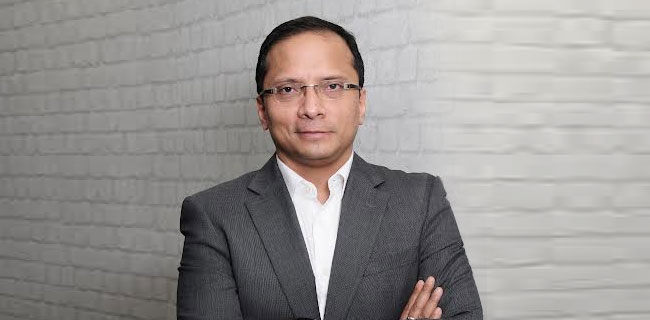
    Wieden+Kennedy India has bolstered its leadership team by bringing in Anirban Roy, to head Strategic Planning for its Delhi and Mumbai offices.


    In his last role, he was heading Strategic Planning for McCann Worldgroup in Delhi. Prior to which he has worked at Ogilvy and Saatchi. He has worked in Delhi, Bengaluru, Mumbai, Kolkata and Manila, where he steered strategic conversations at Nestle, Yum Foods, BMW, Amazon, Coke, Unilever, among others. He has also helped script the brand narrative for some of India’s unicorn start-ups like Licious & Flipkart.


    Commenting on the hire, Ayesha Ghosh, President W+K India said: “With Anirban’s valuable perspective, we intend to steer the fundamental brand thinking and look forward to building lasting brand relationships. While we’ll always have room for brands that want to do short term projects, the real test of an agency lies in building brands over years, like W+K has done with Indigo. Anirban has steered important brand conversations for many big MNC clients, as well as for start-ups and in doing so has helped them fetch Effie, Cannes, AME, Kyoorius and D&AD awards. I’m really excited to see him at work at W+K.”


    Added Santosh Padhi, CCO W+K India: “Client, Creative, Account Management and Strategic Planning are the four key pillars of advertising that build and hold the foundation of a brand and help grow their business. I’m happy that we now have the fourth pillar in order, with Anirban, to help our brands grow stronger, bigger and bolder.”


  • We’ve built a fabulous place. We’ve grown, hired talent, got clients…


    It’s not easy doing an interview with Rana Barua, Group CEO, Havas Group India. He reads your mind, and has perhaps guessed all the questions you are going to ask. But that’s why it’s challenging interviewing him, as we revive a new series of power interviews with industry captains. Excerpts from a freewheeling interview with Rana Barua.


    Let’s start by taking a stocktake of how things have been since the last time we interviewed you. How has it been since then?

    Honestly, we’ve probably surpass the expectations of the group in terms what India could overall build or achieve. Every global media company has a certain ambition when you are literally starting from a certain base or scratch. I think we have built a fabulous place-we have grown, we have built, we have created, we have hired talent, we have got clients.

    We have got an ecosystem where we currently have close to 15 agencies under the three verticals of creative, health and media. We are over 1200 people. We have become a very strong ecosystem where we have acquired agencies, we are doing well our creative and media are independently doing very well, and health is been quite steady. So, I think where we have reached a point where we are now only going to get bigger in our own ecosystem of Havas Group internally. We are setting much higher targets within the Group for ourselves and the global team is supporting us.


    You spoke on expectations – were the expectations high or low given that even though it’s been a while since Havas has been around in India, it has never really been among the top flight agencies.

    Havas Group, a French network, had not really invested in India. They were testing waters carefully and cautiously, which is why Bobby and I were brought on board to help turnaround the network. That’s what a lot of international companies have done – they have come to India, they have seen, they have tried and if it’s not happened, they have quietly left. Or some people have reduced their investments or some people have stayed there because of whatever reasons.


    You’ve spent some time in the recent past with the WPP Group. What is the key differentiator between WPP and Havas? The WPP Group is said to be run by accountants. What would you say is Havas?

    So, the WPP Group was naturally very finance-driven, very clear about the bottomline and numbers and all. I think the clear difference between WPP, and I think that is why I am enjoying my time at the Havas Group, is that Havas  is very entrepreneurial-led. Of course numbers are important, profitability is key, and why not? We are not a charitable institution – we are all running a business. But it allows you take a lot of risk, t allows you take a lot of decisions on your own.


    They allow you to make mistakes?

    Yes, of course. Absolutely.


    Anything that you can give an example of that perhaps as you look back may have been a mistake and they have said screw it, it’s all right.

    So, I wouldn’t call it a mistake. One of our acquisitions  didn’t work out for cultural reasons, for the reasons of the business model changing post-Covid. Before Covid, there was a reason why we had bought a certain agency with expertise on digital and we thought that this is how we are going to integrate it into the system. In the Covid years, we realised that it was very tough, things changed and the model changed. There were different conversations. So, culturally, we drifted.  But we moved apart beautifully. No clients got impacted. We are rebuilding and we have started looking for newer acquisitions which fit our culture.


    Would you look at another acquisition in the same space?

    Absolutely in the same space. The agencies that we are talking to are aware of everything. I think one of the big conversations that happen in our group is reputation. What is your reputation in the market? And that is something which is tougher than deliveries on financials.


    On a scale to 1 to 10, how would you rate the agency since you joined

    There are two ways to look at it. We see it one is as per your external environment — how you are doing in India vis-a-vis people and competition. And the other is your internal benchmarking. So, if I do an internal benchmarking, let’s say at a time when we came in, it was a 2 or 3. Are you part of the global team? Are you part of the global council? Are you part of the G9 or G10 as we call it as the best companies? No, we were not anywhere near that. There was no global reporting, we would never have any direct interactions and all. So, let’s say we were at a 2-2.5-3 out of 10 which probably has moved to 6-6.5 internally or a 7 which is a great place to be. Because now you are among the Top four-five countries where investments are happening, conversations are happening, centres of excellence are being formed, expansion plans are happening, acquisitions are happening. We didn’t have clients then and were probably at 2-2.5 to 3. We have done a fab job, So a 5.5-6. .


    On creative output, on creativity?

    5.


    And where were you earlier before you came?

    I don’t think we had any value. I don’t think we were even known, Now there are so many new clients who have come on board. I am not saying that the last two years has been very easy for the industry. So, I would say that we have raised the bar to a certain quality from where we were, and the investments have started.


    Investments?

    In terms of people and quality that we are hiring we have just announced few days back that Anupama (Ramaswamy) has joined us as the CCO with Bobby. We are going to be investing in a very strong CSO very soon. I think we realised that we probably invested a bit too early on a senior strategy head maybe we should have got the ecosystem right and then have someone.


    And awards? Not too many awards so far.

    No. Not at all.


    So, when do you think they will happen…

    From next year we will definitely see some…


    Your budget on sending entries will increase?

    Yes. Absolutely.


    Will you sending some 500 entries?

    No, not so many.


    That’s the shortcut to get many awards.

    Now, you are taking me to a heavy discussion.


    No. Fine. At the end of the day, awards are important for a creative agency

    Very important. When I joined, I said let’s give it three years. But then the pandemic happened. I have now done four years now, so in my fourth, fifth, sixth year is when we will see a lot of these recognition, awards and proper movement into a higher zone of growth and size and everything that’s now.


    Would you say that in the next two years you should be getting a good amount of awards?

    100%.


    A creative agency is looked at by the kind of work you do, and the awards you get?

    Yes, and that’s the same focus for media also we are looking at Emvies and Effies in a much bigger light. If your client list has moved up from two or three or four. If you look at the media client list or the creative clients list it’s now into 40s, 50s, 60s there are too many clients now they are all going to ask for recognition in any form.


    What is the pitch you give a person who is with another agency – why should they select Havas? Or, why should a start-up come to you?

    I think one of the main conversations we have on is the philosophy. It’s for everyone to see that people have started investing in this brand. So, if you look at the Havas brand, in the last few years, it has suddenly become a brand of choice for many people. They are seeing a very positive ecosystem which is delivering effective results. We have zero attrition in media, not a single client drop out in creative. There is a genuine effort to get the product right for the client, there is a partnership intent. I am actually telling people: invest in Havas and you will see the difference. If you ask me, what number am I? I will say I am number 4, 5, 6 whatever you tell me. But we are a very big number in our scheme of things, which is giving us the confidence to taken on large clients. We are invited for some of the largest pitches in the country. We may be winning some, we may be losing some… but we are striking gold in many places. We have got a lot of Tata work in… Tata CLiQ, Tata Luxury, Tata Beauty, Tata… we are part of most of the Tata pitches that are in the market right now. In media too, we are doing very well.


    How is the status of your acquisitions? Anything new coming up?

    I would like to first integrate and then look for newer ones and not just keep adding on agencies. Because one of my core philosophies is that you don’t grow on acquisitions, you need to have your own code and then add the acquisition. You can go buy 35 companies and you will have a number, but you will not have a culture. You won’t have a Havas Group. You will have a plethora of agencies which form a group. So, that was never the intent and that was one of the clear beliefs.

    I have always maintained that in India you have to build an ecosystem around creative and media.. So, while there were few acquisitions which came in under the creative banner, it took us two three years to fully integrate. There is absolute clarity on where we are headed, we are looking at an acquisition in performance marketing, we are definitely looking at a PR agency.. we are  looking for a digital agency. A B2C, hardcore, an integrated one and we are also looking for size. That’s the big difference from three years back. We are also looking at consumer experience journey, content, data…


    And how is activation and events agency doing?

    Very well.


    Even though the last two years were bad…

    Yes, Shobiz has done a phenomenal job this year.


    Since you are talking about Havas Integrated, is the money more on digital or is the money more in traditional advertising?

    In terms of media spends?


    Yes.

    In terms of media spends, it’s pretty much I would say 60-40. When you say traditional means you are talking about TV and all offline mediums right? It’s still 60%-65% there in media. But your returns on that 65% might be very little because you know how the commission model works. Your returns on that 35% would be much higher because that’s what digital allows you to do. In sum, if you look at the mix, India is still very skewed towards traditional formats.


    If we interview you a year from now what are the two three things that you think we will be talking to you about

    I think one will be on awards. And when I say awards, it means it just not one creative award it can be you won a lot of Emvees or you won a lot of Effies or you won an international award or something. So, I think that is one thing you are going to definitely talk about, is did you move the needle at all? The ecosystem is now on track. You can’t pull it back because the foundation has been created, people have come, system has been created. It’s in a great place now…



  • Gift someone The Ramayan Map?!


    Sanjeev KotnalaBy Sanjeev Kotnala


    MapMyIndia has been at the forefront of digital mapping in India since 1995. I used MapMyIndia maps extensively before moving to the mobile-led Google maps, with better control and features.

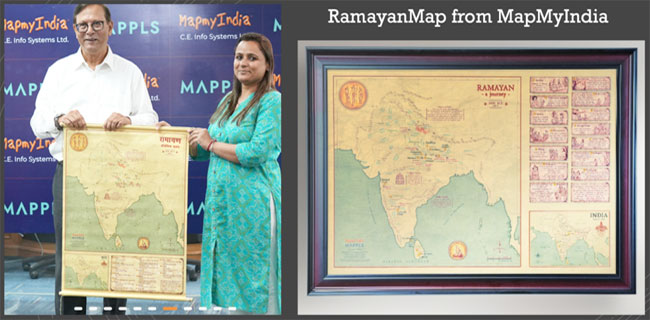
    Recently, MapMyIndia launched ‘Ramayan Map‘, a cartographical tribute representing ‘The Legend of Shri Ram’ on a vintage map canvas, right from his birth to the establishment of Ram Rajya.

    Gift Ramayan Map this Diwali

    Ramayan Map is something I wish people consider gifting during the festive season. By now, most orders for festival gifting may have been placed but do not see RamayanMap as a topical gift. I bought the Hanging Canvas RamayanMap as to gift. MapMyIndia also has the option for bulk Purchases for Institutions with a promise of free shipping all over India.

    It is available at INR 1990 for a roll-up Canvas print (25 inches X 33 inches) like the maps we hang. And also, a framed canvas (38.5 inches X 28 inches) is more suited for hanging on walls of corporate and institutions, and this one cost IR 7990


    Features of Ramayan Map

    There are some unique features claimed for the Ramayan Map

    It is India’s approximate map from 5000 BCE, i.e. 7000 years back. Shows locations with their original and current names, creating ease of relatability and building on historical relevance.

    It is printed and designed on a beautiful backdrop canvas with a lovely textured feel and antique-styled cartography.

    It gives a quick refresher course on the Ramayana story with location and descriptions of key events of Ramayana. This feature is fully appreciated by #IgnorantHindu.

    It is created using advanced geospatial technology to show scaled maps in kilometres and yojanas both. This is a silly claim as it is nothing more than showing the relationship between the two distance measurement units.

    Rakesh Verma, Co-Founder, Chairman & Managing Director of the company making it, says ‘the initiative is very close to his heart. It is a state of self-actualization, where life’s work meets spiritual being’.


    Reaction to Ramyan Map

    Many people on social media read too much in this statement and with MapMyIndia doing a Ramayan Map. To them, this is religionising and not secular in nature. MapMyIndia is a private business entity and fully in its right to create products which may have market demand. Suppose there are other such products with business possibilities. In that case, the company could consider Buddha’s travels and Shankaracharya’s movement. But then one can see how small the demand could be.

    I may want an interactive map of Maa Narmada Parikrama. Still, it may have very few wanting or buying into the service. The effort cost-benefit analysis may not work for the company.

    Are there more such region- religion- political theme-based opportunities, or is the Ramayan Map the only map in the making? Maybe the travels of Mahatma Gandhi could be considered. Still, one can see that it may be viable as a commissioned project from some sponsor but not a commercially viable product for direct marketing to potential buyers.


    Net-Net

    Take advantage of this initiative. Buy it for gifting and buy one for yourself. And #IgnorantHindu project supports this initiative. It is time that the next generation reads and understands their heritage.


  • Das ka Dum with Dr Bhaskar Das | India Today chairman Aroon Purie has raised concerns over the TV ratings. NDTV and Zee are already out and there are rumours that others may exit as well. Do you think that News TVwallahs should think of life outside of BARC. Perhaps a new metric?

    Bhaskar DasThis is possibly not the last of our questions on the issue, but here’s Dr Bhaskar Das again on news channels and ratings in the October 12 edition of Das ka Dum. Read on…
     

    If you wish to access the archives, please go to the Das Ka Dum tab on the website’s top navigation bar.


    Q. India Today chairman Aroon Purie has raised concerns over the TV ratings. NDTV and Zee are already out and there are rumours that others may exit as well. Do you think that News TVwallahs should think of life outside of BARC. Perhaps a new metric?


    A. I have dealt with this subject in one of the questions of last week. Ratings for news channels play an important role for media consideration but need not be a necessary condition. There are other qualitative issues like context, toxicity etc that influence the placement of advertisement. NDTV and Zee Media have decided to bite the bullet. We shall know how the impact of this decision of the two news channels defying industry gravity/ culture can set a new agenda for the news genre and experiments with unique and differentiated journalism can take place without an obsession with ratings.


    But the jury is still out on the subject. I won’t be surprised if all news channels can join hands together to develop a market/advertiser-friendly metric. At this juncture, it may appear to be a distant possibility.


  • IDP Education appoints Weber Shandwick for comms

    By Our Staff


    IDP Education has appointed Weber Shandwick as its strategic PR agency for India. The agency will oversee all aspects of communication and messaging for IDP India, including corporate reputation, brand awareness, and key stakeholder management.


    Said Piyush Kumar, Regional Director (South Asia and Mauritius), IDP Education: “For IDP Education, we are committed to shaping the future of international education by empowering as many students as we can with the best resources and information to achieve their global goals. Weber Shandwick’s deep expertise in brand communication perfectly aligns with our brand ambition. We are delighted to collaborate with them at this crucial time to strengthen our messaging and communication and are looking forward to it.”


    Added Sushmita Bandopadhyay, Executive Vice President, Weber Shandwick: “Overseas education continues to be a precious choice for both students and parents. We are pleased to partner with IDP India in strengthening their position as the preferred choice for students exploring higher education to advance their careers outside the country. We believe Weber Shandwick is well poised to deliver integrated and impactful communications using a channel-agnostic approach.”


  • Mia Jewellery by Tanishq launches campaign for festive season

    By Our Staff


    Mia, the jewellery brand from Tanishq, has launched a new campaign for the festive season. Mia’s festive film, ‘This is Me’, is conceptualised by Famous Innovations.


    Notes a communique: “The brand symbolises the modern Indian woman achiever, who is fiercely independent, liberated, is confident about her choices, a go-getter and whose aura lights up everyone’s lives. Mia by Tanishq believes that expressing oneself is a journey and it deserves to be celebrated and with every piece of fine jewellery Mia Woman buys, wears or gifts, she celebrates being herself. Mia woman has a unique sense of style, which is not just powerful but is also a true reflection of their indomitable spirit.  Mia stands for living freely as your true self, celebrating those who already do, and inspiring millions more.”


  • Indiamart launches new brand campaign

    By our Staff


    IndiaMart, the B2B online marketplace, has launched a new tagline – ‘IndiaMart, aur kya!’ Thus, establishing IndiaMart as an obvious choice for all business needs. It carries the essence of how suppliers from 56 industries rest their faith and trust on IndiaMART to flourish to their fullest and compete with the larger enterprises.


    Speaking at the launch of the new tagline “IndiaMart Aur Kya”, Dinesh Gulati, COO, of IndiaMart said: “MSMEs have always been at the core of IndiaMart’s vision of making doing business easy. Over the years, we have witnessed the various challenges that small business owners face while establishing and running a business all by themselves. Therefore, we have evolved our offerings to provide end to end business solutions to enable small businesses at every step of their journey. Via this brand video, we want to present the struggles of a business owner in a relatable manner and showcase how IndiaMART is the inevitable solution for any business need. From business purchasing to sales IndiaMART has become an obvious choice which is reflected in the new tagline – IndiaMART, Aur Kya!”


  • Qyou Media India launches Q Play app

    By Our Staff


    Qyou Media India has launched its direct-to-consumer app, Q Play. Available to download on the Google Play store and directly on Smart TVs and mobile devices, the free app offers all five Qyou Media India channels and going forward will be the digital destination for the network’s upcoming content. The ad-supported download-and-watch app can be simply downloaded without any registration hassle.


    Commenting on the launch, Krishna Menon, Chief Operating Officer, QYOU Media India, said: “The launch of Q Play opens a myriad of new possibilities. It enables us to be independent in addition to relying upon third-party platforms for distribution. The launch of this app will further deepen our audience engagement as it tries to bridge the need gap for relatable and entertaining content. We are thrilled to launch Q PLAY into the market. While it will take us time to build and grow our user base, Q PLAY is the tip of the spear around our digital objective to create a growing one-on-one customer relationship around our brand.”


  • W+K powers Vida V1 campaign

    By Our Staff


    Electric scooter Vida V1 has been launched with an ad campaign across Delhi, Bengaluru and Jaipur. The campaign, led by the brand platform of “Make Way”, was conceptualised by Wieden+Kennedy’s Delhi office, and is expected to cover formats both offline and online.


    Speaking on the new campaign, Chandrasekar Radhakrishnan, Head – Business Growth, Emerging Mobility Business Unit (EMBU), Hero MotoCorp, said: “Our endeavour is to create a brand that is empowering, inclusive and optimistic. Vida is a truly new-age global brand that resonates with customers across the world and is authentic and progressive. Vida has a distinct brand identity with a tagline ‘Make Way’, which is a call to action for the global changemakers. The pre-launch brief was to bring out our philosophy of being right, rather than rushing to be the first in the market. Subsequently, the launch will focus on bringing out our philosophy of driving change and introduce our segment disrupting propositions to grow the category.


    Commenting on the campaign, Santosh Padhi (Paddy), Chief Creative Officer, Wieden+Kennedy India, added: “There is always a different high, when you get to launch a new age product or a brand, which is the ask of the society or need of the future. We are extremely happy to have found a great brand voice for Vida which is sticky, quirky and youthful. We are happy the way the pre-launch and launch has panned out and we all at W+K are excited to take this wonderful narrative forward in the coming months”


  • The Metaverse: A Reality Check


    By Ashoke Agarrwal


    Ashoke AgarrwalThe world woke up to the Metaverse concept when Facebook Inc decided, in October 2021, to change its name to Meta Platforms Inc and announced a $10 billion bet on making the Metaverse a reality soon.


    Zuckerberg’s gambit was an exercise in re-positioning.


    However, he seemed to have instead raised both public expectations and internal strife.


    A New York Times reporter, Kashmir Hill, spent many hours our days donning Oculus 2 and logged into Horizon Worlds, Facebook’s nascent Metaverse platform. She filed a report that broadly expressed disappointment.

    A few days later, another New York Times article laid bare the internal strife in Meta over the Metaverse bet.


    Zuckerberg seemed to have gone public with a concept too soon. Sooner than the concept itself was anywhere near being realised. And when his company was a clear laggard in the core technology race to the Metaverse. As a result, Zuckerberg faces the twin storms of falling revenues in his legacy business and cratering capital markets valuations.


    In his book “The Metaverse and How It Will Revolutionize Everything “, Matthew L Ball masterfully outlines this race.


    He starts with a carefully crafted definition of the Metaverse that portends the technology challenge in its every word.


    “The Metaverse is a massively scaled and interoperable network of real-time rendered 3D virtual worlds that can be experienced synchronously and persistently by an effectively unlimited number of users with an individual sense of presence, and with continuity of data, such as identity, history, entitlements, objects, communications, and payments.”


    Mr Ball believes that the Metaverse will change the world on a scale that the Internet has done. However, he clarifies that a fully realised Metaverse is still decades away.


    The critical technology challenges that the builders of the Metaverse face are in the areas of:

    :: Real-time 3D rendering,

    :: Assuring synchronicity

    :: And persistence and inter-operability


    The leaders in the race to real-time 3D rendering are Epic Games and Unity Technologies. Their gaming engines – Unreal and Unity – are currently game developers’ favorite real-time rendering engines.


    Further, Mr. Ball identifies three gaming platforms much closer to the proto-Metaverse concept than Meta Platform’s “Horizon Worlds”. These are Roblox, Minecraft and Fortnite Creative.


    Roblox, Minecraft and Fortnite Creative are far ahead of Meta’s Horizon Worlds regarding the number of developers building virtual worlds on these platforms and the number of daily and monthly users. A key difference is the leading platforms do not require a VR set, while Horizon Worlds is accessible only through the Oculus 2. Mr. Ball does not think immersion through a VR set is a definitional feature of the Metaverse.


    The leadership of Roblox, Minecraft and Fortnite Creative is also evident in terms of the response of marketers and brands. A recent paper by McKinsey titled “Marketing in the Metaverse: An opportunity for innovation and experimentation.” lists some ongoing brand initiatives.


    Gucci launched a Gucci World on Roblox to start forging a brand relationship with Gen Z. Epic Games of Fortnite, and Unreal fame has announced a partnership with Lego to build a virtual world for kids. Skateboarding retailer Vans has tasted success with a Vans World on Roblox, where visitors can explore skating skills with friends and collect points to spend on virtual sneakers, apparel and even custom-made skates. Last November, NASCAR partnered with Badimo, the developers of the popular Roblox game Jailbreak, to add a branded vehicle to the game for a ten-day event. In this nascent era of the Metaverse, marketing and brands need to focus their Metaverse initiatives on brand-building rather than sales. However, a decade or two down the road, the Metaverse will be an economy by itself, and marketers and brands will see it as a key market in terms of the following:

    :: Direct-to-Avatar (DTA) sales of branded digital goods: Every brand and marketer will need to focus on creating digital goods as most people will live a parallel life as digital avatars and spend significant money on products and services for their avatars.

    :: Virtual-To-Reality (VTR) and Reality-to-Virtual (RTV) commerce, as coupons earned in the real world, are exchanged for goods in the virtual world and vice-versa.


    Brands and marketers who experiment with the emerging Metaverse today will be in pole position as the Metaverse matures and becomes a whole new market by itself.


    Mr. Ball, in his book, outlines the use case in a world that is part of the mature Metaverse that captures the impact of the Metaverse in the world of education:


    “Students from around the world will be able to strap into a virtual classroom, sit alongside their peers while making eye contact with their teacher, then shrink down to blood cells which travel through a human circulatory system, after which these previously 15-micrometre-tall students re-enlarge and dissect a virtual cat.”


    In a section later, Mr. Ball envisages these students converging after class for a game of basketball and then test-driving a digital version of the latest car (designed to the smallest detail to be a digital version of the real-world model).


    The impact of the Metaverse is going to be multi-dimensional and profound. However, the full realization is still a decade or two away. Despite that, it is imperative that every profession, including marketing, starts experimenting today to meet the opportunity and the challenge.


    In conclusion, let me lay out a few pointers, as suggested by the McKinsey team, for brands and marketers as they begin to experiment with the proto-Metaverse:

    :: Look for build engagement and brand presence rather than sales

    :: Choose carefully within the existing platforms – Roblox, Fortnite, Decentraland, Minecraft and Horizon Worlds.

    :: Create experiences.

    :: Explore partnerships and collaborations

    :: Proactively plan for risks to the brand

    :: Rethink how you measure marketing success


  • Das ka Dum with Dr Bhaskar Das | Should advertisers be reflecting the real mood of the festive season with a recession staring in our face. While there is happiness and camaraderie, there is also worry about the present and the future

    Bhaskar DasThe question is self-explanatory so let’s hear it from Dr Bhaskar Das in the October 13 edition of Das ka Dum. Read on…


    If you wish to access the archives, please go to the Das Ka Dum tab on the website’s top navigation bar.


    Q. Should advertisers be reflecting the real mood of the festive season with a recession staring in our face. While there is happiness and camaraderie, there is also worry about the present and the future.


    A. I don’t belong to the group of pessimists who see problem in any solution. Many sectors have experienced good business growth in spite of the doubting Thomases. In matters of business, it’s very critical to deaverage trends. While the merchants of gloom have been bemoaning the possible onset of the coming winter in many countries, if one looks beyond an average trend , one would discern that seven countries, including India, have defied the pessimism of other countries by showing growth through strategic intervention. The countries are Vietnam, Portugal, Greece, Saudi Arabia, india, Japan and Indonesia. Author Ruchir Sharma decoded this trend. So managing business with a generic market-driven pessimism may not be the best way forward to move forward.


  • Dentsu Creative unveils CMO report


    By Our Staff


    ‘The Power of Modern Creativity: Insights for Today and Tomorrow’ report was unviled by Dentsu Creative with results from survey of CMOs in the UK, US, China, India, and Brazil asking what them what they need and want most from their agencies. The report identifies eight key themes that define the future of modern creativity, and what clients most want from their agencies 85% of clients agree that while consumer behaviour has undergone rapid changes in the last 5 years, the agency model is yet to adapt. 78% say that the silo-ed agency model is no longer fit for purpose in today’s world.


    Clients are seeking a new agency model, where creativity is a horizontal not a vertical, with 82% agreeing they “want to see creative solutions across every aspect of my business – Media, Commerce and CXM – just as much as in campaigns” India is the market where CMOs are most likely to have invested in creating their own TV programming.


    China and India dominate for the creation of Branded Entertainment and IP, with 53% of CMOs in these markets investing here, while China is the global leader in creating Branded Characters and IP As many as 78% of CMOs feel that the silo-ed agency model is no longer fit for purpose while 82% want to see agencies seamlessly combine capabilities to deliver new and innovative solutions, agreeing “I want to see creative solutions across every aspect of my business- Media, Commerce and CXM – just as much as in campaigns.”


    When asked what is needed to engage the next generation of consumer, 63% of CMOs say that brands need to create rather than borrow from culture. The vast majority, at 84%, believe that to connect with younger generations brands now need to “entertain and engage” to earn attention through entertainment properties or rich virtual experiences, most importantly, they believe that connecting the right diverse talent around their challenges, regardless of silos or geographies is the only way to deliver work that will resonate in culture.


    Said Amit Wadhwa, CEO, Dentsu Creative India: “We all know that the business landscape is rapidly changing and so are the expectations from agencies on how and what we deliver. It’s extremely essential for all of us to be in tune with the requirements and expectations in this changing environment. With this very objective, the CMO survey was conducted. What really excites me is that the responses augur extremely well for the direction we took when we launched DENTSU CREATIVE based on the philosophy of Modern Creativity. Excited with the way we are moving ahead.”


    Eight key themes identified and unpacked in the report:

    1. FROM COMPLEXITY TO SIMPLICITY

    Today’s clients reject artificial divisions and binaries, seeking simple but powerfully integrated solutions to their problems.

    73% of marketers agree that the modern comms landscape, and by extension their roles, have become increasingly complex.


    2. INVENTING THE FUTURE

    Investment in gaming, virtual technologies and social commerce continues as clients believe the online space is where their most meaningful customer interactions take place.

    84% agree that an online store should feel as immersive as an offline store.


    3. BIG IDEAS, BOLDLY EXECUTED

    The big organising idea is more important than ever but today big ideas must be executed in bold new ways, to connect in personal, contextually relevant ways.

    84% agree that Modern Creativity creates culture, it doesn’t just interrupt.


    4. RADICAL COLLABORATION

    Delivering Modern Creativity means rejecting traditional silos and traditional definitions of scale, using data and technology to nimbly connect the right talent around the right brief.

    76% want agencies to connect the right talent around the right brief, wherever it sits in their networks.


    5. CREATING CULTURE

    CMOs across the globe are investing in content marketing, entertainment and IP as never before, building their own audiences and creating their own properties.

    84% of respondents are implementing or have implemented Entertainment platforms and IP as a strategy


    6. HORIZONTAL CREATIVITY

    To thrive in the modern world, networks must embrace creativity across every touchpoint; content to commerce, media to CXM. Creativity is no longer a vertical or discipline but a horizontal.

    82% want to see creative solutions across media, commerce and CRM, just as much as in campaigns.


    7. CHANGING SOCIETY

    CMOs speak with one voice on the vital importance of using their platform for good and the imperative to pivot their business model in response to the climate crisis.

    84% agree that real change is only possible through sustained collaboration between businesses, consumers and policy makers.


    8. EMBRACING DIFFERENCE

    Designing for the modern world means investing in teams that reflect the modern world. Today’s agencies must embrace difference as the only true way to deliver work that makes a difference.

    95% agree that it is a brand’s responsibility to change behaviour and change society.