Author: mxmadmin

  • CaratLane teams up with Doraemon to catch them young

    By Our Staff


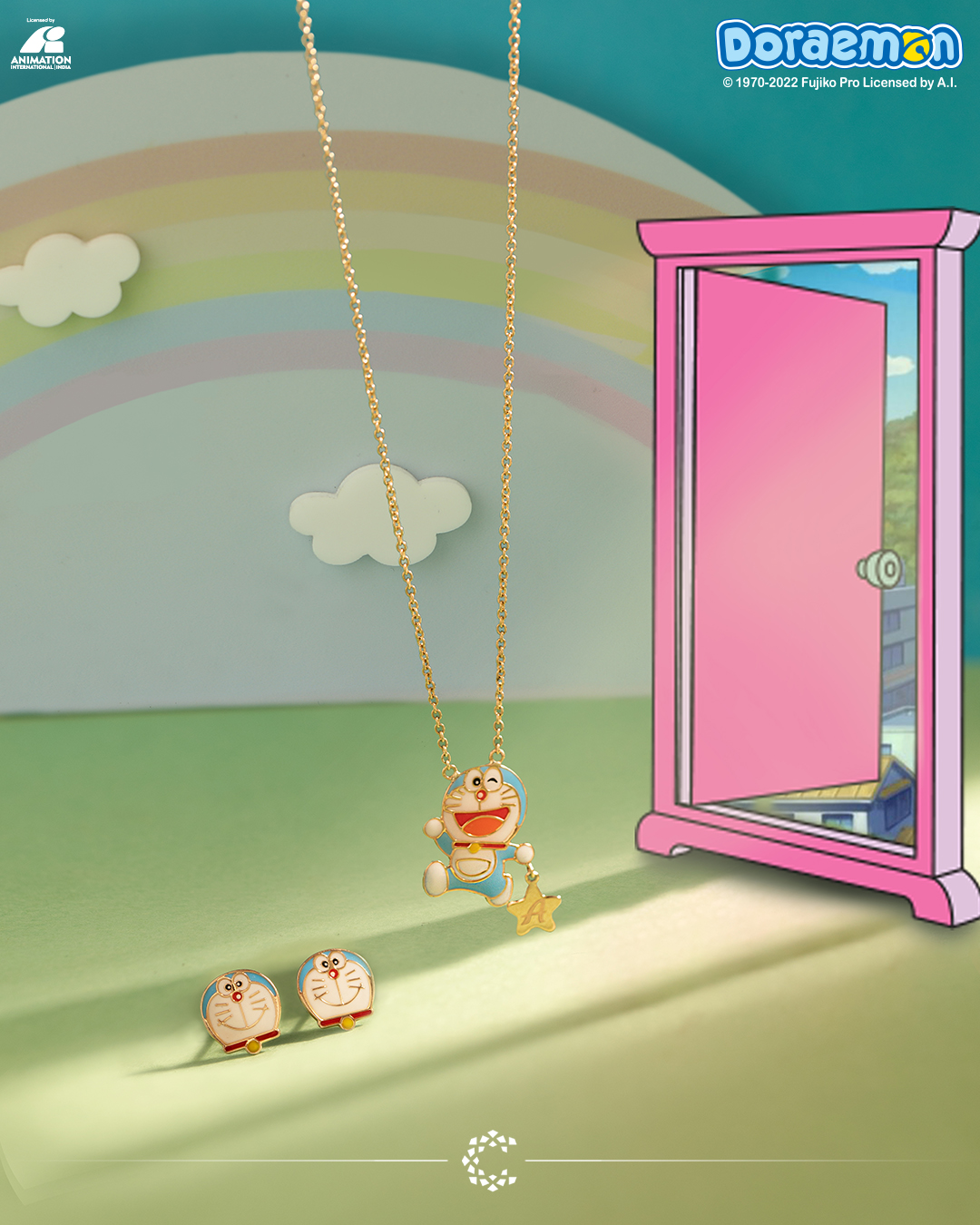
    CaratLane omni-channel jewellery brand has collaborated with kiddie character, Doraemon. The collection, expressly created for kids, is “designed to fascinate them as much as Doraemon’s magical pockets do”. The collection features a variety of lightweight jewellery such as earrings, bracelets, neckwear, and each has a distinctive expression of the character.


    The timing of the collection launch coincides with Raksha Bandhan, a season in which CaratLane has typically seen a considerable increase in the browsing and purchase of kids’ jewellery, notes a communique.


    Talking about the collection, Kinnari Shah, Head Of Design & Merchandising, said: “CaratLane is the ultimate destination for kids’ jewellery. Now, with another feather in our cap that’s Doraemon, it’s going to be amazing. We know Doraemon is a character that’s much  loved in India and they’ll be delighted to see the range of designs we have. Each design in this collection is beautifully crafted in vibrant enamel and 14kt gold. They are very kid-friendly and made with care kept in mind for all-day comfort.”


    Speaking about the collaboration Bhavesh Solanki, Regional Director (India, SAARC & MENA) from Animation International India – Doremon Agency, added: ”There is no doubt that Doraemon is one of the most beloved characters worldwide. As the gadgeted cat marked its 50th Anniversary last year, this collaboration with CaratLane will continue ruling the hearts of kids and teens. CaratLane & Doraemon kids jewellery collaboration is one of its finest and incredible associations and we are happy to partner with India’s one of the premium jewellery brands and to see the licensing industry reaching to newer heights with such a remarkable alliance.”


  • Anushka Sharma endorses R K Marble

    By Our Staff


    R K Marble has launched a campaign conceptualised by Mullen Lintas featuring Anushka Sharma.


    Talking about the campaign, Vikas Patni, Managing Director of R K Marble said: “Over the past 33 years, we have built a legacy of trust through our transparent practices. We hope this campaign nurtures that trust, helping the end customers experience complete peace of mind while building their dream homes.”


    Added Garima Khandelwal, Chief Creative Officer, Mullen Lintas: “In a category that lacks transparency and is highly commoditised, R K Marble is one player that offers fair and fixed price, across the wide variety of marbles, to its consumers. We wanted to break away from the rest and take a definitive positioning that is ownable in the long term.”


    https://youtu.be/2x6VyaeLDnA

  • Homo Proxies: Beyond Income Inequality & The Digital Divide


    By Ashoke Agarrwal


    Ashoke Agarrwal“As for living, our servants will do that for us.”

    From the play Axel by Auguste Villiers de I’Isle-Adam. Also used by WB Yeats as an epigraph in The Secret Rose.

    To my mind, the invention of money is at par with the control of fire as a seminal development of human society. Capital produced the class system, which is the bedrock of modern human society’s economic, political and cultural structure.

    Many who ponder humanity’s future see the emergence of Artificial Intelligence (AI) as a development that will alter the core structure of human society.

    AI’s progress over the decades has been stop-start. For decades it has been the saga of a promise fulfilled more in science fiction than reality.

    Quite often, it has been a cliche with wannabe setup trying to pass off data analytics and second-order model-building as AI.

    However, over the past few years, the exploits of Google, Deep Mind (a subsidiary of Alphabet, Google’s parent company) and OpenAI have once again brought the promise and perils of AI front and centre in the popular imagination.

    In June 2022, Blake Lemoine jolted the world by claiming that Google AI engine LaMDA (Language Model for Dialogue Application) had turned sentient. The powers that be at Google denied the claim and sacked Mr Lemoine. Was Google upset that Lemoine pre-empted the announcement of what many would think is a seminal milestone in the development of AI? Or was Google upset by the revelation of a secret it would want to, for myriad reasons, keep from the world? Or was it simply that Mr Lemoine’s claim was hyperbolic and premature?

    Whatever the case, the media attention that Mr Lemoine’s claim got is symptomatic of the widespread realisation, conscious and sub-conscious, that AI is much more than just another technological development. On the contrary, it is a recognition of AI’s power to change the very dynamics of human society.

    I have been writing in this column about one aspect of how AI, as it develops, will change an individual’s life. In my January 6, 2022 column, I have written about Concierge Intelligence (CI). CI will augment the capabilities of an individual to deliver better outcomes for her – at work, in learning and in relationships. It will be the next big thing – a consumer service whose impact will be an order of magnitude higher than, say, the emergence of the personal computer or the smartphone.

    CI will be an AI companion of the individual, assisting her in all her interactions with the world. CI will enable the individual to communicate better, learn more and better, work better and even shop better. It will do so by developing a deep understanding of the individual’s capabilities, biases, needs and desires. CI will combine this depth of knowledge about the individual with near-encyclopedic knowledge and awareness of the world to deliver solutions and assistance at the speed of a computer.

    The overall impact of CI on society will be more or less egalitarian, as is increasingly the case with personal computers and smartphones. As the CI technology matures, most people who cross the poverty and subsistence lines will be able to afford CI.

    However, there will be an aspect of CI that has the potential to further immeasurably the class divide. This divide will go much beyond the divide of being able to afford a better brand of smartphone or PC. It will even go beyond the digital divide that separates people with access to the digital world and those deprived of it.

    The divide that a specialised aspect of CI can produce could be to create an almost different species of humans. Not yet Harari’s Homo Deus (as posited in his book ‘Homo Deus. A Brief History of Tomorrow’) but on the way. An era of Homo Proxies.

    ‘Proxies’ is the name I have given this species-creating aspect of CI. I have borrowed this concept from Jennifer Egan’s latest book, ‘The Candy House’. Egan comes to the idea of Proxies from a different technological development – the ability to download one’s memories – conscious and sub-conscious. In her imagining, Proxies are an escape hatch devised by those wanting to escape the tyranny of this technology.

    In that sense, I have only borrowed the label from Egan. In my imagining, Proxies are a result of CI, and a means for individuals to distort the technology to entrench their power and pelf further.

    Proxies will be a form of super CI that an individual will use to create multiple identities. As much of human society’s endeavours – economic, social, cultural and political – move online, an individual using Proxies will have the means to exist as multiple entities. Proxies will be a turbocharged CI – say a Super CI – that will enable an individual to digitally live and interact as multiple entities that multiply the time and the legal and social presence available to the individual. In that sense, Proxies go beyond the concept of fake identities.

    While this Super CI will be expensive, the inequality that will result from proxies goes beyond the cost aspect of it. Instead, it will be more to do with the individual’s capabilities. For example, proxies-driven multiple identities are valuable and produce more economic and social capital only if the individual is either a knowledge worker or an entrepreneur.

    Imagine a world where a class of individuals will enjoy unlimited “me-time” while their multiple proxies take care of worldly endeavours. It will create a different species of human beings way beyond the current divide driven by economic and social power.

    Dig below the anxiety that the coming age of AI produces among many, and you will find that the possibility of proxies is part of it.

    As the 21st century slips into middle age over the next couple of decades, a new leisure class will likely emerge. And to paraphrase Auguste Villiers, an elite who says, “as for earning fame and money, our proxies will do that for us”.
     

  • Politics on the Sleeve


    By Shailesh Kapoor


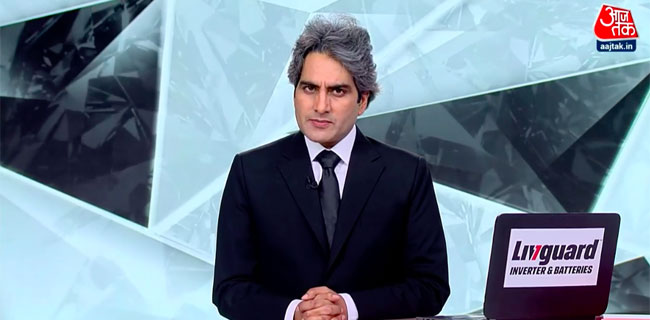
    Shailesh KapoorThe Hindi news television genre is buzzing this week. One of the biggest anchors in the category, Sudhir Chaudhary, has changed channels. His new weekdays 9pm show, Black & White, premiered on Aaj Tak this week. Chaudhary has spent over a decade at Zee News, which included a controversial extortion case back in 2012, for which he and a colleague had to face legal action, including judicial custody.
     

    I’m no fan of Chaudhary and his rabble-rousing style of anchoring, where Muslims are often the target. But over the last few years, Chaudhary has used this trademark style to become one of the most popular Hindi anchors in India, with a loyal fan following that’s only matched by a couple of other news anchors on television.


    In today’s polarised media environment, marquee anchors tend to define the political stance of the channels they are on. The role of the anchor, has, thus widened from only getting audiences to a particular time slot when they are anchoring. Anchors are now driving the brand narrative of news channels across languages. And this brand narrative is decisively political.


    That’s one of the reasons news that’s not political in nature hardly finds any presence on the primetime roster. And when it does, the story angle taken is primarily political. Most anchors feel under-leveraged if they do not use their political capital in their shows. They make it a point to wear their political disposition on their sleeves.


    But they also understand that the audience can’t be fed political news all the time. As a result, we have seen the emergence of news topics that are ‘pseudo-relevant’, i.e., the audience is made to believe the news being dished out is of high importance in their lives, while actually, it may have almost no relevance at all.


    One such sub-genre is ‘communal news’, where stories that are essentially ‘Hindus vs. Muslims’ in their construct are chosen, with an anchor position that’s invariably pre-decided. This trend started in 2014, and has since been on the rise. The Tablighi Jamaat coverage during the first Covid lockdown in 2020, and the Gyanvapi mosque controversy more recently, are evident examples.


    But you do not need a story to ignite communal sentiments among the audience. You could just do a random story, passing it off as research. Sudhir Chaudhary’s ‘Jihaad ka diagram’ story in 2020 is a notorious example.


    Not everyone watches television news anymore. But there is a strong correlation we observe in our work, between political awareness and consumption of TV news. To say it differently, those watching TV news are more likely to have defined political views, including whom they want to vote for in the next elections. In turn, they can shape the opinion of others (family and friends) around them who are often sitting on the fence till a week or two before an important election.


    Thus, to say that not watching TV news is a solution to fixing things that plague the genre is just being naïve. Sadly though, no strong alternative narrative has emerged, and not much may change anytime soon.


    But in hope, we live.


    Shailesh Kapoor is Founder and CEO of Ormax Media. He writes on MxMIndia every Friday. His views here are personal.


  • Das ka Dum with Dr Bhaskar Das | It’s International Yada, Yada, Yada Day tomorrow. There’s a lot of yada-yada-yada in life these days. What say?

    Bhaskar DasIt’s a Friday and since we often do go yada-yada-yada, we thought it would be fun to ask this question. Here’s Dr Bhaskar Das in the July 22 edition of Das ka Dum. Read on…


    If you wish to access the archives, please go to the Das Ka Dum tab on the website’s top navigation bar.


    Q. It’s International Yada, Yada, Yada Day tomorrow (July 23). There’s a lot of yada-yada-yada in life these days. What say?


    A. Ha ha- and so on and so forth. I must admit I find it silly that even a blah blah day has to be celebrated, just because the term was given birth by an iconic and popular show. May be I belong to a different generation and not woke enough to celebrate it in an appropriate fashion.


    I agree with you that there is a lot of Yada-yada-yada these days. But I have the choice to celebrate the day with a contra philosophy of no hugging and no learning. Can’t afford to have a purposeless day. Raining in the dance requires the right mindset and partners. The volatilities are here to stay for some time or forever and they can’t vanish with any magic wand. It’s neither a sign of buoyancy, nor turbulence. It can be both. It’s two sides of the same business coin. if one embraces realities, develop a telescopic and microscopic vision and roll up the sleeves to move with courage, there is nothing to worry. One has to be ever-ready for discontinuity.


  • Ranjona Banerji: Shhhhh!

    By Ranjona Banerji


    Ranjona BanerjiRenowned UK-based sculptor Anish Kapoor was interviewed by India Today about two new exhibitions of his work in Italy.


     

    In this interview, in answer to a question, Kapoor said the following about the current dispensation in India:


    “India is in a desperate place. My beloved country has allowed itself to be beguiled by what I call the Hindu Taliban. Modi’s vile extreme right wing politics is a patriarchal monoculture of hate and is in contempt of the very things that were once the essence of our Indian spirit – tolerance and respect for all irrespective of origin, race or creed. Our utter disregard for the millions who live in concentration camp poverty in our midst is a crime of shameful arrogance. We will be damned for this.”


    According to Kapoor, the editor of India Today then got in touch with him and said they could not carry the interview if it included this answer.


    Kapoor withdrew the interview, which has now been carried in toto and with Kapoor’s comments on the episode, in The Wire.

    https://thewire.in/rights/anish-kapoor-modi-government-art


    At the same time, the Government of India has reacted angrily to a question in Parliament about India’s further fall in the Press Freedom Index released in May. From 142, India now stands at 150 out of 180 nations. The Press Freedom Index is released annually by Reporters Without Borders (RSF), a media body which advocates for journalists and their freedom to work without threat.


    There are so many ironies at work here that the mind is boggled.


    India Today continues to pretend that it subscribes to some “gold standard” in journalism. Long ago, it did. For many publications, standing up to a Congress government was the same as getting a gold medal in the Olympics. It meant you were real and brave. You exposed corruption. You criticised government actions and political wheeling-dealing. If the government hit back, then your chest puffed out further.


    To be fair, India Today also criticised BJP-led governments and other political parties. But that was long ago. Not for the last eight years. But that it should be so frightened of the consequences of a critical comment by a well-known artist just underlines once more the extent of the cowardice. Kapoor has not said more than what many commentators say, admittedly in a shrinking space for criticism. But India Today has neither the gumption nor the honesty to give Kapoor that much space. Not even to hide behind that disclaimer that these views are not that of the publication.


    Given this, it is hardly surprising that the Modi government will not accept RSF’s index. After all, its captive media friends never criticise the government, amplify all the government’s claims without question, cheer what is clear bad political practice as cleverness, and happily blame the opposition for everything that goes wrong. Why should the Modi government accept that anything is wrong with the media?


    Even more horrific and amusing is the fact that the bulk of the media itself is happy to carry the government’s viewpoint without any question or comment.

    https://timesofindia.indiatimes.com/india/govt-rejects-world-press-freedom-index-findings-says-methodology-questionable-non-transparent/articleshow/93028242.cms


    That is a level of capitulation which is formidable.


    Apart from all the journalists who have been arrested, killed, threatened, which all points presumably to a vibrant and “robust” media to use one of the government’s favourite words, I leave you with this nugget.


    According to the Union Government’s own reply in the Lok Sabha, it has spent Rs 900 crore on advertising in the media since 2019.


    Which do you think is a better excuse: cowardice or greed?


    Ranjona Banerji is a senior journalist and commentator. She writes on MxMIndia on Tuesdays and Fridays. Her views here are personal.


  • E-commerce facilitator GoKwik appoints Amitt Sharma as CCO

    By Our Staff


    Gokwik, an e-commerce enabler, has announced the appointment of Amitt Sharma as its Chief Customer Officer (CCO). Sharma would be working closely with the rest of the verticals and the leadership team in driving GoKwik’s vision to maximize the value delivery to its clients as a part of the company’s growth strategy. (Note the name is spelt with two Ts, it’s not a typo).


    On the appointment, Chirag Taneja, Co-founder of GoKwik, said: “As we expand our business into newer segments and geographies, it becomes critical to constantly bring the best practices in improving and modernizing GoKwik’s customer care approach and leadership. We believe that with Amitt coming on board, we would build a world-class organization focussed on the ethos of customer centricity and uplift e-commerce conversion rates at a rapid scale.”


  • IAA Leadership Awards to be presented on July 25

    By Our Staff


    The India Chapter of the International Advertising Association (IAA) will present its prestigious Leadership Awards on Monday, July 25, in Mumbai. These awards are presented to the leaders of the marketing fraternity who have excelled in their respective fields.


    Said Committee Chair Nandini Dias said “We are privileged to have a prestigious all-CEO jury panel headed by the indomitable Harsh Goenka, Chairman, RPG Enterprises along with other eminent jury members – Pawan Goenka, Chairman INSPACe and Ex-MD & CEO, Mahindra & Mahindra Ltd; Hemant Malik, Divisional Chief Executive – Foods, ITC Limited; Suparna Mitra, Chief Executive Officer- Watches and Wearables Division, Titan Company Limited; Vineet Bhatnagar, Managing Director & CEO PhillipCapital India; Vivek Sunder, Chief Executive Officer, Cuemath & Arijeet Talapatra, CEO, Transsion India.


    Over the years, we have come to evolve a streamlined and structured process that takes into account rigorous data points to arrive at the shortlist for each predetermined category. This enables the jury to conduct exhaustive and well-founded deliberations before they arrive at the final winners.”


    Added IAA President Megha Tata, “the Leadership awards are known for the superlative audience they attract. Apart from the marketers, there are also special awards for categories like Business leader of the Year, IAA Creative Agency Leader of the Year, IAA Media Agency Leader of the Year, IAA Media Game Changer of the Year, IAA Media Person of the Year, IAA TV Anchor of the Year.


  • Audi teams up with Netflix

    By Our Staff


    Audi, the auto giant, and Netflix, the streaming giant, have collaborated on The Gray Man, an action thriller film, to spotlight four Audi vehicles.


    Said Henrik Wenders, Head of Brand, Audi AG: “This film has a global appeal and intrigue. He explains the true extent of Audi’s role in creating the production, which went far beyond simply providing vehicles. This cooperation made us feel action and high speed. Like the Russo brothers we at Audi are leveraging technology to create something unseen and unexperienced before. Audi worked with the directors Joe and Anthony Russo on selecting the new cars. It was fascinating to be partners on this film production and to work closely with Netflix.”


    Added Anthony Russo: “As storytellers, we have always been very interested in finding and exploring new technologies to find new tools to do something no one has ever done before. That’s what excites us. That kind of approach I would apply to anything particularly to the evolution that’s happening with cars right now. As much as I love the cars of the past and today, I am certainly most interested in where cars are going tomorrow. That is an exciting new frontier that’s going to bring whole new experiences for us not only as drivers or consumers but also as people who have to coexist with cars.”


  • Intel partners Nukkad By Stage on AI skills for students

    By Our Staff


    To encourage the development of Artificial Intelligence skills Intel partnered Nukkad By Stage for its campaign ‘Future Banao Wonderful’. The collaboration is done across all the platforms of Nukkad.


    Anita Kotwani
    Anita Kotwani

    Said Anita Kotwani, CEO- Carat, Intel’s media agency: “Lack of awareness among parents & students especially in tier II & III cities hinders the adoption of digital learning. We wanted to solve this category challenge and partnering with Nukkad helped us to connect with the audiences. Thanks to the strong vernacular support & reach of Nukkad, we were able to educate our audiences about the role of devices in digital learning.”


    Runa Sinha

    Added Runa Sinha, Vice President- Nukkad by Stage: “The association with Intel has been extremely impactful as the whole messaging thrusts upon the fact that relevant, progressive and informational content which is core to nukkad has been well received by the bharat audience across both the segments – Parents as well as senior students. It also signifies the fact that Bharat is looking forward to empowering themselves and enriching their lives through proper information-based content.”


  • TV9 Bharatvarsh to be helmed by Deep Upadhyay

    By Our Staff


    TV9 Network has announced the appointment of Deep Upadhyay, Editor, Convergence & Strategy as head of TV9 Bharatvarsh. Sant Prasad Rai, the erstwhile Managing Editor of TV9 Bharatvarsh has been relieved from his day to day newsroom responsibilities with immediate effect.


    Upadhyay will be supported by Rahul Chaudhary in managing the day-to-day newsroom operations for the time being, a communique added.


  • Das ka Dum with Dr Bhaskar Das | If you were to give someone from the Indian media the title of ‘Khatron ka Khiladi’, who would it be? Someone who plays the tough game, has no fear and is generally the winner?

    Bhaskar DasWe thought we would the start the week with a fun question, so here it is. Here’s Dr Bhaskar Das in the July 25 edition of Das ka Dum. Read on…


    If you wish to access the archives, please go to the Das Ka Dum tab on the website’s top navigation bar.


    Q. If you were to give someone from the Indian media the title of ‘Khatron ka Khiladi’, who would it be? Someone who plays the tough game, has no fear and is generally the winner?


    A. It’s difficult to find one in a classical sense, like, say, Elon Mask. In a sense, every media owner or business owner is a Khatron Ka Khiladi as they confront a range of VUCA-led challenges while carrying on business. But if you still insist on names I can share my exposure (I am lucky enough) of a few such Khiladis like Samir Jain, Vineet Jain, Dr Subhash Chandra, Punit Goenka, Girish Agarwal, etc. All of them challenged the industry gravity and created new rules of the game.