Zee5 has launched the fourth edition from its knowledge series ‘Zee5 Intelligence Monitor’ offering the latest trends prevailing in the smartphone industry.
The research discovered that more than 50% of smartphone users in the metros are planning to replace their gadget within the next six months, quite a departure from the earlier behaviour where it was triggered from declining handset performance. The post-Covid trend is to grab the latest model; with latest features’ scoring well above price as the key motivator. Consuming the exciting and wide variety of content on OTT apps is another new driver for this upward movement.
Launching the report, Rajiv Bakshi, Chief Operations Officer – Revenue, Zee Entertainment Enterprises Limited, said: “By deep diving into the smartphones segment, we have unearthed amazing new insights on user behaviour which can lead the brand marketers to attract millions of customers eager to upgrade and replace their smartphones. We hope this report will act as a guidebook for marketeers and smartphone brands and serve to be distinctive for the industry at large. Marketers and business leaders can use these findings to make smarter business decisions and hyper-target campaigns utilizing the ZEE5 platform to connect with audience in 12 languages.”
WatConsult, the hybrid digital agency from Dentsu Creative India, has released its latest issue of monthly WATPapers. Titled ‘Consumer’s outlook towards health insurance’, the report explores how the Covid-19 pandemic has transformed the consumer perception about insurance, as more individuals felt the need to have financial backup to meet unforeseen medical expenditures.
According to the report, more than half of the respondents have purchased health insurance in the last six months. These policyholders belong to the age group of 25 to 35 years, residing in the top 4 metros as well as small metros. Most of them have purchased health insurance for themselves and their parents. With regard to the coverage duration, 32% of the respondents have purchased health insurance for up to two years. 27% of the respondents have opted for a health insurance plan for a year’s duration.
Commenting on the latest issue, Heeru Dingra, CEO, Isobar India group said: “Since the pandemic, there has been an ever-growing demand for health covers because people have realised that huge medical expenses, especially when engulfed in uncertainty can take a toll on their financial and mental well-being. In such a situation relying on savings is not enough, hence, a health insurance policy is ideal as it covers facilities like cashless treatment, maternity coverage followed by emergency room services, discounted treatment, reimbursements, and free health check-ups. This issue of WatPapers is a must-read as it showcases the trends observed in the sale of health insurance plans and how policyholders today are shielding themselves against medical emergencies.”
Added Sahil Shah, Managing Partner, WatConsult added, “The pandemic has disrupted the industry by altering how people view health insurance for themselves, and their family members. This period of an extreme health crisis, with the pandemic looming over, has led more and more people to opt for health insurance. The future looks promising for the health insurance sector with changes in the regulatory framework, which will lead to changes in the industry conducting its business. Factors such as growing awareness, the need for health protection and inclusion in the financial planning of an individual, will drive the growth of Indian health insurance sector even higher and further.”
No context to the question we’ve asked. Let’s hear it from Dr Bhaskar Das in the July 14 edition of Das ka Dum. Read on…
If you wish to access the archives, please go to the Das Ka Dum tab on the website’s top navigation bar.
Q. If an FMCG CMO were to ask you to suggest a metaverse strategy for her brand, what would it be? For, say, a brand like a premium soap?
A. This question has the requirements of a long answer. But in your column, brevity is the norm. So I shall explain in brief what is Metaverse and what it can achieve for a brand, FMCG or others.
The metaverse presupposes an immersive environment, using virtual- or augmented-reality technology—part of web3.0. The metaverse is “always on” and remains present in real time. The metaverse spans the virtual and physical worlds, as well as multiple platforms.
Some of the advantages of Metaverse would be:
#Hyper-personalisation
#Real-time contextual relevance
#Enhanced sensory experience that need to be perpetually serendipitous to get consumer stickiness
#Community building
#Unique way of storytelling
#Deep customer data for predictive analytics.
All the above can embellish the marketing strategy of a company. Security, trust and transparency would also be a built-in advantage of web3.0.
I was fifteen, when I first traveled outside the country, across the Pacific. The trip was an eye-opener, educative and liberating. It exposed me to different people, culture, food, places and more. Something that shaped me in different ways in the following years.
To me travel means independence. I wonder what it means to a person with disability who is written off as ‘dependent’. Do disabled people like to travel? Do they have the freedom to travel given the inaccessible (physical) environment and limiting societal perceptions?
To get a sense of their desires, challenges, and the scope of travel in and outside India, I spoke with Neha Arora, the Founder of Planet Abled. An organisation that makes travel accessible and inclusive for persons with all types of disabilities and the elderly. Neha worked with companies like HCL, Nokia and Adobe before launching Planet Abled.
Neha Arora, Founder, Planet Abled
Question: Tell us a bit about yourself, Neha.
Answer: I was born to parents with disability. My father is blind and my mother is a wheelchair user. I have lived all my life with disability and challenges. Growing up, we never went for a holiday. I assumed money was the problem, so when I started earning, I saved up to plan a holiday. That’s when I realised my naiveté, it wasn’t the money, it was about the lack of accessibility and the prevalent insensitivity in the society. Most disabled people, especially in a country like India, are conditioned that travel is not for them. I refused to accept it, picking fights everywhere. There came a tipping point after a mob fight, when I decided to look for solutions. Unable to find any comprehensive solution for all disabilities, I decided to do something about it myself.
Q: So, you left your corporate job to start something of your own. How did things go from there?
A: I had a few lessons in entrepreneurship because I was a hustler with my job as well. But this time I wanted to succeed, so I did proper homework for the next two to three years. I sat at airports, counting the number of people traveling from different cities, because there was no official data. I talked to staff at hotels and airports, asking about the number of disabled folks coming in. When I couldn’t find any data still, I thought there was something seriously wrong. I decided to take it up as an opportunity, which was hidden in plain sight. In the final year of my groundwork, I tried to understand the disabled community’s challenges and the solutions that could work.
Q: How did you come up with the name, ‘Planet Abled’?
A: Planet Abled because it’s not the disability that stops people from exploring the world. It’s the environment and establishments that are inaccessible. It’s the stigma that exists around disability. So, in a way we have to make the planet ‘abled’ for everyone to travel and have the freedom of choice to do so.
Q: You mentioned that India doesn’t have any data on disabled travelers. In your experience, how do other countries fare on this?
A: Other countries have specific numbers. US, Germany and Australia track not only the number of disabled people traveling but also the total spends. In 2019, US citizens spent $ 58 billion on disabled travel, that’s a huge market. In India, we don’t even have the exact count of persons with disabilities. But other countries have specific data based on which they create facilities.
Q: So, you are saying there is a business case for disabled travel, but India is far behind?
A: Yes. I also think that people with disabilities are at fault. In my experience, many of them don’t want to spend the money even if they have it. They expect to receive services for free on grounds of disability. As a result of this sense of entitlement, businesses won’t consider them a paying customer or market. Only a handful of Indians want to spend money on service and access. If you don’t want to pay for a value-driven service, you won’t have enough services that value you as a customer. It’s a two-way street.
Q: I have had a lot of ‘able-bodied’ people react strangely to the idea of a blind or a deaf person wanting to travel. They simply don’t understand why would a disabled person want to travel.
A: I think people who have no exposure to disability, should join one inclusive group trip because it makes them realise that this person with disability is just like me. And they are also looking for travel experiences where they can enjoy and have fun. The way they perceive or experience things, might be different. For example, a wheelchair user might need to follow a route which is step free, and they might need an accommodation which is suitable to their accessibility needs, which is rare and expensive in our country. Let’s say you visit a historical monument, you see it and probably have a guide sharing information about it. How would a blind person perceive it? To make it inclusive and accessible, we print 3D models of monuments to have them touch and feel. Similarly, for a deaf person you can make it engaging in sign language or easy language. Reading complicated text is difficult for deaf people. Unlike India, other countries have deaf guides commonly available.
Q: Travel was severely hit during the pandemic years, and to some extent it still is. But now I hear people itching to travel, pull out of their confines, they are going for something called ‘revenge travel’. How do you see a disabled person in this context, who has been confined for so many years together?
A: Like you said, it’s not new for a disabled person to not be out. They are conditioned in a way to stay indoors. But what I see a lot of desperation in them as well, to go out. I receive urgent requests from people wanting to travel day after! In the second wave also, I had people calling me to plan a trip. Because whatever little social life they had, also disappeared. So, there is revenge travel happening in the context of disability as well. I have a client in the US who retired from her government job, to travel. She wants to indulge herself, travel and experience the world for as she long as she lives. She and her husband both have a disability, they don’t have any kids.
Q: What are the differentiating factors you have noticed in your travel within the country and abroad, in terms of ease of travel for a person with disability? Do empathy levels vary in societies and cultures?
A: Specific to the type of disability, access needs vary. In terms of physical infrastructure, metro city hotels fare better, especially 4-star and above, because of compliance. They don’t do it from the goodness of their heart or as a business need, but only to get a star-rating. I have had some horrible experiences with some of the biggest chains in the country despite their tags of being compassionate and disabled-friendly. In fact, I find local/regional chains to be more sensitive and empathetic to the needs of disabled customers. Outside India, people are more sensitive. They see you as humans first. Of course, having a strong legislation helps, as in the case of US. Some countries have a culture of inclusion. In Australia, there are legal setups for disabled people being paid to travel with a caregiver because it is important for the well-being and health. They have organizations who look after the rights of caregivers.
Q: Travel brings exposure to new places, people, environments et cetera. How important do you think travel is in the process of empowerment of persons with disabilities? Have you seen any transformation in your clients?
A: Travel makes you realise what a tiny part of the world you are. And there are so many diverse people you come across that prejudices go away. Travel has the ability to resolve the radicalisation and intolerance that we see around us. People have told us that you gave us the best day of our life because we never even thought this was possible. Some even complain about turning into travel addicts! Some have gone back and taken up driving lessons, or joined a gym, or picked up a hobby, thinking no barrier is impossible to overcome. Some special friendships have emerged from our inclusive travel groups, bringing down the apprehensions around disability.
Q: Do you think the Indian media can contribute in any way towards making travel a natural choice for a person with disability as much as it is for any other citizen?
A: Of course. It’s all about correct representation. If the media talks about it, people can see the human side of things. It’s important to make a film, music video or an advertisement inclusive in representation. Media companies have to make their own content accessible, they have to walk the talk. It has to start with seeing disabled people as ‘people’ first. Inclusion has to be part of the leadership’s agenda, for any section of society that is underrepresented.
We’ve possibly asked this question in the past. But we’ve asked again, just in case our Wizard with Words is more political incorrect this time around. Let’s hear it from Dr Bhaskar Das in the July 15 edition of Das ka Dum. Read on…
If you wish to access the archives, please go to the Das Ka Dum tab on the website’s top navigation bar.
Q. If you were asked to suggest the name of an Indian media baron for tell-all biopic, whose name would you suggest?
A. There are a number of them and I would suggest my preference viz: Samir Jain, Subhash Chandra , Aveek Sarkar and Prannoy Roy. I am sure there are other epic cases which would make interesting reading as the journey of every media-owner has its unique dimensions which are outside the glare of public knowledge. My suggestions are only indicative and betrays my ignorance of the rich treasure troves of media entrepreneurship of India.
COMvergence an independent research and data consultancy, which analyses media spend investments and produces benchmark studies, on new business performances, and Billings and Market shares of media agencies, released its latest Billings and Market share report for FY 2021 for India.
The media agency groups were led by GroupM, IPG Mediabrands and Publicis Media in the latest Billings and Market Share report by COMvergence for the Indian market
In 2021, the total market studied by COMvergence was $12.5 billion, this total studied market includes 20 agency networks and one independent agency, which represents 87% of the market at $10.9B.
In 2021, the media agencies across saw $4.5B in digital spends and an average of 42 % in digital share across agencies. The average growth rate of agencies for 2021 vs 2020 was 24%
The Media Agency Groups were led by GroupM with $ 5.3B billings and 42.9% industry marketshare, IPG Mediabrands with $ 1.8B billings and 15.1% industry market share and Publicis Media with $ 1.3B billings and 10.6 % industry market share.
The ranking for the individual agencies was led by Mindshare with a considerable margin at $ 2.2B total billings with a industry market share of 17.9%, followed by Wavemaker $ 1.3B total billings with a industry market share of 10.7% , very closely followed by Lodestar at $ 1.0B with industry market share of 8.1%.
Warner Bros. Discovery has unveiled its new leadership team for South Asia. The business is led locally by Arjun Nohwar, General Manager – South Asia and includes brands such as Discovery, HGTV, Eurosport, Cartoon Network, POGO, Discovery Kids, DC, and the discovery+ streaming service.
Meanwhile the following appointments are confirmed for South Asia:
Ruchir Jain is Head of Distribution & Eurosport and heads up the integrated network distribution function. Jain led the finance team at Discovery Network from 2018 to 2021, and then distribution. He continues to lead the Eurosport channel.
Tanaz Mehta is Head of Ad Sales, tasked with growing revenues across all networks in South Asia. Mehta is a seasoned sales leader with a deep expertise and nuanced understanding of the market.
Uttam Pal Singh is Head of Kids Cluster and tasked with developing a compelling content strategy for growth. In his previous capacity at Discovery Kids, Singh led the team behind successful original IPs, including Little Singham and Fukrey Boyzzz. The combined Kids portfolio now includes Cartoon Network and POGO, in addition to Discovery Kids.
Sai Abhishek is Head of Factual & Lifestyle Cluster and will be responsible for delivering growth and profitability across the genre. Abhishek comes with a strong background of leading original productions, programming, and acquisitions.
Said Nohwar: “With this exceptional new-look team, Warner Bros. Discovery is well-positioned to achieve our ambition of being the leading and most dynamic media company in the region. All our leaders are looking forward to working closely together across divisions as one united team.”
Nohwar also paid tribute to two outgoing executives who will be exiting the organisation. Rohit Khetarpal will be leaving the company after 14 years, having been a key member of the legacy WarnerMedia and Turner network distribution team. Abhishek Dutta also departs, having led the legacy WarnerMedia Kids team in South Asia, including programming strategy, acquisitions and original production.
Other lines of business, shared services and corporate functions that support the wider region will be announced at a later date.
Pregnancy test kit Prega News of Mankind Pharmaceuticals has come out with the second leg of its campaign. Titled #JustTakeTheTest, the digital campaign has been conceptualised and executed by Grapes digital marketing agency.
Speaking on the campaign, Shradha Agarwal, Co-founder and CEO, of Grapes, said: “It’s a fact that conversations keep hovering when you’re expecting. There are times when people either look for signs or depend on their cravings. Though certainly, such things are part of pregnancy it’s not absolute to confirm one is expecting a child. Hence, it is always better to take the pregnancy test and get a sure shot confirmation. After receiving the objective from the client, we thought to do this campaign in a fun way, which invokes humour, but simultaneously spread the message. #JustTakeTheTest campaign aims to create awareness among consumers that rather than creating commotion to share the good news, first get accurate results as it helps in taking the right steps for your little one early on, and helps in seeking guidance from a doctor in the initial stage, before celebrating the news.
Commenting on the campaign, Joy Chatterjee, Associate Vice President, Mankind Pharma, added: “The campaign aims to burst the myths around pregnancy. The most common conversations like women craving for pickles, feeling low, gaining extra kilos to establish that it doesn’t specify one is expecting a child. These are all just speculations, which we keep hearing in our lives, or get a lot of advice from people. These connotations should be avoided, and one must not be dependent on myths anymore. The campaign #JustTakeTheTest encourages people to take the pregnancy test, and get rapid, accurate results by switching to Prega News.
Sony Pictures Networks India (SPN) has acquired the media rights for the World Athletics Championships Oregon22, which is scheduled from July 15 to 24, 2022, in Eugene, Oregon, United States. This deal will give SPN rights to broadcast the upcoming edition of the World Athletics Championships on its sports channels across India and the subcontinent, including Afghanistan, Bangladesh, Bhutan, Maldives, Nepal, Pakistan, and Sri Lanka The association will also allow SPN to showcase all Video on Demand content for its viewers.
The World Athletics Championships Oregon22, will be live telecast across SONY TEN 2 channels in India as well as livestreamed on SPN’s premium OTT platform, SonyLIV. For India, Olympic javelin champion Neeraj Chopra will lead the country’s charge
Currently, former long jumper Anju Bobby George’s bronze in Paris in 2003 is the only medal won by an Indian athlete at the World Championships. The nation will be rooting strongly for the contingent and hope to extend the medal tally in this outing.
According to the recent Dentsu Global Ad Spend Forecasts, advertising spending would increase globally by 8.7% in 2022. Adspending in Asia Pacific is anticipated to reach US$250.0 billion, with digital accounting for much of this amount. With a growth rate of 16.0% this year and predicted increases in advertising spending of 15.2% in 2023 and 15.7% in 2024, India is seeing the highest growth in the market. Forecasted spending on advertising in China is expected to rise by 4.0% in 2023 and 5.4% the following year.
The reforecast of media investment is released in the context of escalating media price inflation, geopolitical tension, upcoming key elections, and one of the most anticipated global sports events of the year, the FIFA World Cup. Due to continued uncertainty, the current and historical comparison data has also been adjusted to remove Russian investment from the forecast, to better reflect the rest of the international ad spend trends and predictions.
Said Prerna Mehrotra, CEO Media APAC, Dentsu International: “The latest Dentsu Ad Spend July 2022 points to a continued recovery despite another year of economic uncertainty, with APAC 2022 ad spend of US$250.0 billion, based on a growth forecast at 5.1%. However, continued lockdowns in key markets, geo-political tension and ongoing supply logistics issues could add pressure on businesses with a cascading impact on marketing spends.”
Looking ahead, Dentsu expects the 2023 global advertising market to increase by 5.4% to reach US$778.6 billion followed by a further 5.1% increase in 2024.
Added Peter Huijboom, Global CEO, Media and Global Clients, Dentsu International: “Even with everything which has happened in recent months, not least the protracted war in Ukraine and its international repercussions, the advertising recovery remains strong on a global scale. And, despite factors such as inflation putting pressure on household budgets, combined with 2021 being a tough comparative year, we have only marginally revised down our 2022 global growth forecast by just 0.4 percentage points.”
Overall ad spend growth in Asia Pacific is boosted by key sporting events such as Indian Premier League, FIFA World Cup, Beijing 2022 Winter Olympics and Paralympics, and country elections in Australia and India. Digital continues to be the powerhouse driving APAC ad spend, as the fastest growing medium at 11.5% to reach US$151.7 billion, a 60.7% share of total ad spend. Fuelling this is the double-digit growth of Programmatic (32.3%), Paid Social (27.4%), and digital display (13.3%) in 2022. In SEA, TV spend is still significant, with the largest share (57.2%) of total SEA spend (Indonesia, Singapore, Malaysia, Philippines, Thailand and Vietnam), and a growth rate of 4.6%.
Globally, Out-of-Home (OOH) and cinema will both see encouraging double-digit growth in 2022 (respectively 11.5% and 19.6%). Radio is also forecast to grow, much faster than initially considered with a new reforecast of 5.0% for the year, up from 2.0% in the January predictions – which is mainly due to faster return to office working. As with previous predictions, ad spend in newspapers and magazines will continue to decline.
I n 2022, the Americas will be the top ad spend region at US$329.6 billion and the most dynamic with spend increasing by 13.1%. India at 16.0% growth will stay ahead of the US at 12.8% and Brazil at 9.0% as the fastest growing market.
Industry wise globally, the greatest growth is forecast for the Technology sector (+11.3%), which has benefited from people’s greater reliance on digital devices. Retail is one of the key sectors of spend growth at a rate of 11.0% in 2022. The sector is driven by a number of factors including the significant growth of e-commerce, the entry of new players, and the introduction of emerging retail platforms. In Asia Pacific, technology, automotive and cosmetics and personal care are among the fastest growing sectors.
This Dentsu Global Ad Spend Forecast not only looks at the data from 58 markets, but also examines some of the key factors impacting ad spend shift, such as inflation increases, sustainability regulation, acceleration of gaming as an ad medium, doubling down on addressable media and also the importance of buying attention as core metric.
What does it mean when India’s most senior journalists are unable to distinguish between political finagling, however reprehensible, and the relentless rise of fascism?
Cognitive dissonance?
Loss of critical faculties?
Deliberate blindfolding?
Genuine belief that Fascism is what we need.
All of the above?
Shekhar Gupta’s amazing take on Mohammed Zubair’s arrest for exposing BJP hatespeak, for exposing fake news, for instance? What does one make of that? Gupta has a long and illustrious career in journalism. He has been defence correspondent for India Today magazine when it genuinely did set the “gold standard” of journalism. He has been editor of The Indian Express. He is now editor-owner of The Print, a digital news platform which hires several excellent journalists and does some good work.
But Gupta is unable to accept what is happening around us.
He goes back to some earlier time to find justification – as they all do.
He comes up with fantastic arguments to justify Zubair’s detention: if Zubair had not exposed fake news then no one would have known about the lies and abuse and then the world would not have chastised India and then India would not have hit back at Zubair.
Or maybe, this is not so fantastic after all.
Maybe this is what Gupta and his ilk really believe.
That the basic job of the journalist is to accept what is put before him or her, ask no questions and quietly go about the basic job of regurgitating government press releases.
And whistleblowers must pay the price.
As an aside: Gupta’s argument also suggests that no one watches the TV channel Times Now, where Sharma made her comments! Because no one would have got upset if Zubair and Alt News had not put the clips of Sharma’s abuse of the Prophet Mohammed on Twitter.
Now here’s one to upset the righteous!
Gupta’s argument also gets worse. He goes into some convoluted Hindu-Muslim thinking. If Zubair is upset with Sharma for her abuse of the Prophet then he should not be upset when Hindu priests call for genocide of Muslims. Or something strange like that.
The upshot is that the Hindu in Gupta is upset by Zubair, the Muslim.
Please don’t say that I’m being unfair.
In all the wiggles and twists and turns, that’s what emerges.
Which is just about what the current dispensation, the Hindutva brigade and the Hindu supremacists also believe. They are generally upset by Muslims, Christians, Dalits, women, liberals, thinkers, writers, artists, activists, NGOs and whoever else they come up with. Did not Gupta himself write something derogatory about “wine and cheese liberals”, to justify Prime Minister Narendra Modi’s comments about the “Khan Market gang”?
I was going to add “journalists” to that list. But the universe of journalists who oppose the government and stand up for each other is shrinking by the second.
One could also live in a balloon like respected columnist Tavleen Singh does. Singh also has a long and illustrious career in journalism. She did some amazing investigative work and was an inspiration to women journalists.
Yet she is today, in her Indian Express columns, unable to accept or consider or admit, yes that’s the word I was looking for, admit, that the BJP-RSS led by Prime Minister Modi has unleashed militant Hindutva and all its horrors on India over the last eight years.
She starts to say it, and then pulls back. She says it, and then blames some earlier Congress government. She goes off on a tangential rant about Sonia Gandhi.
I have named these two as examples because I admired them once, and also because of their reach and fame.
There are many others.
Who disappoint when they dissemble.
All of them have failed in the basic tenet:
Ask questions to those in power.
Now that’s a joke!
Ranjona Banerji is a senior journalist and commentator. She writes on MxMIndia on Tuesdays and Fridays. Her views here are personal
At last, because of the pretty pictures from the James Webb Space Telescope released by NASA this week, the world turned its gaze away from human shenanigans and looked up.
Well, not really up but at least at their screens for something a little out of the ordinary.
Science journalism remains however an art more honoured in the breach. Those who are serious about it are cloistered in their science journals. Those who are in the wider world of the mainstream media know that sensationalism is all that will work. Plus, the basic assumption that every reader or viewer is an idiot. Nothing sells like those old crazy headlines from National Inquirer: Two-headed woman gives birth to three-headed goat. That’s a joke, by the way but we all know that people will believe it.
We saw this during the pandemic. A few dedicated journalists tried to assess the issue, separate fact from political fiction and present what was happening as best they could. Many of their voices got lost in the hysteria of fake news, fear, allegations and patriotic fervour.
It is always those sensible voices which are ignored, while the tawdry sensationalists hog all attention.
If pandemic info was bad, the vaccination story was even worse. Allegations flying back and forth and opposing scientific theories using and abusing the media to get their views across. It’s usually the scientists and doctors who are best at manipulation and self-publicity who are heard the most. This is because so many journalists are lazy and will rush to the easiest quote machine. Those who dig a little deeper find that no one wants their work: It is painstaking, it is real, it is upsetting, it counters government and it requires effort to understand.
The pandemic affected us all so we had to pay a little bit of attention.
But the Universe?
Now that’s too large to explain.
Even the nitty-gritties are too much to explain.
Like the James Webb Space Telescope sees largely in the infrared because wherever we see into “space” we’re looking back in time and the further we want to look, the more the light is infrared.
Like the fact that Webb has not replaced the Hubble Space Telescope. Hubble is still there. Mainly in the visual. It’s been there since 1990.
For as long as Hubble lasts, they will complement each other.
But why am I telling you all this?
Well, for one, I’m interested.
I’ve also realized, and I saw this as a journalist, you’re not going to get much from the mainstream media.
I do remember to this day the Time Magazine issue with the Pillars of Creation visual from Hubble.
I also remember the Voyager articles from 1977 and the assortment of the human experience sent out on those gold discs for someone in the Universe to hear.
But almost no updates of this will you find in the popular media. The two Voyagers? Still out there. Past the sun’s heliosphere in interstellar space.
I’m not even a science graduate. I have no mathematics. I’m just interested.
If the little excitement over the first James Webb images is anything to go by, I’m not the only one.
But I guarantee, this excitement won’t last long.
I’ve written about this many times before.
So, how much have you heard about the Laser Interferometer Gravitational-wave Observatory at Hingoli, Maharashtra?
Look it up.
It’s amazing! Mergers of black holes and neutron stars felt in these observatories as waves travel through us.
(Unsolicited advice: bypass the mainstream media and start with YouTube.)
No. Science we don’t like.
We talk a lot about how much we should like it. But that’s about it.
Sad.
Ranjona Banerji is a senior journalist and commentator. She writes on MxMIndia on Tuesdays and Fridays. Her views here are personal
 No context to the question we’ve asked. Let’s hear it from Dr Bhaskar Das in the July 14 edition of Das ka Dum. Read on…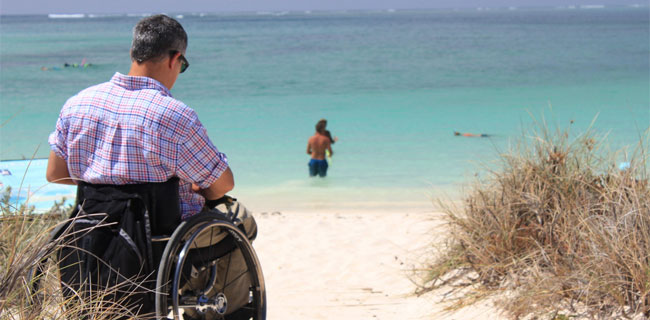
 I was fifteen, when I first traveled outside the country, across the Pacific. The trip was an eye-opener, educative and liberating. It exposed me to different people, culture, food, places and more. Something that shaped me in different ways in the following years.

 What does it mean when India’s most senior journalists are unable to distinguish between political finagling, however reprehensible, and the relentless rise of fascism?