Author: mxmadmin

  • Ruma Sengupta: Chief strategy officer, MPG India

    (Experience: 15 years)


    Ruma Sengupta presently works for MPG India, Havas Media Group, as Chief Strategy Officer, India. Ruma comes with 15 years of experience and expertise across Marketing, Branding, Innovation, Sales & Distribution & Ms. Ruma’s diverse experience also includes working in senior marketing roles at Adlabs Films Limited owned by Reliance ADAG, United Spirits Limited at UB Group and Ranbaxy Laboratories Limited. She was most recently with Synovate as Director-Business Insight, where she was responsible for key international clients across FMCG categories. Ruma’s longest stint has been with Ranbaxy Global Consumer Healthcare, where she launched OTC & DTC business and managed it successfully through marketing and sales-distribution.


    Based out of Mumbai, Ruma works closely with MPG’s four key offices in Mumbai, Delhi, Bangalore and Chennai, to take charge of the agency’s strategic offering and product development in keeping with the vision of Leading New Thinking. She also takes custodianship of Havas Media’s proprietary tools and processes. Ruma reports into S K Biswas, Chief Strategy Officer – APAC of Havas Media, based out of Singapore.


    As to what made media planning & buying her profession of choice, she says: “Conceptualizing and managing Media strategy comes naturally to anyone with a branding & marketing exposure, but very few cross over from corporate side to the media side. I chose to do so because I was keen on a strategy role and one that will optimally use my marketing & business management skills. In MPG, this is possible because here the client’s business is managed with a marketing focus. The thought leadership and the use of differentiated strategic tools geared more towards marketing objective of the brand highly motivated me to consider joining the media side of business.”


  • Reviewing the Reviews: Ek Tha Tiger

    Ek Tha Tiger

    Key Cast: Salman Khan, Katrina Kaif

    Directed By: Kabir Khan

    Written By: Kabir Khan, Neelesh Misra

    Produced By: Aditya Chopra


    Kabir Khan’s Ek Tha Tiger foxed critics because it wasn’t as brainless as Salman Khan’s other ‘100 Crore’ films. It sort of foxed the public for the same reason. You want to see Salman be silly, you want him to go some belt-jerking kind of Dhinka Chika dance, you want him to maaro quotable dialogue.


    Still, the film had the gloss Yash Raj Films’ money can buy, a Bond and Bourne kind of action in exotic places — Ek Tha Tiger delivered what Agent Vinod could not.


    The film got mosty 3 stars and up, with grudging praise.


    Wrote Indian Express’s Shubhra Gupta, “There is only so much Serious Salman you can handle without wanting to burst out into giggles, so don’t go looking for a grim spy story. Grimness is best dealt with by the Bournes. Salman is much more in packaged-by-Yashraj-Bond mode, bashing ’em up, and lovin’ her for ever, essentially Bhai doing his stuff, but restricted from being all over the place, which is not such a bad thing. I had fun while it lasted.”


    Anupama Chopra of Hindustan Times commented, “But the screenplay by Kabir and Neelesh Misra requires Salman to emote and play a character. Thankfully, he makes an effort. Of course, he is always in invincible hulk mode — yes, there is a brief shot of him taking his shirt off — but there is also sweetness and a touch of vulnerability, especially when he first meets Zoya. He seems almost perplexed as he falls in love. Katrina doesn’t have enough to work with but she works hard to give Zoya some weight. Their romance seems effortless. In places, Ek Tha Tiger becomes downright silly. So the modus operandi might be to think of it as a fairy tale with spies and guns. And enjoy the ride.”


    Sukanya Verma of rediff.com wrote, “With Wanted, Ready and Bodyguard, Salman Khan did cheesy with such marvellous flair that even though these films are nowhere near quality line, ‘stupidity sells’ became the new mantra at the box office. No, I am not a Bhaihater or a Bhaitard, colourful expressions recently invented to describe one’s derision or devotion to the actor, addressed so with alarming familiarity, whether in affection or sarcasm. (Please note how I’ve NOT mentioned Dabanng along with the afore-mentioned poppycock because it was genuinely entertaining. Heck, it was one of my favourite films of the year.) My point is that we’ve gotten so habituated to the commitments and ehsaans, the raggedy humour and the implausible heroics written specifically to reinforce the larger-than-life presence of the superstar that we have started to expect JUST that. So here’s the good news. Ek Tha Tiger demolishes this mindset with such unhurried relish it will take me one more viewing to believe it’s actually happening.”


    Aniruddha Guha of DNA went with 3.5, “Ek Tha Tiger (ETT) is probably Hindi cinema’s best action film yet. Conrad Palmisano, who’s been stunt co-ordinator on films like the Rush Hour series, the Robocop series, Batman Forever and Romeo Must Die, directs four brilliantly put together action set-pieces. They are all lavishly mounted, shot at breathtaking locales, and executed with skilled precision. In the midst of it all is Salman Khan, Hindi cinema’s poster boy for escapist entertainment. Thankfully, ETT is the rare Khan film that has a plot too, thin as it may be.”


    Taran Adarsh of Bollywoodhungama.com did his usual 4.5 rave, “On the whole, Ek Tha Tiger is a high-octane thriller that works big time. This one has style and substance, both, besides dazzling action, stunning international locales and stylish execution. Most importantly, it has Salman Khan, the trump card of this enterprise. There’s no denying that Salman’s charisma has resulted in a mind-blowing, astounding, never-seen-before start at the ticket window, but the film’s content will sustain it thereafter. The film has long legs to prolong its splendid run. This is, without doubt, Salman’s best. Sure shot Blockbuster!”


    Then the 2.5s Rajeev Masand of IBN and Karan Anshuman of Mumbai Mirror. The former wrote, “To be fair, Ek Tha Tiger is a very different beast from recent Salman Khan starrers, particularly his last two releases, Ready and Bodyguard. Now that could be construed either as good news or bad news depending on what you thought of those films. For those like me, who weren’t fans of those blockbusters, it’s refreshing to note that Ek Tha Tiger’isn’t an over-indulgent one-man showreel. Hallelujah, this film has a plot. Unfortunately, however, it’s a one-line, threadbare plot around which director Kabir Khan constructs the entire movie.”


    And the latter ranted, “Stylistically, Ek Tha Tiger attempts to marry the grittiness of, say, Hollywood’s Bourne series with the gloss of a Yash Raj film. The result is an inconsistent look and feel. For instance, the cinematography in the action sequences work with a healthy mix of handheld, tracking, and steadicam shots, all in realistic, incidental lighting. While on the other hand you have a night scene about a picnic date in a park with swans and a lake that actually reflects a meteor shower. The artificiality and overdone lighting (so that you can see every inch of the frame) is totally outdated and old-school.”


    Kunal Guha of yahoo.com quipped, “Ek Tha Jackie Shroff. And then he had a son. But this one belongs to the genre mastered by Jackie Chan and plastered with superhuman stunts by Salman Khan: action comedy mashed up with a spy thriller. If you thought Agent Vinod made a Ronald McDonald out of the genre, Ek Tha Tiger (ETT) takes a mousey tail and sticks it up his nose for Salman to swing from ear to ear. Regardless, if you’ve followed Salman’s recent films, you know that they’re in a genre of their own and cannot be graded for the story, screenplay, performances or any other metric used to evaluate other films. They can just be enjoyed or suffered, depending upon the elasticity of your tolerance.”


  • Sunil Punjabi is India Business Head for SPT Networks

    By A Correspondent


    Sony Pictures Television Networks, Asia has appointed Sunil Punjabi to lead its Indian operations in the newly created role of Business Head, India. Mr Punjabi is based in the company’s Mumbai office to lead its local team in all business functions, with the responsibility for the profitability for SPT’s networks in India, said a release from the company.


    Overseeing the day-to-day management of the channels, Mr Punjabi will develop business opportunities and channel equity. He will lead the team in developing the go-to market strategy for new channels as well as oversee the development, acquisition and production of a content mix for SPT’s networks in India. Mr Punjabi is also charged with driving marketing strategies to grow the channel brands and to pursue further distribution opportunities. He reports to Ricky Ow, Executive Vice President and General Manager, Networks, Asia, Sony Pictures Television, who is based in the company’s regional head office in Singapore.


    Mr Punjabi brings 12 years of well-rounded experience in the Indian media and entertainment industry across key business functions including advertising sales, marketing, theatrical exhibition, business development, production, distribution, and operations.


    “We are pleased to welcome Sunil to drive our business in India. His acumen and experience across all functions will be key assets to lead our channels to greater heights in one of Asia’s largest and most competitive TV markets,” said Mr Ow.


    Mr Punjabi joins the company from one of India’s top three film exhibition chains, Cinemax India Ltd., where he served as Chief Executive Officer from 2010. Prior to that, he worked at Multi Screen Media Pvt. Ltd. where he was Senior Vice President for Business Development, leading the new media, mobile telephony and syndication divisions’ integration with the company’s sports and music TV channels.


    Mr Punjabi was instrumental in the formation in Fox Star Studios, the joint venture between Twentieth Century Fox and Star TV, and was also involved in major films including Slumdog Millionaire and My Name is Khan.


    Sony Pictures Television Networks, Asia, based in Singapore, was established in 1997 as the Asia headquarters for Sony Pictures Television Networks. It operates five ad-supported 24/7 channel brands in the region which are wholly owned by Sony Pictures.


  • Anil Thakraney: The credibility letdown

    By Anil Thakraney


    Must say I am quite surprised to hear that the suspension imposed on Mr Cut Paste by his bosses at Time mag and CNN has been lifted quite swiftly. I was of the opinion that Fareed Zakaria would have to pay a heavy price. Clearly, I was wrong.


    This is the exact statement issued by Time, as per media reports: “We have completed a thorough review of each of Fareed Zakaria’s columns for Time and we are entirely satisfied that the language in question in his recent column was an unintentional error and an isolated incident for which he has apologized. We look forward to having Fareed’s thoughtful and important voice back in the magazine with his next column in the issue that comes out on September 7.”


    Now, while one wants to applaud Time and CNN for being large-hearted, I am a bit worried about the ramifications of the quick forgiveness. Younger columnists and journalists will get the wrong idea. Because, the message is this: ‘Okay, you made one mistake, but otherwise you have been good at your job. So we’ll let you get away with this dishonest act.’ As a writer, my reading is that it’s okay to do the odd chori. In that sense, I believe Zakaria’s example sets a bad precedent. He directly (or indirectly) lifted passages from another journalist, that is a fact, and he has admitted to it. And Zakaria ought to have been made to face the music for this misdemeanour. Especially because he’s a veteran in the profession.


    There’s another thing: Zakaria’s credibility has taken a body blow following this incident. Why would I trust his writing ever again? How can I be sure he hasn’t played another mischief? Given that, there had to be a cooling-off period ordered on Zakaria for at least one year, if not more. So his readers are assured that, one, the man has been adequately punished. And two, he has had sufficient time to introspect on his misdeed.


    All I can say is, Fareed Zakaria is one helluva lucky guy.


    ***


    PS: I have always wondered why the placards that protesters carry during various andolans are so dull. Well, here’s a link that tells you it need not be the case, that placards can be fun. Hope to see some wit and humour during desi protests. Perhaps ad agencies can pitch in with some thoughts. If we must watch the likes of Anna and Ramdev fasting, may as well have some entertainment going on the sidelines. 🙂


    Link: http://www.thepoke.co.uk/2010/11/01/the-best-protest-march-ever/gallery/image/


  • Debrief: Lazy creative work, BlackBerry

    By Anil Thakraney


    BlackBerry is out with a brand new campaign. The message this time is ‘Action starts here’. I don’t much care for this slogan, it’s too generic and boring. Just about any product can use it, including televisions, cars, deodorants and condoms. Now, when the slogan is weak, it’s all left to the interpretation, which has to dazzle, else the ad is sunk.


    After watching the TVC, I was left confused. So I watched it again, and was left even more confused. The treatment is the same old – an array of youngsters doing their individual number. One girl wants to turn the world green, another wants to lose some weight. One dude wants to patao a blushing chick, another wants to be a rock star (wow, how original is that!). And so on and so forth. Finally, the voiceover arrives and grandly declares: Whatever be your action, it starts here.


    [youtube width=”400″ height=”220″]http://www.youtube.com/watch?v=SuE2fzL8nXg[/youtube]

    Totally ridiculous stuff. How exactly does BlackBerry help these guys achieve their objectives, is a mystery. How did the girl change the world? By chatting on BBM? And how did someone lose weight? By reading Shashi Tharoor’s tweets on her slim BlackBerry? Like I said, I am confused. And the treatment is so very sixties. A whole lot of shiny, happy people, with a tired jingle playing in the background.


    Dear BlackBerry: I want to remove corruption from this country. How do I do that? By sending a text message to Anna? By asking my pals on Facebook to congregate at Ram Leela maidan? Why can’t I do all this from my Nokia? How will you help me differently? Please do explain!


    Rating: (On a scale of 1 to 5): 0. Same old, same old stuff.


  • The Anchor: Dr Subho Ray on why the clampdown on SMSes is not the best way to maintain law & order

    By Dr Subho Ray


    #1 Revenue loss for more than 100,000 enterprise customers who advertise through this cost-effective medium and depend heavily on SMS as one of the most important or only medium to reach their potential customers.


    #2 150+ million opt-in subscribers in India want to get the information pertaining to the services/ information/ offers they want and have subscribed to and paid for.


    #3 Members of the IAMAI are registered and responsible telemarketers fully recognised by the DoT / TRAI. We are willing to assure the government that we have a capability to screen content and ensure that no inflammatory message pass through our platform and if it at all does then it is very easy to catch hold of the culprit – the way we have been doing all this while for much less evils (example: promo messages through transactional connects)


    #4 The ban makes sense on P2P messages as the identity of 95 per cent of prepaid mobile subscribers in India is not certain. But P2P messages are the lifeline of the youth; also, P2P messages can be sent from non-operator networks, and mischief-makers can use these channels if they want to.


    #5 As responsible telemarketers, members of the IAMAI are willing to come forward to spread the message of peace.


    #6 Members of IAMAI are not unpatriotic or a greedy bunch of business owners, but want to contribute into the nation’s cause in the best possible manner, responsibly.


    Dr Subho Ray is President, Internet and Mobile Association of India (IAMAI)


  • Community Radio: On air, with a heart


    By Robin Thomas


    Community Radio began with the aim of being a medium for the welfare of the community, civil society, agencies, NGOs and citizens to work in partnership to further community development. That’s the Wikipedia definition, and community radio has been living up to it, making deep inroads around the world, even in a country like India which is largely dependent on external factors if one has to reach out or convey messages not openly possible on commercial radio stations.


    The Ministry of Information and Broadcasting (MIB) website states that as of May 15, 2012, there are about 126 operational Community Radio Stations (CRS) in India today of which 78 are centred on education, 38 on NGOs and 10 around Krishi Vigyan Kendra (KVK). The year 2011-12 has in fact seen a total of 25 operationalised CRS and a total of 100 Letter of Intent (LOI) issued in the same year, which is said to be the highest so far. Although community radio is still considered to be in its nascent stage, the government is expected to roll out over 4000 community radio stations in the near future.


    The MIB has also revised the DAVP (Directorate of Advertising and Visual Publicity) advertising rates for community radio stations from the earlier Re 1 to Rs 4 per second. Also, one of the recommendations from the Sectoral Innovation Council to the MIB was that Community Radio stations must provide grassroots content to AIR (All India Radio) and AIR in return should train the CSR workers in capacity building, content creation and station management.


    The DAVP which had for the first time issued advertisements to CR Stations in 2011 is said to have released its second campaign in the month of August under the Ministry of Consumer Affairs. However unlike last year wherein the ‘Bharat Nirman’ campaign ran for just 10 days, the consumer affairs campaign released this month is said to be for 30 days. In conversation with MxMIndia, Ms Archana Kapoor, Director, Radio Mewat, NIH, Mewat spoke about the implication of DAVP advertisements on CRS, “This month DAVP has released a month-long campaign of the Ministry Consumer Affairs. This too has been released after much lobbying with the Ministry. I was told that it will be a 212-day-long campaign, but as of now the release order is just for 30 days. I hope we will get the entire campaign as proposed by the ministry. Once DAVP decides to apportion a certain amount from each campaign to community radio the immediate resource crunch could be addressed and it could be a life-saver.”


    Since most community radio stations are not for profit, they do not follow any specific business model. While these stations air mainly DAVP ads, stations like Jago Mumbai (a CRS in Khar in western Mumbai) is said to have gone the CSR (Corporate Social Responsibility) way and approached corporates to fund specific shows that cater to their TG. Ironically, the response is said to have been poor.


    Do CRS have enough support?

    So what exactly is the status of community radio in India today? Is it receiving enough government support? What scope does it have? According to Mr Virender Singh Chauhan, Secretary General, Community Radio Association, “The community radio movement in India is still in its nascent stage as there are less than 140 stations that are functional. The government had set itself a target of 4,000 such stations in the country over two years ago. However more support from the government is required. In March this year the spectrum fee was hiked from Rs 19,700 per year to Rs 90,700 by the Communications and Information Technology Ministry. Such steps have hindered the expansion of the CR network in India. Despite our demand and despite having the support of the I&B Ministry, the Communications and Information Ministry is yet to announce a rollback of this illogical and irrational hike. The fee should be completely waived.”


    Mr Nitin Makasare, Station Head – Creative and Programming of 90.8 Jago Mumbai was of the opinion that government support is crucial and will lead the industry on a growth curve. “The government is currently in an active mode and a couple of decisions have been taken in the last one year to help expedite the process of making CRS self sustainable – DAVP advertisements being one of them, the other being the formation of a CRS fund at the central level. Once this gets implemented, it will prove to be a major help to community radio stations, all of which are trying hard to stay afloat.”


    Mr Pankaj Athawale, Station Manager, Must Radio, noted, “Government support is certainly there as far as policy matters and capacity-building is concerned. Financial help is in the pipeline from the government. There are about 130 operational CRS in the country and many of them are doing well. Unfortunately the CRS operators have just an emotional vision before them, whereas they need to have a practical outlook towards sustenance. They need to treat this as a social business so that the funds can be planned. Besides, most of the CRS are not interested in updating themselves regarding the technical information which is very important. This creates hurdles in the working of the CRS and thus impacts listenership.”


    However, Ms Kapoor disagrees with the view that CRS has been receiving the support it deserves. “As of now, CRS is not receiving the kind of support it deserves. Some of the radio stations are working in extremely difficult regions, with extremely deprived and exploited communities, and it is difficult for them to raise money even for day-to-day expenses. The increase of the license fee is one example of the inconsiderate attitude of the government. Despite promises of revoking the hike we have not heard anything from the Minister of Telecommunications or his office.”


    Only a rural phenomenon?

    While community radio is a very effective tool to bring about inclusive growth and spread social welfare in the rural parts of India, it is also seen as a medium through which it can help a particular community (ie the TG of that community radio) to provide information about various government initiatives, and social welfare schemes as well as to train the listeners in developing their skills. So is community radio only a rural phenomenon? What impact does it have on urban listenership? Are more community radio stations the need of the hour in urban India considering that urban issues are immense?


    Mr Makasare of Jago Mumbai was quick to respond that community radio is not a rural phenomenon, but a national phenomenon. “Nearly 35 CRS’s out of the 130 active stations are in the urban landscape. In fact the need for more to come up is immense. Issues in rural areas are pretty defined and known, but the challenges of an urban community are tough and hard to cope with. Community radio stations in the urban landscape can play a major role in developing citizens and equipping them to be able to face the rigorous challenges of living in cities and sub-cities.”


    Mr Athawale of Must Radio, the community radio of the University of Mumbai, explained that although community radio is very effective in rural India, it is also equally highly effective in urban India, “It has a great rural impact, but it can also be very effective in urban areas. In either case, it is up to the people to use radio as an effective means of communication. It has to be used in the right context in both areas. Today technology and its usage are very cheap in both rural as well as urban areas. Unfortunately people have lost the touch of talk-based radio in India, so attracting people towards CRS as a means of infotainment will be a challenge.”


    The road ahead

    With 4,000 community radio stations expected in the near future, industry players are very optimistic about the medium and its positive impact on listeners in both rural and urban landscapes. Community radio stations across the globe are said to have played an integral role in building communities, in India however the challenge is seen to lie in evangelising the importance of community radio and its benefits to the masses in both urban and rural landscapes. Community radio may well need to increase its visibility especially in areas where FM radio stations are the only form of radio known to the consumers. Mr Chauhan of Community Radio Association observed, “A bright future is ahead for community radio stations, provided certain policy hitches are removed. More government support and a flexible policy would strengthen the movement. Ten years down the line there will be a 4,000-strong network of CR stations in India, all fully digitised and interconnected, and all of them even available on the internet.”


    While Ms Kapoor of Radio Mewat was optimistic about the future of CRS, she also pointed out a list of challenges that CRS needs to overcome: “I think there is a huge potential in reaching out to untouched communities. I feel community radio stations are here to stay and can only grow in numbers and strength. The community will have to become a stakeholder and contribute effectively in the working of the radio station. However for making a real success of CR, it has to grow out of government control. Even today we cannot broadcast news, not even local news. We can get funding or sponsorship only from government or multilateral bodies. We cannot play commercial advertisements. Licensing is a tedious process. The future of the CR depends on it becoming independent and sustainable without having to look to the government for everything.”


    Mr Makasare noted, “The potential is amazing. The Community Radio Association (CRA) is doing its best to spearhead this movement and forge ahead in terms of creating the kind of opportunities that are required. If CRS stay together and are dedicated in their approach to empowering communities they will always have a chance of surviving and forging ahead to impact lives – something that commercial FMs are not really bothered about.”


    Mr Athawale said, “It is very encouraging, because the government is not just keen on setting up CRS, but also supporting them in some way. The major challenge will be in making sure that radio is used in its technical and practical capacity to reach out to the masses. The success of the CRS will depend on how good the planning by the operators is for the future. It cannot become a mechanical radio station which is run without understanding the local context and the needs of the people.”


    One of the biggest concerns facing the community radio stations today is the spectrum fee hike from Rs. 19,700 per year to Rs. 90,700 per year by the Ministry of Communications and Information Technology. Although the community has demanded a waiver of the spectrum fee, it is believed that this move is draconian and would negatively impact the growth of community radio stations in India. The industry is hopeful that the government lends some extra support and will be flexible with its policies, particularly in the area of news and advertisements. With nearly 4,000 community radio stations to be available in India in the near future, the revision of DAVP ad rates for community radio stations and the Sectoral Council’s recommendation has made the industry optimistic about the future of community radio stations in India.


  • New: Life’s Lessons | Anil Kakar: Thank you, Mohammed

    Anil Kakar

    And on this third Thursday of the month, we start a new monthly series with senior professionals and captains from the industry reminiscing about something that was told to them by their bosses, mentors or colleagues that dramatically changed their outlook to work… and life.


    It was the summer of ’96. The time was 11:02 am. There I was with my head propped up on my hands, in the Enterprise office, aged 21 and a half, staring at the blank page on my computer with barely concealed disdain. It was time for Mohammed to walk into the office any moment now. We were already way past the material deadline. Panic sets in. The Production Manager walks straight up to me and yells, “Since you were not done with the copy, I’ve kept the artwork on hold. Is it ready yet?” More panic. My mind was blank, just like the page staring back at me from my computer. After all, this was an ad I had rewritten 216 times, no less.


    In comparison, a resignation letter seemed much easier to write. Looking at my impending fate in the agency, I decided to quickly write one. Just in case.


    Mohammed Khan

    I quickly added a new page on my computer and I started typing: ‘Dear Mohammed…’


    Gosh, where does one start? In the time I had spent at Enterprise, I had learnt that every piece of communication could be turned into a conversation piece. Yes, even a resignation letter.


    Right. Delete page. Start over again. Change background to black. Change typeface to Goudy Old Style. Change point size to 16. Print.


    There it was. At last. A crisp, black print-out fluttering with the pages of my writing pad. The letter gave me much-needed relief. In a matter of minutes, I felt like a whole new person.


    Unfortunately, the feeling didn’t last long. At least, not until I pulled out and looked at the print-out again.


    White type on black? I must have lost my marbles. The copy was totally illegible. Well, if my aim was to get sacked, this would have worked wonderfully well, but not before I was minced and grilled like meat. Damn.


    Change the background to white. Set the copy again. Wait a minute. Suddenly, the whole layout looks imbalanced. Adjust spaces on top. Still too much imbalanced negative space at the bottom. Increase point size to 17. Nah, let’s make it 16.7. That looks just right. Place a picture in the centre. The picture is too wide for the page size. I crop the picture. Something doesn’t feel right. Mohammed’s words come darting back at me; ‘You have no right to crop a picture, you’re playing around with a photographer’s vision’. Right. Apologies. Control Z. Should I expand the font, instead? There, it’s stretched to 125% and sits comfortably. Wait. This is not the way the typographer envisioned his typeface, either. Control Z. And so it went on. And on. And on. 3 dots in the headline? Blasphemy. An exclamation mark? Instant death. A visual of fish served on a square plate? Annihilation. What about a headline? Damn, I just wrote 216 which didn’t make the cut.


    Yet, after an hour of careful deliberation, I came to the conclusion that anything is better than leaving an agency which had taught me everything at the start of my career. Yes, even the 217th headline.


    At that moment, I disappeared. I hopped across to a seedy bar and grabbed a beer in the middle of the afternoon. Perhaps, my first ‘afternoon’ tipple which started a trend.


    I wrote headlines on paper napkins and headed straight back to the office. I walked in to Mohammed’s room, my hands still trembling with anticipation. He lit a cigarillo and sat on his chair. I showed him a set of headlines which he kept reading over and over again, intently.


    Finally, he looked up at me with a wrinkled forehead and asked me angrily, “What on earth is this?”


    “Headlines”, was my dumb reply. Dumbstruck, I almost reached for my resignation letter.


    He turned around and said, “How clever of you, I can see that. Why couldn’t you write these earlier?”


    Relieved, I slipped the resignation letter back into my pocket and asked him what was wrong with the 216 headlines I had written earlier.


    “Well, on the 217th attempt you wrote for no one else but yourself.”


    Thank you, Mohammed. That was perhaps the most important lesson I’ve learnt in the 20 years that I have been in the business.


    Anil Kakar is founder of Gasoline, an independent brand communications agency based in Mumbai. He has worked for close to 20 years with agencies such as Leo Burnett, Enterprise Nexus, Ambience Publicis, SSC&B Lintas and Percept. Anil worked with Mohammed Khan at Enterprise Nexus for four years between 1996-2000. Has he been in touch with Mr Khan and when was the last time he met him? “Unfortunately, I haven’t been in touch with him in the recent past.  The last I bumped into him was a year ago at Palladium. :)”


    Compiled by Meghna Sharma


  • TAM offers 6 action steps in meeting with ISA & AAAI

    By A Correspondent


    The Indian Society of Advertisers (ISA) and the Advertising Agencies Association of India (AAAI) called a joint meeting on August 16 for TAM to present facts as they are relevant to the users.


    “As key users of audience research data, advertisers and advertising agencies need to know facts directly from the research agency. And if there are challenges at any level in the research, the research agency needs to share its proposed action plan with us,” said Bharat Patel, Chairman-ISA and Arvind Sharma, President-AAAI in a communiqué.


    TAM shared its perspective with ISA and AAAI and outlined six key action steps:

    • Appointment of a security officer and a security agency
    • Expansion in number of meters in the existing 6 top metros
    • A review by the industry of research processes that determine what TAM reports in its weekly reports. And what meter homes are left out of reporting for being data outliers
    • Getting the outlier homes independently audited
    • Faster panel rotation
    • An internal audit team to be put in place as soon as possible


    “We look forward to speedy implementation of the six action steps outlined by TAM. With the formation of Broadcast Audience Research Council-BARC on the anvil, it will be appropriate for us to request BARC to review if these steps are adequate,” added Messrs Patel and Sharma in the statement.


  • A year of glittery success for UTV Stars

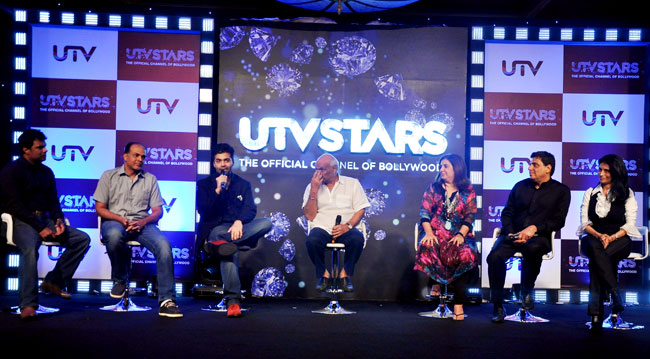
    From Left to Right – MK Anand (MD, Media Networks), Ashutosh Gowariker, Karan Johar, Yash Chopra, Farah Khan, Ronnie Screwvala (MD, The Walt Disney Company India), Zarina Mehta at the launch of UTV Stars, last year


    By Meghna Sharma


    On August 19, the world of glamour and glitz had one more reason to celebrate – UTV Stars turned one. The Bollywood and lifestyle channel launched last year by the network promised to give the audience more than what the current lot of channels were offering.


    Nikhil Gandhi

    “UTV is synonymous with Bollywood. Having revolutionized the movie production space over the past few years, it seemed logical for us to launch a Bollywood channel. We believe that we have an edge over the channels because of the backing and our enviable access to the Industry. We provide the viewer with innovative content and showcase the land of Bollywood from the inside as opposed to an outsider’s perspective. We are the insiders and very much part of the industry that we’re showcasing,” said Nikhil Gandhi, the business head of the channel, describing what differentiates it from the rest in the genre.


    The channel takes immense pride in offering the audience outstanding and unique content. “Right from its inception, UTV Stars has been offering the average viewer path breaking and innovative Bollywood content, thereby bringing Bollywood closer to the audiences. Before launch, Bollywood channels were mostly all about music and news formats. But ever since we’ve launched, we’ve emphasized a lot on original content that has resonated very well with the audiences,” explained Mr Gandhi.


    But that’s not enough; it strives towards moving beyond TV too. In less than two months of launch, the channel took the brand on ground via prestigious associations with ‘The People Best Dressed Show’, Lap Buddh Circuit After Parties, ‘Cosmopolitian Fun Fearless Awards’ and FICCI FRAMES Excellence Awards as official broadcast partners. And in March this year, the channel went on to launch country’s iconic landmark – Walk of Stars. “The response to the initiative has been overwhelming, from both, the film fraternity and the audiences. And yes, we do plan to launch in other cities. We’re planning to launch in Gurgaon at the Kingdom of Dreams in association with Wizcraft, following which we also plan to take the property international”, said Mr Gandhi.


    Speaking on the marketing spend by the channel, Mr Gandhi said, “Marketing Activities are of utmost importance and we have indulged in several marketing activities right since launch. During launch, the channel was backed by an extensive outdoor brand campaign with the messaging ‘Touch,Feel, Believe’ endorsed by all the A-listers of Bollywood. Our shows Live My Life and Up, Close and Personal with PZ, were also backed by extensive outdoor campaigns. Also, with a view to strengthen the brand presence beyond television, we indulged in several prestigious on ground associations as the exclusive broadcast partner. In fact, our most recent marketing activity was an on-ground association with IIFA 2012 wherein we took ‘Walk of the Stars’ global.”


    The channel was launched simultaneously in India and Middle East. And, in less than a year, the channel was launched in UK as well. It plans to continue to grow from strength to strength in future by broadening our horizons and making inroads into other markets.


    “The channel will continue to create outstanding content and strive towards continue to build itself as a 360-degree brand. Ie, a brand beyond TV,” concluded Mr Gandhi on an optimistic note.


  • Shailja Vohra: National Director-ESP Maxus (Branded Entertainment)

    (Experience: 13 years)


    Shailja Vohra has been part of the Television Industry for over 13 years. Her work has taken her to over two continents Europe and Asia for content sourcing. She has hands-on experience of television programming, content strategy, acquisition, advertising revenue generation and consulting for the NGO sector.

     

    She has a special passion for TV and film acquisition and has extensive knowledge of the same. Being part of the start-up teams of new ventures, she has successfully acquired content for several channels. Shailja has a unique perspective and first hand experience of lifestyle, infotainment and word movies space. She has an innate awareness of cultural sensitivities and audience needs, and the expertise required to run the programming of a Pay TV channel. Shailja is a strategist and planner, and is a detail-oriented professional, organized and systematized in her approach to work.


    Prior to ESP Maxus, Shailja has worked for Fox Traveler channel where she headed the Acquisition responsibilities for the Network. Prior to that, she was appointed as the Acquisition and Operations head for National Geographic & Fox International Channels in India. As a special assignment she was instrumental in sourcing the best history and travel content for Fox History and Entertainment and Fox Traveler channel (first Travel channel of India). There she was responsible for laying down the acquisition guidelines and content strategy. In 2009, she did content consulting with FOX channel, wherein she devised content strategy for Fox History and Entertainment channel. In 2007 she turned her focus to movie genre. She got involved in programming, producing both live and filmed television content for UTV World Movies (India’s first international movie channel). Earlier in 2004, Shailja turned her passion towards her true calling – Programming for Discovery Channel, Animal Planet. Later she was assigned the senior role of Acquisition and Programming for Discovery Travel and Living channel (TLC- India’s first lifestyle channel).


    As for her entry into them domain, Shailja started her career media in T.V. advertising revenue generation with Zee Networks and later continued in the same field with Discovery Channel and Animal Planet till the end of 2003. In the short span of 4 years she was a star performer. She was duly recognized by the company at regular intervals, making her one of the youngest managers in the company. Her style was well appreciated by the industry which was a mix of innovation and research. She has good business sense and is an ace at negotiating the best deals. In that period she managed to generate many ideas and trivia’s for her clients base to name a few; Nestle, Goodyear, Samsung, Hughes Software, Canon.


    Apart from work, she has tremendous liking to a few hobbies like writing poems (she has a collection of over 100 poems), penning down her thoughts in her blog, charcoal sketching, yoga instructor at the Art of Living Foundation, etc.


  • Rajni Menon: Vice President, Carat India

    (Experience: 11 years)


    Rajni is a graduate from MICA with experience across functional areas like Strategic Planning, Buying, Digital Integration etc. she is currently heading Strategic Planning, Trading & Training in Aegis Media. Her earlier roles include National Trading Head for Unilever at Mindshare Fulcrum,  Investment lead on PepsiCo, Motorola, Castrol, and Onida.


    In the past, Rajni Menon has worked with GroupM, Lintas Media Group, McCann Erickson, Zenith Optimedia and Madison Communications, on brands such as Maruti Suzuki, Coca Cola India, Reckitt Benckiser, Gillette and Bacardi.


    Sharing her tryst with media she said: “When I was entering the world of advertising, Media was just coming into its own and offered immense possibilities of new thinking. Even after more than a decade it is still evolving and there’s something new to learn every day.”