Author: mxmadmin

  • Das ka Dum by Dr Bhaskar Das | Was reading this: Experiments show brand perceptions are influenced by where they are seen. True? Does this mean that environments considered ‘toxic’ will not/never get premium brands?

    Bhaskar DasA fairly detailed question, and a fairly detailed answer. Without further ado, here’s the June 9 edition of Das ka Dum by Dr Bhaskar Das…


    If you wish to access the archives, please go to the Das Ka Dum tab on the website’s top navigation bar.


    Q. Was reading this somewhere: Experiments show brand perceptions are influenced by where they are seen, so ‘high quality’ ad environments are crucial to premium brands. True in the Indian context? Also, does this mean that environments that aren’t considered ‘high quality’ or ’toxic’ will not/never get premium brands?


    A. My first generic response to your query is that CONTEXT MATTERS. In today’s ubiquitous digital ecosystem, advertising landscape is altering at a frenetic pace and the relevance of context has become all the more important.


    Historically, research has shown consumer perception of ads and brands is influenced by the quality of an environment. With advancements in machine learning and AI, content evaluation now provides insight into the sentiment conveyed by a given environment of a brand’s communications.


    Why so? The classical model of media planning and buying takes into account the quantitative metrices of calculating ROI for any communication investment. But that is not enough. Many qualitative parameters do impinge on the final decision-making. Where the communication is seen is one of the key considerations for the placement of communication. Here, general audience perception matters a lot. Ultimately a conducive and celebratory context induce consumption, apart from generating brand recall and reinforcing confidence in the brand. A so-called ‘toxic’ or mentally distasteful/ agitating context generally discourage a celebratory mindset that is sine qua non for making a positive impact on consumer mind. As they say, a Brand is known by the company it keeps or in the context it is seen.


  • Technology: Nature’s Catalyst for Human Evolution


    By Ashoke Agarrwal


    Ashoke AgarrwalPre-script: My remit is to write a column on the interface of technology and marketing. This fortnight I take a step back and take a look at the interface of technology and modern civilisation of which marketing is small subset.


    The doom and the gloom hang heavy over the world these days— the reality of climate change, the increasing social and cultural divide within and across nations, a naggingly persistent pandemic and the spectre of war and economic hardship.


    An antidote to the doom and gloom is to take the long view.

    Take technology, for instance.


    Many cite technology as a critical factor driving the crises facing humankind. The agriculture and industrial revolution fuelled a consumerist, rapacious society overburdening the earth. The resultant destruction of animal habitats and air travel makes zoonotic pandemics inevitable. And, of course, the Internet and social media divide society into mindless tribalism and parochialism. And new, advanced weapons promise to make the wars of the 21st-century ultra-destructive. And so on. The charge sheet against technology is long.


    So much so, the trope among run-of-the-mill science fiction writers is to imagine a dystopian future for humanity: a dog-it-dog, bleak Mad Max world.


    Peel away these layers of techno-pessimism, and you will find a view that puts technology, at the core, outside the order of nature. A belief that sees technology as an aberration fuelled by human ambition, greed and hubris.


    Allow me to present an alternative view.

    What if we view technology as an integral part of human evolution?

    In his pathbreaking bestseller, A Brief History of Humankind, Yuval Noah Harari presented a compelling insight into two revolutions that shaped early human history.


    The first he called the ‘Cognitive Revolution’ – was propelled about 70,000 years ago by changes in the brains of homo sapiens that enabled the emergence of a language that allowed for conversations that ranged beyond the signalling of approaching danger and of the availability of food. According to Harari, this significant development initially led to the emergence of gossip as a human occupation and, in time, fiction creation. An anthropologist could classify both activities as unproductive and harmful in the initial phase. Much as a sociologist is liable to label the effects of social media today.


    However, in Harai’s telling, taking a longer and deeper view, the emergence of gossip allowed bonds of trust to form and for communities to emerge. And the ability to create and propagate fiction is at the heart of the uniquely human ability to create myths and intangible entities – the creation and propagation of religion, nations, education and business entities.


    About 30,000 years ago, the Agriculture Revolution happened. With the widespread cultivation of wheat, rice and potatoes, humankind starts transitioning from being foraging and thus nomadic bands to settling down into communities around farmlands. Contrary to popular belief, the Agriculture Revolution’s early effects were to reduce the quality of life drastically. Foraging offered excitement, a much more varied and nutritious diet, and a better shot at survival than the boredom and near-slavery of farming, the restricted diet, and the ever-present threat of famine. Yet, many thousands of years later, it is acknowledged that the Agriculture Revolution was much more than that. Without it, humankind would not have become the dominant species. And human civilisations, with large swathes of their population freed from foraging for food, could rise through the pursuit of commerce, the arts, and the sciences.


    The Scientific Revolution is not more than 500 years old. The internet is just 50 years old, and AI and biotech are still in relative infancy. So, could it be that the immediate effects of this revolution are just the preliminary and passing results of the latest step-up in human evolution?


    It took between twenty to thirty thousand years for the long-term evolutionary effects of the Cognitive Revolution to be fully realised.


    The Agriculture Revolution took less than ten thousand years. Evolution is speeding up. Will the ongoing Scientific Revolution fully realise the next stage of human evolution in the next two to three hundred years?


    Given the ills of today, many would assert that modern technology has only exacerbated inequalities and inequities and brought the planet to the brink of disaster.


    That, I think, is an ultimately self-defeating way to look at it.

    Going by the past epochs of humanity’s history, we must believe that the Scientific Revolution heralds humankind’s leap into a new orbit.

    Perhaps technology is a dance – two steps forward, one step back, three steps ahead.


    Perhaps the threat of climate change will ultimately result in the acquisition of geoengineering – the ability to effect change at a planetary scale, not over centuries but in decades. Perhaps the next economy of sustainable consumption will be driven by sustainable, on-demand, accretive manufacturing that will destroy inequalities based on means of production and consumption. Perhaps genetic engineering and symbiosis of man and machine will give every individual the means to discover and fulfil their potential. Perhaps space exploration will reach a stage where national boundaries here on earth will seem meaningless. Perhaps physics will solve the mystery of consciousness, and humankind will dissolve divisive religious myths.


    Perhaps as Yuval Noah Harari posits in his book, humankind, on the back of the Scientific Revolution, will graduate in a hundred or two hundred years from being Homo Sapiens to Homo Deus – a godlike species with seemingly magical powers and flirting with immortality.


    All that could be in humankind’s grasp, but only if we let the dreamers among us dream and strive. And not given to the doubts and the gloom as they will arise every now and then. And allow technology to perform its role as nature’s catalyst for human evolution.


  • Nukkad By Stage launches new commercial in ‘Desi Andaaz’

    By Our Staff


    Nukkad by Stage, a infotainment media platform, has launches a new digital ad commercial to create awareness of its credo ‘Desh Ki Baat, Desi Andaaz’.


    Said Runa Sinha, Vice President: “The commercial is a refresh of the unique offering of Nukkad which helps brands build trust ,awareness leading to conversations amongst the Bharat audience. This will be coupled now with the other assets/ offerings of Nukkad which has a significant following.”


    Added a communique: “Nukkad by Stage offerings reach 536 million Indians who spend an average of 24 min per day on video consumption. Hindi is the primary content language as 450 million Hindi speakers in India are twice as big a market as our country’s 220 million English speakers. Keeping that in mind, Nukkad has a total of 130M+ Reach, 50M+ Views, 10M+ Engagement, 110M+ Watch Time. Following are the assets (other pages) of Nukkad By Stage: Nukkad Foodmate, Geeksmate, Duniya Digest, and Nukkad Sports with a total audience of more than 10 million.” The company was founded by Vinay Singhal, Parveen Singhal and Shashank Vaishnav in 2019.


    https://www.youtube.com/watch?v=VxZn5Kzqxgg


  • Haldiram Snacks starts search for a creative agency

    By Our Staff


    Haldiram Snacks has embarked on a search for a creative agency. It is welcoming pitches from creative agencies in its first-ever such move. The F&B leader is looking to onboard an agency that works hand-in-hand with its marketing goals.


    Said Divya Batra, Head of Marketing, Haldiram Snacks: “We are excited to open pitching from creative partners until we zero down on one that suits our needs the best. Whether you’re a global agency or a boutique one, share your vision for the heritage brand with us, in a brief way. The agency will be working closely with Batra to achieve marketing targets and increase visibility in alignment with the brand’s larger vision.”


  • TV9 appoints Deep Upadhyay, Interim Editor, Convergence & Strategy

    By Our Staff


    TV9 Group has appointed  Deep Upadhyay as Interim Editor, Convergence and Strategy. As part of this, Upadhyay takes over as the Interim Editor of TV9 Hindi and English websites respectively. He will also coordinate with other group regional digital assets.


    The Group is effecting certain strategic changes at the leadership level to ensure TV9 Digital emerges as a champion, notes a communique.


  • Seagull Advertising launches new startups

    By Our Staff


    Seagull Advertising, a Pune-based integrated marketing communications agency, hosted the “Seagull Brand Launch showcase” event on June 6 in Pune to showcase the launch of new start-ups like Redeemption, crypto token platform , Toilet Seva, a GPS -based tech solution for users to discover hygiene and safe toilets nearby, and Fundook, a high-tech sport.


    Said Sameer Desai, Managing Director of Seagull Advertising: “It has always been an objective of Seagull Advertising to be the go-to Startup accelerator in Pune. We are honoured to be a part of the success journey these new brands are aiming for. We have always helped brands to establish their niche in the market and I am sure with time all these brands shall scale new heights which we are excited to witness in the near future.”


  • ASCI releases guidelines on gender stereotypes

    By Our Staff


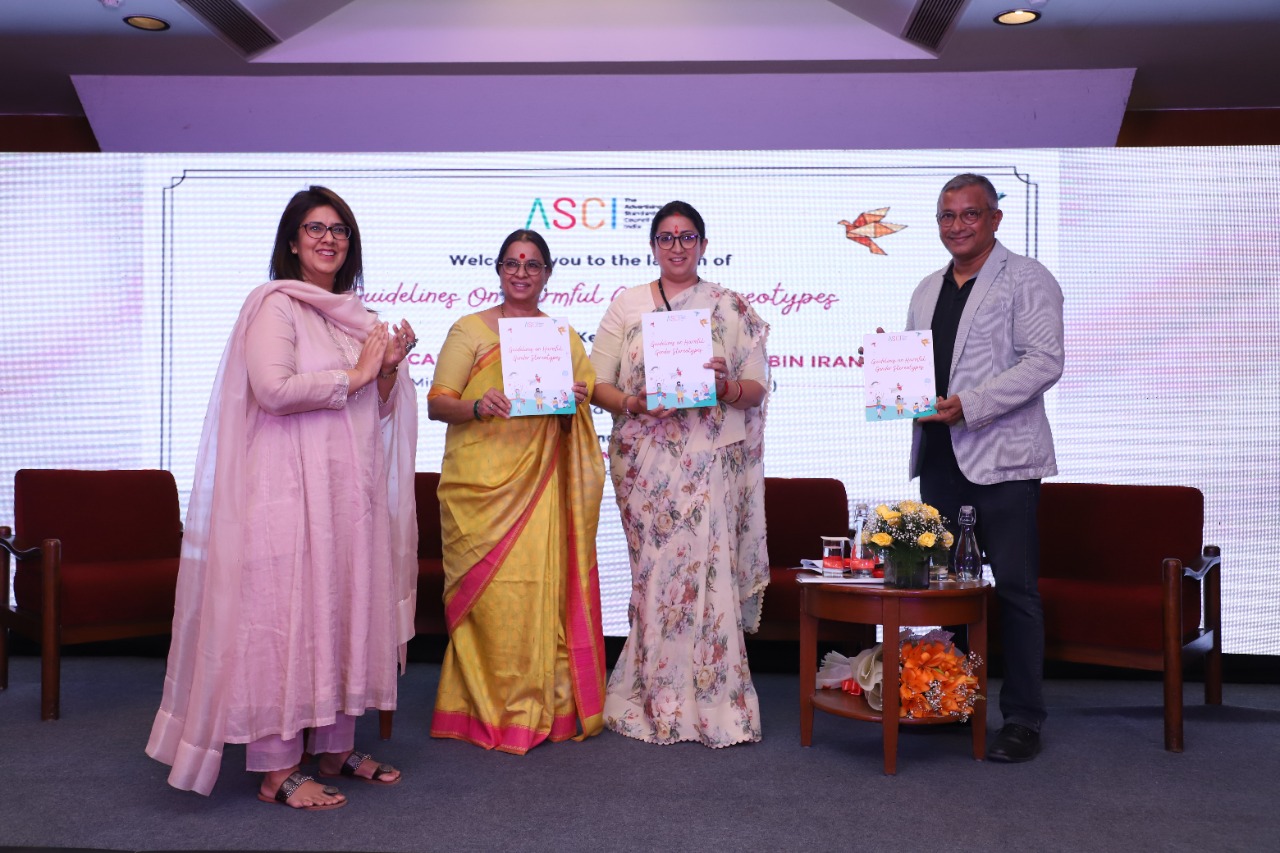
    The Advertising Standards Council of India (ASCI) has followed up the launch of its GenderNext report in October 2021, a study by ASCI and Futurebrands, with the release of guidelines that guard against harmful gender stereotypes. The guidelines were released at an event held in Delhi presided over by Union Minister for Women and Child Development Smriti Irani.


    While the guidelines focus on women, they also provide pointers for depiction of other genders.


    The guidelines, encourage advertisers and creators to deploy the SEA (Self-esteemed – Empowered – Allied) framework that guides stakeholders in imagining as well as evaluating portrayals of gender in their advertising by building empathy and aiding evaluation, as well as the 3S framework, which provides a checklist to guard against tropes and implicit stereotypes that creep into advertising.


    These frameworks can prove to be extremely useful for marketing and advertising professionals to improve their advertising ROIs.


    Speaking at the launch of the guidelines on harmful gender stereotypes, Irani said: “While there are women who are happy with the incremental change that has been made in the advertising industry, women of my generation are a bit more impatient. It is time not only for the men but also for the women in the advertising industry to step up. This is a very important move, and I believe that there is a long journey to be undertaken to turn the thinking but it’s required now. Work in this area must move with more and more speed and organisations like ASCI should lead this, the action beginning with its member base.”


    Added Subhash Kamath, Chairman, ASCI: “The new guidelines were created after extensive consultation with many partners- both from industry, as well as civil society organisations, including the Unstereotype Alliance and UNICEF. These guidelines are a big step forward in strengthening ASCI’s agenda to shape a more responsible and progressive narrative. We are grateful to the government and Shrimati Smriti Irani for supporting these guidelines, and to the many partners who have been with us on this journey.”


    ASCI’s Guidelines on Harmful Gender Stereotypes in advertising:

    Note:

    1. ASCI will consider an ad’s likely impact when taken as a whole and in context.

    2. ASCI will consider stereotypes from the perspective of the group of individuals being stereotyped.

    3. The use of humour or banter is not likely to overcome the underlying issue of such harmful stereotypes.

    4. The guidelines do not intend to prevent ads from featuring:

    5. glamorous, attractive, successful, aspirational or healthy people or lifestyles;

    6. one gender only, including in advertisements for products developed for and aimed at a particular gender;

    7. gender stereotypes as a means to challenge their harmful effects.


    Advertisements must not include gender stereotypes that are likely to cause harm or serious or widespread offence.

    1. While advertisements may feature people undertaking gender-stereotypical roles e.g., a woman cleaning the house or a man going to an office, or displaying gender-stereotypical characteristics, for e.g., a man being assertive or a woman being sensitive to others’ needs, they must not suggest that stereotypical roles or characteristics are:

    :: always uniquely associated with a particular gender;

    :: the only options available to a particular gender; or

    :: never carried out or displayed by another gender(s).

    1.1 Advertisements that are aimed at / depict children may target and feature a specific gender but should not convey that a particular children’s product, pursuit, behaviour, or activity, including choice of play or career, is inappropriate for one or another gender(s). For example, ads suggesting that a boy’s stereotypical personality should be “daring” or that a girl’s stereotypical personality should be “caring”, or someone chiding a boy playing with dolls or girls from jumping around because it is not the typical activity associated with the gender, are likely to be problematic.


    2. While advertisements may feature glamorous and attractive people, they must not suggest that an individual’s happiness or emotional wellbeing depends on conforming to these idealised gender-stereotypical body shapes or physical features.


    3. Advertisements should not mock people for not conforming to gender stereotypes, their sexual orientation or gender identity, including in a context that is intended to be humorous, hyperbolic or exaggerated. For example, an ad may not belittle a man for carrying out stereotypically female roles or tasks or make fun of a same-sex relationship.


    4. Advertisements should not reinforce unrealistic and undesirable gender ideals or expectations. For example, an advertisement must not depict a man with his feet up and family members creating a mess around a home, while a woman is solely responsible for cleaning up the mess, or a woman overly grateful for the man helping her in everyday chores. Similarly, a woman returning from work may not be shown as solely responsible for doing household duties while others around her are at leisure.


    5. An advertisement may not suggest that a person fails to achieve a task specifically because of their gender e.g., a man’s inability to change nappies; or a woman’s inability to park a car.  In categories that usually target a particular gender, care must be taken to not depict condescension towards any other gender or show them as incapable of understanding the product or unable to make decisions. This does not prevent the advertisement from showing these stereotypes as a means to challenge them.


    6. Where an advertisement features a person with a physique or physical characteristics that do not match an ideal stereotype associated with their gender, the advertisement should not imply that their physique or physical characteristics are a significant reason for them not being successful, for example in their romantic, social or professional lives. For example, an ad may not suggest that a man who is short, a woman who is dark, or any individual who is overweight has difficulty finding a job or a partner due to this aspect of their physique.


    7.. Advertisements should not indulge in the sexual objectification of characters of any gender or depict people in a sexualised and objectified way for the purposes of titillating viewers. This would include the use of language or visual treatments in contexts wholly irrelevant to the product.  For example, an online takeaway service featuring an image of a woman wearing lingerie lying back in a provocative pose behind various fast-food items would be considered problematic.  Even though the image may not be sexually explicit, by using a suggestive image of a woman that bears no relevance to the advertised product, the ad would be considered objectifying women by presenting them as sexual objects, and therefore is a gender stereotype that is likely to cause harm.


    8. No gender should be encouraged to exert domination or authority over the other(s) by means of overt or implied threats, actual force or through the use of demeaning language or tone. Advertisements cannot provoke or trivialise violence (physical or emotional), unlawful or anti-social behaviour based on gender. Additionally, advertisements should not encourage or normalise voyeurism, eve-teasing, stalking, emotional or physical harassment or any similar offences. This does not prevent the advertisement from showing these depictions as a means to challenge them.

     

  • Vega assigns marketing mandate to Ants Digital

    By Our Staff


    Vega has appointed Ants Digital as its digital, brand and performance marketing partner for an upcoming vertical. The agency will be responsible to launch this vertical across digital and social platforms and create innovative campaigns for the B2B market.


    Eiti Singhal
    Eiti Singhal

    Said Eiti Singhal, Chief Marketing Officer, Vega: “As part of our expansion plan for this financial year we are looking to broaden our horizon into the B2B space. We will be embracing the strong fundamentals and market understanding from the core business yet creating a new niche by delivering quality, precision, and the widest assortment of professional tools to this creator community. We wanted to partner with an agency that understood how to link a powerful creative idea and create a meaningful proposition out of that. Thrilled to have ANTS join us on this journey.”


    Sanjay Arora
    Sanjay Arora

    Added Sanjay Arora, Chief Executive Officer, Ants Digital: “VEGA as a strong legacy brand is an asset to our portfolio. We are super excited to put some revolutionary ideas into action for their new vertical. By developing new age, innovative strategies by constantly studying and recognizing industry bottlenecks, we are exponentially growing the B2B push for many brands. With the launch of this new premium vertical, we have the opportunity here to scale Vega’s product offerings and consumer acumen by building a robust community of creators & a strong digital and retail presence.”


  • Das ka Dum with Dr Bhaskar Das | You aren’t originally from Mumbai? Haven’t you ever thought about moving out from here, far from the rate race. Kolkata, Ahmedabad or even nearby Pune?

    Bhaskar DasA Friday question, but also because we keep getting asked as to why we don’t move out of the city. So to help clear the cobwebs in our head, we asked Dr Bhaskar Das the question for the June 10 edition of Das ka Dum. Read on…


    If you wish to access the archives, please go to the Das Ka Dum tab on the website’s top navigation bar.


    Q. You aren’t originally from Mumbai? Haven’t you ever thought about moving out from here, far from the rate race. Kolkata, Ahmedabad (where you spent time) or even nearby Pune?


    A. In the grand design of the Almighty, geography is an illusionary attachment to a location. We feel we shall be peaceful if we go back to our roots. But is it really so? Peace happens when one is happy with one’s mental abode and geography plays a least role in it. Job, career, health, etc often compel people to change location but in the philosophical and natural sense, one’s roots are where one feels rooted.


    It’s true for me. I don’t know about others. When I love the soil of the earth, I love the local. I am geography0neutral as the world is my playing field. I am in the wind, I am in the shadows, I am in the fragrance of the flowers, I am in every season, I am the dust, I am in you. There is no “OTHER”. There is only “WE”.


    I am rooted in pancha bhoota (just clarifying: Pancha Bhoota includes elements  which, according to Hinduism, are the basis of all cosmic creation. These elements are: Prithvi, Varuna, Jal, Agni, Vayu and Akasha). Now why do I need another rooting. My rooting is in Pancha bhoota.


    Existence is geography-neutral. Love and harmony are the only roots in earthly existence.


    I am sure you won’t like the answer and must be wondering why did you ask the question. But when I have no question, how do I answer?

  • Capri Global ropes in Pankaj Tripathi as brand ambassador

    By Our Staff


    Capri Global Non-Banking Financial Company (NBFC) has roped in actor Pankaj Tripathi as the brand ambassador. As part of the two-year association, he will appear in multimedia campaigns for the brand and raise awareness about the products and services through direct consumer outreach programs.


    Speaking about the association, Rajesh Sharma, Director, Capri Global, said, “Capri Global’s vision to ease credit access for underserved and unbanked people, thus act as a force of change for the financial inclusivity. As we are growing, the Group aims to reinforce brand equity and strengthen brand recall in rural India. The regional connection coupled with the immense popularity of Mr. Tripathi will help us create solid footholds and increase brand recall as well as market share. Hailing from rural India, Mr. Tripathi has started his journey from the grassroots and made a mark in the film industry. He represents our key customers’ aspirations who want to start from scratch and envision achieving success. We believe he is a good match for our brand advocacy. Our customer segment would be able to relate with him and understand the importance of struggle and fame in their life.”


  • Sony Yay launches pet rescue agency at KidZania

    By Our Staff


    Sony channel has announced its partnership with KidZania to launch a unique Pet Rescue Agency.


    Said Sujoy Roy Bardhan, Head of Marketing, On Air Promotions and Licensing, Sony Pictures Networks India, Kids’ Genre: “Pet welfare is extremely close to my heart. At Sony Yay it has been our constant endeavor to empower kids and further serve the purpose of reaching out to our audiences. The launch of the Pet Rescue Agency not just helps us to take another step in the same direction, but also helps us inculcate the right approach into the future citizens of the country.”


    Added Prerna Uppal, Chief Partnership Officer, KidZania: “KidZania has always envisioned providing children with an all-rounded multi-dimensional edutainment that contributes to the overall growth of their personality. By partnering with Sony Yay, a brand that believes in business with purpose, we not only aim at enabling children to explore what it is like being a pet rescuer but also instill in them values like care and compassion as well as a sense of responsibility towards pets. We believe that inculcating such crucial values at a young age can go a long way in empowering kids to build a better world for themselves in the future.”


  • Ogilvy’s campaign for JSW Steel

    By Our Staff


    JSW Steel, the flagship company of JSW Group, has unveiled its new campaign ‘Always Around’. The campaign, conceptualised by Ogilvy will be rolled out in an episodic manner through a 360-degree integrated campaign including TV, Digital, OOH etc.


    Commenting on the latest campaign, Parth Jindal of JSW Group, said: “Steel is all around us and as consumers, we do not realize how central Steel is in modern living. Our latest brand campaign ‘Always Around’ was conceptualized to communicate the key role JSW Steel plays in our everyday lives and it originated from multiple stakeholder insights. The core thought for the campaign was to showcase our brand philosophy in a contemporary way.”


    Added Ogilvy India Chief Creative Officer Sukesh Nayak: “JSW Steel today is a part of almost everything in our lives, from packaging to mobility. ‘Always Around’ is a platform for the same. The visual manifestation of the idea beautifully brings to life how JSW is truly all around us.”