Author: mxmadmin

  • KFC rolls out new TVC campaign to celebrate cricket

    By Our Staff


    As cricket lovers from across India unite to cheer on their favourite teams (some in vain, if their fav team is Mumbai Indians), KFC’s new film hits it out of the park with Cricket Hai, Let’s KFC.


    Speaking about the TVC, Moksh Chopra, Chief Marketing Officer, KFC India, said: “Whatever be the occasion, KFC is the perfect partner to induce that extra ‘crispiness’ into the celebration. Cricket is one such occasion that unites fans across age or gender, as they give into the excitement of the game and cheer on. Add a Bucket of KFC chicken to that and you have a match winner! Aptly demonstrated in this film with the quirky interplay between a grandmother & grandson; their banter over the match and fight over a piece of KFC chicken is as real as it gets. So put on your game face, and let’s KFC!”


    Added Ritu Sharda, Chief Creative Officer, Ogilvy: “We’re super excited about our new ‘Let’s KFC’ campaign. It beautifully illustrates how KFC fits in deliciously with every occasion. In fact, every occasion is even more special when you have KFC around. The first in the series is ‘Cricket Hai. Let’s KFC.’ Like cricket is celebrated across India by entire families from grandparents to grandchildren, so is KFC. The film is a must-watch and KFC is a must-eat. Don’t forget, shaam ko match hai, let’s KFC!”


  • Zee appoints Mahesh Pratap Singh as Head of Investor Relations

    By Our Staff


    Zee Entertainment Enterprises Ltd has appointed Mahesh Pratap Singh to head Investor Relations, spearheading the engagement with the investor and analyst community.


    In this role, Singh will report into Ronit Gupta. President-Finance & Investor Relations, Zee, and will be based in Mumbai.


  • He’s back! Uday Shankar teams up with James Murdoch to invest Rs 13.5kcr in Viacom18

    By Our Staff


    It’s official. Reliance and Viacom18 have announced a strategic partnership with Bodhi Tree Systems, which is a platform of James Murdoch’s Lupa Systems and Uday Shankar, to form one of the largest TV and digital streaming companies in India.

    Bodhi Tree Systems is leading a fund raise with a consortium of investors to invest Rs 13,500 crore in Viacom18, to jointly build India’s leading entertainment platform and pioneer the Indian media landscape’s transformation to a “streaming-first” approach. Viacom18 owns and operates the suite of Colors TV channels and OTT platform, Voot.

    Reliance Projects & Property Management Services Limited, a wholly-owned subsidiary of Reliance Industries which has significant presence in television, OTT, distribution, content creation, and production services, will invest Rs 1,645 crore. In addition, the popular JioCinema OTT app will be transferred to Viacom18. Paramount Global (formerly known as ViacomCBS), a leading global media and entertainment company which owns CBS, Showtime Networks, Paramount Pictures, Nickelodeon, MTV, Comedy Central, BET, Paramount+ and Pluto TV will continue as a shareholder of Viacom18 and will continue to supply Viacom18 its premium global content.

    Bodhi Tree Systems, a newly formed platform between Lupa Systems Founder and CEO James Murdoch and Uday Shankar, the former president of The Walt Disney Company Asia Pacific and former Chairman of Star and Disney India, will leverage the partners’ shared track record of building iconic businesses and shaping the media landscape in India and globally. Qatar Investment Authority (QIA), the sovereign wealth fund of the State of Qatar, is an investor in Bodhi Tree Systems.

    Speaking about the partnership, Mukesh D Ambani, Chairman & Managing Director of Reliance Industries, said, “James and Uday’s track record is unmatched. For over two decades, they have played an undeniable role in shaping the media ecosystem in India, Asia, and around the world. We are very excited to partner with Bodhi Tree and lead India’s transition to a streaming-first media market. We are committed to bringing the best media and entertainment services for Indian customers through this partnership.”

    Added Murdoch and Shankar: “We could not be more pleased to announce our new partnership. Our ambition is to leverage technology advances, particularly in mobile, to provide meaningful solutions to meet everyday media and entertainment needs at scale. We seek to reshape the entertainment experience across more than 1 billion screens.”

    The transaction is expected to close within six months and is subject to closing conditions and requisite approvals.

    Cyril Amarchand Mangaldas and Khaitan & Co provided legal advisory and documentation support to RPPMSL and Viacom18. PWC and BDO provided independent valuation of the Jio Cinema business and Viacom18; Citi and HSBC acted as financial advisors to TV18 and RPPMSL respectively. AZB & Partners was the legal advisor to Bodhi Tree while EY provided diligence services to Bodhi Tree. JSA was the legal advisor to Paramount Global.


  • Ashoke Agarrwal: Societal Distancing and Brand Strategy

    By Ashoke Agarrwal


    Ashoke AgarrwalOver the past two years, social distancing has become a part of the lexicon. As the pandemic fades into an endemic, the term will, I believe, continue to do so, even if only as a part of the stand-up routines and “three guys walked into a bar” kind of jokes.


    However, another kind of distancing has been a part of human society for over three decades now and continues to gather force. I call it Societal Distancing (SD).


    SD is the force that, in the modern world, is increasing the separation between families and individuals. With the coming of affordable air travel, telecom and the internet, The Economist magazine, in the early years of the millennium, proclaimed the death of distance. Yet, paradoxically, even while geographical distances have shrunk and communication channels ever open, the socio-cultural and socio-economic forces that created communities of purpose have weakened.


    At the core of this weakening, I believe, is the media’s changing role.


    In the last three decades of the 20th century, mass media in every society grew in influence and occupied a central role in socio-cultural and even socio-economic life. In India, for example, a handful of newspapers, magazines, and news channels reached vast swathes of people and established a common datum of socio-economic and socio-political truth. An understanding of the gestalt that everyone, more or less, agreed upon formed the basis of social interactions. At the socio-cultural level again, a handful of popular films and entertainment channels had everyone humming the same film music tunes, gossiping about the same superstars and debating the same plot twists in the latest potboilers.


    Then, in the dying years of the 20th-century, shifts in technology and economics led to an explosion of mass media. As this happened, news media took on partisan positions. Whether this was primarily due to the economic necessity of differentiating oneself in an increasingly crowded market or by society itself fragmenting on more partisan lines is up for debate. In a way, a classic chicken and egg problem. It probably was both factors interacting and reinforcing each other.


    Even in culture and entertainment, proliferation leads to more refined segmentation in terms of language and demographics.


    The upshot was that society lost a common understanding of the world and the issues confronting it. This understanding previously formed the platform for interaction, agreement and sometimes civilly agreeing to disagree.


    With this fraying began the era of Societal Distancing (SD).


    When social media gathered force in the early years of the Millennium, many thought it would take the place of mass media of yore and provide the platform for everyday discourse and community building.


    The Arab Spring of the early 2010s, with public uprisings against authoritarian regimes in Tunisia, Libya, Egypt, Syria, Yemen and Bahrain, seemed to prove to many the positive power of social media. But, unfortunately, the optimism soon faded, as did the uprisings.


    Today, social media is seen as the primary incubator of fissiparous tendencies in society and a haven of conspiracy theories and bigots.


    In this age of SD, the individual is either an alienated loner or belongs to an amorphous tribe with social, political and cultural paradigms that put one tribe in a constant state of conflict with other tribes.


    The core premise of the art and science of marketing and brand-building is to give the consumer what he wants.


    In the pre-SD age, basic demographics – age, gender, social class, education level, occupation, income and location – would reasonably predict their lifestyle, attitudes, consumption behaviour and aspirations.


    This principle does not hold in the SD age.


    Nevertheless, most marketing and brand managers seem to ignore this fact. As a result, marketing, product, and brand strategies are still primarily based on demographics-based segmentation. With the rise of digital advertising, marketing communication budgets were beginning to shift towards behaviour-based targeting. However, with increasing privacy-enforcing regulations like GDPR and the move by Apple to enforce a no-tracking default rule on its devices, the power of digital advertising to target behaviour is weakening. Therefore, it seems that brands and marketers will, in the post-cookie world, get back to marketing communication budgets mainly focused on demographic segmentation.


    The efficacy of demographic segmentation is likely to fall further as Generation Z becomes a key target. The two characteristics of Gen Z that should be of primary interest to marketers are:


    :: They are a generation more aware of marketing than any previous generation. As a result, Gen Z constantly decodes all marketing messages’ intent and consciously discards all so-called “hidden persuaders”.


    :: Their primary goal in life is to gather unique experiences and experiment with varied self-identities. In a way, Gen Z aspires to hyper-individualization of a fluid self.


    So how is marketing and brand strategy respond to the increasing inefficacy of traditional approaches to segmentation and messaging?


    The answer lies in adapting one-to-one, fully customized targeting as the principal marketing communication mode. Mass targeting should, in this scenario, be used only as a brand awareness and recognition tool.


    The digital age’s actual yet unexploited marketing promise allows for a cost-effective platform to nurture and build informed one-to-one interactive communication with individuals at scale.


    With the maturing of AI, the potential efficiency and effectiveness of dynamic one-to-one communication will further improve. In an earlier column in MxMIndia, I have written about Concierge Intelligence (CI).


    The coming of CI will make the individual an equal partner in communication with brands enabling her to become an initiator of one-to-one contact with brands and facilitate context-rich conversations.


    I have outlined the above strategies that can enable marketing to deal will the SD age. However, the world should make a more significant effort to move past the SD age in the broader societal context.


    In his seminal book – “The Third Pillar: The Revival of Community in a Polarised World” – Raghuram Rajan outlines some prescriptions toward that end.


    However, the age of SD is upon us and is likely to last for decades. And brands that adapt their strategies to the SD era are likely to be the outright winners.


    Ashoke Agarrwal is a veteran advertising professional with around four decades in advertising and marketing services. Agarrwal, a chemical engineer from IIT Mumbai and a postgraduate from IIM Bangalore, is a pro-entrepreneur with past and current ventures in market research, advertising, CGI, e-learning and brand consultancy. He writes on MxMIndia every other Thursday. His views here are personal.


  • OMG unveils second edition of digital bootcamp

    By Our Staff


    Omnicom Media Group returns with the second edition of its Digital Bootcamp to train and nurture a bevy of digital marketing acolytes, with a focus on media planning this time around. The OMG Digital Bootcamp will focus on helping young graduates hone their craft and ultimately give them a crucial head start in the digital marketing space. The paid internship program has been launched once again with the collaborative efforts of Executive Upskilling platform, Eleves.


    Said Kartik Sharma, Group CEO, Omnicom Media Group, India: “Our continuing success, curiosity to explore new realms in media and the potential to become even better motivates us to constantly push the boundaries and set an example as a pioneering force in the industry. With this returning edition of the Bootcamp, we seek to attract even more bright minds who believe in creating a digitally sustainable future with zero limitations. Some of our best experts will serve in collaboration as a guiding force in empowering and nurturing upcoming talent.”


    Added Anand Chakravarthy, Co-Founder of Eleves: “We live in a very different world today than what it was even 3 years ago. As more brands and services move online to cater to the fast-growing internet population in India, Digital Marketing is key for their success. But this requires a practical perspective of digital platforms and how best to leverage them to build brands online. We are thrilled to partner with OMG and run the second batch of the Digital Ninja Bootcamp, where our faculty will give them hands-on and practical upskilling across key digital platforms.”


  • Das ka Dum with Dr Bhaskar Das | What does the fresh infusion of financial & intellectual capital by Uday Shankar and James Murdoch mean for Indian media?

    Bhaskar DasRumours have been rife for a few months now, but when the announcement came in on Wednesday evening, the industry went into a tizzy. The contours of the deal aren’t known yet, but let’s hear it from Dr Bhaskar Das in the April 28 edition of Das ka Dum. Read on…


    If you wish to access the archives, please go to the Das Ka Dum tab on the website’s top navigation bar.


    Q. What does the fresh infusion of financial and intellectual capital (in Viacom18) by Uday Shankar and James Murdoch mean for Indian media?


    A. As as a  practitioner in media space I can only guess  possible implications of this development. I can imagine  that this infusion of  investment will result in India’s dominant  entertainment platform getting robust-se bhi robust-er and lead the way  to a ‘streaming-first’ ( it has  already become one of the so called new normals) approach for the entity. As Viacom18 owns and operates the suite of Colors TV channels and OTT platform, Voot, it’s a no- brainer.


    I would also hasten to add that Reliance Jio is already a significant player in  television, OTT, distribution, content creation. With this partnership, even Jio would get many symbiotic advantages.


    Net-net, I am certain that this announcement of Bodhi Tree System would impart stratospheric Nirvana  to Viacom 18. And can one imagine the impact proportion of the  powerhouse when Messrs Mukesh Ambani, Uday Shankar and James Murdoch join hands?! I can’t of course. But as a consumer, I am delighted. The M&E industry might have to revisit Darwinian advice seriously.


    May I add that we could well see in Viacom18 the rise of a new star. No pun intended.


  • So will Viacom18 be the New Star?


    By Our Staff


    1,35,00,00,00,000.


    Phew that’s the number representing the investment that James Murdoch and Uday Shankar are making in Viacom18.


    The contours of the deal aren’t known at the time of writing. We don’t know what is the exact stake each party will hold, but Rs 13.5kcr is no small number.


    So is Viacom18 likely to be the new star, as veteran mediaperson and MxMIndia’s Das ka Dum mentor-columnist put it in the answer to our question of today (See Link)?


    It’s clear that the days of linear television are numbered. At least not in the form it is right now. Viewership of even regular entertainment, news and sports now happens via broadband. Yes, cable/DTH aren’t dead yet, but streaming is clearly where it’s all headed.


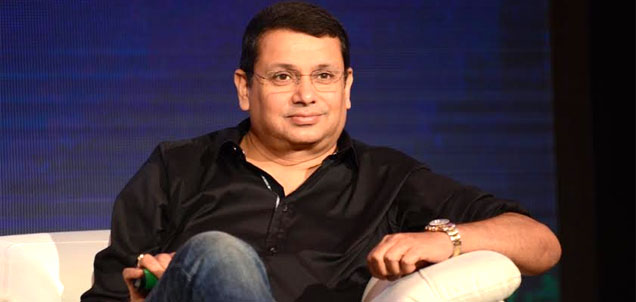
    And if there’s one person who can take some really bold decisions in the space it’s Uday Shankar, the former Disney and Star boss.


    So, as our report of last evening said: Reliance and Viacom18 have announced a strategic partnership with Bodhi Tree Systems, which is a platform of  Murdoch’s Lupa Systems and Uday Shankar, to form one of the largest TV and digital streaming companies in India.


    Bodhi Tree Systems is leading a fund raise with a consortium of investors to invest Rs 13,500 crore in Viacom18, to jointly build India’s leading entertainment platform and pioneer the Indian media landscape’s transformation to a “streaming-first” approach. Viacom18 owns and operates the suite of Colors TV channels and OTT platform, Voot.

     

    Reliance Projects & Property Management Services Limited, a wholly-owned subsidiary of Reliance Industries which has significant presence in television, OTT, distribution, content creation, and production services, will invest Rs 1,645 crore. In addition, the popular JioCinema OTT app will be transferred to Viacom18. Paramount Global (formerly known as ViacomCBS), a leading global media and entertainment company which owns CBS, Showtime Networks, Paramount Pictures, Nickelodeon, MTV, Comedy Central, BET, Paramount+ and Pluto TV will continue as a shareholder of Viacom18 and will continue to supply Viacom18 its premium global content.


    This is interesting as there is an additional investment from Reliance in the form of Rs 1645 crore and the JioCinema OTT app


    Bodhi Tree Systems, a newly formed company formed by Lupa Systems Founder and CEO James Murdoch and Uday Shankar, the former president of The Walt Disney Company Asia Pacific and former Chairman of Star and Disney India, will leverage the partners’ shared track record of building iconic businesses and shaping the media landscape in India and globally. Qatar Investment Authority (QIA), the sovereign wealth fund of the State of Qatar, is an investor in Bodhi Tree Systems. The finer details of the transaction is likely to close later the year (six months and is subject to necessary government approvals.

     

    Meanwhile, in the offices of Viacom18 in Mumbai, there is, as one staffer put it, cautious optimism. Optimism as it’s clear that the move will energise the organisation in more ways than one, and caution because the new Big(g) Bosses are no newbies to the business. They’ll be surely having a view on how things will be done.


    But first they need to know what the investment would mean for the company and the various businesses that it runs.


    For now, we could well see the rise (uday) of a new star!


  • Das ka Dum with Dr Bhaskar Das | Is it irresponsible of Sports TV to carry surrogates of alcohol and pan masala? After all, consumption of these products is hazardous to health?

    Bhaskar DasA question which we may have asked in the past, but given the number of ads of pan masala and alcohol around the IPL, we thought we should ask our Wizard with Words the question. Here’s Dr Bhaskar Das in the April 29 edition of Das ka Dum. Read on…


    If you wish to access the archives, please go to the Das Ka Dum tab on the website’s top navigation bar.


    Q. Is it irresponsible of sports television to carry surrogates of alcohol and pan masala? After all, consumption of these products is hazardous to health?


    A. From a moral point of view, it might appear inappropriate. From a realistic point of view, I feel individuals are intelligent enough to take a call about what is appropriate for them. Come to think of it, why surrogacy is resorted to for the proposed categories? Instead, if it is made fully illegal (with high punitive action)  to promote the categories, then no one would dare to  violate them. The other alternative is to fully legalise them and create high entry barrier for consumers to de-market their consumption. If the loopholes in the legal framework are kept to enable the business to sustain (it has economic reason too, I am sure), then businesses would resort to surrogate advertising. The issue of morality in such a situation needn’t be raised even.


  • Looking consumer, talking trade


    By Shailesh Kapoor


    Shailesh KapoorWe are four months into 2022, and the year has not been short of action on the Indian M&E front. The month of April itself has been full of big announcements, of new companies being formed, of big companies getting new owners, and of new collaborations on the creative front. It’s also been a month where a film that has delivered some astonishing box office numbers, i.e., K.G.F: Chapter 2. Bollywood is facing an identity crisis, of its own making, as cinema from the South of India makes heavy inroads into the Hindi market. Some streaming platforms are finding it hard to grow subscribers in a post-pandemic scenario, but others continue to scale up their offering. News television ratings are back. All this while the IPL goes on, and we begin to build up to the suspense around the renewal of IPL’s broadcast rights.


    Can you spot a pattern in these key events? They are all trade developments. They are B2B events or announcements that the average consumer, who’s not invested in a media business, has no interest in. An IPL fan will watch IPL wherever it is available. Streamers will choose their content and subscriptions according to their taste. The viewing of news does not depend on whether it is being measured or not. The box office of a film does not make it any less or more likeable for someone who chooses to watch it. Most audience of television and streaming content do not care about who the owners or shareholders of the channel or the platform they are watching are.


    The B2C narrative has been marginalised. This has been a growing trend over the last few years. Why should this happen, I often wonder. In the older days too, there was always enough action on the B2B front. But the general narrative was always about content and marketing. There will be articles and interviews around shows, films, ad campaigns, the works. You would want to know more about a series you follow, or about the making of a movie that you loved. But these topics are not easy to find even on social media, forget the mainstream. Everyone wants to talk trade. Box office, ratings and subscriber bases have seeped into B2C terminology.


    My hypothesis is that this is an outcome of a paid media economy created over the years. The Times of India introduced its ‘advertorial’ service Medianet more two decades ago. Since then, the term ‘Medianet’ has become a generic for all paid plug-ins across publications, including those online, and those not owned by BCCL. For some curious reason, a large share of such ‘advertorials’ comes from M&E companies, who possibly see paid PR as a good way to reach their target audience. For some reason, such communication tends to be business-centric at times, talking box-office and viewership, to lure audience to watch a particular show or film.


    Over two decades of doing this, the lines have blurred. B2B PR is the new B2C PR. The consumer did not care initially, but now, it’s so mainstream that they have learnt to embrace it all… with the jargon and the half knowledge.


    I miss the old days, when you could read a meandering, long-form piece on a film you had liked. Today, one looks for blogs and vlogs that still try and keep that culture intact, with little or no funding backing them. But it’s never the same as reading or watching on linear television.


  • WatConsult partners Quartile for Sebamed’s Amazon Ads

    By Our Staff


    WatConsult, a hybrid digital agency from Dentsu India, has partnered with Quartile, an ad technology service provider for the proficient AI software to streamline and further improve keyword optimisation for Sebamed a personal care brands.


    Commenting on the collaboration, Shashi Ranjan, Country Head, Sebamed said: “As a brand, we are always pushing ourselves to evolve with the changing times and use the latest technology to deliver our promises. The partnership with Quartile has allowed us to take a step towards futuristic innovations and given us the confidence to use more such technological advancements for better results.”


    Added Heeru Dingra, CEO, Isobar India: “The e-commerce space is extremely competitive today. Hence, to distinguish your brand on every major marketing channel and maximize returns to fuel sales with cutting edge AI technology is an important yield factor in company performance. It is great to see that Sebamed has achieved phenomenal results through the WATConsult X Quartile partnership.”


    Said Sahil Shah, Managing Partner, WatConsult: “There are rapid advancements in the technological field and as a future-forward organisation, we aim to seamlessly integrate the latest technology with our brands. Quartile’s optimised technology has boosted Sebamed’s sponsored ad campaigns on Amazon. We look forward to leveraging more such advancements in providing the best tech solutions to our brands.”


  • Ranjona Banerji: Be careful. Of the heat and who you trust.

    Ranjona BanerjiBy Ranjona Banerji


    What are the effects of the massive heat wave hitting India at the moment? If you keep your eyes on the government and the media, you would not have a clue.

    You would know that it is hot.

    You might even know that are massive power outages because of coal shortages, which the Modi government did nothing about until now. You may have read somewhere that coal trains are being given priority over passenger trains.

    But neither mitigation measures nor policies from the Modi government are headline news.

    Local governments have issued some guidelines.

    When the problem covers most of the country though, the media ought to demand accountability from the government at the Centre.

    Don’t think I can’t hear you laughing. After all, when has the media as a whole demanded any accountability from the Modi government? After the debacle of demonetisation? No. After the disaster that was GST implementation? No. After the needless replacement of the Planning Commission with the utterly useless Niti Ayog? No. After the consistent destruction of India’s democratic institutions? No. After the appalling manner in which the COVID19 pandemic was handled? No.

    I could go on and on. But what’s the point?

    Meanwhile:

    https://www.hindustantimes.com/india-news/heatwaves-surge-across-india-101651171280654.html

    https://timesofindia.indiatimes.com/india/heat-wave-for-next-4-days-april-set-to-be-among-hottest-ever/articleshow/91161921.cms

    https://www.bbc.com/news/world-asia-india-61242341

    Heatwave in India: Will it break in time for Eid?

    As Heat Engulfs North India, Keep an Eye on the Wet-Bulb Temperature


    This was Mr Modi’s grandiloquent statement to chief ministers: “Temperatures in India are rising rapidly in the country, and rising much earlier than usual.”

    This anodyne comment as he packs for a trip to where? O, it is Europe by any chance?

    The extent to which the media has allowed the Prime Minister to get away with doing nothing is possibly unprecedented. He has been absolved of all responsibility. This has allowed his managers to successfully disassociate Modi from the disasters around by manipulating the narrative: he wants to improve this, he wants to improve that but can’t because of Nehru, he wants to improve things but can’t because the world situation won’t allow him to, see how self-sacrificing he is, he never sleeps because he cares for you so much, blah blah blah. All this nonsense is obediently amplified by the media.

    Some people make the excuse that it is fear which dictates the media’s sycophancy. Editors tell their staff and freelancers, from subeditors to comment writers to cartoonists: criticise the government all you like but don’t criticise Modi.

    What courage, eh from a “pillar of democracy”?

    These are the same editors by the way who have no problem with having tantrums about the Emergency and how the media was silenced then. I suppose when you agree to be silent, it doesn’t leave you much wiggle room to protest against being silenced.

    Notice how those comment pieces of the first years of Modi have all vanished: 5 things Modi must do to improve the economy, 11 ways in which Modi will transform our national security, 6 manners in which Modi might change our foreign relations…

    Having realised that Modi will do nothing, they have effectively silenced themselves.

    And yet, they would rather shrivel in a heat wave than demand accountability.

    The extent of our remarkable hypocrisy is encapsulated in this fabulous 50-word edit from The Print, about Pakistan. It reads: ‘The son of Benazir Bhutto, grandson of Zulfikar Bhutto: Pakistan’s new foreign minister Bilawal Bhutto comes with storied legacy. Fixing Pakistan’s foreign relations, amidst economic crisis and terrorist violence, won’t be easy. Lineage has given Bilawal a stage. To emerge as a leader of Pakistan will need a stellar performance.”

    I draw your attention specifically to the term “storied legacy” and the word “lineage”. Such complimentary language, for someone who has strong family connections to politics. Even entitlement, one might argue, although the edit does not mention Bilawal’s father Asif Zardari who was Pakistan’s president for five years.

    If poor Bilawal was Indian and belonged to the Nehru-Gandhi family and the Congress Party? It would have been, from the same media: “These dynasts, India is a democracy. Get them out! This dynasty. Rage rage rage. Tantrum tantrum tantrum”!

    No storied legacies and lineages here unless you are the offspring (always called a “scion” by the media) of a former maharaja who has jumped ship from one party to another.

    Be careful. Of the heat and who you trust.


    Ranjona Banerji is a senior journalist and commentator. She writes on MxMIndia on Tuesdays and Fridays. Her views here are personal


  • Fixcraft releases maiden brand campaign film

    By Our Staff


    Gurugram-based car repair management startup Fixcraft has released its maiden branding campaign  film titled ‘Gaadi chaka chak’.


    Commenting about the film, Vivek Sharma, Founder and CEO of Fixcraft said: “Fixcraft has a huge opportunity to create a new car repair & service segment between authorized workshops and neighborhood garages. We assure quality and reliable repair service through company owned workshops using genuine spares parts in company owned workshops, unlike aggregators that just connect consumers with local garages”