Author: mxmadmin

  • HUL, Dabur & Colgate Q1 sales up 20%, next few Qs challenging

    By A Correspondent


    Consumer goods companies Hindustan Unilever, Colgate-Palmolive and Dabur said the next few quarters could be challenging if the monsoon is weak and the rupee continues to fall after reporting about 20 per cent jump in their first quarter sales.


    Hindustan Unilever, the country’s largest consumer goods company, whose presence in a range of daily consumption items such as soaps, shampoos and food makes its performance a good proxy for consumer sentiment, said it has not seen any evidence yet of customers trading down for cheaper products but delayed monsoon, weak rupee and volatile raw-material prices remain a concern.


    “When we look into the medium term, we believe that the growth drivers for FMCG are really positive,” said R Sridhar, chief financial officer at Hindustan Unilever. “But when we look at the next 2-3 quarters, clearly there are few challenges-the final shape of how monsoon distribution happens, rupee has depreciated quite significantly and inflation continues to be at a very high level,” he said.


    Dabur CEO Sunil Duggal too said: “As of now, we have not witnessed any slowdown in rural consumption, but there could be some amount of demand contraction this (July-September) quarter.”


    HUL’s total income rose 20 per cent to Rs6,378.7 crore in the April-June quarter from Rs5,323.6 crore in the year-ago period, outperforming the broader FMCG industry that grew 16 per cent during the quarter. Profit after tax before exceptional items at the Indian unit of Anglo-Dutch Unilever rose 48 per cent to Rs855 crore in the three months to June. Exceptional items included sale of properties worth Rs607 crore.


    The company said it was able to increase its operating profit margins by 180 basis points. Its cost of goods sold during the period was 200 basis points lower than in the year-ago period.


    During the quarter, HUL’s sales of soaps and detergents-its largest business segment-rose 24 per cent to Rs3,163.05 crore, helped mainly by price increases. Double-digit volume growth drove up sales of personal care products by 17per cent  to Rs1,847.08 crore, while beverages sales were 7per cent  higher at Rs654.07 crore. New launches in brands such as Kwality Walls helped its packaged foods business grow 17 per cent to Rs436.98 crore.


    What pleased analysts the most about the results was the companies’ sustainable volume growth. HUL, Dabur and Colgate-Palmolive grew their volumes between 9-12 per cent as the makers of daily household products sold more goods despite increasing prices. “Across companies, margins have expanded and ad spends increased too. With sales of premium products growing, there isn’t even first signs of slowdown yet,” said Anand Mour of Ambit Capital. Colgate-Palmolive reported a 17 per cent jump in first quarter profit at Rs117 crore, while its sales grew 20 per cent at Rs736 crore. “In an inflationary environment, the company’s continuing efforts and focussed programs to enhance efficiencies and reduce costs continue to yield strong, positive results, helping to maintain margin and fund investments in building and strengthening brand equity and the business,” Colgate said in a statement. The company said prudent price increases and cost management helped it maintain its strong gross margin.


    Dabur reported 21 per cent jump in April-June sales at Rs1,461.9 crore, while net profit increased 17 per cent year-on-year to Rs149.4 crore, riding on categories like health supplements, shampoos and food. Faster network expansion in rural markets too helped the firm drive sales. Dabur CEO Duggal said the company was forecasting double-digit growth over the next two quarters although there could be some slowdown in demand.


    Source: The Economic Times

    Copyright © 2012, Bennett, Coleman & Co. Ltd. All Rights Reserved


  • Why CMOs needn’t feel guilty about going for Cannes Lions

    By Delshad Irani


    What does a chief marketing officer of a very large global company do when he wants to be proficient in Twitter? He asks the CEO of Twitter, Dick Costolo to provide the best resource they possess for an intensive reverse mentoring session. According to Antonio Lucio, global chief marketing, strategy and development officer, Visa, it is critically important for him as the head of a global marketing organisation to be an expert on social media and be able to build the Visa brand on platforms like Twitter and Facebook.


    Interestingly, he has been a marketer for over 30 years and it is his first time at Cannes Lions International Festival of Creativity and the first time Visa has attended the festival as a company. The question then is why now? For starters, digital media has changed the rules of engagement. However, the cases of truly successful integration and application of digital media are few and generally set on loop. “The fact is that when people talk about social they keep using the same concepts and best cases, for instance, the Old Spice campaign. This means that there really isn’t a clearly articulated model,” said Mr Lucio.


    So clients like him attend festivals like the Cannes Lions to spot inspiring ideas, particularly in the digital, social and mobile and media worlds. Reasonable grounds for marketers to attend with teams of 5 to 15 senior management level employees.


    But, it wasn’t too long ago when if you were a client and you said you want to go to Cannes for the ad festival you might not have got permission from management to do so. However, it is due to the efforts of a few that has led to the institutionalisation of the client’s side of Cannes. Marketers like Mr Lucio can come with midsize teams and it’s no longer considered an indulgence. P&G, Unilever, Coca-Cola, Pepsi, Heineken, Kraft, GM, McDonald’s and Mars, among others are just a few of the big global marketers who were present at the 2012 Cannes Lions.


    Some have been attending longer than others. Like Joseph Tripodi, executive vice president and chief marketing and commercial officer, The Coca-Cola Company, who is particularly impressed with the attention the festival is receiving from media owners like Time Warner, in addition to growing participation numbers from clients as well as delegates from agencies. Keith Weed of Unilever, who has come to Cannes three years in a row and has been CMO for as many years said: “We have 15 people here this year and we do a combination of workshops, meeting our agency partners and recognising and acknowledging that creativity is great. In a cluttered media world, we need creativity to cut through.”


    So apart from networking and opportunities to meet all their concerned parties, old and some new, in the same place, at the same time, these marketers are on the look out for inspiring work from across the world. And set creative benchmarks wherever possible. According to Cyril Charzat, senior global brand director, Heineken: “It’s very much about stimulating our marketing people to be stronger when they evaluate work from creative agencies; to define what is progressive and inventive. Our key message is to stimulate inventiveness and that’s what we try to do.” And Cannes is a part of that story.


    On the Indian front, however, it is not yet a vital chapter. And Cannes remains the exclusive domain of adwallahs, with a light sprinkling of some regular clients like Mr Kakar of Aditya Birla Group, who has been attending the festival for over half a decade. Then there are first-timers like Mahindra & Mahindra. The company wanted to test French waters and therefore Vivek Nayer the company’s VP-marketing for the auto division attended the festival. But he left a tad disappointed and overwhelmed by the creative clutter. Other Indian marketers in attendance were Parle Agro (with Nadia Chauhan also a jury member), Dabur and Flipkart. Clearly, Indian marketers are grappling with the big question – to attend or not to attend? Meanwhile, clients from markets on our left and right, up and down, are strategising on ways to find the best creative result during the seven days spent in the Cote d’Azur.


    However, the challenge for most is to put all that inspiring work to actual use. And here’s how some intend to do it. “We are not going to come in like the advertising people who get inspiration and go back home to figure it out. We will have a very structured approach with sessions of inspiration followed by sessions of perspiration, daily.


    It’s my responsibility during the week to ensure that Cannes becomes a truly business building program for us,” said Mr Lucio of Visa. In other words, for marketers to take Cannes Lions International Festival of Creativity seriously there must be “enough perspiration to pay for the inspiration.”


    Fair enough.


    Source: The Economic Times

    Copyright © 2012, Bennett, Coleman & Co. Ltd. All Rights Reserved

  • Our battle is to out-think TOI: Meenal Baghel


    Meenal Baghel is the founder and Editor-in-Chief of Mirror, the nation’s most sprightly newspaper. Mumbai Mirror was launched seven years ago, and today the paper has editions in Pune, Bangalore and Ahmedabad. A part of the Times group, Mumbai Mirror boasts of a fantastic circulation of nearly 600,000 copies, and it’s become the city’s favourite compact paper.


    Meenal relives the journey with us, and speaks candidly about the many challenges she’s faced along the way. We also discuss her first book, ‘Death in Mumbai’, which received wide critical acclaim.


    I did a stint with Mumbai Mirror some years ago, and this gave me a chance to watch her in action. Meenal can be a demanding editor, she can be impatient, she can be tough. While these qualities don’t endear her to some, they have played a huge part in her success. I have to say she’s the most passionate editor I have worked with.


    By Anil Thakraney


    It’s been seven years editing Mirror. How’s the journey been? Tell me the highs and the lows.

    The high obviously has been to see the paper become an important part of Bombay. We have been successful in forging an emotional connect with the readers, which is very important. We get an enormous number of people calling in with stories. And we’ve routinely broken a lot of stories, so those are the big highs. The low is that the paper is still a bit inconsistent. You know, when we started the paper, it used to be called Mumbai Error. I wish we had a cleaner start in terms of the paper being more finished. But it’s been a sort of work in progress. We have learnt a number of journalistic lessons along the way because the market has changed, the reader has changed. For instance, when we were at Mid-Day, you could get away with a lot of things. But in this day and age, you can’t.


    Give me an example

    Like sometimes when, just to break the monotony, you put an entertainment story on the front page, there is a backlash. People now expect a more serious newspaper, it’s something different from what I had envisaged. But that’s also because there’s so much of entertainment everywhere that people don’t want more of it.


    One story you regret

    We ran the FIR of the TISS girl who was raped. That was a mistake. Because the details in the FIR were very graphic on what had transpired. And you realize that you may have ended up titillating. I regret that story, we got terrible feedback for it and we apologized for it.

     

    “I don’t think journalism offers enough challenges to the really bright people any longer.”

    I still see a number of typos in Mirror. Is this an un-lickable problem?

    I think there is a very real problem with journalism today, and it’s not only limited to Mirror. The problem is that the deskies is a disappearing breed. And it’s going to be a big challenge over the next few years. Also, there are very real problems we are facing, and these are going to change the profession drastically. It’s so rare to find people who want to come into journalism because they want to be journalists. For example, when you ask people, ‘Who edited this copy?’. Invariably the response will be: ‘I looked at it/I glanced at it/I skimmed through it.’ Another thing is I don’t think journalism offers enough challenges to the really bright people any longer. There is an attrition problem across aboard. People want to try out various things. When you and I were growing up, it was about sticking to a profession, a career path, and that no longer holds true. People now have the advantage of taking breaks, taking gap years, studying, etc. The journalism hours don’t allow too much of a personal life. And I think HR, owners, publishers, editors need to take all these things into account.


    Is the passion for journalism diminishing in young India?

    I think the important thing now is personal growth and personal life. That has taken precedence over wanting to change the country.


    What was Vineet Jain’s brief to you when you signed up for Mirror?

    His brief was very clear. He said it should be a smart paper and that it should be different from the Times of India. And because it’s a compact size, there are elements of a tabloid that you can incorporate. In fact, when we started the paper, there were a lot of conflicting opinions, so I was a little tentative in the beginning. And then one day he called me and asked why was I so tentative. He said, “I have given you this brief, just stick to it. And don’t be apologetic about it.” So that was wonderful.


    You think this country is ready for a Brit style tabloid?

    No. Though it’s very interesting because everybody is trying to incorporate the tabloid elements, but you can’t be openly unabashed about it. We are not ready for it. For instance, look at the responses Dr Vatsa’s column gets.


    Guess it’s a tightrope walk. You want to be tabloidy, and still have to be aware the nation isn’t ready

    Yes. Sometimes in the newsroom we think we can do a story, but when we see the backlash the next day, we start being more careful by censoring ourselves.


    And the problem is if you play safe and cut down on controversy, you get dangerously close to the TOI

    Yes. So what we try and do is this: I always say our competition is the Times of India. Because we go with the TOI. Now the TOI has massive width, they do like sixty stories at an average. So our battle is to out-think the TOI, in the sense that ‘this is what they will do, so let’s do something different’. We can get away with some naughty things that they can’t.


    Lots of court cases?

    Actually they’ve come down, ever since we’ve become safer. (Smiles.) But there’s also a lot of frivolous litigation, which is easily dealt with.


    More editions in the offing?

    At the moment, no.


    And for Mumbai Mirror, are you still as hands-on as ever?

    See, I am out for lunch with you! (Laughs) But yes, I like being hands-on. There are times when I can breathe down people’s necks. But I am trying to back off a little now that we have a very competent senior team. I also realize that people should be given more space, but it’s difficult. (Laughs.)

     

    “The TOI has lots of products that come with it, but everyone doesn’t necessarily read all of them, right?”

    Meenal, the perception is that Mirror benefits a lot from being the TOI’s free paper. Without that advantage, your circulation would be nowhere close.

    I am lucky and I won’t question my luck. We have a great readership, thanks to the TOI. But then you have to capitalize on that luck, you still have to deliver a good product. The TOI has lots of products that come with it, but everyone doesn’t necessarily read all of them, right?


    If you were a standalone paper, how much circulation do you think you’d lose?

    I guess we’d retain 60%. Because Mirror has become a genuine commuter’s paper. You have to travel in the train to see how many people carry it. It started off as a guilty pleasure, which people didn’t want to acknowledge they were reading, but they were all reading. But over time it has also become a lively paper. And that can’t be said about too many other papers in town. And people like that.


    Would you say Mid-Day was your training ground?

    Absolutely. I had always worked with broadsheets before that – Pioneer, Asian Age and The Indian Express. So when I joined Mid-Day, for a while it was like, where the hell have I landed? This is not how journalism is done. For the first six months I had no idea what I was doing. But I was in a senior job and I was getting paid an X amount, and I must tell you I HATE giving up. And then one day I went for a walk and said to myself the paper won’t change because of me, there was a reason why this paper was so beloved in Bombay. And that was the Eureka moment for me. I decided to try and understand it rather than look down upon it. And that changed things. I must say I learnt a lot from Aakar Patel (the then editor of Mid-Day). I learnt a lot from what the paper did on Page 1 and on headlining.


    One Indian print editor you most admire.

    I owe everything I learnt in journalism to MJ Akbar. About writing, about making pages, about what not to do, etc.


    It’s been seven years at Mirror. Don’t you feel the itch? Isn’t it tiring to do the same thing day in and day out?

    I keep wondering why nobody else offers me a job! I am joking, of course. Which is why doing the book was wonderful for me. It gave me a chance to step back and follow a story that had been fascinating me. And it was extended journalism. I have always felt when the number of days you feel bad about what you do exceeds the number of days you feel good, you should quit. I haven’t reached there. And there’s always something exciting happening.


    Being a hard-edged journalist, how do you reconcile with something like Medianet?

    That’s easy, because we don’t have Medianet in Mirror.


    But it’s there in your group.

    It doesn’t affect my life, so I don’t care about it.


    You aren’t asked to carry plugs?

    No. And it’s one of the things that has pleasantly surprised me. They have maintained the Chinese wall from the start.


    They have left you alone?

    Yes. And there’s another reason. Mirror is a small paper in the group, so it’s not necessarily the focus. We are a small cog in comparison.


    Have you ever been asked to drop a story?

    (Pauses) Not drop a story. I think what one learns over a period of time is that you have to pick your battles. I’ll give you an example: If there’s an entertainment story which is coming right ahead of the Filmfare awards, where somebody is going to be performing, and I have a damaging story on that person, would I delay it by a few days? Yes, I would.


    There used to be intense rivalry between the Independent and the TOI. Is it the same with you?

    Not rivalry, but there is great competition. When the TOI does something, and we’ve missed it, I give my reporters hell. And I am sure JoJo (Jaideep Bose) does the same when we get something.


    “Mid-Day killed itself. And I feel really bad. I feel bad that what was such a robust paper is no longer that.”

    You’ve pretty much killed Mid-Day. Feels good?

    The paper killed itself. And I feel really bad. I feel bad that what was such a robust paper is no longer that. We all worked very hard out there. We worked our asses off at Mid-Day and we used to take great pride in the paper being so robust, that it was second only to the TOI.


    What would you do if you were editing Mid-Day today?

    I’ll bring in more energy. What’s going for Mirror despite the inconsistency is that it’s never dull. And dullness in journalism is a cardinal error. Especially if you are a tabloid.


    Let’s shift to your book, ‘Death in Mumbai’. Does Meenal think Maria Susairaj got away lightly?

    I must tell you I ended up liking her quite a bit. I feel that she is a manipulative woman and that she may be a tease. But that’s not a crime, there are a lot of women like that out there. Did she kill or abet the killing? I don’t think so. She was in love with Emile Jerome, she really wanted to marry him. But he wasn’t committing to her. When he killed this guy, it was, in her mind, like his commitment to her.


    When you started writing, was there something you had decided you won’t do in the book?

    The only thing I told myself is to not be judgmental. Because someone else’s idea of morality could be different from mine. Like, I started out with a certain view of Maria but it became something else.


    In fact, that was the only criticism I read about the book. As a journalist, readers expected you give us your own view. Perhaps as the epilogue.

    There were genuine difficulties. Something happened in a room where there were only three people. One guy is dead and two are in jail. There is only so much information I had. And I genuinely did not want to play judge.


    You have always kept a very low profile. Marketing the book must have been tough.

    (Laughs.) It was! It was terrible. The only time you would see me on television was on things that were related to the book. Otherwise I wouldn’t be caught dead going on TV.


    Any more books coming up?

    I would like to write more books, but I love this job too much. Ideally I’d like to do both. But I haven’t thought of another subject so far. Might be interesting to write fiction.


    Would you like to edit the TOI?

    No. I think it would be fun to edit a broadsheet, but I don’t think I am ready to edit the Times. It’s the biggest paper in the country, it requires a greater understanding of business, politics… and I don’t think I am ready for it. Also, it requires certain people skills which I perhaps don’t have.


    Don’t rate yourself high on people skills?

    I think I am very good. But I need to be more patient. I can be impatient and that’s a serious shortcoming.


    You are 43. Don’t want to marry?

    It’s too late now (Laughs).


    Is it important to be single to edit a high pressure daily? Is it a price one pays?

    Sure. It’s a price a lot of women, more than men, have to pay for any high pressure job. It’s unfortunate, but it’s a fact. I may have been married, but it would have been very difficult with children.


    Photographs: Fotocorp
     

  • Suvarna launches 3 fiction shows

    By A Correspondent


    Star Network’s Kannada General Entertainment channel Suvarna has launched three mega fiction shows Akashadeepa, Keladi Chennamma and Bhagyavantharu. All the three shows will go on air from July 30.


    On the launch, Anup Chandrashekaran, Business Head of Suvarna Channel said: “This is for the first time in the Kannada general entertainment that an established channel like ours has launched three mega fiction shows on the same day. These shows are very different from each other and I am sure that our viewers are going to enjoy them. All three shows appeal to the mass audiences and cater to the entire family”.


    Akashadeepa, Keladi Channamma and Bhagyavantharu are additions to the many popular shows offered by Suvarna Channel. Akashadeepa will go on air at 8pm followed by Keladi Chennamma at 8:30pm and Bhagyavantharu at 9pm, thus revamping the entire primetime slot.


  • Opera’s m-advertising report reveals monetization trends

    By A Correspondent


    Opera Software launched its first State ofMobile Advertisingreport, which highlights key data and trends in mobile advertising worldwide. The report shares finds from the perspective of the world’s leading mobile ad platform, using data mined from the global network of 35 billion+ ad impressions and driving over $240 million in revenue to mobile publishers in 2011.


    The findings of the report were unveiled by Mahi de Silva, EVP of Consumer Mobile for Opera at his opening keynote atMobile+ Web DevCon inSan Francisco, with a presentation on “The State of Mobile Advertising.”


    Some of the key findings that Mr de Silva presented are:

    • iOS rules the roost. The average eCPM (effective cost per thousand impressions) on iPhone is $2.85, followed by Android at $2.10; Windows phone is last at $0.20 eCPM.
    • Rich media ads, especially those that leverage the capabilities of more sophisticated mobile devices, drive CTR (click-through rates) and better customer engagement.
    • Business & Finance is the top revenue category. It generates more revenue per impression than any other category.
    • Using just one ad network won’t cut it. Performance varies significantly over very short periods of time, so publishers and advertisers that don’t use a strategic mix of networks won’t maximize their profit and reach.


    In addition to the special focus on monetization patterns and trends, the report also includes key insights for advertisers, such as:

    • How device adoption among demographic groups impacts media buying strategy
    • Why mobile landing pages could soon be obsolete
    • 5 traits to look for when choosing a mobile ad network


  • No successor to Joy Chakraborthy named, testing times ahead for TV Today network

    By A Correspondent


    On the face of things, it’s meant to be a simple parting of ways. Although outgoing TV Today Network CEO Joy Chakraborthy has quoted personal reasons and being away from the family based in Mumbai as his reasons for moving on, the industry has been abuzz with stories about the sudden departure.


    Joy Chakraborthy
    Joy Chakraborthy

    India Today group Group CEO Ashish Bagga confirmed the departure of TV Today CEO Joy Chakraborthy to MxMIndia on Tuesday evening adding that no replacement had been announced it.


    Mr Chakraborthy had joined TV Today on December 1, having quit Zee Entertainment as executive director (revenue and niche channels) in October 2011. In September, G Krishnan had announced his departure from the Network. In the new organization realignment, Mr Chakraborthy reported to Mr Bagga.


    The news channels and radio station that come under the TV Today umbrella have been under severe pressures thanks to a weak market and competition from other networks. While India TV has been a clear trendsetter in popular Hindi news, ABP News (eka Star News) has been galloping ahead. Sadly, for Aaj Tak, the name change has not adversely impacted the MCCS-owned Hindi channel.


    In fact flagship Aaj Tak has been going through an identity crisis for a while. Should it be a serious news channel and be recognised for the journalistic values that the India Today group stands for? Or should it be populist with dumbed down news and toe the line of the Rajat Sharma-run India TV? Sibling Headlines Today, the English news channel from the group, has also made little headway. Save a few spikes since it was set up, it’s just not caught the attention of the viewing public and continues to lag in ratings and revenues. Ditto with Oye 104.8 which is low on the RAM roster. The rechristening from Meow to Oye may have helped shore up some numbers, but it’s not been good enough.


    With an investment from the Aditya Birla group helping improve its financial muscle, the TV Today was poised to grow much in the next two years. Regional channels, digitization, acquisitions, Phase 3 of FM radio were some of the plans that required nurturing. Mr Chakraborthy, who is a seasoned media professional, was to lead this effort.


    But now it will mean the collective efforts of Mr Bagga, chairman and editor-in-chief Aroon Purie and his daughter Kalli Purie who heads the group’s digital operations and looks at synergies within the businesses and is also Chief Creative Officer to take TV Today to the leadership position it once occupied.


  • Glory eludes India @Cannes Lions 2012


    By A Correspondent


    1992 is not a year on which I shall look back with undiluted pleasure. In the words of one of my more sympathetic correspondents, it has turned out to be an Annus Horribilis. Thus spoke Queen Elizabeth II describing the year that was quite horrible for the British royal family. Now as the world celebrates 60 years of her Accession, the Latin phrase could be used for India’s performance at the Cannes Lions.


    Now that the 7-day grand creative festival has come to a close in the south of France, agencies that have emerged tall and triumphant from across the globe will be heading back to their respective continents to kick off celebrations.


    And that we guess India will miss out on, as the contingent make its way back home. Some have done so already as you read this. The boardrooms, bars and smokers’ areas will be busy as a new week commences with agencies trying to figure out what exactly went wrong. Or perhaps what didn’t go right. Some obvious questions that’ll come up for scrutiny are whether agencies have become too complacent and are taking their creative skills for granted or whether other countries have simply outsmarted India in the game of creative one upmanship.


    Few doubt the creative aptitude India possesses, having given a tough time to most agencies in the past but 2012 could easily be billed as the worst year thus far – just 14 metals in kitty when the number of entries that were sent were the highest at 1,182.


    Even in a dry year like 2008 where India had sent only 982 entries, the total metal count stood at 23. The only bad year was 2007 where India bagged just 12 metals but then one expects performances to see an upward spike year-on-year and not the other way round. It will be interesting to see the kind of reactions that emerge from the entrant companies in the ensuing days.


    Though it was a forgettable year for India , there were some agencies that shone bright and whose entries managed to win a few metals. Those that were hopeful of a win did just that and came back lapping up either Gold, Silver or Bronze in the respective categories. Mentos Sour Marbles by Ogilvy & Mather continued its winning spree across festivals as it bagged a bronze in the Press Lions category.


    Another sureshot that bagged India its metal was an entry by Leo Burnett for its client Bajaj Electricals for their exhaust fans. The team of KV Sridhar and Nitesh Tiwari carried on with their winning spree bagging Silver in the Press Lions category.


    In fact, the team of Leo Burnett carried on with their rich display by picking up a Media Lion Silver for its Doorstep School campaign in the Best Localised Campaign category.  Another entry from India that was sure of a win was Cheil Worldwide’s campaign for Samsung Printers. The work bagged a Media Lion Silver in Best Use of Integrated Media in Media Lions. BBDO India’s You Shave, I shave campaign for Gillette continued with its winning streak as it bagged a Bronze in the Media Lions category.


    While those that were touted to win did just that, it was the Gold winners that were the talk among the delegates at the Cannes Lions festival. The tally was opened by McCann Worldgroup which won an Outdoor Lions Gold for its client Western Union.


    An elated Prasoon collected the coveted prize on the dais. DDB Mudra’s ‘The Hinglish Project’ for Ministry of Tourism, Government of India was another Gold winner as it bagged the metal in the Design Lions category. The same project also won a bronze in the same category.


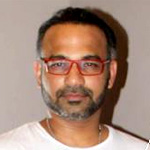
    Abhinay Deo

    The third Gold winner was the entry ‘I am Mumbai’ that was entered by Ramesh Deo Productions and the advertising agency for which was Taproot India . Abhinay Deo, on bagging the award, said: “There is no thumb rule for success. All I can say is that one has to be honest to his craft. Never make a film to win an award be it Cannes or any other, because then you surely won’t.”


    Failures Unlimited

    While that was about the winners, the conversation that dominated the festival during the latter half was the lack of wins by India across categories. The discussion was compounded by India failing to make the shortlist across categories too. India would definitely want to forget its showing in the Mobile Lions & Cyber Lions category where it didn’t manage a single shortlist.


    Even categories like Film Craft, Creative Effectiveness, Branded Content & Entertainment put up a poor show by bagging just a handful of nominations. In comparison, categories like Radio and PR performed better with the shortlisted entries in either of them going on to win metals.


    In fact, the categories where India had the maximum number of shortlisted entries like Press and Outdoor too were failures as the conversion rate averaged about 10 per cent or so for each of them. Titanium & Integrated continued to elude the Indian contingent of bagging any metal.


    KV Sridhar

    The overall grim mood at the festival was highlighted by KV Sridhar, NCD, Leo Burnett India : “We are extremely satisfied with Leo Burnett’s performance at Cannes this year; getting three Lions is not an everyday event. The only disheartening thing being that India’s overall performance this year wasn’t gratifying. I think we need to push ourselves a little more to do well in such awards, because at the end of the day it’s not about how good your work is, but about how much better the world is performing than you.”


    Said Pratap Bose, COO, DDB Mudra Group, whose agency did win some big awards but not as many as they had hoped: “At the end of the day, as DDB Mudra, we were more hopeful as we did get 21 shortlists. Though this is an extended India problem as well. We did bag a Gold and that compensated a little. The standard to which the world has risen surpasses India to a very great extent hence India has got a lot of catching up to do. To sum it all, we are quite disheartened with the overall performance.”


    Pratap Bose

    Mr Bose’s comments on the creative standard of other agencies around the world rising to surpass India may all but be true. Why else would entries that stood a high chance of bagging a metal miss out on winning one? DDB Mudra’s work for Stedfast, Volkswagen and GeeBees Beverages were all assured of a win but sadly missed up winning any.


    Chaplin Chapters & Google Chrome by BBH India , Keeping the Legend Alive by McCann Worldgroup, Parle Agro by Creativeland Asia and A Day in the Life of India by Taproot were other worthy entrants too but were skipped for the sake of others that were found to be more deserving.


    Manish Bhatt

    Manish Bhatt, Founder-Director, Scarecrow and a jury member for Cannes, 2012, said, “I would say that winning at Cannes has a lot to do with probability, so many factors can work for or against a piece of work during the judging process. Also with my interactions with other jury members, I got a feel that many felt that while there is no disputing Indian creativity but the viability of that idea on various medium is restricted. As creativity is being redefined, there is a need to bring on an idea that can work on multiple platform. There is also a need to bring in more interactivity in our entries as thats what the judges are looking for.”


    Perhaps, it’s time for India to stop being looked upon as the ‘favourite’ one and for more creative ideas to spawn if we have to make a rousing comeback in 2013.


    We could then look forward to a wonderful year… Annus Mirabilis may be


    With inputs from Shubhangi Mehta, Tuhina Anand and Meghna Sharma


    Cannes Lions 2012 Winning Entrant

    Gold

    Silver

    Bronze

    Bacardi India

    1

    BBDO India

    2

    Cheil Worldwide

    1

    DDB Mudra

    1

    1

    Leo Burnett

    2

    1

    McCann Worldgroup

    1

    Ogilvy India

    3

    Ramesh Deo Productions

    1

    In alphabetical order of agency names


    Imaging: Rafiq

    Photograph of Abhinay Deo: Fotocorp


  • Rockstar triumphs at FICCI Frames Excellence Awards

    By A Correspondent


    The 13th edition of the FICCI Frames 2012 culminated with the FICCI Frames Excellence Awards 2012 at Hotel Renaissance, Mumbai recently. Celebrating excellence in the verticals of Film, Television and Radio, the FICCI Frames Excellence Awards was hosted by Mandira Bedi and featured stunning performances by the talented Usha Uthup and rock sensation Papon.


    Rockstar won a total of 4 awards making it the most prolific winner of the evening. Imtiaz Ali won Best Director for the film while Ranbir Kapoor bagged the Best Actor Award. A R Rahman was felicitated with the Best Music Director Award and Mohit Chauhan with Best Singer – Male for the same film.


    Farhan Akhtar and Ritesh Sidhwani walked away with the award for Best Film for the path-breaking movie Zindagi Na Milegi Dobara. Vidya Balan received the Best Actor – Female award for The Dirty Picture and newbie Parineeti Chopra got the Best Debut – Female for her comedic role in Ladies VS Ricky Behl. The Award for Best Debut – Male went to Vidyut Jamwal for Force and Abhinay Deo was adjudged Best Debut Director for the highly acclaimed Delhi Belly. Usha Uthup and Rekha Bhardwaj received the award for Best Singer Female for the film 7 Khoon Maaf. Prashant Panday of Radio Mirchi took home the award for Best Radio Channel while Big FM received the award for Largest Radio Network.


    Amitabh Bachchan was honoured with the Award for Maximum Impact made by a Personality while Sony received the award for Maximum Impact created by a Television Channel.


    Earlier, the convention was witness to the FICCI-BAF Awards on the second day of the event. While Redchillies.vfx won the Special Jury Award (VFX Shot of the Year) for Ra-One, Red Digital bagged the Special Jury Award (Open Category) for Lufthansa Park & Fly.


    FICCI FEAMES 2012 DAY ONE
    Digital attracts ‘desirable’ status on opening day
    Text of Star India CEO Uday Shankar’s Keynote
    Discovery to launch kids’ channel in India
    Financing, a cause for concern in media and entertainment
    IBF, ISA and AAAI announce launch of BARC, finally
    Inaugural session weighs pros & cons of digitization
    Entertainment has become a revolution
    TV influences life: IBF study


    FICCI FEAMES 2012 DAY TWO
    Price control equals creative shackles for broadcast: Hernan Lopez, Fox Intnl Channels
    No alternative to the cloud: Manish Agarwal
    Time to experiment with technology
    ‘Console gaming in India is in big trouble’
    Phase III will bring more innovation in radio
    Niche isn’t niche any more
    Dedicated tee time as Ten Golf is launched


    FICCI FEAMES 2012 DAY THREE
    How relevant is newspaper content to the reader?
    Integrated media best way fwd: Vikram Sakhuja
    Digitisation will allow broadcaster to make money off ground: Tarun Katial
    No disadvantage of being a woman
    CCI is an overall market regulator: Ashok Chawla
    Adapt to the digital tide or be left out
    Digital will decide the fate of TV
    Turning 3 into 10, a percentage issue for digital


    FICCI FEAMES 2012 wrap-ups and takeaways
    Counting on digital to be M&E’s trailblazer
    Day 1: Digital attracts ‘desirable’ status on Day 1
    Day 2: Seamless blending with traditional mediums – a big want!
    Day 3: Industry expects thoughts to lead to pertinent actions
    Takeaways: Digitization rules the roost @FICCI Frames 2012
  • @FF12 Takeaways: Digitization rules the roost @FICCI Frames 2012

    [youtube width=”400″ height=”200″]http://www.youtube.com/watch?v=VjZnsO1Wtb0[/youtube]

    Text and Video by Shruti Pushkarna


    FICCI Frames 2012 concluded on March 16 in Mumbai. MxM India spoke to some delegates at the event to find out what were their respective takeaways from the three-day convention.


    Nachiket Pantvaidya, Executive Vice President & General Manager, Star Pravah

    Well I think FICCI Frames has always been a good meeting point to exchange new ideas but in India this FICCI Frames is very important because we are at a juncture where most creative fields are exploding at exponential rates and I think we are at a stage where we are going to grow at an unreal pace both in terms of numbers and qualitative content. And it’s very important that all of us come together to surf over the waves of growth. So it’s been a very enriching experience.


    Naresh Chahal, Director-Finance, Indian Broadcasting Foundation

    I am coming since last ten years, there have been useful discussions on various issues, I like FICCI because of the fruitful discussions on various aspects.


    Leela Samson, Chairman, CBFC

    I come to these sessions to bring some sign of relief for the industry in terms of certification, the manner of certification. The speed of certification, these are things that film producers and directors are really worried about. So we are trying very hard in CBFC to make that as easy as possible, as agony free as possible but we expect the industry also to follow some norms in terms of the time that it would take to do that. So it’s a win situation for everybody if we can work together.


    Raman Kalra, Director & Partner, Industry Leader- Media & Entertainment, IBM Global Business Services India

    This is perhaps the best forum that can happen on media. FICCI has been doing a terrific job year after year and the best part this year is that for the first time Frames is completely away from movies and the focus is on digitization, essentially TV industry completely swept it away. A lot of positivity, people have stopped asking basic questions like, ‘will digitization happen’, the questions are more like. ‘will it happen on time’. So I think that shift itself is a lot of positivity, people have accepted the fact that it’s going to happen now. And the discussions are more on how to monetize it better, so I am quite happy.


    Gary Mittlestaedt, Policy Manager, Content & Media, Intel Corp

    It’s been very encouraging and informative session. An incredible place to come for networking, to explore business opportunities. The sessions have been very insightful, the quality of the engagement are better than years past, so it’s been very good.


    Ashok Mansukhani, Director, IndusInd Media & Communications Ltd

    I think it’s one of the most productive that we’ve had in the last decade. I think this time there’s been a lot of serious discussion, it’s been a good platform for various service providers to come together, a good platform for audience to participate with service providers and understand their viewpoint and I think this time FICCI Frames has been very focused.


    Ravi Mansukhani, Managing Director, IndusInd Media & Communications Ltd

    Being an MSO, a wonderful surprise to see a few sessions on digitization and on cable. FICCI is more about content but content has got a prominent role to play with digitization coming in, so it was very pleasant surprise to see people taking digitalization so seriously.


    Achyut Vaze, Dean, FLAME School of Communication. Veteran theatre & TV professional

    There was a full session on shortage of skills in media but what was not discussed at all was the need for education in basic arts related to media, starting from theatre, inclusive of filmmaking, going up to all the related areas. We require a combined area which can look into this so that we can have good media people, not just in films but also in print, TV, print and new media. I have been coming every year…I am finding it a little monotonous now. There have been a lot of issues which have been discussed over the last three days about the digital future, about how that can affect society at large, so that’s quite a significant aspect that has been discussed here.


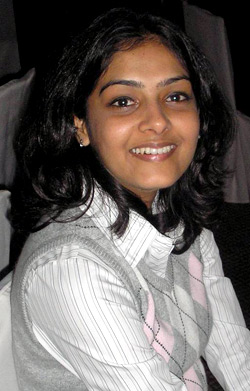
  • Akanksha Jain: Partner, Business Planning at Mindshare

    With over 10 years of professional experience, Akanksha’s mantra is “to be true to everything I do and to myself – by ensuring that I have given nothing short of my 100%.”

     

    “What drives me is the selfish desire to make a mark; essentially leave everything better than I found it,” she says.


    As for choosing her career, Akanksha said, “I wanted to be in the ‘Communications’ industry long before I even understood what it entailed and that’s what led me to MICA. While I did dabble with Account Management for about a year at the start of my career, I felt that the well-honed left part of my brain wasn’t getting enough exercise! I was attracted to media and joined what was then a 3-member team (Pepsi @ Mindshare) to try my hand at it. That I am still here is thanks to the constant excitement and challenges that have engaged both parts of my brainJ.”


  • Sonali Malviya: Client Leader, Mindshare

    With a professional career spanning 15 years, Sonali began her journey with Grey 15 years ago as a Media Planner. From there, she moved on to HTA before she got married and had to leave the country for the next 12 years.


    She worked in Dubai and Australia with ZO, OMD and even did a three year stint in consumer research. Having had enough of the outside world, Sonali came back to Mindshare and closer to her home. Since then, she has been working as Client Leader with Mindshare Gurgaon.


    Sharing an anecdote from the past, Sonali says: “I remember when I was doing my PG, and showed inclination towards Client Servicing, one of my mentors wryly commented: “here goes another one, she’d rather chase artworks and function as an exalted courier and not use her brains towards making a difference”. It almost felt wrong not to do something about such a strong statement… Well, here I am today and you don’t see me complaining…so I guess something I must have done something right many years ago…

  • Holding up the managerial sky


    They have proved themselves in business and are shining stars who’ve gone on to redefine the word ‘impossible’. While we bring you India’s Power Women Marketers, we admit this is not an exhaustive list. We’ve also not included those who have climbed the ladder and now lead larger teams.


    INDEX
    Success mantras from media captains
    All work and some play
    Riding the creative crest
    Holding up the managerial sky
    Celebrating the difference
    Managing Middle India’s Golden Lady
    Wooing vibrant India’s Wonder Woman
    Rural women – how strong is their ‘spending say’?
    Is the serial woman tellying it like it is?