Author: mxmadmin

  • … but rejoice! Dabur increases its adspends

    By Jwalit Vyas


    Dabur India delivered a good performance in June 2012 quarter. The major surprise of the June quarter numbers was the year-on-year 51 per cent jump in its advertising and publicity expenses.


    Dabur had kept its advertising cost in control over the past several months in order to maintain its profitability. However, the strategy seems to have changed as the company again has started pumping money in marketing its products.


    Its advertisement to sales ratio increased by 310 bps year-on-year to 15.7 per cent in March 2012 quarter. Its sales grew by 20 per cent y-o-y to Rs1,462 crore, which its net profit grew by 17 per cent to Rs 150 crore. Operating margins remained flat at 16 per cent which is positive for the company considering the additional advertisement expense.


    The second most diversified Indian FMCG company showed a healthy growth across segments. Its food business which contributes to around 15 per cent of the company’s net sales grew by 31 per cent, while its consumer care business which is 80 per cent of its total sales grew at 15 per cent. Its retail business (Kaya Skin Clinic) continues to be loss making but the size of this business is negligible when compared to its overall business.


    Dabur’s stock closed 0.1 per cent up at Rs 118 while the Sensex was down by 1.7 per cent. The company’s stock is trading at a price to earning multiple of 31.


    Source: The Economic Times

    Copyright © 2012, Bennett, Coleman & Co. Ltd. All Rights Reserved


  • Ratan Tata launches Lokmat tome on Aurangabad icons

    By A Correspondent


    It was a proud moment for the business community of Aurangabad when Ratan Tata, Chairman of the Tata Group, lauded their role in the growth and progress of Aurangabad – captured in the coffee-table book Business Icons of Aurangabad, which he unveiled.


    Congratulating the business icons of Aurangabad for their proud achievements and prosperity, Mr Tata urged them to “spread this prosperity to the whole country”.


    “There are many many people in Aurangabad and in the country who are not as fortunate or lucky as we are. It will thus be a mandate for all us to play a role in spreading the prosperity we enjoy, to others, because a prosperous India will be one whose future will be assured,” Mr Tata said.


    Happy with the progress that Aurangabad has made over the years, Mr Tata said: “I remember, as a school student, I used to come to Aurangabad to visit the Ajanta-Ellora caves. There was nothing other than Ajanta-Ellora then in Aurangabad, but today, it is a bustling industrial and tourism city!”


    “I wish that in the years to come, Aurangabad would see even better growth, and when Lokmat publishes a new book, it would take many volumes to include the personalities,” Mr Tata added.


    Videocon Chairman Venugopal N Dhoot too congratulated the business icons of Aurangabad, saying that it is because of them that Aurangabad has become so prosperous.


    Mr Tata unveiled the book – compiled and published by Lokmat Media – in the presence of Guest of Honour Venugopal N Dhoot, Chairman, Videocon, Mr Vijay Darda, MP Rajya Sabha and Chairman Lokmat Media, Mr Rajendra Darda, State Minister for Education, Mr Deven Darda, Director Lokmat Media, and Mr Rishi Darda, Joint MD Lokmat Media.


    Also present on the occasion were the business icons honoured in the book, along with several eminent public figures of Aurangabad and Marathwada region.


    Mr. Vijay Darda, Rajya Sabha MP and Chairman – Lokmat Media Pvt Ltd, said: “Business Icons of Aurangabad is our salute to the business leaders who have built modern Aurangabad brick by brick. I am grateful to Shri Ratan Tata and Shri Venugopal Dhoot for inspiring these business leaders with their presence here today. It is because of icons like these that this historic city has experienced such phenomenal growth.”


    The Business Icons series, introduced by Lokmat to serve as a guide for the future generations of the country, started with the release of Business Icons of Pune, at the hands of Pranab Mukherjee, on November 7, 2011 in Pune.


    Rishi Darda, Joint Managing Director – Lokmat Media, revealed that the selection of the business leaders profiled in Business Icons of Aurangabad was made by a distinguished panel of that included social entrepreneurs, presidents of industrial associations, and the senior editorial board of Lokmat.


    “Lokmat Media will continue the process of chronicling outstanding economic growth. Nagpur is next on the agenda,” Mr. Darda said


    Recognized over the last five decades as a major industrial destination, Aurangabad has been included in the ambitious Delhi-Mumbai Industrial Corridor which is expected to attract major investments. Industrial houses that have created wealth in Aurangabad represent a wide gamut of industry and trade segments such as automobile, education, real estate, white goods, pharma, steel, textiles and agro-products and include such eminent names as Bajaj Auto, Wockhardt, Videocon, Garware, Siemens, Nirlep, SkodaAuto India, RL Steels and many others.


    The book, which profiles 64 industrialists who have made major contributions to the spectacular growth story of Aurangabad, is priced at Rs3,000 and will be an immense value-add to any student, researcher or institution of industrial growth in India.


  • FDI in retail can bailout OOH industry: Nabendu Bhattacharyya

    By Nabendu Bhattacharya


    Key milestones for OOH Industry in 2011:

    • Due to service tax ruling the industry came together to discuss standard operating procedures for OOH industry in line with other industries.
    • Marketers demanded more efficiency in OOH planning, creative innovations and 2011 witnessed many innovations in various categories in OOH. We saw various formats introduced in line with the international OOH markets. Street furniture inDelhiand Mumbai put emphasis on format beautifications in terms of aesthetic structures of billboards.
    • We also saw a lot of entrepreneurs entering as OOH specialists; many of them emerged after breaking away from large agency specialists’ space.
    • I would call 2011 a year of growth. It may not have been a great year in terms of huge OOH advertising spends, but OOH stakeholders pursued other categories and managed to convince local clients in the city levels, and few categories even invested more namely, gems – jewellery, real estate, retail, media entertainment, automotive and FMCG.
    • Hence, in adverse conditions the industry grew because of a significant contribution from other advertising categories.


    Five trends to watch out for in 2012:

    • Industry codes of conduct will be effectively introduced in line with IBF and INS.
    • Clients will demand efficiency in the medium, hence OOH stakeholders need to get together to offer planning and research in OOH.
    • Small format mediums will be introduced in line to build government infrastructural projects by the authorities in line with other countries. The government will be more open to look at long-term tenders. Hence, international players may show interest in enteringIndia. The government will bring in greater control over the medium.
    • Technology and innovation will be demanded from agency specialists by marketers.
    • Industry will face a hard time due to the economic slowdown, hence new categories will emerge. If FDI gets through, retail will bail out the OOH industry in a large way.


    Nabendu Bhattacharyya is Founder and Managing Director, Milestone Brandcom.


  • Zarina Mehta quits Disney to ‘SHARE’

    Zarina Mehta

    By A Correspondent


    Zarina Mehta, the Chief Creative Officer of UTV Group of Channels at Walt Disney India, who led the creation and launch of popular TV brands such as UTV Bindass, UTV Stars and UTV Action has decided to move on from Disney-UTV after a 27-year-long stint.


    She sent a mail to her company’s employees informing them about the decision. She wrote: “After 27 years, I have decided that I need to move on from my beloved UTV.  It has given me such joy and fulfillment to create a vibrant, passionate, cutting edge company that believes passionately in creativity at its core. I have loved especially all the wonderful people I have worked with and the TV shows and brands I have helped create.”


    She will be moving on as a full-time Managing Trustee of the foundation SHARE (Society to Heal, Aid, Restore and Educate). The foundation is ten years old. “Our aim is to transform the lives of one million people in rural Maharashtra over the next seven (or so) years,” read the mail about what plans she has for the foundation.


    The decision wasn’t an easy for her, but the reason behind her move is her love for challenges: “Well its 27 years of doing the same thing. And much as I have loved it passionately I have felt the need to think about different challenges, to apply my mind and energy and passion to other problems.”


  • Mid-year Blues: Group M media spends forecast down from 12 to 6.6%


    By Johnson Napier


    The writing was on the wall and the signs apparent but perhaps one was hoping for the impossible to happen. After all, it’s optimism that drives any business activity. But if the revised growth numbers released by GroupM globally are anything to go by, we may all need to pray for some divine intervention this festive season.


    Titled ‘This Year, Next Year – India Media Forecasts: Midyear update ‘, the study released by GroupM has brought to the fore growth figures that several sectors will throw up in 2012 (see Tables titled  The Detailed Mid-Year Numbers at the end of this story) and not what was predicted of them at the start of the year (winter edition).


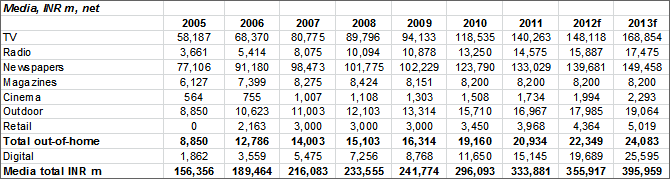
    To begin with, the overall growth figure that media will throw up in 2012 has been revised to Rs 355,917 million from the earlier Rs 373,975 million. With this change, the new growth number has been set at 6.6 per cent for CY2012 compared to 12 per cent that was set earlier. While the change is disturbing in nature, what has emerged a bigger shock is the sharp drop in revenue numbers estimated for the domain of television. From the original Rs 160,839mn that was forecast at the start of the year (winter forecast), the revised estimate now reads Rs 148,118mn (mid-year forecast) – an adjustment of nearly Rs 12,721mn or an 8 per cent decline (refer table). In fact, television is the only medium to have seen such a steep readjustment when compared to the other domains under media.


    Media (INR mn net) 2012 forecast (winter) 2012 forecast (mid-year) Difference (%)
    TV

    160,839

    148,118

    -8%

    Radio

    16,178

    15,887

    -1.79%

    Newspapers

    144,260

    139,681

    -3.17%

    Magazines

    8,241

    8,200

    -0.497%

    Cinema

    1,994

    1,994

    no change

    Outdoor

    18,409

    17,985

    -2.3%

    Retail

    4,364

    4,364

    no change

    Digital

    19,689

    19,689

    no change

    Media total

    373,975

    355,917

              -4.82%
    YoY % change  2012 forecast (winter)  2012 forecast (mid-year) Winter to mid-year YoY change%
    TV

    15

    5.6

    -62.66%

    Radio

    11

    9

    -18.18%

    Newspapers

    8

    5

    -37.5%

    Magazines

    0

    0

    0

    Cinema

    15

    15

    0

    Outdoor

    9

    6

    -33.33%

    Retail

    10

    10

    0

    Digital

    30

    30

    0

    Media total change

    12

    6.6

    -45%


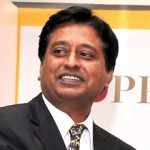
    Vikram Sakhuja

    When asked on the reasons for the sharp decline that was observed for the domain of television and the impact of the drop on the industry, Vikram Sakhuja, CEO South Asia at GroupM said: “The decline from 12 to 6.6 per cent is primarily on account of the medium of television. We had expected the medium to grow by 4 per cent in the first half of 2012 while for the second half we had expected a growth of 27 per cent. So the two combined would have contributed an average growth of 12 per cent. We were expecting a low first half as there was no big sporting property like the ICC World Cup last year, and simultaneously expecting a good second half on account of T20 World Cup, The Olympics etc. But that has not been the case so far. Also, it will be inappropriate to say that there will not be good growth; there will be good growth in the second half but it will be lower than what we had anticipated. We are looking at a number of around 18-20 per cent for second half of 2012.”


    On his assessment for the industry for the second half of 2012, Sakhuja said: “We are looking at a revival sometime soon as the political situation in the country is expected to become better and the economy is expected to come up with measures to stem the downward slide.”


    Minor changes in print, radio & outdoor; others unchanged

    Meanwhile, newspapers see a revision of -3.7 per cent with the new figure standing at Rs 139,681 mn as against 144,260mn predicted earlier. Outdoor is next witnessing a change of -2.3 per cent to Rs 17,985mn as against Rs 18,409mn that was predicted in the earlier edition. Radio follows with a -1.79 per cent decline to display Rs 15,887mn as against Rs 16,178mn that was predicted earlier. On the other hand, Magazines sector has been revised by -0.497 per cent to Rs 8,200mn as against Rs 8,241mn predicted earlier. Cinema at Rs 1994mn, Retail at Rs 4,364mn and Digital at Rs 19,689mn remain unchanged from the previous released numbers.


    Explaining the rationale for the change, the study states: “While we expected first quarter of this year to be weak, we expected the economy and hence ad investment to strengthen after this. Ad investment actually remained weak throughout the first half thanks to macro-economic issues such as continued inflation, a weak Rupee and lack of movement in government policies. Elections are another source of additional advertising. However, since political spending limits per candidate have been applied more strictly, the spends were lower than might have been expected.”


    On the performances of other sectors, Sakhuja said: “We hadn’t expected a good growth for newspapers and magazines and that continues to report a single digit growth. The same is with radio and out-of-home that will report numbers as envisaged. But we had also expected digital to throw up a robust growth of 30 per cent and that continues to perform as expected. So that’s the situation on the other sectors according to our study.”


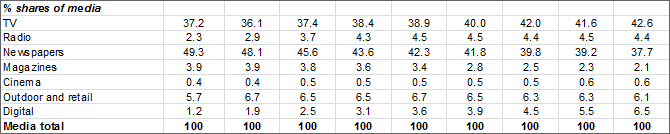
    When sliced further, the study depicts television as the medium most affected. The medium will witness a 5.6 per cent year-on-year change as against the 15 y-o-y that was predicted earlier. That puts it at the bottom three of the growth pyramid just next to magazines and newspapers. For the medium of television, the study states: “2011 had the cricket World Cup which attracted an incremental Rs 8,500mn. This was obviously expected to drop out in 2012, but April-May IPL cricket did not perform as strongly as previously to compensate. In addition, the Telecom category cut down spends substantially in the first half of the year. Financial services have been adversely affected by poorer economic conditions here as elsewhere in the world. Even consumer durables spent less in the first half of 2012 than the prior year period. Occupancy of premium inventory has decreased with advertisers choosing to stay with safer tried-and-tested formats.”


    As for print, newspapers have been set to register a 5 per cent growth as against 8 per cent predicted in the previous edition. According to the study, “Regional publications have expanded into new markets and have actively developed local advertisers largely in the retail categories. They have therefore added some ad volume even though the larger national advertiser categories have reduced investment.”


    Where the domain of Outdoor is concerned, the new growth number has been pegged at 6 percent from the earlier 9 percent. “Reduced consumer demand and the current global turmoil have caused 2012 budget reductions in categories including telecom; automotive; banking, financial services and insurance (BFSI); real estate; and FMCG vis-a-vis 2011. The trend began in 2011 and continued into the first quarter of 2012, which is considered to be seasonally very important for BFSI. In the first half of 2012, there has however been increased investment from the entertainment and media category,” notes the study. Adding further, the study notes: “The reduction is affecting the metro markets but not the non-metros and smaller towns, where demand from local advertisers in a few categories like jewellery, apparel, education, real estate and construction has offset  the withdrawal of national activity. Smaller towns are actually seeing ad demand rise as much as 25 per cent.”


    Radio has been revised to 9 per cent from the earlier 11 per cent. States the study: “Radio’s first-half slowdown is another result in part of the poorer economic situation. The next round of FM auctions has been pushed to 2013, so delaying this uplift to next year. Individual markets have seen very varied demand according to local retail conditions.”


    The study predicts Digital to remain unchanged since the last forecast. Given that it typically has smaller outlays and is very response-based, it has not been affected like other media, it states. Similarly, Retail Media & Cinema are also performing as expected. “Even though telecom advertising fell in the first half, categories like FMCG and durables have risen in these media. As previously envisaged, destinations in smaller markets have experienced raised demand of about 10 per cent. Leisure destinations have also expanded their presence in these smaller markets that has helped drive spends,” notes the study.


    Blast from the past?

    While 2012 is being compared to the slowdown of 2008-09, it has to be admitted that the current period does get to see few glimpses from the past. Answering the query, Sakhuja reasoned: “Similarities could be somewhat drawn to the growth story of 2008-09 because the core economic sentiment at that time was based almost entirely on the global downturn whereas for 2012, if I have to put a weightage to it, the negative sentiment is driven a little bit more by the inaction from the government’s end rather than the global downturn. So we have our own internal issues to sort out and not so much of an outside effect that is holding us from staging a good growth for the industry.”


    Highlighting the trend spotted worldwide, especially the BRIC countries, the study notes: “The Brics and ‘Next 10’ (that’s the Next 11 minus Iran) are still expected to contribute 51% of global ad growth in 2012, down from 53% in the winter forecast. We have revised China growth down from 17% to 13% for 2012. We attribute this to general headwinds in the economy, with loss of consumer confidence having only a slight effect. This represents a $2bn reduction in expected ad investment, taking 0.4 of a point from global growth. Falling global and local sentiment has hit India and Brazil forecasts much harder, relatively speaking. These two ad economies are together only a third the size of China’s, but they shed $1.5 bn from their expected 2012 increment. The Russia forecast for 2012 is raised from 10 to 12%.”


    Note: All numbers are net advertising revenues not inclusive of agency commissions. Hence they reflect what media owners have earned and not what advertisers have spent


    MxMIndia quizzed a few honchos from different sectors to gather their opinion on what the change would mean for the industry. And the reaction was on expected lines…


    Tarun Katial, CEO, Reliance Broadcast Network

    “There is a slowdown, but it is better than the last one we saw! The signs in fact, have been there from the last quarter of 2011 so most of the industry has been cautious in spends and projections. Having said that, there is optimism looking forward, because typically the second half of year sees spending leapfrog.”

    Prashant Panday, CEO – Radio Mirchi

    “I think the adjustment downward is correct. The Indian economy is in quite a bit of a slowdown, the interest rates are high, inflation is high and investments are coming down. Commodity prices drove client profitability downwards. Not surprising then that clients have been cautious on advertising spending. The advertising markets are shaky at the moment and any upturn is expected only during the Diwali season starting October this year. It can also start early if the government initiates positive decision making. Allowing FDI in multi-brand retail, increasing FDI limits in Banking and Insurance, successfully auctioning 2G telecom licenses and quickly rolling out Phase-3 of FM will all help in bringing cheer to the advertising businesses. The first quarter has been a tough quarter for most media companies. The few results announced so far are evidence of that. But don’t forget that this is a traditionally weaker half. So media companies should be expected to fare poorly…..like I said the recovery can happen from October this year…”

    Suresh Srinivasan, Vice President (Advt), The Hindu group

    “The first quarter of the year has been good for us however in the last month the numbers have not been so encouraging. Things are not looking too good and the numbers are less than our expectation. However, I would not term a short period of lull as defining the year as there are opportunities ahead. With festive season one definitely hopes that things would turn for the better. I think India remains largely unaffected by the global slowdown and we still see new launches happening in the market and people still spending on shopping. We have seen particularly less spending from BFSI sector, education and retail who traditionally have been big investors.”

    Shailesh Amonkar, CMO – Sakal group

    “We are more or less following the trend that’s been witnessed by the industry, which has been recording slow growth in the past few months. Going by our experiences, we feel Retail & Corporate are categories that have bought us some good growth but categories like Education which used to get us good numbers earlier has seen a decline. Even categories like Real Estate and Finance have been sluggish this year. We are looking at other alternatives like innovations, supplements etc and are partnering with clients across the verticals like digital, newspapers, activations etc to ensure that we generate whatever revenues through such ventures. We hope to see a revival by end of August and start of September – around the festival season. Things should be looking up during the next three-four months for the industry as it happens every year. But then again, this too will be dependent on factors such as good monsoons, inflation, fuel prices etc that will decide whether investments will come in or whether clients will be cautious in their ad spends.”

    Atul Hegde, CEO – Ignitee

    “I definitely foresee Digital throwing up a 25-30 per cent growth this year compared to the last year. I do not anticipate any situation that will lead us to downgrade the growth of this medium. In fact if one were to analyse the earlier slowdown period, a lot of expensive money from the mediums of television and print came to digital; this will be a trend that one will get to witness whenever there is a recession. Clients will want to invest in a medium that is more accountable, has very little wastage, where they do not need large investments…Also, what will happen is clients are going to be very selective about the markets that they advertise in; it’s not going to be blanket advertising everywhere. Digital will help them pinpoint that.Within digital, you will see social media driving the growth more than anyone else. Search will be the biggest focus area for clients as they are more targeted and one-to-one. Even channels like Youtube etc will add to the growth of this medium. So the medium will put up growth as expected. After all, the medium has gathered momentum after 7-8 years and large brands have seen the value that the medium brings to their brands. So it is going to be a good ride ahead for the digital medium.”

    With inputs from Tuhina Anand and Meghna Sharma


     The Detailed Mid-Year Numbers


  • WATBlog announces CMO conference

    By A Correspondent


    With an aim to give marketing professionals key insights into digital media, WATBlog announced the Digital CMO Conference. The event will have top CMOs of the country come together to showcase case-studies that have witnessed ground breaking success in digital media. The conference will be held on August 31 in Mumbai.


    WATBlog’s Digital CMO conference will showcase insightful presentations by the biggest brands that have emerged as the thought leaders in the digital media space. The conference will cover all aspects of digital marketing, including the role of social media in Customer Service and how the digital platform can help build brand reputation. The delegates expected to attend the conference would be a mix of CEOs, entrepreneurs and marketing professionals.


    “Digital marketing in India has gained significant momentum over the past year. A lot of brands are now looking at social media as an integral part of their marketing mix. We have organized the Digital CMO Conference to help these brands understand the best practices and soak up valuable insights from those who have run successful campaigns in the digital space” said Rajiv Dingra, Founder and CEO, WATMedia.


    Key speakers at WATBlog Digital Marketing CMO conference will be: Krishnakumar P, Executive Director, Marketing, DELL; Virginia Sharma, Chief Marketing Officer, IBM; Kavita Joshi, Head of Digital Marketing, HDFC Bank; Arun Nair, Head – Digital Marketing, Mahindra Holidays & Resorts; Dharini Mishra, Global Head of Brand, Suzlon Group


  • Anil Thakraney: Murder in the factory

    By Anil Thakraney


    What happened at Maruti’s Manesar plant is extremely sad. You don’t go to work and expect to get burnt alive by your own colleagues. And this is no longer a business story, it has moved to Page 1 as a sensational crime story.


    Naturally, we now have to wait for the police investigation to get done, so that we know exactly what transpired that fateful day. Apart from nabbing the criminal workers (which isn’t going to be easy given the political pressure), another truth needs to be uncovered: There are rumours that the slain HR manager provoked a group of workers by hurling casteist or communal abuse. This doesn’t lessen the crime, but it still needs to be investigated.


    As of now, I know just one thing: HR managers who deal with factory workers need high level of skill and training. It is a very difficult job because there is always a huge degree of mistrust between white and blue collar workers. Everything is vastly different: Sensibilities, motivations, attitudes, culture, language, you name it. I sometimes wonder if CEOs put in special efforts to appoint the correct HR personnel for their factories. And ensure they are heavy trained for the job. It’s just not the same as air-conditioned corporate offices, where even if the HR staffers did nothing (and many do precious little!), life simply goes on.


    How do I know all this, since I have never worked in HR? It’s simple. My dad, before he retired, was the chief of personnel and human resources at Shaw Wallace. And the factory HR was his key result area. I am aware of the high level of tact and diplomacy he used to need at his disposal to keep the workers and the management at peace. It was a very stressful job, and despite his best efforts, he would, at times, receive violent threats from a section of workers.


    I got a chance to watch him in action when he took me for a factory visit to the company’s Uran (Maharashtra) brewery. This was when I was in school, and the visit introduced me to beer very early in life, but that’s another story. 😉


    * * *


    [youtube width=”400″ height=”225″]http://www.youtube.com/watch?v=pTjHCCU2E4c[/youtube]

    PS: ‘The web is what you make of it’. Google Chrome has been doing some nice adverts in this campaign. This particular one, where a man is trying to woo his lost love back, is quite charming. The strength of this work lies in what is known in advertising parlance as ‘vivid demonstration of the product’. Whereby you experience exactly how the product works. But they do it in a very entertaining way, which is why the ads shine. Something to learn here for all those guys who make those ultra boring mechanical car commercials.


  • Ogaan Cancer Foundation creates a breast cancer awareness campaign

    By A Correspondent


    In a bid to support the cause of breast cancer awareness, Ogaan Cancer Foundation has created a new campaign with filmmaker, Zoya Akthar, who has directed, scripted and conceptualized a Public Service Announcement (PSA) titled “Because My World Is Not The Same”. The PSA has ‘men’ talking about the ‘women’ in their lives and what they mean to them. The PSA gives all a unique opportunity to journey into the rarely-seen softer and emotional sides of Bollywood’s prominent actors.


    The campaign stars Abhay Deol, Arjun Rampal, Farhan Akhtar, Ranbir Kapoor and Shahid Kapoor get candid pledging their support to the cause along with Zoya. In the PSA, the actors talk about the women in their lives and sensitizing the viewers’ about women-related ailments like breast cancer. The campaign aims at being timeless in its overall look, and feel yet creating awareness about Breast Cancer in an outspoken manner.


    According to statistics, it is believed that ‘fear’ is the number one obstacle that keeps women from taking precautionary measures; and the presence of male celebrities will remind and urge women to take care of their health. Additionally, to spread the message that early detection is the strongest weapon in the fight against breast cancer.


    Commenting on this latest campaign, Preeta Sukhtankar, Director, Elle Breast Cancer Campaign said: “Breast Cancer is a disease that affects many women and when diagnosed at an early stage is curable. We wanted to spread awareness of this very message. Zoya, an influential ‘woman’ and a skilled communicator, is not only an admired film director but is also a friend of the cause. She has beautifully brought out not only the message, but captured a myriad of emotions from normally contained superstars though this PSA.”


    On the public awareness campaign, Zoya Akhtar said: “Yes breast cancer afflicts women, but it’s not something I see as women’s issue. Cancer affects more than the patient, it affects every family member and loved one. It has no gender and therefore we need to take the message out to not just women but men as well. We need to open up dialogue and make it relevant and all right for men to ask the women in their lives if they have been checked recently.”


    The campaign will be on-air in the coming few days.

    Link: www.ebcc.in/film


  • The Anchor: 6 ways to create pathbreaking & sustainable communication for a brand

    By N Chandramouli


    Everyone loves to win, though only a few have what it takes to prepare for the win. Sustainable Communication is that organizational winning strategy.


    1. Future relevant communication

    In my several thousand interactions with CEOs and top management, one significant conclusion with regard to communication has dawned – successful organizations always have top-driven communication.


    Though everyone understands the importance of communication, most top management are unwilling to get involved enough to deep-impact it. Most only want to see results without wanting to participate in its creation.


    Communication is treated as an essential, but ‘extraneous’ service to the organization. Therefore, while the result is important, how it is achieved, is not. The communication function most often reports into marketing, and due to this, the entire organization’s communication remains partial to marketing communication.


    Sustainable Communication is that which impacts the future of the organization, and without the direct involvement and guidance of the top management, the organization’s future cannot be impacted. Organizations where the top management does not give communication the maximum attention remain myopic without much control over their own destiny. It also silently encourages the ‘dynamite fishermen’ to play havoc, severely damaging the communication environment of the organization.


    For an organization that wants to remain relevant in the future, the person piloting it has to be fully committed to Sustainable Communication giving it requisite time, energy and direction.


    2. Communication Philosophy

    All systems run on some principle and only when articulated explicitly do they become ‘believable’- a prerequisite for adherence. Its expression is the first step for Sustainable Communication to take root, and this creates adherence at the deepest level in the organization.


    The Communication Philosophy of an organization is an analysis of the organization’s reason for existence, its values, nature and its reality. It asks three fundamental questions, the answers to which define a Brand’s topography for Sustainable Communication.


    Q. Why do we communicate?

    Neophytes usually get drawn to answering this in terms of the business goals of the company, but this question must not be taken too literally. It is necessary for the answers to be unshackled from the business goals, and therein lies its difficulty. The Communication Philosophy seeks out the intrinsic nature of the organization’s communication, and this answer helps understand the organization’s true objectives in relation to its ecosystem.

    Q. How will we communicate?

    The answer to this question gives guidelines for communication to the organization. It also elaborates the tone and tenor of communication, and most importantly, the Brand’s not-to-do list.  This usually sets the foundation for all to adhere to.

    Q. What do we want to communicate about us?

    The answer to this reveals the ideally desired perception. Since the seed of communication lies in its action, it is necessary that this ideal seeps into every action the organization takes. While articulating its response, one must consider the different states of the entity; current, future and the approach to overcome this aspirational gap. The danger with ideal perceptions is that they tend to fly, and therefore, its articulation should be grounded in reality.


    3. Discovering Communication pathways

    Every organization has natural communication trails within them. They use these pathways predisposed to communication because of interdependencies within the sub-group. Use of these interdependencies provides natural energies for supporting the Sustainable Communication structure. Often hidden beneath the surface, unexposed to the organization, these trails need to be discovered with focus. Once found and worked on (no different from real pathways), these pathways will automatically draw more communication traffic through them.


    To discover these trails, a deeper understanding of each sub-group’s aspirations, interests, preferences and culture is necessary. These communication trails are also useful in two-way communication and have the scope to become robust feedback systems.


    4. Integrated approach

    An integrated approach looks at the organization’s communication philosophy from various dimensions. Some are listed below, but this is a dynamic list and must be added to by the communicator – the more that get included in this list, the more sustainable an organization’s communication will be. The communication should be integrated from the dimensions of:


    1. Culture – The organization’s communication must be integrated with the culture of its people and of the society that it exists in.

    2. Vision – All communication of the organization must emanate from a common, expressed vision.

    3. Time – The organization’s communication must be relevant to the past and the future of the entity while remaining aligned to its present.

    4. Environment – The communication must be in harmony with the environment the brand engages with, eliminating any damage to it.

    5. Audiences – It must be integrated with the needs of all the primary audiences of the organization; clients, employees, shareholders among others.

    6. Audience Degrees – It must be integrated with the primary, secondary and tertiary audiences and must be relevant to all three.

    7. Knowledge – Sustainable Communication must have an integrated approach to creation, storing and dissemination of knowledge.

    8. Lifecycle – It must have a regenerative approach such that the birth to demise message lifecycle is considered.

    9. Function Collective – Each function of a business must reinforce the collective, and the collective must reinforce each function’s communication.


    5. Multi-polarity

    Multi-polarity tends to maximize communication efficiencies and as it looks at several polarities achieved through each message. For an organization to have Sustainable Communication, while the main focus could be one or a few, the multi-polarity maximizes value by deriving more from the same message. The more polarities that get included in the message, the more sustainable it is. These polarities are:

    1. Multi objective – Each communication must impact multiple objectives in positive ways.

    2. Multi sensory – Such that it integrates experiences of as many senses as possible – cognitive, tactile, auditory, visual.

    3. Multi-audience - The same communication should reach several audiences.

    4. Multi noded – There must be several crossover nodes of several communication pathways to facilitate interaction at the nodes.

    5. Multi functional – It should take into consideration the needs of all the functions (like finance, human resources, marketing and others) around the communication.

    6. Issue Chain

    An Issue Chain is the identification of the natural issues of any system that gives it the propensity to communicate. These depend on its contributors – sector, audiences, technology and others that are issues that drive communication energy. To better this Sustainable Communication method, it is necessary to identify the various issues in the sub-systems and then build communications around these. Such communication sustains itself through the energy that others put into it as it is of their interest.


    N Chandramouliis Author of upcoming book Decoding Communication and CEO Comniscient Group

     

  • Crazeal enters cinemas for experiential marketing

    By A Correspondent


    Ankur Warikoo

    Crazeal.com ( India unit of Groupon Inc.US), a daily deals website has partnered with multiple cinema houses across India. The aim and objective is to offer a unique movie watching experience to Crazeal customers. The deal offered 50 per cent discount on the tickets along with a private screening to showcase Crazeal’s ‘Who Can Resist?’ campaign.


    Crazeal has rolled out a nationwide experiential marketing campaign to connect with consumers. The daily deals website partnered with multiple cinemas across nine cities (Delhi, Mumbai, Bangalore, Kolkata, Hyderabad, Chennai, Jaipur, Chandigarh and Pune) for a special screening of the movie Batman – The Dark Knight Rises. Over 3,500 tickets were said to have been sold in just under 30 hours.


    To buy this deal, Crazeal subscribers had to log on to the site, buy the deal and the tickets were delivered at their doorstep. Besides the screening, the Crazeal team were said to have interacted with the consumers. Each individual who came for the screening is said to have received a memento. Multiple on-ground touch-points were also created to increase brand presence and engage with customers.


    Launched in April 2011, Crazeal.com was formerly called SoSasta.com. On November 2011, SoSasta was rebranded to Crazeal.com because the name SoSasta did not have a positive connotation with their high quality merchants.


    In conversation with MxMIndia, Mr Ankur Warikoo, CEO, Crazeal said: “During the month of November 2011, we went into a rebranding exercise very early into our lifecycle and we called ourselves Crazeal.com which is short for crazy deal. We wanted to position ourselves as a great site which had fantastic discounts and crazy deals, but at the same time never compromising on the quality of the deals.”


    The business model of Crazeal is purely based on transaction wherein it first provides free of cost visibility to its merchants on the Crazeal website for one day. In return Crazeal asks the company (or merchant) to create a good package for its customers. For instance, it could be a five star hotel offering a certain amount of discount for a buffet, which the daily deals website then displays on its website as ‘deal of the day’.


    Once the deal is up and live, it is followed up by sending newsletters and SMSes to all Crazeal subscribers. Thus only after a customer buys a deal online is Crazeal paid its marketing monies. “We don’t make any money before the merchant makes money, but at the same time we are putting our entire resources right from creation of the deal, to imaging, and how it is marketed and so on. We, therefore, make our money only once our deal is sold,” he explained.


    By the end of December, Crazeal is expected to launch its mobile app for consumption, according to Mr Warikoo, the time is right for India to experience mobile transaction. “Time is right for India to experience mobile. By the end of December, India should see the GroupOn Crazeal mobile apps being launched for consumption. In the US, for instance, mobile already accounts to almost 20 per cent of transactions a month. In India already without a mobile application or without a mobile friendly site, 5 per cent of our transactions are already happening through our mobile phones. India is seeing 3G users increasing day by day, so it is just a matter of time before we have that app which is already in our radar and we are working towards it.”


    Crazeal is said to be a business which is currently focused on three categories, namely local services, product categories and travel. The local services include the best hotels and restaurants in the city, the best spa, and so on. Within the local services, food and beverages category dominate and accounts for nearly 55 per cent to 60 per cent of the overall revenue generated. Local services therefore account for almost 40 per cent of its business; product category accounts for similar share and the rest is taken by travel.


  • Ignitee appoints Ranjoy Dey as Chief Operating Officer

    Ranjoy Dey

    By A Correspondent


    Ignitee Digital Services, the digital marketing & media agencies, appointed Ranjoy Dey as Chief Operating Officer. Mr Dey will be based at Ignitee’s Gurgaon office – managing the business across the offices of Ignitee in Delhi, Mumbai and Chennai.


    Mr Dey will be responsible for leading all aspects of marketing and operations for Ignitee, aligning the marketing strategy and brand positioning for the company’s growth in the fast evolving digital advertising industry. He will report to Atul Hegde, CEO, Ignitee.


    Mr Dey is a Sales & Marketing professional with 18+ years of experience; as Operations & Business Head in Agencies, he has handled & led large-scale Marketing campaign operations & project management – while managing large & diverse teams across the country. He had also taken up roles to set-up and lead e-Marketing & CRM functions from scratch in several IT & eLearning companies.


    Commenting on this development, Atul Hegde said: “Ranjoy joins Ignitee as we continue to expand, and offer our best practices to customers. We are very focused on bringing great value across our digital products and solutions, and Ranjoy’s appointment is central in helping us to achieve this. With his vast experience in successfully creating & delivering interactive marketing solutions and effectively managing diverse resources, he is the ideal person to help us achieve our growth goals and country-wide consolidation.”


    Mr Dey said: “I am excited to take up this role as the growth driver for Ignitee. Ignitee has been doing some amazing work for their clients and the time is right to expand the business when clients are looking at differentiated marketing solutions while enhancing their digital footprint.”


  • Nitin Singh joins Indigo Consulting as biz head

    Nitin Singh

    By A Correspondent


    Digital agency Indigo Consulting has roped in Nitin Singh as Business Head, Delhi NCR. He will be responsible for managing Indigo Consulting’s relationships and scaling up the digital business in the region. Prior to this, Mr Singh was with Media2win, where he was responsible for Digital execution and New Business Development in North India.


    Speaking on the appointment, Vikas Tandon, MD, Indigo Consulting said: “While we have been present in the Delhi region for a while, we were missing strong leadership to drive our aggressive growth plans. Nitin’s valuable experience and relationship with customers will help us provide superlative digital marketing solutions to clients in the Delhi region.”


    Commenting on his decision to join Indio Consulting, Mr Singh said: “I have always admired Indigo Consulting’s work in the digital space, especially when it comes to their creative and technology capabilities. I hope to learn more about these and their integration with digital strategy while leveraging my experience to create new practices at Indigo Consulting.”


    Mr Singh is a post graduate in business administration from the School of Management Studies, New Delhi and has more than 9 years experience in sales and marketing. Besides Media2win, he has worked with Quasar Media, QAI India and Compare Infobase where his responsibilities ranged from new business development to sales to online digital media planning.