Author: mxmadmin

  • Anil Thakraney: Satyamev Jayate: Handkerchief entertainment

    By Anil Thakraney


    Okay, the nation’s most expensive and the most-hyped TV show is drawing to a close. In a few weeks from now Satyamev Jayate will be history (there may or may not be a sequel). In fact, host Aamir Khan’s already moved on to what he does and what he knows best: Making movies. The hero’s strutting around in his ‘Dhoom 3’ look these days. It’s a good time to do an appraisal, and I have three large points to make.


    The ratings of SJ have been disappointing. It reported an okayish 4 when the show began, but in recent times the TVR points have dipped to about 3. And that is sad. This means India isn’t really euphoric over a TV show that discusses serious public issues. Dance reality shows enjoy better ratings. We can’t blame this on the channel or the producer. And this is also the reason I doubt they’ll put out another season.


    I also doubt if the show has made any impact on the nation. And I had expressed this concern when I first wrote about SJ. Because every Sunday, a new issue is being raked up, the one discussed a few weeks ago gets erased from the memory. In that sense, SJ has ended up becoming what I call ‘handkerchief entertainment’. Weep a bit and then discuss where to step out for lunch. This also tells me entertainment channels cannot change this nation. News channels can, but they have other problems which we’ll discuss another day.


    The onus then falls on the star host to keep the pressure going on the various issues he’s brought up. The only reason SJ even scores a TVR of 4 is Aamir Khan. Take him out of the equation and it will earn less than 0.5 points. It’s his charisma that drives the show. Which is why if Aamir doesn’t keep the fires burning, no one else will. But obviously the actor won’t and can’t do this. He has many other fishes to fry, and in any case his involvement in public causes in the past has been at a superficial level. So there’s no reason to believe it will be any different this time.


    Net net: An average performer. A nice Sunday tear jerker. Even voyeuristic to some extent. But all those of us who believed SJ will change India got a might egg on the face. Just as Aamir hummed ‘Meri jaan meri jaan Sunday ke ande’ in the show’s promos.


    * * *


    PS: Here’s a respected TV producer saying that advertising is killing the television medium. Of course he makes valid points. However it’s tough to visualize a situation where TV is freed of these irritating ads. Unless subscribers are ready to pay a lot of money to broadcast stations. That’s never gonna happen. Also, if there were no ad breaks, what happens to the loo breaks? 🙂


    Link: http://news.bbc.co.uk/2/hi/uk_news/scotland/8227864.stm


  • Hungama launches digital talent hunt MOBIsur

    By A Correspondent


    The mobile medium in the last many years have grown significantly, especially with 3G and now 4G coming in, there is great expectations from this medium. As wireless subscriptions continue to grow, billions of apps continue to be downloaded worldwide andIndiasaid to have the second largest mobile subscribers in the world.


    Taking into account the growing popularity of the digital medium, ITC’s Vivel FaceWash, along with Hungama Digital Media Entertainment Pvt. Ltd. and musician Shankar Mahadevan has launched ‘India’s first digital talent hunt’ – MOBisur.


    Mr Neeraj Roy, MD and CEO, Hungama Digital Media Entertainment Pvt. Ltd. said: “The reach of Internet andMobiletechnology has grown tremendously in the past few years. The aim of MOBisur is to create a talent-scouting engine in spaces that haven’t been explored in the past, via an entry ticket that is their everyday communication device.”


    This unique mobile- and internet-based talent hunt promises to give every Indian an opportunity to prove their singing talent. The property was launched by Shankar Mahadevan, Nilanjan Mukherjee, Head of Marketing, Personal Care Products Business, ITC Ltd; Bhushan Kumar, MD, T-Series and Neeraj Roy, MD and CEO Hungama Digital Media Entertainment in Mumbai on July 13. T-Series is the official music partner for the property, which elevates the talent hunt to an even higher platform.


    Mr Bhushan Kumar, MD, T-Series, said: “It gives us immense pleasure to be able to bring new talent in to the industry. As a music label, we are always looking for fresh talent and with a truly digital talent hunt; we have access to talent across the country. We are looking forward to releasing an album composed by Shankar Mahadevan for the winner of the hunt”.


    The entries for the digital talent hunt, MOBIsur is said to continue for the next 45 days and the duration of the property will be for three months. The marketing budget is pegged at Rs3-4 crore.


    Mr Nilanjan Mukherjee, Head of Marketing, Personal Care Products Business, ITC, said: “Vivel FaceWashis delighted to present Mobisur, an exciting and innovative platform to discover hidden musical talent. Vivel Face Wash MOBisur, in line with this brand philosophy provides a unique opportunity to aspirants to live their musical dreams.”


    5,000 talented female participants selected from entries submitted on the Vivel Facebook page www.facebook.com/itcvivel will make it to the second round.


    The contestants who clear the first stage of the auditions will be given specific tasks by Shankar Mahadevan, who said: “When I conceptualised this property with Hungama, the thought was to give every Indian an opportunity to participate in a unique contest to try and reach the pinnacle of musical genius. Music is a powerful medium that can come from the most unexpected places.”


    Based on their performance in the tasks and the votes secured for each task, they will be chosen for the next round. There are three tasks in all and after clearing all three tasks the contestants make it to the final round, which is the On-Stage Performance. Ten finalists will be chosen to perform in front of Shankar Mahadevan and two other prominent personalities, where the final two winners will be announced.


  • Ranjona Banerji: Media was hero & villain of Guwahati horror

    By Ranjona Banerji


    The media turned out to be the villain and the hero last week. The case was the same – the shameful and horrific molestation of a young girl on a busy street in Guwahati last Monday night. The girl was apparently coming out of a bar where she had gone to celebrate a birthday party. She was then attacked by a mob which beat her and stripped her for about half an hour till the police arrived. The reason for the attack seems unclear as yet but it is enough to say that no reason is justification enough. What increases the shame is that there were several bystanders – it was about 9 in the evening and the area was crowded – who did nothing but watch.


    A local TV channel, Newslive caught the incident on camera. One version is that a passing reporter from the channel alerted his office. Another is that the channel “got to hear” and came rushing out. Editors of the channel claim that its employees called the police. The DGP says the call came from a neighbouring hotel. The editors of the channel also claimed that they debated for a whole day about whether to show the footage or not and decided that it was in best journalistic interests to show it, if only to help catch the perpetrators. The incident was televised on Tuesday. By Thursday it was picked up by the national media and went viral on the internet as well.


    By Friday, it was the news of the day everywhere. Most news channels showed it, blurring the victim’s face. She appeared to be a young girl being brutalised by this mob of men. The men’s faces were seen clearly. Most channels also interacted with viewers who were obviously outraged.


    In the early evening on Friday, Times Now put its own spin on the story and decided that it was not going to show the footage because it would only lead to the victim being further traumatised. The channel said it would only show the faces of the attackers. It then asked its viewers to call in and discuss whether the channel was right or not.
    The media itself was now an integral part of the story. The first question is one that journalists regularly face when covering such events – should they do their job and observe, collect information or should they have a human reaction and help. It is a difficult problem and probably has to be answered on a case by case basis by the individuals involved. But it is fair to ask whether the journalists on this case needed to watch for half an hour without stepping in. This was not a war, this was a street fight. One journalist appeared on TV saying he was too frightened by the mob. Headlines Today interviewed the girl, face blurred, who said she was begging for help which did not come.


    Rajdeep Sardesai, editor-in-chief of CNN-IBN, tried to grill Assam DGP Jayanta Narayan Chaudhury on why so few arrests had been made and why the police took half an hour to arrive but only got anodyne answers.


    Then there is the issue of whether showing the footage served any purpose. The sad fact is that had Newslive not shown the story, no one would have known about it nor seen, in all its horror, what such an attack looks like. The anger which was felt across the country was precisely because people saw what happened. Just reading or hearing about it is not quite so moving. The helplessness of the girl, the glee on the men’s faces – the brutish nature of the human condition was laid bare for all to see. Was Times Now therefore being too squeamish or even self-righteous?


    Also, by showing the incident, the faces of the men were clearly seen and some were even identified. (It is another matter that the main culprit, Amar Jyoti Kalita, also identified by his Facebook page, is still absconding.) Many viewers pointed this out to Times Now.


    However, the involvement of the media has now become murkier. An India Against Corruption activist from Assam, Akhil Gogoi, has handed over footage to the police which shows Gaurav Jyoti Neog, a journalist with Newslive, inciting the mob to molest the girl. Gogoi showed the footage at the Guwahati Press Club. Neog has resigned his job and said he is “cooperating” with the investigation.


    If indeed Gogoi’s allegations are correct, then the shame on the media is incalculable. Sadly this is not the first time that TV journalists have been accused of inciting people to horrific acts just to get a story. But some attempts need to be made to ensure that this is the last. The Indian media has enough problems without walking down the News of the World road to get a scoop.


  • Anil Thakraney: Aren’t journos human beings?

    By Anil Thakraney


    Friday’s non-stop TV coverage of the Assam molestation incident reminded me of the horrific rape of a minor girl by a drunken man on a Mumbai local train. As seven people (including a journalist, who later filed the story) stood watching and did nothing. I recall having a drink that weekend with a friend, and after a few pegs we both declared we would have chucked the rapist from the moving train. Tabartop justice! Maybe it was the booze talking, but that’s not the point.


    The point is that it has always been a matter of doubt as to what a journalist must do when confronted with a live, unfolding tragedy. Should he or she intervene? Or should he or she stick to recording the incident, which is actually the job of a journalist. There are no easy answers to this one and even when there are, opinions are highly polarized. I put this question to acclaimed photographer Raghu Rai, who has shot many live tragedies in his lifetime.


    This was a part of the interview I did with him for GQ magazine. He is very clear on the issue: “If a person is dying, even if it’s a very close relative, I would first film it, and then see if I can save the person. If the issue concerns the nation, then I would like the nation to see it. And discover what kind of a nation we have become. We are not doctors or social workers, we are photographers. And our first duty is to take the picture and then do the rest.”


    Of course, there’s merit in what he says, and I suspect this must be the opinion of many journos. You have to tell the world about the horrific things going on, else there’s little possibility of change. But after having pondered over this matter for some time, I have reached the conclusion that we journalists have to be human beings first. In the place of the cameraman who filmed the girl being molested by so many perverts (and that is if the dude didn’t provoke the crime, as some people allege!), I would first call the cops, and then jump in to try and save the girl. And this is no hindsight herogiri, this is most certainly the right thing to do for any sensible human being.


    Later, I would tell the story and put out the images of the culprits. Isn’t that what really matters? Broadcasting footage of an unfortunate girl being traumatized serves no purpose beyond offering voyeuristic pleasure to some depraved souls. And if you have credibility on your side as a journalist, your readers and viewers will believe your version of things. Indeed that is what journalists must first try and accomplish: Credibility. Scoops and news breaks can wait.


    What happened with the young lass in Guwahati is appalling. But given our lax laws and weak law enforcement machinery, and given the general lack of ethics in this nation, such stuff will happen on our streets again and again. But this incident must serve as a reminder to journalists that being human must come above all else.


    * * *


    PS: Some of the most repugnant ads created across the world. What amazes me is not that they were created… creative minds can often be wicked… but that there are clients who agreed to run these. Wow
    http://inspirationmind.com/45-controversial-extreme-print-media-commercials/


  • Crime pays for GECs

    By Meghna Sharma


    What is it about the dark side that attracts us? A glance over any newspaper or news channel will tell us the increased attention being given to the gruesome incidents.


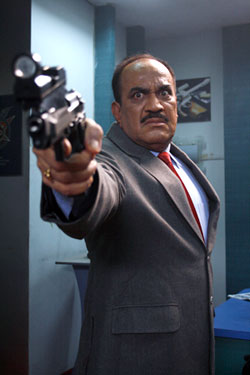
    The media, especially the television which is a reflection of the society, has reflected this growing interest with the increasing popularity in the number of the unglamorous, and sometimes, gory crime shows. From Karamchand in the 80s on DD to the latest Gumraah on Channel V, most crime shows have done well and have been able to garner an interest that other genres might not be able to. The longest running show on the Indian television, CID, is a crime show which was started in 1998 and recently turned tri-weekly.


    Speaking about the show’s success, Sneha Rajani, senior EVP and business head, Sony Television, said: “CID has been doing well for years now; it’s not a recent phenomenon. On an average, the show gets TVR of 3.3-3.5, and sometimes even goes up to 4.5. So, it’s no surprise that show has its share of viewers, as week after week people switch on their TV sets to get inspired by the bravery and the relentless passion of CID against crime.”


    Popular Crime Shows

    Karamchand – 1980 – DD

    CID – 1998 – Sony

    India’s Most Wanted – 1999 – Zee

    Aadalat – 2010 – Sony

    Gumrah – 2012 – Channel V


    According to industry experts, most GEC experiments with crime shows have been successful – some have garnered a little interest and others have gone on to become national hits like Adaalat and India’s Most Wanted.


    Such crime shows consist of an economically viable format – no huge sets, no major actors, no glamorous outfits or expensive judges are required – hence, the channels don’t mind investing in them.


    Janardhan Pandey

    Janardhan Pandey, associate vice president, DDB Mudra Max feels that apart from reality shows, only crime shows have the ability to create sensationalism and that’s the main reason people are attracted towards the format. “People want to know what’s happening around them. And these shows are able to portray facts through dramatization, without costing too much for the channel.”


    ‘Curiosity killed the cat’ is the apt reason why crime shows work on television according to Anand Chakravarthy, executive vice president, Marketing, RBNL and business head, Big Magic. “Crime, as a genre, has an extremely wide appeal, irrespective of the country. In a developing nation likeIndiawhere crime and corruption are a part of the societal fabric, the audience is most likely to appreciate televised content in the genre.”


    Anand Chakravarthy

    He added: “The fascination with the morbid and intrigue that the genre provides work across a cross section of audience, regardless of age and gender, making it acceptable to a larger and diverse audience base.”


    However, the question which still arises is – aren’t such shows the figment of the writers’ imagination? The writers of such shows may choose to disagree about the authenticity. “Though some might say they are a writer’s figment of imagination, but in reality, newspaper reports, sometimes even FIRs and investigations done by channels help us gather facts and details about various cases,” said a writer with a national GEC.


    According to Priti Murthy, national director – Insights, Maxus, crime shows attract not only the middle-aged, but a large number of youth too. “Crime cuts across genres and finds a large number of youngsters hooked on to the genre like action, thriller, and crime. One could say it gives them adrenaline rush.”


    Prem Kamath

    Channel V recently launched a teen crime show, Gumraah, which has became popular for its disruptive format and unique viewpoint of understanding the psyche of young criminals. “V’s Gumrah, in its second season now, details the ecosystem in which a teen crime is conceived and the extraordinary circumstances that lead to it. The show has had an immense impact on us, in terms of viewership as well as vindicating our research and understanding of the youth. We have seen a tremendous response in terms of feedback and appreciation on social media and other consumer responses. It has also further encouraged us to try bolder formats and continue on our chosen content strategy,” said Prem Kamath, Executive VP and GM, Channel V.


    Most crime shows do attract a large number of eyeballs, but most GECs also claim that it’s not about entertainment alone; they are helping the society as well. “As for adults, and specifically parents, this show is an eye-opener: if one neglects their child’s need for attention or dismiss it as juvenile behaviour, it can have serious repercussions and lead to moment of madness, eternally irreversible,” added Mr Kamath.


    “Shows such as Police Files (aired on Big Magic), while showcasing crimes from the region, also attempt to educate and empower the viewer. The depiction of the crimes help the viewers to understand and accept the need to be vigilant in safeguarding themselves and their loved ones. The information imparted by way of applicable laws of the Indian Penal Code, safety tips by experts and NGOs help empower the viewer,” said Mr Chakravarthy.


    So, if one has to go by what industry experts have to say: it’s entertainment with awareness that makes one switch on their television sets to watch crime shows.  Whatever be the reason, the channels can surely say that ‘crime pays’!


  • ODigMa to expand to Australia and SE Asia

    By Tuhina Anand


    ODigMa, the online marketing agency, is looking at expanding its footprint beyond the Indian shores. The immediate plan is to have its presence in Australia and South East Asia and the agency has already made headway in its bid to have a presence in Australia. In India, it has offices in Bengaluru, Delhi, Mumbai and Ahmedabad.


    Talking about the edge that ODigMa has, Advit Sahdev, CEO and Founder, ODigMa said: “Our expertise lies in data analysis and that’s our differentiator. We do a complete analysis on the data available and advise our customers how this data can be used to optimal use. Precise targeting helps our clients in getting desired returns.”


    OdigMa uses Big Data analysis, which as per a report by McKinsey in 2011 about using Big Data in social media analytics companies, can increase innovation, competition, and productivity. The report suggests that Big Data allows organizations to create highly specific segmentations and tailor products and services precisely to meet those needs. Using Big Data for social media analytics will help companies to create new products and services, enhance existing ones, and invent entirely new business models.


    The agency has come out recently with a Facebook analytical tool which it claims is the one of its kind available. The tool which is already available to ODigMa clients helps in going beyond the interactivity that is currently available on this page.


    Started two years back, the online marketing firm services over 100 clients including brands like MTS, Marks & Spencer, MakeMyTrip, HiDesign and DoCoMo among others. It builds innovative social media tools using analytics and BigData.


    The agency, whose first client was Wildcraft, takes pride in the fact that it promises to do work that can be measured. Mr Sahdev said: “We have done work that has helped our clients grow and the best part is that all of this can be measured. We also do a lot of work in website optimization.” He points how he advised one client to follow the offline model of having happy hours for an e-commerce site to drive traffic during the day when usually it would see lesser visitors. Also for an automobile launch in Ahmedabad, ODigMa got the live streaming on FB and a FB campaign that got the company a good number (140 in total) of qualified lead in a week. The service helps in a more personalized solution and helping in better conversion especially works for e-commerce sites.


    On the reaction of clients on social media marketing, Mr Sahdev said: “My experience says that everyone is willing to try it for a short period, say for 4-5 months and gauge the response. It’s only if they have met with success in these months that they want to commit long-term.”


    In terms of trends in the social media marketing, Mr Sahdev pointed that the big thing is to have videos. He also stated that their company is focusing in a big way in the creation of video and also promotion of those videos. In fact, the videos, he feels, should not be more than 30-40 seconds long but should be different from a TVC as the requirement on social media is different but the message has to be put in an interesting manner with an eye that on social media. The key is sharing, hence the content should be such that encourages sharing instantly.


  • Reviewing the Reviews: Reluctant praise for ‘Cocktail’

    Cocktail

    Directed by Homi Adajania

    Produced by Saif Ali Khan, Dinesh Vijan

    Written by Imtiaz Ali, Sajid Ali

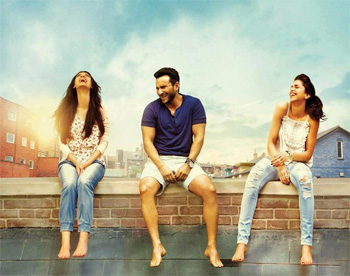
    Starring: Saif Ali Khan, Deepika Padukone, Diana Penty


    Saif Ali Khan playing his umpteeth cool, flirty dude role, can’t carry it off now, at 40 plus. Which is one of the things Homi Adajania’s Cocktail got panned for, the other being its regressive stance towards women, while posing as a youth flick. The cheerful first half is absolutely at odds with the embarrassingly melodramatic and cliched second half.  What’s really sad is that in an urban story, set in London, the subservient girl gets the lechy guy, the wild girl was not thought worthy of even a jerk.


    The film got 2 to 3.5 stars, and a good opening, but reluctant praise, mainly for it’s breezy first half.


    Shubhra Gupta of the Indian Express wrote: “There’s this guy, he’s too cool, ya. Lives and works in London, chases girls, gets em, beds em, moves on. There’s this girl, she’s wild. Has this nice pad in a tony part of London, which she uses as a stop-over to change clothes in between all the partying. And, of course, there’s this other girl, who’s the ‘seedhi-saadhi’ type, you know, covered from top to toe, sweet, shy. Place these characters in a shiny glass jar, shake with a swizzle stick, and you get ‘Cocktail’. Which is just another name to call a one guy-two girls shtick, which is, as you and I know, one of the oldest in the book. ‘Cocktail’ starts off headily enough, and bubbles along till half time; post that, the sips get diluted, and the swallows take much longer.”


    Rajeev Masand of IBN Live cribbed: “Alas, Cocktail, directed by Homi Adajania, is no saucy menage a trois, although it does involve three friends living together in London, a little too close for comfort. No, Cocktail falls firmly in the rom-com space. But even as the tone shifts uncomfortably from breezy, light-hearted fun, to heavy drama in the second half, you’re never in danger of actually caring for the cardboard characters in this empty souffle of a film.”


    Raja Sen of rediff.com commented how spectacularly the film crashed and burned. “Adajania starts off breezily enough, all effortless-flirting and shotglasses and dramatically teary mascara, but the threadbare and increasingly inane plot unspools halfway through, leaving us with a shoddy, frustratingly random sequence of events. The last one-third of the film features the kind of emotional melee that can only be rightfully resolved by handing one of the girls a samurai sword. Alas, no such bloody respite is offered.”


    Karan Anshuman of Mumbai Mirror was disappointed by the writer Imtiaz Ali’s cop  out: “(He) goes on to self-censor, Indianize, romanticize, emotionalize, ergo commercialize the experience and give us a 1 part alcohol and 10 part water cocktail, an exercise in pointlessness. We now have abla nari, the Indian mother pushing marriage, and a… you get the point. All of this is well disguised of course with cutting edge club eveningwear on Deepika Padukone and luscious London.”


    Saibal Chatterjee was generous: “The heart has its reasons, the mind its methods. When the two are sought to be yoked together on Bollywood’s big romcom canvas, the result can be touch-and-go. One misstep either way could mean a hopeless nosedive either into mushy drivel or pretentious claptrap.  But no such worries here. For the most part, Cocktail, directed by Homi Adajania and scripted by Imtiaz Ali (a sort of high priest of the genre), steers clear of the pitfalls and delivers an eminently watchable love story that breaks the mould.”


    Taran Adarsh wrote: “On the whole, Cocktail has a fascinating first half, charismatic performances, harmonious music and the trendy look and styling as its aces, but the second half is not as tempting or intoxicating as the first hour. It pales when compared to the attention-grabbing first hour. Yet, all said and done, this one’s primarily targeted at the Gen Next, especially those in metros, who might identify with the on-screen characters.”


  • The Anchor: 5 reasons language music channels are the way to go

    By Sandeep Bansal


    1. Regional music channels are registering increased viewership. The regional music channels have provided a good television platform for local music which was earlier not there.


    2. There is a steady revenue growth @15 per cent for the regional television channels.


    3. More focused targeting for advertisers and hence less wastage. Many big marketers are looking at a more focused communication for their consumers across markets and this can very well be addressed by the regional music television channels.


    4. Capitalization costs are lower compared to national music channels as one does not invest in national deals for distribution, content, and so on. The lower capitalization costs bring down the turnaround period for the regional music channel.


    5. Since regional music is not mainstream, the music content is available at a much reasonable rate compared to Bollywood music content. Also the regional content is created with smaller budgets making it cheaper for the broadcaster to source the same.


    Sandeep Bansal is Managing Director 9X Tashan


  • PR Solution to launch Press Conf booking portal

    By A Correspondent


    You need people to know about a new product or service or more people to hear about your business successes, or perhaps any agenda you want to put across the country’s branches. Now you can with the help of PR Solution, which will launch country’s first online press conference booking portal (www.pressconference.co.in) on July 25 inIndia.


    Through this unique portal, anybody from any part of the country can complete the formalities of holding a personal, public or corporate conference in any part of the country. The site is created to empower the national and international companies with instant booking of a press conference.


    Press Conference portal is a one-stop-public relations website that offers the broadest selection of PR services in India.


    The idea was incepted by S Vijay Kumar and the aim is to connect the companies and help them organize press conference across India and abroad and make it worthwhile for them and offer a range of best-value products and services along with cutting-edge technology and dedicated round-the-clock customer support.


    Vishnu Khanna, chief advisor, PR Solution said: “The Press Conference portal will offer companies the convenience of online press conference bookings at rock-bottom prices. The aim is to connect the companies of India and helping them in organizing press conference across India and abroad and making it worthwhile for them.”


    He added: “With the rapid development of public relations in India and abroad, Press Conference is going to become the preferred choice of millions of companies, who are delighted to be empowered by a few mouse clicks”.


  • Mobile on voice is where middle India really is: Neeraj Roy

    Hungama Digital Media, along with singer and music composer Shankar Mahadevan, recently launched MOBisur – touted as India’s first digital talent hunt property. Taking time from the launch, Neeraj Roy, MD and CEO, Hungama Digital Media Entertainment Pvt. Ltd. spoke at length with MxMIndia about this new brand property, the efforts put into it, and also about Hungama Digital Services post JWT acquiring a majority stake, his focus for the company in the next two years and much more.


    You say that it has taken nearly a year to conceptualize the entire brand property – MOBIsur. Can you share with us the efforts that went into building this property, how it all started, and the kind of research you may have undertaken and so on?

    This idea was conceptualized nearly three years ago by my colleague Anuj Bajpai who heads our voice business. As we moved into it, we realized the complexities, but at Hungama, we have a very deep rooted understanding about both consumers (because we have a lot of large consumer properties, which are all digital), and at the same time, we understand digital content. However, we still felt that something was missing and that’s where Shankar Mahadevan and his team came in because it was important that we run past them what we are thinking.


    Do you have a dedicated team working on this initiative…?

    Yes! It is driven by a voice team, but we have leveraged the entire group’s assets because there is a web interface aspect to it, there is a social media aspect because for any new service we launch, there is always a core product team. Once the product is approved and has a go-to market strategy at that stage, it moves from the product team to the operations team, which will then run this and ensure that it has momentum.


    Hungama launches digital talent hunt MOBIsur
     

    The mobile medium in the last many years have grown significantly, especially with 3G and now 4G coming in, there is great expectations from this medium. As wireless subscriptions continue to grow, billions of apps continue to be downloaded worldwide and India said to have the second largest mobile subscribers in the world.


    Taking into account the growing popularity of the digital medium, ITC’s Vivel FaceWash, along with Hungama Digital Media Entertainment Pvt. Ltd. and musician Shankar Mahadevan has launched ‘India’s first digital talent hunt’ – MOBisur.


    Mr Neeraj Roy, MD and CEO, Hungama Digital Media Entertainment Pvt. Ltd. said: “The reach of Internet and Mobiletechnology has grown tremendously in the past few years. The aim of MOBisur is to create a talent-scouting engine in spaces that haven’t been explored in the past, via an entry ticket that is their everyday communication device.”


    This unique mobile- and internet-based talent hunt promises to give every Indian an opportunity to prove their singing talent. The property was launched by Shankar Mahadevan, Nilanjan Mukherjee, Head of Marketing, Personal Care Products Business, ITC Ltd; Bhushan Kumar, MD, T-Series and Neeraj Roy, MD and CEO Hungama Digital Media Entertainment in Mumbai on July 13. T-Series is the official music partner for the property, which elevates the talent hunt to an even higher platform.


    Mr Bhushan Kumar, MD, T-Series, said: “It gives us immense pleasure to be able to bring new talent in to the industry. As a music label, we are always looking for fresh talent and with a truly digital talent hunt; we have access to talent across the country. We are looking forward to releasing an album composed by Shankar Mahadevan for the winner of the hunt”.


    The entries for the digital talent hunt, MOBIsur is said to continue for the next 45 days and the duration of the property will be for three months. The marketing budget is pegged at Rs3-4 crore.


    Mr Nilanjan Mukherjee, Head of Marketing, Personal Care Products Business, ITC, said: “Vivel FaceWashis delighted to present Mobisur, an exciting and innovative platform to discover hidden musical talent. Vivel Face Wash MOBisur, in line with this brand philosophy provides a unique opportunity to aspirants to live their musical dreams.”


    5,000 talented female participants selected from entries submitted on the Vivel Facebook page www.facebook.com/itcvivel will make it to the second round.


    The contestants who clear the first stage of the auditions will be given specific tasks by Shankar Mahadevan, who said: “When I conceptualised this property with Hungama, the thought was to give every Indian an opportunity to participate in a unique contest to try and reach the pinnacle of musical genius. Music is a powerful medium that can come from the most unexpected places.”


    Based on their performance in the tasks and the votes secured for each task, they will be chosen for the next round. There are three tasks in all and after clearing all three tasks the contestants make it to the final round, which is the On-Stage Performance. Ten finalists will be chosen to perform in front of Shankar Mahadevan and two other prominent personalities, where the final two winners will be announced.

    How different will the user experience be for mobile and internet users?

    In internet, there have been initiatives of this nature – they have been done in the past. Over the years, even the mainstream entities that do reality shows have created web interfaces for people to upload and so on. We are, in fact, going to be unveiling a lot of newer applications which will have stronger internet experience to it. So we have innovated on that front, knowing fully well that as a process it has been done. On the other hand, this was never done on mobile. In fact, mobile on voice is where middle India is, in reality. We needed to build this property and we had our limitations in terms of what we can do and not get cumbersome. At the same time, I needed to capture certain amount of information data to be ethically appropriate in the whole process. Overall, we have balanced it well and we are happy with the product.


    What about the duration of MOBIsur and its timeline and so on?

    There will be three different phases. The entries will go on for the next 45 days, wherein it is all about reaching out and getting as many people to participate. Then it goes through zonal rounds, which will then culminate into final round. The entire property is on, however, for three months. We didn’t think that we ought to have a real world angle to it in terms of going on-air and so on, but the way it is panning out, we might even consider that as the response has been very positive.


    Tell us about your marketing activities planned around MOBIsur?

    There is a fivefold approach to marketing. First, it starts with announcing the initiative through media and we then backed it up with a television campaign. Hungama has about 20 million consumers on the internet which are accessing our media properties, and we will obviously actively promote it there. We have also have 3.5 million social media community and we will promote it there as well. The most vibrant community is going to be the telco-ecosystem – one of the most unique thing we have done – because it is a universal number. We want every one of the telcos to take ownership of this as their own activity event/ product and that will be the one that will give us the maximum reach.


    Television promotion will be across channels, a lot of them music channels. Overall, my sense is that we should be putting in about Rs3 to 4 crore across mediums, in terms of the entire activations programmes, but a lot of that focus will be in areas where there is direct call to action. So don’t expect that skew to be driven completely by television, we will in fact do a lot more on digital and mobile mediums.


    Now, post JWT acquiring majority stake in Hungama Digital Services, what changes have taken place, especially on internal developments?

    JWT now has a 51 per cent stake in our business. There has been absolutely no change operationally, as it is the same team that runs the business, we are operating out of the same premises, we are handling the same clients. Clearly, over a period of time, we hope to be able to tap into and grow, leveraging their network onto other areas as well but, as of now it is business as usual.


    What about expansion plans into newer cities, any new verticals in the Digital Services business?

    Expansion is an ongoing process for us, the big focus is going to be to try and do as much of digital and physical promotional activations. The second area we are looking a little bit closely are trade-based marketing activations, which is the new area of growth for us.


    What are your views on India’s drawing a blank in digital at the Cannes? Does digital creativity lack steam in India?

    In fact, it is just the beginning in India, I think in the each passing quarter, you will find more focus on digital from both mainstream agencies as well as from brands. There are times when you have a good year or not so good ones, it’s alright.


    What are your plans for Hungama Digital Services in the next one or two year time?

    Our first objective is to make the new entity fully integrated; to align ourselves in certain manner and ensure that appropriate synergies are brought about. Our objective is to ensure that our existing clients benefit from a wider, more global network that exists for them. The third objective is that the team, about 120 people who’ve moved there, feel a renewed sense of enthusiasm and energy towards creativity. All of this has to happen in the current fiscal, then we gauge how do we scale this and go forward.

     

  • Grey wins creative duties for Muthoot group

    By A Correspondent


    The Muthoot Group (M George Enterprise), gold loan business set up in 1887, has now also diversified into financial Services, securities and a host of allied interests. Grey Worldwide has been mandated to handle the creative duties for all of these.


    The business will be primarily handled out of Delhi office, with Grey’sBangaloreoffice playing a key role for the South Market. Having established itself in the South, the Muthoot Group is now seeking to enter and consolidate its presence in the North, West and East markets.


    According to Dip Sengupta, VP and Branch Head, Grey Delhi: “It’s a great win! From the very first meetings with the Muthoot Group, we were moved by the ethics and value systems that drive this great brand. Our task is to help make the brand iconic.”


    “It was great to be a part of such a diverse pitch and of course, win it eventually! It takes a lot to identify a powerful brand idea and to make it relevant for Muthoot’s diverse markets. It was a great challenge and we look forward to this partnership,” added Hari Krishnan, VP and Branch Head, Grey Bangalore.


    According to Cherian Peter, Chief Marketing Officer, Muthoot Group: “We are delighted to have Grey as a partner and look forward to some great work!”


  • NewsX finds a benefactor in owners of India News & Aaj Samaj [updated]

    By A Correspondent [updated]


    The ITV Group promoted by Kartikeya Sharma and its associates have acquired control of INX News Pvt. Ltd. which owns and operates the English news channel NewsX.


    Speaking on the occasion Mr. Sharma, Managing Director, ITV said, “This is a logical market expansion for us and enables us to enter the English news domain while strengthening our presence in the broadcast and digital media space.  NewsX has emerged as a quality news provider with great growth potential and making it part of our group’s network of seven regional news channels will bolster news gathering abilities and create multiple synergies all around.”


    In 2009, Mr. Vinay Chhajlani and Mr. Jehangir S. Pocha had joined hands to run NewsX.  In a joint statement Chhajlani and Pocha said, “We are happy to hand over the channel to the ITV Group and acknowledge the contribution of the team that has earned NewsX much recognition.  Being part of the ITV Group will help NewsX transcend the limitations of being a stand-alone channel and give new thrust to the channel’s editorial and commercial development.”


    Our earlier report:

    Indi Media Network-owned English news channel, NewsX has finally found a suitor in ITV Media (Information TV). The details of the financial transaction are not known yet, though sources close to the development have confirmed the news to MxMIndia.


    ITV Media is the parent electronic media company which broadcasts 24/7 Hindi news channel, India News. ITV Media is part of the Piccadilly Group which also runs a print division that publishes a daily Hindi Newspaper, Aaj Samaj as well as a weekly Hindi magazine, India News. Headed by Mr Kartikeya Sharma, the company also has two regional news satellite channels, India News Haryana and India News Bihar. Mr Sharma is son of leading Haryana Congress leader Venod Sharma and the brother of Manu Sharma, a convict in the Jessical Lal murder case.


    NewsX which was earlier owned by INX News, was launched with much fanfare in March 2008. Later in January 2009, it was bought over by Indi Media Network, a partnership between the then Nai Dunia CEO Vinay Chhajlani and Businessworld Editor Jehangir S Pocha.


    Mr Pocha is currently CEO and Editor-in-chief of NewsX. An official announcement was made by Mr Pocha to the existing staff about the transaction in the afternoon and the new management is likely to speak to the team later today. MxMIndia learns that Mr Pocha reassured the team that he will continue as Editor-in-Chief. There were indicators that some resource sharing may happen with IndiaNews. A press communiqué is also to be issued.