Author: mxmadmin

  • Marketing, Cycle-ishtyle

    By Tuhina Anand


    Arjun Ranga

    Cycle Pure Agarbathies has been finding unique ways to build connect with its consumers. One thing that stands out is the company’s attempt to invest in innovative advertising, unlike its competition that focuses mainly on trade-oriented promotions. In 2011, during the World Cup, it had very successfully launched Pray forIndiacampaign to connect with the masses.


    The brand, Cycle Pure Agarbathies, belongs to the parent company NR Group, which has a turnover of Rs650 crore. From its very inception, the company has been focusing on reaching the rural masses.


    However, three years back, it intensified its initiative and started focusing on reaching villages with a population of 10,000 and more. It modified its target in 2012 to reach places which have a minimum population of 5,000 people. In its bid to reach the interior most locales of India, the company has branded vans that move across hundreds of towns and villages in India. These vans have Cycle products that are ready to be sold to the public. The company also ensures that it participates in the community fairs and exhibitions that take place in villages and towns.


    Besides this, the company has been focusing on initiatives to preserveIndia’s dying culture and traditions. The company has been focusing on cause-related marketing activities, specifically on preserving India’s culture and heritage.


    To encourage young minds to appreciate India’s rich culture and heritage, the company has initiated a heritage quiz. The quiz is framed on many themes of India heritage including monuments, epics, mythology, origin of various festivals among others. The quiz just concluded its first session in Chennai on July 7 and will be held in Kolkata on August 25 followed by Ahmedabad in September this year.


    From 2009, the company has also been organizing the ‘Cycle Sheri Garba’ – Sheri Garba is a traditional art form of Gujarat- in its attempt to resurrect the original style of garba which is now crushed under commercialization. The organizers of Sheri Garbha have appreciated Cycle’s effort in reviving the Garba with its traditional practices.


    The company also started Rhythm Ta Ta Thai Thai to showcase the young female dance talent in and Rhythm Dhaker ladai, a contest for drum beaters in West Bengal.


    In a category like incense sticks, where building brand is difficult, Cycle has been quite successful. Arjun Ranga, Managing Director, Cycle Pure Agarbathies, elaborated: “We have unique fragrances with formulations handed down from generations that help in elevating mood for sampoorna dhyaan (complete concentration). Our prime focus is to get superior raw materials and provide consistency in quality. Besides, we have been bringing innovations across the value chain.”


    He added: “From the very inception, brand building was given priority, which was a key differential compared to competition. Well known advertising agencies were roped in. Over the year’s consistent quality, distribution, promotions and advertising have built up strong brand equity, and created a strong consumer pull.”


    While building the brand Cycle, there have been few parameters that include distinctly superior quality compared to competition, value for money offerings, exclusive fragrances, commitment and ethical practice, customer focus, constant innovation and investment in brand building and significant focus on R&D.


    The company has been launching occasion related pooja kits – like a kit for Ganesh Chaturthi. Mr Ranga also pointed out few other initiatives that include the rural marketing/saturation coverage in all parts of the country, intensifying involvement in cause-related marketing and focusing on social media and digital marketing.
    The Mysore-based NR Group was founded by N Ranga Rao in 1948. Interestingly, Mr Rao decided to call his range of incense sticks Cycle as the symbol recognized across the globe. Today Cycle Pure Agarbathies is widely known incense brand.

     

  • IdeaBox Works sets up in Bengaluru

    By A Correspondent


    IdeaBox Works, a boutique agency has been launched inBangalorewhich promises to provide clients with creative audio visual solutions for their advertising and communication needs.


    The company is the brain child of Smitha D’ Souza, Sowjanya Kashyap, Shanawas KA and Karun Venugopal. While Ms D’Souza and Ms Kashyap have rich experience of almost a decade in radio and television programming and content creation, Mr Shanawas has a 10 years of strong experience in Media and Mr Venugopal has extensive media strategy, planning and buying experience having worked with leading advertising agencies in the country for almost 30 years.


    The company aims to break away from run of the mill radio productions, to offer clients a distinct sound for their brand. “Radio ad breaks are a tune out only because each spot sounds like the one before it or the one after. Brands spends heavily on buying media and a bad creative can only ensure all their media spends have just gone down by the drain. Obviously client complains of an ineffective campaign,” they say.


    The company aims to put its collective television experience to good use by developing cost effective and quality TV commercials and corporate videos for their clients. “We have brought in fresh thinking to the concepts we develop for our clients. Having interacted with clients and audiences in various capacities of our professional lives, we have come to understand their needs and what interests the consumers. In fact, some of the clients that we’ve worked with, are delighted with our innovations.”


  • Discovery APAC wins Indo-Am Corp Excellence award

    By A Correspondent


    Discovery Networks Asia-Pacific (South Asia) has been awarded as the best US company operating inIndiaunder the Media & Entertainment category at the 8th Indo-American Corporate Excellence Award 2012 held in Mumbai on July 4.


    Discovery Networks Asia-Pacific (South Asia) was selected on the basis of its overall contribution to the Indo-US business and other parameters like human capital management and corporate social responsibility were also considered. The award commended Discovery’s programming and production excellence and its stellar performance in the country.


    The company broadcasts eight unique content channels inIndia– Discovery Channel, Animal Planet, TLC, Discovery Turbo, Discovery Science, Discovery HD World, Discovery Channel Tamil and Discovery Kids.


    Rahul Johri, senior vice president and general manager –South Asia, Discovery Networks Asia-Pacific, said: “This award is recognition of Discovery Networks Asia-Pacific’s commitment to engage and entertain Indian viewers with unique and credible programming. It exemplifies and values the positive contribution that the network brings inIndiathrough its innovative content.”


    Indo-American Chamber of Commerce (IACC) is the only bi-lateral Chamber of Commerce committed to promotion of Indo-US Trade & Economic Relations by facilitating joint venture, strategic alliances, trade, technology transfer and investments. IACC has over 2,600 members who together represent a wide spectrum of business and economic segments: manufacturing, exports, services et al.

  • Phew! Over a billion online in APAC

    By A Correspondent


    The Asia Digital Marketing Association (ADMA), in co-operation with leading digital marketing companies and research houses, has published the sixth annual Asia Pacific Digital Marketing Yearbook. Among the thousands of facts and data points, readers will learn that 46 per cent of the world’s online population – 1.016 billion people – is now in Asia Pacific, of whom 623 million access the web via mobile.


    Although this enormous and growing addressable market seems to hold boundless business potential for marketers, the reality is more complicated – and more interesting.


    The Yearbook is compiled for marketers, advertisers, and their agencies, to help them understand and maximise the digital potential of their business in the region. The 2012 Yearbook has more information than ever before on online demographics, user behaviour, online advertising, mobile, e-commerce and social media.


    “The billion people online in Asia Pacific are spread across more than 14 countries, with a wide range of languages, cultures and online habits. More than half of them (513 million) are in China, which has its own media properties and consumer dynamics. In fact, seven of the top eleven sites in the region are in China,” said David Ketchum, ADMA Chairman.


    “Across the rest of Asia Pacific there is remarkable diversity; the way people use the web and interact with content and with one another differs significantly from Australia, to Korea, to Indonesia, to India. The Yearbook helps marketers make sense of what works where in Asia’s increasingly social, local and mobile web environments,” he added.


    The one billion user number is made up of hundreds of thousands of communities of users, spread across a wide variety of devices and platforms, languages and cultures, and who use the web in a profusion of different ways.


    The data in the ADMA Yearbook send a clear message: it’s time for marketers to get local and get personal.  The implications and opportunities are far-reaching:

    • Social media continues to gain in importance, but brands have to proceed with caution. Although 60 per cent of social networkers say that social networks are a good place to learn about brands, 50 per cent also say they don’t want to be bothered by brands.
    • As in past years, people still put the most trust in recommendations from friends and family over all other media channels (with 52 per cent of users in Asia Pacific trusting friends and family completely as compared with newspaper and magazine ads at 14 per cent).
    • Social commerce is on the rise, and marketers can deploy sophisticated, personalised approaches, depending on where they are in the sales funnel, to build brand awareness and understanding, create brand preference, make sales, and do CRM.
    • Search remains vital to helping customers find your brand and for you to find your audience. With crowd-sourced curation of content, natural search rises in importance and complexity, and paid search is still effective for driving “last click” results.  Search/navigation properties in the region have 84.7 per cent reach.
    • Despite the rise of social media and user-generated content, paid, owned and earned media all continue to play important roles in achieving marketing goals.
    • Although in this fragmented environment marketers must work harder to understand and find their target customers, analytics, behavioural targeting and big data are providing more and more powerful tools for marketers to reach and engage with internet users in personalised ways.


    The Yearbook, compiled by editor Rachel Oliver from government, industry, company and research data, is the single most comprehensive source available for the Asia Pacific region.


  • Magazines high on engagement but efficacy is key (+Video)

    By Our Correspondents


    The best compliment that befits the domain of print is its ability to appease the readership preferences of its readers while continuing to be a favourite with the advertisers as well. This is especially true in the case of magazines that continue to demand loyalty from consumers while at the same time enabling brands to come up with campaigns that can be as intimate and personal thereby ensuring maximum bang for their buck. But despite all the hype and hopes surrounding the medium, there is also talk of magazines not being able to do enough to prep up advertisers to loosen their purse strings, a fact that is compounded by the lack of (creative) ad innovations that continue to deprive the sector of its fast growth.


    As a way to measure the acceptability of magazines amongst its readers and find out its favourability with brands, Association of Indian Magazines (AIM) engaged the services of two research agencies IMRB and Quantum to carry out an Engagement Survey in the Indian marketplace. With a sample size of 3600 and spread across 10 cities, the survey had pretty interesting facets to throw up. Facets that could help revive the glory that magazines once commanded and even emerge an absolute favourite with the advertisers.


    Tarun Rai
    [youtube width=”400″ height=”225″]http://www.youtube.com/watch?v=cZuu2VvNty4[/youtube]

    Unveiling to the gathering some of the findings from the survey, Tarun Rai, CEO of WWM and President of AIM began by bringing to light how the media marketplace in India has seen an immense transformation. Be it television that has seen the number of channels exceed 745 in the last three decades or even newspapers and magazines that keep sprouting intermittently, the medium has never seen such a head rush ever before. In effect, media has become an ‘Always On’ medium in India today. But too many options have also led to the consumer becoming more distracted and confused leading to him/her losing trust on the medium. According to Mr Rai, the question that needs to be asked is whether everyone is communicating messages or just communicating noise and better still, whether there was a need for owners to move from more messages to better connections with the consumers? Mr Rai didn’t hesitate here when he said that “magazines make better connections than any other medium.”


    Proceeding to present more findings, Mr Rai said that magazines stood out as it was able to connect with the readers at a far deeper level and that they rated higher on engagement and trust scores. Other stats include: 68 per cent readers read magazines when they’re alone while 66 per cent turn to magazines when they want to relax; 87 per cent readers do nothing else while reading a magazine compared to television that recorded 40 per cent; only 12 per cent ad avoidance was recorded for magazines – the lowest by far for any medium and most importantly, 84 per cent of the readers believed that ads are part of the magazine experience and that they are not interruptions as was previously thought.


    Adding further, Mr Rai said, “The high points are the facts that this research very conclusively prove that magazines engage the readers and audiences the best across all media. Whether it is on trust, whether it is on propensity to purchase or whether it is time spent on magazine, there is no other medium which engages as best as the magazines do.”


    Shashi Sinha
    [youtube width=”400″ height=”225″]http://www.youtube.com/watch?v=UAGJWPzAEeM[/youtube]

    To verify the several advantages that magazines had to offer and whether the power of the medium was being harnessed to its fullest, the evening proceeded to a panel discussion that included the likes of KV Sridhar, National Creative Director, Leo Burnett; Mrinmoy Mukherjee, Director – Marketing & Business Development, Raymond; Nathalie Gerschtein, General Manager, Garnier India; Shashi Sinha, CEO, Lodestar Universal and Shubhranshu Singh, Director – Marketing, India & South Asia, Visa. The session was moderated by Annurag Batra, Chairman & Editor-in-Chief, exchange4media group.


    According to Ms Gerschtein, while magazines were a key medium for FMCG companies like Garnier, it was essential for them to be relevant and contextual to the needs of brands. She went on to cite one such example which demonstrated the power of magazines in enhancing the visibility and personality of a brand. The brand was L’Oreal Paris that was celebrating 40 years and the magazine with which it partnered was Femina, that had attributes which were similar to what was required.


    Mr Sridhar was at his explosive best as he began by expressing his love for the medium of print. “I have grown up on print advertising and I can say that if you are a book lover you will never go to the movies. That’s because the written word has more power; in fact it will never go out of power.” Adding further, Sridhar said that all mediums today are efficiency driven but it was important for them to have an emotional connect with their consumers – something that television has being doing so well. “It is important for every medium to reinvent itself because ultimately branding is about finding a purpose in people’s lives. According to a recent survey it was found that people were inspired more by brands (13 out of 20) than by celebrities, which is noteworthy. It is therefore essential for brands to build an emotional connect as it does in providing efficiency.”


    Mrinmoy Mukherjee
    [youtube width=”400″ height=”225″]http://www.youtube.com/watch?v=BCGbwMf89Wg[/youtube]

    According to Mr Singh, it is important to know that engagement is a two-way thing. Consumers are leading their lives in continuum today and mediums have to be able to accommodate to his needs faster than ever. “When I talk to a brand, I expect it to talk back to me and keep evolving. That is where the challenge lay for brands and magazine owners.”


    Said Mr Mukherjee, “There were several high points from the survey but what is important is that this survey brings out several areas which ensure that you get the information about how the consumer connects with magazines and that is overall a high point. It is also an enabler for decision making for brand owners.” Speaking on the importance of such surveys for the magazine industry, he said, “the survey is a first of its kind and it is important because it tells media planners and brand owners what they should be putting their monies on. Therefore it is like creating a currency basis which they get to decide.”


    Providing his insights on the survey, Mr Sinha said that the Engagement Survey is a very powerful idea. “There is a lot of data, but the data must be presented in the right manner to the media planner because media planners look at the numbers from IRS (Indian Readership Survey). The best thing would be to go agency by agency and present this data to media planners at the universal level, which is when this survey will be very powerful.” According to him, “Such surveys are important to open up people’s eyes and minds but, finally if you make it part of the mainstream survey like for instance a substitute for IRS or part of IRS on continuous basis, then that is where it is important otherwise it will be the way it is.”


    Advocating the future that lay ahead for the magazine industry, Mr Sinha said, “I believe that the year 2013 and 2014 will be a very big year not only because of what the magazines are doing but also what is going to happen to television. So depending on what the government decides to do both from digitization point of view and the restriction of advertising point of view, there will be an increase in cost for television. So a lot of advertisers who cannot afford television will look at alternate medium and magazines will be very viable for SEC A audiences. So I think it will become a lot more mass effective medium then.”


    When asked whether magazines have been looking to overpower other prominent media vehicles in the future, Mr Rai said, “We are not here to replace any media. All we are saying is that magazines do certain things that no other media can do. Magazines engage with consumers at a much deeper level and at a much more consistent level than any other media. A lot of people think magazines only build brands and that they don’t need to actually purchase but, our research shows that the propensity to purchase the call to action after seeing an advertisement in a magazine is highest amongst all media. So we are trying to now talk about the fact that magazines are not just good for brand building but, we also give you the best return on investment (ROI) where purchase and call to action are concerned. So we just want to start a new conversation which is beyond numbers, beyond eyeballs and talks about the quality of engagement and the quality of messaging.”


  • Debrief: Maruti: ‘Kitna deti hai?’ continues to rock

    By Anil Thakraney


    I have always been a fan of Maruti’s ‘Kitna deti hai?’ campaign. Okay, the phrase has an erotic ring to it (admittedly that’s my dirty mind at work), but its single-mindedness of purpose is admirable. And also the fact that it’s totally relevant; Indians tend to be obsessed with mileage. There’s one more reason for my liking this campaign: The commercials are always entertaining.


    Well, Maruti is back with yet another ‘Kitna deti hai?’ ad. And the timing could not have been more appropriate. With petrol prices going through the roof, this is the one question on top of every middle class car buyer’s mind. The new TVC re-creates the thirties. A firang lady called Amelia Johnson is the first woman to fly solo from England to Australia. She’s arrived for a ‘stop-over’ in Mumbai, and crowds have gathered to meet her. Amelia excitedly boasts about the various technical features of her aircraft when a desi jumps her with that most important question: Kitna deti hai?


    [youtube width=”400″ height=”225″]http://www.youtube.com/watch?v=1AyynrjP3EM[/youtube]

    Super stuff. Love this ad. The humour is solid and the treatment outstanding. (Not easy to re-create that era in an ad… ads usually have limited budgets.) And most importantly, I simply adore Amelia’s expression when that deadly question is fired at her. It’s a cross between amusement and astonishment. And it’s not an easy expression to deliver. A huge pat on the back to the film’s director just for this.


    Rating: (On a scale of 1 to 5): 4. Wonderful idea. Lovely execution.


  • Ranjona Banerji: Kudos to TV news

    Ranjona Banerji

    By Ranjona Banerji


    Wonders of wonders, I find myself forced to praise media efforts in a few rather reprehensible cases. The first is the curious story of former athlete Pinki Pramanik. This Asian Games medal winner was accused of rape by her long-time partner. As Pramanik is female, this raised all kinds of questions and plenty of salacious interest. It is just the kind of case that the media could have gone overboard with. But instead, it has concentrated on the human rights abuses which Pramanik has been subjected to. Not only has she been put through several gender determination tests, a video clip of those tests was made public with some extraordinary scenes apparently of policemen groping her breasts. She has also been placed in a male prison, pending the rape investigation. Thanks to media scrutiny we now know that West Bengal, where Pramanik lives does not have adequate gender determination facilities. Yet she was humiliated over and over again.


    This media attention will hopefully focus on the group of people who could be called “inter-sex” with indeterminate physical sexual characteristics. They may see themselves as male or female and society has to find a way to integrate them without stripping them of their dignity. Since there are situations where we see things only in the male-female perspective (like sports for instance), some greater awareness and sensitivity is needed in dealing with this issue.


    The media is often accused of being prurient and insensitive. However, in the Pramanik case the current “permanent outrage” mood has come to its assistance. Both TV and print media have taken up this story from the human rights angle.


    **


    The second case is that of Suja Jones Mazurier, a mother of three who has accused her husband, French consular officer Pascal Mazurier of sexually abusing their four-year-old daughter. The Bangalore police have apparently treated her as an accused rather than a mother trying to protect her child. This is extraordinary behaviour by the police who usually decide that all accused are guilty – as in the Pramanik case – without the benefit of investigation and trial.


    The media has informed us that the police not only delayed filing an FIR, they also delayed taking the accused into custody, well after it was made clear that he did not have diplomatic immunity. They also asked Suja Jones the most incredible questions as well as conducted tests on the child in the most appalling conditions.


    **


    The third case is that of the 10-year-old girl being forced to drink her own urine by a hostel warden at the prestigious Patha Bhavan school in Santiniketan. This is a case with very few grey areas and the media has gone hammer and tongs at the Vishwa Bharati university authorities for trying to protect the warden at first and slapping “trespassing” charges against the girl’s parents when they tried to rescue her as well as at the police for delaying taking action.


    **


    All these cases involve human rights abuses, exposing which has usually been the domain of NGOs. But the media now appears to have stepped in as well and upped the ante. This challenges old media notions of what is a “big” story or not and shifts the focus from politics. It might be too early to herald this as a shift towards a more mature society but it does appear to be a step in that direction.


    **


    All kudos to TV news however for having the courage and naivete to challenge old journalistic traditions, as they insist on answers for what India wants to know.


  • ‘You are only as good as the value you bring to the table’: Divya Gupta

    Divya Gupta, the quintessential media strategist, moved to Dentsu Media as the CEO not very long back. Gupta, one of the early movers in the media space is oft admired for her clarity of thought and her business acumen. She has had an illustrious career both on the agency and client side of the business.
     

    In this conversation with Ritu Midha, she discusses her experiences in the industry, the glass ceiling, and the changing face of Indian woman among other interesting things.


    To begin with, why did you opt for media at a time when it was considered secondary to creative?

    I meandered into media. I knew very little about media at that time- almost nothing. All I knew was that I was very comfortable with numbers and my love for analytics. So I started off and I loved what I was doing and that was it.


    Had it anything to do with the fact that the domain was considered to be more suited for women?

    That did not play a part at all.


    [youtube width=”400″ height=”225″]http://www.youtube.com/watch?v=6KWJH0tf_AE[/youtube]

    You are considered to be a role model by many. Did being a woman ever prove to be a hindrance or an advantage?

    Never. Neither which ways.


    Never – not within the agency – not with media partners – and neither with clients. You are only as good as the value you bring to the table. There is complete gender neutrality.


    In fact, in many ways you get treated depending on how you behave. Let me give you one example, I did a short stint with O&M Media Network, London, and at that time, belief on the media buying floor was that women were lousy buyers. That despite the fact that the CEO at that time was a woman! I observed after joining, that the lone woman on the team there was more interested in doing her nail varnish than negotiating deals. So, to cut a long story short, by the end of my tenure, I was one of the boys.


    Looking at women across business houses, do you think that businesses are giving an equal opportunity to women now? Are they unbiased?

    Gender equality in our society is lip service. Biases begin at home, and they definitely exist at work. The facts are very hard to ignore. Women are more prone to opting out than men. Companies need to examine, and address the issue.


    There are many factors at work. Historically there has been an occupational segregation, for example, typically more female nurses and male doctors. Or the fact, that women are valued less, and paid even lesser. And then, many women with the homemakers’ responsibility, and that of parenting, get pulled down. And lastly, I find that perhaps women sometimes, don’t take themselves seriously enough. If you look at the women workforce, it is a very narrow pyramid. With women at the middle and senior level, twice as prone to opting out, than men – that needs to be addressed, for both the society and company’s benefit.


    There are umpteen examples in our society, where the glass ceiling has been breached. So, right from banking to FMCG sector, to good old politics, and closer home, even media. But these examples are iconic in nature. There is so much more that needs to be done – the narrow pyramid needs to become far more sturdier.


    And if you look at women at large, as consumers, do you think that they are becoming more powerful and influential now? Moving beyond their traditional territory of FMCGs…

    Women were always powerful, only quietly so. As for their becoming far more influential, there are multiple factors at play- (a) They are more economically independent and financially independent,  (b) They are decision makers right from household products, to higher outlay durables – even financial products, and last, they are no longer apologetic, no longer subservient in playing this role. In fact, overtly and confidently so. So, yes, there has been a shift.


    It’s often stated that women have a different set of priorities, references and attitudes vis-a-vis men. Do you agree?

    From a young age, I believe that a woman can do all that a man can. But, by that, I don’t necessarily mean to say that men and women are the same. There is so much more beyond the traditional, stereotypical role that we’ve assigned to men and women. So, if you look at the homemaker role assigned to a woman, it requires so much of hard work and dexterity, day in and day out. And often, thanklessly so. A career is as important to a woman as it is to a man, not just because of the money that she brings home, but as much for her self-esteem. So often, a woman who is good at her job – quits, we attribute it to attitude, behaviour, priorities. I would urge you to look beyond the obvious. What happens when we stretch an elastic band? It snaps. So, who is to say whether it was the quality of the elastic, or the fact that it had been stretched too much, too long?


    Do you think things are changing now?

    Yes and no, both. There is far more awareness, acknowledgement, most importantly from their partners, as in, the men. In a lot of areas, men are not shy of taking responsibility, and there is an equal partnership. Now, that is a great thing to happen. So yes, things are changing for the better. Having said that, while ten things are changing, as many are not. The pressure on multitasking today is far more. As a homemaker working from home, you worked as hard, but to an extent that elastic did not snap. But when you try to straddle too many stools, sometimes, there is a danger of falling in between, and that is not the so good part.


    How different is the metro woman today from the previous generation?

    The previous generation, more likely was a homemaker, working as hard – so she was the CEO, the CFO and the CMO of her house. Today’s woman is all that, and more. There is a career outside the home that she tends to. Not only does she contribute to the family kitty but there is a pressure and her own self esteem that she does well. As compared to her mother she is far more hard-pushed for time and energy, and she is also at the same time far more empowered in decision making, in leading her life her way- in asking for and getting equality with her partner, family, friends and social circle.


    How are the marketers looking at this shift?

    Marketers will mirror society. So increasingly you will find that across the spectrum – from FMCG to the durables to your financial products, they will address her as an equal prospect. There is hardly any category where her influence in decision making is not considered.


    What one needs to watch out for in this hurrah and egging her on, is that society needs to ensure that there is a support system for her. For example, one of my colleagues who is working with me currently is mother of a young baby – she needs her mother-in-law to look after the child. Family raised their hands recently. So she put the child in a crèche. A week later the child was traumatic. She just wouldn’t leave her mother – she was not able to adjust to crèche. There needs to be assistance from family, friends, society, companies – where you provide that safety net. A lot of work needs to be done in that direction.


    To conclude this interview, who, in your view, is a Diva?

    Somebody who walks the walk and talks the talk – who exemplifies and leads by example. To my mind that diva can be a lady who sweeps outside our building – or somebody sitting in an office. Anybody across the spectrum who worships her work and leads by showing other people examples. I salute such people.


  • And now a mobile video portal for women, Mira!

    From the MxM Infodesk


    Leading independent mobile video destination Vuclip will be launching India’s first mobile video portal, Mira!, this week. Set to be available on over 5500 different types of basic feature phones to advanced smart phones, Mira! will feature global and Indian mobile video content catering to a woman’s needs such as health, beauty, parenting, cookery, career and entertainment anywhere, anytime.


    Prof. Kiran Walia, Women Development Minister of Delhi will be chief guest and Vuclip global and India leadership will be in attendance. In India, Vuclip already has over 1.1 crore active monthly users, out of which about 15 lakh are women.


    Last month, Vuclip had announced the launch of Vuclip TV (available at http://tvshows.vuclip.com), which enable users to watch popular TV shows on their mobile phone. Initially, Vuclip TV is serving over 4000 video clips from various popular TV shows in Hindi, Telugu, English and other languages and new videos are being added regularly. Late last year, Vuclip had also launched India’s first independent mobile movie portal, Starlight Cinema (available at http://movies.vuclip.com), featuring over 9000 Bollywood and regional movie clips from over 350 popular movie titles including popular titles such as Rajneeti, Guzaarish, Once Upon a time in Mumbaai, 7 Khoon Maaf, I Hate Luv Storys, Sarkar, Family, Tees Maar Khan, Thank You, Barfee, and many more, along with clips of Hollywood movies like The Adventures of Tintin, The Awakening, Hugo and Tresspass. In its first 100 days itself, Vuclip Starlight Cinema had generated over 11 million video views from as many as 2 million movie-lovers.


    Vuclip also has a channel exclusively featuring South Indian movie clips including top-grosser blockbuster action comedy Dookudu, action film Oosaravelli, romantic action flick Dhada, romcom Mr Perfect, romantic drama Ye Maya Chesave, Panjaa, Sri Rama Rajyam; Sci-Fi 7 Aum Arivu, Poraali, Osthe and Mayakkam Enna amongst others.


  • PVR explores charging ads less for flops

    By Ratna Bhushan


    Multiplex operator PVR plans to link its advertising rates to ticket sales to make its cinemas more attractive to advertisers.


    PVR has approached advertisers such as Hindustan Unilever, Bharti Airtel and Hero Group with a first-time concept of charging for advertising at the start and during the interval on the basis of the number of tickets sold, a top PVR executive said.


    This does away with the practice of advertisers having to pay on the basis of projected box office collections of a movie.


    “There’s a captive audience, no remote control and least amount of spill over. Most of all, it’s completely validated because we can’t over-state ticket sales,” said PVR COO Gautam Dutta.


    The concept means advertisers can fix the reach and duration for which they pay to advertise. So, for example, if Agent Vinod flopped, advertisers would have the option of pulling out midway, and instead put their money on another flick-say, Kahaani.


    The bulk deal they would have committed to PVR gets carried forward to the next movie.


    Media-buying houses, which have been rooting for higher accountability on television ad spends, are keen on the new concept.


    “This could be a significant step towards making cinema advertising more accountable. Though small compared to television, it at least guarantees returns on investment,” said Basabdutta Chowdhury, CEO of Platinum Media, a division of media buying group Madison World, which buys media for Bharti Airtel.


    Ajit Varghese, MD, South Asia of Group M-promoted media buying firm Maxus, which buys on behalf of Hero Group, says: “Cost per audience is always a better measure in cinema advertising. It’s an ideal way of moving ahead, as long as it is implemented well.”


    The cost of in-theatre advertising works out about eight times cheaper than mass media, say media buyers. Theatre operators are allowed 18 minutes of advertising per movie screening.


    The buys can be segmented for consumers in tier II cities – at PVR Talkies, or at the high-end PVR Premiere, or at the luxury cinema Director’s Cut.


    Mr Dutta says the rates are flexible and would vary: “If Hero wants to advertise in our theatre in Baroda, rates will obviously be lower. If they want to buy screen time on theatres in Juhu in Mumbai, we will charge more.”


    PVR operates 179 screens across 24 cities. The move targets 28 m viewers in a year across PVR screens.


    Below-the-line advertising and promotions are common for most cinema and multiplex players. India’s largest carmaker Maruti, for example, had used sound technology to promote the launch of its new Zen model, while toothpaste brand Close Up had run a promotion where seats were sold only for couples.


    In 2011-12, cinema advertising contributed 13.5 per cent, or Rs61 crore, to PVR’s revenue of Rs492 crore. The company is projecting Rs85 crore in advertising revenue this fiscal. The concept could catch up among rival multiplex players as well.


    Source: The Economic Times

    Copyright © 2012, Bennett, Coleman & Co. Ltd. All Rights Reserved


  • Mogae to launch talking comics

    By A Correspondent


    Mullah Nassrudin
    Akbar-Birbal
    Vikram-Betaal
    Krishna
    Raavan

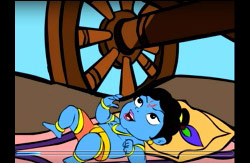
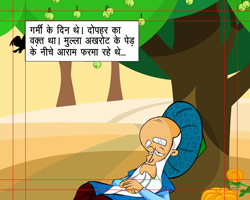
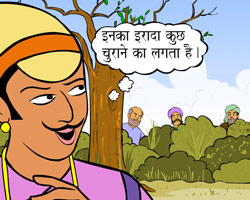
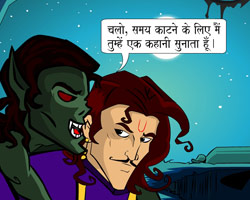
    Mogae Digital has announced that its pioneering product, Talking Comics, will go live on Tata Sky later in July. The video stories will be carried on Actve Wizkids and will be promoted on the default channel.


    “Talking Comics gives a video experience that does not take away from the pleasure of ‘reading’ a comic. Mogae has invested the last 4 years into creating original world-class IP in the comics’ space, specifically for mobile devices. Today we have over 50 titles and over 2,000 stories created entirely at Mogae Studios. But with newer opportunities opening up on DTH, we have spent over 18 months creating this new genre of Talking Comics,” said Tanya Goyal, Executive Director of the Mogae Group.


    Talking Comics were actually created to give a video experience to comics on mobile. “The file sizes are kept light. There is a nice voice-over, good music, some animation, plus all the text as in a normal comic … all of which gives a more wholesome ‘reading’ experience,” she added.


    Stories from Tenali Rama, Mullah Nassrudin, Akbar-Birbal, Bheema, Krishna, Vikram-Betaal and Krishna series will go live in the inaugural round. Yudhishtra, Duryodhan, Arjun, Karan, Bheeshma, Raavan, Guru Nanak, Sai Baba and  Gautam Buddha will be unveiled in September. Stories from the Bible and a series of Ghost Stories will be launched early next year.


    “Our illustration quality and the detail that has gone into each frame is unparalleled inIndia. We were the first to ‘create’ comics for mobile on Indian mythology, history and folklore. Earlier comic creators like Amar Chitra Katha created comics for paper. When taken on to mobile, these comics were heavy and difficult to download. In our case, each story has 12-14 frames … no more … so that the comic is easy to download, and easy to scroll. What’s more, we port each frame to 48 different sizes so that 95 per cent of all mobile devices receive the comic in exactly the screen size of the device,” explained Ms Goyal.


    The mobile versions of all comics are in UAT at most mobile operators and will go live this quarter. Mogae is in talks with other DTH operators too for the Talking Comics.


    A branded new humour series, created in partnership with a leading TV channel, is being currently worked upon as a Talking Comics product and the launch is slated for September.


    Later this year, Mogae will be launching a mobile-greetings product and over 2,000 animation based cards have been created.


    Mogae Digital is part of the Mogae Group, co-owned by Sandeep & Tanya Goyal, erstwhile JV partners of ad agency Dentsu India.


  • Bhaskar’s Brain Hunt gets 80k qualifying entries

    By A Correspondent


    Brain Hunt 2012, an initiative of Dainik Bhaskar Group, was a national level creative contest based on ‘out of the box thinking’ for young Indians. It set a benchmark with a response of 80,000 entries that qualified for the contest.


    This follows earlier initiatives like Junior Editor 2011 which was recognized for ‘Largest Writing Competition’, with 67,130 entries by Guinness World Records, Limca World Record and India Book of Records.


    To participate in Brain Hunt 2012, the contestants had to complete 16 activities featured in the workbook specifically created for kids between 6 to 16 years of age. Questions like ‘What if ‘Bapu’ was alive today?’, ‘After a series of inventions like iPhone, iPad and iTunes, what’s next and why?’, ‘What 10 things would you like to take with you on your journey to moon?’ are example of the questions the kids had to answer.
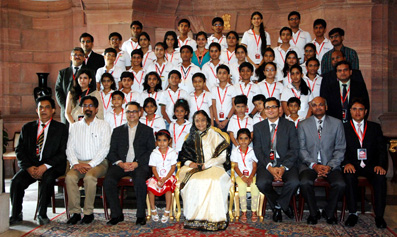
     

    The 80,000 qualifying entries included a letter written to the President which shared the kids’ ideas on ‘How can we makeIndia even a better country’. The winning letters were handed over to the President at Rashtrapati Bhavan during the award ceremony.


    Vinay Maheshwari, Vice President- Sales and Market Development, Dainik Bhaskar Group said: “The journey which started with a mere idea turned into some beautiful masterpieces of the imagination of 6 to 16-years-old kids, giving a new dimension to every challenge on which they were tested.”


    He added: “The reader engagements are carried out with a sole objective of engaging and involve our readers to strengthen the relationship. The group has successfully raised the bar with constant innovations and simultaneously reaching out to almost all household with its smart engagement proposition. Our upcoming smart reader engagements will now put higher emphasis on participation and contribution of both children and parents through such initiatives provided by Dainik Bhaskar to nurture their hidden talents.”


    The award function at Rashtrapati Bhavan, presided by the President of India, Hon Pratibha Patil was also attended by Dr Bharat Agrawal, Executive Director, Dainik Bhaskar Group.