Author: mxmadmin

  • Anushka Sharma to endorse TVS Scooty

    By A Correspondent


    TVS Motor Company announced that it has signed on actor Anushka Sharma as the brand ambassador for its TVS Scooty range. Ms Sharma will be the face of all brand campaigns related to the TVS Scooty brand.


    TVS Scooty has been one of the most exciting two-wheeler brands for young women. This association with Anushka Sharma only strengthens the brands commitment to its youth target audience and reinforces its positioning.


    Commenting on the development, Mr H S Goindi, President Marketing, TVS Motor Company said: “Anushka Sharma was an immediate choice for the TVS Scooty brand. She is well known for being spunky with her distinctive style and is an icon for young girls inIndia. She is seen by young women as one who is living her goals along with being vivacious, independent and successful. We are confident that this association will further enhance the popular TVS Scooty Brand. ”


    For Ms Sharma, the association with TVS Scooty dates back to 2005: “It’s almost like ‘homecoming’ for me. As a young woman, I know how important independence and mobility is to me. TVS Scooty has always understood young women ofIndiaand it feels great that I now have an opportunity to be a part of the rich legacy of a brand such as TVS Scooty. It is a breakthrough attitude and style statement that is relevant to today’s young women.”


    TVS Scooty has a history of other successful associations with celebrities.


  • Growth in mind, Webchutney rejigs leadership

    By A Correspondent


    India’s leading digital marketing agency Webchutney has announced key movements within executive leadership across New Delhi and Mumbai. The move signifies a clear mandate to accelerate growth by forging stronger ties with partners and clients, while streamlining vertical units and fortifying operational efficiency.


    Ranked India’s number one digital agency in 2008, 2009 & 2011, Webchutney was co-founded in 1999 by Chief Executive Officer Sidharth Rao, and National Creative Director Sudesh Samaria in New Delhi. The agency has grown to over 200 people across New Delhi, Mumbai and Bangalore with a diverse client portfolio ranging from startups to Fortune 50 companies.


    Speaking on the reorganization, Sidharth Rao, CEO, Webchutney said: “The movements reflect our commitment to building internal strength through collaborative growth. The new, dynamic leadership has a proven track record with demonstrated results, valuable experience and seamless operational control achieved consistently. They are strategically positioned to lead the new wave of innovation at a crucial time in the evolution of digital experiences and engagement in India. This also gives us the opportunity to explore new business avenues and evaluate meaningful partnerships that will guide the future of our organization and the digital industry at large.”


    Rahul Nanda will don a new role as Partner and President – Mobile Initiatives from his previous role as Chief Operating Officer. The new autonomous division, with focus on product initiatives in the mobile and tablet space is actively building interactive apps and games capabilities. Mr Nanda’s strong credentials backed by 17 years of experience in the digital domain will provide clear direction in cracking the dynamic role agencies and marketers play in monetizing this platform.


    Nishi Kant is now Chief Operating Officer – West & South Region from Executive Creative Director at Webchutney.  His outstanding expertise in crafting award winning, interactive digital experiences along with winning digital mandates and building creative portfolios of prestigious Fortune 50 companies like Unilever, Proctor and Gamble among others has received tremendous recognition from national & international quarters.


    Saket Vaidya steps up as Chief Operating Officer – North Region from Vice President, Regional Operations. With close to 7 years of technology experience, in his new role, he will broaden the range of specialist services offered by the agency while driving and influencing next-generation digital marketing communication.


    Tarana Mehta is the new Chief Strategy Officer at Webchutney from Vice President – Strategy and Business Development. Armed with over 10 years of experience in the advertising /digital industry, she has a proven track record in business development, operational leadership and strategic consulting with a plethora of brands  including HSBC, L’Oreal, Evian, La Roche Posay, Coca-Cola, Kraft, Titan, Mastercard, Barclays & Marico across the Indian and North American market.


    Meghana Bhat will move up as Executive Creative Director from Creative Director at Webchutney. A copywriter by skill, & creative strategist by choice, she has helped brands understand and make optimum use of digital media to become more relevant and entertaining to their audience.


  • MEC India appoints Ritesh Singh as head of Digital

    By A Correspondent


    MEC India, a leading media agency, has announced the appointment of Ritesh Singh as their new digital leader. Prior to this, Mr Singh was with Starcom MediaVest Group (SMG) as the Business Head - India, SMG Digital.


    Mr Singh joins as National Director, MEC Interaction and will report to T Gangadhar, Managing Director India and Tushar Vyas, Managing Partner, GroupM Interactions -South Asia.


    Speaking about the appointment, Tushar Vyas said: “Ritesh comes to MEC with unrivalled pedigree in managing the digital marketing services business and has the right blend of diversified media experience. We are delighted to have Ritesh lead MEC’s digital agenda and help deliver integrated communications planning for our brands.”


    Mr Singh has over 13 years of experience handling activation and digital. In his previous role, he led the conception and deployment of digital strategy. His experience spans an array of clients – Samsung, Aircel, Western Union, General Motors, SAB Miller, Himalaya – to name a few.


    Mr Singh shared: “I am excited to join MEC and thrilled to have an opportunity to work for some of the best brands in the country. In these exciting times for digital media, I look forward to work with MEC’s talented digital team to create new benchmarks.”


    Praval Singh – Co-founder, Media Redefined said: “Ritesh is a seasoned digital media planner. Not just for media buying but his insights on various online-offline engagement and innovative campaigns have been valuable while we worked together for some of the leading brands in the country. I am quite hopeful that Ritesh on board with his rich experience and attitude of achieving excellence would help MEC soar new heights.”


    MEC Interaction topped the digital category at Goafest 2012 with the much acclaimed Reliance Ego-Search campaign. This campaign is also one of MEC’s entries to Cannes this year.


  • Happy launches Design Cell

    By A Correspondent


    Bangalore based boutique agency Happy just announced the launch of its Design Cell. This comes post the announcement of their Mumbai operations in January earlier this year.


    “We have been offering design services to many from the day we started. We’ve also been fortunate to win a few awards for our work in Design. We took our time to build a body of work and crystallize on a strategic design process that is our own. The design cell shall work as an independent unit with its own business targets and talent pool. We see a huge opportunity in this space and are confident we can inject new energy and excitement in this space” said Kartik Iyer, CEO, Happy.


    Happy’s Design Cell shall focus on offering services in the space of identity creation / Branding / Packaging and some amount of retail / environment design. It will be led by Shilpa Colluru in Bangalore and Pallavi Nayak in Mumbai. While business development will driven from these two offices, the objective is to serve clients from across the country with the creative delivery happening out ofBangalore.


    “Having a specialized design cell only seemed like a natural progression for us as it allows us to do a lot more for our clients. It also makes more sense for companies and brands that have been newly formed and are preparing for a launch,” said Praveen Das, CCO, Happy.


    “Design is more than just making things look pretty. There is science behind effective design.India is at a stage where her people have begun to develop a strong aesthetic sense and appreciation for design. We believe that this will play a strong ancillary role in shaping the way Indian businesses look at branding and design as a key to drive growth,” added Mr Iyer.


    Happy’s work in design has been well noticed and appreciated in the past. The Lee Never wasted Bag went on to win many awards including a Cannes nomination. The Skinny jeans packaging they created for Lee also won a D&Ad nomination. Happy was also behind the new logo of online fashion retailer Myntra.com. The agency also created the logo and worked on the store experience of fashion retailer, Basics Life.


    Happy’s inner wear packaging design for fashion brand Basics 029 has also been appreciated and featured on most leading design websites in the world. Happy also recently won 2 bronzes in design at Goafest 2012 – one for direct mail and the other for environmental graphics.


  • UTV Stars enters UK as UMP Stars

    By A Correspondent


    Following a successful launch in India and the Middle East, UTV STARS now enters the UK market as UMP STARS. Premiering as a free-to-air channel on Sky, UMP STARS is a specialty entertainment channel dedicated exclusively to Bollywood.


    Commenting on the expansion in UK, MK Anand, Managing Director- Media Networks, Disney UTV said: “We are pleased to launch UMP STARS in the UK which will complement the presence of our flagship Hindi Movies channel UMP Movies in the region. UK has a large South Asian diaspora and Bollywood fanbase. With the launch on UMP STARS, the TV viewers will now be able to enjoy rich and vibrant Bollywood content. We are proud to extend our media sales association with Sky Media and look forward to another grand entry into the region after the successful launch of UMP Movies in December 2011.”


    Advertising representation for the channel in the UK will be handled by Sky Media. Richard Hawking – Operations Director commented: “We’re thrilled to be adding another UMP channel to our portfolio. Following the success of UMP Movies, UMP Stars strengthens and broadens our Asian offering to advertisers while delivering fantastic Bollywood content to Sky’s customers.”


    Kamlesh Patel, CEO, TVMedia3.com who exclusively distributes Disney UTV Channels in UK and Europe and sealed the deal between Sky and Disney UTV said: “TVMedia3 is delighted to bring UMP Stars to mainstream UK audiences on the huge success of UMP Movies earlier this year. TVMedia3 looks forward to building and delivering this unique content with the team at Disney UTV to audiences across the world”.


    The Broadcasting arm of Disney UTV made inroads into the UK market with the launch of UMP Movies on 12th December 2011. With the launch of UMP STARS, the company further strengthens its foothold in the region.


  • Where the economics stand for 4 key stakeholders post IPL’s fifth season

    By Ravi Teja Sharma


    Beyond the brawls and the bustups, there was cricket. And business, which became steadier and better. As millions continued to watch the cricket, IPL 5 strengthened the league’s business credentials.


    Franchises

    Their costs are mostly fixed and they are squeezing more out of each revenue stream. In the humdrum of IPL3, the operative word was ‘valuation’. The then-IPL chief Lalit Modi proudly announced two new franchises, Kochi at $333 million and Pune at $370 million.


    In other words, Pune’s owner, the Sahara group, was paying 3.3 times the priciest original franchise (Mumbai, $112 million), setting a new benchmark for valuing a team.


    More insanity followed: Modi was dismissed by a tweet, Kochi imploded, and Sahara had second thoughts about its $370 million investment. Sanity returned in season five. “Initially, it was more about valuations, not viability,” said Venky Mysore, CEO of the Kolkata team. More than any other season, IPL 5 has been about viability.


    Not of the surviving kind, but of the thriving kind. “For the first time, most of the franchises will be financially better off,” said IPL commissioner Rajeev Shukla.


    “Many have become profitable after IPL 5.” Like Kolkata. “We reduced our combined losses by about 50 per cent in IPL 4,” said Mr Mysore. “This year was equally good or better than last year…we should wipe out the remaining losses.” Chennai and Delhi say they have been profitable since season three, and that this year was better.


    The economics for a franchise are simple. Every franchise incurs two kinds of costs, and both are essentially of a fixed nature: the licence fee and player costs.


    For a metro franchise, the licence fee is around Rs35 crore a year, while the player cost is Rs55 crore. Add sundry expenses, and a franchise is looking at total costs of Rs100-120 crore. On the revenue side, there are essentially three revenue streams.


    The biggest revenue contributor is the ‘central pool’. All the money the BCCI raises by selling broadcasting rights and sponsorship goes into a common pool. The BCCI keeps part of this and distributes the rest among teams.


    With the BCCI negotiating hard with the broadcaster and sponsors, each franchise’s share of the central pool has steadily increased-from Rs29 crore in season one to Rs40 crore in season four.


    “The central payout will increase to Rs 50-60 crore this year,” said Mr Shukla. The franchises have no control over the central pool. They do have control over the other two main revenue streams: ticket sales and sponsorships, from where the good franchises raised, on an average, Rs30 crore and Rs30-40 crore, respectively.


    In both these areas, IPL-V saw the franchises, with one eye on growth and another on the bottom line, pushing new levers. Teams say they increased ticket prices and reduced the number of passes, and consequently made more.


    “Gate collections in season five would have doubled compared to earlier years,” said Rakesh Singh, joint president, India Cements, the South-based cement company that owns the team, without giving specific numbers.


    Amrit Mathur, CEO of the Delhi team, too declined to share numbers, but described ticket sales as “phenomenal”. “We limited passes only to our contractual agreements,” he said. What teams did more was to reach out to the paying fan.


    Kolkata, for example, had 10 cars going around the city and doubling up as ticket counters. The team also did corporate sales to fill up the 80,000-seater Eden Gardens.


    For next year, it is looking to convert some of those seats into hospitality boxes, whose revenue potential is 20 per cent more. Teams earned more from sponsors too by selling advertising on 10 designated spots on a player’s uniform.


    “We expect it (sponsorship revenues) to be 50-75 per cent higher than year one,” said Mr Mathur. Chennai’s strategy was to cut back on sponsors. “We wanted to clear the clutter and charge more instead,” said Mr Singh of the Chennai team, whose sponsors include Aircel, Gulf, LifeOK, Amrapali and Usha.


    Some other nascent revenue streams are gaining ground, like merchandising. “About 10-12 per cent of our revenues this year came from licensing and merchandising,” said Colonel Arvinder Singh, COO of the Punjab team. And the Delhi Daredevils is looking to lend its name to sports bars, the first of which has come up at the Delhi airport.


    For teams owned by corporates, in addition to a tangible payback, there’s also an intangible one for the main business. For example, all the branding on the Bangalore players is from the liquor and airline brands owned by team owner Vijay Mallya.


    “That has been our main priority,” said Russell Adams, vice president-commercial operations for the Bangalore team. Similarly, India Cements has used IPL to drive into markets other than the South.


    Besides the visibility from player jerseys, it has been wooing cement traders in cities in Gujarat, Madhya Pradesh and Rajasthan with a package of an IPL match in Chennai and a pilgrimage to Tirupati.


    “This was a masterstroke for us: to enter a market dominated by biggies like Ultratech,” said Mr Singh. It all contributed towards viability-of the long-term kind. And valuations, today, stand forgotten.


    Broadcaster

    Viewership addition tapered, but it’s still a critical mass watching. There’s pressure on two of the numbers that matter for SET Max. According to TAM, which tracks TV viewership, the number of people who tuned into IPL grew just 0.4 per cent this year, against 12.9-19.8 per cent in the previous ones. And they watched less.


    If they saw 4.5 per cent of all the minutes they could have in the first three years, they saw 3.5 per cent in 2012, the same as in 2011. Or, a TVR (television viewership rating) of 3.5 per cent. That said, even a TVR of 3.5 per cent is top draw, more so if it comes with a reach of 162.9 million.


    “No programme will give the pan-India reach that IPL does for two months,” said Nandini Dias, COO of media-buying house Lodestar Universal. It is why, she added, SET Max commands a 60-70 per cent premium in pricing over another programme with an identical TVR.


    This year, SET Max charged Rs5 lakh per 10 seconds, the same as in 2011 and 150 per cent more than in 2008. “Ratings fell, but we did not drop our price,” said Rohit Gupta, president of Multi Screen Media, which runs SET Max. Mr Gupta declined to disclose revenues, though he admits it is “lower than 2011”.


    A senior official from the channel, not wanting to be named, said revenues from IPL-IV crossed Rs1,000 crore, against Rs800 crore in IPL 3and Rs260 crore in IPL 1. SET Max’s original deal, struck in 2008, was for $1.02 billion (about Rs 4,000 crore) for 10 years.


    This was revised in 2009 to $1.64 billion (Rs 6,560 crore) for nine years. When the number of matches increased from 60 to 74, in 2010, this number increased further, said Mr Gupta, on a “pro-rata basis”. Back-of-the-envelope calculations show the current deal would be for about Rs 8,000 crore and that SET Max needs an average of Rs 1,050 crore a year over the remaining five years to break even.


    “IPL has become a brand that is big enough to sustain for many more years,” said Piyush Pandey, executive chairman of Ogilvy & Mather India. Added Ms Dias: “If IPL remains in the top five programmes through the coming year, it could still command its 60-70 per cent premium.”


    The other broadcaster, Times Internet, which owns the rights for international broadcast, Internet, mobile and valueadded services, and radio, expects to break even this year. According to CEO Rishi Khiani, Times Internet is paying Rs 67 crore a year to BCCI.


    It reached 26 million viewers this year-an increase of 55 per cent over 2011. “If you sell it right, there is an opportunity,” said Mr Khiani.


    Sponsors

    They got their bang, in different ways. For more, they will likely have to pay higher. IPL’s main sponsors only have good things to say about their pricey tie up. The established talk about reaching a wider audience.


    “We were well-known in the north, but now have spread awareness in other parts as well,” said Rajeev Talwar, group ED at DLF, which paid Rs 40 crore a year for the title sponsorship. The fledgling talk about IPL as the main piece of their brand strategy.


    Karbonn Mobiles started in 2009 and tied up with IPL in 2010. Sashin Devsare, ED, said IPL put Karbonn “in the consideration set of a mobile buyer.” Likewise, Volkswagen, which came to India in 2007.


    “We needed to raise brand awareness,” said Lutz Kothe, head of marketing and PR, Volkswagen Passenger Cars. “All these sponsors would have got five times worth exposure for every rupee spent,” said Hiren Pandit, managing partner with media-buying agency Group M.


    “But over a period of time, that exposure becomes a blind spot if there is no other engagement.” For example, Vodafone used ad campaigns to push specific business ideas: ‘happy to help’ in 2008, the Zoozoos in 2009 and 2010, 3G in 2011, and Internet services this year.


    In contrast, DLF was content being the title sponsor and having an on-ground presence. All sponsorship deals are due for renewal.


    “Most were done on an anticipated performance of the league,” said Basabdutta Chowdhury, CEO of Platinum Media, a unit of Madison World. “Now that it has a proven record, BCCI would be looking at higher value.” The season of BCCI hardball is beginning.


    Promoter

    BCCI’s golden goose is IPL and it is making it work overtime. Just how important the IPL is to the entity that runs cricket in India can be gauged from one statistic. In 2010-11, the IPL accounted for 48 per cent of the revenues of the Board of Control for Cricket in India (BCCI).


    Add revenues from the Champions League Twenty20, which owes its existence to the IPL, the figure shoots up to 60 per cent. IPL is BCCI’s golden goose, and the board is making it lay as many eggs as it can.


    This means birthing new revenues streams by adding more dates to a packed cricketing calendar or earning more from existing streams by negotiating hard with those who want a piece of the IPL. Both have yielded smart financial payoffs for the BCCI.


    Thus, in 2009, was born the Champions League, which essentially gives the BCCI and the top four IPL finishers a revenue kicker. The same year, BCCI renegotiated the TV deal with Set MAX and squeezed out 78 per cent more.


    In 2011, it added two teams to the IPL (one has since folded) at a valuation that was about thrice the maximum from the initial lot in 2008. Overall, the number of matches increased, which translated to higher TV and sponsorship revenues.


    The BCCI earned more. So did the franchisees, as the BCCI shares some part of its broadcast and sponsorship revenues with them. BCCI’s ‘surplus’-the equivalent of a corporate net profit-has increased from Rs 11.6 crore in 2008 to Rs 118.8 crore in 2010.


    Numbers for the last two years are not available, though the BCCI had forecast a surplus of Rs 209.9 crore for season four.


    “BCCI revenues have gone up,” is all that Rajeev Shukla, commissioner of IPL and vice-president of BCCI, is willing to disclose. Revenues could increase further as all sponsorship deals are due for renewal now. And even as it says it will address scheduling concerns, the BCCI has allowed all franchisees to play three T20 matches with teams from tier-II cricketing nations like Canada, the US, Netherlands and Ireland.


    “This will spread awareness about IPL and improve the league’s reach next season,” said Mr Shukla. And also improve the BCCI’s financial health.


    Source: The Economic Times
    Copyright © 2012, Bennett, Coleman & Co. Ltd. All Rights Reserved

     

  • Beware! Walmart will not do business with corrupt businesses!!!

    By Rasul Bailay


    Walmart Stores plans to snap ties with companies that supply products to its stores if they are involved in any kind of corrupt practices, making it the first retail company to undertake such a stringent initiative in India.


    Stung by the bribery scandal that surfaced recently in Mexico, the world’s largest retailer has recently hired consultancy firm KPMG to conduct due diligence on hundreds of existing vendors as well as potential future suppliers to ensure that they are not involved in any unethical or illegal activity.


    Bharti Walmart, the equal wholesale retailing joint venture between the US retail chain and New Delhi-based Bharti Enterprises, sources supplies from vendors ranging from multinationals such as Hindustan Unilever and Colgate Palmolive to hundreds of small and medium enterprises.


    As companies in India, like in Mexico, are susceptible to pay bribes at various levels to get reams of licences required to start and operate businesses, Walmart wants to make sure they do business with only those vendors who don’t indulge in such activities.


    This is second such anti-corruption initiative launched by Walmart in India in recent months. Earlier, as reported by ET, the world’s number one retailer mandated KPMG to educate and create awareness among the Bharti Walmart’s staff about anti-corruption practices.


    As an American multinational, Walmart is bound to abide by the Foreign Corrupt Practices Act (FCPA), a US law that prohibits companies registered in that country and its subsidiaries across the globe from indulging in any sort of corrupt practices.


    A company spokesperson said this move was part of its “previously announced” worldwide review of its anti-corruption programme that was initiated in March 2011. “This includes developing and implementing recommendations for FCPA training, anti-corruption safeguards, and internal controls,” said the spokesman.


    The latest initiatives by Bharti Walmart are the direct fallout of the bribery scandal in Mexico, a person with the direct knowledge of the situation said.


    Earlier this year, a scandal surfaced in Walmart’s Mexico unit accused the subsidiary of bribing government officials in almost all the provinces in that country where the Bentonville-based retailer has operations. The US Justice Department has started its own probe against Walmart over the allegations of the systematic bribery to obtain licences in Mexico.


    In India, KPMG will scrutinise the vendors and classify them in three categories of red, amber and green, the person quoted above said asking not to be named. Bharti Walmart will continue to do business with vendors rated ‘green” by KPMG while it will immediately snap ties with retailers rated ‘red’. It will be Bharti Walmart’s choice to engage with vendors that are placed in the ‘amber’ category by KPMG.


    A KPMG spokesman said the firm does not comment on “company-specific matters”.


    The head of one of Bharti Walmart’s local vendors said his company has already passed the KPMG test more than a month ago and he added that such a scrutiny has happened for the first time in the last few years that his company has done business with the cash-and-carry joint venture.


    “It’s a very good step. It will help the retail industry if more and more companies undertake such initiatives,” says Saloni Nangia, president, Technopak Advisors, a consultancy firm. “Supplying goods to modern retailers are a huge opportunity and the vendors will not jeopardise this opportunity with companies like Walmart by not complying.”


    After unsuccessfully lobbying with various Indian governments to open the country’s closed retail sector, Walmart finally entered the country in 2007 through a joint venture with Bharti in the cash-and-carry or wholesale retailing segment, an area where India allows fully-owned overseas ownership. So far, Bharti Walmart has opened 17 Best Price Modern Wholesale stores in various cities, which sells multi-branded products, but only to other retailers and businesses.


    Source: The Economic Times
    Copyright © 2012, Bennett, Coleman & Co. Ltd. All Rights Reserved


  • Digitas India appoints Tim Guillois Sr VP, social media

    By A Correspondent


    Digitas recently announced the appointment of Tim Guillois as the senior vice president for social media in India. Mr Guillois will report to Kanika Mathur, President, Digitas India. Mr Guillois joined Digitas in February 2012 from France where he was working for Blogbang, a social media agency. He brings over 13 years of experience in building brands using social media.


    Speaking on his appointment, Mr Guillois said: “I am honoured and excited to be a part of the Digitas India team. The Digital space in India is unique, and we are looking forward to developing services and  models which are unique to India and at the same time bring-in the best of Digitas’ best practices.”


    Kanika Mathur of Digitas said: “Digitas has seen tremendous growth in India over the last few years. As the Digital space evolves in India, it gives us immense pleasure to have Tim on board leading Social media. I am confident that Tim’s experience and passion for social media will strengthen our business and lead it to new heights.”


    Digitas in India is positioned as an integrated digital agency which brings the best solutions including strategic insights, analytics, creative, user experience, technology and production, Digital media planning and buying, Social media, E-commerce solutions and CRM.


  • The Anchor: Jagdeep Kapoor on 5 things brands often forget & fail to create an impact

    By Jagdeep Kapoor


    1. Service: Brands may be good products.  However, good products may not be good brands.  This is because, without the element of ‘Service’ a brand is incomplete.


    2. Relationship: My Brand mantra is ‘Sambandh Nahi Toh Sab Bandh’. Relationship with your customer and consumer is essential for a brand to grow and develop. Transaction might get sales, but it is relationships that build brands and businesses.


    3. Brand Experience: The brand experience in terms of quality of the product or the pleasant interaction with the brand will be remembered.  A consumer always remembers a pleasant brand experience leading to repeats.


    4. Visibility: Invisible brands die.  Many years ago in my book 24 Brand Mantras, I had written “Joh Dikhta Hai, Woh Bikhta Hai”.  Visibility whether in the media or at the trade level is important for the growth of brands.


    5. Distribution: My brand mantra is “Distribute or Perish”.  Without availability and distribution, whether online or offline, brands cannot survive. With distribution, brands will thrive.


    Jagdeep Kapoor is Chairman & Managing Director at Samsika Marketing Consultants


  • Reviewing the Reviews: Shanghai

    By Deepa Gahlot


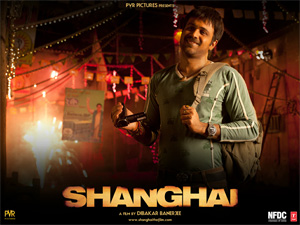
    Shanghai

    Starring-Emraan Hashmi, Abhay Deol, Kalki Koechlin, Prosenjit Chatterjee

    Produced and Directed by Dibakar Banerjee

    Produced by Ajay Bijli, Sanjeev K Bijli,  Priya Sreedharan

    Screenplay by Dibakar Banerjee & Urmi Juvekar


    In what seems to be case of a one-eyed man leading the blind, most critics went totally overboard praising Dibakar Banerjee’s Shanghai.  It cannot be denied that he is one of the most exciting filmmakers in Bollywood today, but remaking a 1969 Costa Gavras film just shows up his film as vastly inferior. Just because it is better than most Hindi films, does not make it a masterpiece that some 4 and 4.5 star ratings have indicated.


    Karan Anshuman of Mumbai Mirror led the rah rah pack with 4.5 stars. “I found myself unable to move as the end credits started rolling. Shanghai had surprised and startled. It had me involved, it had me thinking. I had to tell myself that there would be other chances to watch it again. This is what a perfect film does to you,” he gushed.


    Aniruddha Guha of DNA gave it 4.5 too and wrote: “Shanghai, Banerjee’s fourth film, is his best. It’s also a very important film, in addition to being consistently engaging and extremely satiating. Why just make a good film, when you have the wherewithal to make a powerful one? A film that can change perception; one that can make a statement, and push the envelope. Shanghai does all of that, and does it well. Banerjee brings together great plot (inspired by Greek writer Vassilis Vassilikos’ political novel, Z) some very good actors and a bunch of able technicians in a movie that clocks just a little under two hours, but occupies your mind for many after.”


    Anupama Chopra of Hindustan Times gave it 4 stars and raved: “Shanghai doesn’t provide the comfort of answers or happy endings. But it forces us to ask urgent questions. It is the best Hindi film I’ve seen this year. I strongly urge you to make time for it.”


    Madhureeta Mukherjee of the Times of India was slightly subdued with 3.5. “Director, Dibakar Banerjee’s adaptation of Greek writer Vassilis Vassilikos’s book ‘Z’ is impressively Indianized. The story-telling is embossed with naked realism, rawness and brutal honesty. Be it blood stained bodies, close-ups of blackened faces, or ugliness (of body and soul) – he bares it with gut, grit and gore. But it’s not the first time we’ve seen the struggling aam aadmi made scapegoats by mantris who go back to plush seats in their power hubs. It’s not the first time chapters on humanity and morality are shamelessly ripped from political text books. The story is predictable (expect for a few scenes), and the revelations that follow, don’t send shockwaves or make your bellies churn. Yet, reality stings. Sometimes more than the ‘dengue and malaria’ in our very own hinterland.  Whether Shanghai is off-beat or mainstream is debatable, but if you thrive on rustic realistic cinema, however heavy-duty – this is your pick.”


    Shubhra Gupta of The Indian Express gave it 3.5 too, but found enough flaws. “Shanghai’ is fashioned as a political thriller, but it could just as well be a strong treatise on how much of today’s India functions. If you have a powerful ‘haath’ on your ‘sar’, as the propulsively small man Pitobash boasts, you can do anything, even knock a living man down and leave him for dead, without a twinge of conscience. Banerjee builds up the layers unerringly, (please note the by-play between the lowering, intimidating senior cop and the wanting-to-do-his-best ‘babu’) assembling a terrific cast that is mostly played to its strengths. Mostly.”


    Rajeev Masand of IBN found it watchable, but not great. He gave it 3.5 stars too and wrote: “Dibakar Banerjee’s Shanghai is a crisp, take-no-prisoners drama about seeking justice in the complex landscape of the Indian democracy. The film benefits from the compelling performances of its cast and the director’s sharp eye for detail while narrating a simplistic, and at times, predictable story that traces the inevitable nexus between Indian politics and crime.”


    Throwing a spanner into the works with his well aimed criticism is upperstall.com’s blogger who goes by the handle Punjab da Puttar. He nailed it when he snapped: “Shanghai might just be the last straw that broke this camel’s back. It is a sad but well-known fact that we are perfectly ok with mediocrity in this country at every level. An ‘Andhon Mein Kaana Raja’ gets away with being brilliant and repeatedly drives people into raptures simply because everything else is so bad. Shanghai, to me, is a very average film and little else and I feel this even more so because I have watched Z, which, though made by Costa Gavras way back in 1969, is still miles ahead of Shanghai in terms of its cinematic craft and storytelling. Everything Dipakar Banerjee has tried here has been done better in the Costa Gavras film 43 years ago! For those who don’t know, both films are adaptations of the novel Z by Vassilis Vassilikos.”


  • Facebook tests tech to link pages of under-13s with parents’ accounts

    If Facebook wants to open its doors to kids under 13 – as well as acknowledge the millions that are already there – it’s going to need to tread cautiously.


    The social network is testing technologies that would link children’s pages to those of their parents and enable parents to approve friend requests and access to applications, according to a report in the Wall Street Journal.


    These mechanisms wouldn’t be introducing young children to Facebook for the first time, but rather would give them a way to be there officially.


    While the fact that young children are using Facebook is about as secret as the gambling at Rick’s in “Casablanca,” the notion of shepherding more kids onto the platform is bound to be controversial for reasons ranging from cyber-bullying to the unseemliness of potentially feeding their data into the engine that drives Facebook’s advertising business.


    The report has already triggered a reaction from regulatory powers, with US Reps Ed Markey and Joe Barton, co-chairmen of the Bipartisan Congressional Privacy Caucus, writing to Facebook CEO Mark Zuckerberg: “While Facebook provides important communication and entertainment opportunities, we strongly believe that children and their personal information should not be viewed as a source of revenue.”


    There’s evidence to suggest that millions of parents would welcome the opportunity to give their children access to Facebook, with a Microsoft Research-backed study showing that 36 per cent of parents surveyed had knowledge of their children joining Facebook before they turned 13. But even though millions of children are already illicitly using the platform, Facebook could be more exposed legally if it opts to bring them out into the open, since the current setup allows for the company to maintain that the site is not designed for children under 13, according to Linda Goldstein, chair of the advertising, marketing and media division at law firm Manatt, Phelps & Phillips.


    “I think they’re going to be buying a lot of additional regulatory headaches,” Ms Goldstein said. “The value of the data and the ability to eventually capture this data at such an early age is interesting, but they’re going to have to weigh that against consumer perceptions.” In order to move forward with any plan to open up the platform to children under 13, Facebook will need to comply with the Children’s Online Privacy Protection Act, which states that sites collecting data from children under 13 must obtain parental consent.


    Source: The Economic Times
    Copyright © 2012, Bennett, Coleman & Co. Ltd. All Rights Reserved


  • Ranjona Banerji: Getting a bum deal from Yahoo India

    Ranjona Banerji

    By Ranjona Banerji


    Last month, I dumped my Reliance internet connection (dip in connectivity and more importantly, rude service) and opted for Tata Photon. But my grouse is not with either of them. It is with Yahoo India. The Tata Photon opens with a Yahoo India page (I can’t shut it down too quickly because then Mozilla Firefox won’t reload and I can’t go back to Google Chrome because it slows down my machine and particularly did not like this website… so who said the internet was all plain sailing!).


    The page is dominated by Bollywood nonsense (celebrities who married young, star break ups that hurt us more than it hurt them) and then a sprinkling of political news in the next segment and only cricket news in the next.


    I am now inured to the stranglehold which Bollywood has on our lives. But I still question a news source which can look no further than the lowest common denominator. I also don’t quite know if the average internet user in India wants only Bollywood and cricket and nothing else. Has Tata Photon done any such research about its average user?


    Out of curiosity and since the damn page was open, on Tuesday evening I ventured further into the Yahoo India page and decided to see how it treated other news. In the sports category, there were only cricket, tennis and football, in that order. I went to tennis since that’s my area of interest. There was a story about Maria Sharapova, nothing at all about Rafael Nadal and Novak Djokovic’s French Open battle and Nadal’s historic seventh French Open title.


    Instead I see a story about how reality TV star, Kim Kardashian, “flashed her bums” during some family tennis match. I went no further into the story, credited to ANI, but it is wrong on so many levels. For one, the English. It is not “flashed her bums”. Bums when it applies to the buttocks is a singular entity, like bottom. Unless Kardashian has cultivated a collection of homeless drunks which she brought along to a family tennis match.


    But more than the grammar, it is the intent which is offensive. I understand that sex is a human impulse which beats all others (well…). But why should this daft little story find itself in a sports section of a well-known website? Is there any connection with tennis at all? If I wanted to fulfil my baser instincts on the internet there are enough explicit sites for my guilty pleasures. Yahoo India is not the preferred choice for anyone, unless that it is intention? The Yahoo.com website has an excellent, up to the minute and comprehensive sports section. Is Yahoo India so far away from there?