Author: mxmadmin

  • Clients applaud Vizeum as it celebrates third anniv

    From the MxM Infodesk


    Media agency Vizeum celebrates its third anniversary and the agency is celebrating the event along with parents Aegis Media India which acknowledges the agency’s positive contribution to the kitty.


    “Clients just seem to love them,” said Ashish Bhasin, Chairman India and CEO South East Asia, Aegis Media. “I congratulate Yesu (S Yesudas) on the extraordinary leadership provided by him.  I also congratulate each member of the Vizeum team on the wise career choice made by them.”


    Explaining further on the mandate for Vizeum India, said S Yesudas, Managing Director “We do not have any dreams to be the largest or among the largest media specialists in terms of financial size.  But we really want to be known as a credible consultant who builds bridges of relevance with its clients”


    But finally it’s the clients word that is the final call on how a service provider like a media agency is doing. Here are views from three of these:

    Shivnath Thukral, Group President – Corporate Branding and Strategic Initiatives, Essar Group:  “Vizeum rides the highs and lows of my organization, understanding the circumstances under which we operate.  It is achieved through a complete understanding externally and internally. They think the way we think.  They enmesh themselves in the work we do. They help meet our aspirations”


    Vivek Krishnani, Head of Marketing, Distribution and Syndication, Fox Star Studios India: “Vizeum came to us with an approach to help make a difference to our business and they did just that!! In an industry where logic of share of voice  can be to outshout by increasing media spend and thereby being susceptible to wastage – With Vizeum’s help we have been able to optimize our spends and get more for less !! I admire their persuasiveness and the desire to do more which reinforces their partnership spirit and drive to achieve excellence!!”


    Aditya Swamy, EVP & Business Head, MTV India:  “Vizeum is an agency that focuses on finding a non traditional approach to a brief. Eager to show maximum bang for the buck, their recommendations are truly customized to meet the challenge at hand. Strategic partnerships, clutter breaking innovations and leveraging relationships have been some of their key strengths. I congratulate Yesu and his team  for completing 3 action packed years in India and look forward to working together in the future too”


    Rajesh Mani, GM- Marketing & Retail TI Cycles and BSA Motors  (Murugappa Group): “The decision to move to Vizeum was much deliberated upon at our end after they made their pitch which impressed us.  It is a two year old relationship now and the comfort with them has only grown.  Their team as well as the top leadership stay involved in our business as our own team gives us great comfort. We wish them the very best ”


  • The Anchor: 7 reasons why we should have a 24-hour classical music channel

    By Jaahnavi Paal


    Being a TV buff I have watched everything from soaps, news, sports, wild life, marine life, reality shows, travel, food, music on TV …but my thirst for classical music still remains unquenched. Though there are so many music channels there is no single classical music channel (CMC). Doordarshan occasionally airs classical music concerts but there are no other channels that do even that. Considering that the country has so many classical music lovers it’s about time we had a dedicated classical music channel on Indian television.


    1. In the late ’80s and early ’90s, there was huge audience base for music channels and one saw so many music channels spring up on TV. But nobody thought that there was a need for a channel dedicated to classical music. TV ‘businessmen’ felt that it was not a viable proposition. Since the audiences would be small in number compared to those interested in other forms of music they believed it would be difficult to make it a commercial success. But I beg to differ. Having seen various classical music festivals packed to full houses and the number of audiences that throng music concerts growing by the day it is difficult to believe that a classical music channel (CMC) will not do well. And mind you most of them do buy tickets to watch these concerts.


    2. Classical music is part of India’s rich tradition and culture. Unfortunately not much is done to promote this on a mass platform like TV. Time and again music maestros have lamented this fact and appealed publicly for the need of a CMC. In 2010, Ustad Amjad Ali Khan pleaded that he would like to see a 24-hour classical music television channel that would play classical music as well as documentary films on creative people. Unfortunately, things remain unchanged.


    3. Indian classical music should become part of daily life because it is proved to be a great therapy besides meditation and relaxation. If we can channelize this through a popular medium like a TV channel, more people will understand and enjoy classical music and reap its benefits as well.


    4. In today’s times where commercialization is the only answer I see no wrong if classical music too was turned into a business venture and marketed on television. If a music reality show on a GEC attracts lakhs of talented people I have no doubt in my mind that a similar show on a CMC would also get the required numbers. Reality shows have been promoting classical music and musicians. Audiences are understanding sur and taal and ragas too. If this is not a positive sign of initiating our young audiences to our rich heritage and culture then so much more can be achieved on a channel that would be dedicated to classical music alone.


    5. When Grammy award winner Pt Vishwamohan Bhatt moaned the fact that there were over 500 TV channels across the country and dozens of music channels but not one channel dedicated to classical music his pain was evident. There have been various other musicians who too have felt the same. In fact Pr Rajan and Sajan Mishra have gone a step further in voicing their agony. They have said that there are channels on animals but not one on classical music!


    6. If the government does not have the will nor the capital to do this on their own I am sure there are many corporate giants and industrialists who can make a business out of this venture. Indian Classical music has crossed Indian shores and is recognized and appreciated across the globe. Sadly in our own country we do not have a platform to initiate it to our youth. A dedicated music channel for this rich form of music would not just help musicians and artistes but also offer unseen opportunities to many looking at making a career of it. When one sees lakhs throng venues of reality shows in order to participate in them how many of them even know that the base for all music is classical music?


    7. Young people are increasingly drawn to sports because it is competitive. The government has to bring that spirit into classical music. We build grand stadiums, but we do not have a concert hall of the calibre of London’s Royal Albert Hall or Sydney’s Opera House. And it is the same with a CMC. A channel like this would encourage youngsters to take up classical music and even attract them to it. And for those cynics who often say that classical music is dying I beg to differ. Classical music is far from being a dying art. It was never meant to be entertainment for the masses anyway. I end with a note of optimism in my heart….hope someone soon invites us for a launch of such a channel.


    Jaahnavi Paal is a columnist and TV analyst


  • Mediaah: Should Ambika Soni delay digitization?

    By Pradyuman Maheshwari


    Yes, she must. There’s no point making a charade of it when the on-ground reality is not what it should be with just 23 days left for the scheduled compulsory switch to digitally transmitted television in the four metros of Chennai, Kolkata, Mumbai and New Delhi.  Over the last five months, MxMIndia has been speaking to various stakeholders on digitization. In fact right from the day our countdown started when there were 100 days to go for the June 30 Sunset Date, key stakeholders have been telling us that the deadline is unachievable.


    The government has itself to blame. The digitization deadline has been known for a while, and one would’ve expected it to have moved faster if it was serious about the Sunset Date. The tariff order came in rather late, and one would’ve expected the babus to have worked backwards and establish a foolproof schedule.


    Now, we have a situation that’s going to embarrass all.


    A senior industry professional told me that after the June 1 taskforce meeting it was clear that deadline will be pushed by at least two months, if not three. Some influential cable professionals have been rooting for six months, but I think three months is fair, with a diktat that within six months, it ought to be total.


    I also believe that there ought to be a significant incentive for early birds. Those who’ve switched subscribed and those who will in by September 30. The government must cut its levies and ask for these to be passed on to subscribers. Something like: buy a set-top box and get free connectivity for six months! Ensure this offer is only for the first three months, and after that it should be withdrawn. Also, subscribers should be allowed to pay in instalments.


    Today, Anil Thakraney’s maid asked him for a thousand-buck loan. I am sure I am going to be asked for the same soon. It’s critical that the lowest common denominator in our country – and there is a sizeable population that can’t make ends meet – is finding it tough to embrace digitization. There’s of course the argument that no one likes to pay for software in India, but there is no denying that the move will impact the household budgets of crores of Indians.


    So what’s the solution. Extend the deadline, yes, but just by two or three months. Offer an incentive for this period, and then bring back the taxes. Let this be the first deadline and have a final one of six months and ensure that all comply post that. A ‘Good Night’ date after the ‘Sunset’.


    Buzz me if you have a story to tell. Confidentiality assured. There are various ways you can reach me:

    pradyumanm[at]mxmindia.com, BBM 23050B5D, Gtalk pradyumanm@gmail.com, Twitter @pmahesh and of course the mobile: 98338 76278.


    Disclaimer: Although he is CEO and Editor-in-Chief of this site, Pradyuman Maheshwari’s views in Mediaah! are not necessarily those of the rest of the team and MxMIndia.com.


  • Ranjona Banerji: Why I criticise Times Now most

    Ranjona Banerji

    By Ranjona Banerji


    Is the cacophony of television news adding anything substantial to the dissemination of news, views and information? In fact I should make that “substantive” since this seems to be the new fashionable word. I repeatedly hear people saying it on TV and since there is no editing provision for live TV debates, mistakes are exaggerated and emphasised. A man who was introduced as a Supreme Court lawyer (I cannot remember his name but he also hates the BCCI, if that’s a clue) said this repeatedly and I would have liked to have been a fly on the wall if he had ever appeared before Markandey Katju. Sadly, the print media is also unable to see the difference between “substantial” and “substantive” even as it continues to mis-spell “minuscule” as “miniscule”, probably because it doesn’t register on spell check in Microsoft Word. The dictionary has not been spotted in newspaper offices for over a decade now and sits high on the endangered species list. And of course the difference (or as they say on TV “differential”) between “less” and “lesser” is a lost cause as far as the print media is concerned.


    This segue from irrelevant debates to bad spelling is now over. This week, Times Now spent half an hour discussing a proposal by Air India to give special favours to MPs. The problem was that no one except the anchor, editor-in-chief Arnab Goswami, knew anything about the plan. So the discussion – if it can be called that – never went anywhere.


    There are events which are offensive and annoying. But not all of them have enough substance – substantial or substantive – to merit a debate. A little discretion is advised if you do not want to drive viewers away.


    **


    I have to admit that I watch more Times Now at primetime than any other English TV news channel . And that is why I criticise it the most. But even in all the seemingly manufactured outrage, it appeared that Times Now had a finger on the pulse of its viewers. Now I wonder – drama for the sake of drama gets boring after a while, even in a country which thinks that Rowdy Rathore is a good film.


    CNN-IBN is dull, NDTV I have ambivalent feelings towards and I stopped watching Barkha Dutt after her reaction to the Radia tapes, Headlines Today remains a channel for babies and NewsX appears to have not paid its carriage fees to over half the country’s operators. The best programmes on CNN-IBN are probably Cyrus Broacha’s The Week That Wasn’t and Karan Thapar’s Devil’s Advocate and Last Word.


    **


    The problem for TV of course is that issues like the economy, drought, government inaction, female foeticide – which newspapers have focused on today – have no visual or dramatic traction. Indian TV news does not seem to have as yet worked out how to develop a story. If everything has to be breaking news, then at best you have raw data which can move in any direction and at worst, you have nothing.


    The Indonesian connection to Madhu Koda is a case in point. For such a story to have maximum impact, it would have made better sense for Times Now to construct a story and then air it. By just running with what they had, they only confused and bored people.


    This lack of direction and journalistic skill is why they keep running to people for reactions, whether it is a tree that has fallen or a road accident. Or indeed, a proposal by Air India to treat MPs like kings.


    Ranjona Banerji is a senior journalist and commentator. She is also Contributing Editor, MxMIndia. The views expressed here are her own.


  • Anil Thakraney: Dude, who moved my analogue?

    By Anil Thakraney


    Today morning my maid asked for a loan of a thousand bucks. And when I gently enquired about the reason behind the urgent need, she very sadly replied: “Sir, set-top box lene ka hai. Nahin toh TV band ho jaayega.”


    Yes, she’s alarmed. Because the threatening ads keep pouring in. And as the D-Day gets closer, their frequency has shot up. We in Delhi, Mumbai, Kolkata and Chennai are warned that if we don’t go digital by the end of this month, there will be a black out on the idiot box. And as you can imagine, there’s a mad scramble for the set=top boxes. Given the wayIndiaoperates, there will be mayhem in the last week of June, because most of us do things at the last moment, that’s our culture. And I shan’t be surprised if cable operators start hawking the boxes in black. That too is our culture.


    Here’s the link to the detailed story on this subject done by mxmindia, which indicates the threat may be pushed by a few months:

    http://www.mxmindia.com/2012/06/ready-steady-go-or-delay


    On the face of it, the government is desperate for a switch from analogue to digital for technical and aesthetic reasons. And because the very sensitive government of ours (ROTFL!) wants us to enjoy better picture quality. (To be honest, it’s best to watch most of our heavyweight netas via inferior quality transmission.) And all this even as a vast majority of the people in this nation is quite cool with the analogue signal. Not just that. The poor are struggling to pay for the set-top boxes. And the elderly citizens are worried about having to learn new tricks in their sunset years.


    Now, I don’t quite understand the technological reasons behind digitization becoming mandatory. What I do want to know is this: Why can’t the citizens of this free country be given the option? So that people desirous of better picture quality can switch to the digital mode. And those who are happy with analogue, can stay with it. As far as rate structures goes, surely the concerned ministry and TRAI can work out rate cards in consultation with the various cable operators.


    Here’s my own feeling: I suspect digitization is being made compulsory because the set top-box makers are about to run into some serious dosh. How all that moolah will be divided, I leave for you to imagine.


    PS: A fantastic way to demonstrate the might of the aam junta. Created by TBWA Paris for Amnesty International, the film highlights how signature campaigns work effectively in fighting crimes committed by those in positions of power. Hard hitting!


    Anil Thakraney is a senior journalist, commentator and adman. He is also Editor-at-Large, MxMIndia. The views expressed here are his own.


  • Star India ends alliance with ABP on news channels

    By A Correspondent


    It’s now official. Star India has ended its alliance with Ananda Bazar Patrika on the news channels Star News, Star Ananda and Star Majha Star India Pvt Ltd and ABP, the principal shareholders, have agreed to discontinue the Star brand affiliation with Media Content and Communications Pvt Ltd (MCCS). Going forward, Star wishes to focus on building their brand on their core business that is general entertainment, a communique signed by MCCS Chief Executive Officer Ashok Venkatramani said.


    “Given the current regulatory environment and structural issues ailing the Indian cable and satellite television market and the news genre in particular, Star took this extremely difficult decision to withdraw its brand from the genre,” a communique from Star India said.


    MCCS today announced that its popular Hindi news channel, STAR News, will soon be rechristened ABP News. Bengali news channel STAR Ananda becomes ABP Ananda and Marathi news channel STAR Majha will be called ABP Majha. The three 24-hour news channels are owned by MCCS , a joint venture between the Ananda Bazar Patrika Group and STAR India Pvt Ltd.


    MCCS has sustained its affiliation with Star brand for 8 years and both have benefitted from this association. The core business of the ABP is news and it wishes to promote and establish its own brands in the broadcast news space through its subsidiary company – MCCS, the communique added.


    The discontinuation will come in effect in phases from a period of two to four months and the partners will work together to ensure a smooth transition during this period.


  • Viewers’ thumbs up to ABP News: MxMIndia – Ormax Media survey of News TV viewers

    By A Correspondent


    It’s been a week since Hindi, Bengali and Marathi news channels, Star News, Star Ananda and Star Majha were rechristened ABP News, ABP Ananda and ABP Majha respectively. MxM India commissioned Ormax Media, leading consumer insights and consulting firm, to conduct a survey on news television viewers to elicit their response to the rechristening.


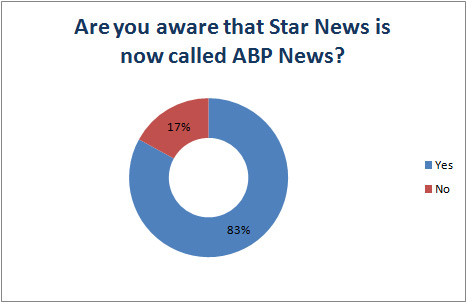
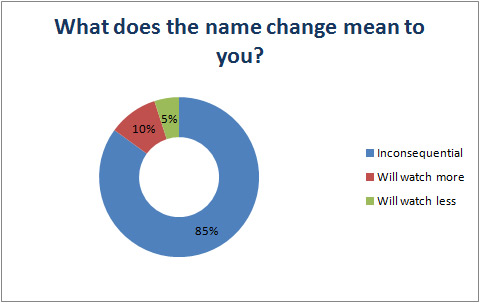
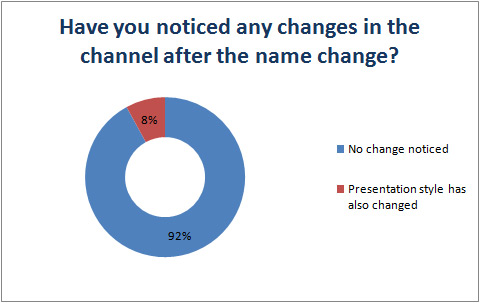
    And the findings are overwhelmingly in favour of ABP News: that people are aware of the change, 85 percent feel that the name change is inconsequential and 10 percent even find the new channel better than before! And most importantly viewers seem to be echoing the Star News line with 92 percent of those survey saying other than the name, nothing had changed in the channel.


    Clearly, the findings of the survey conducted by Ormax Media indicate that viewers in the chosen target group have adopted considerably well to the rebranding of Star News as ABP News. Commenting on the results, Shailesh Kapoor, CEO, Ormax Media said, “The high awareness for the brand name change is a significant achievement for ABP. They have managed to make a smooth transition. The results tell us that the consumers have taken the name change in their stride comfortably.”


    In an interview with MxM India when the name change was announced, MCCS CEO Mr Ashok Venkatramani had remarked that out of the three 24-hour channels set to be rebranded, the Marathi and Bengali channels, Majha and Ananda as suffixes are unique and have grown in popularity and acceptance but the same is not true for the Hindi channel where the suffix is ‘News’ which is a generic term.


    Ormax Media conducted the survey on a target audience of males in the age group, 24-44 years in SEC ABC, who are regular Hindi news viewers. With a sample size of 200 respondents, the survey was conducted in 14 markets: Mumbai, Delhi, Pune, Kolhapur, Ahmedabad, Jamnagar, Indore, Gwalior, Ludhiana, Jalandhar, Lucknow, Kanpur, Bareilly and Allahabad.


    The findings of the survey, categorized under ‘awareness’, ‘impact of name change’ and ‘any other changes’, are as below:


    AWARENESS

    As far as awareness of the change in name is concerned, of the 200 respondents, 83 percent viewers were aware that Star News had become ABP News


    IMPACT OF NAME CHANGE

    • When asked what the name change from Star to ABP means to them, for 85 percent of the respondents, the name change was inconsequential to their watching the channel
    • 10 percent of the respondents claimed that they will watch the channel more after the name change stating better logo and better presentation as primary reasons for the preference.

    Some responses from these 10 percent viewers are:

    • “Naya look achcha laga channel ka”
    • “Pehle se zyaada fresh lag raha hai”
    • “Mujhe channel ka naya logo bahut pasand aaya”
    • “Presentation ka tareeka kuchch alag sa laga mujhe achcha laga”
    • “Display achcha ho gaya hai”


    And just 5 percent of the respondents said that they will watch the channel less after the name change citing lack of credibility due to absence of the Star brand name as the main reason.


    Some responses from this group of 5 percent viewers are listed below:

    • “Star News bada naam hai, ABP kabhi suna nahin”
    • “Pehle ka naam achha lagta tha, abhi ka naam ajeeb sa hai”
    • “ABP mein woh attraction nahin hai jo Star mein tha”
    • “Jab Star News tha toh wahan news sabse pehle aati thi, ab pata nahin kya hoga”
    • “Pehle Star company ka channel tha, abhi lagta hai kisi politician ne le liya hai”


    ANY OTHER CHANGES?

    • When asked if the viewers had noticed any other change in the channel apart from the change in name, 92 percent of the respondents said that nothing else had changed in the channel besides the name.
    • Only 8 percent of the respondents believed that apart from the channel name, brand logo and presentation style had also changed.


  • Utterly Butterly Everlasticious!


    By Tuhina Anand


    Sylvester da Cunha

    You just cannot ignore the impish Amul girl with her chubby cheeks and red-polka dot dress. Don’t go by her diminutive form as the li’l one has a take on everything that is going around her. Being created in 1966, the Amul girl is still going strong after more than four decades. It is the perfect example for all those following advertising how a simple idea and even simpler words can catch the fancy of a nation. Not to forget that the Amul ads are not a critique of a nation but also a masterpiece in advertising for people across the globe to study and understand.


    It all started in 1966 when Sylvester da Cunha was entrusted with the responsibility of working on Amul and they came up with the Amul girl which actually was in answer to the rival brand’s mascot. When it started, Amul hoardings which grace the skyline of many cities today were intelligent play of words that got the people intrigued and wait for the next hoardings. However, slowly these ads changed and morphed into being mouthpiece of a nation and bringing a take on happenings not just in India but across.


    When asked if he ever expected that what he was creating in 1966 would become an advertising icon and continue for so long, Mr da Cunha says: “I think in 1966, we knew that we had created something special in both the Amul girl as well as the tag line, Utterly Butterly Delicious – but a good creative product requires inspired clients to believe in it – Dr Kurien believed in this campaign in 1966, and Mr RS Sodhi believes in this campaign in 2012. That’s why this campaign has lasted as long as 47 years!”


    So what is it that when in today’s advertising people are always bringing in new faces even if the message remains the same but the Amul girl never seems dated.”I think the Amul Girl, has never seemed dated, because we invest time and creativity in her,” reasons Mr da Cunha. “Plus we can see what a universally loved cartoon character she is. We strive every single day, to keep her young and relevant.”


    Rahul da Cunha

    Rahul da Cunha, the Managing Director and Creative Head, daCunha Communications who has taken over from his father Sylvester and has been working on Amul advertising for a while added, “No, I don’t think the Amul girl will be dated as long as we keep her contemporary and keep the topics covered relevant. One thing I’ve learnt, you are only as good as your last creative.”


    The launch of Amul’s India


    The Amul ads are no less than a study on modern day India thus DY Works and Harper Collins along with daCunha Communications has come out with the Amul book titled Amul’s India which is an anthology of Amul advertising plus eminent people giving their take of the advertising.


    Says Rahul da Cunha on the reason behind coming up with the book, “As an agency we’ve been wanting to bring out book tracking this amazing campaign, its history, controversies, anecdotes  and the rest associated with the book. Attempts with several publishers failed and then DY Works and Harper Collins came along, and the fit seemed right.”


    The book took about a year to take shape and be published. The objective is to track the amazing history of the Amul outdoor campaign from its inception to its present avatar thereby tracking the history of India


    Alpana Parida, President, DY Works commenting on the design aspects that were kept in mind while working on this book, said, “The book had to be accessible to a large number of readers and thus we had to keep it a paperback. But we were clear that we needed a unique design element that would hold the diverse essays from different personalities on various topics together. The polka dots were a clear winner as a continuity device - as they are unique to the Amul girl. You do not see another brand in India using these red dots. The design had to do justice to the hoardings and not over power them. Eventually, we believe the design has enhanced the content of the book greatly.”


    She added that for her the chasing up all the celebrity contributors was the toughest part. She said, “There were many who refused as there was no remuneration for the writers. There were many who were so difficult to get hold of. We would have loved to get Aamir Khan, SRK, Ratan Tata and Rahul Gandhi - but our attempts to reach them were unsuccessful. To our utter delight, Amitabh Bachchan was the easiest to get hold of - and he agreed to contribute to the book immediately. Rajdeep Sardesai wrote a beautiful piece with a personal memory about an obituary to his dad. Harsha Bhogle was all over the map and it was hard to pin him down - but he graciously obliged somewhere between London and Australia. And there were many days spent with Santosh Desai to shape the definitive content for the essay that would be central to the book. Without doubt - the book had more moving parts than pages! We pulled it off eventually.”


    The book will be officially launched on June 11 in Mumbai and June 13 in Delhi.

    While Amul advertising is being continued for decades has there been a change in the way the advertising is being done today? Mr Sylvester da Cunha points out that there are two main differences that he can clearly see. One is that the hoardings are being created at a much faster pace. In the ’70s there was one hoarding every month or so and now they are done almost daily for some city or the other. Another is that as we live in rougher, edgier, more controversial times, the hoardings and the messages too are reflecting these times.


    Adds Mr Rahul da Cunha, “I think two things have changed one definitely is our speed of response to an event has become faster. And the tone of our hoardings has become edgier. We are not scared to take on an issue however controversial. We are careful however not to be malicious.”


    On the periodicity, he says, “Actually it’s not every week, it’s now almost every two days. So much is now happening in our crazy country – be it politics, sport, Bollywood, popular culture and we’d like to comment on all of it. So one new hoarding leaves the agency almost every day.”


    Recalling one of the recent incident that happened, Mr Sylvester da Cunha says, “The funniest incident was in 2009, when we ran a hoarding criticising Satyam for the terrible scam it had wreaked on the Indian public, to the tune of Rs 7000 crore. We said ‘Satyam Sharam Scandalam’ and we got a letter from the Satyam board, telling us how ‘wounded’ they were, and if we didn’t withdraw the hoarding, they would advise all Satyam employees to stop using Amul products! We were at a loss of words.”


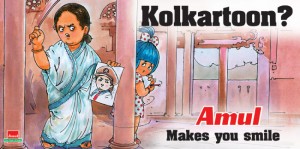
    Mr Rahul da Cunha picks up his three favorite Amul ads which include ‘Victoria Termianted” when VT got renamed, the obituary we did recently for cartoonist Mario Miranda and the one done recently on Mamata Banerjee’s response to the controversial cartoon ‘KOLKARTOON!”


    Giving her take on Amul ads, Priti Nair of Curry-Nation, says, “I feel they take a nice lopsided view of the mess we face day in and day out. They at least put a smile on hopeless situations because quite frankly there is nothing you can do but feel angry and frustrated by the stupidity you fall prey to. Their potshots at least lighten you up most times.”


    “Also as advertisers we know if Amul picks on a topic it is the hot topic or for instance if they pick on your ad you feel quite happy. I know we felt damn good when they did a spoof on Balbir Pasha and Manjula. That’s the power of the communication medium they have chosen and stuck to for years,” adds Ms Nair.


    Says Anil Nair, CEO and Managing Partner, Law & Kenneth India, “Amul is the only brand which has truly done what many brands have preached about, ‘connecting with consumers life beyond making transactions’. Advertising is applied anthropology and hence (should) reflect the society as it evolves. Amul hoardings have done that for years, consistently. Amul hoardings bring huge credibility and pride to an otherwise frowned upon industry. Am a fan… No, am an eternal fan.”


    Prathap Suthan, Founding Member of Bang in the Middle, believes Amul manages to always come up with a perspective that brightens up the subject. “There is an innocence that is welcome no matter the event or subject. A spot of optimism that works like charm, and often disarms the audience,” Mr Suthan says. “With its almost topical and quick changes, it adds to the daily relevance that butter is all about. So much so, like the butter it sells, its advertising has grown to become almost a habit for India.”

    Well said.


  • FMCGs saved on advertising cost in the March quarter

    By A Correspondent


    FMCG companies managed to rationalize their costs this March quarter. And one of the areas where they have managed to cut corners is the area of advertisement and promotion expenses.


    For 24 FMCG companies, the selling expenses as a proportion of net sales stood at 12.1 per cent – the lowest in at least the last ten quarters. This proportion stood at 12.9 per cent in the December quarter, 12.6 per cent in the September quarter and 12.7 per cent in the June quarter. Lower spend on advertising has helped companies to fairly protect and in some cases boost their operating margins. Most companies focussed more on below-the-line marketing activities rather than above the line ones.


    HUL has managed to bring down its ad spends by 100 bps from the previous year to 12 per cent of its total domestic sales for the quarter ended March 2012. ITC’s other expenses (comprising its expenditure on advertisement and promotion) stood at 22.6 per cent of net sales – lower than 22.9 per cent in the preceding December quarter.


    Another MNC, Colgate spent 8.5 per cent of its revenues on advertising – the lowest in the last four quarters. It spent 16 per cent and above in the first three quarters of this fiscal on advertising and promotion. Marico was one of the few companies whose advertisement and promotion spend was exceptionally higher at 14.3 per cent of its net revenues.


    Source: The Economic Times
    Copyright © 2012, Bennett, Coleman & Co. Ltd. All Rights Reserved


  • Kishore Biyani not to sell stake in Big Bazaar & Food Bazaar chains

    By Chaitali Chakravarty


    Retail magnate Kishore Biyani said that he is not in talks with anybody to sell stake in Big Bazaar and Food Bazaar chains because his Future Group has sorted out its debt crisis after three back-to-back deals in the past one month.


    “We are not in discussions with anybody. I don’t want to divest my core retail business now. I want to run it,” Mr Biyani told ET. “Our debt levels are very comfortable and divestment, if any, will only be in non-core assets,” the Future Group chief said.


    In recent weeks, the retail industry has been abuzz with speculation that the Future Group was in talks with India’s richest man Mukesh Ambani to sell stake in its flagship Big Bazaar hypermarket network, which contributes almost 65 per cent of revenues of Pantaloon Retail (India) Ltd, the listed entity of Future Group.


    Reliance Industries operates a nationwide network of retail chains under Reliance Retail and Mr Ambani sees this segment as one of the engines of future growth for the conglomerate.


    A Reliance Industries spokesman denied any negotiations with Biyani. “We deny that Reliance Industries has ever been in talks with Future Group or Mr Kishore Biyani for any stake sale,” he said.


    A person aware of developments in Future Group, however, said Reliance Retail and Future Group had explored the possibility of a partnership about three months ago. But the talks did not proceed because the AV Birla Group moved faster and agreed to buy Pantaloons department chain, helping Future Group improve its precarious financial situation.


    “At that time the priority was to bring money into the company and the Pantaloons deal addressed that issue,” the person said.


    The Future Group, which has been in an aggressive expansion mode, ran into a crisis with consolidated debt of Rs7,800 crore that weighed on its profitability. Pantaloon Retail has been spending more than Rs100 crore in interest over each of the past three quarters. This started to pinch as consumer spending slowed. That was when Mr Biyani started looking to sell assets to pare debt.


    Last month, the Future Group sold a majority stake in Pantaloons department chain to AV Birla Group’s Aditya Birla Nuvo for Rs1,600 crore that included Rs800 crore of debt transfer.


    Then, last week, the Future Group announced sale of its 53.67per cent stake in Future Capital Holdings to US-based private equity firm Warburg Pincus for Rs4,250 crore, which included Rs450 crore of cash payout and Rs3,800 crore of debt transfer. Pantaloon Retail also raised Rs 200 crore through a preferential share allotment last week.


    “In the past one month, Biyani has managed to reduce his debt by Rs 6,000 crore. Now, he is in no hurry to sell any of his core businesses,” the person close to Future Group said. A senior official of a rival retailer, however, said Mr Biyani will ultimately get a partner for his value chain. “The only question is if he will tie up with an Indian company or wait for foreign direct investment to be allowed in the sector so he can find an international partner,” the person said.


    Meanwhile, Mr Biyani plans to sell more non-core assets in a bid to make the Bombay Stock Exchange-listed Pantaloon Retail debt-free by March 2013.


    He plans to raise Rs1,650 crore by October by offloading shares in his insurance and stationery joint ventures, the consumer electronics chain and home furnishing network. This would include raising Rs1,000 crore by divesting stake in Future Generali insurance. This will help prune Pantaloon Retail’s standalone debt, which stood at about Rs5,500 crore at the end of March.


    The group also plans to shed 40 per cent stake in the electronics retailing business eZone when it merges it with Noida-based InTarvo Technologies, which specialises in providing technical support to large corporations and retailers. InTarvo could not be contacted for comment despite repeated attempts.


    Mr Biyani also plans to sell a minority stake in home furnishing and do-it-yourself chain Home Town network for about Rs 300 crore in the next two months.


    He said his group’s May deal to cede controlling stake in Pantaloons chain to AV Birla Group was a one-off transaction. The company will only sell minority stakes in any future deals in its core retailing business and will maintain majority stake in such ventures, he said.


    Mr Biyani added that he doesn’t want to touch Future Value Retail, which operates Big Bazaar and Food Bazaar, as the group’s debt situation can be controlled.


    The only way he wants to touch Big Bazaar is by undertaking some tweaking in the profitable 150-strong chain by introducing improved services and consumer-centric approaches, underscoring with a new tagline ‘Aapki Sewa Mein’ (or, ‘At Your Service’). Big Bazaar is changing its tagline months after it adopted ‘New India’s New Bazaar’.


    Source: The Economic Times
    Copyright © 2012, Bennett, Coleman & Co. Ltd. All Rights Reserved


  • Decision on digitization deferred to June 15

    By A Correspondent


    In a closed door meeting between the Information and Broadcasting Ministry officials and industry stakeholders, I&B Minister Ms Ambika Soni is learnt to have given a patient hearing to the various concerns raised.


    With just 23 days to go from the notified sunset date of June 30 for Phase I of digitization of cable television, the industry stakeholders confessed to their lack of preparedness and shared individual concerns in great detail with the officials.


    MxMIndia has learned that the government made it clear that the purpose of the meeting was to take stock of the situation and not for an adjournment or a postponement. The government it seems wanted to hear the people who actually have to implement DAS.


    Sources tell MxMIndia that the Local Cable operators (LCOs) and the Multi System Operators (MSOs) complained about the lack of set-top boxes (STBs) and also informed the government officials that as of today only 20 percent installations (of STBs) have been completed. The LCOs also expressed disconcert with the prescribed revenue share and requested the government to revisit the matter. Broadcasters once again raised their concern over carriage fee. MxMIndia is told that all parties stated their respective concerns with none of them contradicting each other.


    While Ministry officials heard all the concerns voiced by industry representatives, there were no formal announcements made by the government on the timelines for digitization.


    The Ministry handed out forms to all parties present asking them to duly fill them out with details of the level of preparedness, issues and the time needed to achieve the task at hand. These will be studied by the Ministry and in the next task force meeting scheduled for June 15, there will be a comprehensive discussion on the timeline for Phase I.


    Sources tell MxMIndia that the industry was present in full attendance with all sections represented adequately. From the I & B Ministry, apart from the Minister, also present were, Uday Kumar Varma, Secretary, Rajiv Takru, Addl Secy and Supriya Sahu, Joint Secy (Broadband & Policy). Representing Telecom Regulatory Authority of India (TRAI) was Parameswaran N, Principal Advisor (Consumer Affairs/International relations/Broadcasting & Cable Services).


  • India’s Most Influential


    If you’ve been in the Indian media and are active on social networks, you just can’t ignore Mahesh Murthy (~5500 Facebook followers, ~18500 Twitter followers, 11600+ Linked-in connections!). On Saturday, he tweeted about the new Influencers rankings that his company Pinstorm produces, and the last time he did that, we noticed it was pretty well-received. However, we thought it would be a good idea to wait a bit and let the system get more robust. So when chanced upon his tweet on the Influencers 2.0, we checked out the list and invited him to write this piece for MxMIndia readers. And slipped in a request to send it the next day. That would be an impossible suggestion for most people, but we knew that Mr Murthy can will deliver. The Pinstorm founder and Seedfund managing partner is online nearly 24×7. Plus he understands the needs of our site and the profile of our readers: he has had first-hand experience of working with brands – now at Pinstorm and earlier with Ogilvy, Grey etc in advertising. He headed Channel [V] for a bit in the mid-1990s and a slew of media/onlne properties his companies PassionFund and now Seedfund have backed, including afaqs.com. – Ed

     

    By Mahesh Murthy


    Imagine you were a brand that bought a spot on Satyamev Jayate, or on one of the many IPL matches that we just got done with. Depending on the deal you struck, your placement must have cost you between Rs 2 lakh and Rs 10 lakh for every 10 seconds of airtime. Not counting the Rs 1 crore or so it must have cost you to produce the ad and pay the agency.


    Now both these programs got TRPs of around 3. That means around 3 per cent of India’s 121 million cable and satellite homes had tuned in. That’s 3.6 million households.


    Now imagine you were interested in the youth audience – and let’s keep it broad – say anywhere between 14 and 30 years of age. That would be about 1 such person per household – or 3.6 million people. And now let’s imagine you were interested in SEC A/B and not so much in C/D/E. So you have to cut that 3.6 million youth down to around 1 million at the most, that is if you’re feeling generous


    So it cost you around 500,000 or more rupees to reach 10,00,000 upscale youth once, for 10 seconds. On the programmes with the greatest reach in India. Most other TV programmes will have a fraction of this reach – where you’d be lucky to get 100,000 upscale youth watching your ad.


    Youth online

    Now let’s turn our attention to an entirely different medium. Let’s say that for some reason, Farhan Akhtar mentions your brand on a tweet. Or on his Facebook fan page. Or on a blog. Guess what your direct reach would be? About 10,00,000 people – mostly all upscale youth. Now let’s say just 1 per cent  of those re-tweet it. That’s 10,000 people. And if each of those re-tweeters has an average of around 150 followers, it’s now gone out to another 15,00,000 people. Even adjusting for duplication, that’s a total reach of 20,00,000 or more people. That’s more youth than the biggest TV shows in India can get you to.


    Now imagine that all of it is for free. Or, at best, for a teeny-tiny budget.


    And now imagine other people also talk of you online.


    Shashi Tharoor, our parliamentarian from Kerala directly reaches 13,00,000 people. Amitabh Bachchan reaches twice as many. Keeping showbiz aside, Yuvraj and Dhoni both directly reach more than Shashi Tharoor does. And the Dalai Lama, from his remote outpost in Dharamsala, directly reaches out to an amazing 44,00,000 people. The Delhi and Mumbai editions of The Times of India together don’t do that.


    But it’s not all celebs. Kiran Bedi reaches 4 lakh people online – mostly SEC A/B folks. That’s more than any show on MTV can get you across to. My friends Mehul Patel and Vishal of Pentagram can each get you to over a lakh people apiece, directly. More than any English business programme can.


    A section of the Pinstorm India Influencers 2.0 rankings of resident Indians (Please click to be taken to the live page)

    Mankind is the medium

    In this digital world, people don’t necessarily get their news and information from websites or TV channels. They get it increasingly from other people. The new medium isn’t digital: it’s you and me – and the places we talk.


    Facebook has 50 million Indians on it. That’s more people than watch Star Plus in the country. And 7 million of those are on Tata Docomo’s Facebook page. Approximately 7 times the monthly reach of MTV’s TV channel. So who needs who – does Docomo need MTV? Or is it the other way round?


    Once a Shahrukh Khan needed Filmfare and its circulation of 25,000. Today @iamSRK has a circulation of 25 lakh and a reach of twice as many. One would imagine a single tweet from him could double Filmfare’s newsstand sales if he chose to be gracious.


    Potential influence, not just reach

    But the power of different people on social media isn’t just that of their Facebook fan base or Twitter followers. That would be as silly as saying Doordarshan has a reach of 135 million just because every set in India can receive it.


    Social influence is measured based on many factors. How often do you talk – is it the notoriously taciturn @Aamir_Khan who has tweeted all of 90 times in the last few years? Or is it the motormouth @Agnivo who has tweeted over 2 lakh times in the same period?


    How often are your tweets forwarded or re-tweeted? What is the reach of those re-tweets? How often do people act on your tweets by replying to you – and how often do you engage back in conversation?


    All of these are factors that go into measuring one’s potential to influence online.


    The Pinstorm India Influencer Rank

    At Pinstorm we track the online influence of almost 5,000 Indian people and brands every day.


    We first created this list of social media mavens -and we add to it every month. Then we use scores from three different international measurement services – Klout, PeerIndex and Kred which look at an entity’s strength on Twitter, Facebook, LinkedIn, Quora and blogs – and then apply our own algorithm to these scores to arrive at a consolidated score and rank.


    Our scores are graduated out of 100 – and you can see them live at Pinstorm.com/ii. As at the time of writing this – and things can change every single day, Aamir Khan leads the individual influencer rankings with an II score of over 80 out of a possible 100. The only other entity with a similar 80+ score is NDTV, who heads our influencer rankings on the organisational or brand side.


    As you can imagine, Bollywood and sports personalities dominate the individual rankings, with 15 of the Top 20 individual rankings. The five exceptions being Rajdeep Sardesai, Shashi Tharoor, The Dalai Lama, Kiran Bedi and ex-adman and now comic tweeter Ramesh Srivats.


    Surprisingly, media properties don’t quite dominate the brand influence rankings, with just 8 of the top 20 positions. But cricket leads with 10 of the top 20: with CricInfo, CricketNext, IPL and 7 IPL teams holding top ranks.


    The best-ranked consumer brand in online influence terms is Samsung, followed by IndiaGames, Ixigo, Vodafone, Flipkart, Airtel and HCL.


    A section of the Pinstorm India Influencers 2.0 rankings of Indian brands (Please click to be taken to the live page)

    The purpose of maintaining these lists wasn’t just so social celebs could boast of their rankings to each other.


    Truth is that the vast majority of the 5,000 people we track aren’t celebs in the traditional media world. Perhaps you’ve not heard much of Madhavan Narayanan, Malini Agarwal, A R Karthick, Jaydip Parikh, Rahul Banker, Kaveri Ahuja or Sundar Raman. These people (and, I must somewhat embarrassingly add, myself too) appear in the Top 75 influencer list for India. With online influence scores greater than that for Viveik Oberoi, Shabana Azmi or the online avatars of The Economic Times, MTV or Star Plus.


    In India’s online world where there are more people on the net than there are TV sets – and where more people already access the net from their mobile phones than do from their desktops and laptops – where would you put your marketing rupees?


    At Pinstorm we suggest to marketers that a well-thought-through group of online evangelists, people who are interested in your product category and have credibility – should be lovingly tended and cared for. New announcements and launches should be shown to them first – because if they like what they see, they might talk about it online.


    And that combination of reach and credibility could do you a lot more good at lot less than a Rs 1 crore TV commercial shown repeatedly for Rs 10 lakh every 10 seconds.


    The Pinstorm India Influencer List is live and visible online at http://www.pinstorm.com/ii  We maintain lists across brands, residents of India, Indian non-residents and politicians. Mahesh Murthy is the founder of Pinstorm, India’s leading digital-first brand management firm.