Author: mxmadmin

  • Reviewing the Reviews: Chaalis Chauraasi

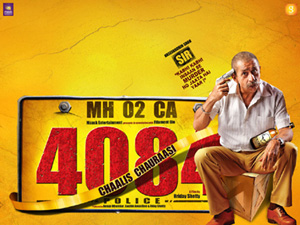
    Chaalis Chauraasi

    Key Cast: Naseeruddin Shah, Atul Kulkarni, Kay Kay Menon, Ravi Kissen, Shweta Bhardwaj

    Directed By: Hriday Shetty

    Written By: Yash-Vinay

    Produced By: Anuya Mhaiskar, Sachin Awasthee, Uday Shetty


    This Hriday Shetty film got a decent amount of pre-release publicity because of the cast of good actors – not stars, but those who can be relied on for acting well.


    The cast is also probably why the film got mostly 2-2.5 star ratings, but also a 1/2 star by Komal Nahata and Nikhat Kazmi’s usual, over-generous 3.5.


    Most critics liked the performances, agreed that the script did not do justice to the actors. The film is hardly likely to be a big hit, it’s not one of those ‘sleepers’ in spite of three item numbers!


    Soumyadipta Banerjee of DNA gives it 2.5 and writes, “The best part of the film is its star cast. When you have powerful, experienced and talented actors like Naseeruddin Shah, Kay Kay Menon, Atul Kulkarni and Ravi Kissen in the star cast, they are bound to make good for all the lapses in the script. That is exactly what has happened here. All the above three (Zakir Hussain has also received a lot of praise lately) have formed an entertaining threesome who keep you engaged throughout the film.”


    Shubhra Gupta disagrees and gives it a low 1 star: “At one point in this film, we see lots of thrusting groins. Ravi Kishan has the most flexible one, beating all the female dancers in the row. Atul Kulkarni and Kay Kay keep up gamely. And then comes Chaalis Chaurasi’s ace tush-shaker, Naseer himself. He does this not once, but twice. The naach-gaana featuring the Shah comes and goes, and you wait for the movie. All in vain, because Chaalis Chaurasi is like an empty vessel, which rattles around noisily to no effect.”


    Gaurav Malani of Indiatime.com goes with the majority average rating and writes, “It would really take some effort to mess up a film starring four supremely talented actors in lead roles. An uninspiring script and a dreary director work overtime to achieve such lackluster results. At the outset, Chaalis Chauraasi looks promising with its atypical cast and chronicle. But the one-dimensional plot fails to tap the immense potential of both.”


    Sanjukta Sharma of Livemint gives a 2 but has a few kind words: “The screenplay is not flawless, and the story has some banal excesses. The editing is sloppy in parts, and the tacky flourishes in the execution ensure that it looks like a small film in every sense. It is meant to be a potboiler, but with a humour that never borders on the tasteless; the mindlessness in Chaalis Chauraasi has some fun to it.”


    Preeti Arora of rediff.com also gives it 2, but is not so kind: “The film which starts out as a comic caper straddles genres and turns into a display of blood and gore. Aiming at an over-the-top climax, the director only succeeds in prolonging the film with amateurish, badly executed action.”


    Komal Nahata hated it: “Yash-Vinay’s subject sustains the audience’s interest in bits and parts only. Although the film is designed as a crime comedy, the humour does not evoke laughter at too many places. Had the comedy been extraordinary and hugely entertaining, even the script may have worked but given that the humour is not very funny, the film remains ordinary fare. The second half and especially the action and crime portions are so long-drawn-out that they give the audience too much time to think – and that is another sore point.”


    Surprisingly Mayank Shekhar of Hindustan Times gave 3 stars and wrote, “Here’s the deal then. The drama is set in stretched real time. The gang has a common mission, a heist that may or may not go wrong. Each character in the group is loony in his own unique way. Their names are odder still. Blood-fest unnerves no one. The narrative isn’t entirely linear. Style determines the set-up. This motif has generated a gazillion crime capers/thrillers in the past. Quentin Tarantino gave it the modicum of high cool in the ’90s.”… which doesn’t explain anything.
     

  • Reviewing the Reviews: Players

    Players

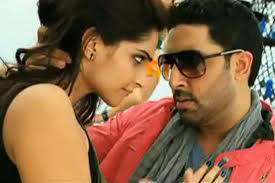
    Key Cast: Abhishek Bachchan, Sonam Kapoor, Bobby Deol, Neil Nitin Mukesh and Bipasha Basu

    Directed By: Directed by: Abbas Mustan

    Screenplay by: Rohit Jugraj, Sudip Sharma

    Produced by: Studio 18

    Doesn’ t happen too often that critics are unanimous in their panning of one film. This feat was achieved by Abbas-Mustan’s Players.


    It was laughed at for uinintentiona1 stupidity, made worse by the fact that is was an official remake of The Italian Job, which is classic heist thriller made in 1969 and 2003, of which the director duo have made a right roya mess. Another bummer for Bachchan Jr. 0ne and a half to two stars across the board, except for the over generous Nikhat Kazmi of the T0I, who gave it 3.5.


    Here s a selection of extracts:

    Sukanya Varma, of rediff.com found it lack’ustre and unimaginative: The real problem with this official remake of The Italian Job is that instead of reproducing a perfectly nuanced screenplay as it is, it tries to act too smart, with excessive elements and needless tampering, in the process making a complete fool of itself. Why can’t you stick to the plan, Bollywood? All this time we witness our filmmakers rip-off Hollywood scene-by-scene but the minute they acquire rights, they are hit by an army of brainwaves or an insuppressible need to improvise (read flounder).


    Gaurav Malani, IndiaTimes Movies:After making a career out of surreptitiously remaking foreign films forever, director-duo Abbas Mustan have proved their recycling capabilities credibly enough to win the opportunity of directing an ‘official’ remake of a Hollywood flick. They have stars, budget, virgin locations and also a readymade film (rather two of them) for reference. But that know-all impudence of the directors to Indianize The Italian Job is like having a pizza with Punjabi tadka topping.


    Aniruddha Guha in DNA: It takes a lot to rip off a film and make it palatable for Indian audiences, and the Men In White, Abbas bhai & Mustan bhai, have done that all their lives. But it must really take a hell lot to buy the official rights of a film, have the license to remake the film scene-by-scene and then say, “You know what, we have the rights to screw with it, so let’s do it.”


    Rajeev Masand, IBN 1ive: Abbas-Mustan, who’ve successfully delivered some engaging thrillers over the years, know a thing or two about pace. ‘Players’ is packed with relentless car chases and plot twists, and the directors throw in their usual stock of skimpily dressed babes and seductive item songs. What they grapple with, unfortunately, are the little details….What fails the film after all, is the over-enthusiasm of its makers, who overstay your hospitality by dragging the film on for an unforgivable 2 hours and 45 minutes. Also, harsh as this may sound, the film suffers considerably on account of its dull cast.


    Mayank Shekhar, HT: With movies per se the scene gets quite muddled up and murky. Almost always. Nothing could’ve prepared you for the moronic mayhem that follows here either. Computer hacker villain (Neil Nitin Mukesh) is now the new-age Shakaal with voice-reognition software across his deadly mansion, “Open the door, baby.” Door opens. “Shut the gate, baby.” Gate shuts. He gawks at girls at various nightclubs from his media room, flicking on screens of his giants iPads, choosing one girl for every night. BMW’s Rs 25 lakh MINI Cooper gets to insert the world’s longest 70 mm commercial through this pic, incidentally on the week of the car’s launch in India.


    Karan Anshuman, Mumbai Mirror :Good films are about bringing new ideas to viewers, and Players is antithetical in this respect. In the remake, the writers substitute what little logic was there to begin with, with songs and add deliberate cheesiness to make the film more accessible for the masses. Indian filmmakers have a tendency to speak down to their audiences, but with Players one suspects that the makers truly believe that this is what cutting-edge is. Two stars, one word: random.


    Shubha Shetty-Saha, Mid-Day : If English is a phunny language, Bollywood is a really phunny place. For several years, it blissfully went through a phase when Hollywood films would be copied scene by scene, with the filmmakers even while blatantly credit stealing, pretended to be making an original film. Now that our conscience is clear and we have the fear of getting sued (whichever comes first), we have started acquiring official rights of Hollywood films. And what do we do with that pricey legal document? We cock a snook at the original script; make it so Bollywoodised that the end product seems the far removed desi bred poor cousin of the original. What is the brilliant idea behind this? No idea sirji!


    Shubhra Gupta, Indian Express: The guys have zero impact. So do the gals. Bipasha is same old, despite the stringiest of bikinis, and the only surprisingly not-bad thing Sonam Kapoor does is to dance dirty. In other places, she is part of the furniture. Even the iconic chase scene starring the colourful Minis, faithfully lifted from the earlier films, is long and dull. Just like the film.


  • Reviewing the reviews: Don 2 is poor man’s Mission Impossible

    By Deepa Gahlot


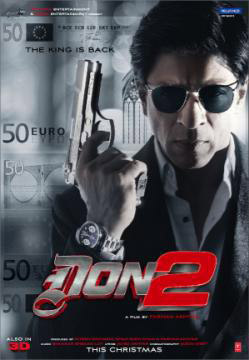
    Don 2

    Key Cast: Shahrukh Khan, Priyanka Chopra, Lara Dutta,Om Puri, Kunal Kapoor, Boman Irani

    Directed by: Farhan Akhtar

    Produced by: Farhan Akhtar, Ritesh Sidhwani, Shahrukh Khan

    Written by: Farhan Akhtar, Ameet Mehta, Amrish Shah


    To confuse moviegoers again, Don 2 got madly mixed reviews with the highest rating being 4.5 and the lowest 1.5.  On an average, however, most reviewers gave it 2.5 and everyone agreed that Shahrukh Khan looked cool, the film was slick, the music was mediocre and it was a poor man’s Mission Impossible. Strictly for SRK devotees who, like good fans, don’t necessarily look for logic in his films. The way this film was promoted, logic is the last thing to look for in any case.


    The big gush came from koimoi.com’s Komal Nahata and his 4.5 stars. “Don 2 may not give the discerning audience a great high but it will be loved by those who like style, intrigue, suspense and attitude. It will score at the box-office and yield good profits to Reliance Entertainment (worldwide distributors). The producers, of course, have already made a huge profit by selling the worldwide rights and also by getting heavy subsidy from the German government. Business in big cities and multiplexes will be far better than in smaller towns and single-screen cinemas. The film will work wonders in the overseas circuit.”  Let’s see if his prophecies come out to be true.


    Nikhat Kazmi of Times of India, expectedly gave it 4 stars and raved, “Don 2 is a classic action/crime thriller that doesn’t let go, even for a moment. More importantly, the plot has been finely crafted, with every twist and turn falling into place like a complicated albeit neat little jigsaw.” But then, she usually raves.


    Slightly lower in the ratings game was Bollywood Hungama’s Taran Adarsh with 3.5. “Don 2 rides on star power and brand value. The film has a bland first hour, but the second half takes the film to another level. There’s no denying that a cohesive script would’ve made a world of a difference to the film, but the tremendous hype, star power and the lucrative period (Christmas and New Year celebrations) will make its investors reap a harvest.”


    DNA’s Aniruddha Guha goes with 3 stars and writes, “Characters say boring, random things to each other, there’s a pointlessly long dance sequence and the attempt at dialoguebaazi is laughable. What keeps Don 2 alive, then, is its pulsating action.”


    Surprisingly, India Today’s Kaveree Bamzai also gives it a generous 3 and writes, “The movie seems to have been made only to allow the actor to say and do all the things he ever wanted, be it a James Bond and Ethan Hunt rolled into one. What it does come across as finally is a Mission Impossible meets Abbas Mustan.”


    IBN Live’s Rajeev Masand gives it the more-or-less standard 2.5. “Don 2 is nicely shot, and there are moments where Shahrukh Khan is riveting. But that’s not enough to hold your interest for well over two hours…even the actor’s most loyal fans will find themselves yawning. I’m going with a generous two out of five for director Farhan Akhtar’s Don 2. Although packed with fast cars and bikes, this is one slow ride.”


    Aseem Chhabra writing in rediff.com: “For an action film with the central plot setting us up for a robbery inside a major bank, Don 2’s pacing is very slow. Coupled with that, the script explains everything to us step-by-step. And if anyone was paying attention, following the convoluted plot where Don always manages to sweet charm the morons at Interpol, in the last five minutes Akhtar sums up the film with a quick recap, revealing many more details that were never shown to us before.  It is an old fashioned gimmick to make the audience say “Wow, we were fooled!”


    Shubhra Gupta of Indian Express: “Don 2 needed an energized, crackling plot. What it has, in almost too much abundance, is SRK dripping dimpled coolth. But cool can only take you so far.”


    Piyali Dasgupta of NDTV.com writes: “There’s an easy way to describe Don2 without any spoilers. Think of great action flicks from the Lethal Weapon, Die Hard and MI4 series. Shake them up. Replace Nakatomi Plaza with Berlin’s leading bank and there it is – Don 2, a Bollywood take on great action flicks where Shahrukh wants to show that being a bad-ass is fun.”


    Shubha Shetty Saha of Mid-day was not impressed either. “There’s one thing that irks me the most in Bollywood action thrillers, and Don 2 carries the tradition. The smart moves by the characters is tediously explained again and again to show how the move was engineered, thereby diluting the whole effect. The audience is treated like a four-year-old brat, who doesn’t concentrate and forgets what has been told to him five minutes back. Subtlety is an art and moreover, we are not as dumb as you think. Wish the filmmakers instead concentrated on filling those gaping loopholes.”


    Finally, nailing it, Mayank Shekhar of Hindustan Times gives it 1.5 and says, “It (the first Don) was Vijay’s story. Salim-Javed’s tight script had a striking plot. The writers here have sub-plots. They continue to stretch and add thought to thought. The picture promises to never end. It gets hard to carry on with inane inventiveness, when you just couldn’t care less.”


  • Reviewing the Reviews: Ishaqzaade

    Ishaqzaade


    Directed by: Habib Faisal


    Produced by: Aditya Chopra


    Written by: Aditya Chopra, Habib Faisal


    Starring: Arjun Kapoor, Parineeti Chopra


    A Yashraj film, by the man who wrote Band Baaja Baraat and directed Do Dooni Char; an industry kid being launched and a modern day Romeo & Juliet set in the political badlands of Uttar Pradesh. At least the combination of plusses evokes interest.


    Parineeti Chopra walked away with accolades in Ishaqzaade, which otherwise got mixed reviews, mainly because critics expected more than just a collection of cliches from Habib Faisal.  Another Hindu-Muslim romance against an election backdrop? Oh no! Still, it got between 2-3.5 stars, which is not bad.


    Raja Sen of rediff.com gave it 2 stars and felt that it did a disservice to its heroine. “There is much craft on display, and some lovely moments, but the immense promise shown by the first half turns out as hollow as a politician’s. Soaked in sloppy sexism, the second half has the heroine repeatedly tortured — cheated, slapped, bound, gagged, shot at and abused — and yet the film decrees that she forgive. In the heartlands the film is set in, maafi is an all-absolving concept, an irretractable token of instant forgiveness, like a church confessional. Ishaqzaade, despite its artistry, deserves no pardon.”


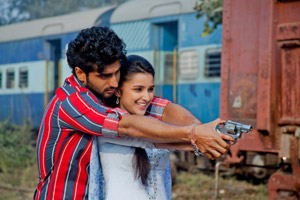
    Saibal Chatterjee writing in the NDTV website gave it 2.5 and commented: “ Faisal Habib creates the small town environment with an eye for detail, with many of the interactions between the young foes-turned-lovers taking place in and around a train station, in abandoned coaches and decrepit yards. It is a typical upcountry semi-urban space – dusty, crowded and cacophonous – with genuine and tangible dimensions.   The main characters, too, are by and large believable, especially because the roles are essayed by young actors who look real. The hero isn’t a sculpted hunk; the heroine is, at best, a pretty girl next door. However, the supporting cast, with the exception of Gauhar Khan, make little impression. That leaves too much of a load on the inexperienced leads. If only Arjun Kapoor’s dialogue delivery had greater punch and Parineeti Chopra could pull off the emotional moments without going shrill, Ishaqzaade would have been a markedly better film.”


    Rajeev Masand of IBN gave it 2.5 as well. “Much of the film’s strengths come undone by the use of such tired cliches as the religious differences that stand in the way of true love, and the sacrificial hooker with a heart of gold. Also Faisal resorts to an unforgivably unoriginal climax – for both the resolution of the lovers, and their families – that sticks out in a film with such promise. ‘Ishaqzaade’ benefits considerably from Amit Trivedi’s excellent soundtrack and Hemant Chaturvedi’s sharp cinematography. Faisal creates a believable world with charming characters, and his leads have crackling chemistry. I’m going with two-and-a-half out of five for director Habib Faisal’s ‘Ishaqzaade’. It’s far from perfect, but you won’t be bored.”


    Shubhra Gupta of the Indian Express also went with 2.5. “Small town romance is back again on Bollywood’s radar, and ‘Ishaqzaade’ goes about checking all the boxes. Locations yielding picturesque railway crossings, little bazaars, sprawling ‘kothis’. Determinedly dressed down characters. Lots of local patois, which these days, translate into a shower of ‘gaalis’. And a pair of lovers who wield guns with much more ease than roses. It’s all in there, and yet the result is mixed: some of ‘Ishqzaade’ hits the spot, the rest is a drag.”


    Anupama Chopra of the Hindustan Times was not too impressed, still, gave it 3 stars. “Faisal sets up the story with great precision. Kapoor and Chopra are terrific as the explosive twosome. The music, composed by Amit Trivedi, works well. The casting is bang-on:Parma’s swaggering grandfather and his long-suffering but strong mother are nicely etched characters as is the local dancing girl, played by Gauhar Khan. Which is why it’s so disappointing to see it unravel. Still, Ishaqzaade does provide half a good time. How many films can you say that for?”


    Sudhish Kamath of The Hindu wrote, “How do you take a story that’s been told over a hundred times at least in 100 years of Indian cinema and still make it relevant and reasonably engaging? Writer-Director Habib Faisal succeeds to a great extent in crafting an unpredictable first half full of spunk and spirit, but plays it boringly safe in the second, offering no new solutions or fresh perspectives in a story that has been done to death. You can’t help being disappointed with the limited ambition of this film that succeeds in creating characters who alternate between love and hate for each other.


    Taran Adarsh of bollywoodhungama.com gave it a generous 3.5. “On the whole, Ishaqzaade, a volatile and intense story with ample doses of fanatical romance, should appeal to a pan-India audience. This broadly engaging love story has a winsome pair who deliver dexterous performances, besides popular music and several poignant moments, which should appeal to fans of mainstream films. Go for it!?”


    Surprisingly Madhureeta Mukherjee of The Times of India gave it 3 stars, which is low by the paper’s standards. “Director Habib Faisal takes you into the heart of this small-town story, creating a politically-divided Almore with elan – penning gripping characters (a rigid and arrogant Dadda, a suppressed, dukhiari Amma, two overbearing brothers), but fails to maintain the crescendo in the second half. After highlights like a sensitively shot lovemaking scene on a rusty train berth, a subtly picturized romantic song (Pareshan), and a shocking pre-interval scene, it starts falling apart like a house of cards; ultimately folding into a predictable climax. The flatness of the second half is what takes away from the pace of a launch vehicle that could’ve been memorable.  ‘Ishaqzaade’ starts with a bang-bang, but ends up firing blanks.”


  • RAM releases the second Radio Listenership sweeps for 9 cities

    By A Correspondent


    RAM (Radio Audience Measurement) service, launched by TAM Media Research in 2007 for the radio industry, has released the second round of its 9 cities Listenership Sweeps. The first round was released in October 2012, along with the announcement of the news on RAM panel coverage expansion to 9 additional cities – Ahmedabad, Chennai, Hyderabad, Indore, Jaipur, Kanpur, Lucknow, Nagpur and Pune. Prior to that, RAM operated out of the four Indian metros – Bangalore, Delhi, Kolkata and Mumbai only.


    As planned and announced, the second sweeps data is for the period of February-April 2012. This sweeps, released by RAM, will help the radio industry: broadcasters & media planning agencies, to assess the impact that radio medium is having on audiences in towns other than the major metros.


    Commenting on this release, LV Krishnan, CEO said: “The second roll out is as per timelines committed by us. After the first sweeps in October last year, the second one shows interesting changes in radio consumption patterns. While in some markets, radio consumption base itself has seen an increase, in others, granular trends like Out Of Home (OOH) listenership has seen an encouraging increase.”


    RAM’s second sweeps highlights certain interesting changes in radio consumption behaviour, not only across the 9 cities, but also in comparison to the October 2011 sweeps release.


    Some highlights are:

    • Ahmedabad, Chennai & Hyderabad are the growth markets. Southern metros have seen more than 30 per cent growth in listening thresholds while Ahmedabad has witnessed 15 per cent growth
    • Pune,Kanpur,IndoreandNagpur, have remained almost the same levels as the previous round


    Ahmedabad:

    • Average audience has seen a significant increase in morning while other day parts, remained at the same level. The peak at 9am has grown by 70 per cent.
    • The increase in morning day part is due to 10 per cent growth in cume reach levels.
    • Share of Out of Home listening has grown significantly. Particularly during travel/conveyance with share of listening growing from 9 to 16 per cent
    • Cume reach levels have gone up across all the days, while Sunday has seen a significant growth
    • Time spent levels have seen a very marginal drop across the days. Sunday remains the day with highest time spent level
    • While 90 per cent of cume reach build up was achieved by afternoon earlier, now 95 per cent of the audience can be targeted by the morning day part alone at a weekly level


    Chennai:

    • While cume reach levels have dropped across all the day parts, time spent levels have significantly increased. The maximum increase in time spent being in the morning day part.
    • The audience build up has got spread through the day. It takes up to afternoon day part to cover 95 per cent of all audience.
    • Share of SEC C’s listening has grown from 37 per cent to 43 per cent
    • Share of in-home listenership grows from 76 per cent to 87 per cent
    • While Saturday had the highest listenership thresholds the previous round, Sunday has grown beyond Saturday in round 2 – both in terms of cume reach and time spent


    Nagpur:

    • The weekly listenership levels have remained at the same levels as the previous round
    • The daily cume reach has gone up, with Sunday being the maximum, but time spent levels are down across all the days.
    • Share of In-home listening grows from 82-87 per cent


    Jaipur:

    • Drop in listenership thresholds across the day
    • The same reflects in the cume reach levels across the day parts
    • Dominance of SECDE in Jaipur’s listenership contribution is normalized. Proportionate contribution from all SECs to listenership
    • Morning day part continues to be the one where listenership peaks, though at a lower threshold
    • Sunday emerges as the one with highest cume reach and time spent levels
    • The audience build up has got spread through the day. It takes up to afternoon day part to cover 95 per cent of all audience


    Indore:

    • The listenership peaks have interchanged between mid morning and morning, morning peak emerging as the highest. Other day parts are more or less are at the same threshold
    • At a weekly level, morning day part emerges as the highest in cume reach and time spent
    • Mid-morning day part saw a reduction cume reach levels.
    • TSL level growth in night day part
    • Share of In-home listening significantly drops from 94 per cent to 71 per cent. Maximum growth in Car share of listening at 22 per cent
    • Saturday loses audiences as Sunday emerges as the destination of maximum listening
    • Faster cume reach build up across the day as 95 per cent of the audiences are reached by the mid-morning day part


    Hyderabad:

    • Across the day parts TSL has almost doubled
    • Evening and night day parts have grown significantly while morning has witnessed a drop in listenership levels.
    • The drop in morning day part is primarily due to drop in cume reach levels, while TSL has grown.
    • Contribution from SEC A & B increases
    • 6 per cent drop in share of in-home listening, reflected in the growth of listening share from car/travel/conveyance
    • Equal and high threshold of listenership across weekdays and weekends
    • Evening and night day parts add significant amount of audiences to cume reach build up


    Pune:

    • Similar listenership thresholds across the day parts
    • Mid-morning to night, there is a drop in cume reach levels, but across the day parts there is a growth in TSL levels
    • Contribution from different places of listening remains the same
    • Sunday emerges as the destination of highest listenership
    • Audience addition from afternoon grows in the current year


    Lucknow:

    • Listenership thresholds drop across the day parts, while night primetime holds the thresholds
    • While there is cume reach growth in some of the day parts, there has been TSL drop across all of them
    • Share of listening from 35+ age group comes down
    • Contribution from in-home listening grows from 89 per cent to 93 per cent
    • Cumulative audience on Sunday grow from 82% to 94%
    • Weekdays and weekends have similar thresholds of TSL


    Kanpur:

    • Marginal changes in day part wise preferences
    • Growth in consumption share fromSECABand 45+ age group
    • OOH share of listening grows from 23 per cent to 29 per cent, majority of the growth coming from car/travel
    • Sunday emerges as the clear leader in listening thresholds


    TAM is a joint venture between Nielsen Company and Kantar Media Research. Besides measuring TV Viewership, TAM also monitors Advertising Expenditure of Television, Print & Radio through its division AdExIndia. Since 2004, it extended its presence in the PR Measurement & Analysis space for Corporate/Marketing Clients by setting up a separate division – Eikona PR Measurement.


    In 2007, the joint venture introduced RAM (Radio Audience Measurement) service to track Radio Listenership for the Indian Radio Broadcast Industry. In year 2009, TAM launched a division, called TAM Sports that specializes in monitoring Sports Sponsorship ROI.


  • It’s not about co-creation, but increation: Boschma

    The “youth” of today have been touted as being the marketer’s favourite TG for some time now but it’s not just about catering to their apparent behavioural habits. The effort by marketers has to be able to reach out to the subliminal preferences of the youth that are redefining the way they communicate with a brand. Having studied their behavioural patterns and preferences from early 2000, the one person who has seen this group evolve over the years rapidly is well-known international author and speaker, Jeroen Boschma.

     

    In India to launch his book ‘Generation Einstein’, that has been co-authored by UTV Bindass, MxM India got Boschma to delve on the emergence of the youth of today, why brands and marketers should be wary of this TG, and what are the learnings that could be picked up from this book by those interested in catering to the highly volatile TG. Excerpts:


    After having vowed the world, your book Generation Einstein finally makes its debut in India. What are your first thoughts on the book seeing the light of the day in India?

    The book is about the first global generation from around the world – even the Indian youth is not Indian but is really a part of the global youth. The book delves into the behavioural aspects of the youth, their habits, preferences, and so on. Of course, the behavioural background of Indians is different from those of the generational background of youth fromHolland, where the book was first launched. It also provides an insight and a view to everybody that wants to communicate to youngsters – not only marketers and brand managers but I think even school teachers, professors and others. Basically, it is aimed at those seeking to make an impact on the youth of today.


    Could you delve on the thought process behind narrowcasting the next generation youngsters as your core TG towards writing the book?

    It took me five years to write the first version of the book. The way I approached it is I made notes of my learnings, which at the end totalled in excess of 400 pages. There was also a heavy amount of research that was done and then all the elements were brought together to be edited and written in a proper way. I am grateful to the help from my Indian colleagues who helped me in putting together this book so as to reflect the findings and tastes of the Indian youth of today.


    How different are the three versions of the book from each other?

    The first edition was published when Facebook didn’t even exist. So the other two editions had to be rewritten to accommodate learnings and findings from the social media space as well.


    What are some of the trends you came across while you got down to analyse the youth of today?

    The fact is that the youth of today do care of the world and they want to associate brands with respect to nature and for the sake of humanity. Another big trend is that the youth of today are very entrepreneurial and start their start-ups at a very young age. I have seen so many new ventures set up by young people inIndiaand they have been performing phenomenally well. I would say that is one of the big trends transpiring around the world today.


    You have pioneered the term Increation. Could you throw more light on the significance of the term?

    Increation is the process of coming up with marketing campaigns that work. We have been working on it for five years and now we have a firm grip on the way it needs to function. It provides a learning experience to ad agencies and brands to source their creation. It’s different from co-creation which doesn’t work; Increation works.


    How would you rate your experiences of co-authoring this book to suit the tastes of the youth of India?

    It’s been a long process putting this book together for the Indian audiences. It’s not easy as constructing a house; it’s about putting together thoughts together and creating an environment that the youth of today are familiar with.


    What is the lesson that Generation Einstein throws up for marketers and brands of today?

    What I have observed with Generation Einstein inIndiais that it is getting more extreme; we really do not have a choice – we have to change. We all are trying to keep the old world alive but the old world doesn’t exist anymore. It’s about the new generation and their understanding of the trends of today. The marketers and brands of today have to unlearn everything they know about the old world and channelize their focus on the youth of today.


    What are your plans for the future?

    The plan next is to organise a full-day Generation Einstein conference to get into the depth and help marketers come up with solutions to cater to the youth of today. I am also in the process of writing another book which I plan to launch internationally very soon. It still is in the early stages and the full context will only be known later.


  • Sharon Aneja & Gautham Pingali join SMG Digi

    By A Correspondent


    In two major appointments, SMG Digital – Starcom MediaVest Group’s digital arm – appointed Sharon Aneja as Director, Earned Innovation & Business Head West and Gautham Pingali as Director, Digital Improvisation. While Sharon Aneja will be based out of Mumbai, Gautham Pingali will be working from the Bangalore office. Both will be reporting to Arnab Mitra, National Director, SMG Digital.


    Confirming the appointments, Arnab Mitra, National Director, SMG Digital said: “We are thrilled to have Sharon and Gautham on board. While Sharon has huge global exposure and a very solid creative experience in her kitty, Gautham has a sharp inclination towards business development and strategy. I am sure both will immensely contribute to the success of SMG Digital.”


    SMG Digital is the digital offering of the Starcom MediaVest Group. It was formed in recognition of how Search, Social, Mobile and Display play a role in the rapidly changing landscape of Marketing, Communications & Media.


    With the social media reach scaling up and earned media gaining a strong ground with big advertisers, Sharon Aneja’s appointment is in sync with SMG Digital’s focus in investing on people, processes and technology to boost client visibility and engaging consumers on an interactive platform.


    Sharon Aneja recently shifted to India after working in London for the last 12 years. Prior to joining SMG Digital she was working with UKTV (the commercial arm of the BBC) as the Head of Digital Entertainment, where she was primarily responsible for developing a creative and commercially focused multiplatform vision for the company’s core entertainment brands. She has a longstanding experience advising the business on key online and social media trends.


    She began her career in 1991 with Conde Nast and has since then held important positions with organizations like Virgin Media, National Geographic, and Sky. She completed her education from the Queen Mary University of London.


    Commenting on her move, Sharon Aneja said, “While moving to India I was keen on moving to an organisation that had Digital as one of its core functions and was future focused. I am thrilled to be a part of SMG Digital as it is an extremely future focused and strategic pillar of SMG.”


    SMG also continued to strengthen its South operations where it has a substantial client base. With the appointment of Gautham Ram Pingali, SMG added to its talent pool in the South after several recent appointments. This move denotes the high interest levels in Digital in the southern markets as well.


    Gautham Ram Pingali has over 6 years of experience in multiple verticals across industries. He joins SMG Digital after a 3 year stint with Havas Media. He initially started off with the group’s centre of excellence to drive operational efficiency and organizational growth and quickly moved into managing projects for global and regional clients. He was last working as Associate Director Strategy & Business Development with Havas Digital India where he also managed the businesses in North. Gautham started his career in 2004 with AIESEC Hyderabad and has since then led teams at Myrmidon Consulting and ABN AMRO Central Enterprise Services. He is a B Tech graduate from the Jawaharlal Nehru Technology University in Hyderabad.


    Gautham Pingali, confirming his move, said, “I am thoroughly excited to work with SMG Digital as they have some unique methods a great team and a very strong vision, with this ability  they are in the forefront of creating a new dimension to the marketing & communication space by leveraging the Digital platform.”


    Starcom MediaVest Group is one of the youngest, largest and most diversified media networks in the country. It has over 250 human experience strategists and activators across its four full service offices. It prides itself on its ‘people first’ approach at workplace and is known in the industry and in campuses as one of the best places to work in. In addition to communication strategy development through its two networks Starcom Worldwide and MediaVest Worldwide, the group offers solutions in the area of ‘any screen content’ LiquidThread.


  • Address consumer complaints within 8 hrs: TRAI

    By A Correspondent


    The Telecom Regulatory Authority of India (TRAI) issued the Regulations on the Quality of Service and Consumer Complaint Redressal Mechanism for the Digital Addressable Cable TV Systems (DAS) on May 14.


    Under the new order, every multi-system operator (MSO) or his linked local cable operator (LCO) will have to establish a complaint centre in his service area, for redressal of complaints and for addressing service requests of his consumers before providing the digital addressable cable TV services.


    Every complaint centre will be accessible to the consumers from 8am in the morning to midnight on all days of the week. The complaint centre will have facilities for the local language of the area in addition to Hindi and English. Every MSO or his linked LCO will deploy sufficient number of employees at his complaint centre to meet the Quality of Service (QoS) parameters, as may be specified by the Authority from time to time.


    The MSO or linked LCO will have to ensure that the complaints centre is accessible and has a toll-free number which will be widely publicized. In the new regulations, TRAI has also issued details of how an Interactive Voice Response System (IVRS) should function, and how consumers should be made aware of the existence of the centre.


    Every MSO or linked LCO will have to establish a web-based complaint monitoring system to enable the consumers to monitor the status of their complaints. Every MSO or his linked LCO will also have to designate a one or more nodal officers in every state in which it is providing its services. In case the consumer is not satisfied with the redressal of his complaints through Complaints Centre, he can approach the nodal officer of the operator.


    MSOs or their linked LCOs have to publish a consumer’s charter for DAS providing all necessary details with respect to the services being provided by them.


    Under the Quality of Service (QoS) Regulations, a standard application form will be devised giving all details to be used for providing services such as connection, disconnection, shifting and return of set top box (STB).


    The consumer will have to be given a prior notice of a minimum of 15 days for disconnection of services. Similarly, the consumer will have to give a prior notice of minimum 15 days for making a request for disconnection.


    No charges other than rentals for STB will be charged in case the connection is suspended on the request of the consumer for a period of minimum one month to maximum three months.


    Operators will publish a manual of practice and provide it to the consumer at the time of enrolment. The manual of practice, apart from Hindi and English, should be in the language of the state where the cable services are provided.


    Every MSO will offer cable TV services on both pre-paid and post-paid payment options to the subscriber and will be responsible for generation of bills for the subscribers. It will be open to the subscriber to choose either the pre-paid or post-paid option.


    Operators will have to offer three schemes for STBs to the consumers, and these are outright purchase, hire purchase and rental. Operators will have to provide a minimum warranty of one year for STBs acquired by the consumer under outright purchase scheme.


    The security deposit of the STBs has to be refunded within seven days of surrender of the STB by the consumer.


    All MSOs and cable TV operators will conduct public awareness campaign about the salient provisions of these regulations.


    Meanwhile, TRAI has issued amendments to the Interconnection Regulations issued on April 30 under which the MSOs have been barred from charging any placement fee from broadcasters.


    Giving in to a collective demand of broadcasters, the Telecom Regulatory Authority of India (TRAI) has barred Multi System Operators from charging a placement fee from channels in lieu of placing them in select slots.


    TRAI has issued amendments to the Interconnection Regulations which were earlier issued on April 30. The interconnection regulations are applicable to all digital addressable cable TV systems (DAS).


    As per the amendments, TRAI states, “Multi System Operators are not to demand any placement fee from broadcaster.” In a move to make the system more transparent, TRAI has specified, “Tthe Reference Interconnect Offer of a multi-system operator submitted to the Authority to contain the basis on which the carriage fee payable by the broadcaster has been determined.”


    TRAI also mandates every MSO to display in his Electronic Programme Guide, all the channels offered by him, in the same genre in which a particular channel has been indicated by the broadcaster and one channel shall appear in only one genre.


    Under the new regulations, broadcasters will also have to declare the genre of their channels which may be either News and Current Affairs or Infotainment or Sports or Kids or Music or Lifestyle or Movies or religious/Devotional pr General Entertainment (Hindi) or General Entertainment (English) or General Entertainment (regional language).


  • Understanding young minds with ‘Generation Einstein’

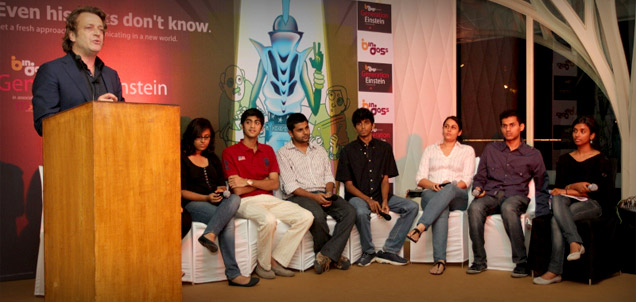
    Jeroen Boschma with young minds on the panel ahead of the release of ‘Generation Einstein’


    By A Correspondent


    It was youth power in all earnest as Bindass launched the India edition of ‘Generation Einstein’ on Monday evening at Mumbai’s tony Tote on the Turf. The book is co-authored by Bindass along with well-known international author and speaker Jeroen Boschma.


    The book describes the new generation, ‘Generation Einstein’ that was born during the last decade of the previous century. It also stresses upon the significance of the youth as an important part of the market and how fast the new generation understands the world better than anyone else. The book attempts to decode this generation and help marketers reach out to them.


    At the event, Mr Boschma spoke about how today’s generation is completely different from the previous generations. He was of the view that unlike the youth of previous generations which lived in a world of their own, the youth of this generation are very much in this world as they understand brands and marketers better: “Strong brands worldwide are brands that believe in what they do and youngsters who connect with these brands are madly in love with them.” (see interview: It’s not about co-creation, but increation: Boschma)


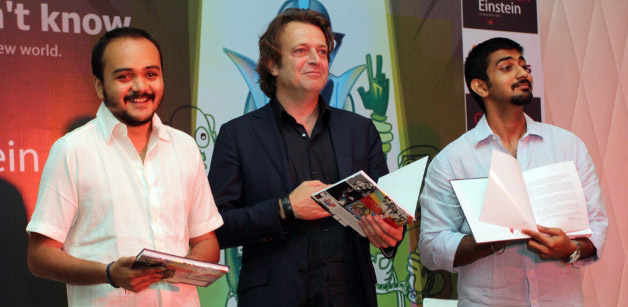
    Jeroen Boschma (centre) with Samyak Chakrabarty (to his right) and Arjun Paul Vednayagam


    The Indian edition of Generation Einstein is authored by Samyak Chakrabarty and Arjun Paul Vednayagam. “The aim of the book is to open the mind of brand managers, and to stop defining the youth, as it is not possible to define them. It is all about making interesting campaigns and allowing the youth to decide the fate of the brand,” said Mr Chakrabarty.


    The objective of the study conducted for the book is said to be about understanding the thought process of a young consumer, the factors that influence the youth to build their brand preferences, how they come to their final choice, and then using this knowledge to effectively engage the youth.


    “Every brand today has fanatic fans. Marketing is nothing like what it was before. If you want to communicate with this generation, forget what you have learnt. This generation understands that advertising is about lying. Generation Einstein says that the future of marketing is to find the purpose of their life and we need to find out how to be part of their life,” Mr Boschma added.


    In a panel discussion, moderated by Mr Boschma, the panellists, including college going teens, spoke about their favourite brands and the factors that influenced their buying decisions.


    Mudit Ganguli, a student from JaiHind College, Mumbai said that his favourite brand is Blackberry because it is cheap and convenient to use, it has versatile features, helps him get regular updates and allows him to communicate easily. Another reason why he preferred a Blackberry is because of good advertisement.


    Mohini Mukherjee, also a Jai Hind student said her favourite brand is ‘Bingo Chips’, primarily because of good advertisements, but also due to no celebrity involvement, funny advertisements, and good quantity of chips.


    Another student said that Twitter was her favourite brand because it helps her express her feelings, provides instant updates, and allows her to follow her favourite celebrities.


    One of the students talked about the reasons he trusted ‘Nike’ as a brand – good advertisements, the quality the brand offers, and the ‘Just do it attitude’ that it displays. He also spoke about how the brand is empowering the youth. He said that brands need to go back to delivering quality products and not try to create a product for everyone and eventually reaching no one.


    In conversation with MxMIndia, Samyak Chakrabarty spoke about his marketing plans for the India Edition of ‘Generation Einstein and his learnings from the study: “We would like to put this into the curriculum of mass media courses where the next generation marketers can learn about how to engage the youth. We plan to take Jeroen Boschma to colleges and deliver lectures and, of course, the book is available online for Rs200. The biggest learning we have had is that in order to understand and engage the youth, one has to keep his mind open and the fact that brands cannot define or assume or presume about the youth today.”


    The event was organized in association with MxMIndia.


    Photograph: Fotocorp

  • [MJR] TV leads to early onset of maddening rage

    By Ranjona Banerji


    Sometimes, television viewing can be seriously injurious to health. On Monday night, I tried to wade through TV discussions and only landed up with all the signs of early onset of maddening anger which soon developed into full blown rage. And I didn’t even venture further than two channels – Headlines Today and Times Now.


    On Headlines Today, the discussion was about the decision to ban all cartoons in textbooks. The guests were all having hysterics, the anchor – Rahul Kanwal – tried to say that vital airtime should not be wasted this way but the panellists were having none of it.


    This makes one wonder whether this format of prime time discussions on the news of the day is working any more. Night after night, we watch these so-called experts descend to the worst examples of civilised behaviour. Nothing fruitful is discussed as a result.


    One panellist could not even distinguish between a political cartoon and comic books. The first was not suitable for children apparently while the second were Archie comics and all that are fine she says. Clearly she has not read too many comics or cartoons – regardless of the unintended hilarity of her arguments. All I know is that her first name is “Kakoli”, since the channel never repeated it after that.


    Cartoonist Suthir Tailang also gave up after some time, the gentleman from the Bahujan Samaj Party just yelled incessantly, the comic lady continued with her routine and the anchor ended the whole farce.


    * * *


    On Times Now, we shifted to another dimension. Editor in chief Arnab Goswami decided that the government had to step in to save General VK Singh’s reputation as the army chief edges closer to retirement. This is in response to a Press Trust of India story about how some official in the Cabinet secretariat is apparently going to be blamed for leaking the army chief’s letter to the PM about India’s lack of defence preparedness.


    The panel was full of former army officers, both them and their moustaches bristling away about how the army was all good and everyone was all bad. Where do they get their accents from by the way? Sometimes they sound like London meets Ludhiana or Kota meets Kanada or more likely Billy Bunter in Bundelkhand. Forgive me, I’m just more used to Salman Khan’s Mumbai meets Manhattan. Do you think they teach accents at the IMA? I concentrated on their accents because it was impossible to understand what they were saying. But anyway, they all went off on their own tangents with India demanding answers and the country wanting to know every two minutes.


    The only voices of sanity were Kumar Ketkar, editor of Divya Marathi and KC Singh, former ambassador to UAE. But since they did not join in the general outcry to save the army chief, they were shunned. Ketkar was roundly castigated for suggesting that VK Singh was “hobnobbing with Anna Hazare”.


    In all this, no one asked (or dared to ask) why the government should save VK Singh’s reputation when the general himself had scant concern about it during his date of birth fight and especially after the spanking he got from the Supreme Court.


    Anyway, by this I had burst a few blood vessels and could not even watch Jon Stewart’s Daily Show to restore my equilibrium.


  • The Anchor: 5 reasons why astrology business is reasonably recession proof

    By Hemang Arunbhai Pandit


    1. Astrology is a trouble shooting-oriented business in most parts of India and Asia. People turn to astrology when they are in trouble during a recession, thereby generating business for astrologers.


    2. In good times, the business class generally wants to diversify and expand, again for which astrology guidance is generally taken as a safety measure and for good mahurats.


    3. Astrology in India is a precursor to a lot of rituals and other remedies in terms of gemstones, yantras, and so on. People spend money on a consultation, which is generally followed by an appropriate ritual or a remedy to ward off the trouble. This is also a good source of income for the astrologers.


    4. Outside India, mainly in Europe and the US, astrology is also used as a tool for self analysis and development. This process has nothing to do with recession, since people do it all the time, as long as it is not too expensive.


    5. Outside India, astrology is the primary tool for determining whether you are with your soulmate or not, especially for young girls. The process of dating and romance is inherently recession-proof, thereby lending the same status to astrology.


    Hemang Arunbhai Pandit is Founder, MD & CEO, GaneshaSpeaks.com


  • UPA tenure sees surge in attempts on media curbs

    By A Correspondent


    Last month, Congress MP Meenakshi Natarajan, reportedly close to Rahul Gandhi, the party’s general secretary, proposed a legislation that sought to regulate the media. The private member’s bill, subsequently disowned by the ruling Congress after uproar, sought to empower the government to ban coverage of an event that may pose a threat to national security. The bill also prescribes detailed ‘standards’ that the media should follow.


    Late last year, communications and IT minister Kapil Sibal famously sought to regulate the social media. The itch to regulate the media is not new but ever since the United Progressive Alliance (UPA) returned to power in 2009, attempts to do so have become alarmingly frequent.


    “The problem started when media organisations across the country began reporting on political issues aggressively,” said IBN7 managing editor Ashutosh. This was in late 2009 and 2010, when a series of scams were exposed by different sections of the media, including the alleged 2G spectrum scam in which former minister A Raja and a clutch of bureaucrats and industrialists are on trial.


    When questioned, political parties and media groups across the board agree that the government should stay away from media regulation, but that has not stopped the government from trying at various levels.


    During the time Anna Hazare’s campaign was gathering steam last year, there were reports of impending curbs on the social media, which was being used to garner support by the Anna camp. “At some stage we were told that the mainstream media was instructed not to report on the Anna Hazare campaign,” said former top-cop Kiran Bedi, who is also a member of India Against Corruption. “People voice their opinions through the media and the moment government gags that, you are abusing people’s vote,” she added. However, no such curbs were eventually imposed.


    For a country that prides itself on its status as the world’s largest democracy, the years under the UPA government, which came to power in 2004, have seen an alarming slippage in press freedom. This is ironical, political observers say, as the Congress-led UPA had benefited from the media’s aggressive exposure of scams during the NDA era. The media’s extensive, and overwhelmingly negative coverage of the Gujarat riots had also helped turn public opinion.


    The 2011-2012 Press Freedom Index compiled by Reporters Without Borders shows that India has dropped on the index from the 80th position held in 2002 to the 131st position in 2011-12 among 179 countries.


    “There is a complete absence of confidence and lot of insecurity among the elected representatives today, which is adding to the problem,” said Abraham Koshy, professor of marketing at IIM, Ahmedabad.


    In recent years, a number of politicians have invested in media businesses across the country, which some say, is another way to restrict the media.


    “The politician-corporate nexus too has grown further over the years and that is also impacting freedom of the media as some of these corporate own parts of the media. The government should not try to impose restrictions on the media,” said Nilotpal Basu, central committee member of the Communist Party of India (Marxist).


    There is a school of thought that politicians and political parties should not be allowed to own media companies under the law as that could lead to media being used as a tool for propaganda.


    “TV channels and newspapers are watchdogs of the government but if they are owned by the politicians themselves, there is a conflict of interest and that is what should be regulated,” said an editor of a news channel, who did not wish to be named. “We must sit down and discuss these issues,” said Vinod Mehta, former editor-in-chief of Outlook India. While most of those quoted in this story are also concerned about the quality of reporting in the country, which needs to be improved, most prefer self-regulation.


    Mr Ashutosh said: “Self-regulation within the media is working. Media needs to improve the same way the functioning of the Parliament, the judiciary and the executive need to improve in the country.”


    Ms Bedi said the media needs to be more independent and non-partisan but it is a fact that “media plays the roles of a visual and verbal Lokpal. Without media exposing the scams, India would have been a Banana Republic.”


    Source: The Economic Times
    Copyright © 2012, Bennett, Coleman & Co. Ltd. All Rights Reserved