
Author: mxmadmin

  • [MJR] The missing ‘outrage’ gene

    Ranjona Banerji

    By Ranjona Banerji


    It is well-known that your parents are to blame for everything that is wrong with you. I, therefore, emphatically blame my parents for this severe shortcoming of mine – a weak and badly functioning “outrage” gene. This gene is a must if you want to effectively follow and understand the Indian media.


    The world comes to an end on television and micro-blogging sites like Twitter everyday and then, inevitably, restarts again. This resurgence of life on earth as we know it is mysteriously missed by our outraged colleagues, possibly because they were so caught up in the “shocking incident that has just come to light where a dog bit a man”. Following the shocking incident is a demand that the chief minister of the state where this happened do something about it. Invariably, these chief ministers did not even know that this “shocking incident” had taken place. Woe betide (now you can see how old I am) any chief minister who says “well, often dogs will bite men”. This is the wrong reaction and will haul you over hot coals before you can finish the sentence. The correct reaction is to catch the dog, incarcerate it and then order an inquiry into why dogs bite and if indeed they would rather bite men than women or trees, cows and whatever else dogs might bite.


    In the world of Indian television news, it is against the ethos to have prior knowledge that canines have teeth (or even that canines are teeth) and do sometimes bite. Being privy to this information is detrimental to the proper functioning of the “outrage” gene.


    On Twitter, however, the outrage gene works a little differently: “We need an RTI inquiry: why does the prime minister @PMO… have two eyes? Did Sonia Gandhi pay for them?” This can get re-tweeted over and over again until someone does file an RTI inquiry. Before that it will descend to “The @PMO… is not so bad, look at how your man behaved when he was PM”, “You are a %$$& whose mother was a &%$@”. Also there will be many short forms and these: ####.


    As the outrage grows, we will reach this one: “Information commissioner stonewalls inquiry on status of prime minister’s binary visual system. #PM’s eyes”. And voila, we’re on our way to our own Arab Spring.


    Newspapers are often afflicted like me. All day yesterday TV channels ran clips of the shocking (really) remark by an Uttar Pradesh deputy inspector general of police that if his young sister (or maybe daughter or both) had eloped or been abducted he would have killed her or himself. Newspapers dismissed this story in a couple of columns.


    So maybe while my parents are responsible for my problem, they are not the only transgressors.


  • Cable cos expect major hike in subscriber revs

    By A Correspondent


    TRAI’s argument that carriage fees paid by TV channels to cable MSOs are necessary to fund their digitisation appears to be falling apart scarcely a week after it was made. Instead, large cable distributors have themselves said that one factor alone – a huge six-eight times hike in subscription revenues alone as declarations spiral with addressability – would significantly buttress their already profitable balance sheets.


    With additional revenues from broadband and VAS, industry estimates also say that a bundled digital and broadband + VAS business model will result in the payback period being reduced by a year to 24 months, as opposed to 36 months under a standalone digital cable TV proposition. This comes even as industry reports –including one released five months ago– have been pointing out that all major national MSOs are already adequately funded for Phase I digital deployment (mandatory only in the four metros from July 1).


    Given that the government is also shortly planning to hike FDI for MSOs from 49 per cent to 74 per cent, industry analysts have questioned why TRAI assumed MSOs and cable distributors needed money in the form of mandatory carriage fees by TV channels – an annual recurrence – to fund their upgradation, which is only a one-time investment. This is especially inexplicable, as TRAI’s own April 30 Explanatory Memorandum to the DAS Regulations states: “In the addressable systems, due to transparency in ascertaining the number of subscribers, the subscription revenue is expected to go up. Therefore, the dependence of MSOs on the carriage fee, as a source of revenue, is likely to be reduced.”


    It has been well known that the cable distributors are the profitable, cash rich last mile, with even many smaller operators who under-declare subscribers/taxes, expanding into other activities like real estate, auto agencies, ancillary services, and so on — while most broadcasters have turned sick due to a killer combo of low ad rates, gross subscriber under-declaration and huge carriage/placement fees.


    The national MSOs, are, in fact, almost all profitable, with even newer ones like Den Networks having posted a 20.7 per cent yoy revenue growth in Q3 of the fiscal just ended, including a 6.6 per cent rise in its net profit. That is why the added bonanza of TV channels having to now mandatorily pay MSOs carriage fees caused MSO share prices to jump after the TRAI tariff order was announced– even as listed broadcaster scrips sank.


    Shares of Hathway Cable and Datacom had closed on May 2 at Rs185.40, 19.23 per cent above its previous BSE close, missing the upper circuit by a small margin, Den Networks also touched an intraday high of Rs116.90, before closing at Rs110.80, 2.12 per cent above its previous close.


    Earlier, a Media Partners Asia (MPA) report (Investing in Digital India) of December 2011 had projected a six times increase in subscriber revenues for MSOs, albeit with a 20 per cent subscriber churn to DTH – but MSOs themselves reacted very positively over the TRAI tariff order.


    Hathway Cable & Datacom MD & CEO K Jayaraman told a business daily last week, that his company expects revenue to go up by 250 per cent post-digitisation. “We have 9 million homes and, at the least, we expect to double the subscriber base as 80 to 90 per cent of the carriage revenue will go to MSO. Broadly, after taking churn and loss in the carriage fee, we expect revenue to go up by 250 per cent “, he said. The company’s CFO, G Subramaniam, said during the same interview, that while carriage fees would reduce, the subscription revenue would rise from 10-15 per cent of the revenue mix currently. “This increase is likely to be six-eight times, and will make up for the loss of carriage fee”, he added. Both said that digitisation would help them grow their broadband business – already significant, given that as per Mr Jayaraman,

    Hathway already had 4 lakh broadband subscribers and a Rs 150-crore topline, which he expected would double in the next couple of years.


    Mr Jayaraman also outlined the many sources for his company’s digitisation upgrade: IPO funds and a mix of internal accruals, debt and vendor finance. He said: “The capex will be Rs1,000 crore. Of this, Rs300 crore will be spent in Phase-I and the rest in Phase-II. Phase-I is to be financed from initial public offer proceeds. A mix of internal accruals, debt and vendor finance will be deployed in Phase-II. The funding plan for the second phase is yet to be finalised,” he added.


    The MPA report – which was released five months ago – also states clearly: “According to MPA analysis and interviews, all major national MSOs are adequately funded for Phase I digital deployment. The cost of digital software and hardware has also fallen since 2007, ensuring set top boxes plus the CA card will cost about $30-40 per unit in total including duties, compared with $60 three years ago”, and adds that a number of the MSOs (like Hathway, DEN) are also ordering digital STBs in larger volumes like 1 million per annum, by which costs are lowered to at least $30 per unit.


    For instance, this report also gave company-wise details on the impressive progress they had already made on digitisation, and outlined their excellent financial situation to achieve the same. For instance, it said that Hathway had a debt to equity of 0.3x and a high promoter holding (67 per cent), hence “the company has enough head room to raise further capital”. While it said that DEN had a “comfortable debt to equity stand of 0.2x with a net cash of Rs9.5crore”, it also had sanctioned loans of Rs200 crore, which had not been drawn at the time of the report’s release. Even regional MSOs like Ortel, which might have a comparatively higher debt to equity at 1.6x as per the report, appeared comfortable placed to take care of their digitisation upgrade.


    Source: The Economic Times
    Copyright © 2012, Bennett, Coleman & Co. Ltd. All Rights Reserved


  • ‘Content not big celebs get in numbers’

    By Meghna Sharma


    Ashish Golwalkar

    Zee TV danced its way to the #2 slot amongst Hindi GECs as its Dance India Dance Little Masters (DID L’il Masters) leapfrogged to ratings of 6.2. Commenting on the reason why kiddie reality shows work, Ashish Golwalkar, Non Fiction Head, Zee TV, said: “The kids’ versionsof both Sa Re Ga Ma Pa and DID have done well. Kids bring out the universal emotion that connects with all; and with the holiday season on, the show makes for great television viewing for families. The talent that has auditioned for the show is superlative and watching them makes it aspirational for the kids and emotional for the parents.”


    The network which has various non-fictional shows to its credit believes in focusing on different genres. “We’re the pioneers of shows like Saanp Seedi, Sa Re Ga Ma Pa, Antakshari, Khana Khazana, and others and our non-fiction has always delivered. The feeling that only big celebrities garner high ratings is not true. It’s the content that connects with the audience and that’s what gets in the numbers,” added Mr Golwalkar.


    Akash Chawla

    The channel has done extensive marketing for the show. “Understanding the power of dance as an audio-visual treat, we wanted to promote DID L’il Masters through various audio visual means and hence, strategically focused on television and active online engagement. Through this, the extreme talent, skills, intrigue and the innocent attitude of the kids was highlighted which made the promos entertaining and endearing. The ‘Dance ke baap’ philosophy from the first season was further extended to ‘Yeh Badon Ke Bas Ki Baat Nahin’,” said Akash Chawla, ZEEL – Marketing Head, National Channels.


    Exclusive dance acts were showcased on the DID Youtube channel and also promoted across active social communities of DID 3. Glimpses of the show were integrated into DID 3 and other fiction shows on Zee TV creating high anticipation for the show. Talking about retaining the same ratings for the show in the coming episodes, Mr Golwalkar said: “Due to its nature, the audition episodes always rate higher, but we will try to maintain/sustain these ratings after the Top 16 are announced.”


    The channel also has plans to launch a few more new non-fictional and fictional shows for weekdays and weekend slots. Talk shows being one of the genres which the channel doesn’t mind exploring in the near future. “The television landscape has changed since the first season with more time bands, more shows and varied reality genres,” added Mr Golwalkar.


  • Hindi Hinterland: Happenin’ & How!


    By Ritu Midha


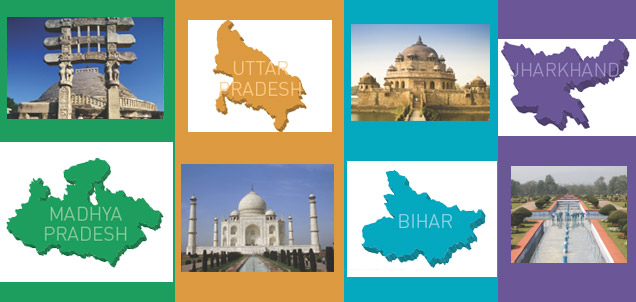
    The four key Hindi Hinterland states – Uttar Pradesh, Madhya Pradesh,Biharand Jharkhand, till less than a decade ago were considered to be sluggish in their outlook. That’s because consumers there were not really top-of-mind for marketers and if at all they became part of a media plan, especially television, it was done so by default, as Hindi television that catered to metros was available in the hinterlands too, and there was not much effort made to engage consumers there. If one looks at a broader picture, a similar tale rang true for most states across India, perhaps a decade-and-a-half ago.


    Cut to the present day, where India is the second-fastest growing market in the world, its middle class is the favoured target group of most marketers (both national and multinational), and in most global consumer surveys Indian consumers emerge to be the most gung-ho among the lot. Of the several states showing signs of speedy growth, the four states that are set for a big leap include:


    • Bihar, which is the second fastest growing economy in the country
    • Uttar Pradesh, which is the second largest contributor to the country’s GDP and also has the second largest urban populace in the country
    • Madhya Pradesh, which is touted as being an upcoming economic power centre and a major tourist destination
    • Jharkhand, which has always been an industrial hub


    One often reads of Indians leaving their cushy jobs overseas and returning to their roots to contribute to, and be a part of, the India growth story. In fact, stories of residents of Hindi Hinterland moving back home from metros too are not uncommon.


    Evolution of the Hindi Hinterland consumer

    Mayank Shah

    Consumers in these states are evolving rapidly and much of the credit for their evolution could be attributed to access to information and awareness boom. Mayank Shah, Group Product Manager, Parle Products reflects on the consumer psyche: “If you look at aspirations, there is no significant difference in Hindi Hinterland and metros. However, the urge to excel is far greater as they come from a modest background and the readiness to put in effort is definitely there. Even in semi-urban and rural areas, aspirations have grown – they are ready to consume CPG (consumer packaged groups), which is similar to their urban counterparts.”


    The increased awareness and steady GSDP enhancement has made the consumer ‘consumerist’, whereby it’s not only low-ticket items that are catching the consumer’s attention, the high-ticket ones are doing it in a big way too.


    Kamal Nandi, VP – Marketing & Sales, Godrej Appliances asserts: “Hindi hinterland is becoming an important market for consumption of durable goods. Consumer affordability has gone up, leading to a shift in lifestyle and consumers becoming more urban in their approach. Also, their top priorities are convenience and comfort.”


    Sushil Bajpai, President, Ghari Detergent, too, is of the view that it is no longer the market to be targeted sometime in future. For Mr Bajpai, the time is now: “There is excellent scope for marketers. Industries too are finding it attractive now. Consumerism is growing at a fast pace, and urban markets in Hindi heartland are no different from metros. The need right now is to understand the consumer mindset.”


    Krishna Mohan

    While the big cities in the region are getting ready to rub shoulders with metros, the semi-urban and rural areas too are getting out of dark areas. States Krishna Mohan, CEO, Sales, Emami Limited: “The great rural-urban divide in household consumption patterns has reduced drastically. Bharat is indeed keeping pace with India when it comes to spending on most fast-moving consumer goods. Rural sales contribute more than 40-50 per cent of total sales in various categories for Emami. We have increased emphasis on engaging rural consumers. The market is huge with a lot of potential.”


    Youth – Change drivers

    The change, as is expected, is being driven by the youth who are more adaptable and are akin to the youth from the metro – at least in urban areas. Having said that, awareness and information in semi-urban and rural areas is also growing and so are the aspirations.


    Somprabh Singh

    States Somprabh Singh, Head Marketing, Titan: “In attitude, they are not very different. They are independent, very ambitious and well informed. The only difference is that their exposure to many international brands is lower but that’s the function of the retail environment, which will change in sometime.” And, true to his vision, a change is currently underway across these cities.


    Harish Bijoor, CEO, Harish Bijoor Consults, believes that the booming Hindi Hinterland is the right place for marketers to be, more so for those catering to the youth. He exhorts: “The robust growth numbers in the education sector is proof enough. Add to it the entertainment market, the market for mobile phones, gadgets of every kind, clothes and accessories, cosmetics, shoes, exercise oriented products, and you have a solid market of the future emerging. There is spurring consumption of not only functional products, but products of cosmetic value as well. Products that relate to health, well-being and proactive health care, rather than just reactive care, are being craved for as well.”

     

    Harish Bijoor

    As per Mr Bijoor, there is a definite opportunity waiting, especially for brands meant for the youth, and the marketers need to make the most of it. He asserts: “The youth in these towns have a far bigger hunger quotient than the privileged youth in the bigger cities. I would segment this territory into urban, rurban and rural. The hunger deepens as you go from urban to rurban to rural. The opportunity for marketers, therefore, deepens as one penetrates down this strata.”


    Interestingly, while the debate between urban and rural might take some time to die down, it is the semi-urban areas that are attracting a lot of attention. Interestingly, the leap is expected to be bigger there, as they are keen to catch up with their urban counterparts, who themselves are always in a moving state.


    States Lloyd Mathias, the marketing honcho with experience around industries: “Youth in the urban areas of these states are quite close to metros in their awareness and aspirations, more so in case of bigger cities likeIndore,Lucknow,Bhopal,PatnaandRanchi. Though the semi-urban youth might be a little behind, they are catching up, what with the inroads being made by social media. Moreover, the influencers are the same, which are rapidly dissolving the differences.”


    Consumption pattern

    While rising aspirations is one part of the story, these regions are seeing an increase in activity by discerning marketers who are becoming more conscious of the finer nuances of the region, and are staying away from the one-size-fits-all approach.


    Explaining the phenomenon, Mr Nandi says: “While we have seen growth in double door refrigerator model in urban markets, in semi-urban markets it is the single door model that works.” However, it has not stopped Godrej from providing the entry-level consumer best value for money. He adds: “Even an entry-level consumer looks for high-end product features. A few years back, toughened glass shelves were there only in high-end model, today they are there in entry-level models as well. Brands have to seek to fulfil aspirations.” The company has also developed a refrigerator with a ‘Stay cool’ feature – powering cooling at the same temperature for 24 hours even after a power-cut.


    Coming back to the India analogy, the Indian consumer is perhaps one of the most price-conscious in the world. For him, value for money seems to be the mantra, but the consumers’ buying capacity is no longer questioned – the global marketers are tailoring India specific strategies, and the same is true of Hindi Heartland as well.


    Affirms Mayank Shah: “Instances and opportunities of buying premium products might still be less but they buy if the right quality is delivered at the right price. For example, premium biscuits like Hide and Seek cookies were rare in Hindi heartland, apart from cities likeLucknow,BhopalandAllahabad. However, now it has changed; we made it available in smaller packs, which has definitely led to sales enhancement.”


    The growth is not being noticed in purchase of a few specific product categories but across the board – a clear indication that the consumer is not seeking to fill just the need gaps, but is also looking for comfort, convenience and a bit of pampering.


    States Lloyd Mathias: “There is dramatic growth in categories like wireless broadband, consumer soft goods, mobiles and more; the consumption pattern is similar to other parts of the country. It is the sheer numbers that make it more lucrative.” He adds: “There is a homogeneity in these markets – the same is not true of any other part of the country, be it South, West or East.”


    Mr Krishna Mohan suggests that marketers look at a closer interaction with the consumer to understand him, and also to make him understand the brand. He asserts: “The way forward is to help consumers, especially in the rural areas, to make the switch from loose to branded or aid new consumption habits, either with novel products or new formats. For us, the categories of cool oil, cool talcs and fairness creams are doing extremely well with double-digit growth.”


    At this juncture, the Ghari Detergent success story can be an inspiration for many. With its origins inKanpur, it is the largest selling detergent brand in the country today. And a major focus on Hindi Hinterland has definitely propelled growth for the brand. Sushil Bajpai states: “Hindi hinterland is the biggest market for us; the brand name on our packs is prominently written in Hindi, and then in regional language. RoI in Hindi Hinterland is not lesser than other parts of the country; the key is to convey the right message accurately.”


    Key challenges

    Having assessed the scope that these markets present, one can safely assert that Hindi Hinterlands have come of age. And the marketers, of course, are in no mood to miss the bus. Thus, as per Somprabh Singh, it is important to “Act fast and act now, else be left behind. This is in terms of creating exciting products and new channels that will help reach them.”


    As per Mr Nandi, it is not just about being there; the key is to be relevant and to belong. He says: “You have a winning story in hand if you are able to provide relevant technology and play a role in them (consumers) fulfilling their aspirations.”


    Mr Bijoor agrees that relevance and market-specific approach is mandatory to be successful in these markets: “Marketers need to tailor-make themselves to the market, rather than take their tailor-made solutions to the market. Bottom-up marketing is the mantra to adopt.”


    Emerging markets indeed

    So while there exists an array of products that are being tailored to these markets, there is keen interest in interacting with the consumer there and understanding him and there definitely is an increase in the consumer spends. Are these markets ready for all the attention they are getting or would it be a case of yet another opportunity going bust?


    Laughing off the suggestion, Mr Bijoor states: “Hindi heartland is the new market that is just about emerging. What was derogatorily called the “cow belt” and the “Bimaru states” in the past, is a market that is coming to roost in the future. These states have become very progressive in their development indices. They boast of a GDP growth rate that is, at times, even more robust than the national numbers. This clearly means that these markets will see faster consumer growth in terms of demand and in terms of volumes, value and innovation.”


    Interestingly, the consumers staying in these markets are a very large demography, accounting for 20 per cent of the country’s population. And there has been a dramatic improvement in the standard of living in these states too. As these markets poise for the next big leap, it’s time the true potential of these markets is understood, and the consumer is serviced to the optimum.


    Click here for larger

    This article is part of ‘High on Hinterland’,  a special volume presented by Big Magic and produced by MxMIndia. If you wish to have  a copy of the volume, please email subscribe@mxmindia.com with your name, company details and address. We’ll courier you a copy within a week. Since we have limited stocks, we will mail a PDF to those who we are unable to send a printed copy.


  • Hindi ‘Hinterland’ is a pressure cooker close to boil

    By Ruby Bana


    Hindi Hinterland has always been known as the most remote part of India. But let’s not forget the latent ambition and grit that exists here, in addition to lagging in affordability and access. It’s a pressure cooker close to boiling point.


    This is where the most visible transformations will happen and pent-up demand will explode. Even in psychological terms, it’s not just about IAS/IPS as road to success but enterprise, showbiz (look at the talent shows), technology careers, and so on.


    The first, and the most important, change that has happened is ACCESS. Access to communication (mobile and internet), ambition (talent and confidence) and Retail (access through retail boom as well as e-retail – dream it, buy it…). This consumer will skip a decade and join the metro counterpart sooner than we think; especially the youth, who move faster than the others. Let’s remember: we are a “young” country and we adopt change much faster than most others.


    I don’t think the discussion will be anymore about: will 70 per cent of middle FMCG products markets come from hinterland consumers, but it’s now moving to how 70 per cent of Durable and Lifestyle consumers will come from upcountry markets.


    Computer/laptop manufacturers, smartphone manufacturers and others will be looking at the 70 per cent market from Hinterland/middle India in the next five years. I feel it’s not going to be so much a challenge of reach going forward as technology will change things sooner but it’s a challenge of conversion. The brands that succeeded in the metros may not be the exact same ones that garner the larger share of the hinterland market and I don’t mean just affordability here.


    This consumer will be more “information/evaluation” based purchaser rather than the fad based consumer of metro India. They will also be responsible consumers. Brands will have to reflect the same by demonstrating solid commitment to their core values. They will have be enablers of change, and have meaningful roles in their eco-systems. Some brands have already started this process a decade back, these will benefit the most. The rest that get in early now will reap disproportionate gains from the next wave. We wait at our own risk


    – The writer is Chief Strategy & Insights Officer, Madison India


  • MxM Exclusive: Satyamev Jayate impacts govt. Women & Child Dev Minister Krishna Tirath promises action, commends Aamir

    By Karuna Madan


    Union Minister of State (Independent Charge) for  Women and Child Development Krishna Tirath has appreciated Star Plus’s multi-channel Satyamev Jayate describing it as a commendable effort.


    “Satyamev Jayate is a commendable effort by Aamir Khan and it deserves appreciation. We have taken note of the issue of female foeticide raised in the first episode,” Ms Tirath told MxMIndia in an exclusive chat.


    “The ministry is very serious about the whole issue of female foeticide and infanticide, and I can promise that suitable action will be taken against the culprits who indulge in such malpractices,” the minister stated, adding: “we will rectify any lacuna in the laws to check the menace in the country. There are a number of legislations already to curb this practice. But any lacuna, if found, will be rectified.”


    The Minister said that such practices can be stopped through mass awareness campaigns.


    “We can stop the cases of female foeticide by educating the masses and we are taking necessary steps in that direction. The government is already working on better policies in collaboration with other public and private institutions,” she averred.


    Raising concerns over declining sex ratio in the country, Ms Tirath called for greater public participation and awareness to prevent the issues related with girl child and women.


    Foeticide is punishable under Section 315 of Indian Penal Code (IPC), with imprisonment of either description for a term which may extend to ten years, or with fine, or with both.


    “The high number of incidences of female foeticide are due to the deep rooted traditional preference for a son. We are aware of this and have adopted a multi-pronged strategy which includes legislative measures, advocacy, awareness generation and programmes for socio-economic empowerment of women,” Ms Tirath said.


    Under the Pre-Conception and Pre-Natal Diagnostic Technique (Prohibition of Sex Selection) Act, 1994, sex selective abortions have been made punishable.  The Ministry of Health and Family Welfare is responsible for administration of this Act and its implementation is the responsibility of the State Governments/Union Territory Administrations.


    MxMIndia newsdesk adds: Ms Krishna Tirath would’ve made for an ideal guest on the Star Plus show. An MP from New Delhi and a resident of Karol Bagh in the capital, Ms Tirath, 57, is a mother of three daughters, as per Lok Sabha records. She’s been in active politics for a few decades, having been member of the Delhi legislative assembly for four terms starting 1985.  She’s  much into sports having participated at Inter-Univ and national level volleyball and athletics. Given her personal and professional credentials, there’s more reason than one, why she should be championing what Aamir Khan did on SMJ’s Episode #1.


    Editor’s Note: Although interviewing ministers is not part of MxMIndia’s regular activity, given the huge effect that Satyamev Jayate has had – especially in many sections of our intelligentsia, we thought it would be a good idea to commission a seasoned political journalist to interview the Women and Child Development minister and check if the show has had any effect at all on the government. It evidently has. Since the eventual objective of SMJ is to cleanse Indian society and stir the public and the Establishment into action, more than ratings (some of which will be out tomorrow), we believe it’s vital to check the impact on the government and the public.


    Karuna Madan (@KarunaMadan) is a senior journalist based in New Delhi


    Photograph: Fotocorp


  • By Invitation: Sundeep Nagpal | Will Satyamev Jayate work for advertisers?

    By Sundeep Nagpal


    Much has been said already about this latest attempt at garnering mindshare (no, not that one …. please notice, the ‘m’ is not in caps !). And most of it is reasonably credible and justifiable. For instance, there’s little doubt that the show is a brave attempt by an entertainment channel to create some degree of social transformation, as much as being almost a challenge to its sponsors to leverage its equity for their brand.


    There’s also little doubt that both, the anchor of the show and its production values are as superlative as they could be.


    But the question is: Will it work?. What are the benchmarks of performance? Should they be just the ratings? And if not, are there any other – for example: any NGOs which can monitor changes in behaviour, attitude, etc. towards the social issues that the programme addresses.


    However, until such time that any social transformation becomes evident, here are some thoughts that still intrigue media professionals (especially after seeing the first episode). (Lesser mortals such as us can only look at this prism, in the light of the advertising / media business).


    – By any stretch of imagination, and despite being broadly classified under the genre of reality, SJ is far from being an entertainment show (no argument that even KBC was entertaining to some degree, despite basically, being a general knowledge quiz). So, will it work even half as well as KBC?

    – With the backdrop of socially-oriented programs like Aap Ki Kacheri, what can be expected from SJ? Can the host / treatment of this show make it a commercial viability for the channel?

    – In a season where the popularity of the country’s largest entertainment spectacle (the IPL) seems to be on the wane, what can be expected by an advertiser from a social talk show?

    – To what extent could the marketing muscle behind the show have bolstered the ratings of the first episode? (and of course, what, if anything would sustain its popularity?)

    – While there is no doubt that the host/ anchor, production values and the promotional strategy (including the suspense created), have been very favourable for the show, are the time slot, program duration and basic content, favourable enough to create a block buster?

    So, this article is not a shot at ‘philosophical gyaan’. In fact, it is an attempt to understand audience perception as well as an attempt to predict the popularity of the show (yes in terms what the opening ratings are likely to be).


    To address the former issue, we at Stratagem Media, undertook a dipstick study of a cross-section of more than a 100 people who had watched the show, in Mumbai only, (needless to say that dipsticks are only meant to be indicative of any patterns that may exist and not necessarily statistically accurate).


    Also, we did look at the ratings of a variety of other reality shows quite closely, just to be able to arrive at an educated judgement on what its opening TVR would be on Star Plus (for an All India, CS, 4 + audience).


    Here are some of our observations.

    –  To begin with about 25 % of people approached for the dipstick survey had not seen the show (but that’s not surprising, after all people do other stuff on Sunday mornings), and males formed a larger component of the non-viewing audience.

    – 18 % watched for less than 15 minutes, while 27% watched for more than an hour (albeit, not for a statistically valid sample).

    – A majority of male viewers did not even know the duration of the programme, (even after having watched it).

    – Two-thirds of viewers watched the original airing and almost everyone who saw it, did so on Star Plus (in Mumbai).

    – A majority of Males watched primarily because of the host/anchor, while about a third of them were curious about the content. Whereas a much larger proportion of women watched for the content.

    – More than two-thirds of viewers rated content and credibility of the show very highly.

    – In fact, the majority seemed to find nothing wrong with the time slot and expressed a desire to watch it again.


    And lastly, while the media fraternity waits with baited breath for this, and purely based on judgment, the opening original episode of Satyamev Jayate on Star Plus, ought to garner a rating of between 3.2 to 3.7 for an All India, C&S, 4 years-plus audience.


    However, as has been said before, for advertisers/ sponsors, this programme is not about ratings alone – it’s about an opportunity to build brand equity, which can be invaluable. In fact, it could be about diverting your CSR budget to Television !


    So, All the best, Aamir & All the best, Star!


    Sundeep Nagpal is director of Stratagem Media Pvt. Ltd, a Mumbai based media agency!


  • Anil Thakraney: Bring Rajani back!

    By Anil Thakraney


    Not to be confused with the southern superstar… he hasn’t gone anywhere. Not from the movies and not from the social media jokes and forwards. I mean ‘Rajani’, that lovely television soap from the good old days, the one whose protagonist was the feisty, bubbly, ass-kicking Priya Tendulkar. I recall how, as a family, we would crowd around the B&W TV set on Sundays as Rajani went about exposing assorted social evils.


    For those of you who weren’t around in the mid eighties, this was a hugely popular show where Rajani, a middle class housewife, would get after dhongi babas, dowry seekers, bride burners, food adulterers and other criminals. And kick the hell out of them. But what was most engaging and entertaining about the serial was the treatment; the show was not serious at all (unlike the much hyped Satyamev Jayate). While the issues being discussed were serious, the style was humourous and very lively. This made sure we kids would enjoy the fare along with our parents. In my view, Aamir Khan’s biggest challenge is going to be to attract, and more importantly retain, Young India. But Rajani achieved that effortlessly.


    It’s been many years since. Sadly, Ms Tendulkar is no more. The idiot box has boomed like crazy, and now there are hundreds of channels offering a huge array of programmes. And yet, programmers are forever struggling to find stories that can cater to the whole Indian family. And a lot of trash gets produced in the process.


    Satyamev Jayate brought back memories of Rajani. And a thought: Why not re-create that serial? With a brand new Rajani, operating in contemporary times, and using the latest gadgets as she goes about changing the world. But treated with the same simplicity and charm of the past. I think it will be a huge crowd puller, even amongst those urban kids who are forever glued to their smart phones. And it will give the very serious Satyamev a run for its money.


    The biggest challenge would be to find a girl who can match Priya Tendulkar’s pleasing persona and chutzpah. But it can be done.


    * * *


    PS: Who would have ever thought a day will come when the mighty Sir Martin Sorrell would be compelled to apologise for an ad created by an agency that belongs to his own group. This pertains to the hugely controversial Argentinean propaganda film that features an Olympic hopeful exercising at the Falkland’s war memorial. The promo must have really riled the usually thick skinned ad baron for him to say sorry.


    Link: http://www.telegraph.co.uk/news/worldnews/southamerica/falklandislands/9246301/
    Sir-Martin-Sorrell-appalled-and-embarassed-by-Falklands-propaganda-video-made-by-his-ad-group.html


  • Satyamev Jayate has started the debate again: Meena Sharma

    A foggy video, shot with the help of a hidden camera, shows a doctor telling how they can “get rid of” the girl foetus for just Rs2,000.
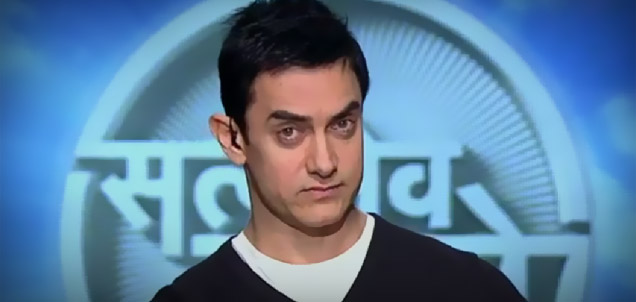


     

    This was the sting operation carried out by Sahara Samay journalists Shripal Shaktawat and Meena Sharma in 2005 which was highlighted by Satyamev Jayate -Star Plus’s newest show.


    A large number of doctors were also caught on camera expecting money to perform the “operation” for people who didn’t want a girl child.


    Enough and more has been written and talked about how Aamir Khan has taken a bold step by bringing this social issue to the forefront. However, there are many who have been trying to do so for years now. But they’ve failed to generate the same amount of debate and horror as the show’s first episode has.


    MxMIndia’s Meghna Sharma spoke to Meena Sharma, now bureau chief with the same news channel, about how the show could bring about a change. Excerpts:


    You did the sting operation a few years ago, but no action was taken against the culprits…

    Yes, it’s been almost seven years and the culprits still continue to practice. You do feel hurt when you realise that all your hard work has failed to bring crooks to book. We still think ‘why those involved – doctors and families – in such heinous crimes still walk freely?’


    The tape of your sting operation was shown on Satyamev Jayate. Will things change now?

    The show was watched by almost everyone in the country. It could be out of curiosity or because of the actor. But the issue was once again brought out in the open and people were shocked to see how female foeticide is still very much prevalent in our country. Everyone is talking about it now. So we are grateful that the tape was shown. At least, something might be done now.


    What are your expectations?

    Now that the debate has been reopened, I hope a follow-up is done because one episode isn’t enough to bring about change. People might talk about it till the next issue is discussed on the show. We have to stand together to make sure people are punished. The government might be convinced to do something if the whole nation stands together.


  • Dream start for Satyamev Jayate


    By Meghna Sharma


    On World Laughter Day, Aamir Khan was able to achieve just the opposite – make Indians wake up to the social evils we only talk about in hushed tones and cry while consuming  the harsh reality we all run away from. The much-awaited Satyamev Jayate premiered yesterday (Sunday, May 6) morning after a well-orchestrated marketing campaign. As expected, the show was a hit among the masses and media personalities. MxMIndia spoke to a cross-section of mediapersons and experts for their reactions to the show – and to know if the show will be able to sustain the hype and curiosity it has generated.


    Anita Nayyar

    TRPs, no problem

    Most media planners are happy with the show – personally as well as professionally. They feel that the show was able to generate enough curiosity by making people switch on their television sets on a Sunday morning and will continue to do so.


    “The show had a huge amount of emotional quotient, but the way the issue was dealt in the episode will be able to impact people and many of them will wait for the next episodes too. The way everyone is talking about it, I’m sure that the channel will be able to get its TRPs. Apart from the Aamir factor, the issues being discussed on the mass-reach channel will also help it,” said Anita Nayyar, director (customer strategy), BCCL.


    Mediaah! Thank you, Star Plus. Thank you, Aamir Khan

    Anil Thakraney: Oprah Khan

    Agreeing with Ms Nayyar, another senior media planner felt that that the show has the potential of becoming the highest TRP generator in the morning slot. “It’s an episodic show, so a lot depends on how each episode is produced. The show, though a little over dramatic at certain portions, will catch people’s attention,” said the media planner, requesting anonymity.


    The show was telecast on nine channels – of Star the network, Doordarshan and ETV Telugu  and was also dubbed and had subtitles to reach out to various parts of the country.


    Chandradeep Mitra, managing partner, Anvention and who is now based in Kolkata, liked the show and felt that even though it is not pure entertainment and deals with uncomfortable topic, it will be a hit among the masses. “The show was telecast with subtitles in Bengali on Star Jalsa, which helped it retain its genuineness. People here are comfortable with Hindi, so language won’t be a problem. After the initial hype, a lot will depend on how it is written and talked about on the social and mass media. Also, the topics will show how the show will do in the future. For instance, the first episode would have an impact on the Hindi-speaking belt,” he said.


    Anil Sathiraju

    Another media planner who saw the show on Star Plus and a regional channel, Star Vijay, felt that only Aamir Khan will be able to catch people’s attention down south. “It might not catch people’s attention as everyone is expecting, but it’s unpredictable.  Although, one look at the show and one can see that the actor and his team have done their homework well,” said Anil Sathiraju, head – south, Mudra Max Media.


    Many also felt that it’s a bold step by an entertainment channel to deal with such a topic and to such an extent. The money spent on the show is no secret. “Aamir is a popular actor, but I don’t think the show will be able to garner the same kind of popularity and following like other weekday prime time shows on similar channels. But hats off to the channel and the actor for taking up such a bold step and deal with social issues no one wants to talk about,” said Sundeep Nagpal, founder director, Stratagem Media.


    Marketers’ paradise?

    The 10-second advertisement slots for the show were said to have been sold at thrice the usual rates. The main sponsors have already paid a huge sum to be associated with the show. According to the marketers, the tear-jerker has the mass-appeal and the pull.


    Lloyd Mathias

    The show has been ‘trending’ on Twitter the whole of Sunday and has an ever-increasing number of followers on Facebook too. So, on the popularity front, the show has been able to reach out to its target audience. At least the socially networked intelligentsia for sure.


    Former CMO, Tata Teleservices, Lloyd Mathias said that the show is a huge marketing property. “The hype created before and after the show, is a clear signal about the impact it has created. Apart from the Aamir Khan factor, even the issues bieng dealt with have created uniqueness and curiosity.  So, every marketer will be glad to be associated with the show.”


    Sanjay Tripathy

    Even Sanjay Tripathy, executive vice president – Marketing & Direct Channels, HDFC Life, felt that marketers would be glad to jump onto the bandwagon: “Every show has a certain TG and marketers advertise with them according to their TG. Satyamev Jayate is a show which has appeal across sections – class, age, region and religion. So, even though the show is not at a prime time slot and not a pure entertainer, people will watch it. So, why wouldn’t any advertiser want to be part of it?


    More than a tear-jerker

    The first episode dealt with the issue of female foeticide – not something people aren’t aware of. Sociologist, human right activists and media commentators are glad that someone is talking about such taboo topics on such a platform. And since, an actor of certain credibility and reputation is bringing it to the masses, there might be some change in the society.


    “The portrayal of the issue was sensible and the personal experiences of the three women on the show were heart wrenching. Till now, such topics were only debated by academicians and activists. But now it’s in the public domain. And it has shaken up the people. However, now the concern is, will it be able to find a solution for such highly-prevalent evils of our society? A follow-up is needed so that the show doesn’t just become another tear-jerker,” said Sarla Bijapurkar, sociologist.


    Ranjona Banerji
    Ayaz Memon

    Ranjona Banerji, senior journalist and contributing editor, MxMIndia, felt that sustainability is a challenge now. “A lot of times, after a hard-hitting start, many shows tend to bend towards populist themes. So, I hope the show doesn’t do that or run behind TRPs. The show will have the similar constituency of followers like Anna Hazare. Thus, change in a society might happen, but a lot will depend on how the show progresses from here.”


    Agreeing with her is Ayaz Memon, veteran journalist and editor, who too believes that sustainability is a challenge the show will face if it wants to be different: “Very rarely do people want to watch ‘reality’, but the show was able to catch almost everyone’s attention on Sunday. Apart from sustainability, another challenge the show will have to overcome is how quickly it is able to capture the youth’s attention, because one doesn’t know what will happen after three weeks.”


    If that’s not enough, Teesta Setalvad, journalist and activist feels that the show was great, but there were loopholes in it too. “For instance, in the show Aamir Khan said that he will write a letter to the CM, but in reality he can’t do much about it. It’s the chief justice who can make a difference and take action. Also it didn’t tell people where to go when such issues happen, no matter how weak the organization might be. Apart from that, the show was excellent and a good start in creating awareness.”


    Photograph: Video grab from SatyamevJayate.in


    > The Importance of Being Aamir Khan

    > Why SJ will rule weekends; Stratagem analysis: Weekday Show #23 > Weekend Show #1

    > SJ is Aamir’s baby, completely: Satyajit Bhatkal (director of the show)

    > High EQ at Aamir Khan talk show Satyameva Jayate

    > Airtel slashes SMS rates for Satyamev Jayate

    > Anil Thakraney: Aamir wants to play God


  • Mediaah! Thank you, Star Plus. Thank you, Aamir Khan

    By Pradyuman Maheshwari


    I know it’s not a great idea to gush thus about a television channel, network and presenter. But can’t help doing that, for, in one masterstroke, Star India and its flagship channel Star Plus have atoned for the sins of not only unleashing regressive saas-bahu/domestic disharmony content over the years, but also shown the finger to all those who’ve been calling our broadcasters irresponsible.


    There’s been much buzz about how it was going to be a desi Oprah Winfrey Show. Perhaps that may have been the inspiration and the impact created is possibly quite like that of an Oprah. It’s not that Indian television hasn’t attemped social issues earlier. There have been some groundbreaking talk shows on social issues in the past. Priya Tendulkar’s Rajani in the mid-1980s was splendid. It was entertaining, thought-provoking and activisty. I remember noted litterateur Kamleshwar doing a show on social and current issues called Parikrama on Doordarshan in the late 1970s and 80s, but am fuzzy about its content and don’t find any detailed reference to on the internet.


    There’s a lot being said about Satyamev Jayate. On MxMIndia and elsewhere. What Satyajit Bhatkal and Co have done is no rocket science. It’s what a good, well-researched story in a newsmagazine or a weekend paper would be (and ought to be). Or a nice, detailed focussed programme on news television (sadly, the concentration these days is on panel discussions). But the dramatic differences are: 1. Aamir Khan and 2. The way the call-to-actions and online media have been weaved in.


    Every big star in Bollywood has been associated with social causes, and so’s Aamir. But given the movies that he’s been making over the years, his insistence on not accepting film awards, and more importantly his style of commitment and involvement with projects has worked towards building a unique aura around the man. Yes, there are many stories of directors exiting films or not wanting to be associated with projects that Aamir is involved but the proof of the pudding is in the eating. And if the final outcome of his films is any indication, I see nothing wrong with the star being aggressively active in the projects he has immersed himself in.


    Will Satymev Jayate make a difference? Yes, it will. The female foeticide problem is now a national problem. Don’t be surprised if you find the Rajasthan Chief Minister making a statement soon. Or it turning into a political issue. I am sure forthcoming episodes of the show will be as well-researched. That’s something you can be sure an Aamir Khan productions show will guarantee.


    It’s strong on the Emotional Quotient no doubt. I must confess I was much moved even though one is hardened by many such accounts as a journalist. I know of people sobbing almost uncontrollably in the first two segments, and it required an Aamir Khan to calm us down and get to action.


    He does it so very well.


    I am happy to learn that Star News (ABP News wef June 1) has tied up with Aamir to take the discussion forward after every episode.


    What next? What do other GECs do to counter AK’s SJ? Or SMJ as the Twitter handle abbreviates it.


    Since the season is going to last just 13 weeks, they just need to sit back and see how it unfolds. After all, the investments that Star has made are phenomenal and if it works for the channel, it would be nice to other GECs too trying something similar.


    My hearty congratulations to Uday Shankar and his team at Star India for boldly doing what no private television network CEO has ever done before. I met Uday on the evening before the show at the Press Club awards and he appeared confident that it would work. He also praised the attention to detail by Aamir and said he hadn’t seen anything before.


    I must confess I have been a little upset with Star for the way it has ignored many in the non-mass business and trade media on Satyamev Jayate. Sad. Perhaps we need an Aamir to champion our cause.


    For me, what Satyamev Jayate has achieved is beyond just a victory for Star India, Uday Shankar or Aamir Khan. It’s a huge win for the Indian entertainment television sector. Activists, retired judges, commentators and politicians of all hues have dubbed it irresponsible. Not all of it is without reason. Also, for too long have entertainers said that non-fiction shows like Satyamev don’t work. If the mix and presentation are right, we’ve seen that it can. Even news channels which have been riding on primetime chatshows should feel encouraged to attempt documentaries and discussions that may not be very ratings friendly. I am certain if the programme quality is good, the ratings will happen.


    Buzz/ping me if you have a story to tell. Confidentiality assured. There are various ways to do that: Mail: pradyumanm[at]mxmindia.com, BBM: 23050B5D, Gtalk: pradyumanm@gmail.com, Twitter: @pmahesh and the mobile: 98338 76278.


    Disclaimer: Although he is CEO and Editor-in-Chief of this site, Pradyuman Maheshwari’s views in Mediaah! are not necessarily those of the rest of the team and MxMIndia.com.


  • Anil Thakraney: Oprah Khan

    By Anil Thakraney


    Some observations on Aamir’s much publicized chat show.


    Satyamev Jayate (SJ) reminds me of Oprah’s talk show. Ordinary people’s tear jerker stories, and all the emotions involved. It’s a good idea. Have always wondered why Ms Winfrey hasn’t inspired India so far.


    While Aamir pocketed a few crore rupees as the nation wept on Sunday morning over the female foeticide issue, must say it’s a commendable social effort. If SJ inspires even a few people to stop killing the girl child, all the big moolah spent on its production becomes worth it.


    I am not sure if the malls and the streets in the urban areas were deserted, like it used to happen on the Ramayana/Mahabharata Sundays. I did tweet to ask for clues, but didn’t get enough responses to form an accurate opinion. Even if the young gen continued with their routine stuff, who knows, as more episodes roll by, they might want to watch the show. Though I have my doubts. Sadly, I don’t think the ‘Har Ek Friend’ virtual India desires to connect with the real India. Even if Aamir is in the house.


    In an earlier post I have already mentioned that the simultaneous broadcast on DD is an excellent idea. So even if the metros ditch SJ, the producers are assured of reasonable TRPs.


    On the show itself: I like Aamir’s sincerity. He exhibits all the right expressions and makes all the right noises. Tears, concern, disappointment, shock, anger, hope… that he is a talented actor, must help. Also, happy that Aamir chose to launch his TV career with a show that matters. Very different from all the other big stars who indulge in mindless game shows. This is what makes Aamir special. Good luck to him.


    Most importantly, the show isn’t boring. This was the concern many had expressed once it was announced that SJ will deal with serious social issues. Aamir manages to pack in a little entertainment. A few laughs and some gana bajana too. This also helps break the tension. Having said that, one hour would have been just the right duration. 90 minutes is pushing things a bit.


    Also, there is an attempt to provide solutions. The show doesn’t stay at the level of discussing morbid details. That’s good. But it’s important that Aamir doesn’t forget to do the follow-ups he’s promising on air. And disappears as soon as his pay check arrives. The star is notorious for his fly-by-night activism.


    Lastly, Aamir kept repeating he’s not a judge, and that he would leave that activity to the courtrooms. A good lesson for all the news channel anchors who love dishing out justice to the aam junta every single evening.


    Net net: A promising show that can lead to some social change. Maybe only a little change, but it’s a good start all the same.


    PS: An interesting presentation on how advertising objectifies women. Should serve as an eye opener for all of us in the ad industry. Have we, in the search for higher sales, been corrupting our culture and values? Something to chew on, lots to introspect on.